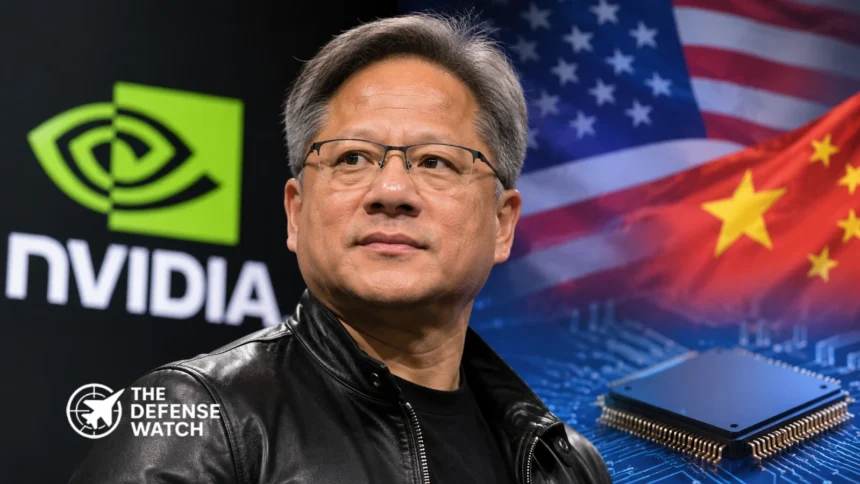
Prominent technology executives, investors and Nvidia supporters are calling for Jensen Huang to return as chief executive, adding pressure to a leadership transition at one of the world’s most influential artificial intelligence semiconductor companies.
The campaign, known as Stand With Jensen, had attracted more than 177,000 signatures by November 16, according to Reuters. Its supporters included Elon Musk, chief executive of SpaceX and Tesla, Epic Games CEO Tim Sweeney and Replit CEO Amjad Masad.
The campaign followed Huang’s resignation on November 11, which Nvidia formally announced the following day. However, the growing public support does not appear to have changed the company’s immediate succession plans.
A separate Reuters report published on November 16 said Nvidia’s board was not considering reinstating Huang, citing three people familiar with the matter. The petition had meanwhile passed 180,200 signatures.
Why Silicon Valley is pushing for Huang’s return
Huang’s departure has created an unusual situation for Nvidia. The company is attempting to move forward with a new leadership structure while a substantial group of employees, investors and technology industry figures continues to support its former chief executive.
The Stand With Jensen campaign argues that the board should allow an independent investigation to establish the facts before making an irreversible decision about Huang’s future.
An open letter published alongside the campaign called on Nvidia’s board to bring Huang back while the investigation proceeds, unless compelling evidence demonstrates that his removal is in the company’s best interests.
Among the prominent investors supporting a more cautious succession process were Gavin Baker of Atreides Management and Brad Gerstner of Altimeter Capital Management.
Their position reflects a concern that Nvidia should not rush to replace a leader who played a central role in building its business and relationships across the global technology industry.
The petition’s figures also require qualification. The website allowed participants to identify themselves as employees, shareholders and other supporters, but professional affiliations were self-reported and had not been independently verified.
What led to Huang’s resignation?
Huang’s resignation followed reports concerning alleged extramarital relationships, including one involving a Chinese businesswoman whose possible connections to Chinese intelligence agencies became a subject of scrutiny.
The allegations raised questions about corporate governance, executive conduct and potential national security exposure. However, the available reporting does not establish that Huang knowingly participated in espionage or that classified information was transferred to China.
Reuters subsequently reported that U.S. intelligence agencies were investigating the businesswoman’s possible relationship with China’s Ministry of State Security and whether information had been shared with Beijing. The investigation’s findings had not been publicly established in the reporting available on November 17
The distinction matters because allegations involving foreign intelligence connections should not be treated as proven espionage or evidence of corporate wrongdoing without verified findings.
Nvidia has already established an interim leadership structure
Nvidia’s regulatory filing provides a clear picture of the company’s immediate response.
In a November 12 Form 8-K filing with the U.S. Securities and Exchange Commission, the company confirmed that its board had accepted Huang’s resignation effective November 11.
The board appointed Colette Kress, Nvidia’s longtime executive vice president and chief financial officer, as interim CEO. Kress retained her CFO responsibilities while the board began searching for a permanent replacement.
Harvey C. Jones was also appointed chairman of the board. He had served as a Nvidia director since 1993.
Nvidia said it would consider both internal and external candidates for the permanent leadership position.
This arrangement gives the company an established executive to oversee operations while the board addresses the longer-term succession question.
Trump and Musk add public support
The campaign gained further visibility after President Donald Trump said he would not object to Huang returning to the company’s leadership.
Trump commented that Huang had learned a lesson, expressing openness to a possible return despite the circumstances surrounding his resignation.
Musk also supported the reinstatement campaign. His involvement is notable because Nvidia supplies computing hardware central to the expansion of AI infrastructure across the technology industry.
However, public endorsements from influential executives and political figures do not determine corporate leadership decisions. Nvidia’s board retains responsibility for selecting the company’s permanent CEO.
Why Nvidia’s leadership matters to the wider technology industry
Nvidia occupies an important position in the global semiconductor supply chain through its graphics processing units, accelerated computing platforms and AI infrastructure products.
Its technology supports large-scale AI model development, data center operations and advanced computing applications.
These capabilities also have relevance to defense organizations developing AI-enabled intelligence analysis, autonomous systems, simulation and other military computing applications. However, the current reporting provides no evidence that Huang’s resignation has disrupted specific defense contracts, military AI programs or semiconductor deliveries.
The immediate concern is therefore corporate continuity rather than an established change in military technology availability.
A prolonged leadership dispute could attract attention from investors, technology partners and major customers evaluating the company’s long-term management stability.
Nvidia faces a critical succession test
Nvidia’s leadership situation is particularly important because Huang’s influence extended beyond executive management. He helped establish the company’s position in accelerated computing and built relationships with customers, technology partners and semiconductor suppliers.
Replacing a founder with that level of influence can create challenges even when an experienced management team remains in place.
The board must balance demands from supporters who want Huang reinstated against its responsibility to investigate the circumstances surrounding his departure and protect the company’s long-term interests.
Nvidia was scheduled to publish its third-quarter fiscal 2027 financial results on November 17, providing another important test of its ability to maintain business continuity during the leadership transition.
For now, the petition demonstrates substantial public support for Huang, but it does not establish a path back to the CEO position. The board’s reported position remains unchanged, and the investigation’s outcome and permanent succession decision remain unresolved.