Executive Summary:
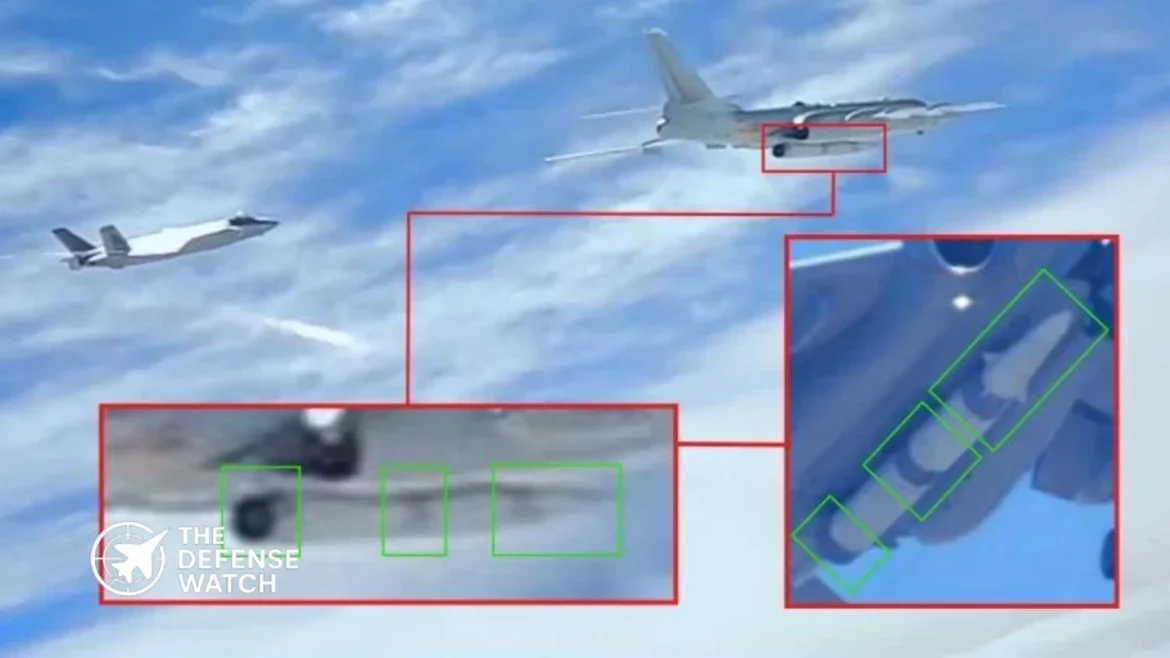
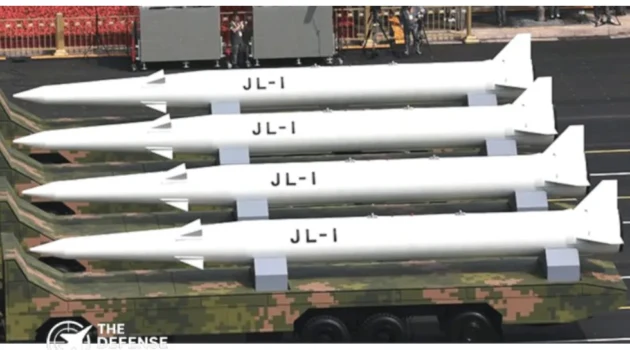
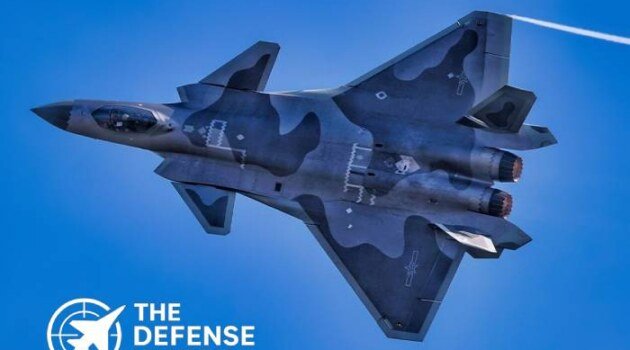
China has released its first official in flight footage showing an H-6N strategic bomber carrying the JL-1 nuclear capable air launched ballistic missile while escorted by two J-20 stealth fighters. The imagery highlights Beijing’s continued efforts to strengthen its long range conventional and nuclear strike capabilities while demonstrating an increasingly integrated strategic air force.
China Reveals H-6N Bomber Carrying JL-1 Air Launched Ballistic Missile
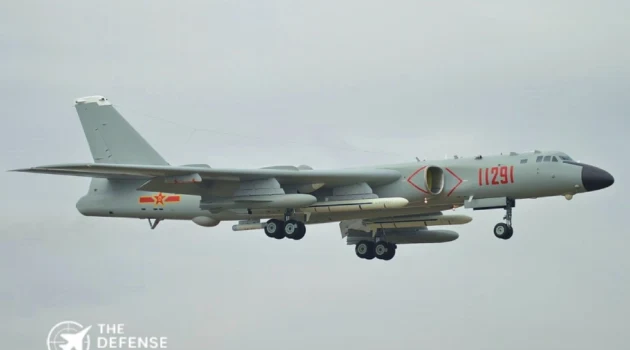
China has publicly released the first in flight footage of an H-6N bomber carrying the JL-1 air launched ballistic missile (ALBM), providing the clearest official view to date of one of the country’s most significant strategic aviation capabilities.
The video shows the H-6N operating with two J-20 fifth generation stealth fighters, underscoring the People’s Liberation Army Air Force’s emphasis on integrating strategic bombers with advanced fighter escorts during long range missions.
The release marks another step in China’s effort to showcase key elements of its evolving strategic deterrent while demonstrating improvements in long range strike operations.
First Official View of the JL-1 Air Launched Ballistic Missile
The footage provides the first official confirmation of the H-6N carrying the large externally mounted JL-1 missile beneath its fuselage.
Unlike earlier H-6 bomber variants, the H-6N was specifically modified with a recessed fuselage section to accommodate oversized weapons, including air launched ballistic missiles. The aircraft also incorporates aerial refueling capability, allowing significantly longer mission endurance than previous members of the H-6 family.
Defense analysts have long assessed that the H-6N was developed to serve as China’s first dedicated airborne platform for launching ballistic missiles capable of striking targets far beyond the reach of conventional cruise missiles.
JL-1 Strengthens China’s Long Range Strike Options
The JL-1 air launched ballistic missile is believed to be a nuclear capable weapon designed to expand China’s strategic strike flexibility.
Open source defense assessments indicate the missile offers an estimated range approaching 8,000 kilometers, depending on launch profile and payload configuration.
Key reported capabilities include:
- Nuclear capable payload
- Air launched ballistic trajectory
- Hypersonic reentry vehicle
- Long range land attack capability
- Potential anti ship strike capability against high value naval targets
Launching a ballistic missile from an airborne platform extends operational reach because the missile begins its flight at altitude and speed rather than from a fixed ground launcher.
This combination increases deployment flexibility while complicating an adversary’s early warning and missile defense planning.
J-20 Escort Highlights Integrated Air Operations
Another notable aspect of the released footage is the presence of two J-20 stealth fighters accompanying the H-6N.
The J-20 is China’s premier fifth generation fighter and is increasingly tasked with protecting high value airborne assets during long range operations.
Operating strategic bombers alongside stealth fighters reflects an evolving operational concept similar to those employed by other major air forces, where escorts enhance survivability against advanced air defense systems and hostile fighters.
The pairing also demonstrates improvements in command, control, and coordinated air operations across multiple aircraft types.
Strategic Significance Beyond the Video
While the footage primarily serves as an official demonstration, it also reflects broader trends within China’s military modernization program.
Over the past decade, Beijing has invested heavily in expanding its strategic aviation capabilities through new bombers, long range precision weapons, hypersonic systems, aerial refueling assets, and advanced fighter aircraft.
The H-6N forms an important component of this modernization effort by providing an airborne launch platform capable of supporting both conventional and nuclear missions.
For regional militaries and defense planners, an operational air launched ballistic missile introduces additional complexity compared with traditional ground based missile forces. Airborne launch platforms can approach from multiple directions, operate over vast distances with tanker support, and create less predictable attack profiles.
Although many technical details of the JL-1 remain classified, the newly released imagery offers additional visual confirmation of a capability that analysts have monitored for several years.
Regional Security Implications
The appearance of the H-6N carrying the JL-1 comes as security competition across the Indo-Pacific continues to intensify.
China has accelerated modernization across its air, naval, missile, and space forces while regional countries and the United States continue investing in integrated air and missile defense, advanced fighters, and long range precision strike systems.
The release of official imagery is therefore significant not only as a technological milestone but also as a strategic communication effort highlighting China’s expanding long range deterrence capabilities.
While the video does not reveal new technical specifications, it provides valuable confirmation of an operational configuration that had previously been observed primarily through satellite imagery and unofficial photographs.
Conclusion
China’s first official in flight footage of the H-6N bomber carrying the JL-1 air launched ballistic missile represents an important public demonstration of its evolving long range strike capabilities. Combined with J-20 stealth fighter escorts, the imagery illustrates an increasingly integrated strategic aviation force capable of supporting both conventional and nuclear deterrence missions.
Although many characteristics of the JL-1 remain undisclosed, the footage reinforces assessments that China continues to expand the flexibility, reach, and survivability of its strategic air power as part of its broader military modernization strategy.

Executive Summary:
Lockheed Martin has successfully completed the second stage motor case burst test for its Next Generation Interceptor (NGI), an important milestone before the program’s Critical Design Review. The achievement demonstrates continued progress in developing the U.S. Missile Defense Agency’s future homeland missile defense interceptor designed to counter evolving long range ballistic missile threats.
Lockheed Martin Next Generation Interceptor Reaches Another Major Milestone
Lockheed Martin’s Next Generation Interceptor (NGI) program has completed another significant development milestone after successfully conducting a second stage motor case burst test, strengthening confidence in the interceptor’s propulsion system before the upcoming Critical Design Review (CDR).
The latest qualification test evaluated the structural limits of the interceptor’s second stage rocket motor case by intentionally pressurizing it beyond normal operating conditions until failure. This type of testing allows engineers to verify design margins, manufacturing quality, and safety requirements before production begins. The company announced the achievement as part of its continued progress toward delivering the Missile Defense Agency’s next generation homeland defense capability.
The successful demonstration follows several years of accelerated development for the NGI program, which remains one of the U.S. Missile Defense Agency’s highest priority modernization efforts.
Why The Burst Test Matters
Although a burst test intentionally destroys the test article, it is considered one of the most important structural validation activities during missile development.
Engineers compare the actual failure point with computer models to confirm the rocket motor case performs as expected under extreme pressure. Meeting or exceeding predicted performance reduces technical risk before the design is finalized.
For strategic missile defense systems, propulsion reliability is especially important because the interceptor must perform flawlessly during all phases of flight to successfully engage incoming ballistic missile threats.
The latest test supports Lockheed Martin’s preparations for the program’s Critical Design Review, a major acquisition milestone where government officials determine whether the design is sufficiently mature to enter manufacturing and flight testing.
Supporting America’s Homeland Missile Defense
The Next Generation Interceptor is being developed for the U.S. Missile Defense Agency to replace and expand the capabilities of the current Ground Based Interceptor fleet deployed under the Ground based Midcourse Defense (GMD) system.
Unlike existing interceptors, NGI is designed to address increasingly sophisticated long range ballistic missile threats, including missiles equipped with decoys, countermeasures, and more complex trajectories.
The interceptor is expected to feature:
- Improved discrimination against advanced threats.
- Enhanced kill vehicle technology.
- Modern digital engineering architecture.
- Greater upgrade potential over its operational life.
- Increased reliability and maintainability.
According to Lockheed Martin, the program uses an all digital engineering approach that allows faster design verification, manufacturing planning, and lifecycle upgrades while reducing development risk.
Progress Toward Critical Design Review
The burst test forms part of a broader verification campaign covering propulsion, structures, guidance, avionics, and manufacturing readiness.
Lockheed Martin has steadily advanced the program through several major milestones, including:
- Completion of subsystem Preliminary Design Reviews.
- Validation of digital engineering models.
- Knowledge Point 1 acquisition milestone.
- Expansion of dedicated NGI manufacturing facilities.
- Continued preparation for Critical Design Review.
Each milestone reduces technical uncertainty before full scale production and eventual flight testing.
Aviation Week previously reported that Lockheed Martin has also opened a dedicated production facility supporting future NGI manufacturing while preparing for key program reviews later this year.
Strategic Importance For U.S. Missile Defense
The continued progress of the Lockheed Martin Next Generation Interceptor reflects the Pentagon’s broader effort to modernize homeland missile defenses as ballistic missile technologies continue to evolve.
While the current Ground Based Interceptor system remains operational, NGI is intended to provide greater capability against future threats through improved sensor integration, enhanced propulsion, and more advanced engagement technologies.
The program also demonstrates the Department of Defense’s increasing reliance on digital engineering and early risk reduction testing to accelerate acquisition while maintaining high confidence before production decisions.
From a strategic perspective, completing demanding structural qualification tests before Critical Design Review helps lower development risk, improves manufacturing readiness, and supports schedule confidence for one of America’s most important missile defense modernization programs.
Although several milestones remain before operational deployment, successful propulsion qualification testing indicates the program continues moving forward on schedule toward its next major acquisition phase.
Executive Summary:
The drone-saturated battlefields of Ukraine and the Middle East have forced a reordering of what “best tank” means in 2026 — hard-kill active protection is now table stakes rather than a luxury option, and sensor fusion against top-attack munitions counts for as much as frontal armor thickness. This ranking evaluates the ten most operationally significant main battle tanks in service or imminent fielding, weighing survivability architecture, firepower and target acquisition, mobility, and logistical sustainability rather than raw specification-sheet superlatives.
Armored Warfare in 2026: Why the Old Rankings No Longer Apply
For two decades, main battle tank rankings were largely a contest of armor thickness, gun caliber, and horsepower-per-ton. That framework has been substantially rewritten by the war in Ukraine and by successive rounds of drone and loitering-munition employment across the Middle East and the Caucasus. Cheap first-person-view drones and Switchblade-class loitering munitions have repeatedly demonstrated the ability to defeat top and rear armor arrays that were never designed against plunging or top-attack threats, while proliferated anti-tank guided missiles (ATGMs) such as Javelin, NLAW, and Kornet variants have forced armor designers to treat the 360-degree, all-aspect threat envelope as the default planning assumption rather than an edge case.
The result is a shift in engineering priority. Passive composite armor remains foundational, but it is now paired — in the platforms that matter most — with hard-kill Active Protection Systems (APS) that physically intercept incoming projectiles before impact, soft-kill countermeasures that defeat missile guidance through jamming or obscurants, and hunter-killer sensor suites that let a tank identify and engage a threat before it is itself detected. Thermal signature management, once a secondary concern, is increasingly central to survivability calculus as loitering munitions and reconnaissance drones hunt primarily on infrared and electro-optical cues.
This ranking evaluates each platform across four core pillars:
- Survivability & Active Protection Systems (APS) — composite/ERA armor architecture, hard-kill and soft-kill APS integration, and counter-UAS defensive layering.
- Firepower, Optics & Sensor Fusion — main gun caliber and APFSDS penetration performance, ammunition natures (including top-attack munitions), fire-control computers, and hunter-killer target acquisition capability.
- Tactical & Operational Mobility — power-to-weight ratio, suspension architecture (including hydro-pneumatic systems), strategic transportability, and terrain adaptability.
- Logistical Sustainability & Electronics Architecture — fuel consumption, maintenance burden, digital backbone/Modular Open Systems Approach (MOSA) upgradeability, and fleet interoperability with allied logistics chains.
2026 Main Battle Tank Comparison Table
| 1 | M1A2 SEPv3 / M1E3 Abrams | USA | 120mm M256 smoothbore | Trophy (SEPv3, fielded); XM251 Iron Fist (M1E3, developmental) | ~66.8 tons / ~18.4 hp/ton (SEPv3); ~60 tons target (M1E3) |
| 2 | Leopard 2A8 | Germany | 120mm L55A1 smoothbore | Trophy APS (factory-standard) | ~66.5 tons / ~20.7 hp/ton |
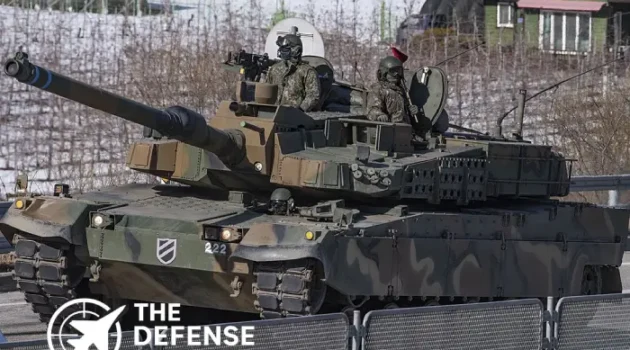
| 3 | K2 Black Panther | South Korea | 120mm L55 smoothbore | Soft-kill MSSG standard; KAPS hard-kill in PIP/K2EX upgrade path | ~56 tons / ~27.7 hp/ton |
| 4 | Challenger 3 | United Kingdom | 120mm L55A1 smoothbore | Trophy MV (partial fleet fielding) | ~66 tons / ~19 hp/ton |
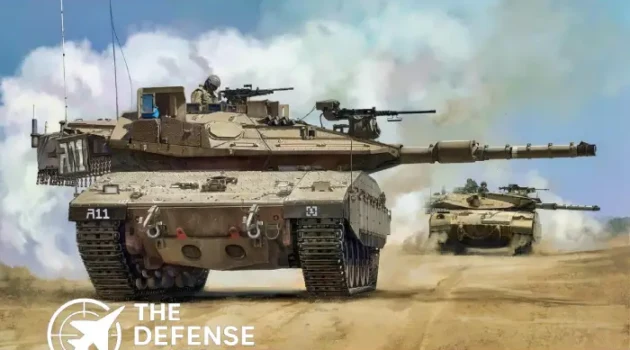
| 5 | Merkava Mk 4M | Israel | 120mm MG251-LR smoothbore | Trophy APS (combat-proven, standard) | ~65 tons / ~18.8 hp/ton |
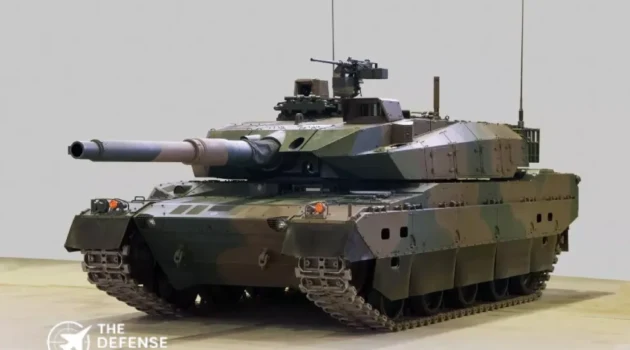
| 6 | Type 10 | Japan | 120mm L44 smoothbore | Soft-kill countermeasures; hard-kill APS not standard | ~48 tons / ~29 hp/ton |
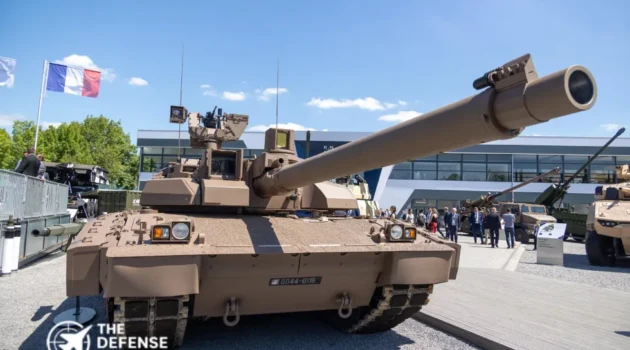
| 7 | Leclerc XLR | France | 120mm CN120-26 smoothbore | Soft-kill (GALIX); hard-kill APS not integrated | ~56.5 tons / ~24 hp/ton |
| 8 | T-90M “Proryv” | Russia | 125mm 2A46M-5 smoothbore | Shtora-1 soft-kill; Relikt ERA; hard-kill APS limited | ~48 tons / ~22.9 hp/ton |
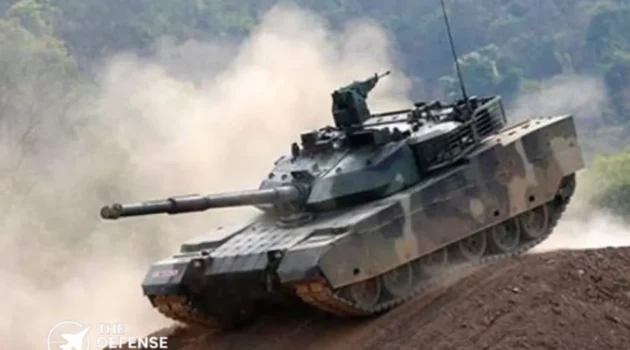
| 9 | VT-4 / Type 99A | China | 125mm smoothbore | ERA plus soft-kill countermeasures; hard-kill APS variant-dependent | ~52–58 tons / ~21–24 hp/ton |
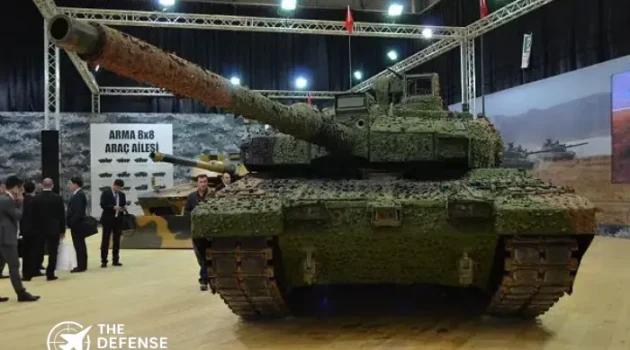
| 10 | Altay | Turkey | 120mm smoothbore | Composite/modular armor; APS integration ongoing | ~65 tons / ~18.5 hp/ton |
Figures reflect publicly disclosed baseline configurations as of mid-2026 and vary by national upgrade package; classified armor and APS performance data are excluded by design.
1. M1A2 SEPv3 / M1E3 Abrams (USA)
Technical Specifications Brief:
Weight ~66.8 tons (SEPv3); target ~60 tons (M1E3). Engine: 1,500 hp AGT-1500 turbine (SEPv3); hybrid diesel-electric power pack under development for M1E3. Main armament: 120mm M256 smoothbore. Secondary: coaxial 7.62mm, M2 .50 cal RWS. Armor: Chobham composite with depleted-uranium mesh (SEPv3); new-generation modular composite under evaluation for M1E3. APS: Trophy hard-kill, fielded on a portion of the SEPv3 fleet; the M1E3 program has selected Elbit’s Iron Fist, designated XM251, as its baseline hard-kill system.
Core Engineering & Operational Analysis:
The SEPv3 remains the combat-proven backbone of the U.S. armored fleet, but the Army’s own procurement decisions signal the platform’s limits: in 2023 it shelved the planned SEPv4 upgrade in favor of the M1E3, a clean-sheet redesign built around the lessons of Ukraine’s drone-saturated front lines. The M1E3 pre-prototype, unveiled at the Detroit Auto Show in January 2026, introduces an unmanned turret, a bustle autoloader, and a three-person crew relocated entirely into a protected hull cell — a survivability philosophy borrowed from Russian and Korean autoloader designs but paired with a Western-style digital backbone. A Modular Open Systems Approach lets the Army swap sensors and counter-UAS effectors as threats evolve rather than freezing a fixed defensive suite at fielding.
Mobility and sustainment drive the second half of the redesign. General Dynamics Land Systems is targeting a mass reduction to roughly 60 tons from the SEPv3’s 66.8 tons, aided by lightweight tracks and a hydro-pneumatic suspension, while Caterpillar’s hybrid diesel-electric propulsion is intended to cut fuel burn, heat signature, and acoustic detectability simultaneously — directly answering thermal-signature vulnerabilities exposed by loitering munitions.
Key Operational Trade-off:
Program risk. The Army has compressed what was once a five-plus-year development timeline into 24–30 months, meaning the autoloader, hybrid powertrain, and XM251 APS integration are all being validated concurrently with prototype soldier evaluation through 2026 — a schedule that historically produces late-stage surprises in armor programs.
2. Leopard 2A8 (Germany)
Technical Specifications Brief:
Weight ~66.5 tons. Engine: MTU MB 873 diesel, ~1,500 hp. Main armament: 120mm L55A1 smoothbore, chambered for higher-pressure APFSDS rounds including the KE2020Neo/DM83 in development. Secondary: coaxial 7.62mm MG3, RWS-mounted 12.7mm. Armor: latest-generation modular composite. APS: Trophy, integrated as a factory-standard fitment rather than a retrofit.
Core Engineering & Operational Analysis:
The Leopard 2A8 is arguably the most complete near-term answer to the ATGM/drone threat among NATO’s fielded platforms, because Trophy is designed into the vehicle from first production rather than bolted on afterward — avoiding the weight, power-budget, and structural compromises that trouble add-on APS installations. Germany’s EUR 525.6 million order for 18 tanks, with an option for a further 105, has been followed by EuroTrophy contracts extending Trophy support to Leopard 2A8 operators in Lithuania, the Netherlands, Czechia, and Croatia, positioning Trophy as the de facto NATO-standard APS and giving the 2A8 fleet unusually strong multinational logistics commonality.
The L55A1 gun’s higher chamber pressure gives it a real APFSDS performance edge over legacy L55 barrels, while updated optronics and a digital fire-control architecture preserve the hunter-killer engagement sequence that has defined Leopard 2 doctrine since the A5 generation.
Key Operational Trade-off:
Weight. At 66.5 tons, the 2A8 strains European rail and bridge infrastructure in the same way as the Abrams and Challenger 3, limiting operational mobility along NATO’s eastern flank where road and bridge classifications have not universally been upgraded for 60-plus-ton vehicles.
3. K2 Black Panther (South Korea)
Technical Specifications Brief:
Weight ~56 tons. Engine: ~1,500 hp diesel (domestic powerpack after earlier transmission delays). Main armament: 120mm L55 smoothbore with a bustle autoloader (10 rounds/minute sustained). Secondary: RWS 12.7mm. Armor: MIL-12560H steel with silicon-carbide ceramic inserts and modular ERA. APS: standard-fit Multispectral Screening Smoke Grenade (MSSG) soft-kill system, with the hard-kill Korean Active Protection System (KAPS) reserved for the K2 Product Improvement Program (K2 PIP) and export-oriented K2EX variant.
Core Engineering & Operational Analysis:
The K2 remains the field’s most mobility-optimized MBT, largely due to its In-Arm Semi-Active Suspension Unit — a hydro-pneumatic system that lets the tank crouch, kneel, or elevate its hull independently at each road wheel, enabling hull-down firing postures on ridgelines that few competitors can replicate. Combined with a power-to-weight ratio near 27.7 hp/ton, the K2 offers acceleration and cross-country agility that outpaces heavier Western designs, a factor that mattered directly in cold-weather trials against the Leopard 2A8 in Norway.
The tank’s hunter-killer fire-control system pairs a panoramic commander’s sight with pulsed-Doppler radar and a Raman laser rangefinder, and its ammunition suite includes the KSTAM fire-and-forget top-attack submunition — a direct answer to the top-armor vulnerability drone and ATGM threats now routinely exploit.
Key Operational Trade-off:
APS gap in current production. The base K2 fields only the soft-kill MSSG suite; full hard-kill KAPS integration has been deferred to the PIP/K2EX upgrade path over cost, weight, and dismounted-infantry blast-radius concerns, leaving in-service K2s more exposed to top-attack ATGMs than Trophy-equipped peers until that upgrade matures.
4. Challenger 3 (United Kingdom)
Technical Specifications Brief:
Weight ~66 tons. Engine: existing Challenger 2 diesel powerpack, ~1,200 hp (retained, not upgraded). Main armament: 120mm L55A1 smoothbore — the single biggest change from the rifled L30A1 on Challenger 2. Secondary: coaxial 7.62mm chain gun. Armor: Dorchester composite modernized to current-generation standard. APS: Trophy MV, being fielded to a portion of the fleet rather than the full inventory.
Core Engineering & Operational Analysis:
Challenger 3 represents the most significant British tank redesign in a generation, chiefly through its adoption of the Rheinmetall L55A1 smoothbore — aligning UK ammunition logistics with the Leopard 2A7/A8 family for the first time and unlocking access to higher-pressure APFSDS rounds such as the KE2020Neo/DM83 under UK-German co-development. The turret and hull retain proven Challenger 2 survivability characteristics while integrating a new digital fire-control backbone and the Trophy MV active protection suite, which uses four radar panels and paired effector launchers to intercept incoming ATGMs and rockets.
Key Operational Trade-off:
Fleet scale and APS coverage. The British Army’s planned Challenger 3 inventory is small relative to continental peers, and only a fraction of that already-limited fleet is projected to carry Trophy MV in the near term — raising sustainment questions about the UK’s ability to provide a fully protected armored division contribution to NATO over an extended campaign.
5. Merkava Mk 4M (Israel)
Technical Specifications Brief:
Weight ~65 tons. Engine: MTU 12V883, 1,500 hp diesel (power-to-weight ~18.8 hp/ton). Main armament: 120mm MG251-LR smoothbore, capable of firing the LAHAT gun-launched ATGM. Secondary: 12.7mm and 7.62mm machine guns, 60mm internal mortar. Armor: classified composite/modular arrangement with a distinctive front-engine layout for added crew protection. APS: Trophy, the system’s original combat-proven platform, standard since the mid-2010s.
Core Engineering & Operational Analysis:
The Merkava’s defining engineering choice — mounting the powerpack forward of the crew compartment — remains unique among the world’s MBTs and provides an additional layer of frontal protection along with a rear crew/troop access hatch that has proven valuable in urban and Gaza-perimeter operations. As the platform where Trophy was combat-validated against real-world ATGM and RPG salvos since 2011, the Merkava Mk 4M carries an unmatched operational track record for hard-kill APS effectiveness rather than test-range performance alone.
Its ammunition flexibility — conventional APFSDS/HEAT rounds alongside the gun-launched LAHAT — gives it precision strike options against both armor and fortified point targets without depending on a separate missile system.
Key Operational Trade-off:
Weight and strategic mobility. At 65 tons, the Merkava is not designed for long-range expeditionary deployment; its engineering logic optimizes for Israel’s specific regional threat envelope and short interior lines rather than global power-projection requirements.
6. Type 10 (Japan)
Technical Specifications Brief:
Weight ~48 tons, the lightest platform in this ranking. Engine: ~1,200 hp diesel, yielding roughly 29 hp/ton. Main armament: 120mm L44 smoothbore (Japan Steel Works). Secondary: 12.7mm and 7.62mm machine guns. Armor: modular ceramic composite, tunable to mission-specific threat levels. APS: soft-kill countermeasures standard; hard-kill APS not yet a baseline fitment.
Core Engineering & Operational Analysis:
The Type 10 was engineered specifically around Japan’s constrained road, rail, and bridge network, and its modular armor packages let commanders trade protection for weight depending on whether the tank is operating on Honshu’s main islands or in a more exposed forward posture. A C4I data-link architecture allows Type 10s to network target data across a platoon in real time, effectively extending each vehicle’s sensor reach through networked hunter-killer engagement rather than relying purely on onboard optics.
Its hydro-pneumatic suspension, similar in concept to the K2’s, allows selective hull elevation and tilt, useful for both cross-country mobility and precision gun-laying on Japan’s mountainous terrain.
Key Operational Trade-off:
Limited APS and smaller gun bore relative to 125mm/130mm peers. The Type 10’s design logic prioritizes homeland-defense mobility over the maximalist protection and firepower standards now emerging from NATO and Korean programs, leaving it comparatively under-defended against saturation drone attack absent further upgrades.
7. Leclerc XLR (France)
Technical Specifications Brief:
Weight ~56.5 tons. Engine: Wärtsilä/SACM hyperbar-assisted diesel, ~1,500 hp (~24 hp/ton). Main armament: 120mm CN120-26 smoothbore with a bustle autoloader. Secondary: coaxial 12.7mm and 7.62mm machine guns. Armor: modular composite with added turret and hull armor plus rear wire-cage protection against RPGs. APS: GALIX soft-kill smoke/countermeasure system; no hard-kill APS integrated in the baseline XLR configuration.
Core Engineering & Operational Analysis:
The Leclerc XLR modernizes rather than replaces the third-generation Leclerc hull, adding an inertial-navigation/GPS-fused digital backbone, upgraded optronics, and additional passive protection including rear engine-compartment wire cage armor — a direct, low-cost response to RPG and drone-delivered munition threats observed in recent conflicts. Its autoloader remains among the fastest in service and keeps crew size at three, consistent with French doctrine favoring compact crews and rapid sustained fire.
Follow-on French programs — the Leclerc Evolution demonstrator and the EMBT-ADT concept — point toward a 140mm Ascalon gun and expanded RCWS armament, signaling that France views the XLR as a bridge rather than an end-state platform.
Key Operational Trade-off:
No hard-kill APS. Without an integrated Trophy- or KAPS-equivalent system, the Leclerc XLR remains dependent on soft-kill smoke/jamming countermeasures against modern top-attack ATGMs and loitering munitions, a meaningful survivability gap relative to Trophy-equipped NATO peers.
8. T-90M “Proryv” (Russia)
Technical Specifications Brief:
Weight ~48 tons. Engine: ~1,130 hp diesel (~22.9 hp/ton). Main armament: 125mm 2A46M-5 smoothbore, autoloader-fed. Secondary: 12.7mm RWS, coaxial 7.62mm. Armor: Relikt explosive reactive armor over a composite base. APS: Shtora-1 soft-kill infrared jamming/laser-warning suite; hard-kill APS (Arena-class) has seen only limited operational fielding on this variant.
Core Engineering & Operational Analysis:
The T-90M represents Russia’s most combat-tested modern MBT lineage, with the Relikt ERA generation offering meaningfully improved resistance to tandem-charge ATGM warheads compared to earlier Kontakt-5 arrays. Its autoloader-fed 125mm gun preserves the traditional Soviet/Russian doctrinal advantage of a low silhouette and reduced crew exposure, at the cost of ammunition-carousel vulnerability that has been repeatedly exploited in the Ukraine conflict when frontal protection is defeated.
Networked fire control and thermal sighting upgrades bring the T-90M closer to Western hunter-killer engagement standards than earlier T-72/T-90 derivatives, though independent verification of combat performance has been complicated by the conflict environment in which most operational data has been generated.
Key Operational Trade-off:
Ammunition storage vulnerability and inconsistent hard-kill APS fielding. The autoloader carousel’s ammunition placement remains a catastrophic-kill risk when penetrated, and Shtora-1’s soft-kill approach — while useful against older laser-guided ATGMs — offers materially less protection against modern fire-and-forget missiles and loitering munitions than Trophy- or Iron Fist-class hard-kill systems.
9. VT-4 / Type 99A (China)
Technical Specifications Brief:
Weight ~52–58 tons depending on variant. Engine: ~1,200–1,500 hp diesel (~21–24 hp/ton). Main armament: 125mm smoothbore, autoloader-fed, compatible with gun-launched ATGMs. Secondary: coaxial and RWS machine guns. Armor: composite with explosive reactive armor arrays; export VT-4 configurations vary by customer. APS: soft-kill laser-warning/smoke countermeasures standard; hard-kill APS integration varies and is not confirmed as a universal fitment.
Core Engineering & Operational Analysis:
The Type 99A anchors China’s domestic armored fleet while the export-oriented VT-4 (MBT-3000) has found buyers including Pakistan and Thailand, giving Chinese armor a wider international footprint than at any prior point. Both platforms follow the autoloader-and-125mm-gun template shared with Russian designs, prioritizing a compact silhouette and gun-launched ATGM capability over the larger 120mm/130mm Western/Korean gun families.
Reported fire-control upgrades include panoramic commander sights and improved thermal imaging intended to close the hunter-killer gap with NATO and Korean platforms, though independently verified combat performance data remains far more limited than for Western or Israeli systems.
Key Operational Trade-off:
Transparency and independent verification. Chinese MBT survivability and APS claims are less independently tested in open combat than Western, Israeli, or Korean equivalents, making direct comparative assessment inherently more uncertain — a limitation this ranking notes rather than resolves.
10. Altay (Turkey)
Technical Specifications Brief:
Weight ~65 tons. Engine: domestically developed diesel powerpack (import-substitution program ongoing), targeting ~18.5 hp/ton. Main armament: 120mm smoothbore. Secondary: coaxial and RWS machine guns. Armor: modular composite armor package, developed with South Korean design assistance drawing on K2 lineage. APS: integration efforts ongoing; not yet a mature standard fitment at scale production.
Core Engineering & Operational Analysis:
The Altay is Turkey’s flagship push toward indigenous armored-vehicle sovereignty, drawing substantially on South Korean K2 design assistance for its hull and armor architecture while pursuing a fully domestic engine and transmission to escape prior European supplier restrictions. Serial production has been a multi-year process, reflecting the difficulty of building an indigenous powerpack and transmission industrial base essentially from scratch.
As production matures, Turkey has signaled intent to integrate both hard-kill APS and improved composite armor packages in follow-on batches, positioning the Altay as a platform still climbing toward — rather than already at — the survivability standard set by Trophy-equipped NATO peers.
Key Operational Trade-off:
Industrial maturity. Powerpack and transmission reliability, along with APS integration, remain works in progress relative to the more mature Western, Korean, and Israeli programs ranked above it, and production volumes to date remain modest relative to program ambitions.
Next-Generation Armor: The Fifth-Generation Concepts Reshaping the Field
Three programs illustrate where the main battle tank category is heading beyond the platforms ranked above:
- Rheinmetall KF51 Panther — built on a Leopard 2A4-derived hull but centered on an autoloaded 130mm smoothbore gun, the KF51 pairs StrikeShield modular armor with the ROSY soft-kill obscurant system rather than pursuing ever-thicker passive armor, explicitly trading raw armor mass for active protection and networked lethality.
- Leopard 2 A-RC 3.0 / Leopard 3 concept — KNDS Deutschland and Rheinmetall’s follow-on Leopard concept work, alongside Germany’s broader Main Ground Combat System (MGCS) ambitions, points toward a 130mm-class successor gun and a further-integrated digital/APS architecture intended to reach production in the 2030s.
- South Korea’s K3 concept — a low-observable, hydrogen-power-concept demonstrator emphasizing thermal and acoustic signature reduction, a 130mm gun, extended-range anti-tank missiles, and AI-assisted fire control, reflecting Seoul’s continued willingness to leapfrog rather than incrementally upgrade its armor fleet.
The common thread across all three is a deliberate shift away from armor mass as the primary survivability lever, toward layered active protection, signature management, and sensor networking — the same lessons driving the M1E3, Leopard 2A8, and K2 PIP programs already fielding today.
Tank Warfare Meets the Strategy Game Meta
For the strategic-gaming and esports audience following this category, the real-world APS-versus-saturation-drone dynamic maps closely onto the “counter unit” logic familiar from RTS and wargaming titles: a single high-value unit (the MBT) surviving only if paired with layered support systems (APS, counter-UAS screening, infantry escort) rather than relying on raw stat-sheet superiority. Just as a min-maxed “glass cannon” build in a strategy title can be countered cheaply by swarm units unless the player invests in area denial and detection, a modern MBT without integrated hard-kill APS is functionally the glass-cannon build of 2026 armored warfare — impressive on the specification sheet, exploitable in the field. Procurement decisions increasingly resemble a meta-conscious loadout choice: survivability tech now outweighs marginal gains in armor thickness or gun caliber, the same way competitive players prioritize counter-picks over raw damage output once an opposing strategy becomes widely known.
Frequently Asked Questions
What is the most survivable main battle tank in 2026?Among fielded systems, the Leopard 2A8 and Merkava Mk 4M currently offer the most mature survivability packages because both integrate Trophy hard-kill APS as a factory-standard fitment rather than a partial retrofit; the M1E3 Abrams is positioned to match or exceed this once its XM251 Iron Fist APS integration completes testing.
Which tank has the best APS: hard-kill or soft-kill?Hard-kill systems like Trophy and KAPS physically intercept incoming projectiles and provide stronger protection against modern ATGMs and RPGs, while soft-kill systems like Shtora-1 and GALIX rely on jamming or obscurants and are generally considered less effective against fire-and-forget or top-attack munitions.
Why does weight matter so much in these rankings?Heavier tanks (65+ tons) face bridge, rail, and strategic-airlift constraints that lighter platforms like the K2 (~56 tons) and Type 10 (~48 tons) avoid, directly affecting how quickly a force can be deployed and sustained forward.
Are autoloaders safer or riskier than human loaders?Autoloaders reduce crew size and turret volume but concentrate ammunition storage in ways that can be catastrophic if penetrated, as seen repeatedly with carousel-fed Russian and Chinese designs; Western programs like the M1E3 are addressing this by isolating ammunition in blow-off-panel-protected compartments away from the crew.
Conclusion
The 2026 armor hierarchy no longer rewards the heaviest gun or the thickest plate in isolation. Platforms that pair proven hard-kill active protection with digital fire control and disciplined signature management — the Leopard 2A8, the Merkava Mk 4M, and the emerging M1E3 — are pulling ahead of designs that still lean primarily on passive armor mass. At the same time, the drone and loitering-munition threat is pushing every major tank-producing nation toward the same conclusion from different starting points: survivability now depends as much on layered active defense and networked sensing as on the gun and the glacis. The next decade’s main battle tank will likely be defined less by its armor tonnage than by how intelligently it manages the airspace immediately around itself — a battlefield reality that uncrewed systems, not steel, will increasingly help it fight.

Executive Summary:
Kratos Defense & Security Solutions has opened its new $50 million Indiana Payload Integration Facility to strengthen U.S. hypersonic testing capabilities. The facility is intended to accelerate payload integration, environmental testing, and flight test preparation while supporting the Department of Defense’s growing demand for rapid hypersonic weapons development.
Kratos Opens $50 Million Indiana Hypersonic Facility To Strengthen U.S. Testing Infrastructure
Kratos’ hypersonic facility represents another major investment in America’s defense industrial base as the United States works to expand the pace of hypersonic weapons development and testing.
Located near Naval Support Activity Crane in Indiana, the new 68,000 square foot Indiana Payload Integration Facility (IPIF) has been built specifically to prepare, integrate, and test experimental payloads for next generation hypersonic systems. According to Kratos, the facility will improve the speed at which payloads move from laboratory development to flight testing while supporting multiple government and industry programs.
The company said the project required an investment exceeding $50 million and forms part of a broader strategy to expand U.S. hypersonic infrastructure.
Built To Increase Flight Test Tempo
One of the primary missions of the Indiana Payload Integration Facility is supporting the Multi Service Advanced Capabilities Hypersonic Testbed (MACH TB) program.
The complex includes laboratories, payload integration areas, environmental testing equipment, and manufacturing capabilities designed to process experimental payloads more efficiently before launch.
Kratos says engineers designed the workflow specifically to reduce bottlenecks that traditionally slow hypersonic testing programs. Faster payload preparation allows more frequent flight tests, helping government agencies validate new technologies at a quicker pace.
Unlike production plants focused on manufacturing operational weapons, the Indiana facility emphasizes testing, evaluation, and rapid experimentation, critical stages before systems enter full rate production.
Why The Facility Matters
The United States has significantly increased investment in hypersonic technologies over the past several years as the Pentagon seeks to accelerate development of systems capable of traveling at speeds above Mach 5.
Testing infrastructure has emerged as one of the largest constraints in hypersonic development. Modern hypersonic vehicles require complex environmental testing, payload integration, telemetry verification, and launch preparation before every flight.
Facilities capable of performing these specialized tasks remain limited.
The opening of Kratos’ hypersonic facility therefore addresses more than a construction milestone. It expands national capacity for conducting frequent and affordable flight tests, an area repeatedly identified by defense officials as essential for shortening development timelines.
Supporting America’s Defense Industrial Base
The Indiana site is expected to create more than 100 high skilled jobs, with average annual salaries exceeding $80,000, according to Kratos and Indiana state officials.
Its location near Naval Surface Warfare Center Crane also provides access to one of the nation’s largest defense research and engineering communities.
Kratos has described the project as part of a broader effort to strengthen domestic defense manufacturing while improving collaboration among military organizations, government laboratories, and private industry.
The facility also complements other company investments across Indiana, including propulsion and energetics initiatives intended to expand America’s missile production capabilities.
Analysis: More Than A Construction Project
Beyond the physical infrastructure, the new facility reflects a broader shift in U.S. defense priorities.
In recent years, Pentagon leaders have emphasized that maintaining technological superiority requires not only advanced weapon designs but also the industrial capacity to test and refine them quickly.
Historically, limited test infrastructure has restricted the number of annual hypersonic flight demonstrations. By increasing payload processing capacity and reducing preparation time, facilities like IPIF can help improve testing cadence across multiple programs.
That increased tempo may prove as strategically important as advances in propulsion or guidance systems because frequent testing accelerates engineering improvements and reduces program risk before operational deployment.
The investment also illustrates growing reliance on commercial defense companies to provide specialized infrastructure alongside traditional government laboratories.
Growing Momentum For Kratos
The facility opens during a period of expanding hypersonic activity for Kratos.
Earlier this month, the company announced it had received approximately $400 million in new Department of War funding supporting hypersonic systems and other national security programs, reinforcing its role in the U.S. hypersonic industrial base.
While details of those programs remain limited due to security considerations, the funding underscores continued government investment in expanding America’s high speed weapons capabilities.
Combined with the Indiana Payload Integration Facility, these developments position Kratos as a key contributor to future U.S. hypersonic testing, payload integration, and systems development.
Conclusion
The opening of Kratos’ $50 million Indiana hypersonic facility marks a significant expansion of U.S. testing infrastructure rather than simply another manufacturing investment.
By increasing payload integration capacity, environmental testing capabilities, and support for MACH TB flight testing, the facility addresses a critical component of America’s effort to accelerate hypersonic weapons development. As demand for faster testing continues to grow, infrastructure investments like IPIF are expected to play an increasingly important role in strengthening the nation’s defense industrial base.
Executive Summary:
Northrop Grumman has expanded its counter unmanned aircraft systems portfolio with the M230LF Dual Feed Bushmaster Chain Gun and new XM1211 proximity fuzed ammunition. The combination is designed to improve battlefield flexibility by allowing operators to switch instantly between ammunition types while providing a more cost effective solution against rapidly growing drone threats.
Northrop Grumman Expands Counter Drone Capabilities With Dual Feed Bushmaster Cannon
Northrop Grumman has unveiled new capabilities for its M230LF Dual Feed Bushmaster Chain Gun, strengthening its position in the rapidly evolving counter unmanned aircraft systems (C-UAS) market. The announcement highlights a combination of the company’s dual feed cannon and advanced proximity fuzed ammunition designed to defeat both aerial drones and traditional ground targets without requiring operators to reload or change weapons.
The latest development reflects growing demand among Western militaries for affordable and scalable air defense solutions as inexpensive drones increasingly challenge conventional missile based air defense networks.
Designed For Modern Counter Drone Operations
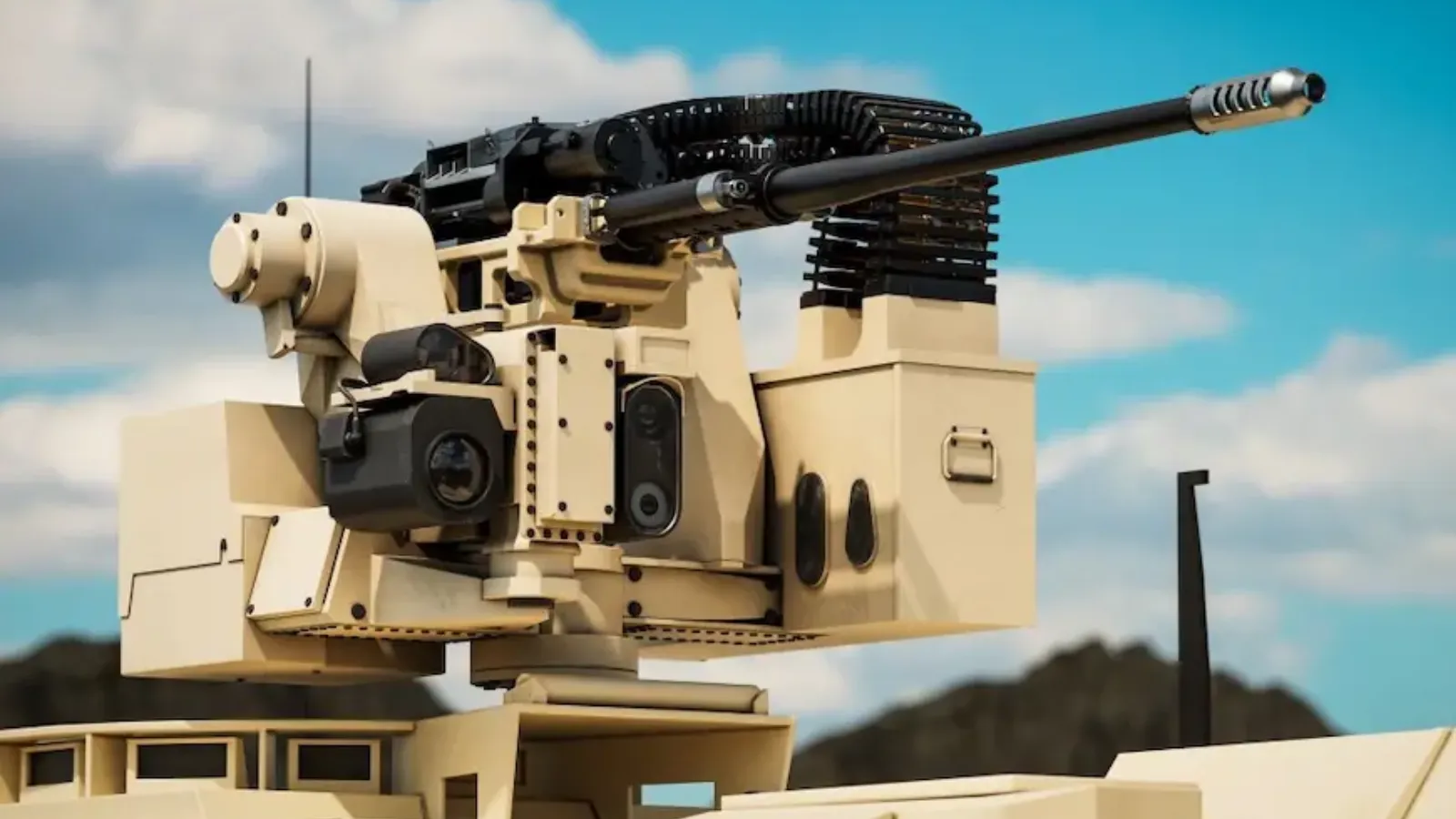
The centerpiece of the new capability is the M230LF Dual Feed Bushmaster Chain Gun, a 30×113 mm medium caliber cannon that introduces two independent ammunition feed paths.
Unlike conventional single feed systems, operators can instantly switch between anti armor ammunition and dedicated counter drone rounds by pressing a button. This eliminates the need for mixed ammunition belts or time consuming reloads during combat.
Northrop Grumman says the recommended combat load includes:
Ammunition Primary Mission XM1211 High Explosive Proximity Counter UAS engagements XM1198 High Explosive Dual Purpose Light armor and ground targets Both ammunition types incorporate self destruct mechanisms if a target is missed, helping reduce collateral damage.
XM1211 Proximity Fuzed Ammunition Improves Kill Probability
The company’s new XM1211 30×113 mm proximity fuzed round addresses one of the most difficult aspects of engaging small drones.
Rather than requiring a direct hit, the projectile contains an integrated proximity sensor that detects when it is close enough to the target before detonating. The resulting fragmentation significantly increases the probability of destroying small, fast moving unmanned aircraft.
Northrop Grumman developed the ammunition with the U.S. Army, specifically to support modern C-UAS missions where drones present small radar and visual signatures that make precision hits challenging.
Why The Upgrade Matters
Drone warfare has fundamentally changed the economics of air defense.
Conflicts in Ukraine and the Middle East have demonstrated that militaries often expend interceptor missiles costing hundreds of thousands or even millions of dollars against drones worth only a few thousand dollars.
Northrop Grumman’s approach seeks to reverse that cost imbalance by allowing medium caliber cannons to destroy drones using significantly cheaper ammunition while reserving high end missile interceptors for cruise missiles, ballistic missiles, or advanced aircraft.
The system is intended to complement, rather than replace, layered air defense architectures.
Operational Flexibility Across Multiple Platforms
The Dual Feed Bushmaster is suitable for integration on numerous platforms, including:
- Remote weapon stations
- Armored fighting vehicles
- Tactical trucks
- Naval patrol craft
- Fixed site air defense systems
Because operators can transition immediately between aerial and ground threats, the system offers improved responsiveness during complex engagements where drones and conventional forces operate simultaneously.
This flexibility is increasingly important as militaries prepare for multi domain operations where unmanned systems, armored vehicles, and infantry may appear together on the battlefield.
Production Expansion Supports Growing Demand
Northrop Grumman says it is investing in manufacturing equipment, production facilities, and tooling to increase output of both the Bushmaster cannon family and advanced ammunition.
The company noted that production capacity is being expanded to shorten lead times and meet rising international demand for counter drone capabilities.
The investment reflects broader defense industry trends as NATO members and Indo Pacific allies accelerate procurement of lower cost air defense systems capable of countering large numbers of small drones.
Strategic Analysis
The significance of this announcement extends beyond a new weapon system.
Modern militaries increasingly recognize that traditional missile based air defense alone cannot economically defeat mass drone attacks. Every conflict over the past several years has reinforced the importance of layered defenses that combine sensors, electronic warfare, missiles, directed energy systems, and gun based interceptors.
Northrop Grumman’s Dual Feed Bushmaster fits squarely within this evolving doctrine. By pairing programmable proximity ammunition with an existing medium caliber cannon, the company offers armed forces a relatively low risk modernization path rather than requiring entirely new weapon platforms.
The dual feed capability also reduces operational complexity. Crews no longer face the tradeoff between loading anti armor ammunition or anti drone rounds before a mission. Instead, they retain both capabilities throughout an engagement, improving battlefield adaptability while reducing reaction time.
For the U.S. Army, NATO allies, and partner nations confronting increasingly sophisticated drone threats, systems that improve the cost exchange ratio may become just as important as high end missile defenses in future force structures.
Technical Overview
Specification Details Weapon M230LF Dual Feed Bushmaster Chain Gun Caliber 30×113 mm Primary Role Counter UAS and ground combat Counter Drone Round XM1211 High Explosive Proximity Ground Target Round XM1198 High Explosive Dual Purpose Key Capability Instant switching between ammunition types Intended Platforms Vehicles, remote weapon stations, naval vessels, fixed defenses Executive Summary:
The U.S. Army has successfully demonstrated an autonomous version of its Volcano mine dispensing system, allowing remotely operated vehicles to rapidly emplace tactical minefields without exposing soldiers to direct enemy fire. The capability represents a significant step toward integrating autonomous ground systems into combat engineering operations while improving battlefield survivability and maneuver.
U.S. Army Tests Autonomous Volcano System To Modernize Battlefield Engineering
The U.S. Army Autonomous Volcano System has completed a major autonomous field demonstration aimed at transforming how combat engineers deploy tactical minefields during future conflicts. The new capability enables unmanned or remotely operated vehicles to emplace minefields while keeping soldiers outside hostile engagement zones.
The demonstration reflects the Army’s broader modernization effort to combine robotic platforms, autonomous navigation, and existing battlefield engineering equipment to improve operational tempo while reducing risks to personnel.
Autonomous Minefield Deployment Reduces Soldier Exposure
Traditionally, the Volcano mine dispensing system is installed on crewed vehicles or helicopters, requiring operators to enter potentially contested areas before deploying anti-tank or anti-personnel minefields.
The autonomous version changes that operational model.
Instead of placing soldiers near enemy observation or direct fire, a robotic vehicle carrying the Volcano system can navigate predetermined routes and dispense mines remotely. Human operators remain at a safer distance while maintaining command over the mission.
This concept aligns with the Army’s continued investment in robotic combat vehicles and autonomous logistics systems intended to support Multi Domain Operations (MDO).
(adsbygoogle = window.adsbygoogle || []).push({});What Is The Volcano Mine Dispensing System?
The Volcano system is a rapidly deployable minefield emplacement system that has served the U.S. Army for decades.
It can launch scatterable mines across wide areas, creating temporary tactical obstacles that slow, channel, or block enemy armored formations.
Key Characteristics
Capability Details Primary Role Rapid tactical minefield emplacement Deployment Platform Ground vehicles and helicopters Mission Delay or channel enemy maneuver forces Current Upgrade Autonomous vehicle integration Operator Control Remote supervision during autonomous missions Unlike manually emplaced minefields, the Volcano system allows engineers to establish obstacles within minutes over extended distances.
Demonstration Combined Robotics With Existing Engineering Equipment
Rather than designing an entirely new mine dispenser, Army engineers integrated existing Volcano hardware with autonomous ground vehicle technology.
The demonstration showcased several important capabilities:
- Autonomous route navigation
- Remote mission supervision
- Automated obstacle emplacement
- Reduced crew exposure
- Faster obstacle creation under combat conditions
Using proven engineering equipment minimizes development costs while accelerating field experimentation.
Why Autonomous Obstacle Creation Matters
Modern battlefields are increasingly dominated by long-range precision fires, loitering munitions, drones, and persistent surveillance.
Combat engineers tasked with creating obstacles often operate within range of enemy artillery or unmanned aerial systems.
Autonomous mine deployment offers several operational advantages:
- Keeps soldiers outside high-threat zones.
- Maintains obstacle creation under enemy observation.
- Supports rapid maneuver operations.
- Reduces the time required to establish defensive positions.
- Allows engineers to conduct multiple missions with fewer personnel exposed.
These advantages are especially relevant as NATO militaries study lessons emerging from high-intensity warfare in Eastern Europe, where engineering units frequently operate under constant drone surveillance.
Technical Analysis: Why This Demonstration Is Strategically Significant
While the demonstration itself focuses on a single engineering system, its broader importance lies in how the Army is approaching modernization.
Instead of replacing legacy equipment wholesale, the Army is integrating autonomy into existing combat capabilities. This reduces procurement costs while allowing proven systems to remain operational.
The Volcano system is particularly suited for this approach because mine emplacement follows planned routes and predefined release patterns, making it a practical early application for autonomous navigation technologies.
If successfully matured, similar autonomous concepts could eventually support:
- Bridging operations
- Obstacle breaching support
- Route clearance
- Logistics resupply
- Combat engineering reconnaissance
This incremental modernization strategy reduces technical risk while enabling soldiers to gain experience working alongside robotic systems.
Supporting Multi Domain Operations
The autonomous Volcano concept complements the Army’s Multi Domain Operations doctrine, which emphasizes rapid maneuver, dispersed formations, and survivability across contested environments.
Engineering units are expected to create mobility corridors for friendly forces while denying maneuver opportunities to adversaries.
Autonomous obstacle emplacement could support commanders by allowing defensive barriers to be established more quickly without committing personnel to dangerous forward positions.
The technology also supports the Army’s broader Human Machine Integration initiatives, where robotic platforms perform hazardous tasks while soldiers retain operational decision making.
Challenges Before Operational Fielding
Although the demonstration represents an important milestone, several technical and operational questions remain before autonomous Volcano systems could enter wider service.
Areas requiring continued evaluation include:
- Navigation reliability in GPS degraded environments.
- Secure communications under electronic warfare conditions.
- Human oversight during autonomous operations.
- Battlefield command and control integration.
- Compliance with U.S. policy governing the employment of scatterable mines.
Testing will likely continue across increasingly complex operational scenarios before any production decision is made.
Broader Army Modernization Effort
The autonomous Volcano program fits within a wider Army modernization portfolio that includes robotic combat vehicles, autonomous logistics platforms, artificial intelligence enabled command systems, and advanced battlefield networking.
Rather than treating autonomy as a standalone capability, Army planners are increasingly integrating autonomous technologies into existing combat formations to improve survivability and operational effectiveness.
As unmanned systems become more common across land warfare, engineering units are expected to play an important role in demonstrating how robotic platforms can execute hazardous battlefield tasks while keeping soldiers farther from direct enemy threats.
Conclusion
The successful demonstration of the U.S. Army Autonomous Volcano System highlights a practical application of battlefield autonomy within combat engineering. By combining an established mine dispensing system with autonomous vehicle technology, the Army aims to improve obstacle emplacement speed while significantly reducing risks to engineering personnel.
Although additional testing is expected before operational deployment, the project illustrates how incremental integration of robotics into proven military systems can enhance battlefield effectiveness without requiring entirely new weapon platforms.
Executive Summary:
Ukraine has set an ambitious goal of producing a prototype of its jointly developed European anti ballistic missile defense system, codenamed Freyja, by mid 2027. The multinational effort seeks to combine Ukrainian interceptor technology with European radar, sensor, and command systems to create a more sustainable regional missile defense capability.
Ukraine Targets Mid 2027 Prototype For Freyja Missile Defense System
Ukraine’s Freyja missile defense system program has entered a new phase as Kyiv pushes to complete a working prototype by the middle of 2027, according to senior Ukrainian officials overseeing the initiative. The announcement reflects a broader European effort to strengthen defenses against increasingly sophisticated ballistic missile attacks while reducing reliance on limited inventories of existing Western interceptor systems.
Davyd Aloian, Deputy Secretary of Ukraine’s National Security and Defence Council, said an international steering committee will soon begin estimating research and development costs for the project. The committee follows the official launch of the anti ballistic coalition at a summit in Paris attended by leaders from 10 European nations and major defense companies.
Freyja Is Designed As A Collaborative European Missile Shield
Unlike traditional defense procurement programs led by a single nation, Freyja is being developed as a multinational architecture.
According to Ukrainian officials:
- Ukraine will provide the launcher and interceptor missile.
- European partners will contribute radar technologies, sensors, guidance systems, and command networks.
- The architecture is intended to remain open, allowing participating countries to integrate nationally developed components.
Companies participating in the initiative include:
Organization Expected Contribution Fire Point (Ukraine) Launcher and interceptor development HENSOLDT (Germany) Radar cooperation Leonardo Sensor and defense technologies Thales Air defense systems expertise Saab Radar and surveillance capabilities Eurosam Missile defense integration expertise Why Ukraine Wants A New Missile Defense System
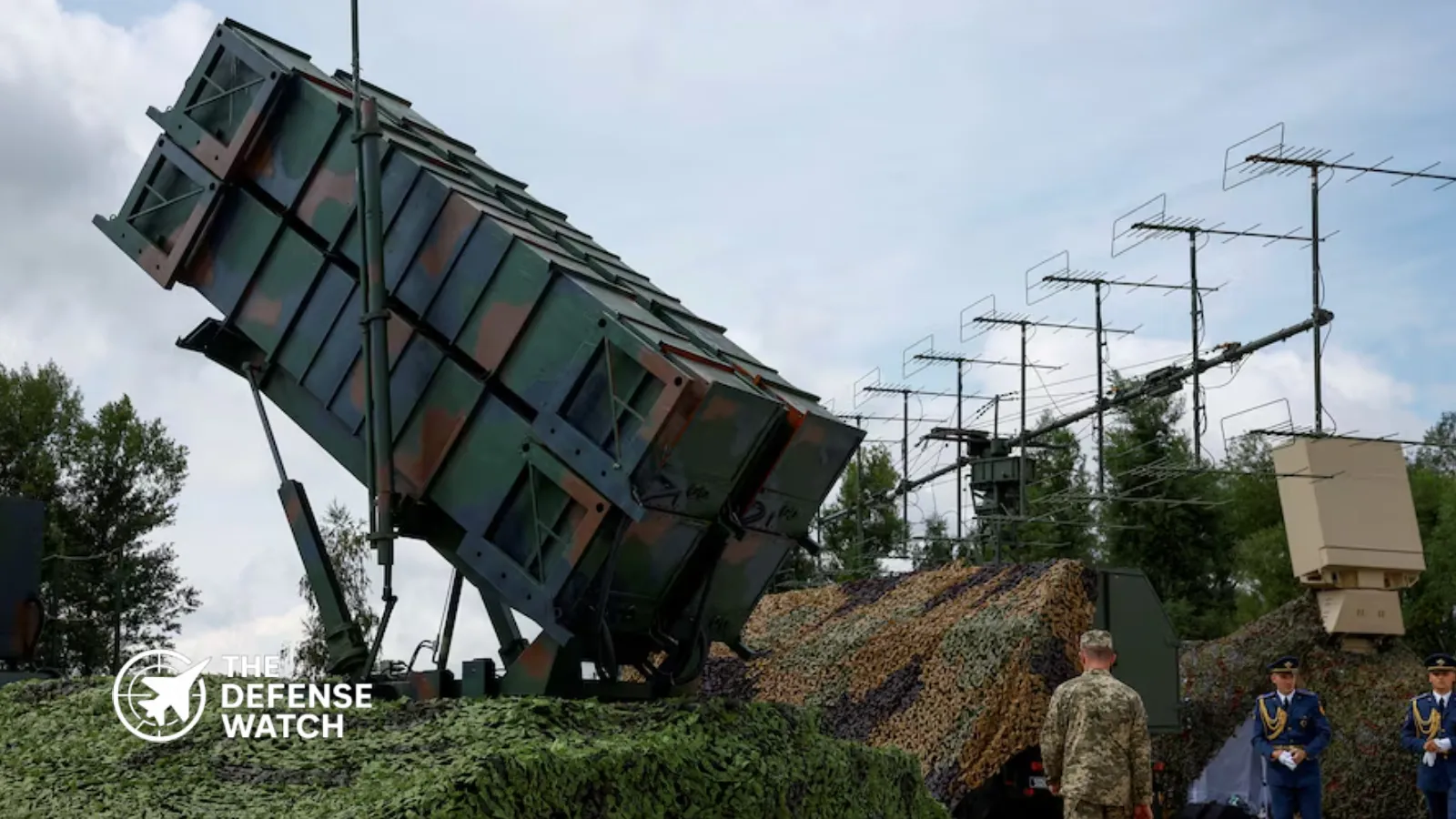
Ukraine currently depends heavily on the U.S. made Patriot air defense system to intercept Russian ballistic missiles.
While other European systems such as SAMP/T and IRIS T have demonstrated strong performance against aircraft, cruise missiles, and drones, Patriot remains the only system with an established operational record against the most demanding ballistic missile threats currently facing Ukraine.
Developing Freyja is intended to:
- Expand European missile defense capacity.
- Reduce dependence on limited Patriot interceptor stocks.
- Increase industrial production within Europe.
- Create a scalable architecture that participating nations can customize.
Open Architecture Could Become Freyja’s Biggest Advantage
One of the program’s most significant design features is its open architecture approach.
Instead of requiring every participating nation to purchase identical equipment, Freyja is expected to allow countries to integrate domestically produced:
- Early warning radars
- Fire control sensors
- Battle management software
- Communications systems
- Command and control networks
This approach could reduce procurement costs while allowing European defense industries to contribute specialized technologies rather than replacing existing national capabilities.
Industrial Cooperation Reflects Europe’s Broader Defense Strategy
The Freyja initiative also reflects a broader trend toward multinational European defense production.
Rather than relying solely on emergency weapons transfers, participating governments are increasingly pursuing collaborative development programs that distribute manufacturing across multiple countries.
Ukraine is reportedly considering establishing a dedicated funding mechanism to streamline financial contributions from partner nations while accelerating research and production.
Analysis: Why Freyja Matters Beyond Ukraine
Beyond its immediate role in protecting Ukrainian airspace, Freyja represents a notable shift in European missile defense planning.
For years, European integrated air and missile defense has depended heavily on U.S. supplied capabilities, particularly Patriot interceptors. Growing operational demand, expanding missile inventories among potential adversaries, and pressure on interceptor production have highlighted the need for additional capacity.
A collaborative system that combines Ukrainian operational experience with European industrial expertise could diversify missile defense options across NATO’s eastern flank. It may also encourage greater interoperability among participating nations through common command standards while preserving flexibility for national equipment choices.
However, significant technical challenges remain before Freyja reaches operational service. Integrating interceptors, advanced tracking radars, guidance systems, and battle management software into a reliable anti ballistic architecture requires extensive testing under realistic conditions. Producing sufficient interceptor inventories at sustainable costs will also be essential if the system is to complement, rather than simply duplicate, existing missile defense capabilities.
The program’s success will therefore depend not only on engineering milestones but also on sustained political commitment, industrial coordination, and long term funding from participating European governments.
Development Timeline
Milestone Status Anti ballistic coalition launched July 2026 International steering committee Expected to convene shortly Minimum viable product target First half of 2027 Prototype objective Mid 2027 Long term operational development To be determined after testing Outlook
If development remains on schedule, Freyja could become one of Europe’s most significant collaborative missile defense initiatives in decades. Although still in its early development phase, the project reflects growing momentum toward expanding indigenous European missile defense capabilities while incorporating Ukraine’s wartime operational experience into future air and missile defense architecture.
(adsbygoogle = window.adsbygoogle || []).push({});Executive Summary:
The Fatah-2 is Iran’s second-generation hypersonic weapon, pairing a boosted rocket stage with a maneuverable glide vehicle that Iranian sources claim can reach Mach 13-15 across a reported 1,400-1,500 km range. Its terminal-phase maneuverability, not just its speed, is what forces layered air-defense networks like Patriot, THAAD, and Iron Dome to rewrite their intercept math in real time.
A missile that can cross the length of the Persian Gulf in under ten minutes doesn’t need to be perfectly accurate. It just needs to arrive before the defense grid finishes deciding what it’s looking at.
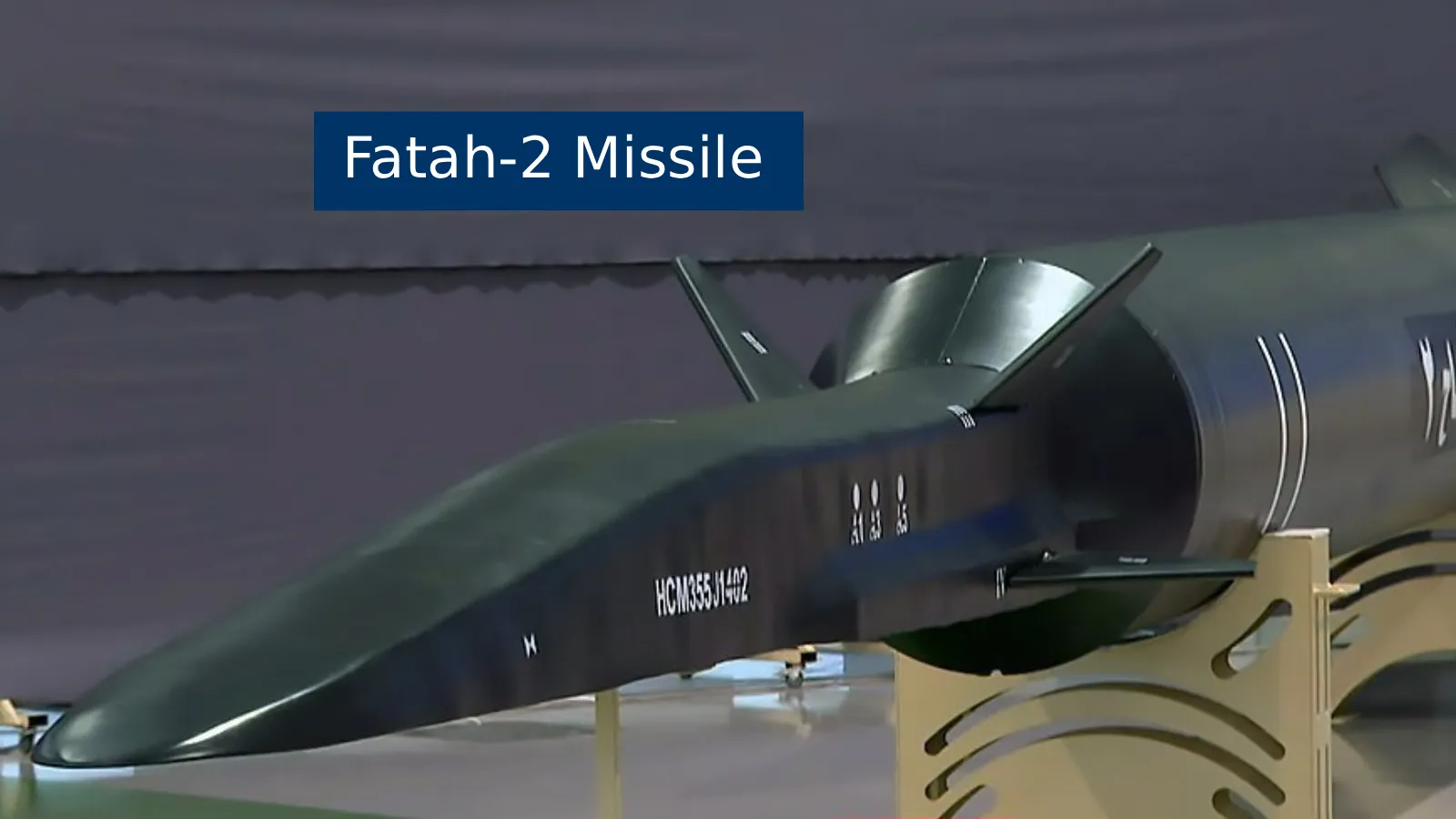
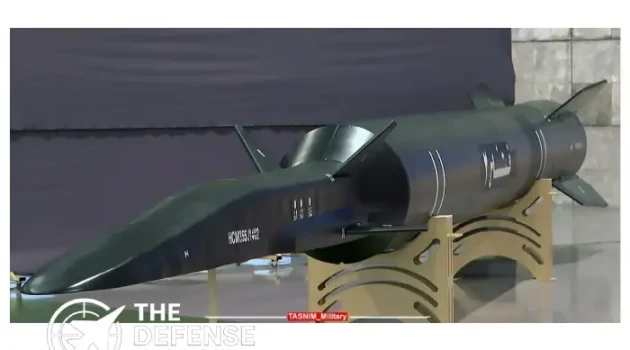
That’s the Fatah-2’s entire pitch. Unveiled by the IRGC Aerospace Force in November 2023 as the successor to the original Fatah-1, the system swaps a conventional reentry vehicle for a hypersonic glide vehicle (HGV) — a payload built to skip, bank, and juke through the upper atmosphere instead of falling along a predictable arc.
Technical Analysis: The Deep Dive
Publicly reported figures put the Fatah-2 at a two-stage design: a rocket booster stage gets the glide vehicle up to speed, then a second-stage HGV — described in Iranian and open-source reporting as liquid-fueled with throttleable thrust — takes over for the maneuvering terminal run. That throttle control matters more than the headline speed number.
A fixed-thrust glide vehicle still telegraphs a rough flight corridor. A vehicle that can vary its own thrust mid-glide can dodge inside that corridor, forcing an interceptor to solve a moving target problem rather than a predicted-intercept-point problem. That’s the core reason analysts keep comparing it to systems like China’s DF-ZF or Russia’s Avangard rather than to a standard MRBM.
(adsbygoogle = window.adsbygoogle || []).push({});Range estimates cluster between 1,400 and 1,500 km, which covers every US installation in the Gulf, most of Israel, and parts of the Arabian Sea from launch points inside Iran. Warhead reporting varies by source, generally in the 200-500 kg class, with both high-explosive and penetrator variants described. The launch platform is a road-mobile transporter-erector-launcher (TEL), which is arguably as strategically relevant as the missile’s flight profile — a mobile launcher is a much harder pre-emptive target than a fixed silo.
Fatah-2: Reported Specifications at a Glance
(adsbygoogle = window.adsbygoogle || []).push({});Metric Reported Figure Strategic Implication Top speed Mach 13-15 (~16,000-18,500 km/h) Compresses defender decision time to seconds Operational range 1,400-1,500 km Covers Gulf bases, Israel, Arabian Sea shipping lanes Propulsion Solid-fuel booster + liquid-fuel HGV stage Throttleable terminal-phase maneuvering Warhead class ~200-500 kg (HE / penetrator variants reported) Flexible against hardened vs. soft targets Launch platform Road-mobile TEL Difficult to preemptively locate and strike Guidance INS, with reported potential for satellite updates Terminal accuracy less predictable than pure ballistic systems The Insight: What Esports Aggression Teaches Us About Glide-Vehicle Doctrine
Watch a top-tier Call of Duty player run an aggressive rush strategy and you’ll notice something: the advantage isn’t raw movement speed, it’s unpredictability under time pressure. The defender knows an attack is coming. They just can’t compute the exact angle in time to set up a clean counter.
The Fatah-2 runs the same playbook at a geopolitical scale. Iron Dome, Patriot PAC-3, and THAAD were all built around predicting a ballistic path early and committing an interceptor to a calculated point in space. A glide vehicle that changes altitude and heading mid-flight breaks that commitment — the interceptor battery is essentially forced into a read-and-react posture instead of a solve-and-fire one, the same tempo problem an aggressive entry fragger creates for a defending team that’s used to holding angles.
atOptions = { ‘key’ : ‘e7d18db8b7513fb2a224cf4c3f18bbf0’, ‘format’ : ‘iframe’, ‘height’ : 90, ‘width’ : 728, ‘params’ : {} };The crossover isn’t just a metaphor for engagement copy. Western missile-defense planners increasingly borrow real-time tracking and prediction concepts from adaptive gaming AI research when modeling how to intercept maneuvering threats — because both problems boil down to the same question: how fast can a defender update its model of an opponent that refuses to move in a straight line.
A real hypersonic weapon is a serious challenge for any interceptor — the maneuverability at low altitude is what breaks the traditional tracking calculation.” — paraphrased from defense analyst commentary on the Fatah-2’s intercept profile
Why This Matters Now
Iran has publicly capped its declared missile range at roughly 2,000 km, but the Fatah-2 doesn’t need to exceed that ceiling to reshape the regional threat picture. Inside 1,500 km, it already reaches every hardened air base, naval anchorage, and population center that matters to US Central Command and Israeli air defense planners.
The bigger story is proliferation logic. Once one regional actor fields a maneuvering glide vehicle at this range class, the incentive for neighbors to either match it or radically upgrade layered defenses accelerates fast. The Fatah-2 isn’t just a missile — it’s a preview of what every mid-tier military in the region is about to be pressured into building or buying next.
FAQs
What is the range of the Fatah-2 missile?Reported figures put the Fatah-2’s operational range at approximately 1,400 to 1,500 km, sufficient to reach US bases across the Gulf and most of Israel from Iranian territory.
How fast is the Fatah-2 missile?Iranian sources and independent defense outlets report a terminal speed between Mach 13 and Mach 15 — roughly 16,000 to 18,500 km/h — during the hypersonic glide vehicle’s final approach.
Can Patriot or Iron Dome intercept the Fatah-2?Analysts note the missile’s mid-flight maneuverability, rather than speed alone, is what complicates intercepts by systems built around predicting a fixed ballistic trajectory, including Patriot PAC-3, THAAD, and Iron Dome.
Is the Fatah-2 nuclear-capable?Public reporting describes the Fatah-2’s warhead as conventional — high-explosive or penetrator variants in the 200-500 kg class — with no confirmed nuclear payload configuration.
Executive Summary:
MBDA has introduced a new mobile counter drone air defense system that combines its combat proven ASRAAM missile with a CMI Defense turret to address the rapidly growing threat posed by unmanned aerial systems and other low altitude targets. The new solution reflects increasing demand among NATO and allied militaries for highly mobile short range air defense capabilities that can protect maneuver forces against evolving aerial threats.
MBDA Unveils Mobile Counter Drone Air Defense System With ASRAAM Missiles
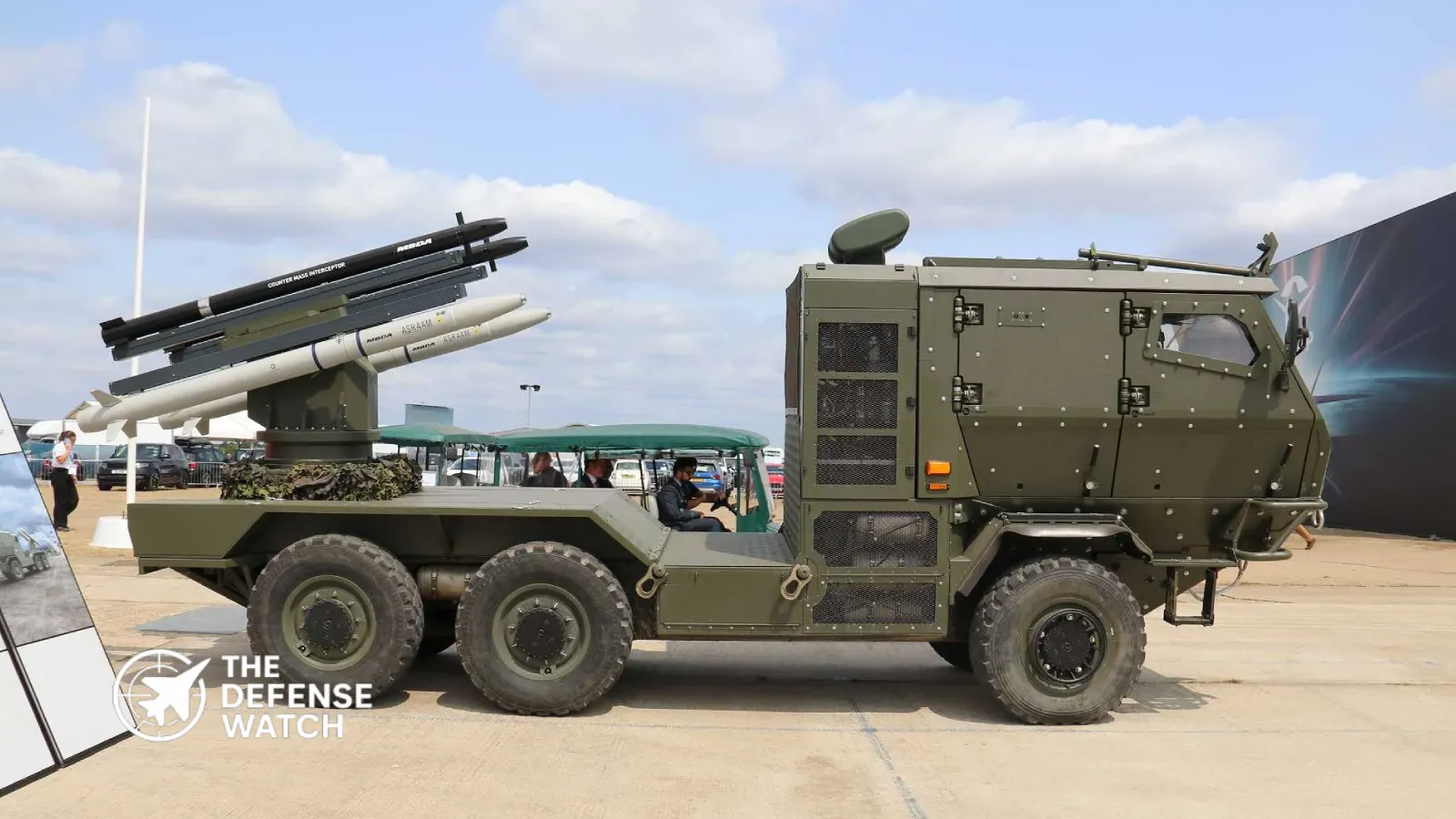
European missile manufacturer MBDA has unveiled a new mobile counter drone air defense system developed in partnership with Belgium based CMI Defense. The new short range air defense solution integrates MBDA’s Advanced Short Range Air to Air Missile (ASRAAM) with a mobile armored turret, creating a highly mobile platform capable of engaging drones, helicopters, cruise missiles, and low flying aircraft.
The system was presented during ongoing defense industry exhibitions in 2026 as armed forces worldwide accelerate investments in layered air defense against increasingly sophisticated unmanned aerial threats.
A New Mobile SHORAD Capability
The new system combines two mature technologies into a single integrated platform.
MBDA provides the ASRAAM missile, while CMI Defense contributes its combat proven armored turret technology. Mounted on a wheeled armored vehicle, the system is intended to accompany maneuver formations and deliver rapid air defense wherever ground forces operate.
Unlike traditional fixed air defense batteries, the platform is designed to remain mobile during military operations, allowing commanders to reposition defenses quickly as battlefield conditions change.
The combination offers protection against multiple categories of aerial threats, including:
Capability Details Primary Missile ASRAAM Mission Mobile Short Range Air Defense (SHORAD) Targets Drones, helicopters, aircraft, cruise missiles Platform Armored wheeled vehicle with CMI Defense turret Role Protection of maneuver forces and critical infrastructure ASRAAM Brings Proven Combat Capability
The ASRAAM missile is already operational with several air forces, including the United Kingdom’s Royal Air Force, where it equips aircraft such as the Eurofighter Typhoon and F-35B Lightning II.
Originally designed as an advanced air to air missile, ASRAAM features:
- High off boresight engagement capability
- Imaging infrared seeker
- High speed interception
- Fire and forget guidance
- Excellent performance against maneuvering targets
Adapting the missile for ground launch allows MBDA to leverage an existing production line rather than developing an entirely new interceptor. This approach can reduce procurement risk while accelerating deployment for interested customers.
Designed For The Expanding Drone Threat
Military operations in Ukraine, the Middle East, and other conflict zones have demonstrated that inexpensive drones can threaten armored formations, logistics hubs, command posts, and critical infrastructure.
Many conventional air defense systems were originally optimized to defeat fast aircraft rather than small unmanned systems flying at low altitude.
MBDA’s new mobile solution addresses this evolving operational challenge by combining mobility, rapid engagement capability, and modern missile technology within a compact platform.
The system is expected to complement larger layered air defense architectures instead of replacing long range missile systems.
Partnership With CMI Defense
CMI Defense contributes its experience in stabilized weapon stations and armored vehicle turrets.
Its modular turret architecture enables integration on multiple wheeled or tracked platforms depending on customer requirements.
The open architecture also provides opportunities to integrate additional sensors, battlefield management systems, and networked command and control capabilities already used by NATO members.
This flexibility could simplify integration into existing military vehicle fleets while reducing training and logistical requirements.
Why This Development Matters
The unveiling reflects a broader transformation underway across global air defense programs.
For decades, many Western militaries focused air defense investments on defeating advanced combat aircraft. Recent conflicts have shifted priorities toward defending against mass drone attacks, loitering munitions, and low cost cruise missiles.
The United States, NATO allies, and Indo Pacific partners are all expanding investments in mobile SHORAD capabilities capable of protecting forward deployed forces.
Rather than relying exclusively on expensive long range interceptors, armed forces increasingly seek layered solutions in which different systems engage threats according to range, altitude, and target type.
MBDA’s approach fits this trend by adapting an already fielded missile into a ground launched configuration, potentially reducing development timelines while improving interoperability among allied users already operating ASRAAM.
Operational Implications
The mobility of the new platform could provide several operational advantages:
- Protection for advancing armored units
- Rapid deployment around airfields and military bases
- Defense of logistics hubs
- Counter UAV coverage for expeditionary operations
- Integration into layered NATO air defense networks
Because the platform is vehicle mounted, it can relocate after firing, reducing vulnerability to counterbattery attacks or drone surveillance.
Strategic Context
The counter drone market has become one of the fastest growing segments of the global defense industry.
Governments are increasing procurement of radar systems, electronic warfare, directed energy weapons, and kinetic interceptors as drone attacks become more frequent and more complex.
MBDA’s latest system demonstrates how established missile technologies can be adapted to meet new operational requirements without requiring entirely new weapons programs.
For NATO members already operating ASRAAM inventories, the system may also offer logistical efficiencies by using an existing missile already supported within allied supply chains.
As drone warfare continues to evolve, mobile short range air defense platforms capable of protecting maneuver forces are expected to become an increasingly important component of future battlefield operations.
Executive Summary:
X-Bow has introduced the Buckler interceptor, a new low cost air defense weapon designed to defeat Group 3 unmanned aerial systems. The company says the interceptor will cost less than $100,000, addressing growing concerns over the high expense of using advanced missiles against relatively inexpensive drones while supporting scalable production for allied forces.
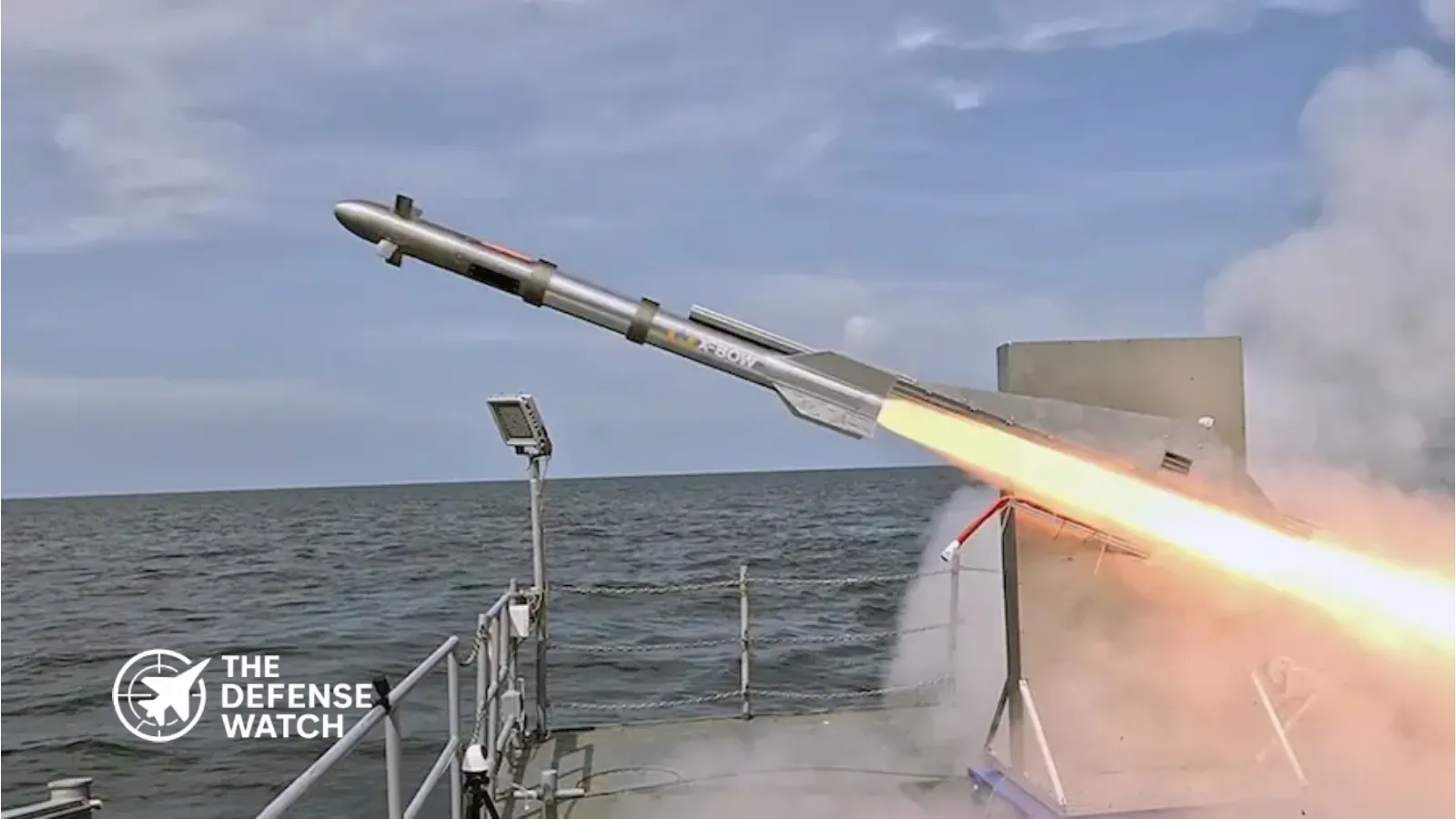
X-Bow Buckler Interceptor Addresses Rising Cost Of Counter Drone Operations
The X-Bow Buckler interceptor is the latest attempt to reduce the cost of defending military forces against increasingly capable unmanned aerial systems. Revealed by X-Bow, the new interceptor is designed specifically to engage Group 3 drones, offering a lower cost alternative to traditional surface to air missiles that are often significantly more expensive than the targets they destroy.
The announcement comes as militaries around the world continue searching for affordable counter drone capabilities following extensive operational lessons from conflicts in Ukraine and the Middle East. Drone attacks have highlighted a growing imbalance between inexpensive unmanned aircraft and costly defensive interceptors.
According to X-Bow, Buckler is intended to close that gap by delivering a capable interceptor priced below $100,000 per round, allowing military operators to expand defensive capacity without relying solely on high end missile systems.
Designed For The Group 3 Drone Threat
Group 3 unmanned aircraft generally include medium sized drones weighing up to approximately 1,320 pounds and operating at altitudes below 18,000 feet. These platforms are widely used for intelligence, surveillance, reconnaissance, and increasingly for strike missions.
As these drones become more common across modern battlefields, air defense forces have faced mounting pressure to employ expensive interceptors against comparatively low cost threats. This mismatch has become one of the defining challenges of contemporary integrated air and missile defense.
X-Bow says the Buckler interceptor is optimized to engage these medium sized drones while providing a significantly lower engagement cost. The company also emphasizes production scalability, an increasingly important requirement as defense planners seek to replenish missile inventories and sustain prolonged operations.
Focus On Affordable Production
One of Buckler’s primary selling points is manufacturing efficiency.
Rather than simply reducing unit cost, X-Bow is positioning the interceptor as a weapon that can be produced rapidly and at scale. The company argues that maintaining large inventories of affordable interceptors will become increasingly important as drone attacks continue to increase in both frequency and complexity.
The defense industry has increasingly shifted toward mass production strategies following operational lessons from recent conflicts. Governments and manufacturers alike have recognized that industrial capacity is now a strategic advantage alongside weapon performance.
The Buckler program reflects this broader trend by combining lower acquisition costs with manufacturing processes intended to support sustained production.
Why The Launch Matters
The introduction of another dedicated counter drone interceptor reflects a larger transformation taking place across global air defense.
Traditional air defense systems were developed primarily to defeat aircraft, cruise missiles, and ballistic missile threats. Today’s operational environment increasingly demands systems capable of defeating large numbers of relatively inexpensive drones without exhausting inventories of premium interceptors.
Several defense companies have responded by developing layered air defense architectures that combine electronic warfare, directed energy systems, guns, and lower cost missiles. Buckler appears aimed squarely at filling the missile layer for medium sized drone threats.
If fielded successfully, systems such as Buckler could help military operators preserve advanced long range interceptors for higher value targets while assigning lower cost weapons to routine drone engagements.
Industrial And Allied Implications
Beyond its technical characteristics, Buckler reflects growing demand among allied governments for cost effective defense procurement.
Defense ministries are increasingly evaluating not only weapon performance but also production capacity, affordability, and supply chain resilience. The ability to manufacture interceptors quickly and in large quantities has become an important consideration as countries expand air defense inventories.
By targeting a price below $100,000, X-Bow is seeking to position Buckler as a practical option for sustained operations where interceptor expenditure rates may remain high over extended periods.
The launch also aligns with broader efforts across NATO and partner nations to strengthen integrated air defense networks capable of responding to persistent drone threats while managing long term procurement costs.
Broader Defense Market Trends
The counter drone market continues to evolve rapidly as governments invest in layered defensive capabilities. Recent years have seen increased funding for kinetic interceptors, electronic warfare systems, high energy lasers, and artificial intelligence enabled detection technologies.
Affordable kinetic interceptors remain an important component of that mix because they provide an effective option against drones operating beyond the range or effectiveness of electronic attack systems.
The X-Bow Buckler interceptor enters this competitive environment as defense organizations continue balancing operational effectiveness with affordability. Whether adopted by allied customers will depend on future testing, integration with existing air defense architectures, and demonstrated operational performance.
As drone warfare continues reshaping military planning, systems that reduce engagement costs while supporting high volume production are expected to play an increasingly important role in future air defense strategies.