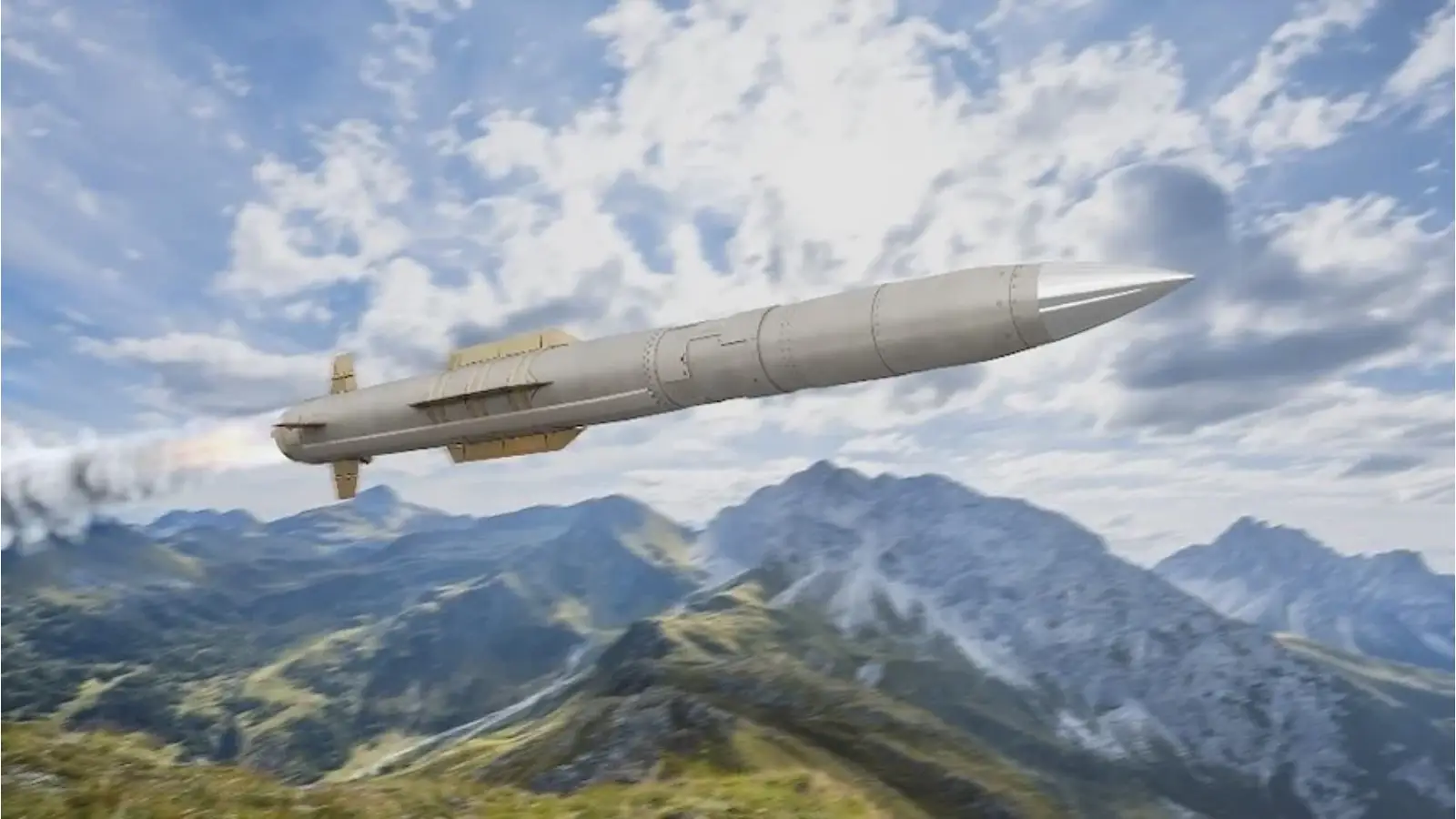
PAC-3 ACE Emerges As Lower-Cost Patriot Interceptor
Lockheed Martin is positioning the PAC-3 ACE interceptor as a lower-cost addition to the Patriot air and missile defense family, with the company saying the weapon is ready for battlefield use against aircraft, cruise missiles and short-range ballistic threats. The announcement builds on Lockheed Martin’s July introduction of the PAC-3 Adapted Capability Effector, which the company says will cost less than half as much per unit as the PAC-3 Missile Segment Enhancement, or MSE.
Takeaways
Lockheed Martin is positioning PAC-3 ACE as a lower-cost interceptor that can expand Patriot magazine depth while retaining compatibility with existing command-and-control architecture.
The latest statement came from Lockheed Martin Europe on Sept. 4, when the company described PAC-3 ACE as a lower-cost, high-performance interceptor built around the established PAC-3 family. It also emphasized compatibility with the Patriot weapon system and the U.S. Army’s Integrated Battle Command System, or IBCS.
That distinction is important. PAC-3 ACE is not being presented as a replacement for PAC-3 MSE. Instead, Lockheed Martin is developing it as a complementary interceptor intended to increase the number of affordable engagements available to Patriot operators.
The U.S. Missile Defense Agency describes the operational PAC-3 system as a lower-tier component of U.S. and allied air and missile defense, capable of defending against short-range ballistic missiles, cruise missiles and air-breathing threats.
What PAC-3 ACE Is Designed To Do
Lockheed Martin says PAC-3 ACE will address four broad target categories:
Capability PAC-3 ACE Aircraft Designed to counter Cruise missiles Designed to counter Close-range ballistic missiles Designed to counter Short-range ballistic missiles Designed to counter Patriot integration Yes IBCS integration Yes Relative cost Less than half of PAC-3 MSE, according to Lockheed Martin Published unit price Not disclosed Published production quantity Not disclosed The interceptor retains the PAC-3 software and uses the existing PAC-3 fire-control architecture, according to Lockheed Martin. The company says this approach is intended to reduce development, testing and fielding time compared with creating an entirely new interceptor and associated battle-management architecture.
This could also reduce integration risk for Patriot operators. The Army has spent years developing the ability to connect Patriot interceptors with distributed sensors and battle-management systems through IBCS, including live-fire demonstrations involving PAC-3 interceptors.
How Lockheed Martin Is Cutting The Cost
The central feature of PAC-3 ACE is not simply a lower price. It is the decision to remove or simplify some of the more expensive components associated with the higher-performance PAC-3 MSE.
Janes reported after the Farnborough unveiling that Lockheed Martin replaced the PAC-3 MSE’s hit-to-kill warhead with a blast-fragmentation warhead. The ACE design also uses a simplified seeker, removes the MSE’s attitude-control motors and employs a single-pulse solid rocket motor rather than the MSE’s dual-pulse motor.
Those changes represent a deliberate tradeoff.
PAC-3 MSE is designed around a highly maneuverable hit-to-kill architecture. PAC-3 ACE instead emphasizes a less expensive configuration intended to provide effective coverage against a broader set of lower-tier or air-breathing threats without requiring every engagement to use the most expensive interceptor available.
That creates a potentially important distinction in how a Patriot battery could allocate its magazine. A high-end interceptor can be reserved for threats that require its full performance, while a cheaper round could address targets for which that capability is unnecessary.
Lockheed Martin has not published a complete performance envelope for PAC-3 ACE, so direct comparisons with PAC-3 MSE in range, altitude, maneuverability and probability of kill would be premature.
The Magazine-Depth Problem
The development of PAC-3 ACE comes as the United States and its allies are placing greater emphasis on interceptor production capacity.
In January, Lockheed Martin and the U.S. government established a framework intended to increase annual PAC-3 MSE production from approximately 600 interceptors to 2,000 under a seven-year arrangement. The U.S. government subsequently awarded Lockheed Martin a multiyear PAC-3 MSE contract valued at up to $58.62 billion, including a $53.86 billion modification announced in July.
The scale of that investment highlights both the importance and the cost of the PAC-3 family.
The Army describes PAC-3 MSE as a key component of its layered air and missile defense architecture, with the interceptor designed to counter tactical ballistic missiles, cruise missiles and aircraft.
The operational challenge is therefore not only whether an interceptor can defeat a particular target. It is whether enough interceptors can be manufactured, transported, maintained and positioned to sustain defense against repeated attacks.
That is where PAC-3 ACE could have its greatest strategic relevance if development and testing validate the advertised concept.
PAC-3 ACE Could Add Another Layer Of Magazine Capacity
Air defense economics increasingly favor having several interceptor options rather than relying on a single expensive weapon.
A defender facing a mixed raid may encounter aircraft, cruise missiles, drones and ballistic missiles at the same time. Using the highest-end interceptor against every target can rapidly reduce available magazine depth.
PAC-3 ACE is intended to address part of that problem by offering a lower-cost effector that remains inside the Patriot ecosystem.
The concept is consistent with a wider U.S. Army effort to create a networked air and missile defense architecture in which sensors and weapons can operate across a common command-and-control framework. The Army says IBCS is designed to link sensors and shooters across domains, allowing commanders to use available sensors and interceptors more flexibly.
For PAC-3 ACE, that means the value of the missile will depend on more than the interceptor itself. Its practical effectiveness will also depend on radar coverage, target discrimination, engagement authority, communications, software integration and the ability of the wider Patriot architecture to support simultaneous engagements.
PAC-3 ACE Is Not Yet The Same As An Operational PAC-3 MSE
Lockheed Martin’s battlefield-ready description should be read alongside the current development status.
The company has stated that PAC-3 ACE is designed for rapid fielding and initial production, but it has not publicly disclosed a first customer, precise production schedule or specific unit price.
That makes PAC-3 ACE fundamentally different from PAC-3 MSE, which is already operational and has undergone extensive U.S. testing and fielding.
The Army and Missile Defense Agency have demonstrated PAC-3 MSE in integrated engagements, including tests connecting Patriot and THAAD architectures. The MDA has described PAC-3 as an operationally fielded hit-to-kill capability.
PAC-3 ACE will therefore need its own flight testing, qualification and operational evaluation before its battlefield claims can be measured against an established interceptor such as PAC-3 MSE.
European Production Is Part Of The Strategy
Lockheed Martin is also linking PAC-3 ACE to a broader effort to expand European industrial participation.
The company says American and European suppliers and industry partners will participate in the interceptor’s development and production. Lockheed Martin has separately promoted a stronger European industrial footprint for the PAC-3 family as NATO members seek greater regional sustainment and missile-defense capacity.
That approach could have significance beyond manufacturing costs.
European participation can potentially shorten supply chains, increase regional industrial capacity and provide NATO operators with greater access to common interceptors. It also supports the broader goal of improving interoperability among Patriot users.
For the United States, the benefit would be greater allied capacity without requiring every country to build an independent interceptor architecture.
The Key Test Will Be Cost Versus Capability
The strongest argument for PAC-3 ACE is straightforward: a cheaper interceptor could allow Patriot operators to maintain more rounds in storage and engage more threats over a prolonged campaign.
But lower cost inevitably involves capability tradeoffs.
The simplified propulsion, guidance and terminal-control architecture reported by Janes means ACE should not be treated as a PAC-3 MSE equivalent at a lower price. It is better understood as a complementary interceptor optimized around a different cost and threat set.
The key question will be whether those tradeoffs produce an interceptor that can reliably defeat its intended targets at a sufficiently low cost and at sufficient production volume.
If testing confirms Lockheed Martin’s design goals, PAC-3 ACE could give Patriot users another option between very expensive high-performance interceptors and less capable short-range air-defense weapons.
That would make the program relevant not only to Patriot modernization, but also to the larger U.S. and allied effort to solve the magazine-depth problem in integrated air and missile defense.
What Comes Next
Lockheed Martin has established the concept, disclosed its intended mission set and announced the cost target. The next major milestones will be development testing, flight testing, integration and eventual production decisions.
Until those steps are completed, the most defensible assessment is that PAC-3 ACE represents a promising lower-cost extension of the Patriot interceptor family rather than a fielded replacement for PAC-3 MSE.
The strategic objective is clear, however. By retaining existing Patriot and IBCS integration while simplifying the interceptor itself, Lockheed Martin is attempting to increase the number of affordable defensive shots available against a growing range of aerial threats.
For U.S. and allied air-defense forces, that question of quantity is becoming almost as important as interceptor performance.
