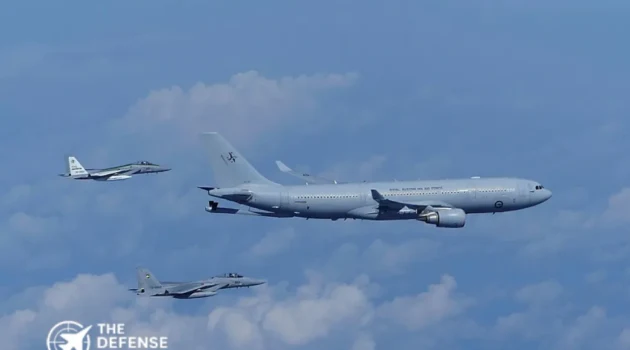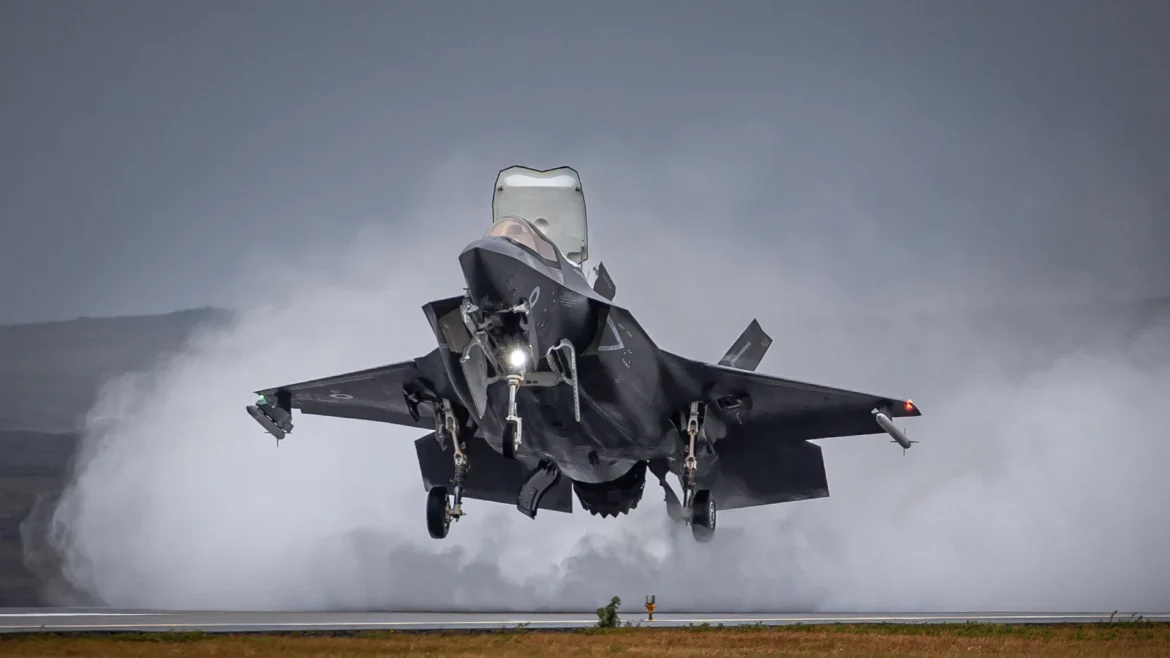
Britain’s combat air fleet spent much of 2025 defined by delay and uncertainty — a slipping F-35B delivery schedule, an unresolved Typhoon retirement debate, and open questions about how much of the original 138-aircraft F-35 ambition would survive contact with budget reality. Several of those threads have now resolved, at least for the moment. Here’s where things actually stand as of August 2026.
The Typhoon Fleet: A Bigger Upgrade Than Planned
The headline shift this year is on the Typhoon side. The UK’s latest Defence Investment Plan commits to upgrading all 107 of the RAF’s Tranche 2 and Tranche 3 Eurofighter Typhoons — a significant expansion from the 40 aircraft originally announced as recently as January 2026. The upgrade package, worth £5.4 billion, covers radar, communications, and software improvements, a new defensive aids system, and enhancements to weapons integration, funded across FY 2026/27 through FY 2029/30. A further £1.1 billion is earmarked to sustain the fleet into the 2040s through the Long Term Evolution programme.
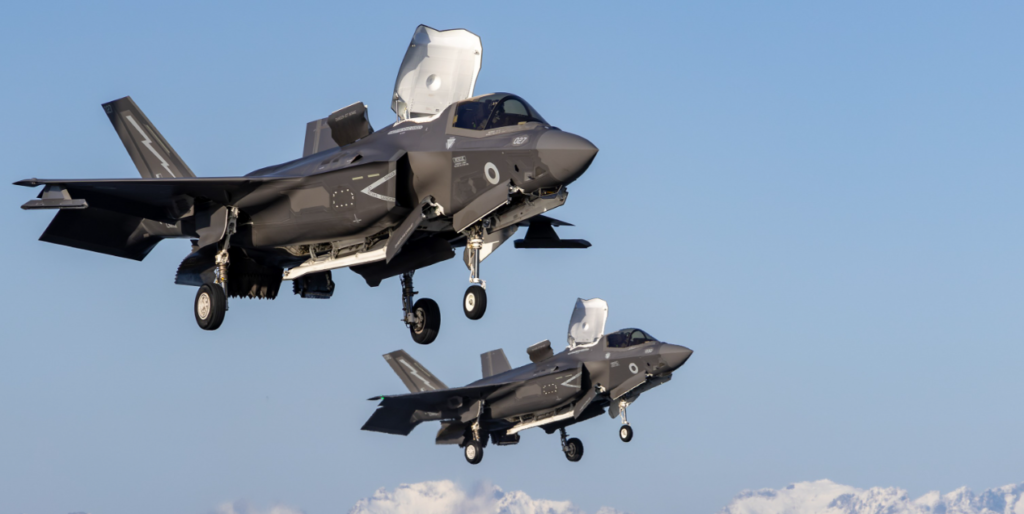
That investment confirms what UK defense officials have signaled for some time: the Typhoon isn’t a bridge aircraft waiting to be replaced, but the core of RAF combat air capability for roughly another 15 years, alongside the F-35B and, eventually, the GCAP/Tempest sixth-generation fighter.
The RAF’s oldest Typhoons haven’t been as fortunate. Of the original 30 Tranche 1 airframes, 26 have been scrapped, stripped for spares, or placed in storage pending disposal. Four remain in active service — but only in the Falkland Islands, flying Quick Reaction Alert duty out of Mount Pleasant Complex, where they’re scheduled to serve until 2027 before final retirement. Unlike the Tranche 2/3 fleet, the Tranche 1 jets lacked the avionics and structural provisions needed for the newer upgrade package, making retention uneconomical despite some earlier industry suggestions that BAE Systems could modernize them.
The F-35B: First Tranche Complete, Long Road Still Ahead
On the Lightning Force side, the UK Ministry of Defence confirmed in late March 2026 that it had received the last of its first 48 contracted F-35B Lightning IIs — a milestone reached roughly 14 years after the first STOVL F-35B was delivered to the MoD in 2012, and eight years after the type’s arrival at RAF Marham in 2018.
That completion came later than planned. Lot 17 aircraft that were originally due by the end of 2025 slipped into early 2026, with the final deliveries landing by April 2026 — a three-to-four month delay attributable to the Joint Program Office’s shared production-lot structure, under which the UK, as sole Tier One international partner, has no contractual mechanism to impose delay penalties on Lockheed Martin.
As of the completed first tranche, the RAF and Royal Navy’s joint Lightning Force — comprising 617 Squadron and 809 Naval Air Squadron, both based at RAF Marham — operates 47 F-35Bs, following the loss of one airframe. The government has confirmed a long-term delivery plan extending well beyond that first batch: a written parliamentary answer in January 2026 set expectations for the UK’s 75th F-35 to arrive by the end of 2033, with deliveries continuing steadily through the 2030s.
That trajectory still falls well short of the UK’s original ambition of 138 F-35Bs, first set out in the 2015 Strategic Defence and Security Review. Analysts and reporting have increasingly described that full order as unaffordable, with some commentary suggesting future purchases may lean toward the cheaper F-35A variant at the B model’s expense — though the UK’s carrier-based, STOVL-dependent force structure makes a wholesale pivot away from the B model operationally complicated.
What the F-35B Still Can’t Do
Delivery numbers are only part of the readiness picture. The RAF’s F-35Bs remain constrained by weapons integration timelines tied to the aircraft’s Block 4 software upgrade. Until Block 4 arrives, UK F-35Bs will continue operating with a more limited weapons set than originally envisioned: SPEAR 3 integration is now targeted for financial year 2028-29, and Meteor beyond-visual-range missile integration isn’t expected until the early 2030s. In the meantime, the aircraft’s stealth, sensor fusion, and electronic-attack capability are doing most of the operational work — its RAF nickname, “the assassin,” reflects that role, working alongside the Typhoon (“the thug”) in a high-low mix where the F-35B clears the way and the Typhoon brings the heavier ordnance load.
Comparing the Two Fleets
Eurofighter Typhoon F-35B Lightning II Current fleet size 111 total (107 Tranche 2/3 active + 4 Tranche 1 in Falklands) 47 operational 2026 development £5.4B upgrade covering all 107 Tranche 2/3 jets First 48-aircraft tranche completed (delayed to April 2026) Out-of-service date Tranche 1: 2027; Tranche 2/3: 2040 Deliveries continuing through the 2030s; 75th aircraft expected by end of 2033 Key limitation Tranche 1 lacked upgrade-compatible avionics Full weapons set (SPEAR 3, Meteor) awaiting Block 4, not expected until 2028-early 2030s Role Heavy ordnance, air defense, core fast-jet mass Stealth, sensor fusion, carrier operations, first-in strike FAQ
How many F-35Bs does the UK have as of 2026?The RAF and Royal Navy’s Lightning Force operates 47 F-35Bs following completion of the first 48-aircraft contracted tranche in March/April 2026, with one airframe lost. The government expects to reach 75 total F-35s by the end of 2033.
Why was the UK’s F-35B delivery delayed?Lot 17 aircraft due by the end of 2025 slipped into early 2026 due to production issues within the Joint Program Office’s shared-lot structure. Because the UK buys through annual international production lots rather than a bespoke bilateral contract, it has no financial remedy or delay penalty available against Lockheed Martin.
Is the RAF still planning to buy 138 F-35Bs?The original 2015 target of 138 F-35Bs is now widely viewed as unaffordable. Current confirmed government planning extends only to a 75th aircraft by 2033, with the long-term fleet size beyond that still unresolved.
What happened to the RAF’s Tranche 1 Typhoons?Of the original 30 Tranche 1 Typhoons, 26 have been scrapped, stripped for parts, or placed in storage. Four remain in service on Quick Reaction Alert duty in the Falkland Islands until 2027, after which the type will be fully retired from RAF service.
When will RAF F-35Bs get their full weapons package?SPEAR 3 integration is targeted for financial year 2028-29, and Meteor missile integration isn’t expected until the early 2030s, both tied to the aircraft’s Block 4 software upgrade.
How much is the UK spending to upgrade the Typhoon fleet?£5.4 billion to upgrade and sustain all 107 Tranche 2 and 3 Typhoons, spread across FY 2026/27 to FY 2029/30, plus a further £1.1 billion for long-term sustainment into the 2040s.
The Loadout Problem, In Gaming Terms
Any player who’s grinded through a live-service shooter’s weapon-unlock tree will recognize the RAF’s current F-35B situation instantly: you’ve got the platform, you’ve got the base kit, but half your loadout is still locked behind a content update that keeps slipping right. SPEAR 3 and Meteor are effectively the F-35B’s endgame weapon unlocks — available on the roadmap, promised for a future patch, but not yet in the loadout menu. Until Block 4 ships, RAF pilots are running a stealth platform that’s already lethal in its current build, but still waiting on the DLC that unlocks its full kit.

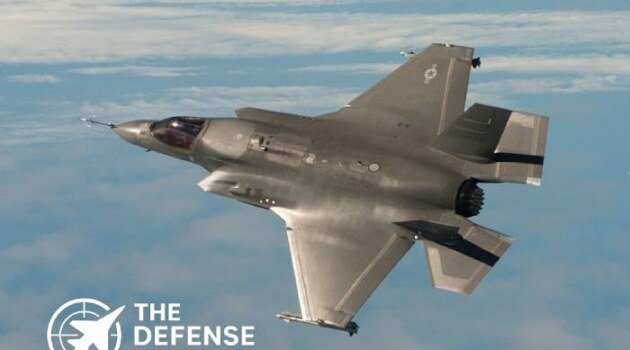
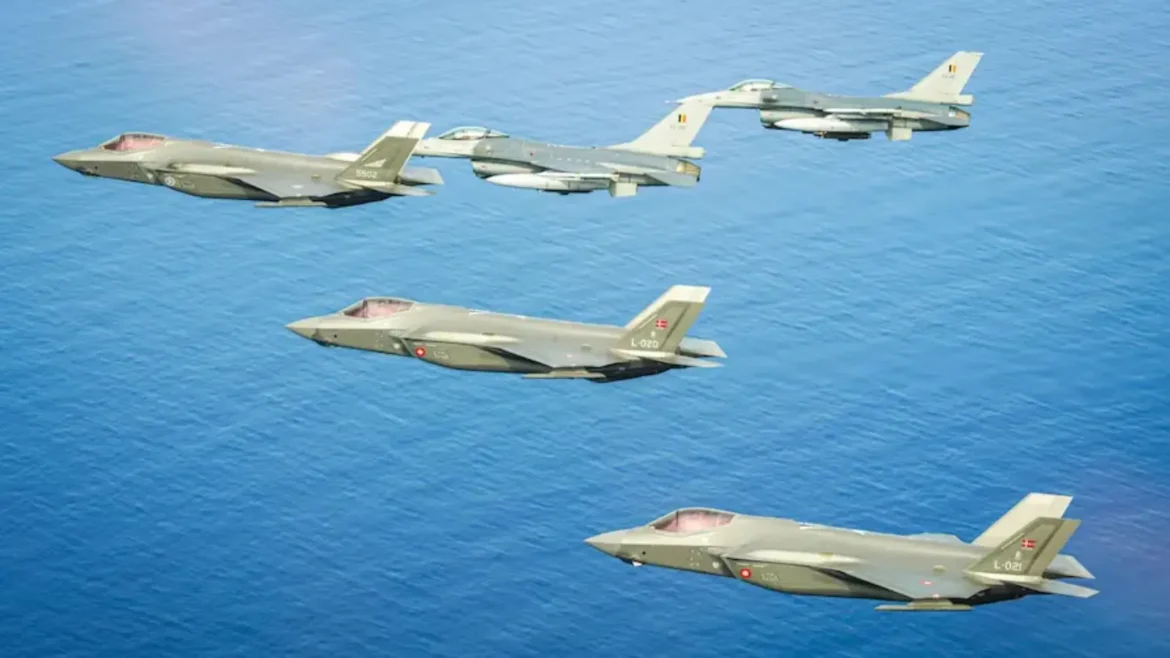
Denmark has moved its F-35 program another step toward dispersed operations by making a deployable command and mission-support facility fully operational after its first field deployment in northern Norway.
Executive Summary: Denmark has declared a new deployable F-35 operations facility fully operational after testing it during NATO’s Ramstein Flag 2026 exercise in northern Norway. The containerized facility allows Danish personnel to plan, command and support F-35 missions from forward locations while maintaining secure operational infrastructure. The capability gives Denmark greater flexibility to disperse its fifth-generation fighters beyond their permanent base at Skrydstrup.
Denmark Expands F-35 Forward Operations
Denmark’s F-35 forward operations capability has reached a new milestone following the successful field deployment of a containerized operations facility during Ramstein Flag 2026 in northern Norway.
The Danish Air Force said the facility is now fully operational after meeting the operational requirements established for the capability. The system was deployed away from Denmark’s permanent air bases and used to support F-35 operations during the NATO exercise.
According to Defence Industry Europe, the facility provides the secure infrastructure required for mission planning, command and operational support at forward locations. Its containerized design allows the system to be transported and established where Danish F-35 aircraft are required to operate.
The development is significant because modern air operations increasingly depend on the ability to distribute aircraft, personnel and command functions across multiple locations rather than concentrating combat power at a small number of permanent bases.
Ramstein Flag Provided The First Major Test
The facility was first used during Ramstein Flag 2026, NATO’s large multinational air exercise held from June 8 to 19.
The exercise brought together forces from up to 18 Allied nations across three joint operations areas stretching from northern Norway to southern Spain. NATO reported that more than 200 aircraft and other aerial assets operated from 20 locations, including conventional air bases and highway strips.
Denmark deployed F-35 aircraft to Ørland in Norway alongside Norwegian and Italian F-35s. The exercise also included F-35 operations from Finland and other locations across northern Europe.
The Royal Danish Air Force had already identified the exercise as the first time its F-35 force would participate using a deployable concept that allows operations outside Fighter Wing Skrydstrup. Denmark deployed four F-35 aircraft, with two additional aircraft held in reserve, according to the Danish Armed Forces.
This provided a practical test of more than the aircraft themselves. It also examined the supporting infrastructure needed to plan and manage missions when the normal home-base environment is unavailable.
What The Deployable Facility Adds
The main value of the new facility is not an additional weapon or sensor. It is the ability to move essential operational functions closer to deployed aircraft.
A forward F-35 detachment needs secure communications, mission planning, command functions and other support services. A deployable operations facility provides these functions without requiring the entire operation to depend on a permanent Danish air base.
That distinction matters for dispersed operations.
A modern air force can increase resilience by separating aircraft and support assets across multiple locations. This can make it harder for an adversary to disrupt an entire force with attacks against a limited number of known airfields.
Denmark has not publicly described every technical element of the facility. Defence Industry Europe reported that the containerized system provides a secure and classified environment for mission planning, command and operational support.
The Danish Armed Forces said the Ramstein Flag deployment demonstrated that the system could be moved to a forward location, established and used under demanding conditions.
Why The Capability Matters For NATO
The new capability fits directly into NATO’s growing emphasis on Agile Combat Employment and dispersed air operations.
Ramstein Flag 2026 specifically trained NATO forces to operate from multiple locations while integrating advanced fighters with airborne surveillance, tankers, unmanned systems and other supporting aircraft.
Lockheed Martin, citing Allied Air Command, said the exercise tested integrated air and missile defense, intelligence sharing, counter anti-access and area denial operations, and Agile Combat Employment. More than 120 aircraft were expected to fly simultaneously during parts of the exercise, with more than 150 sorties per day from as many as 20 operating locations.
For Denmark, the deployable F-35 facility gives the country an additional tool for contributing to this operating model.
The Danish Armed Forces said experience gained during Ramstein Flag will be used to further develop the country’s F-35 capability.
Denmark’s F-35 Force Continues To Expand
The deployable facility arrives as Denmark continues to build its F-35 fleet.
Denmark originally ordered 27 F-35A aircraft. In October 2025, the Danish government announced plans to acquire 16 additional aircraft, bringing the planned national fleet to 43 F-35s. The Danish government said deliveries from the original order were expected to continue through 2026, while the F-35 capability is expected to become fully operational in 2027.
The Danish Armed Forces received its first F-35 aircraft in October 2023 and began operating the aircraft from Fighter Wing Skrydstrup. Denmark also declared its F-35 aircraft ready to participate in national air defense interception readiness in 2025.
The larger fleet will eventually give Denmark more capacity to maintain aircraft at home while also supporting deployed operations abroad.
That will be particularly relevant for NATO missions in northern Europe, where Denmark operates alongside Norway, Sweden, Finland and other Allied forces.
A Wider Nordic Operating Model
Ramstein Flag 2026 also demonstrated how the Nordic region is becoming increasingly integrated into NATO air operations.
The Norwegian Armed Forces said the northern part of the exercise was conducted across Finland, Sweden, Norway and Denmark, with Norwegian bases and airspace supporting Allied training and dispersed operations.
NATO separately reported that the exercise used more than 20 operational locations and included Denmark, Norway, Sweden, Finland and Spain as primary host nations.
For Denmark, the ability to deploy F-35 support infrastructure into this network provides greater operational flexibility.
It also supports a broader shift away from relying exclusively on permanent operating bases. Aircraft can still require established runways, fuel, maintenance and weapons support, but a mobile command and operations element can reduce the dependence on a single fixed headquarters.
What Comes Next
The declaration of the facility as fully operational does not mean Denmark has completed development of its dispersed F-35 concept.
Instead, the Norway deployment represents a practical step toward a larger operating model in which Danish F-35s can be supported from locations outside Skrydstrup.
The next stage will likely focus on building experience in moving the system, integrating it with Allied command structures and sustaining operations from different locations. These are important elements of the broader NATO approach to resilient air operations.
Denmark’s F-35 forward operations capability therefore represents more than a new deployable container system. It provides the infrastructure needed to take the country’s fifth-generation fighter force away from its normal operating environment and into a wider Allied network.
The successful Ramstein Flag deployment showed that Denmark can establish and operate this support architecture in a demanding multinational exercise. With the facility now declared operational, the Danish Air Force has another option for distributing its F-35 force when operational requirements call for greater flexibility.
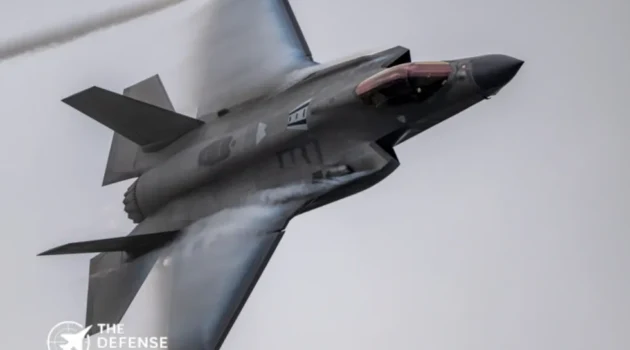
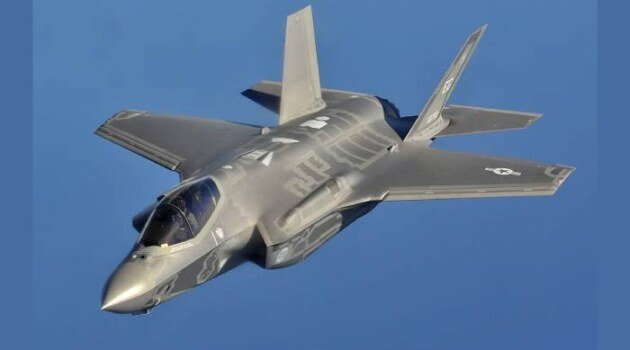
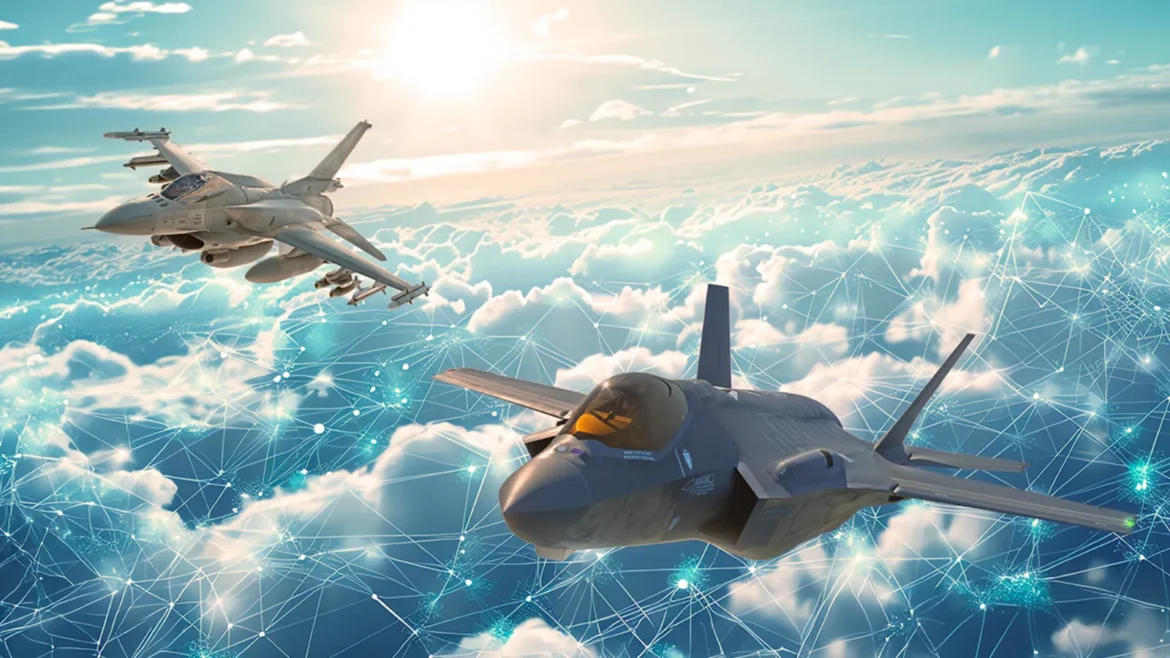
On August 7, 2026, Lockheed Martin outlined a missile-defense architecture that reframes one of its own flagship products. The F-35 Lightning II, long marketed primarily as a fifth-generation stealth fighter, is now being positioned as something closer to a mobile sensor platform — an airborne node capable of feeding tracking and targeting data into a network that spans space-based satellites, command-and-control systems, and interceptor missiles.
The presentation, framed around the phrase “Speed Wins: Modern Defense,” is less about a new piece of hardware than a new way of connecting hardware Lockheed already builds. And that distinction matters, because the company says the technologies involved aren’t conceptual — they’re described as mature and already available to operational forces.
How the Kill Chain Works
The architecture Lockheed describes follows a specific sequence. An overhead persistent infrared satellite first detects a missile launch from space. From there, F-35 aircraft operating in the vicinity of the threat refine that initial track using their own onboard sensors — principally the Distributed Aperture System (DAS), which provides spherical infrared coverage around the aircraft, and the Electro-Optical Targeting System (EOTS), combined with the jet’s advanced onboard data-fusion software.
That refined tracking and targeting information then feeds into the Command and Control, Battle Management and Communications system, or C2BMC — Lockheed’s own system for building a shared operational picture across the missile-defense enterprise. From C2BMC, the data is distributed to the systems responsible for actually intercepting the threat: the Terminal High Altitude Area Defense (THAAD) system and the Next Generation Interceptor (NGI), which is being developed as the backbone of U.S. homeland ballistic-missile defense.
Why “Architecture-Centric” Matters
Lockheed has framed this as a shift from platform-centric warfare to architecture-centric warfare — the idea that an individual platform’s value increasingly comes from what it unlocks for the rest of the force, not just its own specifications. In practical terms, that means the F-35 doesn’t need to fire a shot to contribute meaningfully to a missile-defense engagement. Its stealth, mobility, and sensor suite are reframed as inputs to somebody else’s shot.
That has a specific tactical payoff: launch-on-remote and engage-on-remote operations. Rather than a THAAD battery or an NGI site having to build a complete, independent track using its own organic radar before engaging, it could begin an engagement using tracking data generated by a distant sensor — an F-35 orbiting elsewhere in theater, or a satellite overhead. Shortening that sequence compresses the overall sensor-to-shooter timeline, which matters enormously against fast, maneuvering threats where every second of decision time counts.
What This Solves — and What It Doesn’t
The stated goal is straightforward: reduce the time between detecting a missile launch and actually engaging it, particularly against threats — including emerging hypersonic weapons — where traditional, sensor-isolated defenses may not have enough time to build an independent track before the threat arrives.
But the architecture, as publicly described, remains a high-level vision rather than a fielded, tested system with disclosed performance data. Open questions include the actual operational latency of the data links involved, the classified interface standards required to connect an F-35’s sensor suite to C2BMC in real time, the reliability of track-handoff between platforms, cybersecurity safeguards for a network that touches both a stealth fighter’s sensor data and national missile-defense command systems, and — critically — how the approach performs against sophisticated, maneuvering hypersonic weapons and coordinated electronic warfare, rather than more predictable ballistic threats.
There’s also a resourcing question worth flagging: tasking a multi-role, high-demand, expensive stealth fighter with a persistent sensor-node role is a different mission profile than air superiority or strike, and it raises questions about availability trade-offs if F-35s are increasingly expected to loiter in a tracking role during a live missile-defense scenario.
Comparing the Architecture’s Building Blocks
Element Role in the Architecture Status Overhead persistent infrared satellites Initial launch detection from space Operational F-35 (DAS, EOTS, data fusion) Airborne track refinement and targeting node Concept built on fielded aircraft/sensors C2BMC Fuses inputs into a shared operational picture Operational, Lockheed-built THAAD Terminal-phase intercept Operational Next Generation Interceptor (NGI) Homeland ballistic-missile intercept backbone In development FAQ
What did Lockheed Martin announce on August 7, 2026?Lockheed Martin outlined a missile-defense architecture in which the F-35 Lightning II acts as an airborne tracking and targeting node, feeding data into a network that links space-based sensors, the C2BMC command system, THAAD, and the Next Generation Interceptor.
How does the F-35 contribute to missile defense without firing weapons?The F-35 uses its Distributed Aperture System, Electro-Optical Targeting System, and onboard data-fusion software to detect and refine tracks on missile threats, then passes that tracking and targeting data into C2BMC, which distributes it to interceptor systems like THAAD and NGI.
What is C2BMC?C2BMC stands for Command and Control, Battle Management and Communications — a Lockheed Martin-developed system that fuses data from multiple sensors into a single operational picture and routes tracking and targeting information to the appropriate missile-defense interceptors.
What is “launch-on-remote” or “engage-on-remote” and why does it matter?It refers to an interceptor battery beginning an engagement using tracking data generated by a remote sensor — such as an F-35 or a satellite — rather than waiting to independently build a complete track with its own radar. This can significantly shorten the time between detection and engagement.
Is this a new F-35 capability or a new missile-defense system?Neither, strictly speaking. Lockheed describes the underlying technologies — the F-35’s sensors, C2BMC, THAAD, and NGI — as already mature and operationally available. The announcement is about a new architecture for connecting them, not a new piece of hardware.
The Support-Class Analogy
Strategy-game players will recognize the logic here immediately. A scout or support unit that never fires a shot can still decide the outcome of a fight simply by revealing the map and feeding targeting data to your heavy hitters — vision control wins games as often as raw damage output does. Lockheed’s pitch effectively recasts the F-35 as that support-class unit for national missile defense: its combat value isn’t measured only by what it can shoot down itself, but by how much faster it lets THAAD and NGI batteries react once a threat is airborne. In a domain where intercept windows are measured in seconds, being the unit that calls the shot early can matter as much as being the unit that takes it.

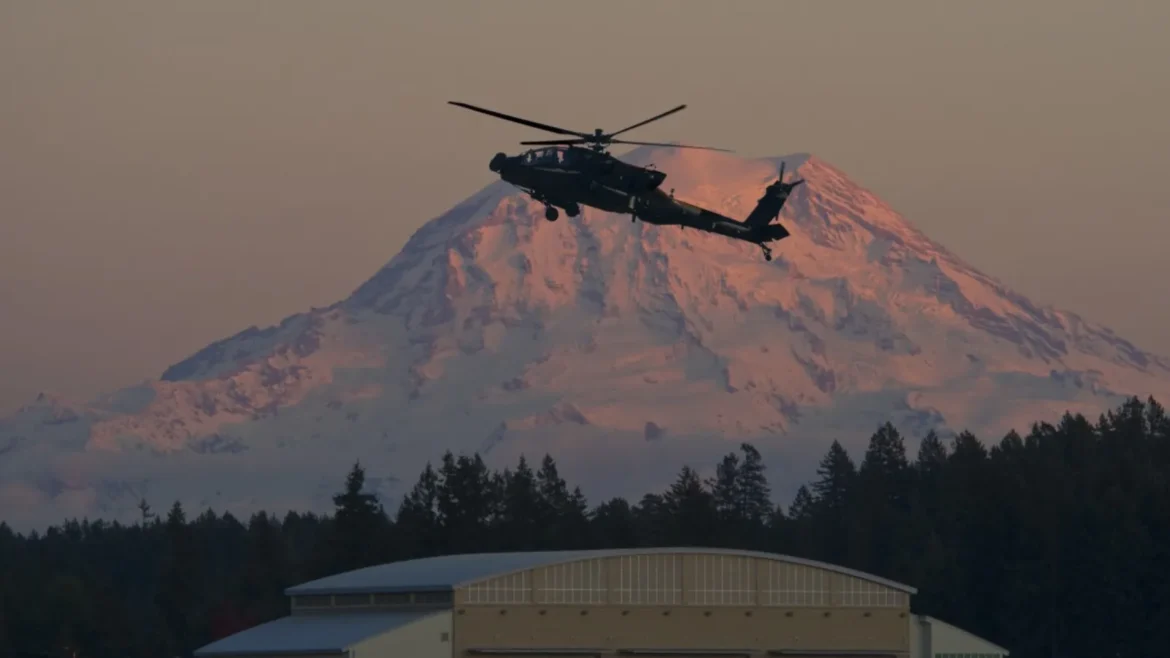
Executive Summary: Two U.S. Army aviators were killed on Aug. 12 when an AH-64E Apache attack helicopter crashed near Salado, Texas, during a maintenance test flight. The Army has temporarily halted AH-64 Apache training flight operations while a safety investigation seeks to determine the root cause of the accident.
AH-64E Apache Crash Prompts Army Aviation Stand-Down
The AH-64E Apache crash near Salado, Texas, has triggered a temporary Army-wide stand-down of Apache training flight operations as investigators examine the fatal accident. The crash occurred Wednesday, Aug. 12, near Fort Hood, with both crew members killed and a large grass fire developing at the site.
The Army identified the aircraft as an AH-64E that experienced a mishap during a maintenance test flight. Chief Warrant Officer 2 Deontre T. Huey and Warrant Officer Seth L. Olmstead were killed in the accident. Both were assigned to Bravo Company, 1st Battalion, 227th Aviation Regiment, 1st Air Cavalry Brigade, 1st Cavalry Division.
The Army’s temporary stand-down is intended to provide investigators time to establish the cause before Apache training flights resume. The Army Combat Readiness Center in Fort Rucker, Alabama, is leading the safety investigation, according to reporting on the Army’s response.
At this stage, there is no publicly established cause for the crash. That distinction is important because early reports of military aviation accidents often contain limited information while investigators secure the wreckage, examine maintenance records and reconstruct the aircraft’s final flight.
What Happened Near Salado
The helicopter went down in a field near Salado, approximately 50 miles north of Austin, during the afternoon of Aug. 12. Local emergency personnel responded after calls reporting the crash, and the impact triggered a grass fire that led to evacuations in the surrounding area.
No homes were reported struck by the helicopter, although the fire spread across a substantial area. Local firefighters and other emergency agencies worked to contain the blaze while military and law enforcement personnel secured the crash site.
The incident was initially described publicly as a routine flight, but subsequent reporting identified it more specifically as a maintenance test flight. That distinction matters for investigators because maintenance test flights can involve specific aircraft systems, post-maintenance checks or flight profiles that differ from ordinary training sorties. It does not, however, establish that maintenance caused this accident.
Why The Army’s Apache Stand-Down Matters
The temporary suspension of Apache training flights is one of the most consequential immediate responses to the accident.
The Army has previously used aviation stand-downs to examine recurring or potentially systemic safety concerns. In this case, the stated objective is to understand the root cause before normal Apache training operations resume.
The decision also highlights the importance of separating an individual aircraft accident from the broader safety performance of the AH-64 fleet. A single crash cannot by itself demonstrate a fleet-wide mechanical or design problem.
That assessment is particularly important for the Apache because the aircraft remains a major component of U.S. Army aviation. Boeing says the global Apache fleet has accumulated more than 5.3 million flight hours, including more than 1.3 million combat hours, across more than 1,300 aircraft in operation around the world.
The AH-64E is also still an active production platform. Boeing reported that more than 891 E-model aircraft had been delivered by November 2025 and said production is expected to continue into the 2030s.
Apache Safety Record Provides Important Context
Available Army safety data show why Apache aviation safety deserves close attention without drawing premature conclusions about the Salado crash.
An Army safety review covering fiscal years 2020 through 2024 recorded 105 AH-64 mishaps. Sixteen were Class A flight mishaps, producing a rate of 2.73 Class A mishaps per 100,000 flight hours. The comparable five-year average for Army rotary-wing aviation was 0.90 Class A mishaps per 100,000 flight hours.
The same Army analysis found that the AH-64 fleet accounted for about 15.6 percent of total rotary-wing flight hours during the period while representing 42 percent of rotary-wing Class A mishaps and 23 percent of Class A through C mishaps.
Those figures provide historical context, but they should not be interpreted as evidence that the Salado crash resulted from a particular defect or systemic failure. Mishap statistics combine different causes, aircraft configurations, operating environments and crew circumstances.
The Army’s published data also show a range of mishap categories involving the Apache fleet.
AH-64 Mishap Category, FY2020 to FY2024 Total Events Controlled flight into terrain 15 System failure or malfunction, non-powerplant 13 Ground handling and servicing operations 13 Pilot or operator loss of control in flight 6 Powerplant failure or malfunction 7 Abrupt maneuver 5 Midair collision 1 Wildlife strike 3 Source: U.S. Army Combat Readiness Center safety data.
The data demonstrate that Apache mishaps have multiple contributing categories. Investigators therefore need to establish the specific chain of events in the Texas accident before comparisons with historical Apache incidents can be made responsibly.
The AH-64E Is A Highly Complex Aircraft
The AH-64E is not simply an older attack helicopter with updated weapons. It combines flight systems, sensors, communications, electronic systems and weapons into a networked combat platform.
The U.S. Army describes the aircraft as a twin-engine, four-bladed attack helicopter with a two-person tandem crew. Its weapons suite includes the M230 30 mm cannon, 2.75-inch rockets and Hellfire missiles.
Boeing lists a maximum operating weight of 23,000 pounds, a maximum level flight speed above 150 knots and a service ceiling of 20,000 feet. The company also identifies the aircraft’s integrated sensors, digital connectivity and manned-unmanned teaming functions as core features of the E-model.
AH-64E Characteristic Published Specification Crew 2 Maximum operating weight 23,000 lb Maximum level flight speed 150+ knots Service ceiling 20,000 ft Rotor diameter 48 ft Main weapons 30 mm cannon, rockets, Hellfire missiles Maximum listed Hellfire load 16 Maximum listed 30 mm ammunition 1,200 rounds Source: Boeing and U.S. Army.
The aircraft’s complexity also means that a serious mishap investigation must consider a broad set of possibilities, including flight controls, propulsion, transmission and drivetrain components, avionics, maintenance actions, human factors, environmental conditions and operational procedures.
That is why investigators typically avoid assigning a cause until physical evidence and recorded aircraft data have been examined.
Maintenance Test Flight Adds An Important Investigative Dimension
The identification of the Salado sortie as a maintenance test flight is significant, but it should not be treated as proof that maintenance caused the crash.
Maintenance test flights are conducted to verify aircraft performance or system operation following maintenance activity. Depending on the work performed, crews may be required to evaluate particular systems or aircraft responses that would not necessarily be emphasized during a normal training flight.
For investigators, this creates an important evidence trail. Maintenance records, work orders, component histories, inspection documentation and aircraft data can help establish what work was performed before the flight and what systems were being evaluated.
The aircraft’s recorded information will also be important. Investigators can use available flight and maintenance data, cockpit information and wreckage examination to reconstruct the sequence of events.
Until that work is complete, claims involving a specific mechanical failure, pilot error or other cause remain unverified.
Apache Modernization Continues Despite The Crash
The accident comes as the Army and industry continue to modernize the Apache rather than immediately replace it with another conventional attack helicopter.
Boeing’s current modernization work builds on the AH-64E Version 6 and includes improvements to networking, sensors, crew interfaces, survivability and integration with unmanned systems. The company also describes future Apache configurations that could incorporate improved engines, drive systems and additional payload capacity.
In April 2026, Boeing said it was continuing to develop the Apache as part of a broader family of systems and noted that the aircraft is being adapted for evolving threats, including drones. The company also reported a nearly $4.7 billion 2025 contract covering 106 new-build AH-64Es, including 96 for Poland.
That modernization path makes aviation safety especially important. The Army must maintain enough aircraft availability for training and operational requirements while ensuring that new modifications, maintenance procedures and aging-airframe issues are properly managed.
The Texas crash does not by itself establish that modernization is required or that a particular Apache subsystem is responsible. It does, however, demonstrate why detailed safety investigations remain essential as the Army continues operating and upgrading a complex combat aviation fleet.
What Investigators Will Need To Establish
The central question is not simply why the helicopter crashed, but what sequence of events led to the loss of the aircraft.
Investigators will need to establish:
- The aircraft’s condition before the flight.
- What maintenance or inspection work had recently been completed.
- Which systems were being evaluated during the test flight.
- The helicopter’s flight path, altitude, speed and aircraft state before the accident.
- Whether any mechanical, propulsion or flight-control abnormalities occurred.
- Environmental and weather conditions at the time.
- Crew qualifications, training status and mission requirements.
- Whether any maintenance, operational or human factors contributed to the mishap.
The Army’s decision to halt Apache training operations provides investigators with time to examine whether any finding has implications beyond the individual aircraft.
That is the key safety question. A fleet stand-down becomes most valuable when it converts a single accident into actionable information that can prevent another loss.
What Happens Next
The immediate priority is the investigation and support for the families and unit of the two fallen aviators.
The Army has not publicly established the cause of the crash, and the temporary stand-down will remain in effect while officials work to understand the root cause.
For the broader Apache fleet, the outcome of the investigation will determine whether additional inspections, maintenance actions, training changes or other safety measures are required.
The AH-64E remains a central Army combat aviation capability, with extensive operational experience and a continuing modernization program. The Salado accident therefore warrants close scrutiny, but definitive conclusions about the Apache’s safety record or the cause of this particular crash should wait for the Army’s investigative findings.
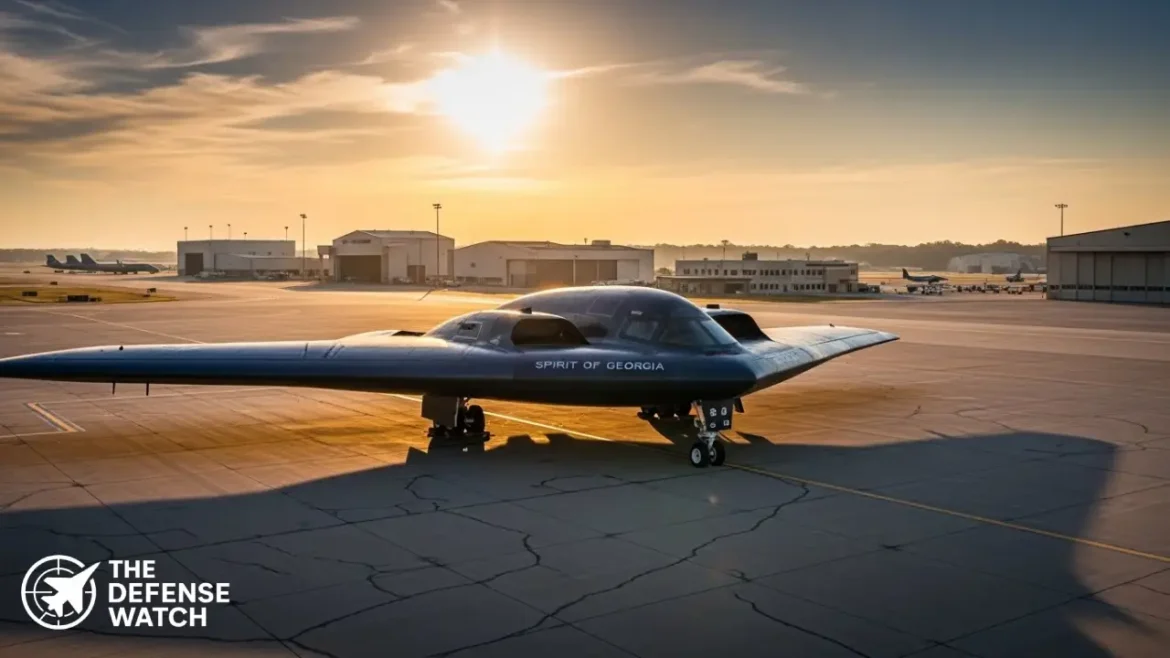
Executive Summary: Northrop Grumman has reaffirmed the B-2 Spirit’s continuing role in the U.S. strategic deterrent, describing it as the nation’s only operational deep-strike nuclear stealth bomber. As of August 2026, the Air Force maintains 20 B-2 aircraft in its active inventory while preparing the B-21 Raider to progressively replace both the B-2 and B-1B.
B-2 Spirit Remains Central To U.S. Stealth Bomber Operations
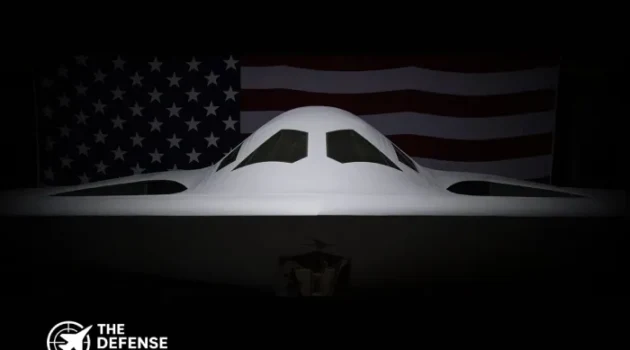
The B-2 Spirit stealth bomber remains the United States’ operational platform for penetrating heavily defended targets with both conventional and nuclear weapons, according to Northrop Grumman and current U.S. Air Force information. Northrop Grumman highlighted the aircraft’s strategic deterrence role on Aug. 14, emphasizing its combination of low observability, long range and heavy weapons capacity.
The statement comes as the Air Force moves through a major transition in its bomber fleet. The B-21 Raider is being developed to replace the B-2 and B-1B and become the backbone of the future bomber force, but the B-2 remains operational while the new aircraft progresses through testing, production and fielding.
That transition is strategically significant because the B-2 is not simply another long-range strike aircraft. Its principal value comes from combining intercontinental reach, a large weapons payload and low observable characteristics in a single platform capable of operating against sophisticated air defenses.
B-2 Combines Stealth, Range And Heavy Payload
The B-2 was designed around the requirement to penetrate advanced air-defense networks rather than rely solely on stand-off weapons.
Its flying-wing configuration, composite construction and specialized coatings contribute to reduced radar, infrared, acoustic, electromagnetic and visual signatures. The Air Force notes that many details of the aircraft’s low-observable technology remain classified.
The aircraft’s publicly released specifications illustrate the scale of the capability:
B-2 Spirit Characteristic U.S. Air Force Data Active inventory 20 aircraft Crew 2 pilots Unrefueled range Approximately 6,000 nautical miles Maximum payload 60,000 pounds Maximum operating altitude 50,000 feet Engines 4 GE F118-GE-100 Engine thrust 17,300 pounds each Maximum takeoff weight 336,500 pounds Speed High subsonic Initial operational capability April 1997 The figures are current in the Air Force’s May 2026 B-2 fact sheet.
The combination is important operationally. A bomber with long range but limited payload would face different planning constraints than the B-2, while a heavily armed aircraft without low observability could have difficulty approaching highly defended targets.
The B-2 was designed to bring these attributes together in one aircraft.
Why The B-2 Still Matters During The B-21 Transition
The Air Force’s bomber modernization strategy is not based on an immediate replacement of every legacy aircraft. Instead, the service is sustaining existing B-1B and B-2 capabilities while gradually introducing the B-21.
Air Force Global Strike Command’s 2026 fact sheet states that the B-21 will replace the B-1B and B-2, with initial capability planned for 2028. Until the Raider is sufficiently fielded, the command intends to balance fleet modernization, sustainment and combat readiness across the existing bomber force.
This creates a period in which the B-2 remains operationally important even as it approaches the end of its planned service life.
The small size of the fleet also makes sustainment particularly important. The Air Force currently lists only 20 B-2 aircraft in the active inventory, including one test aircraft in that total.
For comparison, the B-21 program is intended to establish a substantially larger future stealth bomber fleet. Air Force planning has described the B-21 as a long-range, highly survivable aircraft capable of carrying both conventional and nuclear weapons.
Nuclear Deterrence Adds A Separate Requirement
The B-2’s importance extends beyond conventional long-range strike. It is part of the air component of the U.S. nuclear triad, alongside land-based intercontinental ballistic missiles and ballistic missile submarines.
The nuclear role places additional requirements on aircraft availability, weapon certification, communications, security and command-and-control systems.
The B61-12 modernization program is one example. The National Nuclear Security Administration completed the last production unit of the B61-12 Life Extension Program in December 2024, extending the service life of the B61 family while supporting the U.S. air-delivered nuclear deterrent.
The B61-12 was developed for certification on the B-2A as well as other compatible U.S. aircraft and future platforms. This illustrates why bomber modernization cannot be measured only by the number of new airframes produced. Weapons integration and certification must progress alongside aircraft development.
B-21 Raider Changes The Long-Term Equation
The B-21 is designed to provide the long-term replacement for the B-2 while also taking over the B-1B’s role in the conventional bomber force.
The Air Force has described the Raider as a highly survivable stealth bomber designed for both conventional and nuclear missions. Its planned role extends beyond simply replacing the B-2 on a one-for-one basis, with the aircraft intended to form the backbone of the future bomber fleet.
In February 2026, the Department of the Air Force announced an agreement with Northrop Grumman to expand B-21 production capacity. The initiative uses $4.5 billion in previously authorized funding to increase production capacity and accelerate delivery of the next-generation bomber.
The Air Force also announced in July 2026 that the B-21 will operate with a two-pilot crew. That decision aligns the basic crew requirement of the new bomber with the B-2’s two-person crew while reflecting differences in the Raider’s systems and mission architecture.
Whiteman Air Force Base Is Preparing For The Transition
Whiteman Air Force Base in Missouri remains central to the B-2 force and is also being prepared to support the B-21.
The Air Force’s fiscal 2027 military construction documentation identifies Whiteman as the home of the 509th Bomb Wing and states that it will become the second main operating base for the B-21. The planned infrastructure work includes facilities and training equipment needed to support the new bomber.
This creates a complex transition rather than a simple aircraft retirement process.
The Air Force must preserve B-2 readiness while establishing B-21 maintenance, weapons loading, training, infrastructure and operational procedures. The overlap allows the service to introduce the new platform without immediately removing the existing stealth bomber capability.
The Strategic Value Of The B-2 Is Its Mission Set
The B-2’s continuing value is best understood through its mission set rather than its age.
The aircraft entered initial operational capability in April 1997, making it a mature platform by modern military aviation standards. Yet its fundamental design remains relevant because low observable penetration combined with long-range strike is still a demanding requirement in an environment shaped by increasingly capable integrated air-defense systems.
The B-2 therefore serves as a bridge between generations of U.S. long-range strike technology.
Its operational importance also explains why sustaining the aircraft has remained a priority despite the small fleet. Air Force officials have previously identified the challenge of maintaining a 20-aircraft fleet operating under a demanding mission set, highlighting the importance of aircraft availability and sustainment resources.
The B-21 is intended to address many of these long-term challenges through a newer design and a larger planned fleet. Until sufficient numbers of Raiders are available, however, the B-2 remains a critical component of the U.S. bomber force.
What Changes After The B-21 Arrives
The transition to the B-21 will eventually shift the U.S. stealth bomber force from a small fleet centered on the B-2 to a larger force built around a newer aircraft.
That transition should provide greater capacity for sustained global operations while reducing dependence on a very small number of aging B-2 airframes. It will also allow the Air Force to incorporate newer systems and technologies into the bomber fleet from the outset.
The immediate challenge is maintaining credible combat and nuclear deterrence throughout the transition.
For that reason, the B-2’s continued operational status in 2026 is more than a legacy designation. It represents an active bridge between the current U.S. long-range strike architecture and the next generation represented by the B-21 Raider.
Northrop Grumman’s latest characterization of the aircraft therefore underscores an important point about the U.S. bomber modernization effort: the B-2 remains operationally relevant today, even as the Air Force builds the force intended to succeed it.
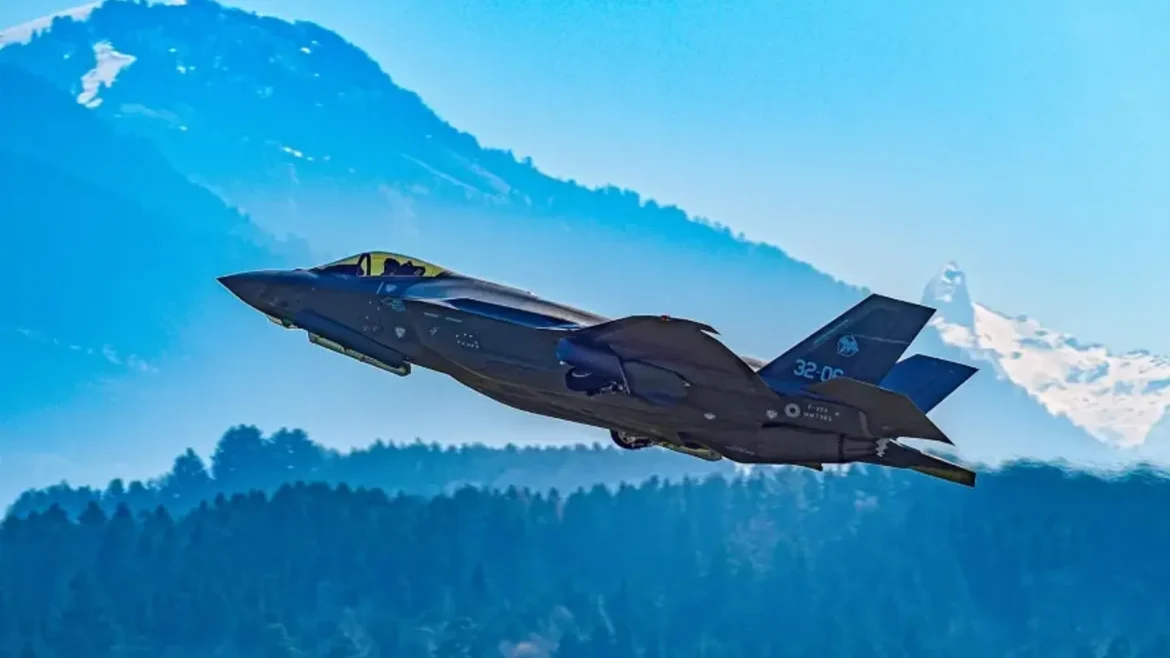
Executive Summary: Switzerland’s F-35A program is moving through production milestones as Leonardo’s Cameri facility in northern Italy prepares to deliver Swiss-configured aircraft beginning in 2028. The first eight Swiss F-35As are being produced in the United States for pilot training, while the remaining aircraft were originally scheduled to come from Cameri, although Switzerland is now reassessing the final fleet size because of higher program costs.
Swiss F-35A Production Moves Into the Next Phase
Swiss F-35A production is advancing as the international F-35 industrial network prepares aircraft for Switzerland, with Leonardo’s Cameri facility serving as the European final assembly location for most of the Swiss fleet.
The Swiss government said in May 2026 that main assembly of the first F-35A destined for Switzerland had begun at Lockheed Martin’s facility in Marietta, Georgia. The milestone follows the production of initial components and puts the first Swiss aircraft deeper into the manufacturing process.
The first eight aircraft are scheduled to be delivered to Ebbing Air National Guard Base in Arkansas from mid-2027. They will initially remain in the United States to support Swiss pilot training before the aircraft are transferred to Switzerland.
Swiss authorities expect the first aircraft to arrive in Switzerland from mid-2028, with subsequent aircraft supplied from Leonardo’s final assembly facility at Cameri.
Cameri Provides Europe’s F-35 Final Assembly Capability
Cameri is a critical part of the F-35 international production network. Leonardo operates the facility in cooperation with Lockheed Martin, producing F-35 aircraft and supporting other activities connected with the program.
The facility manufactures major structural components, including wing assemblies, and performs final assembly and checkout work. Leonardo has also developed Cameri as an important European center for F-35 maintenance, repair, overhaul and upgrade activities.
For Switzerland, the arrangement reduces the need to establish a separate national final assembly line while retaining an industrial connection to the European F-35 production and sustainment network.
Switzerland announced in 2022 that at least 24 of its planned 36 aircraft would be manufactured at Cameri. The original production arrangement allowed up to 28 of the 36 aircraft to be produced in Italy, while the first eight would be manufactured in the United States for training purposes.
Original Swiss F-35A Production Plan
Item Original plan Aircraft selected 36 F-35A Manufacturer Lockheed Martin European final assembly Leonardo Cameri, Italy U.S.-built training aircraft 8 Cameri-built aircraft At least 24, with up to 28 originally planned Initial delivery period 2027 to 2030 First Cameri deliveries 2028 Aircraft planned from Cameri in 2028 8 Aircraft planned from Cameri in 2029 10 Aircraft planned from Cameri in 2030 10 The schedule above reflects Switzerland’s established F-35A delivery plan. However, the final number of aircraft Switzerland will receive is now subject to a major funding decision.
Switzerland Is Reassessing the Size of Its F-35 Fleet
The production milestone comes against a significant change in Switzerland’s procurement position.
In March 2026, the Swiss Federal Council confirmed that it would not seek the additional funding required to acquire all 36 F-35As originally planned. The government said approximately 1.1 billion Swiss francs in additional funding would be required to reach the full fleet because of higher costs linked to inflation, raw materials and other factors.
Instead, Switzerland intends to acquire the maximum number of F-35As possible within the 6 billion Swiss franc funding framework approved by voters.
The government has proposed an additional 394 million Swiss francs to absorb certain cost increases and allow Switzerland to establish the final production quantity with the U.S. government by the second quarter of 2027.
This creates an important distinction for reporting on the program. The original contract covers 36 aircraft, but Switzerland’s current policy is not to provide additional funding to restore the fleet to that original number.
As a result, the number of Swiss F-35As ultimately entering service could be lower than the 36 aircraft initially planned.
Why Cameri Matters to the Swiss Program
The Cameri connection is more significant than simply being an assembly location.
The F-35 program relies on a distributed industrial base involving thousands of suppliers across multiple countries. Switzerland is therefore entering an established multinational manufacturing and sustainment ecosystem rather than creating an independent fighter production capability.
Swiss authorities said the broader F-35 program involves more than 2,100 suppliers worldwide. Switzerland is also pursuing industrial cooperation with domestic companies through offset arrangements involving research, development, production and maintenance activities.
One example is cooperation between Lockheed Martin and Pilatus on a pilot training technology project designed around the requirements of fifth-generation air forces.
For Switzerland, this industrial participation provides a way to connect its aerospace sector with a much larger international defense supply chain while the Swiss Air Force transitions to a new fighter architecture.
F-35A Will Replace Switzerland’s Aging Fighter Fleet
The F-35A was selected by Switzerland in 2021 following an evaluation that compared it with competing aircraft, including the Eurofighter Typhoon, Dassault Rafale and Boeing F/A-18 Super Hornet.
The Swiss government selected 36 F-35As as part of the Air2030 modernization program. The procurement contract was signed in September 2022, with a value of approximately 6.035 billion Swiss francs for the aircraft and associated equipment, weapons, logistics, training and mission systems.
The aircraft are intended to replace Switzerland’s F/A-18 Hornets and F-5 Tigers.
The transition represents a major change in Swiss air-defense architecture. The F-35A combines low-observable design with an integrated sensor and mission system intended to provide pilots with a broader picture of the battlespace.
That capability is particularly relevant to Switzerland because its fighter force has historically been focused heavily on air policing and national airspace protection. The F-35A adds a significantly more networked platform to that mission set.
Production and Delivery Schedule Remains a Key Milestone
The first Swiss F-35A has already entered main assembly in the United States, demonstrating that the procurement is progressing beyond the early component-production stage.
The first eight aircraft have a distinct role in the program. Rather than immediately moving to Switzerland, they are scheduled to operate from Ebbing Air National Guard Base in Arkansas, where Swiss pilots will receive initial training.
The remaining aircraft are tied to the European production system, with Cameri expected to become the principal source of Swiss F-35 deliveries from 2028.
The established schedule calls for eight Cameri-built aircraft in 2028, followed by ten in 2029 and another ten in 2030. That schedule corresponds to the original 36-aircraft requirement and should therefore be treated as the baseline plan rather than a guarantee of the final fleet size after Switzerland’s 2026 funding decision.
Broader European Significance
Switzerland’s F-35 program adds another European operator to a growing network of countries using the same fifth-generation fighter.
The aircraft’s value to European operators extends beyond individual fleet performance. Common platforms can support shared training, logistics, maintenance infrastructure and exchange of operational information.
Switzerland is not a NATO member, but its acquisition of the F-35 places its future air force within a broader European ecosystem centered on the aircraft.
That interoperability factor was explicitly identified by the Swiss government as one of the reasons it considers abandoning the F-35 program unacceptable, despite the financial pressure surrounding the procurement.
For the United States and its European partners, the Swiss purchase therefore has implications beyond the number of aircraft ultimately delivered. It strengthens the geographic reach of the F-35 support network and gives Switzerland access to a common fighter ecosystem already used by numerous European air forces.
What Happens Next
The immediate priority is production of the initial Swiss aircraft and preparation for pilot training in the United States.
The more consequential issue is the final size of the Swiss fleet. The Federal Council plans to use the available funding envelope to acquire as many F-35As as possible and expects to establish the definitive production quantity by 2027.
Cameri will remain central to the program regardless of the final number because the facility is the designated European production point for Swiss aircraft after the initial U.S.-built training batch.
The production activity therefore marks two developments at once: Switzerland is moving toward its first fifth-generation fighter capability, while the country is simultaneously adjusting the scale of that capability to remain within its approved defense spending limits.

Executive Summary: The UK Ministry of Defence is set to award Inzpire a £502,000 contract to provide air warfare education and training to the Ukrainian Air Force. The one-year program will deliver about 20 weeks of instruction focused on air tactics and planning, supporting Ukraine’s transition toward Western air warfare practices.
UK Expands Ukrainian Air Tactics Training
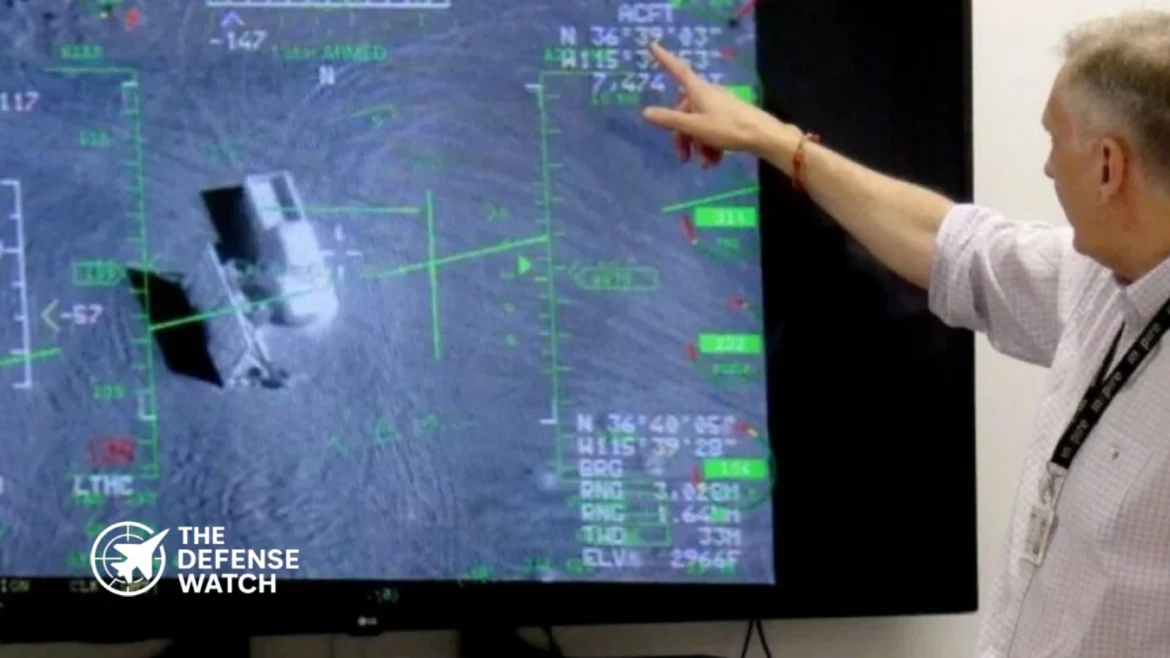
Ukrainian pilots air tactics training is entering a new phase as the UK Ministry of Defence prepares to contract British defense company Inzpire to provide specialized air warfare education to the Ukrainian Air Force.
the contract is valued at approximately £502,000 and is scheduled to begin August 26. It will cover roughly 20 weeks of instruction during the contract year, with an option for the UK Ministry of Defence to extend the arrangement for another 12 months.
The contract centers on an air tactics and planning course. Inzpire will be responsible for establishing training objectives, developing the course and delivering the instruction.
The award was made directly rather than through a competitive procurement process, according to the contract information reported by UK Defence Journal.
Inzpire Brings Air Warfare Training Experience
Inzpire is a UK defense company founded by former Royal Air Force personnel. The company provides training, mission support, technical services and operational expertise to military customers.
Its air portfolio includes live and synthetic collective training, tactical air command and control instruction, intelligence training, electromagnetic warfare training and mission rehearsal. Inzpire also supports major RAF exercises and works with the Air and Space Warfare Centre.
The company says its training activities support aircrew and other defense personnel across complex operational environments. Its instructors include personnel with operational military experience, while its training programs cover both individual and collective performance.
That background is relevant to the Ukrainian requirement because the new contract is not simply about flying proficiency. It is focused on the planning and execution of air operations.
Training Moves Beyond Basic Flight Skills
The distinction between flight training and air warfare education is important.
The United Kingdom has already played a major role in preparing Ukrainian pilots for Western combat aircraft. In 2023, the RAF began providing Ukrainian pilots with basic flying and English-language training as part of the international effort to establish a modern Ukrainian combat aviation capability.
The initial program covered aircraft handling, instrument flying, navigation and formation flying. Graduates subsequently moved to advanced training before progressing toward F-16 training with partner nations.
The new Inzpire program addresses a different layer of combat aviation.
Air tactics training can include the planning and coordination of missions, interpretation of the operational air picture, employment of aircraft within larger air operations and decision-making under changing conditions. The precise syllabus and operational scenarios for the Ukrainian course have not been publicly disclosed.
This distinction matters because acquiring modern aircraft is only one part of developing a modern air force. Effective combat aviation also depends on trained pilots, mission planners, intelligence personnel, command-and-control structures and procedures that allow those elements to operate together.
A Shift Toward Western Air Operations
The UK contract also fits into Ukraine’s broader transition from Soviet-designed aviation practices toward Western operating concepts.
Ukraine inherited an air force structured around Soviet aircraft and doctrine. Western air forces generally place greater emphasis on mission planning, decentralized decision-making, networked operations and the integration of intelligence, surveillance and reconnaissance with combat aviation.
The Ukrainian Air Force has been undergoing this transition while operating in an active war environment, making the development of tactics and planning skills particularly significant.
The United Kingdom’s earlier pilot training effort already included English-language instruction specifically to improve interoperability with NATO air forces. The UK government has described this as part of the wider international effort to develop Ukraine’s future combat air capability.
The Inzpire contract therefore represents a progression from foundational aviation training toward more specialized operational education.
Connection To Ukraine’s F-16 Fleet
The training comes as Ukraine continues to integrate Western combat aircraft into its air force.
The international coalition supporting Ukraine’s air capability has involved multiple countries, including the United States, Denmark and the Netherlands, while European partners have contributed aircraft and training. The United Kingdom does not operate the F-16 itself, but it has contributed pilot training and other forms of air capability support.
Ukraine began receiving Western F-16s in 2024, creating a requirement that extends beyond conversion training on the aircraft itself. Pilots must also operate within a wider system of mission planning, intelligence support, air command and control and coalition interoperability.
That makes Ukrainian pilots air tactics training an important supporting element of the broader modernization effort.
However, the £502,000 contract should not be interpreted as a commitment to a particular aircraft type or as evidence that Inzpire will directly train Ukrainian pilots on F-16 systems. The publicly available contract information describes the requirement as air tactics and planning education rather than aircraft conversion training.
Why The Contract Matters
The value of the agreement is relatively modest compared with major aircraft or weapons contracts, but its operational focus is significant.
Modern air combat depends on more than aircraft performance. A capable fighter can provide limited value if crews lack the training and planning processes required to employ it effectively within a contested airspace.
Inzpire’s role is therefore best understood as part of the human and doctrinal side of Ukraine’s air force modernization.
The company already provides training associated with tactical air command and control, intelligence, surveillance and reconnaissance, electronic warfare and complex multinational exercises. Those areas overlap with many of the skills required to conduct modern coalition air operations.
The contract also demonstrates how the UK’s support for Ukraine is extending beyond the provision of equipment. Training and institutional knowledge can remain relevant as Ukraine expands its inventory of Western systems and seeks greater interoperability with European and NATO air forces.
What Happens Next
The contract is scheduled to begin on August 26, 2026, and will run for 12 months. A further 12-month option is available.
The publicly disclosed information does not identify the number of Ukrainian personnel who will participate, the specific locations where instruction will take place, or the detailed tactical syllabus.
Those details may remain undisclosed because air warfare training can involve sensitive operational procedures and information.
What is clear is that the British effort is moving from basic pilot preparation toward a more advanced layer of air warfare education. For Ukraine, that development is relevant to the long-term challenge of building an air force capable of operating modern Western aircraft within a more integrated command, control and mission-planning structure.
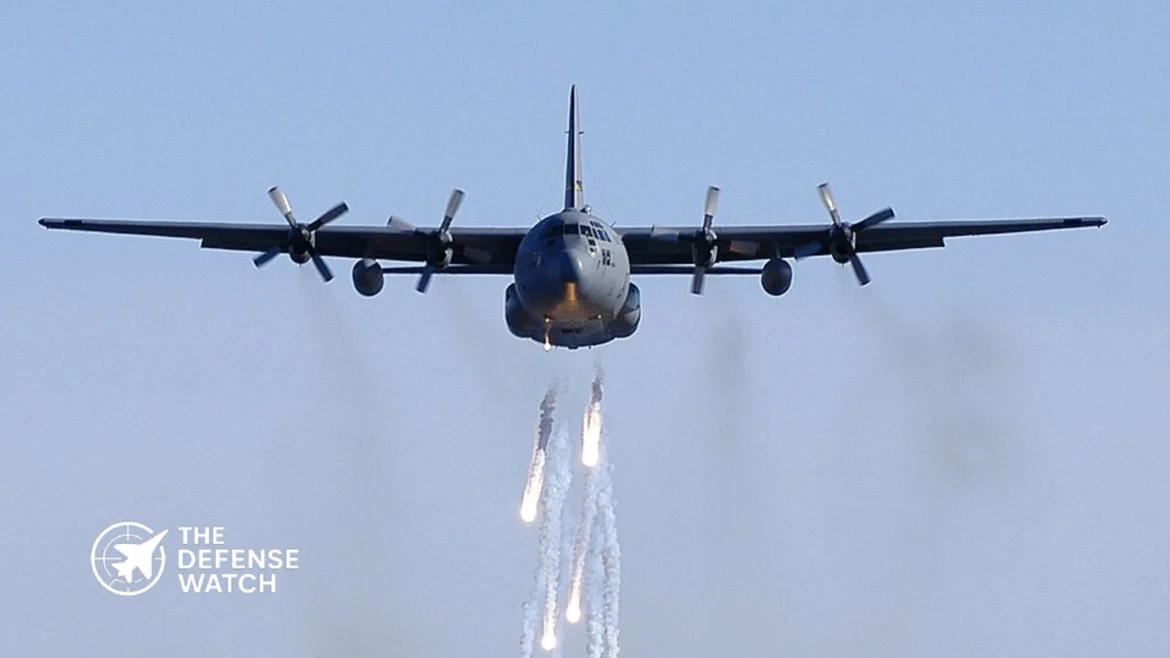
Executive Summary: India has issued a major tender for 60 multirole transport aircraft for the Indian Air Force, in a program expected to be worth roughly ₹1 lakh crore, or about $10 billion. The procurement calls for 12 aircraft to be delivered in fly-away condition and 48 to be manufactured in India with more than 60 percent indigenous content, putting industrial participation alongside aircraft performance at the center of the competition.
India Opens 60-Aircraft Multirole Transport Competition
India has issued a tender for 60 multirole transport aircraft for the Indian Air Force as New Delhi moves to replace aging Soviet-origin transport aircraft and strengthen tactical and strategic airlift capacity. Indian defense officials cited in reports said the tender has been issued to Indian companies including Hindustan Aeronautics Limited, Tata and Mahindra, with Indian industry expected to play a leading role.
The program follows the Defence Acquisition Council’s March 2026 approval of the 60-aircraft Medium Transport Aircraft requirement. The acquisition is intended to address a long-standing requirement to modernize the IAF’s transport fleet and improve the ability to move troops, equipment and supplies across India’s geographically demanding operating environment.
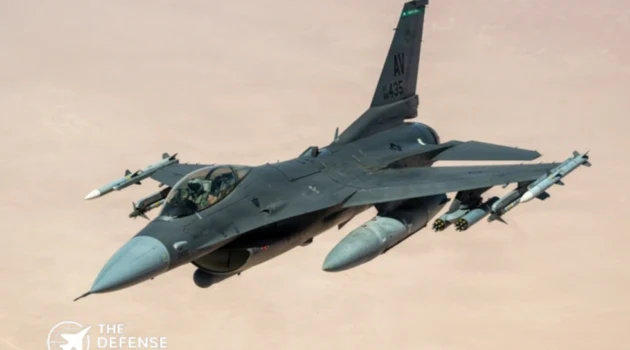
The three aircraft most prominently associated with the competition are Embraer’s C-390 Millennium, Lockheed Martin’s C-130J Super Hercules and Airbus’ A400M Atlas. Technical evaluations of the competing proposals were reported as completed in July, bringing the program closer to the selection and contracting phase.
A Major Shift Toward Domestic Production
The structure of the tender is significant because India is not simply seeking an off-the-shelf transport aircraft purchase.
The reported requirement calls for 12 aircraft to arrive in fly-away condition, representing about 20 percent of the fleet. The remaining 48 aircraft are to be manufactured in India, with more than 60 percent indigenous content.
That arrangement creates a substantial industrial requirement for the winning manufacturer and its Indian partner. It also means the competition will involve production engineering, supplier development, maintenance and long-term sustainment, rather than aircraft price and performance alone.
For India, the potential industrial benefit is considerable. A domestic production line for a large military transport aircraft could support local component manufacturing, maintenance, repair and overhaul capabilities and skilled aerospace employment over several decades.
The program also follows India’s broader effort to increase domestic aerospace production. The Airbus-Tata C295 program has already established a precedent for manufacturing a foreign-designed military transport aircraft in India.
C-390, C-130J And A400M Bring Different Capabilities
The three aircraft occupy overlapping but distinct positions within the military airlift market.
Aircraft Manufacturer Propulsion Maximum Payload Key Characteristic C-390 Millennium Embraer Twin turbofan 26 metric tons High-speed tactical transport C-130J-30 Super Hercules Lockheed Martin Four turboprops 19.96 metric tons Mature tactical airlift platform A400M Atlas Airbus Four turboprops 37 metric tons Heavy tactical and strategic airlift Source: manufacturer and U.S. Air Force specifications.
Embraer C-390 Millennium
The C-390 is the newest aircraft in the competition and offers a combination of relatively high payload and jet speed.
Embraer’s published specifications give the aircraft a maximum concentrated payload of 26 metric tons, a maximum cruise speed of 470 knots, or Mach 0.80, and a cargo hold measuring approximately 18.5 meters long, 3.45 meters wide and 2.95 meters high.
The aircraft is designed for cargo and troop transport, airdrop operations, medical evacuation, search and rescue, firefighting and humanitarian missions. It can also operate from temporary and unpaved runways.
For the Indian competition, Embraer has already established an industrial partnership with Mahindra Group. The companies have announced plans to develop C-390 manufacturing and MRO capabilities in India if the aircraft is selected for the MTA program.
Lockheed Martin C-130J Super Hercules
The C-130J brings a different advantage: operational maturity and an established Indian user base.
India already operates C-130J aircraft, primarily for special operations and tactical airlift missions. Lockheed Martin also offers the stretched C-130J-30, which provides additional cargo space compared with the standard aircraft.
According to the U.S. Air Force, the C-130J has a maximum allowable payload of 19,090 kilograms, while the C-130J-30 is rated at 19,958 kilograms. The C-130J-30 can carry up to 128 combat troops or 92 paratroopers under the listed maximum-load configuration.
The platform’s existing presence in India could reduce some transition requirements, particularly in areas such as crew training, maintenance practices, logistics and operational familiarity.
However, the C-130J’s payload capacity is lower than the C-390 and substantially below the A400M. That makes payload requirements and the exact missions envisioned for the new fleet especially important in the eventual evaluation.
Airbus A400M Atlas
The A400M sits at the upper end of the competition.
Airbus lists a 37-ton maximum payload, a 340-cubic-meter cargo hold and a maximum cruise speed of Mach 0.72. It can carry significantly heavier and larger loads than conventional medium tactical airlifters and is designed to operate from short and unpaved runways.
The aircraft can carry 20 tons to about 3,400 nautical miles and has a maximum payload range of about 1,780 nautical miles, according to Airbus specifications.
Its larger cargo compartment gives the A400M a major advantage when transporting bulky equipment. The tradeoff is that India would be acquiring an aircraft considerably larger than the C-130J and C-390.
Why Payload And High-Altitude Operations Matter
India’s transport requirements are unusually demanding because the IAF must support operations across the Himalayas, deserts, plains and island territories.
The aircraft will need to provide more than conventional strategic cargo movement. Its value will depend heavily on its ability to operate from forward airfields, carry useful payloads in demanding environmental conditions and sustain repeated tactical missions.
High-altitude operations are particularly important. Aircraft performance at high elevations is affected by air density, temperature, runway length and payload, making nominal maximum payload figures insufficient for judging suitability.
This is one reason the final evaluation is likely to depend heavily on operational testing rather than brochure specifications.
The aircraft also needs to occupy the capability space between India’s smaller tactical transports and its heavier strategic airlifters. The objective is not simply to obtain another cargo aircraft, but to create a flexible fleet capable of supporting routine logistics as well as rapid military movement.
Industrial Competition Could Be As Important As Aircraft Performance
The 60 percent indigenous-content requirement changes the commercial equation for the three manufacturers.
A successful bidder would have to establish or expand an Indian production ecosystem capable of supporting the aircraft throughout its service life. That includes manufacturing, quality control, component sourcing, maintenance and potentially engine and systems support.
For Embraer, the Mahindra partnership gives the C-390 campaign a defined Indian industrial framework.
Lockheed Martin has an established relationship with Tata Advanced Systems, while the C-130J already operates within the IAF. That provides the U.S. manufacturer with an existing Indian industrial and operational foundation.
Airbus also has a significant Indian industrial presence through the C295 program, which could provide an existing base for further aerospace manufacturing cooperation.
The winner will therefore be judged not only on the aircraft delivered but also on the credibility of its proposed Indian production system.
Strategic Importance For The Indian Air Force
A 60-aircraft fleet would provide a major increase in India’s medium airlift capacity and improve the IAF’s ability to move personnel, equipment and supplies without relying entirely on its heavier transport fleet.
The program also has wider strategic significance.
For India, domestic production could reduce dependence on imported aircraft and create greater control over long-term sustainment. It could also give Indian aerospace companies experience with complex military aircraft production at a scale beyond individual components.
For the United States and its defense industry, the competition is significant because the C-130J represents another opportunity to expand the U.S.-India defense industrial relationship. India already operates several U.S.-origin platforms, including C-17 and C-130J aircraft, while Washington and New Delhi have increasingly emphasized interoperability and defense technology cooperation.
The C-390 offers a different industrial proposition, potentially strengthening India’s aerospace relationship with Brazil and expanding Embraer’s manufacturing footprint in Asia.
The A400M, meanwhile, would connect India’s military airlift fleet to a European multinational program with substantial existing experience in tactical and strategic transport.
The Decision Will Extend Beyond The Initial 60 Aircraft
The immediate requirement is 60 aircraft, but the industrial implications are likely to last much longer.
A domestic assembly line, supplier network and MRO infrastructure created for the program could support additional aircraft, upgrades and sustainment over the fleet’s service life. That makes the initial selection potentially more consequential than the number of aircraft in the current tender suggests.
The competition will ultimately test three different approaches to Indian airlift modernization.
The C-130J offers an established aircraft and an existing Indian operating base. The C-390 offers a newer jet-powered design with higher payload and speed than the C-130J. The A400M provides substantially greater payload and cargo volume, placing it closer to the heavy tactical airlift category.
The key question for India’s acquisition authorities will be which combination of payload, runway performance, high-altitude capability, operating cost, fleet commonality, industrial participation and long-term support provides the best value.
The tender therefore represents more than a competition for 60 aircraft. It is also a decision about how India intends to build and sustain its next generation of military airlift capability.

Executive Summary: Northrop Grumman has unveiled a new engineering facility intended to support next-generation aircraft development, adding infrastructure as the company competes for the U.S. Navy’s F/A-XX program. The move comes as the Navy prepares to advance its sixth-generation carrier fighter effort, which is intended to complement the F-35C and eventually replace the F/A-18E/F Super Hornet and EA-18G Growler.
Northrop Grumman Builds Capacity For Sixth-Generation Aircraft
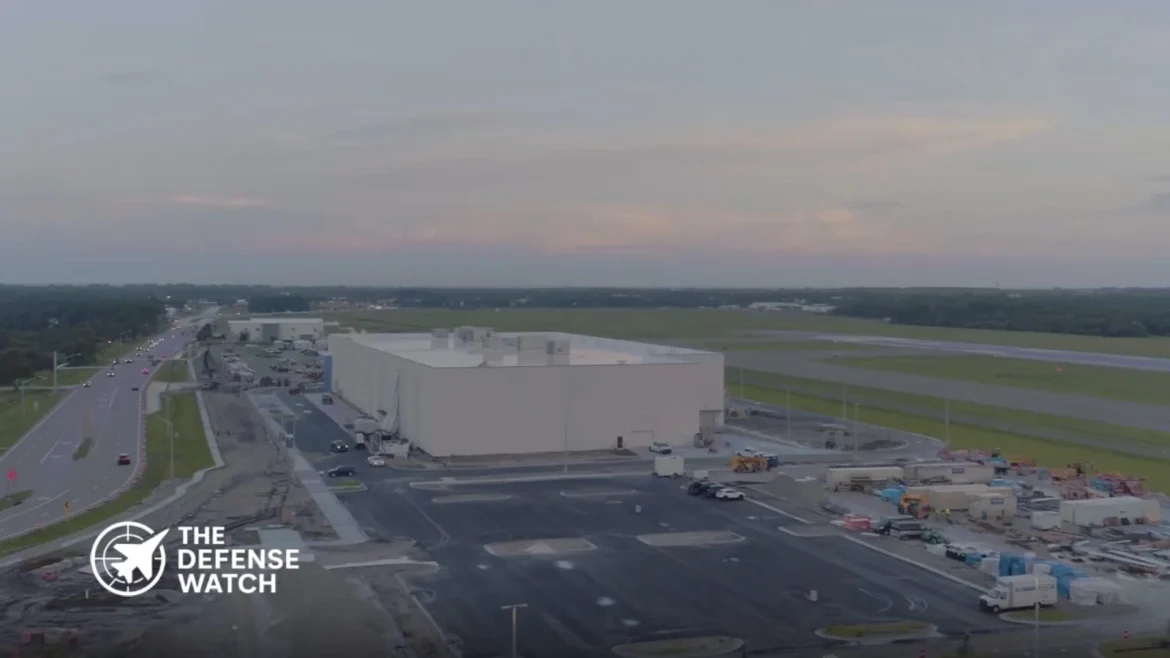
Northrop Grumman’s sixth-generation aircraft effort is gaining an important industrial infrastructure component with the opening of a new engineering site designed to support advanced aircraft development.
The facility includes classified engineering and laboratory capabilities intended for work on highly sensitive aerospace programs. The development comes as Northrop Grumman competes with Boeing for the U.S. Navy’s F/A-XX next-generation carrier-based fighter.
FlightGlobal reported the facility’s opening in August 2026, highlighting its role in Northrop Grumman’s broader sixth-generation aircraft development activity.
Northrop Grumman has not publicly disclosed the full technical scope of classified work conducted at the site. That distinction is important because the facility’s existence does not by itself confirm specific F/A-XX design features, performance characteristics or program milestones.
New Facility Adds Classified Engineering Capacity
The new site is part of Northrop Grumman’s broader investment in advanced aircraft engineering and secure development infrastructure.
The company already operates a major aircraft engineering presence in Melbourne, Florida. Northrop Grumman says its Melbourne campus designs, develops and tests advanced manned aircraft and battle management systems. The campus contains 17 buildings across a 109-acre site near Orlando Melbourne International Airport.
Northrop Grumman has also described its Florida operations as supporting sixth-generation aircraft development. Its corporate material identifies Florida as an important center for advanced aerospace design and engineering, alongside work on the B-21 Raider and other military aircraft.
The company has significant experience with low-observable aircraft. Its B-21 Raider program has moved through flight testing, including aerial refueling testing in 2026, while Northrop Grumman continues to expand production capacity.
That background is relevant to F/A-XX because sixth-generation combat aircraft development requires expertise across low-observable design, advanced mission systems, digital engineering, sensors, communications and aircraft integration.
F/A-XX Remains A Major Navy Modernization Program
The U.S. Navy’s F/A-XX program is intended to provide the next generation of carrier-based tactical aviation.
The aircraft is expected to operate alongside the F-35C and other carrier air wing assets rather than function as a standalone replacement for every existing capability. The Navy has described its future carrier air wing as an integrated force in which crewed and uncrewed aircraft work together.
Recent Navy publications state that the service’s future sixth-generation strike fighter will augment and eventually replace the F/A-18E/F Super Hornet and EA-18G Growler in the carrier air wing. The Navy expects the transition to take place during the 2030s.
The broader direction is also consistent with the Navy’s work on collaborative combat aircraft. In January 2026, Naval Air Systems Command reported a demonstration involving autonomous systems and multi-platform coordination intended to advance future manned-unmanned teaming capabilities.
This means the value of F/A-XX will extend beyond the performance of the crewed aircraft itself. The fighter is being developed within a wider architecture involving sensors, networks, weapons, autonomous aircraft and other carrier air wing platforms.
Northrop Grumman’s Position In The F/A-XX Competition
Northrop Grumman and Boeing are the two remaining major competitors for the Navy’s F/A-XX program.
The competition has taken place against a complicated U.S. fighter development landscape. Boeing is already responsible for the Air Force’s F-47, which was selected in 2025 as the crewed component of the Air Force’s Next Generation Air Dominance effort. The Pentagon’s FY2026 budget briefing identified the F-47 as the Air Force’s first crewed sixth-generation fighter and said the Navy’s F/A-XX program would retain limited development funding.
The F/A-XX program has also faced funding and scheduling pressure. Reuters previously reported that the Navy’s next-generation fighter is intended to provide greater stealth, range and endurance while integrating with uncrewed systems and carrier-based defensive networks.
Against that backdrop, Northrop Grumman’s new engineering infrastructure has significance beyond the physical facility.
It provides additional secure workspace and engineering capacity at a time when the defense industry is competing for personnel with experience in advanced aircraft design. A modern facility can also support digital engineering, systems integration and classified program work without requiring every development activity to take place at an existing production location.
Why The Engineering Site Matters
The most important point is that the facility should be viewed as an industrial capability investment rather than proof that Northrop Grumman has won the F/A-XX competition.
That distinction matters.
A new engineering site can support multiple advanced aerospace programs, including classified projects whose details are not publicly available. Northrop Grumman’s established aircraft portfolio already includes the B-21, E-2D Advanced Hawkeye, F-35 center fuselage work and other specialized aircraft and mission systems.
The company has also demonstrated a willingness to invest in facilities and production capacity as major programs progress. In July 2026, Northrop Grumman reported that its Roy Innovation Center in Utah was expanding with a new building supporting continued growth of the site and its workforce.
For F/A-XX, however, the timing is notable.
A sixth-generation naval fighter will require a long development cycle, extensive ground testing, flight testing and systems integration before operational deployment. Secure engineering infrastructure therefore becomes part of the program’s industrial foundation.
The facility also illustrates a broader shift in U.S. military aviation development. Future combat aircraft programs increasingly depend on digital design, secure software development, advanced manufacturing, sensor integration and networked systems alongside conventional aerodynamic and structural engineering.
Sixth-Generation Aircraft Development Moves Beyond The Airframe
The term sixth-generation aircraft covers more than a new fighter shape or a reduction in radar signature.
The emerging U.S. approach emphasizes a family of connected capabilities. The crewed aircraft is expected to operate with uncrewed platforms, networked sensors and other assets that distribute sensing, targeting and weapons functions across the force.
Northrop Grumman’s B-21 program provides one example of this approach. The company describes the bomber as a sixth-generation aircraft built around advanced stealth, networking and an open systems architecture.
The Navy’s F/A-XX effort is developing within the same broad technological environment, although the requirements for a carrier-based fighter differ substantially from those of a long-range bomber.
For Northrop Grumman, experience from programs such as the B-21 could provide relevant engineering knowledge, particularly in low-observable aircraft design, systems integration and digital development. However, it would be premature to assume that technologies from one program will automatically transfer directly to F/A-XX.
What Comes Next For F/A-XX
The next major milestone is the Navy’s selection of an industrial partner for the F/A-XX development effort.
The decision will determine which company leads the next phase of engineering and manufacturing development and will establish the industrial architecture for a program expected to shape naval aviation for decades.
Northrop Grumman’s new engineering site places additional infrastructure behind its bid, but the facility itself does not determine the outcome of the competition.
For the U.S. Navy, the larger objective is to develop a carrier-based aircraft capable of operating in increasingly contested environments while remaining integrated with the broader carrier air wing.
That requirement explains why the F/A-XX competition is about more than the design of a single fighter. It is also a competition over engineering capacity, classified development infrastructure, advanced manufacturing expertise and the ability to sustain a complex combat aircraft program through several decades of modernization.
As the Navy moves toward its F/A-XX decision, Northrop Grumman’s expansion shows that the industrial base supporting sixth-generation aircraft development is already being built around the next generation of U.S. airpower.

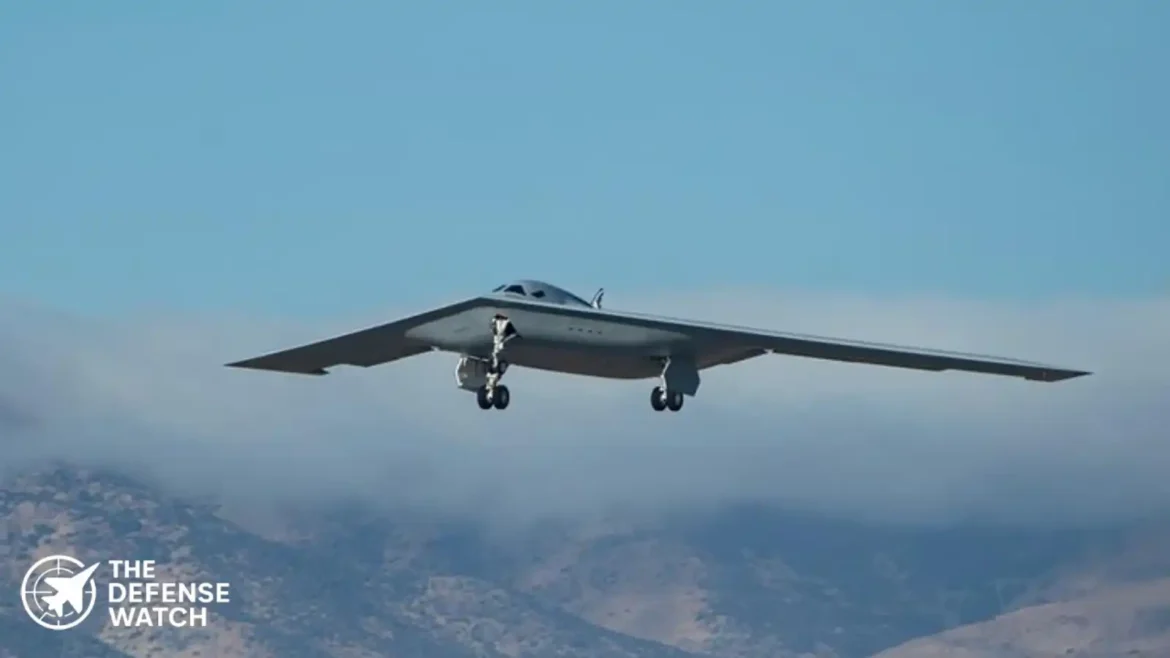
Executive Summary: A U.S. Air Force B-2 Spirit completed a more than 16-hour direct flight from Missouri to RAAF Base Amberley, Australia, during a June 2026 Bomber Task Force deployment. The mission demonstrated the bomber’s ability to project long-range stealth strike power into the Indo-Pacific while integrating with Australian tankers, aircraft and ground personnel.
B-2 Spirit Demonstrates Long-Range Strike Capability In Australia
The B-2 Spirit’s more than 16-hour flight from the continental United States to Australia highlights a central feature of U.S. global strike doctrine: strategic bombers can operate across the Indo-Pacific without requiring the aircraft to begin their missions from a forward combat base. The June 2026 deployment to RAAF Base Amberley was conducted as part of Bomber Task Force operations and Exercise Diamond Storm.
The aircraft, identified as Spirit of Texas and assigned to the 393rd Expeditionary Bomb Squadron of the 509th Bomb Wing at Whiteman Air Force Base, Missouri, reached Australia after an extended flight supported by aerial refueling. The deployment also involved Royal Australian Air Force KC-30A tanker aircraft and U.S. Air Force KC-135 Stratotankers.
The operation provides a useful example of how the United States and Australia are developing the ability to combine strategic strike aircraft, tanker support, fifth-generation fighters and expeditionary infrastructure across a very large operating area.
Why The 16-Hour Flight Matters
The significance of the mission goes beyond the distance covered.
The B-2 is designed to conduct penetrating strike missions against heavily defended targets. Its low-observable design reduces radar, infrared, acoustic, electromagnetic and visual signatures, allowing the aircraft to operate with a lower probability of detection than conventional aircraft. The U.S. Air Force lists an unrefueled range of approximately 6,000 nautical miles, or 9,600 kilometers.
The flight to Australia demonstrates how aerial refueling extends that basic range.
Instead of depending entirely on a forward airfield, the bomber can depart from Whiteman Air Force Base and receive fuel while in transit. This creates additional operational options for U.S. Strategic Command and theater commanders, particularly in regions where airfields, ports and other fixed military infrastructure could face long-range missile threats.
The distinction is important in the Indo-Pacific, where distances between major military bases can be measured in thousands of miles.
Australian KC-30A Adds A Key Allied Capability
One of the most significant elements of the deployment was the participation of Australia’s KC-30A Multi Role Tanker Transport aircraft.
U.S. Air Force imagery from June 11 shows a B-2 receiving fuel from a Royal Australian Air Force KC-30A over the South Pacific. The operation formed part of the Bomber Task Force deployment and demonstrated the ability of Australian and U.S. aircrews to support the same long-range mission.
Australian ground crews also supported the B-2 at RAAF Base Amberley, including hot-pit refueling operations. Hot-pit refueling allows an aircraft to receive fuel while remaining on the ground with its engines running, reducing some turnaround time between missions.
For the alliance, the practical value is significant. Tanker interoperability can extend the operating radius of combat aircraft while reducing the amount of dependence on a limited number of forward bases.
B-2 Integration With Australian Airpower
The 2026 deployment was not simply a long-distance bomber flight.
The B-2 operated with Australian aircraft as part of Exercise Diamond Storm, including integration with Royal Australian Air Force F-35A Lightning II fighters. Australian Defence said the activity included fifth-generation integration, air-to-air support, ground-based refueling and security and logistics support at Amberley.
That combination is important because modern air operations increasingly depend on networks rather than individual aircraft.
The B-2 supplies long-range penetrating strike capability. F-35A aircraft can contribute sensing, targeting and air combat capabilities. Tankers extend the endurance of the force, while ground personnel provide the maintenance, security and logistics infrastructure needed to sustain operations.
The result is a more complex force package than a bomber operating independently.
Key B-2 Spirit Capabilities
Capability B-2 Spirit Primary mission Multi-role strategic bomber Crew Two pilots Engines Four General Electric F118-GE-100 Unrefueled range Approximately 6,000 nautical miles Maximum payload 60,000 pounds Maximum takeoff weight 336,500 pounds Maximum altitude Approximately 50,000 feet Speed High subsonic Weapons Conventional and nuclear Operational base Whiteman Air Force Base, Missouri The U.S. Air Force lists 20 B-2 aircraft in the active inventory as of May 2026, including one test aircraft. The fleet remains a highly specialized component of the U.S. long-range strike force.
The B-2 Remains Relevant As The B-21 Enters The Force
The Australian mission also illustrates why the B-2 continues to receive significant attention while the Air Force transitions toward the B-21 Raider.
The B-2 is an aging aircraft, but its combination of stealth, range and payload remains valuable for penetrating strike missions. In July 2026, the Air Force reported that the B-2 Spirit of Ohio had returned to operational service after programmed depot maintenance, reinforcing the importance of keeping individual aircraft available for global missions.
At the same time, the B-21 is being developed as the future backbone of the Air Force’s bomber fleet alongside the B-52. The Department of the Air Force announced in July 2026 that the B-21 will operate with a two-pilot crew and is intended to conduct extended-duration, long-range missions in contested environments.
The B-2 therefore occupies an important transitional position. It provides an operationally proven penetrating stealth bomber capability while the United States develops a larger and more sustainable next-generation bomber force.
Indo-Pacific Operations Depend On More Than Range
The June mission also demonstrates a broader operational reality.
Long-range aircraft do not operate independently of logistics. Even an aircraft with intercontinental range depends on tanker aircraft, maintenance crews, weapons support, secure communications, airfield infrastructure and trained personnel.
The Australian deployment brought several of those elements together.
The U.S. Air Force described the Bomber Task Force deployment as an opportunity to demonstrate Agile Combat Employment and generate combat power in the Indo-Pacific. The Australian Defence Force similarly emphasized that the B-2’s participation in Diamond Storm strengthened interoperability and demonstrated Australia’s ability to provide security, logistics and operational support in a demanding environment.
This matters because the Indo-Pacific presents an unusually challenging geography for air operations. Forces may need to operate over enormous distances while maintaining enough flexibility to shift between bases and mission areas.
The ability to move a B-2 from Missouri to Australia, refuel it in flight, integrate it with allied aircraft and support it at an Australian airbase provides a practical demonstration of that flexibility.
B-2 Expands The U.S. Strategic Options In The Pacific
The B-2 deployment should not be viewed simply as a demonstration flight.
It tested several capabilities that would be relevant to a real contingency: long-distance movement from the continental United States, tanker integration, allied refueling, expeditionary support, stealth bomber operations and coordination with fifth-generation aircraft.
The United States has repeatedly used Bomber Task Force deployments to maintain bomber proficiency and strengthen interoperability with allies. Previous B-2 operations in Australia included a 2024 deployment involving three aircraft and extensive integration with Australian F-35s, F/A-18F Super Hornets, EA-18G Growlers and KC-30A tankers.
The 2026 deployment builds on that pattern.
It also comes as U.S. and allied forces expand the range of capabilities used for Indo-Pacific deterrence. In June 2026, Pacific Air Forces conducted a B-2 live-fire exercise involving the AGM-158C Long Range Anti-Ship Missile north of the Mariana Islands, demonstrating that the bomber can contribute to counter-maritime strike missions as well as traditional long-range strike roles.
Taken together, these activities show how the B-2 is being used as part of a broader network of U.S. and allied capabilities.
What The Mission Demonstrates
The most important lesson from the Australia deployment is not simply that the B-2 can fly for more than 16 hours.
It is that U.S. global strike capability depends on the ability to connect long-range aircraft with tankers, allied bases, combat aircraft and support personnel across vast distances.
For Australia, the deployment provides experience in supporting one of the U.S. military’s most specialized aircraft. For the United States, it provides an additional operating environment and strengthens the practical integration needed for high-end air operations in the Indo-Pacific.
As the B-21 gradually becomes part of the U.S. bomber force, the B-2 will remain an important operational bridge between the current bomber fleet and the next generation of penetrating strike aircraft.
The June 2026 flight to Australia therefore represents more than a long-distance transit. It demonstrates the continued ability of the United States to move a stealth strategic bomber from the continental homeland into the Indo-Pacific and integrate it with an ally’s airpower and support infrastructure.