Executive Summary:
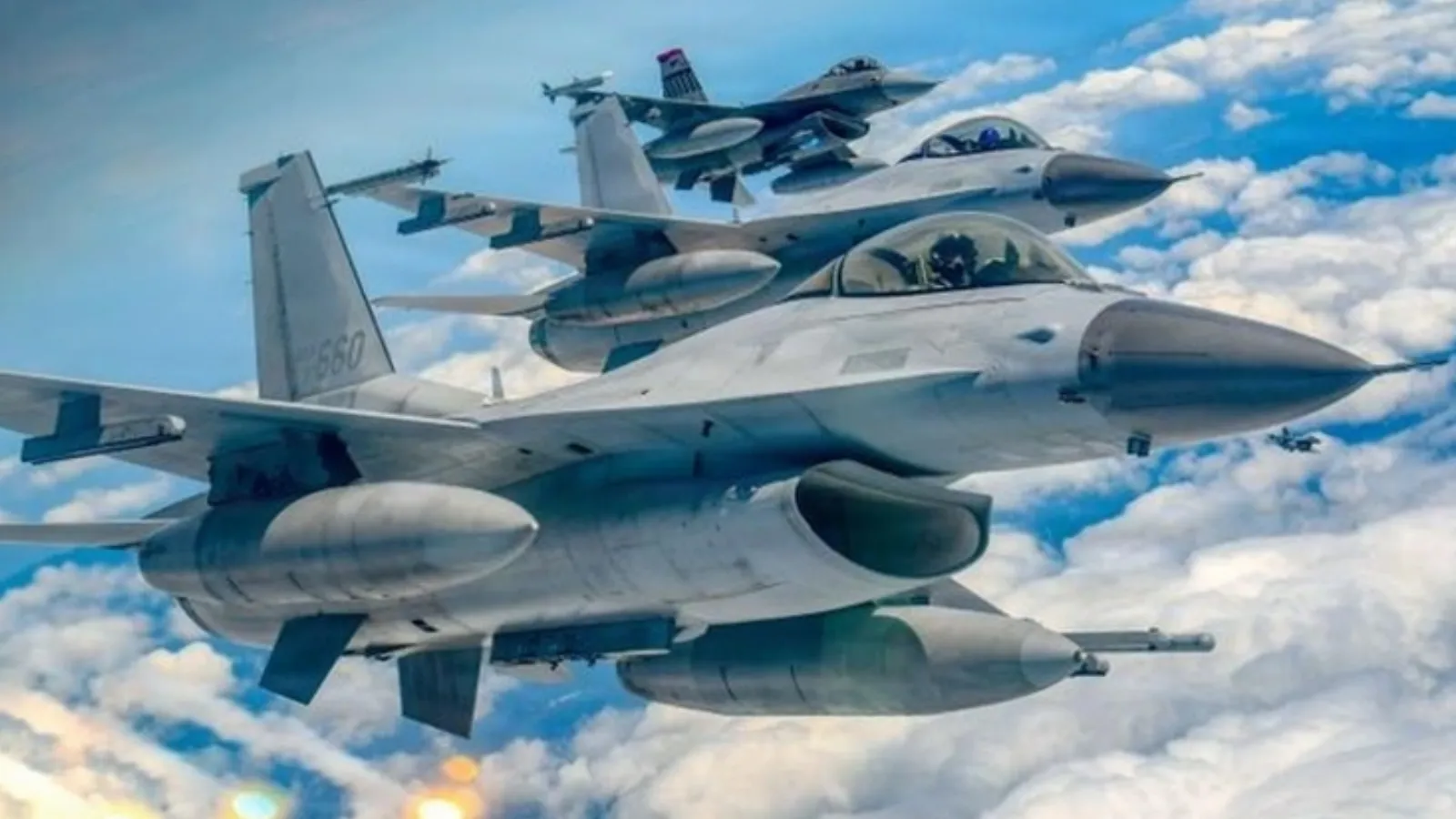
Lockheed Martin and Belgium based Sabena Engineering have expanded their long standing partnership to provide broader sustainment support for F-16 operators across Europe and future Block 70/72 customers. The agreement is intended to strengthen maintenance capacity, improve aircraft availability, and support the growing demand created by new F-16 production and ongoing fleet modernization.
Lockheed Martin Expands F-16 Sustainment Partnership Across Europe
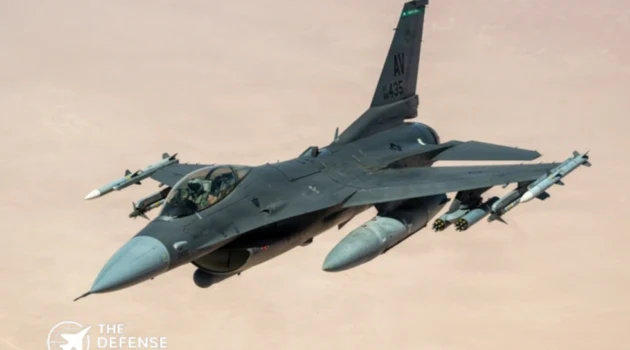
Lockheed Martin has announced an expanded partnership with Sabena Engineering to strengthen long term sustainment support for F-16 Fighting Falcon operators across Europe, including customers acquiring the latest F-16 Block 70/72 variant.
The announcement, made through an official company statement, reflects increasing emphasis on sustainment as European air forces continue operating upgraded legacy F-16 fleets while integrating newly built Block 70/72 aircraft. Rather than focusing solely on aircraft production, the agreement expands maintenance, repair, overhaul, engineering, and technical support capabilities throughout the aircraft’s operational life.
Expanded Cooperation Focuses On Long Term Fleet Readiness
The enhanced agreement builds upon years of cooperation between Lockheed Martin and Sabena Engineering in military aircraft maintenance.
Under the expanded partnership, Sabena Engineering will support a broader range of sustainment services for European F-16 customers. These include:
- Depot level maintenance
- Aircraft repair and overhaul
- Structural modifications
- Engineering support
- Logistics assistance
- Technical services for Block 70/72 operators
The companies aim to increase aircraft availability while reducing maintenance downtime for air forces operating the world’s most widely used fourth generation fighter.
Lockheed Martin noted that sustainment remains a critical component of the F-16 program as more international customers continue to invest in the platform.
Support Extends To New F-16 Block 70/72 Customers
The agreement also positions Sabena Engineering to support operators of the newest F-16 Block 70/72 aircraft.
The latest production variant introduces significant improvements over earlier models, including:
Capability F-16 Block 70/72 Radar AN/APG,83 AESA radar Cockpit Large Area Display Mission Computer Advanced Modular Mission Computer Structural Life Up to 12,000 flight hours Networking Modern Link 16 and advanced datalinks Survivability Enhanced electronic warfare integration These upgrades have attracted numerous international customers seeking affordable multirole fighters with modern avionics and lower operating costs than many fifth generation platforms.
Europe Remains A Key F-16 Operating Region
Although several European NATO members are transitioning toward the F,35 Lightning II, the F-16 continues serving as a frontline aircraft in multiple air forces.
Many operators have invested heavily in service life extension programs, radar upgrades, and new mission systems designed to keep the aircraft operational for decades.
At the same time, several countries have transferred older F-16 aircraft to Ukraine while ordering replacement fighters, creating additional demand for sustainment expertise as fleets undergo modernization.
The expansion of regional maintenance capacity helps reduce reliance on overseas depot facilities and supports faster turnaround for operational aircraft.
Why Sustainment Has Become A Strategic Priority
While fighter aircraft procurement often receives the most public attention, sustainment increasingly determines actual combat readiness.
Modern air forces measure capability not only by the number of aircraft they own, but by the percentage available for missions on any given day. Maintenance delays, supply chain disruptions, and shortages of qualified technicians can significantly reduce operational effectiveness.
For NATO members facing heightened security challenges, improving sustainment infrastructure has become nearly as important as purchasing new aircraft.
Regional maintenance partnerships provide several operational advantages:
- Faster repair cycles
- Improved spare parts availability
- Greater engineering expertise
- Reduced aircraft ferry time
- Enhanced operational resilience during crises
For European operators, expanding industrial capacity within the region also aligns with broader efforts to strengthen defense industrial resilience.
Benefits For Block 70 Production Customers
The agreement arrives as Lockheed Martin continues delivering new production F-16 Block 70/72 aircraft from its Greenville, South Carolina manufacturing facility.
Recent customers include:
- Bulgaria
- Slovakia
- Bahrain
- Taiwan
- Jordan
- Morocco
Additional international customers are expected to receive aircraft over the coming years.
By expanding certified maintenance capability before more aircraft enter operational service, Lockheed Martin aims to establish a mature global support network capable of sustaining fleets throughout their projected decades long service life.
Analysis: Sustainment Is Becoming A Competitive Advantage
The expanded partnership illustrates a broader trend within the global defense aviation market. Manufacturers increasingly compete not only on aircraft performance but also on lifecycle support.
For many governments, the total cost of ownership now plays a central role in procurement decisions. Aircraft that can maintain high availability through efficient maintenance networks often provide greater operational value than platforms offering only marginal performance improvements.
This approach is particularly important for the F-16 program. With more than 3,000 aircraft still operating worldwide, maintaining a reliable international sustainment network helps preserve the platform’s relevance despite the growing adoption of fifth generation fighters.
From a NATO perspective, expanding maintenance capabilities within Europe also strengthens alliance readiness. Distributed sustainment reduces logistical bottlenecks, improves resilience during high operational tempo, and enables allied air forces to return aircraft to service more quickly during extended operations.
The partnership also demonstrates how industrial cooperation has become an increasingly important element of collective defense. Rather than centralizing maintenance in a limited number of locations, allied nations are investing in regional expertise that supports both national sovereignty and alliance interoperability.
As the F-16 remains in frontline service across Europe, the Middle East, Asia, and other regions, sustainment partnerships such as this will continue shaping the aircraft’s operational effectiveness well into the 2040s.
Conclusion
The expanded partnership between Lockheed Martin and Sabena Engineering represents a significant investment in the long term sustainment of one of the world’s most successful fighter aircraft programs. By strengthening European maintenance capacity and extending support to Block 70/72 operators, the agreement enhances aircraft readiness while supporting NATO modernization objectives and the growing international F-16 customer base.
Executive Summary:
Russia has confirmed that three Yak-130M modernized combat trainer aircraft are currently undergoing flight testing, with production deliveries scheduled to begin in late 2028. The announcement came during President Vladimir Putin’s visit to the Irkutsk Aviation Plant, highlighting Moscow’s continued investment in military aviation modernization despite ongoing defense production demands.
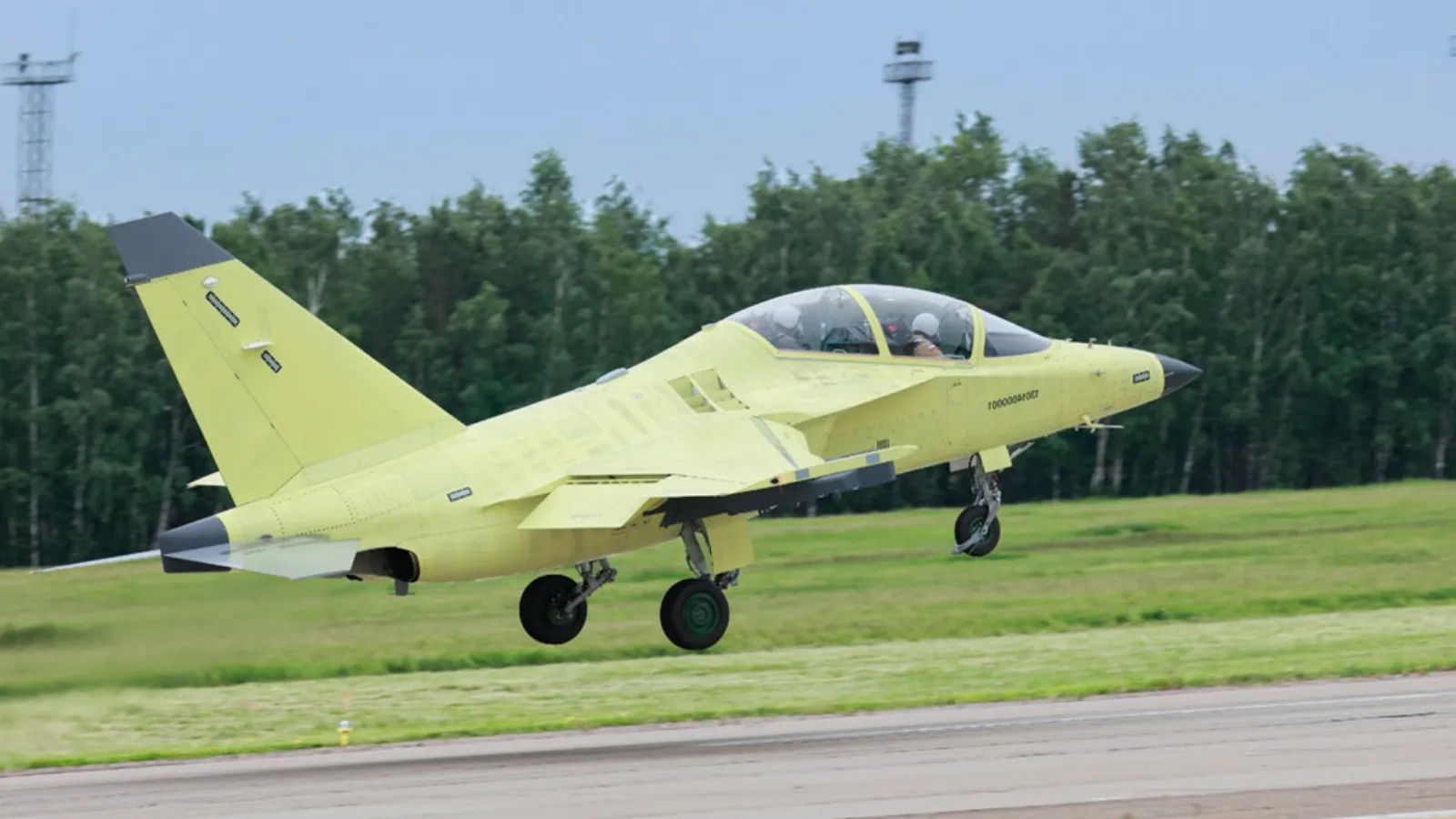
Russia’s Yak-130M modernized combat trainer program has entered a new testing phase, with three prototype aircraft now undergoing trials ahead of planned production deliveries beginning in late 2028, according to officials at the Irkutsk Aviation Plant.
The timeline was announced by Vitaly Yelagin, Chief Manufacturing Officer of the Irkutsk Aviation Plant, during Russian President Vladimir Putin’s visit to the facility. Putin inspected one of the Yak-130M prototype aircraft, which completed its maiden flight approximately one month earlier.
The announcement marks an important milestone in Russia’s effort to modernize its advanced pilot training fleet while expanding the aircraft’s combat capabilities.
Three Prototype Aircraft Are Undergoing Flight Trials
According to Yelagin, engineers have completed assembly of three Yak-130M prototypes, all of which are currently participating in developmental and certification testing.
The flight test campaign is expected to evaluate:
- Flight performance across the operating envelope
- Avionics integration
- Weapon system compatibility
- Reliability and maintainability
- Pilot training effectiveness
- Combat mission capabilities
If testing proceeds as planned, production deliveries are expected to begin during the second half of 2028.
The Yak-130M represents the next major evolution of the Yak-130 platform, which has served as Russia’s primary advanced jet trainer for more than a decade.
Putin Visits Irkutsk Aviation Plant
President Vladimir Putin’s visit to the Irkutsk Aviation Plant, operated by Yakovlev PJSC under the United Aircraft Corporation (UAC), underscored the strategic importance Moscow places on military aircraft production.
During the visit, Putin viewed the newest Yak-130M prototype that recently completed its maiden flight.
The Irkutsk facility remains one of Russia’s principal aerospace manufacturing centers, producing both military and civilian aircraft programs while supporting ongoing modernization efforts for the Russian Aerospace Forces.
What Is The Yak-130M?
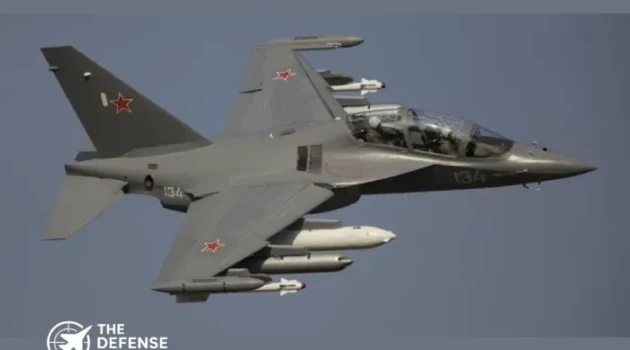
The Yak-130M is an upgraded version of the Yak-130 advanced jet trainer designed to improve both pilot instruction and light combat capabilities.
While maintaining its primary role as a lead-in fighter trainer, the modernization package introduces updated onboard systems intended to better replicate the operational environment of modern fourth and fifth-generation combat aircraft.
The aircraft is expected to support:
- Advanced fighter pilot training
- Ground attack missions
- Close air support
- Reconnaissance missions
- Light strike operations
Its dual-role design allows operators to use the aircraft for training during peacetime while providing additional operational flexibility if required.
Expected Improvements Over The Baseline Yak-130
Although Russian officials have not released complete specifications for the production-standard Yak-130M, previously disclosed information indicates several modernization areas.
Capability Yak-130 Yak-130M (Expected) Primary Role Advanced trainer Advanced trainer and enhanced light combat aircraft Cockpit Digital glass cockpit Updated digital avionics Sensors Standard electro-optical systems Improved targeting and mission systems Weapons Integration Air-to-air and air-to-ground weapons Expanded precision-guided weapon compatibility Training Capability Fourth-generation fighter simulation Enhanced simulation of modern combat aircraft Several of these improvements aim to increase training realism while reducing operating costs compared with using frontline fighter aircraft for pilot conversion.
Why The Yak-130M Matters
Although Russia continues investing heavily in frontline combat aircraft such as the Su-35S and Su-57, maintaining a capable training pipeline remains equally important.
Modern fighter aircraft have become increasingly expensive to operate. Advanced trainers like the Yak-130M allow student pilots to master complex avionics, tactical procedures, and weapons employment before transitioning to operational squadrons.
This approach reduces:
- Flying hour costs
- Airframe wear on frontline fighters
- Training risks
- Maintenance demands
Many modern air forces employ a similar model, using advanced jet trainers to bridge the gap between basic flight instruction and operational combat aircraft.
Strategic Analysis: More Than A Training Aircraft
The Yak-130M’s development reflects broader trends in military aviation rather than simply replacing older trainers.
First, advanced trainers increasingly serve as affordable combat platforms for nations that do not require large fleets of multirole fighters. Enhanced targeting systems and precision-guided weapons allow these aircraft to perform border patrol, counterinsurgency, and limited strike missions at significantly lower operating costs.
Second, Russia’s decision to continue investing in the Yak-130M despite sustained demand for combat aircraft production demonstrates the importance Moscow places on preserving long-term pilot generation capacity. Producing advanced fighters alone is insufficient without a consistent pipeline of trained aircrews capable of operating increasingly sophisticated aircraft.
Third, the Yak-130M also has export implications. The original Yak-130 has been acquired by several international operators, and an upgraded variant could appeal to countries seeking a lower-cost training and light attack solution. However, export opportunities may be influenced by international sanctions, financing arrangements, and broader geopolitical considerations.
For global defense planners, the Yak-130M illustrates a continuing emphasis on maximizing capability while controlling operating costs. Similar trends are evident in Western trainer programs such as the Leonardo M-346 and Boeing-Saab T-7A Red Hawk, each designed to prepare pilots for advanced fighter aircraft using digital training environments.
Looking Ahead
The Yak-130M program will now continue through an extended flight test and certification campaign before entering serial production.
If the current schedule is maintained, deliveries beginning in late 2028 will provide the Russian Aerospace Forces with an updated advanced trainer capable of supporting future pilot training requirements while offering expanded combat functionality.
The progress of the program will be closely watched as Russia continues balancing modernization priorities across its military aviation sector.
NATO allies are investing in advanced instructor training to improve combat readiness as allied air forces prepare for increasingly contested operational environments.
Executive Summary:
NATO allied air forces have completed the Dutch phase of the multinational Weapons Instructor Course at Leeuwarden Air Base, bringing together elite personnel from four nations. The program develops tactical leaders who will return to their units as instructors, strengthening NATO interoperability and collective air combat readiness.
NATO Weapons Instructor Course Strengthens Allied Air Power In The Netherlands
The NATO Weapons Instructor Course is reinforcing allied air combat capability by preparing the next generation of tactical leaders during an intensive multinational training program hosted by the Royal Netherlands Air and Space Force at Leeuwarden Air Base.
Held from July 6 to July 10, the Dutch phase of the course brought together 24 students from Belgium, Denmark, the Netherlands, and Norway. Participants included fighter pilots, intelligence officers, air battle managers, tactical airlift crews, and ground based air defense specialists, reflecting NATO’s growing emphasis on integrated multi domain operations.
Elite Tactical Instructors For NATO Operations
Unlike conventional flying courses, the Weapons Instructor Course focuses on producing highly qualified tactical instructors rather than simply certifying aircrew.
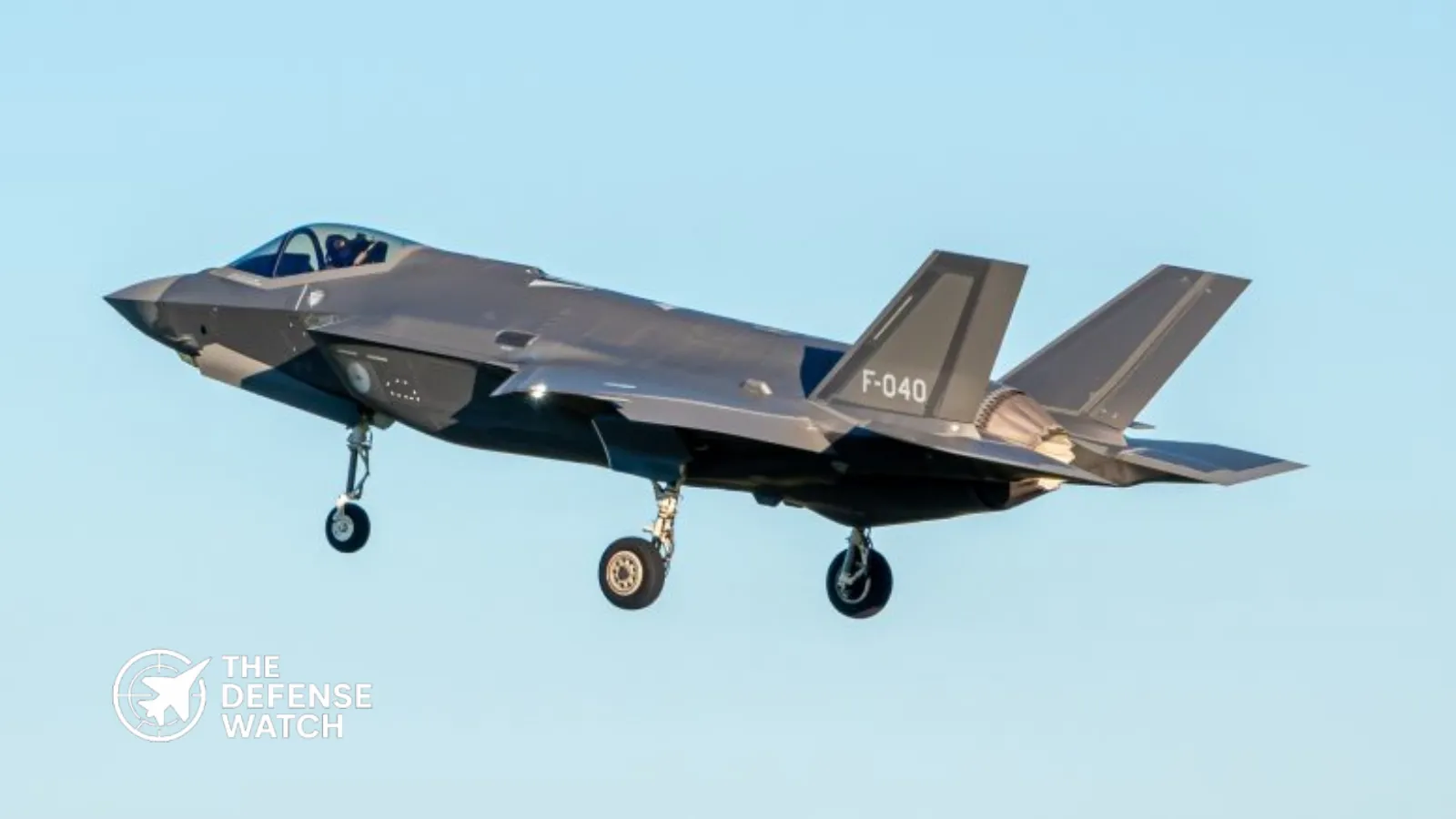
Students conducted demanding operational scenarios involving up to three flying waves each day with as many as 20 military aircraft participating simultaneously. Aircraft involved included Dutch and Danish F-35 Lightning II fighters, Finnish F/A-18 Hornets, and contracted adversary aircraft providing realistic opposing forces.
The curriculum teaches participants to plan, coordinate, and command Large Force Employment missions that combine:
- Fifth generation fighter aircraft
- Intelligence assets
- Command and control networks
- Electronic warfare capabilities
- Ground based air defense systems
Graduates return to their national air forces as weapons instructors, responsible for training future crews and improving operational tactics across their services.
Why The Training Matters
The timing of the exercise reflects NATO’s continued effort to improve interoperability as European allies modernize their air forces and expand fleets of advanced aircraft, particularly the F-35.
Rather than focusing solely on aircraft performance, the course emphasizes how multiple nations can operate as a single combat force during high intensity operations.
That objective has become increasingly important as NATO members conduct more multinational exercises and prepare for operations requiring seamless coordination between different aircraft types, command structures, and supporting capabilities.
From an operational perspective, instructor development offers a multiplier effect. Each graduate trains dozens of additional pilots and mission planners after returning home, allowing advanced tactical knowledge to spread throughout allied air forces without requiring every operator to attend multinational courses.
Leeuwarden’s Role In NATO Air Training
Leeuwarden Air Base has served as one of Europe’s premier tactical aviation training centers for decades.
Home to the Royal Netherlands Air Force Weapons School, the base has hosted advanced fighter training since the 1950s and now conducts the multinational Weapons Instructor Course every two years.
Its infrastructure allows participants to integrate live aircraft, intelligence support, electronic warfare, and realistic adversary forces into complex scenarios that closely resemble modern coalition operations.
Following completion of the Dutch phase, the course continues in Norway, further exposing students to different operational environments while reinforcing cooperation among Northern European NATO members.
Analysis: Building Combat Leadership Instead Of Just Flying Skills
One of the most significant aspects of the NATO Weapons Instructor Course is its emphasis on leadership rather than aircraft qualification.
Modern air campaigns rely on synchronized operations involving fighters, surveillance assets, electronic warfare platforms, air defense units, and command networks. Success increasingly depends on tactical decision making across multinational formations rather than the capabilities of individual aircraft.
Programs like the Weapons Instructor Course address this challenge by creating instructors capable of integrating diverse capabilities into coherent combat operations.
The multinational format also provides strategic benefits. As more NATO members introduce common platforms such as the F-35, shared tactical education helps establish standardized procedures, reducing friction during coalition deployments and improving collective deterrence.
For smaller allied air forces, multinational instructor development offers access to complex training environments that would be difficult or prohibitively expensive to replicate independently. This approach strengthens alliance readiness while making efficient use of shared resources.
Looking Ahead
As NATO continues expanding multinational air operations across Europe, advanced instructor programs are becoming an increasingly important component of alliance readiness.
The Weapons Instructor Course demonstrates how allied nations are investing not only in next generation aircraft but also in the tactical expertise required to employ those capabilities effectively. By producing instructors who can train future generations of aircrews, the program supports long term improvements in interoperability, operational leadership, and coalition combat effectiveness.


Executive Summary:
The United Kingdom’s first CH-47ER Chinook has appeared at Boeing’s Philadelphia production facility in a distinctive all black finish ahead of flight testing. The extended range helicopter introduces significantly greater fuel capacity and endurance, strengthening the Royal Air Force’s future heavy lift and long distance deployment capability.
UK CH-47ER Chinook Marks Major Step Toward Enhanced RAF Heavy Lift Capability
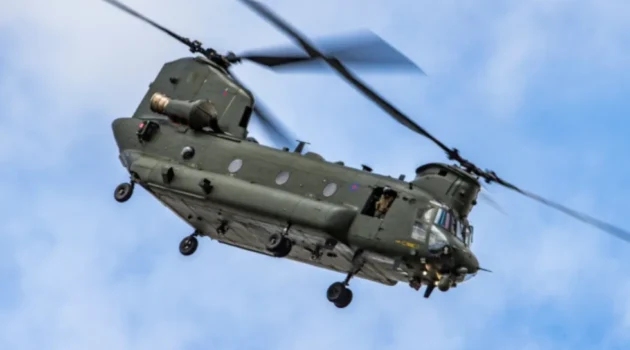
The UK CH-47ER Chinook has reached a major production milestone after Boeing completed assembly of the Royal Air Force’s first extended range heavy lift helicopter in Philadelphia, Pennsylvania. The aircraft’s appearance confirms continued progress on Britain’s modernization of its long serving Chinook fleet and represents the first visible example of the UK’s newest rotary wing transport platform.
Images released during the rollout show the helicopter wearing an all black factory finish, a temporary protective coating commonly applied before final painting and delivery. According to FlightGlobal, the aircraft will now enter ground and flight testing before eventual transfer to the United Kingdom.
First British CH-47ER Rolls Out At Boeing Facility
The helicopter is one of 14 CH-47ER aircraft ordered by the UK Ministry of Defence under a Foreign Military Sales agreement with the United States.
The acquisition replaces the UK’s previous plan to purchase the MH-47G special operations helicopter and instead focuses on a standardized heavy lift fleet based on Boeing’s latest extended range Chinook configuration.
The CH-47ER incorporates several significant improvements over earlier RAF Chinook variants, most notably substantially increased fuel capacity through enlarged side mounted fuel tanks.
This allows the aircraft to conduct longer missions without relying as heavily on aerial refueling or forward operating bases.
What Makes The CH-47ER Different?
The CH-47ER is derived from Boeing’s latest Block II Chinook technology while retaining the proven tandem rotor design that has served military operators worldwide for decades.
Key capability improvements include:
Capability CH-47ER Benefit Extended fuel tanks Increased operational range Heavy lift capability Supports troops, vehicles and artillery Advanced digital avionics Improved situational awareness Modern mission systems Easier integration with allied operations Proven tandem rotor design Excellent lift performance in demanding environments The enlarged fuel sponsons are the most visually obvious difference, allowing significantly longer missions compared with earlier RAF Chinook helicopters.
Why Extended Range Matters
Range has become increasingly important for NATO air mobility planning.
Operations across Northern Europe, the High North and other dispersed theaters often require helicopters to cover long distances while carrying personnel, supplies or equipment.
The CH-47ER’s additional fuel capacity reduces dependence on intermediate refueling stops, improving operational flexibility during humanitarian assistance, disaster response and military deployments.
For expeditionary operations, the helicopter can move forces farther from established airfields while maintaining substantial payload capacity.
Supporting The RAF’s Future Air Mobility Strategy
The Royal Air Force has relied on the Chinook family since the early 1980s.
Over decades of service, the aircraft has supported operations in:
- Afghanistan
- Iraq
- The Balkans
- Humanitarian disaster relief missions
- Domestic emergency response operations
The incoming CH-47ER fleet represents one of the largest capability upgrades to Britain’s heavy lift helicopter force in years.
Rather than introducing an entirely new platform, the Ministry of Defence selected an upgraded version of an aircraft already familiar to RAF aircrews and maintenance personnel.
This approach minimizes transition risk while adding meaningful operational improvements.
Strategic Importance For NATO Operations
Although the rollout marks an industrial milestone rather than an operational deployment, the program carries broader significance for NATO.
Heavy lift helicopters remain essential for transporting:
- Infantry units
- Light armored vehicles
- Artillery systems
- Engineering equipment
- Humanitarian supplies
As European allies increase readiness and conduct more multinational exercises, aircraft capable of operating over longer distances become increasingly valuable.
The CH-47ER supports that requirement by combining established Chinook reliability with greater endurance.
For the United States, Britain’s investment also reinforces interoperability since the helicopter shares common systems and logistics with other U.S. operated Chinook variants.
Production And Delivery Timeline
Following assembly, the first aircraft will undergo:
- Ground testing
- Systems validation
- Flight testing
- Acceptance inspections
- Delivery to the Royal Air Force
The remaining helicopters will be delivered in phases as Boeing continues production under the UK contract.
Once operational, the aircraft will join existing RAF Chinook squadrons after aircrew training and operational evaluation.
Analysis: Why This Upgrade Matters
The emergence of the UK’s first CH-47ER reflects a broader trend among NATO members toward improving mobility rather than simply increasing platform numbers.
Modern military operations increasingly depend on rapid movement of personnel and equipment across dispersed operating areas. Extended range helicopters reduce logistical constraints by allowing commanders greater flexibility when selecting landing zones, supporting remote forces or responding to emerging crises.
Unlike entirely new aircraft programs that often introduce developmental risk, the CH-47ER builds upon one of the world’s most proven heavy lift helicopter families. This provides a relatively low risk path to expanding capability while maintaining compatibility with existing maintenance infrastructure, pilot training and allied operations.
For the Royal Air Force, the aircraft is expected to strengthen strategic air mobility alongside fixed wing transport fleets, ensuring Britain retains a capable heavy lift helicopter force well into the coming decades.
Executive Summary:
The Eurofighter Typhoon’s unit cost isn’t one number — it’s a moving target that ranges from a £73.1 million bare flyaway figure to a €187 million all-in Tranche 5 package, depending on what’s bundled into the deal. This breakdown separates the accounting tricks from the real program economics, and explains why the RAF still trusts a jet first sketched on paper as “EF 2000” back in the 1980s.
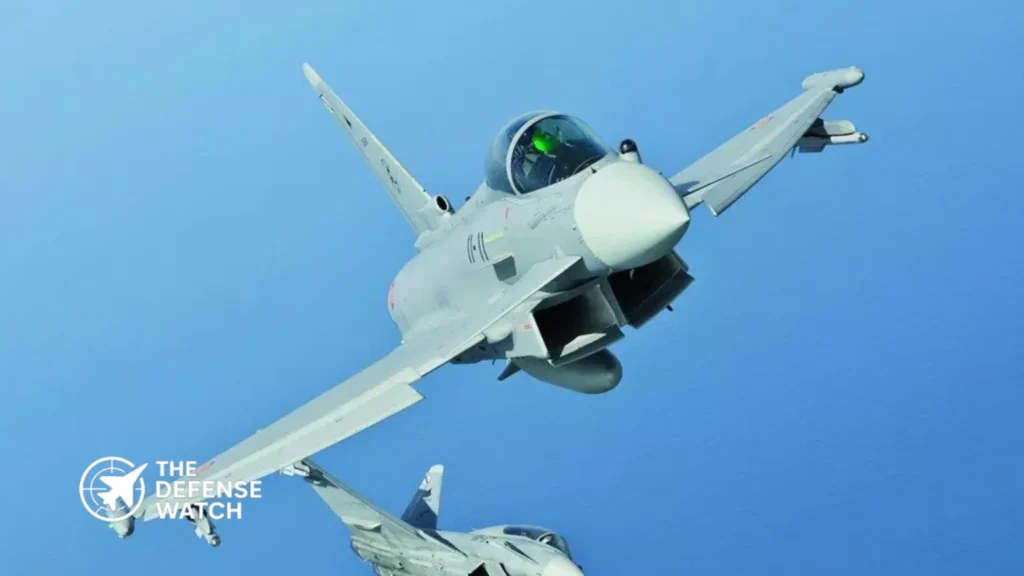
Ask three different governments what a Eurofighter Typhoon costs and you’ll get three different answers, all technically true. The UK’s own 2011 House of Commons defence committee pegged the bare airframe at £73.1 million. Germany’s October 2025 order for 20 Tranche 5 jets worked out to roughly €187 million each once simulators and support kit were folded in. Neither number is wrong — they’re just measuring completely different things.
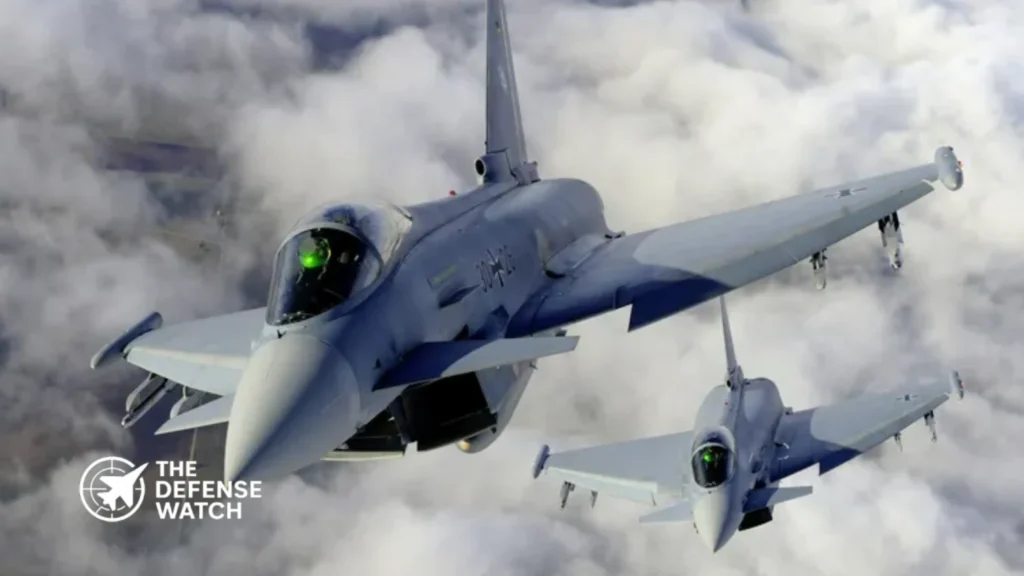
That pricing chaos is the whole story. The Typhoon was born as a four-nation consortium jet, the “EF 2000,” designed to spread cost and workshare across Britain, Germany, Italy, and Spain. Three decades later, that same structure is exactly why nobody can agree on what one aircraft is worth.
The Technical Analysis: Why The Typhoon’s Price Tag Keeps Moving
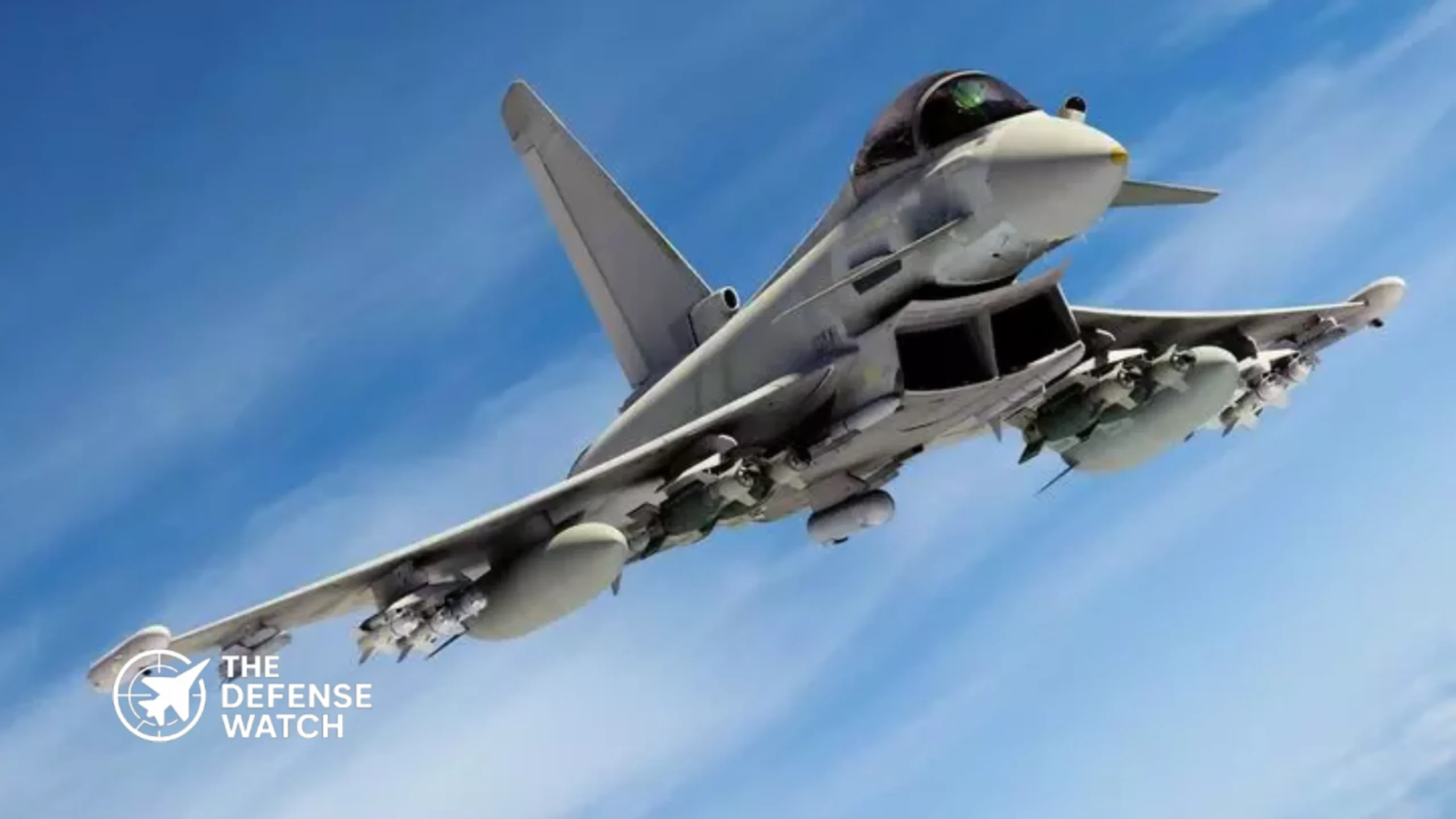
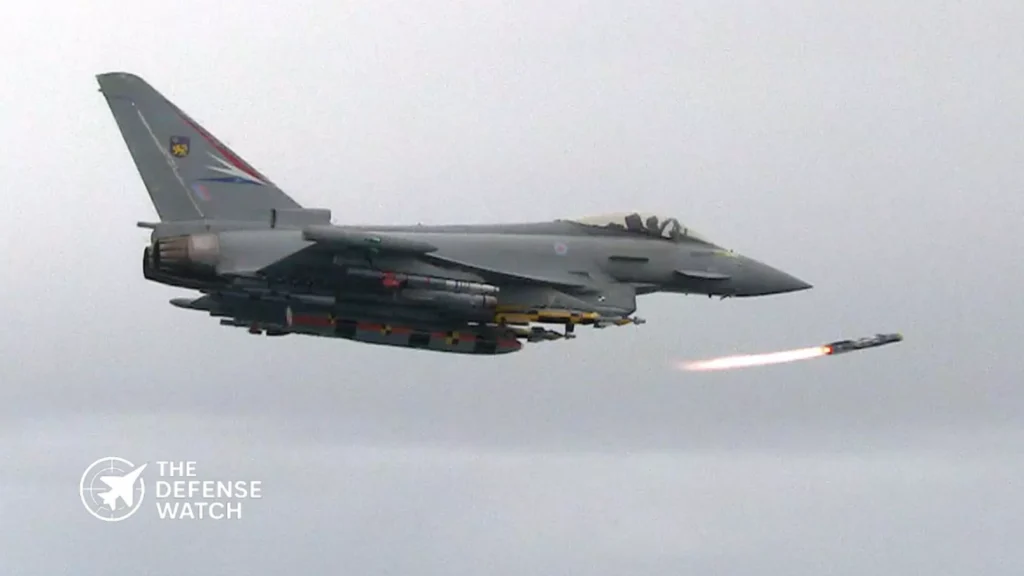
Start with the airframe everyone actually flies. The RAF’s Tranche 3 Typhoon FGR4 carries the Captor-M mechanically scanned radar in most of the fleet, with the newer AESA-based Captor-E rolling into later tranches and retrofits.
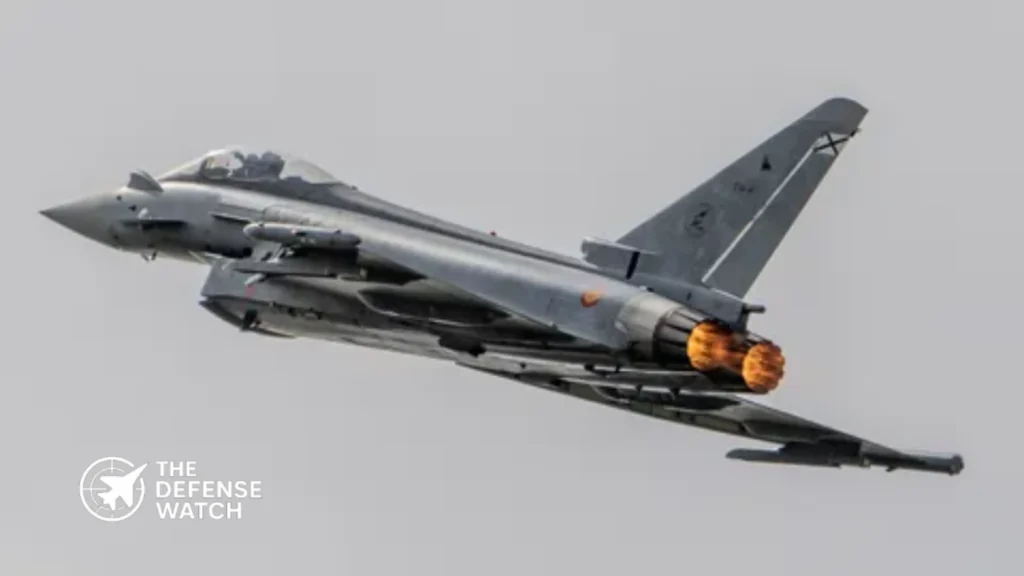
Two Eurojet EJ200 turbofans push the jet to Mach 2.35, with supercruise capability that lets it sustain supersonic speeds without afterburner. That matters tactically — it shrinks the infrared signature during a intercept run and extends time-on-station compared to jets that need burner to go supersonic.

The pricing split comes down to what accountants call “recurring flyaway cost” versus “total program cost.” Flyaway cost covers just the airframe, engines, and standard avionics rolling off the line. Total program cost folds in decades of sunk R&D, weapons integration, simulators, and infrastructure — which is why the same jet can be quoted at $117 million or $300 million depending on which invoice you’re reading.
Export contracts make the picture messier still. Qatar’s 2017 order for 24 Typhoons came in at roughly $6.7 billion, or about $280 million per jet — but that figure bundled weapons packages, pilot training, and a support infrastructure buildout from zero. Turkey’s more recent deal covered 20 Typhoons in an agreement valued at up to £8 billion, framed by UK officials as securing thousands of British jobs.
Data Block: Eurofighter Typhoon Cost & Spec Comparison
Metric RAF Tranche 3 (UK) Tranche 5 (Germany, 2025) Export Configuration (Qatar/Turkey) Reported unit cost ~£73.1M–£126M ($117M–$202M) ~€140M–€187M all-in $200M–$300M (with weapons/support) Radar Captor-M (mechanical) Captor-E AESA (GaN) Mix, contract-dependent Max speed Mach 2.35 Mach 2.35 Mach 2.35 Engines 2x Eurojet EJ200 2x Eurojet EJ200 2x Eurojet EJ200 Est. flight-hour cost $60,000–$65,000 Comparable, program-dependent Higher (fleet-scale, no economies) Program origin EF 2000 consortium, 1980s Same consortium architecture License/offset-driven Figures reflect publicly reported program data through late 2025 and early 2026; export pricing varies by offset and support package.
The Insight: What Esports Drafting Strategy Teaches Us About Consortium Fighters
Competitive Call of Duty and Counter-Strike teams live or die by role specialization — an entry fragger, a support player, an anchor holding a chokepoint. No single player is optimized to do everything; the roster wins by combining specialists into one coordinated unit.
The Eurofighter consortium was built on the same logic, just with nations instead of players. The UK leans on Typhoon for air-to-air and rapid intercept, Germany pushes electronic warfare integration, Italy and Spain contribute manufacturing depth and Mediterranean basing flexibility. No partner nation “solos” the program.
The trade-off mirrors a drafted roster with four captains instead of one. Juste retour — dividing manufacturing work by financial contribution rather than by who’s actually best at building a given part — is the aerospace equivalent of picking a lineup by seniority instead of skill. It produces a capable jet, but never the cheapest one.
The Typhoon’s order books are fuller now than they were five years ago — but every one of those orders comes wrapped in an industrial partnership, not just a price tag.” This is the trade nations keep making: paying a premium for technology transfer and sovereign workshare, not just for an airframe.
Conclusion: The Price You Pay Depends On What You’re Actually Buying
The Eurofighter Typhoon isn’t overpriced or underpriced — it’s mispriced by anyone comparing headline numbers without asking what’s actually in the box. A bare RAF flyaway figure and a fully-loaded export contract describe the same airframe but two entirely different transactions.
That distinction matters more now than ever, as the Typhoon’s Captor-E radar upgrade and continued export wins in the Gulf and Southeast Asia keep the EF 2000 lineage flying well into the 2030s. The jet that started as a four-nation compromise is still winning contracts precisely because it never stopped being one.
FAQ
What is the unit cost of a Eurofighter Typhoon?Reported figures range from roughly $117 million (UK flyaway cost, 2011 report) to $300 million for fully-equipped export configurations bundling weapons, training, and support infrastructure.
Why is it called “EF 2000”?EF 2000 was the Eurofighter’s original consortium designation during development in the 1980s and 1990s, before “Typhoon” became the aircraft’s operational name.
Does the RAF still fly the Typhoon?Yes. The Typhoon FGR4 remains a frontline RAF fast-jet, working alongside the F-35B and expected to remain in service into the 2030s pending Tranche upgrades.


Executive Summary:
The JF-17 Thunder, co-produced by Pakistan and China, has grown from a Cold-War-era stopgap into a genuine export success story, with Azerbaijan alone signing a $4.6 billion deal for 40 Block 3 jets. Priced at roughly a tenth of a Rafale, the JF-17 is proving that “good enough, cheap, and unrestricted” can out-compete Western jets in the arms bazaar that actually matters — the developing world’s.
A Rafale costs roughly ten times what Pakistan charges for a combat-ready JF-17 Thunder Block 3. That single fact explains why Azerbaijan just signed a $4.6 billion order for 40 of them.
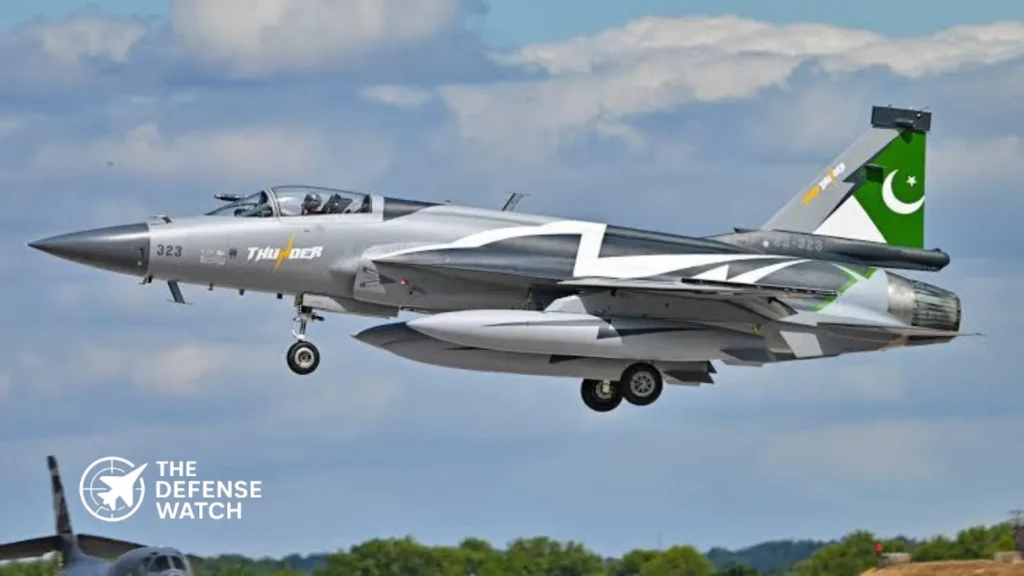
No Western manufacturer can touch that price point on a fourth-generation multirole airframe. The JF-17 was never meant to be the best fighter in the sky — it was built to be the fighter a cash-strapped air force could actually afford, buy without political strings, and keep flying for decades.
That formula is now working better than anyone in Islamabad or Chengdu predicted.
Technical Analysis: The Deep Dive Into The Thunder’s Design
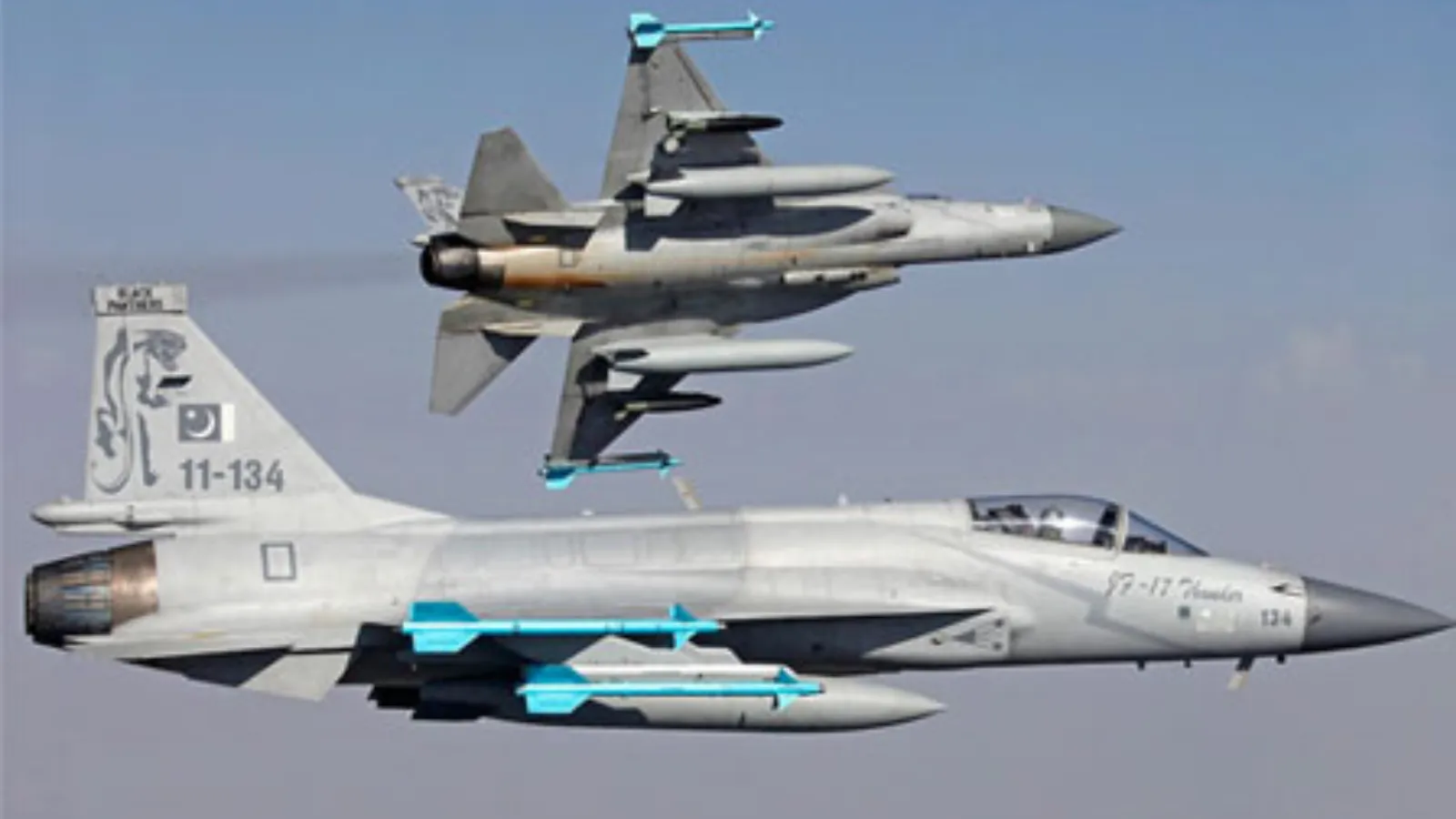
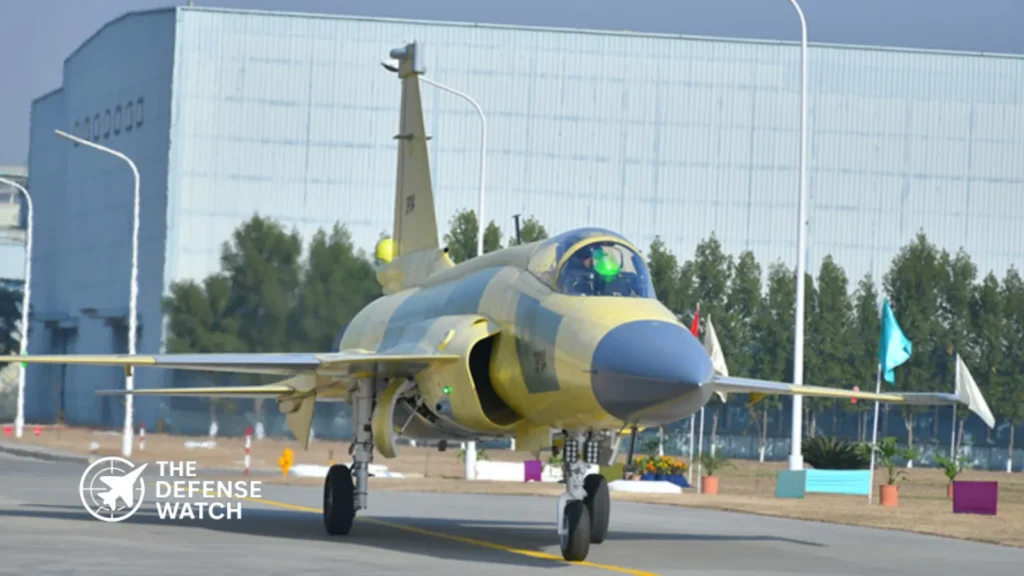
The JF-17 traces back to 1998-99 agreements between Pakistan and China, drawn up after the US Pressler Amendment blocked delivery of 28 already-paid-for F-16s. The first prototype flew in August 2003, and the jet entered Pakistan Air Force service in 2007, becoming fully operational with No. 26 Squadron in 2010.
Three production blocks tell the story of steady, deliberate escalation. Block I was the initial 2007 variant with basic avionics and no aerial refueling; Block II arrived in 2013 with refueling capability, improved avionics, and greater payload; Block III added an AESA radar and a modernized cockpit.
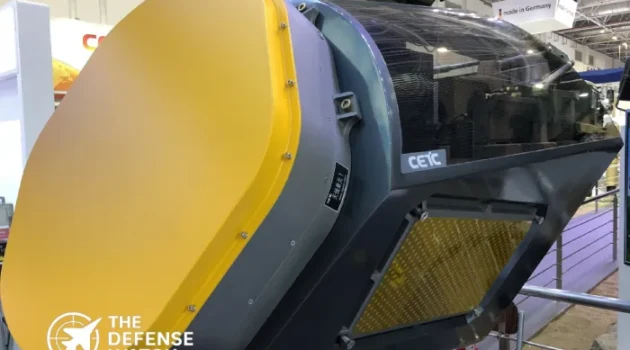
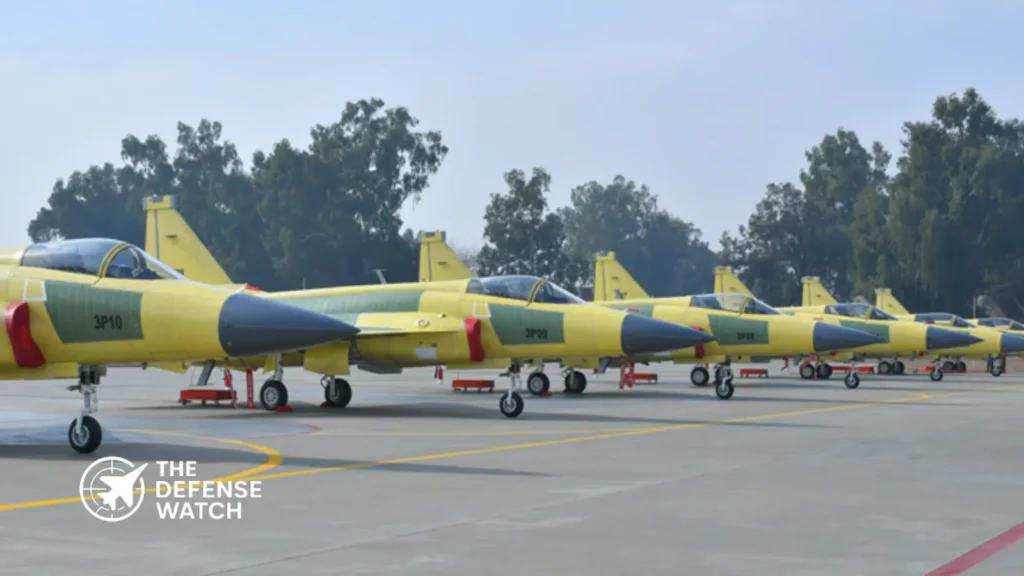
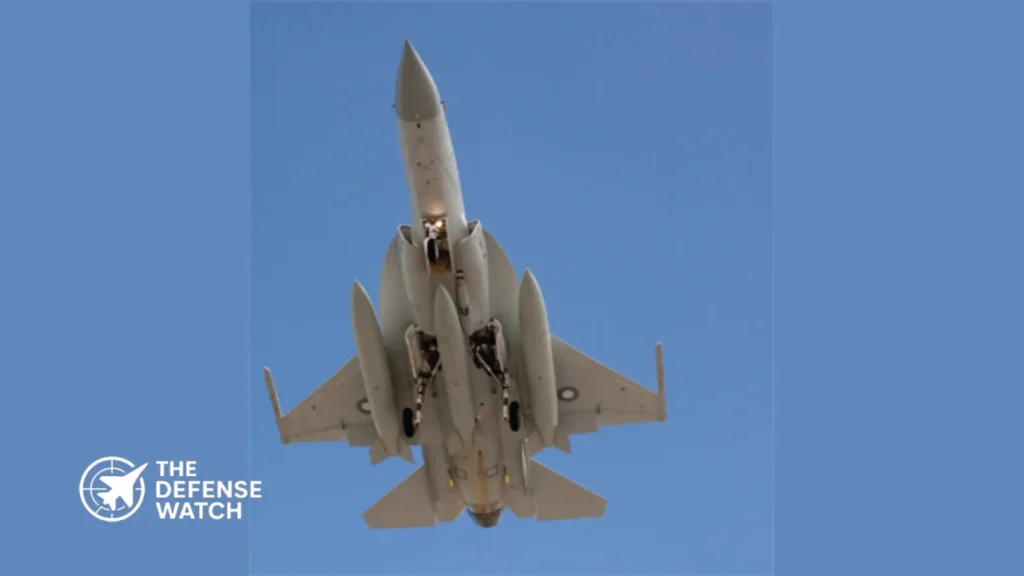
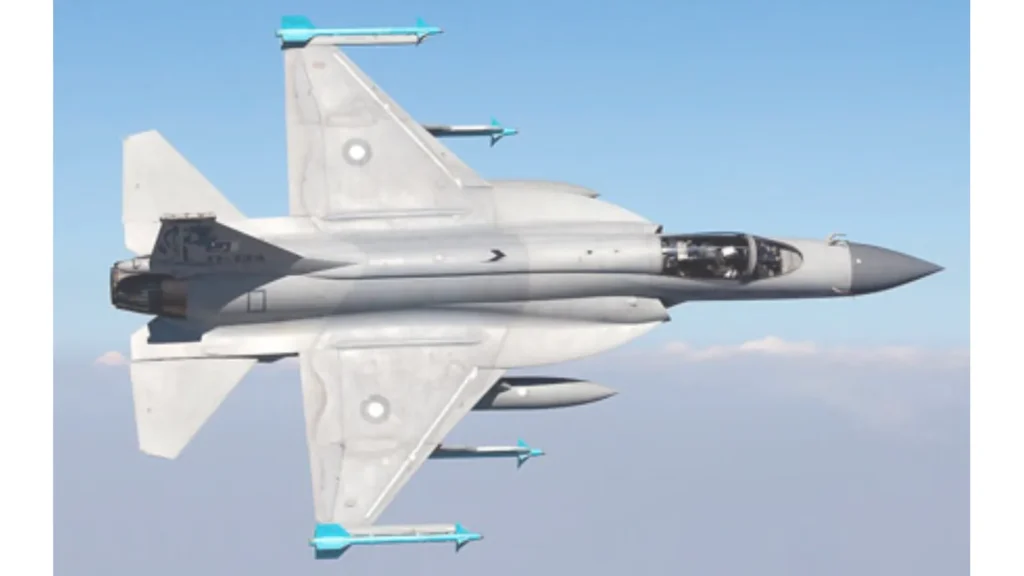
Image : PAC Block III specifically brings the KLJ-7A active electronically scanned array radar, a helmet-mounted display and sight, three-axis fly-by-wire controls, upgraded electronic warfare gear, and infrared search-and-track compatibility. That’s a genuine sensor-fusion cockpit, not a patched-up 1990s jet.
Power comes from a Russian-origin turbofan. The Block III variant runs on the RD-93MA afterburning turbofan, producing about 91 kilonewtons (19,000 lbs) of thrust under full authority digital engine control. That gets the airframe to Mach 1.6, roughly 1,960 km/h.
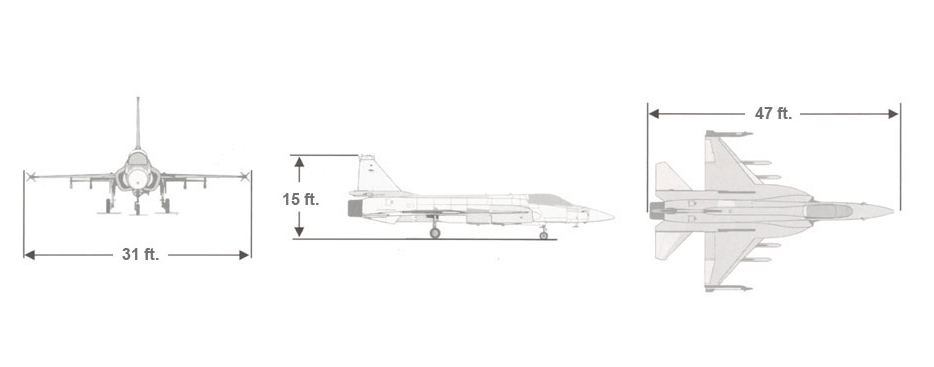
Airframe numbers stay lean by design. The jet measures about 14.3 meters long with a 9.5-meter wingspan, an empty weight near 7,965 kg, and a maximum takeoff weight around 13,500 kg, with a listed service life of roughly 4,000 flight hours or 25 years. Lightweight airframe, single engine, minimal parts inventory — every design choice traces back to keeping the sustainment bill low for the buyer.

Image : PAC Pricing is where the jet actually wins wars — the budget kind. Early Block I units cost around $15 million, Block II pushed closer to $25 million with its added capability, and Block III — now the primary export configuration — is being quoted between $25 million and $50 million depending on package. Pakistan’s Kamra production facility currently runs an annual output of 20-25 aircraft, enough to cover both PAF needs and the growing export backlog.
JF-17 Thunder: Variant-By-Variant Snapshot
Variant Service Entry Key Upgrade Approx. Unit Cost Block I 2007 Baseline avionics, no A2A refueling ~$15M Block II 2013 A2A refueling, composite structure, EW suite ~$25M JF-17B 2017 Twin-seat trainer/combat variant Comparable to Block II Block III 2019 onward KLJ-7A AESA radar, HMD/S, fly-by-wire $25M–$50M The Export Boom: From Baku To Mogadishu
Numbers tell the adoption story better than any press release. By October 2025, 177 JF-17s had rolled off the line, a meaningful share of them Block 3 units built for export customers rather than the PAF.
Azerbaijan is the headline deal. Baku’s acquisition is Pakistan’s largest-ever defense export contract, valued at $4.6 billion for 40 aircraft, building on an earlier 2024 agreement worth $1.6 billion and bundling training, munitions, and full logistics support. The first three jets landed in Baku in October 2025, a geopolitical marker as Azerbaijan modernizes its fleet amid persistent tension with Armenia.
Image : PAC Somalia is the newest name on the list. In February 2026, reports emerged that Somalia is negotiating for up to 24 Block III jets in a package worth roughly $900 million — a deal that would mark the country’s largest defense investment since 1991 and rebuild an air force that currently has no fighter aircraft at all, only light utility planes and helicopters.
Islamabad isn’t stopping at the airframe sale. Pakistan is now pitching the JF-17 in active talks with 13 countries at once, and industrial plans on the table include additional assembly lines, a faster production tempo, and deeper Chinese involvement in component manufacturing. This isn’t a one-off sale — it’s Pakistan building an aerospace export industry around a single airframe family, the same way Sweden built one around the Gripen.
The Insight: Why JF-17 Doctrine Looks Like A Rush-Strategy In Competitive Shooters
Strip away the hardware and the JF-17 program is executing a strategy competitive gamers would recognize instantly: win on tempo and economy, not on raw individual power.
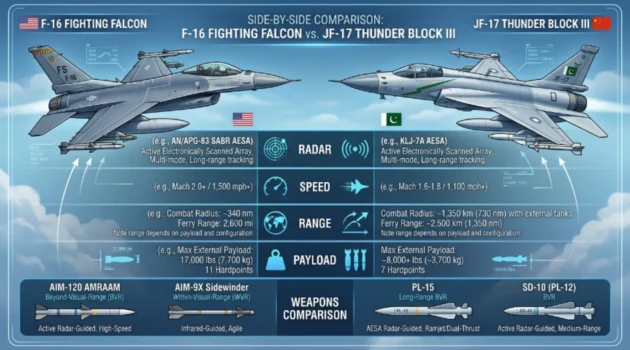
In games like Counter-Strike or Call of Duty, a team with a cheaper loadout that buys more often, contests more angles, and never lets the round economy stall will consistently out-tempo an opponent sitting on a handful of maxed-out weapons. The JF-17 is that strategy in airframe form — Pakistan isn’t trying to out-spec the F-35 one-for-one, it’s trying to field three or four jets, sensors, and pilots for the sustainment cost of one exquisite Western platform.
Image : PAC That’s also the logic behind “econ rounds” in esports: sometimes the correct play isn’t the best gun, it’s the gun you can afford to lose without losing the game. Somalia and Azerbaijan aren’t buying the most capable jet on the market — they’re buying the jet whose loss, in combat or in the balance sheet, doesn’t end their air force.
The JF-17 doesn’t have to beat an F-16 in a dogfight. It has to be affordable enough that a country can field a real squadron instead of a symbolic one — and networked well enough that numbers start doing the work individual capability used to do.”
Conclusion: The Real Threat Isn’t The Jet, It’s The Price Tag
The JF-17 Thunder was born out of an arms embargo and grew into Pakistan’s most consequential defense export product. Its technology is respectable, not revolutionary — the real disruption is economic.
Image : PAC Every Azerbaijan-style deal signed at a tenth of a Rafale’s price puts pressure on Dassault, Lockheed, and Saab to justify their margins to budget-constrained air forces from Africa to the Caucasus. In a market where most buyers are counting dollars per airframe rather than chasing absolute stealth or range, “cheap, capable, and unrestricted” is turning out to be a formula the West doesn’t have a ready answer for.
Frequently Asked Questions
How much does a JF-17 Thunder cost?Early Block I units ran about $15 million, Block II rose to roughly $25 million, and the current Block III export configuration is quoted between $25 million and $50 million depending on the support package.
Who makes the JF-17 Thunder?It’s a joint program between Pakistan Aeronautical Complex (PAC) and China’s Chengdu Aircraft Corporation (CAC), assembled at PAC’s Kamra facility.
Which countries operate or have ordered the JF-17?Pakistan is the primary operator. Azerbaijan has ordered 40 Block 3 jets in a $4.6 billion deal, Myanmar ordered 16 Block 2 aircraft for $560 million in 2015, and Somalia is in negotiations for up to 24 Block III jets worth roughly $900 million. Nigeria has also acquired the type.
What radar does the JF-17 Block III use?The Block III carries the KLJ-7A active electronically scanned array (AESA) radar, giving it a genuine sensor-fusion edge over earlier mechanically-scanned Block I/II variants.


Executive Summary:
Sikorsky and Safran Helicopter Engines announced an expanded strategic collaboration during the Farnborough International Air Show on July 22, 2026. The agreement builds on years of cooperation between the two companies and is intended to advance next generation helicopter propulsion technologies, improve sustainment capabilities, and support future military and civil rotorcraft programs.
Sikorsky Expands Helicopter Engine Partnership With Safran At Farnborough 2026
Sikorsky’s expanded partnership with Safran Helicopter Engines marks another significant step in the long standing relationship between two of the world’s leading rotorcraft manufacturers. Announced during the Farnborough International Air Show 2026, the agreement broadens collaboration across helicopter propulsion technologies while reinforcing both companies’ commitment to future military and commercial helicopter programs.
The announcement was made through an official joint statement by Lockheed Martin’s Sikorsky business and Safran Helicopter Engines, highlighting a renewed focus on innovation, industrial cooperation, and long term support for global helicopter operators.
Expanded Cooperation Builds On Decades Of Experience
Sikorsky and Safran Helicopter Engines have worked together on several helicopter platforms over many years. Their latest agreement extends that relationship beyond existing engine integration efforts by increasing cooperation in research, technology development, and lifecycle support.
According to the companies, the expanded collaboration includes work in several areas:
| Area | Purpose |
|---|---|
| Advanced propulsion technologies | Improve helicopter performance and efficiency |
| Future rotorcraft development | Support next generation helicopter programs |
| Engine integration | Enhance compatibility across future platforms |
| Sustainment services | Improve fleet readiness and maintenance support |
| Industrial collaboration | Expand engineering and manufacturing cooperation |
Neither company disclosed financial terms or identified a specific new helicopter program tied to the agreement.
Why The Partnership Matters
Modern military helicopters face increasing operational demands. Missions now require greater range, higher payload capacity, lower fuel consumption, and improved reliability while operating in harsh environments.
Engine technology plays a central role in meeting those requirements.
By combining Sikorsky’s expertise in helicopter design with Safran Helicopter Engines’ propulsion experience, the companies aim to accelerate development of technologies that can support future defense customers worldwide.
The collaboration also reflects broader trends across the aerospace industry, where airframe manufacturers and propulsion companies are working more closely to reduce development risk and shorten program timelines.
Focus On Long Term Rotorcraft Innovation
Although the announcement does not identify a specific aircraft, the agreement supports research into technologies expected to shape future helicopter fleets.
Potential areas include:
- Improved fuel efficiency
- Higher power to weight ratios
- Digital engine health monitoring
- Predictive maintenance systems
- Reduced operating costs
- Enhanced mission availability
These capabilities have become increasingly important as military operators seek to maximize readiness while controlling lifecycle costs.
Digital diagnostics and condition based maintenance are especially valuable because they allow operators to identify maintenance needs before failures occur, reducing aircraft downtime.
Strategic Importance For Defense Customers
The agreement comes at a time when many allied nations are modernizing helicopter fleets.
The United States, Europe, and Indo Pacific partners continue investing in advanced vertical lift capabilities to support transport, combat, special operations, search and rescue, and humanitarian missions.
While the expanded partnership does not announce a procurement program, it strengthens the industrial foundation supporting future helicopter development.
For defense ministries, closer cooperation between major aerospace suppliers can simplify technology integration, improve supply chain resilience, and enhance long term sustainment planning.
Analysis: What This Means For Future Military Helicopters
The significance of this announcement extends beyond a routine industry partnership.
Future military helicopters are expected to rely on increasingly integrated propulsion systems that combine greater efficiency with advanced digital management. Rather than treating engines as standalone components, manufacturers now design propulsion systems alongside aircraft avionics, mission systems, and predictive maintenance software.
This approach offers several operational advantages.
Higher engine efficiency can increase combat radius without enlarging the aircraft. Improved thermal management supports modern onboard electronics. Digital health monitoring reduces unscheduled maintenance while allowing fleets to remain operational for longer periods.
For Sikorsky, expanding its relationship with Safran also diversifies access to advanced propulsion expertise that could support international programs and export opportunities.
For Safran Helicopter Engines, deeper collaboration with one of the world’s largest military helicopter manufacturers strengthens its position in future global rotorcraft competitions.
The announcement therefore reflects a broader shift toward integrated industrial partnerships rather than isolated supplier relationships, an approach increasingly common across major defense aerospace programs.
Farnborough Continues To Showcase Defense Aerospace Collaboration
The Farnborough International Air Show remains one of the aerospace industry’s premier venues for announcing strategic agreements, technology partnerships, and defense initiatives.
This year’s exhibition has highlighted growing cooperation among manufacturers responding to rising global demand for advanced aerospace technologies, particularly in military aviation.
The Sikorsky and Safran announcement fits within that broader trend by emphasizing long term innovation rather than a single procurement contract.
Looking Ahead
The expanded strategic collaboration positions Sikorsky and Safran Helicopter Engines to continue developing propulsion technologies for future helicopter platforms while strengthening support for existing fleets.
Although the companies have not announced new aircraft programs under the agreement, the partnership reinforces their commitment to advancing rotorcraft performance, reliability, and lifecycle support for military and commercial customers worldwide.
As governments continue investing in next generation vertical lift capabilities, industrial partnerships such as this are expected to play an increasingly important role in delivering more capable and sustainable helicopter fleets.
Executive Summary:
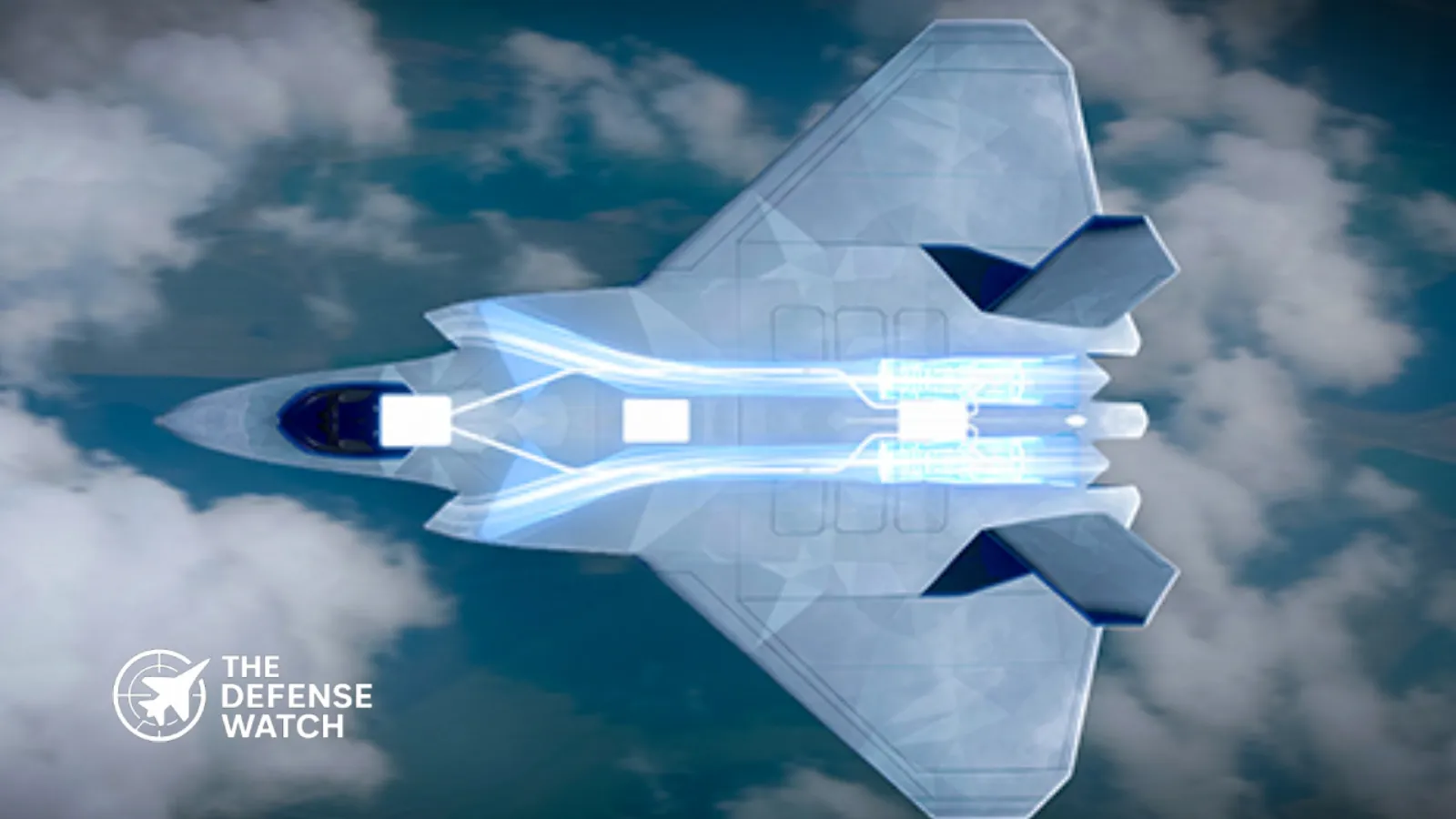
Rolls-Royce and its international partners have completed a major development milestone for the Global Combat Air Programme (GCAP) propulsion system, clearing the way for ground testing of a next generation fighter engine demonstrator. The achievement marks an important step in delivering the sixth generation combat aircraft that Britain, Italy, and Japan aim to introduce in the mid 2030s while strengthening sovereign propulsion capabilities.
Rolls-Royce GCAP Engine Advances Toward Ground Testing
Rolls-Royce has reached a significant milestone in the development of the GCAP combat jet engine, completing a series of consortium design reviews that pave the way for ground testing of the propulsion system demonstrator. The progress was announced by Rolls-Royce alongside consortium partners Avio Aero of Italy and IHI Corporation of Japan during the 2026 Farnborough Airshow.
The engine is being developed for the Global Combat Air Programme (GCAP), the multinational effort to build a sixth generation combat aircraft that will replace the Royal Air Force’s Eurofighter Typhoon while also serving future requirements in Italy and Japan. The propulsion system is considered one of the most technically demanding elements of the overall aircraft program.
According to Rolls-Royce, the successful completion of multiple design reviews demonstrates growing maturity across the engine program and allows development teams to transition toward full scale ground testing of the demonstrator.
International Consortium Deepens Technical Cooperation
The GCAP propulsion effort is jointly led by Rolls-Royce, Avio Aero, and IHI Corporation, combining expertise from three national aerospace industries.
Rolls-Royce stated that the partnership has expanded its collaborative engineering approach over the past year, including the establishment of a dedicated Collaboration Hub in Reading, England. The facility supports integrated engineering work between industry partners, the GCAP Agency, and Edgewing, the organization overseeing aircraft development.
Program officials said recent design reviews validated key aspects of the propulsion architecture while reinforcing the long term industrial partnership required to sustain development over several decades.
Why The Engine Matters
Unlike previous generation fighter engines, the GCAP propulsion system is expected to support substantially greater electrical power generation, advanced thermal management, and higher operating temperatures.
These capabilities are increasingly essential because sixth generation fighters will rely heavily on:
Capability Operational Importance Higher electrical output Supports advanced AESA radar, electronic warfare, sensors, and future directed energy systems Improved thermal management Dissipates heat generated by onboard computing and mission systems Greater fuel efficiency Extends combat radius while reducing logistical demands Increased durability Supports higher readiness and lower lifecycle costs Although Rolls-Royce has not disclosed detailed engine specifications, officials have consistently described the propulsion system as a generational leap compared with current fighter engines.
Strategic Importance For Britain And Allied Air Power
The engine milestone arrives as GCAP continues gaining political and industrial momentum.
Earlier this week, Canada agreed to join the program as an observer, expanding international cooperation around one of the world’s most ambitious future combat aircraft initiatives. The move reflects broader efforts among allied nations to strengthen defense industrial collaboration while reducing dependence on single suppliers for advanced military technologies.
For Britain, maintaining domestic capability to design and manufacture advanced military engines remains strategically important.
Only a small number of countries retain the industrial base needed to independently develop high performance fighter propulsion systems. Preserving that expertise supports national security, export competitiveness, and long term technological leadership across military aviation.
Analysis: Why This Milestone Matters Beyond The Engine
While the announcement does not represent a completed engine or first test run, it marks one of the most meaningful engineering checkpoints in the GCAP timeline.
Engine development typically represents one of the highest technical risks in any advanced fighter program. Validating the design before hardware testing helps reduce integration challenges later in aircraft development, where propulsion, stealth shaping, cooling systems, software, and mission electronics must function as an integrated platform.
From a U.S. defense perspective, the progress also underscores a broader trend among close allies investing in sovereign sixth generation capabilities. As the United States advances the Next Generation Air Dominance (NGAD) family of systems, Europe and Japan are pursuing comparable technologies through GCAP, ensuring allied air forces retain access to advanced combat aircraft tailored to their own operational requirements.
For NATO and Indo Pacific security, successful propulsion development could strengthen industrial resilience by diversifying the global supply base for advanced military aviation technologies while enabling closer technology cooperation among partner nations.
What Comes Next
With consortium design reviews complete, the next major phase is ground testing of the engine demonstrator.
These tests will validate critical performance characteristics before the propulsion system is integrated into the future GCAP aircraft. The multinational program continues targeting entry into service during the mid 2030s, though additional development, flight testing, and systems integration remain ahead.

- Boeing received an $18.8 million U.S. Navy delivery order to repair 27 Distributed Targeting Processor Network units used on F/A-18 aircraft.
- The contract was awarded by Naval Supply Systems Command Weapon Systems Support under a sole source procurement.
- Repairs will be completed in Missouri and Florida, with work scheduled through March 2028.
- The Distributed Targeting Processor Network is a critical mission computer that enables advanced sensor fusion and precision targeting.
- Sustaining these processors supports the combat readiness of U.S. Navy F/A-18 Super Hornet and Growler fleets.
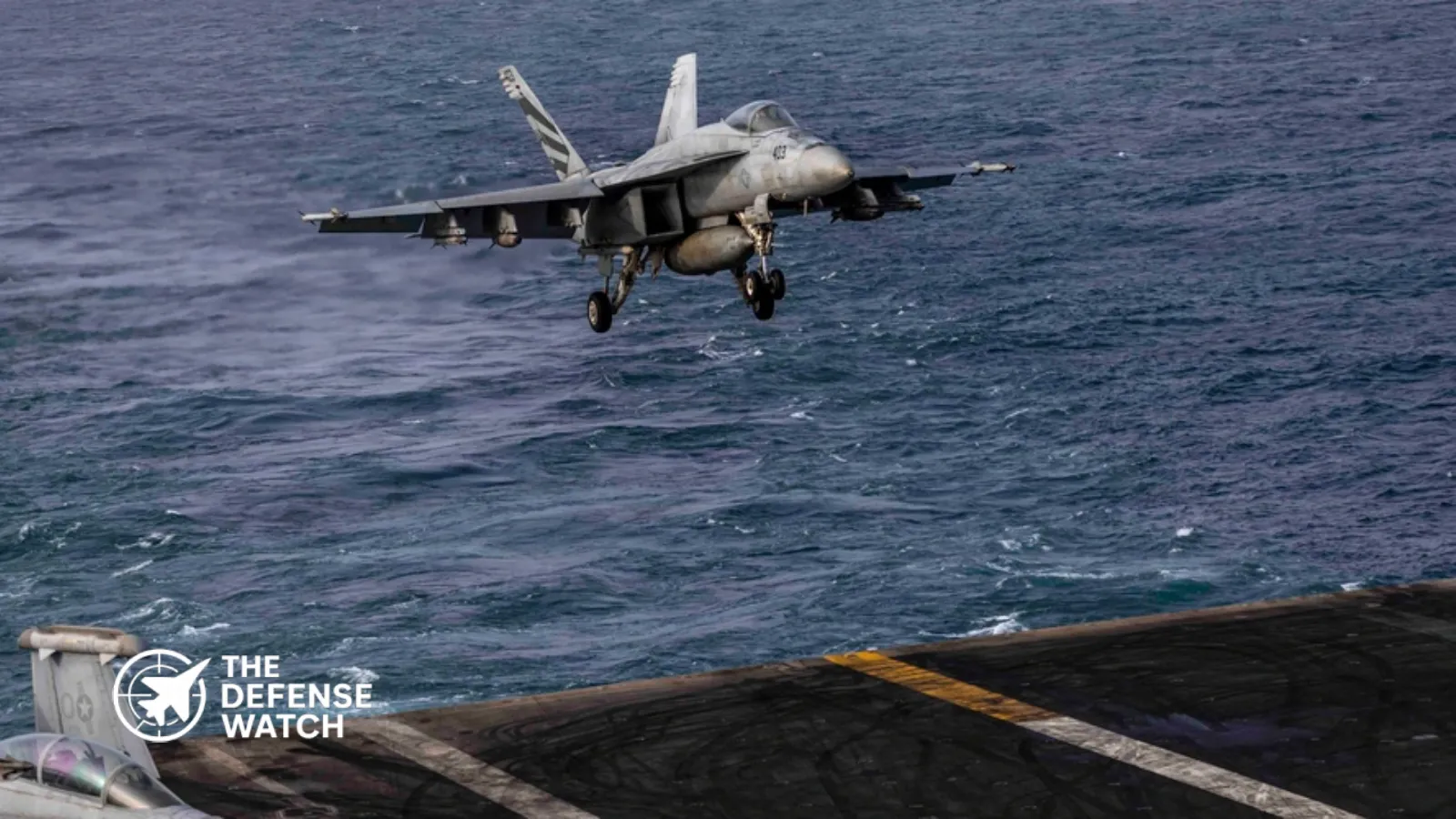
The U.S. Navy has awarded The Boeing Company an $18,798,154 firm fixed price delivery order to repair 27 Distributed Targeting Processor Network (DTP,N) systems supporting the F/A-18 aircraft fleet. The award was issued by Naval Supply Systems Command (NAVSUP) Weapon Systems Support in Philadelphia, Pennsylvania, under a sole source procurement, reinforcing continued investment in sustaining one of the Navy’s most important tactical aviation platforms.
According to the Department of Defense contract announcement, the repair effort will be conducted in St. Louis, Missouri, and Malabar, Florida, with all work expected to conclude by March 2028. Initial funding comes from Fiscal Year 2026 Navy Working Capital Funds, with additional task orders financed through future working capital appropriations.
Deep Technical & Strategic Context Analysis
The Distributed Targeting Processor Network serves as one of the F/A-18’s most advanced mission computing systems. Introduced as part of the Block II Super Hornet modernization program, the DTP,N significantly expanded onboard processing capacity compared with earlier mission computers. Its high performance architecture enables the aircraft to rapidly process data from the AN/APG,79 Active Electronically Scanned Array (AESA) radar, infrared search and track systems, electronic warfare sensors, targeting pods, and secure tactical datalinks.
Rather than simply increasing computing power, the DTP,N enables advanced sensor fusion, allowing pilots to receive a unified tactical picture while reducing workload during complex missions. This capability has become increasingly important as modern air operations require aircraft to detect, identify, track, and engage multiple threats simultaneously across contested electromagnetic environments.
From a strategic perspective, sustainment contracts like this are often more significant than their dollar value suggests. The F/A-18E/F Super Hornet and EA-18G Growler remain the backbone of U.S. Navy carrier air wings despite the continued introduction of the F-35C. Maintaining the health of mission critical avionics ensures higher aircraft availability, faster depot turnaround, and improved readiness for Indo Pacific deployments, where carrier strike groups continue to operate in increasingly sophisticated anti access and area denial environments.
The delivery order is structured as a firm fixed price contract, meaning Boeing assumes responsibility for completing the specified repairs at the agreed price. Unlike cost reimbursement contracts, this arrangement limits government cost exposure while providing predictable budgeting for depot level maintenance activities.
Contract Breakdown & Details
Contract Value
- Award Value: $18,798,154
- Contract Type: Firm Fixed Price Delivery Order
- Contract Number: N00383,26,F,YY1N
- Option Period: None
Scope of Work
- Repair of: 27 Distributed Targeting Processor Network units
- Supported Platform: F/A-18 aircraft
- Purpose: Restore mission critical avionics to operational condition for fleet service
Work Locations
- St. Louis, Missouri: 50 percent
- Malabar, Florida: 50 percent
Schedule
- Performance Completion: March 2028
Funding
- Initial Obligation: $9,211,095
- Funding Source: Fiscal Year 2026 Navy Working Capital Funds
- Future Task Orders: Additional Navy Working Capital Funds as required
Contracting Activity
- Awarding Agency: Naval Supply Systems Command Weapon Systems Support (NAVSUP WSS)
- Location: Philadelphia, Pennsylvania
Procurement Method
- Competition: Sole source
- Authority: 10 U.S. Code 3204(a)(1)
- Offers Received: One
Why This Contract Matters
Although valued at less than $20 million, the contract supports one of the most critical components of the Navy’s tactical aviation sustainment strategy. Modern fighter aircraft increasingly depend on powerful mission computers capable of integrating vast amounts of sensor information in real time. As the Super Hornet fleet continues to operate alongside fifth generation aircraft, maintaining advanced processing hardware such as the Distributed Targeting Processor Network remains essential for preserving operational effectiveness and mission readiness.
Depot repair programs also represent a cost effective approach to extending the service life of existing avionics, allowing the Navy to sustain high readiness rates while balancing procurement of next generation capabilities.
- Northrop Grumman received a contract worth up to $1.196 billion to produce three E-2D Advanced Hawkeye Block II aircraft for the U.S. Navy.
- Naval Air Systems Command awarded the undefinitized production contract, with work continuing through December 2031.
- The E-2D serves as the Navy’s primary airborne early warning, battle management, and network command aircraft for carrier strike groups.
- Initial funding of $583.4 million from Fiscal Year 2026 Navy aircraft procurement has been obligated at contract award.
- The aircraft will strengthen the Navy’s ability to detect cruise missiles, aircraft, drones, and maritime threats over long distances.
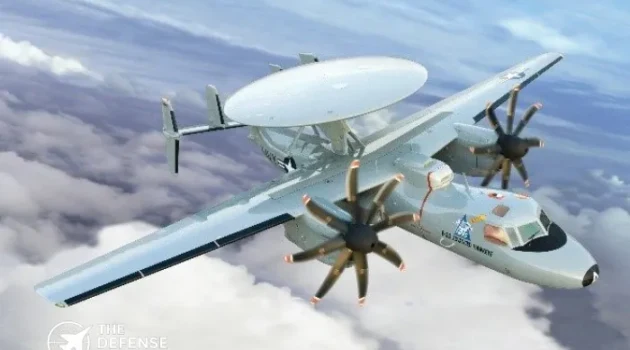
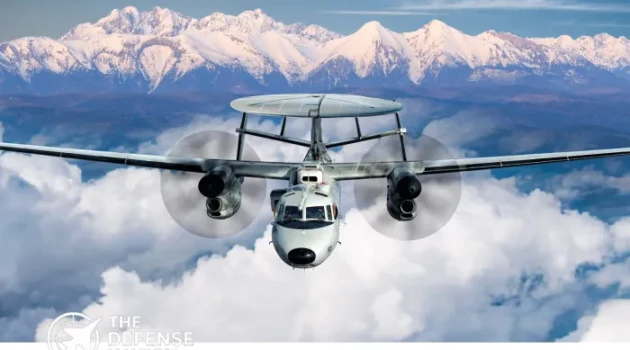
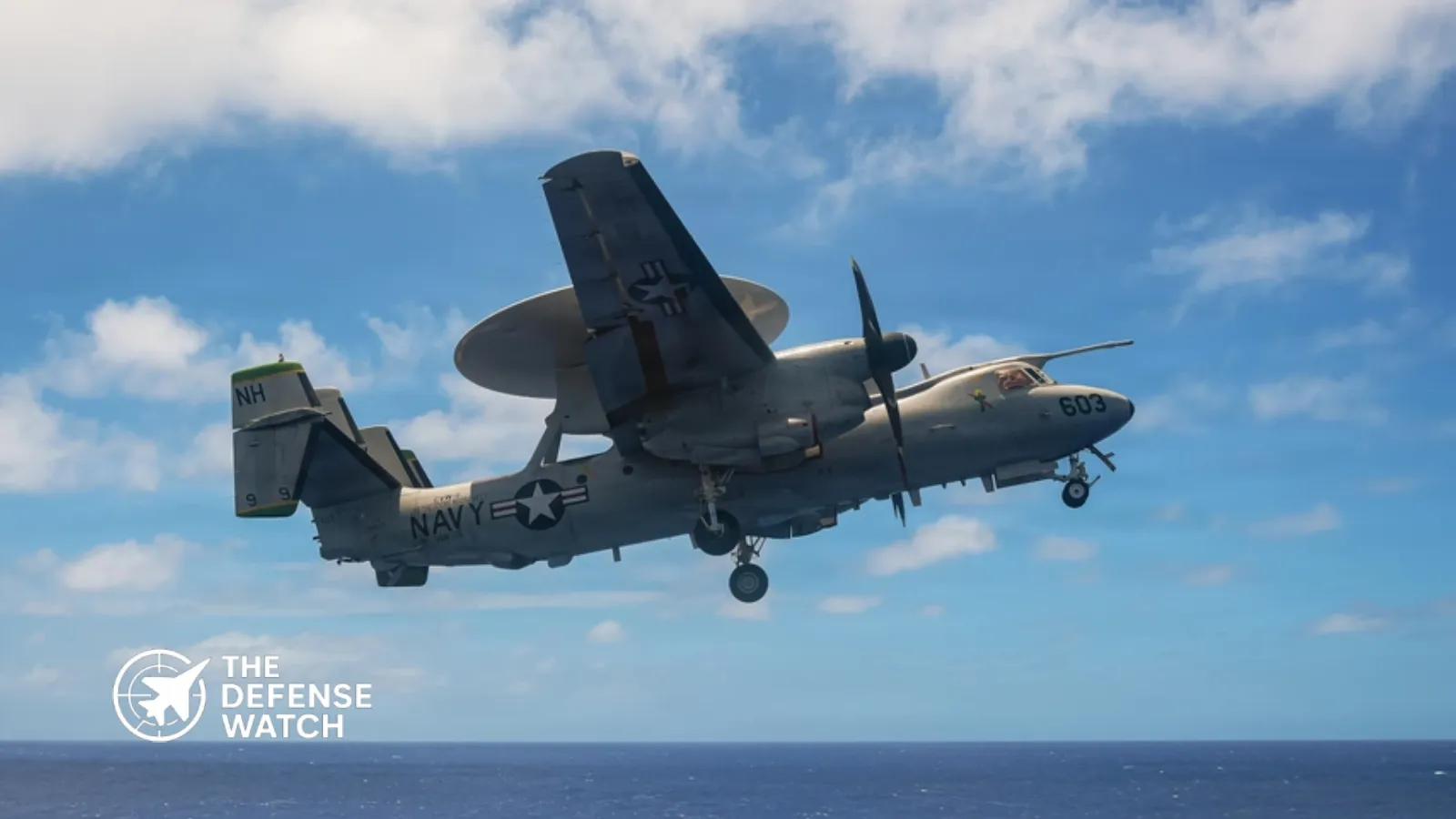
The U.S. Navy has awarded Northrop Grumman Systems Corp., Aerospace Systems a not to exceed $1.196 billion undefinitized cost, no fee contract to manufacture, deliver, and support three E-2D Advanced Hawkeye Block II airborne early warning aircraft. According to the Naval Air Systems Command (NAVAIR), headquartered at Patuxent River, Maryland, the program will continue through December 2031 and is funded through Fiscal Year 2026 Navy aircraft procurement appropriations.
NAVAIR stated that $583.39 million in FY2026 aircraft procurement funding has been obligated immediately following contract award. The acquisition was awarded on a sole source basis under 10 U.S. Code 2304(c)(1), which permits noncompetitive awards when only one responsible source is capable of fulfilling the government’s requirements.
Deep Technical & Strategic Context Analysis
The E-2D Advanced Hawkeye Block II is widely regarded as one of the world’s most capable airborne early warning and command and control aircraft. Built around the AN/APY-9 UHF AESA radar, the aircraft can simultaneously detect and track aircraft, cruise missiles, low observable targets, ballistic missile threats, unmanned systems, and surface contacts across hundreds of miles. Unlike conventional surveillance aircraft, the Hawkeye also functions as an airborne battle management node, distributing targeting information through Cooperative Engagement Capability (CEC), Link 16, and emerging Joint All Domain Command and Control (JADC2) architectures.
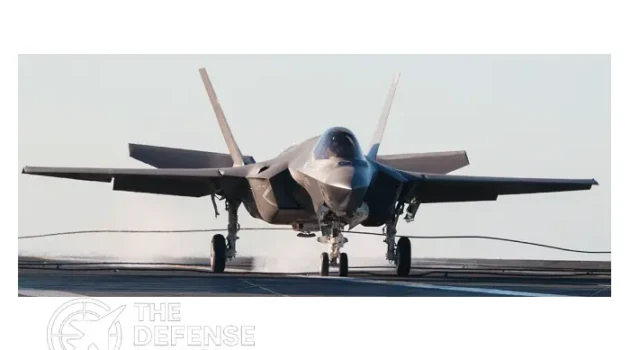
The platform has become increasingly important as the U.S. Navy prepares for potential high intensity operations in the Indo Pacific and other contested theaters where long range anti ship missiles, stealth aircraft, and drone swarms present growing challenges. Operating from aircraft carriers, the E-2D extends the sensor horizon well beyond that of shipboard radars, allowing carrier strike groups to identify threats earlier and coordinate intercepts using systems such as the SM 6, Standard Missile family, and the F-35C Lightning II. The latest Block II configuration also incorporates improved computing power, expanded networking capacity, and software upgrades designed to support future distributed maritime operations.
The awarded agreement is an undefinitized contract, meaning work can begin before all final pricing terms are negotiated. This procurement approach is typically used when maintaining production schedules is operationally critical. A cost, no fee structure reimburses allowable costs but does not include an additional profit fee during the undefinitized phase, helping the government accelerate procurement while limiting financial exposure until contract terms are finalized.
Contract Breakdown & Details
Contract Value
- Maximum contract value: $1.196 billion
- Contract type: Cost, no fee, undefinitized production contract
- Prime contractor: Northrop Grumman Systems Corp., Aerospace Systems
- Aircraft ordered: Three E-2D Advanced Hawkeye Block II aircraft
- Completion date: December 2031
Funding
- Initial obligation: $583.394 million
- Funding source: Fiscal Year 2026 Navy Aircraft Procurement
Contracting Authority
- Awarding agency: Naval Air Systems Command (NAVAIR)
- Contract number: N0001926C1017
- Competition: Sole source under 10 U.S. Code 2304(c)(1)
Workshare By Location
- Melbourne, Florida: 29.88%
- St. Augustine, Florida: 17.68%
- Liverpool, New York: 13.85%
- Indianapolis, Indiana: 4.95%
- Largo, Florida: 3.66%
- San Leandro, California: 2.52%
- Woodland Hills, California: 2.42%
- Aire sur l’Adour, France: 2.09%
- Rolling Meadows, Illinois: 1.72%
- Wimborne Minster, Dorset, United Kingdom: 0.01%
- Various U.S. locations: 21.22%
Why This Procurement Matters
The E-2D fleet represents one of the Navy’s highest priority aviation capabilities because it serves as the command and sensing hub for carrier air wings. As potential adversaries field increasingly sophisticated long range missiles, electronic warfare systems, and unmanned aircraft, maintaining production of the Hawkeye ensures the Navy preserves its ability to detect, classify, and coordinate responses against complex, multi domain threats.
The latest procurement also supports the broader modernization of the Navy’s carrier strike groups by integrating next generation networking technologies that connect fighters, destroyers, submarines, and joint forces into a common operational picture. As the Navy continues expanding distributed maritime operations and joint force integration, the E-2D remains one of the key enablers of future U.S. naval air power.