

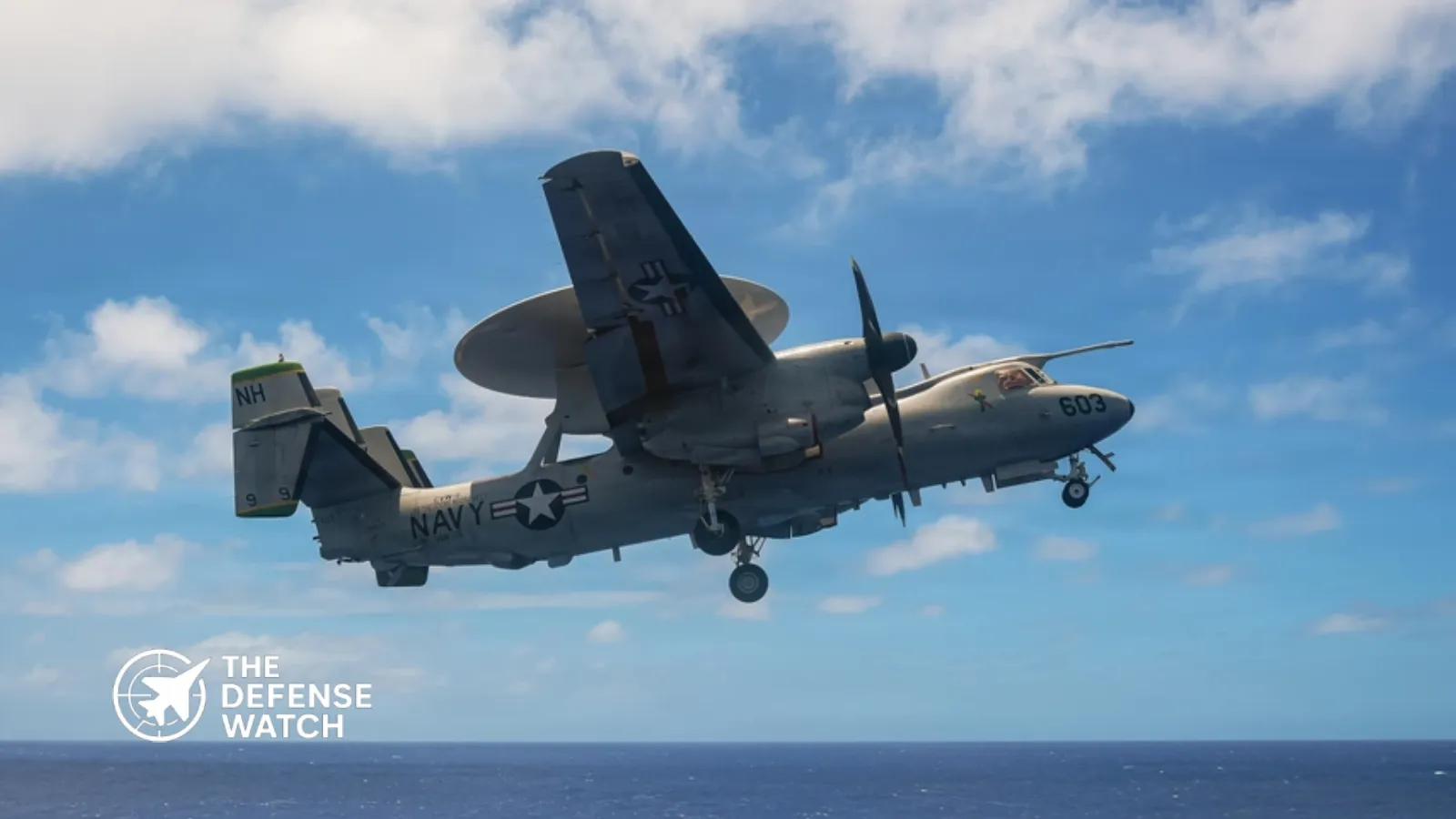
- Northrop Grumman received a contract worth up to $1.196 billion to produce three E-2D Advanced Hawkeye Block II aircraft for the U.S. Navy.
- Naval Air Systems Command awarded the undefinitized production contract, with work continuing through December 2031.
- The E-2D serves as the Navy’s primary airborne early warning, battle management, and network command aircraft for carrier strike groups.
- Initial funding of $583.4 million from Fiscal Year 2026 Navy aircraft procurement has been obligated at contract award.
- The aircraft will strengthen the Navy’s ability to detect cruise missiles, aircraft, drones, and maritime threats over long distances.
The U.S. Navy has awarded Northrop Grumman Systems Corp., Aerospace Systems a not to exceed $1.196 billion undefinitized cost, no fee contract to manufacture, deliver, and support three E-2D Advanced Hawkeye Block II airborne early warning aircraft. According to the Naval Air Systems Command (NAVAIR), headquartered at Patuxent River, Maryland, the program will continue through December 2031 and is funded through Fiscal Year 2026 Navy aircraft procurement appropriations.
NAVAIR stated that $583.39 million in FY2026 aircraft procurement funding has been obligated immediately following contract award. The acquisition was awarded on a sole source basis under 10 U.S. Code 2304(c)(1), which permits noncompetitive awards when only one responsible source is capable of fulfilling the government’s requirements.
Deep Technical & Strategic Context Analysis
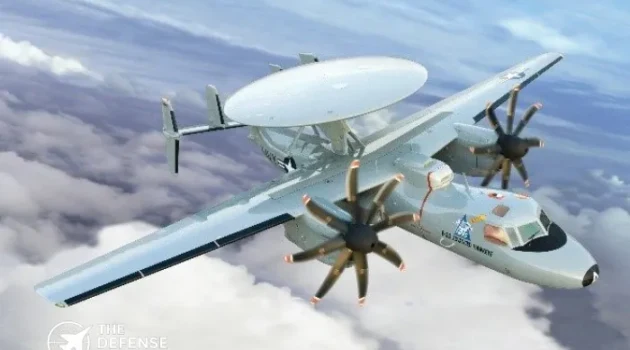
The E-2D Advanced Hawkeye Block II is widely regarded as one of the world’s most capable airborne early warning and command and control aircraft. Built around the AN/APY-9 UHF AESA radar, the aircraft can simultaneously detect and track aircraft, cruise missiles, low observable targets, ballistic missile threats, unmanned systems, and surface contacts across hundreds of miles. Unlike conventional surveillance aircraft, the Hawkeye also functions as an airborne battle management node, distributing targeting information through Cooperative Engagement Capability (CEC), Link 16, and emerging Joint All Domain Command and Control (JADC2) architectures.
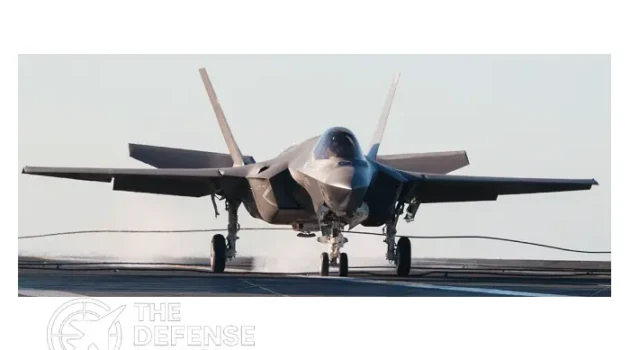
The platform has become increasingly important as the U.S. Navy prepares for potential high intensity operations in the Indo Pacific and other contested theaters where long range anti ship missiles, stealth aircraft, and drone swarms present growing challenges. Operating from aircraft carriers, the E-2D extends the sensor horizon well beyond that of shipboard radars, allowing carrier strike groups to identify threats earlier and coordinate intercepts using systems such as the SM 6, Standard Missile family, and the F-35C Lightning II. The latest Block II configuration also incorporates improved computing power, expanded networking capacity, and software upgrades designed to support future distributed maritime operations.
The awarded agreement is an undefinitized contract, meaning work can begin before all final pricing terms are negotiated. This procurement approach is typically used when maintaining production schedules is operationally critical. A cost, no fee structure reimburses allowable costs but does not include an additional profit fee during the undefinitized phase, helping the government accelerate procurement while limiting financial exposure until contract terms are finalized.
Contract Breakdown & Details
Contract Value
- Maximum contract value: $1.196 billion
- Contract type: Cost, no fee, undefinitized production contract
- Prime contractor: Northrop Grumman Systems Corp., Aerospace Systems
- Aircraft ordered: Three E-2D Advanced Hawkeye Block II aircraft
- Completion date: December 2031
Funding
- Initial obligation: $583.394 million
- Funding source: Fiscal Year 2026 Navy Aircraft Procurement
Contracting Authority
- Awarding agency: Naval Air Systems Command (NAVAIR)
- Contract number: N0001926C1017
- Competition: Sole source under 10 U.S. Code 2304(c)(1)
Workshare By Location
- Melbourne, Florida: 29.88%
- St. Augustine, Florida: 17.68%
- Liverpool, New York: 13.85%
- Indianapolis, Indiana: 4.95%
- Largo, Florida: 3.66%
- San Leandro, California: 2.52%
- Woodland Hills, California: 2.42%
- Aire sur l’Adour, France: 2.09%
- Rolling Meadows, Illinois: 1.72%
- Wimborne Minster, Dorset, United Kingdom: 0.01%
- Various U.S. locations: 21.22%
Why This Procurement Matters
The E-2D fleet represents one of the Navy’s highest priority aviation capabilities because it serves as the command and sensing hub for carrier air wings. As potential adversaries field increasingly sophisticated long range missiles, electronic warfare systems, and unmanned aircraft, maintaining production of the Hawkeye ensures the Navy preserves its ability to detect, classify, and coordinate responses against complex, multi domain threats.
The latest procurement also supports the broader modernization of the Navy’s carrier strike groups by integrating next generation networking technologies that connect fighters, destroyers, submarines, and joint forces into a common operational picture. As the Navy continues expanding distributed maritime operations and joint force integration, the E-2D remains one of the key enablers of future U.S. naval air power.

Executive Summary:
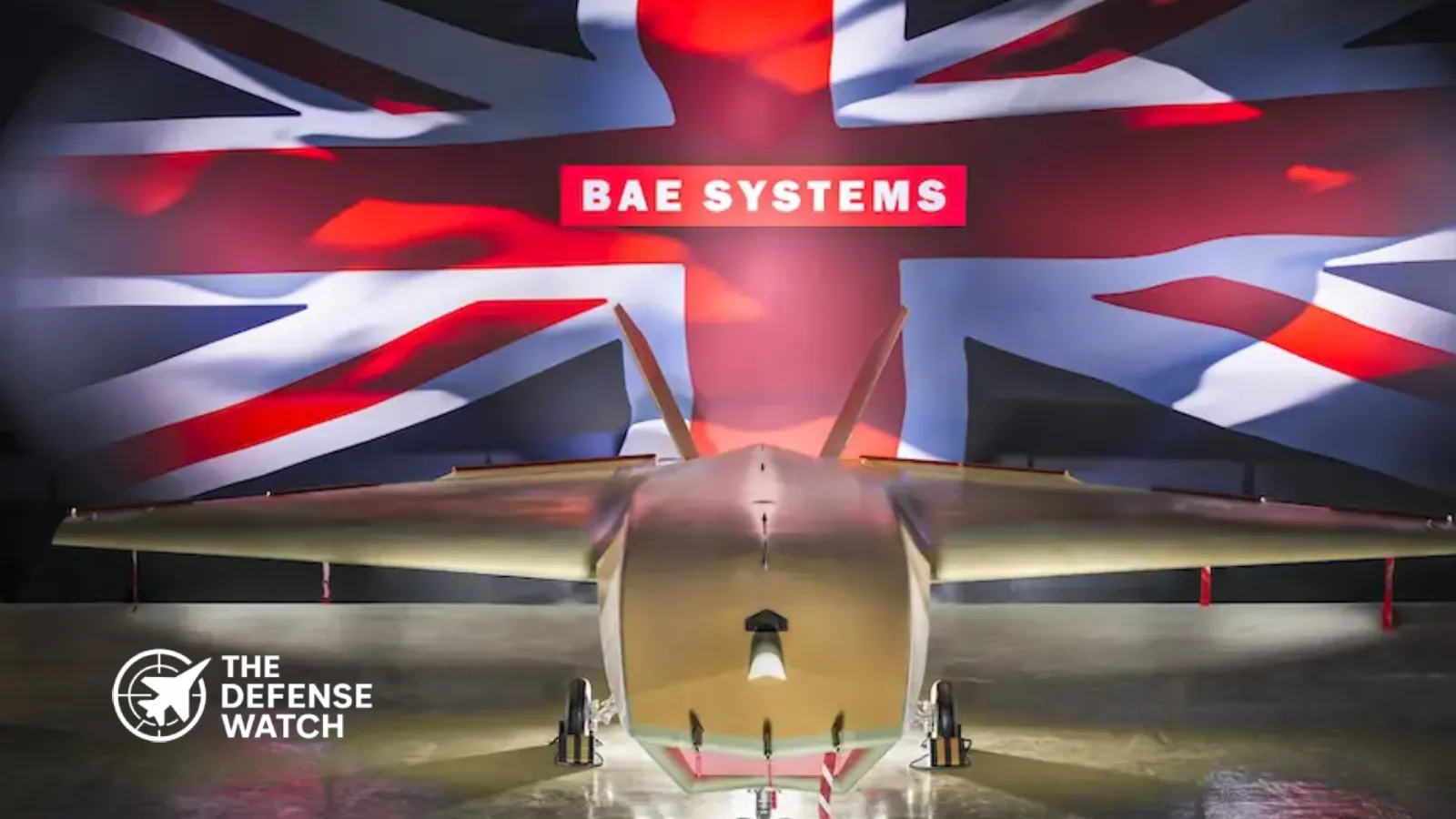
BAE Systems has unveiled the Brontanax collaborative combat aircraft (CCA), a new autonomous air vehicle designed to operate alongside the UK’s future Storm fighter. The concept demonstrates Britain’s growing investment in crewed and uncrewed teaming, a capability increasingly viewed as essential for maintaining air superiority in future high threat environments.
BAE Systems Unveils Brontanax Collaborative Combat Aircraft For UK Storm Fighter Program
BAE Systems has introduced the Brontanax collaborative combat aircraft (CCA) as part of its contribution to the United Kingdom’s future Storm fighter program, providing the latest glimpse into how autonomous aircraft could support next generation combat aviation. The company presented the concept through an official promotional video, outlining its vision for crewed and uncrewed teaming within the UK’s Future Combat Air System (FCAS).
The announcement comes as major defense manufacturers across Europe and the United States accelerate development of collaborative combat aircraft capable of extending the reach, survivability, and effectiveness of sixth generation fighter aircraft.
Brontanax Designed To Operate Alongside The Storm Fighter
Brontanax is envisioned as an autonomous combat aircraft that can accompany the future Storm fighter during complex operations. Rather than replacing crewed aircraft, the platform is intended to function as a force multiplier capable of carrying additional sensors, electronic warfare payloads, intelligence equipment, or precision weapons.
According to BAE Systems, the aircraft is designed around the concept of human machine teaming, allowing pilots to command multiple autonomous aircraft during combat missions.
The company describes Brontanax as part of a broader family of collaborative combat aircraft that could perform missions including:
- Electronic warfare
- Intelligence, surveillance, and reconnaissance (ISR)
- Air defense suppression
- Precision strike
- Decoy operations
- Communications relay
- Escort missions
This distributed operating model reduces risk to high value crewed fighters while increasing operational flexibility.
Supporting The UK’s Future Combat Air Strategy
The Brontanax concept supports the UK’s wider Future Combat Air System (FCAS) initiative, commonly known as the Global Combat Air Programme (GCAP), which is being developed jointly by the United Kingdom, Italy, and Japan.
The future Storm fighter is expected to become one of the world’s most advanced sixth generation combat aircraft, incorporating:
| Capability | Expected Role |
|---|---|
| Artificial intelligence | Mission management and decision support |
| Stealth design | Reduced radar signature |
| Advanced sensors | Multi-domain awareness |
| Secure networking | Real-time data sharing |
| Collaborative combat aircraft | Autonomous force multiplication |
| Electronic warfare | Enhanced survivability |
Brontanax represents one element of this broader combat ecosystem rather than a standalone aircraft program.
Why Collaborative Combat Aircraft Matter
Collaborative combat aircraft have become one of the fastest growing segments of military aviation.
Instead of deploying only expensive crewed fighters, air forces increasingly envision mixed formations where autonomous aircraft perform higher risk missions while human pilots maintain overall command.
This approach offers several operational advantages:
- Greater combat mass without increasing pilot numbers
- Lower operational risk during contested missions
- Expanded sensor coverage
- Additional weapons capacity
- Improved electronic warfare capabilities
- Greater mission endurance
For the Royal Air Force, integrating collaborative aircraft could significantly improve operational flexibility while reducing pressure on limited fighter fleets.
Part Of A Global Shift Toward Autonomous Air Combat
The Brontanax announcement reflects a broader international trend.
The United States Air Force continues development of its Collaborative Combat Aircraft (CCA) initiative, with industry teams led by General Atomics and Anduril progressing toward prototype testing.
Australia’s MQ-28 Ghost Bat, developed by Boeing Australia, has already demonstrated autonomous teaming with crewed aircraft, while European manufacturers are expanding investments in similar technologies under multiple FCAS programs.
Rather than pursuing identical solutions, allied nations are developing aircraft tailored to their own operational requirements while emphasizing interoperability across NATO and partner forces.
Technical Design Focuses On Flexibility
Although BAE Systems has not released detailed technical specifications, the Brontanax concept suggests several core design priorities.
The aircraft appears optimized for:
- Modular payload integration
- Autonomous navigation
- Secure communications
- Low observable characteristics
- Long range operations
- Network enabled warfare
The modular approach would allow operators to configure aircraft for different missions without redesigning the platform.
Such flexibility is becoming increasingly important as military planners seek adaptable systems capable of evolving alongside rapidly changing threats.
Strategic Importance For The UK Defense Industry
The unveiling also demonstrates continued investment by the United Kingdom in maintaining an advanced domestic combat aviation sector.
BAE Systems serves as the lead industrial partner for the UK’s future combat aircraft development and plays a central role within the Global Combat Air Programme alongside Leonardo UK, Rolls Royce, and MBDA UK.
Collaborative combat aircraft represent an important component of that industrial strategy because they combine advances in artificial intelligence, autonomous flight, digital engineering, and secure communications into a single operational ecosystem.
If successfully integrated with the future Storm fighter, Brontanax could provide the Royal Air Force with additional operational capacity while strengthening the UK’s defense technology base and supporting export opportunities with partner nations.
Analysis: Why Brontanax Matters Beyond A Single Aircraft
The significance of Brontanax extends beyond the unveiling of another drone concept.
Modern air warfare is increasingly driven by networked systems rather than individual platforms. Future combat effectiveness will depend on how well crewed fighters, autonomous aircraft, satellites, sensors, and electronic warfare assets operate as a connected force.
For the United Kingdom, Brontanax illustrates an effort to build that ecosystem from the outset rather than adding autonomous capabilities later in the aircraft’s service life.
From a U.S. perspective, the concept also reinforces growing alignment among Western allies regarding future air combat doctrine. The United States, United Kingdom, Australia, and several European partners are independently investing in collaborative combat aircraft because they address common operational challenges, including contested airspace, long range precision warfare, and increasingly sophisticated integrated air defense systems.
While Brontanax remains a concept vehicle, its unveiling signals that autonomous wingmen are becoming a central element of sixth generation airpower rather than an experimental capability.
Conclusion
BAE Systems’ unveiling of the Brontanax collaborative combat aircraft marks another milestone in the evolution of the UK’s future combat aviation strategy. As development of the Storm fighter and the broader Global Combat Air Programme continues, autonomous aircraft are expected to play a growing role in delivering combat mass, survivability, and mission flexibility.
Although key technical details and timelines remain undisclosed, Brontanax demonstrates the direction of next generation airpower, where crewed fighters and autonomous systems operate as an integrated combat team capable of responding to increasingly complex operational environments.
Executive Summary:
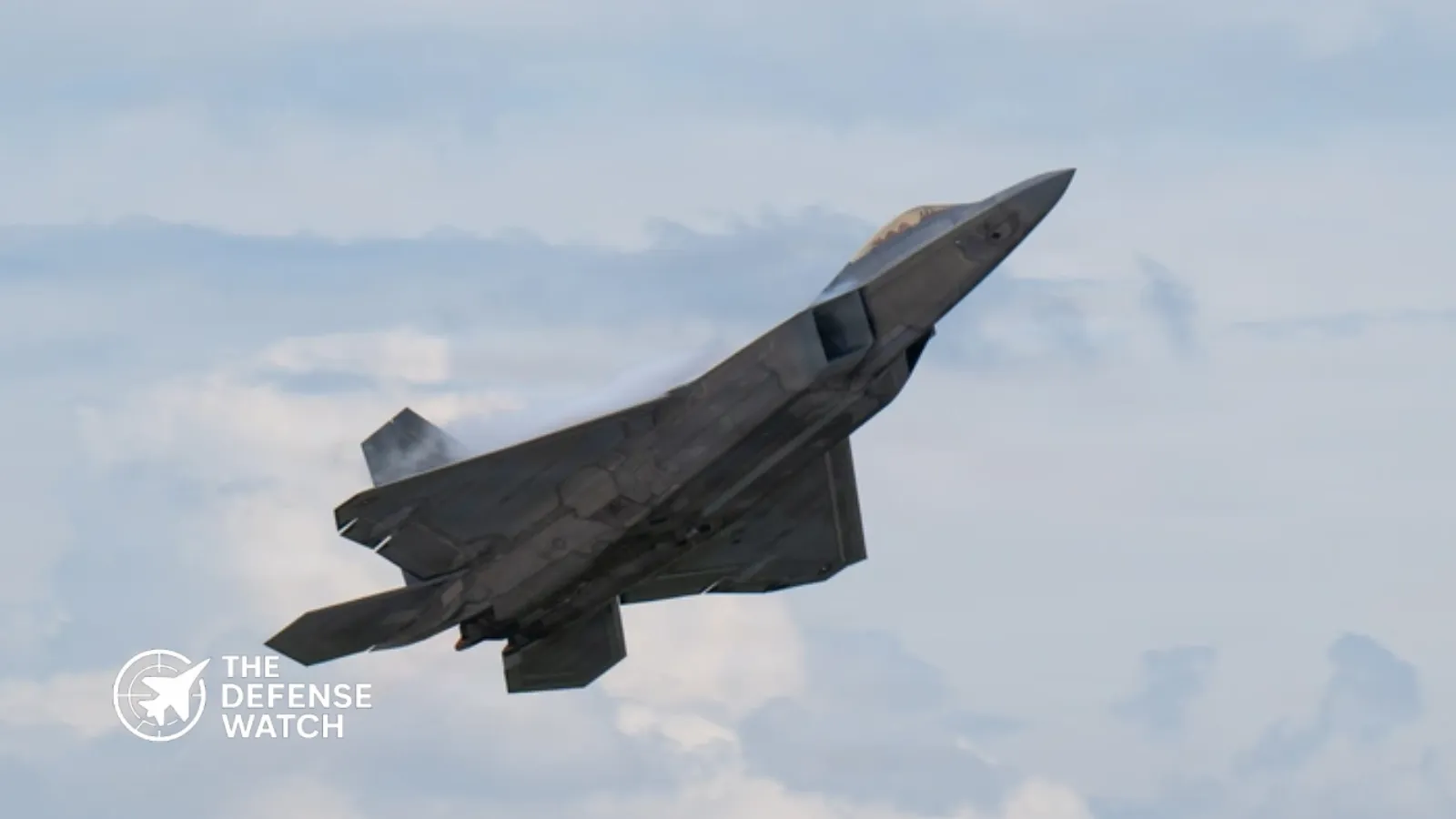
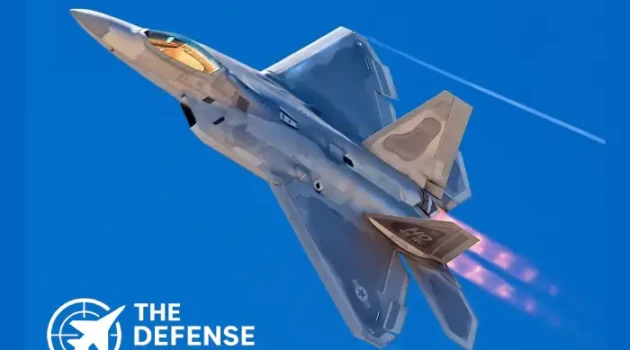
Qarbon Aerospace has returned to the U.S. Air Force’s F-22 Raptor program after securing a contract to manufacture composite structures supporting long term fleet sustainment. The award strengthens the industrial base responsible for maintaining America’s premier air superiority fighter while helping preserve aircraft availability as the Air Force continues operating the platform into the next decade.
Qarbon Aerospace Returns To F-22 Raptor Program With Composite Structures Contract
Qarbon Aerospace has secured a new contract to support the F-22 Raptor sustainment program by supplying advanced composite structures for the U.S. Air Force’s fifth generation air superiority fighter. The company announced the award as part of its renewed participation in one of the Pentagon’s highest priority aircraft sustainment efforts, reinforcing the industrial capability required to keep the stealth fleet mission ready.
According to Qarbon Aerospace, the contract marks the company’s return to the F-22 program after previously contributing composite components during earlier production phases. The latest agreement focuses on manufacturing structural composite assemblies that will support long term maintenance, repairs, and lifecycle sustainment of the operational fleet.
Composite Structures Remain Critical To F-22 Sustainment
Unlike conventional aluminum airframes, the F-22 relies extensively on advanced composite materials throughout its structure. These lightweight components reduce overall aircraft weight while maintaining exceptional strength and contributing to the fighter’s low observable characteristics.
As production of new F-22 aircraft ended in 2012, sustaining the existing fleet has become increasingly dependent on a resilient domestic supply chain capable of manufacturing replacement structural components.
Under the new contract, Qarbon Aerospace will manufacture precision composite assemblies designed to meet the demanding structural and stealth requirements of the aircraft.
Why Composite Manufacturing Matters
Composite structures offer several operational advantages:
Capability Operational Benefit Reduced structural weight Improved maneuverability and fuel efficiency High strength to weight ratio Greater durability under operational stress Corrosion resistance Lower long term maintenance requirements Precision manufacturing Supports stealth shaping and aerodynamic performance Long service life Extends aircraft operational availability Maintaining these capabilities requires specialized manufacturing processes, certified materials, and highly trained technicians capable of meeting stringent military quality standards.
Supporting America’s Air Superiority Fleet
The F-22 Raptor remains the U.S. Air Force’s premier dedicated air superiority fighter despite the growing role of the F 35 Lightning II. Designed primarily to establish air dominance against advanced adversaries, the aircraft combines stealth, supercruise, advanced sensors, and exceptional maneuverability.
Although the Air Force is developing the Next Generation Air Dominance (NGAD) family of systems, the F-22 continues to serve as a cornerstone of U.S. tactical air power. Fleet sustainment therefore remains essential to preserving combat readiness during the transition toward future sixth generation capabilities.
Qarbon Aerospace’s return to the program supports this broader strategy by helping ensure critical structural components remain available throughout the aircraft’s remaining service life.
Expanding Industrial Base Resilience
One of the Pentagon’s recurring challenges has been maintaining production capacity for aircraft that are no longer in full rate manufacturing. As production lines close and suppliers leave defense programs, replacement parts can become increasingly difficult and expensive to obtain.
Reintroducing experienced suppliers into legacy aircraft programs helps reduce these risks.
Qarbon Aerospace specializes in advanced composite manufacturing across defense, aerospace, and space applications. Its experience producing complex composite assemblies positions the company to support aging fleets requiring highly specialized structural repairs.
From an industrial perspective, expanding the supplier base improves resilience against production disruptions while preserving advanced manufacturing skills considered strategically important for future defense programs.
Technical Challenges Of Sustaining The F-22
Maintaining the F-22 differs significantly from supporting legacy fourth generation fighters.
The aircraft incorporates:
- Complex carbon fiber composite structures
- Low observable surface treatments
- Tight manufacturing tolerances
- Specialized bonding techniques
- Precision structural assemblies
Any replacement component must precisely match the original design to preserve both aerodynamic performance and stealth characteristics.
This makes qualified composite manufacturers particularly valuable within the defense industrial base.
Strategic Importance For The U.S. Air Force
Beyond replacing aging components, contracts such as this help maintain operational readiness for one of America’s most capable combat aircraft.
The Air Force continues investing in F-22 modernization, including upgrades to sensors, communications, electronic warfare capabilities, and mission systems. Those improvements can only deliver operational value if sufficient aircraft remain available for training and combat operations.
Sustainment therefore represents a strategic investment rather than simply routine maintenance.
As global security competition intensifies across the Indo Pacific and Europe, preserving high readiness rates among advanced fighter fleets remains a key element of U.S. deterrence strategy.
Analysis: Why This Contract Matters Beyond One Supplier
While the financial value of the contract was not disclosed, its strategic importance extends well beyond a single manufacturing award.
First, it demonstrates the Pentagon’s continued emphasis on strengthening domestic aerospace manufacturing capacity for legacy fifth generation aircraft. Even after production has ceased, sustainment requires specialized industrial expertise that cannot be recreated quickly if suppliers exit the market.
Second, advanced composite manufacturing has become a foundational technology across virtually every modern combat aircraft, including the F 35, B 21 Raider, and future NGAD platforms. Preserving experienced suppliers today also supports tomorrow’s aircraft programs by retaining skilled labor, manufacturing processes, and quality assurance capabilities.
Finally, sustainment contracts increasingly represent a larger share of defense spending as aging fleets remain operational longer than originally planned. Rather than replacing aircraft immediately, the Department of Defense continues balancing modernization with lifecycle extension, making reliable suppliers an increasingly valuable component of national defense preparedness.
Looking Ahead
Qarbon Aerospace’s return to the F-22 Raptor program reinforces the long term sustainment strategy supporting one of the U.S. Air Force’s most advanced fighter aircraft.
As the Air Force modernizes its tactical aviation portfolio and prepares future sixth generation capabilities, maintaining a healthy industrial base capable of supporting existing fifth generation fleets remains essential. Composite manufacturing expertise will continue playing a central role in ensuring the F-22 remains combat ready throughout its planned service life.
Executive Summary:
Saab and Embraer have signed a Heads of Agreement establishing a framework to expand Gripen fighter production in Brazil through the potential manufacture of 20 additional aircraft. The agreement strengthens Brazil’s aerospace industrial base, deepens technology transfer between the two companies, and positions the country as a future regional production and support hub for the Gripen program.
Saab And Embraer Expand Gripen Production In Brazil Through New Industrial Framework
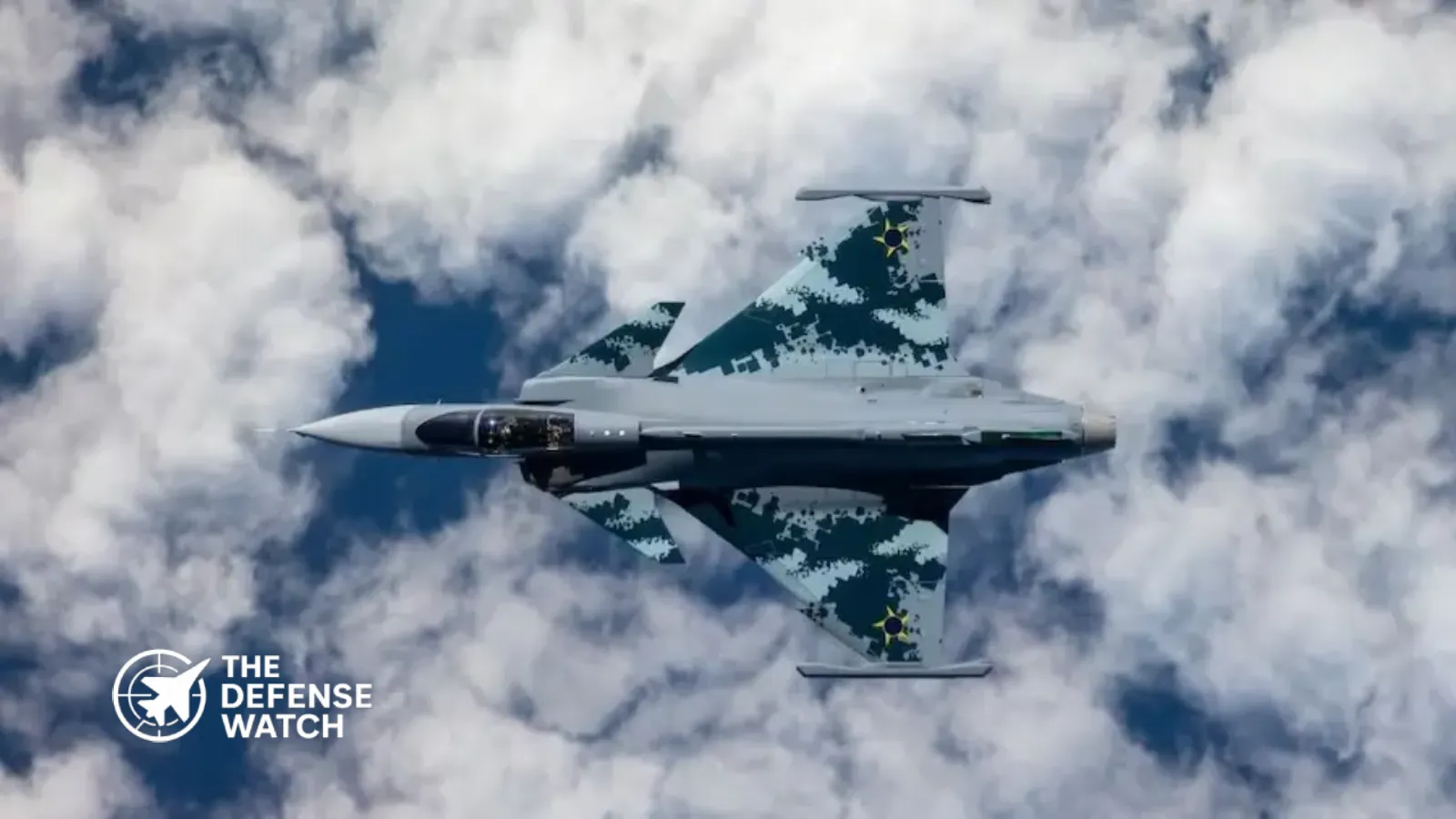
Saab and Embraer have taken another step toward expanding Gripen production in Brazil, signing a Heads of Agreement (HoA) that establishes the framework for the potential manufacture of 20 additional Gripen fighter aircraft. The announcement was made jointly by the two companies as they continue to deepen their long-standing industrial partnership built around Brazil’s Gripen E/F fighter program.
While the agreement is not yet a production contract, it creates the commercial and industrial foundation for negotiations toward a definitive agreement expected in 2026. If finalized, the expansion would significantly increase Brazil’s role within Saab’s global Gripen production network.
Agreement Builds On A Decade Of Industrial Cooperation
The latest framework extends cooperation that began when Brazil selected the Gripen E/F under its FX-2 fighter acquisition program.
Since then, Saab has transferred manufacturing technologies, engineering expertise, and production processes to Brazilian industry. Embraer has become Saab’s principal industrial partner in Brazil, while numerous Brazilian suppliers now participate in the Gripen supply chain.
The new agreement would allow Embraer to manufacture up to 20 additional Gripen aircraft domestically, reinforcing Brazil’s ability to assemble, integrate, test, and support advanced combat aircraft.
According to Saab, the companies intend to conclude a final production agreement during 2026.
Strengthening Brazil’s Aerospace Manufacturing Base
The proposed production expansion reflects Brazil’s broader strategy of developing sovereign aerospace capabilities rather than relying solely on imported military equipment.
Through the Gripen program, Brazilian engineers have gained experience in areas including:
Capability Industrial Benefit Aircraft final assembly Domestic production capability Systems integration Advanced aerospace engineering expertise Flight testing Independent certification capability Software development Mission system customization Maintenance and support Long-term sustainment independence Supply chain development Growth of local aerospace companies These capabilities extend beyond military aviation and can support Brazil’s broader commercial aerospace sector.
Gripen E Offers Modern Multirole Capability
The Gripen E represents Saab’s latest generation multirole fighter designed for air defense, precision strike, reconnaissance, and network-centric operations.
Key characteristics include:
Specification Gripen E Role Multirole fighter Engine General Electric F414G Radar Leonardo ES-05 Raven AESA Infrared Search and Track Skyward-G IRST Electronic Warfare Integrated self-protection suite Data Links NATO-compatible tactical networking Mission Design Open architecture avionics Weapons Air-to-air, air-to-ground, anti-ship and reconnaissance payloads The aircraft emphasizes relatively low operating costs while maintaining advanced sensor fusion and electronic warfare capabilities.
Embraer’s Role Continues To Expand
Embraer’s participation has evolved beyond final assembly into engineering development, structural manufacturing, flight testing, logistics support, and systems integration.
The company has also contributed to establishing Brazilian infrastructure capable of supporting the Gripen fleet throughout its operational life.
Expanding production would further increase domestic industrial content while creating additional opportunities for Brazilian aerospace suppliers.
Strategic Importance Beyond Brazil
Although the agreement focuses on Brazilian production, it also carries broader strategic implications.
Saab has increasingly adopted a distributed manufacturing model that allows trusted industrial partners to participate in aircraft production outside Sweden. Such arrangements improve production resilience while expanding support capacity for existing and prospective export customers.
Brazil’s mature aerospace industry makes it a logical regional production center capable of supporting future Gripen operators throughout Latin America.
For Saab, expanding manufacturing capacity also reduces dependence on a single production location as defense demand continues to grow worldwide.
Analysis: Why The Expansion Matters
Beyond the immediate industrial announcement, the agreement highlights several broader trends shaping today’s defense aerospace market.
First, modern fighter acquisition increasingly includes technology transfer and domestic production rather than simple aircraft purchases. Governments now expect procurement programs to generate skilled jobs, industrial investment, and long-term sovereign maintenance capabilities.
Second, distributed production networks have become strategically important. Global defense manufacturers are seeking additional manufacturing capacity as military modernization accelerates across Europe, Asia, and Latin America. Establishing qualified production facilities outside the original manufacturing country improves resilience against supply chain disruptions while providing flexibility for future export campaigns.
For Brazil, continued Gripen production supports the development of high-value aerospace engineering skills that can benefit both military and civilian aviation sectors. The experience gained through advanced fighter manufacturing enhances national expertise in systems integration, avionics, composite structures, software engineering, and flight testing.
From a U.S. and allied defense perspective, the agreement reflects a broader shift toward strengthening regional industrial bases among partner nations. As governments seek faster production of advanced defense systems, partnerships that combine technology transfer with local manufacturing are becoming increasingly common across NATO members and other allied countries.
Although the framework does not guarantee production of the additional aircraft, it signals confidence in the long-term future of the Gripen program and demonstrates Saab’s commitment to maintaining Brazil as a central industrial partner.
Next Steps
The Heads of Agreement establishes the framework for detailed negotiations between Saab and Embraer.
Both companies expect to finalize the corresponding production agreement during 2026. Once completed, the expansion would increase Brazilian manufacturing capacity while reinforcing the country’s position within Saab’s global fighter aircraft production ecosystem.
The initiative also supports continued industrial cooperation between Sweden and Brazil as both nations invest in advanced aerospace manufacturing and long-term defense industrial collaboration.

Executive Summary:
BAE Systems, Boeing, and Saab have signed a teaming agreement to jointly offer the T-7 Advanced Pilot Training System to the United Kingdom. The proposal includes a UK based final assembly and support capability, positioning the partnership for any future Royal Air Force trainer aircraft competition while strengthening Britain’s aerospace industrial base.
BAE Systems, Boeing, And Saab Position T-7 Red Hawk For UK Pilot Training
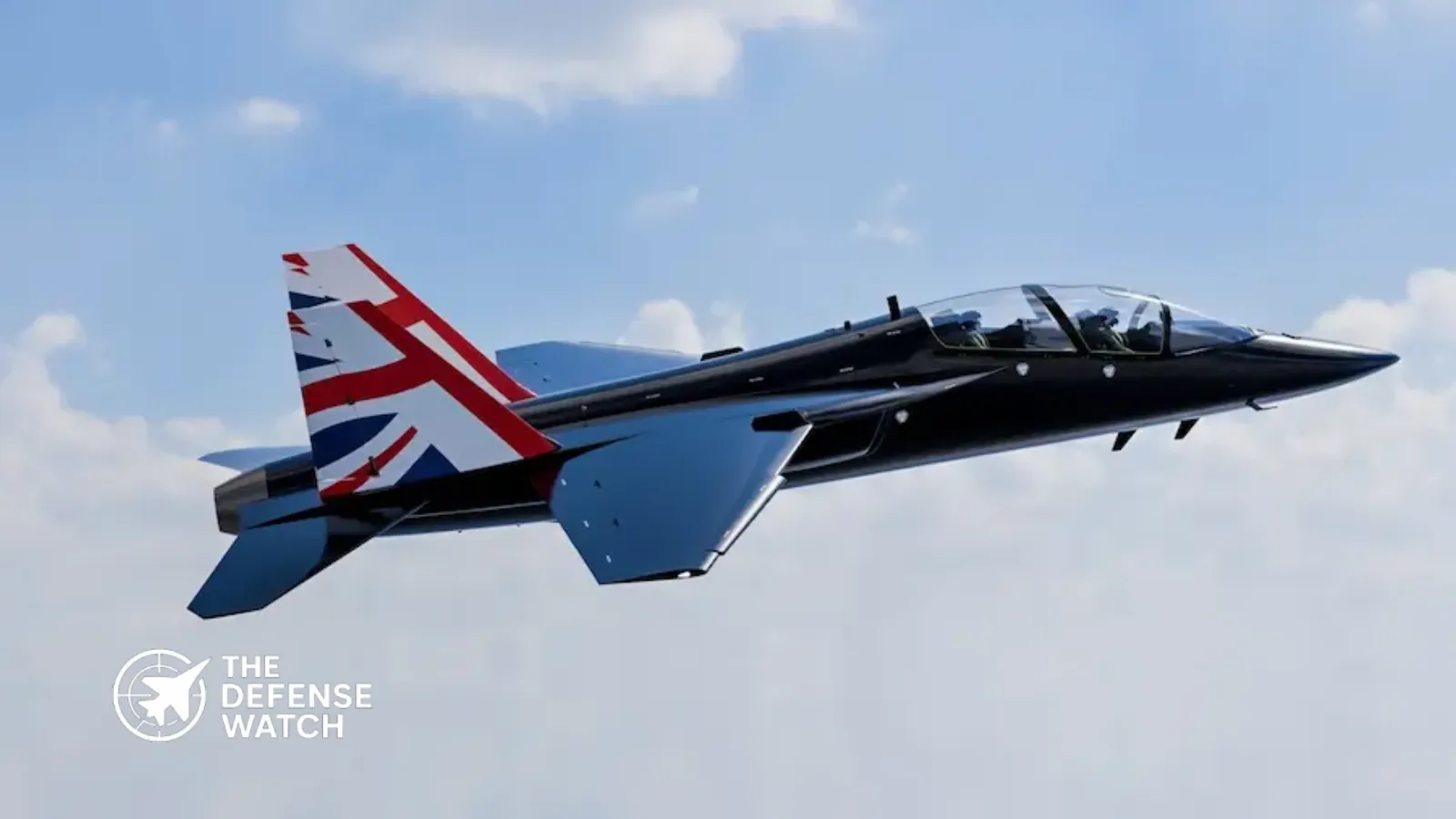
BAE Systems, Boeing, and Saab have signed a strategic teaming agreement to jointly offer the T-7 Advanced Pilot Training System to the United Kingdom, marking a significant step toward a potential future replacement for the Royal Air Force’s fast jet training aircraft.
Announced by the three companies, the agreement establishes an industrial partnership that combines Boeing’s aircraft design expertise, Saab’s manufacturing experience, and BAE Systems’ extensive presence within the UK’s defense and aerospace sector. A key element of the proposal is a plan for final assembly of the T-7 aircraft in the United Kingdom, should the aircraft be selected by the British government.
The announcement comes as several NATO nations continue modernizing pilot training systems to support the introduction of fifth generation and future combat aircraft.
Partnership Focuses On Domestic Industrial Capability
The companies said the agreement goes beyond simply offering an aircraft platform. Their proposal includes building long term sovereign industrial capabilities within the United Kingdom.
Under the proposed arrangement, BAE Systems would leverage its established UK manufacturing footprint and support infrastructure, while Boeing would provide overall aircraft integration expertise. Saab, already Boeing’s principal industrial partner on the T-7 program, would contribute advanced manufacturing processes developed during production of the aircraft.
The proposed UK industrial package includes:
| Capability | Proposed Contribution |
|---|---|
| Final aircraft assembly | Conducted in the United Kingdom |
| Long term maintenance | UK based sustainment capability |
| Engineering support | Domestic engineering expertise |
| Supply chain | Expanded opportunities for British industry |
| Skills development | Aerospace workforce growth and technology transfer |
According to the companies, local assembly would support national industrial resilience while reducing long term sustainment complexity.
What Is The T-7 Advanced Pilot Training System?
The T-7 Advanced Pilot Training System was developed by Boeing and Saab for the U.S. Air Force under the T,X program to replace the aging T,38 Talon fleet.
Unlike many legacy trainer aircraft, the T-7 was designed using advanced digital engineering techniques, significantly reducing development timelines while enabling faster production updates.
Key characteristics include:
| Specification | T-7 Red Hawk |
|---|---|
| Role | Advanced jet trainer |
| Crew | Two |
| Engine | Single General Electric F404 turbofan |
| Flight controls | Digital fly by wire |
| Training system | Integrated live, virtual, constructive environment |
| Designed for | Fifth generation fighter pilot training |
The aircraft forms part of a broader training ecosystem that includes simulators, mission planning software, instructor stations, and digital learning tools intended to replicate operational combat environments.
Supporting Future RAF Pilot Requirements
Although the UK government has not announced a formal competition to replace existing advanced jet trainers, military aviation planners across Europe are increasingly evaluating how pilot training must evolve alongside aircraft such as the F,35 Lightning II and future sixth generation combat aircraft.
The T-7’s digital architecture was specifically developed to prepare pilots for highly networked combat operations involving advanced sensors, electronic warfare, data fusion, and collaborative mission planning.
Rather than focusing solely on basic flying skills, modern training systems increasingly emphasize:
- Multi domain operations
- Sensor management
- Electronic warfare environments
- Tactical data links
- Human machine teaming
- Mission rehearsal using synthetic environments
These capabilities are becoming increasingly important as NATO air forces prepare for future high intensity operations.
Why Local Final Assembly Matters
One of the most notable aspects of the agreement is the proposal to establish final aircraft assembly within the United Kingdom.
For London, domestic production offers several strategic advantages beyond aircraft procurement.
These include:
- Greater control over fleet availability
- Improved long term sustainment
- Protection of highly skilled aerospace jobs
- Increased resilience during supply chain disruptions
- Expanded export and industrial opportunities
The proposal also aligns with the UK’s broader defense industrial strategy, which increasingly emphasizes sovereign manufacturing capacity for critical military programs.
For Boeing and Saab, incorporating BAE Systems provides an experienced UK industrial partner with decades of involvement in Royal Air Force aircraft programs, including Typhoon, Hawk, Tempest, and F,35 support activities.
Strategic Analysis: Why This Partnership Matters
The teaming agreement reflects a broader trend across NATO defense procurement. Rather than competing solely on aircraft performance, manufacturers increasingly compete through industrial participation packages that promise domestic investment, technology transfer, and workforce development.
For the United Kingdom, future pilot training will be closely linked to the Global Combat Air Programme (GCAP), which aims to deliver a sixth generation combat aircraft during the 2030s. Training systems introduced during this decade will need sufficient digital flexibility to evolve alongside those future capabilities.
The T-7’s software driven architecture may provide advantages in this environment because mission systems, synthetic training environments, and aircraft software can be updated more rapidly than legacy trainer platforms. That flexibility could reduce lifecycle costs while allowing training syllabi to adapt as operational requirements change.
From a broader defense industrial perspective, the partnership also demonstrates how major Western aerospace companies are increasingly building multinational production models. Similar approaches have appeared across fighter aircraft, missile systems, and naval programs, where governments seek both military capability and domestic economic benefits from major acquisitions.
For the United States, expanded international adoption of the T-7 could strengthen common pilot training standards among allied air forces while increasing production scale for the aircraft. Shared training systems can improve interoperability during coalition operations by exposing pilots to similar digital mission environments before they transition to operational fighter aircraft.
Although no UK procurement decision has been announced, the agreement positions the three companies early for any future requirement while reinforcing Britain’s role as a major participant in allied aerospace manufacturing.
Looking Ahead
The newly signed teaming agreement establishes the industrial framework for a future UK T-7 proposal but does not represent a procurement contract. Any acquisition decision will ultimately depend on future Royal Air Force requirements and UK Ministry of Defence procurement plans.
If pursued, the proposed local final assembly capability would represent one of the most significant industrial elements of the offering, combining advanced pilot training technology with domestic aerospace production and long term sustainment support.
Executive Summary:
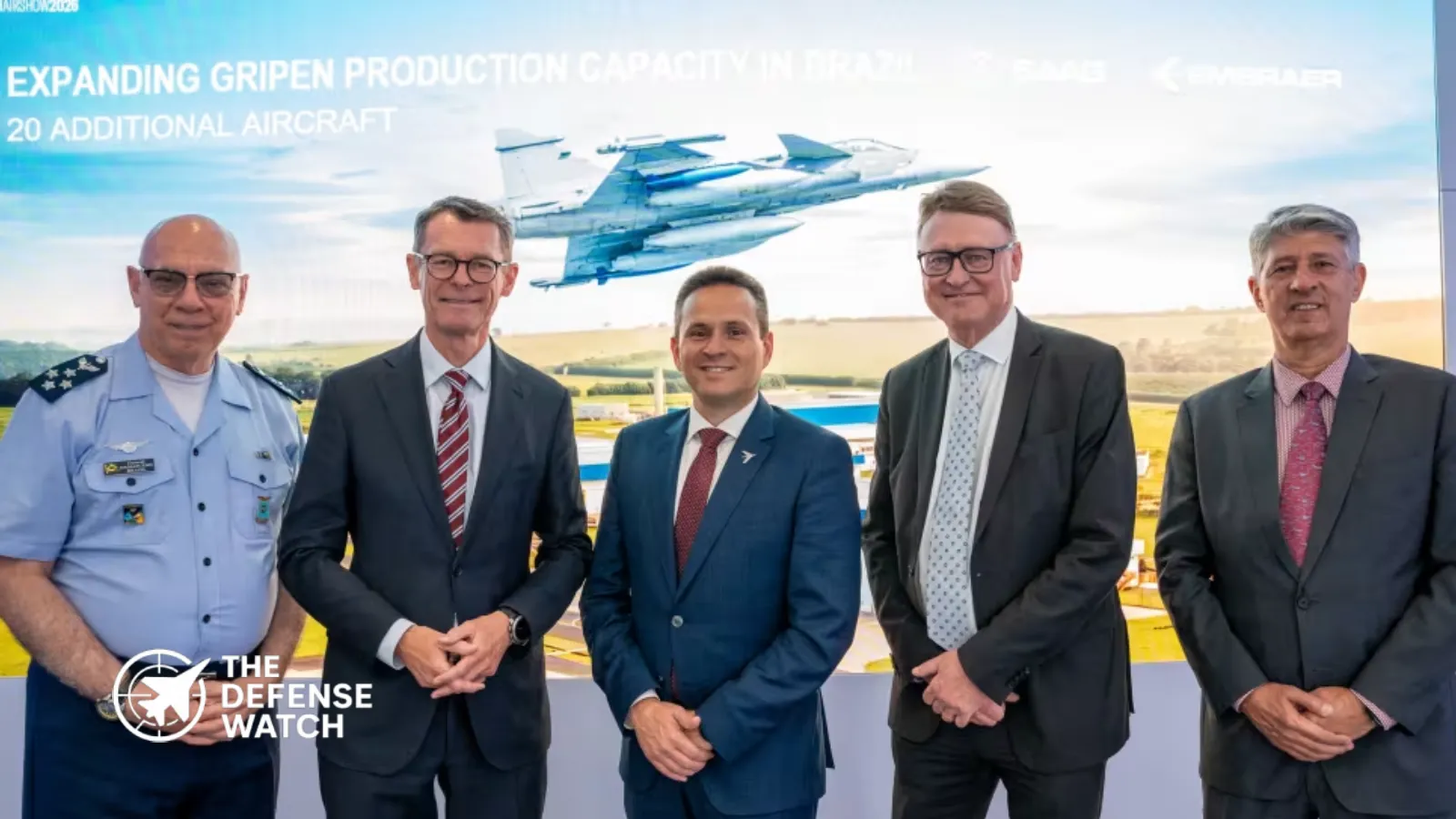
Saab and Embraer have signed a Heads of Agreement establishing a framework to potentially manufacture 20 additional Gripen fighter aircraft at Embraer’s Gavião Peixoto facility in Brazil. The agreement expands production capacity beyond Saab’s Swedish assembly line and strengthens the companies’ long term industrial partnership as they prepare to meet future global demand for the Gripen platform.
Saab And Embraer Expand Gripen Production Capacity With New Brazil Manufacturing Agreement
Saab and Embraer have signed a Heads of Agreement (HoA) that establishes a framework for the potential production of 20 additional Gripen fighter aircraft at Embraer’s industrial complex in Gavião Peixoto, São Paulo. The announcement, made jointly by both companies, marks another significant step in their decade long industrial partnership and is intended to increase manufacturing capacity for future international customers.
Under the proposed arrangement, Embraer would assemble the additional aircraft in Brazil, complementing Saab’s existing final assembly line in Linköping, Sweden. The companies intend to finalize the corresponding production agreement during 2026.
The announcement comes as fighter aircraft manufacturers face increasing international demand driven by military modernization programs across Europe, Latin America, and other regions.
Agreement Expands Gripen Manufacturing Capacity
The new Heads of Agreement does not represent a production contract itself. Instead, it establishes the framework under which Saab and Embraer can expand manufacturing if future customer orders require additional capacity.
According to Saab, Embraer will become responsible for assembling up to 20 additional Gripen aircraft, providing production flexibility while supporting a globally integrated manufacturing model.
The Brazilian production line will operate alongside Saab’s established assembly facility in Sweden rather than replacing it.
Saab President and CEO Micael Johansson said the agreement reinforces the company’s long term commitment to Latin America while strengthening industrial capabilities to support future business opportunities.
Embraer Defense & Security President and CEO Bosco da Costa Junior said the expanded partnership reflects the trust built over more than a decade and positions Embraer to increase production should customer demand continue to grow.
Gavião Peixoto Becomes A Strategic Gripen Production Hub
Embraer’s Gavião Peixoto (GPX) complex has become one of the company’s most advanced aerospace manufacturing sites.
The facility already supports multiple defense and aviation programs through advanced manufacturing processes and an experienced workforce. Under the new framework, GPX would play a larger role in Gripen production while integrating Brazilian and international suppliers into Saab’s broader industrial network.
According to the companies, the production model is designed to increase industrial output while maintaining common manufacturing standards across both Sweden and Brazil.
The arrangement also provides greater flexibility for future export campaigns without requiring all aircraft to be assembled exclusively in Sweden.
Technology Transfer Remains Central To The Partnership
The industrial cooperation between Saab and Embraer began more than ten years ago through Brazil’s Gripen acquisition program for the Brazilian Air Force (FAB).
A major element of that program has been the transfer of technology and technical knowledge between Sweden and Brazil.
Brazilian engineers, technicians, assembly specialists, maintenance personnel, and test pilots have completed extensive training in Sweden as part of the Gripen program.
This technology transfer has enabled Brazil to develop advanced aerospace manufacturing expertise while allowing Embraer to assume greater responsibility throughout the aircraft’s production lifecycle.
The latest agreement builds directly on that foundation by expanding Embraer’s role from domestic production support toward potential manufacturing for future international customers.
Why The Agreement Matters
While the announcement focuses on industrial cooperation rather than new aircraft sales, it carries broader strategic significance.
Global demand for modern multirole fighters has increased as many countries replace aging fourth generation aircraft while seeking platforms that offer lower operating costs than heavier fifth generation fighters.
The Gripen E has positioned itself within that market by combining:
| Capability | Benefit |
|---|---|
| AESA radar | Enhanced air and surface target detection |
| Advanced electronic warfare suite | Improved survivability in contested environments |
| Network-enabled operations | Integration with modern command and control systems |
| Lower operating costs | Reduced lifecycle expenses compared with larger fighters |
| High sortie generation | Rapid turnaround during sustained operations |
Expanding production capacity allows Saab to respond more effectively if additional export orders are secured without relying solely on its Swedish production facilities.
Industrial Benefits Extend Beyond Aircraft Production
The agreement also highlights a broader trend across the global defense industry.
Rather than concentrating manufacturing in a single country, major defense programs increasingly rely on multinational industrial partnerships that distribute production, technology development, and supply chains across allied nations.
For Saab, expanding assembly capability in Brazil diversifies production capacity while strengthening its presence in Latin America.
For Embraer, the arrangement further establishes the company as an international defense manufacturing partner capable of supporting advanced combat aircraft production beyond domestic requirements.
This collaborative manufacturing model can also improve supply chain resilience by reducing dependence on a single production location.
Strategic Outlook
Although no additional Gripen customer has been announced alongside the agreement, the expanded manufacturing framework positions Saab and Embraer to respond more rapidly if future export opportunities emerge.
The planned production capability demonstrates confidence in the long term outlook for the Gripen program while reinforcing Brazil’s growing role within the global defense aerospace industry.
If the final agreement is completed in 2026, Embraer’s Gavião Peixoto facility would become an even more significant contributor to Saab’s international manufacturing network, supporting future deliveries alongside the company’s established Swedish production line.
Rather than representing a shift in Gripen production away from Sweden, the agreement expands industrial capacity through a distributed manufacturing approach that offers greater flexibility for future customers while deepening the strategic partnership between Saab and Embraer.
Executive Summary:
RTX’s Pratt & Whitney has successfully tested a 3D printed rotating turbine component for its TJ150 turbojet engine. The achievement supports faster, more affordable production of propulsion systems designed for missiles and autonomous defense platforms at a time of growing global demand.
A Manufacturing Milestone For Military Propulsion
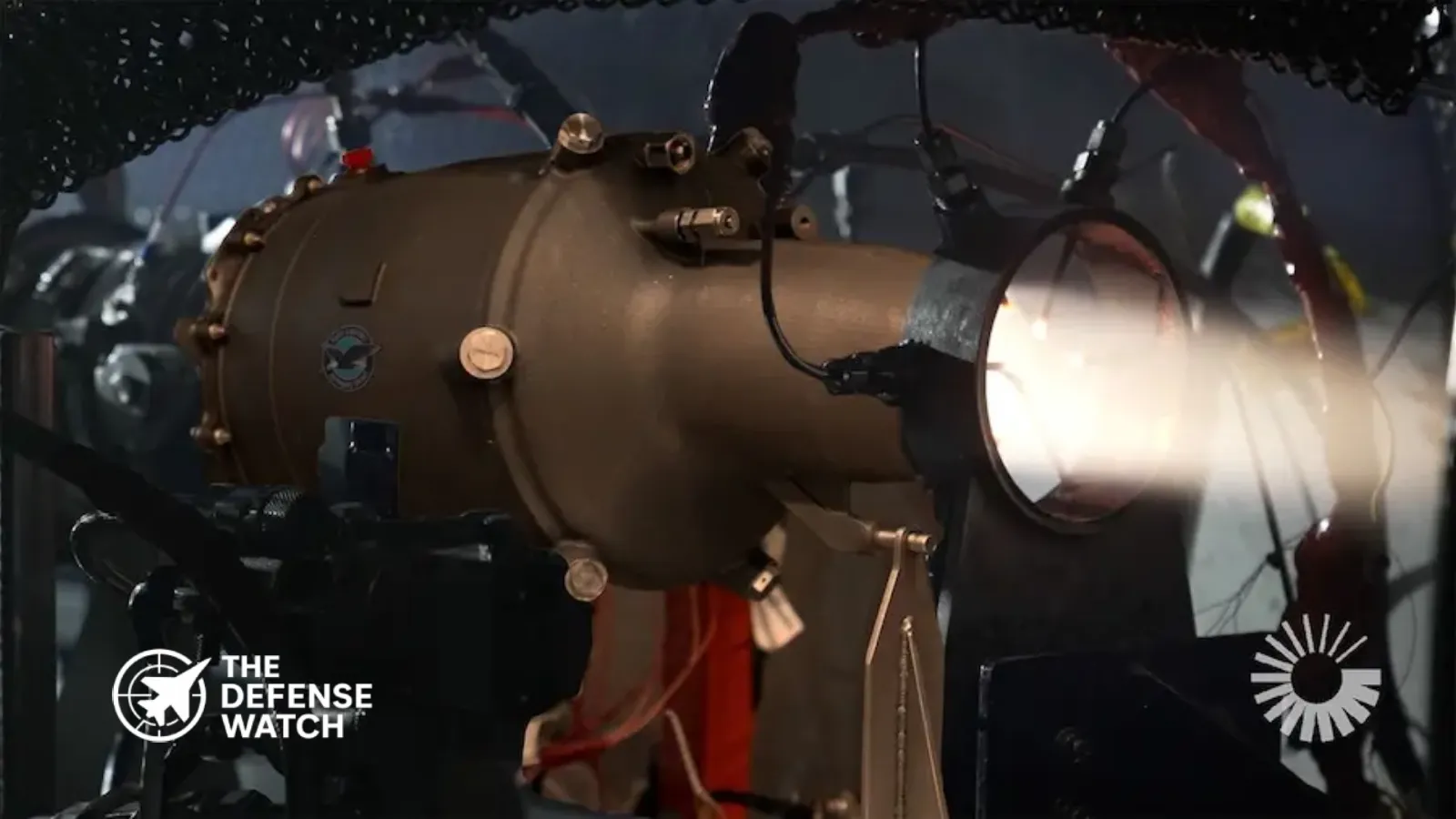
RTX Pratt & Whitney TJ150 development has reached a significant milestone after the company successfully completed testing of a 3D printed turbine wheel, one of the first rotating engine components produced using additive manufacturing for the compact turbojet.
The successful tests demonstrated that the engine operated at full speeds and temperatures while meeting expected durability targets. According to RTX, the achievement represents an important step beyond using additive manufacturing for static engine structures and into critical rotating hardware, which has traditionally been more difficult to manufacture and certify.
The TJ150 is a compact turbojet producing approximately 150 pounds of thrust and is designed for expendable and limited life applications, including cruise missiles, loitering munitions, and unmanned aerial systems. The engine has become increasingly relevant as defense organizations seek affordable propulsion systems that can be manufactured rapidly and at scale.
Additive Manufacturing Reduces Complexity
Pratt & Whitney’s advanced development organization, GATORWORKS, led the redesign of the TJ150 in partnership with the RTX Technology Research Center.
Engineers used an additive manufacturing approach known as unitization, reducing the engine’s core module from more than 50 individual parts to only a handful. The simplified architecture cuts production time, lowers manufacturing costs, and reduces supply chain complexity without changing the engine’s intended operational role. RTX also stated that the redesigned engine progressed from concept to testing within eight months using in-house development capabilities.
According to Chris Hugill, Executive Director of Pratt & Whitney GATORWORKS, the successful turbine wheel testing confirms that additive manufacturing is expanding beyond stationary components into rotating hardware for expendable propulsion applications.
Why The Test Matters
The successful validation of a rotating 3D printed turbine component is important because rotating engine hardware experiences some of the highest mechanical and thermal stresses inside a turbojet.
Historically, these parts have required conventional manufacturing techniques due to demanding certification and reliability requirements. Demonstrating acceptable performance under operational conditions could enable future production methods that shorten manufacturing timelines while expanding industrial capacity.
Although additive manufacturing has been used extensively for static aerospace components, applying it to rotating turbine hardware represents a more advanced stage of engine production. The technology could help manufacturers respond more quickly to increasing defense procurement requirements while reducing dependence on lengthy supply chains.
Growing Demand For Affordable Propulsion
Demand for compact turbojet engines has increased as militaries place greater emphasis on long range precision strike weapons, autonomous aircraft, and attritable systems that require reliable but lower cost propulsion.
The TJ150 has already entered production and supports multiple autonomous platforms and weapon systems. RTX has stated that production capacity is already established and can support higher volume manufacturing as customer demand grows. The company is also supplying the engine for Leidos’ Small Cruise Missile program, demonstrating the propulsion system’s expanding role across U.S. defense programs.
Analysis: Strengthening The Defense Industrial Base
Beyond the technical achievement, the latest RTX Pratt & Whitney TJ150 milestone reflects a broader shift occurring across the defense industry.
Modern conflicts have underscored the importance of producing large numbers of affordable precision weapons and autonomous systems rather than relying solely on smaller inventories of highly complex platforms. Engine production has become one of several industrial bottlenecks affecting missile manufacturing worldwide.
Additive manufacturing addresses multiple challenges simultaneously by reducing part counts, simplifying assembly, lowering production costs, and making supply chains more resilient. Rather than replacing traditional manufacturing entirely, it enables critical propulsion components to move from design to production significantly faster.
For defense planners, these improvements translate into greater manufacturing flexibility during periods of increased operational demand. For industry, they represent an opportunity to scale propulsion production without proportionally expanding traditional machining capacity.
While certification of additional rotating components will continue to require rigorous validation, Pratt & Whitney’s successful testing indicates that additive manufacturing is becoming an increasingly practical tool for next generation military propulsion.
Executive Summary:
Leonardo used the 2026 Farnborough International Airshow to showcase its expanding portfolio of multi domain defense technologies, including its role in the Global Combat Air Programme (GCAP), new counter drone capabilities, and the Michelangelo Dome integrated air defense architecture. The exhibition underscores the company’s growing focus on integrated sensing, electronic warfare, and sovereign industrial partnerships supporting UK and allied defense modernization.
Leonardo Highlights GCAP, Counter Drone And Michelangelo Dome Capabilities At Farnborough 2026
Leonardo’s GCAP technologies formed the centerpiece of the company’s presence at the 2026 Farnborough International Airshow, where it also introduced a broad portfolio of counter drone, electronic warfare, radar, and integrated air defense capabilities. The company said the display reflects its strategy of delivering connected, multi domain systems designed to address increasingly complex operational environments.
The exhibition comes as allied nations accelerate investments in integrated air and missile defense, electronic warfare, and next generation combat aircraft in response to rapidly evolving aerial threats, including drones, cruise missiles, and advanced long range strike systems.
According to Leonardo, its Farnborough showcase also highlights the company’s extensive industrial footprint in the United Kingdom, where thousands of employees contribute to research, manufacturing, and advanced defense technology development.
GCAP Remains Central To Leonardo’s Future Combat Vision
The Global Combat Air Programme (GCAP) remains one of Europe’s largest defense modernization initiatives. The trilateral program brings together the United Kingdom, Italy, and Japan to develop a sixth generation combat aircraft expected to enter service during the mid 2030s.
Leonardo is responsible for several critical technology areas, including:
Capability Leonardo Contribution Advanced sensors Multi-function radar and sensing architecture Electronic warfare Digital electronic attack and protection systems Mission systems Sensor fusion and battle management Communications Secure, high bandwidth information sharing Integrated avionics Next generation mission computing Rather than focusing solely on aircraft performance, GCAP is designed as a highly networked combat ecosystem capable of integrating crewed aircraft, autonomous systems, satellites, and ground based assets into a unified operational picture.
Leonardo stated that digital engineering and open systems architecture remain central to reducing development timelines while allowing future capability upgrades throughout the aircraft’s service life.
Counter Drone Technologies Address Rapidly Expanding Threat
A major portion of Leonardo’s exhibit focuses on counter unmanned aircraft systems (C-UAS), reflecting the growing operational importance of defending military bases, critical infrastructure, and deployed forces against increasingly sophisticated drone attacks.
The company’s counter drone portfolio combines multiple technologies into a layered defensive architecture, including:
- Advanced surveillance radar
- Passive radio frequency detection
- Electro-optical and infrared sensors
- Electronic warfare systems
- Command and control software
- Integrated effectors for threat neutralization
Leonardo emphasized that modern counter drone operations increasingly require rapid sensor fusion capable of identifying, tracking, classifying, and responding to multiple unmanned aircraft simultaneously.
The company noted that scalable architectures allow customers to tailor systems for fixed installations, expeditionary deployments, airports, ports, and critical national infrastructure.
Michelangelo Dome Brings Layered Air Defense Together
Another major capability on display is Michelangelo Dome, Leonardo’s integrated air defense architecture designed to combine sensors, command systems, and multiple defensive effectors into a unified network.
Rather than representing a single interceptor system, Michelangelo Dome functions as an integrated command architecture capable of coordinating:
- Air surveillance radars
- Counter drone sensors
- Air defense command networks
- Surface based interceptors
- Electronic warfare assets
The system is intended to improve situational awareness while enabling commanders to prioritize threats and coordinate responses across multiple defensive layers.
As drone swarms and mixed attacks involving cruise missiles and loitering munitions become increasingly common, integrated command architectures have become a priority across NATO and partner nations.
UK Industrial Base Plays Key Strategic Role
Leonardo used the Farnborough exhibition to emphasize its long standing presence within the United Kingdom’s defense industrial base.
The company supports thousands of highly skilled jobs across facilities involved in:
- Radar production
- Helicopter manufacturing
- Electronic warfare development
- Cyber capabilities
- Advanced aircraft technologies
- Space systems
The company said these investments contribute to sovereign defense capability while strengthening collaboration across government, academia, and industry.
Leonardo also highlighted ongoing cooperation with British small and medium sized enterprises, universities, and technology partners supporting innovation across future defense programs.
Why The Showcase Matters
Leonardo’s Farnborough presentation reflects broader changes occurring across Western defense planning. Modern military modernization programs increasingly prioritize integrated combat networks rather than standalone platforms.
Several operational trends explain this shift:
- Drone proliferation has expanded the requirement for layered air defense.
- Electronic warfare has become central to both offensive and defensive operations.
- Future combat aircraft must operate as networked command nodes instead of isolated platforms.
- Artificial intelligence and sensor fusion are becoming essential for reducing operator workload and accelerating decision making.
For the United States and allied militaries, these developments reinforce the importance of interoperability across NATO and partner nations. Programs such as GCAP complement other next generation initiatives by emphasizing open architectures capable of integrating multinational technologies.
Similarly, integrated air defense concepts like Michelangelo Dome reflect growing demand for systems that can combine radar, electronic warfare, and kinetic defenses into a coordinated response against increasingly complex aerial threats.
Rather than relying on individual weapon systems, future defense planning increasingly centers on connected ecosystems capable of sharing data across domains in real time. Leonardo’s latest portfolio demonstrates how European industry is positioning itself to support that transition.
Outlook
Leonardo’s presence at the 2026 Farnborough International Airshow illustrates the company’s continued investment in next generation combat aviation, integrated air defense, and counter drone technologies.
With GCAP progressing toward the next phase of development and demand for layered air defense continuing to grow, the company’s portfolio reflects broader priorities shaping defense modernization across Europe and allied nations. The emphasis on integrated sensors, electronic warfare, and digital command architectures aligns closely with evolving operational requirements driven by increasingly contested air and electromagnetic environments.

Executive Summary:
The Farnborough Airshow 2026 has opened with defense technology sharing the spotlight with commercial aviation as wars in Ukraine and the Middle East continue to reshape global aerospace priorities. While Boeing and Airbus pursue new aircraft orders, military modernization, drones, missile defense, and artificial intelligence are expected to dominate discussions throughout the week.
Farnborough Airshow 2026 Reflects Changing Aerospace Priorities
The Farnborough Airshow 2026 opened Monday with commercial aircraft manufacturers pursuing new sales while defense companies seek to capitalize on rapidly expanding military budgets driven by ongoing conflicts in Europe and the Middle East. According to Reuters, the biennial event illustrates how global security concerns are reshaping one of the aerospace industry’s most influential gatherings.
Traditionally known for headline grabbing aircraft orders between Boeing and Airbus, this year’s exhibition is expected to feature a stronger emphasis on defense technologies, including autonomous systems, drones, artificial intelligence, electronic warfare, and missile defense capabilities.
Industry analysts expect aircraft manufacturers to announce several commercial deals during the week, although total orders are projected to exceed 300 aircraft rather than reaching earlier forecasts of around 800, largely because persistent supply chain constraints continue to limit production capacity.
Defense Companies Expand Their Presence
One of the clearest indicators of the industry’s changing priorities is the growing presence of defense firms across the exhibition.
Reuters reported that defense companies now account for roughly half of the air show’s record 1,600 exhibitors, reflecting sustained increases in military procurement across Europe, North America, and parts of Asia. Governments continue investing heavily in advanced weapons, air defense systems, unmanned platforms, and next generation combat capabilities following lessons learned from recent conflicts.
The war in Ukraine has highlighted the operational importance of precision strike weapons, electronic warfare, integrated air defenses, and unmanned aircraft, while tensions in the Middle East have reinforced demand for missile interception systems and resilient command and control networks.
As a result, defense manufacturers are expected to use Farnborough to showcase technologies designed for increasingly contested air, land, maritime, cyber, and space environments.
Commercial Aviation Remains Important
Despite defense taking a larger role, commercial aerospace remains a major focus of the exhibition.
Airbus and Boeing continue competing for airline and leasing company orders, although supply chain bottlenecks, engine shortages, and production limitations have tempered expectations.
Among the anticipated announcements is a potential order involving Irish aircraft lessor SMBC Aviation Capital for approximately 100 narrowbody aircraft from each manufacturer, according to Reuters. Airlines including Riyadh Air and Philippine Airlines are also reported to be in active negotiations, while Turkish Airlines continues discussions regarding a previously anticipated Boeing 737 MAX agreement.
Boeing executives have emphasized that restoring production stability remains the company’s primary objective rather than pursuing headline order announcements. The manufacturer is focused on increasing output of the 737 MAX and 787 while advancing certification of delayed aircraft programs.
Analysis: Why Defense Is Becoming The Air Show’s Main Attraction
The evolution of Farnborough mirrors broader changes across the global aerospace sector.
For decades, major international air shows were largely measured by the number of commercial aircraft orders announced. Today, strategic competition between major powers, prolonged regional conflicts, and rapidly expanding defense budgets are shifting attention toward military capability rather than purely commercial aviation.
This transformation reflects several long term trends:
- Governments are accelerating procurement of advanced defense technologies.
- Demand for autonomous systems and artificial intelligence continues to grow.
- Air and missile defense capabilities have become national security priorities.
- Military readiness is increasingly influencing industrial investment decisions.
For defense manufacturers, Farnborough has become more than a venue for displaying aircraft. It is now an international platform for demonstrating integrated defense ecosystems, forming industrial partnerships, and securing future procurement opportunities.
The growing overlap between commercial aerospace innovation and military modernization also means technologies developed for civil aviation, including digital engineering, advanced manufacturing, and sustainable propulsion, may increasingly influence future defense programs.
Strategic Outlook
The Farnborough Airshow 2026 demonstrates that aerospace and defense are becoming more closely connected than ever before.
Commercial aviation continues its recovery, but geopolitical instability is driving sustained investment in defense technologies that improve operational readiness and deterrence.
While aircraft orders will remain closely watched throughout the week, the event’s broader significance lies in how governments and industry are responding to an increasingly complex global security environment through innovation, production expansion, and international cooperation.
Executive Summary:
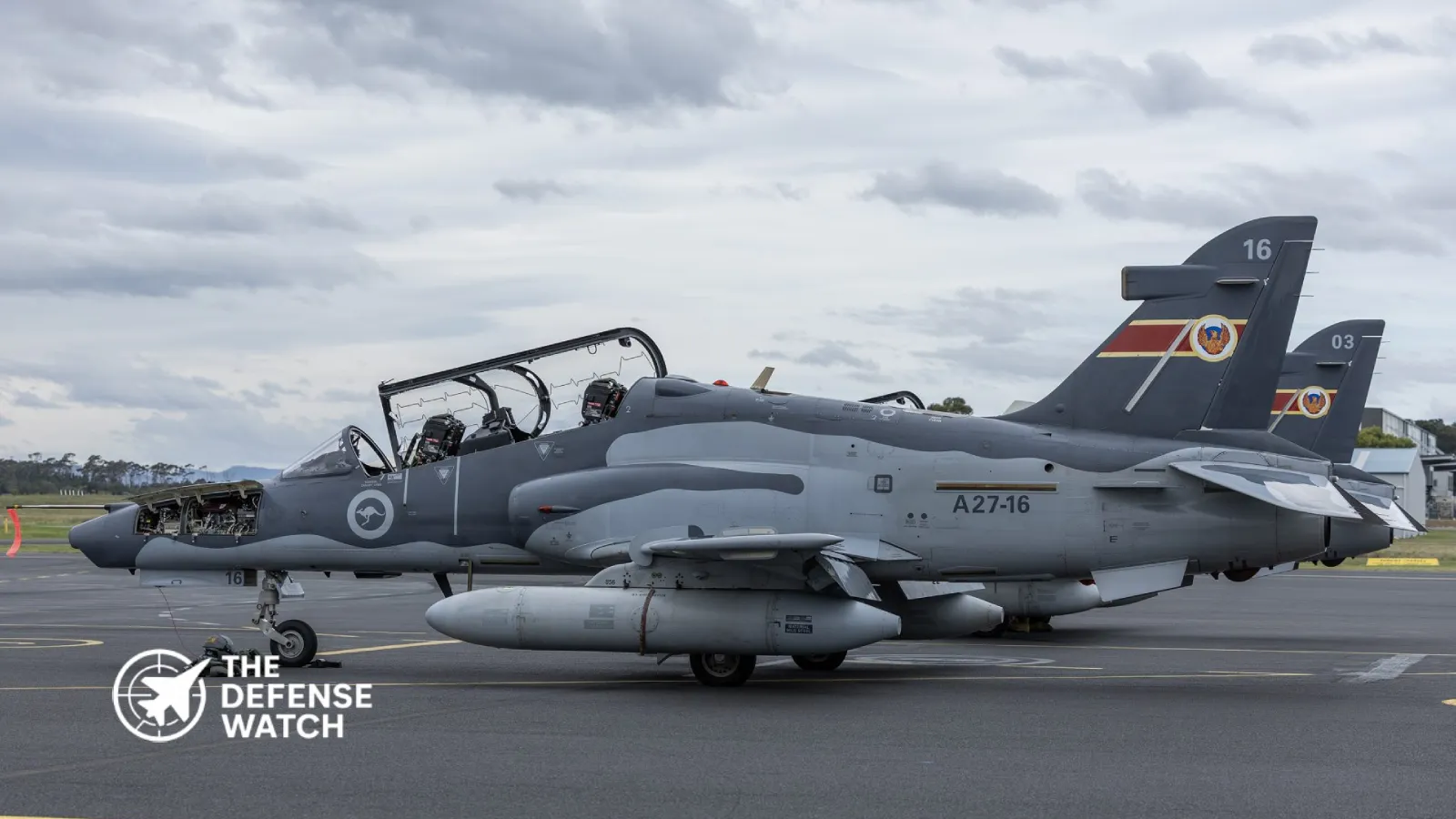
Australia is advancing plans to replace its aging Hawk 127 advanced jet trainer fleet, according to recent reporting by FlightGlobal. The move reflects the Royal Australian Air Force’s need to align pilot training with fifth generation aircraft operations, including the F-35A Lightning II, and with broader allied training standards.
Australia Advances Hawk Trainer Replacement Plans
Australia’s Hawk trainer replacement effort has entered a more defined planning phase as the government evaluates options for a successor to the Royal Australian Air Force’s Hawk 127 fleet. The aircraft have been in service since the early 2000s and form the core of Australia’s lead-in fighter training system.
Canberra is considering how a future trainer should support both domestic pilot production and interoperability with allied air forces.
The Hawk 127 is an Australian variant of the BAE Systems Hawk and is operated primarily from RAAF Base Williamtown. It prepares pilots for transition to frontline combat aircraft such as the F/A-18F Super Hornet, EA-18G Growler, and increasingly the F-35A Lightning II.
Why Australia Is Looking Beyond The Hawk 127
The Hawk fleet has undergone upgrades, including avionics improvements, but it was designed around fourth generation fighter training concepts. Modern air combat places greater emphasis on sensor fusion, data links, electronic warfare, and networked operations.
As the RAAF expands its F-35 force and deepens integration with U.S. and regional partners, training requirements are changing. A replacement aircraft would likely need to support:
- Advanced embedded simulation
- Secure tactical data links
- Electronic warfare training
- Synthetic threat environments
- Lower operating costs than legacy trainers
These capabilities are increasingly viewed as essential for preparing pilots before they enter expensive frontline aircraft.
The Hawk 127 Fleet In Context
Australia originally acquired 33 Hawk 127s, and the type has been sustained through a long-term support arrangement with BAE Systems Australia.
| Category | Hawk 127 |
|---|---|
| Role | Lead-in fighter trainer |
| Manufacturer | BAE Systems |
| Australian service entry | Early 2000s |
| Primary operator | Royal Australian Air Force |
| Main training base | RAAF Base Williamtown |
The fleet remains operational, but planners are assessing what should replace it over the longer term.
What Aircraft Could Compete?
Australian officials have not announced a formal competition, but several advanced jet trainers are prominent in the global market.
| Aircraft | Manufacturer | Current International Users |
|---|---|---|
| M-346 Master | Leonardo | Italy, Singapore, Israel, others |
| T-7A Red Hawk | Boeing / Saab | United States (in introduction) |
| T-50 Golden Eagle | KAI | South Korea, Indonesia, Thailand, others |
| Hürjet | Turkish Aerospace | Turkey (development / introduction) |
Each aircraft offers different strengths in performance, simulation integration, industrial participation, and support arrangements.
The T-7A Factor
One of the most strategically interesting possibilities is the Boeing-Saab T-7A Red Hawk, which is being introduced for the U.S. Air Force.
For Australia, selecting a trainer aligned with the United States could offer advantages in:
- Shared training concepts
- Common simulation architectures
- Future software upgrades
- Potential cooperation on pilot training
However, the T-7A program is still progressing through U.S. fielding, and export timelines remain an important consideration.
Analysis: Why This Matters Beyond Training
The Hawk replacement is not simply an aircraft procurement decision. It is a signal about how Australia intends to generate combat airpower over the next three decades.
The Cost Problem
Frontline fighters such as the F-35 are expensive to operate. The more training that can be conducted in a high fidelity trainer or simulator, the lower the wear and operating burden on combat aircraft.
A modern trainer can absorb a significant portion of:
- Basic tactical intercepts
- Formation training
- Sensor management drills
- Electronic warfare scenarios
- Mission rehearsal
This is becoming a standard approach among advanced air forces.
The Alliance Problem
Australia increasingly trains with the United States, Japan, and other regional partners. A trainer with compatible data links and simulation standards could make multinational training more efficient.
In a potential Indo-Pacific contingency, interoperability begins long before combat operations; it begins in the training pipeline.
The Industrial Problem
Australia has placed growing emphasis on domestic defense industry participation. Any future trainer acquisition is likely to involve negotiations over:
- Sustainment work
- Software support
- Training systems integration
- Local manufacturing content
That could become a decisive factor alongside aircraft performance.
Timing And Budget Questions
Canberra has not publicly committed to a procurement schedule or budget for the Hawk replacement.
Australia’s broader defense modernization agenda already includes major investments in:
- F-35A Lightning II fighters
- AUKUS submarine programs
- Guided weapons manufacturing
- Air and missile defense
- Autonomous systems
The trainer program will therefore compete for funding within a crowded modernization portfolio.
What To Watch Next
Key indicators that the program is moving toward a formal acquisition phase include:
- Release of a request for information (RFI)
- Industry engagement events
- Inclusion in future Australian defense budget documents
- Statements from the Department of Defence
- Expanded analysis of training system requirements
For now, the clearest takeaway is that Australia has moved from simply sustaining the Hawk fleet to actively considering what comes after it.
The Bottom Line
Australia’s Hawk trainer replacement effort reflects a broader shift in military aviation: pilot training is becoming a networked, software-driven capability rather than just a flying syllabus.
The aircraft that eventually succeeds the Hawk 127 will help determine how the RAAF prepares pilots for F-35 operations, how efficiently it generates combat airpower, and how closely it aligns with allied training ecosystems across the Indo-Pacific.
That makes this one of the more strategically significant aviation decisions currently emerging from Canberra, even though the competition has not yet formally begun.