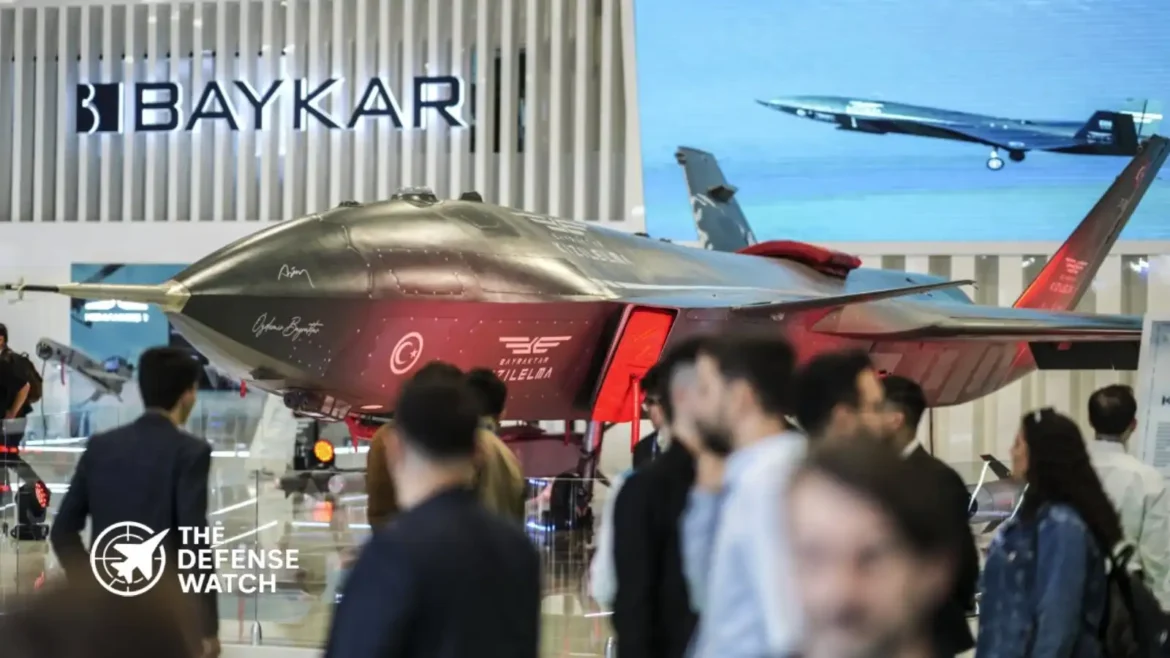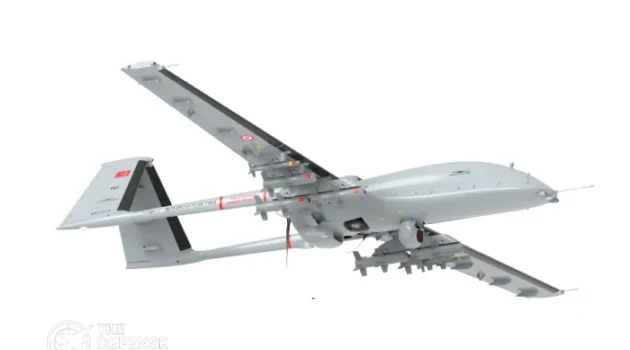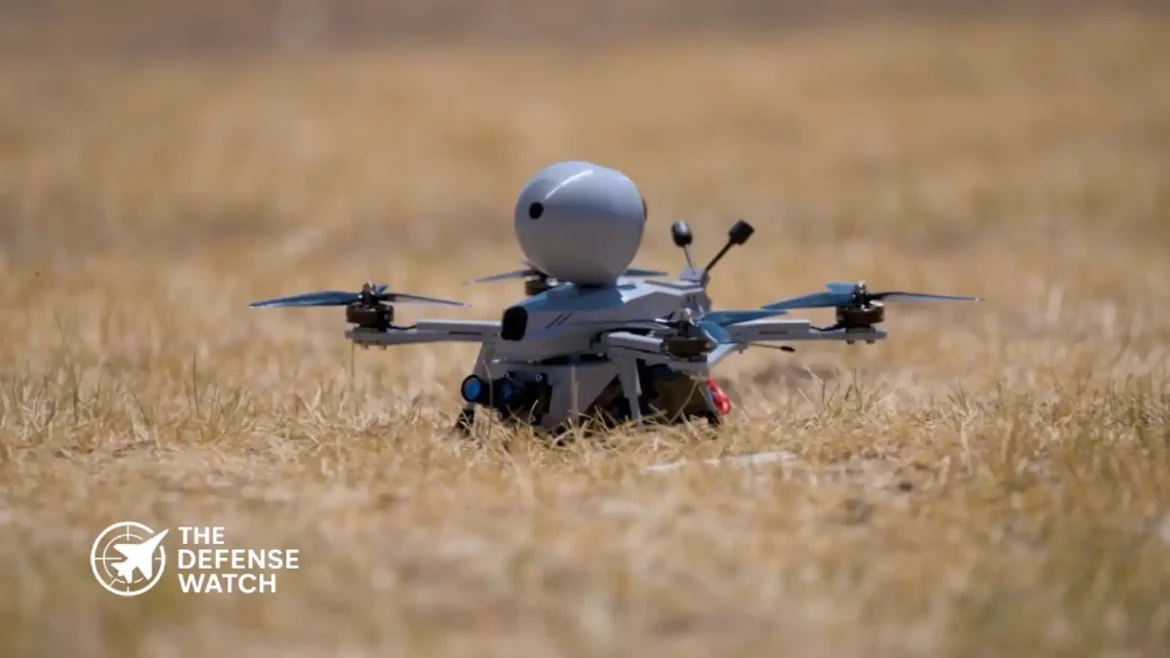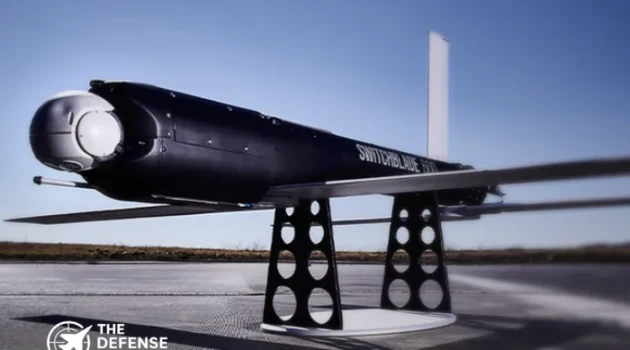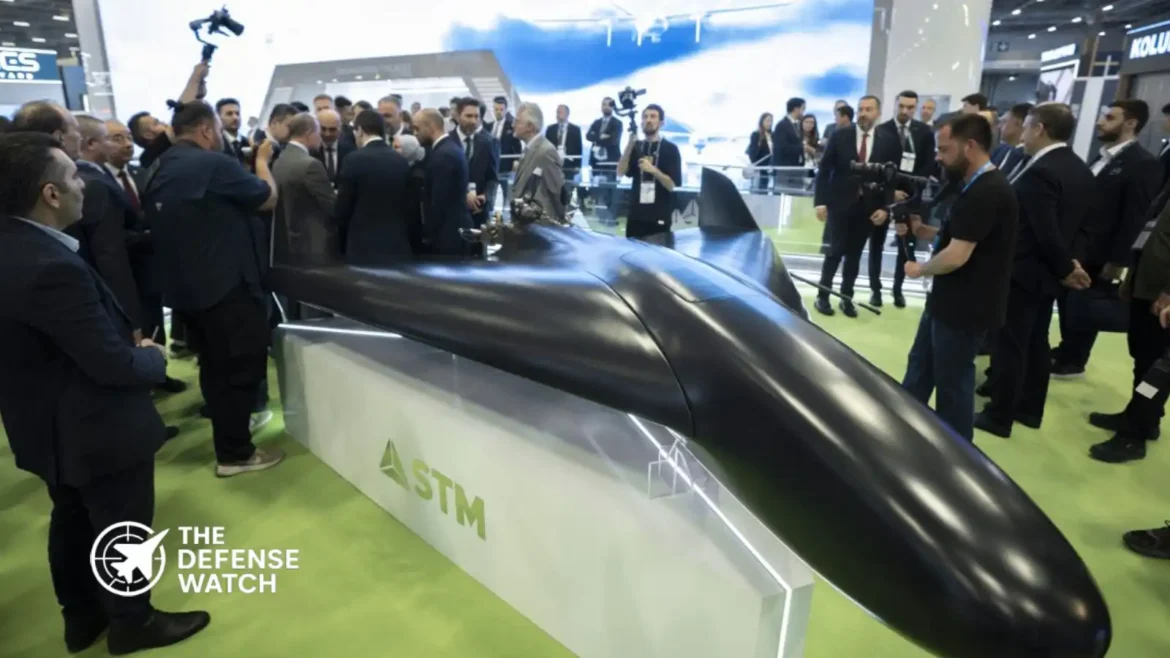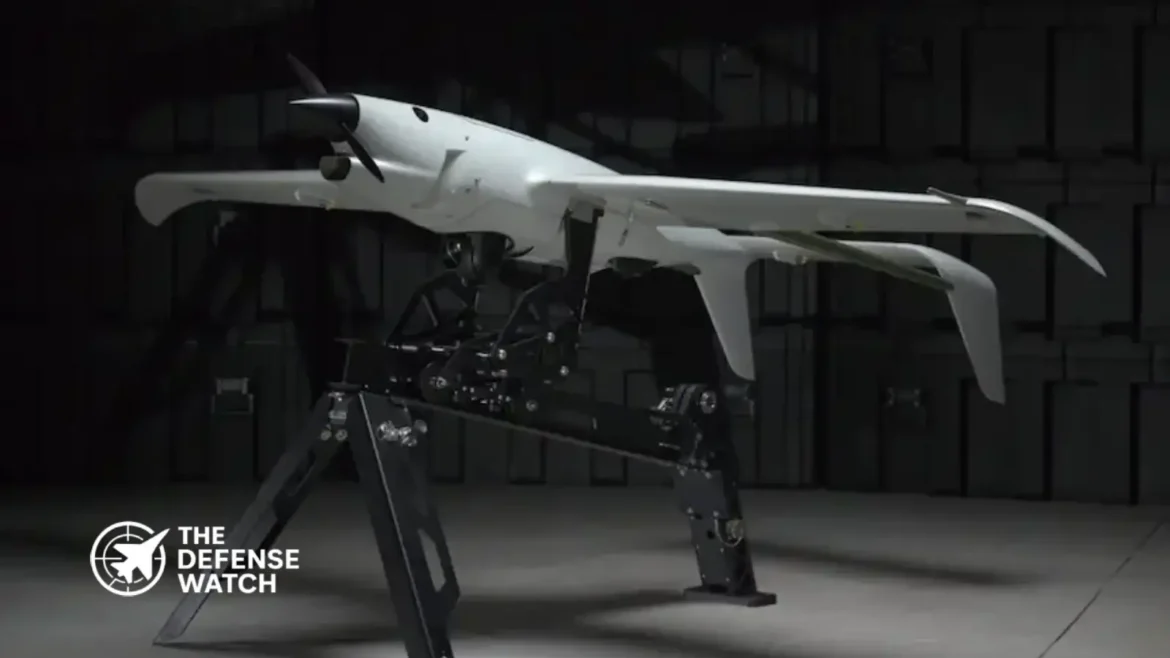
- Baykar has unveiled the AI powered K2 kamikaze drone designed for long range precision strike missions.
- The drone reportedly features autonomous navigation, AI based targeting, and swarm operation capability.
- The system is designed to strike targets more than 2,000 kilometers away while carrying a heavy warhead.
- K2 can operate from short or unprepared runways, expanding launch flexibility for dispersed operations.
- The platform reflects Turkey’s continued push into AI enabled unmanned strike warfare.
Baykar K2 Kamikaze Drone Expands Turkey’s AI Enabled Strike Arsenal
The AI powered K2 kamikaze drone has been introduced by Turkish defense company Baykar as part of the country’s growing portfolio of autonomous strike systems. The new platform is designed to conduct long range precision attacks using artificial intelligence assisted navigation, target recognition, and autonomous mission capabilities.
Baykar revealed the system as part of its expanding unmanned warfare ecosystem, which already includes combat drones such as the Bayraktar TB2 and the heavier AKINCI unmanned combat aerial vehicle.
The K2 represents a shift toward larger, longer range loitering munitions capable of conducting deep strike missions against high value targets.
The Big Picture
Autonomous loitering munitions have become a defining feature of modern warfare. Conflicts in Ukraine, the Middle East, and the Caucasus have demonstrated the growing role of expendable strike drones capable of penetrating defenses and striking critical infrastructure.
Nations are now developing larger and more sophisticated systems that combine the persistence of UAVs with the destructive effect of cruise missiles.
Turkey has emerged as one of the leading exporters and developers of unmanned systems in the past decade. Baykar alone generated roughly $1.8 billion in exports in recent years and has delivered UAV systems to dozens of countries, strengthening Turkey’s position in the global drone market.
The introduction of the AI powered K2 kamikaze drone reflects Ankara’s continued investment in autonomous strike technologies designed for both domestic defense and international export markets.
What’s Happening
Baykar has unveiled the K2 kamikaze drone, a large loitering munition designed to conduct autonomous long range strike missions.
According to reported specifications, the drone is capable of striking targets at distances exceeding 2,000 kilometers while carrying a warhead of roughly 200 kilograms. The platform has a maximum takeoff weight around 800 kilograms and can operate for extended periods before engaging its target.
The drone incorporates artificial intelligence based systems that allow it to:
• Navigate using visual terrain recognition
• Identify and track targets autonomously
• Coordinate with other drones during swarm missionsThe system is designed to take off from short or unprepared runways, allowing forces to launch missions from dispersed locations rather than fixed air bases.
Baykar says the AI architecture allows the drone to maintain mission capability even in contested electronic warfare environments where GPS signals may be degraded.
Why It Matters
The AI powered K2 kamikaze drone represents a notable step in the evolution of loitering munition technology.
Early loitering munitions typically carried small warheads and operated within relatively short ranges. Systems like the K2 combine extended range, heavier payloads, and AI assisted targeting, moving the concept closer to a reusable autonomous strike aircraft.
This capability offers several operational advantages:
First, the long range allows forces to strike strategic targets deep behind enemy lines without deploying manned aircraft.
Second, autonomous navigation and AI target recognition reduce reliance on constant operator control.
Third, swarm coordination allows multiple drones to overwhelm air defense systems through saturation tactics.
These features align with broader trends in military modernization, where autonomous systems increasingly support precision strike missions.
Strategic Implications
Turkey’s continued expansion into AI enabled drone warfare has clear implications for regional and global security dynamics.
The country has already demonstrated the battlefield impact of UAV systems through deployments in Syria, Libya, and Nagorno Karabakh.
Adding longer range autonomous strike drones could expand Turkey’s ability to conduct deep precision strikes while limiting risk to pilots and high value aircraft.
For NATO, Turkey’s drone industry provides an additional source of advanced unmanned systems within the alliance. At the same time, Ankara’s export policy means these technologies may appear in multiple regional security environments.
The K2 also signals a broader shift toward autonomous strike networks where UAVs, loitering munitions, and AI enabled sensors operate together.
Competitor View
Other major powers are pursuing similar capabilities.
Iran has fielded long range loitering munitions such as the Shahed 136, which have been widely used in the Ukraine conflict.
Israel pioneered the concept with systems such as the Harop loitering munition, designed to attack radar systems and air defense networks.
China and Russia are also investing heavily in autonomous swarm drones and AI assisted strike platforms.
The emergence of systems like the AI powered K2 kamikaze drone suggests that long range loitering munitions will remain a key focus area in the evolving unmanned warfare landscape.
What To Watch Next
Several developments will determine the operational impact of the K2 system.
First, flight testing and operational trials will reveal the platform’s true performance in contested electronic warfare environments.
Second, integration with existing Turkish UAV platforms and command networks could enable coordinated drone operations.
Third, export interest will likely emerge quickly given Baykar’s established international customer base.
Countries already operating Baykar drones may view the K2 as a complementary deep strike capability.
Capability Gap
The K2 system appears designed to address a key operational challenge faced by many militaries: conducting long range precision strikes without relying on expensive cruise missiles or risking manned aircraft.
Loitering munitions fill the gap between traditional UAV surveillance platforms and high cost missile systems.
However, systems like the K2 also face limitations. Large drones remain vulnerable to layered air defense networks that combine radar, missiles, and electronic warfare systems.
Operational effectiveness will therefore depend on tactics such as swarm deployment, electronic warfare integration, and coordinated strikes.
The Bottom Line
The AI powered K2 kamikaze drone highlights Turkey’s growing ambition to lead the next generation of autonomous long range strike systems.
- General Atomics is studying integration of long-range cruise missiles on the MQ-9B SkyGuardian and SeaGuardian drones.
- Candidate weapons include the AGM-158 JASSM, AGM-158C LRASM, and the Joint Strike Missile (JSM).
- The capability aims to expand MQ-9B missions from ISR to long-range maritime and land strike.
- General Atomics plans to test flight integration of at least one of these weapons as early as 2026.
- The concept supports distributed operations across vast theaters such as the Western Pacific.
MQ-9B Long Range Missile Integration Expands Drone Strike Potential
MQ-9B long range missile integration is being explored by General Atomics Aeronautical Systems Inc. as the company examines ways to equip its flagship unmanned aircraft with advanced cruise missiles such as the AGM-158 Joint Air-to-Surface Standoff Missile (JASSM), AGM-158C Long-Range Anti-Ship Missile (LRASM), and the Joint Strike Missile (JSM).
The initiative aims to expand the MQ-9B SkyGuardian and SeaGuardian platforms beyond their traditional intelligence, surveillance, and reconnaissance roles and into long-range precision strike missions.
If successful, the integration would mark a major shift in how medium-altitude long-endurance (MALE) drones contribute to high-end combat operations.
The Big Picture
U.S. and allied militaries increasingly seek distributed strike capabilities that can operate across large geographic areas without relying solely on manned aircraft.
Platforms capable of launching long-range precision weapons from outside hostile air defense zones are becoming central to modern operational concepts. The Indo-Pacific theater in particular presents vast distances that complicate traditional force projection.
Unmanned aircraft like the MQ-9B offer several advantages in this environment. They can remain airborne for extended periods, operate at relatively low cost compared with manned strike aircraft, and maintain persistent surveillance over potential targets.
Adding cruise missiles to such platforms effectively transforms them into long-range strike nodes within a distributed network of sensors and shooters.
What’s Happening
General Atomics announced in February 2026 that it is developing the ability for the MQ-9B to carry extended-range precision weapons.
Engineers are evaluating how the aircraft’s payload capacity, aerodynamic stability, range, and mission systems can support heavier weapons such as:
- AGM-158 JASSM long-range land-attack missile
- AGM-158C LRASM anti-ship missile
- Joint Strike Missile developed by Kongsberg and Raytheon
These weapons would allow the MQ-9B to engage heavily defended land targets or high-value naval assets from significant stand-off distances.
General Atomics said it intends to conduct flight testing with at least one of the missile types as early as 2026.
The company is examining how the additional weight and aerodynamic loads of these weapons affect the aircraft’s performance envelope.
Why It Matters
Equipping MQ-9B drones with long-range cruise missiles would significantly expand the operational role of unmanned aircraft in high-intensity conflict.
Traditionally, MQ-9 family drones have focused on ISR missions and limited precision strikes using smaller weapons such as Hellfire missiles or guided bombs. Integrating cruise missiles capable of traveling hundreds of kilometers changes that model.
Instead of operating near the battlefield, MQ-9B drones could remain well outside contested airspace while still delivering precision strikes.
This approach offers several advantages:
Persistent targeting capability
Lower operational cost compared with manned aircraft
Reduced risk to pilots
Greater flexibility for distributed operationsThe concept also aligns with emerging U.S. military doctrines emphasizing networked kill chains and multi-domain operations.
Strategic Implications
The addition of long-range cruise missiles could transform the MQ-9B into a distributed strike platform capable of supporting joint and coalition operations.
In maritime scenarios, an MQ-9B equipped with LRASM or JSM could help locate and engage hostile naval forces while coordinating with surface ships, submarines, and aircraft.
In land warfare, JASSM integration would allow the drone to target high-value infrastructure, command nodes, or air defense systems from extended distances.
Because the MQ-9B can remain airborne for many hours, it could loiter in designated areas waiting for targeting data before launching weapons.
This persistence provides commanders with additional flexibility compared with traditional strike aircraft that must return to base more frequently.
Competitor View
China and Russia closely monitor developments in unmanned strike capabilities, particularly those that enable long-range precision attacks.
Both countries have invested heavily in integrated air defense systems designed to deny access to contested regions. Weapons launched from outside these defensive envelopes complicate those strategies.
From Beijing’s perspective, MQ-9B platforms equipped with anti-ship missiles could enhance allied maritime strike capabilities in the Western Pacific. Such systems could contribute to distributed maritime operations targeting naval assets at extended ranges.
Moscow is also expanding its own unmanned strike programs, including long-range drones and cruise missile carriers.
The global competition in unmanned combat capabilities continues to accelerate as states seek cost-effective alternatives to traditional airpower.
What To Watch Next
Several milestones will determine whether the MQ-9B long range missile concept becomes operational.
First, engineers must validate the aircraft’s ability to safely carry and release heavier cruise missiles without compromising flight stability.
Second, integration with targeting networks and command systems will be critical. Long-range weapons require accurate targeting data that often comes from multiple sensors across the battlefield.
Third, export customers may influence the program’s trajectory. Many MQ-9B operators, including the United Kingdom, Japan, and India, could benefit from expanded strike capabilities.
Future demonstrations in 2026 will provide the first real indication of how viable the concept is in operational terms.
Capability Gap
Modern military planners face a growing challenge in maintaining persistent strike options across large theaters while minimizing risk to manned aircraft.
Traditional fighter aircraft provide speed and survivability but have limited endurance compared with unmanned platforms.
Meanwhile, surveillance drones provide persistence but historically lacked heavy strike capability.
Arming the MQ-9B with cruise missiles attempts to bridge that gap.
However, limitations remain. The drone’s speed and survivability are lower than those of stealth fighters, making it unsuitable for penetrating heavily defended airspace. Its role would likely focus on stand-off launch positions outside contested zones.
The Bottom Line
Integrating long-range cruise missiles on the MQ-9B could transform the drone from a surveillance platform into a persistent standoff strike asset for modern distributed warfare.
KEY FACTS AT A GLANCE- South Korea’s Agency for Defense Development plans to complete the S-9 swarm drone development in October.
- The S-9 system uses dozens of coordinated drones equipped with AI-based automatic target recognition capabilities.
- The drone swarm can conduct reconnaissance, strike, re-attack, and recovery missions in coordinated formations.
- South Korean defense contractor LIG Nex1 is developing the system alongside ADD as part of the S-series drone program.
- The system can also operate in a rocket artillery style mass launch configuration for saturation attacks.
South Korea’s S-9 Swarm Drone Program Approaches Development Milestone
South Korea’s S-9 swarm drone program is approaching a key development milestone as the country’s Agency for Defense Development (ADD) plans to complete the system’s development in October this year. The project, developed in cooperation with South Korean defense contractor LIG Nex1, represents a significant step toward operational autonomous drone swarm capabilities within the Republic of Korea’s military modernization strategy.
The S-9 is part of ADD’s broader S-series unmanned systems initiative, which focuses on deploying coordinated drone formations capable of reconnaissance, strike operations, and autonomous targeting using artificial intelligence.
If successfully deployed, the S-9 swarm drone could provide South Korea with a new class of low-cost, scalable strike capability designed to overwhelm adversary defenses through mass and coordination.
The Big Picture
Drone swarm technology is emerging as one of the most significant transformations in modern warfare. Militaries worldwide are investing in autonomous or semi-autonomous unmanned systems capable of operating in coordinated groups rather than as individual platforms.
Swarm systems allow commanders to deploy dozens, or potentially hundreds, of small drones simultaneously. These systems can perform reconnaissance, electronic warfare, and precision strike missions while complicating enemy air defense responses.
South Korea’s S-9 swarm drone program reflects this global trend. Countries including the United States, China, Israel, and Türkiye are pursuing similar technologies designed to combine artificial intelligence with distributed unmanned systems.
For South Korea, the operational logic is particularly clear. The Korean Peninsula features dense air defenses, hardened military infrastructure, and a large concentration of artillery and missile assets. Swarm drones offer a potential method to penetrate or saturate these defensive networks.
What’s Happening
The S-9 swarm drone is currently under development by the Agency for Defense Development in cooperation with LIG Nex1, one of South Korea’s leading defense electronics and missile system manufacturers.
According to available information, the system is designed to deploy several dozen drones that can operate in coordinated formations. The drones rely on artificial intelligence based automatic target recognition technology, allowing them to identify, track, and engage targets with limited operator intervention.
Key capabilities reported for the S-9 system include:
Reconnaissance and surveillance missions
Precision strike operations
Re-attack capability after an initial strike attempt
Drone recovery operations
Mass launch deployment similar to rocket artilleryDemonstration footage suggests the drones can be launched in large groups, enabling a rapid saturation attack profile that mirrors the operational concept of multiple launch rocket systems.
The program remains under development, with ADD targeting completion in October. Additional testing phases are expected before operational deployment with South Korean armed forces.
Why It Matters
The S-9 swarm drone highlights a shift in how militaries approach precision strike and reconnaissance missions.
Traditional strike platforms such as fighter aircraft or cruise missiles are expensive and often limited in number. Drone swarms offer a more scalable alternative. A large number of smaller unmanned systems can achieve similar operational effects at lower cost while creating greater complexity for enemy defenses.
Autonomous target recognition also reduces the workload for human operators. Instead of controlling each drone individually, commanders can assign mission parameters while the swarm coordinates internally.
In high intensity conflicts, this capability could enable rapid suppression of enemy air defenses, radar systems, artillery units, or command nodes.
South Korea’s interest in swarm technology reflects the growing importance of distributed and autonomous warfare systems across the Indo-Pacific region.
Strategic Implications
The development of the S-9 swarm drone could strengthen South Korea’s deterrence posture on the Korean Peninsula.
North Korea maintains a large arsenal of artillery, ballistic missiles, and hardened military facilities positioned near the Demilitarized Zone. Swarm drones could provide a flexible capability for reconnaissance and rapid strike missions against these targets.
A coordinated swarm could also complicate North Korean air defense systems, which are primarily designed to counter conventional aircraft and ballistic missile threats.
Beyond the Korean Peninsula, the S-9 program demonstrates South Korea’s growing role as a developer of advanced unmanned and AI-enabled military technologies. The country has increasingly positioned its defense industry as a major exporter of advanced systems ranging from artillery to fighter aircraft.
Swarm drone technologies could eventually follow the same path, particularly as global demand for autonomous systems continues to grow.
Competitor View
China has already invested heavily in swarm drone research and has demonstrated large-scale drone swarm launches in military exercises and defense exhibitions.
Beijing’s military planners view drone swarms as a key component of future networked warfare concepts. The People’s Liberation Army has explored swarm deployments for reconnaissance, maritime strike missions, and electronic warfare operations.
Russia has also expanded its use of loitering munitions and unmanned strike systems following battlefield experiences in Ukraine.
In this context, South Korea’s S-9 program reflects a broader technological competition surrounding autonomous weapons systems and AI-enabled targeting.
Capability Gap
The S-9 swarm drone appears designed to address several operational challenges faced by modern militaries.
Air defense systems are becoming increasingly capable, particularly against traditional aircraft and large missiles. Smaller, distributed drones present a much harder target set for defensive systems designed to intercept limited numbers of high value threats.
Swarm drones can also provide persistent surveillance over contested areas where crewed aircraft may face significant risk.
However, swarm systems face several limitations. Autonomous coordination requires resilient communications networks and strong electronic warfare protection. Enemy jamming, cyber attacks, or signal disruption could degrade swarm performance.
Command and control frameworks will also determine how effectively human operators can supervise large autonomous formations during complex missions.
What To Watch Next
Several key milestones will determine the future trajectory of the S-9 swarm drone program.
First, the completion of development in October will likely be followed by operational testing with South Korean military units.
Second, integration with broader command and control networks will be critical. Swarm drones become significantly more effective when linked to real-time intelligence and targeting data from other military systems.
Finally, South Korea may explore export opportunities if the technology matures successfully. The country has increasingly marketed advanced defense systems to global partners seeking modern but cost-effective capabilities.
The Bottom Line
South Korea’s S-9 swarm drone program signals the country’s growing investment in AI-enabled autonomous warfare systems designed to deliver scalable, coordinated strike capability in future conflicts.
KEY FACTS AT A GLANCE- Türkiye successfully tested the Bayraktar Kizilelma unmanned fighter jet with a precision guided bomb strike.
- The stealth oriented UCAV is designed for air to air and air to ground combat missions.
- Kizilelma forms part of Türkiye’s effort to build an independent next generation combat aviation ecosystem.
- The aircraft is expected to operate from short runway aircraft carriers such as the TCG Anadolu.
- The test highlights the rapid evolution of high performance unmanned combat aircraft globally.
Türkiye Advances Bayraktar Kizilelma Unmanned Fighter Jet Strike Capability
The Bayraktar Kizilelma unmanned fighter jet has completed a new test demonstrating precision guided bomb strike capability, marking a significant milestone in Türkiye’s effort to field a next generation unmanned combat aircraft. The test highlights the growing maturity of the Kizilelma program and signals Türkiye’s intent to integrate high performance combat drones into frontline operations.
Developed by Turkish defense company Baykar, the aircraft represents one of the most ambitious unmanned combat air vehicle (UCAV) programs currently under development. The latest flight test demonstrated the platform’s ability to conduct precision air to ground strikes, an essential step toward operational deployment.
The Big Picture
Unmanned combat aircraft are rapidly reshaping military aviation. Nations are increasingly investing in systems capable of performing missions traditionally handled by manned fighter jets, including precision strike, intelligence gathering, and even air to air combat.
Türkiye has become one of the most active developers in this sector. Over the past decade, Turkish industry has expanded its drone capabilities with systems such as the Bayraktar TB2 and the Akinci UCAV. These platforms have seen operational use in multiple conflict zones and have helped establish Türkiye as a major exporter of unmanned aerial systems.
The Bayraktar Kizilelma unmanned fighter jet represents the next stage of this evolution. Unlike earlier drones optimized primarily for surveillance and strike missions, Kizilelma is designed as a high performance combat aircraft capable of operating in contested airspace.
Its development also reflects Türkiye’s broader strategy to reduce dependence on foreign defense suppliers and build a domestically controlled aerospace ecosystem.
What Is Happening
The latest test flight involved the Bayraktar Kizilelma unmanned fighter jet conducting a precision guided bomb strike against a designated ground target. According to defense reporting, the aircraft successfully released and guided the munition during the flight test.
The demonstration verified the aircraft’s ability to perform precision strike missions using guided munitions, one of the key operational roles envisioned for the platform.
Kizilelma features several design characteristics intended to enhance survivability and combat performance. The aircraft incorporates a stealth influenced airframe with reduced radar signature, internal weapon carriage for certain configurations, and high subsonic or potentially supersonic flight performance depending on the engine configuration.
The aircraft is designed to carry a range of Turkish produced munitions, including precision guided bombs and air to air missiles.
A key design objective is compatibility with short runway and carrier operations. Turkish officials have previously indicated that the aircraft could operate from the amphibious assault ship TCG Anadolu, which Türkiye has positioned as a drone carrier after the removal of plans to operate the F 35B fighter aircraft.
Why It Matters
The successful precision strike test demonstrates that the Bayraktar Kizilelma unmanned fighter jet is moving beyond early flight testing and toward operational capability.
Strike capability is a core requirement for any UCAV intended to operate as a frontline combat aircraft. Precision guided bomb delivery confirms that the aircraft’s fire control, targeting systems, and weapons integration are progressing.
This capability is particularly important because unmanned systems can conduct high risk missions without exposing pilots to danger. They can also remain on station for longer periods than many manned aircraft.
For Türkiye, this test strengthens its position as a leading producer of combat drones and highlights the country’s ambition to compete in the emerging market for high performance UCAVs.
Suggested Internal Link
(Add link to related article on TheDefenseWatch)
Article about Turkish Bayraktar TB2 combat drone operationsStrategic Implications
The development of aircraft such as the Bayraktar Kizilelma unmanned fighter jet signals a broader shift in the future of air warfare.
Modern air forces increasingly view unmanned platforms as force multipliers capable of operating alongside manned aircraft. In some concepts of operation, unmanned aircraft can perform high risk strike missions, electronic warfare tasks, or reconnaissance roles while manned fighters focus on command and control.
The Kizilelma program may also help Türkiye fill capability gaps created by its removal from the F 35 Joint Strike Fighter program. By investing heavily in indigenous platforms, Türkiye aims to sustain advanced aerospace capabilities despite limitations on access to certain Western technologies.
Carrier capable drones represent another strategic dimension. Operating UCAVs from ships such as TCG Anadolu could provide Türkiye with flexible expeditionary air power without requiring a traditional aircraft carrier.
If successful, this model could influence how medium sized naval powers approach carrier aviation.
Competitor View
Regional and global competitors will closely monitor the progress of the Bayraktar Kizilelma unmanned fighter jet.
Russia and China are both investing heavily in advanced unmanned combat aircraft. China in particular has already demonstrated several stealth UAV designs, including systems intended to operate alongside manned fighters.
European nations and the United States are also pursuing collaborative combat aircraft concepts, often referred to as loyal wingman systems.
Türkiye’s program stands out because it combines relatively rapid development timelines with a focus on operational deployment rather than long term research programs.
The growing export success of Turkish drones could also raise concerns among regional rivals that such technologies may become widely available in global defense markets.
What To Watch Next
The next phase of development for the Bayraktar Kizilelma unmanned fighter jet will likely involve expanded weapons integration and operational testing.
Upcoming milestones could include:
Expanded flight envelope testing
Integration of additional air to air and air to ground weapons
Testing of autonomous mission capabilities
Carrier compatible launch and recovery trials
Potential operational evaluation with the Turkish Armed ForcesThese steps will determine how quickly the aircraft can transition from prototype testing to operational deployment.
Suggested Internal Link
(Add link to related article on TheDefenseWatch)
Article about Türkiye’s Akinci high altitude UCAV programCapability Gap
The Kizilelma program addresses a specific operational challenge faced by many air forces. Traditional manned fighters are expensive to operate and place pilots at risk during high threat missions.
Advanced unmanned combat aircraft can conduct dangerous operations such as deep strike or suppression of enemy air defenses with lower risk.
However, UCAVs still face limitations. Autonomous decision making, electronic warfare survivability, and integration with existing command networks remain complex technical challenges.
Operational doctrine for high performance combat drones is also still evolving in many militaries.
The Bottom Line
The Bayraktar Kizilelma unmanned fighter jet precision strike test marks a significant step toward operationalizing a new generation of high performance combat drones that could reshape future air warfare.
KEY FACTS AT A GLANCE- Switzerland’s Taskforce Drones plans a new UAS technical trials campaign in autumn 2026.
- Trials will evaluate attack drones and counter-UAS technologies under challenging alpine conditions.
- Previous testing took place in December 2025 at the Hinterrhein range in Graubünden.
- Industry participants included Auterion, Counter Drone Defence Systems, and ENS Dynamics.
- The trials aim to accelerate the operational maturity of drone and counter-drone systems for future European defense needs.
Swiss UAS Technical Trials Planned For Autumn 2026
Swiss UAS technical trials planned by the government-backed Taskforce Drones will take place in autumn 2026 as part of a broader effort to accelerate the development of both attack drones and counter-drone technologies. The initiative is overseen by Switzerland’s Federal Department of Defence, Civil Protection and Sport (DDPS) and coordinated through the national armaments agency Armasuisse.
Officials say the upcoming campaign will represent the next standardized testing phase for unmanned aerial systems within the program. The trials aim to measure operational maturity, reliability, and performance of emerging drone technologies under real-world environmental conditions.
The program reflects growing international urgency around unmanned warfare and counter-drone defense as military forces adapt to lessons from recent conflicts.
The Big Picture
European defense planners increasingly view drones as a central element of modern warfare. Small unmanned aircraft now conduct reconnaissance, electronic warfare, and precision strike missions while operating at costs far lower than traditional aircraft or missile systems.
At the same time, counter-drone technologies have become a critical priority for military forces. The rapid spread of low-cost drones used by both state militaries and irregular groups has created new threats to bases, infrastructure, and deployed forces.
Switzerland’s Taskforce Drones initiative reflects a broader trend among Western militaries to accelerate experimentation cycles. Rather than relying solely on long procurement programs, defense organizations are turning to rapid trials and live testing environments to evaluate emerging technologies.
The approach mirrors innovation models seen in NATO exercises, U.S. Department of Defense drone programs, and European defense experimentation initiatives.
What’s Happening
The Taskforce Drones program plans to conduct its next UAS technical trials during autumn 2026. According to program officials, the testing will form part of a standardized evaluation campaign designed to compare the performance of multiple drone and counter-drone systems.
Earlier trials took place in December 2025 at the Hinterrhein shooting range in the canton of Graubünden. The site offers a complex testing environment that includes mountainous terrain, narrow valleys, and high-altitude conditions.
Those conditions create significant operational challenges for drone sensors and autonomous navigation systems. For example, automated camera-based recognition systems can struggle to distinguish targets against snow-covered terrain and mountainous backgrounds.
Several companies participated in the earlier trials, including:
- Auterion
- Counter Drone Defence Systems (CDDS)
- ENS Dynamics
The tests evaluated both attack drones and counter-UAS systems designed to detect, track, and intercept hostile drones.
Why It Matters
Testing unmanned systems in difficult environments provides insights that cannot be replicated in controlled laboratory conditions.
Mountainous terrain, changing weather patterns, and visual complexity challenge drone navigation systems, artificial intelligence algorithms, and sensor performance. These conditions are particularly relevant for European militaries operating in alpine or urbanized environments.
For counter-drone systems, the ability to detect small UAVs against complex backgrounds is a critical operational requirement. Small drones often fly low and slow, making them difficult to track using traditional radar or electro-optical sensors.
By conducting realistic field trials, defense agencies can identify system weaknesses early and accelerate improvements before full-scale deployment.
The Swiss testing program also offers industry participants an opportunity to demonstrate their technology in a government-supervised environment, which can support future procurement decisions.
Strategic Implications
The expansion of drone experimentation programs signals a shift in how militaries approach technology development.
Traditional procurement cycles often take years to move from concept to operational deployment. In contrast, drone warfare evolves rapidly, driven by commercial technology, artificial intelligence advances, and battlefield experimentation.
Programs like Taskforce Drones allow defense organizations to:
- Evaluate multiple competing systems quickly
- Collect operational performance data
- Identify promising technologies for future acquisition
This approach helps reduce the risk of adopting systems that perform well in controlled tests but fail under real operational conditions.
For European militaries, the effort also contributes to regional resilience against drone threats targeting infrastructure, airports, and military installations.
Competitor View
Strategic competitors closely monitor Western experimentation programs in unmanned systems.
Russia, China, and Iran have all invested heavily in drone warfare, particularly in areas such as loitering munitions, swarm tactics, and electronic warfare.
These countries may view Switzerland’s testing initiative as part of a broader Western effort to strengthen counter-drone defenses and accelerate drone innovation.
The lessons generated from European testing environments could also influence NATO doctrine, particularly in areas such as autonomous targeting, sensor fusion, and layered counter-UAS defense.
At the same time, competitors continue to explore methods designed to defeat these systems, including electronic jamming, stealthy drone designs, and coordinated swarm attacks.
Capability Gap
The Taskforce Drones program aims to address a growing operational gap between the rapid evolution of drone technology and the slower pace of traditional military procurement.
Recent conflicts have demonstrated several key vulnerabilities:
- Difficulty detecting small drones
- Limited counter-drone response times
- Challenges identifying targets in cluttered environments
Drone operators increasingly exploit terrain, urban environments, and weather conditions to evade detection.
Testing in alpine terrain directly targets these challenges by forcing drone sensors and algorithms to operate in complex visual environments where traditional detection methods often struggle.
However, limitations remain. Drone testing programs can evaluate technology performance, but operational success ultimately depends on integration with command networks, sensors, and air defense systems.
What To Watch Next
Several milestones will shape the next phase of the Swiss UAS technical trials program.
First, the autumn 2026 campaign will expand testing scenarios and may include additional industry participants.
Second, defense officials will analyze data from the trials to assess technology readiness and operational maturity.
Finally, successful systems could move toward procurement or further experimentation within European defense programs.
The trials may also provide opportunities for collaboration with NATO partners and other allied nations seeking to improve their counter-drone capabilities.
The Bottom Line
Switzerland’s upcoming UAS technical trials highlight the growing importance of rapid experimentation in drone warfare and counter-drone defense.
■ KEY FACTS AT A GLANCE- ► Red Cat Holdings announced Allen Control Systems has joined the Red Cat Futures Initiative to advance autonomous counter-drone and precision defense integration.
- ► ACS Bullfrog AI-driven robotic weapon station will be evaluated for integration across Red Cat secure ISR and command and control platforms.
- ► First planned integration pairs Bullfrog with Red Cat Blue Ops uncrewed surface vessels.
- ► The Futures Initiative consortium aims to accelerate fielding of advanced autonomous and AI-enabled systems for military use.
- ► Collaboration highlights focus on interoperable, U.S.-made defense technologies for American and allied forces.
Allen Control Systems Joins Red Cat Futures Initiative To Expand Autonomous Counter-Drone Capabilities
Allen Control Systems joining the Red Cat Futures Initiative marks a new step in integrating autonomous counter-drone systems into U.S. made unmanned platforms.
In a March 2 announcement from Salt Lake City, Red Cat Holdings, Inc. confirmed that Allen Control Systems has entered its industry consortium aimed at accelerating next generation autonomy for defense applications.
The partnership centers on integrating ACS Bullfrog, an AI enabled robotic weapon station, into Red Cat platforms across multiple domains. The first integration will take place within Blue Ops, Red Cat’s maritime division, where Bullfrog will be paired with uncrewed surface vessels.
Integration Across Domains
Red Cat describes its Futures Initiative as a collaborative effort designed to connect robotics and autonomy firms to reduce integration friction and speed operational deployment.

Under the agreement, Bullfrog will be evaluated for integration with Red Cat secure ISR platforms and its command and control architecture. Initial work will focus on maritime applications, but both companies indicate potential expansion across air and land systems.
Red Cat subsidiaries include Teal Drones and FlightWave Aerospace, both of which produce unmanned aerial systems for military and government use. The company has also expanded into maritime operations through Blue Ops, supporting uncrewed surface vessel development.
Bullfrog Autonomous Weapon Station
ACS flagship product, Bullfrog, is designed to transform legacy or modern weapons into precision autonomous systems. According to the company, the system combines artificial intelligence, computer vision, and proprietary control software to enable precise target engagement, particularly against small unmanned aerial systems.
The demand for counter drone systems has grown sharply in recent conflicts, including in Ukraine and the Middle East, where low cost drones have demonstrated their ability to disrupt traditional force structures. The U.S. Department of Defense has repeatedly identified counter UAS capability as a modernization priority in recent strategy documents.
By pairing Bullfrog with uncrewed surface vessels, the partnership aims to extend mobile counter drone protection into maritime environments. That approach reflects a broader Pentagon push toward layered, distributed defense systems capable of operating at the tactical edge.
Strategic Implications For U.S. Defense Industry
The Allen Control Systems and Red Cat Futures Initiative partnership reflects a wider shift in the U.S. defense industrial base toward modular, interoperable autonomy.

Rather than developing closed proprietary systems, defense firms are increasingly forming ecosystems designed to integrate sensors, weapons, and platforms across domains. This reduces duplication and shortens development timelines.
The emphasis on American manufactured systems also aligns with ongoing efforts to strengthen supply chain resilience. U.S. lawmakers and defense officials have highlighted the need to reduce reliance on foreign components, particularly in unmanned systems.
Red Cat’s Family of Systems approach, led by its Black Widow small unmanned aircraft platform, seeks to offer interoperable solutions spanning air and maritime operations. Integrating Bullfrog into this architecture could provide a scalable counter drone capability across multiple operational environments.
Operational Outlook
While the announcement outlines integration goals, it does not specify deployment timelines or contract values. As with many autonomy initiatives, operational fielding will depend on testing, certification, and potential procurement decisions by U.S. or allied defense agencies.
Still, the Allen Control Systems entry into the Red Cat Futures Initiative signals continued momentum behind autonomous counter drone defense systems, particularly those designed for distributed and expeditionary operations.
With small unmanned threats becoming a persistent feature of modern conflict, partnerships that combine sensing, targeting, and precision engagement into integrated platforms are likely to remain a focus area for U.S. defense planners.
■ KEY FACTS AT A GLANCE- ► Shield AI’s V-BAT operated during NATO’s HEIMDALL 26 exercise in northern Norway from February 17 to 26.
- ► The exercise was hosted by NATO’s Center of Excellence for Cold Weather Operations.
- ► V-BAT conducted ship-based VTOL operations from the Norwegian Coast Guard vessel KV Olav Tryggvason.
- ► Flights were performed in Arctic winter conditions without aircraft modifications.
- ► ISR data from V-BAT was integrated into NATO-aligned command and control networks.
Shield AI V-BAT Arctic ISR operations during NATO’s HEIMDALL exercise mark a practical step forward in how the alliance approaches surveillance in the High North. The demonstration was not about unveiling new hardware. It was about showing that existing unmanned systems can function as reliable, ship-based ISR assets in one of the most demanding environments NATO forces face.
That distinction matters. Arctic security has shifted from a niche concern to a core planning issue for NATO navies and joint forces.
Why HEIMDALL Matters For NATO Now
HEIMDALL was designed to validate NATO’s Arctic experimentation arena, not to showcase single platforms. The focus was on manned-unmanned teaming, data sharing, and integration into the Federated Mission Network and multi-domain operations.
The High North is no longer permissive. Russian naval patrols, long-range sensors, and submarine activity have increased across the Barents and Norwegian Seas. At the same time, allied forces operate from dispersed bases with limited infrastructure.
An unmanned aircraft that can launch from small vessels, survive extreme cold, and feed ISR directly into alliance networks addresses a real operational gap. That is the context in which Shield AI brought V-BAT to Norway.
Operational Impact Of V-BAT In Arctic Maritime ISR
From an operational standpoint, the most important outcome was not endurance or sensor payload. It was reliability.
V-BAT flew from land and from a Norwegian Coast Guard ship without changes to configuration. Arctic operations often require heaters, modified fuels, or specialized maintenance cycles. The absence of those requirements lowers the barrier to deployment.

Image : Shield AI Ship-based VTOL operations from KV Olav Tryggvason demonstrated a key advantage over fixed-wing UAVs that need runways or launch systems. For patrol vessels, logistics ships, and amphibious platforms, deck space is limited. A small VTOL system extends surveillance without changing ship design.
Night and day ISR, electro-optic, infrared, and synthetic aperture radar use also point to flexibility. In Arctic winter, long periods of darkness reduce the usefulness of traditional visual surveillance. Persistent unmanned coverage becomes essential.
How V-BAT Compares To Other NATO ISR Options
Within NATO inventories, Arctic ISR usually relies on crewed maritime patrol aircraft, helicopters, and a limited number of larger UAVs. Systems like ScanEagle or Puma offer tactical coverage but are constrained in endurance and payload.
V-BAT sits in a middle ground. It is smaller and cheaper than Class II or III drones but offers far longer endurance than most ship-launched systems. Its ducted fan design improves safety on crowded decks, an issue that has limited wider UAV use aboard surface combatants.

Image : Shield AI European alternatives exist, but many still depend on catapult launch or recovery nets. That complicates use in high sea states. V-BAT’s vertical recovery is a practical advantage in the North Atlantic and Arctic waters.
Alliance And Industrial Implications
For NATO, the real takeaway is interoperability. During HEIMDALL, V-BAT functioned as an ISR node inside a multinational architecture. Data flowed to forces ashore and at sea.
That aligns with NATO’s push toward distributed sensing rather than a few high-value platforms. Smaller unmanned systems reduce risk and expand coverage.
From an industry angle, Shield AI positions itself not as a niche UAV maker but as a provider of deployable autonomy that fits alliance standards. The fact that the aircraft worked with Norwegian forces and NATO networks strengthens its case in European procurement discussions.

Image : Shield AI Statements from Shield AI leadership, including Brandon Tseng, emphasize expeditionary use. That message resonates with smaller navies that cannot afford large UAV fleets but still need persistent ISR.
Regional Security Context In The High North
The Arctic is becoming a zone of routine military presence rather than occasional patrols. Norway’s role is central, acting as NATO’s frontline state in the region.
Unmanned ISR launched from coast guard or naval vessels allows continuous monitoring of sea lines, choke points, and remote coastal areas. It also supports allied reinforcement planning by improving situational awareness during crises.
For Russia, the spread of low-cost, persistent ISR complicates concealment and movement. For NATO, it strengthens early warning without escalating force posture.
What Happens Next
HEIMDALL was an experiment, but it sets conditions for follow-on decisions. Expect more NATO exercises to include ship-based UAVs as standard assets rather than add-ons.
Procurement paths may follow. Smaller allies could prioritize systems that require minimal infrastructure and training. Larger navies may integrate them as supplements to crewed aviation.
For Shield AI, the next test will be sustained deployments, not exercises. Cold weather proof points matter most when systems stay forward for months, not weeks.
Strategic Assessment
V-BAT’s performance during HEIMDALL does not shift the military balance on its own. But it signals a broader change in how NATO approaches Arctic deterrence.
Distributed unmanned ISR reduces reliance on vulnerable high-end platforms. It improves resilience in contested environments and supports alliance cohesion through shared data.
Budget pressures across NATO favor systems that deliver coverage without heavy support tails. That reality benefits small VTOL UAVs with long endurance.
The escalation risk remains limited. ISR systems are defensive by nature. However, their presence tightens surveillance nets, reducing freedom of movement for potential adversaries.
In the High North, awareness is deterrence. HEIMDALL showed NATO is investing in both.
■ KEY FACTS AT A GLANCE- ► A Ukrainian drone firm has opened a new manufacturing facility in the United Kingdom.
- ► The site will focus on producing and assembling unmanned aerial systems for UK and allied customers.
- ► The expansion supports diversification of Ukraine’s defense industrial base amid ongoing war.
- ► UK based production strengthens supply chain resilience and access to Western markets.
- ► The move signals deepening UK Ukraine defense cooperation.
Ukrainian Drone Firm Opens British Factory To Expand UK Drone Production
A Ukrainian drone firm has opened a British factory to expand UK based drone production and strengthen long term defense cooperation between Kyiv and London.
The move marks a significant step in relocating and diversifying Ukraine’s fast growing unmanned aerial systems sector amid ongoing conflict with Russia. The new facility will manufacture and assemble drones in the United Kingdom, helping secure supply chains while positioning the company closer to Western customers.
The development reflects a broader shift in Ukraine’s defense industry, which has rapidly scaled domestic drone production since Russia’s full scale invasion in 2022.
Strategic Shift In Ukraine’s Drone Industry
The Ukrainian drone firm British factory opening is more than a simple overseas expansion. It highlights how Ukraine’s defense companies are adapting to wartime pressures while looking ahead to long term export markets.
Since 2022, Ukraine has transformed into one of the most active drone innovation hubs in Europe. Kyiv has prioritized rapid fielding of low cost strike drones, reconnaissance systems, and long range unmanned platforms. These systems have played a central role in targeting logistics hubs, artillery positions, and naval assets.
Opening a British factory allows the company to mitigate risks associated with operating solely inside a conflict zone. Missile strikes on industrial facilities inside Ukraine have periodically disrupted production. Establishing capacity in the UK reduces exposure to such risks and reassures potential customers about continuity of supply.
From an industrial standpoint, UK based production also provides access to skilled aerospace labor, established certification processes, and proximity to NATO procurement networks.
Implications For The UK Defense Sector
The Ukrainian drone firm British factory initiative aligns with the United Kingdom’s broader push to strengthen domestic manufacturing and deepen defense partnerships with Ukraine.
London has been one of Kyiv’s most consistent military backers. The UK has provided training, financial assistance, and weapons ranging from anti tank missiles to advanced air defense systems. Hosting Ukrainian defense manufacturing on British soil adds an industrial dimension to that support.
For the UK, the new factory offers several advantages.
First, it could accelerate the integration of combat proven Ukrainian drone designs into British and allied inventories. Ukrainian companies have accumulated real battlefield data on electronic warfare resilience, rapid modification cycles, and low cost mass production. That experience is highly relevant as Western militaries reassess force structure and drone doctrine.
Second, the facility may contribute to job creation and technology exchange. While specific employment figures have not been publicly detailed, defense manufacturing typically generates supply chain activity across electronics, composites, and software sectors.
Third, the move reinforces the UK’s ambition to remain a central hub for European defense innovation after Brexit.
Battlefield Lessons Driving Production Decisions
The Ukrainian drone firm British factory expansion reflects a broader lesson from the war in Ukraine. Industrial agility matters as much as platform sophistication.
Ukrainian firms have demonstrated an ability to iterate drone designs in weeks rather than years. Adjustments to counter jamming, improve range, or enhance payload capacity are often made rapidly in response to battlefield feedback.
Western defense procurement models have traditionally relied on longer development cycles. The Ukrainian approach, shaped by immediate operational demands, prioritizes speed and cost efficiency.
By establishing a presence in the UK, the company may help bridge those models. British and allied forces can gain direct exposure to systems refined under combat conditions. In turn, Ukrainian firms gain access to Western testing infrastructure and certification frameworks.
This two way exchange strengthens resilience on both sides.
Supply Chain Security And Export Potential
Supply chain security has become a central theme in global defense policy. The war in Ukraine exposed vulnerabilities in everything from microelectronics to propellant production.
A Ukrainian drone firm British factory provides geographic diversification. It reduces dependence on transport routes vulnerable to disruption and eases compliance with export regulations for Western buyers.
The UK’s established export control and compliance systems may also facilitate sales to NATO and partner nations. For a Ukrainian company seeking to scale internationally, that regulatory environment offers predictability.
Over time, the facility could become a platform for joint development projects. That may include co production agreements or technology sharing initiatives tailored to specific allied requirements.
Long Term Outlook
The Ukrainian drone firm British factory launch underscores how Ukraine’s defense sector is shifting from survival mode to structured international expansion.
Even as active fighting continues, Ukrainian companies are planning for post war reconstruction and sustained integration into Western defense markets. Establishing production in the United Kingdom positions the firm to compete beyond immediate wartime demand.
For the UK, the move reinforces its role as a key security partner to Kyiv while strengthening its own industrial base.
The opening of the British factory is a practical step, not a symbolic one. It reflects hard lessons learned on the battlefield and a shared interest in building resilient, scalable drone manufacturing capacity for the future.
■ KEY FACTS AT A GLANCE- ► Australia is assessing European weapons integration for the Ghost Bat uncrewed combat aircraft.
- ► The move could expand the RAAF’s missile options beyond traditional U.S. systems.
- ► Ghost Bat is designed to operate alongside crewed fighters as part of Australia’s loyal wingman concept.
- ► European missile integration could strengthen industrial ties and diversify supply chains.
- ► The decision reflects broader Australian efforts to build a flexible, resilient air combat ecosystem.
Australia Explores European Weapons Integration For Ghost Bat
Australia is exploring European weapons integration for Ghost Bat as it refines the future role of its uncrewed loyal wingman aircraft.
The study reflects Canberra’s interest in expanding the combat flexibility of the Royal Australian Air Force, particularly as the Indo Pacific security environment grows more complex.
Ghost Bat, developed by Boeing Defence Australia, is designed to operate alongside crewed fighters such as the Royal Australian Air Force fleet of F-35A Lightning II and F/A-18F Super Hornet aircraft. Its core mission is to extend sensor reach, carry additional weapons, and absorb operational risk in contested airspace.
Expanding Missile Options Beyond Traditional Suppliers
At the center of the review is whether European munitions could be integrated onto Ghost Bat. While Australian combat aircraft traditionally rely heavily on U.S. sourced weapons, diversification has become a growing theme in defense planning.
Potential European systems could include air to air and air to surface missiles developed by firms such as MBDA, though no final selection has been announced.
Integrating European weapons would not be a simple plug and play effort. It would require software, fire control, and certification work to ensure compatibility with Ghost Bat’s open mission systems architecture. Still, the aircraft was designed with modularity in mind, a feature that may ease multi supplier integration.
From a strategic standpoint, diversifying suppliers reduces reliance on a single source and strengthens resilience in a crisis. It also signals Australia’s intent to build broader defense industrial ties with European partners.
Loyal Wingman In A Changing Threat Environment
The Ghost Bat program, formerly known as the Airpower Teaming System, is a flagship example of Australia’s push into advanced autonomous air combat. The platform is intended to operate as a force multiplier for crewed jets, sharing sensor data and executing missions with a high degree of autonomy.
As regional militaries invest in advanced surface to air systems and long range air to air missiles, survivability and flexibility are critical. An uncrewed aircraft that can carry varied munitions, including potentially European weapons, gives planners more operational choice.
This flexibility matters in coalition operations as well. Australia routinely trains and operates with NATO partners and Indo Pacific allies. A broader mix of compatible weapons could simplify joint logistics and expand mission options during combined operations.
Industrial And Strategic Implications
The exploration of European weapons integration for Ghost Bat also has industrial implications. Australia has emphasized sovereign capability and local industry participation in recent defense policy documents.
Working with European missile suppliers could open pathways for co production, technology transfer, or local assembly. That would align with Canberra’s long term objective of strengthening its domestic defense base.
At the same time, interoperability with U.S. systems remains central to Australian strategy. The United States is Australia’s principal security ally, and many of its high end capabilities, including the F 35A, are deeply integrated with American networks and weapons.
Balancing these relationships requires careful technical and diplomatic coordination. Expanding options does not mean replacing existing partnerships, but rather adding depth to them.
What Comes Next For Ghost Bat
Australia has already conducted multiple test flights of Ghost Bat prototypes, advancing the program from concept to operational experimentation. The aircraft’s modular nose section and open architecture were intended to allow rapid reconfiguration for sensors and mission systems.
If European weapons integration proceeds, the next steps would likely include feasibility studies, integration trials, and certification testing under RAAF oversight.
The outcome will shape how Ghost Bat is fielded in the coming decade. Whether equipped primarily with U.S. systems, European munitions, or a mix of both, the platform represents a shift toward distributed, collaborative air combat.
For the Royal Australian Air Force, the goal is clear. Build a flexible, survivable force that can adapt quickly to changing threats. Exploring European weapons integration for Ghost Bat is one more step in that direction.
■ KEY FACTS AT A GLANCE- ► DARPA’s LongShot program aims to launch uncrewed X-68A vehicles from crewed aircraft to extend strike range.
- ► General Atomics Aeronautical Systems leads design and development of the X-68A missile truck prototype.
- ► Concept enables standoff deployment of precision-guided missiles while keeping crewed aircraft out of harm’s way.
- ► X-68A designation marks progress from concept to tangible prototype with imminent flight testing.
- ► Platform reflects DARPA’s ongoing push for next-generation uncrewed strike capabilities and flexible deployment.
DARPA X-68A LongShot Missile Truck Nears Flight Testing
DARPA’s X-68A LongShot missile truck, developed by General Atomics Aeronautical Systems, is advancing toward initial flight tests. The Pentagon’s LongShot program envisions uncrewed missile carriers launched from crewed aircraft to extend operational reach and strike precision.
The X-68A is designed to deploy precision-guided weapons while the launch aircraft remains at a safe distance, minimizing risk to human crews. DARPA first awarded the contract in 2021, and the designation X-68A reflects the progress from early concept to tangible prototype.
General Atomics has led the development, drawing on its experience in UAV systems, and the program represents a five-year effort to explore scalable, flexible strike platforms.
The missile truck concept fits into broader U.S. efforts to enhance standoff strike options, complementing existing air-launched platforms while leveraging uncrewed autonomy. DARPA’s LongShot initiative focuses on adaptability, allowing the X-68A to operate across various scenarios without exposing human pilots to contested airspace.
Flight testing will validate the system’s ability to launch, navigate independently, and deploy munitions reliably. This step moves the program closer to operational evaluation and potential integration into future force structures.
Analysts note that uncrewed missile carriers could provide commanders with flexible options for rapid, precise strikes against high-value targets, a key focus amid evolving global threats.
The X-68A aligns with the Pentagon’s emphasis on force multiplication through autonomous systems, enhancing reach and survivability of U.S. air assets.