

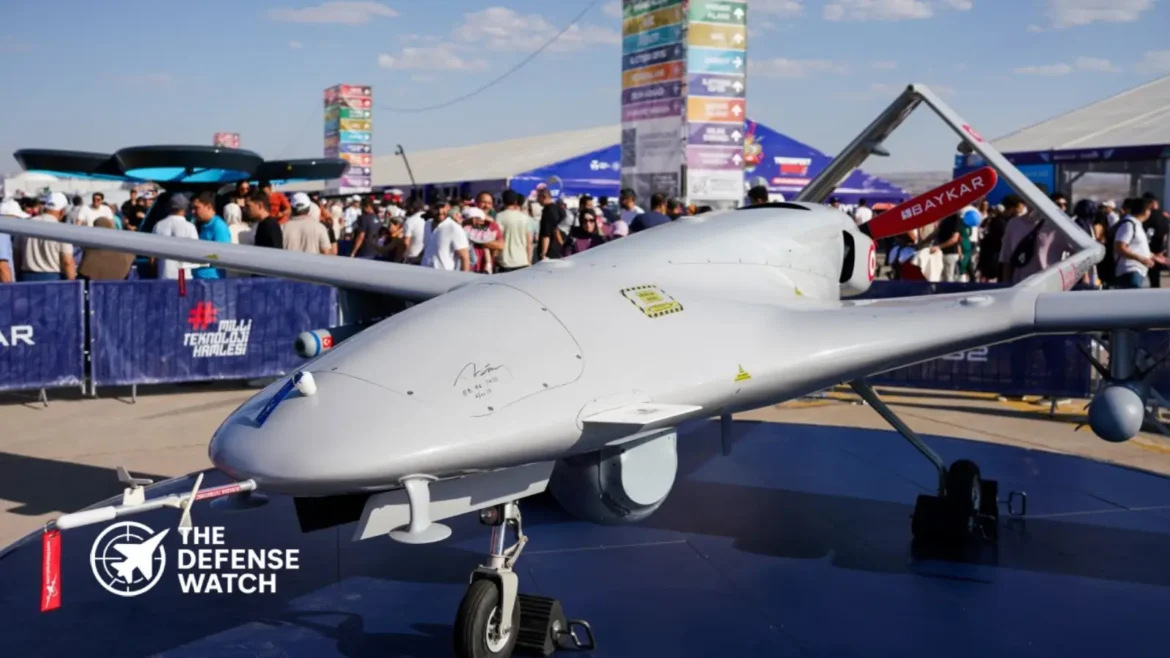
Turkish Defense Industry Puts Baykar at Center of Unmanned Warfare Push
The Turkish defense industry is placing increasing emphasis on Baykar’s unmanned aircraft, precision weapons and emerging unmanned fighter technology as Ankara expands indigenous military capabilities. Türkiye’s Defense Ministry highlighted Baykar’s contribution to reconnaissance, surveillance, intelligence and attack capabilities during a September 3 briefing held at the company’s Özdemir Bayraktar National Technology Center in Istanbul.
Türkiye is expanding its indigenous unmanned warfare capabilities through Baykar’s established drone fleet and newer combat aircraft and precision weapons programs.
Defense Ministry spokesperson Zeki Aktürk said Baykar’s engineering and research capabilities were contributing to the Turkish Armed Forces while also strengthening Türkiye’s position in the international defense market. The ministry specifically identified the Bayraktar TB2, Akıncı, KIZILELMA, Kemankeş and K2 systems among the company’s products.
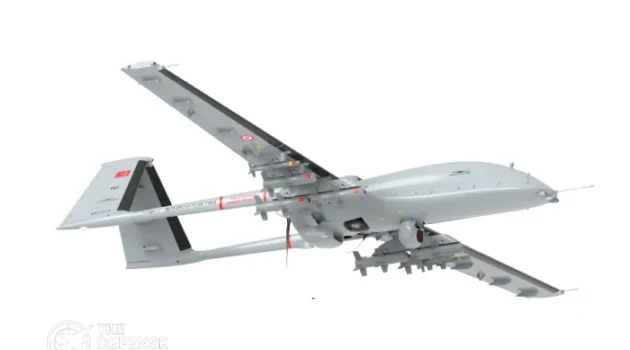
The significance of Baykar extends beyond one aircraft. Its portfolio now covers several layers of unmanned operations, from the mature TB2 to the heavier Akıncı, carrier-capable TB3 and the faster, more fighter-like KIZILELMA.
Baykar’s Portfolio Is Moving Up the Capability Ladder
Baykar’s current portfolio shows how Türkiye’s unmanned aircraft strategy has expanded beyond the relatively simple armed reconnaissance mission associated with the early TB2.
The company’s official product portfolio includes the TB2, Akıncı, TB3 and KIZILELMA, along with smaller unmanned systems and the Kemankeş family of mini cruise missiles.
| System | Primary Role | Key Development Significance |
|---|---|---|
| Bayraktar TB2 | Armed ISR and strike | Mature, widely exported UCAV |
| Bayraktar Akıncı | Heavy UCAV | Larger payload and higher-altitude operations |
| Bayraktar TB3 | Naval UCAV | Designed for operations from short-runway vessels |
| KIZILELMA | Unmanned combat aircraft | High-speed combat aircraft development |
| Kemankeş | Mini cruise missile | Adds long-range precision effects to unmanned platforms |
| K2 | Kamikaze UAV | AI-assisted autonomous and loitering capability |
The distinction matters because these platforms are not simply larger versions of the same aircraft. They represent different approaches to surveillance, strike, naval aviation and increasingly complex combat-air missions.
TB2 Established the Export Model
The Bayraktar TB2 remains the foundation of Baykar’s international business.
Baykar says it has signed TB2 export agreements with 36 countries and AKINCI agreements with 16 countries. The company reported $2.2 billion in exports in 2025, describing that figure as a record.
The company’s export expansion has also helped make unmanned systems a significant component of Türkiye’s defense-industrial presence abroad. That creates a feedback loop in which international sales support production capacity and provide an expanding installed base of Turkish-origin systems.
The TB2’s importance is therefore not limited to its technical specifications. Its widespread adoption has helped establish Türkiye as a major supplier in the global armed unmanned aircraft market.
Baykar says the TB2 has accumulated more than 1.25 million flight hours. Its published specifications include a 27-hour endurance, 12-meter wingspan and maximum speed of 120 knots.
TB3 Adds a Naval Aviation Dimension
The Bayraktar TB3 represents a different operational challenge because it is designed to operate from a short runway aboard a ship.
The aircraft successfully conducted autonomous takeoffs and landings from TCG Anadolu during testing, establishing a capability that connects unmanned aircraft operations with Turkish naval aviation.
That capability received additional exposure during NATO Steadfast Dart 2026. Baykar reported that TB3 operated from TCG Anadolu and conducted a live-fire MAM-L strike against surface targets during the exercise in the Baltic Sea.
Türkiye’s Defense Industry Agency also reported that TB3 conducted operations from TCG Anadolu during Steadfast Dart 2026, including 232 sorties and flight operations alongside Eurofighter aircraft over the Baltic Sea.
For naval forces, the operational value of a short-runway UCAV is tied to more than simply carrying weapons. It provides a way to extend surveillance and strike capacity from a ship without requiring a conventional aircraft carrier with catapults and arresting gear.
The principal challenge is maintaining reliable launch, recovery, communications and command-and-control performance in a maritime environment. Wind, deck movement, limited runway length and electromagnetic interference all impose constraints that do not exist to the same degree at a conventional land airfield.
KIZILELMA Marks a More Ambitious Step
KIZILELMA represents Baykar’s move toward an unmanned combat aircraft rather than a conventional MALE-class UCAV.
The program has progressed through increasingly complex weapons and autonomy testing. In July 2026, the serial production S2 aircraft conducted its first firing tests from its internal weapons bay, using ROKETSAN TEBER-82 and ASELSAN TOLUN munitions.
The internal weapons bay is significant because weapon carriage affects an aircraft’s radar signature and aerodynamic characteristics. Baykar says the configuration is intended to support strike operations while maintaining a lower radar signature than external carriage.
KIZILELMA has also demonstrated air-to-air and air-to-ground weapons integration. Baykar reported that the aircraft successfully engaged a jet-powered aerial target with the GÖKDOĞAN beyond-visual-range missile during a November 2025 test.
In July 2026, the aircraft also conducted a firing test with Roketsan’s JET-230 supersonic air-to-ground missile.
These tests do not by themselves establish operational combat capability. They do, however, show the direction of the program: integrating an unmanned aircraft with sensors, weapons and autonomous flight functions normally associated with more complex combat aircraft.
Autonomy Is Becoming a Core Design Feature
Another important element of Baykar’s development strategy is autonomy.
In December 2025, two KIZILELMA prototypes conducted an autonomous close-formation flight using algorithms developed by Baykar. The company has also participated in the K-SWARM program with Leonardo, involving autonomous formation operations between KIZILELMA aircraft and Leonardo M-346 aircraft.
This points toward a broader concept of crewed and uncrewed aircraft working as a coordinated force.
For military planners, the challenge is not simply making an aircraft fly autonomously. Effective combat autonomy requires reliable navigation, sensor fusion, communications, identification and engagement controls, while maintaining human authority over critical decisions.
That makes software, data links and mission systems as important as the aircraft’s airframe.
Why Baykar Matters to U.S. and NATO Defense Planning
Baykar’s expansion is relevant beyond Türkiye because Turkish unmanned aircraft are increasingly appearing in NATO exercises and in the inventories of allied countries.
The TB3’s Steadfast Dart deployment is particularly significant because it demonstrated a Turkish unmanned naval aviation concept in a multinational NATO environment rather than solely during a domestic test program.
For NATO planners, the broader issue is interoperability.
A growing fleet of allied unmanned aircraft introduces requirements for common communications, airspace deconfliction, intelligence sharing, electronic warfare resilience and command-and-control integration. These considerations become more demanding as unmanned platforms move from intelligence and surveillance missions toward contested air operations.
The KIZILELMA program adds another layer. An unmanned combat aircraft operating alongside crewed fighters could eventually change how air forces approach high-risk missions, but doing so requires extensive validation of autonomy, communications resilience, weapons employment and human-machine teaming.
Türkiye’s experience therefore provides a useful case study in how a country can build an indigenous unmanned aviation ecosystem rather than purchasing individual platforms as isolated capabilities.
Export Growth Supports a Broader Defense Ecosystem
Baykar’s reported $2.2 billion in 2025 exports are important because the company has become a significant source of foreign demand for Türkiye’s defense sector.
The company’s product portfolio also illustrates a broader Turkish industrial model in which aircraft, sensors, weapons and mission systems are increasingly developed domestically or integrated through national defense companies.
KIZILELMA’s recent testing provides a clear example. Its weapons trials have involved systems from several Turkish companies, including ASELSAN and ROKETSAN, while the aircraft itself is developed by Baykar.
That level of domestic integration can reduce dependence on foreign suppliers for individual components and gives Türkiye greater control over how its aircraft evolve.
It also creates export opportunities for a wider group of Turkish defense companies when aircraft, sensors, communications systems and weapons are marketed as an integrated capability.
The Next Challenge Is Operational Maturity
The most important question for Baykar is no longer whether Türkiye can develop and export armed UAVs. The TB2 has already demonstrated that.
The harder challenge is scaling more advanced systems into reliable operational fleets.
For KIZILELMA, that means moving from successful individual demonstrations to repeatable performance across navigation, sensing, weapons employment, communications, maintenance and autonomous operations. For TB3, the challenge is sustaining shipborne operations at useful tempo while integrating the aircraft into wider naval and joint-force command structures.
The evolution also raises questions about survivability. Modern air defenses can combine radar, passive sensors, electronic warfare and short-range interceptors, making the operating environment considerably more difficult than the permissive conditions in which many earlier armed UAVs demonstrated their value.
Baykar’s trajectory suggests that Türkiye is addressing that challenge by developing a layered family of systems rather than relying on one platform.
The TB2 provides a mature and widely exported baseline. Akıncı increases payload and mission capacity. TB3 extends unmanned aviation to naval operations. KIZILELMA moves toward high-speed combat missions, while Kemankeş and other systems provide additional precision effects.
That progression is the central development to watch in Türkiye’s defense industry. The country’s unmanned warfare strategy is increasingly becoming an ecosystem of aircraft, weapons, sensors and autonomous systems rather than a single successful drone program.


ASELSAN Demonstrates TOLUN Deep-Strike Capability
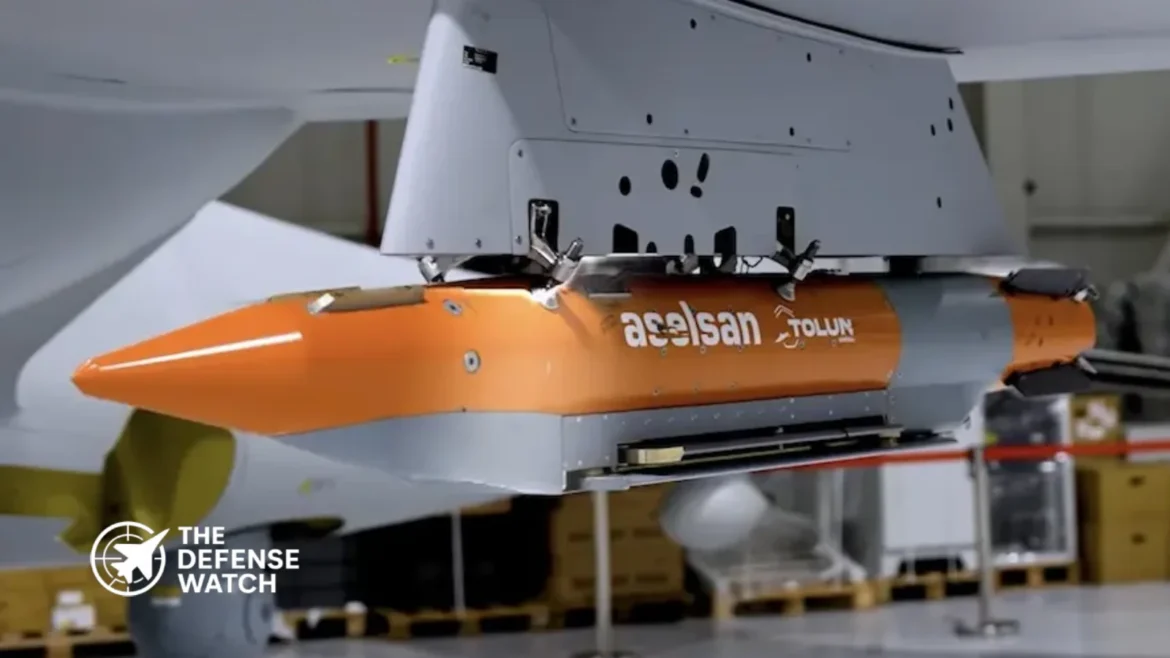
ASELSAN has demonstrated the TOLUN deep-strike munition family from a Bayraktar AKINCI during live-fire trials against containerized, armored and reinforced targets, according to reporting published September 2, 2026. The demonstration took place at the Konya Karapınar Firing Test Range on September 1 and was attended by military officials from more than 15 countries.
Takeaways
ASELSAN has demonstrated three TOLUN deep-strike configurations from the Bayraktar AKINCI, showing different warhead and fuze effects against containerized, armored and reinforced targets.
Three configurations, TOLUN I, TOLUN F and TOLUN P, were employed against separate targets. ASELSAN reported successful execution of the planned engagement profiles and successful impacts in each test.
The demonstration is significant because it shows how a single unmanned combat aircraft can employ different precision-guided effects without relying on a single warhead configuration. Instead, the TOLUN family is being developed around a modular approach in which the weapon’s effect is matched to the target.
TOLUN I, F And P Show Different Target Effects
TOLUN I uses an impact fuze and fragmentation warhead. During the September 1 demonstration, it achieved a direct hit on a container, illustrating the basic impact-detonation configuration of the family.
TOLUN F is designed around a fragmentation warhead and proximity-sensing capability. During the trial, it engaged an armored personnel carrier, with the proximity sensor intended to detonate the weapon before impact and distribute fragmentation around the target.
ASELSAN’s published TOLUN F specifications identify a maximum stated range of up to 87 kilometers from fighter aircraft and up to 52 kilometers from UAVs. The weapon has a stated total weight of 119 kilograms, a 70-kilogram warhead and a claimed accuracy of less than 3 meters CEP.
TOLUN P is the hard-target configuration. During the live-fire demonstration, the weapon penetrated a two-storey concrete structure before neutralizing elements at the designated level. ASELSAN says the configuration uses a penetrating warhead, a programmable time-delay fuze and its ASAF-Hard Target Fuze.
ASELSAN’s TOLUN P documentation lists a 105-kilogram warhead, 136-kilogram total weight and a stated UAV range of up to 57 kilometers. The company also states that TOLUN P is designed to penetrate up to 1 meter of reinforced concrete under specified conditions.
TOLUN Variant Comparison
| Variant | Primary Effect | Demonstrated Target | Stated UAV Range | Total Weight |
|---|---|---|---|---|
| TOLUN I | Fragmentation, impact fuze | Container | Not specified in current source | Not specified |
| TOLUN F | Fragmentation, proximity effect | Armored personnel carrier | Up to 52 km | 119 kg |
| TOLUN P | Penetration, delayed detonation | Reinforced concrete structure | Up to 57 km | 136 kg |
The ranges above are manufacturer-published figures and can vary according to launch altitude, aircraft configuration, flight profile and operational conditions.
Bayraktar AKINCI Provides The Strike Platform
The Bayraktar AKINCI is a twin-engine unmanned combat aircraft developed by Baykar for long-range intelligence, surveillance and strike missions. Baykar lists a 20-meter wingspan, a maximum takeoff weight of 6,000 kilograms and a payload capacity of 1,500 kilograms for the current platform specification.
Baykar also identifies both line-of-sight and beyond-line-of-sight communications, autonomous flight functions and a range of air-to-ground and air-to-air weapons among the aircraft’s capabilities.
The aircraft’s payload capacity is important to the TOLUN integration. A weapon weighing roughly 120 to 140 kilograms falls within a class that can be carried in multiple numbers while leaving room for other mission equipment, although the exact number and configuration depend on aircraft loadout and rack integration.
Baykar’s own payload documentation confirms that TOLUN was integrated with AKINCI through the SADAK-4T multiple carriage system. The company lists TOLUN as a GPS/INS-guided munition intended for hard and soft ground targets, with a stated range of 55 nautical miles for the original configuration.
SADAK-4T Enables Multiple Precision Weapons
One of the most important parts of the system is not the munition itself but the carriage architecture.
ASELSAN’s SADAK-4T smart pneumatic rack is designed to carry four compatible TOLUN weapons. The rack allows multiple weapons to be released during a sortie, potentially against separate targets or in a coordinated sequence.
This changes the operational value of the weapon compared with a single-store munition. A platform can potentially engage several targets without returning to base for rearming, provided that mission planning, target availability and aircraft operating constraints permit such a loadout.
ASELSAN has previously reported successful four-round TOLUN firing tests from a fighter aircraft against four separate targets. Its 2025 annual report also records integration work involving TOLUN and the AKINCI platform, including a demonstration using the SADAK-4T rack and an anti-jam GNSS system.
Navigation And Electronic-Warfare Resilience
The TOLUN family uses GPS/INS-based navigation, but the system is not presented as dependent on an unprotected GPS signal alone.
ASELSAN’s published documentation describes anti-jamming capabilities based on a four-channel controlled reception pattern antenna and software designed to resist GPS spoofing. TOLUN P also supports waypoint navigation, selectable impact angle and retargeting during captive flight.
These functions matter because precision-guided weapons increasingly operate in environments where satellite navigation can be degraded or manipulated. Anti-jam technology can improve the probability of maintaining navigation performance, although manufacturer specifications do not establish how the weapon would perform against every possible electronic-warfare threat.
The distinction is important. Navigation resilience can reduce vulnerability to some forms of interference, but it does not make a weapon immune to electronic warfare.
Why The Demonstration Matters
The September demonstration illustrates a broader shift in the role of medium and large unmanned aircraft.
Earlier generations of armed UAVs were frequently associated with relatively small precision weapons and tactical strike missions. AKINCI’s larger payload capacity allows it to carry heavier guided weapons, including weapons intended for hardened targets.
That creates a different mission set. A UAV carrying a precision penetrator can potentially attack fortified positions, protected command facilities and other hardened structures without requiring a conventional manned strike aircraft for every engagement.
The hard-target capability is particularly relevant because destroying a reinforced structure requires more than simply achieving a precise impact. The weapon must arrive at the correct angle, penetrate the target material, survive the penetration event and initiate its warhead at the appropriate point.
TOLUN P’s programmable fuze and penetrating warhead are therefore as important as its navigation system. The September test demonstrated the complete engagement chain rather than simply a flight or separation test.
A More Flexible Strike Architecture
The three TOLUN configurations also illustrate a move toward effects-based weapon selection.
A fragmentation weapon can be appropriate for exposed personnel or lightly protected equipment. A proximity-fuzed configuration can expand the effective area around an armored or non-armored target. A penetrator is intended for structures where the desired effect must occur after the weapon passes through a hard barrier.
Putting these effects within a common weapon family can simplify training, logistics and aircraft integration compared with maintaining entirely unrelated weapon systems. It can also allow planners to select the weapon configuration according to target characteristics.
For Turkey, the approach fits a wider effort to develop indigenous aircraft, weapons, guidance systems and carriage systems as an integrated ecosystem.
ASELSAN’s 2025 annual report records the development of multiple TOLUN configurations, including TOLUN-F, TOLUN-IIR and other guidance technologies, while also noting export activity involving TOLUN and SADAK-4T.
Implications For Unmanned Strike Operations
The AKINCI-TOLUN combination is also relevant beyond Turkey because it reflects how unmanned aircraft are moving into missions traditionally associated with crewed combat aircraft.
The combination of long endurance, substantial payload capacity, beyond-line-of-sight communications and precision weapons gives the AKINCI a role that extends beyond basic close air support or tactical reconnaissance. Baykar describes the platform as capable of long-range precision air-to-ground missions and lists a range of sensor and weapon options.
At the same time, the system should not be treated as an automatic replacement for fighter aircraft. The operational effectiveness of an unmanned strike platform depends on air-defense conditions, electronic warfare, communications availability, target intelligence and the ability to operate within the weapon’s launch envelope.
The TOLUN demonstration instead shows how UAVs can expand the number of platforms capable of delivering precision effects against a wider range of targets.
The Broader Defense Significance
For NATO members and other countries evaluating affordable precision-strike options, the development is an example of the growing convergence between unmanned aviation and guided air-to-ground weapons.
The combination of a reusable unmanned aircraft, a multiple-ejector rack and specialized precision munitions can reduce the number of aircraft required for some strike packages while increasing the number of weapons available per sortie.
The critical question for any such system remains survivability. Long-range precision weapons can extend the reach of an aircraft, but the launch platform still has to operate within a contested battlespace or reach a suitable release point.
That makes the integration of navigation resilience, communications, sensors, electronic warfare support and precision weapons as important as the weapon’s published range.
The September 1 firing therefore represents more than another weapons test. It demonstrates a mature integration path in which the Bayraktar AKINCI serves as a carrier for multiple specialized TOLUN effects, while ASELSAN’s SADAK-4T provides the carriage architecture needed to turn the weapon family into a multi-target strike capability.
Conclusion
ASELSAN’s live-fire demonstration of TOLUN I, TOLUN F and TOLUN P from the Bayraktar AKINCI shows the increasing sophistication of Turkey’s indigenous unmanned strike ecosystem.
The tests demonstrated three distinct effects, from impact fragmentation to proximity-fuzed engagement and reinforced-concrete penetration. Combined with the SADAK-4T multiple carriage system and AKINCI’s substantial payload capacity, the architecture gives operators a broader set of precision-strike options from an unmanned platform.
The most important development is the integration of aircraft, carriage system, guidance technology, fuzing and specialized warheads into a single strike architecture. That approach is becoming increasingly relevant as militaries seek precision effects while reducing dependence on a limited number of high-value crewed combat aircraft.
TEKEVER Acquires Flowcopter To Expand Autonomous Aircraft
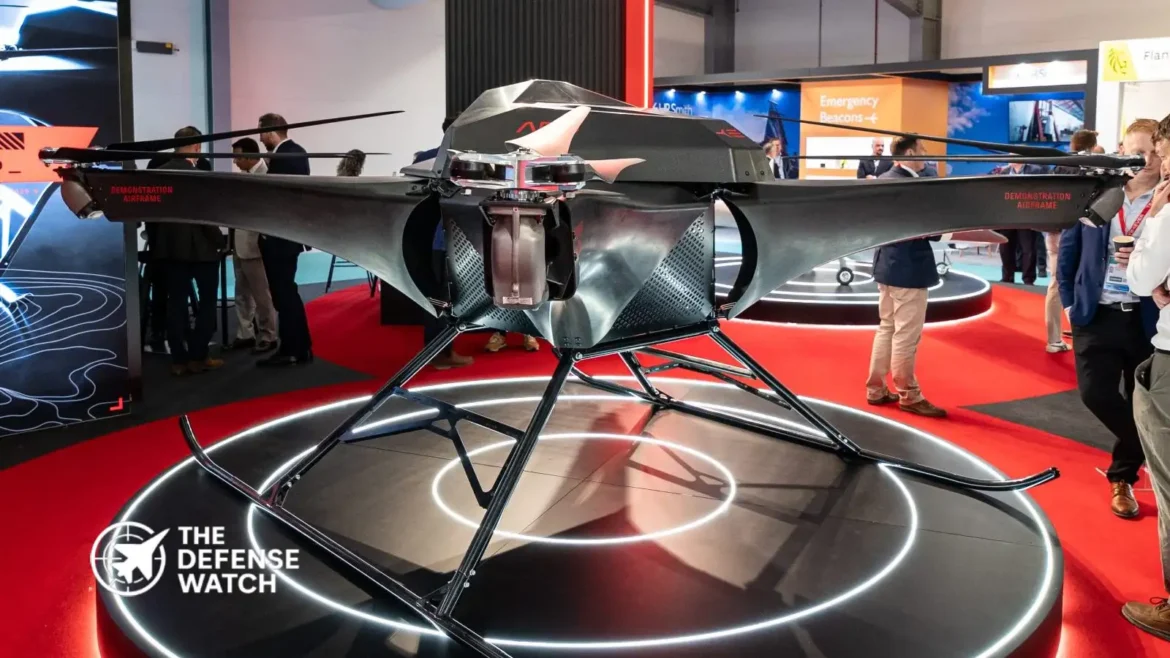
TEKEVER has acquired UK aerospace engineering company Flowcopter, bringing its hydraulic transmission technology for unmanned aircraft propulsion into the company’s growing autonomous systems portfolio. TEKEVER announced the transaction on September 1, 2026, but did not disclose its financial value.
Takeaways
TEKEVER has acquired UK engineering company Flowcopter, bringing its hydraulic aerospace propulsion technology into the Portuguese-owned autonomous systems company.
The acquisition strengthens an existing industrial relationship between the two companies. Flowcopter has already supplied its hydraulic propulsion technology for TEKEVER’s AR6 family, a heavy-lift vertical takeoff and landing aircraft unveiled at the Farnborough International Airshow in July.
The deal also expands TEKEVER’s UK footprint. Flowcopter’s engineering operation in Edinburgh will continue under the TEKEVER brand, while the company combines its autonomy, mission systems and operational experience with Flowcopter’s propulsion engineering.
AR6 Provides The Immediate Technical Rationale
The clearest reason for the acquisition is the AR6 program.
TEKEVER describes the AR6 as a new family of autonomous heavy-lift aircraft intended to address a capability gap between relatively small electric VTOL drones and much larger crewed helicopters. The company says the platform is designed to carry at least 200 kilograms over 500 kilometers.
That combination is significant because payload and endurance remain closely linked in vertical-lift unmanned aircraft. Increasing payload normally increases power requirements, while larger batteries add weight and can reduce the amount of useful cargo that can be carried.
TEKEVER and Flowcopter have instead pursued a hydraulic transmission architecture. According to technical reporting from Janes, the AR6 uses an engine to drive hydraulic pumps rather than directly driving the four rotors. A digital displacement pump regulates hydraulic flow to the individual rotor channels, allowing rotor speed to be controlled according to aircraft power requirements.
This approach gives the AR6 a different engineering tradeoff from conventional battery-electric quadcopters.
| AR6 Characteristic | Reported Capability |
|---|---|
| Aircraft type | Autonomous heavy-lift VTOL |
| Rotor configuration | Four rotors |
| Propulsion approach | Hydraulic transmission |
| Target payload | At least 200 kg |
| Target range | At least 500 km |
| Planned production | By the end of 2026 |
| Development location | United Kingdom |
TEKEVER says the AR6 is designed for both military and civilian applications, with military roles including forward logistics, casualty evacuation and potential crewed-uncrewed teaming.
Why Hydraulic Propulsion Matters
The Flowcopter technology addresses a specific problem in heavy-lift autonomous aviation: how to provide sustained power to multiple rotors without relying entirely on large battery packs or conventional mechanical transmission arrangements.
Hydraulic systems are already well established in aviation and other heavy machinery. Their use in an autonomous VTOL aircraft, however, requires careful management of efficiency, weight, thermal loads, reliability and control.
The AR6 architecture uses a combustion engine to provide mechanical power to hydraulic pumps, with hydraulic lines distributing power to the rotors. The digital pump system then adjusts the hydraulic flow as operating conditions change. Janes reported that the system is intended to provide rapid changes in rotor RPM while allowing the engine to operate in a comparatively stable operating regime.
For a heavy-lift aircraft, that distinction can matter. A propulsion system does not simply need to generate maximum power. It must manage power efficiently across hover, climb, cruise, descent and payload changes.
The acquisition therefore gives TEKEVER control over a critical part of the aircraft’s architecture rather than leaving propulsion technology as an external supplier dependency.
From Partnership To Vertical Integration
Before the acquisition, Flowcopter and TEKEVER were already working together on AR6 development.
TEKEVER’s September announcement says bringing Flowcopter inside the company will allow the two organizations to accelerate development of long-endurance heavy-lift platforms. Flowcopter’s engineering capability will now sit alongside TEKEVER’s autonomy and mission-system expertise.
That creates a more vertically integrated development structure.
For autonomous aircraft, integration between propulsion, flight control, sensors and mission software can become increasingly important as platforms move beyond basic remote piloting. A heavy-lift aircraft operating at long range must continuously manage power availability, aircraft state, payload effects and environmental conditions.
Keeping propulsion engineering inside the same corporate structure could allow TEKEVER to coordinate those functions more closely during development. It also reduces the organizational separation between the aircraft designer and a critical technology supplier.
UK Industrial Expansion Is A Major Part Of The Deal
The acquisition comes as TEKEVER is expanding its British manufacturing and engineering base.
The company says it now employs more than 300 people across UK offices, factories and test facilities in London, Bristol, Southampton, West Wales, Lydd and Swindon. Flowcopter adds Edinburgh to that network.
TEKEVER has also been building a major production presence in Swindon. The company previously announced plans for a large UK manufacturing facility, while the British government has backed expansion of domestic drone production.
The UK government’s wider defense strategy is increasingly focused on autonomous systems and domestic industrial capacity. In June 2026, Prime Minister Keir Starmer said the UK would invest more than £5 billion in drones and autonomous weapons as part of its defense investment plan.
The British government has also committed up to £400 million for TEKEVER AR5 surveillance drones for the British Army, reinforcing the company’s growing role in the country’s military uncrewed systems ecosystem.
Potential Military Applications
The AR6 is not positioned simply as a cargo drone.
TEKEVER identifies forward logistics and casualty evacuation as military applications, while its July announcement also referenced possible crewed-uncrewed teaming concepts.
The logistics mission is particularly relevant because heavy-lift autonomous aircraft could potentially move supplies without placing a crewed helicopter and its personnel at risk.
A 200-kilogram payload class also opens missions that are difficult for small electric drones. These could include moving equipment, medical supplies or other loads between locations where conventional ground transportation is slow, exposed or unavailable.
Casualty evacuation presents a different challenge. An autonomous or remotely supervised aircraft capable of transporting a patient and medical equipment could provide an additional option in areas where landing a crewed helicopter would be hazardous.
However, these missions require more than propulsion performance. Safety certification, autonomous flight reliability, communications resilience, navigation in contested environments and reliable contingency behavior will all influence whether a heavy-lift UAS can move from demonstration to routine military service.
TEKEVER’s Broader Autonomous Systems Strategy
The Flowcopter acquisition fits into a broader expansion of TEKEVER’s autonomous aircraft portfolio.
The company has gained significant attention through its AR3 and AR5 systems, including their operational use by Ukraine. The UK government says TEKEVER’s AR3 and AR5 platforms have accumulated more than 10,000 flight hours in Ukrainian service.
That operational experience gives TEKEVER a base from which to move into larger autonomous aircraft.
The company has also become increasingly involved in UK defense programs involving autonomous systems. Four companies, including TEKEVER, were shortlisted by the British Ministry of Defence for Project NYX, an Army aviation initiative examining autonomous systems intended to operate alongside Apache helicopters.
The combination of smaller ISR platforms, electronic warfare systems and emerging heavy-lift aircraft gives TEKEVER a broader range of autonomous capabilities than its earlier fixed-wing drone portfolio.
What The Acquisition Means For Heavy-Lift UAS
The significance of the Flowcopter acquisition is less about the transaction itself than about the propulsion problem TEKEVER is trying to solve.
Electric propulsion remains highly attractive for smaller drones because of its mechanical simplicity and low local emissions. As payload and range increase, however, energy storage becomes a major design constraint.
The AR6 approach attempts to use the energy density and endurance advantages associated with a combustion engine while distributing that power through hydraulic transmission to multiple rotors.
That does not eliminate engineering challenges. Hydraulic systems require pumps, fluid management, lines, valves and thermal control, while the aircraft must maintain high reliability in a system with multiple moving and pressurized components.
The practical test will therefore be whether the architecture can deliver the advertised payload and range while maintaining acceptable reliability, maintenance requirements and operating costs.
TEKEVER has said AR6 production is due to begin by the end of 2026 at its Swindon manufacturing hub.
If that schedule is maintained, the company will move relatively quickly from unveiling the aircraft in July to beginning production before the end of the year.
Strategic Relevance For The United States And Europe
For the United States and its European allies, the acquisition reflects a broader shift in defense aviation toward autonomous systems that can perform missions traditionally associated with crewed aircraft.
The UK is investing heavily in autonomous technology while simultaneously seeking greater sovereign industrial capacity. Its defense investment plan specifically identifies autonomous wingmen, attack drones, surveillance aircraft and uncrewed maritime systems as parts of the future force.
Heavy-lift autonomy fits within that wider transition.
Rather than replacing every crewed aircraft, systems such as AR6 could provide additional lift capacity for missions where the cost, risk or availability of a helicopter makes conventional aviation less attractive.
For European militaries, the industrial aspect is equally important. Maintaining domestic control over propulsion, autonomy, manufacturing and testing can reduce dependence on external suppliers while creating systems that can be adapted to national requirements.
TEKEVER’s acquisition of Flowcopter therefore represents both a technology investment and an industrial strategy. It gives the company direct ownership of a propulsion technology already integrated into its next-generation heavy-lift aircraft while expanding its UK engineering base.
The immediate focus will be the AR6. Its stated 200-kilogram payload and 500-kilometer range target will provide the clearest test of whether hydraulic propulsion can establish a meaningful position in the growing heavy-lift autonomous aircraft market.
Bottom Line
TEKEVER’s acquisition of Flowcopter brings a key propulsion technology in-house at a time when the company is moving beyond conventional ISR drones into heavier autonomous aircraft.
The AR6 provides the first visible application, combining a four-rotor VTOL configuration with hydraulic transmission and a stated target of carrying at least 200 kilograms over 500 kilometers.
The acquisition also strengthens TEKEVER’s growing UK industrial footprint and aligns with Britain’s wider investment in autonomous military systems.
Whether the AR6 can achieve its targeted performance in operational conditions will determine the longer-term value of the technology. For now, the acquisition gives TEKEVER direct control over a distinctive propulsion architecture as European demand for autonomous, long-endurance and heavy-lift aircraft continues to expand.
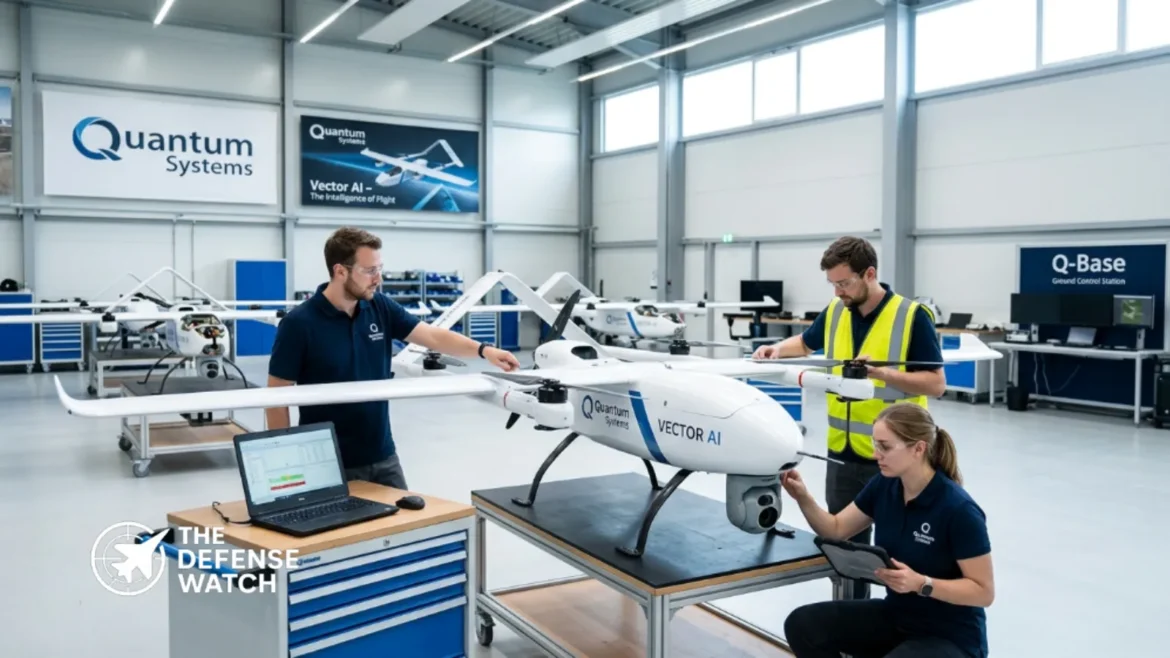
A small strategic investment from a U.S. intelligence-linked venture firm helped give German drone manufacturer Quantum Systems an early route into the American defense and intelligence market.
Takeaways
Quantum Systems used U.S. investment and government connections to establish an early foothold in the American defense and intelligence market.
CIA-Backed Investor Helped Quantum Systems Enter U.S. Market
Quantum Systems U.S. drone market expansion accelerated with help from In-Q-Tel, a venture capital firm established to support technologies relevant to U.S. national security. The German drone manufacturer says American investors, including In-Q-Tel, helped open doors in Washington and contributed to its early work with U.S. intelligence agencies.
The development offers a notable example of how investment networks can influence the international expansion of defense technology companies. It also comes as European governments seek to strengthen domestic defense industries and reduce strategic dependence on the United States.
In-Q-Tel Provided More Than Capital
Quantum Systems co-CEO Sven Kruck told Reuters that U.S. investors played an important role in helping the company establish relationships in Washington.
According to Kruck, In-Q-Tel and other American investors helped Quantum Systems reach potential U.S. customers, including the Central Intelligence Agency and Federal Bureau of Investigation. The resulting reconnaissance work was relatively modest in revenue terms, but it provided an important reference point for the company in the U.S. market.
The significance of the relationship therefore went beyond the size of the initial business.
For a foreign defense technology company entering the world’s largest defense market, access to government customers, procurement networks and technical evaluation opportunities can be as important as the initial investment itself.
Quantum Systems lists In-Q-Tel among its strategic partners and investors.
Quantum Systems Has Built a Larger U.S. Presence
The company’s U.S. expansion has continued beyond its early intelligence relationships.
Quantum Systems established its North American headquarters in Moorpark, California, in 2022. The company says its U.S. operations support defense and security customers and cover engineering, manufacturing and other activities associated with its unmanned systems.
In August 2026, Quantum Systems announced another expansion with the opening of a 3,200-square-foot research and development facility in Huntsville, Alabama.
The Huntsville location places the company closer to major U.S. defense customers and expands its domestic engineering capabilities in areas including flight controls, computer vision, autonomy, simulation and manufacturing engineering.
That expansion indicates that Quantum Systems is no longer treating the United States simply as an export destination. It is building a more permanent industrial and engineering footprint inside the American defense ecosystem.
U.S. Army Selects Vector AI
Quantum Systems has also gained a direct U.S. military foothold.
In April 2026, the U.S. Army selected the company’s Vector AI small uncrewed aircraft system for its Company-Level sUAS Directed Requirement 2 initiative under a contract valued at $15.3 million, according to the company. The program is intended to accelerate delivery of tactical aerial intelligence capabilities to Army brigade combat teams while informing future Medium Range Reconnaissance requirements.
Vector AI is designed for reconnaissance, surveillance and target acquisition. Quantum Systems says the system can operate in GPS-denied environments using visual navigation and other onboard technologies.
The company also describes the platform as modular, allowing integration with different payloads and battlefield management systems.
This is significant because the U.S. military has increasingly sought commercially developed unmanned systems that can be introduced rapidly and adapted to changing battlefield requirements.
From European Startup to Major Defense Technology Company
Quantum Systems has expanded rapidly since its founding in Germany in 2015.
Its portfolio now includes the Vector AI, Twister and Reliant unmanned aircraft, alongside software intended to connect unmanned systems across multiple domains.
The company’s growth has also attracted substantial private investment.
In July 2026, Quantum Systems announced a $1.2 billion Series D financing round that valued the company at approximately $8 billion. The financing was led by Blackstone, Noteus, Airbus and Advent, alongside other institutional investors.
The funding gives Quantum Systems additional resources to expand production and develop autonomous capabilities across air, land and maritime domains.
Ukraine Has Helped Shape the Company’s Technology
Quantum Systems has also gained extensive operational experience through Ukraine.
Its Vector reconnaissance systems have been supplied to Ukrainian forces since 2022, with the company describing the platform as an established ISR system used under demanding battlefield conditions.
The company said in 2026 that Vector platforms had accumulated more than 20,000 operational flight hours in Ukraine. That experience has been used by the company to refine autonomy and mission capabilities, according to Quantum Systems.
The operational record has helped make the company attractive to military customers looking for unmanned systems that have already been exposed to electronic warfare, GPS disruption and other contested battlefield conditions.
The Wider European Defense Industry Challenge
The Quantum Systems case also highlights a broader issue facing Europe’s defense technology sector.
European governments are increasing defense spending and encouraging domestic production, while at the same time many European companies continue to rely on U.S. capital, technology partnerships and access to the American defense market.
For Germany and other European countries, the challenge is not simply developing advanced military technology. It is building enough capital, production capacity and government-industry connections to scale those technologies without creating new strategic dependencies.
In-Q-Tel’s involvement with Quantum Systems illustrates how U.S. strategic investment can provide European defense startups with access to American government customers and networks.
At the same time, Quantum Systems’ subsequent U.S. expansion shows that European defense companies can use those relationships to establish a sustained presence in the American market rather than remaining dependent solely on exports.
What It Means for the U.S. Drone Market
The Quantum Systems U.S. drone market expansion reflects a broader shift in military procurement toward autonomous and commercially developed systems.
The U.S. Army’s selection of Vector AI, combined with Quantum Systems’ growing American engineering footprint, gives the German company a stronger position in a market dominated by established U.S. defense contractors and a rapidly expanding group of drone startups.
The company’s experience also demonstrates the value of early government engagement.
In-Q-Tel’s role was reportedly important not because the investment itself transformed Quantum Systems financially, but because it helped connect the company with U.S. government customers. Those relationships provided an early validation point that supported subsequent expansion.
For European defense manufacturers, that model could become increasingly relevant as demand for drones, autonomous systems and battlefield intelligence technology grows on both sides of the Atlantic.
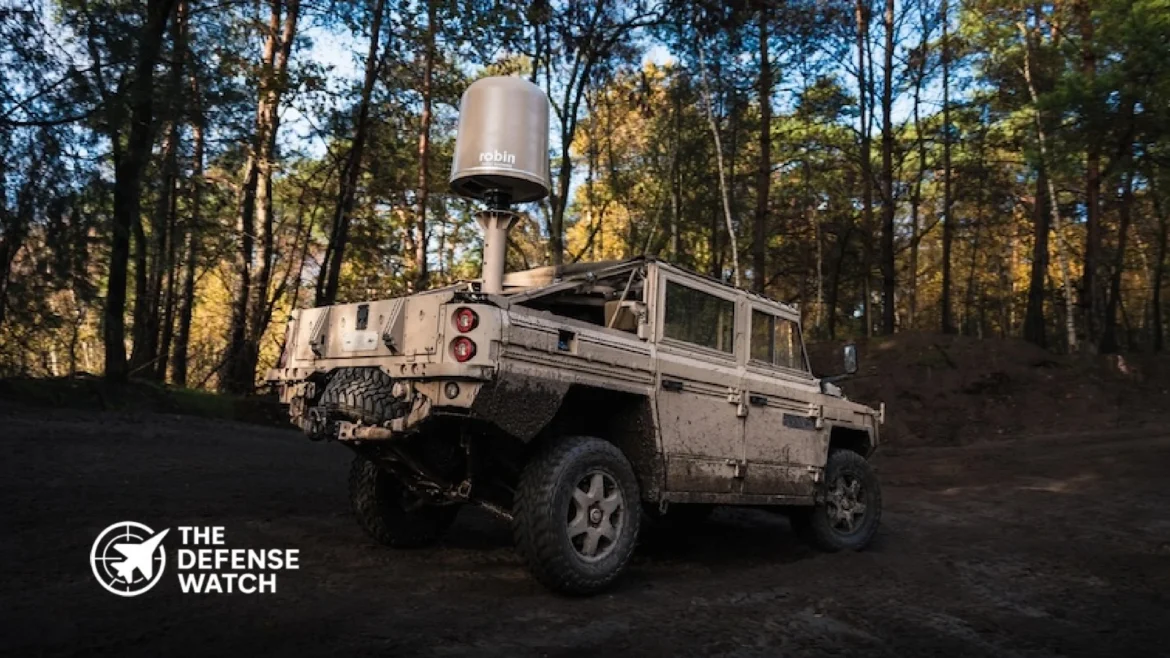
Robin Radar Expands U.S. Counter Drone Operations
Robin Radar Systems is expanding its U.S. counter drone operations after reporting a 75% increase in sales of its IRIS drone detection radar during the first half of 2026. The Dutch company opened a larger operations center in Northern Virginia on August 26 as it seeks to expand its presence across the U.S. government, defense and security markets.
Takeaways
Robin Radar Systems is expanding its U.S. presence as demand for deployable counter drone detection and tracking technology continues to increase.
The expansion comes as U.S. agencies place greater emphasis on detecting, tracking and identifying small unmanned aircraft. The Department of Defense has identified unmanned systems as an increasingly important threat and has been pursuing a broader counter UAS approach across military services and agencies.
Northern Virginia Becomes Robin’s U.S. Hub
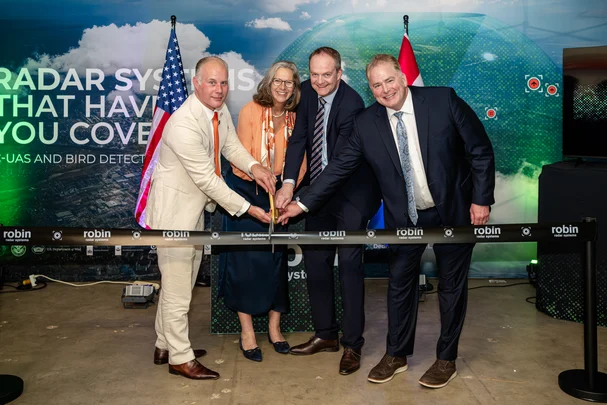
Robin said its new Northern Virginia facility will support 20 additional roles and provide more capacity for its North American operations.
The company selected Northern Virginia because of its established defense and government ecosystem and its proximity to customers and partners. Robin said the facility is intended to support activities ranging from system evaluation and deployment to ongoing operations.
The expansion also reflects a wider shift in the counter UAS market. Rather than treating drone detection as a standalone military requirement, government organizations increasingly require sensors that can operate as part of larger airspace security architectures.
That distinction is important because detecting a drone is only the first step. A useful counter UAS sensor must provide accurate tracks, distinguish potential threats from nonthreats and transmit usable information to command and control systems or other sensors.
IRIS Sales Jump 75% In First Half Of 2026
Robin reported that it sold 75% more IRIS radars in the first half of 2026 compared with the first half of 2025.
The company also said it had signed its largest U.S. deal to date with a counter UAS integration partner supporting both federal and State, Local, Territorial and Tribal customers. Robin did not disclose the value of that agreement.
The company reported more than 30 IRIS radars were deployed across North America during security operations associated with the FIFA World Cup 2026.
That deployment is significant because major sporting events create a different counter UAS problem from a battlefield. Security organizations need persistent monitoring across populated areas while dealing with large numbers of legitimate aircraft, birds and other airborne objects.
Robin says IRIS was used to provide airspace awareness for U.S. government and SLTT customers during those operations.
What The IRIS Radar Brings To Counter UAS Operations
IRIS is a compact X band FMCW radar designed specifically for detecting, tracking and classifying drones.
The system provides 360 degree azimuth coverage and 60 degree elevation coverage. Robin lists a standard instrumented range of 5 kilometers, while its Long Range Mode can extend the instrumented range to 12 kilometers.
| IRIS Capability | Published Specification |
|---|---|
| Radar technology | FMCW |
| Frequency | X band |
| Standard instrumented range | 5 km |
| Long Range Mode | Up to 12 km |
| Azimuth coverage | 360 degrees |
| Elevation coverage | 60 degrees |
| Weight | 29 kg |
| Rotation speed | 30 rpm |
| Deployment | Less than 15 minutes |
| On the move capability | Up to 100 km/h |
| Classification | Micro Doppler and DNN |
Robin’s published specifications show that the radar weighs 29 kilograms and measures 550 millimeters in diameter by 630 millimeters in height. The company says it can be deployed in less than 15 minutes and mounted on tripods, buildings, vehicles and maritime platforms.
The system’s on the move capability is another important feature. With the appropriate configuration, IRIS can detect, track and classify drones while mounted on a vehicle traveling at up to 100 km/h.
Micro Doppler Classification Addresses A Major C UAS Problem
One of the central challenges in counter UAS operations is determining what a radar has detected.
Small drones can present radar signatures that overlap with birds and other objects. A sensor that generates large numbers of false tracks can overwhelm operators and reduce the value of the wider counter UAS network.
IRIS uses micro Doppler classification to analyze motion associated with rotating components such as propellers. Robin also says its system uses deep neural network technology to support classification between drones and birds.
The distinction between detection and classification matters operationally. Radar can establish that an object is present, but additional information about the object’s characteristics helps determine whether the track should be handed to another sensor or countermeasure.
This is particularly important for layered systems in which radar provides the initial track and electro optical, infrared, radio frequency or other sensors provide additional confirmation.
The U.S. Department of Defense describes counter UAS architectures as involving multiple sensing technologies, including radar, RF collection, electro optical and infrared sensors and acoustic systems.
Integration Is Central To The System’s Role
Robin positions IRIS as a sensor within a broader counter UAS architecture rather than as a complete defeat system.
The radar can feed tracking information into command and control systems and other counter UAS components. The company lists Asterix, SAPIENT and XML API interfaces and says IRIS is designed to integrate with more than 25 systems and partners.
That architecture is important because a radar does not itself neutralize a drone.
Its role is to establish an air picture, identify potential threats and provide sufficiently accurate information for another component to determine the appropriate response.
The Pentagon has similarly emphasized the distinction between detection and defeat. U.S. officials have described radar as an active detection method, while counter UAS effectors can include separate nonkinetic or kinetic systems.
Why The U.S. Market Matters
The growth of Robin’s U.S. business comes against a broader expansion of American counter UAS requirements.
The Pentagon’s counter unmanned systems strategy recognizes drones as an urgent and enduring threat to U.S. personnel, facilities and assets. The department has also identified the need to integrate sensing, command and control and defeat capabilities rather than relying on a single technology.
The U.S. Department of Homeland Security is also pursuing counter UAS capabilities. A 2026 DHS acquisition forecast describes requirements for detecting, identifying, monitoring and tracking unmanned aircraft as part of its counter UAS program.
This creates demand beyond traditional military installations.
Critical infrastructure, airports, government facilities, borders and large public events all face different versions of the same basic problem: small unmanned aircraft can be difficult to identify quickly while operating in complex airspace.
For these customers, a relatively lightweight radar that can be deployed quickly has practical advantages over systems designed primarily for fixed military air defense networks.
The Operational Tradeoff Behind Small Drone Radars
The compact design of IRIS also highlights an important tradeoff in counter UAS sensing.
A 29 kilogram radar can be moved and deployed considerably more easily than a large air defense sensor. That makes it useful for temporary security operations, mobile units and dispersed sites.
However, small radar systems are not intended to replace larger air surveillance radars. Their value comes from focusing on the lower altitude and smaller target problem and feeding information into a wider sensor and command network.
Robin’s own specifications illustrate this distinction. Its standard IRIS configuration has a 5 kilometer instrumented range, while Long Range Mode extends that figure to 12 kilometers. The company’s published detection and classification ranges for small targets are lower than the instrumented range and vary according to target size and conditions.
That difference is important when assessing radar performance. Instrumented range describes the radar’s stated measurement envelope, while the practical distance at which a particular small drone can be detected and classified depends on factors including target characteristics, clutter and environmental conditions.
Ukraine And The Changing Counter Drone Requirement
Robin says operational experience from recent conflicts, including Ukraine, is influencing U.S. counter UAS procurement requirements.
The broader lesson is that drone threats are becoming more diverse. Forces and security organizations must contend with small commercial style quadcopters, fixed wing unmanned aircraft, autonomous systems and loitering munitions.
The Pentagon has repeatedly highlighted the importance of countering unmanned aircraft, while U.S. military experimentation has included radar, electronic warfare, directed energy and kinetic systems.
For radar suppliers, this increases the importance of classification and network integration. A detection system must not simply find airborne objects. It must contribute useful information quickly enough for the wider defensive architecture to respond.
A Larger U.S. Presence For Robin Radar
Robin’s Northern Virginia expansion therefore represents more than additional office space.
The company is using the facility to increase local staffing and work more closely with U.S. government organizations, defense companies and security customers. Robin says the investment is intended to support customers through evaluation, deployment and continued operations.
The company’s U.S. sales growth provides a commercial indicator of the expanding demand for dedicated drone detection systems.
At the same time, the reported 75% increase in IRIS sales should be understood as a company reported figure rather than a measure of the entire U.S. counter UAS market.
What is clear is that the U.S. requirement is moving toward layered, networked systems in which radar provides persistent detection and tracking while other sensors and effectors handle identification, assessment and defeat.
Robin’s decision to expand in Northern Virginia places the company closer to that increasingly important U.S. defense and security ecosystem.
Takeaways
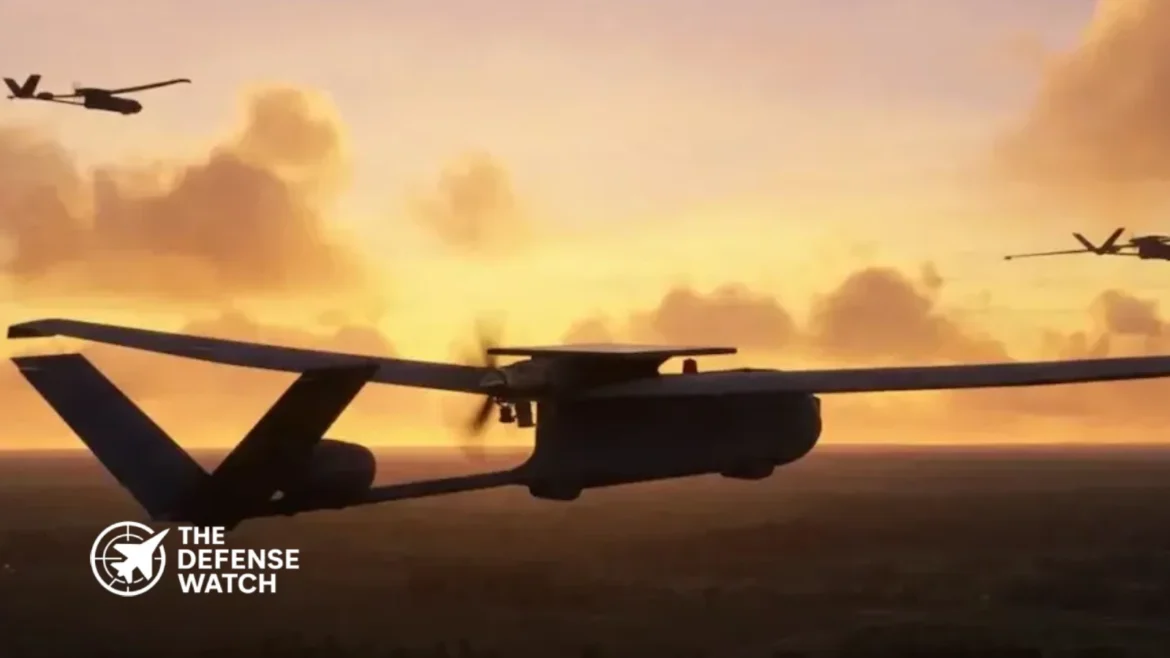
Ukraine has codified the Dovbush T40, a domestically produced long endurance unmanned aircraft designed for deep reconnaissance, fire adjustment and precision strike missions.
Ukraine Codifies Dovbush T40 Long Range Drone
Ukraine’s Ministry of Defence has codified the domestically produced Dovbush T40 drone, adding a strategic-level unmanned aircraft with a stated range exceeding 2,000 kilometers to the country’s defense inventory. The ministry says the system is intended for deep reconnaissance, artillery fire adjustment and precision strikes against targets far from the front line.
The announcement, made August 17, represents another step in Ukraine’s expansion of domestically developed long range unmanned systems. According to the ministry, the T40 can remain airborne for more than 24 hours and has sufficient operational range to reach targets beyond the Urals and in western Siberia.
The reported capabilities are significant because the T40 is not described solely as a one way attack drone. Ukraine says its configuration can support reconnaissance, fire correction and precision strike missions, allowing the same basic aircraft to perform different roles depending on its equipment and payload.
Dovbush T40 Specifications and Stated Capabilities
Capability Dovbush T40 Type Strategic-level unmanned aircraft Stated range More than 2,000 km Endurance More than 24 hours Wingspan Nearly 5 meters Primary missions Deep reconnaissance, fire adjustment, precision strike Strike configurations Munition release or one way attack Radar characteristics Ultra-low radar signature, according to Ukraine Propulsion High-performance engine with electronic fuel injection Electronic warfare Ministry reports significant resistance to EW The figures above come from Ukrainian Ministry of Defence statements reported following the system’s codification. Independent information on payload weight, cruising speed, operating altitude, communications architecture and production rate has not been publicly detailed in the available official material.
That distinction matters. A stated maximum range is not necessarily the same as the combat radius available when an aircraft carries a particular payload, flies a mission profile involving loitering, or encounters adverse weather and electronic warfare conditions.
More Than 24 Hours of Endurance Changes the Mission Set
The T40’s reported endurance is one of its most important characteristics.
An aircraft capable of remaining airborne for more than 24 hours can perform missions that require substantially more time than a conventional short-range tactical UAV. It can potentially remain available for reconnaissance, wait for target information, adjust its mission and provide extended observation without requiring an immediate return to its launch area.
For artillery operations, long endurance can also support persistent observation and fire correction. Ukraine says the T40 is designed specifically for fire adjustment as well as deep reconnaissance and precision strikes.
The combination of range and endurance also gives the platform greater mission flexibility. An aircraft does not have to spend its entire available range simply traveling toward a target. Endurance can instead provide additional time for surveillance or route adjustments before an engagement.
Low Radar Signature and Electronic Warfare Resistance
Ukraine’s Defence Ministry says testing identified an ultra-low radar signature and significant resistance to electronic warfare as advantages of the T40.
Both characteristics are particularly important for a long range UAV operating in an environment where air defense systems and electronic warfare networks can extend far beyond the immediate battlefield.
A reduced radar signature can make detection more difficult, although the ministry has not released a radar cross-section measurement or detailed information about the aircraft’s materials, shaping or flight profile.
Likewise, the statement that the system is resistant to electronic warfare does not establish immunity to jamming or other forms of electronic attack. The actual level of resilience would depend on factors such as navigation, communications, frequency management, autonomy and the specific threat environment.
Those details remain undisclosed.
Engine and Payload Architecture
The T40 uses what Ukraine describes as a high-performance engine equipped with an electronic fuel-injection system. The ministry has not publicly identified the engine manufacturer or provided detailed propulsion specifications.
Ukraine also says the aircraft can be configured for different types of missions.
One configuration can release munitions against designated targets, while another can operate as a one way attack system. This gives the platform a broader operational role than a dedicated reconnaissance aircraft.
The modular approach is particularly relevant to Ukraine’s wartime procurement model, where a single airframe can potentially support multiple mission requirements while manufacturers incorporate battlefield feedback into successive versions.
From Dovbush T20 to the T40
The Dovbush T40 is part of an evolutionary development path rather than an isolated Ukrainian UAV program.
Ukraine’s Defence Ministry says the same manufacturer has produced the Dovbush T20 and Kotyhoroshko unmanned systems, both of which have been used on the battlefield since 2022. The ministry describes the T20 as a medium-range system for reconnaissance, real-time artillery fire adjustment and precision strikes.
The T40 extends that concept into a substantially longer-range aircraft.
This development model reflects a wider feature of Ukraine’s defense industry during the war: combat employment provides manufacturers with direct operational feedback, which can then be incorporated into new designs. In the T40’s case, the result is a larger platform intended to combine surveillance and strike functions with much greater endurance and range.
Why the T40 Matters for Ukraine’s Deep Strike Capability
The most important aspect of the Dovbush T40 is not any single specification. It is the combination of range, endurance, reconnaissance capability and strike flexibility in a domestically produced system.
Ukraine has increasingly invested in long range unmanned systems that can operate well beyond the immediate battlefield. The T40 fits that broader development path by extending the distance at which Ukrainian forces can conduct reconnaissance and potentially deliver effects.
The reported ability to reach areas beyond the Urals and into western Siberia also illustrates the geographic scale of the capability claimed by Kyiv. However, the ministry’s statement should be treated as a description of stated performance rather than independent confirmation of successful combat missions at those distances.
For defense planners, the larger lesson is the growing importance of relatively low-cost unmanned aircraft in long-range operations. Such systems can provide additional options alongside more expensive cruise missiles and crewed aircraft, particularly when persistence and mission flexibility are priorities.
Ukraine’s Rapid Expansion of Domestic UAV Development
The T40 is also part of a much larger Ukrainian unmanned systems effort.
Ukraine’s Ministry of Defence has reported a rapid increase in the number of domestically produced unmanned systems being cleared for military use. Recent Ukrainian reporting cited by the ministry says 413 unmanned aerial systems had been codified and authorized for use since the beginning of 2026, with nearly all described as Ukrainian-made.
The pace of this process matters because codification is an important step between development and formal military adoption. It allows a system to enter Ukraine’s procurement and operational framework rather than remaining solely an experimental or prototype capability.
For Ukraine, this creates a pipeline in which battlefield requirements can feed into new designs, testing and eventual procurement.
What Remains Unknown About the Dovbush T40
Despite the range of information released by Ukrainian authorities, several important technical details remain undisclosed.
Public information does not currently establish the T40’s exact payload capacity, maximum speed, operating altitude, datalink architecture, navigation system, launch method, production rate or unit cost. There is also limited independent information about its performance against modern Russian air defense and electronic warfare systems.
Those limitations are important when assessing claims about long range unmanned aircraft. A platform’s theoretical range and endurance provide useful indicators, but operational effectiveness depends on the complete mission system, including intelligence, communications, navigation, target acquisition, launch and recovery arrangements.
The available evidence therefore supports describing the T40 as a newly codified Ukrainian long endurance UAV with a stated range above 2,000 kilometers, rather than treating every claimed characteristic as independently verified combat performance.
A Broader Shift Toward Long Range Unmanned Warfare
The Dovbush T40 reflects a broader change in the role of unmanned aircraft in modern warfare.
UAVs are increasingly being developed not only for tactical reconnaissance but also for persistent surveillance, artillery support and long range strike missions. Ukraine’s continued development of systems such as the T40 shows how wartime demand can accelerate this transition.
For the United States and other NATO countries, the development is relevant beyond the Russia-Ukraine conflict. Long endurance unmanned aircraft capable of operating across large geographic areas are increasingly important to concepts involving distributed sensing, persistent intelligence, surveillance and reconnaissance, and lower-cost long range strike.
The T40 does not by itself establish a new class of strategic weapon. Its importance is that Ukraine is integrating several traditionally separate missions into one domestically produced aircraft while pushing range and endurance well beyond conventional tactical UAV requirements.
Bottom Line
Ukraine’s Ministry of Defence has codified the Dovbush T40, a nearly five-meter-span unmanned aircraft that the ministry says can fly for more than 24 hours and cover more than 2,000 kilometers.
The system is designed for deep reconnaissance, artillery fire adjustment and precision strike missions, with reported options for dropping munitions or conducting one way attacks. Ukraine also says testing demonstrated a low radar signature and significant resistance to electronic warfare.
The most consequential feature is the combination of long endurance and long range in a domestically developed platform. While key technical and operational details remain undisclosed, the T40 demonstrates the continued expansion of Ukraine’s indigenous unmanned warfare capabilities and its effort to extend reconnaissance and strike options far beyond the front line.
Takeaways
Saab’s A3-001 concept points toward a future Swedish combat air architecture built around crewed and uncrewed aircraft working together.
Saab A3-001 Uncrewed Combat Aircraft Concept
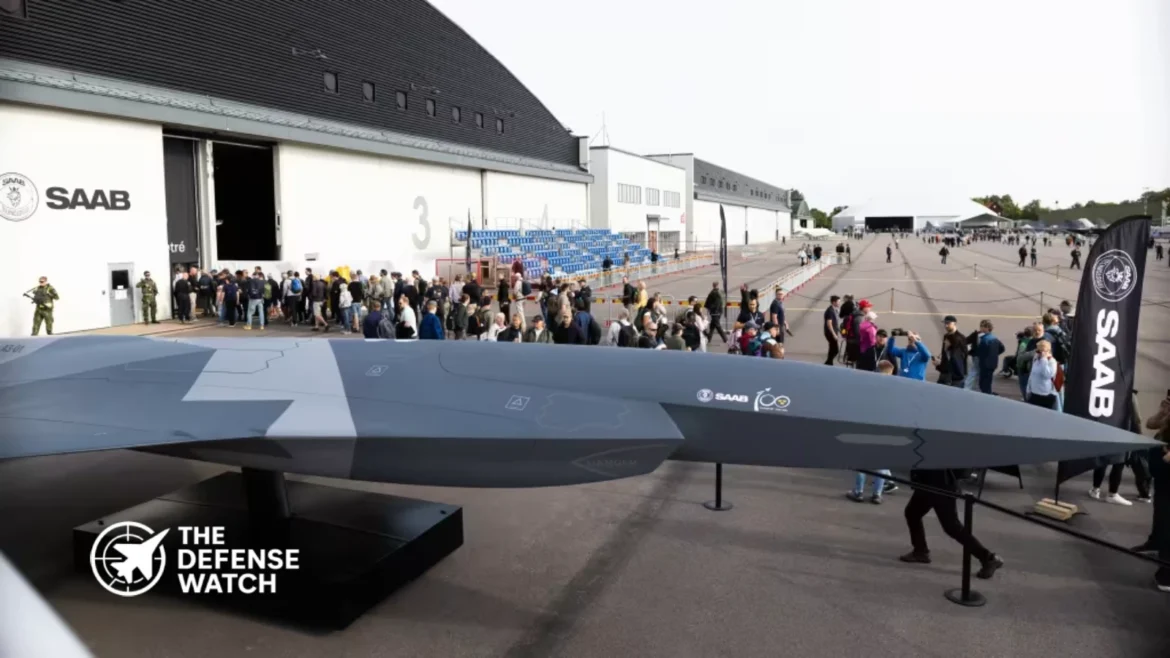
Saab has unveiled the full-scale A3-001 uncrewed combat aircraft concept at the Swedish Armed Forces Jubilee Air Show at Malmen Air Base in Linköping, presenting a possible future combat air system in which crewed and uncrewed aircraft operate together. Saab says the concept is intended to illustrate how Sweden could evolve its combat air capability beyond today’s crewed platforms.
The Swedish aerospace company describes A3-001 as a potential uncrewed component of a broader system-of-systems architecture. Rather than replacing fighter aircraft, the concept is intended to complement Gripen and future crewed combat aircraft in missions where sending an uncrewed platform could reduce risk to pilots.
Saab’s announcement does not provide a finalized specification, production configuration, engine selection, weapons load, range or unit cost for A3-001. The aircraft on display is a concept model, so its configuration should not be treated as representative of a production aircraft.
Designed for High-Risk Missions
Saab identifies three broad mission areas for the concept: electronic warfare, suppression of enemy air defenses, and precision strike in highly contested environments. These missions share a common requirement for aircraft to operate where hostile sensors, air defenses and other threats can make conventional crewed operations more difficult.
The concept incorporates Saab’s stated goals of low observability, a high degree of autonomy and the ability to operate across multiple domains. Saab has not released quantitative radar cross-section, speed, endurance, payload or weapons data for A3-001.
That distinction is important because the displayed aircraft represents an early-stage design concept rather than a fielded weapons system. The principal significance of the announcement is therefore the direction of Saab’s combat-air development rather than a new operational capability entering service.
A3-001 Fits a Broader System-of-Systems Approach
The A3-001 concept reflects a shift in how advanced air forces are approaching future combat aviation. Instead of relying exclusively on individual fighters, future formations can be designed around networks of crewed aircraft, uncrewed platforms, sensors, electronic warfare assets and command-and-control systems.
For Sweden, this approach could allow different aircraft to perform different functions within the same mission package. A crewed fighter could remain responsible for tasks requiring human judgment while an uncrewed aircraft conducts missions in areas where the threat level is particularly high.
This architecture also places greater importance on communications, data links, autonomy and mission management. The effectiveness of an uncrewed combat aircraft would depend not only on its airframe, but also on its ability to receive information, share sensor data and continue operating when communications are disrupted.
Those requirements make interoperability a central technical issue. A future Swedish combat air system would need to connect uncrewed aircraft with Gripen, airborne sensors, ground-based command systems and other military networks without creating additional vulnerabilities.
Saab Plans Fighter-Like Uncrewed Demonstrators Before 2030
Peter Nilsson, head of Saab’s Advanced Programs business unit, said the company is working with Sweden on technologies intended to support the next generation of combat air systems.
According to Saab, the company intends to fly uncrewed demonstrators with fighter-like characteristics before 2030. The work is intended to help Sweden assess future options for combat aviation.
Saab separately describes A3-001 as its own concept for what could follow this work in the mid-2030s if Sweden decides to build on the technologies being developed.
This creates a clear distinction between the near-term demonstrator activity and the A3-001 concept. The former is part of current technology development, while the latter illustrates a possible future operational system.
| Area | Saab’s current disclosure |
|---|---|
| Concept | A3-001 |
| Configuration | Full-scale concept model |
| Primary role | Future uncrewed combat air system |
| Crewed integration | Intended to complement Gripen and future crewed aircraft |
| Potential missions | Electronic warfare, SEAD, precision strike |
| Key design goals | Low observability, autonomy, multi-domain operation |
| Demonstrator timeline | Fighter-like uncrewed demonstrators before 2030 |
| Possible A3 timeframe | Mid-2030s, subject to Swedish decisions |
| Production status | No production program announced |
Why the Concept Matters for Swedish Air Power
Sweden’s approach to combat aviation has historically placed significant emphasis on operating capable aircraft from a relatively compact national defense structure. The future integration of uncrewed aircraft could give that force additional ways to distribute risk and mission functions.
A3-001 also comes as Sweden marks the 100th anniversary of its Air Force. The Jubilee Air Show at Malmen Air Base on August 22 and 23 formed the centerpiece of the Swedish Air Force’s centennial celebrations.
The timing provides a visible demonstration of where Saab sees combat aviation heading. The company is moving beyond the traditional model of a fighter as a standalone aircraft and toward a networked force in which different platforms contribute specialized capabilities.
For Sweden, this could eventually support a more flexible force structure. Uncrewed aircraft could potentially be designed around specific missions instead of requiring every platform to perform every task.
Connection to Saab’s Wider Air Warfare Portfolio
A3-001 is also consistent with Saab’s broader development of networked air and surveillance capabilities.
In July 2026, Saab announced an order for two GlobalEye airborne early warning and control aircraft worth SEK 10.1 billion, with deliveries scheduled for 2030. GlobalEye combines airborne sensors with command-and-control functions across air, maritime and land domains.
Earlier in May, Saab and General Atomics Aeronautical Systems reported the first flight of Saab’s LoyalEye airborne early warning sensor integrated onto an MQ-9B aircraft. The companies are developing an unmanned airborne early warning capability intended to provide long-range detection and tracking while complementing manned assets.
These programs illustrate a broader direction in which Saab is applying advanced sensors and mission systems to both crewed and uncrewed platforms. A3-001 would extend that approach into the combat aircraft mission set.
NATO and the Wider Combat Air Context
The development also has relevance beyond Sweden because the country is now a NATO member and Saab’s aircraft and sensor systems are increasingly integrated into multinational defense planning.
NATO announced in July that it would begin formal negotiations with Saab concerning the potential acquisition of up to 10 GlobalEye aircraft. NATO said the requirement is linked to modernization of the alliance’s airborne early warning and control capability.
An uncrewed combat aircraft designed to work with crewed fighters could eventually contribute to the same broader networked approach to air operations. However, Saab has not announced that A3-001 is a NATO program or that any NATO procurement decision has been made concerning the concept.
For the United States and other NATO members, the development is relevant because future coalition air operations increasingly depend on common data, distributed sensing and interoperable command systems. The value of an uncrewed combat aircraft would therefore extend beyond the aircraft itself to the networks and mission systems connecting it with allied forces.
Technical Challenges Remain Before an Operational System
Moving from a full-scale concept to an operational uncrewed combat aircraft would require substantial development.
One of the most difficult areas is autonomous operation in contested airspace. A platform expected to perform electronic warfare, air-defense suppression or precision strike missions would need to make rapid decisions while dealing with uncertain sensor information, changing threats and potentially degraded communications.
Another challenge is survivability. Low observability can reduce the probability of detection, but it does not eliminate the threat posed by modern sensors and integrated air defenses. An operational aircraft would therefore need a combination of signature management, electronic warfare, situational awareness and mission planning.
Weapons integration would create another development path. Saab has not disclosed a weapons configuration for A3-001, so claims about specific missiles or strike payloads would be premature.
The aircraft would also need to operate within strict rules governing autonomous systems and human control. The more complex the mission, the greater the importance of reliable command authority, identification of targets and safeguards against unintended engagement.
Saab’s Concept Points Toward the Mid-2030s
Saab’s A3-001 display does not represent a production aircraft or an immediate replacement for Gripen. Instead, it provides a visible indication of the company’s direction for future uncrewed combat aviation.
The immediate development milestone is the planned flight testing of fighter-like uncrewed demonstrators before 2030. A3-001 represents a separate Saab concept for a possible capability that could emerge in the mid-2030s if Sweden decides to proceed with the technology and associated combat air architecture.
The most important feature of the concept is therefore not a disclosed performance figure, but the operating model behind it. Saab is examining how uncrewed aircraft could become integrated members of a combat formation, working alongside pilots, sensors and command systems rather than operating as conventional standalone drones.
That approach places A3-001 within a wider transformation of military aviation toward distributed, networked and increasingly autonomous combat systems. For Sweden and its NATO partners, the success of such a model will ultimately depend on whether the technology can deliver useful combat effects while maintaining interoperability, survivability and meaningful human control.
Ukraine Adds Alexa Spatium Interceptor To Counter Russian Drone Threat
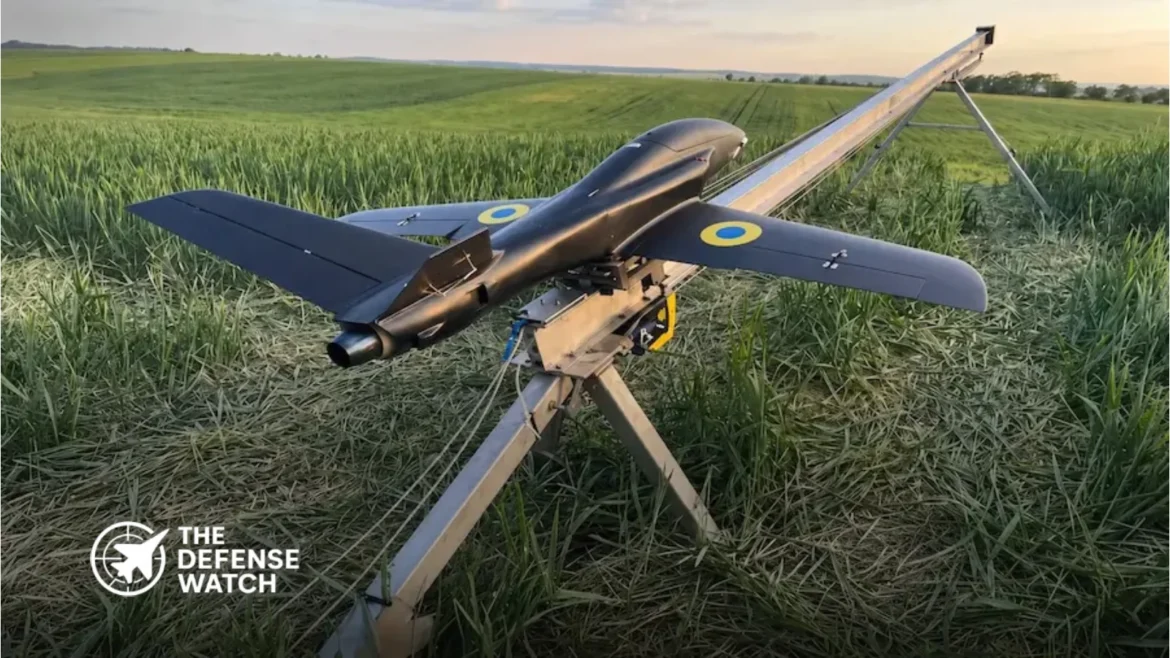
The Alexa Spatium interceptor gives Ukraine a new jet-powered option for defending against Russian strike drones, according to the Ukrainian Ministry of Defence. The ministry said Aug. 21 that the domestically developed aircraft has been added to the arsenal of the Defence Forces of Ukraine and was designed to destroy small aerial, ground and surface targets in combat conditions.
Takeaways
Ukraine adds a domestically developed jet-powered interceptor to its counter-drone arsenal
1. Jet-Powered Interceptor
Ukraine’s Defence Ministry says Alexa Spatium is the country’s first domestically developed jet-powered drone interceptor.
2. Designed For Faster UAVs
The system is intended primarily to counter Russian Geran-3, Geran-4, Geran-5 and Shahed-131 attack drones, according to Ukraine’s Defence Ministry.
3. Turbojet Propulsion
Its turbojet engine provides a higher operating ceiling and supports operations across low to medium altitudes, according to the ministry.
4. Remote Launch And Operation
Alexa Spatium can be prepared and launched remotely from a mobile catapult, reducing the personnel required at the launch position.
5. Part Of A Growing Ukrainian Fleet
Ukraine says it has authorized hundreds of unmanned systems for military use in 2026, reflecting the rapid expansion of domestic drone and counter-drone production.
The system is primarily intended to engage Russian Geran-3, Geran-4 and Geran-5 kamikaze drones, as well as the Shahed-131. Ukraine also says the aircraft can be used against reconnaissance UAVs, helicopters and other individual targets.
The introduction comes as Ukraine continues to expand its use of unmanned interceptors as a lower-cost layer of air defense. The Ministry of Defence previously authorized the JEDI Shahed Hunter, an electric interceptor capable of speeds above 350 km/h and operations at altitudes of up to 6 kilometers.
Turbojet Design Built For Rapid Interception
At the center of the Alexa Spatium design is a turbojet engine. Ukraine’s Defence Ministry says the propulsion system gives the interceptor a high operating ceiling, a substantial combat radius and an operating envelope covering low to medium altitudes.
The ministry has not publicly released a maximum speed, combat radius or endurance figure for the system in its announcement. That distinction is important because available reports about Ukrainian jet-powered interceptors have cited different performance figures for different systems.
For example, former Ukrainian Defence Minister Mykhailo Fedorov said on Aug. 14 that Ukrainian companies were already testing jet-powered interceptors intended to counter jet-powered Shaheds. He said one system developed by a Ukrainian manufacturer could exceed 600 km/h, but the statement did not identify that system as Alexa Spatium.
That makes the Ministry of Defence description of Alexa Spatium particularly relevant. Rather than assigning unverified performance figures to the aircraft, the available official information confirms its propulsion concept, target set and operating characteristics.
Remote Launch And Automated Operation
The Alexa Spatium interceptor is designed around a mobile and relatively light deployment concept. Ukraine’s Defence Ministry says the aircraft measures approximately 1.5 meters by 1.7 meters and can be launched from a mobile catapult within several minutes.
The complete system is also designed for transport in a pickup truck. The ministry describes the architecture as modular and highly automated, with preparation and launch capable of being conducted remotely. An aircraft that does not complete its mission can return to the launch area and be reused.
This approach addresses an important operational requirement for modern counter-UAS forces: the ability to relocate launch teams quickly after an engagement.
A mobile interceptor force can potentially be distributed across multiple defensive positions rather than relying exclusively on fixed launch infrastructure. That is particularly relevant in a conflict where both sides use drones for surveillance, targeting and attack against air-defense positions.
Multiple Warhead Options And Sensors
Ukraine says Alexa Spatium can be configured with high-explosive fragmentation, shaped-charge or thermobaric warheads. The ministry said the warhead weight gives the aircraft the ability to engage a range of aerial targets.
The interceptor also incorporates television and infrared search-and-sighting systems for target detection and engagement. Its control and video-transmission systems support remote operation.
The combination of onboard sensing and remote control is significant for an interceptor intended to operate against moving UAVs. However, Ukraine has not publicly disclosed detailed information on the sensor ranges, target acquisition algorithms, datalink architecture or engagement rules associated with Alexa Spatium.
Those limitations mean the system’s effectiveness against specific Russian UAV variants cannot yet be independently assessed from the publicly available information.
Why Jet Propulsion Matters In Ukraine’s Counter-UAS Fight
Ukraine has spent much of the war developing increasingly specialized interceptor drones. In March, the Ministry of Defence said the JEDI Shahed Hunter had been authorized for operational use after successfully engaging Shahed-type drones, including Geran and Gerbera UAVs. The system uses four electric motors, can exceed 350 km/h and can operate at altitudes up to 6 kilometers.
Ukraine also authorized the Shvidun interceptor, which the ministry says can exceed 250 km/h, operate at up to 6 kilometers and has a range of more than 70 kilometers.
These systems illustrate the evolution of Ukraine’s counter-drone approach from relatively simple interceptor platforms toward specialized aircraft designed around the speed, altitude and maneuverability of the threats they face.
The Alexa Spatium interceptor takes that development another step by using turbojet propulsion. Its intended targets include several Geran variants and Shahed-131, while its design allows rapid deployment and remote launch.
The immediate challenge is scale. Russian forces continue to conduct large drone attacks, including raids involving jet-powered UAVs. On Aug. 10, Ukraine’s Air Force reported that Russian forces used 126 Shahed-type strike UAVs, including jet-powered drones, along with Gerbera and Parodiya decoys during a large overnight attack. Ukrainian forces reported using aviation, surface-to-air missiles, electronic warfare, unmanned systems and mobile fire groups to respond.
This layered approach is likely to remain important. Interceptor drones do not replace traditional air-defense systems. Instead, they can add another engagement layer against UAVs while potentially preserving more expensive missile interceptors for higher-value or more difficult threats.
Ukraine Expands Domestic Unmanned Systems Production
The Alexa Spatium announcement also fits within a broader Ukrainian effort to expand domestic defense production.
Ukraine’s Ministry of Defence said in June that it had codified 1,000 weapons and military equipment models since the beginning of 2026. More than 300 were new unmanned aerial systems, while nearly 90 percent of the total systems were produced domestically.
The ministry has also said that more than 25 Ukrainian interceptor UAV models had been authorized for military use by August 2025, highlighting how quickly the counter-UAS segment has expanded.
The country’s Unmanned Systems Forces have become a dedicated military branch responsible for operating aerial, ground and maritime unmanned systems. Ukraine describes the force as focused on integrating reconnaissance, strike and defensive unmanned capabilities.
The growth of this industrial and operational ecosystem provides the environment in which systems such as Alexa Spatium can move from development into military service.
What Alexa Spatium Adds To Ukraine’s Air Defense
The Alexa Spatium interceptor does not represent a replacement for Ukraine’s broader air-defense network. Its significance is that it adds a jet-powered unmanned aircraft specifically designed around the changing characteristics of the Russian drone threat.
The system combines a turbojet engine, remote launch, electro-optical and infrared sensing, modular construction and multiple warhead options. Ukraine says the aircraft can be deployed within minutes and transported using a pickup truck, potentially supporting distributed counter-UAS operations.
The most important unanswered questions concern production scale, unit cost, confirmed combat performance and the number of systems entering operational service. Ukraine’s announcement establishes the platform’s intended role and reported technical characteristics, but does not provide enough public data to independently measure its effectiveness against Russian jet-powered UAVs.
For now, the addition of Alexa Spatium demonstrates how Ukraine’s counter-drone architecture is continuing to evolve in response to a faster and more varied aerial threat. As Russian strike drones become more diverse, Ukraine is responding with a broader mix of electronic warfare, conventional air defense and increasingly specialized interceptor aircraft.

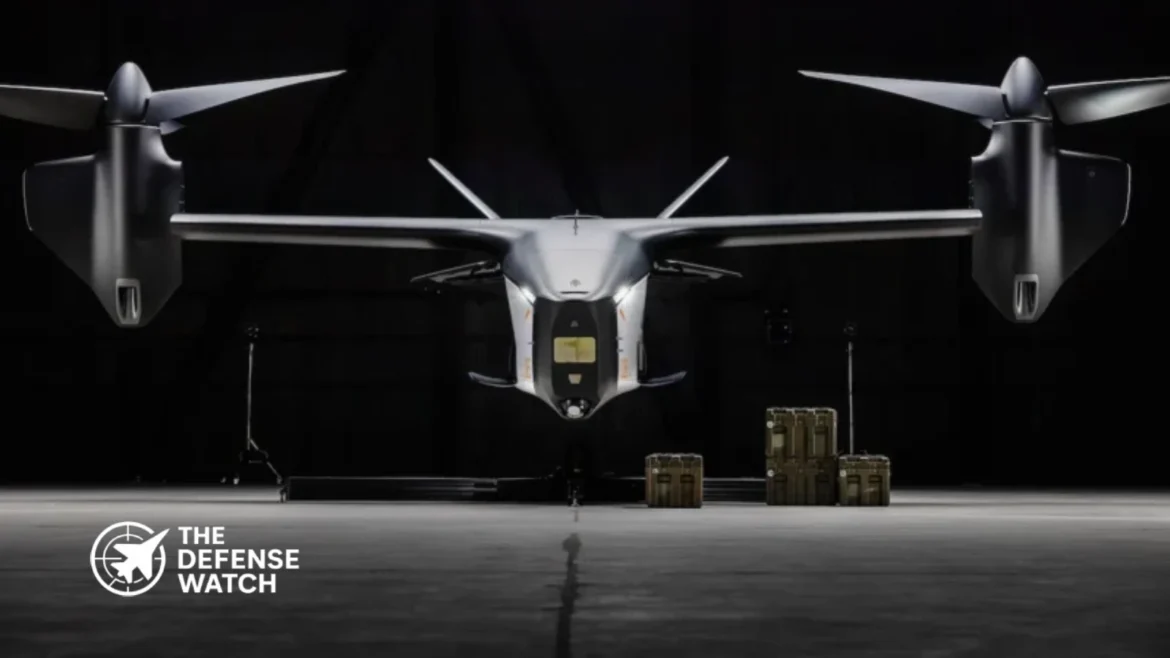
Elroy Air Inc. has received a $46.06 million firm-fixed-price Phase III Small Business Innovation Research contract from the U.S. Army to develop an autonomous Group IV hybrid vertical takeoff and landing unmanned aircraft system for modular multi-mission payload delivery. Army Contracting Command, Aberdeen Proving Ground, Maryland, is the contracting activity under contract W911QX-26-C-A016.
Takeaways
Elroy Air receives a major Army development award for autonomous heavy cargo operations
1. $46 Million Phase III Award
Elroy Air has received a $46.06 million firm-fixed-price Phase III SBIR contract from the U.S. Army for autonomous Group IV UAS development.
2. Autonomous Hybrid VTOL Aircraft
The program targets a hybrid-electric vertical takeoff and landing aircraft capable of delivering modular payloads with limited operator intervention.
3. $5.14 Million Initially Obligated
The Army obligated $5.135 million in FY2026 research, development, test and evaluation funding at award, about 11.2% of the contract’s total value.
4. Work Runs Through February 2029
All identified contract work will be performed in South San Francisco, California, with completion scheduled for Feb. 18, 2029.
5. Designed For Distributed Logistics
The aircraft’s VTOL architecture and modular payload concept are suited to logistics missions where conventional runways, crewed aircraft and exposed ground routes can create operational constraints.
The award runs through Feb. 18, 2029, with work to be performed in South San Francisco, California. The Army obligated $5.135 million in fiscal 2026 research, development, test and evaluation funding when the contract was awarded. The procurement notice states that the Army solicited bids through the internet and received one proposal.
The award represents a significant step for Elroy Air because Phase III SBIR work is intended to advance technology developed through earlier SBIR efforts toward government use and broader acquisition. Under Defense Federal Acquisition Regulation Supplement guidance, Phase III work derives from, extends or completes earlier SBIR or STTR efforts and is funded outside the traditional SBIR program structure.
Hybrid VTOL Design Targets Distributed Military Logistics
The Army’s interest centers on a class of unmanned aircraft substantially larger than the small tactical drones commonly used for reconnaissance and short-range missions. Under the Department of Defense UAS classification system, Group IV aircraft weigh more than 1,320 pounds and normally operate below 18,000 feet, although the classification is based on multiple operating characteristics rather than payload alone.
That distinction is important. A Group IV autonomous cargo aircraft is intended to move meaningful quantities of equipment rather than simply provide sensing or targeting data. The combination of vertical takeoff and landing, autonomous flight and modular payload handling can allow military units to establish aerial logistics links without building or relying on conventional runways at every destination.
Elroy Air’s Chaparral is the company’s principal autonomous cargo platform and closely matches the capabilities described in the Army award. The company describes Chaparral as a hybrid-electric VTOL aircraft designed for military resupply, with eight vertical-lift propellers and four forward-flight propellers. Current company specifications list a 500-plus-pound payload, 450-mile maximum range and 132 mph cruise speed.
The platform uses separate vertical and forward-flight propulsion arrangements. During takeoff and landing, the vertical rotors provide lift, while the aircraft transitions to wingborne flight for more efficient cruise operations. Elroy Air demonstrated autonomous transition from vertical flight to forward flight in 2025, reaching a reported 70 mph during those tests.
The modular payload concept is equally important for military use. Earlier Army SBIR work identified cargo pods that could carry supplies, sensors and fuel, with the aircraft autonomously locating and handling assigned pods using LiDAR-based perception and ultra-wideband identification technology.
That architecture gives the Army a potential logistics aircraft that can be configured around the mission rather than requiring a separate airframe for every payload category.
Contract Breakdown & Financial Allocation
$46.06 Million Total Contract Value
- Contract value: $46,058,871
- Contract type: Firm-fixed-price
- Acquisition pathway: Phase III Small Business Innovation Research
- Solicitation: Internet-based solicitation
- Proposals received: One
- Contract number: W911QX-26-C-A016
A firm-fixed-price contract places substantial cost and performance risk on the contractor. The government generally agrees to pay the established price for the defined work, while the contractor must manage its labor, materials and execution costs within that price.
$5.14 Million Initial Obligation
- FY2026 RDT&E obligation: $5,135,354
- Initial obligation as share of total contract value: approximately 11.2%
- Remaining contract value not initially obligated: approximately $40.92 million
The relatively small initial obligation compared with the contract ceiling indicates that the Army is not committing the full $46.06 million as an immediate cash outlay. Instead, funding is being obligated as authorized work progresses.
The funding is classified as research, development, test and evaluation, reinforcing that this award is centered on development and maturation rather than a straightforward production purchase.
South San Francisco Work Location
- Primary work location: South San Francisco, California
- Geographic allocation: 100% of identified contract work
- Estimated completion: Feb. 18, 2029
No foreign military sales funding, overseas work locations or separate international funding streams are identified in the award information.
From Earlier Army SBIR Work To Phase III
The new award follows a series of Army-supported development efforts involving Elroy Air’s Chaparral architecture.
In 2024, an Army Phase I SBIR award examined improvements to the aircraft’s lift capacity and utility, including skid landing gear for austere landing areas. That effort described a hybrid-electric autonomous VTOL aircraft capable of carrying approximately 300 to 400 pounds over more than 300 miles and using modular cargo pods.
A subsequent $1.9 million Army Phase II SBIR award, announced for Chaparral airdrop capability development, focused on integrating an airworthy cargo pod capable of delivering mission-relevant payloads. The effort included planned design and fabrication work followed by testing and validation of airdrop functions.
The timing of the new Phase III award is therefore significant. It comes after several years of technology maturation, including autonomous flight testing, cargo-pod integration and flight demonstrations. Elroy Air reported its first point-to-point cargo delivery with Chaparral in December 2025.
Industry Impact & Acquisition Insight
The Army’s award strengthens Elroy Air’s position in the emerging market for autonomous heavy-cargo aircraft. The company has also been pursuing commercial and dual-use applications, while expanding its manufacturing strategy with Kratos Defense & Security Solutions. In 2026, Elroy Air announced a proposed transaction that would provide capital for scaled Chaparral production, subject to closing conditions.
For the Army, the more important issue is whether the technology can transition from a technically successful aircraft into a repeatable logistics capability. Autonomous cargo aircraft have to solve more than flight autonomy. They must demonstrate reliable navigation, communications, cargo handling, maintenance, airspace integration, cyber resilience and safe operations around deployed forces.
The modular architecture could also prove important in contested logistics environments. A single aircraft capable of carrying different payload modules could support resupply, specialized equipment delivery, sensor carriage or other missions without requiring an entirely new air vehicle for each role. Earlier Army SBIR work specifically examined the use of modular pods for supplies, sensors and fuel.
The award also reflects a broader shift in military aviation toward autonomous logistics. The Army does not necessarily need unmanned cargo aircraft to replace every crewed transport or helicopter. Their value may instead come from performing repetitive or hazardous resupply missions while reducing exposure of pilots and ground convoys.
For Elroy Air, the next challenge is translating an established prototype into a system that can meet military reliability, maintainability and operational test requirements. The Phase III award gives the company a multi-year pathway to do that, with the program now scheduled to run into 2029.
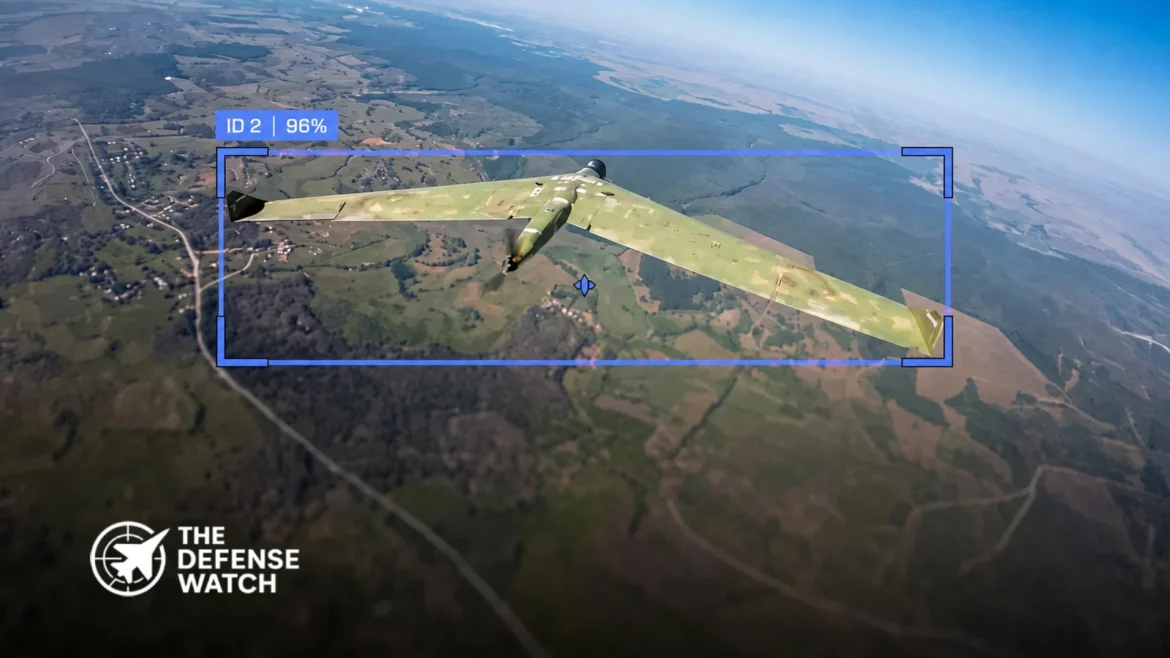
Executive Summary: Ukraine’s Defense Ministry says Ukrainian forces have neutralized more than 260,000 Russian fixed-wing and multirotor UAVs since the beginning of 2026. The figures, verified through the DELTA combat system, underscore the scale of counter-drone warfare and Kyiv’s growing use of battlefield data to improve air defense tactics.
Ukraine Reports More Than 260,000 Russian Drone Losses
Russian drones neutralized by Ukraine have exceeded 260,000 since the beginning of 2026, according to figures released by Ukraine’s Ministry of Defense on August 11. The ministry said the figure includes fixed-wing and multirotor UAVs, with engagements recorded by military personnel and subsequently verified through the DELTA combat system.
The Ukrainian ministry reported approximately 195,000 Russian fixed-wing UAVs and 66,000 multirotor drones neutralized during the period. Because those figures are rounded, their combined total is approximately 261,000.
The data represents a Ukrainian wartime assessment and has not been independently verified. It should therefore be viewed as an official Ukrainian account of battlefield activity rather than an independently established measure of Russian equipment losses.
Fixed-Wing UAV Interceptions Increase
Ukraine’s Defense Ministry reported a notable increase in the number of Russian fixed-wing UAVs recorded as neutralized.
The ministry said the monthly figure reached 40,438 in July, compared with 27,711 at the end of May. The increase points to the continuing intensity of Russian UAV operations and the scale of the Ukrainian response.
Multirotor UAV engagements also increased. Ukraine reported that verified engagements in this category rose from 14,071 at the end of June to 19,945 during July.
These numbers cover different UAV categories and reporting periods, so they should not be interpreted as a single interception rate. They instead show how heavily both fixed-wing and multirotor systems are being employed and countered across the battlefield.
DELTA Gives Ukraine a Digital Record of Drone Warfare
One of the more significant aspects of the Ukrainian figures is the role of DELTA in verifying battlefield engagements.
Ukraine describes DELTA as a digital combat system designed to provide commanders with a shared operational picture. The system collects and organizes battlefield information, including data associated with unmanned systems.
The Defense Ministry said all UAV engagements included in the 260,000-plus figure were verified through DELTA. The Innovation Development Fund of Ukraine’s Ministry of Digital Transformation subsequently verified the target engagements recorded by military personnel.
Ukraine has been expanding DELTA beyond basic battlefield mapping. Its Mission Control component was launched in January 2026 to consolidate drone operations into a unified digital environment. By March, the ministry said the system was operating across Ukrainian corps and force groupings, allowing commanders to review drone missions and performance through structured digital dashboards.
This approach is important because counter-drone warfare increasingly depends on the speed with which units can identify threats, select an appropriate response and learn from previous engagements.
Why the Numbers Matter for Counter-Drone Warfare
The scale of Ukraine’s reported Russian drone losses illustrates a central feature of modern combat: the contest is no longer limited to the number of drones a military can launch.
It also depends on the ability to detect, classify, track and defeat those systems repeatedly without exhausting more expensive defensive resources.
For Ukraine, DELTA provides a mechanism for turning individual engagements into a larger operational dataset. The Defense Ministry says the system records details surrounding successful engagements, allowing commanders to identify effective counter-UAV approaches and expand them more rapidly across formations.
That data-driven model could become increasingly important as Russia continues to use large numbers of unmanned aircraft for reconnaissance, strike missions and battlefield support.
Ukraine has also been integrating digital combat data into procurement decisions. The Defense Ministry said in 2026 that battlefield information from systems including DELTA, Mission Control and ePoints would be used to help determine which UAVs should receive procurement priority. Under the approach, equipment demonstrating stronger battlefield performance would receive greater emphasis, while a portion of funding would remain available for new technologies and combat testing.
A Larger Contest Between Drones and Countermeasures
The reported Russian drones neutralized by Ukraine should also be understood within the broader evolution of the war.
Both Russia and Ukraine have expanded their use of unmanned systems, creating a battlefield where relatively inexpensive drones can be deployed in large numbers. This has increased pressure on traditional air defense systems while encouraging the development of electronic warfare, interceptor drones, mobile air-defense teams and other lower-cost counter-UAS methods.
Ukraine has sought to combine these capabilities with digital command systems. In March, the Ukrainian Defense Ministry said NATO was interested in Ukraine’s experience with counter-drone defense and the development of cost-effective responses to aerial threats.
The emphasis on cost is significant. Using a high-value surface-to-air missile against a low-cost drone can be operationally effective but economically difficult to sustain when attacks occur at high volume. This has increased interest in layered defenses that combine electronic warfare, guns, interceptor drones, short-range air defense and other systems.
The Ukrainian experience suggests that battlefield software can play an important role alongside physical interceptors. A digital record of what worked, where it worked and against which type of UAV can help commanders adapt defensive methods more quickly.
What the 260,000 Figure Does Not Show
The reported figure should not be interpreted as evidence that Russian drone operations have been stopped or that every Russian UAV entering Ukrainian-controlled airspace is intercepted.
The Ukrainian Ministry of Defense itself describes the number as verified engagements involving fixed-wing and multirotor UAVs. It does not provide enough public information to establish a comprehensive interception percentage for all Russian drones launched during the period.
The figures also differ from the Ukrainian General Staff’s separate daily loss reporting system. On August 15, the General Staff reported 1,835 Russian operational-tactical UAV losses during the preceding 24-hour period and a cumulative figure of 461,484 since February 2022. These figures use a different reporting framework and should not be directly added to the Defense Ministry’s 2026 total.
This distinction is important for accurate reporting. Wartime military statistics can use different definitions, collection methods and reporting periods. Treating separate datasets as interchangeable can produce misleading conclusions.
Implications for Future Military Technology
The reported scale of Russian UAV losses reinforces the importance of affordable and scalable counter-drone defenses.
For Ukraine, the operational challenge is not simply intercepting individual aircraft. It is maintaining an effective defense against repeated waves while preserving higher-end air-defense assets for more demanding threats.
The growing use of DELTA and Mission Control also points toward a broader shift in military operations. Digital systems are increasingly being used not only to display battlefield information but also to evaluate equipment, track missions and influence procurement.
That model could have implications well beyond Ukraine. Militaries studying the conflict are closely watching how inexpensive drones, electronic warfare, air defenses and battlefield software interact at scale.
The central lesson from Ukraine’s latest data is therefore not simply the reported number of Russian drones neutralized. It is the growing importance of integrating sensors, operators, interceptors and digital command systems into a single counter-UAS architecture.
For the United States and its allies, the Ukrainian experience offers another indication that future air-defense planning will need to account for large numbers of small unmanned systems alongside traditional aircraft and missile threats.
Bottom Line
Ukraine says its forces have neutralized more than 260,000 Russian fixed-wing and multirotor UAVs since the beginning of 2026, with the engagements verified through the DELTA combat system.
The figures remain Ukrainian wartime assessments and should not be treated as independently confirmed Russian losses. Even with that qualification, the scale reported by Kyiv highlights how central drones and counter-drone systems have become to the conflict.
More importantly, Ukraine’s use of DELTA demonstrates how modern counter-UAS warfare is becoming a data problem as much as a weapons problem. The ability to record engagements, identify effective defenses and rapidly distribute lessons across military formations could be as important as the individual interceptor used to defeat a drone.