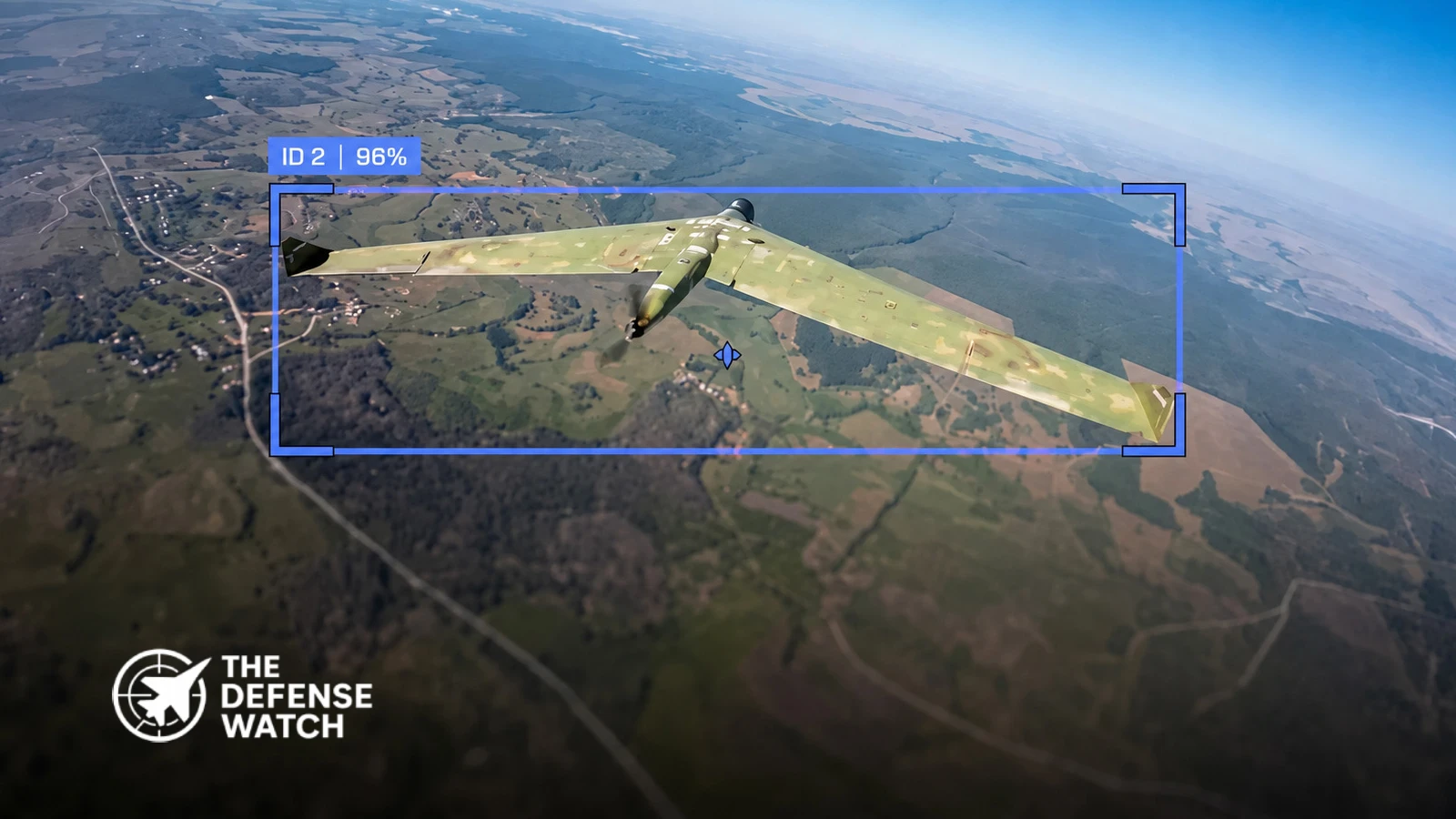
Executive Summary: Ukraine’s Defense Ministry says Ukrainian forces have neutralized more than 260,000 Russian fixed-wing and multirotor UAVs since the beginning of 2026. The figures, verified through the DELTA combat system, underscore the scale of counter-drone warfare and Kyiv’s growing use of battlefield data to improve air defense tactics.
Ukraine Reports More Than 260,000 Russian Drone Losses
Russian drones neutralized by Ukraine have exceeded 260,000 since the beginning of 2026, according to figures released by Ukraine’s Ministry of Defense on August 11. The ministry said the figure includes fixed-wing and multirotor UAVs, with engagements recorded by military personnel and subsequently verified through the DELTA combat system.
The Ukrainian ministry reported approximately 195,000 Russian fixed-wing UAVs and 66,000 multirotor drones neutralized during the period. Because those figures are rounded, their combined total is approximately 261,000.
The data represents a Ukrainian wartime assessment and has not been independently verified. It should therefore be viewed as an official Ukrainian account of battlefield activity rather than an independently established measure of Russian equipment losses.
Fixed-Wing UAV Interceptions Increase
Ukraine’s Defense Ministry reported a notable increase in the number of Russian fixed-wing UAVs recorded as neutralized.
The ministry said the monthly figure reached 40,438 in July, compared with 27,711 at the end of May. The increase points to the continuing intensity of Russian UAV operations and the scale of the Ukrainian response.
Multirotor UAV engagements also increased. Ukraine reported that verified engagements in this category rose from 14,071 at the end of June to 19,945 during July.
These numbers cover different UAV categories and reporting periods, so they should not be interpreted as a single interception rate. They instead show how heavily both fixed-wing and multirotor systems are being employed and countered across the battlefield.
DELTA Gives Ukraine a Digital Record of Drone Warfare
One of the more significant aspects of the Ukrainian figures is the role of DELTA in verifying battlefield engagements.
Ukraine describes DELTA as a digital combat system designed to provide commanders with a shared operational picture. The system collects and organizes battlefield information, including data associated with unmanned systems.
The Defense Ministry said all UAV engagements included in the 260,000-plus figure were verified through DELTA. The Innovation Development Fund of Ukraine’s Ministry of Digital Transformation subsequently verified the target engagements recorded by military personnel.
Ukraine has been expanding DELTA beyond basic battlefield mapping. Its Mission Control component was launched in January 2026 to consolidate drone operations into a unified digital environment. By March, the ministry said the system was operating across Ukrainian corps and force groupings, allowing commanders to review drone missions and performance through structured digital dashboards.
This approach is important because counter-drone warfare increasingly depends on the speed with which units can identify threats, select an appropriate response and learn from previous engagements.
Why the Numbers Matter for Counter-Drone Warfare
The scale of Ukraine’s reported Russian drone losses illustrates a central feature of modern combat: the contest is no longer limited to the number of drones a military can launch.
It also depends on the ability to detect, classify, track and defeat those systems repeatedly without exhausting more expensive defensive resources.
For Ukraine, DELTA provides a mechanism for turning individual engagements into a larger operational dataset. The Defense Ministry says the system records details surrounding successful engagements, allowing commanders to identify effective counter-UAV approaches and expand them more rapidly across formations.
That data-driven model could become increasingly important as Russia continues to use large numbers of unmanned aircraft for reconnaissance, strike missions and battlefield support.
Ukraine has also been integrating digital combat data into procurement decisions. The Defense Ministry said in 2026 that battlefield information from systems including DELTA, Mission Control and ePoints would be used to help determine which UAVs should receive procurement priority. Under the approach, equipment demonstrating stronger battlefield performance would receive greater emphasis, while a portion of funding would remain available for new technologies and combat testing.
A Larger Contest Between Drones and Countermeasures
The reported Russian drones neutralized by Ukraine should also be understood within the broader evolution of the war.
Both Russia and Ukraine have expanded their use of unmanned systems, creating a battlefield where relatively inexpensive drones can be deployed in large numbers. This has increased pressure on traditional air defense systems while encouraging the development of electronic warfare, interceptor drones, mobile air-defense teams and other lower-cost counter-UAS methods.
Ukraine has sought to combine these capabilities with digital command systems. In March, the Ukrainian Defense Ministry said NATO was interested in Ukraine’s experience with counter-drone defense and the development of cost-effective responses to aerial threats.
The emphasis on cost is significant. Using a high-value surface-to-air missile against a low-cost drone can be operationally effective but economically difficult to sustain when attacks occur at high volume. This has increased interest in layered defenses that combine electronic warfare, guns, interceptor drones, short-range air defense and other systems.
The Ukrainian experience suggests that battlefield software can play an important role alongside physical interceptors. A digital record of what worked, where it worked and against which type of UAV can help commanders adapt defensive methods more quickly.
What the 260,000 Figure Does Not Show
The reported figure should not be interpreted as evidence that Russian drone operations have been stopped or that every Russian UAV entering Ukrainian-controlled airspace is intercepted.
The Ukrainian Ministry of Defense itself describes the number as verified engagements involving fixed-wing and multirotor UAVs. It does not provide enough public information to establish a comprehensive interception percentage for all Russian drones launched during the period.
The figures also differ from the Ukrainian General Staff’s separate daily loss reporting system. On August 15, the General Staff reported 1,835 Russian operational-tactical UAV losses during the preceding 24-hour period and a cumulative figure of 461,484 since February 2022. These figures use a different reporting framework and should not be directly added to the Defense Ministry’s 2026 total.
This distinction is important for accurate reporting. Wartime military statistics can use different definitions, collection methods and reporting periods. Treating separate datasets as interchangeable can produce misleading conclusions.
Implications for Future Military Technology
The reported scale of Russian UAV losses reinforces the importance of affordable and scalable counter-drone defenses.
For Ukraine, the operational challenge is not simply intercepting individual aircraft. It is maintaining an effective defense against repeated waves while preserving higher-end air-defense assets for more demanding threats.
The growing use of DELTA and Mission Control also points toward a broader shift in military operations. Digital systems are increasingly being used not only to display battlefield information but also to evaluate equipment, track missions and influence procurement.
That model could have implications well beyond Ukraine. Militaries studying the conflict are closely watching how inexpensive drones, electronic warfare, air defenses and battlefield software interact at scale.
The central lesson from Ukraine’s latest data is therefore not simply the reported number of Russian drones neutralized. It is the growing importance of integrating sensors, operators, interceptors and digital command systems into a single counter-UAS architecture.
For the United States and its allies, the Ukrainian experience offers another indication that future air-defense planning will need to account for large numbers of small unmanned systems alongside traditional aircraft and missile threats.
Bottom Line
Ukraine says its forces have neutralized more than 260,000 Russian fixed-wing and multirotor UAVs since the beginning of 2026, with the engagements verified through the DELTA combat system.
The figures remain Ukrainian wartime assessments and should not be treated as independently confirmed Russian losses. Even with that qualification, the scale reported by Kyiv highlights how central drones and counter-drone systems have become to the conflict.
More importantly, Ukraine’s use of DELTA demonstrates how modern counter-UAS warfare is becoming a data problem as much as a weapons problem. The ability to record engagements, identify effective defenses and rapidly distribute lessons across military formations could be as important as the individual interceptor used to defeat a drone.