• Home
  • About
  • Defense Systems
  • Manufacturer
  • Comparisons
  • Compare 
  • Tools
TheDefenseWatch.com
  • Aerospace & Aviation
  • Military & Ordnance
  • Naval & Maritime
  • Cyber & Space Defense
  • Policy & Strategy
  • Global News
  • Tools Library
    • Smart Calculator
    • Drone Flight Time Calculator
    • Drone Range Calculator
    • Counter-Drone Jammer Effective Range Calculator
    • Counter-Battery Radar Detection Calculator
    • Artillery Fire Correction Calculator
    • Thermal Camera Detection Range Calculator
    • Missile Range & Time-of-Flight Calculator
    • Radar Detection Range Calculator
    • FPV Strike Drone Payload vs Range Calculator
    • Loitering Munition Endurance Calculator
    • Sniper Ballistic Drop & Windage Calculator
    • Bullet Drop Calculator
    • U.S. Army Combat Fitness Test (ACFT) Calculator
    • Military Pension Calculator
    • Military Retirement Calculator
    • Military Pension Calculator
    • Large Number Calculator
Font ResizerAa

TheDefenseWatch.com

The Defense Watch | U.S. & Global Defense News, Analysis & Military Updates

Search
  • Home
  • About
  • Defense Systems
  • Manufacturer
  • Comparisons
  • Compare 
  • Tools

Stay Updated

Get the latest update

Subscribe

Explore

  • Drone
  • Fighter Jets & Military Aircraft
  • Hypersonic Weapons
  • Aircraft Carriers
  • Strategic History & Missions
  • Tools Library
Home » Trump Declares Venezuelan Airspace “Closed in Its Entirety” — Signals Major Escalation in U.S.–Venezuela Tensions
Global News

Trump Declares Venezuelan Airspace “Closed in Its Entirety” — Signals Major Escalation in U.S.–Venezuela Tensions

TeamDefenseWatch
Last updated: November 29, 2025 1:13 pm
TeamDefenseWatch
Share
2 Min Read
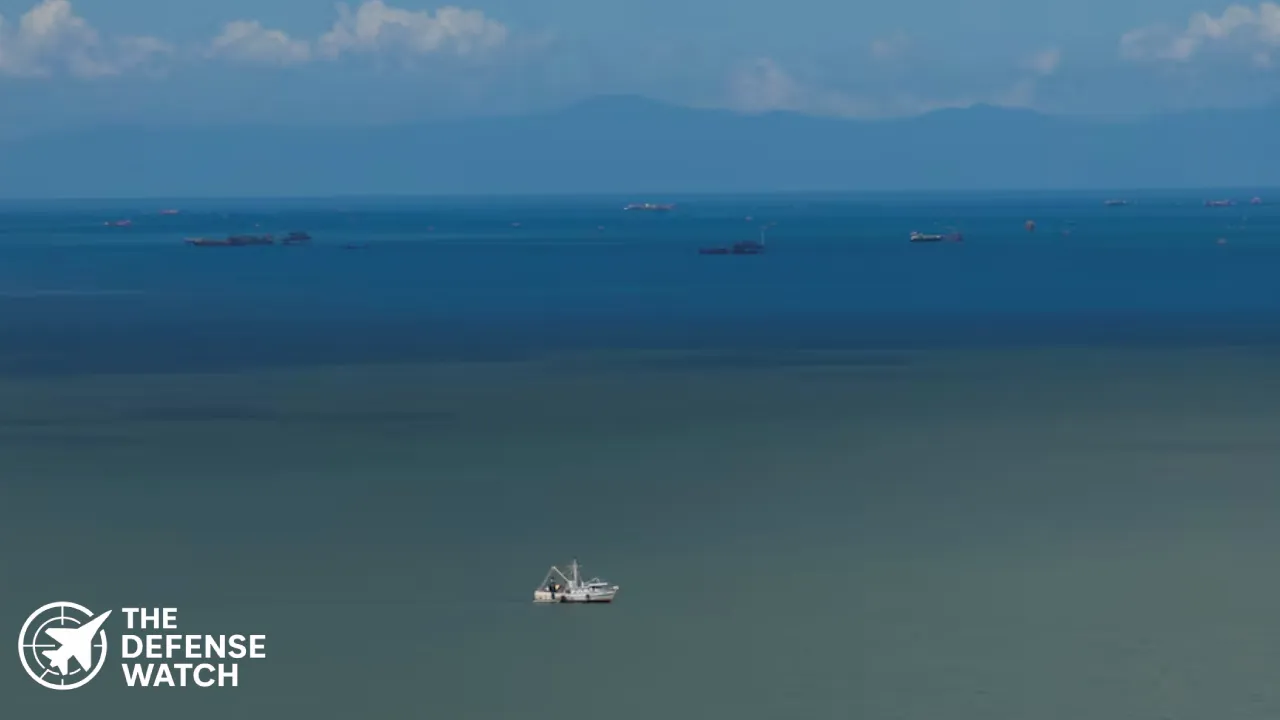
Venezuela airspace closure
SHARE

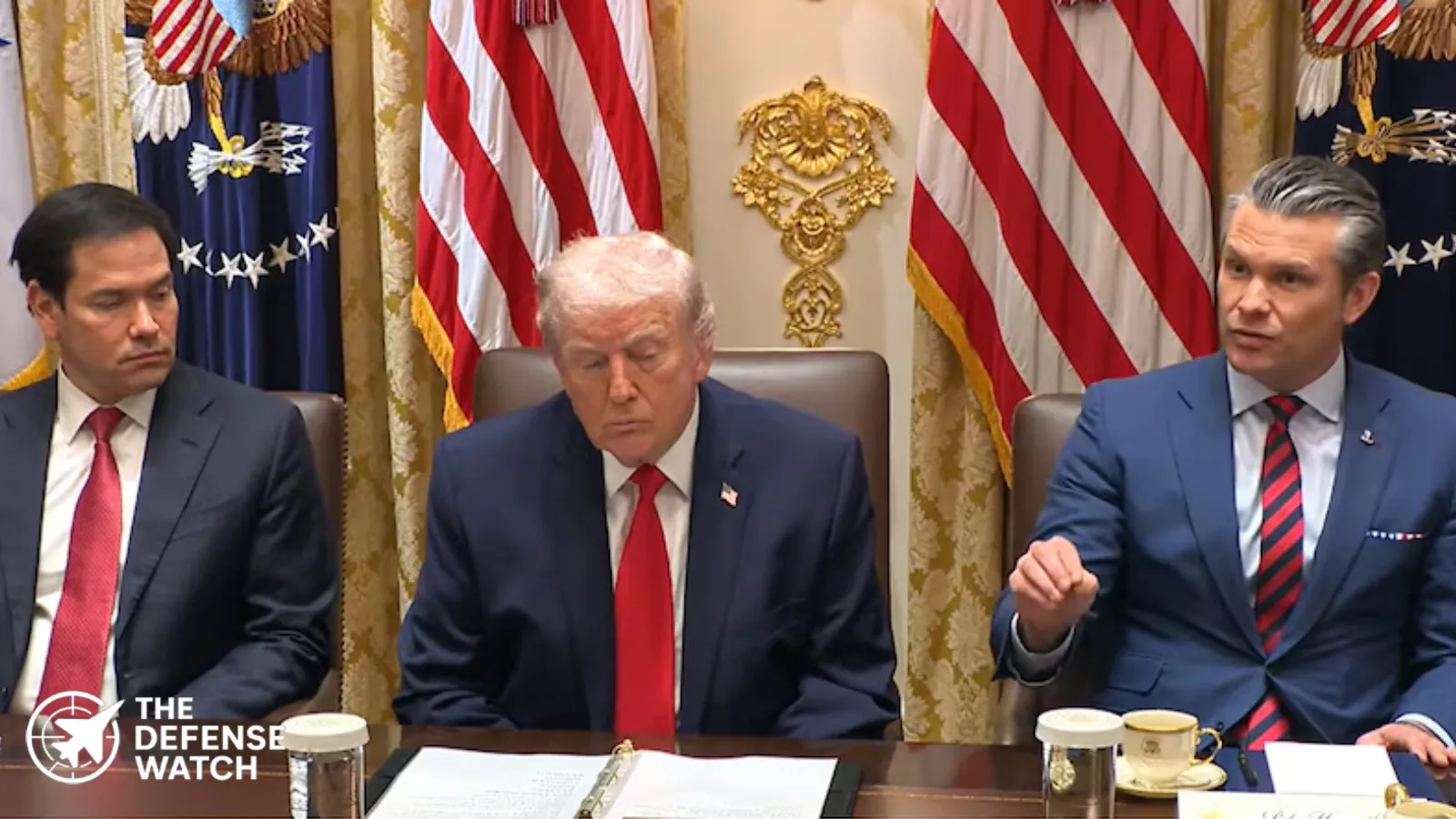
President Donald Trump declared that the airspace above and surrounding Venezuela should be treated as “closed in its entirety.” The declaration, made via a public post on his social-media platform, came without formal explanation or corroboration from the Pentagon or the White House.

Contents
Context: Why It MattersDetails: What Is Known So FarWhat Trump SaidPreceding Signals: FAA Warning & Airline SuspensionsU.S. Military Buildup & Anti-Drug OperationsImplications: What This Could MeanPotential Enforcement and Aviation ImpactsStrategic Signaling to Caracas and Allied ObserversLegal and Political RisksWhat to Watch Next

Trump addressed the message explicitly to “all Airlines, Pilots, Drug Dealers, and Human Traffickers,” urging them to avoid Venezuelan airspace. The suddenness and informality of the announcement left many U.S. officials reportedly surprised, as there was no prior public indication of a coordinated military campaign to enforce such a closure.

Context: Why It Matters

Over the past two months, Washington has significantly ramped up pressure against the government of Nicolás Maduro, whom the U.S. accuses of leading a narcotics network. In this period, the U.S. has expanded its military footprint in the Caribbean, deploying warships, aircraft, and reportedly authorizing covert operations in Venezuelan territory.

In parallel, the Federal Aviation Administration (FAA) issued a warning to airlines earlier in November, advising caution when flying over Venezuelan airspace due to a “worsening security situation” and increased military activity in or around the country.

- Advertisement -

Following that advisory, several major international carriers suspended flights to or over Venezuela; in response, the Venezuelan government revoked their operating rights. Against this backdrop, Trump’s post appears as a stark public escalation.

Details: What Is Known So Far

What Trump Said

  • In his Truth Social post, Trump wrote: “To all Airlines, Pilots, Drug Dealers, and Human Traffickers, please consider THE AIRSPACE ABOVE AND SURROUNDING VENEZUELA TO BE CLOSED IN ITS ENTIRETY.”
  • The statement offered no additional details — no mention of when enforcement would begin, what legal authority would underlie the closure, or whether it applied only to U.S.-based carriers or globally.

Preceding Signals: FAA Warning & Airline Suspensions

  • On Nov. 21, the FAA issued a caution for pilots and airlines operating in the Maiquetía Flight Information Region (FIR), citing increased risk due to military activity and reported navigation interference.
  • Several airlines responded by suspending flights to Venezuela. Subsequently, Caracas revoked the operating licenses of six major international airlines that had complied with the suspensions.

U.S. Military Buildup & Anti-Drug Operations

  • Since early September 2025, U.S. forces have carried out multiple airstrikes on vessels in the Caribbean and eastern Pacific, targeting ships the U.S. claims were involved in drug trafficking. At least 80–83 people have reportedly been killed.
  • Concurrently, the U.S. has deployed naval assets — including the USS Gerald R. Ford carrier strike group — to the Caribbean, underscoring a significant escalation in military presence near Venezuelan waters.
  • Three days prior to the airspace declaration, Trump warned that land-based operations against alleged narcotrafficking networks could begin “very soon.”

Implications: What This Could Mean

Potential Enforcement and Aviation Impacts

Technically, only Venezuelan authorities — through the national airspace regulator and air traffic control — have legal jurisdiction to enforce a no-fly zone over their territory. Trump’s unilateral declaration lacks a formal counterpart in Venezuelan civil aviation regulation or U.S. Department of Defense/Congress-backed mandate. As such, the announcement may function primarily as a political signal designed to discourage flight, rather than establishing a legally enforceable exclusion zone.

Still, the effect is already being felt. With airlines suspending flights out of caution, air connectivity to and over Venezuela has sharply decreased. This implies a de facto air blockade long before any formal no-fly zone—or overt enforcement — is put in place.

Strategic Signaling to Caracas and Allied Observers

The announcement amplifies pressure on the Maduro government, combining military posture, economic isolation, and broader diplomatic signaling. By framing the closure in terms of counter-narco operations, the administration seeks to justify force as part of a broader regional strategy — not just as a show of strength.

Moreover, for regional actors and global air carriers, the unpredictability underscored by the sudden closure raises concerns about flight safety, GNSS (GPS) interference, and civil-military coordination. Airlines will likely continue to reroute or suspend flights, which risks further isolating Venezuela economically.

Legal and Political Risks

  • International law: Unilateral closure of foreign airspace without bilateral agreement or UN mandate could be viewed as a violation of international civil aviation conventions.
  • Domestic U.S. checks: Congress has historically asserted oversight over military operations abroad, especially those without formal declarations of war. Increased covert operations or land incursions may provoke legal challenges or calls for accountability.
  • Humanitarian and economic consequences: Reduced air connectivity could further degrade humanitarian access, disrupt supply chains, and deepen the impact on Venezuelan civilians.

What to Watch Next

  • Whether the U.S. Department of Defense or the U.S. Southern Command issues a formal directive or NOTAM (Notice to Air Missions) to enforce the closure.
  • Responses or formal countermeasures from the Venezuelan government, including potential air defense posture or appeals to international bodies.
  • Actions by major global airlines and insurers — will they treat the closure as a temporary advisory or permanently avoid Venezuelan airspace?
  • Congressional or international reactions — possibly involving debates over legality, oversight, and humanitarian impact.
  • Broader regional consequences: neighboring countries may face increased migration flows, economic pressure, or security spillover depending on how this standoff evolves.
TAGGED:airspace closuredrug traffickingmilitary operationsU.S. policyVenezuela
Share This Article
Facebook Copy Link Print
ByTeamDefenseWatch
TeamDefenseWatch is the official editorial byline of TheDefenseWatch.com. Working under one umbrella, TheDefenseWatch.com, the team delivers verified, factual reporting on global defense, military technology, aerospace systems, and security developments. Articles are sourced from official statements, defense industry releases, and trusted media, with editorial review to ensure accuracy and clarity.Contact: info@TheDefenseWtach.com
7 Comments
  • Pingback: Thunderbirds F-16C Fighting Falcon Crashes in California Desert — Pilot Ejects Safely | TheDefenseWatch.com
  • Pingback: Turkey Launches Construction of First Indigenous MILDEN Submarine, Marking Major Naval Milestone
  • Pingback: Ukraine to Receive 5 Billion in Weapons Through NATO PURL Program by Year’s End
  • Pingback: US Navy MQ-4C Triton Extended Surveillance Patrol Caribbean North of Venezuela | TheDefenseWatch.com
  • Pingback: Where Trump Has Threatened to Strike Next: Greenland, Iran, Mexico & More | TheDefenseWatch.com
  • Pingback: Czech Republic Launches Jan Žižka Fiber-Optic Drone Production for Ukraine | TheDefenseWatch.com
  • Pingback: US and China Refuse to Sign Military AI Declaration at REAIM Summit 2026 | TheDefenseWatch.com

Leave a Reply Cancel reply

Your email address will not be published. Required fields are marked *

Search Defense Systems

Latest Defense Systems

  • TRML-4D Radar TRML-4D Radar
  • F-47A Fighter Jet F-47A Fighter Jet
  • China DF-61 Missile China DF-61 Missile
  • B61 Nuclear Bomb B61 Nuclear Bomb
  • Japan E-767 Airborne Japan E-767 Airborne
  • Remington 870 Shotgun Remington 870 Shotgun
  • RUTA B1 Cruise Missile RUTA B1 Cruise Missile
  • XQ-67A Drone XQ-67A Drone
  • B-25 Mitchell Bomber B-25 Mitchell Bomber

Recent Compares

  • J-10C vs JF-17 Thunder: Which Fighter Is More Capable? J-10C vs JF-17 Thunder: Which Fighter Is More Capable? View Comparison →
  • Tejas vs Gripen: Key Differences and Capabilities Tejas vs Gripen: Key Differences and Capabilities View Comparison →
  • Tejas vs MiG-21 Bison: How India Replaced Its Iconic Supersonic Fighter Tejas vs MiG-21 Bison: How India Replaced Its Iconic Supersonic Fighter View Comparison →
  • F-35 vs F-16: Stealth, Sensors and Combat Roles F-35 vs F-16: Stealth, Sensors and Combat Roles View Comparison →
  • Tejas Fighter Jet vs F-16 Fighting Falcon: Capability Compared Tejas Fighter Jet vs F-16 Fighting Falcon: Capability Compared View Comparison →
  • Rafale Fighter Jet vs F-16 Fighting Falcon : Which Fighter Has the Edge? Rafale Fighter Jet vs F-16 Fighting Falcon : Which Fighter Has the Edge? View Comparison →
  • Su-57 Fighter Jet vs J-20 Fighter Jet: Stealth and Air Combat Compared Su-57 Fighter Jet vs J-20 Fighter Jet: Stealth and Air Combat Compared View Comparison →
  • Mirage 2000 vs Tejas Mk1A: Legacy Combat Power vs Indigenous Modernization Mirage 2000 vs Tejas Mk1A: Legacy Combat Power vs Indigenous Modernization View Comparison →
  • Rafale Fighter Jet vs F-22 Raptor: Which Air Dominance Fighter Has the Edge? Rafale Fighter Jet vs F-22 Raptor: Which Air Dominance Fighter Has the Edge? View Comparison →
  • Tejas Fighter Jet vs. Rafale Fighter Jet: India’s Indigenous Fighter Meets France’s Proven Multirole Combat Aircraft Tejas Fighter Jet vs. Rafale Fighter Jet: India’s Indigenous Fighter Meets France’s Proven Multirole Combat Aircraft View Comparison →

Recent Posts

  • Hensoldt Targets €10 Billion in Annual Revenue by 2035, Doubles TRML-4D Radar Capacity
  • Somalia’s Reported JF-17 Deal Raises Questions Over Airpower and Regional Security
  • Navy Awards General Dynamics Subsidiary $20 Million Undersea Warfare Research Contract
  • U.S. Air Force Awards $26 Million Contract for Flyways AI Air Operations Software
  • Hegseth Orders Major Overhaul of U.S. Military Education System

You Might Also Like

US military Venezuela earthquake response
Global News

US Military Moves To Major Earthquake Relief Mission As Venezuela Disaster Deepens

September 7, 2026
U.S. Navy South Korea training partnership
Global News

U.S. Navy Expands Training Partnership With South Korea During Pensacola Visit

November 9, 2026
Venezuela raid deterrent effect
Global News

U.S. Says Venezuela Raid Restores Military Deterrence After Maduro Capture

January 31, 2026
U.S. munitions used against Iran
Global News

Pentagon Used $5.6 Billion In Munitions During First Two Days Of U.S. Operations Against Iran

September 7, 2026

Logo

Copyright © 2026 TheDefenseWatch.com

Helpful Links

  • Home
  • About Us
  • Privacy Policy
  • Terms of Use / Disclaimer
  • U.S. Privacy Notice – CCPA Compliance

Defense Systems

  • Defense Systems
  • Comparisons 
  • Manufacturer
  • Tactical Calculators

Popuplar

Which 5 Air Forces Possess the Costliest Fighter Jet Fleets in the World
Evolving Strategic Value: Carrier Strike Groups in the Indo-Pacific’s Future Security Architecture
Autonomous Weapon Systems Spark U.S. Ethics Debate Amid Rapid Military AI Integration

We report on developments involving military forces, governments, defense companies, research organizations, and security institutions around the world. 

Welcome Back!

Sign in to your account

Username or Email Address
Password

Lost your password?