Military forces increasingly depend on their ability to share information across aircraft, ships, ground units, satellites and digital networks. In a conflict involving multiple domains, the speed and reliability of those connections can influence how quickly commanders understand threats, coordinate forces and authorize responses.
Lockheed Martin addressed this challenge in a November 23, 2026, feature titled The New Reality of Modern Warfare: Why Command and Control Matters. The company argues that command and control (C2) capabilities are becoming increasingly important as military operations generate larger volumes of information and communications face disruption from electronic warfare and other threats.
The article also promotes Lockheed Martin’s CommandIQ open-architecture C2 ecosystem, which the company describes as a way to connect technologies from different manufacturers and military domains.
However, the wider challenge extends beyond developing another command software platform. Military organizations must also resolve longstanding problems involving incompatible systems, information security, communications resilience and the integration of independently developed military networks.
Why Command and Control Is Becoming More Important
Command and control describes the processes, systems and organizational arrangements through which military commanders exercise authority, communicate instructions and coordinate forces.
Traditional command structures relied heavily on established communications networks and dedicated command centers. Modern operations increasingly require information to move between geographically dispersed forces, intelligence organizations and operational headquarters.
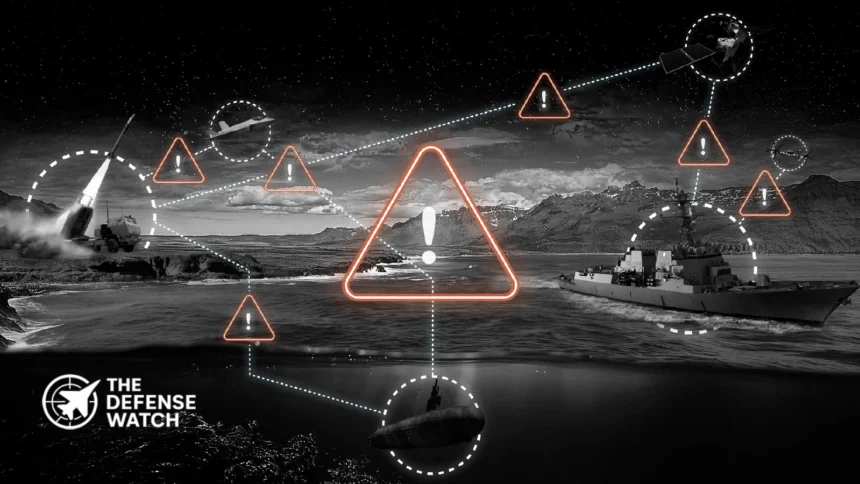
A naval vessel may receive information from airborne surveillance assets, while ground forces depend on satellite communications and intelligence networks to understand developments elsewhere in the battlespace. Commanders need to combine these different information sources into an operational picture that supports timely decisions.
The challenge is not simply collecting information. It is determining which information is reliable, relevant and important enough to influence an operational decision.
Lockheed Martin identifies this distinction in its latest feature, arguing that additional data does not automatically produce better situational awareness. Information must be organized, interpreted and distributed to the personnel responsible for making decisions.
This becomes particularly important when adversaries attempt to disrupt communications, interfere with navigation systems, attack digital infrastructure or overwhelm military networks with misleading information.
The Connection Between C2 and Joint All-Domain Operations
MILITARY TECHNOLOGY AND DOCTRINE
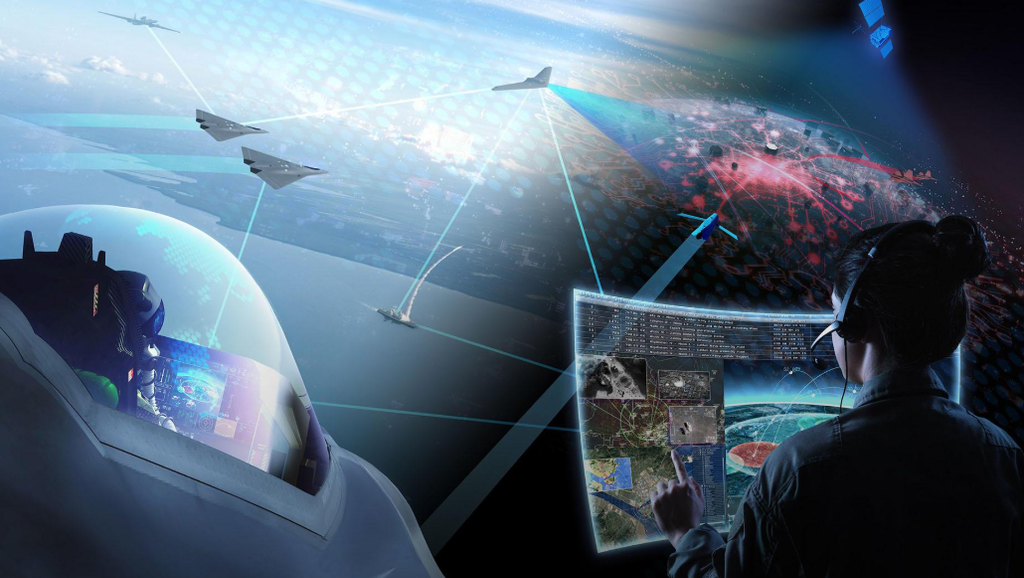
The U.S. Department of Defense has been pursuing a broader approach to military connectivity through Joint All-Domain Command and Control (JADC2), subsequently expanded to Combined Joint All-Domain Command and Control (CJADC2).
The objective is to improve information sharing and coordination across the air, land, maritime, space and cyber domains, including cooperation with allied and partner forces.
CJADC2 is not a single weapons system or standalone procurement program. It is a wider military concept intended to connect existing and future capabilities through improved data sharing, integration and decision-support processes.
A major part of the effort involves reducing the time required to move information between sensors, command centers and operational units.
For example, information collected by an airborne surveillance platform could help naval or ground commanders understand a developing threat. The objective is to make relevant information available to authorized decision-makers without requiring personnel to manually reconcile information from multiple disconnected systems.
The Government Accountability Office (GAO) examined these efforts in its April 2025 report, Defense Command and Control: Further Progress Hinges on Establishing a Comprehensive Framework.
GAO identified persistent challenges in coordinating the Pentagon’s C2 modernization efforts. These included separate military service initiatives, limited sharing of lessons from experiments, difficulties integrating existing systems and restrictions on exchanging classified information.
The report recommended that the Defense Department establish a framework to guide investments, share lessons learned and address obstacles to achieving CJADC2 objectives.
Lockheed Martin’s CommandIQ Approach
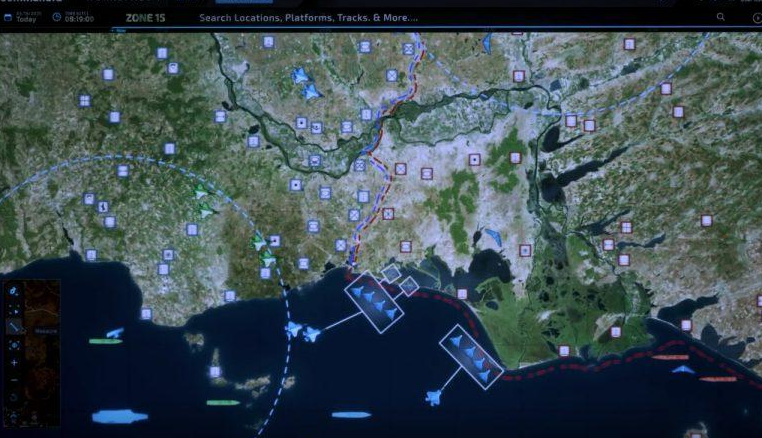
Lockheed Martin is positioning its CommandIQ ecosystem as part of the wider effort to improve military command and control.
According to the company’s November 23 feature, CommandIQ uses an open-architecture approach intended to integrate technologies from different companies across air, land, sea, space and cyber operations.
The concept is designed to help military organizations bring information from different platforms and systems into a more coordinated operational picture.
An open architecture can be important because defense forces frequently operate equipment developed by different manufacturers under separate procurement programs. Without compatible interfaces and data standards, information may remain isolated within individual systems.
A more flexible architecture could make it easier to incorporate additional sensors, applications and mission capabilities without replacing an entire command infrastructure.
Lockheed Martin’s broader C2 portfolio also includes battle management capabilities and established combat systems such as the Aegis Combat System.
However, CommandIQ should not be confused with CJADC2 itself. The former is a company-developed offering, while the latter is a broader U.S. military effort involving multiple services, government organizations, industry partners and allied forces.
The November feature does not announce a new military contract, operational deployment, procurement decision or independently verified performance milestone for CommandIQ. The company also does not provide detailed comparative performance figures in the article.
That distinction matters when assessing the commercial and operational significance of the announcement.
Communications Disruption Remains a Major Operational Risk
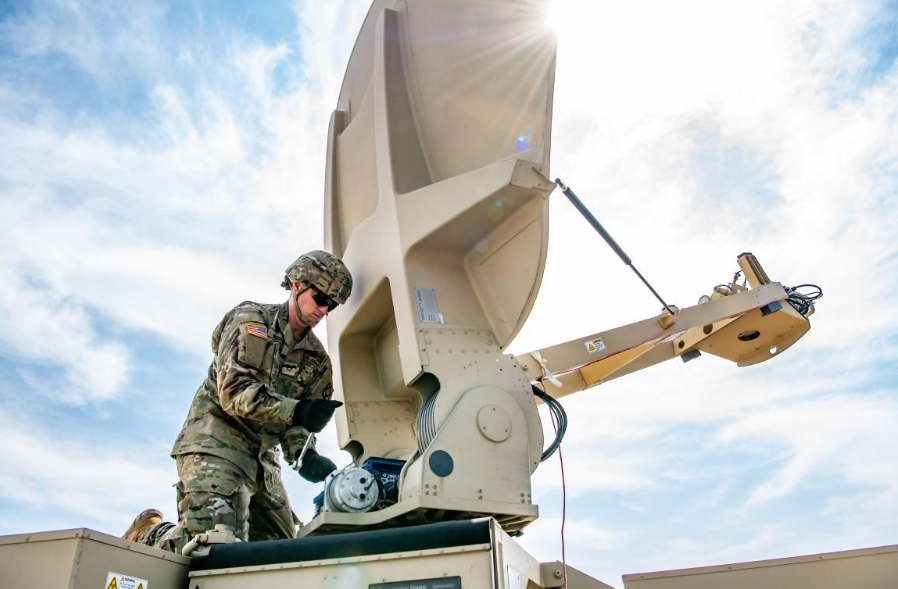
Improved data integration cannot deliver its intended benefits if military networks become unavailable during combat.
Potential adversaries increasingly view communications infrastructure as an operational target. Electronic warfare, cyberattacks, satellite disruption and attacks against communications facilities can interfere with the information flows required for coordinated military operations.
A force that depends on continuous connectivity may face serious difficulties when its networks are degraded or denied.
This creates an important requirement for modern C2 architecture: systems must maintain useful functionality even when communications are unreliable.
Military networks therefore need to support multiple communication pathways, secure information exchange and the ability to operate with incomplete or delayed information.
Commanders must also retain the ability to delegate authority to subordinate units when centralized communications are disrupted.
This is particularly relevant to distributed operations, in which military formations may operate across large geographic areas without maintaining continuous contact with higher headquarters.
Technology can improve information distribution, but it cannot eliminate the need for trained personnel, clear command relationships and operational procedures that account for communications failure.
The Pentagon Still Faces an Integration Problem
One of the most important findings in the GAO report is that the United States has not fully resolved the organizational and technical difficulties associated with building an integrated command and control environment.
GAO found that military departments and other Defense Department organizations were pursuing separate data integration capabilities without a sufficiently comprehensive framework to coordinate investments and measure overall progress.
The report also identified restrictive information classification rules as a significant obstacle to sharing command and control data.
These problems are not necessarily solved by introducing an open-architecture platform.
Interoperability requires agreement on data formats, interfaces, security requirements and access permissions. Systems must also be tested under realistic operational conditions to establish whether they can exchange information reliably.
The issue becomes more complicated when allied militaries are involved. Partner nations may use different equipment, communications networks, encryption arrangements and information-sharing policies.
Consequently, the success of CJADC2 and related commercial solutions will depend as much on institutional coordination and technical standards as on software development.
What C2 Modernization Means for Future Military Operations
The growing emphasis on command and control has implications for several areas of military modernization.
Air operations: Fighter aircraft, airborne early warning platforms, unmanned aircraft and ground-based command centers increasingly need to exchange information to coordinate surveillance, threat assessment and mission execution.
Naval operations: Warships depend on integrated combat management systems, sensor networks and communications links to coordinate air defense, maritime surveillance and engagement decisions.
Land warfare: Distributed ground formations require reliable access to intelligence, targeting information and supporting capabilities, particularly when operating beyond the immediate reach of higher headquarters.
Space and cyber operations: Satellites and digital infrastructure provide communications, intelligence and other services that support military operations. Protecting these networks is therefore an important part of maintaining command continuity.
These requirements also explain why C2 modernization is closely connected to investments in electronic warfare protection, satellite communications, cybersecurity and resilient military networks.
The challenge is to ensure that information remains useful and accessible when an adversary actively attempts to disrupt the systems carrying it.
The Difference Between Better Connectivity and Better Decisions
An integrated operational picture does not automatically guarantee better military decisions.
Commanders still need reliable intelligence, trained personnel and an understanding of the operational environment. They must distinguish confirmed information from uncertain reports and avoid making decisions based on inaccurate or incomplete data.
There is also a risk of information overload. Connecting additional sensors and platforms can increase the amount of information reaching command centers, placing greater demands on analysts and operators.
Automation and artificial intelligence may help organize incoming information, identify patterns and prioritize relevant alerts. However, their effectiveness depends on data quality, system reliability and appropriate human oversight.
For defense companies such as Lockheed Martin, this creates an opportunity to develop software and integration capabilities that support military decision-making.
The competitive challenge will be demonstrating that these technologies can operate across different military services, withstand contested communications environments and integrate with existing defense infrastructure.
A Long-Term Modernization Challenge
Lockheed Martin’s CommandIQ feature reflects the defense industry’s growing emphasis on software integration and cross-domain military connectivity.
The broader U.S. military requirement is considerably larger. CJADC2 involves coordinating systems, organizations and information-sharing arrangements across the Defense Department and international partners.
GAO’s findings demonstrate that technical integration alone will not resolve the problem. Investment coordination, information security, common standards and institutional responsibilities remain important obstacles.
For the U.S. military, the central requirement is not simply to connect more platforms. It is to ensure that commanders can access reliable information, communicate decisions and coordinate forces even when an adversary attempts to disrupt the network.
CommandIQ is one industry approach to that requirement. Its actual contribution will depend on integration, testing, adoption and demonstrated performance in operational environments.
Enjoying our coverage?
Make The Defense Watch a preferred source on Google to see more of our geopolitical and defense insights when relevant to you.