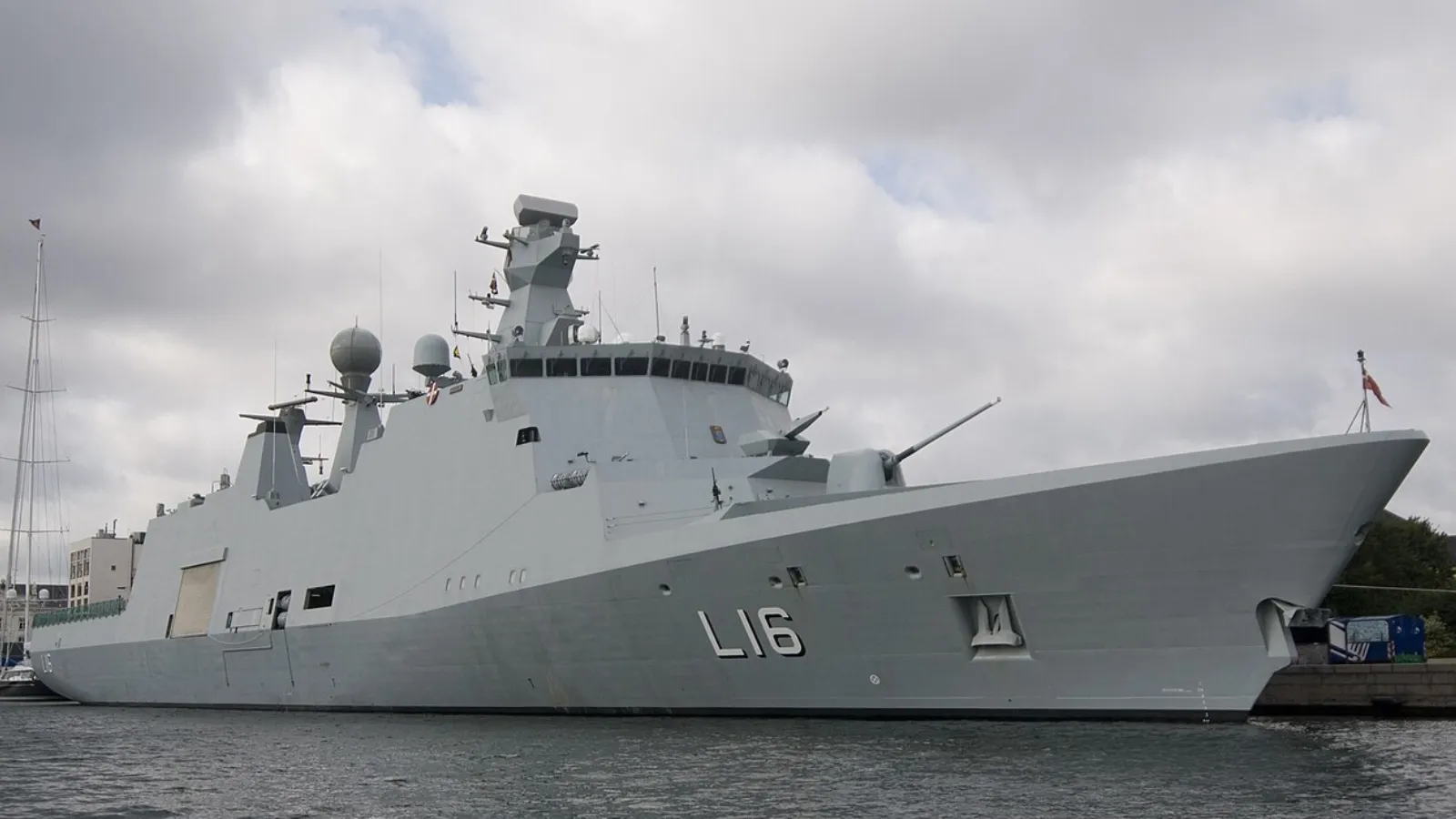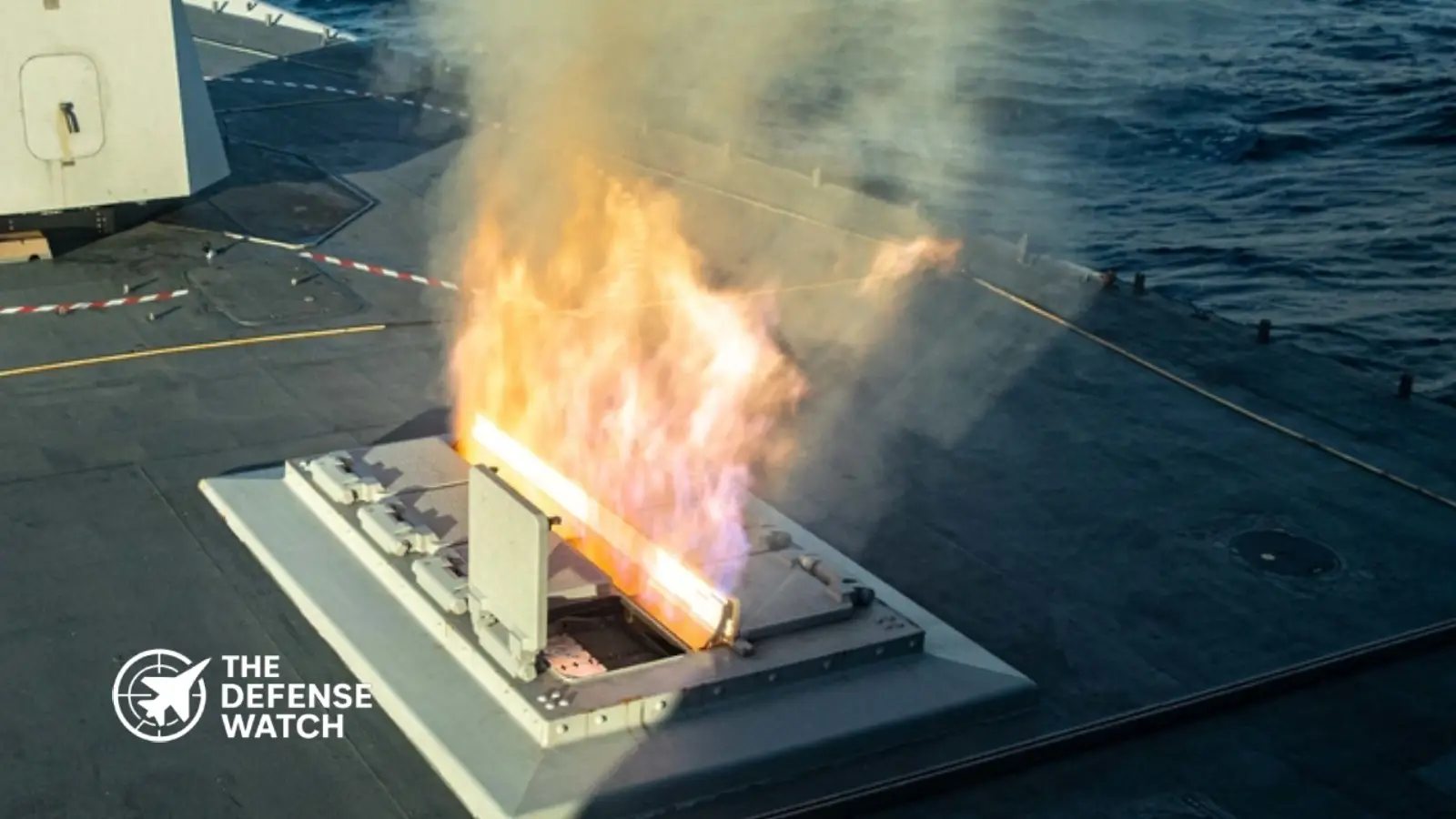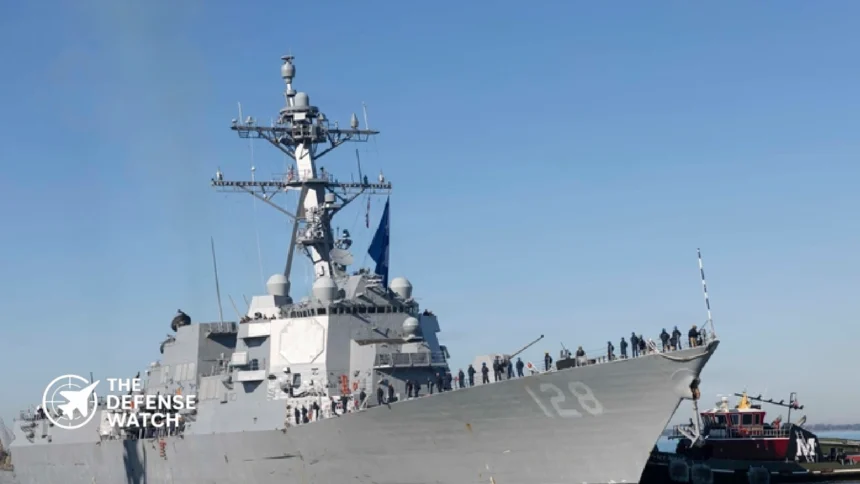
The U.S. Navy has awarded a combined contract ceiling of $7.125 billion to 28 defense companies for the Surface Electronic Warfare Improvement Program (SEWIP), a long-running effort to modernize electronic warfare capabilities aboard Navy, Coast Guard and allied surface ships.
Announced on November 19, 2026, the multiple-award indefinite-delivery/indefinite-quantity (IDIQ) contract covers successive upgrades to shipboard electronic warfare systems responsible for detecting hostile signals, analyzing radar emissions, warning crews of potential threats and supporting defenses against anti-ship missiles.
The contract could run through November 2036 if all options are exercised. The announcement does not establish that the Navy will spend the full $7.125 billion, nor does it disclose an initial funding allocation for each contractor.
A broad industrial team for shipboard electronic warfare
The 28 companies receiving contract awards include major U.S. defense contractors, specialist electronics manufacturers and smaller technology and engineering firms.
The awardees are:
- Aeronix
- Amentum Services
- BAE Systems Technology Solutions & Services
- CACI Federal
- CAES Systems
- Distributed Spectrum
- EWA Warrior Services
- Frequency Electronics
- Future Technologies
- General Dynamics Information Technology
- General Dynamics Mission Systems
- Global Technical Systems
- HII Mission Technologies
- Innovative Defense Technologies
- Laurel Technologies Partnership
- Leidos
- Lockheed Martin
- ManTech Advanced Systems International
- Northrop Grumman Systems
- Product Development Associates
- Raytheon
- Research and Development Solutions
- Systems Engineering Support
- Simventions
- Systems & Processes Engineering
- Ultra Electronics Ocean Systems
- VT Milcom
- PCI Aviation
Each company received an individual contract identifier, ranging from N6175027D1401 to N6175027D1428.
The Navy said the procurement attracted 31 offers through the System for Award Management website and the Procurement Integrated Enterprise Environment Solicitation Module. The competitive process resulted in 28 contract awards.
The contracting activity is Program Acquisition Executive Mission Systems in Washington, D.C.
Importantly, this is a multiple-award procurement vehicle rather than a single production order. The combined ceiling provides a framework for placing future orders among the selected companies. The announcement does not provide a breakdown of the potential value assigned to each contractor.
What SEWIP does for Navy warships
The SEWIP program modernizes the Navy’s AN/SLQ-32 electronic warfare system, which has supported shipboard electronic warfare operations since the late 1970s.
Rather than replacing the entire system in one step, the Navy uses successive block upgrades to introduce new sensors, processing capabilities, electronic surveillance functions and electronic attack technologies.
The system’s mission is particularly important against modern anti-ship missiles, which increasingly rely on sophisticated radar seekers and targeting systems.
SEWIP contributes to ship protection through several related functions:
- Electronic surveillance: Detecting and collecting electromagnetic emissions from potential threats.
- Signal analysis: Processing intercepted signals to help identify and classify hostile radar activity.
- Threat warning: Providing information that allows ship crews and combat systems to respond to potential attacks.
- Electronic attack: Using electromagnetic techniques to interfere with hostile targeting systems.
- Countermeasure coordination: Supporting the use of non-kinetic defensive measures, including decoys.
The distinction between electronic support and electronic attack is important. Detecting an incoming threat does not automatically defeat it. Electronic attack capabilities provide an additional means of disrupting the targeting process before a missile reaches its intended target.
According to the Navy’s SEWIP program description, the upgrades are intended to improve the AN/SLQ-32’s ability to detect threats, support counter-targeting and strengthen anti-ship missile defense.
Block upgrades address different electronic warfare requirements
SEWIP is organized around incremental modernization rather than a single system configuration.
The major upgrades have different technical responsibilities.
Block 1 introduces improvements to electronic surveillance, signal identification and operator interfaces. Its enhancements include high-gain, high-sensitivity receiver capabilities.
Block 2 improves electronic support through upgraded antennas, receivers and combat system interfaces. These changes are intended to improve signal detection, identification and situational awareness.
Block 3 adds advanced electronic attack capabilities. It builds on the electronic surveillance functions of earlier upgrades and introduces additional means of engaging hostile targeting radars and anti-ship missile threats through electromagnetic effects.
The Department of Defense’s FY2025 Director, Operational Test and Evaluation (DOT&E) report identifies the Block 3 configuration as the AN/SLQ-32(V)7.
This progression illustrates why the program requires continued engineering, integration and testing. Improvements to electronic surveillance and electronic attack must work alongside existing shipboard combat management systems.
Testing remains an important part of modernization
The Navy’s SEWIP modernization effort also faces the technical challenges associated with integrating complex electronic warfare equipment into operational ships.
The FY2025 DOT&E annual report provides an example.
The Navy’s Operational Test and Evaluation Force had intended to conduct operational testing of the AN/SLQ-32(V)6 variant of SEWIP Block 2 aboard USS Mason (DDG 87) during fiscal year 2025.
However, unfavorable weather and problems involving the test platform prevented the planned testing from taking place.
In September 2025, operational testers also conducted cyber survivability testing involving the AN/SLQ-32(V)6 aboard USS Frank E. Petersen Jr. (DDG 121), as part of a broader Aegis Combat System evaluation.
These findings do not establish that the SEWIP system is ineffective. They demonstrate that operational evaluation, platform availability and cybersecurity remain important considerations during the modernization process.
The latest contract creates a broader industrial framework through which the Navy can obtain engineering, development, integration, testing and other program support.
Why the $7.13 billion contract matters
The award’s main significance lies in the scale and duration of the procurement framework.
Electronic warfare systems require continuing updates because adversaries can modify radar operating frequencies, signal characteristics and targeting methods. A shipboard system that performs effectively against one generation of threats may require software, hardware or processing changes to address newer ones.
A multi-award IDIQ structure gives the Navy access to multiple contractors rather than concentrating all future work under one company.
It also provides flexibility to compete individual requirements among the selected firms, subject to the terms of the contract and subsequent task or delivery orders.
The participating companies bring experience across several relevant areas, including:
- Electronic warfare equipment and signal processing.
- Systems engineering and integration.
- Defense electronics and communications.
- Software development and testing.
- Shipboard equipment installation and support.
- Research, prototyping and technical services.
The combination of large defense contractors and specialist suppliers provides the Navy with a broad industrial base for supporting different SEWIP requirements.
However, the award announcement does not identify which companies will receive particular upgrade assignments or how much work each will perform.
The financial distinction is equally important. The $7.12582 billion figure represents the combined potential contract value, not an immediate expenditure or a guaranteed payment to the 28 awardees. Actual spending will depend on future orders, available funding and exercised contract options.
Implications for the US surface fleet and allied navies
Shipboard electronic warfare has become an increasingly important element of naval survivability.
Modern surface combatants operate in environments where anti-ship missiles, targeting radars and other electromagnetic threats can challenge a ship’s ability to detect and respond to an attack.
Electronic warfare complements conventional defensive weapons such as surface-to-air missiles and close-in weapon systems.
It provides another layer of protection by helping crews understand the electromagnetic environment and, where equipped, disrupting hostile targeting systems.
The SEWIP Family of Systems is also relevant beyond the U.S. Navy. The contract announcement identifies Navy, Coast Guard and allied ships as potential beneficiaries of the system upgrades.
That creates an opportunity to support a wider range of shipboard configurations, although the announcement does not identify specific foreign customers, quantities or export orders associated with this contract.
The November 2036 potential completion date provides a long planning horizon for the program. It does not, however, establish that every participating company will receive work throughout the entire period.
For the Navy, the central challenge will be converting the available industrial capacity into tested, integrated and maintainable electronic warfare capabilities across its surface fleet.
Enjoying our coverage?
Make The Defense Watch a preferred source on Google to see more of our geopolitical and defense insights when relevant to you.