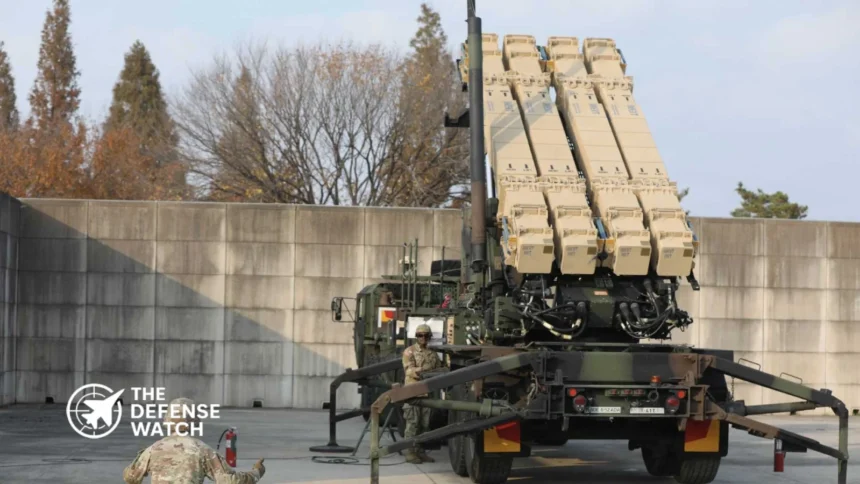
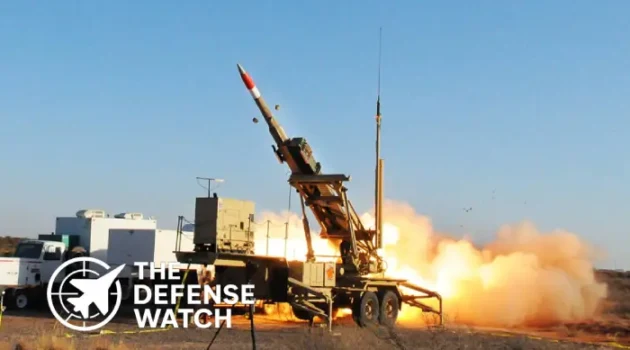
The U.S. Army has certified its first operational Patriot air defense battery on the Integrated Battle Command System (IBCS), giving a forward-deployed unit in South Korea the ability to coordinate geographically separated radar sensors and missile launchers through a shared fire-control network.
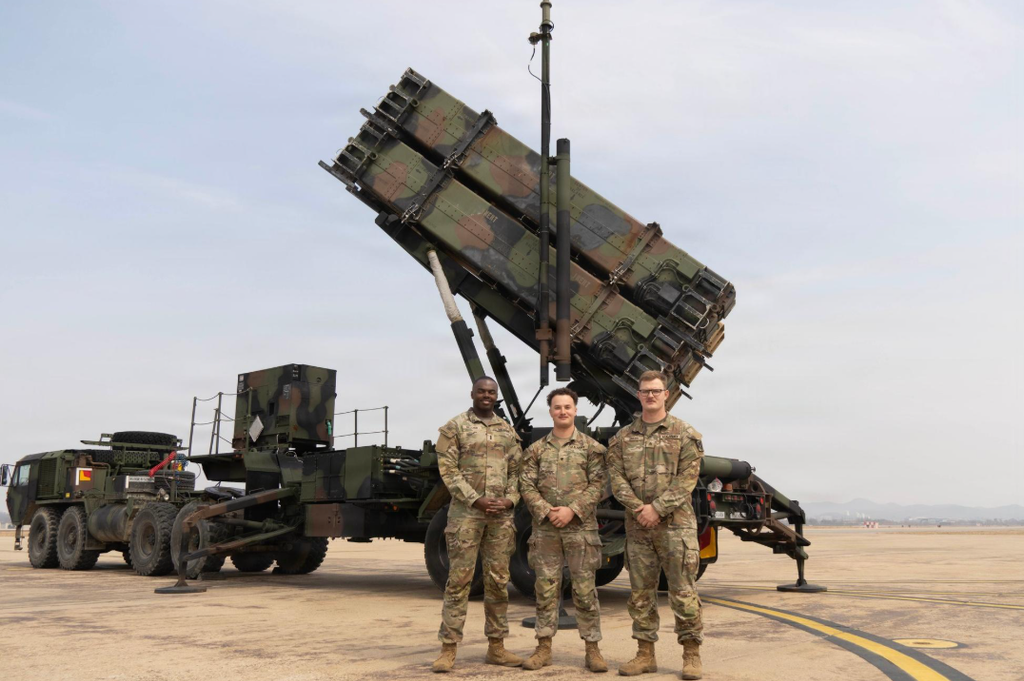
The milestone involves Delta Battery, 6th Battalion, 52nd Air Defense Artillery Regiment, assigned to the 35th Air Defense Artillery Brigade. The Eighth Army announced the certification on November 18, 2026, describing it as the first operational U.S. Army Patriot battery to complete IBCS certification.
The change is important because it moves Patriot operations away from a more self-contained battery arrangement toward a network-based approach in which sensors, command elements and launchers do not have to operate together at one location.
For U.S. forces stationed on the Korean Peninsula, this provides additional flexibility in positioning air defense equipment against a regional threat environment that includes North Korean ballistic missiles, cruise missiles and aircraft.
Delta Battery completes a key operational milestone
Delta Battery’s certification demonstrates that its personnel can operate the Patriot system through the Army’s IBCS Integrated Fire Control Network rather than relying exclusively on legacy, individual weapon-system networks.
According to the Army, the evaluation validated the crew’s ability to separate sensors and launchers from their fire-control unit while maintaining coordination through the network.
The Army said additional Patriot batteries within the 6th Battalion, 52nd Air Defense Artillery Regiment, were expected to complete IBCS certification in the following weeks.
That planned expansion is important. Certification of one battery demonstrates that the capability can be operated by an operational unit, but broader battalion-level integration will be necessary to establish a more distributed air defense formation.
The Army has not published detailed results from the certification, including engagement performance, communications resilience under electronic attack or the precise configuration of the equipment used during the evaluation.
How IBCS changes Patriot operations

The Integrated Battle Command System is designed to connect air defense sensors, weapons and command-and-control elements through a common network.
Developed by Northrop Grumman, IBCS addresses a longstanding limitation of traditional air defense architectures: different weapon systems and sensors have often operated through separate command networks with limited ability to share fire-control information.
Under the IBCS approach, compatible sensors can contribute tracking information to a common network, while commanders can coordinate engagements using an appropriate connected weapon system.
The Army describes this concept as any sensor, best shooter. It allows commanders to consider available sensor and weapon combinations instead of depending entirely on the radar and launcher arrangement associated with an individual battery.
This does not mean every radar can automatically control every missile. Sensor compatibility, track quality, communications, weapon integration and engagement requirements remain important constraints.
The Army’s Field Manual 3-01, published in August 2025, explains that IBCS can pair available weapons with appropriate sensor information, including situations where the engaging weapon does not have its own sensor tracking the target. The manual also notes that Patriot interceptors still require an uplink from a Patriot radar, although that radar does not necessarily have to be the one tracking the threat being engaged.
Why separating radars and launchers matters
Traditional Patriot battery configurations place significant operational emphasis on coordinating radar, engagement control and launcher elements within an established battery structure.
IBCS provides greater freedom to position those components separately.
This offers several potential advantages:
- Reduced equipment concentration: Radars, launchers and command elements can be positioned at separate locations, reducing the need to concentrate all major components at one site.
- More flexible sensor coverage: Compatible sensors can provide tracking information to a wider network of connected air defense assets.
- Alternative engagement arrangements: Commanders can select an appropriate connected launcher based on the available sensor information and engagement requirements.
- Greater deployment flexibility: Individual components can be positioned according to terrain, defended assets and operational requirements.
The survivability implications are particularly relevant. A dispersed formation may be less vulnerable to an attack aimed at locating and striking several major battery components at one position.
However, dispersion does not eliminate vulnerability. The network still depends on communications, power, sensor availability and functioning command systems. Electronic warfare, communications disruption and physical attacks on network components could affect the formation’s ability to coordinate engagements.
The Army’s announcement confirms the ability to operate dispersed components. It does not establish that the battery has demonstrated resilience against a sophisticated electronic attack or a coordinated missile strike.
South Korea provides an important operational setting

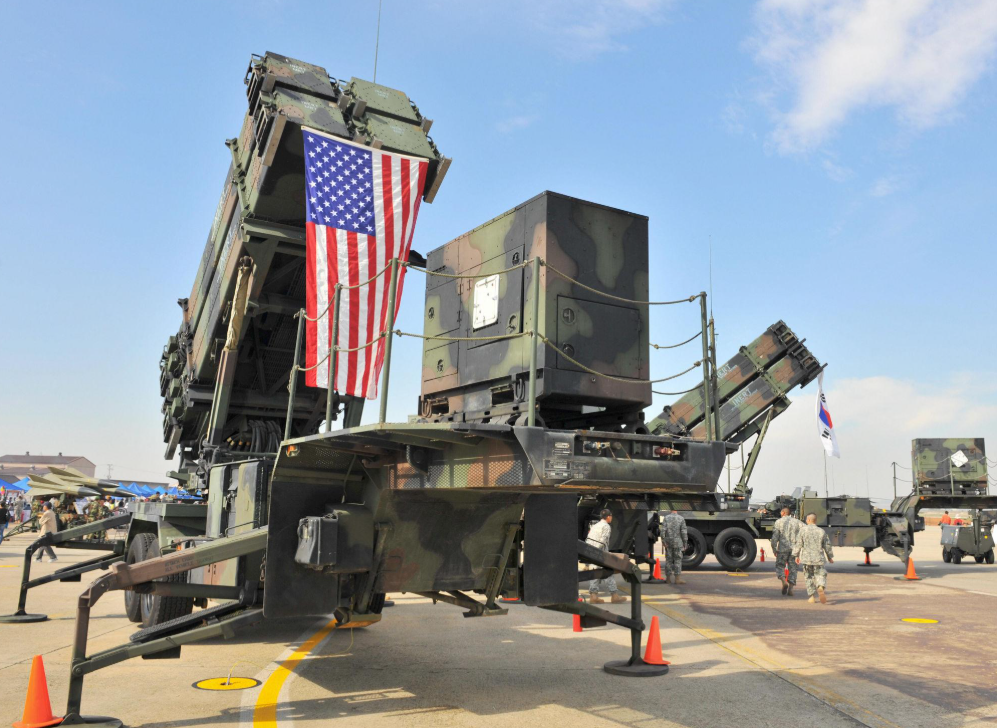
The certification took place in the Republic of Korea, where U.S. forces maintain air and missile defense capabilities to protect military installations, personnel and other critical assets.
North Korea’s continued development of ballistic missiles and other strike capabilities makes integrated air defense a significant requirement for the U.S. military presence on the peninsula.
Patriot provides a lower-tier air and missile defense capability against selected aircraft, cruise missiles and ballistic missile threats. Its effectiveness depends on the threat, interceptor configuration, sensor coverage and engagement conditions.
The wider IBCS architecture is intended to improve coordination between air defense resources rather than replace the underlying interceptors.
For the 35th Air Defense Artillery Brigade, the ability to distribute Patriot components could provide additional options for defending multiple locations and managing the positioning of equipment.
It is also relevant to the Army’s wider modernization effort, which seeks to move beyond isolated weapon platforms toward an integrated air and missile defense architecture.
IBCS moves from development into wider operational fielding
IBCS has been under development for many years. Its introduction into operational Army units has involved extensive testing, integration and acquisition work.
A June 2025 Government Accountability Office report, GAO-25-107491, provides useful context for understanding the latest certification.
The report stated that the Army had fielded an initial IBCS capability, integrating the system with Patriot and Sentinel A3 radar equipment, to a battalion in the third quarter of fiscal year 2023. At the time, that battalion was limited to operating as a test unit at White Sands Missile Range while additional testing continued.
The GAO also reported that the Army had approved IBCS for full-rate production in fiscal year 2023 and planned to begin fielding the system to active Patriot battalions in fiscal year 2025. Its stated fielding objective was two Patriot battalions annually until 16 battalions had received the system.
Delta Battery’s November 2026 certification therefore provides a useful indication of the transition from developmental and test activities toward operational use in a forward-deployed formation.
The distinction matters. An acquisition milestone or successful test does not automatically establish that a combat unit can employ the capability as part of its regular operational duties.
The South Korea certification provides evidence of progress at the unit level, although the Army has not published a comprehensive updated fielding schedule or confirmed the completion status of all planned battalions.
What the certification does not establish
The milestone should not be interpreted as confirmation that every U.S. air and missile defense asset in South Korea is now connected through IBCS.
The Army’s announcement specifically identifies Delta Battery and its Patriot components. It does not confirm that the battery’s certification included operational integration with the Terminal High Altitude Area Defense (THAAD) system, Aegis-equipped naval vessels or F-35 aircraft sensors.
These capabilities may be relevant to the Army’s wider integrated air defense objectives, but their participation in this particular certification has not been established by the published announcement.
Likewise, the certification does not change the Patriot interceptor’s physical performance characteristics. IBCS is primarily a command-and-control and fire-control integration capability. It does not independently increase missile range, speed or warhead effectiveness.
The immediate achievement is therefore organizational and operational: a forward-deployed Patriot battery has demonstrated the ability to coordinate its dispersed components through a modernized network.
The next step is battalion-level integration
The Army’s announcement points to additional IBCS certifications among the remaining Patriot batteries in the 6th Battalion, 52nd Air Defense Artillery Regiment.
That process will be important for determining how effectively the battalion can coordinate multiple batteries and distributed sensors during broader air defense operations.
The longer-term value of IBCS will depend on the Army’s ability to connect additional sensors and weapons, maintain reliable communications and train personnel to operate across a distributed architecture.
For now, Delta Battery’s certification is a concrete operational milestone in the Army’s effort to modernize Patriot command and control. Its significance lies less in changing the missile system itself than in changing how the Army can organize and employ the equipment already in service.
Enjoying our coverage?
Make The Defense Watch a preferred source on Google to see more of our geopolitical and defense insights when relevant to you.