The Pentagon wants state and local governments to think beyond traditional military installations as it develops plans for a new U.S. military base intended to support future warfare. The proposed facility is expected to combine advanced military infrastructure, autonomous technologies, resilient energy systems and capabilities designed to protect U.S. forces against emerging threats.
The challenge is part of the Department of War’s Next Great American Base initiative, a nationwide effort to identify a location and develop a concept for a new military installation inside the United States.
In a November 17, 2026, report, the department challenged state and local officials preparing proposals to consider a high-technology, multi-domain installation rather than simply reproducing the design of an existing military base. The emphasis is on how military facilities will operate as warfare becomes increasingly dependent on autonomous platforms, digital networks, advanced sensors and resilient infrastructure.
The initiative places military installation planning within a wider effort to strengthen U.S. homeland defense and prepare military infrastructure for more sophisticated threats.
What the Pentagon Wants From State Proposals
The Next Great American Base competition is being led by the Department of War, with Assistant Secretary of War for Energy, Installations and Environment Dale Marks responsible for coordinating the site-selection effort.
The department is seeking proposals that combine suitable land, infrastructure, military utility and opportunities for future development.
According to information previously released by the department and reporting by Breaking Defense, the preliminary planning framework includes:
- Land availability: Approximately 100,000 to 250,000 acres, although the Pentagon has indicated that compelling proposals outside this range may also receive consideration.
- Personnel capacity: Accommodation and support for approximately 15,000 to 25,000 active-duty service members and their families.
- Population support: Infrastructure capable of supporting an estimated 80,000 to 100,000 people.
- Independent utilities: Energy generation, hardened microgrids and water-management systems designed to reduce dependence on civilian infrastructure.
- Advanced military capabilities: Infrastructure suitable for future formations employing autonomous systems and other emerging technologies.
These figures describe the department’s planning framework, not an approved construction design. The final requirements will depend on the selected location and the military missions assigned to the installation.
The department is also encouraging state and local authorities to think about how civilian infrastructure, commercial investment and military requirements could be integrated into the project.
This could make the competition as much about regional development and infrastructure planning as it is about identifying available land.
Why Future Military Bases Need a Different Design
Traditional military installations were largely organized around established service requirements, including aircraft operations, troop accommodation, equipment maintenance, logistics, training and command facilities.
Those functions remain essential. However, the changing character of military operations is creating additional demands on installation infrastructure.
Unmanned aerial systems, autonomous ground vehicles, electronic warfare, cyber operations and precision weapons are changing how military forces operate and how adversaries can threaten their facilities.
Military bases are no longer simply places where equipment is stored and personnel are trained. They are essential parts of the operational network supporting command and control, intelligence, logistics, communications and force generation.
The experience of recent conflicts has also demonstrated that fixed installations can be vulnerable to drone attacks, missile strikes, electronic disruption and attacks against supporting infrastructure.
For the United States, this creates a requirement to consider installation protection as part of broader military planning.
A future installation may therefore need dedicated facilities for autonomous systems, protected communications, electronic warfare support and rapid equipment deployment. It may also require infrastructure that can continue operating when civilian networks are disrupted.
The Pentagon’s challenge to states reflects this wider planning problem. A new installation must be designed around the military capabilities it could support over several decades, rather than only the equipment and organizational structures currently in service.
Energy Independence Is a Central Requirement
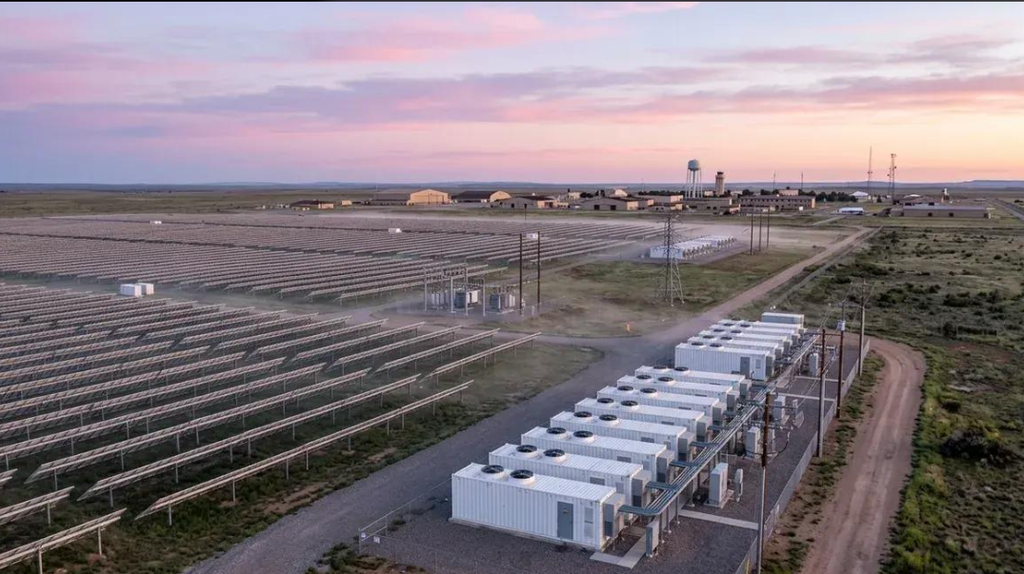
One of the most important elements of the initiative is the ability to maintain operations without relying entirely on the civilian electricity grid.
The department has linked the proposed base to its broader FORTRESS America initiative, which seeks to improve the resilience of U.S. military installations against cyberattacks, sabotage and disruptions to civilian infrastructure.
Earlier details provided by Assistant Secretary Dale Marks indicate that the Pentagon is considering several technologies, including small modular nuclear reactors, hardened microgrids and systems for capturing, treating and recycling water.
The stated objective is to create an installation capable of sustaining military operations during prolonged interruptions to external utility services.
In an October 2026 interview with Breaking Defense, Marks described a requirement for the proposed installation to demonstrate 30 consecutive days of operation disconnected from civilian power supplies within its first 24 months.
That is a planning objective, not evidence that such a facility has already been constructed or tested.
Energy independence could support several military functions, including command centers, communications networks, aircraft support facilities, maintenance operations and protected logistics infrastructure. Reliable water supplies would also be important for personnel, equipment maintenance and other essential activities.
The approach also reflects a wider concern about the vulnerability of critical infrastructure. A military installation that depends on external electricity, water and communications networks may face operational problems if those services are disrupted during a national emergency.
Autonomous Warfare Could Influence the Installation’s Layout
The Pentagon’s interest in autonomous technology adds another dimension to the project.
Uncrewed aircraft, robotic ground vehicles and other autonomous platforms are becoming increasingly important to military planning. Their use can change requirements for storage, maintenance, communications, testing and operational coordination.
A future military base may need dedicated areas for unmanned systems, secure data infrastructure, automated logistics and the integration of human operators with autonomous platforms.
It could also require training facilities that allow military personnel to operate multiple types of uncrewed systems and coordinate them with conventional forces.
However, the department has not publicly established a complete list of autonomous platforms or military formations that would be permanently assigned to the proposed installation.
It would therefore be premature to describe the project as a dedicated drone warfare base or an autonomous weapons headquarters.
The broader objective is to create infrastructure flexible enough to support future military requirements as technologies and force structures change.
This distinction matters because the useful life of major military infrastructure can extend well beyond the service life of individual aircraft, vehicles or weapons systems.
A New Base, but Also a Major Infrastructure Investment
The project is expected to require substantial cooperation between federal authorities, state governments, local communities and private-sector partners.
The Pentagon has previously indicated that public-private partnerships could help develop supporting infrastructure. Under the concept described by Marks, the department could concentrate its spending on military-specific facilities and operational capabilities, while commercial investment could support some civilian-facing infrastructure.
Potential areas for private-sector participation include digital infrastructure and community services.
Such arrangements could reduce the amount of supporting infrastructure that the federal government must directly develop, although the department has not published a complete financing structure or overall project cost.
The economic implications could be significant for the state selected to host the installation. A facility supporting tens of thousands of military personnel and a much larger surrounding population would require substantial investment in transportation, housing, education, healthcare and utilities.
However, those potential benefits must be weighed against land requirements, environmental reviews, construction costs and the long-term responsibilities associated with supporting a large military community.
The Pentagon has not announced a final construction budget.
Site Selection and the Road to Construction
The Pentagon’s selection process is expected to take place in several stages.
State governments are being asked to identify suitable locations and develop proposals that address the department’s preliminary requirements. The process is intended to give the Pentagon a range of potential locations and infrastructure concepts to evaluate.
According to the timeline outlined by Marks in October, states were expected to submit initial proposals by December 1, 2026. The department would then work with nominated states to examine their proposals, assess site suitability and identify potential problems.
The Pentagon has indicated that it aims to select a location by June 2027.
That deadline concerns site selection, not completion of the installation.
The distinction is important because building a major military base involves several additional stages, including:
- Defining military requirements and assigning missions.
- Conducting engineering and environmental assessments.
- Developing infrastructure and construction plans.
- Securing congressional authorization and appropriations.
- Awarding construction contracts.
- Building and testing the required facilities.
The Congressional Research Service explains that the conventional military construction process can take five to seven years or longer, including planning, congressional approval, contracting and construction.
Consequently, selecting a site in 2027 would not mean that the installation would immediately become operational.
The Bigger Question: Build a New Base or Upgrade Existing Ones?
The Next Great American Base initiative raises an important infrastructure question for the U.S. military: how much of the future force should be supported by entirely new installations, and how much can be accommodated through modernization of existing facilities?
The United States already operates an extensive network of military installations supporting its Army, Navy, Air Force, Marine Corps and Space Force.
Many existing facilities require improvements to buildings, utilities, maintenance infrastructure and force protection. The Pentagon must therefore consider whether a new installation offers advantages that cannot be achieved through investment in existing bases.
There are potential reasons to pursue a new facility.
A purpose-built installation could incorporate resilient energy systems, protected communications, autonomous technology infrastructure and modern security arrangements from the beginning. It could also provide greater flexibility in organizing future military formations.
However, developing an entirely new installation would require significant land acquisition, construction spending and long-term operating costs.
The Center for Strategic and International Studies has also questioned the rationale for building a completely new base when some existing installations require substantial modernization. Its analysis identifies the need for clear military requirements, transparent selection criteria and careful consideration of alternative investments.
The strongest justification for the project will therefore depend on whether the Pentagon can demonstrate a specific operational requirement that existing facilities cannot adequately meet.
What Remains Undecided
Despite the growing detail surrounding the competition, several important questions remain unanswered.
The Pentagon has not publicly identified a final location, confirmed the military services that would use the installation or provided a comprehensive construction cost estimate.
It has also not established the precise mix of aircraft, autonomous platforms, command facilities and other capabilities that the future base would accommodate.
Congressional authorization and funding will be important factors in determining whether the project moves from site selection into construction.
The department must also demonstrate that its proposed energy independence and infrastructure resilience requirements can be delivered at a practical cost.
For now, the Next Great American Base remains a planning and site-selection initiative rather than an approved, fully funded construction program.
Its ultimate value will depend on whether the Pentagon can translate its vision of a future military installation into clearly defined operational requirements, a realistic funding plan and infrastructure that addresses identifiable weaknesses in the existing U.S. military basing network.
Enjoying our coverage?
Make The Defense Watch a preferred source on Google to see more of our geopolitical and defense insights when relevant to you.