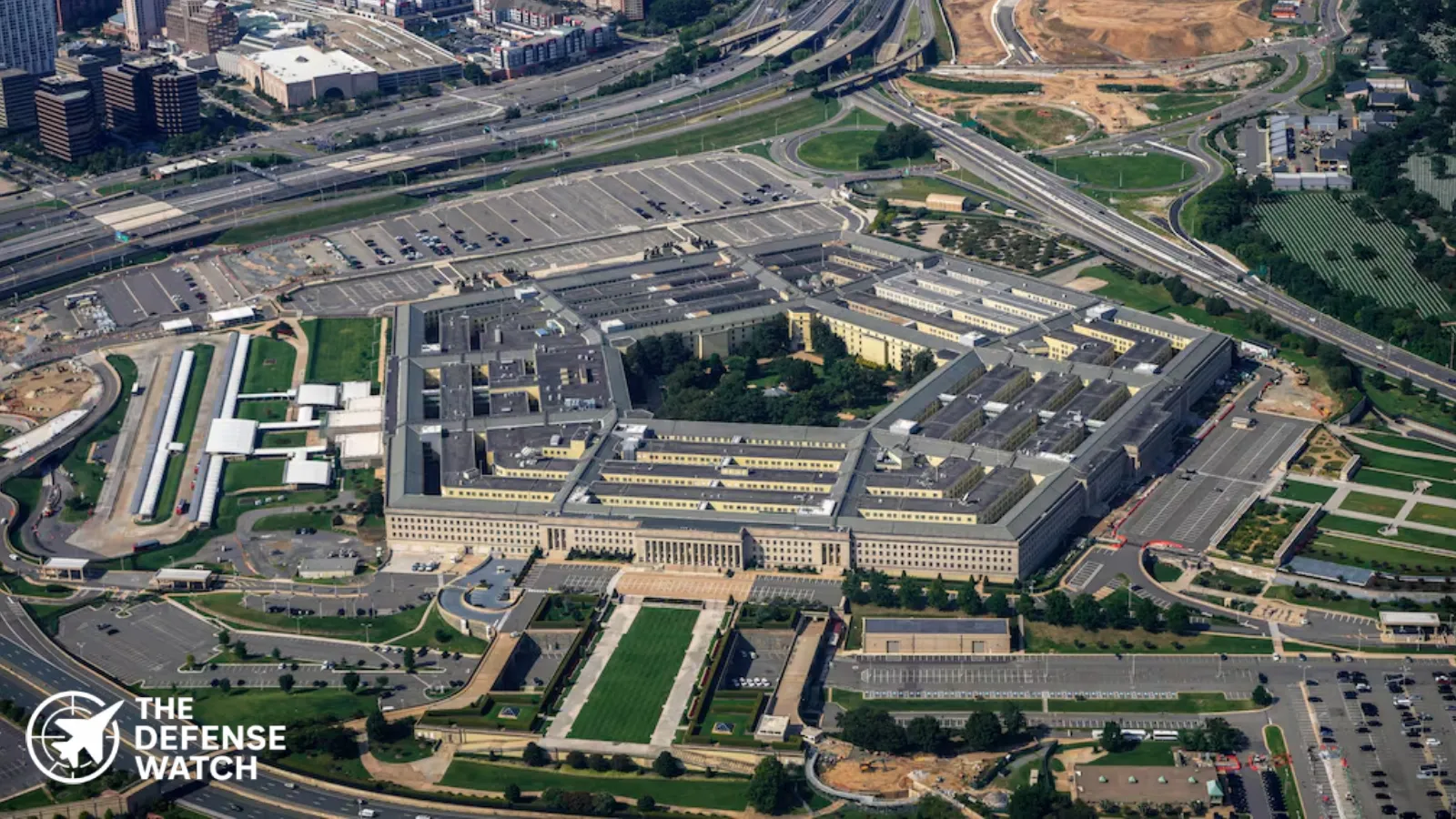
The U.S. Department of Defense has failed its ninth consecutive department-wide financial audit, extending a long-running accountability problem that affects how the Pentagon tracks billions of dollars in military equipment, infrastructure, personnel costs and other resources.
However, the fiscal year 2026 results show measurable progress. According to Reuters, 14 of the Pentagon’s 25 standalone reporting entities passed their individual audits, compared with 11 in the previous fiscal year. These entities account for 56% of the department’s assets and 86% of its liabilities.
The results present two different pictures of Pentagon financial management. Individual components are improving their ability to document and account for resources, but the department has still not demonstrated that its consolidated financial statements are sufficiently reliable to receive an overall clean audit opinion.
For an organization responsible for managing one of the world’s largest military budgets, that distinction has implications extending beyond accounting.
What the 2026 audit revealed
The fiscal year 2026 audit covers the financial year that ended September 30, 2026. It is the ninth consecutive annual department-wide audit failure since the Pentagon began undergoing full-scope audits in 2018.
The Defense Department’s chief financial officer, Jules Hurst, told Reuters that 14 of 25 standalone reporting entities received passing results. The previous year’s figure was 11.
One notable improvement involved the Pentagon’s Medicare-Eligible Retiree Health Care Fund, which received a favorable audit opinion for the first time, according to reporting by Breaking Defense.
There is an important distinction between component-level results and the department-wide outcome. A favorable opinion for an individual fund or agency does not automatically establish that the consolidated financial statements are accurate.
Breaking Defense reported that the department had accumulated 12 clean opinions, including the newly successful retiree health care fund. The difference between that figure and Reuters’ 14 reporting entities passing their audits reflects the distinction between clean opinions and broader passing results.
The Pentagon’s overall audit therefore remains unsuccessful, despite improvements in several parts of its financial organization.
Why the Pentagon continues to struggle
The central problem is the complexity of the Defense Department’s financial infrastructure.
The Pentagon operates across military services, defense agencies, working capital funds, intelligence organizations, procurement offices and other components. These organizations have developed their own accounting processes and information systems over decades.
Reuters reported that the department has approximately 149 financial management systems, many of which are outdated. Some rely on technology based on computer code developed roughly 50 years ago.
This fragmentation creates difficulties when auditors attempt to reconcile financial records across the entire department.
For example, the Pentagon must maintain reliable information about military equipment, property, inventory, contracts, payroll, operating expenses and other financial transactions. When different systems record or classify information inconsistently, establishing a complete and verifiable picture becomes difficult.
The problem is not simply whether the department possesses particular assets. It must also demonstrate that its records accurately reflect their value, ownership, location and financial treatment.
The Government Accountability Office has repeatedly identified weaknesses in the department’s financial management. Its May 2026 testimony, GAO-26-109115, discussed persistent problems involving information technology controls, incomplete financial transaction records, fraud risk management and the availability of trained financial personnel.
These deficiencies affect the Pentagon’s ability to produce reliable financial information for both internal management and congressional oversight.
Pentagon turns to cloud platforms and artificial intelligence
To address the problem, defense officials are changing how financial information is collected, reconciled and presented to auditors.
According to Reuters, the department used information from 61 core systems through its more modern cloud-based War Data Platform. Officials also employed artificial intelligence tools from Palantir, xAI and internal Pentagon teams to automate financial reconciliations and documentation.
The approach is intended to reduce the amount of manual work required to examine financial records and give auditors access to larger samples of transactions.
Artificial intelligence could help identify inconsistencies, organize supporting documentation and accelerate the reconciliation of financial information across different systems.
However, automation does not independently establish that the underlying records are accurate. The Pentagon must still demonstrate that its source data is complete, reliable and supported by appropriate documentation.
That distinction is particularly important when dealing with classified programs, military inventories and complex procurement transactions.
A different strategy for achieving a clean audit
The Pentagon is also changing its overall audit strategy.
In testimony published in May 2026, the GAO explained that the department was moving away from a decentralized approach focused heavily on correcting internal control deficiencies.
The revised approach places greater emphasis on central coordination, material financial account balances, manual testing of larger transaction samples and the use of artificial intelligence where appropriate.
There are potential benefits, but the GAO also identified risks.
One concern is that the department would not prioritize correcting certain longstanding internal control deficiencies for at least two years under the revised approach. Those weaknesses remain important because reliable internal controls help prevent errors, improve financial reporting and reduce opportunities for fraud.
The change therefore raises a broader question: whether the Pentagon can achieve a favorable audit opinion while also building the underlying financial management systems needed to maintain that standard.
Why the audit matters to U.S. military readiness
A failed financial audit does not mean that the U.S. military cannot account for every aircraft, ship, missile or piece of equipment it operates.
Nor does it establish that defense funds have been stolen or misused.
An audit disclaimer means that auditors lack sufficient appropriate evidence to express an opinion on whether the financial statements are fairly presented. It is fundamentally a problem of financial accountability and verification.
Nevertheless, the consequences can extend into military operations.
Reliable financial records help defense officials understand equipment inventories, maintenance costs, procurement obligations and the condition of government-owned property.
For example, better inventory information can help identify equipment that requires maintenance, determine whether spare parts are available and improve decisions about replacing aging military assets.
The same information supports decisions about future weapons procurement, infrastructure investment and the allocation of funds between military services.
The GAO has identified tangible benefits from the Pentagon’s audit remediation efforts, including improved visibility over assets and inventory, better systems and cost savings or avoidances. It has also connected stronger financial management with operational efficiency and military readiness.
For Congress, reliable financial information is equally important. Lawmakers need to understand how defense appropriations are being used before approving additional spending or evaluating the department’s procurement priorities.
The 2028 target and the $1.5 trillion defense spending question
The Pentagon is pursuing a department-wide clean audit opinion by fiscal year 2028.
According to Breaking Defense, the department plans to consolidate 25 separate financial statements into eight, with a greater focus on the larger financial accounts that contribute to the overall department-wide results.
The proposed timetable includes several stages:
- Fiscal year 2026: Expand the number of reporting entities receiving favorable audit results.
- Fiscal year 2027: Pursue additional clean opinions across major defense organizations and working capital funds.
- Fiscal year 2028: Focus on the Defense-wide General Fund and the remaining components to pursue an overall clean opinion.
Pentagon Comptroller Jules Hurst has identified the revised audit strategy as central to reaching the 2028 objective. The department also expects the Navy General Fund to achieve a clean opinion in fiscal 2027, according to Breaking Defense.
The target carries additional importance because of the administration’s defense spending ambitions.
The administration is seeking a proposed $1.5 trillion national defense budget for fiscal year 2027, according to Reuters. The GAO’s May 2026 testimony also identified a $1.5 trillion presidential request, representing a 44% increase over fiscal year 2026. This is a budget request, not evidence that Congress has approved the full amount.
As defense spending increases, the ability to track obligations, verify financial records and demonstrate responsible use of public money becomes more important.
The Pentagon will therefore face two related challenges: managing a growing military budget and demonstrating that its financial systems can reliably account for the resources already under its control.
The 2026 audit results show that progress is possible, but the department-wide failure demonstrates that significant work remains before the Pentagon can meet its 2028 objective.