US Clears $1.08B Black Hawk Helicopter Sale to Mexico
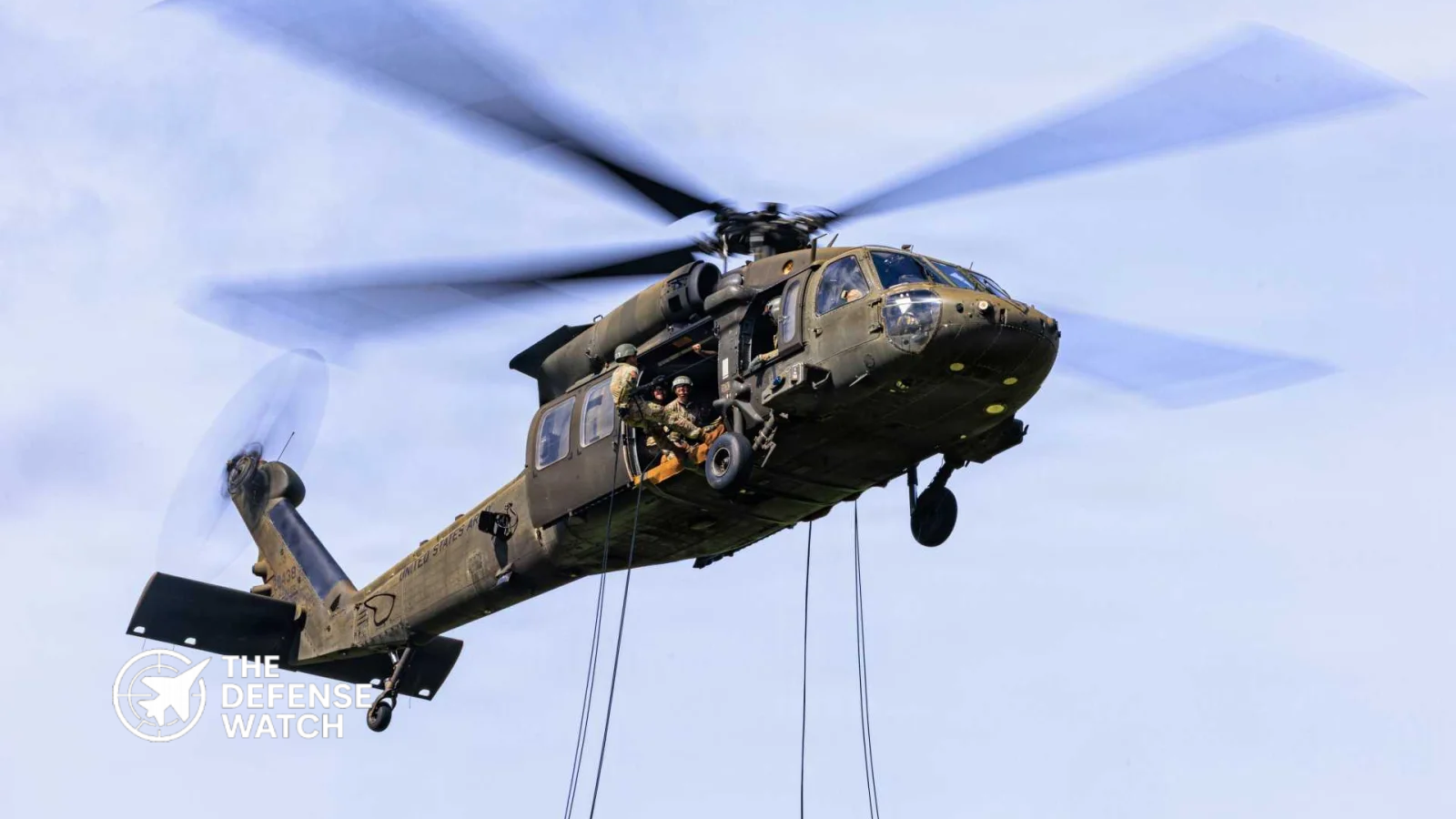
The U.S. State Department has approved a potential Foreign Military Sale (FMS) to Mexico covering 11 UH-60M Black Hawk helicopters and associated equipment, with an estimated value of $1.075 billion.
Announced on November 6, 2026, the proposed package would expand Mexico’s existing Black Hawk fleet and support its military aviation modernization efforts. Sikorsky, a Lockheed Martin company based in Stratford, Connecticut, is identified as the principal contractor.
The authorization is not a completed arms sale or a signed procurement contract. It establishes that Washington has approved the proposed transfer and notified Congress through the Foreign Military Sales process. Final negotiations and contracting remain necessary before the helicopters can be delivered.
What Mexico Has Requested
Mexico’s proposed acquisition includes 11 UH-60M helicopters, but the aircraft represent only one part of a much larger procurement package.
The request also covers:
- 27 General Electric T700-GE-701D engines.
- 27 EAGLE-M+429 embedded GPS and inertial navigation systems.
- 27 AN/ARC-231A RT-1987 military communications radios.
- APX-128 identification friend-or-foe transponders.
- AN/AVS-6 night-vision goggles.
- RDR-7000 color weather radar systems.
- MX-10D electro-optical and infrared sensor systems.
- Ballistic armor protection and engine inlet barrier filters.
- Internal auxiliary fuel tank systems.
- Rescue hoists and fast-rope insertion and extraction equipment.
- M-134 machine guns.
The package also includes spare and repair parts, maintenance equipment, technical documentation, personnel training and U.S. government and contractor support. Global Defense & Aerospace Post (GDAP)+2
The proposed 27-engine quantity should not be interpreted as 27 operational aircraft engines. The available notification summary does not provide a complete allocation of installed and spare engines.
Why the UH-60M Matters to Mexico’s Military
The UH-60M is a modernized version of the Black Hawk family, designed for military transport, personnel movement, logistical support and other mission configurations.
For Mexico, the proposed acquisition is primarily a rotary-wing fleet modernization effort rather than the introduction of an entirely new aircraft category.
The State Department says the procurement would improve the efficiency of Mexico’s helicopter fleet by consolidating helicopter types and expanding its existing UH-60M inventory.
This approach could simplify parts management, maintenance arrangements, crew training and operational support over time. However, the actual efficiency gains will depend on how Mexico integrates the additional aircraft into its existing aviation structure.
The proposed helicopters are also intended to strengthen Mexico’s ability to provide domestic airlift support for forces involved in counter-drug operations. This includes moving personnel and equipment across areas where ground transportation may be difficult or operationally constrained.
A Mission Package Beyond Basic Transport
The equipment list indicates that the proposed helicopters would receive capabilities extending beyond routine troop transport.
The MX-10D electro-optical and infrared system, for example, provides a sensor package with laser designation, illumination and range-finding functions. Such equipment can support observation and situational awareness during military and security operations.
Night-vision equipment, military communications radios and navigation systems would also support operations in reduced-light conditions and improve coordination between aircraft and ground units.
The inclusion of ballistic protection, auxiliary fuel tanks and engine inlet barrier filters points to a configuration intended to address demanding operating conditions.
Meanwhile, rescue hoists and fast-rope equipment provide options for personnel recovery and specialized insertion and extraction missions.
The M-134 machine guns are included in the proposed equipment package. Their presence does not, by itself, establish the precise weapons configuration of every helicopter or the missions in which Mexico intends to employ them.
Publicly available information does not establish the complete aircraft configuration, sensor integration arrangements or operational performance requirements for the proposed fleet.
Building on an Earlier Black Hawk Procurement
Mexico has operated UH-60M helicopters for years. The proposed purchase therefore builds on an established relationship with the Black Hawk platform.
In June 2014, the U.S. government approved a separate potential sale of five UH-60M helicopters to Mexico, together with engines, communications equipment, sensors, training and logistical support. That earlier package was estimated at $225 million.
The November 2026 proposal is larger in aircraft quantity and estimated value. It also includes a broad set of equipment and support services intended to expand the existing fleet.
The comparison is relevant because it shows continuity in Mexico’s procurement approach. Rather than selecting a completely different utility helicopter, the proposed acquisition would increase the country’s investment in a platform already present in its armed forces.
However, the earlier authorization does not establish how many of those aircraft remain operational today or the precise number currently available to each Mexican military service.
What the Proposed Sale Means for US-Mexico Security Cooperation
The proposed procurement has a clear internal-security dimension.
Mexico faces continuing challenges involving organized criminal networks, drug trafficking and the movement of security forces across geographically difficult areas. Military helicopters can provide transport, observation and logistical support in situations where road access is limited.
The State Department specifically identifies support for Mexican forces participating in counter-drug operations as one of the objectives of the proposed sale.
For Washington, the transaction also supports defense cooperation with a neighboring country that plays an important role in North American security.
The proposed package includes U.S.-origin aircraft, engines, communications equipment, technical assistance and training. This creates a continuing requirement for cooperation between Mexican operators and U.S. defense suppliers.
Sikorsky’s role as principal contractor would also provide another major international opportunity for the Lockheed Martin subsidiary in the military helicopter market.
Nevertheless, the transaction should be understood as an aviation modernization and security-support procurement, not as evidence of a major change in the military balance in North America.
Procurement Status and Next Steps
The $1.075 billion figure represents the estimated value of the proposed package, not confirmed spending or a final contract award.
The remaining procurement process includes negotiations over the final scope, contractual arrangements and implementation requirements.
The available reporting also identifies approximately 15 additional U.S. government or contractor representatives who would need to travel to Mexico for an extended period to support equipment processing, fielding, system verification, training and technical and logistical assistance.
The proposed sale is therefore a substantial commitment involving more than the delivery of 11 helicopters. Its implementation would require personnel, maintenance arrangements, training and continuing technical support.
For Mexico, the main question will be how quickly the additional aircraft can be integrated into its existing helicopter fleet and converted into usable operational capacity.
The November 6 approval establishes an important procurement milestone, but the final contract value, delivery schedule and operational introduction remain dependent on the subsequent stages of the sale.