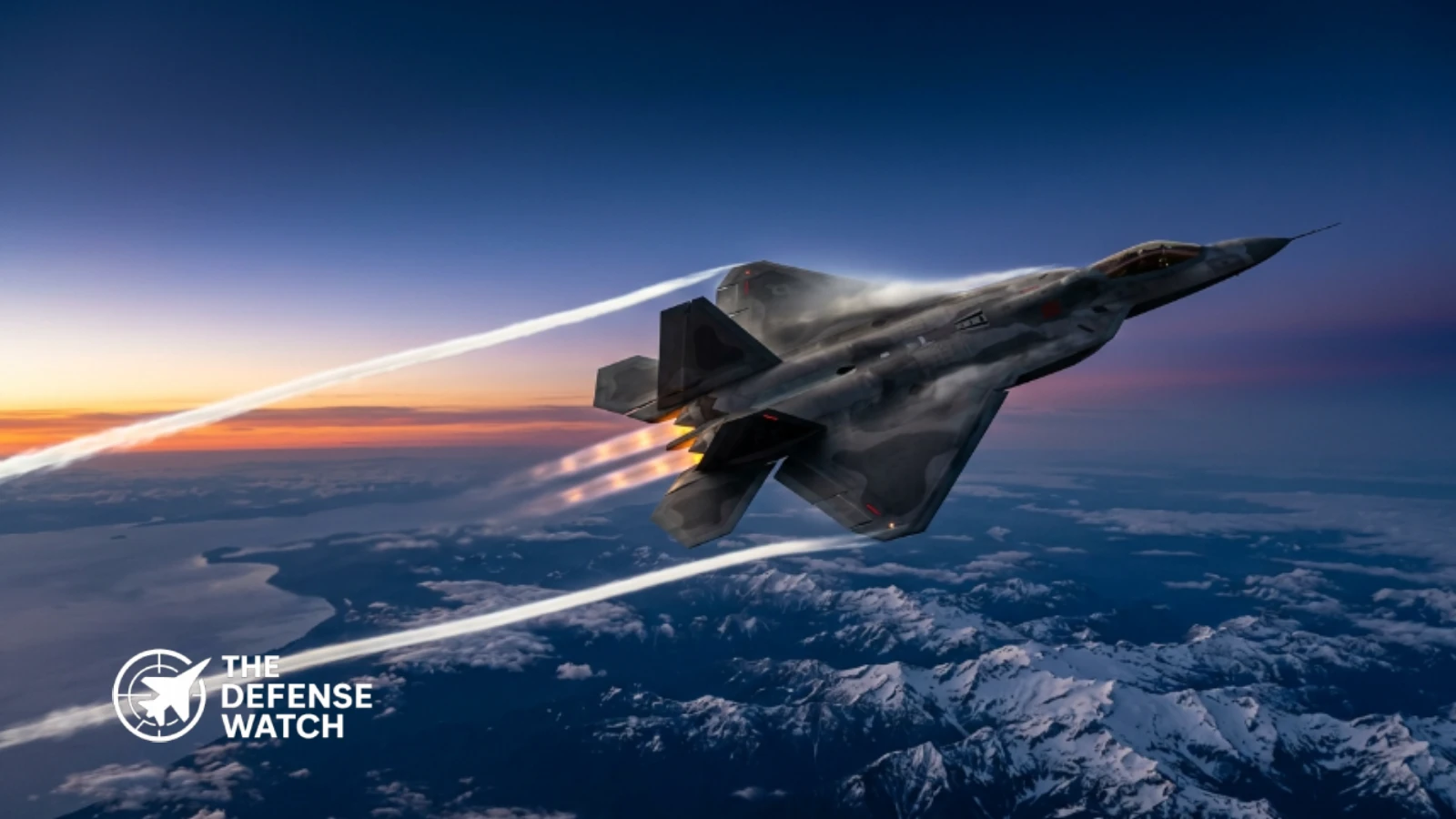
Fastest Fighter Jet in the World
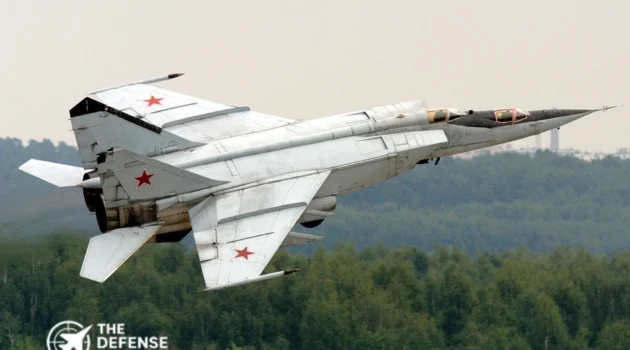
The fastest fighter jet in the world is generally identified as the Soviet-designed Mikoyan-Gurevich MiG-25 Foxbat, a high-speed interceptor that could reach an operational maximum of about Mach 2.83, or roughly 3,000 km/h at altitude. Guinness World Records identifies the MiG-25 as the fastest combat jet, while radar tracking of a reconnaissance version recorded approximately Mach 3.2 under exceptional conditions.
That distinction matters because maximum speed alone does not determine which fighter is most effective in modern air combat. The MiG-25 was designed around a Cold War requirement to intercept high-speed, high-altitude aircraft. Modern fighters such as the F-22 Raptor and F-15EX Eagle II place greater emphasis on stealth, sensors, electronic warfare, networking, weapons range and survivability.
So, what is the fastest fighter jet in the world? If the question is based on maximum speed among purpose-built fighter and interceptor aircraft, the answer remains the MiG-25 Foxbat, with the closely related MiG-31 Foxhound occupying the next position at approximately Mach 2.83.
Takeaways
Speed records tell only part of the story in modern fighter warfare
1. MiG-25 Holds the Speed Crown
The MiG-25 Foxbat is widely recognized as the fastest combat jet, with an operational maximum of about Mach 2.83.
2. Mach 3 Was Possible Under Extreme Conditions
A reconnaissance Foxbat was tracked at approximately Mach 3.2, but sustained operation at that speed could cause severe engine damage.
3. MiG-31 Is the Closest Successor
The MiG-31 Foxhound inherited the high-speed interceptor mission and can reach approximately 3,000 km/h while adding improved radar, range and weapons capabilities.
4. F-15EX Leads Among Modern U.S. Fighters
The F-15EX Eagle II has a published maximum speed of Mach 2.5 and combines high speed with a 29,500-pound weapons payload, AESA radar and electronic warfare capabilities.
5. Speed Is No Longer the Main Measure of Air Superiority
Fifth-generation fighters increasingly trade extreme top speed for stealth, sensor fusion, networking, electronic warfare and long-range weapons.
What Is the Fastest Fighter Jet in the World?
The MiG-25 Foxbat is the strongest answer to the question, what is the fastest fighter jet in the world?
Developed by the Soviet Mikoyan design bureau, the MiG-25 was created primarily as a high-speed interceptor and reconnaissance aircraft. Its design reflected a specific Cold War threat environment in which Soviet air defenses needed to respond to high-altitude, high-speed aircraft.
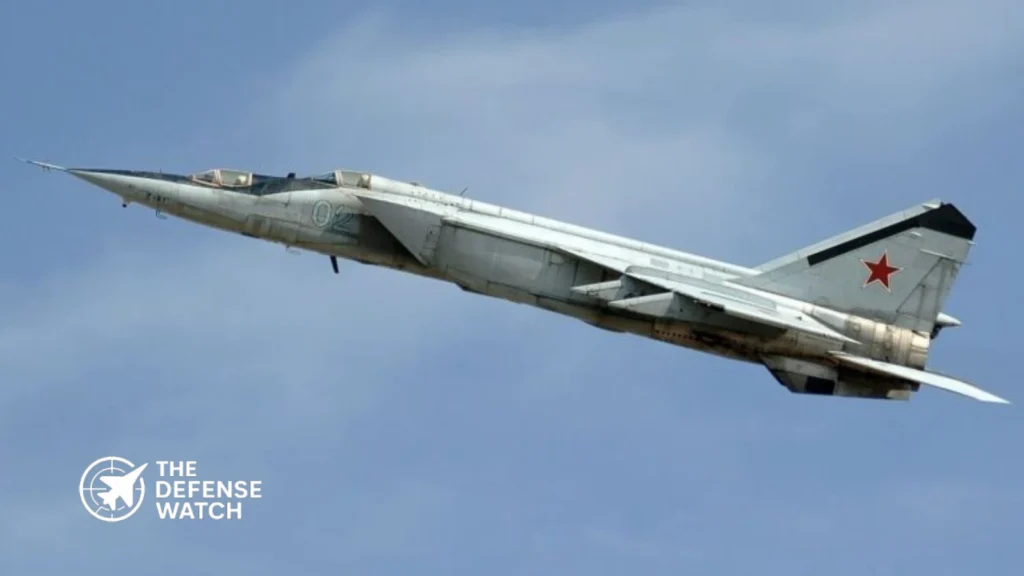
The aircraft used two powerful R-15-series afterburning turbojets, a large airframe and extensive use of stainless steel to tolerate the thermal loads associated with sustained high-speed flight. Available technical data places the MiG-25’s loaded maximum speed at approximately Mach 2.83, equivalent to around 3,000 km/h at altitude.
The aircraft could theoretically go faster. A reconnaissance Foxbat was tracked at about Mach 3.2 during an emergency high-speed flight. However, this was not a normal operating speed. Exceeding the aircraft’s intended limits could cause extreme engine temperatures and damage.
This distinction is important when comparing the fastest jet fighter plane in the world with other military aircraft.
MiG-25 Foxbat: Engineering Behind the Speed
The MiG-25’s speed came from an unusual combination of power, aerodynamics and mission specialization.
Its two afterburning engines generated enormous thrust, while the airframe was optimized for high-speed flight at altitude. The aircraft was not designed primarily for close-range maneuvering. Instead, its mission was to climb quickly, reach very high speeds and intercept or conduct reconnaissance against aircraft operating at extreme altitude.
The available technical data lists a maximum level speed of approximately Mach 2.83 in a loaded configuration, with an exceptional clean-aircraft figure reaching approximately Mach 3.2. It also records an absolute altitude achievement of approximately 37,650 meters during test operations.
The aircraft carried a powerful radar and could employ several types of air-to-air missiles depending on the variant. Its interceptor versions were built around the idea that speed and altitude could provide the opportunity to engage threats before they reached Soviet airspace.
The design philosophy was very different from that of modern stealth fighters.
Why the MiG-25 Was Built for Speed
During the Cold War, the Soviet Union faced concerns about high-altitude strategic aircraft, including U.S. bombers and reconnaissance platforms.
The response was an interceptor capable of operating at extreme altitude and speed.
The MiG-25 therefore prioritized:
- Very high maximum speed
- High-altitude performance
- Rapid climb
- Powerful radar
- Long-range air-to-air weapons
- Interception of high-speed targets
This explains why the aircraft could outperform many more maneuverable fighters in straight-line speed while being comparatively less effective in a close-range dogfight.
The MiG-25’s development also influenced the next generation of Soviet interceptors.
MiG-31 vs MiG-25: Which Is Faster?
The MiG-31 Foxhound is the direct successor to the MiG-25 interceptor concept and is often listed alongside the Foxbat among the fastest fighter aircraft ever built.
Russian state technology company Rostec states that the MiG-31 can reach approximately 3,000 km/h and operate at altitudes of up to 21 kilometers. The aircraft was developed to replace the MiG-25 in the Soviet air-defense interceptor role.
At maximum published speed, the MiG-31 and MiG-25 are therefore extremely close.
The difference is that the MiG-31 was developed as a more capable combat system rather than simply a faster aircraft. It introduced a two-person crew, improved avionics, longer range and a more advanced interception architecture.
The MiG-31 also became notable for its ability to coordinate with other aircraft and ground-based air-defense assets.
From a pure speed perspective, however, the MiG-25 retains the stronger historical claim to the fastest combat jet record. Guinness World Records specifically identifies the MiG-25 as the fastest combat jet.
Fastest Fighter Jet in the World: How the F-15 Compares
The F-15 Eagle is slower than the MiG-25, but it represents a very different approach to air superiority.
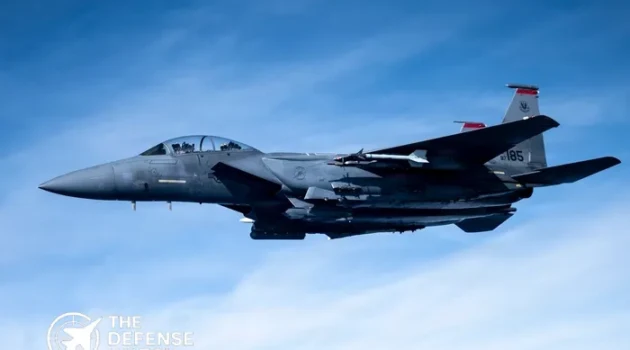
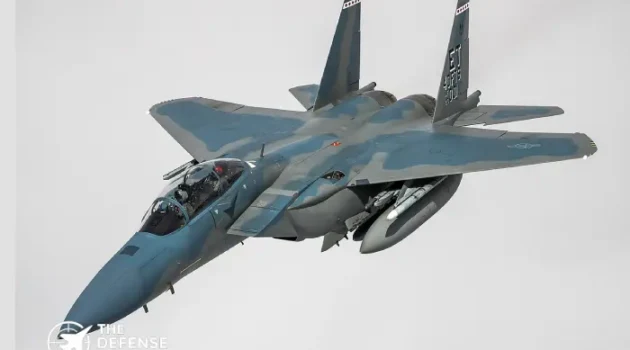
Boeing lists the F-15’s maximum speed at more than Mach 2.5, or more than 1,600 mph. The aircraft was designed as an air-superiority fighter with high thrust, maneuverability, radar capability and substantial weapons capacity.
The latest F-15EX Eagle II retains the high-speed characteristics of the Eagle family. Boeing publishes a maximum speed of Mach 2.5, a maximum payload of 29,500 pounds and a service ceiling of 50,000 feet. The aircraft also incorporates an AESA radar, electronic warfare systems, digital flight controls and an open mission architecture.
This makes the F-15EX particularly relevant to modern air forces.
The MiG-25 was designed to get to a target extremely quickly. The F-15EX is designed to combine speed with long-range weapons, advanced sensors, electronic warfare and networked operations.
That is a major difference between Cold War and modern air combat.
F-22 Raptor: Faster Does Not Always Mean More Capable
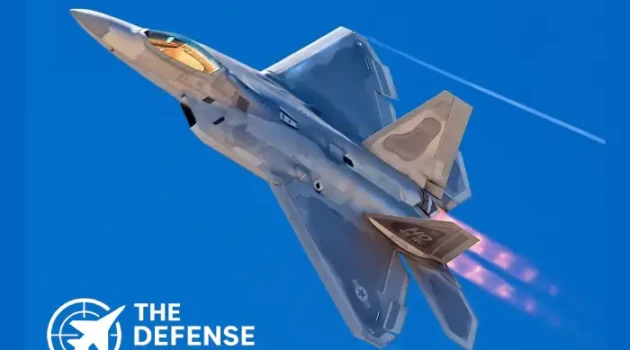
The F-22 Raptor illustrates why maximum speed is no longer the sole measure of fighter effectiveness.
The F-22 combines low-observable stealth, supercruise, agility and integrated avionics. Lockheed Martin identifies supercruise as a core capability, allowing the aircraft to sustain supersonic flight without relying on afterburners.
Its maximum speed is generally reported around Mach 2.0 to Mach 2.25, depending on the source and configuration, below the MiG-25’s maximum.
But a modern air-to-air engagement is not simply a race between aircraft.
A fighter may need to:
- Detect an opponent before being detected.
- Establish a firing solution.
- Launch a missile from advantageous geometry.
- Avoid or defeat enemy sensors and weapons.
- Share targeting information with other platforms.
- Survive after weapons employment.
Stealth, sensor fusion, electronic warfare and networking can therefore provide a greater combat advantage than several hundred additional kilometers per hour of maximum speed.
Fastest Fighter Jets Comparison
Aircraft Type Approx. Maximum Speed Primary Design Focus Status MiG-25 Foxbat High-speed interceptor Mach 2.83 operational High-altitude interception Largely retired MiG-31 Foxhound Long-range interceptor Mach 2.83 / 3,000 km/h Long-range air defense In service F-15 Eagle Air-superiority fighter Mach 2.5+ Air superiority and multirole missions In service F-15EX Eagle II Advanced multirole fighter Mach 2.5 Long-range weapons, payload, networking In service Su-27 family Air-superiority fighter About Mach 2.35 Air superiority and maneuverability Multiple variants in service MiG-29 family Multirole fighter About Mach 2.3 Air combat and multirole operations Multiple variants in service F-22 Raptor Fifth-generation air-superiority fighter About Mach 2+ Stealth and air dominance In service Speed figures should be treated as maximum performance figures rather than normal combat speeds. Aircraft often fly substantially slower when carrying weapons, external fuel tanks or other mission equipment.
How Fighter Jet Speed Is Actually Measured
A common mistake in discussions about the fastest fighter jet world rankings is treating every published speed figure as directly comparable.
Aircraft speed depends on:
- Altitude
- Air temperature
- Aircraft weight
- Fuel load
- External weapons
- External fuel tanks
- Engine condition
- Flight profile
- Airframe configuration
Mach number also changes with atmospheric conditions because Mach is based on the local speed of sound.
For this reason, a fighter reaching Mach 2.8 in a high-altitude test configuration does not mean it can sustain Mach 2.8 while carrying a full combat weapons load at low altitude.
The MiG-25 demonstrates this particularly well. Its extraordinary speed was achievable under conditions that imposed significant thermal and mechanical stress on the aircraft and engines.
The F-15EX and the Modern Meaning of Speed
The F-15EX is useful for understanding how the concept of speed has evolved.
Boeing describes the aircraft as a high-energy fighter optimized for large weapons loads, long-range strike and air-dominance missions. Its published specifications include Mach 2.5 maximum speed and a 29,500-pound payload.
The aircraft can also carry large numbers of air-to-air weapons. Boeing states that the F-15EX can accommodate up to 12 AMRAAMs or an equivalent combination of large ordnance, while its AESA radar and electronic warfare suite support operations in contested environments.
This creates a different kind of speed advantage.
The aircraft’s high-energy performance can help it reposition rapidly, extend weapon engagement opportunities and maintain energy during combat. But its value comes from the combination of speed, range, payload, sensors and networking.
Boeing is also positioning the F-15EX as a platform capable of working with future collaborative combat aircraft and other networked systems.
Why the Fastest Fighter Jet Is Not Automatically the Best Fighter
The MiG-25’s record demonstrates the limits of using one specification to rank combat aircraft.
A fighter’s effectiveness can depend on several interconnected capabilities:
Stealth
Low observability can reduce the range at which an opponent detects and tracks the aircraft.
Sensors
Modern AESA radars and distributed sensors provide improved target detection, tracking and identification.
Electronic Warfare
Electronic warfare can interfere with enemy radars, communications and targeting systems, helping an aircraft operate inside contested environments.
Weapons
Long-range air-to-air missiles can allow a fighter to attack without entering a traditional visual-range dogfight.
Networking
Modern fighters increasingly operate as nodes in a wider combat network involving aircraft, satellites, drones, ships and ground systems.
Sensor Fusion
The ability to combine information from multiple sensors can give pilots a more complete picture of the battlespace.
These factors explain why a Mach 2-class fifth-generation fighter can have a greater combat advantage than an older Mach 3-class interceptor in many scenarios.
The Strategic Legacy of the MiG-25
The MiG-25 remains important because it represented an extreme solution to a specific strategic problem.
Its speed, altitude and radar performance were designed around the possibility of confronting high-altitude strategic aircraft.
The aircraft also had an important indirect effect on U.S. fighter development. Western assessments of the Foxbat contributed to concerns about Soviet air-superiority capabilities and influenced the thinking that surrounded the development of the F-15.
The resulting F-15 became one of the most successful air-superiority fighters in aviation history.
Boeing’s modern F-15EX continues that lineage, combining the basic high-energy characteristics of the Eagle with modern avionics, electronic warfare and networked warfare capabilities.
What About the Fastest Jet Fighter Plane in the World Today?
If the question is strictly about maximum fighter or interceptor speed, the MiG-25 remains the key answer.
If the question is about the fastest widely deployed modern fighter, the answer changes.
The F-15 family remains one of the fastest major fighter families in active service, with the F-15EX officially listed by Boeing at Mach 2.5. The MiG-31 also retains a maximum speed of approximately 3,000 km/h and remains an important high-speed interceptor platform.
The distinction between historical speed records and current combat relevance is essential.
The MiG-25 is the stronger answer to the historical speed question. The MiG-31 is the more relevant successor to the Soviet high-speed interceptor concept. The F-15EX represents the modern U.S. approach to combining high speed with weapons capacity, networking and electronic warfare.
Challenges of Extreme Speed
Mach 3-class flight creates severe engineering problems.
As aircraft speed increases, aerodynamic heating rises dramatically. Engine components face greater thermal loads, while air intakes must manage enormous quantities of air at high Mach numbers.
The MiG-25’s experience demonstrated these limitations.
Its engines could support extraordinary speeds, but prolonged operation at the extreme end of the envelope could result in severe engine damage. This is one reason the aircraft’s practical operational limit was lower than the highest speed ever recorded by the type.
Extreme speed also carries penalties in:
- Fuel consumption
- Engine life
- Maintenance requirements
- Airframe heating
- Weapon integration
- Maneuverability
- Operating cost
Modern fighter development therefore generally seeks a balance rather than maximum speed at any cost.
The Future of Fighter Speed
The future of combat aviation is unlikely to be determined by maximum Mach number alone.
Sixth-generation fighter programs are expected to emphasize integrated sensors, low observability, electronic warfare, autonomous systems, long-range weapons and manned-unmanned teaming.
Speed will remain important because it affects reaction time, energy, range and survivability. But the more important question will increasingly be how quickly an aircraft can sense, decide, communicate and engage.
That is particularly relevant as air forces develop collaborative combat aircraft and other autonomous systems.
Boeing describes the F-15EX as having a growth path toward collaborative combat aircraft and manned-unmanned teaming, demonstrating how fighter operations are moving toward networked formations rather than isolated aircraft.
The result is a shift from speed as an isolated performance statistic toward speed as part of a broader kill chain.
Conclusion: Is the MiG-25 Still the Fastest Fighter Jet in the World?
Yes, with an important qualification.
The MiG-25 Foxbat remains the best-supported answer to the question, what is the fastest fighter jet in the world? Guinness World Records identifies the MiG-25 as the fastest combat jet, while its operational performance is generally cited at approximately Mach 2.83. A reconnaissance version was tracked at approximately Mach 3.2, but that was not a normal sustainable operating speed.
The MiG-31 comes very close, with a published maximum speed of approximately 3,000 km/h, while the F-15 family reaches approximately Mach 2.5.
Yet the fastest fighter jet is not necessarily the most capable fighter.
Modern air superiority increasingly depends on stealth, sensor fusion, electronic warfare, network connectivity, weapons range and the ability to operate as part of a wider multi-domain force.
The MiG-25 therefore remains a remarkable answer to the speed question, but modern air warfare has moved beyond the simple pursuit of maximum Mach number. The defining competition is now about who can detect first, decide first, engage first and survive inside an increasingly contested battlespace.