

KBR Expands NATO Patriot And IBCS Support
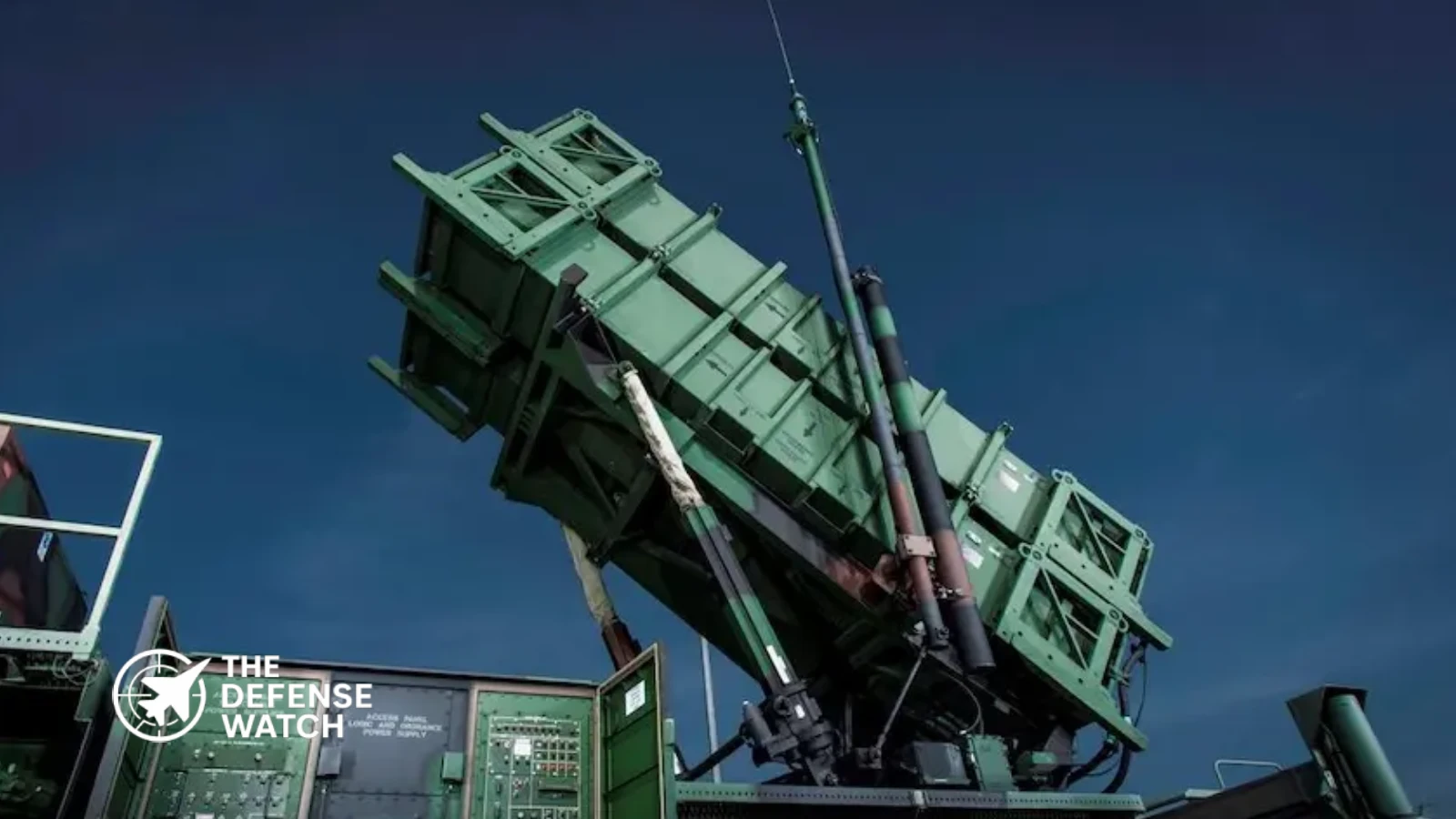
KBR has secured a five-year NATO contract with an initial ceiling of $60 million to support the Patriot air and missile defense system, including its integration with the Integrated Battle Command System, or IBCS. The award was issued through the NATO Support and Procurement Agency and is intended to improve command and control, sustainment and operational readiness across deployed air defense capabilities.
Takeaways
KBR will support NATO’s Patriot air and missile defense modernization and IBCS integration.
1. $60 Million Initial Ceiling
KBR has received a five-year NATO recompete contract with an initial ceiling of $60 million to support the Patriot air and missile defense system.
2. Patriot And IBCS Integration
The work includes support for integrating Patriot with the Integrated Battle Command System, or IBCS, a key U.S. Army architecture for connecting sensors, weapons and command nodes.
3. Focus On Command And Control
KBR will provide technical support aimed at connecting sensors and shooters across the battlespace while improving command-and-control functions and integration timelines.
4. Global Performance
Work will take place at locations worldwide, including Redstone Arsenal, KBR facilities in Huntsville, Alabama, and Letterkenny Army Depot in Pennsylvania.
5. Four Decades Of Patriot Support
KBR says its teams have provided technical and engineering services for the Patriot program for about 40 years, supporting U.S. and international customers.
The contract is a recompete time-and-materials award. KBR’s Mission Technology Solutions business will perform work at locations worldwide, including U.S. government facilities at Redstone Arsenal, its Huntsville, Alabama, operations and Letterkenny Army Depot in Chambersburg, Pennsylvania.
KBR said the program will focus on faster sustainment and accelerated integration timelines as Patriot systems become part of increasingly networked air and missile defense architectures.
What The NATO Contract Covers
The award centers on engineering and technical support rather than the procurement of new Patriot launchers or interceptors.
According to KBR, the five-year effort will provide command-and-control capabilities intended to connect sensors and shooters across the battlespace. It will also support the integration, sustainment and readiness of Patriot systems used by NATO and U.S. combatant commands.
| Contract element | Details |
|---|---|
| Customer | NATO Support and Procurement Agency |
| Contractor | KBR Mission Technology Solutions |
| Contract type | Recompete, time and materials |
| Initial ceiling | $60 million |
| Duration | Five years |
| Primary system | Patriot air and missile defense |
| Integration focus | Integrated Battle Command System |
| Work locations | Worldwide, including U.S. facilities |
| Key objectives | Command and control, sustainment, integration and readiness |
KBR has supported the Patriot program for approximately four decades. Its earlier Patriot work has included systems engineering, program management, modeling and simulation, configuration management, logistics, hardware and software integration, field surveillance, and test and evaluation.
Why IBCS Integration Matters
IBCS is designed to separate the functions of sensors, command systems and weapons from dependence on a single fire unit. Instead of requiring a weapon system to rely primarily on its own organic sensor and command architecture, IBCS can create a broader network in which different sensors contribute data and the appropriate weapon system can be selected for an engagement.
The U.S. Army describes IBCS as a distributed architecture that integrates air and missile defense sensors and weapons through a common fire-control network. Previous Army testing has demonstrated integration involving Patriot and Sentinel radars, Marine Corps sensors and F-35 aircraft.
That architecture has direct relevance to Patriot modernization.
A Patriot battery remains a highly capable air and missile defense system, but its effectiveness increasingly depends on how quickly it can receive accurate information, establish a track, identify the threat and coordinate an engagement within a larger defensive network.
IBCS is intended to address that problem by allowing commanders to build a composite picture from multiple sensors and connect that information with available interceptors.
The Army has described this approach through the concept of an “any sensor, best shooter” architecture.
Poland Provides A Key Example
Poland provides an important example of the transition toward IBCS-enabled Patriot operations among U.S. allies.
In December 2025, Poland declared full operational capability for its IBCS-enabled Patriot air and missile defense system. The U.S. Army identified Poland as the first international partner to field an IBCS-enabled Patriot system at full operational capability.
Poland’s WISŁA program combines Patriot components with IBCS to create a networked air and missile defense capability. The architecture is designed to integrate multiple sensors and shooters through a common fire-control network.
This is significant for NATO because allied air defense is increasingly being treated as a network rather than a collection of independent national systems.
For the alliance, interoperability can determine how quickly national systems can exchange information, coordinate engagements and operate as part of a larger defensive plan.
The Technical Challenge Is Integration, Not Just Hardware
The most important aspect of the KBR award is therefore the emphasis on integration and sustainment.
Connecting a Patriot battery to a wider command-and-control architecture involves more than establishing a communications link. Sensors must generate usable data, tracks must be correlated, identification processes must function correctly, engagement authorities must be respected, and the overall network must maintain reliable performance under operational conditions.
The U.S. Army’s own Patriot modernization work includes software improvements, systems integration, modeling and simulation, test activities and continued convergence with IBCS.
These activities illustrate why engineering support remains important even after a weapon system has entered operational service.
Air and missile defense networks also have to accommodate new sensors and changing threat profiles. The Army’s Lower Tier Air and Missile Defense Sensor, or LTAMDS, for example, has been tested through IBCS, with the system detecting, tracking and supporting the interception of a target using a Patriot PAC-3 MSE interceptor.
The broader architecture is therefore moving toward a model in which existing weapons, new sensors and future effectors can operate through a common command-and-control framework.
Readiness Becomes A Central Requirement
The contract also reflects a broader shift in the air defense mission.
Patriot systems are deployed by multiple countries and have become important components of national and allied air defense. Maintaining these systems requires continuous technical support, configuration management, software updates, logistics and testing.
KBR’s new contract specifically emphasizes faster sustainment and improved operational readiness.
For NATO, that has practical implications.
A networked air defense system is only as effective as its weakest operational component. A capable interceptor provides limited value if the supporting radar, communications architecture, command node, logistics chain or software configuration cannot operate reliably when required.
That makes sustainment and integration work an operational issue rather than simply an industrial support function.
Importance For U.S. And Allied Air Defense
The KBR award also fits into the U.S. Army’s broader effort to move toward integrated air and missile defense.
IBCS is intended to allow forces to combine different sensors and weapons within a common architecture. The Army has emphasized its potential to support joint and multinational formations by allowing commanders to configure defensive networks according to the mission and available systems.
This approach could become particularly important as NATO countries operate a mixture of Patriot configurations, other surface-to-air missile systems, aircraft and different generations of sensors.
Rather than requiring every ally to operate an identical air defense system, a networked command architecture can provide a mechanism for connecting different capabilities.
The result is a greater emphasis on interoperability, common data, communications resilience and software integration.
KBR’s Longstanding Patriot Role
KBR’s new NATO award builds on a long history of Patriot-related engineering support.
The company received a NATO Support and Procurement Agency contract in 2021 for analytical, engineering, technical, programmatic and logistics services supporting Patriot. That work included systems engineering, modeling and simulation, hardware and software integration, deployment support and test and evaluation.
KBR has also highlighted more recent U.S. work involving Patriot modernization. The company says it received a $207 million, five-year Patriot task order in 2022.
The latest NATO contract therefore extends an established technical relationship while placing additional emphasis on the transition toward integrated command-and-control architectures.
What The Award Means For NATO
The $60 million initial ceiling is modest compared with the cost of acquiring complete Patriot batteries and interceptor inventories, but the contract addresses a different part of the air defense problem.
Its value lies in the engineering, integration and sustainment work required to keep deployed systems connected and operational.
For NATO, the longer-term issue is how effectively national air defense assets can operate as a coordinated network. IBCS provides one path toward that objective, while programs such as LTAMDS and continuing Patriot upgrades expand the sensors and capabilities that can feed into the architecture.
Poland’s operational deployment demonstrates that the model has moved beyond testing into allied fielding.
KBR’s new contract adds another layer of support to that transition, with the company tasked with helping maintain Patriot readiness while accelerating integration with IBCS.
As NATO expands its emphasis on integrated air and missile defense, the ability to connect sensors, command systems and interceptors reliably will remain as important as the individual performance of the weapons themselves.
