• Home
  • About
  • Defense Systems
  • Manufacturer
  • Comparisons
  • Compare 
  • Tools
TheDefenseWatch.com
  • Aerospace & Aviation
  • Military & Ordnance
  • Naval & Maritime
  • Cyber & Space Defense
  • Policy & Strategy
  • Global News
  • Tools Library
    • Smart Calculator
    • Drone Flight Time Calculator
    • Drone Range Calculator
    • Counter-Drone Jammer Effective Range Calculator
    • Counter-Battery Radar Detection Calculator
    • Artillery Fire Correction Calculator
    • Thermal Camera Detection Range Calculator
    • Missile Range & Time-of-Flight Calculator
    • Radar Detection Range Calculator
    • FPV Strike Drone Payload vs Range Calculator
    • Loitering Munition Endurance Calculator
    • Sniper Ballistic Drop & Windage Calculator
    • Bullet Drop Calculator
    • U.S. Army Combat Fitness Test (ACFT) Calculator
    • Military Pension Calculator
    • Military Retirement Calculator
    • Military Pension Calculator
    • Large Number Calculator
Font ResizerAa

TheDefenseWatch.com

The Defense Watch | U.S. & Global Defense News, Analysis & Military Updates

Search
  • Home
  • About
  • Defense Systems
  • Manufacturer
  • Comparisons
  • Compare 
  • Tools

Stay Updated

Get the latest update

Subscribe

Explore

  • Drone
  • Fighter Jets & Military Aircraft
  • Hypersonic Weapons
  • Aircraft Carriers
  • Strategic History & Missions
  • Tools Library
Home » Philippine Navy Launches Third Tarlac-Class LPD as Strategic Sealift Capabilities Expand
Naval & MaritimeSubmarines

Philippine Navy Launches Third Tarlac-Class LPD as Strategic Sealift Capabilities Expand

Samuel Drake | Defense Analyst
Last updated: October 3, 2026 11:00 am
Samuel Drake | Defense Analyst
Share
2 Min Read
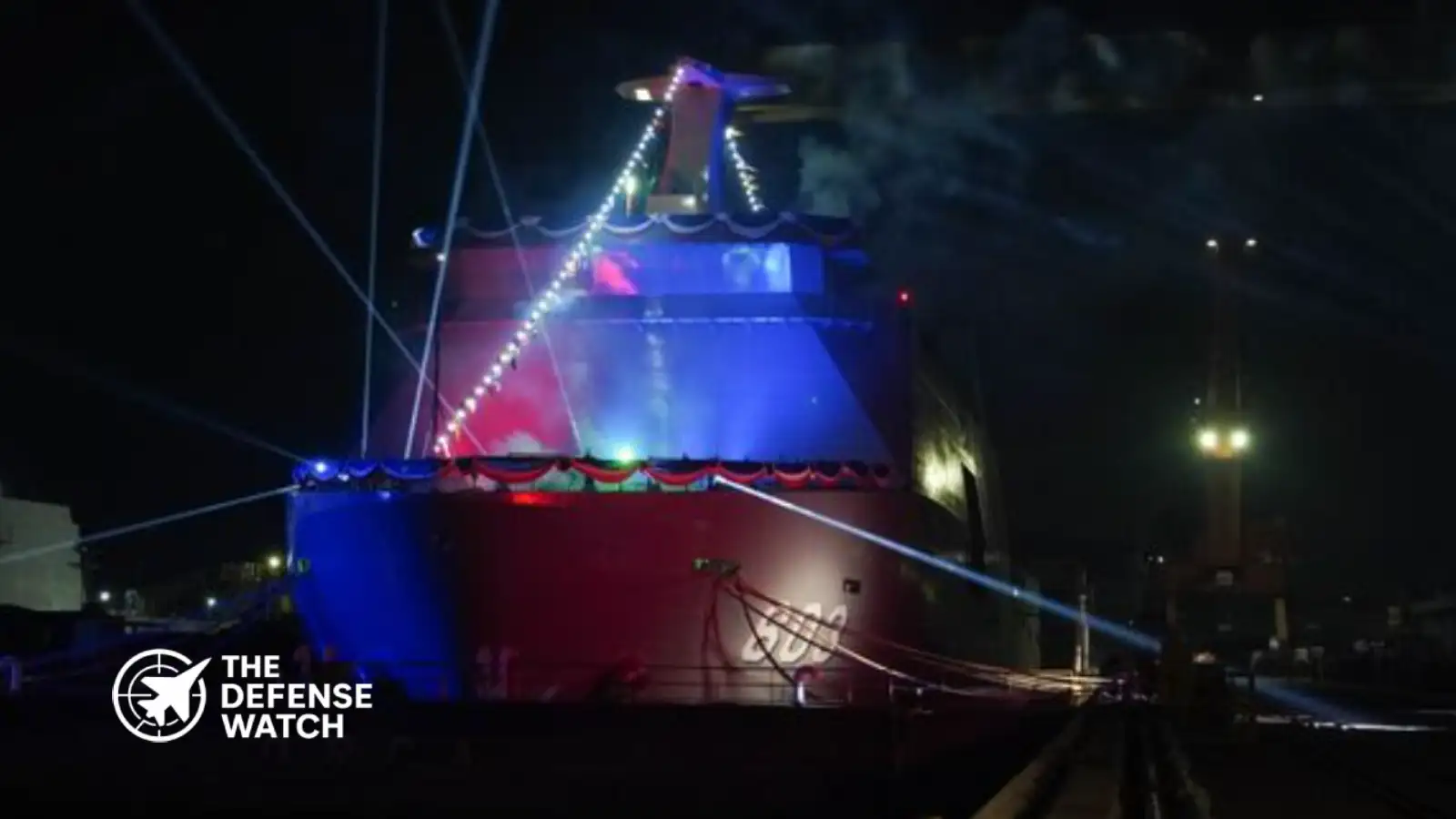
Philippine Navy Tarlac-class LPD
The Philippine Navy's third SSV, seen here at its launch ceremony on 30 June 2026. (PT PAL)
SHARE
Follow The Defense Watch on Google:

Executive Summary:

Indonesia’s PT PAL launched the Philippine Navy’s third Tarlac-class landing platform dock (LPD), designated LD-603 and to be named BRP Ilocos Norte, on June 30, 2026, at its Surabaya shipyard. This is the first of two vessels ordered under a 2022 follow-on contract. The launch advances the Philippine Navy’s modernization efforts to strengthen amphibious operations, troop and vehicle transport, and humanitarian assistance and disaster relief (HA/DR) missions in a strategically vital region.

(adsbygoogle = window.adsbygoogle || []).push({});

Launch Marks Milestone in Philippine Amphibious Modernization

Indonesia’s state-owned shipbuilder PT PAL launched the Philippine Navy’s third strategic sealift vessel (SSV) on June 30, 2026. The vessel, the first follow-on unit under a 2022 contract, will commission as BRP Ilocos Norte.

Contents
Launch Marks Milestone in Philippine Amphibious ModernizationProgram Background and Contract DetailsTechnical Specifications and ImprovementsOperational Impact and Regional ContextBroader Philippine Navy Modernization

The event occurred at PT PAL’s facilities in Surabaya. Philippine Navy officials, including Flag Officer in Command Vice Admiral Jose Ma Ambrosio Q. Ezpeleta (also referred to as Vice Admiral Jose Maria Ambrosio Quiatchon), attended alongside Indonesian counterparts.

Program Background and Contract Details

The Philippine Navy initially acquired two Tarlac-class LPDs from PT PAL under a 2014 contract valued at approximately $92 million. BRP Tarlac (LD-601) commissioned in 2016, followed by BRP Davao del Sur (LD-602) in 2017. These vessels, derived from the Indonesian Makassar-class design, provided the navy with its first modern amphibious sealift capability.

(adsbygoogle = window.adsbygoogle || []).push({});

In June 2022, the Philippines signed a follow-on contract for two additional improved vessels valued at $100.9 million. The program faced delays due to global supply chain disruptions and geopolitical factors, but PT PAL accelerated hull construction using its Industrial Maritime 4.0 digital framework, completing the hull in six months.

- Advertisement -

Technical Specifications and Improvements

The follow-on vessels maintain the baseline Tarlac-class configuration while incorporating enhancements requested by the Philippine Navy.

Key Specifications (LD-603 and follow-on units):

  • Length: 124 meters
  • Beam: 21.8 meters
  • Standard Displacement: 7,200 tons
  • Maximum Speed: 16 knots
  • Range: 9,360 nautical miles at 13 knots
  • Endurance: 30 days
  • Troop Capacity: Up to 680 personnel
  • Propulsion: CODAD with two MAN-STX diesel engines

Improvements over the first two ships include greater vehicle deck clearance, a larger side ramp door, and enhanced ability to embark and deploy the Philippine Navy’s multi-purpose attack craft (MPAC). The vessels feature a well deck for landing craft utility (LCU) operations—two per ship—and a large flight deck for helicopter operations.

These changes allow carriage of larger vehicles and improve logistical efficiency during amphibious assaults or relief operations.

Operational Impact and Regional Context

The addition of two more LPDs will effectively double the Philippine Navy’s dedicated amphibious sealift fleet. This expansion is critical for operations across the archipelago’s vast maritime domain and the West Philippine Sea, where Manila faces territorial challenges.

BRP Ilocos Norte and its sister ship will support troop transport, equipment movement, maritime security, and HA/DR missions. Philippine officials highlighted their utility for power projection beyond national waters and rapid response to natural disasters, a frequent occurrence in the Philippines.

Analysis: For the U.S. and allied defense posture in the Indo-Pacific, a more capable Philippine Navy strengthens collective maritime security efforts. Enhanced sealift reduces reliance on ad-hoc commercial or allied shipping during crises and complements U.S. Marine Corps and Navy amphibious forces in regional exercises. However, the ships currently lack advanced defensive sensors and weapons; final decisions on outfitting remain pending. Integrating modern combat systems will be essential to maximize survivability in contested environments.

Technical hurdles in the program, including supply chain issues, underscore broader challenges in defense industrial cooperation. PT PAL’s use of digital production tools demonstrates a maturing approach that could benefit future ASEAN naval programs. Delivery of LD-603 is expected later in 2026 or 2027, with the fourth vessel following.

- Advertisement -

Broader Philippine Navy Modernization

The SSV program forms part of the Philippine Armed Forces’ broader modernization drive. It addresses longstanding capability gaps in amphibious warfare, dating back to reliance on older U.S. and Australian surplus vessels. The Tarlac-class has proven effective in joint exercises and disaster response, validating the platform choice.

Future integration of additional sensors, communications, and potentially defensive armaments will determine the class’s effectiveness against evolving threats, including anti-access/area-denial (A2/AD) capabilities in the region.

Enjoying our coverage?

Make The Defense Watch a preferred source on Google to see more of our geopolitical and defense insights when relevant to you.


TAGGED:Philippine Navy modernizationTarlac-class LPD
Share This Article
Facebook Copy Link Print
BySamuel Drake | Defense Analyst
Follow:
Samuel Drake is a defense analyst at TheDefenseWatch.com covering naval warfare, military ordnance, maritime technology, fleet modernization, and defense procurement. His reporting focuses on documented capabilities, procurement programs, and military technology.
Leave a Comment

Leave a Reply Cancel reply

Your email address will not be published. Required fields are marked *

Search Defense Systems

Latest Defense Systems

  • F-104 Starfighter F-104 Starfighter
  • F-15J Eagle Fighter Jet F-15J Eagle Fighter Jet
  • China’s GJ-21 Stealth Drone China’s GJ-21 Stealth Drone
  • China’s GJ-11 Stealth Drone China’s GJ-11 Stealth Drone
  • F-15EX Eagle Fighter Jet F-15EX Eagle Fighter Jet
  • TRML-4D Radar TRML-4D Radar
  • F-47A Fighter Jet F-47A Fighter Jet
  • China DF-61 Missile China DF-61 Missile
  • B61 Nuclear Bomb B61 Nuclear Bomb

Recent Compares

  • J-10C vs JF-17 Thunder: Which Fighter Is More Capable? J-10C vs JF-17 Thunder: Which Fighter Is More Capable? View Comparison →
  • Tejas vs Gripen: Key Differences and Capabilities Tejas vs Gripen: Key Differences and Capabilities View Comparison →
  • Tejas vs MiG-21 Bison: How India Replaced Its Iconic Supersonic Fighter Tejas vs MiG-21 Bison: How India Replaced Its Iconic Supersonic Fighter View Comparison →
  • F-35 vs F-16: Stealth, Sensors and Combat Roles F-35 vs F-16: Stealth, Sensors and Combat Roles View Comparison →
  • Tejas Fighter Jet vs F-16 Fighting Falcon: Capability Compared Tejas Fighter Jet vs F-16 Fighting Falcon: Capability Compared View Comparison →
  • Rafale Fighter Jet vs F-16 Fighting Falcon : Which Fighter Has the Edge? Rafale Fighter Jet vs F-16 Fighting Falcon : Which Fighter Has the Edge? View Comparison →
  • Su-57 Fighter Jet vs J-20 Fighter Jet: Stealth and Air Combat Compared Su-57 Fighter Jet vs J-20 Fighter Jet: Stealth and Air Combat Compared View Comparison →
  • Mirage 2000 vs Tejas Mk1A: Legacy Combat Power vs Indigenous Modernization Mirage 2000 vs Tejas Mk1A: Legacy Combat Power vs Indigenous Modernization View Comparison →
  • Rafale Fighter Jet vs F-22 Raptor: Which Air Dominance Fighter Has the Edge? Rafale Fighter Jet vs F-22 Raptor: Which Air Dominance Fighter Has the Edge? View Comparison →
  • Tejas Fighter Jet vs. Rafale Fighter Jet: India’s Indigenous Fighter Meets France’s Proven Multirole Combat Aircraft Tejas Fighter Jet vs. Rafale Fighter Jet: India’s Indigenous Fighter Meets France’s Proven Multirole Combat Aircraft View Comparison →

Recent Posts

  • U.S. Army Certifies First Operational Patriot Battery on IBCS Network
  • Google Selects Blue Origin to Launch AI Computing Satellites in 2029
  • Starfighters Aerospace Repurposes F-104 Starfighters for High-Speed Flight Research
  • New York Air Guard Deploys Five Ski-Equipped LC-130s for Antarctic Operation Deep Freeze
  • Pentagon Reports Audit Progress as 2028 Clean Financial Audit Deadline Approaches

You Might Also Like

U.S. Navy destroyer delivery
Naval & MaritimeNaval Strategy & Maritime Security

U.S. Navy Takes Delivery of Flight III Destroyer USS Ted Stevens

October 1, 2026
SM-6 Block IAU production
Naval & MaritimeNaval Strategy & Maritime Security

U.S. Navy Funds SM-6 Block IAU Transition as Production Expands

October 7, 2026
Marichka underwater drone
Naval & MaritimeNaval Strategy & Maritime Security

Ukraine Unveils Marichka Underwater Drone With 1000 km Range and Heavy Strike Capability

September 7, 2026
USS Idaho submarine
Naval & MaritimeSubmarines

Navy Commissions USS Idaho To Expand US Undersea Combat Power

April 27, 2026

Logo

Copyright © 2026 TheDefenseWatch.com

Helpful Links

  • Home
  • About Us
  • Privacy Policy
  • Terms of Use / Disclaimer
  • U.S. Privacy Notice – CCPA Compliance

Defense Systems

  • Defense Systems
  • Comparisons 
  • Manufacturer
  • Tactical Calculators

Popuplar

Which 5 Air Forces Possess the Costliest Fighter Jet Fleets in the World
Evolving Strategic Value: Carrier Strike Groups in the Indo-Pacific’s Future Security Architecture
Autonomous Weapon Systems Spark U.S. Ethics Debate Amid Rapid Military AI Integration

We report on developments involving military forces, governments, defense companies, research organizations, and security institutions around the world. 

Welcome Back!

Sign in to your account

Username or Email Address
Password

Lost your password?

Enjoying our coverage?

Make The Defense Watch a preferred source on Google to see more insights.