• Home
  • About
  • Defense Systems
  • Manufacturer
  • Comparisons
  • Compare 
  • Tools
TheDefenseWatch.com
  • Aerospace & Aviation
  • Military & Ordnance
  • Naval & Maritime
  • Cyber & Space Defense
  • Policy & Strategy
  • Global News
  • Tools Library
    • Smart Calculator
    • Drone Flight Time Calculator
    • Drone Range Calculator
    • Counter-Drone Jammer Effective Range Calculator
    • Counter-Battery Radar Detection Calculator
    • Artillery Fire Correction Calculator
    • Thermal Camera Detection Range Calculator
    • Missile Range & Time-of-Flight Calculator
    • Radar Detection Range Calculator
    • FPV Strike Drone Payload vs Range Calculator
    • Loitering Munition Endurance Calculator
    • Sniper Ballistic Drop & Windage Calculator
    • Bullet Drop Calculator
    • U.S. Army Combat Fitness Test (ACFT) Calculator
    • Military Pension Calculator
    • Military Retirement Calculator
    • Military Pension Calculator
    • Large Number Calculator
Font ResizerAa

TheDefenseWatch.com

The Defense Watch | U.S. & Global Defense News, Analysis & Military Updates

Search
  • Home
  • About
  • Defense Systems
  • Manufacturer
  • Comparisons
  • Compare 
  • Tools

Stay Updated

Get the latest update

Subscribe

Explore

  • Drone
  • Fighter Jets & Military Aircraft
  • Hypersonic Weapons
  • Aircraft Carriers
  • Strategic History & Missions
  • Tools Library
Home » NASA Moves Toward Quiet Supersonic Flight As X-59 Reaches Mach 1.4 and 55,000 Feet
Aerospace & AviationFighter Jets & Military Aircraft

NASA Moves Toward Quiet Supersonic Flight As X-59 Reaches Mach 1.4 and 55,000 Feet

Daniel Mercer / Defense & Aerospace Analyst
Last updated: June 15, 2026 8:34 am
Daniel Mercer / Defense & Aerospace Analyst
Share
3 Min Read
sonic boom supersonic aircraft explained
Image : NASA
SHARE

Executive Summary:

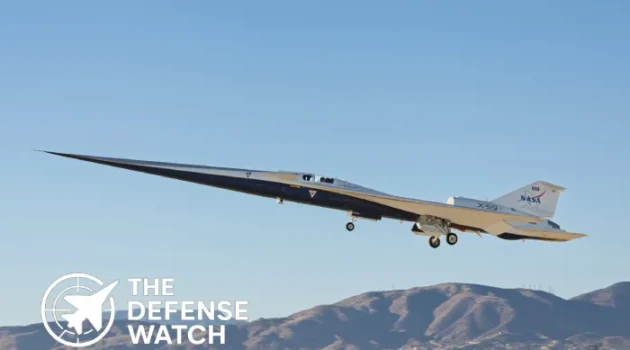
NASA’s X-59 experimental aircraft has successfully reached Mach 1.4 and 55,000 feet during a June 12 test flight, achieving the exact operating conditions required for future community overflight campaigns. The milestone advances NASA’s Quesst mission, which seeks to demonstrate that supersonic aircraft can fly over land while generating a quiet sonic thump rather than a disruptive sonic boom, potentially reshaping future civil aviation regulations.

NASA’s X-59 Reaches Critical Mission Conditions Flight Milestone

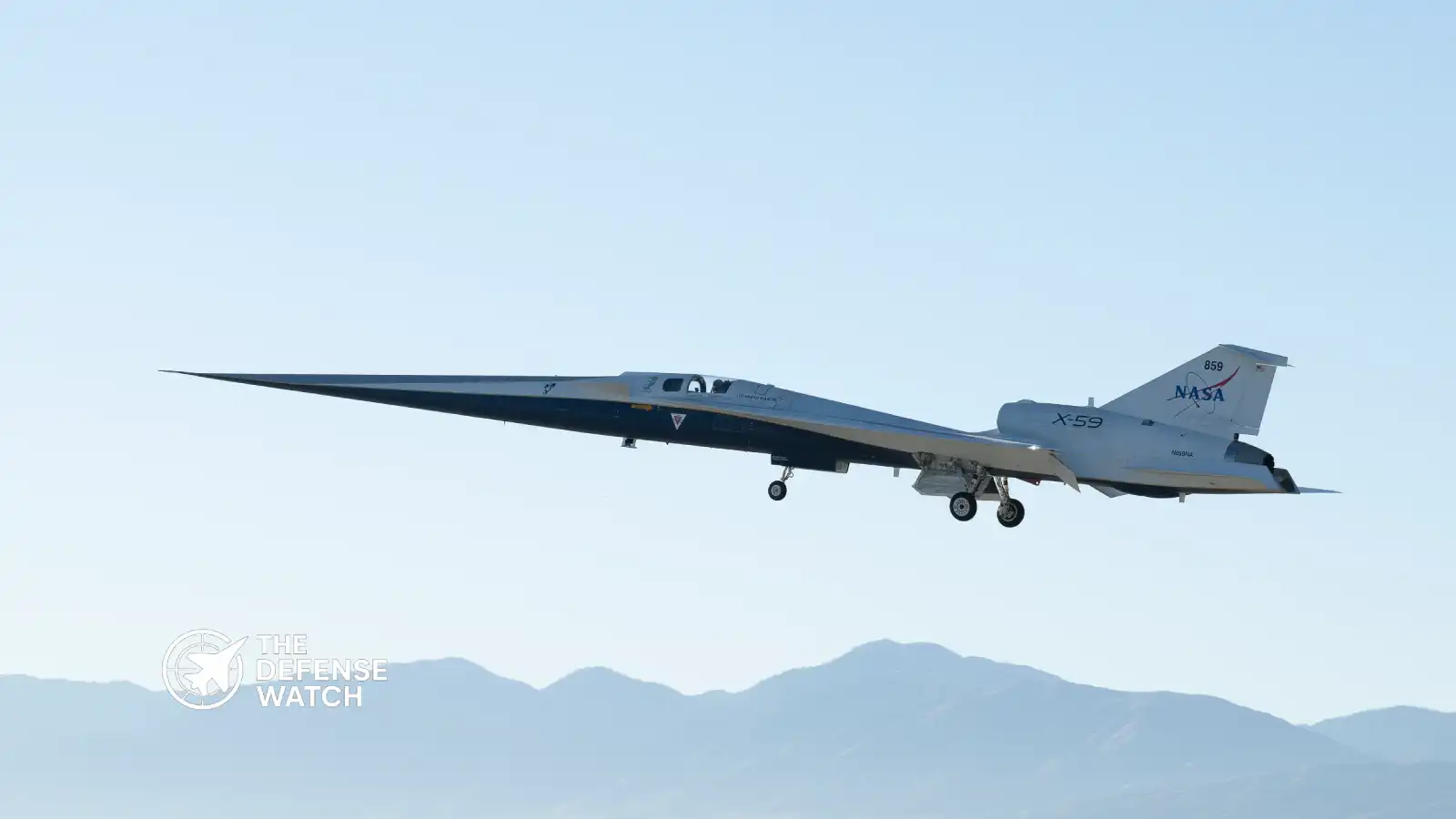
NASA’s X-59 quiet supersonic research aircraft has achieved a major program milestone by flying at Mach 1.4 and an altitude of 55,000 feet, the exact conditions planned for future community response testing under the agency’s Quesst mission. According to NASA, the achievement occurred during a June 12 flight test and represents the first time the aircraft has operated at its intended mission profile.

Contents
  • NASA’s X-59 Reaches Critical Mission Conditions Flight Milestone
  • What Makes the X-59 Different?
  • Community Overflights Are the Next Major Phase
  • Why the Program Matters for Future Aviation
  • Defense and Aerospace Implications
  • Technical Challenges Still Ahead

The milestone comes only days after the X-59 completed its first supersonic flight on June 5, when the aircraft exceeded the speed of sound for the first time by reaching approximately Mach 1.1 at 43,400 feet.

NASA officials describe the latest flight as more significant because it validates the aircraft’s ability to operate at the altitude and speed necessary for future community overflight demonstrations. Those demonstrations form the core objective of the Quesst program.
X-59 Quiet Supersonic Aircraft
Image : NASA

What Makes the X-59 Different?

Unlike traditional supersonic aircraft such as the Concorde or military fighters, the X-59 was specifically engineered to minimize the shock waves that create loud sonic booms.

- Advertisement -
  • X-59 Quiet Supersonic Aircraft 

    X-59 Quiet Supersonic Aircraft 

    • Maximum Speed: Mach 1.4 (1,490 km/h)
    • Range: ~1,000 miles (1,600 km)
    • Payload Capacity: N/A (Experimental aircraft)
    • Crew: 1
    • View Details →
    8.0

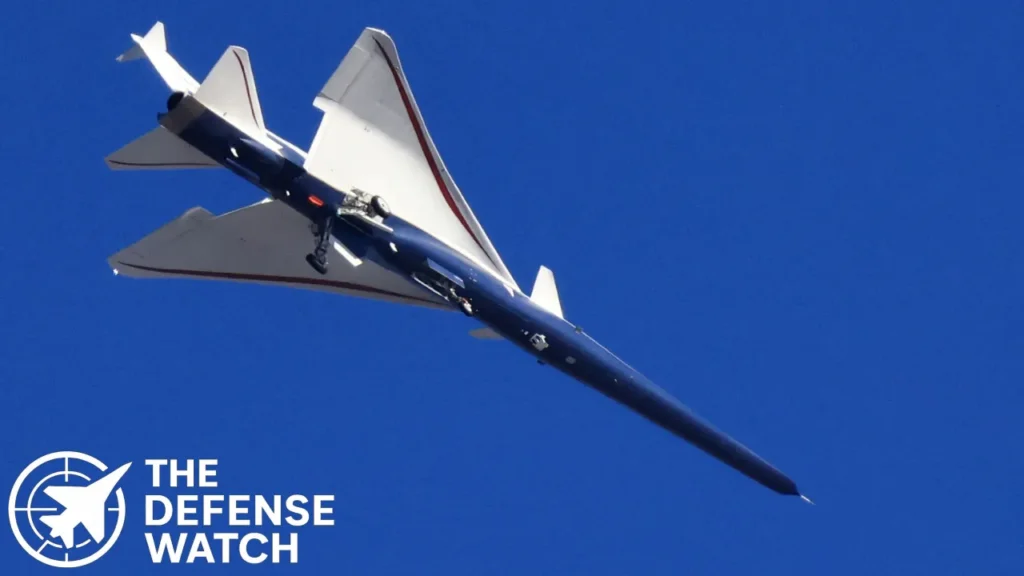
    The aircraft features an unusually long and narrow nose, optimized fuselage shaping, and aerodynamic design elements intended to distribute pressure waves more evenly as the aircraft travels faster than sound. NASA’s objective is to transform the traditional sonic boom into a significantly quieter “sonic thump.”

    Key X-59 specifications include:

    SpecificationX-59
    Maximum Test SpeedMach 1.4
    Cruise Altitude55,000 ft
    LengthNearly 100 ft
    MissionQuiet Supersonic Demonstrator
    ProgramNASA Quesst
    Prime ContractorLockheed Martin Skunk Works

    The aircraft was developed by NASA in partnership with Lockheed Martin and serves as a flying laboratory rather than a prototype airliner. Its primary purpose is to collect scientific and acoustic data that regulators can use when evaluating future supersonic flight rules.

    Community Overflights Are the Next Major Phase

    NASA’s testing campaign remains focused on expanding the aircraft’s flight envelope and validating performance before acoustic testing begins.

    The agency plans to conduct flights over multiple U.S. communities after the aircraft completes additional performance evaluations. During those flights, researchers will gather data on how people on the ground perceive the sound generated by the aircraft while operating at Mach 1.4 and 55,000 feet.

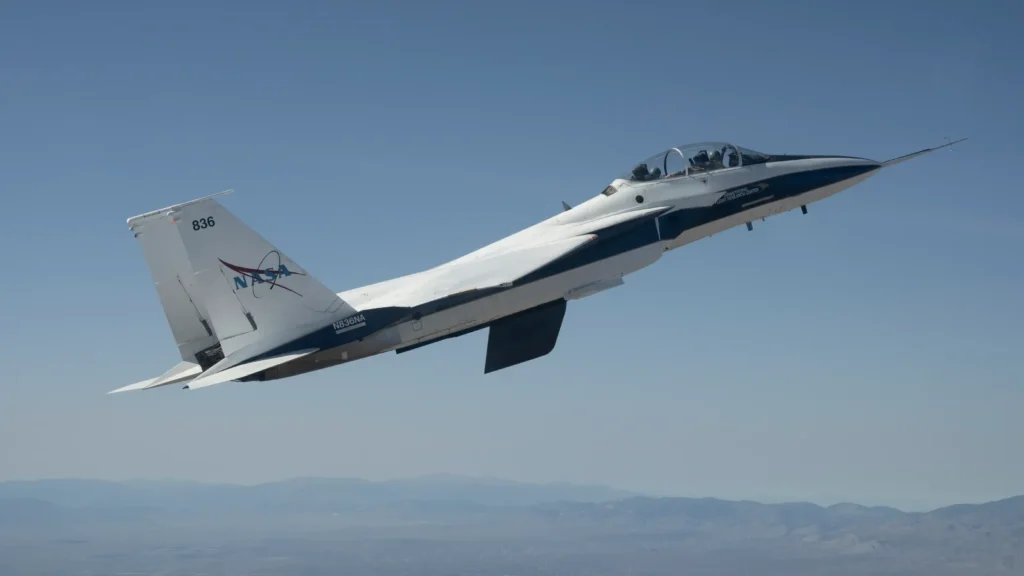
    Interestingly, NASA has not yet verified the aircraft’s actual low-boom performance during recent supersonic flights. The X-59 has been accompanied by a NASA F-15 chase aircraft whose conventional sonic booms intentionally mask any sound generated by the experimental jet during early flight testing. Acoustic validation will occur during later testing phases.

    Why the Program Matters for Future Aviation

    The X-59 is attempting to address a regulatory challenge that has limited commercial supersonic travel for decades.

    In 1973, U.S. regulators effectively prohibited routine civilian supersonic flight over land because traditional sonic booms created significant noise disturbances for communities below. That restriction remains a major barrier to the development of next-generation supersonic passenger aircraft.

    NASA laminar flow wing
    Image : NASA

    NASA’s strategy is not to build a commercial airliner itself. Instead, the agency aims to generate scientifically validated acoustic data that could help regulators establish future noise-based standards for overland supersonic operations. The collected information will be shared with U.S. and international aviation authorities.

    If successful, the effort could enable a new generation of commercial aircraft capable of dramatically reducing travel times on domestic and international routes while remaining acceptable to communities beneath flight paths.

    Defense and Aerospace Implications

    While the Quesst mission is fundamentally a civil aviation research effort, the technologies being evaluated have broader aerospace significance.

    Low-boom aerodynamic shaping, advanced computational modeling, and high-speed flight control techniques could inform future military aircraft design. Reduced acoustic signatures during supersonic operations may offer operational advantages for reconnaissance, rapid response, and long-range strike platforms where minimizing detectability remains important.

    • X-59 Quiet Supersonic Aircraft 

      X-59 Quiet Supersonic Aircraft 

      • Maximum Speed: Mach 1.4 (1,490 km/h)
      • Range: ~1,000 miles (1,600 km)
      • Payload Capacity: N/A (Experimental aircraft)
      • Crew: 1
      • View Details →
      8.0

      The program also demonstrates continued U.S. leadership in experimental aerospace development through the use of X-plane research aircraft. Historically, X-plane programs have served as technology incubators for capabilities that later transitioned into operational military and civilian aviation systems.

      From a strategic perspective, the X-59 represents one of the most ambitious efforts since the retirement of the Concorde to address the fundamental noise challenge that has constrained supersonic transportation for more than half a century.

      Technical Challenges Still Ahead

      Despite the recent milestone, the program remains in a test and validation phase.

      NASA officials note that months of additional performance testing remain before the aircraft begins its community overflight campaign. Engineers must continue validating handling qualities, flight stability, and acoustic performance across a range of operating conditions.

      The next critical objective will be confirming that the aircraft’s unique design consistently produces the predicted low-noise signature under real-world atmospheric conditions. Success in that phase will determine whether the collected data can support future regulatory changes governing overland supersonic flight.

TAGGED:NASA X-59Quiet Supersonic Flight
Share This Article
Facebook Copy Link Print
ByDaniel Mercer / Defense & Aerospace Analyst
Follow:
Daniel Mercer is a defense and aerospace analyst at TheDefenseWatch.com covering military aviation, aerospace technology, unmanned systems, air warfare, and defense procurement. His reporting uses official documents, government and military statements, company announcements, and other public sources.
Leave a Comment

Leave a Reply Cancel reply

Your email address will not be published. Required fields are marked *

Latest Defense Systems

  • RUTA B1 Cruise Missile RUTA B1 Cruise Missile
  • XQ-67A Drone XQ-67A Drone
  • B-25 Mitchell Bomber B-25 Mitchell Bomber
  • F-100 Super Sabre F-100 Super Sabre
  • North American F-86 Sabre North American F-86 Sabre
  • North American XB-70 Valkyrie North American XB-70 Valkyrie
  • Northrop YF-23 Fighter Northrop YF-23 Fighter
  • P-51 Mustang Fighter Aircraft P-51 Mustang Fighter Aircraft
  • Rafale F5 Fighter Rafale F5 Fighter

Recent Compares

  • J-10C vs JF-17 Thunder: Which Fighter Is More Capable? J-10C vs JF-17 Thunder: Which Fighter Is More Capable? View Comparison →
  • Tejas vs Gripen: Key Differences and Capabilities Tejas vs Gripen: Key Differences and Capabilities View Comparison →
  • Tejas vs MiG-21 Bison: How India Replaced Its Iconic Supersonic Fighter Tejas vs MiG-21 Bison: How India Replaced Its Iconic Supersonic Fighter View Comparison →
  • F-35 vs F-16: Stealth, Sensors and Combat Roles F-35 vs F-16: Stealth, Sensors and Combat Roles View Comparison →
  • Tejas Fighter Jet vs F-16 Fighting Falcon: Capability Compared Tejas Fighter Jet vs F-16 Fighting Falcon: Capability Compared View Comparison →
  • Rafale Fighter Jet vs F-16 Fighting Falcon : Which Fighter Has the Edge? Rafale Fighter Jet vs F-16 Fighting Falcon : Which Fighter Has the Edge? View Comparison →
  • Su-57 Fighter Jet vs J-20 Fighter Jet: Stealth and Air Combat Compared Su-57 Fighter Jet vs J-20 Fighter Jet: Stealth and Air Combat Compared View Comparison →
  • Mirage 2000 vs Tejas Mk1A: Legacy Combat Power vs Indigenous Modernization Mirage 2000 vs Tejas Mk1A: Legacy Combat Power vs Indigenous Modernization View Comparison →
  • Rafale Fighter Jet vs F-22 Raptor: Which Air Dominance Fighter Has the Edge? Rafale Fighter Jet vs F-22 Raptor: Which Air Dominance Fighter Has the Edge? View Comparison →
  • Tejas Fighter Jet vs. Rafale Fighter Jet: India’s Indigenous Fighter Meets France’s Proven Multirole Combat Aircraft Tejas Fighter Jet vs. Rafale Fighter Jet: India’s Indigenous Fighter Meets France’s Proven Multirole Combat Aircraft View Comparison →

Recent Posts

  • Destinus Produces 1,750 Ruta B1 Cruise Missiles as European Output Expands
  • Boeing Wins $11.1 Million Contract Modification for Kuwait F/A-18 Training Support
  • U.S. Navy Awards $23.1 Million Contract for Cybersecurity of Shipboard Power Systems
  • Lockheed Martin Wins $43.7 Million F-35 Reprogramming Lab Upgrade Contract
  • USS Colorado Arrives in Australia for AUKUS Submarine Maintenance

You Might Also Like

A-12 Avenger II bomber
Aerospace & AviationAirpower Balance

A-12 Avenger II and the Carrier Vulnerability Debate

September 12, 2026
Algeria Su-35 fighter jets
Aerospace & AviationDrones & UAVs

Algeria Receives Russian Su-35 Fighter Jets: First Visual Confirmation Emerges

September 13, 2026
Project NYX Apache wingman drones
Aerospace & AviationDrones & UAVs

UK Project NYX Advances Apache Wingman Drone Prototypes With Seven Industry Partners

September 7, 2026
China Changying-8 cargo UAV
Aerospace & AviationDrones & UAVs

China Unveils Changying-8 Cargo UAV To Expand Long-Range Logistics Capability

April 1, 2026

Logo

Copyright © 2026 TheDefenseWatch.com

Helpful Links

  • Home
  • About Us
  • Privacy Policy
  • Terms of Use / Disclaimer
  • U.S. Privacy Notice – CCPA Compliance

Defense Systems

  • Defense Systems
  • Comparisons 
  • Manufacturer
  • Tactical Calculators

Popuplar

Which 5 Air Forces Possess the Costliest Fighter Jet Fleets in the World
Evolving Strategic Value: Carrier Strike Groups in the Indo-Pacific’s Future Security Architecture
Autonomous Weapon Systems Spark U.S. Ethics Debate Amid Rapid Military AI Integration

We report on developments involving military forces, governments, defense companies, research organizations, and security institutions around the world. 

Welcome Back!

Sign in to your account

Username or Email Address
Password

Lost your password?