• Home
  • About
  • Defense Systems
  • Manufacturer
  • Comparisons
  • Compare 
  • Tools
TheDefenseWatch.com
  • Aerospace & Aviation
  • Military & Ordnance
  • Naval & Maritime
  • Cyber & Space Defense
  • Policy & Strategy
  • Global News
  • Tools Library
    • Smart Calculator
    • Drone Flight Time Calculator
    • Drone Range Calculator
    • Counter-Drone Jammer Effective Range Calculator
    • Counter-Battery Radar Detection Calculator
    • Artillery Fire Correction Calculator
    • Thermal Camera Detection Range Calculator
    • Missile Range & Time-of-Flight Calculator
    • Radar Detection Range Calculator
    • FPV Strike Drone Payload vs Range Calculator
    • Loitering Munition Endurance Calculator
    • Sniper Ballistic Drop & Windage Calculator
    • Bullet Drop Calculator
    • U.S. Army Combat Fitness Test (ACFT) Calculator
    • Military Pension Calculator
    • Military Retirement Calculator
    • Military Pension Calculator
    • Large Number Calculator
Font ResizerAa

TheDefenseWatch.com

The Defense Watch | U.S. & Global Defense News, Analysis & Military Updates

Search
  • Home
  • About
  • Defense Systems
  • Manufacturer
  • Comparisons
  • Compare 
  • Tools

Stay Updated

Get the latest update

Subscribe

Explore

  • Drone
  • Fighter Jets & Military Aircraft
  • Hypersonic Weapons
  • Aircraft Carriers
  • Strategic History & Missions
  • Tools Library
Home » U.S. Army Expands Indo-Pacific Readiness With Salaknib 2026 Exercise In Philippines
Alliances & DoctrinesPolicy & Strategy

U.S. Army Expands Indo-Pacific Readiness With Salaknib 2026 Exercise In Philippines

Samuel Drake | Defense Analyst
Last updated: June 1, 2026 12:00 am
Samuel Drake | Defense Analyst
Share
6 Min Read
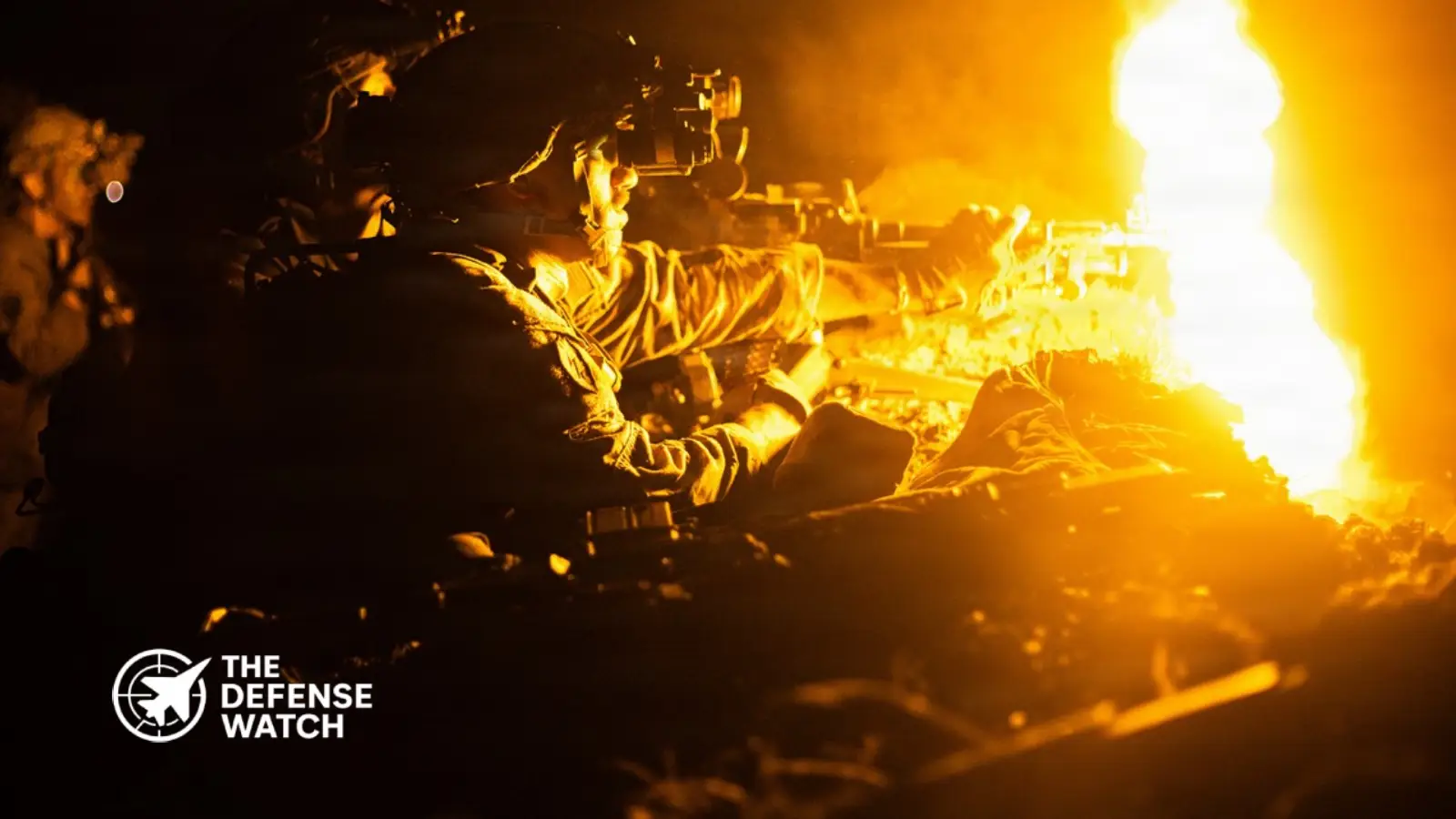
U.S. and Philippine Army soldiers conduct joint training during Exercise Salaknib 2026 at Fort Magsaysay in the Philippines.
SHARE

Executive Summary:
The United States Army and the Armed Forces of the Philippines have officially launched Exercise Salaknib 2026 at Fort Magsaysay. The annual training event focuses on interoperability, combat readiness, and multinational coordination as security concerns continue to shape the Indo-Pacific operating environment.

U.S. Army Expands Salaknib 2026 Exercise As Indo-Pacific Security Pressures Rise

The Salaknib 2026 military exercise has formally begun in the Philippines, bringing together U.S. and Philippine Army forces for one of their most significant annual bilateral training events.

Contents
  • U.S. Army Expands Salaknib 2026 Exercise As Indo-Pacific Security Pressures Rise
  • Growing Scale And Complexity
  • Strategic Importance In The Indo-Pacific
  • Beyond Bilateral Training
  • Defense Cooperation Continues To Deepen

The opening ceremony took place at Fort Magsaysay, a major Philippine military training facility that has become a central hub for increasingly complex joint exercises between Washington and Manila. According to the U.S. Army, Salaknib remains a cornerstone of the long-standing alliance between the two countries and is designed to improve operational coordination, readiness, and combined combat capabilities.

Military leaders from both nations emphasized the exercise’s role in strengthening interoperability across a range of operational scenarios, from conventional combat operations to multidomain missions involving land, air, cyber, and logistics elements.

Growing Scale And Complexity

Salaknib 2026 forms part of a broader cycle of U.S.-Philippine military engagement that also includes the larger Balikatan exercises. In recent years, both events have expanded significantly in scope as the two allies deepen defense cooperation across the Indo-Pacific region.

- Advertisement -

This year’s activities include realistic field training, command-and-control exercises, live-fire events, logistics operations, and multinational participation. Elements of the Joint Pacific Multinational Readiness Center Exportable (JPMRC-X) program have also been integrated into the exercise, allowing troops to train in complex operational environments that simulate modern battlefield conditions.

According to U.S. Army statements, the second phase of Salaknib 2026 involved forces from multiple partner nations operating alongside American and Philippine troops across Northern Luzon. Training focused on combined maneuver operations, rapid deployment, sustainment, and multidomain coordination.

The exercise reflects a broader trend within U.S. Indo-Pacific strategy, where allied forces are increasingly training together in realistic operational settings rather than conducting limited symbolic drills.

Strategic Importance In The Indo-Pacific

The launch of Salaknib 2026 comes amid heightened security competition across the Indo-Pacific.

While U.S. and Philippine officials consistently state that the exercise is not directed at any specific country, the growing scale of regional military activities reflects concerns over maritime security, freedom of navigation, and crisis response capabilities.

The Philippines occupies a strategically important position along key sea lanes and near several contested areas of the South China Sea. As a result, Manila has accelerated defense modernization efforts while expanding security cooperation with treaty allies and regional partners.

Recent exercises have featured increasingly advanced capabilities, including HIMARS rocket artillery, integrated air and missile defense activities, anti-armor operations, and multinational maritime drills. Reports from this year’s exercise cycle also highlighted the presence of emerging battlefield technologies, including unmanned systems and expeditionary support capabilities.

Another notable development occurred during related exercises earlier this year when U.S. forces reportedly conducted the first Tomahawk missile launch from the Philippines using the Army’s Typhon Mid-Range Capability system, underscoring the growing sophistication of U.S. force posture in the region.

- Advertisement -

Beyond Bilateral Training

One of the most significant aspects of Salaknib 2026 is its evolution beyond a purely bilateral event.

Japanese participation has continued to expand, while other regional and international partners have increasingly joined associated exercises throughout the Philippines. Military planners view these activities as essential for building interoperability among allied and partner forces that may be required to operate together during future contingencies.

The JPMRC-X component, in particular, allows units from different nations to conduct force-on-force training under demanding conditions that replicate operational challenges across the Indo-Pacific theater. U.S. Army officials described the exercise as an opportunity to refine multidomain tactics and strengthen coalition readiness.

Defense Cooperation Continues To Deepen

The continued expansion of Salaknib demonstrates how defense cooperation between Washington and Manila has evolved beyond traditional alliance management into a more operationally focused partnership.

For the Philippine Army, participation provides access to advanced training methodologies, emerging technologies, and multinational operational experience. For the United States, the exercise supports broader efforts to maintain a credible forward presence and strengthen regional partnerships across the Indo-Pacific.

As regional security dynamics continue to evolve, military exercises such as Salaknib 2026 are increasingly viewed as practical tools for improving readiness, enhancing deterrence, and ensuring allied forces can operate together effectively during potential crises.

TAGGED:Alliances & DoctrinesAsian Defense & SecurityMilitary Exercises
Share This Article
Facebook Copy Link Print
BySamuel Drake | Defense Analyst
Follow:
Samuel Drake is a defense analyst at TheDefenseWatch.com covering naval warfare, military ordnance, maritime technology, fleet modernization, and defense procurement. His reporting focuses on documented capabilities, procurement programs, and military technology.
Leave a Comment

Leave a Reply Cancel reply

Your email address will not be published. Required fields are marked *

Latest Defense Systems

  • Tomahawk Block IV Missile Tomahawk Block IV Missile
  • SU-57 Felon Stealth Fighter SU-57 Felon Stealth Fighter
  • Boeing F/A-XX Fighter Boeing F/A-XX Fighter
  • JF-17 Thunder Fighter Jet JF-17 Thunder Fighter Jet
  • Gaurav Glide Bomb Gaurav Glide Bomb
  • F-47 Fighter Jet F-47 Fighter Jet
  • Spirit UAS Spirit UAS
  • GBU-43/B MOAB Bomb GBU-43/B MOAB Bomb
  • John F. Kennedy Aircraft Carrier John F. Kennedy Aircraft Carrier

Recent Compares

  • J-10C vs JF-17 Thunder: Which Fighter Is More Capable? J-10C vs JF-17 Thunder: Which Fighter Is More Capable? View Comparison →
  • Tejas vs Gripen: Key Differences and Capabilities Tejas vs Gripen: Key Differences and Capabilities View Comparison →
  • Tejas vs MiG-21 Bison: How India Replaced Its Iconic Supersonic Fighter Tejas vs MiG-21 Bison: How India Replaced Its Iconic Supersonic Fighter View Comparison →
  • F-35 vs F-16: Stealth, Sensors and Combat Roles F-35 vs F-16: Stealth, Sensors and Combat Roles View Comparison →
  • Tejas Fighter Jet vs F-16 Fighting Falcon: Capability Compared Tejas Fighter Jet vs F-16 Fighting Falcon: Capability Compared View Comparison →
  • Rafale Fighter Jet vs F-16 Fighting Falcon : Which Fighter Has the Edge? Rafale Fighter Jet vs F-16 Fighting Falcon : Which Fighter Has the Edge? View Comparison →
  • Su-57 Fighter Jet vs J-20 Fighter Jet: Stealth and Air Combat Compared Su-57 Fighter Jet vs J-20 Fighter Jet: Stealth and Air Combat Compared View Comparison →
  • Mirage 2000 vs Tejas Mk1A: Legacy Combat Power vs Indigenous Modernization Mirage 2000 vs Tejas Mk1A: Legacy Combat Power vs Indigenous Modernization View Comparison →
  • Rafale Fighter Jet vs F-22 Raptor: Which Air Dominance Fighter Has the Edge? Rafale Fighter Jet vs F-22 Raptor: Which Air Dominance Fighter Has the Edge? View Comparison →
  • Tejas Fighter Jet vs. Rafale Fighter Jet: India’s Indigenous Fighter Meets France’s Proven Multirole Combat Aircraft Tejas Fighter Jet vs. Rafale Fighter Jet: India’s Indigenous Fighter Meets France’s Proven Multirole Combat Aircraft View Comparison →

Recent Posts

  • How Much Does a Tomahawk Missile Cost? Price, Range and Blocks
  • Faster Than Sound, Unstoppable at Sea: Inside China’s YJ-20 and YJ-17 Hypersonic Missiles
  • U.S., Australia and UK Test Maritime Autonomy Under AUKUS
  • TAI Anka-3: Turkey’s Stealth Flying-Wing Drone and Specifications
  • Lockheed Martin’s Third-Quarter Innovations Span Missile Defense, Aviation and Space

You Might Also Like

UK Japan technology partnership
Alliances & DoctrinesPolicy & Strategy

UK Moves To Deepen Japan Tech Alliance As GCAP Fighter Jet Program Advances

September 8, 2026
USAFE Headquarters bombing
Policy & StrategyStrategic History & Missions

USAFE Headquarters Bombing: 45 Years of Lessons in Force Protection at Ramstein

September 7, 2026
Eurodrone program dispute
Geopolitical & Strategic DoctrinesPolicy & Strategy

Europe’s Eurodrone Program Faces New Turbulence As Dassault, Airbus Clash After FCAS Collapse

September 8, 2026
Illinois Portugal State Partnership
Alliances & DoctrinesPolicy & Strategy

Illinois National Guard, Portugal Formalize New State Partnership Agreement

January 14, 2026

Logo

Copyright © 2026 TheDefenseWatch.com

Helpful Links

  • Home
  • About Us
  • Privacy Policy
  • Terms of Use / Disclaimer
  • U.S. Privacy Notice – CCPA Compliance

Defense Systems

  • Defense Systems
  • Comparisons 
  • Manufacturer
  • Tactical Calculators

Popuplar

Which 5 Air Forces Possess the Costliest Fighter Jet Fleets in the World
Evolving Strategic Value: Carrier Strike Groups in the Indo-Pacific’s Future Security Architecture
Autonomous Weapon Systems Spark U.S. Ethics Debate Amid Rapid Military AI Integration

We report on developments involving military forces, governments, defense companies, research organizations, and security institutions around the world. 

Welcome Back!

Sign in to your account

Username or Email Address
Password

Lost your password?