• Home
  • About
  • Defense Systems
  • Manufacturer
  • Comparisons
  • Compare 
  • Tools
TheDefenseWatch.com
  • Aerospace & Aviation
  • Military & Ordnance
  • Naval & Maritime
  • Cyber & Space Defense
  • Policy & Strategy
  • Global News
  • Tools Library
    • Smart Calculator
    • Drone Flight Time Calculator
    • Drone Range Calculator
    • Counter-Drone Jammer Effective Range Calculator
    • Counter-Battery Radar Detection Calculator
    • Artillery Fire Correction Calculator
    • Thermal Camera Detection Range Calculator
    • Missile Range & Time-of-Flight Calculator
    • Radar Detection Range Calculator
    • FPV Strike Drone Payload vs Range Calculator
    • Loitering Munition Endurance Calculator
    • Sniper Ballistic Drop & Windage Calculator
    • Bullet Drop Calculator
    • U.S. Army Combat Fitness Test (ACFT) Calculator
    • Military Pension Calculator
    • Military Retirement Calculator
    • Military Pension Calculator
    • Large Number Calculator
Font ResizerAa

TheDefenseWatch.com

The Defense Watch | U.S. & Global Defense News, Analysis & Military Updates

Search
  • Home
  • About
  • Defense Systems
  • Manufacturer
  • Comparisons
  • Compare 
  • Tools

Stay Updated

Get the latest update

Subscribe

Explore

  • Drone
  • Fighter Jets & Military Aircraft
  • Hypersonic Weapons
  • Aircraft Carriers
  • Strategic History & Missions
  • Tools Library
Home » The New Space Race: Military Satellite Dominance – U.S., Russia & China Compete Beyond Earth
Cyber & Space Defense

The New Space Race: Military Satellite Dominance – U.S., Russia & China Compete Beyond Earth

TeamDefenseWatch
Last updated: September 8, 2026 6:00 am
TeamDefenseWatch
Share
2 Min Read
military satellites
SHARE

Strategic Stakes Beyond Terrestrial Borders

Space has evolved into a critical military domain where the U.S., Russia, and China vie for dominance. Satellites play indispensable roles in communications, reconnaissance, missile warning, navigation, and potential offensive capabilities. Recent events illustrate how planetary defense now hinges on orbital power.

Contents
Strategic Stakes Beyond Terrestrial BordersCyber and Physical Vulnerabilities in OrbitU.S. Advancements: X-37B, Blackjack & Artemis Defender VisionRussia & China: ASAT Ambitions and Lunar RivalryU.S. Alliances & Civilian Cooperation PersistContext & AnalysisFAQsSummary

Cyber and Physical Vulnerabilities in Orbit

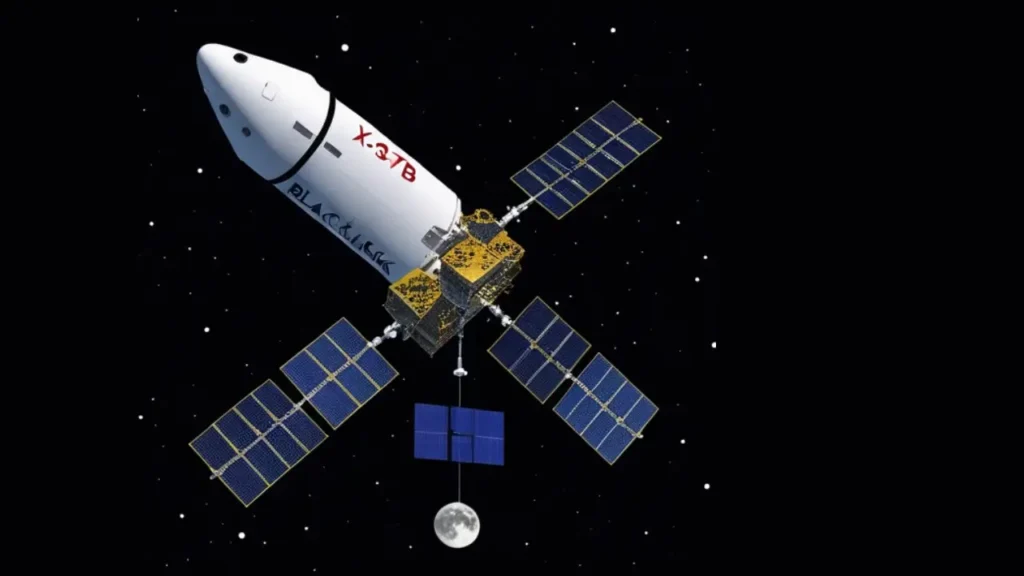
In August 2025, pro-Russian hackers hijacked a Ukrainian broadcast satellite to beam propaganda during Victory Day — a stark reminder of how easily satellites can become tools of psychological warfare. With over 12,000 in orbit, systems ranging from GPS to military C2 are vulnerable to cyber disruption and outdated software.
military satellites

U.S. officials also warn of a looming Russian nuclear anti-satellite (ASAT) weapon that could disable hundreds of satellites in low Earth orbit. Experts liken the threat to a new “Cuban Missile Crisis” in space.

U.S. Advancements: X-37B, Blackjack & Artemis Defender Vision

The U.S. continues to expand its military space capabilities. The X-37B reusable spaceplane, launched on its eighth mission, tests critical technologies—from laser communications to quantum inertial navigation—and supports orbital maneuver tactics.

- Advertisement -

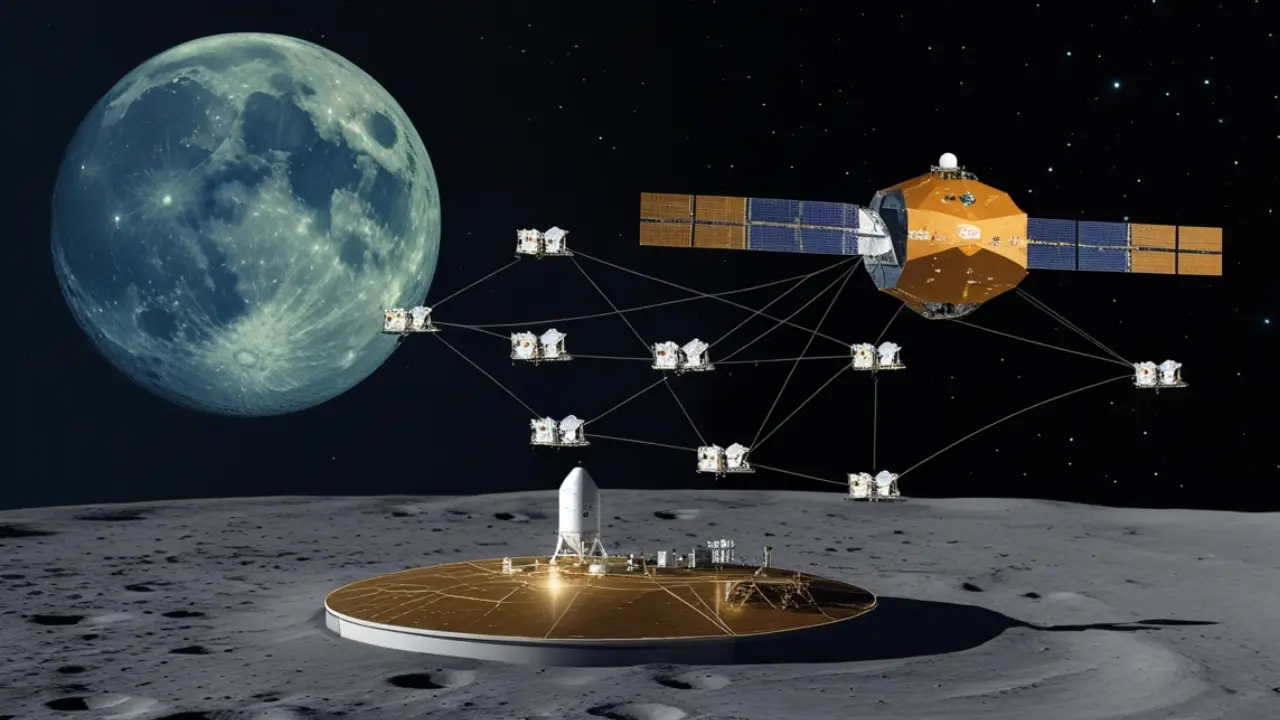
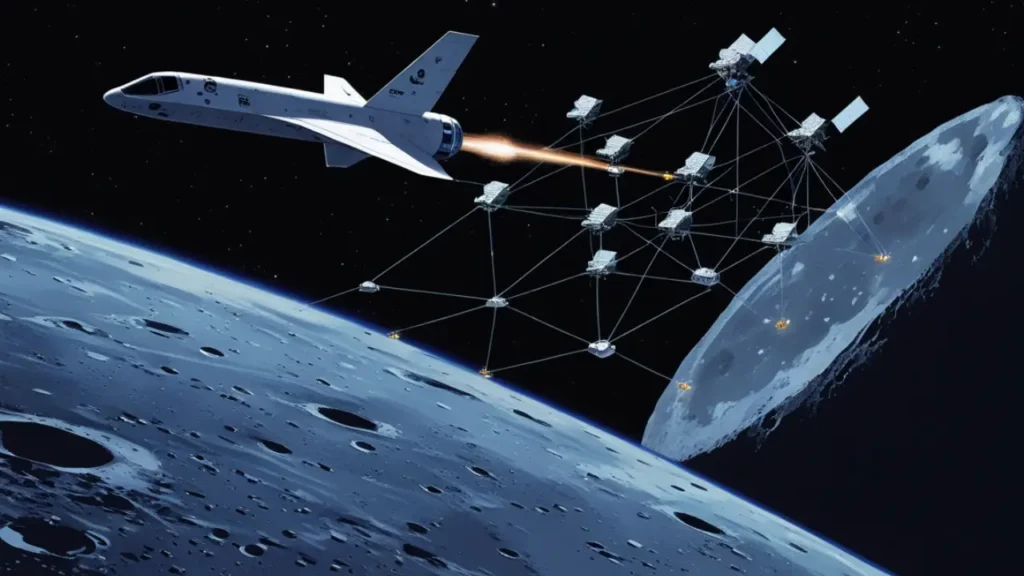
In parallel, DARPA’s Blackjack constellation, a network of low-cost, short-lifespan surveillance satellites, will replace legacy systems like KH-11 and Misty. Launching in 2024, Blackjack aims to increase resilience and reduce vulnerability through dispersed architecture.
military satellites

Moreover, proposals such as the controversial Golden Dome space-based missile defense shield envision interceptors in orbit to counter hypersonic and ballistic threats—though concerns remain over cost, feasibility, and escalation risk.

Russia & China: ASAT Ambitions and Lunar Rivalry

Moscow’s Kosmos-2553, part of its Neitron radar system, carries alarming implications—U.S. assessments suggest it may serve as a testing platform for a nuclear ASAT weapon, capable of crippling low-Earth orbit infrastructure.

Meanwhile, China’s Shijian-17, equipped with a robotic arm, performs non-typical orbital maneuvers—operating closely to other geostationary satellites. U.S. officials warn the technology might be used to grapple adversary satellites.

On the lunar front, both China and Russia aim to establish a joint International Lunar Research Station (ILRS) powered by nuclear energy, counterposed by the U.S. Fission Surface Power Project, which plans a 100-kW nuclear reactor on the Moon by 2030 to support Artemis missions.

U.S. Alliances & Civilian Cooperation Persist

Despite military tensions, civilian collaboration endures. In July 2025, NASA Administrator Sean Duffy and Roscosmos chief Dmitry Bakanov met—renewing discussions on ISS operations, lunar exploration, and deep-space cooperation, including extending astronaut exchanges

Strategic thinking in Washington also envisions a U.S.-led “Allied Space Forces,” akin to NATO—uniting space-faring allies like the U.K., Japan, and Australia to deter space threats, enforce norms, and strengthen collective defense.

Context & Analysis

The intensifying competition for satellite superiority highlights space’s transformation into a contested warfighting domain. The U.S. addresses this through resilient constellation architecture (X-37B, Blackjack), forward-leaning defenses (Golden Dome), and cooperative frameworks.

- Advertisement -

Russia and China, meanwhile, build asymmetric capabilities—testing ASAT weapons, deploying robotic grappling satellites, and expanding into lunar resource exploitation. The U.S.’s civilian cooperation with Russia offers some stability but may not stem momentum toward weaponization.

Looking ahead, success in space will hinge on developing norms, robust allied coalitions, and agile technological adaptation to sustain domain supremacy.

FAQs

What makes the “new space race” different from the Cold War era?

Unlike the Apollo-era race focused on symbolic lunar milestones, today’s contest centers on militarization, cyber vulnerabilities, commercial dual-use technologies, and resource control from orbit to lunar surfaces.

What is Blackjack and why is it important?

DARPA’s Blackjack constellation will deploy dozens of low-cost, networked surveillance satellites in low Earth orbit to enhance resilience and complicate adversarial targeting of U.S. space assets.

How significant is the threat from Russian nuclear ASAT systems?

U.S. officials warn that Russia may be developing nuclear anti-satellite weapons capable of disabling entire satellite networks—a development considered destabilizing and a potential violation of space treaties.

Can civilian space collaboration curb militarization?

While cooperative initiatives like the ISS partnership still signal goodwill, they coexist with growing militarization. Norms and civilian ties may soften risk but do not halt strategic competition.

Summary

This evolving “New Space Race” marks not a repeat of Apollo but a strategic battleground: cyber-hacks, ASAT threats, resilient U.S. satellite designs, robotic arms in GEO, lunar reactors—all layer into a complex geopolitical calculus where space determines terrestrial power.


TAGGED:Anti-Satellite WeaponsLunar Power RaceSpace ForceSpace SecuritySpace Strategy
Share This Article
Facebook Copy Link Print
ByTeamDefenseWatch
TeamDefenseWatch is the official editorial byline of TheDefenseWatch.com. Working under one umbrella, TheDefenseWatch.com, the team delivers verified, factual reporting on global defense, military technology, aerospace systems, and security developments. Articles are sourced from official statements, defense industry releases, and trusted media, with editorial review to ensure accuracy and clarity.Contact: info@TheDefenseWtach.com
14 Comments
  • Pingback: Why the U.S. Air Force Still Uses the A-10 Warthog in 2025 (and Why It's Finally Retiring by 2026)
  • Pingback: U.S. Cyber Command Structure Explained: How America Organizes Its Digital Warfighting Force
  • Pingback: Trump Signals Belief Ukraine Can Reclaim All Lost Territories | TheDefenseWatch.com
  • Pingback: Hypersonic vs Supersonic: Key Differences in Speed, Technology, and Military Impact
  • Pingback: Militarization of Space: What It Means for the Future of Global Security
  • Pingback: Militarization vs Weaponization of Space: Key Differences Explained
  • Pingback: China’s Space Militarization: Rising Threat to U.S. Space Dominance
  • Pingback: U.S. vs China Military Balance in the Indo-Pacific 2025: Strategic Posture, Push-Back, and Pressure Points
  • Pingback: SpaceX Nears $2B Pentagon Contract for Missile-Tracking Satellite Constellation
  • Pingback: US Space Force Deploys Satellite-Jamming Weapons to Counter China and Russia
  • Pingback: US–China Lunar Nuclear Power Race Heats Up as NASA Eyes 100 kW Reactor by 2030
  • Pingback: US Aircraft Carrier Nears Venezuela in Strategic Show of Force | TheDefenseWatch.com
  • Pingback: GPS III SV09 Launch: Lockheed Martin Strengthens U.S. Military Navigation with Advanced Anti-Jam Satellite | TheDefenseWatch.com
  • Pingback: Pakistan PRSC-EO2 Satellite Launch: Successful Liftoff from South China Sea Marks First Seaborne Mission | TheDefenseWatch.com

Leave a Reply Cancel reply

Your email address will not be published. Required fields are marked *

Search Defense Systems

Latest Defense Systems

  • F-47A Fighter Jet F-47A Fighter Jet
  • China DF-61 Missile China DF-61 Missile
  • B61 Nuclear Bomb B61 Nuclear Bomb
  • Japan E-767 Airborne Japan E-767 Airborne
  • Remington 870 Shotgun Remington 870 Shotgun
  • RUTA B1 Cruise Missile RUTA B1 Cruise Missile
  • XQ-67A Drone XQ-67A Drone
  • B-25 Mitchell Bomber B-25 Mitchell Bomber
  • F-100 Super Sabre F-100 Super Sabre

Recent Compares

  • J-10C vs JF-17 Thunder: Which Fighter Is More Capable? J-10C vs JF-17 Thunder: Which Fighter Is More Capable? View Comparison →
  • Tejas vs Gripen: Key Differences and Capabilities Tejas vs Gripen: Key Differences and Capabilities View Comparison →
  • Tejas vs MiG-21 Bison: How India Replaced Its Iconic Supersonic Fighter Tejas vs MiG-21 Bison: How India Replaced Its Iconic Supersonic Fighter View Comparison →
  • F-35 vs F-16: Stealth, Sensors and Combat Roles F-35 vs F-16: Stealth, Sensors and Combat Roles View Comparison →
  • Tejas Fighter Jet vs F-16 Fighting Falcon: Capability Compared Tejas Fighter Jet vs F-16 Fighting Falcon: Capability Compared View Comparison →
  • Rafale Fighter Jet vs F-16 Fighting Falcon : Which Fighter Has the Edge? Rafale Fighter Jet vs F-16 Fighting Falcon : Which Fighter Has the Edge? View Comparison →
  • Su-57 Fighter Jet vs J-20 Fighter Jet: Stealth and Air Combat Compared Su-57 Fighter Jet vs J-20 Fighter Jet: Stealth and Air Combat Compared View Comparison →
  • Mirage 2000 vs Tejas Mk1A: Legacy Combat Power vs Indigenous Modernization Mirage 2000 vs Tejas Mk1A: Legacy Combat Power vs Indigenous Modernization View Comparison →
  • Rafale Fighter Jet vs F-22 Raptor: Which Air Dominance Fighter Has the Edge? Rafale Fighter Jet vs F-22 Raptor: Which Air Dominance Fighter Has the Edge? View Comparison →
  • Tejas Fighter Jet vs. Rafale Fighter Jet: India’s Indigenous Fighter Meets France’s Proven Multirole Combat Aircraft Tejas Fighter Jet vs. Rafale Fighter Jet: India’s Indigenous Fighter Meets France’s Proven Multirole Combat Aircraft View Comparison →

Recent Posts

  • Saab Wins SEK 2 Billion Contract to Equip Sweden’s Four New FDI Frigates
  • F-47 Fighter May Fly With Interim Engine as Next-Generation Propulsion Program Falls Behind Schedule
  • UK Says F-35 Agreement Guarantees Access to U.S. Support System
  • Pakistan and Tajikistan Conclude Dosti-III Counterterrorism Exercise at Cherat
  • Lockheed Martin Self-Funds Five Vectis Collaborative Combat Aircraft

You Might Also Like

Army C2 network modernization
AI & Electronic WarfareCyber & Space Defense

Army Begins Replacing Legacy WIN-T Network With Modern C2 Baseline at III Armored Corps

September 23, 2026
Blue Ring cislunar mission
Cyber & Space DefenseSpace Assets & Satellites

Blue Ring Cislunar Mission Vehicle To Deliver 3,500 Kg Payloads To Lagrange Points And Low Lunar Orbit

February 19, 2026
F-16 Viper electronic warfare
AI & Electronic WarfareCyber & Space Defense

Northrop Grumman Integrates Viper EW and SABR Radar for Next-Gen F-16 Protection

September 7, 2026
Arrow 3 missile defense system
Cyber & Space Defense

Germany Expands Arrow 3 Missile Defense Purchase, Israel Confirms

September 12, 2026

Logo

Copyright © 2026 TheDefenseWatch.com

Helpful Links

  • Home
  • About Us
  • Privacy Policy
  • Terms of Use / Disclaimer
  • U.S. Privacy Notice – CCPA Compliance

Defense Systems

  • Defense Systems
  • Comparisons 
  • Manufacturer
  • Tactical Calculators

Popuplar

Which 5 Air Forces Possess the Costliest Fighter Jet Fleets in the World
Evolving Strategic Value: Carrier Strike Groups in the Indo-Pacific’s Future Security Architecture
Autonomous Weapon Systems Spark U.S. Ethics Debate Amid Rapid Military AI Integration

We report on developments involving military forces, governments, defense companies, research organizations, and security institutions around the world. 

Welcome Back!

Sign in to your account

Username or Email Address
Password

Lost your password?