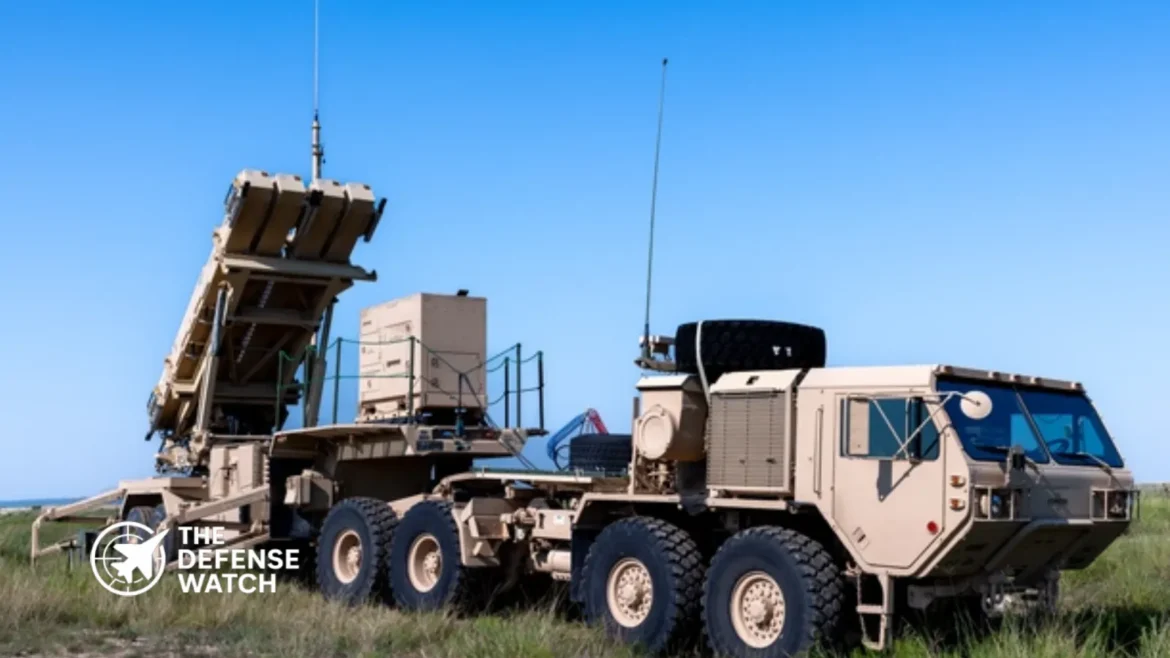
Ukrainian Air Defense Intercepts Russian Kinzhal Missiles Near Lviv
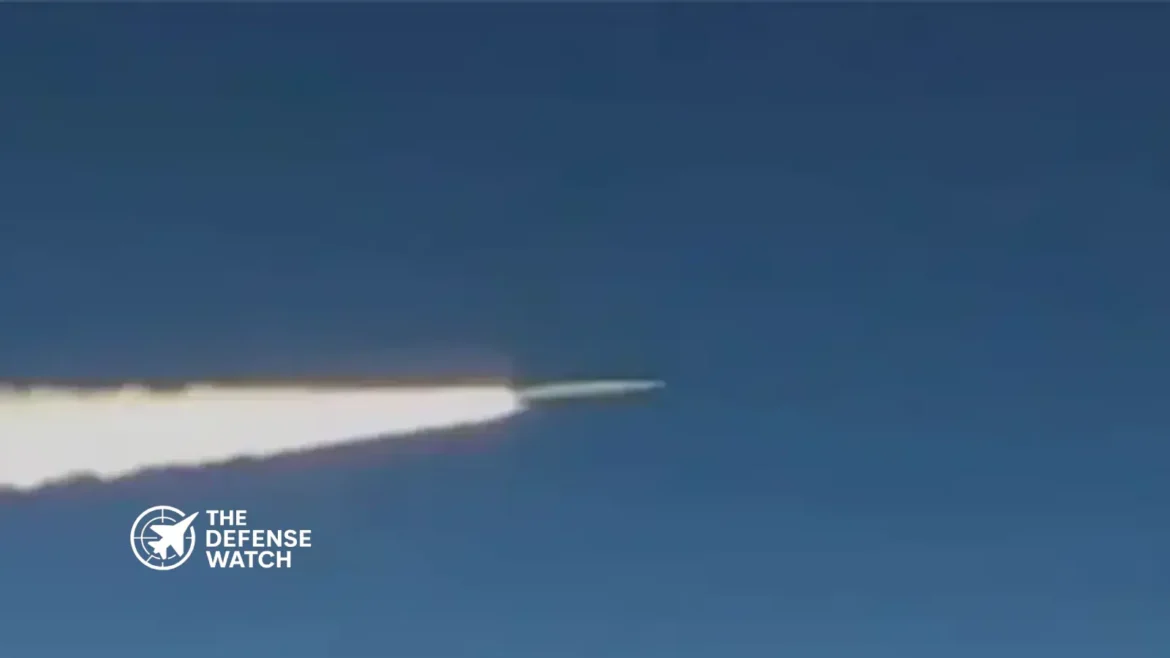
Ukraine intercepts Kinzhal missiles targeting Lviv as air defense units neutralized two Russian hypersonic missiles on February 11, 2026. Local officials reported no casualties or damage following the rare daytime strike on the western city, located about 600 kilometers from the Russian border.
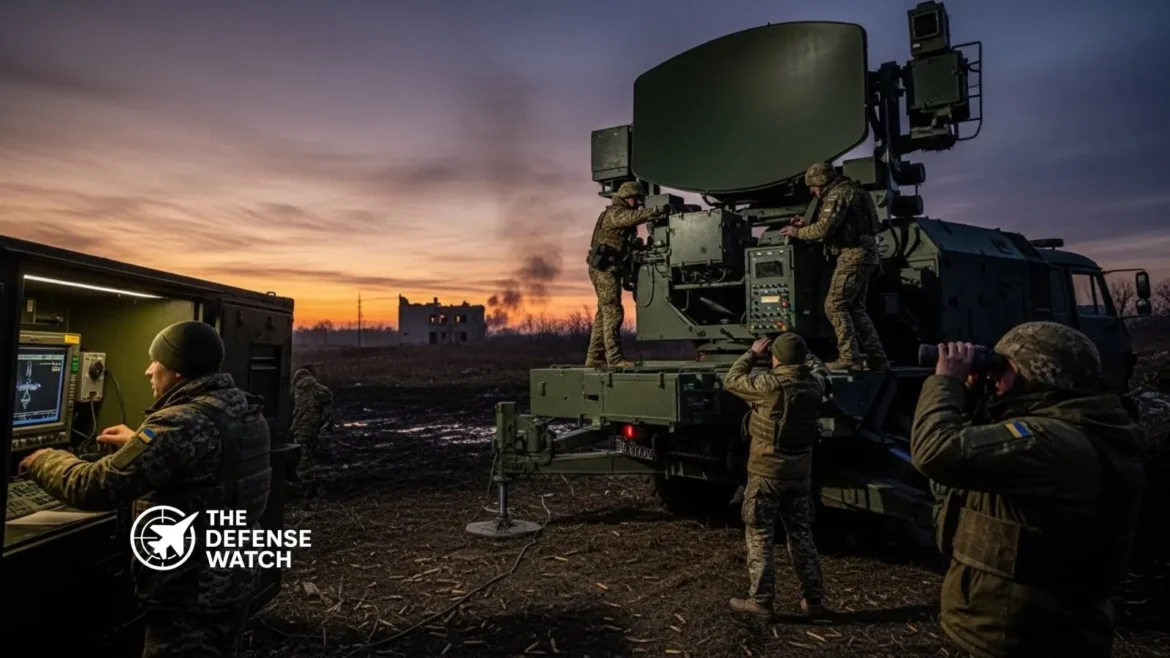
At approximately 14:40 local time, two Russian X-47M2 Kinzhal missiles were detected flying toward Lviv, prompting an immediate response from Ukrainian air defense forces. Officials described the interception as a significant effort by defenders and confirmed the missiles did not reach their intended targets.
Lviv Mayor Andriy Sadovyi praised air defense units for their role in neutralizing the threat and urged residents to remain alert while city services inspect the area for any secondary hazards.
Details of the Missile Launch
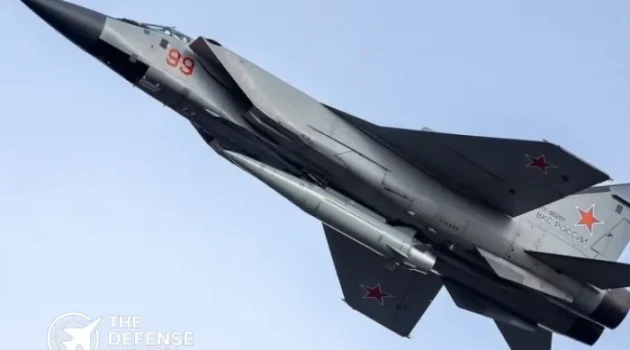
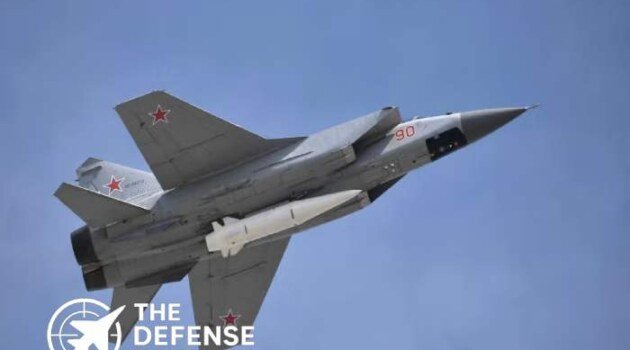
According to reports from Ukrainian sources, the missiles were launched from MiG-31K aircraft operating from the Savasleyka airfield in Russia’s Nizhny Novgorod region. Ukrainian Air Force authorities said a range of countermeasures was implemented to stop the incoming hypersonic weapons before they could pose a danger to urban areas.
Early in the alert, residents in Lviv heard air defense operations as authorities issued warnings about high-speed targets approaching the region. The activity underlined the ongoing risk of long-range strikes even in western Ukraine, where such attacks are less common compared with frontline regions.
What Kinzhal Missiles Are
The Russian Kh-47M2 Kinzhal is an air-launched hypersonic aeroballistic missile, typically carried by MiG-31K fighter jets. It is designed for high speed and long range, with Russia claiming capabilities that make it difficult to track and intercept. However, Ukraine’s air defenses, including systems supplied by Western partners, have repeatedly engaged such threats with varying success.
Past Ukrainian military statements have highlighted Patriot air defense systems and other integrated defenses as key components in countering ballistic and cruise missile attacks. These systems have been reported to intercept multiple incoming missiles during previous strikes.
Broader Context
The interception near Lviv comes amid continued Russian missile and drone operations across Ukraine, including recent large-scale attacks on energy infrastructure and other strategic targets. Western and Ukrainian officials have emphasized the evolving nature of aerial threats and the critical role of layered air defense networks in protecting population centers.
While western cities like Lviv are not typical targets, the extension of missile threats to these areas underscores the wide reach of long-range strike capabilities in the ongoing conflict. Ukrainian authorities continue to balance civil defense alerts with military responses to mitigate risks to civilians.
Zelenskiy Says US Security Guarantee Document Is Ready
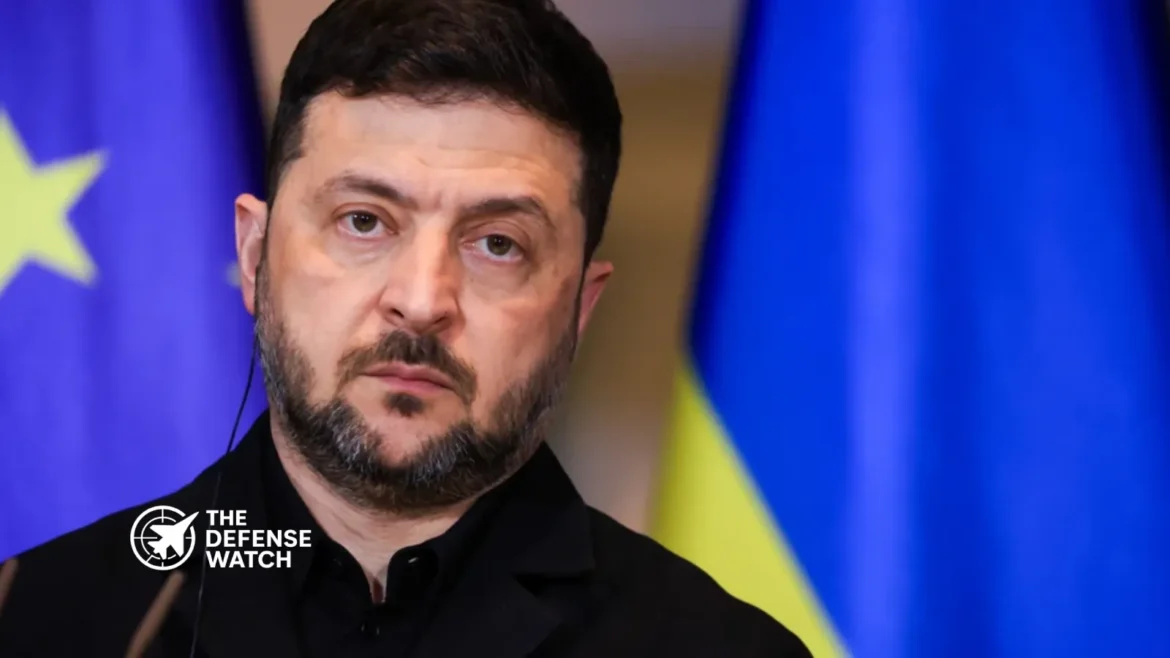
President Volodymyr Zelenskiy said the US security guarantee document for Ukraine is fully prepared and awaiting confirmation from Washington on when and where it will be signed, marking a potential step forward in long term security arrangements as Russia’s invasion approaches its fourth year.
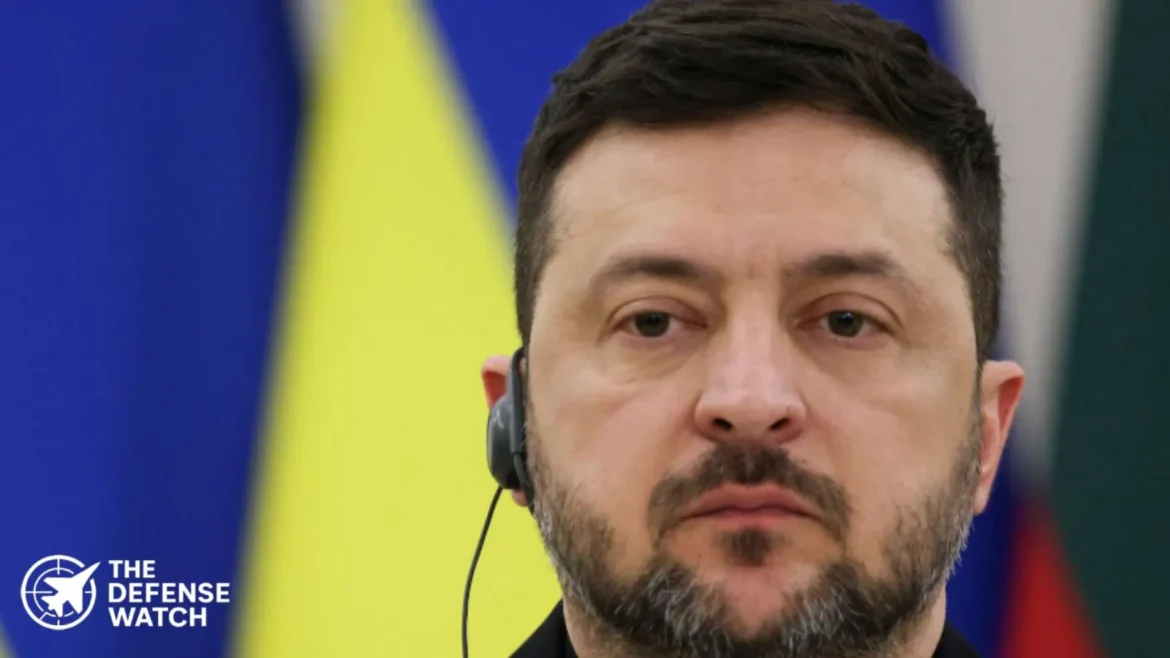
Speaking during a press appearance in Vilnius, Lithuania, Zelenskiy said the document is complete and ready for formal signature. Once signed, the agreement would be sent to the US Congress and the Ukrainian parliament for ratification, moving it into a legally binding phase.
The announcement comes as Kyiv continues to push for stronger, more formalized security guarantees from the United States amid uncertainty over future military assistance and shifting political dynamics in Washington.
What the US Security Guarantee Document Covers
While full details of the US security guarantee document have not been made public, Ukrainian officials have repeatedly described it as part of a broader framework of bilateral security commitments between Ukraine and its Western partners.
The document is expected to outline long term US support across several areas, including defense assistance, military modernization, intelligence cooperation, and Ukraine’s post war security architecture. Similar bilateral security agreements have already been signed between Ukraine and several NATO members, including the United Kingdom, Germany, France, and Italy.
US officials have previously said such agreements are not a substitute for NATO membership but are designed to strengthen Ukraine’s ability to deter future Russian aggression.
According to public statements from the White House and the US State Department, the framework aligns with commitments made at the NATO summit in Vilnius and reaffirmed at subsequent alliance meetings.
Path to Ratification in Washington and Kyiv
Zelenskiy said that once the US security guarantee document is signed, it will be submitted for ratification in both countries. In the United States, this would require congressional review and approval, a process that could face political scrutiny given ongoing debates over Ukraine funding.
In Ukraine, the agreement would be reviewed by the Verkhovna Rada, where cross party support for security cooperation with the United States remains strong.
US lawmakers have previously emphasized that any binding security commitments must preserve congressional oversight while avoiding treaty obligations equivalent to NATO’s Article 5 mutual defense clause.
Strategic Context of the Announcement
The timing of Zelenskiy’s statement is notable. It comes as Ukraine faces continued Russian pressure along multiple fronts and as US military aid packages have faced delays in Congress.
The Biden administration has repeatedly reaffirmed its support for Ukraine’s sovereignty and territorial integrity, while also emphasizing the importance of long term security arrangements that extend beyond annual aid decisions.
Senior US defense officials have said that institutionalizing security cooperation is essential to ensure predictability for Ukraine’s armed forces and defense industry, particularly in areas such as air defense, artillery ammunition, and electronic warfare capabilities.
How This Fits Into Broader US Ukraine Defense Cooperation
The US security guarantee document builds on an already extensive defense relationship between Washington and Kyiv. Since 2022, the United States has provided tens of billions of dollars in military assistance, including advanced air defense systems, armored vehicles, long range fires, and intelligence support.
US defense planners have increasingly focused on helping Ukraine transition from emergency wartime resupply to a more sustainable force structure aligned with NATO standards.
Pentagon officials have said that future cooperation will emphasize training, interoperability, domestic defense production, and long term force planning rather than short term battlefield fixes.
Implications for NATO and European Security
Although the US security guarantee document does not confer NATO membership, it signals continued US leadership in shaping Ukraine’s security future.
NATO officials have consistently stated that Ukraine’s path to membership remains open but contingent on political and security conditions. In the interim, bilateral guarantees are seen as a way to close the security gap and reduce the risk of renewed Russian aggression after the current phase of the war.
European defense officials have welcomed stronger US commitments, arguing that credible guarantees are essential to deterrence on NATO’s eastern flank.
What Comes Next
The next step will be confirmation from Washington on the signing date and location. US officials have not yet publicly commented on Zelenskiy’s remarks, though the administration has previously acknowledged ongoing work on bilateral security arrangements.
If signed and ratified, the agreement would represent one of the most formalized US security commitments to Ukraine outside of NATO, reinforcing long term defense cooperation while stopping short of a mutual defense treaty.
US Ukraine Russia Trilateral Talks Begin in Abu Dhabi
US Ukraine Russia trilateral talks began in Abu Dhabi on January 23, 2026, marking the first time officials from all three countries have met together since Russia launched its full scale invasion of Ukraine in early 2022. The meeting is being closely watched by Western and regional officials as a rare diplomatic opening after nearly four years of stalled engagement.
The two day discussions are focused primarily on security related issues linked to the war in Ukraine, according to officials familiar with the agenda. While expectations remain limited, the talks represent a procedural milestone in direct engagement involving Washington, Kyiv, and Moscow at the same table.
Context and Diplomatic Background
The trilateral talks follow a late night meeting in Moscow earlier this week between Russian President Vladimir Putin and US envoys Steve Witkoff and Jared Kushner. That session reportedly lasted close to four hours and extended past midnight.
Kremlin aide Yuri Ushakov described the Moscow discussions as substantive, constructive, and very frank, but cautioned that no concrete breakthroughs were achieved. US officials have offered similar assessments, emphasizing that the engagement was exploratory and focused on establishing channels rather than negotiating outcomes.
Ukrainian officials were not present at the Moscow meeting but were briefed afterward, according to Western diplomatic sources. The Abu Dhabi talks are the first venue where all three sides are participating simultaneously.
Role of the United Arab Emirates
The United Arab Emirates has emerged as a key intermediary for discreet diplomacy related to the Ukraine war. Abu Dhabi has previously hosted quiet exchanges involving prisoner issues, humanitarian coordination, and limited security discussions involving Russia and Western governments.
Regional analysts note that the UAE maintains working relationships with both Moscow and Washington, while also engaging Ukraine on humanitarian and reconstruction related matters. This positioning has made it one of the few locations acceptable to all sides for sensitive dialogue.
Scope and Limits of the Talks
Officials stress that the US Ukraine Russia trilateral talks are not peace negotiations. Instead, the agenda is understood to center on conflict management, risk reduction, and security mechanisms aimed at preventing escalation.
Topics under discussion are expected to include military deconfliction measures, protection of critical infrastructure, and regional security implications linked to the Black Sea and Eastern Europe. There is no indication that territorial issues or ceasefire terms are being addressed at this stage.
US officials have reiterated that Washington remains committed to supporting Ukrainian sovereignty and defense, while also testing whether limited diplomatic engagement can reduce battlefield risks.
Ukrainian Position
Ukrainian representatives entered the talks with a cautious stance, emphasizing that any diplomatic process must align with Kyiv’s security interests and internationally recognized borders.
Ukrainian officials have consistently stated that negotiations cannot legitimize Russian occupation or undermine Ukraine’s long term security. Participation in the Abu Dhabi talks is viewed in Kyiv as a way to convey positions directly rather than through intermediaries.
Strategic Implications
From a geopolitical perspective, the opening of US Ukraine Russia trilateral talks reflects growing concern among global powers about the long term stability of the conflict. Military aid flows, sanctions pressure, and battlefield dynamics have produced limited movement toward resolution.
Defense analysts note that even narrowly scoped dialogue can reduce miscalculation risks, particularly as advanced weapons systems and long range strike capabilities remain in play on both sides.
At the same time, officials caution that diplomatic engagement does not signal a shift in core policy positions. Both Washington and Kyiv continue to frame Russia as the aggressor, while Moscow maintains its existing territorial and security demands.
What Comes Next
No joint statement is expected at the conclusion of the Abu Dhabi talks. Any follow on meetings would likely remain at the technical or working level, depending on whether the initial discussions are deemed productive.
For now, the significance of the meeting lies less in immediate outcomes and more in the reopening of a direct diplomatic format that has been dormant since the early phase of the war.
Ukrainian President Volodymyr Zelenskyy has revealed that he proposed the creation of a 3 million strong European army to European leaders last year, highlighting what he sees as a slow response to worsening security threats across the continent.
Speaking during an online press briefing on January 20, Zelenskyy said the idea has not moved forward since it was first raised. His remarks were reported by European Pravda, a Kyiv based news outlet closely covering Ukrainian government statements.
Zelenskyy Calls for European Military Unity
Zelenskyy said he presented the concept to multiple European leaders in 2025, arguing that Europe needs a unified armed force capable of deterring large scale aggression without relying solely on the United States.
According to Zelenskyy, a full year has passed since the proposal was raised, yet no concrete steps have been taken. He suggested that ongoing geopolitical shocks, including the war in Ukraine and broader instability along NATO’s eastern flank, could now force European leaders to reconsider the idea.
Strategic Context for a European Army Proposal
The proposal for a European army has surfaced periodically in policy debates, often tied to discussions on European strategic autonomy. France and Germany have previously supported deeper defense coordination, while other countries have raised concerns about sovereignty, command structure, and overlap with NATO.
Zelenskyy’s comments come as European governments increase defense spending and reassess force readiness. Several EU states are expanding ground forces, ammunition stockpiles, and air defense capabilities in response to Russia’s continued military operations in Ukraine.
NATO, Europe, and Ukraine’s Security Calculus
While Zelenskyy did not outline how a 3 million strong European army would be organized or funded, his remarks underscore Kyiv’s long standing push for stronger European defense commitments.
NATO remains the cornerstone of European security, but Zelenskyy’s proposal reflects growing debate over whether Europe can field a large scale, independent force capable of rapid response.
US Tempest Air Defense System Makes Combat Debut in Ukraine
The US Tempest air defense system has recorded its first confirmed combat success in Ukraine, intercepting at least 21 Russian Shahed drones, according to video footage released by the Ukrainian Air Force on January 13.
The footage, published by Ukraine’s Air Command Central, shows the mobile short-range air defense platform firing missiles into the night sky during drone interception operations. A Ukrainian operator identified by the call sign “Shorty” confirmed the tally in the video, stating that the crew had destroyed 21 Shahed unmanned aerial vehicles (UAVs).
The system had reportedly been operating covertly for several months prior to its public unveiling, underscoring the quiet integration of new Western air defense capabilities into Ukraine’s layered air defense network.
Tempest: A New US Short-Range Air Defense Asset
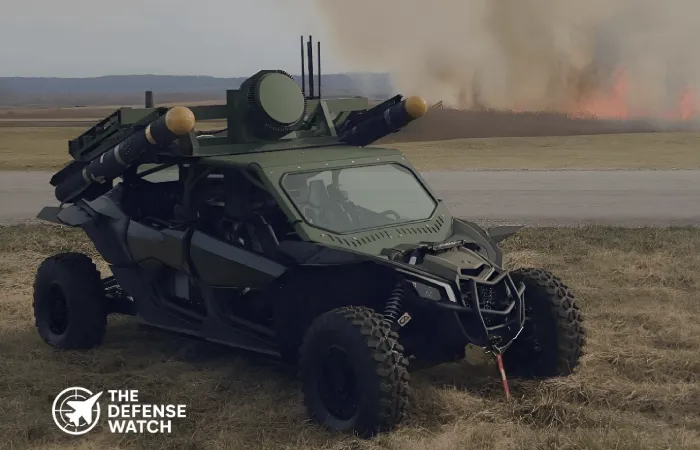
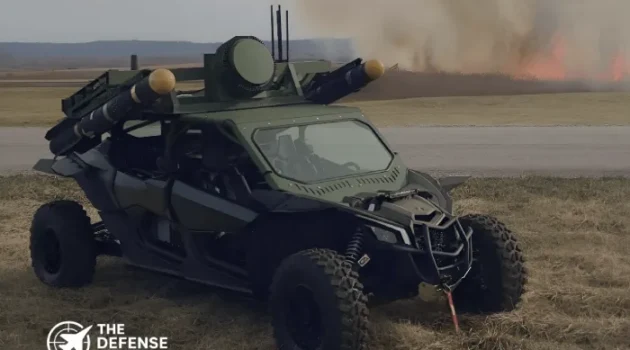
The Tempest system is developed by Virginia-based defense contractor V2X and is designed as a mobile, short-range air defense (SHORAD) solution optimized for countering low-flying threats such as drones, cruise missiles, and loitering munitions.
Mounted on a wheeled tactical vehicle, the Tempest emphasizes mobility, rapid deployment, and point-defense protection, making it well-suited for defending critical infrastructure and forward military positions against persistent drone attacks.
While V2X has not publicly disclosed full technical specifications, the system is understood to integrate electro-optical sensors, radar cueing, and missile interceptors, allowing rapid engagement of small and fast-moving aerial targets like Iran-designed Shahed drones used extensively by Russian forces.
Operational Impact Against Shahed Drones
Russian forces have relied heavily on Shahed-131 and Shahed-136 drones to strike Ukrainian energy infrastructure, logistics hubs, and urban centers. These low-cost UAVs present a persistent challenge due to their numbers and relatively small radar signatures.
The interception of 21 Shahed drones by a single Tempest crew suggests the system may offer a cost-effective counter-UAS capability, particularly when integrated into broader Ukrainian air defense operations alongside systems such as NASAMS, IRIS-T, Patriot, and Soviet-era platforms.
Ukrainian air defense units have increasingly emphasized layered defenses, using short-range systems to intercept drones and reserving higher-end interceptors for ballistic and cruise missile threats.
Quiet Deployment Highlights US Support Strategy
The revelation that the Tempest system had been operating in Ukraine for months before its public disclosure reflects a broader pattern in US military assistance, where certain capabilities are deployed discreetly before formal acknowledgment.
Washington has steadily expanded its support for Ukraine’s air defense modernization, particularly in response to Russia’s sustained drone and missile campaign. Short-range air defense systems have become a critical component of this effort, addressing gaps that high-end systems are not optimized to fill.
Neither the US Department of Defense nor V2X has publicly commented on the number of Tempest systems delivered or their future deployment plans.
Implications for Ukraine’s Air Defense Modernization
The Tempest’s combat debut adds another layer to Ukraine’s evolving air defense architecture, reinforcing its ability to counter asymmetric aerial threats with flexible, mobile solutions.
As drone warfare continues to shape the conflict, systems capable of rapid repositioning and sustained operations against UAV swarms are increasingly central to battlefield survivability and infrastructure protection.
The successful engagement of 21 Shahed drones positions the Tempest as a potentially valuable asset not only for Ukraine, but also for other militaries seeking scalable counter-drone solutions.
Russia Loses 1,040 Soldiers in Ukraine, Kyiv Says
Russia loses 1,040 soldiers in Ukraine over the past 24 hours, according to figures released by Ukraine’s General Staff and reported by Ukrinform. The update reflects continued high-intensity combat along the eastern and southern fronts of the war.
Ukrainian military officials said Russian forces also lost two multiple launch rocket systems, along with artillery pieces, armored vehicles, and logistical equipment during the same period. The figures were published as part of Kyiv’s daily battlefield assessment.
Equipment losses reported by Ukraine
Alongside personnel casualties, Ukraine’s General Staff reported the destruction or disabling of several Russian systems. These included multiple launch rocket systems used for long-range fires, as well as other artillery assets supporting ground operations.
Kyiv has consistently stated that Russian forces rely heavily on massed artillery and rocket fire. Ukrainian officials argue that counterbattery strikes and drone-enabled targeting continue to degrade those capabilities.
Ongoing high-intensity operations
The reported losses come amid sustained fighting around key contested areas in eastern Ukraine. Both sides continue to conduct offensive and defensive operations, with artillery, drones, and precision strikes playing a central role.
Western analysts caution that casualty figures released by either side cannot be independently verified. However, they broadly align with assessments that Russia is sustaining significant daily losses as the conflict grinds on into another year.
Ukraine’s General Staff publishes updated figures each morning, with Ukrinform serving as a primary official outlet for disseminating those reports.
Why the Baba Yaga Drone Matters
The Baba Yaga drone matters because it shows how low cost, locally built unmanned systems are reshaping modern warfare. In Ukraine, heavy multirotor drones are no longer support tools. They are frontline strike weapons. The Baba Yaga drone has become one of the clearest examples of this shift, earning both battlefield impact and symbolic status during the ongoing war with Russia.
What Happened
In late 2025, a monument honoring the Baba Yaga drone was unveiled in Ukraine. The tribute recognized the drone’s role in combat operations against Russian forces. According to Ukrainian media reporting, the monument reflects how the system has become widely known among troops and the public for its destructive effectiveness and psychological impact on the battlefield.
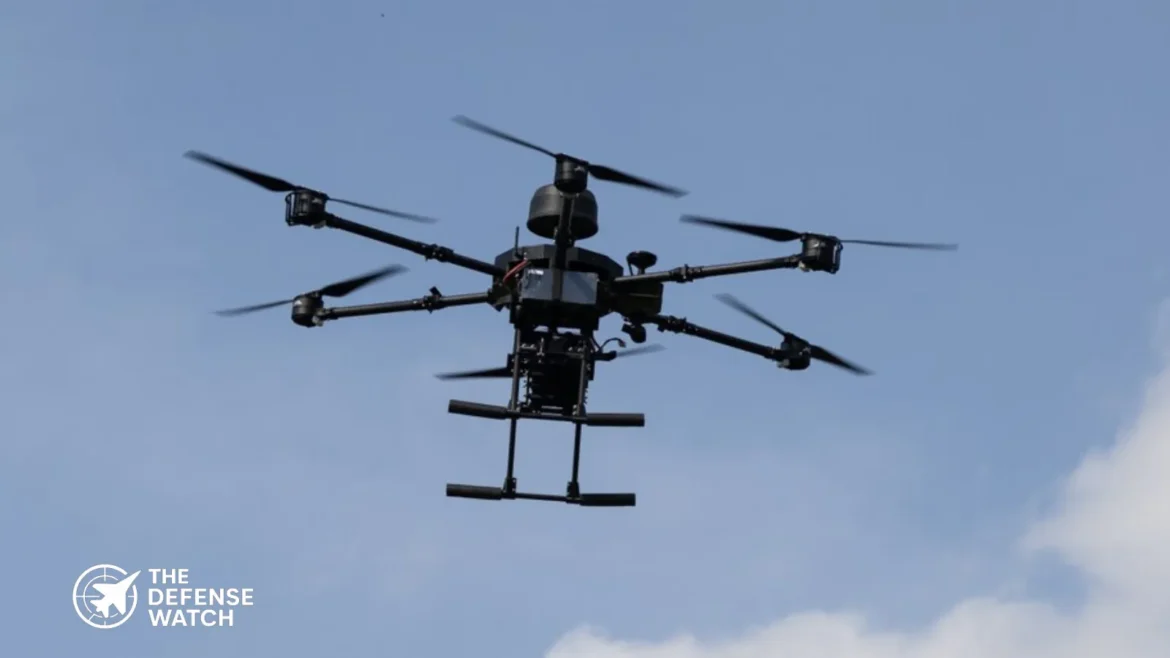
The Baba Yaga drone is not a single factory built platform. It is a category of heavy multirotor strike drones used by Ukrainian units, often operated at night and designed to deliver large explosive payloads against armored vehicles, fortified positions, and troop concentrations.
Background on the Baba Yaga Drone
The Baba Yaga drone takes its name from a figure in Slavic folklore associated with fear and destruction. Ukrainian soldiers adopted the nickname due to the drone’s night operations and distinctive sound. The system is typically larger than commercial quadcopters used for reconnaissance or small munition drops.
Unlike lighter FPV drones, the Baba Yaga drone can carry heavier payloads, including anti tank mines and modified artillery munitions. It is usually powered by electric motors, uses satellite navigation when available, and relies on trained operators positioned several kilometers from the target area.
The Baba Yaga drone emerged as Ukraine expanded its domestic drone production after 2022. Faced with shortages of traditional airpower and artillery, Ukrainian forces accelerated the use of unmanned systems to offset Russia’s numerical advantages.
How It Works
The Baba Yaga drone is a heavy lift multirotor platform, often with six or eight rotors. This configuration allows it to carry payloads far heavier than standard commercial drones. Missions are commonly flown at night to reduce detection and increase survivability.
Operators guide the drone using live video feeds and navigation data. Once over the target, the munition is released rather than detonated on impact, allowing the drone to return if not engaged by air defenses. This reuse capability makes the Baba Yaga drone more cost effective than one way attack systems.
Electronic warfare remains a challenge. Russian forces actively jam GPS and control signals. In response, Ukrainian units have adapted by using alternative navigation methods, shorter flight paths, and coordinated attacks that overwhelm defenses.
Battlefield Role and Impact
On the battlefield, the Baba Yaga drone fills a gap between small FPV drones and traditional artillery. It offers precision strike capability with payloads large enough to damage armored vehicles or collapse defensive positions.
Ukrainian officials and military analysts note that heavy drones like the Baba Yaga drone have forced Russian troops to alter their behavior. Vehicles are dispersed, night movement is reduced, and defensive positions are reinforced against aerial attack from above.
The drone’s psychological effect is also significant. The distinctive sound of large multirotors at night has been reported by both sides as a source of stress for troops under threat.
Strategic Context
The rise of the Baba Yaga drone reflects a broader shift in global military competition. Modern conflicts increasingly rely on adaptable, low cost systems that can be produced locally and modified quickly. Ukraine’s drone ecosystem contrasts with traditional procurement models that depend on long development cycles and centralized production.
Similar trends are visible elsewhere. Militaries are investing in heavy UAVs for logistics, strike missions, and electronic warfare. However, Ukraine’s experience shows how combat driven innovation can accelerate deployment and refine tactics in real time.
The Baba Yaga drone also highlights the limits of conventional air defense systems. Many are optimized to counter aircraft or missiles, not slow moving, low altitude drones operating in large numbers.
Policy and Expert Perspective
Defense analysts note that Ukraine’s use of heavy strike drones is influencing military planning worldwide. Lessons from the Baba Yaga drone are being studied by NATO members and other armed forces evaluating future force structures.
From a policy standpoint, the system underscores the importance of domestic industrial capacity, rapid certification processes, and close cooperation between frontline units and manufacturers. It also raises questions about how international arms control frameworks apply to improvised or semi commercial unmanned systems.
What Comes Next
Ukraine continues to expand its drone forces, with ongoing efforts to improve range, resistance to jamming, and payload flexibility. The Baba Yaga drone is expected to evolve rather than remain a fixed design, reflecting the fast pace of battlefield innovation.
The monument dedicated to the drone signals more than recognition of a single system. It marks a shift in how military power is built, deployed, and remembered in modern war.
MOSCOW Ukraine conducted an overnight drone assault that targeted Moscow and sparked an industrial fire in Russia’s Tula region early on December 24, 2025, Russian authorities said, marking another escalation in long-running unmanned aerial vehicle operations deep inside Russian territory.
Moscow Mayor Sergei Sobyanin said several drones aimed at the capital were intercepted by air defense units, and debris from these unmanned aerial vehicles fell in multiple locations as the strikes unfolded through the night.
Officials in the Tula region, located south of Moscow, reported that debris from a downed drone fell onto an industrial site, triggering a fire that local emergency responders contained.
Air Defense Response and Airport Disruptions
The Russian defense ministry stated that its integrated air defense systems destroyed 172 Ukrainian drones during the overnight operations. Nearly half of these intercepts occurred over Russian border regions, according to the ministry’s breakdown.
Sobyanin said on the Telegram messaging app that at least three drones specifically targeting Moscow were downed. In response to the aerial activity, two of the four major airports serving the capital temporarily limited flights, the civil aviation authority said.
Local authorities did not immediately report any casualties or structural damage in the capital tied to the drone debris. Emergency services were sent to sites where parts of unmanned aerial vehicles landed.
Industrial Fire in Tula Region
In the Tula region, Governor Dmitry Milyaev confirmed that debris from an intercepted drone sparked an industrial fire at an unnamed site. Fire crews were able to contain the blaze, and there were no immediate reports of injuries.
The exact nature of the industrial facility involved has not been disclosed by regional authorities, though local reports outside official channels suggested the affected plant may be tied to rubber or polymer production, components often used in broader industrial and defense supply chains.
Context and Broader Drone Campaign
This incident comes amid a sustained period of Ukrainian drone operations targeting Russian rear areas. Kyiv has increasingly employed unmanned aerial systems to strike at military, logistical, and industrial facilities deep inside Russia in a bid to degrade Moscow’s capacity to sustain its military campaign.
Russian officials have repeatedly highlighted their air defense successes while acknowledging that some unmanned aerial vehicles have penetrated to critical zones. The Tula region incident follows a pattern of persistent UAV activity and ceiling-level interceptions across several Russian regions.
Technical and Strategic Notes on UAV Use
Unmanned aerial vehicles remain a central element of both Ukrainian offensive operations and Russian defensive efforts. Ukraine’s use of fixed-wing and rotary drones has evolved to include longer-range platforms capable of reaching beyond front lines into territory held by Russian forces. Russian air defense systems have adapted with layered counter-UAV measures, combining radar, surface-to-air missiles, and electronic warfare techniques to mitigate these threats.
The high number of drones reported intercepted overnight indicates both the scale of the operation from Kyiv’s perspective and the intensity of Russian counter-measures. The interception data points to significant resource commitments by both sides in this facet of the conflict.
Impact and Outlook
While there were no immediate reports of casualties in Moscow or the Tula region, the incident highlights ongoing threats to Russian infrastructure from UAVs. Such attacks, even when largely intercepted, can disrupt civil aviation and strain emergency response systems.
Analysts monitoring the conflict note that drone operations will likely persist as a key vector of asymmetric warfare. Continued UAV strikes within Russia could influence both operational planning and domestic perceptions of security. Meanwhile, Russia’s adaptive air defense posture aims to reduce the frequency and impact of such penetrations. Given the scale of this latest assault, observers will watch subsequent movements for indications of further escalation or shifts in aerial tactics. TASS
On December 20, Ukraine’s Security Service (SBU) said long-range drones struck two Russian Su-27 fighter jets at the Belbek military airfield in Russian-occupied Crimea. The attack targeted one jet on a taxiway with a full combat load, destroying it, and damaged a second aircraft. The SBU also reported that the airfield’s control tower was hit, potentially affecting flight operations. This was the second known successful strike on Belbek in recent days, following earlier hits on air defense equipment and aircraft on December 18.
Belbek is a key Russian air base near Sevastopol that houses fighter aircraft and air defense assets supporting operations over southern Ukraine and the Black Sea region.
Background on the Belbek Airfield and Its Strategic Role
Belbek airfield has been under Russian control since the 2014 annexation of Crimea. Historically a major Soviet and Ukrainian fighter base, after 2014 it became a core node for Russia’s Black Sea air operations. Su-27 fighters, among other aircraft, operate from the field to support air patrols, air defense, and deterrence missions in the wider region.
Since the full-scale invasion of Ukraine in 2022, Ukrainian forces have repeatedly targeted Russian positions in Crimea, including airfields, radar stations, and air defense systems. Previous strikes at Belbek included hits on MiG-31 interceptors and various radar and surface-to-air missile systems earlier in December. The SBU has increasingly used long-range drones as part of a broader asymmetric campaign to degrade Russian military infrastructure deep inside occupied territory.
Strike Details
SBU Statement
According to the SBU’s Telegram post, long-range drones operated by its Alpha Special Operations Center hit two Su-27 aircraft on the ground at Belbek. One was fully loaded and preparing for a combat sortie when it was destroyed on the taxiway. The combined replacement cost of the two aircraft is estimated at roughly $70 million. The control tower at the base was also struck, which could complicate Russian flight operations.
Tactical Implications
Destroying aircraft on the ground deprives Russian forces of both their airpower and the ability to project it from the Crimean peninsula. Su-27s are heavy air superiority fighters that play multiple roles, including patrols, escort missions, and flexible deployment in contested airspace. Hitting them before they can be airborne reduces their immediate threat to Ukrainian forces and places additional strain on Russia’s logistical and repair chains.
Control tower damage also matters. Even limited damage to infrastructure can disrupt sortie generation rates, hamper coordination of aircraft movements, and force Russian units to divert flights to other airfields. This has effects beyond the loss of individual jets.
Ukrainian Use of Long-Range Drones
Ukraine has increasingly relied on long-range drones for deep strikes against high-value targets inside occupied Crimea and beyond. These unmanned systems allow Kyiv to reach deep into Russian-held territory with lower risk to personnel compared to manned aircraft or traditional missile strikes. Drones have been used to target air defense systems, radar installations, and command and control facilities at multiple locations. Their success reflects both technical advances by Ukrainian developers and a shift in modern conflict toward unmanned systems.
The December 20 attack on Belbek happened just days after a separate operation on December 18 struck Russian radar systems, a Pantsir-S2 air defense system, and a MiG-31 aircraft at the same base. Repeated strikes on the same location suggest a deliberate Ukrainian effort to weaken Russian aerial and air defense capabilities in Crimea over time.
Russian Air Capabilities in Crimea
Russian air assets in Crimea, including Su-27 and Su-30 fighters, provide a significant deterrent against Ukrainian air operations and help enforce airspace control in the Black Sea region. These assets also serve to support ground operations in southern Ukraine and to reinforce defenses against Western aircraft or naval activity in the area. Historically, Belbek has hosted elements of the Russian Air Force’s 38th Fighter Aviation Regiment and other units, reflecting its importance to Moscow’s regional posture.
Losses at Belbek may force Russian commanders to shift assets to alternate bases or accelerate repairs, which can stretch already taxed logistics during ongoing operations.
Expert and Policy Perspective
From a military technology perspective, the Belbek strikes highlight the evolving role of drones in high-intensity conflict. Ukraine’s focus on long-range unmanned systems shows a strategic adaptation to a stronger adversary with advanced air defenses. By using drones, Ukraine increases its reach against fortified targets without risking pilot lives or high-cost manned platforms. It also demonstrates the importance of battlefield innovation and strategic targeting.
Policy analysts note that such attacks may also have broader signaling effects. Strikes inside occupied Crimea, particularly at strategic airfields, show Ukraine’s intent and capacity to contest control of key nodes deep behind frontlines. For Russia, this raises questions about the security of its forward bases and may compel further investment in defensive systems or dispersal of aircraft. For Western supporters, Ukrainian success with drones may influence future aid decisions, including support for drone technology transfer and counter-air capabilities.
What to Watch Next
The immediate impact of the strikes will be on Russian air operations from Belbek and nearby bases. Watch for official Russian military statements, assessment of sortie rates from the base, and any shift of air assets to alternate locations.
Ukraine’s continued development of drone capabilities is another trend to monitor. Future operations might expand the range, payloads, and coordination of unmanned systems, potentially affecting other high-value Russian assets.
Finally, analysts will be watching for broader Russian efforts to harden infrastructure in occupied Crimea and to prevent similar attacks through improved air defenses or camouflage and dispersal measures.
Ukraine to Receive More S-300 Interceptors With Norway’s Support
Ukraine is set to receive additional interceptors for its S-300 surface-to-air missile systems through a new support effort backed by Norway, as Kyiv continues to face sustained missile and drone attacks across multiple regions.
The development, first reported by defense-focused outlets citing Western officials, reflects ongoing efforts by Ukraine’s partners to keep legacy Soviet-era air defense systems operational despite dwindling missile stocks and limited global supply. The announcement comes amid renewed Russian long-range strike activity targeting Ukrainian energy infrastructure, air bases, and urban centers.
Norway’s involvement highlights a growing European role in sustaining Ukraine’s layered air defense network as the conflict enters another year with no signs of de-escalation.
Why S-300 Systems Remain Critical for Ukraine
The S-300 family of surface-to-air missile systems has formed the backbone of Ukraine’s long-range air defense since the start of Russia’s full-scale invasion in 2022. Designed during the Cold War, the system is capable of engaging aircraft, cruise missiles, and in some variants, limited ballistic missile threats.
Despite the introduction of Western-supplied systems such as NASAMS, IRIS-T SLM, and Patriot, Ukraine continues to rely heavily on S-300 batteries due to their wide coverage and integration into existing command-and-control networks.
However, the primary challenge has been interceptor availability. Most S-300 missiles are no longer produced at scale, and remaining stocks are scattered across former Warsaw Pact states or stored in aging depots.
Norway’s Role in Securing Interceptors
Norway has emerged as a key facilitator in efforts to locate, finance, and refurbish compatible S-300 interceptors for transfer to Ukraine. While Oslo does not operate the S-300 system itself, it has played a coordinating role by working with partner nations that still possess missiles or components suitable for refurbishment.
According to defense sources, Norway’s contribution includes funding, logistics coordination, and technical support aimed at restoring stored interceptors to operational condition before delivery. This approach mirrors earlier European initiatives that focused on sourcing legacy equipment from third-party countries rather than direct transfers from NATO inventories.
Norwegian officials have emphasized that strengthening Ukraine’s air defenses remains a top priority, particularly as Russia increases its use of mixed attack packages combining cruise missiles, ballistic missiles, and one-way attack drones.
Pressure on Ukraine’s Air Defense Stockpiles
Ukraine’s air defense forces have maintained high interception rates throughout the conflict, but at significant cost. Each large-scale Russian strike can involve dozens of targets, forcing defenders to expend valuable interceptors that are difficult to replace.
S-300 interceptors, in particular, have been used extensively to counter cruise missiles and aircraft operating near Ukrainian airspace. As stocks decline, Ukrainian commanders have had to make difficult decisions about which targets to prioritize, especially when facing simultaneous attacks across different regions.
The additional S-300 interceptors supported by Norway are expected to provide short- to medium-term relief, helping maintain coverage until more Western systems and missiles can be delivered in sufficient numbers.
Limits of Western Substitutes
While systems like Patriot offer superior performance against ballistic missiles, they are expensive and available only in limited quantities. NASAMS and IRIS-T provide strong medium-range coverage but cannot fully replace the wide-area defense offered by S-300 batteries.
Moreover, retraining personnel and integrating new systems into Ukraine’s air defense architecture takes time. Maintaining S-300 readiness allows Ukraine to preserve a layered defense structure, with Western systems filling specific high-value roles.
Defense analysts note that sustaining older systems is often faster and more cost-effective than relying solely on new deliveries, particularly in a high-intensity conflict.
Strategic Implications for European Security
Norway’s support underscores a broader shift among European states toward long-term sustainment strategies rather than one-time equipment transfers. As the war continues, attention is increasingly focused on ammunition, spare parts, and maintenance rather than headline-grabbing platform donations.
This approach also reflects concerns about NATO members’ own air defense readiness. By sourcing interceptors from outside alliance stockpiles, European governments aim to balance support for Ukraine with domestic defense requirements.
The effort may also set a precedent for future cooperation on legacy systems still in service across parts of Eastern Europe and beyond.
What Comes Next
Delivery timelines and quantities of the additional S-300 interceptors have not been publicly disclosed, citing operational security. Ukrainian officials have consistently avoided detailing air defense deployments to prevent adversary targeting.
What is clear is that demand for air defense missiles will remain high as Russia adapts its strike tactics and continues to test Ukrainian defenses. Further European-led initiatives to source and refurbish compatible interceptors are likely in the coming months.
For Ukraine, keeping its S-300 systems operational remains a matter of national survival, protecting cities, infrastructure, and military forces from sustained aerial attack.