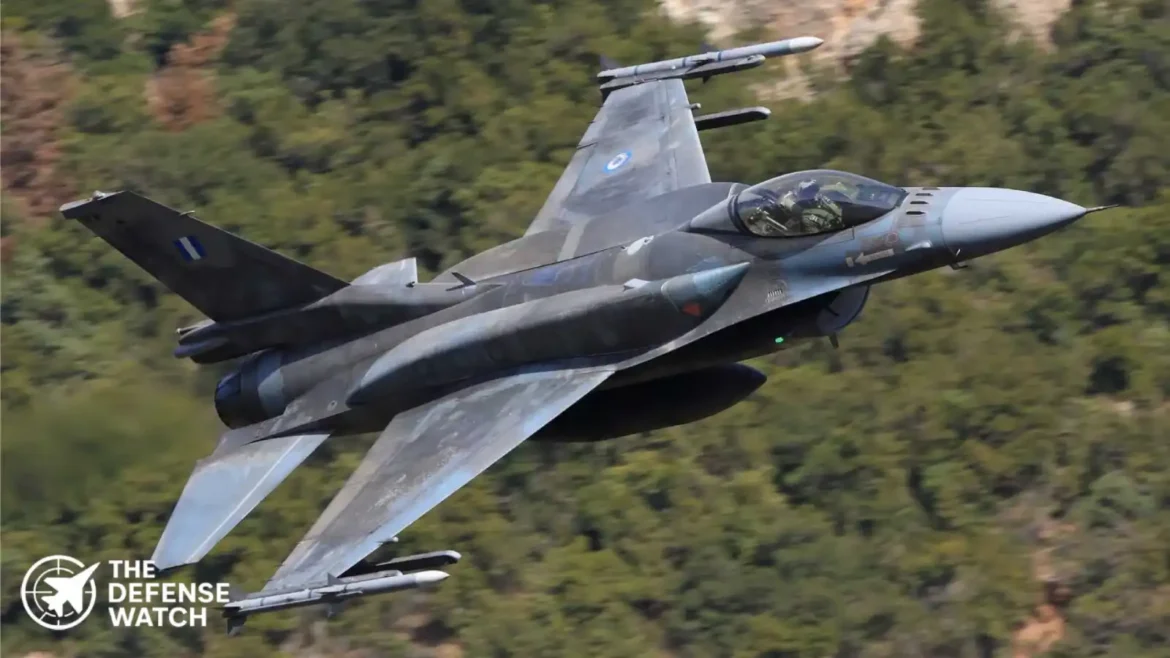
Greece F-16V Viper Marks Major Upgrade Milestone
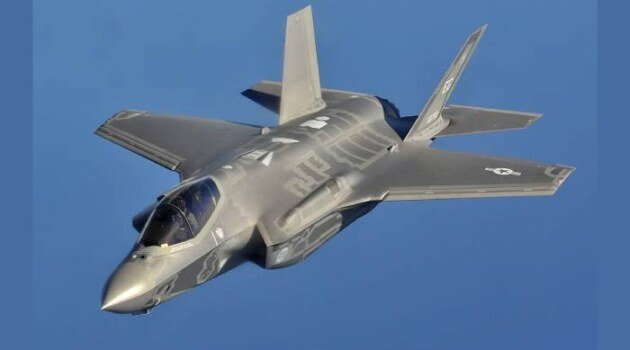
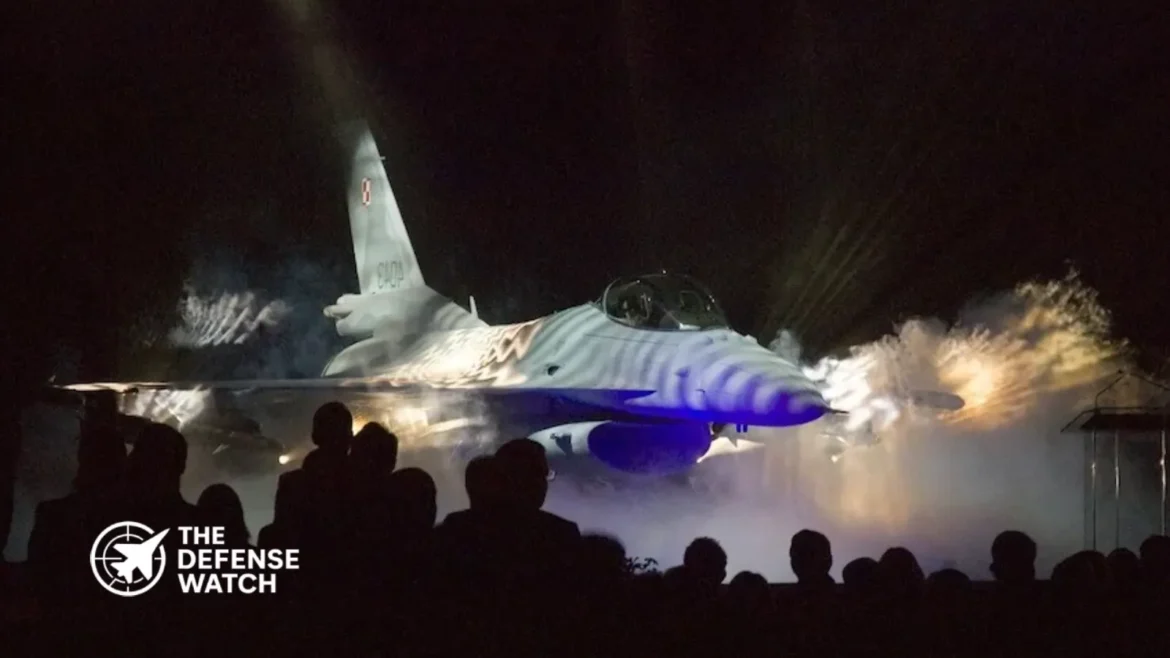
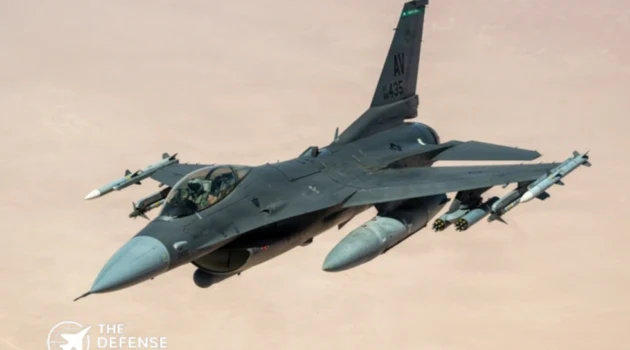
Greece F-16V Viper modernization reached a key milestone after the country received its 50th upgraded fighter jet. The delivery highlights Athens’ steady push to modernize frontline combat aviation and improve readiness across the Aegean.
The aircraft is part of a broader program to convert older Greek F-16s into the advanced Block 70/72 standard, commonly known as the Viper. The program is centered on extending fleet life while delivering next generation sensors, survivability improvements, and stronger strike capability.
- Greece has received its 50th upgraded F-16V Viper fighter aircraft.
- The F-16V adds AESA radar, modern avionics, improved targeting, and networked warfare capability.
- The milestone strengthens Greek deterrence and rapid response capacity in the Aegean region.
- Greece plans to modernize 83 aircraft under the national upgrade program.
- The upgraded fleet will operate alongside Rafale fighters and future F-35 acquisitions.
The Big Picture
Greece has spent the last several years accelerating military modernization amid persistent regional tensions, especially with neighboring Turkey over maritime boundaries, airspace management, and Eastern Mediterranean energy zones.
Air power remains central to that strategy. Fast reaction aircraft routinely intercept airspace violations, monitor maritime activity, and provide deterrence. For Greece, a modern tactical air fleet offers a relatively quick and scalable means of maintaining balance in a contested region.
Athens has therefore pursued a layered force structure built around upgraded F-16s, newly acquired French Rafale fighters, and a stated interest in acquiring the F-35 in the future.
What’s Happening
The latest delivery brings Greece to 50 completed F-16V aircraft under an upgrade effort expected to cover 83 jets. The work is led by the Hellenic Aerospace Industry in cooperation with Lockheed Martin.
The F-16V standard includes several major enhancements:
- AN/APG-83 AESA radar
- Modern mission computer
- Large center pedestal display
- Advanced datalink capability
- Improved electronic warfare systems
- Better precision strike integration
- Extended service life potential
These upgrades transform legacy fighters into platforms able to operate in dense electronic environments and engage targets faster at longer ranges.
Why It Matters
The Greece F-16V Viper program delivers capability faster than purchasing an entirely new fleet. By upgrading existing aircraft, Greece retains trained crews, support infrastructure, and proven logistics chains while gaining many features associated with newer generation fighters.
That matters operationally. In the Aegean, response times are short, distances are tight, and pilots may need to identify, track, and if required engage aircraft quickly. AESA radar and improved data fusion help crews make decisions faster.
The Viper configuration also improves survivability. Better sensors and electronic warfare systems can help aircraft detect threats sooner and operate more effectively in contested airspace.
Strategic Implications
A fleet of more than 80 upgraded fighters would significantly strengthen Greek readiness. Combined with Rafale aircraft carrying long range air to air and strike weapons, Greece gains a more credible layered deterrent posture.
For NATO, the modernization also supports alliance southern flank readiness. Greece occupies a strategically important location linking the Balkans, Eastern Mediterranean, Black Sea approaches, and Middle East transit routes.
A more capable Greek fighter force can contribute to alliance policing, maritime surveillance, and crisis response missions if required.
Competitor View
Regional military planners will likely view the Greece F-16V Viper milestone as part of a broader balance of power shift in the Eastern Mediterranean.
Turkey continues to pursue its own air modernization path through indigenous projects, drone expansion, and efforts tied to F-16 fleet upgrades. As a result, both sides are placing increasing emphasis on sensors, networking, standoff weapons, and pilot readiness rather than raw aircraft numbers alone.
That trend suggests future competition will depend as much on integration and training as on platforms themselves.
What To Watch Next
Several developments now matter most:
- Delivery pace toward the full 83 aircraft target
- Integration with Rafale fighter operations
- Weapons package expansion
- Potential Greek F-35 procurement timeline
- Sustainment funding and pilot training rates
If completed on schedule, Greece would field one of the most capable F-16 fleets in Europe.
Capability Gap
The upgrade directly addresses aging avionics and sensor limitations found in older fourth generation aircraft. Without modernization, legacy jets face declining relevance against modern radars, electronic attack systems, and long range missiles.
However, the F-16V is still not a stealth aircraft. In heavily defended environments, mission planning, electronic support, and standoff weapons remain essential.
The Bottom Line
Greece’s 50th F-16V delivery shows Athens is rapidly turning legacy fighters into a modern combat force built for deterrence and fast response in the Aegean.
U.S. Space Force GPS Ground Control Modernization Gains Momentum
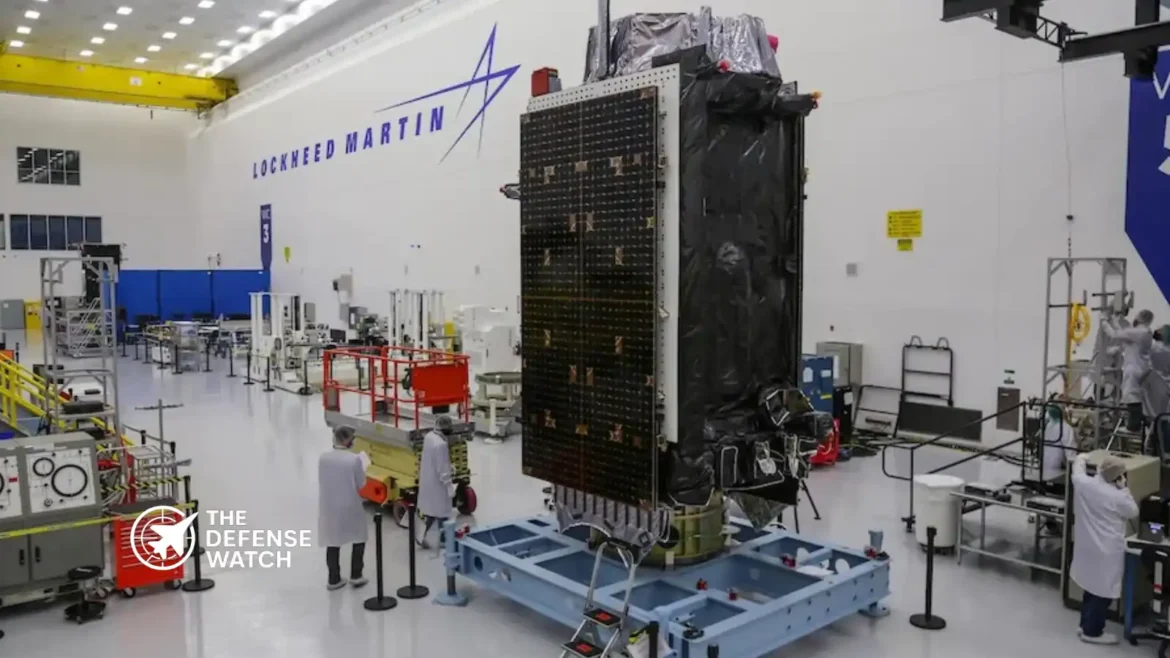
The U.S. Space Force GPS ground control modernization effort is advancing after U.S. Space Force awarded a $105 million contract to Lockheed Martin to upgrade critical infrastructure supporting next-generation satellites.
The contract focuses on enhancing the ground segment of the Global Positioning System, ensuring it can fully support the upcoming GPS III Follow-On (GPS IIIF) constellation. These satellites are expected to deliver stronger signals, improved anti-jamming capabilities, and expanded mission flexibility for military and civilian users.
- U.S. Space Force awarded Lockheed Martin a $105 million contract to modernize GPS ground control systems.
- The upgrade supports integration of next-generation GPS III Follow-On (IIIF) satellites.
- Work focuses on improving cybersecurity, resilience, and operational flexibility of GPS infrastructure.
- The program enhances positioning, navigation, and timing (PNT) capabilities for U.S. and allied forces.
- The contract reflects growing emphasis on space-based infrastructure amid rising global competition.
The award underscores a broader push by the Pentagon to modernize space-based positioning, navigation, and timing systems as reliance on GPS continues to grow across joint and allied operations.
Supporting GPS IIIF and Future Capabilities
At the core of the U.S. Space Force GPS ground control modernization effort is the need to integrate GPS IIIF satellites seamlessly into existing infrastructure. The upgraded control segment will enable operators to command, control, and monitor these advanced satellites more effectively.
GPS IIIF satellites are designed to introduce several enhancements over earlier blocks, including improved signal accuracy, increased resistance to electronic warfare threats, and the ability to host additional payloads. According to defense industry reporting, these upgrades are critical for maintaining U.S. leadership in satellite navigation.
Lockheed Martin, which has long been involved in GPS satellite production and ground systems, will focus on software updates, system integration, and cybersecurity improvements under the contract.
Strategic Importance of Ground Segment Upgrades
While satellites often receive the most attention, the ground control segment is equally vital. Without modernized ground infrastructure, even the most advanced satellites cannot operate at full capability.
The U.S. Space Force GPS ground control modernization program aims to address several key vulnerabilities:
- Legacy systems that limit flexibility and scalability
- Growing cyber threats targeting space infrastructure
- Increasing demand for real-time, high-precision navigation data
Defense analysts note that adversaries such as China and Russia have invested heavily in electronic warfare and anti-satellite capabilities. Strengthening the ground segment helps ensure continuity of operations even in contested environments.
This contract reflects a shift toward more resilient and modular architectures, allowing faster updates and reduced downtime during upgrades.
Enhancing Military and Allied Operations
The modernization effort will directly support U.S. military operations worldwide. GPS is a foundational capability for precision-guided munitions, intelligence systems, communications, and logistics.
By improving the reliability and accuracy of GPS services, the upgraded ground control system will enhance:
- Targeting precision in combat operations
- Navigation for air, land, and maritime forces
- Synchronization of communications networks
Allied nations that rely on U.S. GPS services are also expected to benefit. The system’s global reach makes it a cornerstone of coalition operations, particularly in NATO and Indo-Pacific theaters.
Industry Role and Program Continuity
Lockheed Martin’s role in the U.S. Space Force GPS ground control modernization effort builds on decades of involvement in the GPS enterprise. The company has contributed to both satellite manufacturing and ground system development, positioning it as a key partner in ongoing upgrades.
The contract also highlights continuity within the GPS modernization roadmap. The U.S. Department of Defense has steadily transitioned from legacy GPS systems to more advanced architectures, including GPS III and IIIF satellites.
According to publicly available program data, maintaining compatibility between new satellites and upgraded ground systems is essential to avoid operational gaps during the transition period.
Broader Space Competition Context
The U.S. Space Force GPS ground control modernization effort comes amid intensifying global competition in space. Nations are investing in alternative navigation systems, including China’s BeiDou and Europe’s Galileo.
This environment has elevated GPS from a supporting capability to a contested strategic asset. Ensuring its resilience is now a top priority for U.S. defense planners.
The $105 million contract represents a relatively modest investment compared to overall space budgets, but it targets a critical node in the GPS architecture. Experts emphasize that incremental upgrades to ground systems can deliver significant operational gains without the cost of launching new satellites.



SBIRS Logistics Support Contract Extended Through 2027
The SBIRS logistics support contract continues to underpin the United States missile warning architecture as Lockheed Martin receives an $86.34 million contract modification from the Space Systems Command.
This modification increases the total cumulative value of the long running contract to more than $1.6 billion. The work focuses on contractor logistics support, product sustainment, integration, and long term contract evolution for the Space Based Infrared System, better known as SBIRS.
Operations will continue at Peterson Space Force Base, Buckley Space Force Base, Greeley Air National Guard Station, and in Boulder, Colorado. The period of performance runs through January 31, 2027.
- Contract modification worth $86.34 million for SBIRS contractor logistics and product support.
- Total SBIRS support contract value now exceeds $1.6 billion.
- Work spans Peterson SFB, Buckley SFB, Greeley ANGS, and Boulder, Colorado.
- Funding includes $44.4 million from Fiscal 2026 operations and maintenance accounts.
- Support continues through January 31, 2027 under Space Systems Command oversight.
Why SBIRS Sustainment Matters More Than Ever
SBIRS is the backbone of U.S. strategic and theater missile warning. The constellation detects infrared signatures from ballistic missile launches worldwide and feeds real time data to combatant commands, homeland defense networks, and allied partners.
While newer systems like the Next Generation Overhead Persistent Infrared are in development, SBIRS remains fully operational and mission critical. That reality makes logistics support and system sustainment just as important as new satellite production.
Missile threats have evolved. Hypersonic glide vehicles, maneuvering reentry vehicles, and advanced cruise missiles present new detection challenges. Maintaining SBIRS performance, calibration, ground integration, and data reliability is essential during this transition period toward Next Gen OPIR.
What The Contract Modification Covers
The SBIRS logistics support contract is not about launching new satellites. It is about keeping the existing architecture reliable every hour of every day.
This includes:
- Ground system integration and software sustainment
- Sensor performance monitoring and calibration
- Contractor logistics and parts support
- Engineering updates and configuration control
- System level integration across multiple Space Force installations
These tasks ensure missile warning data reaches the right operators without delay. In missile defense, seconds matter.
Colorado Remains The Nerve Center Of Missile Warning
All listed performance sites are key nodes in U.S. missile warning operations.
Peterson Space Force Base hosts major Space Force command elements and SBIRS mission control.
Buckley Space Force Base operates SBIRS ground stations and data processing units.
Greeley Air National Guard Station supports missile defense operations tied to homeland protection.
This geographic concentration highlights how Colorado functions as the operational heart of U.S. missile warning and space based surveillance.
Funding Signals Operational Priority
The obligation of $44.4 million from Fiscal 2026 operations and maintenance funds at the time of award is significant.
Operations and maintenance funding is used only for active, ongoing mission requirements. This signals that SBIRS sustainment is viewed as an immediate operational priority, not a long term modernization effort.
In practical terms, this means the Space Force is ensuring no capability gap emerges while Next Gen OPIR satellites are still years away from full deployment.
SBIRS And The Transition To Next Gen OPIR
The Space Force has been clear that SBIRS will remain in service well into the Next Gen OPIR era. The two systems will overlap for years.
That overlap requires careful integration, data continuity, and system reliability. Any degradation in SBIRS performance could create blind spots during a sensitive transition period.
This SBIRS logistics support contract directly supports that continuity.
From an operational perspective, sustainment contracts like this are often overlooked compared to satellite launch headlines. Yet they are what keep the architecture functional, calibrated, and trusted by commanders worldwide.
Strategic Context
Missile warning is one of the most sensitive and critical missions in U.S. national defense. It supports:
- U.S. Northern Command homeland defense
- Indo Pacific and European theater missile defense networks
- Early warning data sharing with allies
- Nuclear command and control decision timelines
Reliable infrared detection from space remains the first step in that chain.
Without consistent SBIRS performance, every downstream layer of missile defense and response is affected.
Role Of Space Systems Command
The Space Systems Command, located at Peterson SFB, manages the acquisition and sustainment of U.S. military space capabilities. This contract action reflects its role not only in future systems, but in keeping legacy systems fully mission capable.
Sustainment, integration, and contract evolution are now central parts of space acquisition strategy as constellations grow more complex.
Lockheed Martin Expands PAC-3 Missile Production Capacity
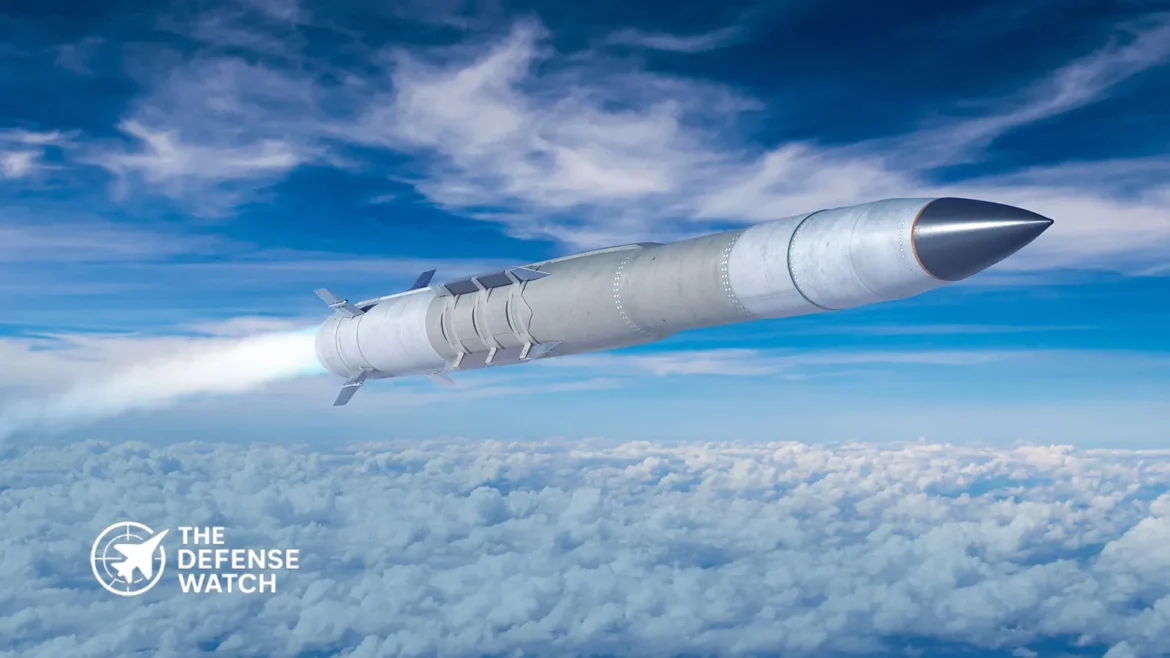
The PAC-3 missile contract awarded to Lockheed Martin marks one of the largest recent investments in U.S. and allied air and missile defense, reinforcing production of the Patriot Advanced Capability-3 Missile Segment Enhancement interceptor.
The $4.76 billion firm-fixed-price award covers full-scale production, engineering support, and lifecycle services. Work will continue across a distributed industrial base in states including Alabama, Florida, Texas, and Pennsylvania, with completion expected by June 30, 2030.
According to the U.S. Department of Defense contract announcement, the majority of funding comes from Foreign Military Sales customers, underscoring strong international demand for the PAC-3 MSE interceptor.
- :contentReference[oaicite:0]{index=0} awarded $4.76 billion contract for PAC-3 MSE missile production.
- Contract covers manufacturing, engineering, and support services through June 2030.
- $264.9 million funded by U.S. Army, $4.49 billion from Foreign Military Sales partners.
- Production spans multiple U.S. states, including Alabama, Florida, Texas, and Pennsylvania.
- Contract reflects growing demand for advanced missile defense against drones and ballistic threats.
Rising Global Demand Driving Production Scale
The scale of this PAC-3 missile contract reflects a clear shift in global defense priorities. Nations are accelerating investments in layered air and missile defense systems as threats from ballistic missiles, cruise missiles, and drones continue to expand.
The PAC-3 MSE interceptor is designed to defeat tactical ballistic missiles, cruise missiles, and advanced aerial threats using hit-to-kill technology. Unlike legacy proximity-based interceptors, the system relies on direct impact, improving precision and lethality.
Foreign Military Sales funding exceeding $4.4 billion suggests sustained procurement from U.S. allies in Europe, the Middle East, and the Indo-Pacific. Many of these regions are facing increased missile proliferation and evolving aerial threats, particularly from low-cost drones and maneuvering ballistic systems.
Industrial Base Spread Across Multiple States
The contract supports a wide network of manufacturing and engineering sites, including Huntsville, Alabama; Clearwater and Pinellas Park, Florida; Grand Prairie, Texas; and Archbald, Pennsylvania, among others.
This distributed production model strengthens supply chain resilience while maintaining surge capacity. It also aligns with broader Pentagon efforts to expand the U.S. defense industrial base following lessons learned from recent conflicts and supply chain disruptions.
From an industrial perspective, the PAC-3 missile contract sustains thousands of skilled jobs and reinforces specialized manufacturing capabilities tied to advanced guidance systems, propulsion, and interceptor assembly.
Strategic Importance Of PAC-3 MSE In Modern Warfare
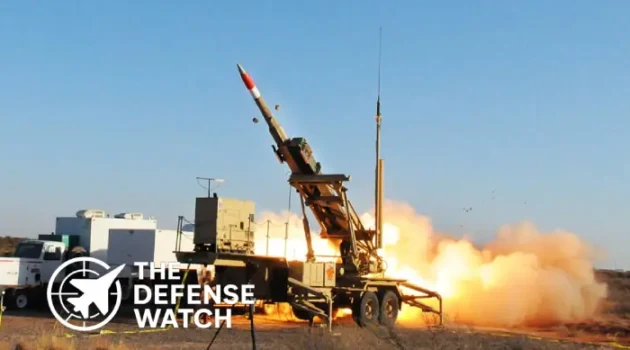
The PAC-3 MSE has become a central element of U.S. and allied missile defense architectures. It integrates into the Patriot air defense system, providing terminal phase interception against high-speed threats.
Recent operational trends highlight the growing importance of systems like PAC-3. Conflicts in Eastern Europe and the Middle East have demonstrated the increasing use of ballistic missiles and drones in combined attack strategies. This has placed pressure on existing air defense networks and accelerated demand for advanced interceptors.
The PAC-3 missile contract directly supports this evolving operational environment. By expanding production capacity, the U.S. and its partners aim to ensure sufficient interceptor stockpiles to sustain prolonged engagements if required.
Foreign Military Sales Signal Allied Dependence
A notable aspect of the contract is the funding split. Only a small portion, roughly $264.9 million, is allocated from U.S. Army procurement funds, while the majority comes from allied nations through Foreign Military Sales.
This highlights how dependent partner nations have become on U.S.-produced missile defense systems. It also reflects interoperability priorities within NATO and allied frameworks, where standardized systems like Patriot allow for integrated air defense operations.
Countries acquiring PAC-3 MSE systems are not just buying hardware. They are integrating into a broader network of sensors, command systems, and joint operational doctrines led by the United States.
Long-Term Implications For Missile Defense Strategy
The contract signals a sustained commitment to kinetic intercept technologies, even as emerging solutions such as directed energy weapons and electronic warfare systems gain attention.
While future air defense may include lasers and AI-driven intercept solutions, the near-term reality remains centered on proven systems like PAC-3 MSE. These interceptors provide reliable, combat-tested capabilities against a wide range of threats.
At the same time, the size of the PAC-3 missile contract suggests planners anticipate continued high demand for interceptor-based defenses. This aligns with assessments from the Missile Defense Agency and other defense bodies that forecast increasing missile threats over the next decade.
Program Outlook Through 2030
With an estimated completion date in 2030, the contract ensures production continuity over the next several years. This long-term horizon provides stability for suppliers and allows for incremental upgrades to be integrated during the production cycle.
It also gives the U.S. and its allies time to expand layered defense architectures, combining PAC-3 MSE with systems such as THAAD and next-generation radar platforms.
As global security dynamics continue to shift, the PAC-3 missile contract positions Lockheed Martin and its partners at the center of a growing missile defense market.
Pentagon Moves To Fund 38 F-35A Fighters As Air Force Battles Its Worst Fighter Shortfall In History
Pentagon Requests 38 F-35A Fighters for U.S. Air Force in FY2027 Defense Budget
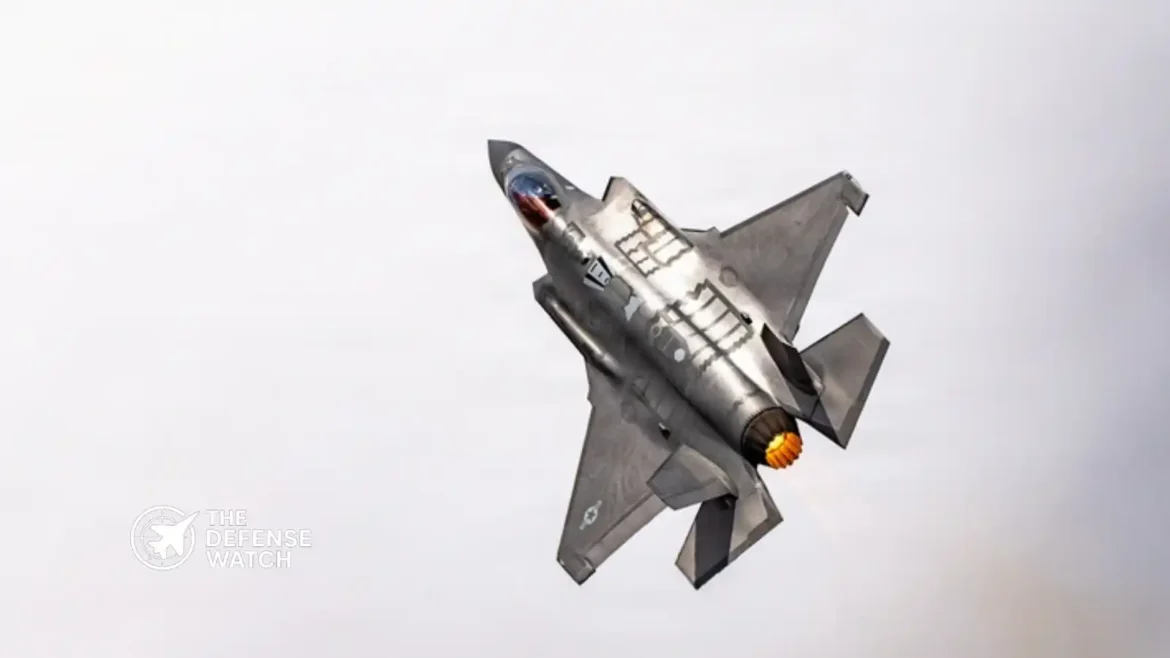
The Pentagon’s fiscal year 2027 defense budget request includes funding for 38 F-35A Lightning II fighters for the U.S. Air Force — a figure that senior defense analysts say is insufficient to address the service’s deepening fighter inventory crisis. The allocation is part of a broader request for 85 F-35s across all military branches, embedded within President Donald Trump’s record-breaking $1.5 trillion defense spending proposal unveiled on April 3, 2026.
An Office of Management and Budget official confirmed the Air Force’s allocation directly to Air & Space Forces Magazine. The number represents a modest increase over the previous year but falls well short of what Air Force leadership and independent analysts say is needed for genuine fleet recapitalization.
- The Pentagon’s FY2027 budget requests a total of 85 F-35 Lightning II fighters across all services, with 38 F-35A variants allocated to the U.S. Air Force.
- The request is part of President Trump’s record $1.5 trillion defense budget for fiscal year 2027, which allocates $30.6 billion for Air Force aircraft procurement.
- The Air Force would receive 14 more F-35As than in the previous budget year, but 10 fewer than the service itself requested in 2025.
- This marks the first time in a decade that the Air Force is set to receive less than half of the total F-35s requested by the Pentagon.
- The White House budget fact sheet prioritizes rapid development of the F-47 sixth-generation fighter, while providing limited detail on the B-21 Raider and Collaborative Combat Aircraft programs.
A Budget That Signals Priorities — And Trade-Offs
The White House budget request provides $30.6 billion for Air Force aircraft procurement, a significant increase over prior years, though it does not break down specific funding figures for key aircraft programs.
A White House fact sheet confirms that the budget prioritizes rapid development and production of the F-47 sixth-generation fighter, while making no mention of the unmanned Collaborative Combat Aircraft or the B-21 Raider stealth bomber programs.
That silence, however, does not necessarily indicate diminished investment in those platforms. Retired Lt. Gen. David A. Deptula, dean of the Mitchell Institute for Aerospace Studies and one of the nation’s foremost airpower strategists, urged caution in reading too much into the omissions.
The absence of public F-47 and B-21 details should not be mistaken for lack of priority,” Deptula said. “Aircraft modernization is still buried in broader procurement and development accounts.”
Analysts: 38 Jets Is “Budget Triage,” Not Recapitalization
The core concern among defense experts centers on whether 38 F-35As represents a genuine commitment to rebuilding U.S. airpower or simply a stopgap measure.
Deptula described the Air Force as operating “the oldest and smallest fighter force in its history” and said that 38 aircraft fails to constitute a meaningful rebuild rate for a service at that level of depletion.
In his assessment, the number preserves production line stability at Lockheed Martin’s Fort Worth facility but does nothing to reverse structural shortfalls in tactical aviation capacity.
“It may keep the line warm, but it does not reverse the fighter inventory shortfall,” Deptula said, adding that 38 F-35As “feels more like budget triage than a true recapitalization rate.”
His critique goes deeper than the raw numbers. Deptula argued that the Air Force cannot sustain a strategy of divesting older aircraft in exchange for modernization if that modernization never keeps pace with the divestment — a cycle he characterized as structurally unsustainable given current geopolitical demands.
Historical Context: A Decade-Low Share Of Pentagon’s F-35 Request
The procurement numbers carry significant historical weight. This is the first time in the past decade that the Air Force is set to receive less than half of the total F-35 fighters requested by the Pentagon in a single budget cycle.
If approved by Congress, the Air Force would receive 14 more F-35As than it did under last year’s enacted budget, but the figure also represents 10 fewer aircraft than the service itself requested in fiscal year 2025.
The divergence between what the Air Force asks for and what it ultimately receives reflects ongoing competition for finite dollars within a defense budget that, despite its record topline, must simultaneously fund sixth-generation fighter development, nuclear modernization, munitions replenishment, and a major naval buildup.
Deptula acknowledged these competing demands directly: “This number suggests the Air Force is still being forced to balance near-term procurement against other large bills — F-47 development, B-21, Sentinel, readiness recovery, munitions, and CCA.”
Senior Leaders Have Pushed For More
The debate over F-35 procurement numbers is not new. Last July, a coalition of 16 retired Air Force four-star generals — including six former Chiefs of Staff — formally called on Congress to substantially increase F-35 purchases.
Gen. Philip M. Breedlove, former Supreme Allied Commander Europe, argued at the time that the F-35 must remain a top procurement priority because it is the most capable U.S. fighter currently in production and essential to meeting the Air Force’s “fight tonight” requirement.
Former Chief of Staff Gen. T. Michael Moseley reinforced that argument by pointing to the aircraft’s role in coalition operations. Allied nations have invested heavily in the F-35 specifically to maintain interoperability with U.S. forces — a strategic asset that procurement shortfalls could erode over time.
Why wouldn’t we want to continue to build that airplane in larger numbers?” Moseley said.
Shipbuilding Takes Center Stage
While Air Force advocates push back on the F-35 allocation, the FY2027 budget makes its naval priorities explicit. The White House fact sheet details $65.8 billion for shipbuilding in 2027, covering procurement of 18 battle force ships and 16 non-battle force vessels.
Deptula characterized the prominent role of shipbuilding in the budget’s public messaging as a strategic communications choice rather than evidence of reduced emphasis on airpower modernization. He noted that the budget’s detailed justification materials — still awaited by Congress and independent analysts — will offer a clearer picture of how F-47, B-21, and next-generation airpower investments are structured.
The Broader Strategic Calculus
The FY2027 F-35 request lands at a particularly sensitive moment for U.S. airpower. Active military operations in the Middle East — including Operation Epic Fury against Iran — have placed sustained pressure on Air Force assets, accelerated aircraft attrition, and put a premium on combat-ready fighter capacity. Reports confirm an F-35A assigned to Nellis Air Force Base crashed on March 31, 2026, with the pilot ejecting safely, underscoring the operational tempo the fleet is currently sustaining.
Against that backdrop, the F-35A Lightning II remains the primary fifth-generation tactical platform available to the Air Force in meaningful numbers. With the F-47 years from initial operational capability, the fifth-generation bridge between today’s requirements and tomorrow’s fleet depends heavily on continued F-35 investment.
Whether 38 aircraft in a single fiscal year constitutes a credible commitment to that bridge — or simply manages decline — will likely define the central airpower debate in Congress as FY2027 budget hearings get underway.
 ¦ KEY FACTS AT A GLANCE
- Lockheed Martin awarded a $1.36 billion contract modification for the Conventional Prompt Strike program.
- The contract supports missile production, systems integration, testing, and long-lead materials.
- Work spans multiple U.S. locations including Colorado, California, Utah, and Alabama.
- Program funding includes Army and Navy procurement, R&D, and operations accounts.
- The effort is scheduled for completion by September 2032.
Lockheed Martin CPS Contract Expands U.S. Hypersonic Strike Capability
The Lockheed Martin CPS contract marks a major step forward in scaling U.S. hypersonic weapons production, with the Department of Defense awarding a $1.36 billion modification to support the Conventional Prompt Strike program.
The award converts several previously unpriced contract actions into a fully funded effort, while also adding new scope tied to missile and launch platform production. The work will be executed under contract N00030-22-C-1025 and managed by Strategic Systems Programs in Washington, D.C.
This latest move underscores growing urgency within the Pentagon to field operational hypersonic strike capabilities amid intensifying competition with near-peer adversaries.
Expanding the Conventional Prompt Strike Program
The Conventional Prompt Strike program is designed to deliver long-range, non-nuclear hypersonic weapons capable of striking targets at high speed with precision. These systems are intended to provide rapid response options against time-sensitive or heavily defended targets.
Under the new contract, Lockheed Martin Space will carry out:
- Program management and engineering development
- Systems integration across missile and launch platforms
- Procurement of long-lead materials
- Testing and validation activities
- Development of specialized tooling and production equipment
The scope reflects a transition from development toward scaled production, a critical phase for any advanced weapons program.
The CPS system is expected to be deployed across multiple platforms, including naval surface vessels, reinforcing its role as a joint force capability.
Multi-State Industrial Base Engagement
The Lockheed Martin CPS contract will drive activity across a broad U.S. defense industrial network.
Work distribution includes:
- Denver, Colorado, 55 percent
- Sunnyvale, California, 16 percent
- Magna, Utah, 8 percent
- Courtland, Alabama, 7 percent
- Simsbury, Connecticut, 4 percent
- Pittsfield, Massachusetts, 3 percent
- East Aurora, New York, 2 percent
- Owego, New York, 2 percent
- Additional locations, 3 percent combined
This spread highlights the complexity of hypersonic weapons production, which relies on specialized suppliers, advanced materials, and precision manufacturing capabilities.
From an industrial perspective, the program reinforces long-term demand across the U.S. missile production ecosystem, particularly in propulsion, guidance systems, and thermal protection technologies.
Funding Structure Signals Joint Priority
Funding for the Lockheed Martin CPS contract reflects a coordinated effort between the U.S. Army and Navy.
Allocated funds include:
- $72.1 million from FY2025 Army missile procurement
- $120.9 million from FY2026 Army missile procurement
- $208.6 million from Navy R&D accounts
- $89.1 million from Navy procurement funding
- $2 million from Navy operations and maintenance
The mix of procurement and R&D funding suggests the program is balancing continued development with early production readiness.
Notably, a portion of the funding is set to expire within the current fiscal year, indicating near-term execution pressure on specific program elements.
Strategic Context: Hypersonic Competition Intensifies
The expansion of the Conventional Prompt Strike program comes amid a broader global push to operationalize hypersonic weapons.
The United States is working to close capability gaps with competitors such as China and Russia, both of which have already fielded or tested hypersonic glide vehicles and boost-glide systems.
Hypersonic weapons offer several advantages:
- Speeds exceeding Mach 5
- Maneuverability that complicates interception
- Reduced response time for adversaries
These characteristics make them particularly valuable for penetrating advanced air defense systems and striking high-value targets.
However, the technical challenges are significant. Thermal protection, guidance accuracy at high speeds, and integration with launch platforms remain complex engineering hurdles.
The Lockheed Martin CPS contract signals that the Pentagon is moving beyond experimentation toward sustained production, a shift that could reshape future deterrence strategies.
Sole Source Award Reflects Program Sensitivity
The contract was awarded as a sole-source acquisition under U.S. Code provisions that allow for limited competition when only one responsible source is available.
This approach is common in highly specialized defense programs where:
- Proprietary technologies are involved
- Integration risks must be minimized
- Program timelines are critical
Lockheed Martin’s role as a prime contractor in hypersonic systems development positions it as a central player in the CPS effort.
Outlook Through 2032
Work under the contract is expected to continue through September 2032, indicating a long-term commitment to the Conventional Prompt Strike program.
Looking ahead, key milestones will likely include:
- Initial operational capability on naval platforms
- Increased production rates
- Integration with broader joint force architectures
As the U.S. military refines its approach to hypersonic warfare, programs like CPS are expected to play a central role in future strike doctrines.
The scale and duration of this contract suggest that hypersonic weapons are moving from experimental capability to core component of U.S. military power.
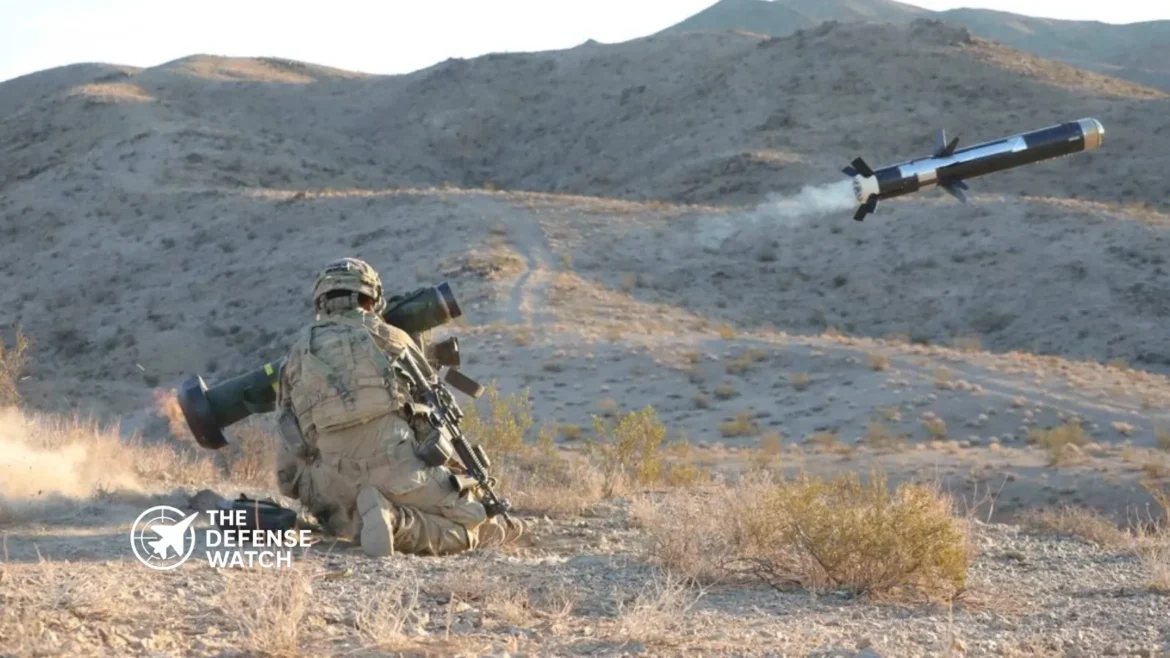
KEY FACTS AT A GLANCE- The Javelin Joint Venture — a partnership between Lockheed Martin and Raytheon — is executing a structured production ramp targeted for completion later in 2026, following 8–10 months of coordinated supplier preparation.
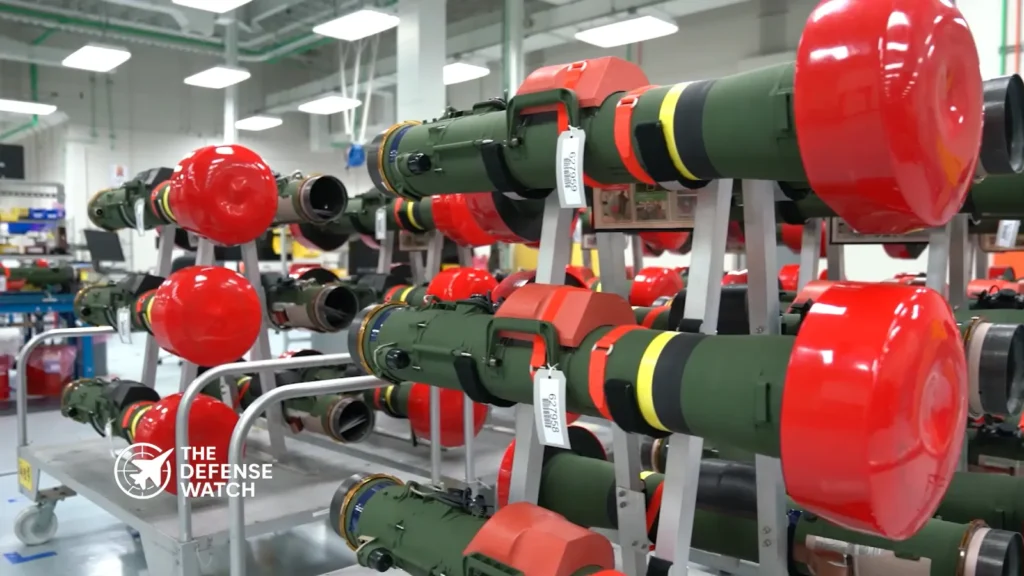
- The Javelin supply chain spans nearly 100 part-level suppliers and 25 major subcontractors, covering propulsion, guidance electronics, and critical subcomponents.
- AI-driven demand forecasting tools are being deployed across key suppliers, shifting planning from reactive order management to a shared demand horizon model.
- The program is pursuing dual-source qualification for high-risk components to guard against single-point supply failures tied to export restrictions or raw material scarcity.
- Lead-time targets aim to keep all essential parts under 52 weeks, with on-hand stock of energetic and high-value items maintained as a buffer against supplier capacity fluctuations.
Javelin Missile Production Ramp Targets Full-Rate Output as Demand Strains Western Arsenal Capacity
The Javelin missile production ramp is entering its most critical phase, with Lockheed Martin and Raytheon completing the foundational supplier investment needed to sustain accelerated manufacturing output later in 2026. The effort, disclosed by the Javelin Joint Venture (JJV) on March 26, reflects a deliberate, multi-year industrial campaign to transform a mature but conservatively scaled production base into one capable of meeting persistent wartime-level demand.
The Big Picture
Russia’s invasion of Ukraine shattered long-held assumptions about Western munitions stockpiles and production capacity. The Javelin — the premier man-portable, fire-and-forget anti-tank guided missile in the U.S. and allied arsenals — emerged as a signature weapon of the conflict. Thousands of systems were transferred to Ukraine, drawing down U.S. Army and allied inventories far faster than existing production lines could replenish them.

Image : Lockheed Martin That inventory depletion triggered urgent calls from the Pentagon and Capitol Hill to accelerate missile production across the board. The Javelin ramp is part of that broader push, one that spans dozens of programs and reflects a fundamental reckoning: the U.S. defense industrial base had optimized for cost efficiency and steady-state procurement, not the surge demands of peer or near-peer conflict.
What’s Happening
Lockheed Martin announced on March 26, 2026, that the Javelin supply chain has completed its non-recurring engineering (NRE) work, including additional tooling, test sets, and in some cases expanded floor space, creating the foundation for a full production ramp expected to begin later this year.
The effort engaged nearly 100 part-level suppliers and 25 major subcontractors, each spending eight to ten months completing required updates to achieve the increased production output.
Rich Liccion, vice president and Lockheed Martin Javelin program director, stated that early supplier engagement and strategic capacity investment allowed the program to increase production while maintaining the quality standards expected by global customers.
Jenna Hunt Frazier, JJV president and Javelin program director at Raytheon, noted that the program is adopting advanced technologies including automation and AI-driven forecasting to enhance efficiency and build a future-ready supply chain.
The ramp applies across the full Javelin industrial ecosystem — from propulsion hardware suppliers to guidance electronics manufacturers to smaller component vendors. Each element of that chain had to grow in parallel, since a bottleneck at any tier can halt final assembly regardless of how much capacity exists elsewhere.
Why It Matters
The Javelin production ramp represents more than a manufacturing milestone. It signals that the U.S. defense industrial base is beginning to execute — not just plan — the transition to higher-rate production that senior Pentagon officials have been demanding since 2022.
AI forecasting tools deployed across key suppliers now give those vendors real-time insight into the program’s demand profile, shifting planning discussions from reactive order management to a shared demand horizon model. That shift is strategically significant. Traditional defense procurement often kept suppliers operating in information silos, receiving purchase orders with little forward visibility. Moving to a shared demand horizon enables suppliers to plan capital expenditures, workforce hiring, and material procurement months earlier — compressing lead times and reducing the risk of cascading delays.
The ramp has also generated interest in automation upgrades across the supplier base, with capital funding being routed into staging facilities and refined production line layouts to lift throughput while improving yield.
These investments point toward a structural improvement in production efficiency, not just a temporary surge. That distinction matters: temporary surges are vulnerable to reversal when budget pressures return, while structural improvements alter the baseline capacity of the industrial base.
Strategic Implications
The Javelin is fielded by more than 20 nations and remains the dominant close-combat anti-armor system in NATO and allied arsenals. Its production rate directly affects the readiness posture of U.S. ground forces and the capacity to support partner nations in contested environments.
Sustaining a credible Javelin stockpile is not merely a logistics question — it is a deterrence signal. Adversaries planning armored offensives factor in the availability of effective anti-armor munitions when assessing the cost of military action. A demonstrated U.S. and allied ability to produce and sustain Javelin inventories at high rates degrades that calculus.
To guard against supply chain fragility, the JJV is pursuing dual-source qualification for higher-risk components, which guards against single-point failures triggered by export limitations or raw material scarcity. This is a direct response to the supply chain lessons of recent years, when over-reliance on single suppliers — sometimes in geopolitically sensitive locations — proved to be an operational liability.
The lead-time target of under 52 weeks for all essential parts is equally important. A 12-month or longer lead time on a critical component effectively means that today’s procurement decisions determine production output a year from now. Compressing that window gives program managers and DoD planners significantly more flexibility to respond to emerging demand.
Competitor View
Russia and China have closely monitored the degradation of Western munitions stockpiles since 2022. Russian military planners, in particular, observed that sustained high-intensity conflict rapidly exhausted anti-tank guided missile reserves that NATO planners had considered adequate. That observation reinforced a Russian assumption that Western democracies lack the industrial endurance for prolonged high-tempo conflict.
The Javelin production ramp directly challenges that assumption. A demonstrated capacity to surge missile output and replenish inventories at scale narrows the window in which an adversary could exploit a munitions deficit. China’s defense planners, watching closely as they model potential contingencies in the Indo-Pacific, will note whether the U.S. industrial base can actually deliver on announced production increases — or whether those announcements remain aspirational.
Iran and its regional proxies, which have faced Javelin-equipped adversaries and supported forces engaged by Javelin users, also track Western missile production capacity as an input to their own operational planning.
What to Watch Next
The JJV has indicated that the accelerated production rate is targeted for achievement later in 2026. Several milestones will determine whether that target is met on schedule.
First, the transition from NRE completion to sustained rate production requires that all 100-plus suppliers begin delivering subcomponents at increased volumes without quality escapes or schedule slippage. Any tier-two or tier-three supplier bottleneck could ripple upstream and compress final assembly throughput.
Second, the effectiveness of AI-driven demand forecasting tools will be tested as actual orders flow against projected demand profiles. If those tools perform as intended, they should reduce the order-versus-forecast friction that has historically caused inefficiency and reactive procurement across the defense supply base.
Third, dual-source qualification for high-risk components — a critical resilience measure — requires time, testing, and investment. Progress on that effort will be a key indicator of the JJV’s long-term supply chain health.
Finally, future Javelin model variants will stress the supply chain in new ways. A production base configured for a current variant may require additional NRE investment to accommodate design changes. How the JJV manages that transition will test whether the current ramp investment has built genuine adaptability or simply expanded capacity for a fixed configuration.
Capability Gap
The Javelin ramp addresses a documented and publicly acknowledged shortfall in U.S. and allied anti-armor munitions inventories. Beyond replenishing stocks depleted by Ukraine transfers, it also fills a longer-term gap: the U.S. defense industrial base had not designed its missile production infrastructure for sustained high-tempo conflict.
Realistic limitations remain. Even with the ramp, Javelin production competes for supplier capacity with other high-volume programs, as the JJV itself acknowledged. Suppliers supporting multiple defense programs simultaneously face collective bandwidth constraints that no single program can fully resolve. The broader challenge — rationalizing and expanding the defense industrial base across dozens of programs — exceeds what any individual production ramp can accomplish.
Additionally, raw material availability and export control dynamics for certain electronic components remain structural risks. Dual-sourcing mitigates but does not eliminate those vulnerabilities, particularly for advanced guidance components that depend on specialized materials or manufacturing processes with limited global supply.
The Bottom Line
The Javelin Joint Venture’s supply chain overhaul represents the most concrete evidence yet that the U.S. defense industrial base is translating post-Ukraine urgency into actual production capacity — a development with direct implications for NATO readiness, allied deterrence, and adversary planning calculations.
¦ KEY FACTS AT A GLANCE- Lockheed Martin is increasing Precision Strike Missile production to meet U.S. Army demand.
- PrSM replaces ATACMS with extended range and improved targeting capability.
- Expansion supports U.S. long range fires modernization and multi domain operations.
- Production ramp up aligns with planned fielding timelines later this decade.
- Program strengthens deep strike deterrence against near peer adversaries.
Precision Strike Missile Production Expands To Meet U.S. Army Demand
Precision Strike Missile production is increasing as Lockheed Martin moves to scale output in response to growing U.S. Army requirements for long range precision fires. The expansion reflects sustained demand for next generation surface to surface strike capabilities as the Army accelerates modernization efforts.
The move follows continued investment in the Precision Strike Missile program, widely known as PrSM, which is set to replace the legacy Army Tactical Missile System.
The Big Picture
The U.S. Army has prioritized long range precision fires as one of its top modernization pillars. This shift reflects lessons from recent conflicts and evolving operational concepts focused on contested environments.
Future battlefields will likely involve denied access zones, advanced air defenses, and dispersed forces. In that context, ground launched long range missiles provide a critical capability to strike high value targets without relying solely on airpower.
PrSM sits at the center of this transformation. It supports multi domain operations by enabling deep strikes against command nodes, air defenses, logistics hubs, and mobile targets.
What’s Happening
Lockheed Martin is increasing Precision Strike Missile production capacity to meet rising demand from the U.S. Army. The company is scaling manufacturing processes and supply chains to support higher output rates.
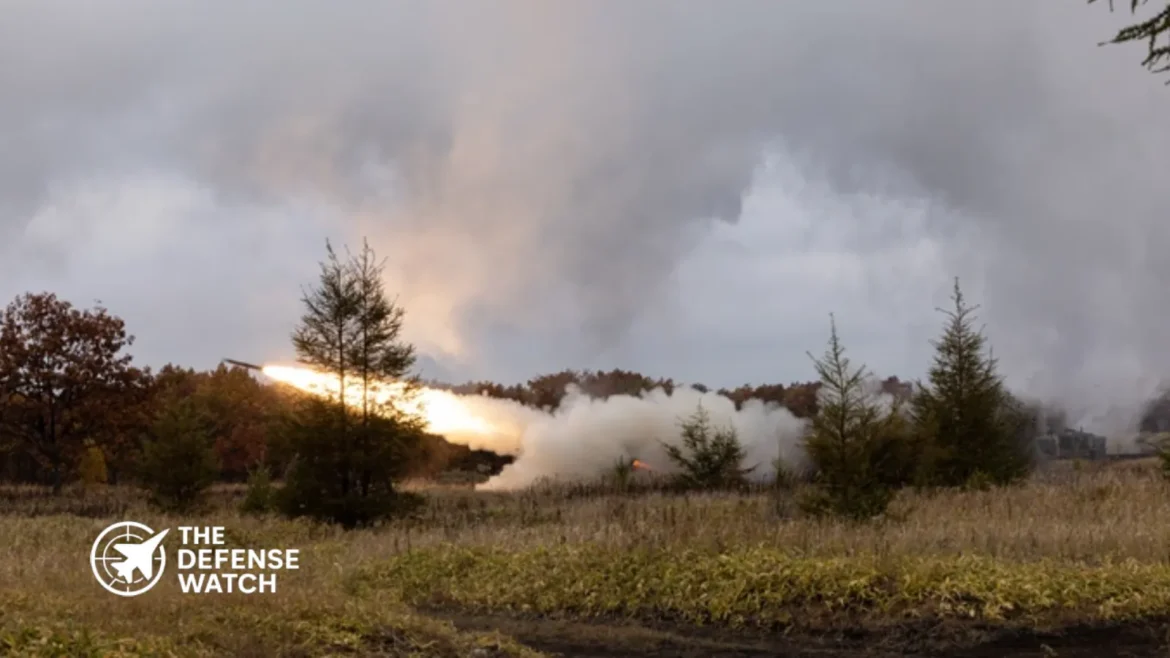
The PrSM is designed to replace the ATACMS system, offering improved range, accuracy, and flexibility. It is compatible with existing launch platforms, including the M270 Multiple Launch Rocket System and the M142 HIMARS.
The missile has already progressed through testing phases, and the Army has begun initial fielding efforts. Production increases aim to support both U.S. inventory requirements and potential future foreign military sales.
Why It Matters
The Precision Strike Missile production ramp up directly supports the Army’s ability to conduct long range precision fires at scale.
PrSM delivers several operational advantages:
It increases engagement range, allowing forces to strike targets deeper behind enemy lines.
It improves targeting flexibility with modern guidance systems.
It enables higher missile loadouts per launcher compared to ATACMS.These improvements translate into greater battlefield effectiveness, particularly in high intensity conflicts where rapid targeting and strike density are critical.
Strategic Implications
Expanding Precision Strike Missile production strengthens U.S. deterrence posture by enhancing deep strike capability.
The system allows ground forces to hold adversary assets at risk across extended distances. This reduces reliance on air superiority in early phases of conflict and complicates enemy planning.
In the Indo Pacific, long range fires are especially important due to vast distances and contested maritime zones. In Europe, they reinforce NATO’s ability to counter advanced anti access and area denial systems.
Higher production rates also ensure stockpile resilience, a key factor highlighted by recent conflicts where munitions consumption exceeded peacetime expectations.
Competitor View
China and Russia are likely to view increased Precision Strike Missile production as part of a broader U.S. effort to enhance long range strike capabilities.
Both countries have invested heavily in their own ground based missile systems, particularly those designed to target logistics hubs, airfields, and command infrastructure.
From their perspective, PrSM adds another layer to U.S. strike options, particularly when integrated with joint and allied systems.
This development reinforces an ongoing trend where long range precision fires play a central role in great power competition.
What To Watch Next
The next phase of the Precision Strike Missile program will focus on continued testing, incremental capability upgrades, and expanded procurement.
Future variants are expected to include enhanced seekers for maritime targets, enabling the missile to engage moving ships. This would significantly expand its operational role.
Observers should also watch for increased international interest, as allied nations look to acquire similar capabilities.
Production scaling will remain a key factor, especially as the Army seeks to build sufficient inventory levels for sustained operations.
Capability Gap
The Precision Strike Missile addresses a critical gap left by the aging ATACMS system.
ATACMS offers limited range and fewer missiles per launcher, constraining operational flexibility. PrSM improves both factors, enabling more efficient use of launch platforms and greater strike depth.
However, limitations remain. The system still depends on targeting data from external sensors, including satellites and reconnaissance platforms. This reliance highlights the importance of resilient command and control networks.
The Bottom Line
The Precision Strike Missile production increase signals a decisive U.S. Army shift toward scalable, long range strike power designed for high intensity conflict against advanced adversaries.
¦ KEY FACTS AT A GLANCE- Poland has operated F-16 fighter jets for 20 years, forming the backbone of its modern air force.
- The fleet supports NATO missions, including air policing and joint exercises in Eastern Europe.
- Lockheed Martin highlights interoperability and modernization as key advantages of the platform.
- Polish F-16s have been upgraded to maintain compatibility with evolving NATO standards.
- The milestone reflects Poland’s growing role in NATO’s eastern flank defense strategy.
Polish F-16 Service Strengthens NATO Airpower
The Polish F-16 service NATO milestone has reached a significant point as Poland marks 20 years of operating its F-16 fighter fleet, with Lockheed Martin emphasizing the aircraft’s role in strengthening NATO airpower and regional security. Since entering service in the mid-2000s, Poland’s F-16s have become a central pillar of its air defense and a key contributor to alliance operations across Eastern Europe.
According to the original report, Lockheed Martin highlighted how Poland’s investment in the F-16 platform has enhanced interoperability within NATO while ensuring a credible deterrent posture along the alliance’s eastern flank.
Two Decades of Polish F-16 Operations
Poland introduced the F-16 Fighting Falcon as part of a broader modernization effort to transition from Soviet-era platforms to NATO-compatible systems. The aircraft quickly became a cornerstone of the Polish Air Force, enabling the country to participate fully in allied missions and joint operations.
Over the past two decades, Polish F-16s have taken part in air policing missions, multinational exercises, and deterrence operations. Their presence has been particularly important in reinforcing NATO’s eastern defenses, especially amid heightened tensions in Eastern Europe.
The aircraft’s multirole capability allows Poland to conduct air superiority, ground attack, and reconnaissance missions using a single platform. This flexibility has proven critical as NATO adapts to a more complex threat environment that includes both conventional and hybrid warfare.
Interoperability and NATO Integration
One of the most important aspects of the Polish F-16 service NATO framework is interoperability. From the outset, Poland’s F-16 fleet was designed to integrate seamlessly with NATO command structures, communication systems, and operational procedures.
This compatibility allows Polish pilots to operate alongside other NATO air forces without technical or procedural barriers. Joint exercises, such as large-scale air drills across Europe, have further strengthened coordination and readiness.
Lockheed Martin noted that the F-16 platform continues to evolve through upgrades in avionics, weapons integration, and data-sharing capabilities. These enhancements ensure that the aircraft remains relevant in modern network-centric warfare environments.
Modernization and Capability Enhancements
To maintain operational effectiveness, Poland has pursued continuous upgrades to its F-16 fleet. These improvements include advanced radar systems, precision-guided munitions, and enhanced electronic warfare capabilities.
Modernization efforts also focus on improving survivability and mission effectiveness in contested environments. As threats evolve, particularly in the form of advanced air defense systems and electronic warfare, maintaining a technological edge remains essential.
The ongoing upgrades align with NATO’s broader push to modernize its air forces and ensure collective defense capabilities remain credible. Poland’s commitment to upgrading its F-16s reflects a long-term strategy to sustain high readiness levels.
Strategic Importance for Eastern Europe
Poland’s geographic position places it at the center of NATO’s eastern flank, making its airpower capabilities especially critical. The Polish F-16 service NATO framework contributes directly to regional stability by providing rapid response and deterrence capabilities.
The presence of a capable and modern air force helps deter potential adversaries and reassures neighboring NATO members. In recent years, the importance of airpower in Eastern Europe has grown significantly due to shifting geopolitical dynamics.
Poland’s F-16 fleet also supports rotational deployments and allied exercises, reinforcing NATO’s collective defense posture. This role has become increasingly important as the alliance seeks to maintain readiness in a rapidly changing security environment.
Analysis: Why the F-16 Still Matters in NATO
Even as fifth-generation aircraft like the F-35 Lightning II enter service, the F-16 remains a critical asset for NATO. Its proven reliability, lower operating costs, and upgrade potential make it a practical choice for many member states.
For Poland, the F-16 provides a balance between capability and affordability. While newer platforms offer advanced stealth features, the F-16 continues to deliver strong performance in most operational scenarios, especially when supported by modern upgrades.
This layered approach, combining legacy platforms with next-generation systems, reflects NATO’s broader strategy. It allows the alliance to maintain a large, capable force while gradually integrating more advanced technologies.
Analysis: Long-Term Implications for NATO Airpower
Looking ahead, Poland’s experience with the F-16 highlights the importance of sustained investment in airpower. Rather than relying solely on new acquisitions, continuous modernization of existing fleets can deliver significant strategic value.
The Polish F-16 service NATO model demonstrates how mid-life upgrades can extend the operational life of aircraft while maintaining high levels of readiness. This approach is particularly relevant for countries balancing budget constraints with growing security demands.
At the same time, Poland’s ongoing defense investments, including future integration of advanced platforms, suggest a dual-track strategy. Maintaining a strong F-16 fleet while preparing for next-generation capabilities ensures long-term resilience within NATO.
FAQs
How long has Poland operated F-16 fighter jets?Poland has operated F-16 aircraft for approximately 20 years since their introduction in the mid-2000s.
Why are Polish F-16s important for NATO?They enhance interoperability, support joint missions, and strengthen NATO’s eastern flank defense.
Are Poland’s F-16s still modern?Yes, they have undergone continuous upgrades to remain compatible with modern NATO standards.
Will Poland replace its F-16 fleet?Poland is adding newer platforms but is expected to keep upgraded F-16s in service for years.
What role do F-16s play in modern warfare?They provide multirole capabilities including air defense, strike missions, and reconnaissance.
¦ KEY FACTS AT A GLANCE- The US Army and Lockheed Martin conducted a successful flight test of the Precision Strike Missile Increment 2.
- The new variant is designed to strike moving land targets and maritime targets at long range.
- The capability strengthens US long range precision fires and supports joint operations against naval threats.
- PrSM is designed to launch from HIMARS and M270A2 launchers that already serve in US and allied forces.
- Increment 2 development marks a key step toward operational deployment later in the decade.
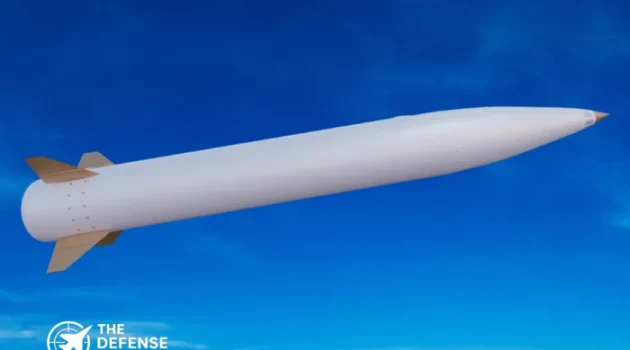
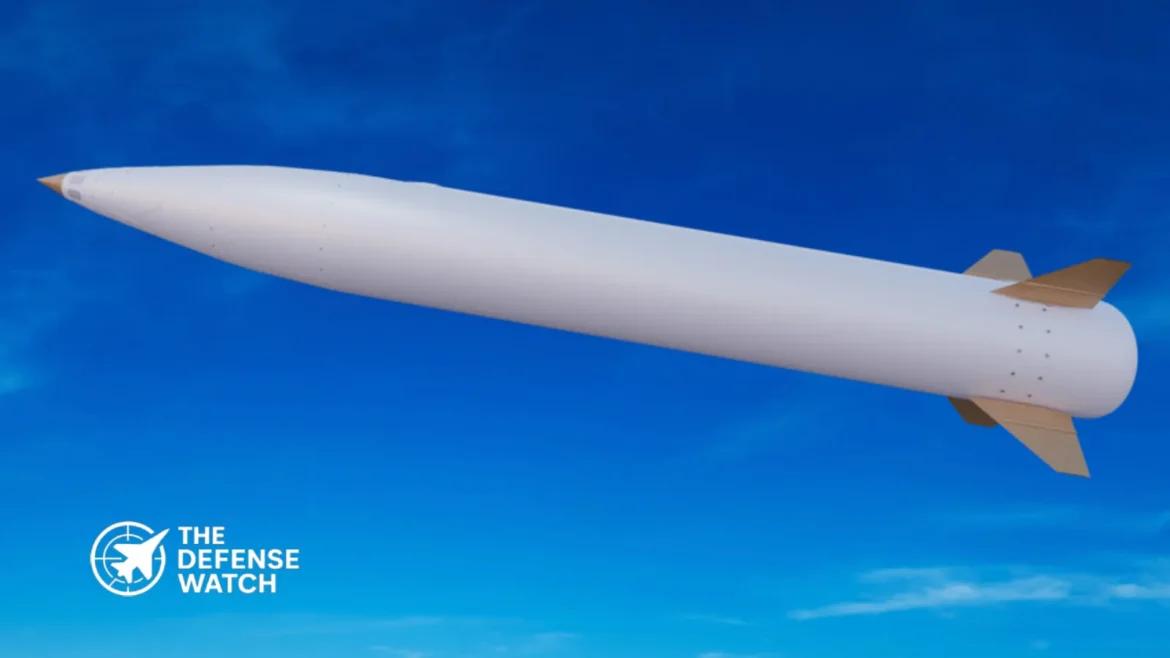
PrSM Increment 2 Test Marks Major Step In Long Range Precision Fires
The Precision Strike Missile Increment 2 recently completed a flight test conducted by the Lockheed Martin and the US Army, demonstrating progress toward a new long range weapon capable of striking moving land and maritime targets.
The test represents another milestone in the evolution of the Precision Strike Missile program, which is replacing the aging Army Tactical Missile System. The new missile aims to extend range, improve precision, and enable new targeting capabilities across modern battlefields.
According to Lockheed Martin, the latest test successfully demonstrated the missile’s ability to support future moving target engagement missions. The capability would significantly expand the operational role of US ground based long range fires.
The Big Picture
Long range precision fires remain one of the central priorities in US military modernization. Army planners see deep strike weapons as critical tools for penetrating contested environments where aircraft or naval platforms may face heavy defenses.
The Precision Strike Missile program sits at the center of this effort. The missile allows ground forces to strike high value targets hundreds of kilometers away while operating from mobile launchers.
The introduction of a moving target capability reflects changing operational demands. Modern conflicts increasingly involve dynamic targets such as mobile missile launchers, command vehicles, or naval vessels operating within contested littoral zones.
US defense leaders have repeatedly emphasized that future conflicts may require land forces to help control maritime spaces. The development of maritime strike capability for the Precision Strike Missile supports that concept.
What Is Happening
Engineers from Lockheed Martin and the US Army conducted the recent flight test of PrSM Increment 2 as part of the program’s development campaign.
The test evaluated the missile’s ability to engage moving targets. This represents a major upgrade over the baseline PrSM design, which focuses primarily on fixed land targets.
The missile is designed to launch from existing US Army platforms including the M142 HIMARS and the M270A2 MLRS. Both launchers already serve widely across the US military and allied forces.
Using these launch systems allows the Army to integrate the new missile without major infrastructure changes. This approach speeds up deployment while maintaining interoperability with existing units.
The new Increment 2 version is expected to add a multi mode seeker that allows the missile to track and engage moving targets, including maritime vessels.
Why It Matters
Moving target capability fundamentally changes how the Precision Strike Missile can be used in combat.
Traditional long range artillery weapons are effective against fixed targets such as infrastructure, airfields, or logistics hubs. However, modern warfare increasingly involves mobile systems that relocate quickly to avoid detection.
A missile capable of tracking moving targets allows the Army to strike assets such as mobile missile launchers, armored formations, and naval vessels.
This capability also strengthens joint operations with the US Navy and Air Force. Army launchers deployed on islands or coastal areas could provide long range maritime strike support during regional conflicts.
Military planners often refer to this concept as land based anti ship capability. It creates additional dilemmas for adversaries by expanding the number of platforms that can threaten naval forces.
Strategic Implications
The development of PrSM Increment 2 fits into a broader US strategy focused on distributed strike capabilities.
Instead of relying on a limited number of high value platforms, the US military is spreading long range weapons across multiple services and domains. Ground based missile systems add another layer to that approach.
This concept is particularly relevant in the Indo Pacific. Island chains across the region could host mobile missile units capable of targeting hostile ships operating nearby.
A network of such systems would complicate adversary planning and increase deterrence by expanding the threat envelope.
The mobility of launchers such as the M142 HIMARS also allows units to relocate quickly after firing, reducing vulnerability to counter attacks.
Competitor View
China and Russia closely monitor US developments in long range precision fires.
Both countries have invested heavily in their own land based missile forces designed to threaten ships and bases across large regions.
China in particular has developed multiple anti ship ballistic missile systems as part of its anti access and area denial strategy.
The addition of maritime targeting capability to the Precision Strike Missile suggests the United States is moving toward a more symmetrical capability set. Land based strike systems could help counter adversary naval operations in contested regions.
Regional rivals may interpret the development as another step in expanding the reach of US ground forces into maritime domains.
What To Watch Next
Testing for PrSM Increment 2 is expected to continue as engineers refine guidance systems and target tracking capabilities.
Future flight tests will likely focus on validating the missile’s seeker technology and its ability to engage maneuvering targets in complex environments.
The US Army also plans additional increments of the Precision Strike Missile program. Later versions may introduce further range improvements and expanded target sets.
Operational deployment timelines will depend on the results of ongoing testing and procurement decisions by the Department of Defense.
Capability Gap
The Precision Strike Missile program addresses several limitations of earlier US Army missile systems.
The aging Army Tactical Missile System offers limited missile capacity per launcher and lacks the advanced targeting flexibility required for modern battlefields.
PrSM increases the number of missiles carried per launcher while adding improved accuracy and digital integration.
Increment 2 specifically addresses the challenge of engaging moving targets. Without that capability, long range artillery systems struggle against mobile adversaries.
However, long range targeting still depends on reliable sensors and networked data sources. Accurate tracking data from drones, satellites, or reconnaissance aircraft remains essential for successful engagements.
The Bottom Line
The Precision Strike Missile Increment 2 test signals a major step toward giving US ground forces the ability to strike moving land and maritime targets at long range.