- Pentagon awards $700.4 million F-35 contract modification to Lockheed Martin.
- Funding covers long-lead materials for Lots 20 and 21 of the F-35 production program.
- Denmark and multiple international partners will receive aircraft from these production lots.
- Work spans several global facilities including the U.S., United Kingdom, and Italy through 2030.
- The contract reinforces multinational investment in the long-term F-35 fighter program.
F-35 Contract Modification Supports Denmark And Global Production
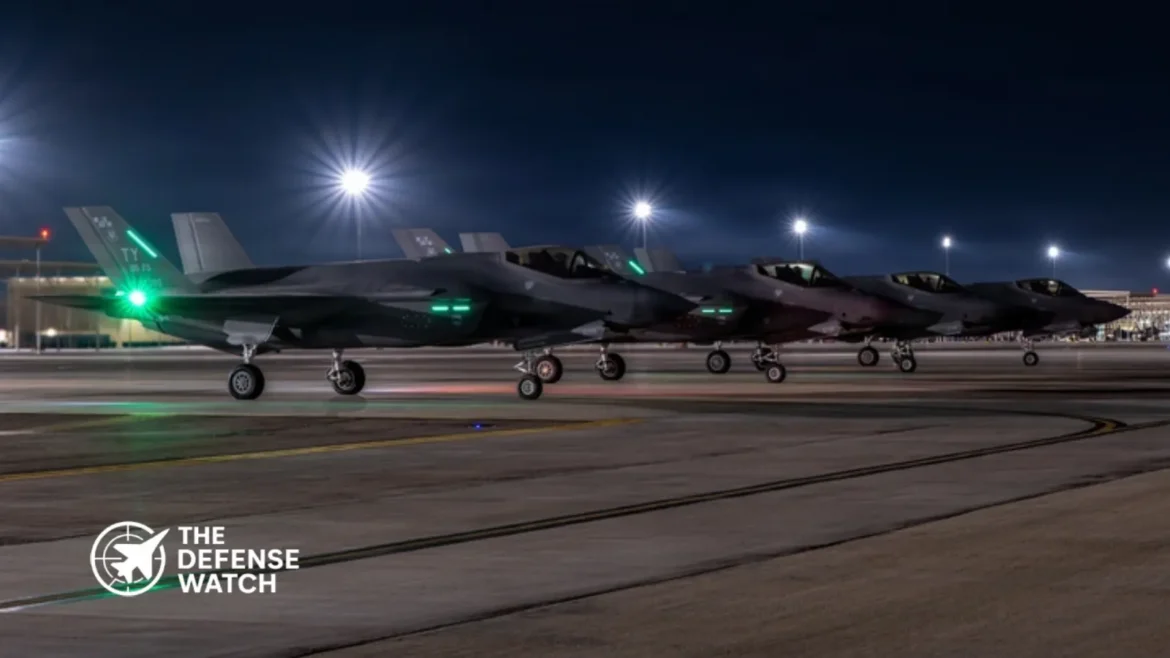
The F-35 contract modification awarded to Lockheed Martin provides $700.4 million to secure long-lead materials and components for upcoming production of the fifth-generation fighter. The funding supports aircraft planned for Denmark, as well as other international partners and Foreign Military Sales customers participating in the global F-35 program.
(adsbygoogle = window.adsbygoogle || []).push({});The Pentagon announced that the contract modification expands work under a previously awarded advanced acquisition contract. The effort focuses on procuring early components required for Lots 20 and 21 of the F-35 production line, ensuring the supply chain remains on schedule for aircraft deliveries later this decade.
The U.S. Naval Air Systems Command (NAVAIR) in Patuxent River, Maryland manages the contract.
The Big Picture
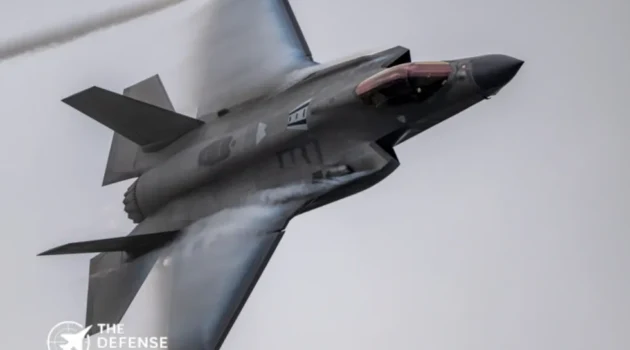
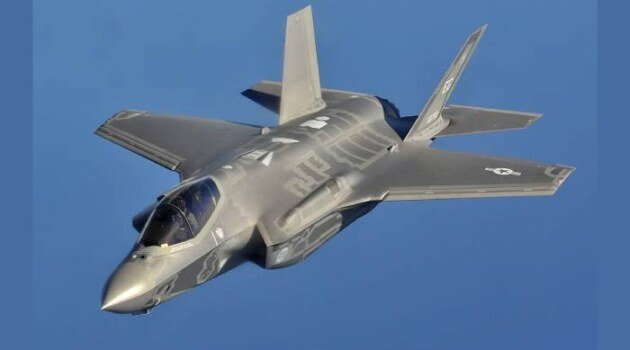
The new funding highlights the continued expansion of the F-35 Lightning II program, which remains the largest multinational fighter aircraft project in history. The aircraft serves as the backbone of U.S. and allied tactical airpower, combining stealth, sensor fusion, and networked warfare capabilities.
More than a dozen allied nations operate or plan to operate the F-35. These aircraft enable coalition forces to share targeting data, coordinate operations, and conduct joint missions across multiple domains.
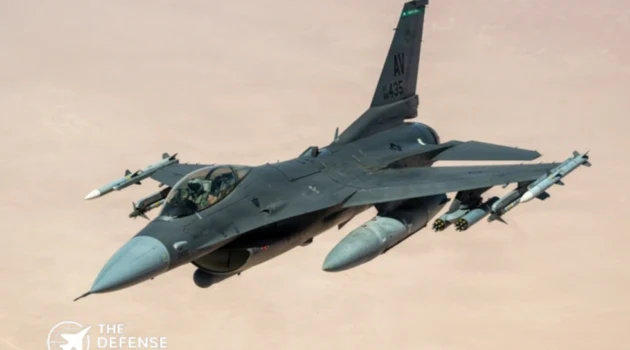
Denmark represents one of several NATO members transitioning to the aircraft as part of broader modernization efforts. Copenhagen selected the F-35A to replace its aging F-16 fleet, aligning its air combat capabilities with other NATO air forces.
Securing long-lead materials early in the production cycle helps stabilize manufacturing timelines and ensures partner nations receive aircraft without delays.
What’s Happening
The Department of Defense awarded the $700,400,000 modification to Lockheed Martin Aeronautics, based in Fort Worth, Texas.
The contract includes two major funding streams.
• $305.9 million comes from F-35 cooperative program partners.
• $394.5 million comes from Foreign Military Sales customers.These funds support the purchase of long-lead materials, parts, and components required for Lots 20 and 21 of F-35 production aircraft.
The work spans a global supply chain that reflects the program’s multinational structure.
Production and manufacturing will occur across several locations:
• Fort Worth, Texas – 59 percent
• El Segundo, California – 14 percent
• Warton, United Kingdom – 9 percent
• Cameri, Italy – 4 percent
• Orlando, Florida – 4 percent
• Nashua, New Hampshire – 3 percent
• Baltimore, Maryland – 3 percent
• San Diego, California – 2 percent
• Other locations outside the continental United States – 2 percentThe program expects work to continue through December 2030.
The Pentagon did not compete the contract modification because it expands an existing agreement tied directly to the F-35 program.
Why It Matters
Long-lead components play a critical role in advanced fighter production. These materials include specialized avionics hardware, structural components, propulsion system elements, and mission system electronics that require extended manufacturing timelines.
By funding these parts years in advance, the Pentagon and its international partners protect the production schedule against supply chain disruptions.
Defense officials increasingly view this approach as essential for large programs like the F-35. The aircraft contains thousands of high-precision components sourced from a complex network of suppliers across North America and Europe.
Early procurement reduces the risk of manufacturing bottlenecks that could delay aircraft deliveries.
For partner nations such as Denmark, maintaining predictable delivery timelines is particularly important as they phase out legacy fighter fleets.
Strategic Implications
The continued expansion of F-35 procurement strengthens NATO’s collective airpower architecture.
European nations increasingly rely on the aircraft to maintain air superiority against advanced air defense systems and modern fighter aircraft fielded by potential adversaries.
The F-35’s sensor fusion allows aircraft to detect and track threats while sharing data across coalition networks. This capability transforms the aircraft into both a fighter and an intelligence platform during combat operations.
For NATO planners, interoperability remains one of the program’s most valuable features. Aircraft from different nations can operate together seamlessly, allowing coalition air forces to coordinate missions with fewer integration challenges.
(adsbygoogle = window.adsbygoogle || []).push({});Denmark’s participation also reinforces regional security in Northern Europe and the Baltic region. F-35 aircraft operating from Danish bases can support NATO missions across the Baltic Sea, the North Atlantic, and the Arctic approaches.
Competitor View
Russia and China closely monitor the expansion of the F-35 fleet among U.S. allies.
Moscow has long criticized the deployment of fifth-generation fighters near its borders, particularly in Northern and Eastern Europe. The growing number of F-35 aircraft operating within NATO enhances the alliance’s ability to detect and track air and missile threats in contested environments.
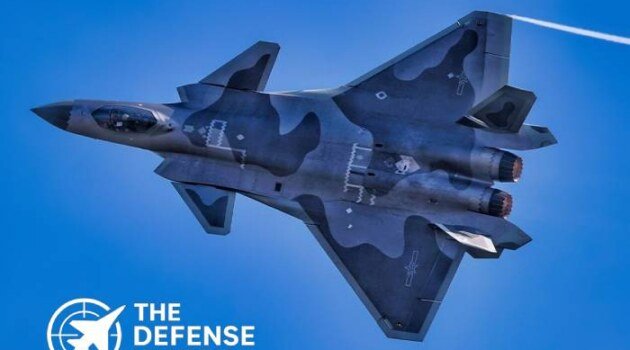
China views the aircraft primarily through the lens of global airpower competition. Beijing continues to expand its own fifth-generation fighter programs, including the J-20 and emerging stealth platforms.
The steady expansion of the F-35 user community signals that U.S. allies remain committed to a shared technological baseline for advanced air combat operations.
What To Watch Next
Several developments will shape the next phase of the F-35 program.
Production rates remain a key indicator of program stability. Lockheed Martin continues to work with the Pentagon to increase manufacturing efficiency while integrating new technology upgrades.
Upcoming aircraft will incorporate elements of the Block 4 modernization program, which introduces improved sensors, electronic warfare capabilities, and expanded weapons integration.
Denmark and other partner nations will gradually receive aircraft from these production lots as deliveries begin later in the decade.
Observers will also watch how supply chain reforms and long-lead procurement strategies affect production schedules.
Capability Gap
Modern air forces require platforms capable of operating in heavily defended airspace. Legacy fourth-generation fighters struggle against advanced radar systems and integrated air defense networks.
The F-35 addresses this gap through a combination of stealth design, advanced sensors, and networked battlefield awareness.
However, the aircraft remains part of a broader combat ecosystem. Its effectiveness depends on secure data links, aerial refueling support, and integration with other platforms such as drones and airborne early warning aircraft.
Sustaining the aircraft across multinational fleets also requires long-term investments in maintenance infrastructure and logistics networks.
The Bottom Line
The $700 million F-35 contract modification secures critical production materials and reinforces the long-term commitment of the United States and its allies to the world’s largest fifth-generation fighter program.
 ■ KEY FACTS AT A GLANCE
- ► Lockheed Martin is transitioning Flying Tactical AI from simulation and classroom environments into operational aircraft.
- ► The system is designed to assist pilots with tactical decision making in complex, high threat environments.
- ► AI models were trained and validated using digital simulations before flight integration.
- ► The development aligns with U.S. Department of Defense priorities for autonomy and human machine teaming.
- ► The move signals continued investment in AI enabled combat aircraft modernization.
Flying Tactical AI Moves From Simulation To Operational Cockpits
Flying Tactical AI is moving from classroom development into operational cockpits, according to new details released by Lockheed Martin, marking another step in the U.S. military’s push to embed artificial intelligence directly into combat aircraft.
The company outlined how its tactical AI systems, initially developed and refined in simulation environments and digital classrooms, are now being integrated into live flight environments. The effort reflects a broader Pentagon strategy to accelerate autonomy and decision support tools across air combat platforms.
Lockheed Martin said the transition demonstrates the maturity of its AI development pipeline, moving from academic modeling and pilot training environments into real aircraft systems designed for contested operations.
From Digital Classroom To Combat Environment
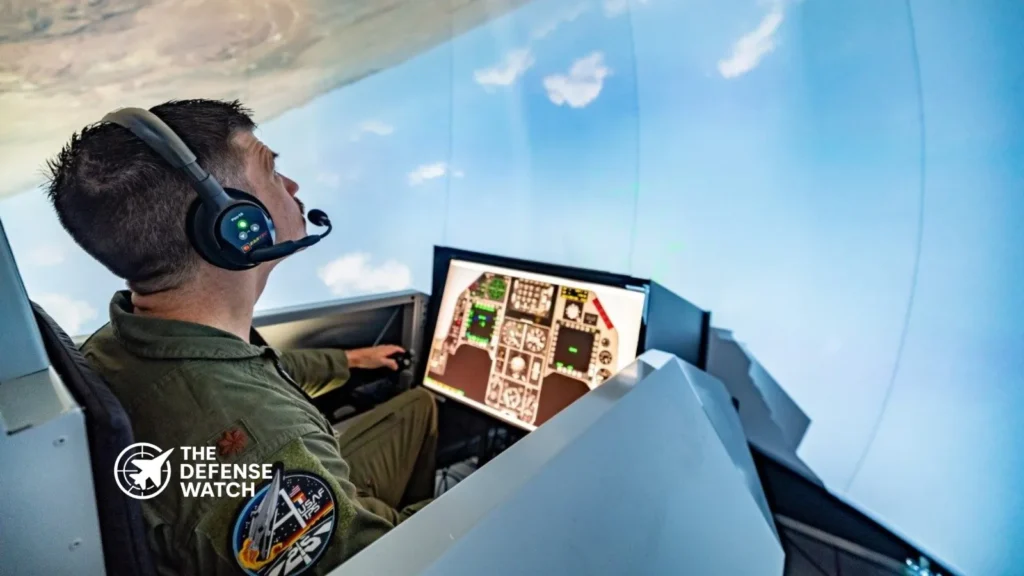
Lockheed Martin described Flying Tactical AI as a system built to assist aircrews in real time tactical scenarios. The company emphasized that early development focused on digital environments, including simulated air combat exercises and virtual mission rehearsals.
By using high fidelity models, engineers trained the AI to recognize threats, recommend maneuvers, and process battlefield data at machine speed. According to the company, this approach allowed developers to refine algorithms in controlled settings before exposing them to live flight conditions.

Image : Lockheed Martin This transition from classroom to cockpit reflects a methodical development process. Simulation first. Validation second. Flight integration last.
That layered approach mirrors the broader U.S. Department of Defense emphasis on digital engineering and model based systems development, a strategy aimed at shortening acquisition timelines while reducing operational risk.
What Flying Tactical AI Actually Does
Flying Tactical AI is designed to function as a decision support tool rather than a replacement for pilots. Lockheed Martin said the system can process large volumes of sensor data and provide tactical recommendations during complex engagements.
In modern air combat, pilots must absorb data from radar, infrared sensors, electronic warfare systems, datalinks, and off board assets. The volume of information can overwhelm even experienced crews. AI based systems aim to filter, prioritize, and present relevant options in seconds.
That capability is especially relevant for fifth generation and future sixth generation aircraft, where sensor fusion already plays a central role. Integrating Flying Tactical AI builds on that architecture by adding predictive and adaptive elements to mission execution.
The U.S. Air Force and Navy have both signaled that future air dominance concepts will rely heavily on human machine teaming, including collaborative combat aircraft and autonomous systems operating alongside crewed fighters. Flying Tactical AI fits squarely within that trajectory.
Alignment With Pentagon Autonomy Strategy
The development comes as the Department of Defense accelerates adoption of artificial intelligence across operational domains. Senior defense officials have repeatedly highlighted autonomy as a force multiplier, particularly in contested environments where reaction time is critical.
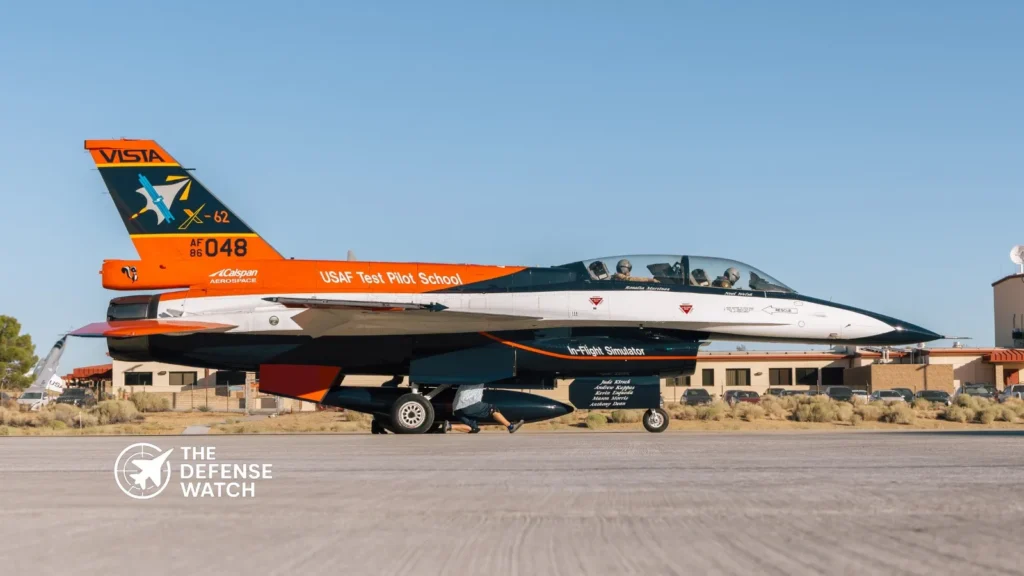
Image : Lockheed Martin Programs such as the Air Force push for collaborative combat aircraft and broader Joint All Domain Command and Control initiatives underscore this shift. While Lockheed Martin did not detail specific aircraft platforms in its feature, the company is a prime contractor on programs including the F 35 and advanced tactical aircraft projects.
Embedding Flying Tactical AI into cockpit systems could support future upgrades across multiple fleets, depending on service requirements and certification pathways.
From a strategic perspective, the integration of AI into tactical aviation is not just about automation. It is about compressing decision cycles. In high end conflict scenarios, the side that processes information faster and acts decisively gains a measurable advantage.
Risks, Testing, And Certification Challenges
Despite the progress, integrating Flying Tactical AI into operational aircraft presents technical and regulatory hurdles.
Flight certification standards for safety critical systems are stringent. Any AI driven tool must demonstrate reliability, transparency in decision logic, and compatibility with existing avionics. There are also cybersecurity considerations, particularly for systems that interface with mission data networks.
Lockheed Martin indicated that its structured development path, beginning in classroom and simulation environments, is designed to mitigate those risks. Gradual exposure to live flight testing allows engineers to validate system behavior under real world conditions.
For military operators, trust in the system is just as important as technical performance. Pilots must understand how recommendations are generated and retain final authority over tactical decisions.
Strategic Implications For U.S. Airpower
Flying Tactical AI represents more than a software upgrade. It signals how combat aviation is evolving.
Future air combat will likely involve smaller formations of crewed aircraft supported by autonomous platforms, advanced sensors, and networked effects. In that context, AI driven tactical tools could help maintain situational awareness across distributed operations.
If successfully fielded, Flying Tactical AI could contribute to reducing pilot workload, improving reaction time, and enhancing survivability in high threat environments. It also supports long term modernization goals centered on adaptability and rapid software updates rather than purely hardware driven upgrades.
For U.S. defense planners, the shift from classroom to cockpit marks a tangible milestone. It demonstrates that AI is moving beyond experimentation and into operational aviation ecosystems.
■ KEY FACTS AT A GLANCE- ► Lockheed Martin unveiled its “Integrated Shield” concept to connect U.S. air and missile defense systems across domains.
- ► The approach links sensors, shooters, and command networks for faster threat detection and interception.
- ► Designed to counter ballistic, cruise, and hypersonic threats facing the U.S. homeland and forward forces.
- ► Builds on existing systems including Aegis, THAAD, Patriot, and space-based sensors.
- ► Supports Pentagon efforts to create a layered, joint, and networked missile defense architecture.
Lockheed Martin Building The Nation’s Integrated Shield
Lockheed Martin’s Integrated Shield concept aims to unify U.S. missile defense capabilities into a single, connected architecture capable of countering modern threats.
In a recent feature published by Lockheed Martin, the company detailed how it plans to integrate sensors, interceptors, command systems, and data networks across land, sea, air, and space domains. The goal is to create a more responsive and resilient shield against increasingly complex missile threats.
The Integrated Shield strategy reflects a broader Pentagon push toward joint, all domain operations, where data flows seamlessly between services and platforms.
Connecting Sensors To Shooters
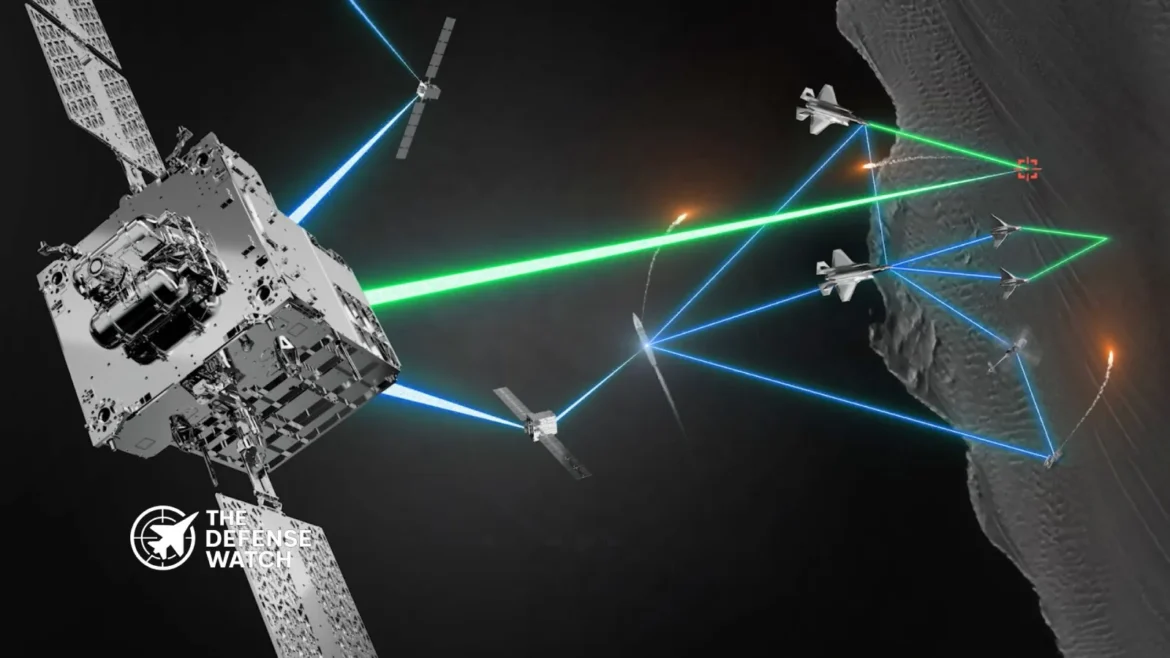
At the core of the Integrated Shield approach is integration. Rather than relying on isolated defense systems, the concept links radar systems, satellites, command centers, and interceptors into one coordinated network.
Lockheed Martin is a prime contractor behind several cornerstone systems in U.S. missile defense, including the Aegis Combat System, the Terminal High Altitude Area Defense, and the Patriot air defense system. Each plays a distinct role in layered defense, from exo atmospheric interception to terminal phase engagements.

Image : Lockheed Martin Under the Integrated Shield framework, these systems would share targeting data in near real time. A radar tracking a ballistic missile in one region could cue an interceptor in another. A satellite sensor detecting a hypersonic glide vehicle could pass data directly to a ground based or sea based shooter.
This type of networked defense aligns with the U.S. Department of Defense Joint All Domain Command and Control effort, known as Joint All-Domain Command and Control.
Addressing Evolving Threats
The Integrated Shield concept comes as adversaries expand their missile arsenals. Russia and China continue testing hypersonic glide vehicles and maneuverable reentry vehicles. North Korea advances its intercontinental ballistic missile program. Iran fields increasingly capable regional missile systems.
According to the U.S. Missile Defense Agency, the threat environment now includes ballistic, cruise, and hypersonic missiles operating across multiple trajectories and speeds. Traditional point defense systems alone are no longer sufficient.
Integrated Shield seeks to address that challenge through layered defense. Space based sensors detect launches early. Long range interceptors engage in midcourse. Terminal systems provide final layer protection for critical assets and population centers.
This layered architecture reduces reliance on any single system and improves redundancy if one layer fails.
Homeland And Forward Defense
While much of the discussion centers on homeland protection, the Integrated Shield concept also supports forward deployed U.S. forces and allied networks.

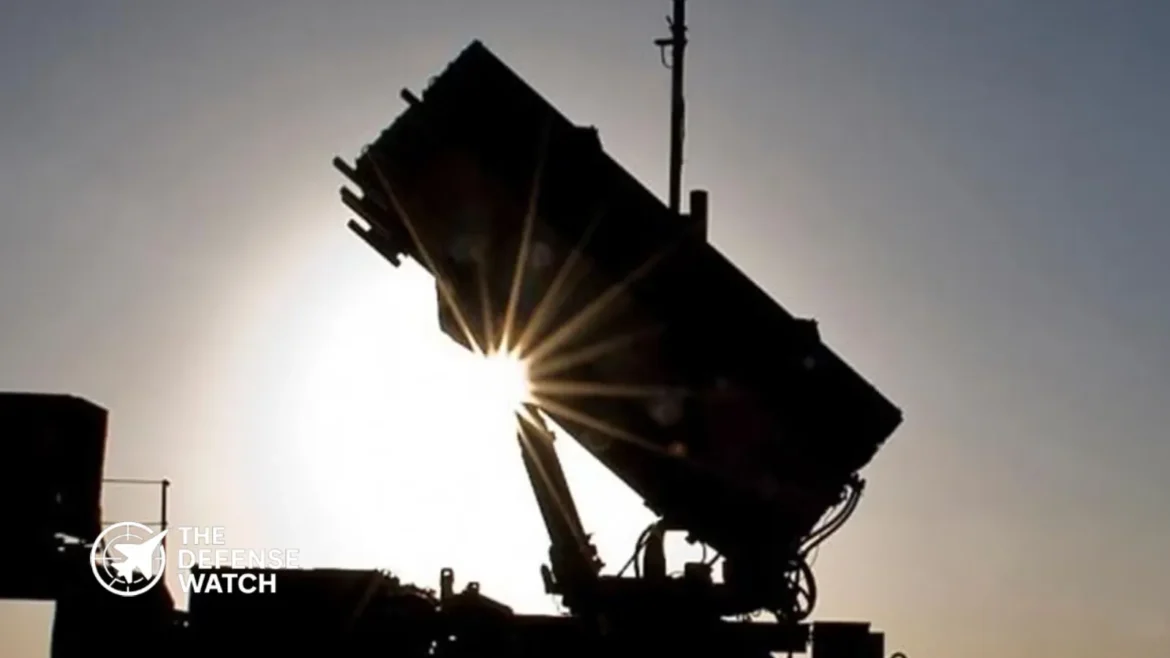
Image : Lockheed Martin The Missile Defense Agency continues to modernize homeland defense through upgrades to Ground based Midcourse Defense and next generation interceptors. Meanwhile, Aegis equipped ships and land based Aegis Ashore installations extend coverage to Europe and the Indo Pacific.
Lockheed Martin’s approach ties these elements together rather than treating them as separate silos. That integration is critical for coalition operations, where interoperability between U.S. and allied systems can determine response time during a crisis.
Industrial And Strategic Implications
From an industrial perspective, Integrated Shield positions Lockheed Martin as a central systems integrator in the evolving missile defense market. As the Pentagon increases funding for integrated battle management systems and sensor networks, companies able to bridge legacy platforms with new digital architectures stand to gain.
But integration also brings technical and policy challenges. Data security, cyber resilience, and cross service interoperability remain ongoing concerns. The Department of Defense has repeatedly stressed the need for open architecture standards to prevent vendor lock and ensure flexibility.
Integrated Shield appears designed to align with that open architecture approach, though long term success will depend on sustained government funding and multi service coordination.
Strategic Significance
The Integrated Shield strategy underscores a shift in U.S. defense planning. Missile defense is no longer viewed as a collection of separate programs. It is becoming a unified enterprise spanning space, cyber, air, land, and maritime domains.
For policymakers, the key question is whether integration can keep pace with rapidly evolving threats. Hypersonic weapons compress decision timelines. Saturation attacks complicate targeting. Electronic warfare threatens sensor reliability.
A networked, layered defense increases resilience, but it also increases system complexity.
Lockheed Martin’s Integrated Shield proposal reflects that reality. It acknowledges that future missile defense will depend as much on software, data fusion, and connectivity as on interceptors and radars.
As the Pentagon refines its missile defense strategy and Congress debates funding priorities, Integrated Shield will likely shape industry discussions around how to build a credible, layered deterrent for the coming decade.
■ KEY FACTS AT A GLANCE- ► Lockheed Martin has been awarded a US Foreign Military Sale contract to provide advanced C-130J training devices and simulator upgrades to the Royal Australian Air Force. :contentReference[oaicite:0]{index=0}
- ► Deliveries are scheduled to begin in 2029 and include Weapon Systems Trainers, an Enhanced Integrated Cockpit Systems Trainer, and Loadmaster Part-Task Trainer. :contentReference[oaicite:1]{index=1}
- ► New devices feature modern graphics, motion cueing and high-fidelity cockpit replication to mirror the actual C-130J flight environment. :contentReference[oaicite:2]{index=2}
- ► RAAF operates 12 C-130J-30 Super Hercules airlifters and is acquiring 20 more to expand tactical airlift capacity. :contentReference[oaicite:3]{index=3}
- ► Training upgrades support Australia’s larger force structure, preparing crews ahead of new aircraft deliveries. :contentReference[oaicite:4]{index=4}
Lockheed Martin to Deliver C-130J Training Devices to RAAF
Lockheed Martin will deliver advanced C-130J training devices and simulator upgrades to the Royal Australian Air Force under a US Foreign Military Sale contract awarded through Wright-Patterson Air Force Base, the company announced February 18.
The contract covers a suite of training systems designed to support the RAAF’s expanding C-130J fleet as Australia strengthens its tactical airlift capability. Deliveries are expected to begin in 2029.
What the Contract Includes
Under the agreement, Lockheed Martin will provide:
- Two Weapon Systems Trainers
- One Enhanced Integrated Cockpit Systems Trainer (EICS)
- A Loadmaster Part-Task Trainer
- Upgrades to existing Virtual Simulation and Virtual Maintenance Trainers
These devices incorporate modern graphics, motion cueing and high-fidelity cockpit replication that reflect the operational C-130J environment.
Building Training Capacity
Lockheed Martin’s role as original equipment manufacturer of the C-130J Super Hercules gives it system-level insight into replicating aircraft behavior for training. The company says its solutions aim to improve mission readiness from initial crew training.
The contract comes as the RAAF prepares for an expanded tactical transport fleet. Australia currently fields 12 C-130J-30 Super Hercules aircraft and, under a 2022 Foreign Military Sale agreement, ordered 20 additional airlifters, with first deliveries expected in 2028.
Strategic Context
The C-130J Super Hercules is a cornerstone of tactical airlift for militaries around the world. More than 560 aircraft have been delivered to operators in over two dozen countries, amassing millions of flight hours.
By investing in enhanced training infrastructure now, Australia aims to align its crew preparation with upcoming fleet growth. High-fidelity simulators and advanced training devices help reduce cost and risk associated with live flight hours while maintaining operational proficiency.
Training and Readiness
Loadmasters, pilots and support personnel will train on both hardware-based systems and virtual environments. Upgrades to virtual simulation and virtual maintenance trainers expand the scope of instruction beyond basic cockpit handling, covering mission planning and aircraft upkeep.
Forward Outlook
Australia’s tactical airlift capability plays a key role in regional operations, humanitarian assistance and alliance interoperability with the United States and other partners. Enhanced training systems are expected to help ensure crews are ready as the RAAF absorbs newly delivered aircraft beginning in the latter part of the decade.
■ KEY FACTS AT A GLANCE- ► Lockheed Martin Missiles and Fire Control in Grand Prairie, Texas, won a $33,800,000 cost-plus-incentive-fee award for PAC-3 test support.
- ► The work covers Lower Tier Air and Missile Defense Sensor PAC-3 ground and flight test support.
- ► Bids were solicited via the internet with a single offer received.
- ► Work locations and funding terms will be set with each order.
- ► Completion is expected by March 31, 2027.
The U.S. Army awarded Lockheed Martin Missiles and Fire Control a $33,800,000 cost‑plus‑incentive‑fee contract for Lower Tier Air and Missile Defense Sensor PAC‑3 system ground and flight test support, reinforcing ongoing efforts to sustain and improve the Army’s core missile defense capabilities.
The Army Contracting Command at Redstone Arsenal, Alabama, announced the award Feb. 18, 2026. The contract will fund engineering and test activities tied to the PAC‑3 missile family and associated sensor systems through March 31, 2027.
Lockheed Martin’s Missiles and Fire Control unit, based in Grand Prairie, Texas, will carry out ground and flight test support under a cost‑plus‑incentive‑fee arrangement. The sole bid was received after the solicitation was published online, a typical approach for specialized defense work of this type.
The PAC‑3 (Patriot Advanced Capability‑3) missile is a hit‑to‑kill interceptor used by the U.S. Army and allied forces for lower tier air and missile defense operations. PAC‑3 interceptors work with systems such as the Lower Tier Air and Missile Defense Sensor to detect, track and engage tactical ballistic threats, cruise missiles and aircraft at close ranges.
PAC‑3 variants include the Missile Segment Enhancement (MSE) interceptor, a more agile version with improved seeker and control surfaces. In September 2025 the Army awarded a separate production contract to Lockheed Martin for nearly 2,000 PAC‑3 MSE missiles and hardware, the largest production award in the program’s history.
The Lower Tier Air and Missile Defense Sensor is part of the broader Integrated Air and Missile Defense architecture, a network of radars, command systems and interceptors designed to respond to evolving threats. Sensor capability improvements can enhance PAC‑3 mission effectiveness by providing higher fidelity tracking data for fire control and engagement decisions.
The Army did not disclose specific funding allocations at the time of award. Funds and work sites will be identified as individual orders are issued over the contract term.
The award continues a series of recent Army contracts aimed at sustaining missile defense readiness. Earlier defense contracting announcements show Lockheed Martin remains a key partner in Army air and missile defense, with additional work spanning launcher support and other fire control systems.
KEY FACTS AT A GLANCE■ KEY FACTS AT A GLANCE- ► $10,282,459 cost-plus-fixed-fee contract modification awarded
- ► Supports JASSM Increased Inventory Integrated Production Team tooling and test equipment
- ► Total contract value rises to $409,832,456
- ► Work performed in Orlando, Florida
- ► Completion expected by Aug. 29, 2029
- ► Contracting activity: Air Force Life Cycle Management Center, Eglin AFB
Lockheed Martin JASSM Contract Modification Expands Production Capacity
The Lockheed Martin JASSM contract modification is adding $10.3 million to support production tooling and test equipment for the Joint Air-to-Surface Standoff Missile, according to a U.S. Department of Defense contract announcement.
(adsbygoogle = window.adsbygoogle || []).push({});The award, issued to Lockheed Martin Missiles and Fire Control in Orlando, Florida, modifies a previously awarded contract tied to the JASSM Increased Inventory Integrated Production Team, or IPT. The cost-plus-fixed-fee modification, identified as P00027, raises the cumulative contract value to $409,832,456, up from $399,549,997.
The contracting activity is the Air Force Life Cycle Management Center at Eglin Air Force Base.
Contract Details
The $10,282,459 modification supports tooling and test equipment required to sustain and expand production of the Joint Air-to-Surface Standoff Missile. Work will be performed in Orlando, Florida, and is expected to conclude by Aug. 29, 2029.
The contract falls under FA8682-19-C-0008, a long-running effort to increase missile inventory levels in response to sustained operational demand and evolving force structure requirements.
The Joint Air-to-Surface Standoff Missile, commonly known as JASSM, is a long-range, precision-guided cruise missile designed to strike high-value, well-defended targets. Developed by Lockheed Martin, the missile is a core element of U.S. Air Force deep strike capability.
According to the U.S. Air Force, JASSM provides a low-observable, fire-and-forget capability with a range exceeding 200 nautical miles in its baseline form. The extended-range variant, JASSM-ER, significantly increases that reach and is integrated across multiple U.S. aircraft platforms.
Supporting Increased Inventory Requirements
The Lockheed Martin JASSM contract modification aligns with broader Department of Defense efforts to expand precision munition stockpiles. Recent conflicts and global contingency planning have underscored the importance of maintaining sufficient inventories of long-range strike weapons.
(adsbygoogle = window.adsbygoogle || []).push({});The Increased Inventory IPT framework focuses on production scalability, industrial base resilience, and delivery timelines. Tooling and test equipment upgrades are critical to ensuring consistent output rates and quality control as production volumes rise.
The U.S. Air Force has identified long-range precision strike as a key component of its operational concepts, including Agile Combat Employment and distributed operations. JASSM is integrated on aircraft such as the F-15E Strike Eagle, F-16 Fighting Falcon, B-1B Lancer, and B-52H Stratofortress, according to official Air Force fact sheets.
Expanding production infrastructure now supports projected procurement profiles through the end of the decade.
Industrial Base And Strategic Context
The Lockheed Martin JASSM contract modification also reflects sustained investment in the U.S. defense industrial base. By funding tooling and testing capabilities, the Air Force is addressing potential bottlenecks that could slow missile deliveries in future surge scenarios.
(adsbygoogle = window.adsbygoogle || []).push({});Orlando, Florida, remains a major hub for Lockheed Martin Missiles and Fire Control operations. The site supports multiple precision strike and missile defense programs, contributing to both domestic and international customer requirements.
The Air Force Life Cycle Management Center at Eglin Air Force Base oversees cradle-to-grave management of numerous air-delivered weapons programs. Its role includes contracting, sustainment planning, modernization, and capability upgrades.
As global demand for stand-off precision weapons continues, maintaining reliable production lines is viewed as essential to deterrence and operational readiness.
U.S. Army Validates Extended-Range Precision Strike Capability
The U.S. Army has completed system qualification testing for the Extended-Range GMLRS Alternative Warhead variant after successfully firing the munition from an M270A2 launcher for the first time, marking a significant expansion of American rocket artillery capabilities. The test, conducted at White Sands Missile Range in New Mexico on January 30, 2026, validated the weapon’s precision, lethality, and seamless integration with existing launcher platforms.
(adsbygoogle = window.adsbygoogle || []).push({});The Extended-Range GMLRS reaches 150 kilometers, more than twice the 70-kilometer range of the standard GMLRS, according to Lockheed Martin, which developed the system. The milestone represents the culmination of a development program that began in 2017 as an engineering change proposal, designed to expand strike depth without requiring new launch vehicles or organizational changes.
The February 12 announcement by Lockheed Martin follows the successful January test and positions the weapon system for operational testing with U.S. Army soldiers during the first half of 2026, prior to fielding.
Alternative Warhead Variant Expands Target Set
The GMLRS Alternative Warhead contains approximately 182,000 pre-formed tungsten fragments, designed to defeat personnel and lightly protected targets while avoiding unexploded ordnance hazards associated with legacy submunition rounds. This design choice addresses coalition operational requirements and post-conflict stabilization concerns that have grown increasingly important in modern warfare.
The Alternative Warhead provides commanders with wide-area fragmentation effects against dispersed formations, soft vehicle parks, air defense support elements, and logistics nodes that are too spread out for unitary blast warheads to service efficiently. The weapon offers three detonation modes: height-of-burst above ground, point detonation on impact, or delayed detonation after impact for the Unitary variant.
(adsbygoogle = window.adsbygoogle || []).push({});“Extended Range GMLRS demonstrates how the Army and industry are working together to deliver meaningful capability at the pace of relevance,” said Lt. Gen. Frank Lozano, Portfolio Acquisition Executive Fires. The general emphasized that by building on a proven system and expanding range while maintaining precision, ER GMLRS gives commanders greater operational flexibility without introducing unnecessary complexity.
M270A2 Platform Integration Preserves Force Structure
The successful M270A2 launch demonstrates critical backward compatibility with upgraded launcher systems already in Army service. The M270A2 is a comprehensive recapitalization that adds a Common Fire Control System, improved crew protection, and a new 600-horsepower powerpack, modernizing a tracked platform built to keep pace with armored formations.
The successful launch from the M270A2 shows we can give warfighters a longer-range weapon on the rocket platform they already trust, extending strike capability without adding new logistics burdens,” said Dave Griser, vice president of Precision Fires Rockets at Lockheed Martin.
- (adsbygoogle = window.adsbygoogle || []).push({});
The M270A2 carries two six-rocket pods, enabling up to twelve rockets to be delivered in a rapid salvo before the vehicle displaces. The system’s compatibility with both M270A2 and M142 HIMARS launchers provides flexibility across different operational environments, with the tracked M270A2 designed to accompany armored formations while the lighter HIMARS offers road-mobile deployment options.
Strategic Implications For Deep Fires
The 112-kilometer flight test validated the system’s precision, launcher integration, and lethality, according to Lockheed Martin. The extended range allows warfighters to engage high-value, time-critical targets with broader battlespace coverage, supporting counterair defense suppression and delivering effects on demand against both point and area targets.
The weapon system fills a critical gap between standard GMLRS and theater-range strike weapons such as the Army Tactical Missile System (ATACMS) and the emerging Precision Strike Missile (PrSM). In an operational environment where high-volume fires consumption has moved from theoretical to actual, a 150-kilometer precision rocket represents a cost-effective middle tier that doesn’t require ballistic missiles for every deep target.
(adsbygoogle = window.adsbygoogle || []).push({});For HIMARS, the advantage is even sharper, as a lighter, road-mobile launcher can now hold deep targets at risk while operating from more permissive movement corridors. This capability proves particularly relevant in contested environments where counter-battery threats force rapid displacement after firing.
Combat-Proven Foundation
The GMLRS family has accumulated extensive operational experience since its introduction in 2005. By December 2021, more than 50,000 GMLRS rockets had been produced, with annual production exceeding 9,000 units. The system has demonstrated exceptional performance in Ukraine, where long-range rocket artillery has been employed to strike command posts, ammunition depots, and bridges far behind front lines.
The weapon’s GPS-aided inertial navigation system and flight control accomplished through four forward-mounted canards driven by electromechanical actuators have established a reputation for precision and reliability. The Extended-Range variant maintains these characteristics while doubling effective range through rocket motor improvements and aerodynamic refinements.
Development Timeline And Production Status
The Extended-Range GMLRS program faced several challenges during development, including design obstacles, temporary facility closures due to COVID-19 restrictions, and production line disruptions. The Department of Operational Test & Evaluation approved the Test and Evaluation Master Plan annex in August 2020, establishing the framework for qualification testing.
In October 2024, Lockheed Martin Missiles and Fire Control secured a contract worth up to $4.1 billion for production of extended-range GMLRS rockets and associated hardware. This contract positions the company to begin full-rate production following successful completion of operational testing by Army soldiers in 2026.
International Partnership Opportunities
Rising demand across Europe and the Indo-Pacific will drive multinational fires training and sustainment initiatives, reinforcing U.S. and partner security networks according to Lockheed Martin. Multiple NATO allies already operate M270 launchers and GMLRS systems, creating a built-in customer base for the extended-range variant.
(adsbygoogle = window.adsbygoogle || []).push({});The United Kingdom is currently conducting live-fire testing of its first M270A2 launchers as part of a £2 billion Land Deep Fires Programme. Britain plans to field 76 upgraded launchers and 9 recovery vehicles, incorporating British-specific modifications including composite rubber tracks and advanced sensor suites. Other NATO members including Germany, France, Italy, and Finland operate earlier M270 variants that could be upgraded to fire Extended-Range GMLRS.
The system’s compatibility with existing launchers significantly reduces the barriers to international adoption, as partner nations can upgrade munitions without replacing launch platforms or retraining crews on new systems.
Next Steps Toward Fielding
U.S. Army soldiers will conduct operational testing of the Extended-Range GMLRS Alternative Warhead variant during the first half of 2026. These soldier-conducted evaluations will assess the weapon’s performance in tactically realistic scenarios and validate procedures for employment by operational units.
(adsbygoogle = window.adsbygoogle || []).push({});Following successful operational testing, the system is expected to enter fielding to Army rocket artillery battalions. The Army has not announced specific unit assignments or fielding timelines, though the urgent operational requirement for extended-range precision fires suggests an accelerated deployment schedule.
The completion of Alternative Warhead qualification also advances development of the Unitary variant, which employs a single high-explosive warhead for precision strikes against hardened point targets. Both variants share common guidance systems and aerodynamic characteristics, streamlining qualification testing and production.
Lockheed Martin Wins Aegis Sustainment Extension for Hobart Class Destroyers
Lockheed Martin has won a nine-month extension to its Aegis Sustainment Program supporting the Royal Australian Navy’s Hobart class guided missile destroyers, keeping critical combat system support in place into 2026.
Sustainment Contract Details and Scope
Lockheed Martin Australia’s Sydney-based Aegis team will continue providing a broad set of engineering and technical services to maintain the destroyers’ Aegis combat systems. The work includes system upgrades, configuration alignment, detailed design coordination, material condition assessments, and baseline management to support ongoing operational capability.
This award marks the fourth extension of the sustainment contract, underscoring the long-term cooperation between Lockheed Martin and the Royal Australian Navy.
Under the new deal, the sustainment effort will expand its footprint in Adelaide with additional technical services and logistics roles. Some deactivated equipment will be returned to inventory, supporting the broader destroyer modernization program and workforce continuity at Osborne Naval Shipyard.
Strategic Context for Hobart Class Combat System Support
The Hobart class destroyers serve as Australia’s principal air warfare destroyers. Each ship integrates the Aegis combat system paired with AN/SPY-1D(V) phased-array radar and the MK 41 Vertical Launch System, forming the backbone of the Royal Australian Navy’s surface combat air defense capability.
Sustainment of the Aegis system is crucial as the fleet transitions through broader capability upgrades under Australia’s SEA 4000 Phase 6 and Destroyer Capability Enhancement programs. These upgrades aim to enhance combat management, radar tracking, and interoperability with allied navies.
Workforce and Industrial Impact
Lockheed Martin’s sustainment activities support a local skilled workforce across Australia. Expanding the sustainment footprint in South Australia and creating new supply-support roles contribute to industrial continuity and capability development within the domestic defense sector.
Lockheed Martin Australia’s leadership said maintaining close collaboration with the Royal Australian Navy and delivering high-level engineering support are key goals of the extended contract.
Broader Program and Recent Operations
The extension follows recent work overseas, including Lockheed Martin teams supporting maintenance activities on HMAS Brisbane during its deployment in Yokosuka, Japan. These efforts help keep the destroyer at peak readiness.
The Hobart class modernization program runs in parallel with sustainment work, aligning with Australia’s long-term plan to maintain a capable and modern surface combatant fleet in the Indo-Pacific.
What Comes Next
With this extension, Lockheed Martin will continue its role supporting the Hobart class combat systems into 2026, ensuring the destroyers remain ready to meet evolving operational demands and maintain interoperability with allied maritime forces.
Lockheed Martin Introduces Next-Generation Undersea Warfare Platform
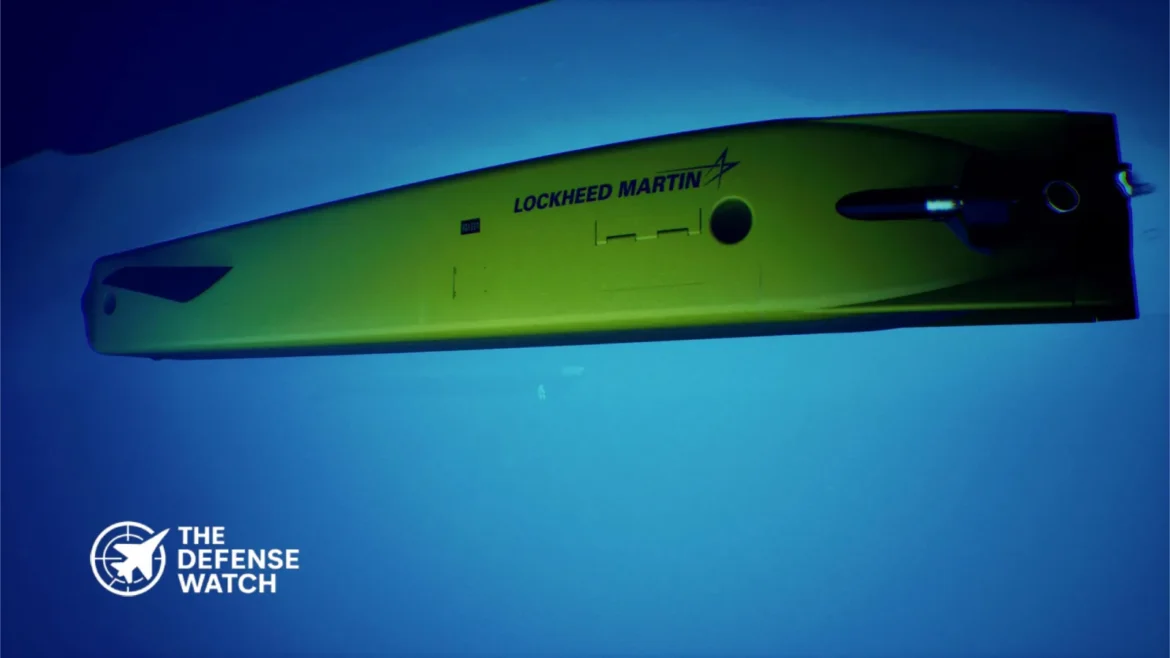
Lockheed Martin announced the Lamprey Multi-Mission Autonomous Undersea Vehicle (MMAUV) on February 9, 2026, introducing a transformative platform designed to enhance U.S. Navy undersea warfare capabilities. The internally-funded system represents a significant advancement in autonomous maritime technology, combining novel charging mechanisms with flexible mission capabilities.
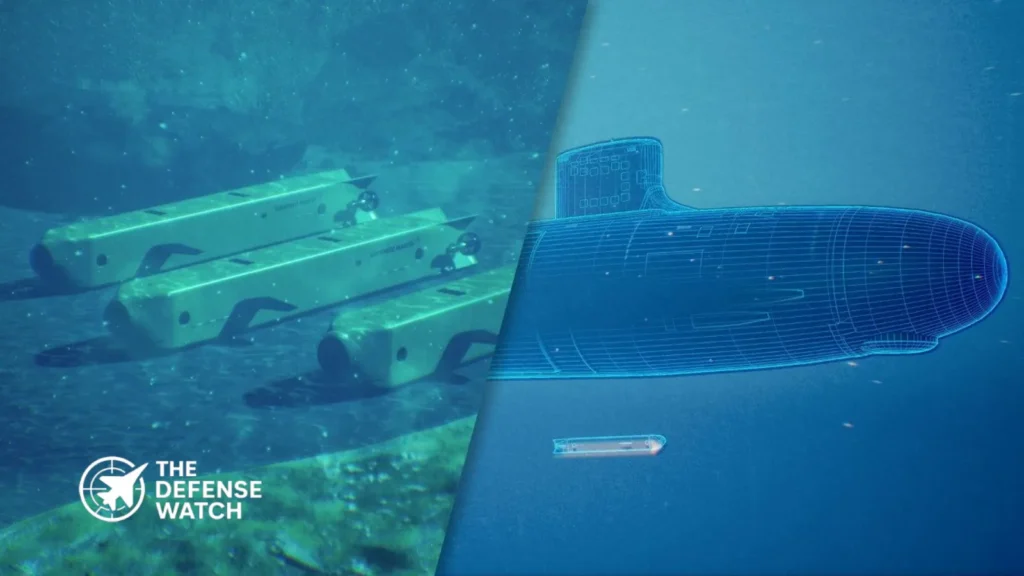
The Lamprey MMAUV employs a parasitic attachment system that enables the vehicle to dock onto host submarines or surface vessels without requiring modifications to the carrier platform. Once attached, the system utilizes built-in hydrogenators to recharge its batteries during transit, arriving in theater with full operational capacity. This approach addresses a critical challenge in unmanned undersea vehicle deployment: maintaining operational range while preserving stealth and reducing logistical footprint.
Image Source: lockheedmartin Paul Lemmo, vice president and general manager of Sensors, Effectors & Mission Systems at Lockheed Martin, emphasized the platform’s rapid development timeline. The company’s internal funding structure enabled accelerated iteration cycles, allowing engineers to deliver a multi-mission system capable of autonomous detection, disruption, deception, and engagement operations.
Technical Capabilities And Mission Profiles
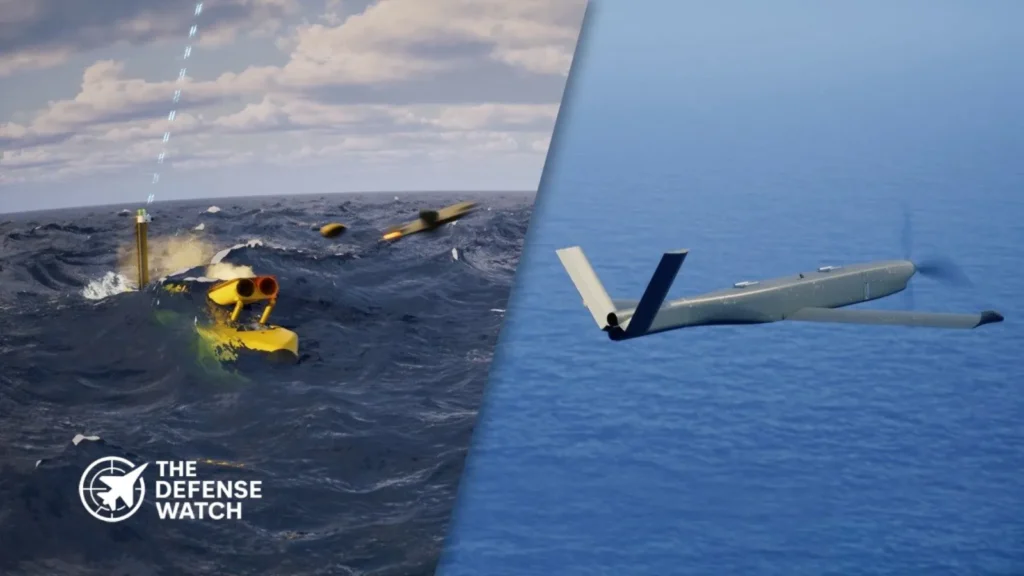
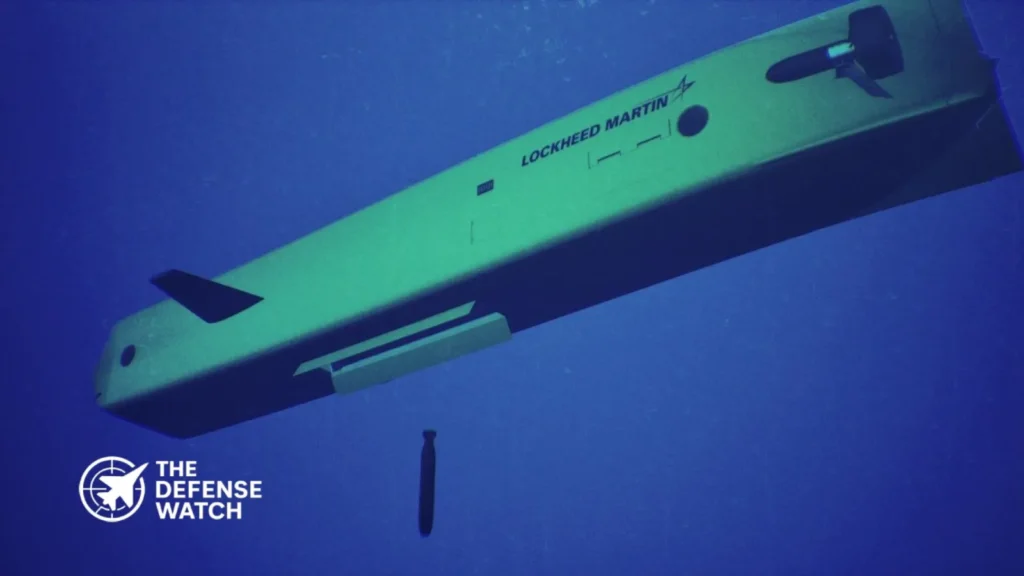
The Lamprey MMAUV features an open-architecture payload bay designed for mission-specific configuration. Operators can deploy anti-submarine torpedoes, unmanned aerial vehicle launchers, or specialized sensors depending on operational requirements. This modular approach enables rapid mission reconfiguration without extensive platform modifications.
The system supports two primary mission categories: Assured Access and Sea Denial. Assured Access operations include intelligence collection, persistent surveillance, and precision strike capabilities. Sea Denial missions encompass electronic disruption, decoy deployment, and kinetic engagement against maritime threats.
The vehicle’s autonomous capabilities extend beyond basic navigation. The Lamprey MMAUV can execute multi-intelligence collection, perform targeting operations, and deploy equipment to seafloor locations. These capabilities position the platform as a force multiplier for conventional submarine and surface operations in contested maritime environments.
Strategic Implications For Naval Operations
The Lamprey MMAUV addresses evolving challenges in undersea warfare, particularly in regions where traditional platforms face increasing counter-detection risks. By providing persistent autonomous presence at reduced operational costs compared to manned platforms, the system enables commanders to maintain area awareness and denial capabilities in high-threat environments.
Image Source: lockheedmartin The platform’s parasitic charging mechanism eliminates the need for dedicated support infrastructure in forward operating areas. Host platforms can transport multiple vehicles without significant modifications, enabling scalable deployment based on mission requirements. This capability proves particularly valuable in denied or contested waters where traditional refueling and maintenance operations pose unacceptable risks.
Lockheed Martin’s development leverages decades of undersea domain expertise, including work on submarine systems, acoustic sensors, and autonomous navigation technologies. The company has not disclosed specific performance parameters such as maximum range, depth ratings, or payload capacity, consistent with classification considerations for advanced military systems.
Dual-Mode Operations Enhance Tactical Flexibility
The Lamprey MMAUV’s ability to transition between Assured Access and Sea Denial configurations provides operational commanders with tactical flexibility. In Assured Access mode, the vehicle operates as a stealthy intelligence platform, gathering data and maintaining surveillance in areas where traditional intelligence assets cannot safely operate. The precision strike capability enables rapid response to emerging threats without exposing manned platforms.
Sea Denial operations leverage the platform’s electronic warfare systems and decoy capabilities. By deploying countermeasures and electronic disruption systems, the Lamprey MMAUV can complicate adversary targeting solutions and create tactical ambiguity. The kinetic attack capability provides commanders with a responsive strike option that minimizes risk to manned assets.
Development Timeline And Acquisition Status
Lockheed Martin developed the Lamprey MMAUV through internal research and development funding, bypassing traditional government acquisition timelines. This approach enabled rapid prototyping and testing without the regulatory oversight typical of Navy-funded programs. The company has not announced any current Navy contracts for production systems, though the platform’s capabilities align with stated service requirements for unmanned undersea vehicles.
The U.S. Navy has prioritized unmanned systems development as part of its distributed maritime operations concept. Service leaders have emphasized the need for affordable, expendable platforms capable of operating in high-threat environments where manned submarines face increased risk. The Lamprey MMAUV appears positioned to address these requirements, though formal evaluation and testing by Navy operators will determine actual procurement decisions.
Lockheed Martin has established a dedicated information portal at lockheedmartin.com/mmauv for additional technical details and capability demonstrations. The company announced the platform at its Palm Beach, Florida facility, which serves as a hub for maritime systems development and testing.
Industry Context And Competitive Landscape
The unveiling of the Lamprey MMAUV occurs amid intensifying global competition in undersea warfare technology. Multiple defense contractors are developing large displacement unmanned undersea vehicles capable of extended endurance operations. Boeing’s Orca Extra Large Unmanned Undersea Vehicle, currently under development for the Navy, represents a comparable platform with different technical approaches.
Image Source: lockheedmartin International competitors are also advancing autonomous undersea capabilities. Allied nations including Australia, the United Kingdom, and Japan have active development programs for unmanned maritime systems. China has demonstrated various unmanned underwater vehicles in recent years, though specific capabilities remain difficult to assess through open sources.
The Lamprey MMAUV’s parasitic charging system represents a distinct technical approach that differentiates it from competing platforms. Traditional unmanned undersea vehicles typically rely on onboard battery capacity or require surface charging operations. The ability to recharge while attached to host platforms extends operational range and reduces detectability during mission execution.
Future Development And Allied Integration
Lockheed Martin has positioned the Lamprey MMAUV as available to allied nations, consistent with U.S. export policy for undersea warfare systems. Integration with allied naval forces would require Foreign Military Sales approval and potential technology transfer agreements. The modular payload design may facilitate integration with allied weapons systems and sensors, though specific international partnerships have not been announced.
The company’s emphasis on open architecture suggests potential for capability growth through software updates and payload modifications. As threat environments evolve, operators could adapt the platform’s mission packages without extensive hardware redesign. This approach aligns with Navy preferences for upgradeable systems capable of maintaining relevance across multi-decade service lives.
U.S Army First LRIP 2 Sentinel A4 Radar Delivered
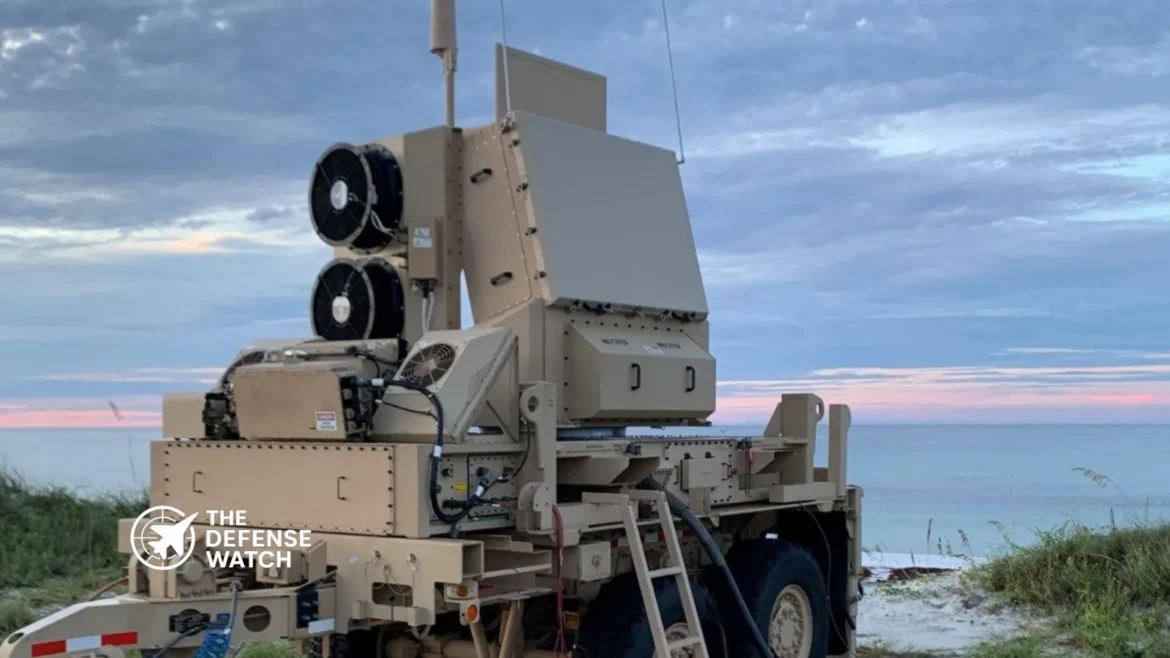
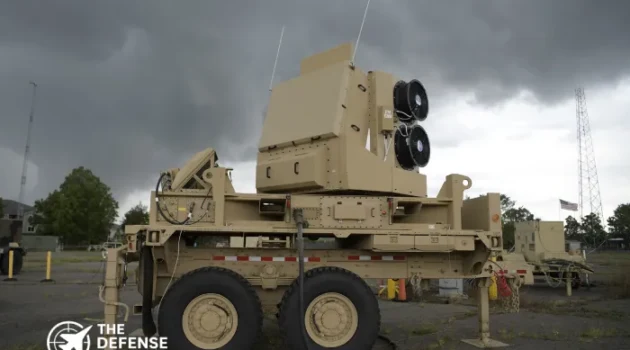
The U.S Army has received the first Sentinel A4 radar system under its Low Rate Initial Production 2 contract with Lockheed Martin, marking a key step in fielding the next-generation air defense radar. The delivery follows completion of the first phase of Initial Operational Test and Evaluation (IOT E) and moves the program closer to full rate production.
New Radar Replaces Sentinel A3
The Sentinel A4 is set to replace the legacy Sentinel A3 radar. The Army and Lockheed Martin say the updated system uses a modern digital active electronically scanned array, improved signal processing, and open architecture to support layered air defense.
The AESA design gives wide 360 degree coverage and improved tracking performance across a range of airborne threats, including cruise missiles, unmanned aerial systems, fixed and rotary wing aircraft, and indirect fire threats such as rockets, artillery, and mortars.
First of 19 Systems in LRIP 2
Lockheed Martin delivered the first of 19 planned LRIP 2 units. The IOT E Phase I process integrated Sentinel A4 with the Army’s Forward Area Air Defense Command and Control network, validating interoperability with existing command and control systems.
This staged delivery approach lets the Army receive early operational systems while continuing tests to refine performance and tactics ahead of a transition to larger scale production.
Designed for Modern Threats
The Sentinel A4 builds on the Army’s broader air and missile defense modernization effort, which includes advanced sensors and networked battle management systems. The radar’s digital architecture supports integration with the Integrated Air and Missile Defense Battle Command System, enabling shared situational data across defense networks.
Lockheed Martin and Army officials emphasize the improved detection range and tracking accuracy over the older A3 model, and the capacity to operate in complex terrain and contested environments.
Path Toward Full Rate Production
Delivery of the LRIP 2 unit and completion of the initial testing phase are milestones on the path toward full rate production. Lockheed Martin has indicated it will ramp up production once testing and operational validation support the Army’s requirements.
Further deliveries under LRIP 2 will support ongoing testing and early fielding to Army units. These will help confirm system performance and support tactics development before the Army moves into larger scale production.