UK F-35B Procurement Reaches First Major Milestone
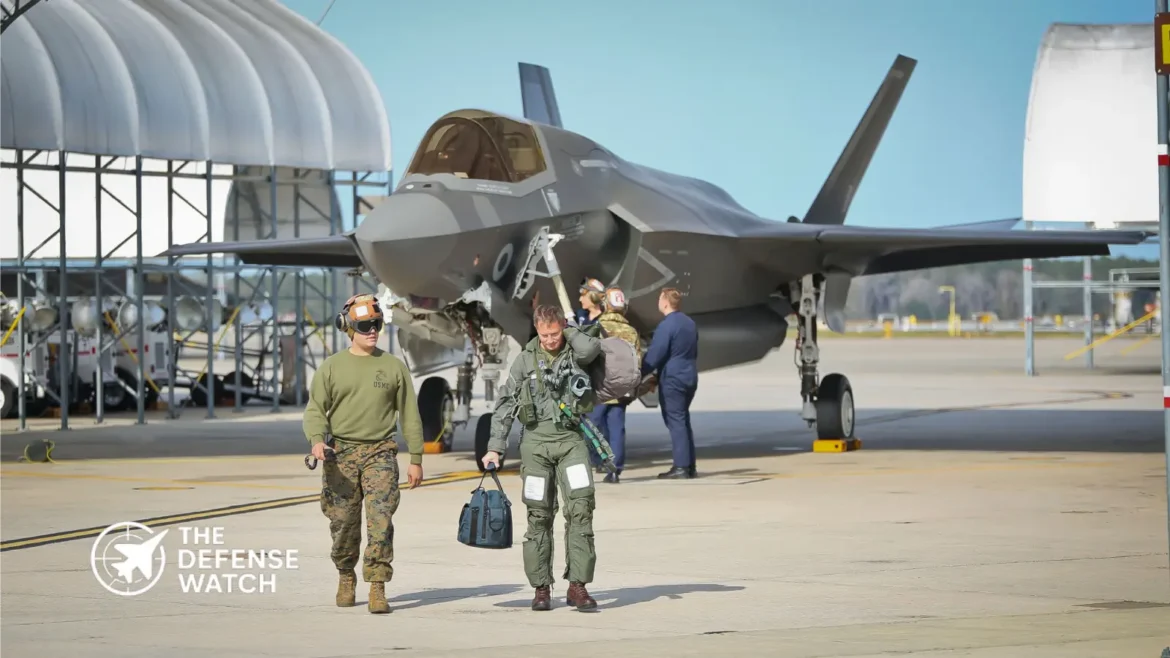
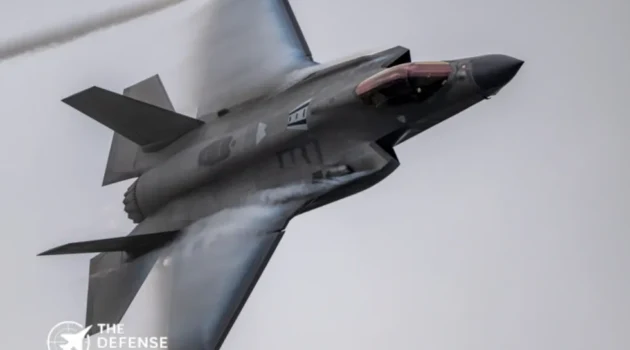
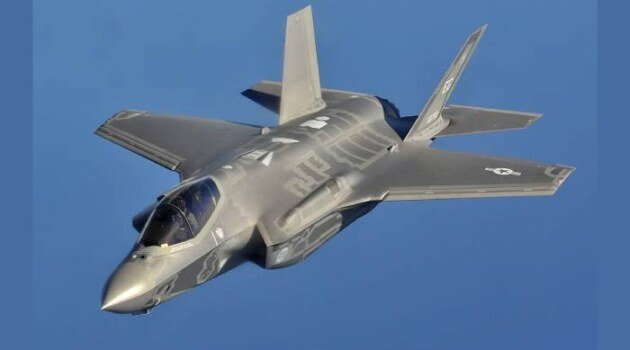
UK F-35B procurement has entered a new phase after the delivery of the 46th, 47th and 48th aircraft, completing Britain’s first contracted batch of fifth-generation fighters. The milestone marks the end of the initial acquisition phase for the Royal Air Force and Royal Navy Lightning Force.
- The United Kingdom has received aircraft numbers 46, 47 and 48, completing its initial F-35B procurement phase.
- The three jets arrived at RAF Marham, home of Britain’s Lightning Force.
- The F-35B is jointly operated by the Royal Air Force and Royal Navy for land and carrier operations.
- London still states a long-term goal of acquiring up to 138 F-35 aircraft.
- No confirmed timetable has been announced for purchases beyond the first 48 jets.
The aircraft were delivered to RAF Marham in Norfolk, the main operating base for the UK fleet. Britain’s F-35B force is jointly manned by the RAF and Royal Navy and forms the core of the country’s carrier air wing aboard the Queen Elizabeth-class aircraft carriers.
Why The F-35B Matters To Britain
The F-35B variant is the short takeoff and vertical landing model designed for operations from smaller decks and austere runways. That makes it essential to UK carrier strike operations because Britain’s aircraft carriers were built without catapult launch systems.
In practical terms, the jet gives London a modern stealth aircraft able to deploy from sea without relying on foreign bases. That provides political flexibility during crises and supports NATO maritime operations in Europe, the Mediterranean, and beyond.
For the United States and allied planners, Britain’s F-35B fleet is also valuable because it adds another carrier-capable fifth-generation force that can integrate with U.S. Marine Corps and NATO air assets.
Procurement Complete, But Bigger Questions Remain
While the first phase of UK F-35B procurement is now complete, future numbers remain unresolved. Successive British governments have maintained a headline ambition of 138 F-35 aircraft over the life of the program, but no firm contract has yet been announced for the next batch.

Image Source: Royal Air Force That matters because fleet size determines operational tempo. A carrier may deploy 24 or more aircraft during high-end operations, but training, maintenance cycles, and homeland requirements reduce the number available at any given time.
A fleet of 48 delivered aircraft, with one previously lost in a 2021 crash, gives Britain meaningful capability, but limited depth for sustained simultaneous operations.
Upgrade Delays Could Shape Combat Value
Another issue is software modernization. Wider F-35 Block 4 upgrades are needed for expanded weapons integration and future capability growth. British weapons such as Meteor air-to-air missiles and SPEAR 3 precision strike weapons are tied to that roadmap.
That means future combat power depends not only on buying more jets, but on receiving timely upgrades, weapons clearance, and sustainment support.
Strategic Outlook
The completion of the first UK F-35B procurement phase is a clear achievement for London, but it is also a decision point. Britain must now choose whether to expand its carrier air wings, diversify with more land-based fighters, or shift resources toward future programs such as GCAP.
For now, the delivery of jet number 48 confirms that the UK remains one of the leading non-U.S. operators of the F-35 and a key contributor to NATO airpower.


Lockheed Martin MH-60R Radar Upgrade Advances Navy Helicopter Fleet
The MH-60R radar upgrade program moved forward after Lockheed Martin was awarded a $99,481,601 cost-plus-fixed-fee order to modernize the AN/APS-153 radar system installed on the MH-60R Seahawk. The award supports both domestic U.S. Navy aircraft and export variants sold through Foreign Military Sales channels.
According to the Pentagon contract announcement, the work includes design, development, integration, and testing of a radar data processor technology refresh. That indicates the focus is not merely maintenance, but deeper electronics modernization intended to keep the system effective against evolving maritime threats.
- Lockheed Martin received a $99.48 million U.S. Navy contract for MH-60R radar modernization.
- The work covers design, development, integration, and testing of a radar data processor technology refresh.
- The upgrade applies to the MH-60R AN/APS-153 radar system for U.S. and Foreign Military Sales variants.
- Work will be completed in New York and Connecticut through April 2031.
- Contracting authority is Naval Air Systems Command, Patuxent River, Maryland.
The order was issued under a previously established basic ordering agreement and was not openly competed.
Why The MH-60R Radar Upgrade Matters
The MH-60R Seahawk is one of the U.S. Navy’s most important multi-mission helicopters. It performs anti-submarine warfare, anti-surface warfare, surveillance, search and rescue, and fleet support operations from destroyers, cruisers, frigates, and shore bases.
Its AN/APS-153 radar plays a central role in detecting ships, small surface contacts, weather patterns, and navigation hazards. In contested waters, radar processing speed and reliability can directly affect mission success.
Refreshing the radar data processor likely brings three practical benefits:
- Faster target tracking and data handling
- Better reliability and lower sustainment burden
- Improved compatibility with future software upgrades
That matters because many U.S. military platforms now rely on incremental electronics refreshes rather than entirely new airframes. It is often cheaper and faster to modernize sensors than replace fleets.
Strategic Value For U.S. Navy And Allies
The contract also includes Foreign Military Sales variants, highlighting continued international demand for the MH-60R Seahawk. Countries operating the aircraft increasingly need common standards, spare parts support, and updated mission systems.
This approach helps allied navies remain interoperable with U.S. forces during coalition maritime operations. Shared radar architecture can simplify training, logistics, and software support over time.
For Washington, export support also strengthens long-term defense relationships while reducing per-unit sustainment costs across a broader user base.
Where The Work Will Be Done
Contract performance will take place in:
- Farmingdale, New York (68%)
- Owego, New York (31%)
- Stratford, Connecticut (1%)
The project is expected to run through April 2031, showing the scale and technical depth of the modernization effort.
Funding Breakdown
At the time of award, the Navy obligated:
- $6.5 million in Fiscal Year 2026 Navy research, development, test and evaluation funds
- $14.5 million in Foreign Military Sales funds
None of those funds expire at the end of the current fiscal year, allowing longer execution timelines.
Broader Defense Trend
The MH-60R radar upgrade reflects a wider Pentagon trend: extending proven platforms through sensor, processor, and software modernization. Rather than waiting years for next-generation aircraft, the military is improving fielded systems now.
For naval aviation, that means helicopters already deployed worldwide can remain relevant in increasingly crowded and contested maritime environments.

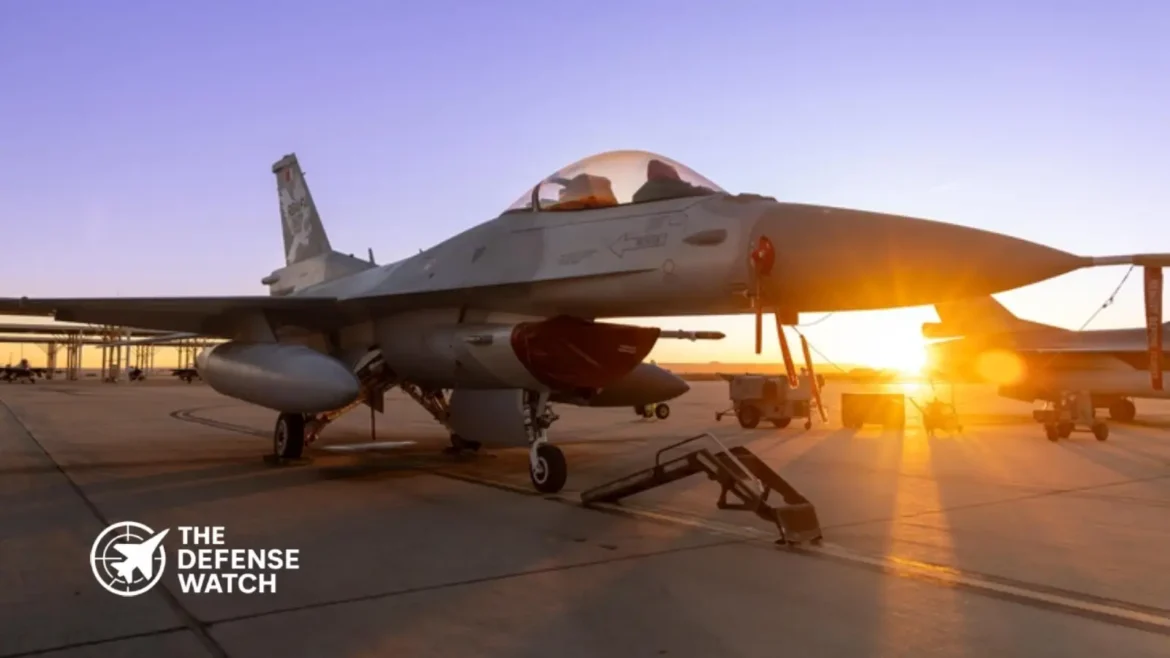
Peru F-16 Block 70 Purchase Signals Major Airpower Shift
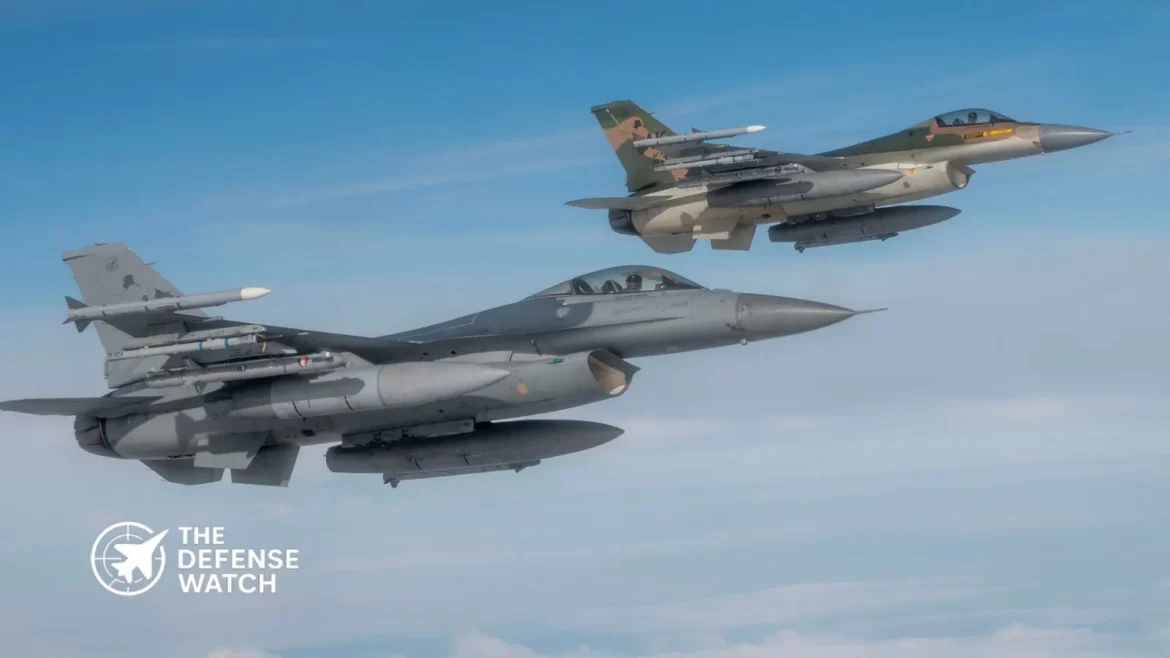
Peru F-16 Block 70 acquisition plans could significantly upgrade the country’s air combat capability as Lima explores the purchase of 12 advanced fighter aircraft from Lockheed Martin. The reported proposal would replace aging legacy fleets and give the Peruvian Air Force a modern multirole platform with stronger deterrence value.
- Peru is considering the purchase of 12 F-16 Block 70 multirole fighter aircraft.
- The Block 70 variant includes AESA radar, modern avionics, and extended service life.
- The deal would mark one of Latin America’s most important fighter recapitalization efforts.
- Peru seeks to replace aging Soviet and French-origin combat aircraft fleets.
- A final decision would shape Peru’s airpower posture for decades.
The potential deal reflects a broader trend across Latin America, where several nations are reassessing airpower readiness amid aging fleets, sustainment challenges, and rising operational demands.
The Big Picture
Latin American air forces have long faced delayed modernization due to budget pressure, political turnover, and maintenance costs. Many fleets now rely on aircraft introduced decades ago. That creates readiness gaps in air sovereignty, border patrol, maritime surveillance support, and crisis response.
For Peru, combat aviation remains strategically important. The country has a large territory, Pacific coastline, mountainous geography, and remote regions that require rapid-response air assets. A modern fighter fleet supports both national defense and peacetime security missions.
The proposed Peru F-16 Block 70 move would align Lima with a growing list of nations selecting Western fourth-generation-plus aircraft with lower risk than more expensive fifth-generation options.
What’s Happening
According to reporting cited by Defence Industry Europe, Lockheed Martin outlined Peru’s planned purchase of 12 F-16 Block 70 fighters. No final contract value or delivery schedule has been publicly confirmed.
Peru currently operates mixed legacy fleets including Russian-origin MiG-29 fighters and French Mirage 2000 aircraft. Both types have modernization potential, but long-term sustainment becomes increasingly expensive as fleets age and supply chains tighten.
The F-16 Block 70 package typically includes:
- AN/APG-83 AESA radar
- Advanced mission computer
- Modern cockpit displays
- Precision strike integration
- Improved electronic warfare systems
- Structural life extension up to 12,000 flight hours
Why It Matters
The F-16 remains one of the world’s most widely supported fighter platforms. That matters because aircraft capability alone does not determine readiness. Training pipelines, spare parts access, software upgrades, and weapons integration often decide long-term value.
For Peru, the Peru F-16 Block 70 option could reduce logistical complexity by moving toward a scalable, globally supported platform.
It would also improve interoperability with regional and international partners that already operate the F-16.
Strategic Implications
A successful acquisition would strengthen Peru’s deterrence posture without dramatically altering the regional balance of power. Instead, it would likely be viewed as a normalization step after years of deferred recapitalization.
Modern fighters provide better reaction times, improved sensor range, and stronger survivability. They also allow more effective maritime monitoring over Pacific approaches and faster response to unauthorized air activity.
Competitor View
Regional militaries will likely watch the program through a readiness lens rather than an arms-race lens. Countries operating legacy fleets may see Peru’s move as evidence that sustainment pressure is forcing overdue replacement decisions.
Russia could also view the shift as another example of long-term erosion in legacy Soviet equipment influence within export markets historically open to mixed sourcing.
What To Watch Next
Key indicators now include:
- Government funding approval
- Foreign Military Sales pathway details
- Weapons package selection
- Pilot training arrangements
- Infrastructure upgrades
- Delivery timeline and industrial participation
Capability Gap
Peru needs to close the gap between aging aircraft availability and modern mission demands. Older fleets can remain lethal, but readiness often falls when maintenance hours rise and spare parts become scarce.
The F-16 does not eliminate all challenges. New aircraft require pilot conversion, base upgrades, sustainment funding, and long-term procurement discipline.
The Bottom Line
Peru’s planned F-16 Block 70 purchase would be less about prestige and more about restoring credible, sustainable air combat readiness for the next generation.


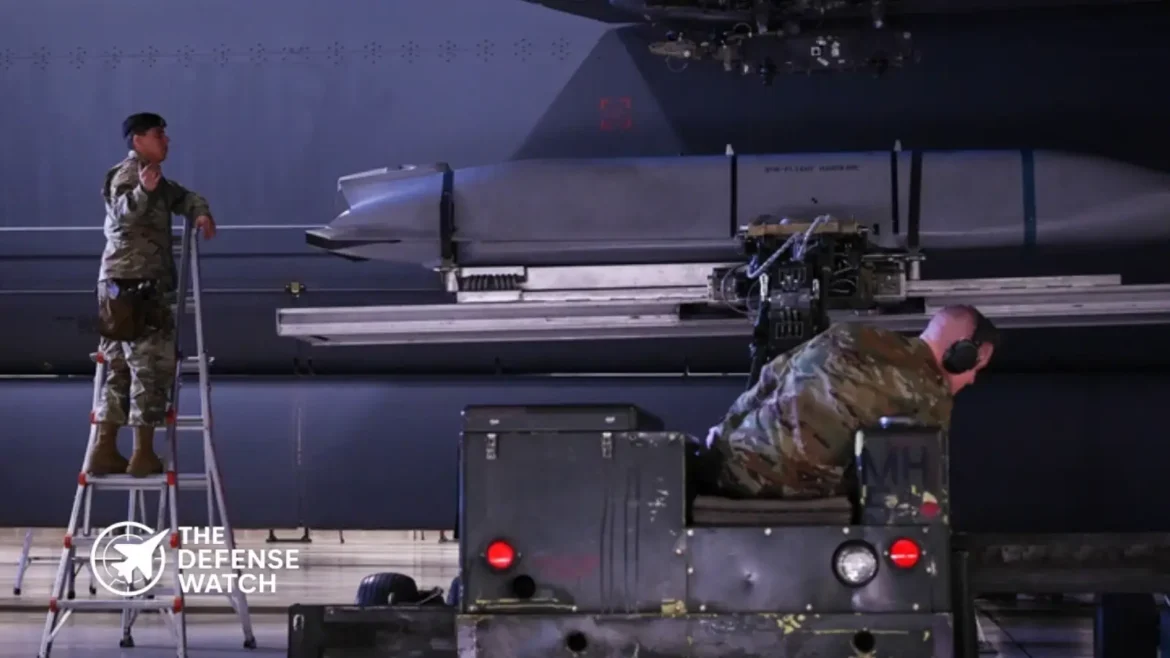
U.S. Air Force Expands JASSM Cruise Missile Procurement
The JASSM cruise missiles program is set for a major expansion after the U.S. Air Force disclosed plans to purchase nearly 4,300 additional weapons through fiscal year 2031, according to budget reporting and defense industry coverage. The move follows recent U.S. combat operations against Iran that reportedly placed heavy demand on long-range precision strike inventories.
- U.S. Air Force plans to acquire nearly 4,300 additional AGM-158 JASSM missiles through fiscal year 2031.
- FY2027 procurement request rises sharply to 821 missiles, up from far lower recent annual levels.
- Program value is projected at roughly $20 billion across the planning period.
- Recent strikes against Iran highlighted how quickly precision munition inventories can be consumed.
- JASSM remains central to U.S. plans for contested theaters including the Indo-Pacific.
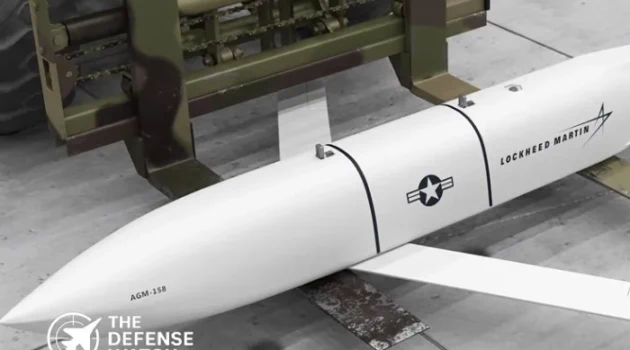
The missile involved is the AGM-158 Joint Air-to-Surface Standoff Missile, commonly known as JASSM. Built by Lockheed Martin, it is designed to strike defended targets from outside enemy air defense range. Its low observable design and precision guidance make it one of the U.S. military’s most important conventional deep-strike weapons.
Why The Pentagon Is Buying More JASSM Missiles Now
The timing matters. Recent reporting indicated the United States drew heavily on JASSM-ER inventories during operations tied to the Iran conflict, including redeployments from other theaters. That raised wider concerns about surge capacity if another crisis emerged in the Indo-Pacific or Europe.
This new procurement plan suggests the Pentagon is shifting from peacetime inventory management toward wartime replenishment logic.
That is strategically significant for three reasons:
- Modern wars consume precision weapons fast
Long-range missiles are often used in opening strikes against radar sites, command centers, air bases, and hardened targets. - Production takes time
Advanced cruise missiles require electronics, propulsion systems, seekers, and skilled labor. Output cannot be doubled overnight. - China contingency planning remains central
U.S. planners continue to view the Pacific as the pacing theater, where standoff strike weapons would be critical.
What Is JASSM And Why It Matters
The baseline AGM-158A has a range of roughly 230 miles, while the extended-range JASSM-ER can exceed 575 miles. The missile carries a 1,000-pound class penetrator warhead and uses GPS, inertial navigation, and terminal seekers for precision attack.
It can be launched by multiple aircraft, including:
That broad integration gives commanders flexible launch options across multiple bases and regions.
Industrial Base Challenge Still Remains
Even with more funding, missile production capacity remains a constraint. Expanding output depends on suppliers of rocket motors, microelectronics, guidance components, and final assembly lines.
This is one of the clearest lessons from the Ukraine war and Middle East operations: stockpiles matter, but so does the ability to replace losses quickly.
For Washington, the 4,300-missile buy is not just a weapons order. It is a signal that sustained conflict planning has returned.
Strategic Outlook
The planned JASSM buildup shows the U.S. Air Force expects future conflicts to require larger inventories of survivable, long-range munitions. Whether aimed at deterring Iran, Russia, or China, the message is clear: precision strike capacity is now a core measure of military readiness.
- Modern wars consume precision weapons fast
Space Force Closes Out GPS III Program With Most Advanced Navigation Satellite Ever Launched
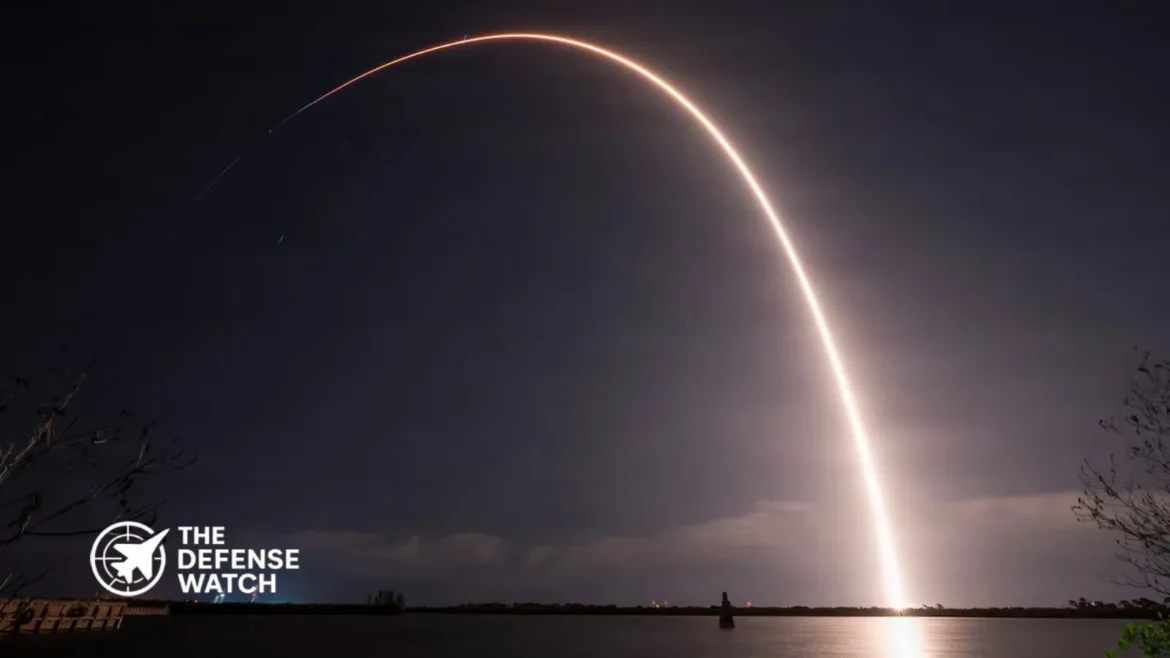
The U.S. Space Force successfully launched the GPS III-8 mission — Space Vehicle 10 (SV10) — delivering the final GPS III satellite to orbit and bringing to a close the service’s most ambitious navigation satellite modernization effort to date. The completed constellation marks 32 active satellites, with additional vehicles held on orbit in reserve, giving the U.S. military and its allies the most jam-resistant, high-precision global positioning architecture ever deployed.
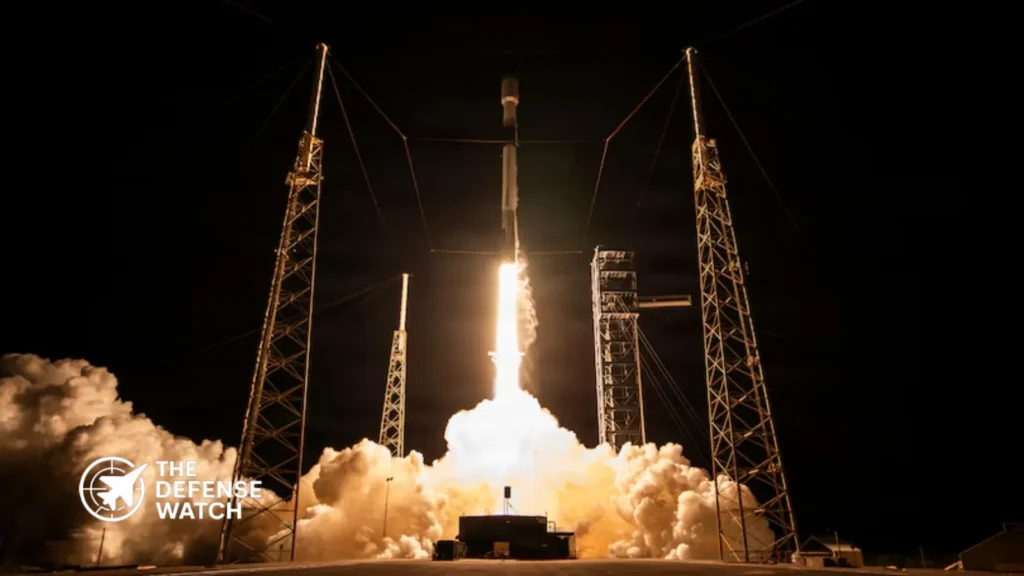
- GPS III SV10 launched April 21, 2026 aboard a SpaceX Falcon 9 from Cape Canaveral Space Force Station, completing the 10-satellite GPS III series.
- SV10 features M-code technology delivering three-times greater positioning accuracy and eight-times stronger jamming resistance than the previous constellation generation.
- The satellite carries an optical crosslink demonstration payload — a laser communications system enabling direct satellite-to-satellite communication in orbit, a key capability being matured for GPS IIIF.
- The mission completed in under seven weeks after a pivot from ULA’s Vulcan Centaur to SpaceX’s Falcon 9 — showcasing the NSSL program’s launch flexibility.
- The active GPS constellation now stands at 32 operational satellites, with additional vehicles held in orbital reserve for redundancy. Lockheed Martin is under contract for 12 next-generation GPS IIIF satellites, which will deliver a 60-fold boost in anti-jamming performance.
The Big Picture
GPS underpins virtually every dimension of modern military operations — from precision-guided munitions and unmanned systems to logistics, communications timing, and command-and-control networks. For adversaries seeking to contest U.S. military dominance, degrading GPS has become a strategic priority. Russia has employed large-scale GPS jamming and spoofing in Ukraine and across Eastern Europe. China has invested heavily in electronic warfare systems designed to disrupt satellite navigation signals in the Indo-Pacific theater.
The completion of the GPS III constellation directly addresses this threat environment. It represents the culmination of a modernization effort that began over a decade ago and now delivers operationally meaningful improvements to U.S. forces operating in contested electromagnetic environments.
What’s Happening
A SpaceX Falcon 9 lifted off from pad 40 at Cape Canaveral Space Force Station at 2:53:25 a.m. EDT on April 21, 2026, carrying GPS III-8 Space Vehicle 10 into medium Earth orbit.
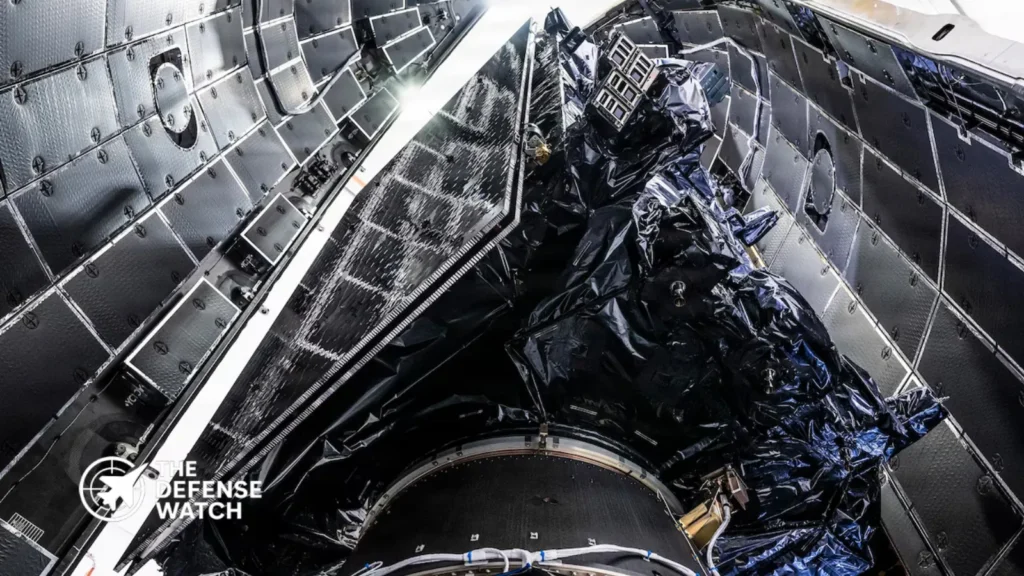
Space Systems Command (SSC) and Combat Forces Command (CFC) jointly executed the National Security Space Launch mission. SV10 integrates a crosslink demonstration payload, a new space-qualified atomic clock, a Laser Retroreflector Array, and the first-ever use of a 3D-printed Omni Antenna on a GPS satellite.
The satellite achieved signal acquisition shortly after launch and is currently being managed from Lockheed Martin’s Denver Launch and Checkout Operations Center, where it will remain until formally integrated into the operational GPS control network.
SV10 will raise its orbit over approximately 10 days to achieve its operational position, followed by two to three days of on-orbit testing before satellite operations transfer to the Space Force.
Why It Matters
SV10 provides the constellation an additional satellite equipped with M-code technology, delivering GPS capabilities three-times more accurate and eight-times more resistant to jamming than the previous constellation generation.
That anti-jamming margin is operationally critical. In modern peer-level conflict, adversaries routinely attempt to deny, degrade, or deceive GPS-dependent systems. Stronger M-code resistance means U.S. forces retain reliable positioning and timing even when operating inside heavily jammed environments — a scenario that has become the baseline assumption for any high-end conflict.
SV10 stands as the most innovative space vehicle in GPS program history, integrating multiple technology demonstrations simultaneously. The optical crosslink payload is particularly significant. This laser communications system tests direct satellite-to-satellite communication in orbit before it is integrated on next-generation GPS IIIF satellites. A GPS constellation capable of routing signals internally — without relying on ground-based uplinks — dramatically reduces the vulnerability of the architecture to ground-based jamming or a disruption in the terrestrial control segment.
SV10 also carries a demonstration Digital Rubidium Atomic Frequency Standard clock, an advanced atomic clock providing reliable and precise timekeeping capabilities.Improved atomic clock accuracy cascades across all GPS-dependent systems, tightening the timing precision that financial networks, air traffic control, and military communications infrastructure depend upon.
Strategic Implications
Completing the GPS III constellation is more than a technical milestone — it is a strategic signal. At a time when space has been formally recognized as a warfighting domain, the U.S. has demonstrated its ability to build, launch, and sustain the world’s most capable satellite navigation architecture despite adversarial pressure, industry delays, and competing procurement priorities.
The resilience built into the completed constellation — redundant on-orbit spares, anti-jam M-code signals, and now experimental inter-satellite laser links — directly supports U.S. deterrence posture. Adversaries considering whether to attack space-based U.S. capabilities must now account for a constellation that is harder to jam, harder to spoof, and designed with built-in redundancy to sustain operations even if individual satellites are degraded or destroyed.
For joint force commanders, the constellation improvement translates directly into more reliable precision strike, more assured ISR handoffs, and tighter synchronization across multi-domain operations. In the Indo-Pacific — where any conflict with China would span vast distances and demand extreme timing precision across naval, air, and land forces — a more resilient GPS backbone matters operationally and tactically.
Competitor View
China and Russia have both tracked U.S. GPS modernization closely and have accelerated their own parallel programs in direct response. China’s BeiDou-3 constellation reached global operational capability in 2020 and continues expanding. Russia’s GLONASS system has undergone sustained modernization efforts. Both programs are designed in part to ensure their own forces remain PNT-independent of U.S. GPS — and to give them leverage in denying GPS to adversaries.
The completion of GPS III, with its dramatically improved anti-jamming margins, narrows the operational window that adversary EW systems previously held against the legacy GPS architecture. Beijing and Moscow will take note. The optical crosslink demonstration onboard SV10 — previewing a future inter-satellite mesh capability — signals that the U.S. intends to push GPS resilience further still, making ground-based jamming progressively less effective against the evolving constellation.
What To Watch Next
With GPS III SV10 in orbit, Lockheed Martin is now focused on production of GPS IIIF satellites. Among the upgrades, GPS IIIF will feature Regional Military Protection, delivering more than a 60-fold boost in anti-jamming performance.
Lockheed Martin has integrated augmented reality and digital twin technologies to accelerate production of the 12 GPS IIIF satellites it is under contract to build at its Denver facility.
The on-orbit testing of the optical crosslink demonstration aboard SV10 will directly inform the design baseline for GPS IIIF’s inter-satellite communications architecture. Results from that testing — along with the Digital Rubidium Atomic Frequency Standard clock demonstration — will determine how aggressively those technologies are incorporated into the next-generation series.
Operationally, the Space Force’s Mission Delta 31 will transition SV10 into the active constellation through the GPS operational control network. Watchers should also monitor how quickly the remaining legacy Block IIA and IIR satellites are retired as newer GPS III and eventual IIIF satellites provide sufficient coverage and redundancy.
Capability Gap
The GPS III program was designed to replace aging Block II satellites that lacked robust anti-jamming capability and were increasingly vulnerable to adversary electronic warfare. The legacy architecture was built during an era when adversaries lacked both the motivation and the technical sophistication to systematically attack GPS signals. That era has ended.
The NSSL program’s flexibility — including the ability to pivot launch providers — was demonstrated again with this mission, executing a change in under seven weeks following a switch in launch service provider. That agility matters strategically: a satellite program that can only fly on a single vehicle is a program that adversaries can potentially delay through industrial or political pressure.
This was the fourth time SpaceX carried a GPS satellite originally assigned to ULA’s Vulcan rocket, following persistent development delays with that vehicle. While Vulcan has now received NSSL certification, its recent grounding in high-power configurations following a booster anomaly reinforces why launch diversification remains essential to national security space strategy.
One realistic limitation of GPS III worth noting: M-code capability requires compatible receivers. The military still fields large numbers of legacy GPS receivers that cannot exploit M-code’s enhanced security and anti-jamming performance. Fielding compatible terminals across the joint force remains an ongoing challenge that the improved constellation alone cannot solve.
The Bottom Line
The completion of the GPS III constellation gives U.S. forces a materially stronger, more jam-resistant navigation architecture precisely when adversary electronic warfare capabilities have made the old one dangerously vulnerable — and the GPS IIIF program already in production ensures that advantage will continue to widen.
Romania F-35 Program Moves Forward With New U.S. Contract
The Romania F-35 program took another concrete step forward after Lockheed Martin was awarded a $70.1 million contract modification to support Romania as an F-35 Foreign Military Sales customer.
According to the U.S. Department of Defense contract announcement, the award adds scope for ongoing integration efforts tied to Romania’s planned acquisition of the F-35 Lightning II. The work includes program management, logistics and sustainment planning, and systems engineering support.
- :contentReference[oaicite:0]{index=0} received a $70,107,750 contract modification for Romania’s F-35 program.
- Funding supports program management, logistics, sustainment, and systems engineering.
- Work will be performed at undisclosed locations inside and outside the continental United States.
- Contract performance is scheduled to continue through November 2028.
- The award highlights Romania’s continued move toward fifth-generation airpower.
The contract was issued by Naval Air Systems Command, the U.S. government office that manages major naval aviation acquisition programs, including the F-35.
Why This Romania F-35 Contract Matters
This contract may appear administrative, but it signals something more important. Nations entering the F-35 ecosystem must prepare long before aircraft deliveries begin.
That preparation includes maintenance planning, training pipelines, secure data systems, spare parts forecasting, software support, and integration with national defense structures. Without those steps, receiving aircraft alone would not create an operational capability.
For Romania, this means the Romania F-35 program is progressing from political approval into implementation.
In modern airpower terms, sustainment is often as important as procurement. The F-35 is not simply a fighter purchase. It is a long-term entry into a multinational operating network that depends on software upgrades, logistics coordination, and common standards.
Romania’s Strategic Airpower Shift
Romania has steadily increased defense spending since Russia’s invasion of Ukraine reshaped security planning across Eastern Europe. Located on NATO’s eastern flank and bordering the Black Sea region, Romania faces growing pressure to modernize its air force.
Its current fighter fleet includes upgraded F-16 aircraft, but the move toward the F-35 provides a future path to stealth strike, advanced sensors, and higher survivability in contested airspace.
The Romania F-35 program also aligns Bucharest more closely with other NATO members already operating or ordering the jet, including the United States, Poland, Finland, Germany, Italy, the Netherlands, Norway, Belgium, Denmark, Czechia, Greece, and others.
That common fleet can simplify coalition operations, training, and logistics during future NATO missions.
What Lockheed Martin Is Providing
Under the new contract action, Lockheed Martin will support Romania in several critical areas:
- Program management coordination
- Logistics planning and sustainment readiness
- Systems engineering integration
- Long-term support preparation
- FMS customer onboarding into the F-35 enterprise
These early contracts are often overlooked, yet they form the backbone of operational readiness.
Broader Impact On The F-35 Export Market
The F-35 remains one of the most successful Western defense export programs. Each new customer strengthens production demand and expands the global sustainment base.
Romania’s addition matters because it reinforces Eastern Europe as a major growth region for fifth-generation fighter procurement. Poland already has F-35s on order, Finland selected the aircraft, and other regional states continue modernization planning.
For Washington, expanding allied F-35 fleets also improves interoperability without deploying additional U.S. aircraft permanently overseas.
Outlook Through 2028
The contract runs through November 2028, suggesting multi-year preparation for Romania’s future fleet. Aircraft deliveries typically follow years of infrastructure work, personnel training, and industrial coordination.
That means the Romania F-35 program is entering a serious execution phase rather than remaining a concept announcement.
For NATO planners, that is the key takeaway.
Lockheed Martin Counter UAS Investment Signals Growing Urgency
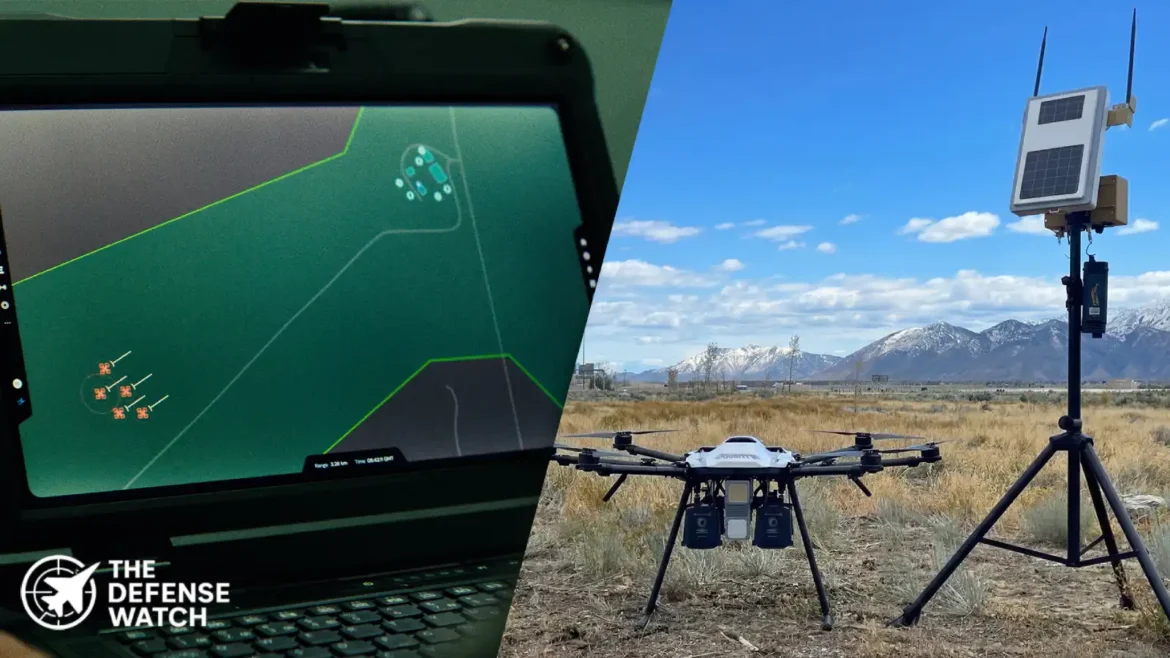
Lockheed Martin counter UAS efforts received a major boost after the company announced a $25 million investment in Fortem Technologies, a U.S. airspace security firm known for autonomous drone interception systems. The April 22 move aims to scale production and speed deployment of integrated anti-drone defenses as militaries confront a surge in cheap, expendable unmanned aircraft.
- Lockheed Martin invested $25 million in Fortem Technologies on April 22, 2026.
- Funding supports Fortem production growth and integration into Lockheed Martin Sanctum counter-UAS architecture.
- Move reflects urgent demand for affordable defenses against small drones and swarm attacks.
- Fortem says the investment could at least double manufacturing capacity in Lindon, Utah.
- Counter-UAS is becoming a core modernization priority for U.S. and allied forces.
The Big Picture
Counter-drone warfare has moved from a niche mission set to a frontline requirement. Conflicts in Ukraine, the Middle East, and Red Sea maritime corridors have shown that commercially derived drones can threaten armor, air bases, logistics hubs, and critical infrastructure at relatively low cost.
That shift has exposed a major imbalance. A low-cost quadcopter can force defenders to use expensive missiles, guns, or electronic warfare assets. Defense planners now want layered systems that detect, track, classify, and defeat drones at lower cost per engagement.
Lockheed Martin’s investment suggests major prime contractors now see counter-UAS not as an accessory market, but as a central growth sector.
What’s Happening
Lockheed Martin said the $25 million funding is the initial tranche of Fortem’s Series B fundraising round. The companies said the investment builds on an existing partnership and supports broader operational deployment of jointly developed counter-UAS systems.
Fortem’s systems include:
- TrueView radar sensors for drone detection and tracking
- SkyDome command and control software
- DroneHunter interceptors, autonomous drones designed to capture hostile UAVs
These capabilities are being integrated into Lockheed Martin’s Sanctum counter-UAS ecosystem, which is designed as an open architecture defensive network.
Why It Matters
The key issue is cost and scale.
Traditional air defense missiles can destroy drones, but repeated use against mass, low-cost targets is financially unsustainable. Lockheed Martin said Fortem’s software-centric approach can reduce engagement cost by more than 80 percent compared with traditional kinetic interceptors.
If validated in wider field use, that matters for:
- Air base defense
- Port and ship protection
- Border security
- Critical infrastructure security
- Expeditionary force protection
This is where the market is moving: affordable persistence rather than premium interceptors alone.
Strategic Implications
The investment also reflects industrial base strategy. Instead of developing every subsystem internally, primes increasingly buy stakes in specialized firms with mature technology.
That model can shorten procurement timelines and preserve access to innovative suppliers. For the Pentagon and allied buyers, it may also reduce dependency on slower legacy acquisition cycles.
The decision to expand manufacturing in Utah matters as well. U.S. defense planners have repeatedly warned that production depth is as important as headline technology, especially during prolonged conflicts.
Competitor View
China, Russia, Iran, and other U.S. rivals have all invested heavily in low-cost unmanned systems, loitering munitions, and attritable drone fleets.
They are likely to read this move as confirmation that Western militaries are accelerating defenses against drone saturation tactics. That does not remove the threat, but it can raise the cost of relying on mass UAV attacks.
At the same time, adversaries will likely continue adapting through autonomy, reduced radar signatures, and mixed attacks combining drones with missiles or electronic warfare.
What To Watch Next
Several indicators will show whether this investment changes the market:
- New U.S. military or homeland security contracts
- Allied export sales of Sanctum-integrated systems
- Demonstrated performance against drone swarms
- Faster Fortem production output
- Additional Lockheed Martin venture investments in autonomy or sensors
If those milestones appear in 2026 or 2027, the deal may prove more significant than its $25 million size suggests.
Capability Gap
The gap being addressed is simple: many forces still lack scalable defenses against numerous small drones arriving simultaneously.
Even advanced militaries often depend on systems designed for aircraft or missiles, not dozens of cheap quadcopters. Fortem and Lockheed Martin are trying to close that gap through automation, networked sensing, and reusable intercept options.
A realistic limitation remains electronic warfare complexity, cluttered urban environments, and the need for legal authorities when intercepting drones near civilian infrastructure.
The Bottom Line
Lockheed Martin’s Fortem investment shows that affordable counter-drone capacity, not just advanced missiles, is becoming a decisive priority for modern defense forces.
Lockheed Martin Outlines Maritime Electronic Warfare Vision As Navy Faces Accelerating Electromagnetic Threats
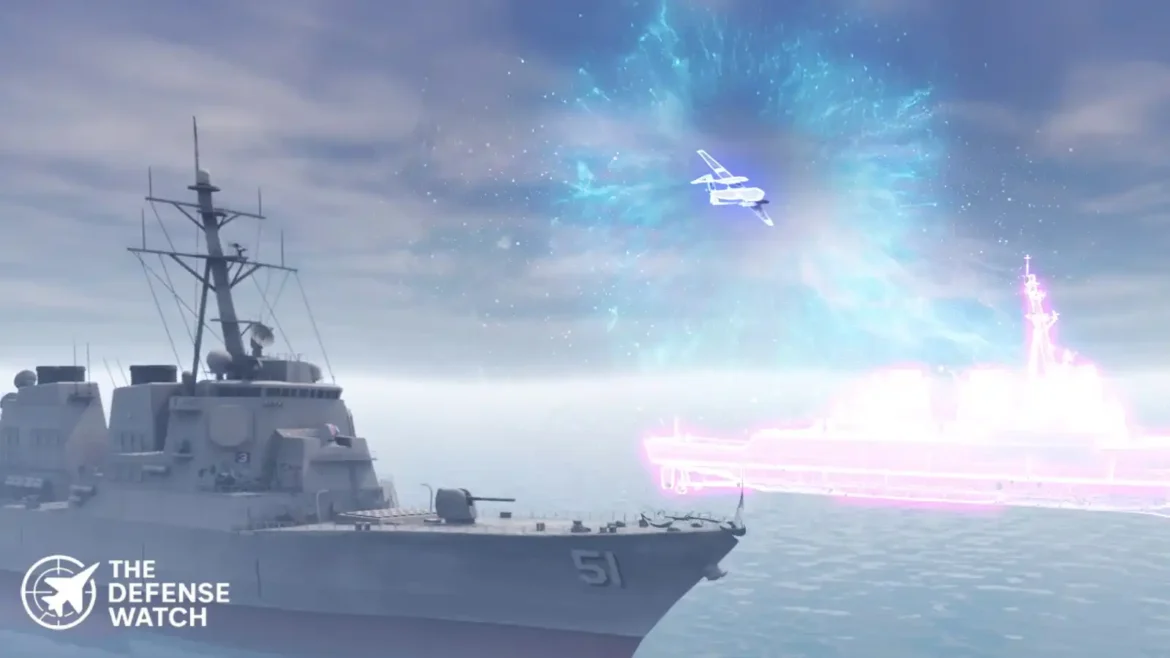
Maritime electronic warfare has moved from a supporting capability to a central pillar of US Navy fleet defense strategy, and Lockheed Martin is positioning itself at the forefront of that transformation. In a detailed technical feature published April 21, 2026, the defense contractor laid out its integrated approach to electromagnetic spectrum dominance aboard naval surface combatants — covering current fielded systems, next-generation development programs, and the doctrinal case for EW as the fleet’s primary non-kinetic shield.
- Lockheed Martin’s AN/SLQ-32(V)6 is described as the world’s most advanced naval electronic support system, forming a core layer of the Aegis Combat System’s real-time threat picture.
- The company is actively developing the Scaled Onboard Electronic Attack (SOEA) system — a next-generation, low-SWaP soft-kill terminal defense solution built on open architecture.
- Lockheed Martin argues EW enables surface combatants to conserve kinetic munitions, a lesson validated by real-world consumption rates observed in the Ukraine conflict.
- Lockheed Martin brings over 60 years of EW development history, integrating AI-enabled, software-defined EW into its open-architecture Surface Electronic Warfare Improvement Program (SEWIP) framework.
- The company positions maritime EW not as a last resort, but as the fleet’s first and most cost-effective defensive layer in future contested operations.
The Big Picture: A More Contested Electromagnetic Environment
Adversary investment in long-range sensors, anti-ship missiles, and multi-domain coordination has fundamentally altered the threat calculus for US surface forces. Peer competitors including China and Russia have developed sophisticated radio frequency (RF)-guided weapons and targeting systems specifically designed to compress the engagement timelines that traditional shipboard defenses rely on.
The US Navy’s response has centered on layered defense — combining kinetic interceptors, directed energy, and electronic warfare into a coherent, integrated system. Within that construct, EW carries a weight it has not historically held: the ability to deny an adversary’s entire kill chain without expending a single missile.
Lockheed Martin frames EW as the “connective tissue across the kill chain, from deciphering the environment to denying an adversary’s engagement and defeating threats.” That framing reflects a doctrine that has quietly gained momentum inside the Pentagon — one that treats spectrum control as a force multiplier, not merely a defensive reflex.
What’s Happening: Systems, Programs, and Active Development
Lockheed Martin’s current flagship naval EW system is the AN/SLQ-32(V)6 and its scaled derivative, the AN/SLQ-32C(V)6, which the company characterizes as the world’s most advanced electronic support systems for naval applications. The AN/SLQ-32(V)6 provides early threat indication and contributes to Aegis Combat System’s real-time battlespace picture. lockheedmartin
Beyond the fielded AN/SLQ-32 family, Lockheed is actively developing the Scaled Onboard Electronic Attack (SOEA) system. SOEA is described as an affordable, rapidly fieldable next-generation electronic attack system that leverages open-architecture engineering and low size, weight, and power (SWaP) design to support onboard soft-kill terminal defense.
SOEA is intended to advance the Surface Electronic Warfare Improvement Program (SEWIP) by integrating the advanced electronic support capability of the SLQ-32(V)6 with other shipboard systems to deliver onboard electronic attack capabilities.
The company frames the program as a direct bridge between legacy electronic support systems and a new generation of integrated attack-and-defense functions — a significant doctrinal and technical step for surface combatants.
Why It Matters: EW as Munitions Conservation
One of the more operationally significant arguments Lockheed Martin advances is the link between effective EW and kinetic munitions management. The company argues that by controlling the electromagnetic spectrum, naval forces deny adversaries the ability to employ systems across the entire kill chain — and that this is particularly important in conflicts where munition availability is limited, citing Ukraine as a recent example.
This is not a theoretical concern. The conflict in Ukraine has demonstrated at scale that even well-supplied militaries can face critical shortages in high-intensity combat environments. Surface combatants carry finite missile loads, and the logistics of replenishment at sea in contested waters are formidable. An EW capability that forces a threat into a soft-kill defeat before a ship must expend a Standard Missile or ESSM round represents a measurable tactical and logistical advantage.
The cost asymmetry also matters strategically. A reactive RF countermeasure that defeats an inbound missile costs far less than the interceptor it replaces. At fleet scale, across multiple simultaneous engagements, that arithmetic carries significant weight in long-duration conflict scenarios.
Open Architecture: The Strategic Differentiator
The most forward-looking element of Lockheed Martin’s maritime EW strategy is its emphasis on open architecture. Open-architecture EW systems enable navies to integrate new sensors, deploy updated countermeasure techniques, and adapt to shifting missions — effectively allowing the capability to evolve at the pace of software rather than shipbuilding.
This matters enormously in the current threat environment. Traditional closed-system EW platforms required lengthy and expensive upgrade cycles to address new emitter characteristics or weapons guidance modes. An open-architecture framework allows operators to push software-defined updates — new jamming techniques, updated threat libraries, revised countermeasure logic — in timelines measured in weeks rather than years.
Lockheed Martin describes open architecture as creating an ecosystem that encourages third-party developers to contribute and innovate, enabling standardization of interfaces and data formats across system components.
For the US Navy, this has tangible acquisition implications. Open-architecture EW platforms reduce vendor lock, lower lifecycle costs, and create space for rapid technology insertion from the commercial and academic sectors — an approach that aligns with the Pentagon’s broader defense modernization priorities under the National Defense Industrial Strategy.
Strategic Implications: AI Integration and the Multi-Domain Fight
Lockheed Martin is integrating artificial intelligence into its EW systems, with AI-enabled advanced, distributed, and cooperative EW platforms designed to support a range of missions and operations across all domains and platforms.
AI-driven EW represents a qualitative shift in how electronic warfare is conducted. Traditional EW systems rely on pre-programmed threat libraries and human operator decisions. AI-enabled systems can autonomously identify novel emitter signatures, correlate them against multi-source intelligence, and generate countermeasure responses in milliseconds — well within the engagement timelines that advanced anti-ship missiles impose.
The integration of AI also enables cooperative EW — where multiple shipboard or airborne platforms share threat data and coordinate spectrum management in real time. In a distributed maritime operations concept, which the Navy has been developing under its Distributed Maritime Operations (DMO) doctrine, this kind of machine-speed coordination is essential.
Competitor View: How Adversaries Will Read This Signal
China’s People’s Liberation Army Navy (PLAN) has invested substantially in anti-ship missile systems, over-the-horizon radar, and electromagnetic warfare capabilities. The PLAN’s DF-21D and DF-26 carrier-killer missiles depend on a functioning electromagnetic kill chain — from detection satellite or OTH radar through to terminal guidance. A US fleet with robust, layered EW capable of disrupting that chain at multiple nodes fundamentally challenges China’s anti-access/area-denial (A2/AD) strategy.
Russia’s naval doctrine similarly relies on coordinated missile salvos guided by radar and datalink. Advances in US shipborne electronic attack that can deny or degrade those guidance links would reduce the effectiveness of massed anti-ship strike packages — a core element of Russian maritime warfare doctrine.
Both adversaries will interpret accelerated US investment in maritime EW as a direct counter to their most valued naval strike capabilities, likely accelerating their own investment in guidance redundancy, frequency agility, and electronic counter-countermeasures.
What To Watch Next: SEWIP and SOEA Procurement Timelines
The SEWIP program has been the Navy’s primary vehicle for modernizing shipboard EW since the mid-2000s. SEWIP Block 2 delivered electronic support upgrades; SEWIP Block 3 has focused on expanding electronic attack capabilities. SOEA represents what Lockheed Martin positions as the next logical evolution of that roadmap.
Acquisition watchers should track whether SOEA receives a formal Navy program of record designation, which would signal transition from development to procurement. Given the Navy’s stated emphasis on non-kinetic fleet defense and the munitions conservation arguments Lockheed has publicly advanced, a formal SOEA contract award in the near term would be consistent with current service priorities.
EW training and simulation investment is also worth monitoring. Lockheed Martin is investing in more effective and efficient EW training and simulation tools to provide naval operators with realistic and immersive training environments, enhancing readiness to respond to emerging threats. Simulation-driven readiness investments often precede large-scale fielding programs, suggesting operational deployment planning may be further advanced than publicly disclosed.
Capability Gap: What This Addresses
The existing gap in US Navy surface EW is the integration seam between electronic support — knowing a threat exists — and electronic attack — actively denying or defeating it. The AN/SLQ-32 family excels at the former. SOEA is explicitly designed to close the latter.
A secondary gap is SWaP-constrained platforms: smaller surface combatants, littoral combat ships, and future unmanned surface vessels that cannot host legacy EW systems. SOEA’s low-SWaP architecture directly addresses that constraint, suggesting the system has applicability well beyond large-deck surface combatants.
Realistic limitations remain. Software-defined EW systems are only as effective as their threat libraries and update cycles. In a conflict where adversaries deploy previously unseen emitter characteristics, even advanced AI-enabled systems face detection and response latency. Redundancy, cross-domain cueing, and human oversight of autonomous EW decisions remain necessary safeguards.
The Bottom Line
As adversary missiles grow faster and smarter, the US Navy’s best and most cost-effective answer may not be another interceptor — it may be mastery of the electromagnetic spectrum, and Lockheed Martin is making a direct, technically credible case that it can deliver that edge.

Lockheed Martin DREXR Upgrade Advances E-2D Hawkeye Capability
The Lockheed Martin DREXR upgrade has successfully completed flight testing on the U.S. Navy’s E-2D Advanced Hawkeye, marking an important step in keeping one of America’s most critical airborne early warning aircraft ready for future threats. The company announced the milestone on April 21, saying the program was completed in cooperation with Northrop Grumman.
The E-2D Advanced Hawkeye is the Navy’s carrier-based airborne surveillance and battle management aircraft. It provides long-range radar coverage, tracks hostile aircraft and missiles, and helps connect naval and joint forces across the battlespace.
- Lockheed Martin and Northrop Grumman completed flight testing of the DREXR upgrade for the U.S. Navy E-2D Advanced Hawkeye.
- DREXR stands for Digital Receiver Exciter Recorder and replaces legacy exciter and receiver subsystems.
- Tested capabilities included wideband transmit and receive, software-defined waveforms, and independent radar element transmission.
- Upgrade is designed to improve detection, tracking, and decision speed in contested environments.
- E-2D remains a key airborne command-and-control asset for U.S. Navy carrier strike groups.
The latest DREXR modernization effort focuses on upgrading core radar electronics rather than replacing the aircraft itself. That matters because the Hawkeye fleet remains central to U.S. carrier strike group operations, especially as potential adversaries field longer-range missiles, stealth aircraft, electronic warfare systems, and drone swarms.
What The DREXR Upgrade Changes
According to Lockheed Martin, DREXR, short for Digital Receiver Exciter Recorder, is a compact single-box system that replaces the current exciter and receiver subsystems aboard the aircraft.
During flight testing, the team validated:
- Wideband transmit and receive functions
- Independent transmit control for each radar element
- Software-defined waveform capability
- Integrated recording for mission analysis
- Data collection to support future AI-enabled capabilities
In practical terms, these upgrades should allow faster software changes, better signal processing, and improved adaptability against emerging threats.
That is increasingly important because modern radar competition is no longer only about range. It is also about how quickly a sensor can classify targets, reject jamming, and share data across multiple platforms.
Why The E-2D Hawkeye Still Matters
The E-2D Advanced Hawkeye is often overshadowed by fighter jets, but it is one of the most valuable aircraft on any carrier deck.
Its AN/APY-9 radar is designed to detect aircraft and cruise missiles at long range while supporting command-and-control functions. The platform also acts as a communications node linking ships, aircraft, and joint forces.
From an operational standpoint, fighters such as the F-35 can strike targets, but platforms like the Hawkeye help the fleet see first and react first.
That makes modernization programs like DREXR strategically significant. Improving sensing and battle management can increase the effectiveness of every other platform operating nearby.
Broader U.S. Navy Modernization Context
The DREXR milestone comes as the U.S. Navy and industry are also pursuing broader Block II modernization for the E-2D fleet, including cockpit, computing, and mission system upgrades.
This layered approach suggests the Navy intends to keep the Hawkeye relevant well into the next decade rather than rushing toward an entirely new replacement platform.
For Pentagon planners, that is a practical path. Incremental upgrades can deliver better performance faster and at lower risk than launching a clean-sheet aircraft program.
Analysis
The Lockheed Martin DREXR upgrade is more than a routine electronics refresh. It reflects a larger shift in military aviation where software speed, modular hardware, and sensor networking are becoming as important as airframe performance.
As maritime threats expand in the Indo-Pacific and other theaters, the side that detects first and coordinates faster gains a decisive edge. In that environment, the E-2D Hawkeye remains a high-value asset, and upgrades like DREXR help preserve that advantage.

PAC-3 MSE Aegis Integration Signals New U.S. Navy Air Defense Option
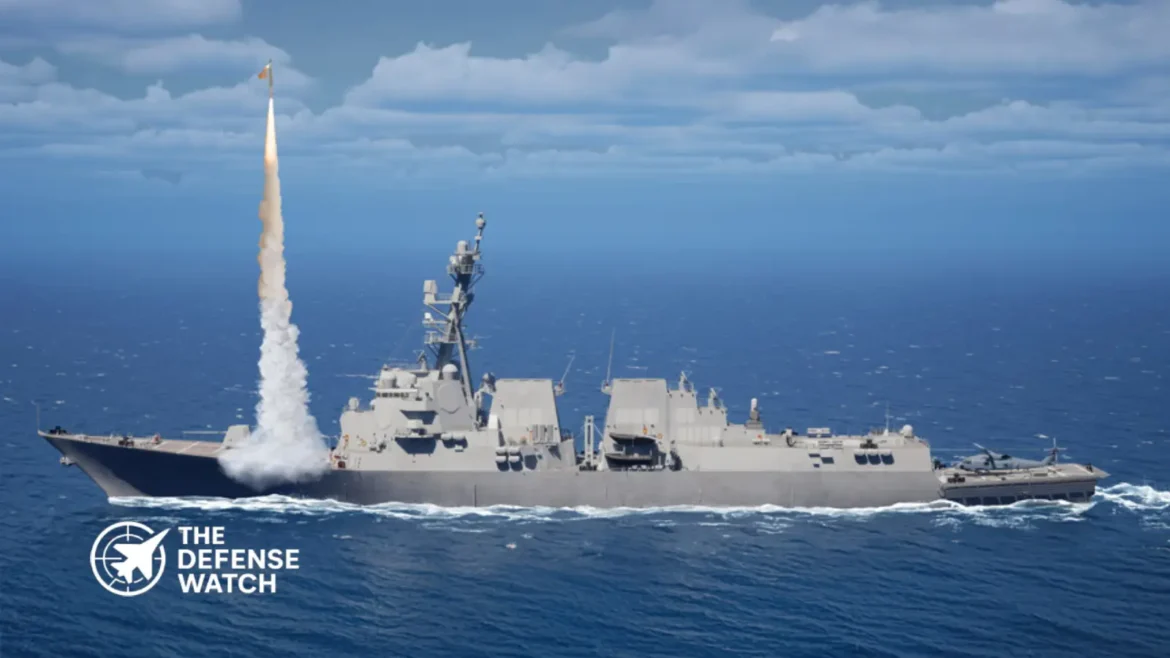
PAC-3 MSE Aegis integration is moving forward after Lockheed Martin announced on April 21 that it received a U.S. Navy contract to connect the Patriot Advanced Capability-3 Missile Segment Enhancement interceptor with the Aegis Combat System. The award represents a notable shift in U.S. missile defense planning by linking a combat-proven land-based interceptor with one of the world’s most widely deployed naval battle management systems.
- Lockheed Martin received a U.S. Navy contract to integrate PAC-3 MSE with the Aegis Combat System.
- PAC-3 MSE is a hit-to-kill interceptor designed to defeat cruise missiles, aircraft, and tactical ballistic missiles.
- The move could strengthen layered naval and expeditionary missile defense in contested regions.
- Integration marks the first known effort to pair PAC-3 MSE with Aegis.
- The program may open new options for future U.S. and allied force protection architectures.
The Big Picture
U.S. forces are adapting to a threat environment defined by larger missile salvos, lower-flying cruise missiles, maneuvering ballistic threats, and growing pressure in the Indo-Pacific, Europe, and the Middle East. Traditional single-layer defense models are becoming less effective against mixed attacks that combine drones, cruise missiles, and ballistic systems.
Aegis-equipped warships already provide long-range air and missile defense using SM-series interceptors. Patriot batteries protect land forces and fixed sites. Combining elements of both systems reflects a broader Pentagon push toward integrated air and missile defense, sensor sharing, and interceptor flexibility.
What’s Happening
Lockheed Martin said the U.S. Navy selected the company to integrate PAC-3 MSE into Aegis for the first time. The effort will allow Aegis to control and employ the interceptor through its existing command-and-control architecture.
PAC-3 MSE is the latest Patriot family interceptor. It uses hit-to-kill technology, upgraded propulsion, and aerodynamic controls to improve reach, maneuverability, and lethality against incoming threats.
Aegis is deployed aboard U.S. Navy cruisers and destroyers, as well as Aegis Ashore sites and several allied fleets. The combat system is already central to U.S. and partner missile defense operations.
Why It Matters
This contract matters because interceptors are expensive, inventories are finite, and different threats require different tools. PAC-3 MSE Aegis integration could give commanders another engagement option between short-range point defense missiles and larger SM-family interceptors.
That flexibility may help preserve high-end interceptors for more demanding targets while using PAC-3 MSE where it offers a better cost-to-threat match.
It also reflects a shift toward software-defined combat systems. Modern missile defense increasingly depends on whether launchers, radars, and interceptors can communicate across platforms, not just on raw missile performance.
Strategic Implications
A layered naval defense network improves readiness in several ways.
First, forward-deployed ships could gain more engagement depth against saturation attacks.
Second, expeditionary forces ashore could benefit if naval and land batteries share common engagement logic.
Third, allied navies operating Aegis systems may eventually seek similar options, especially nations already invested in Patriot programs.
For the United States, this supports distributed operations where forces are spread across wider areas but remain linked through shared sensors and weapons.
Competitor View
China and Russia closely monitor U.S. integrated air and missile defense progress. Both states have invested heavily in complex strike systems designed to overwhelm defenses through speed, numbers, and trajectory diversity.
A successful PAC-3 MSE Aegis integration would suggest Washington is expanding not just missile inventories, but also the number of ways interceptors can be employed. That complicates adversary attack planning and can strengthen deterrence without deploying entirely new missile families.
Iran and regional actors may also note the trend, particularly after recent combat operations highlighted the importance of defending bases, ports, and naval assets from missile and drone attacks.
What To Watch Next
Key milestones will likely include:
- Software integration and systems engineering work
- Fire control validation between Aegis and PAC-3 MSE
- Live-fire testing against representative targets
- Decisions on launcher compatibility and deployment concepts
- Potential follow-on procurement by U.S. or allied users
The most important indicator will be whether the Navy pursues operational fielding after testing.
Capability Gap
Current missile defense networks often separate naval and land interceptors into different ecosystems. That can limit flexibility during fast-moving operations.
PAC-3 MSE Aegis integration aims to close that gap by enabling one command system to access more interceptors. Still, limitations remain. PAC-3 MSE was originally designed for Patriot architecture, so launcher adaptation, magazine capacity, and cost per round will influence operational value.
The Bottom Line
The contract shows the U.S. military is prioritizing adaptable layered defense networks that connect proven weapons across services rather than relying only on new standalone systems.