Europe’s Tank Power Rankings in 2026: A Continent in Transition
Europe’s armored landscape in 2026 looks dramatically different from even five years ago. The Russia-Ukraine war shattered longstanding assumptions about the relevance of massed tank formations and triggered a continent-wide scramble to rebuild and modernize ground forces. As a result, the traditional metrics of tank power — raw fleet size and Cold War-era inventories — are giving way to a new calculus that weighs platform generation, battlefield readiness, digital integration, and NATO interoperability. Across this evolving landscape, the question of who truly leads Europe in tank power has become more complex and more consequential than ever.
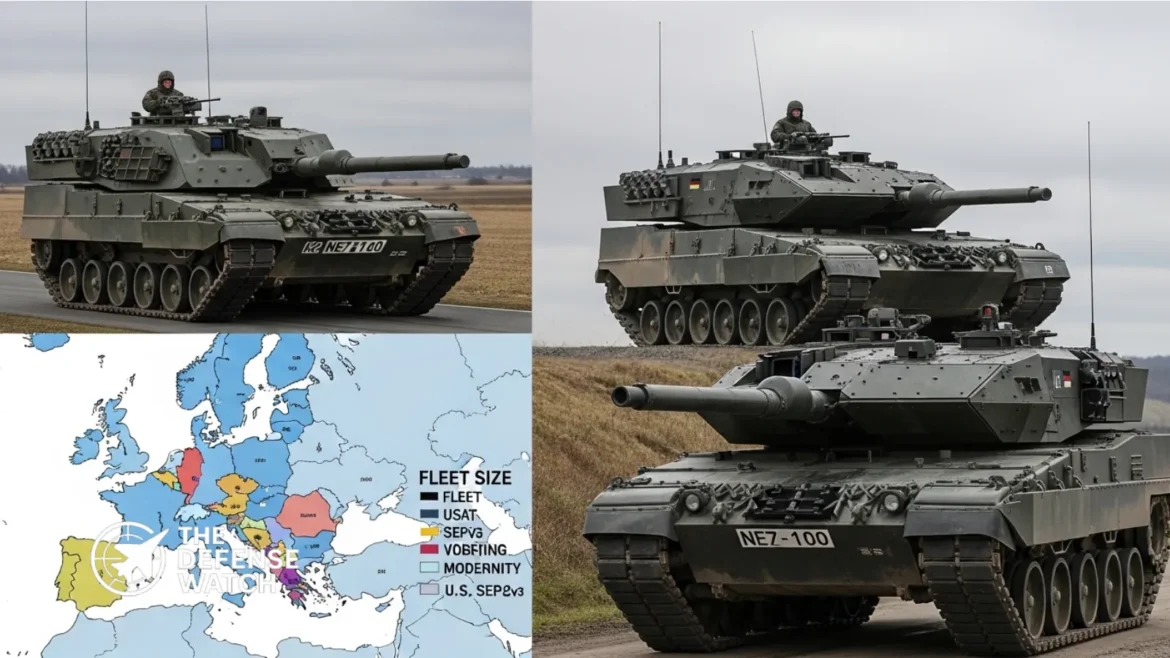
Türkiye holds the largest tank fleet on the continent with 2,381 main battle tanks. Yet Poland, with its aggressive rearmament program, is rapidly challenging that dominance — not merely in numbers, but in the quality and combat readiness of its armored force. The 2026 European tank power rankings reveal that numbers alone no longer tell the full story.
- Türkiye remains Europe’s largest tank operator in 2026 with 2,381 main battle tanks, though much of its fleet consists of older M48 and M60-series platforms.
- Poland currently fields 897 tanks and is expanding toward 1,800–1,900 MBTs, combining K2 Black Panther, M1A2 SEPv3 Abrams, and Leopard 2 variants.
- Germany fields 313 Leopard 2 tanks including 104 of the advanced 2A7V variant — the highest concentration of next-generation armor in Western Europe.
- The Leopard 2A8 standard is emerging as the future backbone of NATO’s European armored forces, with Germany, Czech Republic, Norway, and others adopting it.
- Globally, China leads with approximately 4,700 MBTs, followed by Russia at around 3,460 and the United States at 2,640 Abrams tanks.
Türkiye: Europe’s Largest Fleet, but an Aging One
Türkiye’s position at the top of the European rankings is built on volume, but the composition of that force is a significant caveat. Its fleet of 2,381 tanks includes approximately 750 M48A5 T2 and 650 M60A3 TTS platforms — systems that trace their lineage to Cold War-era American designs. The more capable components include 236 Leopard 2A4 tanks and 80 locally upgraded Leopard 2A4 T1s, alongside smaller numbers of Leopard 1 variants. Notably, only three Altay main battle tanks — Türkiye’s homegrown next-generation MBT — have entered service to date, meaning the country’s indigenous modernization effort remains in its infancy at the operational level.
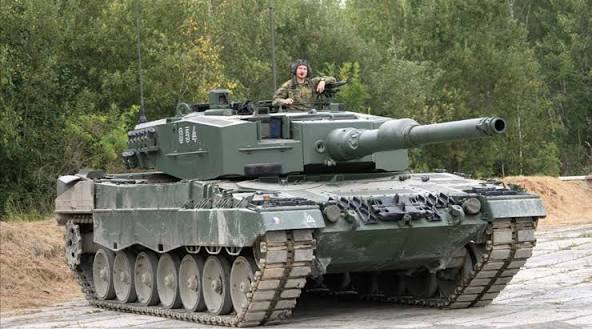
Türkiye’s fleet size gives it undeniable strategic mass, particularly in its near-abroad and within NATO’s southern flank. However, a force in which the majority of tanks are multi-decade-old designs — lacking modern composite armor, digital fire control, and thermal imaging — carries limitations that sheer numbers cannot offset. In a high-intensity conflict against a near-peer adversary fielding modern systems, numerical bulk without technological parity becomes a liability.
Poland: The Most Capable Armored Force in Europe
Poland’s transformation into Europe’s leading armored power by capability is among the most consequential defense developments of the 2020s. In 2026, the Polish Army fields 897 tanks — a figure that already reflects aggressive acquisition — comprising 180 K2 Black Panthers, 117 M1A2 SEPv3 Abrams, 116 M1A1 Abrams, 105 Leopard 2A5, 92 Leopard 2PL, 205 PT-91 Twardy, and 46 T-72M1/M1R variants. What distinguishes Poland is not just what it has purchased, but what it has committed to buying.
Warsaw has signed contracts for up to 1,000 K2 and locally produced K2PL tanks, a deal that would eventually bring Poland’s total fleet to between 1,800 and 1,900 modern MBTs. At that level, Poland would approach Türkiye’s total fleet size while holding a decisive generational edge: the overwhelming majority of its tanks would meet or exceed NATO’s most demanding standards for firepower, protection, and network integration. No other European country is building armored power at this pace and with this level of platform quality simultaneously.
Poland’s approach also reflects a strategic awareness of geographic vulnerability. Sharing a border with Russia’s Kaliningrad exclave and Belarus — and as a direct logistics corridor for any NATO response to eastern threats — Warsaw has concluded that credible deterrence requires a force capable of both absorbing an initial blow and launching a sustained armored counteroffensive. That logic is shaping every procurement decision.
Germany, France, and the UK: Quality Over Quantity
Germany fields 313 Leopard 2 tanks in active service, including 104 of the highly capable Leopard 2A7V variant, which features an improved turret, active protection provisions, and enhanced urban warfare capability. While Germany’s fleet is relatively small for a nation of its strategic weight, the quality of its armor — and its role as the hub of the Leopard 2 ecosystem across NATO — gives Berlin outsized influence over the direction of European armored modernization.
France maintains 200 Leclerc tanks, with 51 in the upgraded XLR configuration. The Leclerc remains one of the most automated and mobile Western MBTs, though France’s fleet size limits its ability to sustain mass armored operations independently. The United Kingdom fields 213 Challenger 2 tanks and is in the process of transitioning to the Challenger 3 standard, which brings a new 120mm NATO-compatible gun, improved composite armor, and a fully modernized fire control system — reversing years of relative stagnation in British armored capability.
Greece, Romania, and the Legacy Fleets
Greece ranks third in Europe with 1,385 tanks, a figure that includes strong modern components — 170 Leopard 2A6HEL and 183 Leopard 2A4 — alongside a substantial legacy mass of approximately 500 Leopard 1 platforms. Greece’s fleet gives it significant regional deterrence capacity, particularly in its Aegean and southeastern NATO context, but the mixed generational structure limits its effectiveness in a fully modern high-intensity scenario.
Romania fields 377 tanks, the fourth largest fleet in Europe, but one that is heavily legacy-based: 220 T-55AM and 103 TR-85 platforms, supplemented by only 54 TR-85M1s. Bulgaria operates 90 T-72 variants. Serbia, outside NATO, fields 229 tanks including 195 M-84s. These Eastern European forces represent the last large concentrations of Cold War armor on the continent — forces that provide territorial mass but lack the protection, digital systems, and interoperability of modern Western designs.
The Leopard 2A8: NATO’s Next Armored Standard
One of the most strategically significant trends in European armored development is the consolidation around the Leopard 2A8 as the emerging common standard for NATO ground forces. Germany is leading adoption as part of its broader Bundeswehr expansion. The Czech Republic is moving toward Leopard 2A8 procurement to fully retire Soviet-era T-72 variants. Norway’s next-generation tank replacement program aligns closely with the A8 configuration. Sweden, Spain, Finland, and the Netherlands are all positioned to follow, either through new procurement or structural upgrades.
This convergence is significant beyond the technical level. A shared, advanced MBT standard across a large coalition of NATO members creates genuine interoperability — common ammunition, shared logistics chains, compatible digital architectures, and unified training frameworks. It is the kind of structural alignment that transforms individual national armies into a coherent, mutually reinforcing alliance force.
The Global Context: Europe’s Place in the Wider Balance
Against the global backdrop, European tank power remains formidable but structurally outmatched in raw numbers. China fields approximately 4,700 MBTs — a force combining aging mass with a growing core of advanced ZTZ-96A and ZTZ-99A platforms. Russia maintains around 3,460 tanks in active formations, including 620 T-90M systems, though the Ukraine war has imposed severe material and personnel costs on its armored forces. The United States fields 2,640 Abrams tanks across active units, with an additional 1,500 in reserve — a force that sets the global benchmark for sensor integration, survivability, and network-centric combat effectiveness.
Europe’s collective armored strength, when viewed across NATO as a whole, is substantial. But the key differentiator is that European nations are increasingly fielding platforms that are qualitatively competitive at the high end, rather than simply accumulating numbers. Poland’s expansion, Germany’s Leopard 2A7V fleet, the UK’s Challenger 3 transition, and the spread of the Leopard 2A8 standard are all indicators of a continent that is rebuilding armored power with a fundamentally different philosophy than before.
Analysis: The New Definition of Armored Power
The 2026 rankings underscore a structural shift in how armored power is measured. For most of the Cold War and its aftermath, tank power was synonymous with fleet size. The country with the most tanks was, broadly speaking, the most powerful armored force. That equation no longer holds.
What the data shows is that Europe’s most effective armored forces in 2026 are not necessarily its largest. Poland’s 897-tank fleet today outperforms Greece’s 1,385 and Türkiye’s 2,381 in terms of operational effectiveness per platform, because the majority of Poland’s tanks feature modern protection, fire control, and digital integration that the older platforms in those larger fleets simply cannot match. When Poland reaches 1,800 to 1,900 tanks — predominantly K2, SEPv3, and Leopard 2 variants — it will combine near-top-tier volume with the highest concentration of advanced MBTs on the continent. That combination, never before seen in European defense, will effectively reorder the entire armored hierarchy.
The broader implication is that European armies are no longer rebuilding for the threat environment of the 1990s or even the 2000s. They are building for a threat environment defined by Russia’s demonstrated willingness to wage large-scale ground combat, drone-integrated warfare, and contested logistics. In that environment, a modern tank with active protection, digital fire control, and sustainable logistics support is worth several times its older equivalent — and the European countries investing in that quality today are making a calculated strategic bet that will define the continent’s security architecture for the next two decades.
FAQs
Which country has the most tanks in Europe in 2026?Türkiye leads Europe in total tank numbers with 2,381 main battle tanks, though the majority are older M48 and M60-series platforms with limited modern capability.
Is Poland becoming the most powerful armored force in Europe?By combat capability standards, Poland is already making a strong case. With 180 K2 Black Panthers, over 230 Abrams variants, and more than 200 Leopard 2s, and contracts for up to 1,000 K2 and K2PL tanks, Poland is building the most modern and scalable armored force on the continent.
What is the Leopard 2A8, and why does it matter?The Leopard 2A8 is the latest evolution of Germany’s Leopard 2 main battle tank family, incorporating improved protection, updated fire control, and enhanced survivability systems. Its adoption by multiple NATO members as a common standard is creating a unified, high-technology armored backbone for the alliance.
How does Europe’s tank power compare to Russia’s?Russia maintains approximately 3,460 active MBTs, including around 620 T-90M modern variants. European NATO members collectively field a comparable number of tanks, with a growing share of high-end systems such as Leopard 2A7V, M1A2 SEPv3, and K2 that match or exceed Russian top-tier platforms.
Why doesn’t Germany have a larger tank fleet?Germany’s Bundeswehr underwent significant post-Cold War downsizing that reduced its Leopard 2 fleet to around 313 active tanks. Berlin is now reversing that trend as part of broader NATO rearmament commitments, with the Leopard 2A8 program central to planned expansion.


Rafale vs F-16: A Comprehensive Comparison of Two Leading Multirole Fighters
The debate over the Rafale vs F-16 has intensified as nations worldwide evaluate their air combat requirements for the 2020s and beyond. France’s Dassault Rafale and America’s General Dynamics (now Lockheed Martin) F-16 Fighting Falcon represent two distinct philosophies in fighter design, each with proven combat records and global operator networks. As air forces modernize their fleets, understanding the capabilities, limitations, and operational contexts of these aircraft becomes essential for defense planners and military analysts.
(adsbygoogle = window.adsbygoogle || []).push({});Both platforms have secured their positions as leading multirole fighter jets through decades of evolution, combat deployment, and continuous upgrades. The F-16, introduced in the 1970s, has become the world’s most prolifically produced Western fighter aircraft, while the Rafale, entering service in 2001, represents a newer generation of European combat aviation excellence. This analysis examines their design philosophies, combat capabilities, technological features, and operational performance to provide a balanced assessment.
Design Philosophy and Development History
F-16 Fighting Falcon: The Lightweight Fighter Revolution
The F-16 emerged from the United States Air Force’s Lightweight Fighter program in the early 1970s, designed as an agile, cost-effective complement to the heavier F-15 Eagle. General Dynamics (later Lockheed Martin) created an aircraft emphasizing maneuverability, reliability, and affordability. The F-16’s revolutionary fly-by-wire flight control system, side-mounted control stick, and reclined ejection seat optimized pilot performance during high-G maneuvers.
Since its first flight in 1974, the F-16 has undergone continuous evolution through Block upgrades, with current variants like the F-16V (Block 70/72) incorporating active electronically scanned array (AESA) radar systems, advanced electronic warfare suites, and modern avionics. More than 4,600 F-16s have been produced, serving in approximately 25 air forces worldwide.
Dassault Rafale: Europe’s Omni-Role Fighter
The Rafale development began in the 1980s as France pursued an independent path after withdrawing from the multinational Eurofighter program. Dassault Aviation designed the Rafale as an “omni-role” fighter capable of executing air superiority, ground attack, reconnaissance, and nuclear strike missions within a single sortie without reconfiguration.
The Rafale entered French service in 2001, incorporating cutting-edge technologies including digital fly-by-wire controls, composite materials, and integrated sensor fusion. Unlike the F-16’s evolutionary development, the Rafale was conceived as a comprehensive fourth-generation-plus platform from inception. As of early 2025, over 280 Rafales have been delivered, serving France, Egypt, Qatar, India, Greece, Croatia, Indonesia, and the United Arab Emirates.
(adsbygoogle = window.adsbygoogle || []).push({});Technical Specifications and Performance
Airframe and Aerodynamics
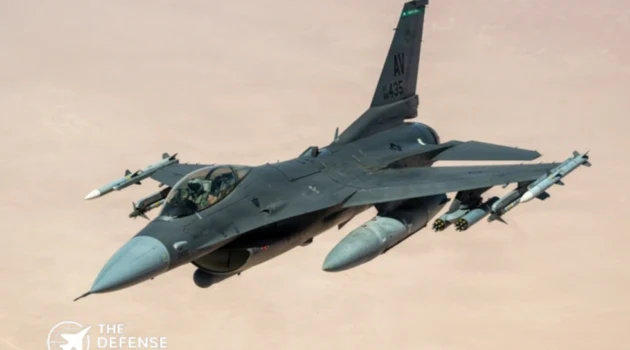
The Rafale vs F-16 comparison reveals fundamental differences in airframe design. The F-16 features a conventional single-engine configuration with a cropped delta wing and horizontal stabilizers, optimized for high maneuverability and sustained turn rates. Its blended wing-body design reduces drag while maintaining structural efficiency.

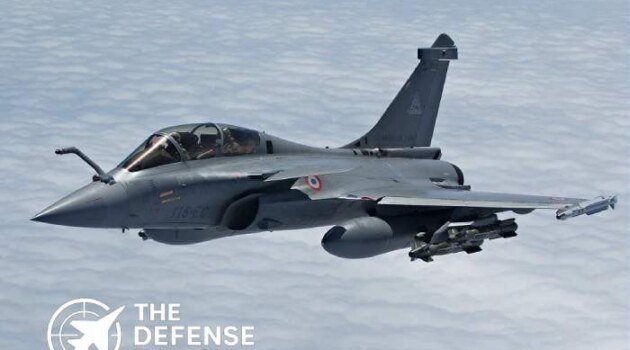
Image Source: Dassault Aviation The Rafale employs a delta wing-canard configuration with two Snecma M88 engines, providing exceptional low-speed handling, short takeoff performance, and superior agility at high angles of attack. The close-coupled canards enhance maneuverability throughout the flight envelope while contributing to the aircraft’s distinctive appearance.
Key Performance Metrics:
F-16C/D Block 52+:
- Maximum speed: Mach 2+ (1,500+ mph)
- Combat radius: 340 miles (550 km)
- Service ceiling: 50,000+ feet
- Maximum takeoff weight: 42,300 lbs (19,187 kg)
- Thrust-to-weight ratio: Approximately 1.1 (with afterburner)
Rafale C:
- Maximum speed: Mach 1.8 (1,190 mph)
- Combat radius: 1,056 miles (1,700 km) in ground attack configuration
- Service ceiling: 50,000+ feet
- Maximum takeoff weight: 54,000 lbs (24,500 kg)
- Thrust-to-weight ratio: Approximately 0.99 loaded, 1.3 clean configuration
The Rafale’s twin-engine design provides redundancy and greater total thrust, while the F-16’s single-engine approach reduces acquisition and operational costs.
(adsbygoogle = window.adsbygoogle || []).push({});Avionics and Sensor Systems
F-16 Modernization: Block Upgrades to the V Standard
Modern F-16 variants feature sophisticated avionics suites centered around the Northrop Grumman APG-83 SABR (Scalable Agile Beam Radar), an AESA system providing enhanced detection ranges, simultaneous multi-target tracking, and electronic attack resistance. The F-16V upgrade package includes:
- Center Pedestal Display with advanced mission computer
- Modernized cockpit with large-format touchscreen displays
- Link 16 tactical data link for network-centric operations
- Advanced electronic warfare systems including the ALQ-211 AIDEWS pod
- Helmet-mounted cueing systems for off-boresight targeting
Image: Danish Armed Forces. These upgrades transform legacy F-16s into capable fourth-generation-plus platforms competitive with newer designs.
Rafale’s Integrated Sensor Fusion
The Rafale’s avionics architecture emphasizes sensor fusion and situational awareness through its Modular Data Processing Unit. The Thales RBE2-AA AESA radar provides simultaneous air-to-air and air-to-ground modes, detecting targets at ranges exceeding 93 miles (150 km) for fighter-sized aircraft. Additional systems include:
- Thales SPECTRA electronic warfare suite with active jamming and missile warning
- Thales OSF (Optronique Secteur Frontal) infrared search and track system
- Damocles or Talios targeting pods for precision ground attack
- MICA-IR missiles integrated with OSF for passive targeting
- TopSight helmet-mounted display system
The Rafale’s sensor fusion automatically correlates data from radar, infrared sensors, electronic warfare systems, and external sources, presenting pilots with comprehensive tactical pictures without manual sensor management.
Weapons Systems and Combat Capability
F-16: Versatile Arsenal Integration
The F-16’s weapons flexibility stems from 11 hardpoints accommodating up to 17,000 lbs (7,700 kg) of ordnance. Standard air-to-air armament includes AIM-120 AMRAAM medium-range missiles and AIM-9 Sidewinder short-range missiles. Ground attack capabilities encompass:
- Joint Direct Attack Munitions (JDAM) precision-guided bombs
- AGM-65 Maverick air-to-ground missiles
- AGM-88 HARM anti-radiation missiles
- Paveway laser-guided bombs
- Small Diameter Bombs (SDB) for high-precision strikes
- M61 Vulcan 20mm internal cannon
Recent integration efforts have expanded F-16 compatibility with advanced weapons including the AGM-158 Joint Air-to-Surface Standoff Missile (JASSM) on certain variants.
Rafale: Comprehensive Weapons Integration
The Rafale’s 14 hardpoints support weapons loads up to 20,950 lbs (9,500 kg), with comprehensive integration of European and international weapons systems:
- MBDA Meteor beyond-visual-range air-to-air missiles
- MICA multi-mission missiles (radar and infrared variants)
- SCALP/Storm Shadow cruise missiles for standoff strikes
- AASM Hammer precision-guided munitions
- Exocet AM39 anti-ship missiles
- ASMP-A nuclear-capable cruise missiles (French Air Force only)
- 30mm GIAT DEFA 791B internal cannon
The Rafale’s weapons system management allows pilots to employ different weapon types simultaneously without mode switching, supporting true multirole operations within single sorties.
Operational Costs and Sustainability
Life-Cycle Economics
The Rafale vs F-16 cost analysis reveals significant differences in acquisition and operational expenses. The F-16’s lower unit cost—approximately $30-65 million depending on variant and configuration—makes it accessible to mid-tier air forces with constrained budgets. Operating costs average $7,000-9,000 per flight hour for modern variants.
(adsbygoogle = window.adsbygoogle || []).push({});The Rafale’s unit cost ranges from $80-120 million, reflecting its newer design, twin-engine configuration, and advanced systems integration. Operating costs approximate $16,000-18,000 per flight hour, nearly double the F-16’s expenses. However, Rafale operators emphasize the aircraft’s mission flexibility reducing the need for specialized platforms.
Global Supply Chain and Support
Lockheed Martin’s extensive F-16 production and support network spans decades, with established maintenance facilities, spare parts availability, and training infrastructure worldwide. The F-16 global supply chain benefits from economies of scale derived from over 4,600 aircraft produced.
Dassault’s Rafale support network, while smaller, has expanded significantly with international sales. France maintains comprehensive indigenous support capabilities, while export customers receive tailored support packages including pilot training, maintenance training, and spare parts agreements.
Combat Record and Operational Deployment
F-16 Combat Proven Across Multiple Conflicts
The F-16 has accumulated extensive combat experience since the Israeli Air Force first employed the type in 1981. Notable operational deployments include:
- Israeli operations over Lebanon and Syria (1980s-present)
- U.S. operations in Desert Storm, Iraqi Freedom, and Afghanistan
- NATO operations over Bosnia, Kosovo, and Libya
- Pakistani operations along the Line of Control
- Turkish operations in Syria
The F-16 has achieved over 75 confirmed air-to-air victories against various opponents, demonstrating effectiveness in beyond-visual-range and close-in combat scenarios.
Rafale: Modern Combat Operations
The Rafale has participated in combat operations since 2007, with French forces deploying the aircraft in:
- Afghanistan (2007-2012): Close air support and reconnaissance
- Libya (2011): NATO Operation Unified Protector
- Mali (2013-present): Counter-insurgency operations
- Iraq and Syria (2014-present): Counter-ISIS coalition strikes
- French carrier operations in Mediterranean and Indo-Pacific regions
Egyptian and Indian Rafales have also seen operational deployment along their respective frontiers, though without publicized combat engagements as of early 2025.
Strategic Considerations and Export Success
F-16: Global Proliferation and Strategic Partnerships
The F-16’s export success stems from American security partnerships, Foreign Military Sales programs, and the aircraft’s proven reliability. Current operators include NATO allies, Middle Eastern partners, and Asian nations including Taiwan, South Korea, and Singapore. The F-16 forms the backbone of many allied air forces, facilitating interoperability during coalition operations.
Rafale: European Alternative and Strategic Autonomy
France has positioned the Rafale as a strategic alternative for nations seeking advanced capabilities without complete dependence on American defense systems. Recent export successes demonstrate growing international acceptance:
- India: 36 aircraft delivered (2016 order), with potential for additional procurement
- Egypt: 54 aircraft across two orders
- Qatar: 36 aircraft with options for 36 additional
- Greece: 24 aircraft strengthening NATO’s southeastern flank
- United Arab Emirates: 80 aircraft (largest single Rafale order)
- Indonesia: 42 aircraft ordered in 2022
Image Source: Dassault Aviation These sales reflect the Rafale’s appeal to nations prioritizing operational sovereignty and European defense industrial cooperation.
Future Modernization and Longevity
F-16 Service Life Extension
Lockheed Martin continues developing F-16 improvements, with the Block 70/72 variant representing the most advanced configuration available. Service life extension programs (SLEP) can extend F-16 operational longevity to 12,000 flight hours, ensuring relevance into the 2040s for well-maintained airframes. Ongoing enhancements include:
- Advanced electronic warfare systems
- Infrared search and track (IRST) capabilities
- Integration with fifth-generation platforms like F-35
- Artificial intelligence-assisted mission systems
Rafale F4 and Beyond
Dassault’s Rafale F4 standard, entering service in 2024-2025, introduces significant capability enhancements:
- Enhanced connectivity with NATO assets and future European combat systems
- Integration of the MBDA MICA NG missile
- Improved AESA radar with extended range
- Enhanced sensor fusion algorithms
- Compatibility with collaborative combat aircraft (loyal wingman UAVs)
France is already planning the Rafale F5 standard for the 2030s, ensuring the platform remains competitive as European nations develop the Future Combat Air System (FCAS).
Analysis: Complementary Capabilities in Modern Air Warfare
The Rafale vs F-16 comparison ultimately reveals two highly capable but distinctly different approaches to multirole fighter design. The F-16’s enduring success derives from continuous modernization, proven reliability, and unmatched global support infrastructure. Its cost-effectiveness and combat-proven performance make it an optimal choice for nations requiring dependable airpower without premium pricing.
(adsbygoogle = window.adsbygoogle || []).push({});The Rafale represents a comprehensive fourth-generation-plus design optimized for high-intensity conflicts against peer adversaries. Its superior sensor integration, extended range, and weapons flexibility provide capabilities approaching fifth-generation standards in certain mission sets. Nations prioritizing strategic autonomy, reduced dependency on American defense systems, or requirements for carrier-capable aircraft find the Rafale particularly attractive despite higher acquisition and operating costs.
Neither aircraft conclusively “wins” this comparison—their suitability depends entirely on specific operational requirements, budget constraints, strategic partnerships, and threat environments. The F-16 remains the economical, proven workhorse for air forces requiring reliable multirole capability. The Rafale offers cutting-edge technology and comprehensive mission flexibility for operators willing to invest in premium performance.
As fifth-generation fighters like the F-35 become more prevalent, both the F-16 and Rafale are evolving into complementary platforms within mixed fleets, providing cost-effective mass alongside high-end capabilities. This evolutionary path ensures both aircraft will remain operationally relevant well into the 2040s, continuing their respective legacies as cornerstone platforms in global air combat.
FAQs
Which is better, the Rafale or F-16?Neither aircraft is definitively “better”—each excels in different contexts. The F-16 offers proven reliability and lower costs, while the Rafale provides more advanced sensors, greater range, and superior multirole flexibility. The optimal choice depends on operational requirements, budget, and strategic partnerships.
How much does a Rafale cost compared to an F-16?A new Rafale costs approximately $80-120 million per unit, while modern F-16 variants range from $30-65 million. Operating costs also differ significantly: Rafale operations average $16,000-18,000 per flight hour versus $7,000-9,000 for the F-16.
Can the F-16 defeat a Rafale in air combat?Both aircraft are highly capable in air combat, with outcomes depending on pilot skill, tactics, supporting assets, and engagement conditions rather than platform alone. The Rafale’s AESA radar and Meteor missiles provide advantages in beyond-visual-range combat, while the F-16’s agility remains formidable in close-range engagements.
Which countries operate the Rafale and F-16?The F-16 serves in approximately 25 air forces including the United States, Turkey, Israel, Pakistan, Greece, and Poland. The Rafale operates with France, India, Egypt, Qatar, Greece, Croatia, Indonesia, and the United Arab Emirates, with several nations operating both types.
Is the Rafale a fifth-generation fighter?No, the Rafale is classified as a fourth-generation-plus (4.5 generation) fighter. While it incorporates advanced sensor fusion, AESA radar, and sophisticated electronic warfare systems, it lacks the stealth characteristics defining true fifth-generation platforms like the F-35 or F-22.


Destroyer vs Frigate Explained
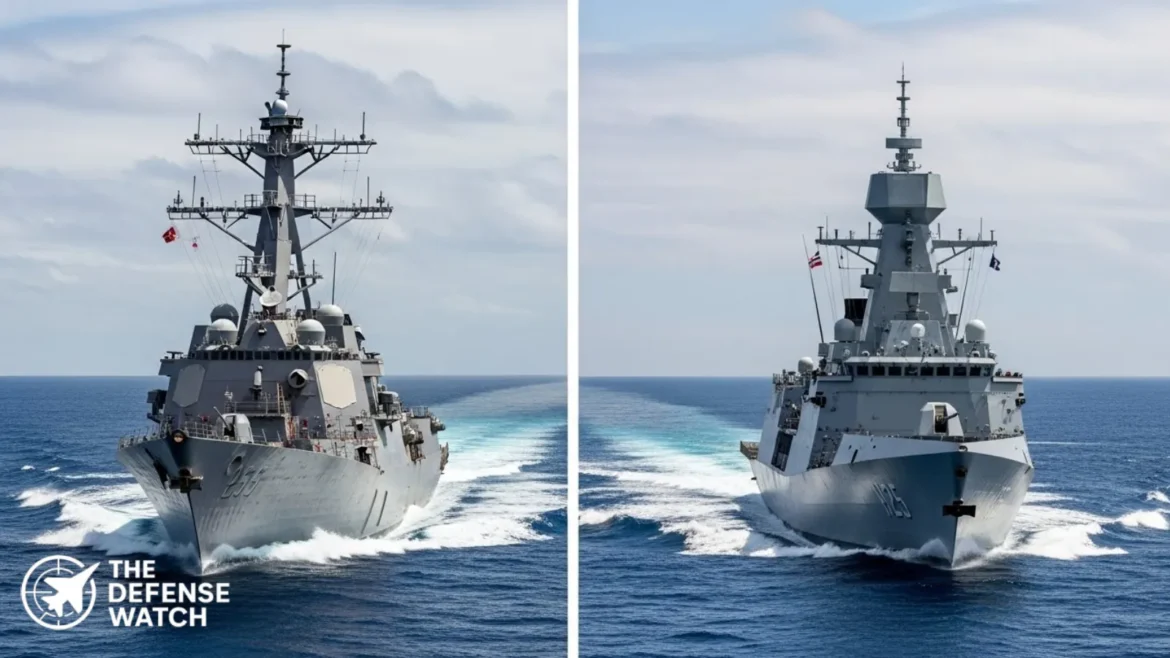
The destroyer vs frigate debate comes up often when modern navies announce new ship programs or deployments. Both vessels look similar at first glance. Both carry missiles, radars, helicopters, and advanced sensors. Yet their roles, size, and combat focus differ in important ways. Understanding the difference between a destroyer and a frigate helps explain how navies balance firepower, cost, and global reach.
Today, the United States Navy, NATO allies, and Indo Pacific powers operate both ship types side by side. From the Arleigh Burke class destroyer to newer guided missile frigates, each fills a specific place in fleet operations.
What Is a Destroyer
A destroyer is a large, heavily armed surface combatant designed for high intensity warfare. Historically, destroyers were built to protect battleships from torpedo boats. Over time, they evolved into multi role warships focused on air defense, missile defense, and strike operations.
Modern destroyers act as command ships within task groups. They often escort aircraft carriers and amphibious assault ships. They also operate independently in contested waters.
Key Features of Modern Destroyers
- Displacement usually between 8,000 and 10,000 tons
- Large vertical launch systems for missiles
- Advanced phased array radars
- Long range air and missile defense capability
- Command and control for fleet operations

The U.S. Navy’s Arleigh Burke class is a leading example. These ships carry the Aegis combat system and can launch Tomahawk cruise missiles, Standard air defense missiles, and anti submarine weapons. Official U.S. Navy background on destroyer roles can be found on the Navy’s surface forces overview page (external link to U.S. Navy official site).
What Is a Frigate
A frigate is a smaller surface combatant optimized for escort, patrol, and maritime security missions. In the destroyer vs frigate comparison, frigates focus more on cost effective presence and protection rather than maximum firepower.
Frigates are often tasked with convoy escort, anti submarine warfare, and regional patrols. Many operate close to shore or across long sea lines of communication.
Key Features of Modern Frigates
- Displacement typically between 3,000 and 7,000 tons
- Fewer missile cells than destroyers
- Strong anti submarine focus
- Lower crew size and operating cost
- Ideal for sustained forward presence
New frigate programs reflect their growing importance. The U.S. Navy’s Constellation class frigate aims to complement destroyers by taking on escort and patrol duties, freeing larger ships for high end missions. Program details are publicly outlined by the U.S. Naval Sea Systems Command (external link to NAVSEA official site).
Size and Cost Differences
One of the clearest differences in the destroyer vs frigate comparison is size. Destroyers are larger, heavier, and more expensive to build and maintain. A single modern destroyer can cost well over two billion dollars. Frigates often cost half that or less, depending on configuration.
Because of this, navies can field more frigates than destroyers. This matters in peacetime operations, where constant presence is needed across multiple regions.
Weapons and Combat Systems
Destroyer Firepower
Destroyers carry extensive missile arsenals. Their vertical launch systems support air defense, ballistic missile defense, land attack, and anti ship missions. They also carry advanced electronic warfare systems and long range sensors.
In fleet combat, destroyers often provide the air defense umbrella for other ships. They can intercept aircraft, cruise missiles, and in some cases ballistic missiles.
Frigate Armament
Frigates carry fewer missiles and lighter sensors. Their weapons are tailored toward submarines, surface threats, and self defense. Many frigates rely on helicopters and towed sonar arrays for submarine hunting.
While they lack the broad missile defense role of destroyers, modern frigates remain lethal in their intended missions.

Roles in Modern Naval Strategy
The destroyer vs frigate distinction becomes clear when looking at strategy.
Destroyers are high value assets used in contested environments. They deploy with carrier strike groups, ballistic missile defense patrols, and power projection missions.
Frigates are workhorses. They escort logistics ships, patrol chokepoints, and maintain maritime security. In lower intensity conflicts, frigates often operate as the first line of response.
NATO navies use this mix to balance capability and affordability. European fleets, in particular, rely heavily on frigates for daily operations, while keeping fewer destroyers for air defense leadership.
Why Navies Still Need Both
Some analysts once argued that advanced destroyers could replace frigates. That view has shifted. Rising costs and global commitments have reinforced the need for both ship types.
Frigates offer numbers and presence. Destroyers offer depth and power. Together, they create flexible fleets that can scale from routine patrols to major combat.
Recent naval strategies from the United States, United Kingdom, and Japan all emphasize mixed surface fleets. This approach reflects lessons from recent conflicts and growing maritime competition.
Analysis, The Future of Destroyers and Frigates
Looking ahead, the destroyer vs frigate balance is becoming more important, not less. Hypersonic missiles, drones, and submarine threats are forcing navies to spread risk across more hulls. Frigates provide affordable platforms for sensors and unmanned systems. Destroyers concentrate high end defenses and command roles.
The return of great power competition at sea means navies cannot rely on a single ship type. Instead, layered fleets are becoming the norm, with destroyers and frigates operating as complementary tools rather than rivals.
FAQs
Yes. Destroyers carry more weapons, sensors, and missile defense systems than frigates.
Frigates cost less to operate and are better suited for patrol, escort, and anti submarine roles.
Yes. The U.S. Navy is introducing the Constellation class guided missile frigate.
In theory yes, but destroyers hold a major advantage in sensors and firepower.
Frigates are more common worldwide due to lower cost and broader mission use.
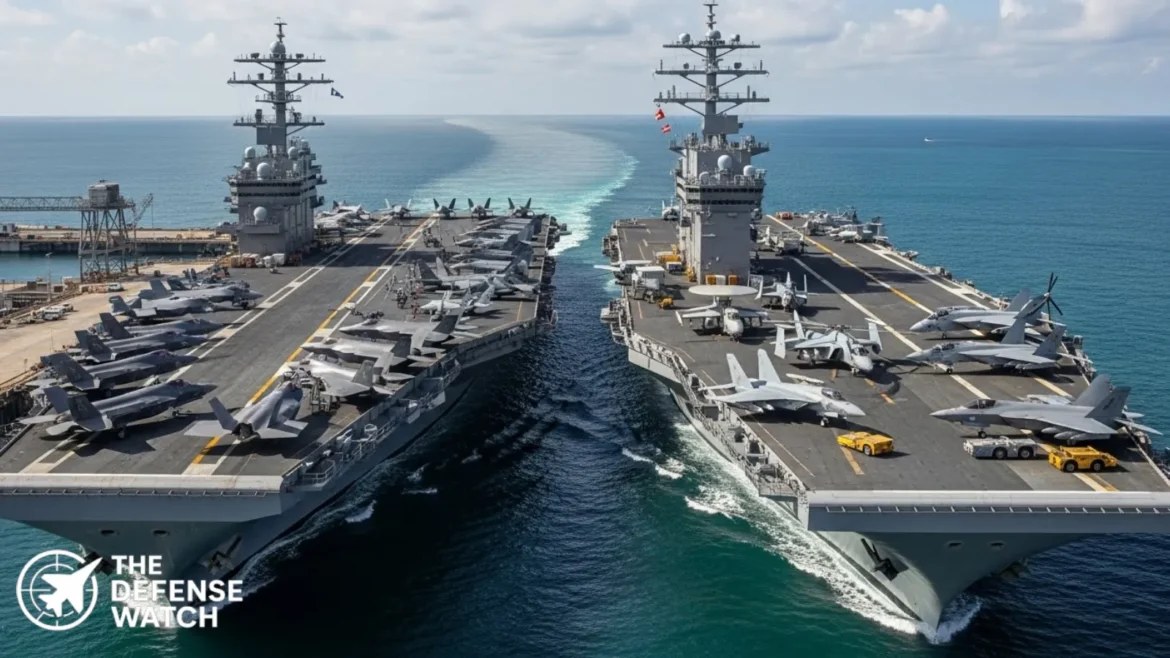
China Aircraft Carrier vs US Carrier
For decades the United States Navy’s aircraft carriers have been the backbone of American military power at sea, acting as floating air bases wherever Washington wants global influence. Now China’s rapid push into carrier development has shifted this balance in the Indo‑Pacific. With China operating multiple carriers and building even more advanced ones, the question is no longer theoretical: in a China aircraft carrier vs US contest, who leads in strength, capability, and strategic impact today and in the near future? This comparison matters not just for Taiwan or the South China Sea, but for NATO partners in Asia, U.S. deterrence posture, and global trade security across vital sea lanes.
China Aircraft Carrier vs US Carrier Specifications Table
| Feature | China’s Carriers (Fujian Class) | U.S. Navy Carriers (Ford/Nimitz Class) |
|---|---|---|
| Number in Service | 3 (Liaoning, Shandong, Fujian) | 11 supercarriers overall |
| Displacement | ~80,000 tons (Fujian) | ~100,000+ tons |
| Propulsion | Conventional (fuel) | Nuclear |
| Aircraft Launch | Electromagnetic (Fujian), ski jump (older) | Catapult (steam/EMALS) |
| Typical Air Wing | ~50–60 aircraft | ~70–90 aircraft |
| Endurance at Sea | Limited (fuel dependent) | Very high (nuclear) |
| First Service Entry | 2012 (Liaoning) to 2025 (Fujian) | 1975 (Nimitz) to 2017 (Ford) |
| Estimated Cost | ~5 to 6 billion USD each | ~13+ billion USD each |
Design & Technology
China’s Carriers
China’s first carriers were built from Soviet designs and launched aircraft off a ski ramp. The newest, the Fujian, shifts to electromagnetic launchers like those on U.S. carriers. That lets China operate heavier aircraft and yields greater payload capacity. But China’s carriers use conventional engines, which means they need regular refueling and lack the almost unlimited reach that nuclear power provides. China is also building a future carrier design (Type 004) that may be nuclear and larger than the U.S. Ford class.
U.S. Carriers
Firepower & Performance
China’s Carrier Air Wing
China’s air wings include J‑15 fighters, new J‑35 stealth jets, airborne early warning aircraft (KJ‑600), and drones. This mix gives China a broader range of mission profiles than earlier carriers could manage, but they still trail the U.S. in mature combat systems and number of fighter sorties per day.
U.S. Carrier Air Wing
U.S. carrier air wings include F‑35C stealth fighters, F/A‑18 Super Hornets, E‑2D Hawkeyes for airborne radar, and EA‑18G Growlers for electronic warfare. The U.S. can support large air wings and sustain high sortie rates thanks to advanced deck tech and long experience.
Operational Range & Mobility
With nuclear propulsion, U.S. carriers can stay at sea for months without refueling, and move quickly across oceans. China’s current carriers must refuel more often and rely on supply ships, which adds complexity to long‑range operations. Future Chinese carriers with nuclear plants could narrow this gap.
Combat Effectiveness
China’s Experience
China’s carrier operations are relatively new. The PLAN has conducted exercises and integrated carriers into fleet drills, but it lacks real combat experience. Training, logistics, and joint‑force command will take years to mature.
U.S. Operational Record
Cost & Export Value
U.S. carriers are among the most expensive warships ever built, but they also support vast industrial bases and export naval aviation tech to allies. China’s carriers cost less but their export value is limited since no other navy yet operates similar ships at scale.
Analysis
In a straight China aircraft carrier vs US comparison today, the United States maintains the lead in overall capability. U.S. carriers are larger, nuclear powered, and carry more aircraft, supported by decades of operational experience and a global network of bases. China is closing the technology gap with electromagnetic launch systems, domestic aircraft development, and plans for future nuclear carriers. But China’s fleet is smaller, less tested, and more regionally focused around the First Island Chain. U.S. doctrine still emphasizes integrated air, sea, and joint operations with allies, while China continues to build institutional expertise.
China’s carrier program is rapidly evolving. Newer designs like the projected Type 004 could rival or even surpass U.S. carriers in size and aircraft capacity. Still, numbers and technology do not automatically translate to combat effectiveness without experience and logistics support.
Conclusion
In a direct China aircraft carrier vs US comparison today, the United States clearly leads in capability, reach, and operational experience. China’s carriers are credible and improving quickly, but they remain second with limited endurance and less battle‑tested systems. Under specific conditions close to China’s coast and within integrated PLAN operations, Chinese carriers could be effective. On a global scale, U.S. carriers retain the edge in power projection and sustained operations.
FAQs
In a China aircraft carrier vs US clash who has more carriers?The U.S. Navy operates more carriers (11) compared with China’s three.
How do China’s carriers differ in launch technology?China’s newest carrier uses electromagnetic launch systems like U.S. Ford class, while earlier Chinese carriers used ski‑jump ramps.
Why does propulsion matter in carrier ops?Nuclear propulsion lets U.S. carriers stay at sea longer without refueling, giving them greater range and endurance. Chinese carriers now are conventionally powered.
Can China’s carriers carry stealth aircraft?China is developing carrier‑based stealth jets like the J‑35, expanding their mission sets.
Does the U.S. still lead in carrier combat experience?Yes. The U.S. has longer and more varied operational experience with carriers, especially in real combat scenarios.
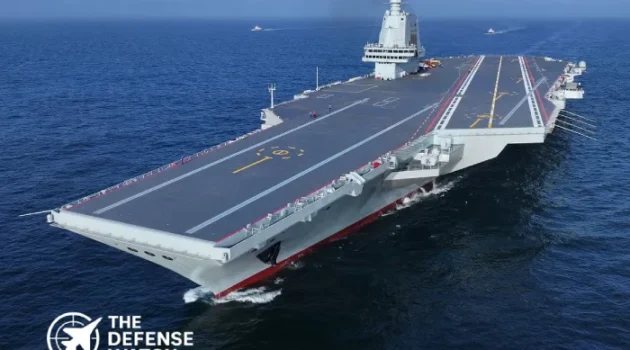

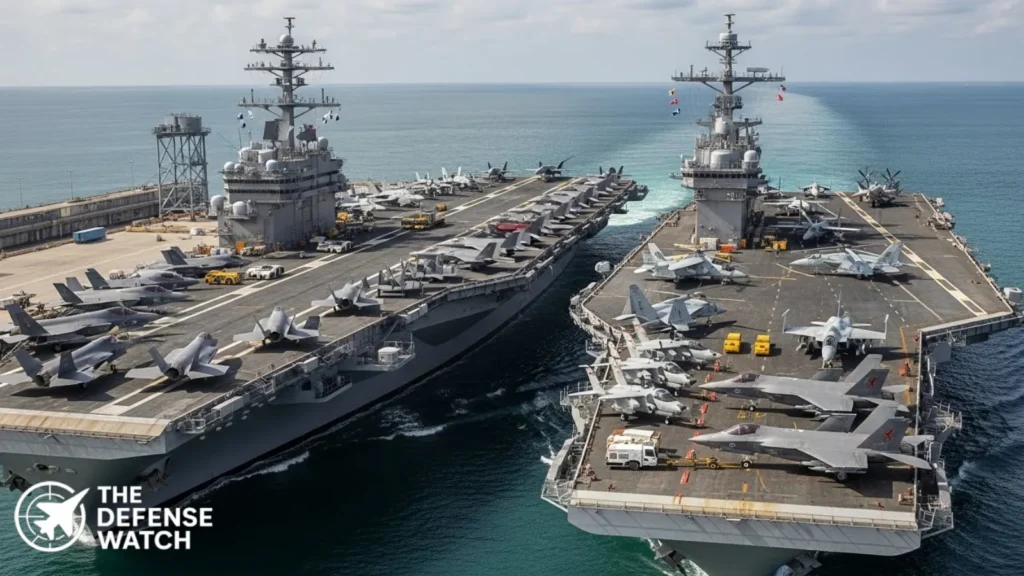

NGAD vs Tempest, Why Sixth Generation Airpower Matters
NGAD vs Tempest has become one of the most watched rivalries in global military aviation. Both programs aim to define what air dominance will look like beyond the era of fifth generation fighters like the F 22 Raptor and F 35 Lightning II. As peer competition intensifies, especially with China and Russia advancing their own next generation aircraft, the United States and Europe are investing heavily in new concepts that go far beyond stealth alone.
At its core, NGAD vs Tempest is not just a comparison of two aircraft. It is a comparison of two approaches to future warfare, one led by the United States Air Force and the other by a multinational European partnership anchored by the United Kingdom.
What Is NGAD
A Family of Systems, Not Just a Fighter
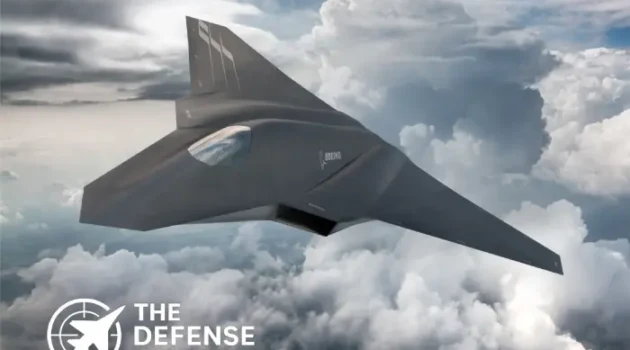
The Next Generation Air Dominance program, known as NGAD, is the US Air Force’s top modernization priority for air combat. Unlike past fighter programs, NGAD is designed as a family of systems rather than a single aircraft. At its center is a crewed sixth generation fighter, supported by uncrewed collaborative combat aircraft, advanced sensors, secure networks, and next level propulsion.
Senior US officials have confirmed that at least one NGAD demonstrator has already flown, signaling that the program is well into its development phase. NGAD is intended to replace the F 22 and operate in the most heavily defended airspace imaginable.
Core Design Goals of NGAD
NGAD emphasizes flexibility, rapid upgrade cycles, and digital engineering. Instead of operating one aircraft design for decades, the Air Force plans to field multiple designs over shorter service lives. This approach aims to stay ahead of evolving threats.
Key priorities include
• Extreme survivability against advanced air defenses
• Long range operations across the Indo Pacific
• Tight integration with uncrewed wingmen
• Dominance in electronic warfare and cyber contested environmentsThe NGAD vs Tempest debate often centers on how far this system of systems concept can be pushed in real world operations.
What Is Tempest
Europe’s Answer to Future Air Combat
Tempest is the centerpiece of the Global Combat Air Programme, or GCAP, led by the United Kingdom with Italy and Japan as core partners. Sweden was involved in early concept work but GCAP now focuses on the UK Japan Italy partnership. Tempest is intended to replace the Eurofighter Typhoon from the mid 2030s onward.
Unlike NGAD, Tempest is more openly discussed by its developers, with regular concept reveals and technology demonstrations led by BAE Systems, Rolls Royce, Leonardo, and Mitsubishi Heavy Industries.
Tempest Design Philosophy
Tempest is also a sixth generation fighter, but its design philosophy leans toward modularity and coalition operations. The aircraft is expected to operate seamlessly with allied forces and integrate emerging technologies without full redesigns.
Key focus areas include
• Advanced stealth shaping and materials
• Adaptive cycle engines for range and power
• Artificial intelligence assisted decision making
• Optional crewed operations in later variantsIn the NGAD vs Tempest comparison, Tempest is often viewed as more transparent and collaborative, reflecting Europe’s emphasis on multinational defense programs.
Stealth and Survivability, Different Paths to the Same Goal
Both NGAD and Tempest place survivability at the top of their requirements, but they may achieve it in different ways.
NGAD is believed to push stealth beyond traditional radar cross section reduction. This includes advanced electronic attack, cyber effects, and dynamic signature management. The goal is to remain effective even if an adversary detects the aircraft.
Tempest also emphasizes stealth, but pairs it with powerful onboard sensors and long range weapons. European officials often stress information dominance rather than pure invisibility.
In the NGAD vs Tempest discussion, analysts note that survivability is increasingly about managing detection rather than avoiding it entirely.
Crewed and Uncrewed Teaming
NGAD’s Heavy Focus on Collaborative Aircraft
One of NGAD’s defining features is its reliance on uncrewed systems. These collaborative combat aircraft are designed to fly alongside the crewed NGAD fighter, carrying sensors, weapons, or jamming payloads. They extend the reach and resilience of the overall force.
The Air Force views this as essential for high risk missions in contested airspace. Losing an uncrewed aircraft is far less costly than losing a pilot.
Tempest’s Approach to Uncrewed Integration
Tempest also incorporates uncrewed teaming, but its approach appears more incremental. Developers envision swarming drones that can be tasked dynamically by the pilot or by onboard AI systems.
The NGAD vs Tempest comparison shows that both programs see human machine teaming as unavoidable, even if their execution timelines differ.
Engines and Range, A Key Differentiator
Range is a critical issue, especially for the United States, which must plan for operations across vast distances in the Pacific.
NGAD is expected to feature adaptive cycle engines that can shift between high efficiency and high thrust modes. This allows longer range, better fuel economy, and improved thermal management for sensors and weapons.
Tempest also plans to use next generation engines, developed by Rolls Royce, with a strong emphasis on electrical power generation. This supports directed energy weapons and advanced electronic warfare systems.
In NGAD vs Tempest comparisons, range and endurance often tilt in NGAD’s favor due to US operational needs, while Tempest focuses on flexibility and exportability.
Artificial Intelligence and Data Fusion
Both programs rely heavily on artificial intelligence to reduce pilot workload and speed up decision making.
NGAD’s AI is expected to manage sensor fusion, threat prioritization, and control of uncrewed aircraft. The pilot becomes a mission commander rather than a traditional stick and throttle operator.
Tempest developers describe a virtual copilot that assists with targeting, navigation, and battle management. This aligns with European efforts to keep humans firmly in the decision loop.
The NGAD vs Tempest debate highlights different cultural approaches to AI in combat aviation, even as the underlying technology converges.
Cost, Timelines, and Industrial Impact
NGAD Cost and Schedule
NGAD remains classified in many areas, but US officials have acknowledged that it will be expensive. Unit costs could exceed those of current fighters, though the Air Force argues that shorter production runs and faster upgrades justify the expense.
Operational capability is expected in the early 2030s.
Tempest Cost and Schedule
Tempest aims for entry into service around 2035. European partners emphasize affordability and long term sustainment, partly to ensure export success.
The NGAD vs Tempest comparison here reflects broader differences between US and European defense spending models.
Strategic Context, More Than Just Aircraft
NGAD vs Tempest must be understood within a wider strategic picture. NGAD is designed primarily with China in mind, focusing on anti access and area denial environments in the Indo Pacific.
Tempest, by contrast, is shaped by NATO requirements, European defense autonomy, and interoperability with allies like Japan.
Both programs signal a shift away from single platform thinking toward networked air combat ecosystems.
Analysis, What NGAD vs Tempest Really Tells Us
The competition between NGAD and Tempest is less about which fighter is better and more about how airpower is evolving. Both programs accept that future air dominance depends on networks, data, and integration across domains.
NGAD reflects US confidence in rapid innovation and high end specialization. Tempest reflects a coalition based approach that balances capability with political and industrial realities.
Neither program exists in isolation, and both will influence allied and adversary designs for decades to come.
FAQs
What does NGAD stand forNGAD stands for Next Generation Air Dominance, the US Air Force program for sixth generation air combat systems.
Is Tempest a single aircraft or a programTempest is both a sixth generation fighter and a broader combat air system developed under the Global Combat Air Program.
Which will enter service first, NGAD or TempestCurrent indications suggest NGAD may reach operational status earlier, possibly in the early 2030s, while Tempest targets the mid 2030s.
Are these fighters meant to replace the F 35No. NGAD is intended to replace the F 22, while Tempest will replace the Eurofighter Typhoon. The F 35 will continue operating alongside them.
Will NGAD or Tempest be exportedTempest is expected to be marketed for export. NGAD is likely to remain US only, at least initially.
Israel Prepares to Operationalize Revolutionary Laser Defense Technology
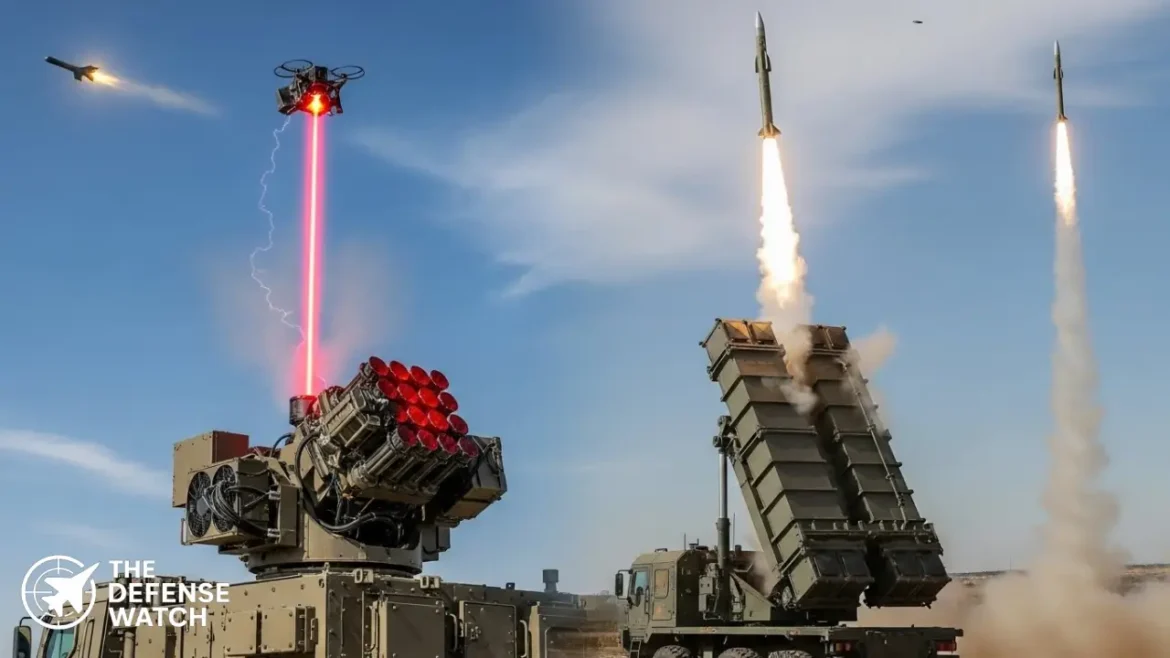
Israel is poised to deploy the world’s first operational high-energy laser air defense system by the end of December 2025, marking a significant milestone in directed energy weapons technology. The Iron Beam vs Iron Dome comparison highlights fundamental differences in interception methodology, operational economics, and tactical flexibility that will reshape how the Israel Defense Forces counter aerial threats.
Danny Gold, head of Israel’s Directorate of Defense Research and Development, confirmed at the DefenseTech Summit that the Iron Beam system will achieve initial operational capability on December 30, 2025. The system, developed by Rafael Advanced Defense Systems and first unveiled in 2014, represents over a decade of research and testing in laser-based air defense technology.
The Iron Beam vs Iron Dome analysis reveals complementary capabilities rather than replacement systems. While Iron Dome has intercepted thousands of rockets and mortars since its 2011 deployment, Iron Beam introduces laser-based engagement that fundamentally changes the cost-benefit calculus of air defense operations.
Core Technology: Missiles Versus Directed Energy
The primary distinction in the Iron Beam vs Iron Dome comparison centers on interception methodology. Iron Beam employs high-energy lasers that travel at the speed of light, delivering concentrated thermal energy to incoming projectiles. The system uses multifunction beam directors and adaptive optics to maintain targeting precision, neutralizing threats within seconds of detection.
Iron Dome utilizes Tamir interceptor missiles launched from mobile batteries. Each interceptor must physically traverse the distance to its target, requiring flight times that range from several seconds to over a minute depending on engagement geometry. The system’s fire control radar tracks incoming threats and calculates intercept trajectories, directing missiles to kinetically destroy rockets, mortars, and unmanned aerial vehicles.

The Iron Beam laser system focuses intense heat on critical structural points of incoming projectiles, causing detonation, structural failure, or trajectory deviation. This precision engagement minimizes collateral damage and allows simultaneous targeting of multiple threats from a single emitter platform.
Iron Dome’s kinetic interception generates debris from both the interceptor and target, though the system is designed to engage threats over unpopulated areas when possible. The missile-based approach has demonstrated approximately 90 percent effectiveness across thousands of operational engagements since 2011.
Economic Calculus: Cost Per Engagement Analysis
The Iron Beam vs Iron Dome cost comparison reveals dramatic differences in operational economics. Iron Beam operates on electrical power, with Rafael Advanced Defense Systems reporting near-zero cost per interception. Each engagement consumes electricity to power the laser emitter, making sustained operations economically viable even against high-volume attacks or low-value targets like small drones.
Iron Dome interceptors cost approximately $40,000 per Tamir missile according to defense industry assessments. While highly effective, this cost structure creates economic asymmetries when engaging inexpensive rockets or mass drone swarms. A sustained rocket barrage requiring dozens of interceptors can rapidly deplete defense budgets and stockpiles.
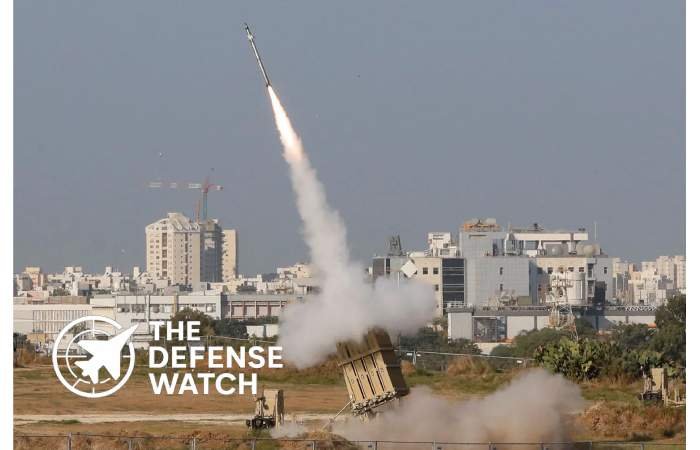
The ‘Iron Beam’ laser-based air defense system is seen intercepting a target over southern Israel, March 2022. (Defense Ministry) The economic advantage of laser-based systems becomes particularly relevant in extended conflicts or against adversaries employing saturation tactics. Iron Beam can engage threats continuously as long as electrical power remains available, while Iron Dome requires regular resupply of interceptor missiles that must be manufactured, transported, and loaded into battery launchers.
Israel has faced criticism over defense expenditures during prolonged periods of rocket fire from Gaza and Lebanon. The Iron Beam system addresses these concerns by offering unlimited magazine depth at marginal operational cost, though initial system acquisition and maintenance expenses remain substantial.
Magazine Capacity and Sustained Operations
The Iron Beam vs Iron Dome comparison highlights fundamental differences in ammunition capacity. Iron Beam’s “magazine” consists of available electrical power, allowing continuous engagement limited only by power generation and thermal management. The system can theoretically fire dozens of shots per minute against multiple targets, with each engagement requiring only seconds of laser dwell time.
Iron Dome batteries carry between 20 and 80 Tamir interceptors depending on launcher configuration. Once depleted, the system requires reloading operations that temporarily reduce defensive capacity. During intense combat periods, Israel has experienced interceptor shortages that necessitated emergency resupply from U.S. stockpiles.
Rafael’s Iron Beam system includes variants with different power outputs optimized for specific threat types. The Lite Beam variant operates at 10 kilowatts for engaging smaller drones and mortars, while Iron Beam-M delivers over 50 kilowatts for harder targets at extended ranges. This scalability allows commanders to match system capabilities to threat environments without wasting capacity.
The sustained engagement capability proves particularly valuable against drone swarms, which have emerged as a primary tactical challenge across modern conflicts. Iron Beam can engage multiple small drones in rapid succession without ammunition concerns, while Iron Dome must carefully manage interceptor inventory when facing coordinated attacks involving dozens of unmanned systems.
Deployment Flexibility and Platform Integration
The Iron Beam vs Iron Dome operational comparison reveals significant differences in deployment flexibility. Iron Beam features modular design enabling installation on ground vehicles, naval vessels, and fixed installations. Rafael has demonstrated truck-mounted systems for mobile defense and discussed naval integration for protecting maritime assets from drone and missile threats.
Iron Dome primarily operates from truck-mounted launchers that can be relocated to meet changing threat priorities. The system includes radar and command units that must be positioned to provide coverage zones, creating logistical requirements for battery deployment. Naval variants like C-DOME and mobile configurations such as I-DOME extend operational flexibility, though the fundamental architecture remains oriented toward fixed or semi-mobile defensive positions.
The compact nature of laser emitters relative to missile launchers enables Iron Beam deployment in space-constrained environments including urban areas and forward operating bases. Future variants under development may achieve further size and weight reductions, enabling integration onto smaller platforms including unmanned ground vehicles.
Iron Dome’s operational track record includes deployments protecting Israeli cities, military installations, and critical infrastructure across varied terrain. The system has demonstrated rapid repositioning capabilities during conflicts, though movement of complete batteries requires significant logistical coordination including radar calibration and communications integration.
Engagement Speed and Precision Capabilities
The Iron Beam vs Iron Dome performance comparison shows distinct advantages in engagement timeline. Laser-based interception occurs at light speed, with beam-on-target achieved milliseconds after fire command. The system employs adaptive optics to compensate for atmospheric distortion, maintaining focus on target aimpoints throughout engagement sequences lasting three to five seconds.
Iron Dome interceptors require flight time to reach incoming threats, with engagement windows determined by target speed, trajectory, and range. The system demonstrates exceptional accuracy through advanced guidance systems and proximity fusing, but cannot overcome the fundamental physics of missile transit time. Against high-speed threats or those detected late in trajectory, available engagement time may be limited.
The precision of laser engagement allows Iron Beam to target specific components of incoming threats. Against larger drones or cruise missiles, the system can focus on control surfaces, propulsion systems, or warhead sections to ensure effective neutralization. This selective targeting capability provides commanders additional options beyond complete destruction.
Iron Dome employs fragmentation warheads that destroy incoming threats through blast effect and shrapnel. The system has demonstrated 90 percent interception success rates during operational use, with occasional failures attributed to target saturation, malfunction, or extreme trajectory parameters that complicate engagement geometry.
Environmental Limitations and Operational Constraints
The Iron Beam vs Iron Dome weather performance analysis identifies critical operational limitations for laser systems. High-energy lasers experience significant degradation in heavy cloud cover, rain, dust, and fog. Atmospheric moisture and particulates scatter and absorb laser energy, reducing effective range and potentially preventing successful engagements during adverse weather conditions.
Iron Dome operates effectively in all weather conditions, maintaining full capability during rainstorms, dust storms, and low visibility environments. The radar-guided missile system functions identically day or night, in clear or overcast conditions, providing assured defensive coverage regardless of meteorological factors.
Israel’s climate features extended dry periods favorable to laser operations, but winter rainfall and occasional dust storms from the Sahara create periods of reduced laser effectiveness. The Iron Beam system incorporates atmospheric sensors that assess engagement viability, but cannot overcome the fundamental physics of laser propagation through dense atmospheric conditions.
Military planners must account for these limitations when integrating Iron Beam into defensive architectures. The system provides exceptional capability during clear conditions but requires backup from missile-based interceptors when weather degrades laser performance. This weather dependency reinforces the complementary rather than replacement nature of the Iron Beam vs Iron Dome relationship.
Multi-Layered Defense Architecture Integration
Israeli defense strategy emphasizes layered air defense combining multiple systems optimized for different threat types and engagement altitudes. The Iron Beam vs Iron Dome comparison exists within this broader context that includes David’s Sling for medium-range threats and Arrow systems for ballistic missiles.
Iron Beam focuses on short-range threats including rockets, mortars, small drones, and anti-tank guided missiles. The system provides point defense for specific assets or areas, engaging threats that penetrate outer defensive layers or originate from close range. Its rapid engagement capability allows protection against time-sensitive targets that might evade longer-range systems.
Iron Dome covers ranges from four to 70 kilometers, intercepting short-range rockets and artillery that threaten populated areas. The system serves as the primary defense against the types of threats most commonly employed by Hezbollah and Hamas, with operational experience spanning thousands of engagements across multiple conflicts.
The integration of Iron Beam adds capability without displacing existing systems. During clear weather against suitable targets, Iron Beam provides cost-effective first-response capability. When atmospheric conditions degrade or threats exceed laser parameters, Iron Dome and other missile systems provide assured protection. This redundancy enhances overall defensive resilience.
Operational Deployment Timeline and Next-Generation Development
Israel’s December 30, 2025 deadline for Iron Beam initial operational capability represents a specific milestone in phased deployment. Defense officials have indicated that first-generation systems will focus on protecting high-value military installations and border areas, with expansion to broader coverage areas following operational validation.
Rafael Advanced Defense Systems continues developing enhanced variants including increased-power emitters and improved atmospheric compensation systems. Next-generation Iron Beam systems under development aim to address current limitations including extended range, improved bad-weather performance, and integration with unmanned platforms.
The Iron Dome system continues modernization through software updates, improved interceptors, and enhanced radar capabilities. Recent upgrades focus on countering emerging threats including advanced drones and maneuvering projectiles that complicate traditional interception approaches.
International interest in both systems remains substantial, with Iron Dome already exported to the United States and other nations evaluating acquisition. Iron Beam may follow similar export pathways pending successful operational validation and relaxation of technology transfer restrictions on sensitive directed energy weapons components.
Strategic Implications for Regional Security
The Iron Beam vs Iron Dome deployment pattern reflects evolving threat environments across the Middle East. Non-state actors increasingly employ mass drone tactics and rocket salvos designed to overwhelm traditional missile defenses through quantity rather than quality. Iron Beam’s unlimited magazine depth directly counters saturation strategies that rely on economic warfare through cheap munitions.
Regional adversaries continue developing more sophisticated threats including GPS-guided rockets, loitering munitions, and coordinated drone swarms. The combination of laser and kinetic interceptors provides Israeli forces flexible response options tailored to specific attack characteristics, potentially complicating enemy planning and reducing attack effectiveness.
The technological demonstration effect of operational laser weapons may accelerate similar programs in other nations. The United States, China, and several European countries maintain active directed energy weapons research, with Israel’s deployment potentially validating concepts that have remained largely experimental across other militaries.
Arms control implications remain unclear as directed energy weapons exist in regulatory ambiguity compared to conventional missile systems. The proliferation of effective laser air defense could reshape offensive tactics across future conflicts, potentially reducing the effectiveness of traditional rocket and mortar attacks that have characterized recent Middle Eastern conflicts.
Iron Beam vs Iron Dome: Technical Comparison Table
Specification Iron Beam Iron Dome Interception Method High-energy laser (directed energy) Tamir kinetic interceptor missiles Engagement Speed Speed of light (instantaneous) Missile flight time (seconds to minutes) Cost Per Interception Near-zero (electricity only) ~$40,000 per Tamir missile Magazine Capacity Unlimited (power-dependent) 20–80 interceptors per battery Effective Range Several kilometers (classified) 4–70 kilometers Target Types Drones, mortars, rockets, ATGMs Rockets, artillery, drones, cruise missiles Weather Limitations Degraded in rain, fog, dust, clouds All-weather capable Operational Status Initial deployment Dec 30, 2025 Operational since 2011 Success Rate Under operational evaluation ~90% (combat-proven) Platform Options Ground vehicles, naval vessels, fixed Truck-mounted, naval (C-DOME), mobile (I-DOME) Power Requirements 10 kW (Lite Beam) to 50+ kW (Iron Beam-M) Conventional launcher systems Resupply Needs Electrical power generation Physical interceptor missiles Collateral Damage Minimal (precision thermal targeting) Debris from interception Engagement Capacity Multiple simultaneous (power-limited) Limited by missile inventory Day/Night Operations 24/7 (weather permitting) 24/7 (all conditions) Developer Rafael Advanced Defense Systems Rafael Advanced Defense Systems Primary Role Point defense, high-volume threats Area defense, assured protection Export Status Not yet available Exported to U.S., others interested Analysis: Complementary Capabilities Reshape Air Defense Economics
The Iron Beam vs Iron Dome comparison ultimately reveals complementary rather than competitive systems designed for integrated operations. Iron Beam’s revolutionary economics enable guilt-free engagement of low-value targets that might be ignored due to interceptor costs, while Iron Dome provides assured all-weather protection against the full threat spectrum.
The December 2025 deployment will provide crucial operational data on laser weapon effectiveness in real combat conditions. Previous tests have occurred in controlled environments against predetermined targets, but actual combat introduces variables including coordinated attacks, electronic warfare, and adversary countermeasures designed specifically to degrade laser effectiveness.
Cost savings from laser engagement could enable Israel to sustain longer defensive operations during future conflicts without facing interceptor shortages that have complicated past military campaigns. The psychological effect on adversaries may also prove significant, as the near-unlimited defensive capacity reduces the tactical value of mass rocket attacks that have been primary weapons for groups like Hamas and Hezbollah.
Technological limitations including weather dependency and current range restrictions prevent Iron Beam from fully replacing traditional interceptors. The system works optimally in Israel’s generally arid climate but faces reduced effectiveness during winter months and dust events. Future technological advances may address these limitations, but current operational doctrine must account for environmental constraints.
The successful deployment of Iron Beam represents a milestone in directed energy weapons transitioning from experimental technology to operational systems. If the system performs as designed during combat operations, it will validate decades of research investment and potentially accelerate global adoption of laser-based air defense across military forces worldwide.
FAQs
Will Iron Beam completely replace Iron Dome in Israeli air defense?No, Iron Beam is designed to complement rather than replace Iron Dome. The laser system excels against smaller threats in clear weather conditions, while Iron Dome provides all-weather capability against the full threat spectrum. Israeli defense strategy emphasizes layered protection using multiple systems optimized for different scenarios.
What is the effective range of the Iron Beam laser defense system?While specific range figures remain classified, defense analysts estimate current Iron Beam variants engage threats at ranges of several kilometers. Range depends on atmospheric conditions, target characteristics, and laser power output. The 50+ kilowatt Iron Beam-M variant likely achieves greater effective range than the 10 kilowatt Lite Beam system.
How much does the Iron Beam system cost compared to Iron Dome?System acquisition costs for Iron Beam have not been publicly disclosed, though they likely exceed individual Iron Dome batteries due to sophisticated laser and optical components. However, Iron Beam’s near-zero cost per engagement dramatically reduces operational expenses compared to Iron Dome’s $40,000 per interceptor cost, creating long-term savings during sustained operations.
Can Iron Beam shoot down ballistic missiles?Current Iron Beam variants focus on short-range threats including drones, rockets, mortars, and anti-tank missiles. Ballistic missiles remain the responsibility of Arrow and David’s Sling systems within Israel’s layered defense architecture. Future high-power laser systems under development may eventually address certain classes of ballistic threats.
Why hasn’t the United States deployed operational laser air defense systems?The U.S. military operates several experimental directed energy weapons programs but has not yet declared any system operationally ready for combat deployment. American programs face similar technical challenges as Iron Beam including atmospheric limitations and power requirements, with ongoing testing aimed at validating performance before committing to full-scale deployment.


Why the Eurofighter Typhoon vs Rafale vs F-35 Comparison Matters
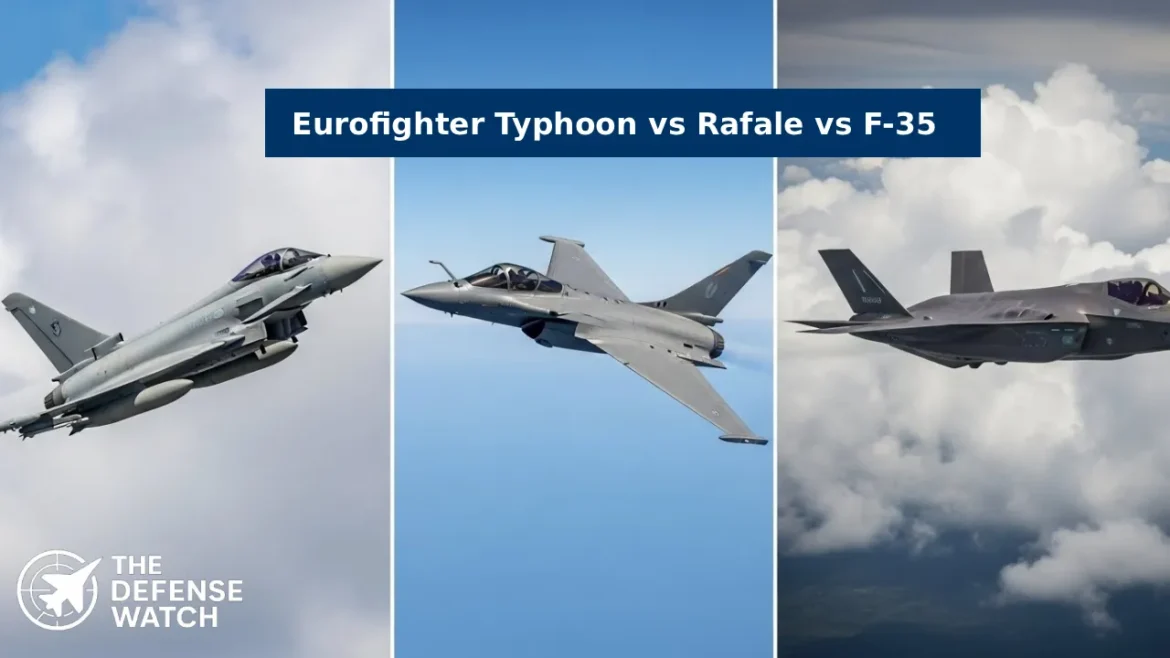
As Europe modernizes for a new era of great-power competition, three fighters stand at the center of Western airpower debates: the Eurofighter Typhoon, France’s Dassault Rafale, and America’s F-35 Lightning II. These aircraft represent different design philosophies—super-maneuverability, multirole flexibility, and fifth-generation stealth—yet they increasingly operate together across NATO missions from the Baltics to the Middle East.
For U.S. defense planners, this comparison matters for two core reasons. First, the Typhoon and Rafale equip key NATO allies whose airpower directly shapes combined operations against Russia. Second, the F-35 now serves as the backbone of U.S. and allied air dominance strategies in both the European and Indo-Pacific theaters. As countries seek to replace aging F-16s and MiG-29s, understanding how these fighters compare offers insight into coalition capability, deterrence posture, and future procurement trends.
Specifications Comparison Table: Eurofighter Typhoon vs Rafale vs F-35
| Feature | Eurofighter Typhoon | Dassault Rafale | F-35A Lightning II |
|---|---|---|---|
| Generation | 4.5-gen | 4.5-gen | 5th-gen |
| Crew | 1 (or 2 in trainer) | 1 (or 2 in trainer) | 1 |
| Max Speed | Mach 2.0 | Mach 1.8 | Mach 1.6 |
| Combat Radius | ~1,389 km | ~1,852 km | ~1,093 km |
| Service Ceiling | 55,000 ft | 50,000 ft | 50,000 ft |
| Internal Weapons Bay | No | No | Yes |
| Max Payload | 13,000+ lbs | 21,000+ lbs | 18,000 lbs |
| ** Stealth Level** | Low | Low | Very High |
| Unit Cost (est.) | $95–110M | $90–120M | $80–110M (A-variant) |
| Service Entry | 2003 | 2001 | 2015 |
| Primary Operators | UK, Germany, Italy, Spain, Saudi Arabia | France, India, Greece, Egypt, Qatar | U.S., UK, Italy, Poland, Japan, South Korea, many NATO states |
Design & Technology
Eurofighter Typhoon: Agility-First Philosophy
The Typhoon was built for air-superiority dominance, reflected in its delta-canard layout and unmatched high-altitude performance. Its new E-Scan Mk1 AESA radar and PIRATE infrared search-and-track system enhance long-range situational awareness. Though not stealthy, upgraded radar-absorbent materials reduce its frontal radar signature.
Dassault Rafale: A Multirole “Omni-Role” Workhorse
France designed the Rafale to perform every mission—from nuclear strike to carrier operations. The SPECTRA electronic warfare suite remains one of the most respected defensive systems in the world. Its advanced RBE2 AESA radar provides strong target acquisition and high-bandwidth electronic attack capability.
F-35A Lightning II: Stealth, Fusion, and Sensor Dominance
The F-35’s defining strength is its sensor fusion, linking EW, radar, IR, and offboard data into a single battlespace picture. Its VLO (Very-Low Observable) airframe dramatically reduces detection ranges, particularly against Russian and Chinese air defense systems. The Distributed Aperture System (DAS) gives 360° tracking and unprecedented pilot awareness.
Design Verdict:
• Typhoon = best raw aerodynamics
• Rafale = best EW/sensor mix among 4.5-gen jets
• F-35 = unmatched stealth and fused situational awareness
Firepower & Performance
Eurofighter Typhoon Weaponry
- Air-to-Air: Meteor, AIM-120 AMRAAM, IRIS-T
- Air-to-Ground: Storm Shadow, Brimstone, Paveway IV
- Gun: 27mm Mauser
The Typhoon excels in the air-superiority role with Meteor integration providing long-range kill capability.
Dassault Rafale Armament
- Air-to-Air: Meteor, MICA IR/RF
- Air-to-Ground: SCALP-EG, AASM Hammer, Exocet anti-ship missile
- Nuclear Option: ASMP-A (France exclusive)
- Gun: 30mm GIAT
The Rafale carries the broadest weapons portfolio, giving it the edge in mission versatility.
F-35A Armament
- Air-to-Air: AIM-120D, AIM-9X (external)
- Air-to-Ground: JDAM, SDB II, AGM-158 JASSM (future)
- Gun: Internal 25mm GAU-22
Internal weapons allow the F-35 to remain fully stealthy while striking deep into high-threat airspace.
Firepower Verdict:
• Typhoon = air combat powerhouse
• Rafale = most diverse loadout
• F-35 = best precision strike in contested airspace
Operational Range & Mobility
Eurofighter Typhoon
With a moderate range but superior high-altitude performance, the Typhoon thrives in quick-reaction alert (QRA) and air-policing roles.
Dassault Rafale
The Rafale boasts the best combat radius of all three, making it highly effective for expeditionary deployments and carrier-based missions.
F-35A
The F-35 is limited by range compared to the Rafale, but stealth increases survivability in offensive counter-air and deep strike missions.
Range Verdict:
• Rafale leads
• Typhoon second
• F-35 more range-limited but stealth-enabled for deeper penetration
Combat Effectiveness: Real-World Use
Eurofighter Typhoon
Typhoons have conducted air policing across Europe, intercepting Russian aircraft near NATO airspace. They also carried out precision strikes in Syria and Libya.
Dassault Rafale
Perhaps the most battle-proven European fighter of the modern era, Rafales have operated in Afghanistan, Libya, Iraq, Syria, the Sahel, and carrier strike operations.
F-35A
The F-35 has seen combat with the U.S., Israel, and the UK, including suppression of integrated air defense systems (IADS), strike missions, and ISR operations.
Combat Verdict:
• Rafale = most combat diversity
• Typhoon = strong but fewer mission sets
• F-35 = proven in high-threat environments
Cost & Export Considerations
Eurofighter Typhoon
Strong in NATO markets, especially in Central and Western Europe. Recent upgrades extend service life to 2060+.
Dassault Rafale
Massive export success with sales to India, UAE, Qatar, Egypt, Greece, and Indonesia. Known for lower maintenance demands.
F-35A
The most widely exported fifth-generation fighter in history. U.S. pressure and interoperability benefits drive adoption among NATO partners.
Export Verdict:
• F-35 = dominant
• Rafale = rising global favorite
• Typhoon = steady NATO standard
Analysis: How the U.S. Views the Typhoon, Rafale, and F-35
From a U.S. perspective, the F-35 is the backbone of allied airpower modernization, ensuring full interoperability with American C4ISR and strike networks. The Typhoon and Rafale remain important NATO capabilities, especially for air dominance (Typhoon) and stand-off strike (Rafale).
However, only the F-35 contributes directly to the U.S. strategy of distributed, stealth-enabled, network-centric warfare—critical in facing both Russian A2/AD zones and Chinese integrated air defenses.
Conclusion: Which Fighter Has the Edge?
The answer depends on mission requirements:
Air Superiority:
Eurofighter Typhoon — unmatched climb rate and kinematics.
Multirole Flexibility:
Dassault Rafale — best weapons diversity and EW package.
Survivability & High-Threat Strike:
F-35A Lightning II — only fifth-gen jet in the comparison.
Overall Winner?
There is no single winner—but for future NATO operations, the F-35 provides the greatest strategic value due to stealth, sensor fusion, and networked warfare.
FAQ: Eurofighter Typhoon vs Rafale vs F-35
The Typhoon excels in pure dogfighting, but the F-35 dominates beyond-visual-range due to stealth and sensor fusion.
The Rafale offers the longest combat radius, making it ideal for long-range strike and expeditionary operations.
Yes—stealth, fused sensors, and advanced EW give it unmatched survivability in heavily defended airspace.
The Rafale is often considered the most cost-efficient over its lifetime, though the F-35’s operating costs continue to decline.
The F-35’s architecture is designed for upgrades into the 2070s, giving it the longest projected service life.

The skies above the Pacific have become the world’s most contested airspace, where two stealth giants represent opposing military superpowers. The J-20 vs F-22 debate isn’t just about aircraft specifications—it’s about the future of air superiority as tensions rise between the United States and China. The F-22 Raptor, America’s premier air dominance fighter since 2005, now faces its first true peer competitor: China’s J-20 Mighty Dragon, which entered service in 2017.
Understanding the J-20 vs F-22 comparison matters because these aircraft embody fundamentally different design philosophies and operational doctrines. As China expands its military reach across the South China Sea and Taiwan Strait, U.S. Air Force planners must understand exactly what capabilities the J-20 brings to potential conflict scenarios. This analysis cuts through the hype to examine what each fighter can actually accomplish.
Specifications Comparison Table
| Feature | F-22 Raptor | J-20 Mighty Dragon |
|---|---|---|
| Country | United States | China |
| First Flight | 1997 | 2011 |
| Service Entry | 2005 | 2017 |
| Length | 62 ft (18.9 m) | 66.8 ft (20.4 m) |
| Wingspan | 44.5 ft (13.6 m) | 42.9 ft (13.1 m) |
| Max Speed | Mach 2.25 (1,500 mph) | Mach 2.0 (1,305 mph) |
| Combat Range | 460 miles (740 km) | 1,200 miles (1,930 km) |
| Service Ceiling | 65,000 ft (19,800 m) | 65,600 ft (20,000 m) |
| Engine | 2× Pratt & Whitney F119 | 2× WS-10C (interim) |
| Thrust | 35,000 lbf each with afterburner | 32,000 lbf each (estimated) |
| Internal Weapons Bay | 6 air-to-air missiles | 6 air-to-air missiles |
| Unit Cost | $150 million (2009) | $110 million (estimated) |
| Total Produced | 187 aircraft | 200+ aircraft (ongoing) |
Design & Technology
Stealth Characteristics
The F-22 vs J-20 stealth comparison reveals different engineering approaches to radar evasion. The F-22 pioneered production fighter stealth technology with its faceted airframe, specialized radar-absorbent materials, and internal weapons carriage. Every surface angle was optimized to deflect radar waves away from enemy sensors. The aircraft’s radar cross-section has been classified but is estimated at 0.0001 square meters from frontal aspects—roughly the size of a marble.
The J-20 adopted a longer, more slender fuselage design optimized for different mission parameters. Chinese engineers incorporated canards—small forward wing surfaces—that enhance maneuverability but potentially compromise stealth. Western analysts assess the J-20’s radar cross-section as larger than the F-22’s, though still significantly smaller than fourth-generation fighters. The J-20’s stealth coating reportedly requires less maintenance than early F-22 materials, suggesting China learned from observing American maintenance challenges.
Avionics and Sensors
The F-22 features the AN/APG-77 active electronically scanned array (AESA) radar, capable of tracking multiple targets simultaneously while remaining difficult to detect. Its sensor fusion system integrates radar, infrared search and track, electronic warfare systems, and datalinks into a single tactical picture. The aircraft’s advanced electronic warfare suite can jam enemy radars while collecting intelligence on adversary systems.
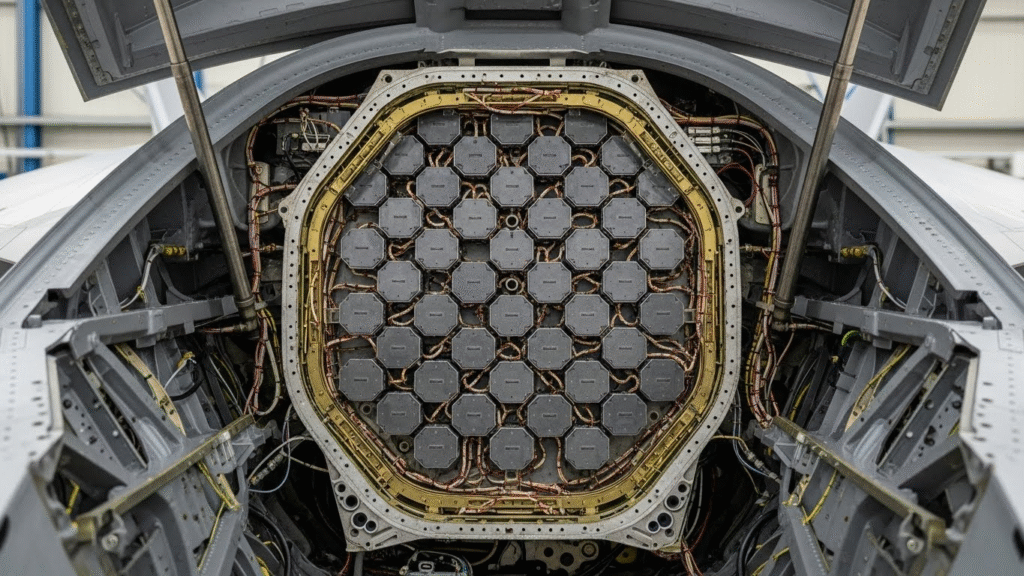
China equipped the J-20 with domestically produced AESA radar systems and an Electro-Optical Targeting System (EOTS) providing 360-degree infrared detection. The J-20’s larger nose accommodates a potentially larger radar array with greater detection range. Recent upgrades reportedly include improved electronic warfare capabilities and enhanced sensor fusion, though Western intelligence agencies remain uncertain about the system’s full capabilities compared to American counterparts.
Firepower & Performance
Weapons Loadout
In the J-20 vs F-22 comparison, both fighters prioritize internal weapons storage to maintain stealth profiles. The F-22 carries six AIM-120 AMRAAM radar-guided missiles in its main weapons bay, plus two AIM-9 Sidewinder heat-seeking missiles in side bays. For strike missions, the F-22 can carry two 1,000-pound GBU-32 Joint Direct Attack Munitions alongside two AMRAAMs. External hardpoints can accommodate additional weapons when stealth isn’t required, though this configuration is rarely used operationally.
The J-20 carries six PL-15 long-range air-to-air missiles in its ventral weapons bays. The PL-15, with an estimated range exceeding 120 miles, potentially outreaches the AIM-120D AMRAAM’s 100-mile range. The J-20 also carries PL-10 short-range missiles in side bays. Chinese sources claim the J-20 can carry air-to-ground munitions, though its primary role remains air superiority rather than strike missions.
Maneuverability and Speed
The F-22’s twin Pratt & Whitney F119 engines deliver exceptional thrust-to-weight ratio and enable supercruise—sustained supersonic flight without afterburners—at Mach 1.8. This capability allows the F-22 to rapidly reposition during combat while conserving fuel. The aircraft’s thrust vectoring nozzles provide exceptional agility in close-range dogfights, giving pilots advantages in turning combat.
The J-20 currently operates with interim WS-10C engines while China develops the more powerful WS-15 engines. Without thrust vectoring on production models, the J-20 likely lacks the F-22’s close-in maneuverability. However, the J-20’s canard-delta wing configuration provides excellent high-altitude performance and sustained turn rates. The aircraft’s larger size and fuel capacity enable longer patrol durations—critical for China’s anti-access area denial strategy.
Operational Range & Mobility
Combat Radius Differences
The most significant difference in the J-20 vs F-22 matchup lies in operational range. The F-22’s 460-mile combat radius reflects its design as an air superiority fighter meant to operate with tanker support. U.S. Air Force doctrine emphasizes forward basing and aerial refueling networks, allowing F-22s to project power across vast distances despite limited internal fuel.
The J-20’s 1,200-mile combat radius represents a strategic design choice. China lacks America’s global basing infrastructure and aerial refueling fleet, so the J-20 needed greater unrefueled range. This extended range allows J-20s to patrol the entire South China Sea or reach Taiwan and return without refueling. The longer legs also enable Chinese fighters to threaten U.S. bases in Japan and Guam.
Deployment Flexibility
The F-22 has demonstrated global reach through deployments to Europe, the Middle East, and throughout the Indo-Pacific region. U.S. Air Force squadrons regularly operate from allied bases in Japan, South Korea, and Guam. The aircraft’s maintenance requirements have decreased as support systems matured, though the F-22 still demands specialized facilities and skilled technicians.
The J-20 operates primarily from bases within Chinese territory, with deployments to Tibet demonstrating high-altitude performance capabilities. China has not deployed J-20s overseas, reflecting both limited foreign basing options and the aircraft’s role in homeland defense. The People’s Liberation Army Air Force maintains the J-20 as a strategic asset concentrated in areas facing potential conflict with U.S. forces.
Combat Effectiveness
Real-World Experience
The F-22 has accumulated nearly two decades of operational experience, including combat missions over Syria where it conducted strikes against ground targets and provided air superiority escort. While the F-22 hasn’t engaged in air-to-air combat, its pilots train constantly against fourth and fifth-generation adversaries. U.S. Air Force aggressor squadrons report the F-22 consistently dominates red air exercises, with kill ratios exceeding 20-to-1 in simulated combat.
The J-20 lacks combat experience, having never engaged in actual warfare. Chinese pilots have conducted extensive training, including exercises simulating Taiwan scenarios and air defense operations. Western intelligence assessments suggest J-20 pilots receive high-quality training, though they lack the institutional combat experience accumulated by U.S. Air Force personnel through decades of continuous operations worldwide.
Doctrine and Tactics
U.S. Air Force doctrine employs the F-22 as a penetrating counter-air platform that establishes air superiority by destroying enemy fighters and air defense systems. F-22s typically operate in coordination with F-35 Lightning IIs, EA-18G Growler electronic warfare aircraft, and tankers. The F-22’s data fusion capabilities make it a quarterback in contested airspace, directing other friendly aircraft while remaining undetected.
China’s operational doctrine positions the J-20 as a key component of integrated air defense systems. Chinese planners envision J-20s working alongside ground-based radar networks, surface-to-air missiles, and other aircraft types to deny U.S. forces access to contested regions. The J-20’s extended range allows it to strike high-value targets like tankers and airborne early warning aircraft that enable U.S. operations.
Cost & Export Value
Production and Pricing
The F-22’s unit cost of approximately $150 million, combined with research and development expenses, made it one of history’s most expensive fighters. Congress capped production at 187 aircraft, well below the Air Force’s desired 750 aircraft. U.S. law prohibits F-22 exports, meaning no allied nation can purchase the aircraft regardless of strategic relationships. This export ban was intended to protect sensitive technologies from potential compromise.
China’s J-20 costs an estimated $110 million per aircraft, though exact figures remain uncertain due to different accounting methods and state subsidies. The lower price reflects different labor costs, government-controlled production, and potential savings from incorporating observed foreign technologies. China has not offered the J-20 for export, keeping its most advanced fighter exclusively for domestic use while offering the FC-31 stealth fighter to international buyers.
Strategic Value
The F-22’s export ban limits its geopolitical impact to demonstrating U.S. technological superiority and providing unmatched capabilities to American forces. Allies receive F-35s instead, which while less capable in air-to-air combat, offer greater versatility and interoperability with coalition partners.
The J-20’s production continues expanding China’s fifth-generation fighter fleet, with some analysts projecting over 500 aircraft eventually. This numerical advantage could offset individual aircraft superiority in potential conflicts. China’s decision to keep the J-20 domestic while developing exportable alternatives suggests Beijing values technological secrecy over export revenue.
Analysis: Strengths and Weaknesses
F-22 Advantages
The F-22 maintains clear advantages in stealth refinement, sensor fusion maturity, pilot experience, and close-in maneuverability. Two decades of operational experience have refined tactics and training to maximize the aircraft’s capabilities. The F-22’s supercruise capability and thrust vectoring provide tactical flexibility unavailable to current J-20 variants. Integration with U.S. military networks gives F-22 pilots access to intelligence and coordination capabilities China cannot match.
The F-22’s primary weaknesses include limited production numbers, aging avionics that require modernization, higher operating costs, and limited range requiring tanker support. The aircraft also lacks some capabilities found on newer F-35s, including advanced helmet-mounted displays and certain electronic warfare systems.
J-20 Advantages
The J-20’s superior combat radius gives it strategic advantages in the Pacific theater, where distances favor longer-range aircraft. The potentially longer-range PL-15 missile could allow J-20 pilots to engage F-22s before entering AMRAAM range. Greater production numbers may enable China to achieve local numerical superiority in specific scenarios. The J-20’s newer design potentially incorporates lessons learned from observing F-22 operational challenges.
J-20 Fighter. Image Credit: Creative Commons. The J-20’s disadvantages include less mature stealth technology, unproven combat systems, limited pilot experience, potential engine performance gaps, and dependence on ground-based sensors due to questions about radar effectiveness. Western experts question whether J-20 sensor fusion matches American standards, potentially limiting situational awareness in complex combat environments.
Conclusion
The J-20 vs F-22 comparison reveals two excellent aircraft optimized for different strategic contexts. The F-22 Raptor remains the world’s premier air superiority fighter, with unmatched stealth refinement, proven systems, experienced pilots, and superior close-combat capabilities. In one-on-one engagements or scenarios emphasizing maneuverability and technological sophistication, the F-22 holds advantages.
However, the J-20 brings strategic capabilities specifically designed to challenge U.S. air operations in the Pacific. Its extended range threatens U.S. forward bases and support aircraft, while growing production numbers could overwhelm limited F-22 availability in protracted conflicts. The J-20 represents China’s first credible challenge to American air dominance since the Cold War’s end.
In a Taiwan scenario, J-20 advantages in range and numbers could partially offset F-22 technological superiority, especially if Chinese ground-based sensors support J-20 operations. In other theaters, particularly where U.S. forces operate with full tanker and allied support, the F-22 would dominate. The reality is that neither aircraft operates in isolation—their effectiveness depends on supporting systems, pilot training, tactical employment, and strategic context.
For U.S. defense planners, the J-20 validates investments in next-generation air dominance programs while highlighting the need to modernize existing F-22s and maintain sufficient fighter inventories. The stealth battle of the century ultimately depends less on individual aircraft capabilities than on how effectively each nation employs these weapons within broader military strategies.
FAQs
Which is better, the F-22 or J-20?The F-22 maintains technological advantages in stealth refinement, sensor maturity, and maneuverability, making it superior in direct combat. However, the J-20’s extended range and growing numbers provide strategic advantages in Pacific scenarios. The “better” aircraft depends on specific mission requirements and operational context.
Can the J-20 beat the F-22 in a dogfight?In close-range combat, the F-22’s thrust vectoring, superior thrust-to-weight ratio, and experienced pilots give it decisive advantages. The J-20 would likely avoid dogfighting and instead leverage longer-range missiles and numerical superiority. Modern air combat rarely involves traditional dogfights, favoring beyond-visual-range engagements.
How many J-20s vs F-22s are currently operational?The United States operates 187 F-22 Raptors with approximately 120-140 mission-capable at any time. China has produced over 200 J-20s with production continuing, potentially fielding 500 or more eventually. This numerical imbalance could prove significant in protracted conflicts despite individual aircraft advantages.
Does the J-20 have better stealth than the F-22?Western intelligence assessments conclude the F-22 maintains superior stealth characteristics, with a smaller radar cross-section from most aspects. The J-20’s canards and other design features likely compromise stealth compared to the F-22’s refined design. However, the J-20 still represents a significant stealth capability far exceeding fourth-generation fighters.
Why can’t allies buy the F-22 Raptor?U.S. law specifically prohibits F-22 exports to protect sensitive stealth technologies, advanced avionics, and other classified systems from potential compromise. Congress passed this restriction fearing that export aircraft could be studied by adversaries or that technical information might leak through foreign military channels. Allied nations receive F-35s instead, which incorporate export-friendly technology protections.

Supersonic vs Hypersonic: Understanding Speed, Missiles, Technology, and Modern Aircraft
The debate over supersonic vs hypersonic systems has become central to today’s defense landscape as militaries race to field faster, more maneuverable, and harder-to-intercept weapons. While supersonic platforms have been operational for decades, hypersonic missiles, hypersonic glide vehicles (HGVs), and emerging hypersonic aircraft represent the cutting edge of strategic competition among the United States, China, and Russia.
What Defines Supersonic vs Hypersonic Speeds?
Supersonic Speed (Mach 1–5)
- Travels faster than the speed of sound (approx. 343 m/s at sea level)
- Widely used in fighter aircraft, cruise missiles, and interceptors
- Established technologies with predictable aerodynamic behavior
Examples of active supersonic systems:
- U.S. AGM-86C Conventional Air-Launched Cruise Missile (CALCM)
- Russia’s P-800 Oniks anti-ship missile
- India/Russia BrahMos cruise missile
- F-16, F-15, Rafale, Su-35, and Eurofighter Typhoon (supersonic fighters)
Hypersonic Speed (Above Mach 5)
- Extremely high aerodynamic heating
- Requires advanced materials and thermal protection
- Maneuverability increases complexity for missile defense
- Relatively new and still maturing
- Used for strategic-range strike, anti-ship missions, and potential ISR/strike aircraft concepts
Examples of active hypersonic systems (as of 2025):
- Russia: Avangard HGV (operational), Kinzhal (limited hypersonic performance), 3M22 Zircon (in service with Russian Navy)
- China: DF-17 HGV-equipped ballistic missile (operational)
- U.S.: No fully deployed hypersonic weapons yet; programs advancing (ARRW cancelled after tests, HACM under development, Glide Phase Interceptor in progress)
Hypersonic Missiles vs Supersonic Missiles
Supersonic Missiles: Mature, Widely Fielded, Highly Reliable
Supersonic missiles constitute the backbone of global strike arsenals. Their speed reduces exposure time to enemy air defense systems while maintaining affordable, scalable manufacturing.
Common roles include:- Anti-ship strike
- Land-attack precision strike
- Interception and air-defense missions
Many navies and air forces rely on supersonic anti-ship missiles such as BrahMos, Harpoon (high subsonic), RGM-84 variants, and Oniks. Their predictability and cost-effectiveness make them ideal for mass deployment.
Hypersonic Missiles: Maneuverability, Speed, and Anti-Ship Breakthrough
Hypersonic missiles promise:
- Reduced defender reaction time
- High survivability against interceptors
- Ability to maneuver unpredictably
Two main types exist:
- Hypersonic Glide Vehicles (HGVs)
- Launched via ballistic missile booster
- Glide at hypersonic speed with unpredictable flight paths
- Examples: Russia Avangard, China DF-17
- Hypersonic Cruise Missiles (HCMs)
- Scramjet-powered
- Maintain sustained Mach 5+ in atmosphere
- Examples: Russia Zircon; U.S. HACM in development
Operational deployment remains limited due to:
- Thermal protection challenges
- Materials science constraints
- High cost
- Launch platform limitations
Hypersonic Aircraft vs Supersonic Aircraft
Supersonic Aircraft: Global Standard for Combat Aviation
Supersonic jets remain the world’s primary combat aircraft.
Advantages include:- Proven propulsion
- Broad industrial base
- High maneuverability
- Compatibility with existing infrastructure
Examples:
- F-22, F-35 (supercruise capability), F-15EX
- Su-57, Su-35
- J-20 Mighty Dragon
Hypersonic Aircraft: Still Experimental
As of 2025, no operational hypersonic aircraft are in service.
Key U.S. and Chinese programs under research:
- U.S. DARPA HTV-2 (test program)
- Lockheed Martin SR-72 concept (ISR/strike concept)
- China’s Starry Sky-2 test vehicle
Technical barriers include:
- Scramjet reliability
- Reentry thermal loads
- Sensor survivability
- Human survivability at high thermal stress
Hypersonic aircraft remain long-term strategic projects rather than near-term operational systems.
Why Hypersonic Systems Are Strategically Important
Reduced Reaction Time
Hypersonic weapons can reduce defender response windows to a few minutes, challenging existing missile defenses.
Maneuverability
Unlike traditional ballistic missiles, HGVs can alter course mid-flight, complicating interception.
Long-Range Precision Strike
Hypersonics can threaten high-value, time-sensitive, or heavily defended targets.
Analysis: The Strategic Race Is About More Than Speed
The U.S., China, and Russia treat hypersonics as part of a broader competition in sensor networks, missile defense, command-and-control, and space-based tracking. The race is less about raw velocity and more about integrated ecosystems:
- Early-warning satellites
- Over-the-horizon radars
- Glide-phase interceptors
- AI-enabled targeting
- Future scramjet-enabled strike aircraft
Whichever nation pairs hypersonic offense with hypersonic defense first will gain significant strategic advantage.
FAQs
Are hypersonic missiles unstoppable?No. They are difficult to intercept, but the U.S. and partners are developing glide-phase interceptors, next-gen radars, and space-based tracking systems.
Does the U.S. have operational hypersonic missiles?Not yet. Major programs are advancing, but no weapon has reached full operational status as of 2025.
Are supersonic systems being phased out?No. Supersonic missiles and aircraft remain widely used, affordable, and integral to modern militaries.
Which countries have hypersonic glide vehicles?Russia and China have operational HGV systems. The United States is developing its own but has not deployed them.
How fast is hypersonic?Any system traveling faster than Mach 5—approximately 3,836 mph (6,174 km/h).
U.S. Navy’s Carrier Evolution: Ford Class vs Nimitz Class
The U.S. Navy plans to eventually acquire ten Ford-class carriers to replace current carriers on a one-for-one basis, starting with USS Gerald R. Ford replacing USS Enterprise, and later replacing the Nimitz-class carriers. This transition represents the most significant technological leap in American carrier design since the Nimitz class entered service in 1975.
Understanding the differences between Ford class vs Nimitz class carriers is essential for assessing the future direction of U.S. naval power projection. While both classes displace approximately 100,000 tons and serve as the centerpiece of carrier strike groups, the Ford class incorporates revolutionary technologies designed to enhance operational efficiency, reduce lifecycle costs, and accommodate future weapons systems.
Launch and Recovery Systems: Steam vs Electromagnetic
The most visible operational difference between the two carrier classes involves how they launch and recover aircraft.
The Nimitz uses a steam-powered catapult system, while the Ford features the more efficient Electromagnetic Aircraft Launch System (EMALS). Traditional steam catapults have served reliably for decades, generating and harnessing steam to slingshot aircraft forward. However, this system requires extensive infrastructure to generate and store steam throughout the ship.
The EMALS accelerates aircraft more smoothly, putting less stress on their airframes. The EMALS also weighs less, is expected to cost less and require less maintenance, and can launch both heavier and lighter aircraft than a steam piston-driven system. This flexibility proves crucial as the Navy integrates new aircraft types, including heavier strike fighters and lighter unmanned aerial vehicles, into carrier air wings.
For aircraft recovery, the Nimitz employs the MK 7 Aircraft Recovery System, whereas the Ford uses the Advanced Arresting Gear system, designed to handle a wider range of aircraft with less maintenance. The AAG system uses advanced control algorithms and energy-absorbing water turbines to safely arrest aircraft while reducing maintenance requirements compared to the hydropneumatic MK 7 system.
Power Generation: Meeting Future Energy Demands
Nuclear propulsion distinguishes both carrier classes from conventional vessels, but their reactor designs differ substantially.
The new Bechtel A1B reactor for the Gerald R. Ford class is smaller and simpler, requires fewer crew, and yet is far more powerful than the Nimitz-class A4W reactor. Two reactors will be installed on each Gerald R. Ford-class carrier, providing a power generation capacity at least 25% greater than the 550 MW of the two A4W reactors in a Nimitz-class carrier.
Even more significant, the Navy outlined a requirement for a minimum increase of 150% in the power-generation capacity for the CVN 21 carrier compared with the Nimitz-class carriers. This dramatic increase in electrical generation capacity addresses limitations that constrained the Nimitz class. As new technologies were added over decades, the Nimitz design’s electrical capacity became increasingly strained, leaving little margin for emerging systems.
The Ford class dedicates only half its electrical generation capacity to currently installed systems, reserving substantial capacity for future directed-energy weapons, advanced sensors, and other power-intensive technologies that may emerge during the carrier’s 50-year service life.
Manning and Automation: Doing More With Less
Personnel costs represent a significant portion of carrier operating expenses, making crew size reduction a key design objective for the Ford class.
Whereas the Nimitz-class carrier has around 6,000 people serving onboard, the Ford class has just over 4,000. Automation makes this possible, reducing the risk to human life in combat situations. More specifically, the Ford-class is larger than its predecessor, the Nimitz-class, but accommodates between 500 and 900 fewer crew members.
This reduction stems from extensive automation throughout the ship. Systems that reduce crew workload have allowed the ship’s company on Gerald R. Ford-class carriers to total only 2,600 sailors, about 700 fewer than a Nimitz-class carrier. The embarked air wing also operates with fewer personnel due to improved aircraft maintenance systems and more efficient ordnance handling.
The automation extends to weapons movement, which previously required extensive manual labor. The movement of weapons from storage and assembly to the aircraft on the flight deck has also been streamlined and accelerated. Ordnance will be lifted to the centralized rearming location via higher-capacity weapons elevators that use linear motors.These electromagnetic elevators can move ordnance without crossing aircraft movement areas, reducing traffic congestion and accelerating rearming operations.
Sortie Generation Rate: Operational Tempo
An aircraft carrier’s value depends on its ability to generate sustained air operations. The Ford class was specifically designed to increase sortie rates compared to its predecessor.
The ship’s systems and configuration are optimized to maximize the sortie generation rate of attached strike aircraft, resulting in a 33 percent increase in SGR over the Nimitz class. While the Nimitz class can sustain 120 sorties per day with surge capability to 240, the Ford-class carriers are intended to sustain 160 sorties per day for 30-plus days, with a surge capability of 270 sorties per day.
This enhanced operational tempo results from multiple design improvements working in concert: the faster EMALS launch system, improved weapons elevators, better flight deck layout with a repositioned island, and more efficient aircraft maintenance procedures.
Physical Configuration and Design
While both classes share similar overall dimensions, the Ford class incorporates significant structural changes.
On the Ford class, the island’s footprint was substantially shrunk and it was moved back by 140 feet on the ship to provide for more deck space overall and to create a deck layout that is supposed to enhance operational tempo substantially The War Zone. The smaller, relocated island creates additional space for aircraft operations and simplifies flight deck traffic flow.
The Ford class has just three aircraft elevators instead of four, but their placement and larger size are supposed to actually enhance operations, not hinder them. By eliminating one elevator and repositioning the remaining three, designers created a more efficient layout that reduces conflicts between aircraft movements on the flight deck.
The island itself reflects technological evolution. Its island, shorter in length and 20 feet taller than that of the Nimitz class, is set 140 feet farther aft and 3 feet closer to the edge of the ship. This unique shape accommodates advanced radar arrays, with the lead ship USS Gerald R. Ford equipped with the Dual Band Radar system featuring six separate AESA arrays providing 360-degree coverage.
Cost Analysis: Initial Investment vs Lifecycle Expenses
The Ford class carries a substantially higher initial procurement cost than the Nimitz class.
The USS Gerald R. Ford is the most expensive warship ever built, with a price tag of $13.3 billion. This compares to the Nimitz-class unit cost of about $8.5 billion in FY 2012 dollars, equal to $11.4 billion in 2024 dollars for newer ships in the class.
However, Navy officials project significant lifecycle cost savings. Each ship in the new class will save more than $4 billion in total ownership costs during its 50-year service life, compared to the Nimitz-class. More recent analysis suggests even greater savings, with the Ford class now slated to cost about $5 billion per ship less than its predecessor, the Nimitz class, over the life of each ship.
These savings derive primarily from reduced crew size and lower maintenance requirements. U.S. aircraft carriers cost over a billion dollars a year to maintain, not including the cost of operating the embarked air wing. The Ford class’s automation and improved systems design should reduce these annual expenses substantially.
Maintenance cycles also differ between classes. The Nimitz class requires five major docked maintenance availabilities during its service life, while the Ford class was designed to require only three such availabilities, further reducing downtime and costs.
Radar and Sensor Systems
Both classes employ advanced radar systems, though specific configurations differ.
The Nimitz class uses a combination of rotating 2D and 3D radar systems, including the SPS-48E 3D air search radar and SPS-49 2D radar. These proven systems provide effective air search and tracking capabilities but require significant space and maintenance.
The lead Ford-class ship introduced the Dual Band Radar combining X-band multifunction radar and S-band volume search radar in a single integrated system with six planar AESA arrays. However, developmental challenges led the Navy to modify its approach for subsequent ships. Starting with USS John F. Kennedy (CVN-79), the Navy will install the Enterprise Air Surveillance Radar (EASR), which uses three arrays and offers greater commonality with other surface combatants.
Defensive Armament
Both carrier classes rely on similar defensive weapons systems, as their primary defense comes from escort vessels in the carrier strike group.
Short-range defensive systems include the Rolling Airframe Missile (RAM) system and Evolved Sea Sparrow Missile (ESSM) for engaging incoming anti-ship missiles. The Close-In Weapon System (CIWS), featuring the Phalanx 20mm gatling gun, provides last-ditch defense against missiles that penetrate outer defensive layers.
The Ford class features updated versions of these systems integrated with more advanced fire control and the Ship Self-Defense System for coordinated defensive responses. However, the basic defensive philosophy remains unchanged—carriers depend heavily on escort vessels equipped with long-range air defense systems like the Aegis Combat System to provide the primary defensive umbrella.
Operational Service and Fleet Status
The Nimitz-class has participated in many conflicts and operations across the world, including Operation Eagle Claw in Iran, the Gulf War, and more recently in Iraq and Afghanistan. With ten ships in service spanning construction from 1968 to 2009, the class represents decades of operational experience and continuous incremental improvements.
The Ford class remains in its early operational phase. USS Gerald R. Ford (CVN-78) commissioned in July 2017 and completed its first deployment in 2023-2024, including operations in the Eastern Mediterranean during the Israel-Hamas conflict. During the 239 days underway, the carrier logged more than 17,826 flight hours and 10,396 sorties, sailed more than 83,476 nautical miles, and safely transferred 20.7 million gallons of fuel with zero mishaps.
USS John F. Kennedy (CVN-79) is more than 90% complete and expected to deliver in 2025. USS Enterprise (CVN-80) is approximately 35% complete, while USS Doris Miller (CVN-81) is in early construction stages. The Navy is planning to procure CVN-82 and CVN-83 in a two-ship contract later this decade.
Analysis: Evolutionary vs Revolutionary Change
The transition from Nimitz to Ford class represents evolutionary refinement rather than revolutionary redesign in basic carrier operations, but introduces revolutionary changes in specific technological systems.
The fundamental carrier mission remains unchanged—projecting naval aviation power globally through a nuclear-powered mobile airfield. Both classes share similar displacement, speed, and overall operational concepts. The Ford class retains the proven CATOBAR (Catapult Assisted Take-Off But Arrested Recovery) arrangement that distinguishes U.S. supercarriers from smaller STOVL carriers operated by other nations.
However, the accumulation of technological improvements creates qualitatively different capabilities. The combination of EMALS, advanced arresting gear, electromagnetic weapons elevators, tripled electrical generation capacity, and 25% increased sortie generation rate fundamentally enhances operational effectiveness. These improvements should prove increasingly valuable as the Navy integrates new aircraft types, particularly unmanned systems and potentially sixth-generation manned fighters, into carrier air wings over coming decades.
The crew reduction represents perhaps the most significant long-term advantage. With personnel costs comprising a major portion of operating expenses, reducing crew size by 500-900 personnel generates substantial savings. This reduction also makes the ships less labor-intensive to operate during an era when recruiting and retention challenges affect all military services.
Critics note that the Ford class remains vulnerable to the same anti-access/area-denial threats confronting all large surface combatants—anti-ship ballistic missiles, advanced submarines, and saturation attacks by cruise missiles or unmanned systems. However, proponents argue that properly defended carrier strike groups remain highly survivable and uniquely capable of sustained, high-tempo combat operations that no alternative platform can match.
The substantial initial cost difference—approximately $2 billion more than late Nimitz-class ships—raises questions about affordability, particularly given Navy budget constraints and competing priorities. However, if projected lifecycle savings materialize, the Ford class should prove more cost-effective over its 50-year service life despite higher procurement costs.
Ultimately, the Ford class represents the Navy’s commitment to maintaining carrier-centric naval power projection well into the 21st century, incorporating technologies to enhance effectiveness while reducing operating costs. Whether this strategy proves correct depends on how naval warfare evolves over coming decades and whether alternative platforms like submarines, unmanned systems, or distributed surface combatants can replicate carriers’ unique combination of striking power, persistence, and diplomatic presence.
FAQs: Ford Class vs Nimitz Class Carriers
What is the main technological difference between Ford class and Nimitz class carriers?The primary difference involves launch and recovery systems. Ford-class carriers use electromagnetic catapults (EMALS) instead of steam catapults, and Advanced Arresting Gear instead of the hydraulic MK 7 system. These electromagnetic systems reduce stress on aircraft, require less maintenance, and can handle a wider range of aircraft weights.
How many fewer crew members does the Ford class require compared to Nimitz class?Ford-class carriers operate with 500 to 900 fewer personnel than Nimitz-class ships. Where Nimitz-class carriers have approximately 6,000 crew members (including ship’s company and air wing), Ford-class carriers operate with approximately 4,500 personnel due to extensive automation.
Are Ford class carriers more expensive than Nimitz class carriers?Initially, yes—USS Gerald R. Ford cost $13.3 billion compared to approximately $11.4 billion for recent Nimitz-class ships. However, each Ford-class carrier is projected to save $4-5 billion in lifecycle costs over its 50-year service life through reduced crew size and lower maintenance requirements.
Can Ford class carriers launch more aircraft sorties than Nimitz class?Yes. Ford-class carriers can sustain 160 sorties per day with surge capability to 270 sorties, representing approximately a 33% increase compared to Nimitz-class carriers, which sustain 120 sorties daily with surge capability to 240 sorties.
How much more electrical power does the Ford class generate?Ford-class carriers generate at least 25% more total power than Nimitz-class ships, with approximately 150% more power dedicated to electrical generation. This increased capacity supports current systems while reserving substantial power for future directed-energy weapons and advanced sensors.