MQ-9 Reaper vs Bayraktar TB2 Payload Capacity
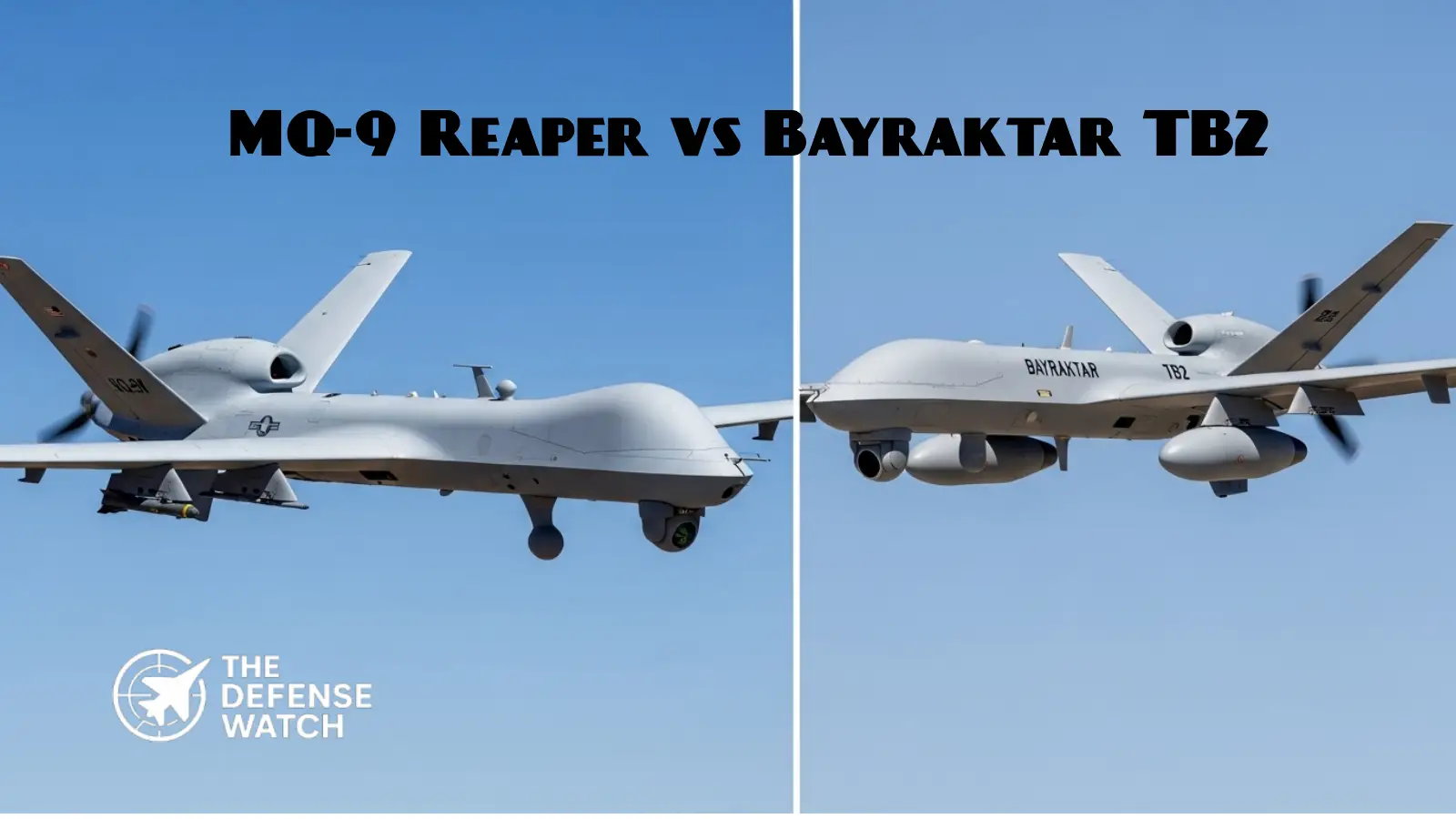
The MQ-9 Reaper vs Bayraktar TB2 payload capacity debate matters because armed drones now shape modern warfare. From counterterror missions in the Middle East to high-intensity conflicts in Eastern Europe, unmanned aircraft have become a core military tool. The United States built the MQ-9 Reaper as a high-end hunter-killer platform with long endurance and heavy strike capability. Turkey developed the Bayraktar TB2 as a lower-cost tactical drone designed for persistent surveillance and precision attack.
Both systems gained global attention through real combat operations. The MQ-9 became a symbol of American remote strike power. The TB2 became famous after conflicts in Libya, Nagorno-Karabakh, and Ukraine. But when comparing combat value, one key metric stands out: payload capacity.
Payload determines how many sensors, bombs, missiles, and fuel tanks a drone can carry. In simple terms, it shapes how much damage a UAV can deliver in a single sortie.
MQ-9 Reaper vs Bayraktar TB2 Specifications Table
Specification MQ-9 Reaper Bayraktar TB2 Country United States Turkey Manufacturer General Atomics Baykar Role MALE strike UAV Tactical UCAV First Service Entry 2007 2014 Max Payload 3,800 lb (1,700+ kg) 330 lb (150 kg) Max Speed 300+ mph 135 mph Endurance 27+ hours 24+ hours Wingspan 66 ft 39 ft Range Global SATCOM capable 150+ km LOS, newer SATCOM variants longer Crew Remote crew Remote crew Estimated Unit Cost $30M+ $5M to $10M (varies) MQ-9 Reaper vs Bayraktar TB2 Design and Technology
The MQ-9 Reaper is a larger and heavier aircraft built for strategic missions. It uses satellite communications, advanced electro-optical sensors, synthetic aperture radar, and multi-target tracking systems. This allows operations across continents with real-time data links.
The Bayraktar TB2 is smaller, lighter, and optimized for affordability. It focuses on battlefield surveillance and precision strikes at lower operating cost. Its smaller radar signature can help survivability, but it lacks the size and power generation of the Reaper.
In short, the Reaper is a long-range military truck in the sky. The TB2 is a lighter battlefield scout with strike capability.
MQ-9 Reaper vs Bayraktar TB2 Payload Capacity and Firepower
This is where the gap becomes clear.
MQ-9 Reaper Payload Capacity
The MQ-9 Reaper can carry roughly 3,800 pounds of payload across multiple hardpoints. That includes:
- AGM-114 Hellfire missiles
- GBU-12 Paveway II laser-guided bombs
- GBU-38 JDAM
- ISR sensor packages
- Fuel tanks and mixed loads
A Reaper can conduct surveillance and strike multiple targets in one mission.
Bayraktar TB2 Payload Capacity
The TB2 carries around 150 kilograms (330 pounds) total. Typical weapons include:
- MAM-L smart micro munition
- MAM-C lightweight guided bomb
- EO/IR sensors
This means the TB2 usually carries four small precision munitions rather than heavy bombs.
Verdict on Payload
In pure carrying capacity, the MQ-9 Reaper dominates. It can haul more than ten times the payload of the TB2.
Operational Range and Mobility
The Reaper benefits from U.S. satellite network integration. It can operate at long distances and remain on station for many hours. This gives commanders strategic reach.
The TB2 was originally line-of-sight controlled, which limited distance. Newer export variants added SATCOM options, improving range. Still, it is generally better suited for regional operations rather than global expeditionary warfare.
Combat Effectiveness in Real Conflicts
MQ-9 Reaper Combat Record
The MQ-9 has seen extensive use in:
- Afghanistan
- Iraq
- Syria
- Horn of Africa
- Maritime surveillance missions
It proved effective in ISR and precision strike roles against insurgent and terrorist targets.
Bayraktar TB2 Combat Record
The TB2 gained fame in:
- Libya
- Syria
- Nagorno-Karabakh War
- Ukraine (early conflict phase)
It helped destroy tanks, artillery, and air defense systems when enemy defenses were weak or poorly coordinated.
Battlefield Reality
Against advanced integrated air defense systems, both drones face risk. Neither is stealthy. But the larger Reaper is a higher-value target, while the cheaper TB2 is easier to replace.
Cost and Export Value
The MQ-9 Reaper is expensive and tightly controlled under U.S. export rules. Buyers include close partners such as the UK, Italy, India, and others.
The Bayraktar TB2 became a major export success because it offers lower cost and proven combat performance. Countries in Europe, Africa, the Middle East, and Asia bought it.
Turkey used TB2 exports to grow influence abroad. The United States uses Reaper sales more selectively with trusted allies.
MQ-9 Reaper vs Bayraktar TB2 Who Wins?
It depends on mission type.
MQ-9 Reaper Wins If You Need:
- Heavy payload capacity
- Long-range strategic operations
- Multi-target strike missions
- Advanced sensors and networking
- Integration with U.S./NATO systems
Bayraktar TB2 Wins If You Need:
- Lower purchase price
- Affordable operating costs
- Tactical battlefield strikes
- Rapid export delivery
- Easier fleet scaling
U.S. Defense View
The U.S. military sees the Reaper as a premium ISR-strike platform. It is not just a drone, it is part of a larger networked warfare system. The TB2 is respected as a disruptive low-cost combat UAV, but it serves a different market segment.
Conclusion
The MQ-9 Reaper vs Bayraktar TB2 payload capacity comparison is not close on raw numbers. The MQ-9 Reaper carries far more weapons, sensors, and mission equipment. It is built for strategic reach and sustained combat power.
The Bayraktar TB2, however, wins on affordability, accessibility, and export success. It offers many countries armed drone capability without U.S.-level costs.
So which system has the edge?
- For major military powers, the MQ-9 Reaper is stronger.
- For budget-conscious buyers, the TB2 is highly effective.
- For payload capacity alone, the MQ-9 Reaper is the clear leader.
FAQ: MQ-9 Reaper vs Bayraktar TB2
Which drone has higher payload capacity, MQ-9 Reaper or Bayraktar TB2?The MQ-9 Reaper by a wide margin. It carries over 3,800 pounds versus about 330 pounds for the TB2.
Is the Bayraktar TB2 cheaper than the MQ-9 Reaper?Yes. The TB2 is significantly cheaper to buy and operate.
Can the Bayraktar TB2 defeat the MQ-9 Reaper?They are not designed for direct dogfights. They serve different mission roles.
Why is the MQ-9 Reaper important to the U.S. military?It provides long-range surveillance and precision strike capability with global reach.
Why did the TB2 become famous?Its combat use in Ukraine, Libya, and Nagorno-Karabakh made it globally recognized.
What Happened — Turkey’s Drone Facility Proposal in Pakistan
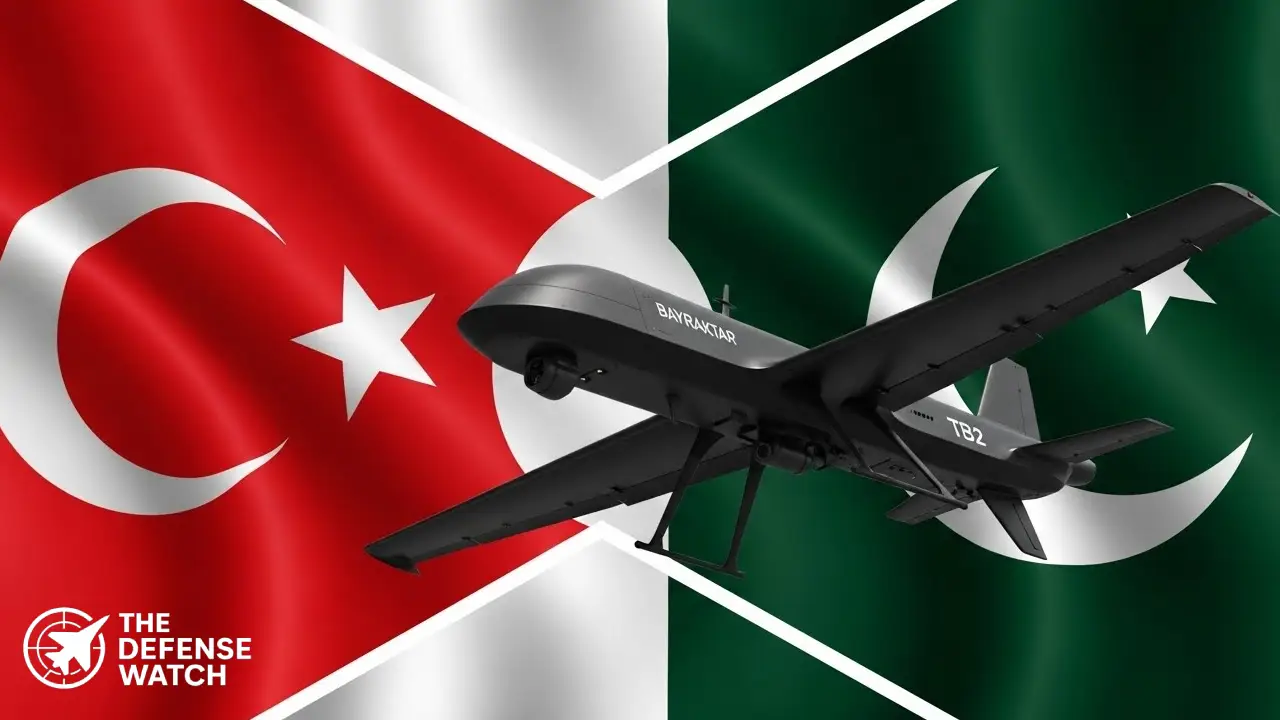
On December 5, 2025, the international business media reported that Pakistan and Türkiye are in advanced talks to establish a combat drone assembly facility in Pakistan, as part of Ankara’s concerted strategy to deepen its global defense industry footprint.
According to unnamed Turkish officials quoted by the report, the facility will assemble advanced unmanned aerial vehicles (UAVs), including stealth-capable and long-endurance drones exported from Türkiye. Talks have gained momentum since October 2025.
Background — Evolution of Turkish Drone Exports and Pakistan–Türkiye Defense Ties
Over the past decade, Türkiye’s UAV industry — anchored by firms such as Baykar and Turkish Aerospace Industries (TAI) — has transformed from modest domestic programs into a globally recognized exporter of combat-proven drones. The widely deployed Bayraktar TB2 has seen combat in multiple theatres, underscoring the platform’s effectiveness and boosting international demand.
For its part, Pakistan has been gradually increasing defense cooperation with Türkiye. Past collaborations include corvette production for the Pakistan Navy, F-16 upgrades, and joint UAV component production (e.g., production of parts for the ANKA drone together with Pakistan’s national defense industries).
By establishing a drone assembly plant on Pakistani soil, the move would mark a shift from simple hardware sales to embedded co-production — deepening strategic and industrial defense ties between the two countries.
Facility Details — What Will It Build, When and How
According to the sources, the planned facility will focus on assembling Turkish-made combat UAVs — likely including the Bayraktar TB2 and heavier or more capable models such as the Akıncı. Some reports suggest even more advanced stealth-capable and long-endurance drones may be part of the plan.
Officials from both sides remain silent publicly. Türkiye’s Defense Ministry declined comment, and Pakistan’s Information Minister did not respond to media requests.
As of now, no precise location or timeline has been officially announced. However, industry insiders say that preparatory negotiations and site selection processes have already made significant headway since October 2025.
Strategic Context — Why This Matters for Türkiye and Pakistan
Türkiye’s Export Strategy and Defence Industry Growth
Türkiye’s defense exports are reportedly up 30% in the first 11 months of 2025, reaching a record around US$7.5 billion. The new facility aligns with Ankara’s push to transform its defense industry into a globally integrated supply network, especially among allied or partner nations.
By shifting from export-only to localized production in friendly states, Türkiye can reduce logistic burdens, speed up delivery, and establish more resilient supply chains — especially given growing global demand for UAVs. Production in Pakistan could also lower costs for future drones earmarked for export.
Pakistan’s Defence Modernization and Strategic Autonomy
For Pakistan, hosting a Turkish drone assembly plant could enhance its self-reliance in UAV operations — from quicker procurement cycles to enhanced maintenance, repair and overhaul (MRO) capabilities. It may also open pathways for future technology transfer and co-development of UAV variants tailored to regional security needs.
Given the strategic environment, especially in South Asia where aerial and border surveillance — including UAV operations — has become increasingly important, the addition of a domestic-assembled drone fleet may significantly bolster Pakistan’s operational readiness.
Moreover, the venture dovetails with broader plans for cooperation between the two nations, including joint work on the next-generation fifth-generation fighter aircraft program TF‑KAAN, indicating growing aerospace integration.
Challenges & Uncertainties
As of now, key details remain unconfirmed:
- There is no official announcement regarding a firm agreement, plant location, project cost, or precise timeline.
- The silence from both governments suggests the initiative is still in negotiation, and could be subject to political and diplomatic sensitivities.
- Technology transfer and export-control issues — especially for stealth and long-endurance UAV systems — may complicate operationalizing full-scale production on foreign soil.
Finally, actual integration of such a facility would require significant investment, infrastructure, training, and regulatory oversight, which could delay realization well beyond 2026 or 2027.
What’s Next — Implications and What to Watch For
If finalized, the Pakistan-based drone facility could represent a significant milestone in South Asian defense collaboration and reshape regional UAV procurement dynamics. It may accelerate Pakistan’s UAV acquisition and sustainment capacities, reducing reliance on direct imports for future drone needs.
For Türkiye, the move would reinforce its standing as a leading global exporter of combat drones — now offering foreign-based assembly to clients willing to deepen cooperation. It may also encourage other allied states to seek similar co-production arrangements, further entrenching Turkish UAV presence worldwide.
Observers should watch for:
- Formal announcements from the respective defense ministries or defence-industry authorities in Ankara and Islamabad detailing scope, investment, and timelines.
- Signals of technology transfer agreements, joint R&D or training components.
- Potential export orders from third-party nations leveraging the Pakistan facility — which would test the viability of overseas UAV production hubs.