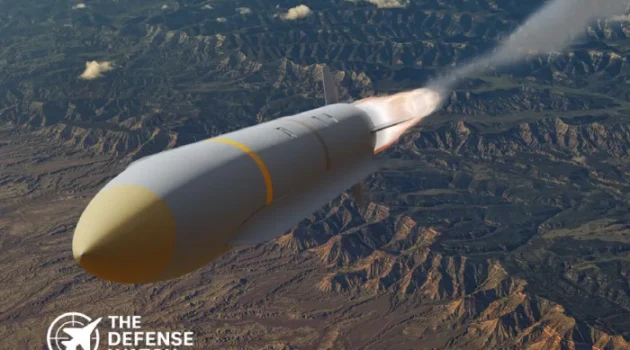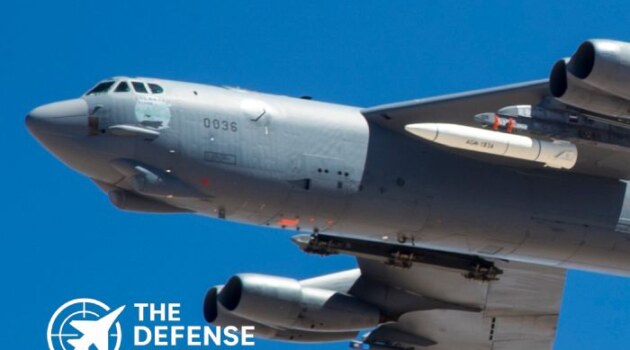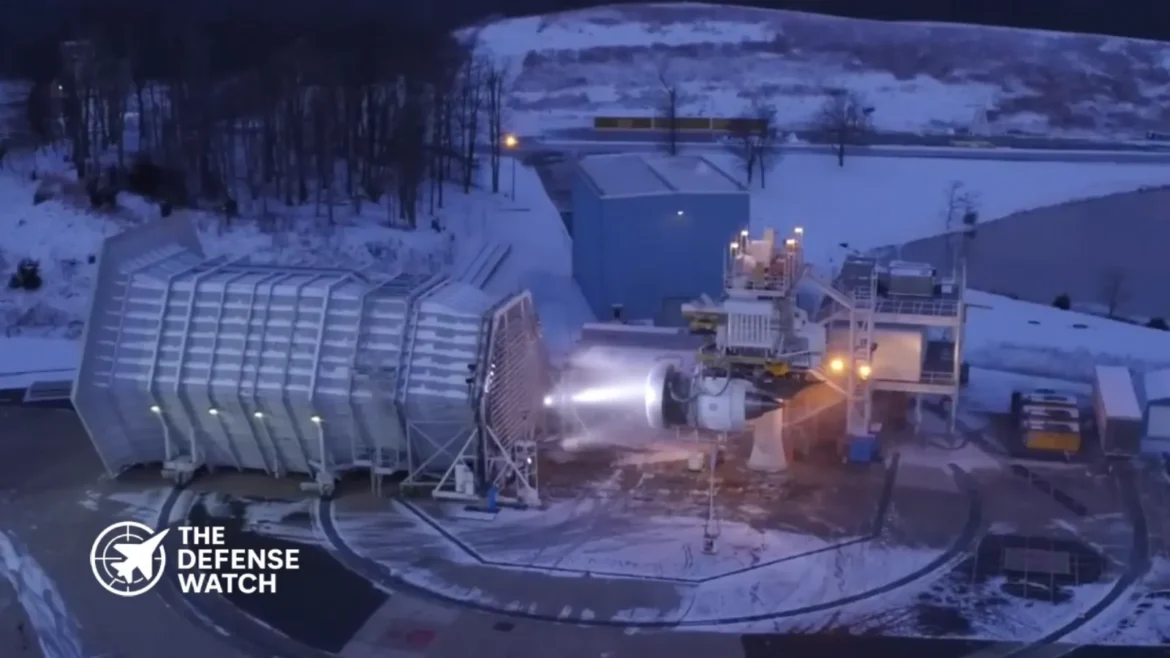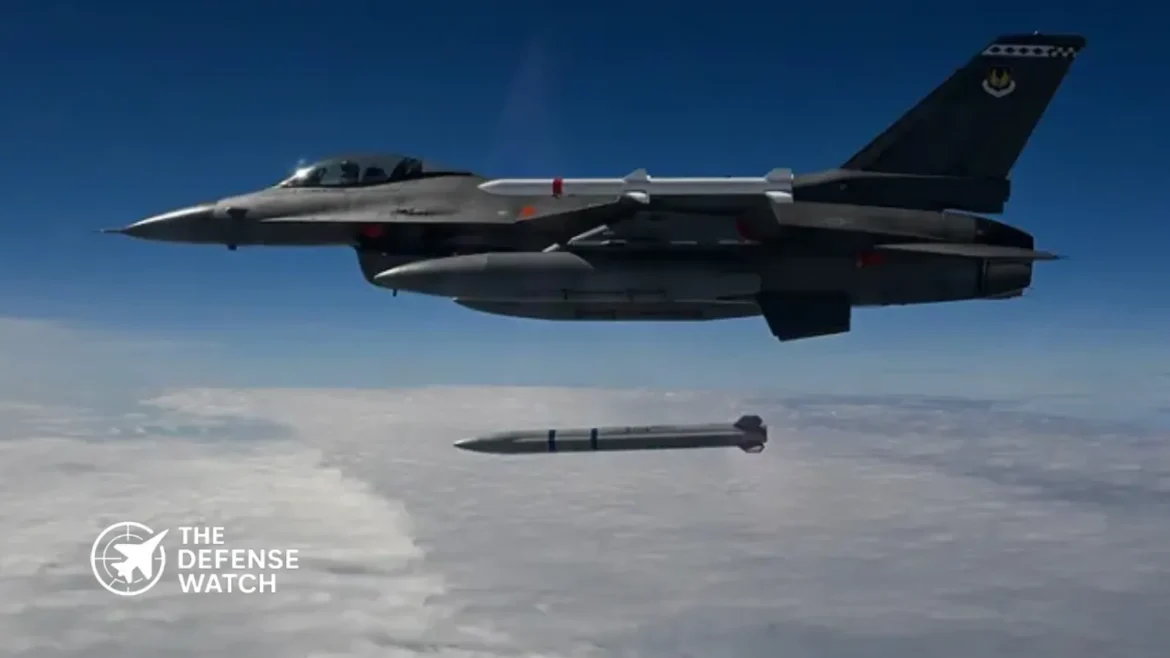
- The Air Force posted a sources-sought notice on March 4, 2026 seeking companies capable of building a missile with “similar or improved capabilities” to the Stand-in Attack Weapon (SiAW) currently under development by Northrop Grumman.
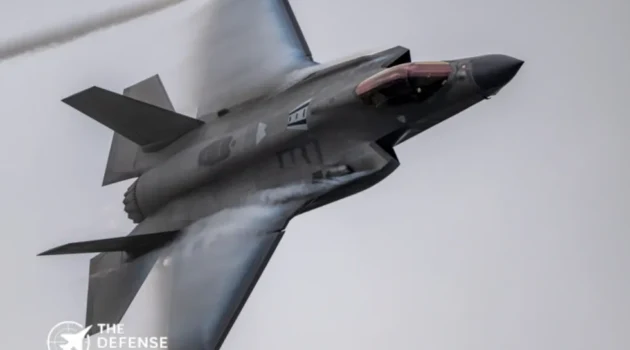
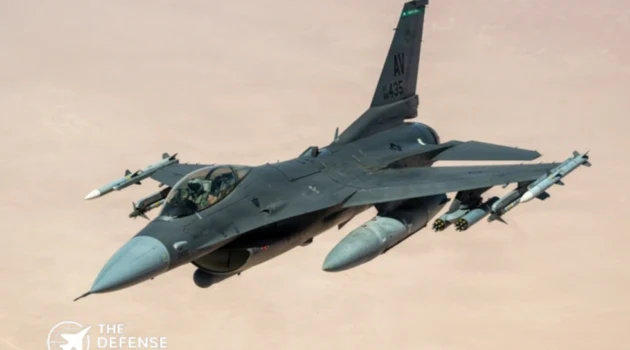
- The SiAW is a supersonic, multi-mission, air-to-ground missile designed to defeat enemy air defenses and strike high-value relocatable targets — planned for carriage by the F-35, F-16, F-47, and B-21 Raider.
- The notice seeks vendors capable of producing at least 600 SiAW-class missiles annually, signaling large-scale acquisition intent that far exceeds the current single-contractor arrangement.
- Northrop Grumman received a $705 million, three-year development contract in 2023 and delivered the first SiAW test missile in November 2024; an F-16 separation test was completed in December 2024 at Eglin AFB, Florida.
- The One Big Beautiful Bill Act included $325 million for air-launched anti-radiation missile production capacity — a congressional signal that single-vendor supply chains pose an unacceptable risk in sustained peer conflict.
Air Force Opens the Door to More Stand-in Attack Weapon Builders
(adsbygoogle = window.adsbygoogle || []).push({});The U.S. Air Force is actively seeking additional manufacturers for its Stand-in Attack Weapon, moving to break sole-source dependence on Northrop Grumman at a moment when active combat operations over Iran are consuming precision munitions stocks at rates that are straining the defense industrial base.
A sources-sought notice posted to SAM.gov on March 4 requests information from industry on whether companies could produce a supersonic, multi-mission missile with capabilities equivalent to or exceeding those of the SiAW — the Air Force’s next-generation suppression of enemy air defenses weapon. The move reflects an urgent strategic calculation: the United States cannot afford to fight a peer-capable adversary at scale if its most advanced munitions flow from a single production line.
The Big Picture: A Munitions Industrial Base Under Strain
The Air Force’s push for a second source on the Stand-in Attack Weapon is not happening in a vacuum. The ongoing air campaign against Iran — Operation Epic Fury — has illuminated a structural vulnerability in U.S. munitions production that defense analysts and Pentagon acquisition officials have warned about for years. Expensive long-range standoff weapons burn through stockpiles quickly; the SiAW is explicitly designed to change that calculus by enabling stealthy, survivable aircraft to strike from within defended airspace repeatedly and at lower cost per engagement.
Broader defense policy has also created momentum. The One Big Beautiful Bill Act reconciliation package directed $325 million toward production capacity improvements for air-launched anti-radiation missiles. While it is not confirmed whether those funds directly triggered the new sources-sought notice, the legislative signal is clear: Congress views current production capacity as inadequate for multi-theater demands.
The Air Force has simultaneously articulated a vision in which suppression of enemy air defenses is no longer the exclusive domain of specialized fighter units. Lt. Gen. Jason R. Armagost, deputy commander of Air Force Global Strike Command, stated at AFA’s Warfare Symposium in February 2026 that SEAD capabilities must become “native” across all platforms — a doctrinal shift that dramatically expands the required weapons inventory.
What’s Happening: A Second-Source Competition Takes Shape
The March 4 notice does not constitute a formal solicitation but represents the government’s first public signal that it intends to qualify additional vendors for SiAW-class production. Interested companies must demonstrate the ability to deliver missiles with extended range, advanced targeting, counter-countermeasures, and compatibility with existing and future platforms — requirements that mirror the SiAW’s current specification baseline.
The notice specifically benchmarks production at 600 missiles per year, a threshold that reflects the scale at which Air Force acquisition leadership has publicly said it intends to procure the weapon. Original SiAW solicitation documents requested vendors provide unit pricing at quantities of 500, 1,000, and 1,500 missiles — numbers consistent with a program expected to run into the thousands of airframes over its service life.
Northrop Grumman developed the SiAW from its AARGM-ER (Advanced Anti-Radiation Guided Missile-Extended Range), which is itself an evolution of the legacy AGM-88 HARM. The AARGM-ER is assessed to fly at approximately Mach 4 with a range near 180 miles; the SiAW is expected to exceed both figures while maintaining compatibility with internal weapons bays on stealth aircraft, including the F-35A and the forthcoming B-21 Raider.
“It’s the kind of weapon that if we had it in quantity would be very valuable in current operations in Iran and definitely in the Pacific.”— Ret. Col. Mark Gunzinger, Director of Future Concepts, AFA’s Mitchell Institute for Aerospace Studies
Why It Matters: Speed, Stealth, and Scale
The SiAW’s technical architecture addresses three compounding problems with the current U.S. strike inventory. First, subsonic cruise missiles — widely used as standoff weapons — require thirty minutes or more to reach their targets, giving mobile adversary systems ample time to relocate. A supersonic weapon traveling at Mach 4-plus collapses that window to minutes, fundamentally changing the geometry of strikes against mobile ballistic missile launchers, communications nodes, and GPS jamming systems.
Second, the weapon’s compact dimensions allow internal carriage aboard the F-35 and B-21, preserving low-observable signatures that external pylons would compromise. This is not a marginal consideration — against peer adversaries with modern integrated air defense systems, stealth is a prerequisite for survivable strike missions, not an enhancement.
Third, smaller size translates directly to increased sortie payload. A single F-35 can carry more SiAWs internally than larger precision-guided munitions, effectively multiplying the number of targets it can service per sortie without returning to base.
Analysis
The second-source push also reflects a maturing recognition within Air Force acquisition circles that dual-sourcing is not merely a cost-control mechanism — it is a wartime risk management tool. A single catastrophic event at a Northrop production facility, a labor disruption, or a supply chain failure affecting a critical component could effectively ground a core element of the Air Force’s SEAD arsenal. By qualifying a second manufacturer now, during peacetime development, the service preserves the industrial flexibility to surge output should a major conflict demand it. The approximately eighteen to twenty-four months typically required to qualify a new production line means that decisions made today will determine options available in 2028 and beyond — precisely the window in which U.S. strategic planning for a Taiwan contingency is most focused.
Strategic Implications: SEAD for an Era of Peer Competition
The SiAW program’s expansion directly supports the U.S. military’s pivot toward contested, high-threat operating environments. Modern integrated air defense systems — including the Russian S-400 and Chinese HQ-9 families, as well as next-generation systems now in development — have dramatically raised the cost and risk of traditional standoff strikes. The SiAW is designed specifically to operate inside these defensive envelopes aboard aircraft with sufficiently low radar cross-sections to survive the approach.
Critically, the weapon’s target set goes well beyond its anti-radiation mission roots. The Air Force lists command-and-control facilities, cruise and ballistic missile launchers, GPS jamming arrays, and anti-satellite systems among its intended targets — a list that reads directly as a Pacific contingency target deck. In any conflict scenario involving China, the ability to rapidly attrite adversary reconnaissance-strike complexes, electronic warfare nodes, and launch platforms would be foundational to establishing and maintaining air superiority.
The planned integration of SiAW with the Universal Armament Interface on the B-21 Raider adds a strategic dimension that extends beyond tactical SEAD missions. A bomber capable of internally carrying SiAWs alongside long-range standoff missiles represents a flexible, penetrating strike platform able to service both air defense suppression and deep-strike targets on a single mission — a capability the Air Force has not possessed since the retirement of legacy bomber-launched anti-radiation missiles in the 1990s.
Competitor View: How Beijing and Moscow Will Read This Move
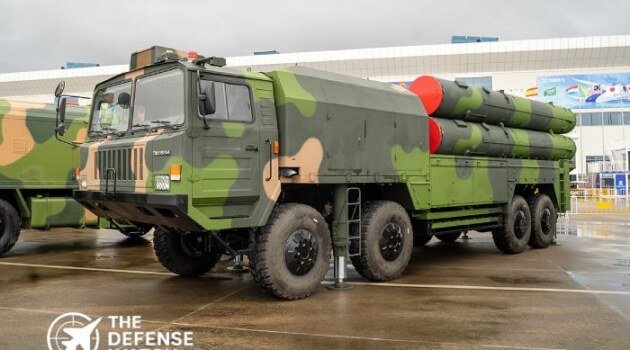
Chinese defense analysts will likely interpret the second-source competition not merely as an industrial procurement decision but as a signal of U.S. intent to field the SiAW at operationally relevant scale. China’s People’s Liberation Army Air Force has invested heavily in SEAD-resistant integrated air defense systems, including the HQ-9B and HQ-19, precisely because it understands that suppression of those defenses would be an American priority in any conflict over Taiwan or the South China Sea. A U.S. announcement that it intends to produce SiAW-class missiles at 600 or more units per year — and is qualifying multiple vendors to ensure it can sustain that rate — underscores the seriousness of U.S. planning.
Russia will draw similar conclusions, particularly given that the SiAW is listed for integration on the F-47 — the Air Force’s sixth-generation air superiority fighter, itself a direct response to emerging Russian and Chinese advanced fighters. The combination of a stealthy platform with a penetrating, multi-mission supersonic weapon is exactly the pairing that stresses legacy integrated air defense network architecture, which is designed to manage slower, more predictable threats.
Iran, whose air defenses the U.S. is currently actively degrading in Operation Epic Fury, represents a real-time validation case. American commanders have already noted the value of faster, more survivable strike options in the current campaign. The absence of SiAW from the Iran fight — the weapon is not yet fielded — only strengthens the procurement argument for accelerated delivery.
What to Watch Next: Key Milestones
The March 4 sources-sought posting is the first formal step toward a potential second-source competition. Interested vendors will submit capability statements, after which the Air Force will assess whether the industrial base can support a qualified alternate manufacturer. A formal request for proposals could follow within six to twelve months if the service determines that viable competitors exist.
Meanwhile, Northrop Grumman continues to advance the primary development program. The company completed a successful F-16 separation test in December 2024, a critical milestone for carriage and release qualification. The Air Force’s stated fielding target of 2026 remains in play, though the compressed timeline — and the concurrent push to qualify additional vendors — suggests the service is managing a deliberate tension between near-term operational delivery and long-term industrial resilience.
Congressional attention will also be a factor. With $325 million already directed toward anti-radiation missile production capacity, the Armed Services Committees will likely scrutinize the pace of any second-source qualification in upcoming budget hearings. The Iran campaign has given lawmakers direct, real-time evidence of what happens when precision munitions stocks run short — political conditions that typically accelerate defense production decisions.
Capability Gap: What the SiAW Is Built to Close
For two decades, U.S. SEAD strategy has relied primarily on the AGM-88 HARM and its AARGM derivative, weapons designed for a threat environment that has since evolved significantly. Modern adversary air defense systems now incorporate mobile launchers, rapid frequency-hopping radars, and networked engagement architectures that limit the effectiveness of legacy anti-radiation missiles. The AGM-88 HARM, in particular, is subsonic — giving adversary operators meaningful time to react once a launch is detected.
The SiAW addresses this gap through supersonic speed, reduced radar cross-section through internal carriage, and an expanded target set that accounts for the networked nature of modern integrated air defense systems. Rather than prosecuting a single radar, the weapon is designed to attack the system — communications nodes, command posts, and launch vehicles — simultaneously degrading the network’s ability to reconstitute.
The realistic limitation is timeline. Even if a second vendor is qualified rapidly, weapons programs of this complexity take time to bring to production maturity. A second SiAW source qualified in 2027 would likely not produce operationally certified missiles in meaningful quantities until 2028 or later. In the near term, U.S. SEAD capability remains dependent on existing AARGM-ER stocks and legacy HARM variants — a reality that the current Iran campaign makes operationally visible.
The Bottom Line
The Air Force’s move to source a second Stand-in Attack Weapon manufacturer is less a routine acquisition action than a strategic acknowledgment that the era of single-vendor, low-rate precision munitions production is incompatible with the realities of sustained peer-level conflict.
 KEY FACTS AT A GLANCE
- RAF F-35B stealth fighter jets shot down two hostile drones during a mission over Jordan.
- The aircraft used ASRAAM air-to-air missiles and operated alongside RAF Typhoon fighters and a Voyager tanker.
- The engagement marks the first confirmed operational combat kill for the United Kingdom’s F-35 fleet.
- The mission was launched from RAF Akrotiri in Cyprus amid rising Iranian drone activity across the region.
- The incident highlights the growing role of fifth-generation fighters in counter-drone air defense missions.
RAF F-35B Shoots Down Hostile Drones In First Combat Kill
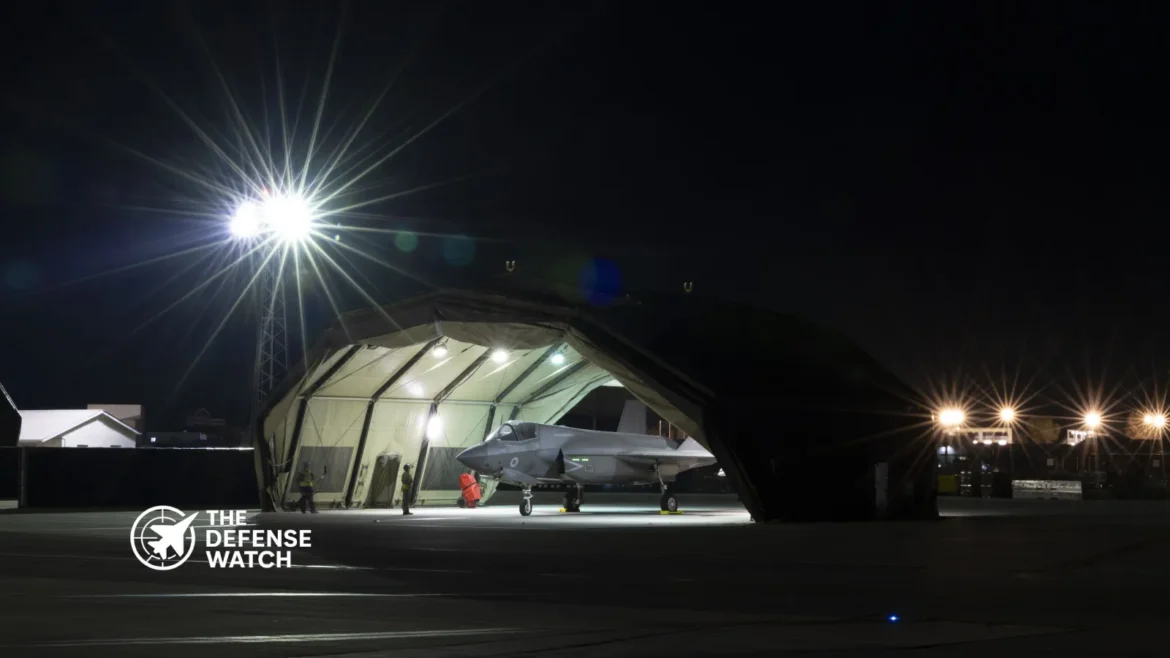
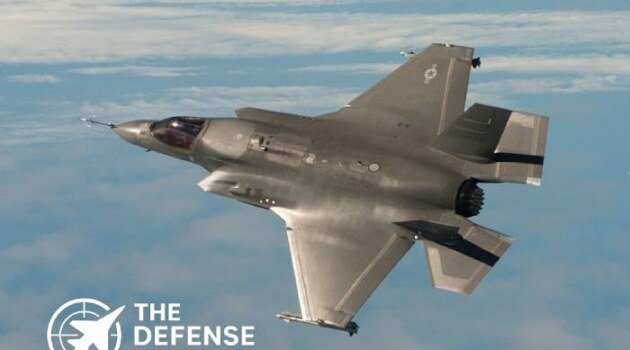
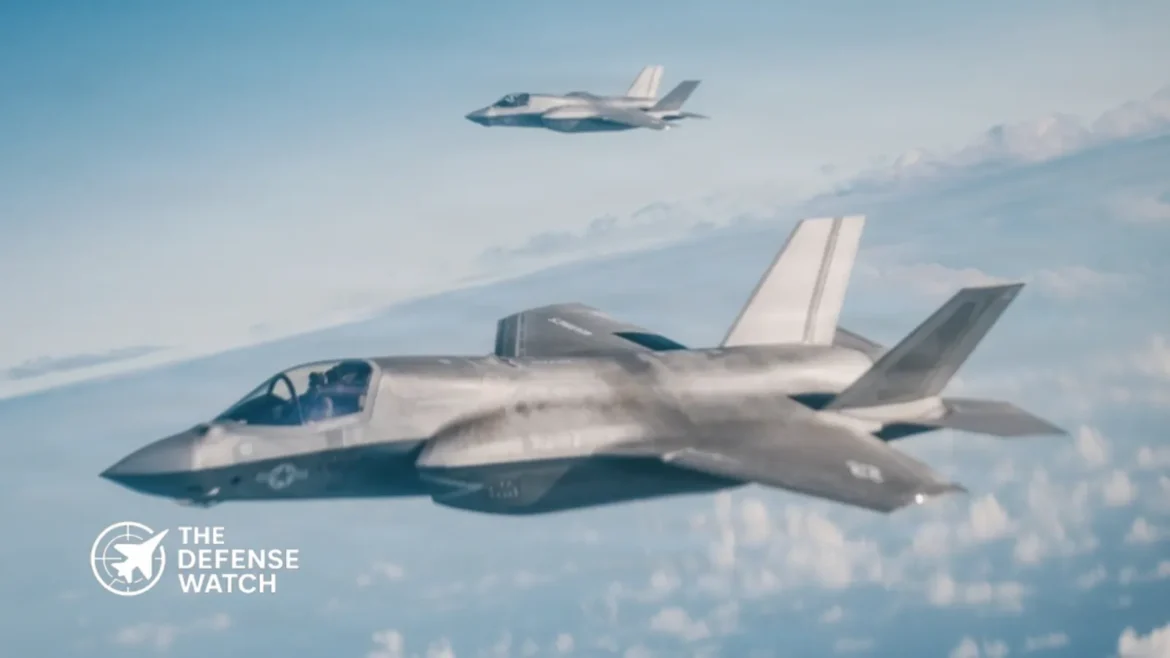
RAF F-35B stealth fighters have achieved their first operational combat kills after intercepting and destroying two hostile drones during a mission over Jordan. The milestone engagement marks the first time the United Kingdom’s F-35 fleet has successfully destroyed aerial targets during combat operations.
(adsbygoogle = window.adsbygoogle || []).push({});The aircraft were operating as part of a defensive patrol supported by RAF Typhoon fighters and a Voyager air-to-air refueling tanker. During the mission, the F-35 pilot detected the unmanned aerial systems on radar and engaged them using AIM-132 ASRAAM air-to-air missiles.
British officials confirmed the mission took place amid heightened regional tensions and an increase in drone activity targeting Western and allied interests in the Middle East.
The Big Picture
Drone warfare has rapidly reshaped modern air defense priorities. Low-cost unmanned aerial systems are now widely used by state and non-state actors to strike military bases, infrastructure, and logistics hubs.
In recent years, Iranian-designed one-way attack drones, including Shahed-type systems, have emerged as a persistent threat across the Middle East and Eastern Europe. Their relatively low cost and ability to fly long distances make them difficult targets for traditional air defense networks.
Western air forces increasingly rely on a layered approach to counter these threats. Ground-based missile systems, electronic warfare units, and fighter aircraft all play roles in detecting and intercepting hostile drones.
The RAF F-35B combat kill demonstrates how fifth-generation fighter aircraft are becoming part of that defensive architecture.
What’s Happening
The engagement occurred during a defensive patrol over Jordanian airspace as part of regional security operations. The F-35B aircraft had deployed to RAF Akrotiri in Cyprus earlier in the year to support British and coalition missions in the Middle East.
While on patrol, the stealth fighter detected two hostile drones approaching the area. The pilot coordinated with accompanying Typhoon aircraft to verify the targets before engaging.
Correct identification was critical because the airspace was crowded with aircraft from multiple allied nations conducting simultaneous operations.
After confirming the targets as hostile unmanned aerial systems, the pilot launched ASRAAM missiles that successfully destroyed both drones.
The interception followed a separate drone incident in which a small unmanned aircraft struck RAF Akrotiri, raising concerns about the vulnerability of regional bases to low-cost aerial threats.
Why It Matters
The RAF F-35B combat kill represents a significant operational milestone for the United Kingdom’s fifth-generation fighter program.
Although the F-35 platform has been used in combat by several operators, including the United States and Israel, this marks the first time the UK’s stealth fighter fleet has destroyed an aerial target during operations.
The engagement also highlights the versatility of the F-35B. Originally designed to penetrate contested airspace and conduct precision strikes, the aircraft is increasingly used for air defense and counter-drone missions.
Its advanced sensor suite allows pilots to detect small targets at long distances while maintaining situational awareness across complex battle environments.
In crowded operational theaters such as the Middle East, this capability becomes critical for preventing friendly-fire incidents while responding quickly to emerging threats.
Strategic Implications
The successful interception reflects the evolving role of stealth fighters in integrated air defense.
Traditional fighter aircraft often rely on ground-based radar networks for targeting information. The F-35, however, acts as a sensor node within a broader combat network.
Its onboard radar, electronic surveillance systems, and data fusion capabilities allow it to track multiple targets and share information with other aircraft, ships, and ground forces.
In practice, this turns the aircraft into a command-and-control asset as well as a strike platform.
(adsbygoogle = window.adsbygoogle || []).push({});For NATO and coalition operations, that capability strengthens the ability to defend forward bases and allied territory against increasingly sophisticated drone threats.
The mission also underscores the importance of RAF Akrotiri as a strategic hub for British military operations in the Middle East.
Competitor View
Adversaries closely monitor operational performance of Western stealth aircraft.
Iran and Russia have invested heavily in drone technology as a cost-effective way to challenge Western air superiority. Shahed-type systems, for example, are designed to overwhelm defenses through numbers rather than speed or survivability.
The RAF F-35B interception demonstrates that advanced fighters can effectively counter these platforms when supported by networked sensors and allied aircraft.
However, it also highlights the economic asymmetry of drone warfare. Air-to-air missiles used by fighter jets often cost significantly more than the drones they destroy.
This dynamic continues to drive research into lower-cost counter-drone technologies such as directed energy weapons, electronic warfare systems, and rapid-fire gun defenses.
What To Watch Next
The RAF continues to expand operational experience with the F-35B as the aircraft becomes a central element of Britain’s air power strategy.
Future deployments will likely focus on integrating the stealth fighter with naval carrier strike groups and allied air defense networks.
The United Kingdom also plans to grow its F-35 fleet over the coming decade, supporting both Royal Air Force and Royal Navy operations.
Operational data from real-world missions such as this interception will shape future tactics for counter-drone warfare and airspace management.
Capability Gap
The incident highlights a growing challenge for modern militaries: defending against large numbers of inexpensive drones.
While advanced fighters can intercept individual targets effectively, relying on high-value aircraft and expensive missiles for routine counter-drone operations may not be sustainable in large-scale conflicts.
To address this gap, Western militaries are investing in layered defenses that combine fighters, ground-based air defense systems, electronic warfare tools, and emerging directed energy weapons.
(adsbygoogle = window.adsbygoogle || []).push({});The goal is to create a cost-effective system capable of defeating both high-end missiles and swarms of inexpensive unmanned aircraft.
The Bottom Line
The RAF F-35B’s first combat kill demonstrates how fifth-generation fighters are becoming critical assets in modern counter-drone air defense operations.
KEY FACTS AT A GLANCE- Rolls-Royce completed altitude and operability testing for the F130 engine designed for the U.S. Air Force B-52J bomber.
- Testing took place at the Arnold Engineering Development Complex in Tennessee to validate engine performance in high altitude mission conditions.
- The engines will replace aging TF33 powerplants under the B-52 Commercial Engine Replacement Program.
- Rolls-Royce could deliver more than 600 engines as part of a contract worth up to 2.6 billion dollars.
- The B-52J upgrade is expected to extend the bomber’s operational life into the 2050s.
B-52J Engine Upgrade Advances With Successful Altitude Testing
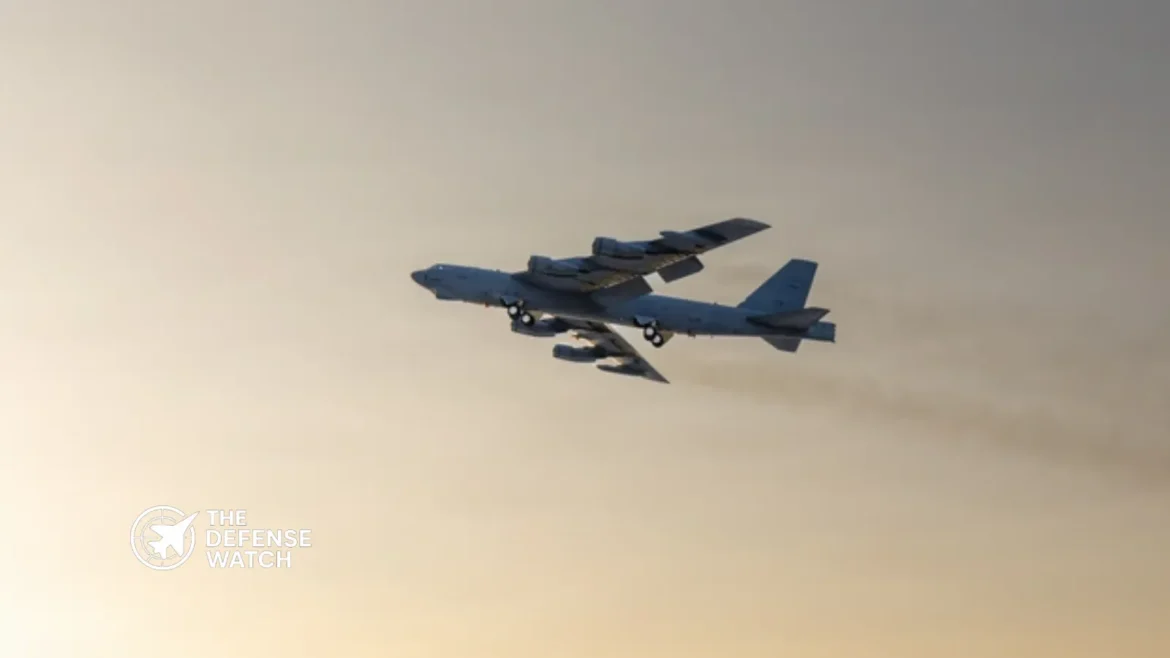
The B-52J engine upgrade program reached a major milestone after Rolls-Royce completed altitude and operability testing for the new F130 engine designed for the U.S. Air Force B-52 strategic bomber fleet. The tests confirmed that the engine can sustain reliable performance during long duration high altitude missions, a critical requirement for the future B-52J configuration.
(adsbygoogle = window.adsbygoogle || []).push({});Engine testing took place at the U.S. Air Force Arnold Engineering Development Complex in Tullahoma, Tennessee. Engineers conducted multiple evaluation phases including high altitude performance testing, airflow distortion simulations, and electrical power generation checks in coordination with Boeing and Air Force program officials.
The results represent another step forward in the B-52 Commercial Engine Replacement Program, a core modernization effort designed to keep the bomber fleet operational for decades.
The Big Picture
The B-52 modernization effort reflects a broader U.S. strategy to sustain long range strike capabilities while new platforms such as the B-21 Raider enter service.
Originally introduced in the early 1950s, the B-52 remains a central component of the United States strategic bomber force. Instead of replacing the aircraft entirely, the Air Force has chosen a cost effective modernization path that upgrades propulsion, radar, and digital systems.
The new engine program sits alongside other upgrades including the Radar Modernization Program, which will install an active electronically scanned array radar derived from the APG-79 family used on modern combat aircraft.
Together these upgrades will transform the current B-52H fleet into the B-52J configuration.
What Is Happening
Rolls-Royce engineers conducted altitude testing to verify the performance envelope of the F130 engine under realistic operational conditions.
The testing program evaluated several mission critical parameters:
• sustained thrust during high altitude flight
• engine stability under turbulent airflow using distortion screens
• integrated power generation using the aircraft’s electrical systemsThe tests also included Integrated Drive Generator evaluations to ensure the engine can provide stable electrical power for avionics and mission systems across all flight profiles.
Program officials said the testing generated critical performance data needed to validate system modeling and prepare the engine for integration with test aircraft.
Lt. Col. Timothy Cleaver, the Air Force program manager for the engine replacement effort, said the results provide confidence as the program transitions to aircraft modification and flight testing phases.
Why It Matters
The B-52J engine upgrade addresses one of the oldest components in the U.S. bomber inventory.
Current B-52H aircraft still rely on Pratt and Whitney TF33 engines, a design that dates back to the Cold War. Maintaining those engines has become increasingly costly due to aging parts, maintenance requirements, and supply chain limitations.
The F130 engine introduces several improvements:
Higher fuel efficiency
Lower maintenance requirements
Improved reliability
Reduced sustainment costsThe engine is derived from the BR725 commercial turbofan used on Gulfstream G650 aircraft and has accumulated more than 30 million flight hours across the broader engine family.
This commercial heritage allows the Air Force to benefit from an established global supply chain and mature engineering base.
Strategic Implications
The B-52J modernization ensures the aircraft remains a viable long range strike platform well into the mid twenty first century.
With the new engines and upgraded radar, the bomber will support missions including:
Nuclear deterrence
Long range conventional strike
Stand off missile operations
Maritime strike rolesStrategic bombers provide unique operational flexibility because they can remain airborne for extended periods and carry large payloads of cruise missiles or precision guided munitions.
Upgraded propulsion will also improve sortie generation rates by reducing maintenance downtime.
(adsbygoogle = window.adsbygoogle || []).push({});For U.S. military planners, this ensures the bomber fleet can maintain persistent global strike coverage even as new systems gradually enter service.
Competitor View
Strategic competitors such as China and Russia closely monitor U.S. bomber modernization programs.
China has expanded its long range bomber capabilities through the H-6K and is developing the next generation H-20 stealth bomber. Russia continues to operate the Tu-95 and Tu-160 fleets while pursuing the future PAK DA bomber program.
Modernizing the B-52 signals that the United States intends to maintain a layered bomber force composed of legacy aircraft, modernized platforms, and next generation stealth systems.
From a deterrence perspective, extending the life of the B-52 increases the survivability and operational availability of the U.S. strategic strike portfolio.
What To Watch Next
The B-52J engine program will now move into the next development stages.
Upcoming milestones include:
Test aircraft modifications
Flight testing of the F130 powered B-52
Further system integration testingOnce testing is complete, the Air Force will move toward production and fleet wide installation of the new engines.
The service expects the upgraded bombers to remain operational into the 2050s.Capability Gap
The engine replacement program directly addresses a sustainment challenge within the bomber fleet.
The TF33 engines currently powering the B-52 require intensive maintenance and have become increasingly difficult to support due to aging components and declining supplier networks.
Replacing them with modern turbofan engines improves reliability and reduces logistical burdens across the fleet.
However, the upgrade does not fundamentally change the B-52’s non stealth airframe. The aircraft will still rely on stand off weapons and electronic warfare support when operating near advanced air defense systems.
The Bottom Line
Successful F130 altitude testing marks a key milestone that keeps the B-52J modernization program on track to extend the operational life of America’s most enduring strategic bomber.
■ KEY FACTS AT A GLANCE- ► Houston based Venus Aerospace conducted a successful Rotating Detonation Rocket Engine flight test in 2025.
- ► The demonstration took place at Spaceport America in New Mexico following adverse weather conditions.
- ► The RDRE uses a supersonic detonation wave traveling around an annular combustor to generate thrust.
- ► Venus Aerospace states the engine is approximately 15 percent more efficient than conventional rocket engines.
- ► The test validated performance and system integrity under real flight conditions.
Venus Aerospace Advances Rotating Detonation Rocket Engine In Flight Test
The Rotating Detonation Rocket Engine, or RDRE, reached a key milestone last year when Venus Aerospace completed a successful flight demonstration at Spaceport America.
According to the company, the engine launched and operated as planned on its first flight attempt, validating performance and structural integrity under real world conditions. The test followed a night of heavy winds, adding environmental stress to the demonstration.
The result places Venus Aerospace among a small group of U.S. firms and research institutions pursuing detonation based propulsion as an alternative to conventional rocket systems.
What Makes A Rotating Detonation Rocket Engine Different
Traditional liquid rocket engines rely on subsonic combustion, known as deflagration, where fuel and oxidizer burn at relatively slower flame speeds. The Rotating Detonation Rocket Engine operates on a different principle.
In an RDRE, a detonation wave travels continuously around an annular combustor at supersonic speeds. This wave compresses and burns the propellant mixture almost instantaneously. The process produces higher thermodynamic efficiency by leveraging pressure gain combustion, long considered a goal in propulsion research.
NASA and several U.S. universities have studied rotating detonation concepts for years. The U.S. Air Force Research Laboratory has also examined pressure gain combustion for future missile and space launch applications. Until recently, most demonstrations remained ground based.
A successful flight test, even at small scale, signals technical maturity beyond laboratory conditions.
Claimed Efficiency Gains And Practical Implications
Venus Aerospace states that its Rotating Detonation Rocket Engine is approximately 15 percent more efficient than traditional rocket engines. While independent performance data has not been publicly released, the claim aligns with theoretical models suggesting pressure gain combustion can increase specific impulse and reduce propellant mass.
If validated at scale, that efficiency gain could translate into:
- Increased payload capacity for space launch vehicles
- Extended range for hypersonic systems
- Reduced engine size and weight
- Lower overall launch costs
For defense applications, improved thrust to weight ratio and compact engine geometry are especially relevant. Smaller propulsion systems can enable more agile missiles or reusable high speed aircraft concepts.
However, scaling detonation engines presents engineering challenges. Managing thermal loads, controlling wave stability, and ensuring material durability under extreme pressure cycles remain critical hurdles. Flight validation is a step forward, but sustained operational testing will determine long term viability.
Strategic Context For U.S. Aerospace
The Rotating Detonation Rocket Engine concept fits within broader U.S. efforts to modernize propulsion technologies amid growing competition in hypersonics and space access.
China and Russia have both invested heavily in advanced missile propulsion and high speed flight systems. U.S. defense planners have responded by prioritizing propulsion research across agencies, including NASA, the Department of Defense, and DARPA.
Private sector firms now play a central role. Companies like Venus Aerospace aim to bridge civil space and defense markets, developing propulsion architectures that could support commercial launch, high speed transport, and military platforms.
Spaceport America, operated by the State of New Mexico, has become a test hub for emerging launch providers and experimental propulsion systems. Its remote location and established infrastructure make it suitable for early stage flight demonstrations.
Technical Validation Versus Commercial Readiness
While the successful flight of a Rotating Detonation Rocket Engine is notable, commercialization requires far more than a single test. Certification, repeatability, manufacturing scalability, and integration with full vehicle systems will determine whether RDRE technology transitions into operational programs.
Historically, propulsion breakthroughs often take years to move from demonstration to deployment. Liquid hydrogen engines, staged combustion cycles, and reusable booster architectures all required extended refinement before widespread adoption.
The same will likely apply to rotating detonation systems.
Still, flight validation under real atmospheric conditions is a meaningful benchmark. It demonstrates that detonation waves can be controlled in a practical engine environment, not just in controlled laboratory rigs.
For U.S. aerospace and defense stakeholders, the test signals continued innovation in propulsion at a time when performance margins increasingly matter.
■ KEY FACTS AT A GLANCE- ► RAF F-35B Lightnings shot down uncrewed aerial systems over Jordanian airspace.
- ► The intercept marked the first operational kill for a British F-35 aircraft.
- ► The aircraft were operating in defense of Jordan.
- ► The UK Ministry of Defence confirmed the engagement.
- ► The F-35B Lightning II is the short takeoff and vertical landing variant used by the RAF and Royal Navy.
RAF F-35B Records First Operational Kill
The British F-35B operational kill was confirmed after Royal Air Force Lightnings shot down uncrewed aerial systems while operating over Jordanian airspace in defense of the country.
According to the UK Ministry of Defence, the engagement marked the first time a British-operated F-35 has destroyed a target during live operations.
The aircraft involved were F-35B Lightning II jets assigned to the Royal Air Force. The F-35B is the short takeoff and vertical landing variant of the Joint Strike Fighter family, operated by both the RAF and the Royal Navy’s Fleet Air Arm.
The intercept took place over Jordanian territory, where UK aircraft were deployed as part of ongoing regional security operations.
Operational Context
The United Kingdom maintains a sustained military presence in the Middle East, including air assets based in Jordan and other regional locations. RAF fast jets have previously conducted counter-ISIS missions and regional deterrence patrols from Jordanian bases.
While officials did not disclose the specific type of uncrewed aerial system engaged, the use of drones by state and non-state actors across the Middle East has sharply increased in recent years. Low-cost one-way attack drones and reconnaissance platforms are now common in regional conflicts.
The British F-35B operational kill demonstrates that fifth generation aircraft are now actively contributing to counter-drone defense missions, not solely high end air superiority or strike roles.
Significance For The RAF
This event marks a milestone for the UK’s F-35 program. The United Kingdom is the only Tier 1 partner in the multinational F-35 program and operates the STOVL F-35B variant from both land bases and the aircraft carriers HMS Queen Elizabeth and HMS Prince of Wales.
Although US and Israeli F-35s have reportedly conducted combat operations in recent years, this is the first confirmed operational kill by a British F-35.
From a capability perspective, the engagement underscores the F-35B’s role as a multi-mission platform. Equipped with advanced sensors, data fusion, and beyond-visual-range weapons, the aircraft can detect and engage aerial threats with limited external cueing.
The use of a high end stealth fighter against uncrewed systems also reflects a broader shift in air warfare. Drones have become persistent threats, often launched in swarms or used to test air defenses. Western air forces increasingly rely on layered defense systems, combining ground-based air defense, electronic warfare, and combat air patrols.
Counter-Drone Implications
The British F-35B operational kill also highlights a cost and force management challenge. Shooting down relatively low-cost drones with advanced fighters raises questions about sustainability in prolonged conflicts.
However, in environments where speed, reach, and rapid decision making are required, fifth generation aircraft provide immediate response capability. The F-35’s sensor suite allows pilots to identify and classify airborne objects at extended ranges, reducing ambiguity in congested airspace.
Jordan sits at a strategic crossroads near Iraq, Syria, and Israel, regions where drone activity has become routine. Defensive patrols over Jordan reflect a precautionary posture amid broader regional instability.
Strategic Message
Beyond the tactical intercept, the event carries signaling value. The UK’s ability to deploy F-35Bs to the region and conduct live engagements reinforces its role as a security partner in the Middle East.
It also confirms that British F-35Bs have now transitioned fully from training and deterrence roles into active combat operations.
For London, the milestone supports long term investment in fifth generation airpower and validates the operational readiness of its Lightning force.
As drone proliferation continues across regional theaters, the integration of stealth fighters into counter-UAS missions will likely expand. The British F-35B operational kill may be the first of its kind for the RAF, but it is unlikely to be the last.
■ KEY FACTS AT A GLANCE- ► Red Cat Holdings announced Allen Control Systems has joined the Red Cat Futures Initiative to advance autonomous counter-drone and precision defense integration.
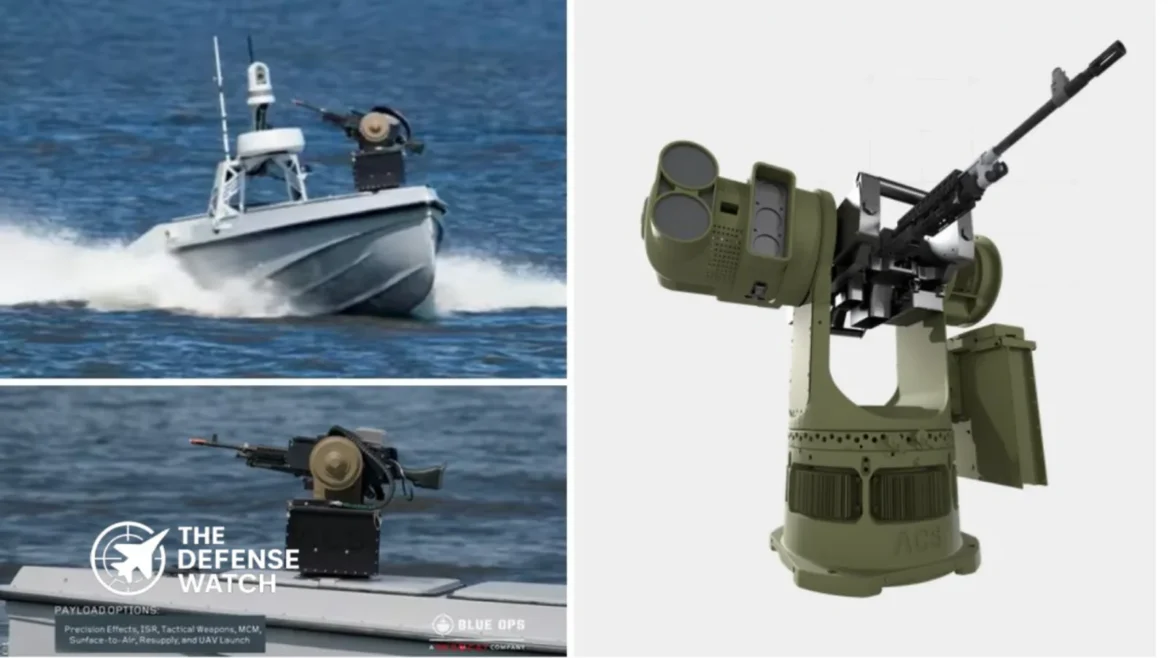
- ► ACS Bullfrog AI-driven robotic weapon station will be evaluated for integration across Red Cat secure ISR and command and control platforms.
- ► First planned integration pairs Bullfrog with Red Cat Blue Ops uncrewed surface vessels.
- ► The Futures Initiative consortium aims to accelerate fielding of advanced autonomous and AI-enabled systems for military use.
- ► Collaboration highlights focus on interoperable, U.S.-made defense technologies for American and allied forces.
Allen Control Systems Joins Red Cat Futures Initiative To Expand Autonomous Counter-Drone Capabilities
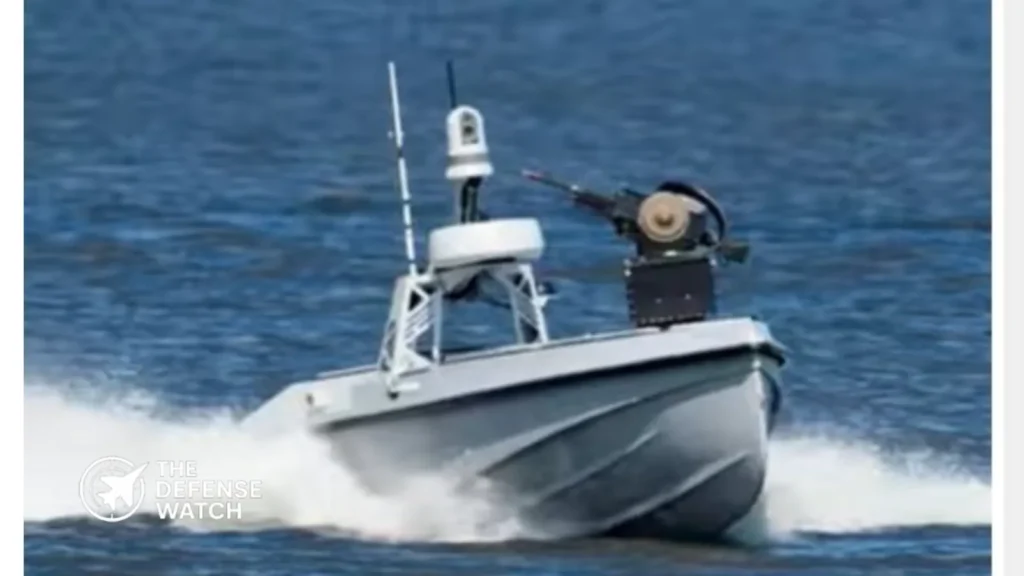
Allen Control Systems joining the Red Cat Futures Initiative marks a new step in integrating autonomous counter-drone systems into U.S. made unmanned platforms.
In a March 2 announcement from Salt Lake City, Red Cat Holdings, Inc. confirmed that Allen Control Systems has entered its industry consortium aimed at accelerating next generation autonomy for defense applications.
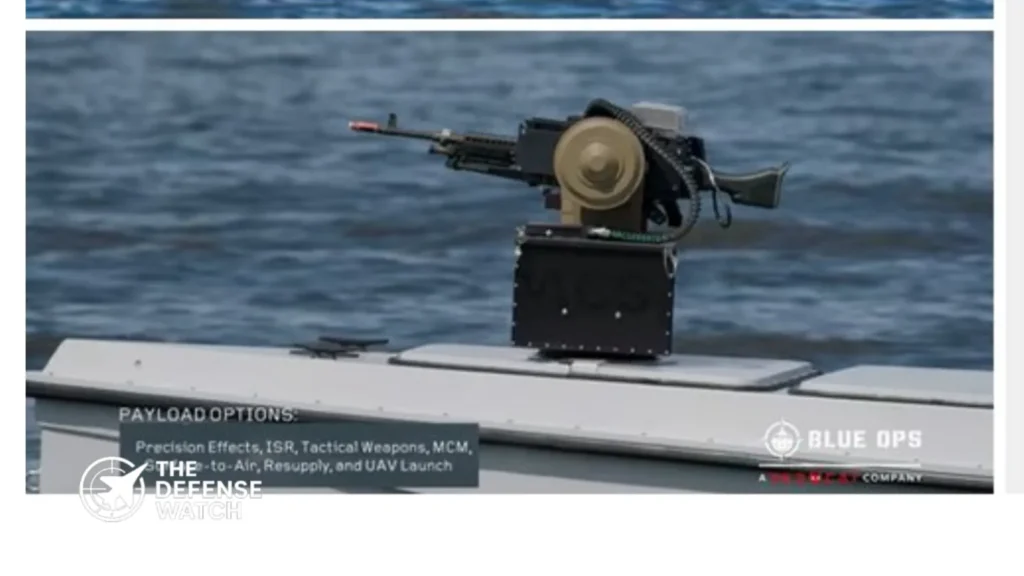
(adsbygoogle = window.adsbygoogle || []).push({});The partnership centers on integrating ACS Bullfrog, an AI enabled robotic weapon station, into Red Cat platforms across multiple domains. The first integration will take place within Blue Ops, Red Cat’s maritime division, where Bullfrog will be paired with uncrewed surface vessels.
Integration Across Domains
Red Cat describes its Futures Initiative as a collaborative effort designed to connect robotics and autonomy firms to reduce integration friction and speed operational deployment.

Under the agreement, Bullfrog will be evaluated for integration with Red Cat secure ISR platforms and its command and control architecture. Initial work will focus on maritime applications, but both companies indicate potential expansion across air and land systems.
Red Cat subsidiaries include Teal Drones and FlightWave Aerospace, both of which produce unmanned aerial systems for military and government use. The company has also expanded into maritime operations through Blue Ops, supporting uncrewed surface vessel development.
Bullfrog Autonomous Weapon Station
ACS flagship product, Bullfrog, is designed to transform legacy or modern weapons into precision autonomous systems. According to the company, the system combines artificial intelligence, computer vision, and proprietary control software to enable precise target engagement, particularly against small unmanned aerial systems.
The demand for counter drone systems has grown sharply in recent conflicts, including in Ukraine and the Middle East, where low cost drones have demonstrated their ability to disrupt traditional force structures. The U.S. Department of Defense has repeatedly identified counter UAS capability as a modernization priority in recent strategy documents.
By pairing Bullfrog with uncrewed surface vessels, the partnership aims to extend mobile counter drone protection into maritime environments. That approach reflects a broader Pentagon push toward layered, distributed defense systems capable of operating at the tactical edge.
Strategic Implications For U.S. Defense Industry
The Allen Control Systems and Red Cat Futures Initiative partnership reflects a wider shift in the U.S. defense industrial base toward modular, interoperable autonomy.
Rather than developing closed proprietary systems, defense firms are increasingly forming ecosystems designed to integrate sensors, weapons, and platforms across domains. This reduces duplication and shortens development timelines.
The emphasis on American manufactured systems also aligns with ongoing efforts to strengthen supply chain resilience. U.S. lawmakers and defense officials have highlighted the need to reduce reliance on foreign components, particularly in unmanned systems.
Red Cat’s Family of Systems approach, led by its Black Widow small unmanned aircraft platform, seeks to offer interoperable solutions spanning air and maritime operations. Integrating Bullfrog into this architecture could provide a scalable counter drone capability across multiple operational environments.
Operational Outlook
While the announcement outlines integration goals, it does not specify deployment timelines or contract values. As with many autonomy initiatives, operational fielding will depend on testing, certification, and potential procurement decisions by U.S. or allied defense agencies.
Still, the Allen Control Systems entry into the Red Cat Futures Initiative signals continued momentum behind autonomous counter drone defense systems, particularly those designed for distributed and expeditionary operations.
With small unmanned threats becoming a persistent feature of modern conflict, partnerships that combine sensing, targeting, and precision engagement into integrated platforms are likely to remain a focus area for U.S. defense planners.
■ KEY FACTS AT A GLANCE- ► Shield AI’s V-BAT operated during NATO’s HEIMDALL 26 exercise in northern Norway from February 17 to 26.
- ► The exercise was hosted by NATO’s Center of Excellence for Cold Weather Operations.
- ► V-BAT conducted ship-based VTOL operations from the Norwegian Coast Guard vessel KV Olav Tryggvason.
- ► Flights were performed in Arctic winter conditions without aircraft modifications.
- ► ISR data from V-BAT was integrated into NATO-aligned command and control networks.
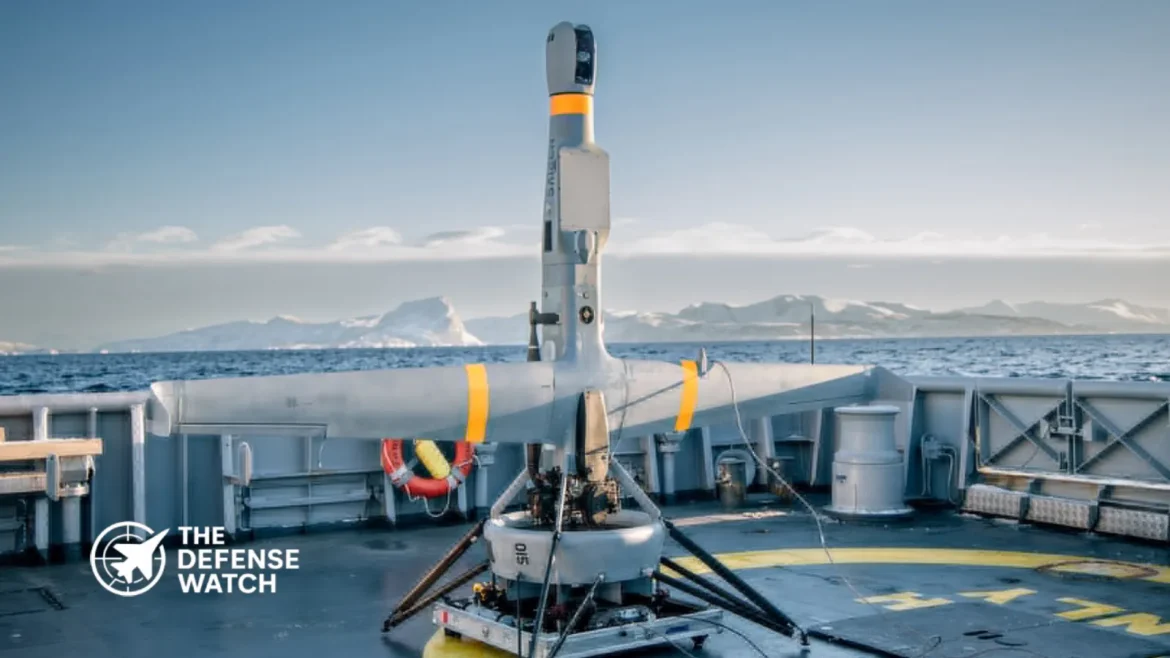
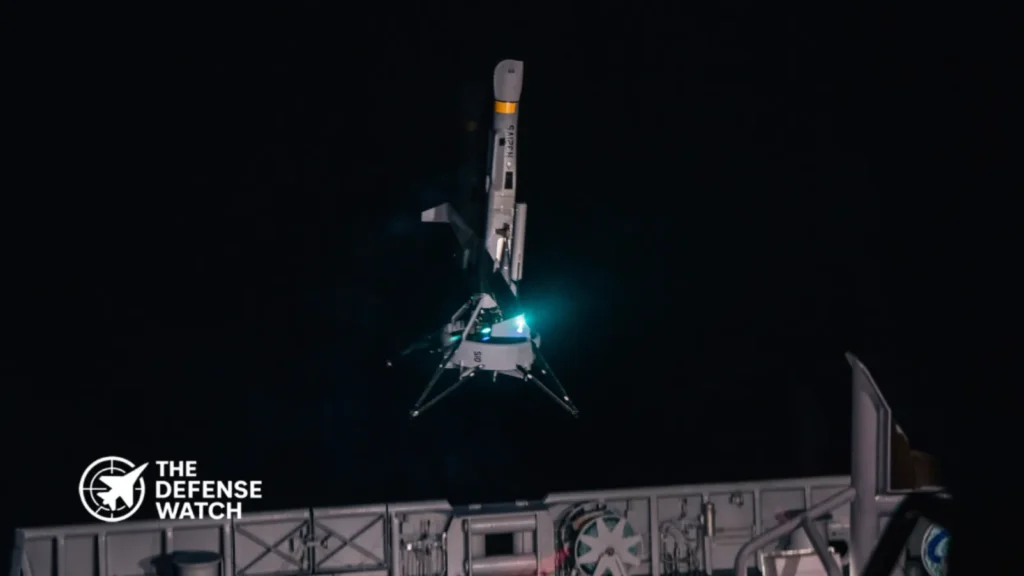
Shield AI V-BAT Arctic ISR operations during NATO’s HEIMDALL exercise mark a practical step forward in how the alliance approaches surveillance in the High North. The demonstration was not about unveiling new hardware. It was about showing that existing unmanned systems can function as reliable, ship-based ISR assets in one of the most demanding environments NATO forces face.
(adsbygoogle = window.adsbygoogle || []).push({});That distinction matters. Arctic security has shifted from a niche concern to a core planning issue for NATO navies and joint forces.
Why HEIMDALL Matters For NATO Now
HEIMDALL was designed to validate NATO’s Arctic experimentation arena, not to showcase single platforms. The focus was on manned-unmanned teaming, data sharing, and integration into the Federated Mission Network and multi-domain operations.
The High North is no longer permissive. Russian naval patrols, long-range sensors, and submarine activity have increased across the Barents and Norwegian Seas. At the same time, allied forces operate from dispersed bases with limited infrastructure.
An unmanned aircraft that can launch from small vessels, survive extreme cold, and feed ISR directly into alliance networks addresses a real operational gap. That is the context in which Shield AI brought V-BAT to Norway.
Operational Impact Of V-BAT In Arctic Maritime ISR
From an operational standpoint, the most important outcome was not endurance or sensor payload. It was reliability.
V-BAT flew from land and from a Norwegian Coast Guard ship without changes to configuration. Arctic operations often require heaters, modified fuels, or specialized maintenance cycles. The absence of those requirements lowers the barrier to deployment.
Image : Shield AI Ship-based VTOL operations from KV Olav Tryggvason demonstrated a key advantage over fixed-wing UAVs that need runways or launch systems. For patrol vessels, logistics ships, and amphibious platforms, deck space is limited. A small VTOL system extends surveillance without changing ship design.
Night and day ISR, electro-optic, infrared, and synthetic aperture radar use also point to flexibility. In Arctic winter, long periods of darkness reduce the usefulness of traditional visual surveillance. Persistent unmanned coverage becomes essential.
How V-BAT Compares To Other NATO ISR Options
Within NATO inventories, Arctic ISR usually relies on crewed maritime patrol aircraft, helicopters, and a limited number of larger UAVs. Systems like ScanEagle or Puma offer tactical coverage but are constrained in endurance and payload.
V-BAT sits in a middle ground. It is smaller and cheaper than Class II or III drones but offers far longer endurance than most ship-launched systems. Its ducted fan design improves safety on crowded decks, an issue that has limited wider UAV use aboard surface combatants.
Image : Shield AI European alternatives exist, but many still depend on catapult launch or recovery nets. That complicates use in high sea states. V-BAT’s vertical recovery is a practical advantage in the North Atlantic and Arctic waters.
Alliance And Industrial Implications
For NATO, the real takeaway is interoperability. During HEIMDALL, V-BAT functioned as an ISR node inside a multinational architecture. Data flowed to forces ashore and at sea.
That aligns with NATO’s push toward distributed sensing rather than a few high-value platforms. Smaller unmanned systems reduce risk and expand coverage.
From an industry angle, Shield AI positions itself not as a niche UAV maker but as a provider of deployable autonomy that fits alliance standards. The fact that the aircraft worked with Norwegian forces and NATO networks strengthens its case in European procurement discussions.
Image : Shield AI Statements from Shield AI leadership, including Brandon Tseng, emphasize expeditionary use. That message resonates with smaller navies that cannot afford large UAV fleets but still need persistent ISR.
Regional Security Context In The High North
The Arctic is becoming a zone of routine military presence rather than occasional patrols. Norway’s role is central, acting as NATO’s frontline state in the region.
Unmanned ISR launched from coast guard or naval vessels allows continuous monitoring of sea lines, choke points, and remote coastal areas. It also supports allied reinforcement planning by improving situational awareness during crises.
For Russia, the spread of low-cost, persistent ISR complicates concealment and movement. For NATO, it strengthens early warning without escalating force posture.
What Happens Next
HEIMDALL was an experiment, but it sets conditions for follow-on decisions. Expect more NATO exercises to include ship-based UAVs as standard assets rather than add-ons.
Procurement paths may follow. Smaller allies could prioritize systems that require minimal infrastructure and training. Larger navies may integrate them as supplements to crewed aviation.
(adsbygoogle = window.adsbygoogle || []).push({});For Shield AI, the next test will be sustained deployments, not exercises. Cold weather proof points matter most when systems stay forward for months, not weeks.
Strategic Assessment
V-BAT’s performance during HEIMDALL does not shift the military balance on its own. But it signals a broader change in how NATO approaches Arctic deterrence.
Distributed unmanned ISR reduces reliance on vulnerable high-end platforms. It improves resilience in contested environments and supports alliance cohesion through shared data.
Budget pressures across NATO favor systems that deliver coverage without heavy support tails. That reality benefits small VTOL UAVs with long endurance.
The escalation risk remains limited. ISR systems are defensive by nature. However, their presence tightens surveillance nets, reducing freedom of movement for potential adversaries.
In the High North, awareness is deterrence. HEIMDALL showed NATO is investing in both.
■ KEY FACTS AT A GLANCE- ► The TP400-D6 programme has surpassed one million engine flying hours as of March 2, 2026.
- ► The engine powers the Airbus A400M Atlas military transport aircraft.
- ► Certification was granted by EASA in 2011, with entry into service in 2013.
- ► Ten operating nations contribute to the total engine flight hours milestone.
- ► Engine support is managed under OCCAR’s Engine Support Step 2 contract.
TP400-D6 Programme Surpasses One Million Engine Flying Hours
The TP400-D6 programme has officially surpassed one million engine flying hours, marking a major operational milestone for Europrop International GmbH and the fleet of Airbus A400M Atlas aircraft it powers.
The announcement, made March 2, 2026, underscores more than a numerical benchmark. It reflects over a decade of sustained multinational operations, deployments, and structured engine support across Europe, Asia, and beyond.
(adsbygoogle = window.adsbygoogle || []).push({});The TP400-D6 engine achieved certification from the European Union Aviation Safety Agency in 2011 and entered service in August 2013. That certification marked a critical step for Europe’s independent military propulsion capability, positioning the TP400-D6 as the most powerful turboprop engine currently in operational service on a Western military aircraft.
Built For The A400M Atlas
The TP400-D6 powers the A400M Atlas, a four engine tactical and strategic airlifter developed by Airbus Defence and Space. The aircraft bridges the capability gap between smaller tactical transports and larger strategic airlifters, supporting missions that range from humanitarian relief to special operations and aerial refueling.
Image : Europrop International Each A400M is equipped with four TP400-D6 engines. Reaching one million engine flying hours therefore reflects cumulative operational time across the global fleet rather than airframe flight hours alone.
From an operational perspective, this milestone signals fleet maturity. High cumulative engine hours typically correlate with stable maintenance cycles, improved reliability data, and optimized overhaul planning. For military operators, those metrics translate directly into availability rates and mission readiness.
Ten Operating Nations Contribute
The TP400-D6 operating nations now total ten. These include Belgium, France, Germany, Luxembourg, Malaysia, Spain, Türkiye, Kazakhstan, Indonesia, and the United Kingdom.
Initial deliveries began in 2013, with early aircraft entering service with France and Türkiye. The United Kingdom and Germany followed in 2014, with additional operators joining over subsequent years.
Collectively, these nations have flown the A400M in operational deployments across Africa, the Middle East, Europe, and Asia. Missions have included troop transport, heavy equipment airlift, medical evacuation, disaster response, and sustained overseas deployments.
The steady growth in engine flight hours reflects both routine training and real world operational demand. For defense planners, that level of use provides a substantial performance dataset for lifecycle cost modeling and long term sustainment planning.
Structured Support Under OCCAR
Engine sustainment is managed under the Engine Support Step 2 contract overseen by Organisation for Joint Armament Cooperation. The framework centralizes support for participating nations, standardizing maintenance and repair practices.
Over the past several years, Europrop International has expanded maintenance, repair, and overhaul capacity aligned with operator requirements. That includes technical support, logistics coordination, and supply chain stabilization.
(adsbygoogle = window.adsbygoogle || []).push({});The consortium behind the TP400-D6 includes Rolls-Royce, Safran Aircraft Engines, MTU Aero Engines, and ITP Aero, with additional industrial partners contributing to subsystems and components.
From a strategic standpoint, the programme represents one of Europe’s most significant collaborative military engine efforts. It reduces reliance on non European propulsion sources for a critical air mobility platform.
What One Million Engine Hours Means
Reaching one million engine flying hours does not eliminate technical challenges. The TP400-D6 has faced development and integration issues in its early years, particularly involving gearbox systems and software updates. However, sustained operational data since entry into service suggests that reliability metrics have stabilized as the fleet matured.
For operators, the milestone demonstrates that the TP400-D6 has transitioned from development phase risk into established service life performance. In military aviation, this shift is critical. It supports long term procurement confidence and reinforces export credibility for the A400M platform.
(adsbygoogle = window.adsbygoogle || []).push({});The TP400-D6 programme’s one million engine flying hours mark therefore stands as both an operational and industrial benchmark. It highlights multinational use, structured sustainment, and the maturation of a complex European military propulsion system.
As global air mobility requirements continue to evolve, sustained engine reliability will remain central to the A400M’s role in allied operations.
■ KEY FACTS AT A GLANCE- ► Hermeus flew Quarterhorse Mk 2.1 on March 2, 2026 at Spaceport America, New Mexico — its second aircraft first flight in less than nine months.
- ► Mk 2.1 is roughly the size of an F-16, powered by a Pratt & Whitney F100 engine — approximately three times larger and four times heavier than the Mk 1.
- ► The Mk 2.1 flight kicks off a test campaign aimed at reaching supersonic speeds; the follow-on Mk 2.2 is projected to become the world’s fastest unmanned aircraft.
- ► The U.S. Air Force has backed Hermeus with a $60 million STRATFI contract; the Defense Innovation Unit selected Hermeus for its HyCAT hypersonic flight test program.
- ► The Congressional Research Service has warned that the U.S. is unlikely to field an operational hypersonic weapon system before FY2027 at the earliest.
- ► A former Pentagon senior official has noted China has tested hypersonic flight at roughly ten times the rate of the United States since the late 1960s.
- ► Hermeus CEO AJ Piplica has stated the company expects Quarterhorse to begin supporting Department of Defense test events in 2026, around when its Mk 3 vehicle rolls out.
Hermeus Quarterhorse Mk 2.1 Takes Flight, Pushing U.S. Toward Reusable Supersonic Drone Capability
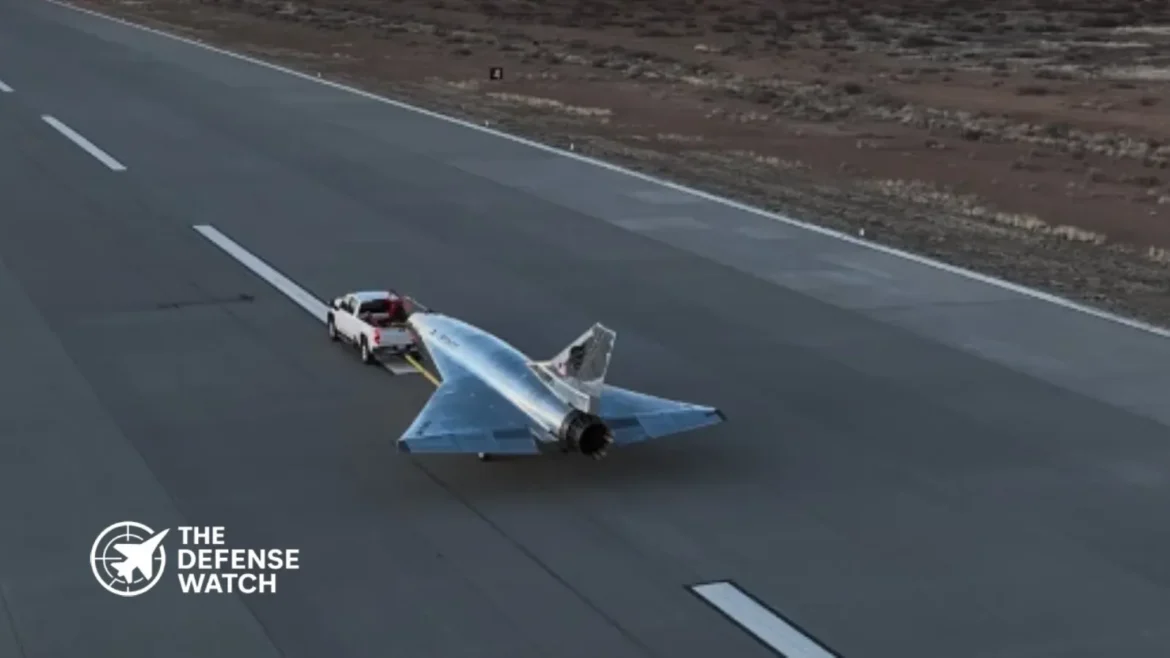
The Hermeus Quarterhorse Mk 2.1 supersonic drone completed its first flight on March 2, 2026, at Spaceport America over White Sands Missile Range airspace in New Mexico — a milestone that marks the Atlanta-based startup’s second aircraft first flight in under nine months. While the event generated predictable industry applause, the strategic importance of this test runs deeper than any single flight.
(adsbygoogle = window.adsbygoogle || []).push({});For the United States, this flight is less about one company’s momentum and more about whether commercial-pace innovation can solve a systemic problem: America’s chronic inability to generate enough reusable high-speed test capacity to keep pace with China and Russia in the hypersonic domain.
What Actually Flew — and What Comes Next
The Quarterhorse Mk 2.1 is powered by a Pratt & Whitney F100 engine — the same powerplant used in the F-15 and F-16 — and is nearly three times larger and four times heavier than its predecessor, the Mk 1. It was flown remotely from a ground-based flight deck, validating aircraft systems, handling qualities, and operational procedures.
The Mk 1 flew first in May 2025 at Edwards Air Force Base. That initial flight focused on validating Quarterhorse’s ability to take off and land at high speeds — a particular engineering challenge unique to future hypersonic aircraft. Mk 2.1 builds on that foundation by entering what Hermeus describes as its Mk 2 phase: a multi-aircraft series focused on achieving and expanding supersonic flight.
Following Mk 2.1, the next aircraft in the series — Mk 2.2 — is expected to become the world’s fastest unmanned aircraft. Subsequent phases will push toward the company’s ultimate objective: sustained ramjet-powered flight, the propulsion breakthrough required for true hypersonic cruise capability at Mach 5 and beyond.
This matters because the road from supersonic to hypersonic is not linear. Crossing Mach 1 is a precondition, but the engineering leap to Mach 5 involves fundamentally different physics — extreme aerodynamic heating, inlet design, fuel chemistry, and propulsion transitions that cannot be solved on paper or in wind tunnels alone. Real flight data at each speed regime is irreplaceable.
Why the Pentagon Is Watching Closely
The Defense Innovation Unit selected Hermeus under its Hypersonic and High-Cadence Airborne Testing Capabilities program — known as HyCAT — which is designed to leverage commercial technology to increase the Pentagon’s hypersonic flight-testing capacity.
That program exists because the United States has a testing bottleneck problem. The Pentagon’s Test Resource Management Center has begun modernizing facilities and exploring the use of commercial space assets for more frequent hypersonic flight testing, but according to former Pentagon hypersonics official Michael White, progress has been too slow. White, who co-authored a 2025 Atlantic Council report with former Air Force Secretary Deborah Lee James and former Army Secretary Ryan McCarthy, argued that the U.S. needs to leverage commercial innovation more aggressively to break the testing bottleneck.
(adsbygoogle = window.adsbygoogle || []).push({});That bottleneck is not just an inconvenience. A former Pentagon senior official has noted that since the late 1960s, China has tested hypersonic flight at approximately ten times the rate of the United States. In a field where proficiency is earned through accumulated flight hours and failure analysis, that testing disparity compounds over time.
Hermeus CEO AJ Piplica has said the company expects Quarterhorse to begin supporting Department of Defense test events in 2026, around when its Mk 3 vehicle rolls off the line. That timeline, if met, would position Quarterhorse as a commercially operated, reusable hypersonic test bed available to AFRL, DIU, and other defense customers — exactly the kind of infrastructure the Pentagon’s test enterprise currently lacks at scale.
The Industrial Logic: Speed as a Strategic Asset
The most consequential aspect of Hermeus’ program is not any single aircraft — it is the company’s development cadence. Hermeus flew Mk 2.1 within a year of its previous flight campaign, compressing timelines that traditionally take decades into a single development cycle.
This approach runs counter to the dominant model in U.S. defense aviation. Legacy programs — even agile ones — routinely spend five to ten years between major prototype milestones. The causes are familiar: cost-plus contracting incentives, requirements volatility, congressional budget cycles, and industrial base constraints. Hermeus operates outside most of those constraints, using venture capital and fixed-price government partnerships to maintain velocity.
The company’s goal is to build one test vehicle per year, and CEO AJ Piplica has emphasized that refining rapid build-and-fly processes is just as important as the capability demonstrated in any single flight. That philosophy — hardware richness over risk aversion — deliberately mirrors what SpaceX demonstrated in the launch vehicle sector: iterating through failures faster than competitors can iterate through planning cycles.
Hermeus has stated it could manufacture roughly a dozen Mk 2 drones per year in its current Atlanta facility, with the ability to expand if there is a clear demand signal from the Defense Department. That production capacity, modest by legacy standards, is nonetheless significant in the context of reusable high-speed aircraft — a category where operational numbers have historically been measured in single digits.
(adsbygoogle = window.adsbygoogle || []).push({});RTX’s venture capital arm has invested in Hermeus, linking Pratt & Whitney’s F100 engine supply chain directly to the program’s growth. The $60 million AFWERX STRATFI contract, awarded in 2021, was described at the time as one of the most valuable startup contracts of its type ever awarded — a signal that AFRL and the Air Force Life Cycle Management Center viewed the company’s technical approach as credible, not speculative.
Competitive Landscape: Hermeus Is Not Alone
Hermeus is the most publicly visible player in the commercial reusable high-speed aircraft race, but it is not operating in a vacuum. Stratolaunch’s Talon-A vehicle, backed by Ursa Major propulsion, has already demonstrated Mach 5 flight, becoming the first reusable hypersonic test aircraft to reach that threshold in over five decades. The Talon-A flights, conducted in December 2024 and March 2025, were carried aloft by Stratolaunch’s Roc carrier aircraft over the Pacific — marking the United States’ first return to reusable hypersonic flight trials since the X-15 program ended nearly 60 years ago. NewsNation
The two companies occupy different portions of the speed-altitude envelope and serve complementary roles. Talon-A focuses on Mach 5+ regime testing, delivered via air launch. Quarterhorse’s roadmap emphasizes ground-launched, runway-independent operations that more closely replicate the operational profile of future military hypersonic aircraft. The Pentagon benefits from having both approaches in parallel, particularly given the acknowledged weakness in domestic high-speed test infrastructure.
What neither program has yet demonstrated is the full propulsion transition central to hypersonic cruise: the turbine-based combined cycle (TBCC) handoff from turbojet to ramjet operation at speed. That remains Hermeus’ most technically ambitious goal — and the achievement that, if realized, would most directly validate the propulsion architecture for future operational vehicles like the Darkhorse multi-mission drone.
Strategic Assessment
The Testing Bottleneck Is the Real Problem
The United States does not lack hypersonic ambition. The Pentagon has dedicated approximately $1 billion to hypersonic facility modernization from FY2015 to FY2024, and the FY2026 budget request included roughly $3.9 billion for hypersonics research and development. What it lacks is the test cadence to convert that investment into fielded capability at competitive speed.
The Congressional Research Service, in its August 2025 update, noted that U.S. hypersonic weapons programs are unlikely to field operational systems before FY2027 at the earliest — and that limitation stems partly from infrastructure constraints, particularly for simulating Mach 8 and above flight conditions. Hermeus and Stratolaunch both address the lower end of that envelope; the upper range remains dependent on government-owned facilities that are oversubscribed.
Who Benefits
The Air Force Research Laboratory gains a commercially operated, reusable high-speed test bed — reducing per-test costs and increasing test frequency without requiring congressional appropriations for each flight. The Defense Innovation Unit validates its HyCAT investment thesis. Pratt & Whitney secures a development and production relationship in an emerging high-speed aircraft sector. And the broader U.S. defense industrial base gets proof that iterative, commercial development timelines can apply to high-speed aviation, not just satellites and launch vehicles.
Who Is Under Pressure
Legacy prime contractors operating in the hypersonic space face a structural challenge from companies like Hermeus. If a venture-backed startup can build and fly an F-16-class unmanned supersonic aircraft in under a year — at a fraction of traditional program costs — the argument for decade-long, cost-plus hypersonic development programs becomes harder to sustain in congressional budget hearings.
(adsbygoogle = window.adsbygoogle || []).push({});China, meanwhile, is the underlying strategic driver of this entire investment surge. In late September 2025, China conducted a hypersonic ICBM test featuring boost-glide technology and a depressed trajectory, combining maneuverability with stealthy approach vectors that reduce detection windows and complicate interception. Against that threat environment, every additional month of U.S. testing delay carries real strategic cost.
What Happens Next
The Quarterhorse Mk 2.1 test campaign will now push toward supersonic speeds. If successful, the data feeds directly into Mk 2.2 — the aircraft Hermeus says will push toward world record unmanned speed. Mk 3, with the full Chimera II turbine-based combined cycle propulsion system installed, is expected around 2026-2027 and will represent the first attempt to validate the propulsion architecture most critical to operational hypersonic aircraft.
The more important near-term question is whether the Pentagon will issue a program of record for Quarterhorse — or a derivative operational system like Darkhorse. The Department of Defense has not publicly revealed a program of record for a hypersonic aircraft, though it has made several investments in Hermeus as the company develops the Quarterhorse. Without a clear acquisition signal, Hermeus must continue balancing commercial investor expectations against the long acquisition lead times inherent to Pentagon procurement.
The flight on March 2 advances the technical case. The programmatic case still needs to be made — and that argument will be decided not at Spaceport America, but on Capitol Hill and in the Pentagon’s E-Ring.
■ KEY FACTS AT A GLANCE- ► GE9X is the largest and most powerful commercial jet engine ever built.
- ► The engine completed 27,000 test cycles and more than 17,000 hours of testing.
- ► Testing included 1,600 dust ingestion cycles to simulate harsh operating environments.
- ► GE9X powers the Boeing 777X widebody aircraft.
- ► The program reinforces GE Aerospace’s position in the long haul engine market.
GE9X Engine Completes Extensive Durability Testing
The GE9X commercial jet engine has completed 27,000 cycles and more than 17,000 hours of testing, marking a major milestone for GE Aerospace as it prepares the powerplant for service on the Boeing 777X.
Developed by GE Aerospace, the GE9X is designed exclusively for the Boeing 777X family. It is widely recognized as the largest and most powerful commercial jet engine ever built, with a record thrust rating of 134,300 pounds during certification testing.
According to company data and FAA certification records, the GE9X program required years of ground and flight testing to validate durability, fuel efficiency, and reliability standards expected in long haul operations.
Extreme Dust and Endurance Testing
A notable portion of the GE9X testing campaign focused on harsh environmental performance. The engine underwent 1,600 dust ingestion cycles, simulating years of exposure to sandy and dusty airfields common in parts of the Middle East, Asia, and Africa.
Dust testing is critical for widebody aircraft operating on global routes. Fine particles can erode fan blades, clog cooling passages, and reduce compressor efficiency. By pushing the GE9X through repeated ingestion cycles, engineers assessed wear patterns, thermal stress, and long term maintenance requirements.
In total, the engine accumulated 17,000 hours of operation across ground rigs and flight tests. The 27,000 cycles represent repeated takeoff and landing simulations, which place the highest thermal and mechanical stress on turbine components.
Such endurance benchmarks align with Federal Aviation Administration airworthiness standards and reflect lessons learned from previous GE widebody programs, including the GE90 engine that powers earlier 777 variants.
Technology and Market Implications
The GE9X features a 134 inch composite fan, advanced ceramic matrix composite components in the hot section, and a high bypass ratio designed to reduce fuel burn and emissions. These technologies are aimed at improving operating economics for airlines facing high fuel costs and stricter environmental regulations.
From a market standpoint, the GE9X reinforces GE Aerospace’s dominance in the long haul twin aisle segment. The engine is the sole powerplant option for the 777X, giving GE exclusive access to the platform’s future production run.
The 777X program has faced certification and delivery delays, but Boeing continues to position the aircraft as its flagship long range offering. The GE9X performance data will be central to airline confidence as entry into service approaches.
Broader Aerospace Significance
Although the GE9X is a commercial engine, its development has implications for the broader aerospace industrial base. High temperature materials, digital engine monitoring, and advanced manufacturing methods developed for the program often transition into military propulsion systems.
For U.S. industry, the GE9X represents sustained investment in domestic engine design and large scale production. As global widebody demand gradually recovers, the engine’s testing milestones serve as a signal of readiness and technical maturity.