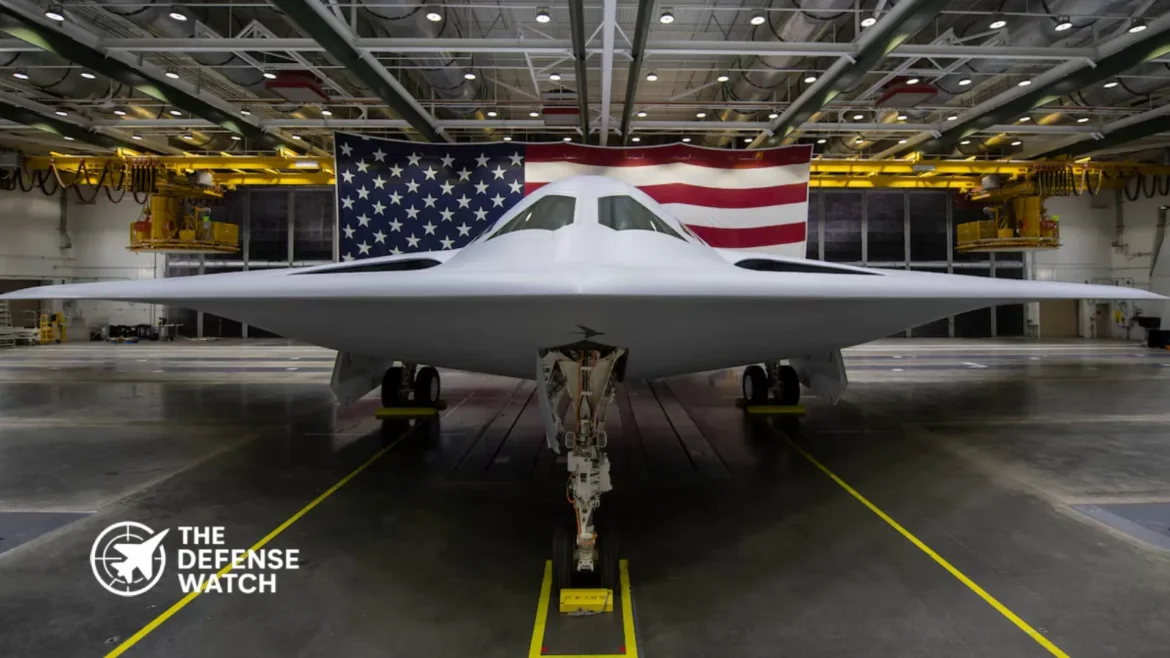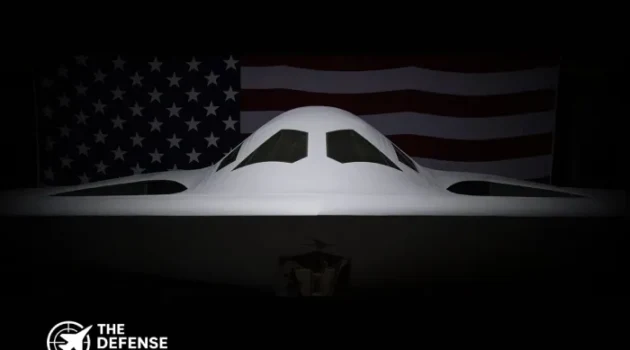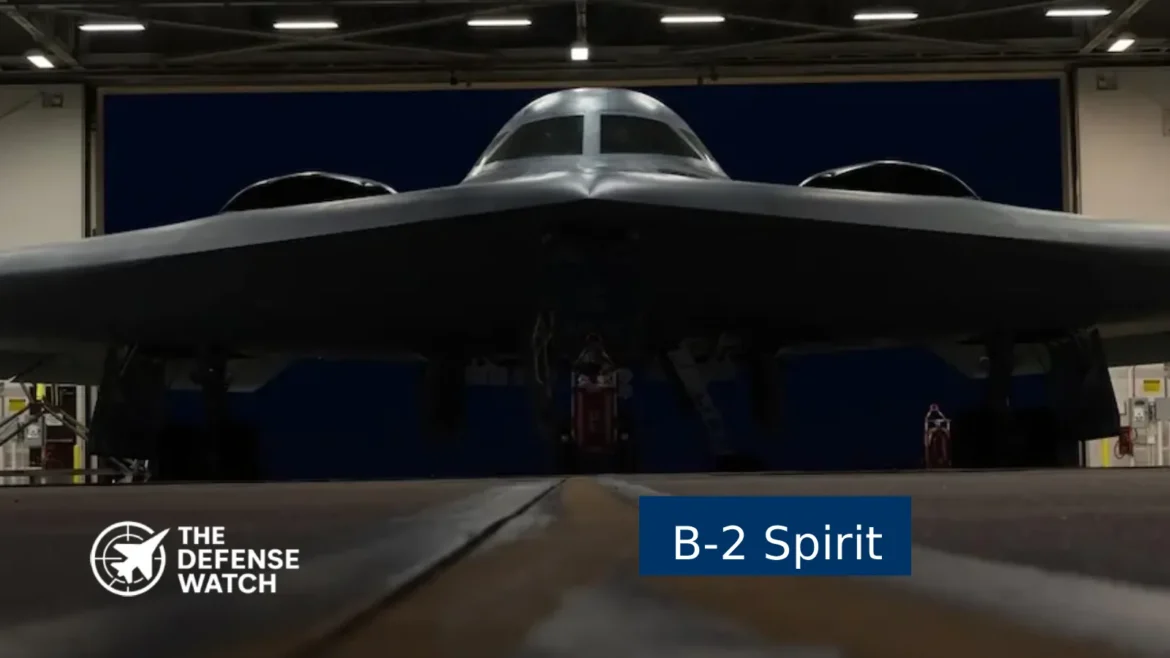
- ► Four B-2A Spirit stealth bombers flew directly from Whiteman Air Force Base, Missouri, to strike Iranian ballistic missile sites on the night of February 28 to March 1, 2026.
- ► The aircraft refueled over the central Atlantic from KC-46 tankers staged at Lajes Air Base in the Azores.
- ► CENTCOM confirmed the B-2s carried 2,000-pound bombs targeting hardened ballistic missile facilities — not the GBU-57 Massive Ordnance Penetrator used in Operation Midnight Hammer in June 2025.
- ► Operation Epic Fury marks the second confirmed B-2 combat strike against Iran in less than nine months.
- ► The targeted sites are described as ballistic missile launchers concealed in rock formations and underground tunnel networks — what analysts refer to as “missile cities.”
- ► The GBU-57 MOP weighs approximately 13,600 kilograms and is designed to penetrate up to 60 meters of earth or eight meters of reinforced concrete before detonation.
- ► CENTCOM has separately confirmed that ATACMS tactical missiles were also employed as part of Operation Epic Fury’s broader target set.
Operation Epic Fury: Why the B-2 Spirit Returned to Iran — and What the Munitions Choice Tells Us
Operation Epic Fury, confirmed by U.S. Central Command on March 1, 2026, represents the second time in nine months that the United States has employed B-2 Spirit stealth bombers in direct strikes against Iranian military infrastructure. This time, the target set shifted from nuclear facilities to hardened ballistic missile sites — and the munitions choice shifted with it.
From Midnight Hammer to Epic Fury: A Deliberate Escalation Ladder
In June 2025, Operation Midnight Hammer saw B-2s deploy the GBU-57 Massive Ordnance Penetrator against Iran’s underground nuclear facilities — the only aircraft capable of carrying the 13,600-kilogram bunker-busting weapon. The message at that time was unambiguous: the United States was targeting the hardest, deepest infrastructure in Iran’s strategic arsenal, and only one platform in the world could do that job.
Operation Epic Fury presents a different scenario. CENTCOM confirmed the B-2s were armed with 2,000-pound JDAMs, not MOPs. This is not a downgrade — it is a doctrinal signal.
Iran’s ballistic missile “cities” — underground tunnel complexes carved into mountain formations across multiple provinces — are not the same engineering problem as a uranium enrichment facility buried under 80 meters of rock. They are networked. Collapsing one exit or one launcher bay rarely eliminates the underlying capability. The complex reroutes. Launchers are repositioned. Crews clear rubble and resume operations.
Against that type of target, a single 13,600-kilogram penetrator may achieve less than a sustained campaign using multiple precision-guided 2,000-pound weapons applied systematically across tunnel entrances, ventilation infrastructure, logistics nodes, and launch hardstands. The munitions selection in Epic Fury suggests U.S. planners have been thinking carefully about this distinction.
What “Missile Cities” Actually Mean for Targeting
Iran’s underground ballistic missile infrastructure is among the most extensive in the world outside of China and Russia. Iranian state media has periodically broadcast footage of tunnel networks housing Shahab, Emad, and Ghadr-series missiles on mobile transporter-erector-launchers. These facilities are not fixed silos — they are mobile launch systems that operate from tunnel exits, making them fundamentally harder to neutralize than static hardened sites.
The challenge for any strike planner is that destroying the tunnels themselves is operationally expensive and logistically difficult. A tunnel network with 15 or 20 access points requires either an implausible number of MOP-class weapons or a sustained precision campaign targeting the exits, rail infrastructure, generator systems, fuel storage, and associated command nodes in sequence.
The use of 2,000-pound class weapons in Epic Fury likely reflects a targeting approach focused on launcher infrastructure, exit points, and supporting logistics rather than tunnel excavation per se. Whether that approach achieved meaningful degradation of Iran’s ballistic missile launch capacity will depend on battle damage assessment data that will not be public for some time, if ever.
The B-2’s Operational Envelope and What This Mission Demonstrates
The Whiteman AFB-to-Iran round trip — including mid-Atlantic refueling from KC-46s staged at Lajes in the Azores — underscores what makes the B-2 Spirit operationally unique and strategically irreplaceable until the B-21 Raider achieves full operational capability.
No other platform can combine the B-2’s payload capacity, low-observable radar cross section, and the range necessary for a continuous-flight intercontinental strike mission. The KC-46 tanker integration is a critical element of this equation; without forward-positioned tanker assets, the mission profile becomes significantly more constrained. The selection of Lajes, a joint U.S.-Portuguese facility on Terceira Island, reflects long-standing access agreements within the NATO alliance that remain operationally relevant well beyond the European theater.
This is worth noting in a broader context: two combat strikes against Iran using the B-2 in under a year represents a higher operational tempo for the Spirit than at any previous point in its service history, including its use over Kosovo in 1999, Afghanistan post-2001, and Libya in 2011. The 509th Bomb Wing at Whiteman is sustaining a genuine combat commitment, not a one-time demonstration.
The Readiness Question Nobody Is Asking Loudly Enough
The B-2 fleet consists of 20 operational aircraft. That number has been stable for years, and it is not increasing. Two consecutive combat deployments of four aircraft each represent a meaningful fraction of the available fleet on any given day, accounting for scheduled depot maintenance, modification programs, and routine availability rates.
The U.S. Air Force’s long-term answer to this capacity problem is the B-21 Raider, currently in low-rate initial production at Northrop Grumman’s Palmdale facility. The service has stated an intent to procure at least 100 B-21s, which would roughly triple the penetrating bomber fleet. But that fleet exists in the future. Today, the B-2 carries the full weight of U.S. penetrating strike capability, and repeated combat deployments impose real costs on airframe hours, crew readiness, and maintenance cycles.
Congress and the Air Force leadership will face difficult questions about B-2 sustainment funding in the FY2027 budget cycle if this operational tempo continues.
Strategic Assessment
Impact on Regional Power Balance
Iran retains substantial residual ballistic missile capability despite two rounds of U.S. strikes. The Islamic Revolutionary Guard Corps Aerospace Force has invested decades and significant resources in distributed, hardened, and mobile missile infrastructure precisely to survive this type of campaign. Degradation of the launch network is likely, but elimination is implausible. Iran’s ability to threaten regional neighbors, U.S. bases in the Gulf, and Israeli population centers is reduced — not removed.
Deterrence Implications
The back-to-back use of B-2s sends a clear message about U.S. willingness to sustain a strategic strike campaign using its most capable penetrating bomber. The deliberate CENTCOM public statement — “No nation should ever doubt America’s resolve” — is directed at audiences beyond Iran, including North Korea and China, both of which operate hardened underground facilities that would require similar or greater effort to hold at risk. The credibility of U.S. extended deterrence is being demonstrated, at operational cost, in real time.
Budget and Procurement Signals
Every combat sortie flown by a B-2 reinforces the procurement rationale for the B-21 Raider. The argument for accelerating B-21 production — already gaining momentum in Air Force planning documents and Congressional testimony — becomes considerably stronger when the 20-aircraft B-2 fleet is visibly under operational strain. Northrop Grumman’s recent announcements of accelerated B-21 production timelines are likely to find a receptive audience on the Hill in the near term.
Alliance Dynamics
The use of Lajes Air Base for KC-46 tanker staging highlights the operational importance of Atlantic basing rights within the NATO framework. Portugal’s continued hosting of U.S. assets under the Lajes Field agreement provides a forward logistics node that has proven relevant to Middle East operations — a fact that is not lost on alliance planners as debates about NATO burden-sharing continue.
Escalation Risks
Iran’s reported retaliatory salvo of more than 300 ballistic missiles and nearly 300 drones on the first day of the broader U.S.-Israeli campaign illustrates that the escalation ladder has multiple rungs remaining. Sustained pressure on Iranian missile infrastructure may accelerate Iranian decisions about proxy activation in Lebanon, Iraq, and Yemen, and raises questions about the durability of U.S. missile defense assets — THAAD, Patriot, and shipborne SM-3 — to absorb continued high-volume attacks without degradation. Defense officials have already flagged concerns about interceptor inventory sustainability under prolonged engagement conditions.

- ► NASA completed the first flight of its laminar flow scaled wing design demonstrator.
- ► The test evaluated aerodynamic performance aimed at reducing drag and fuel consumption.
- ► Laminar flow technology keeps airflow smooth over the wing surface to improve efficiency.
- ► The research supports long term goals for quieter, lower emission commercial aircraft.
- ► Data from the flight will guide future aircraft design and potential industry adoption.
NASA Completes First Flight Of Laminar Flow Scaled Wing Design
NASA’s laminar flow wing test reached a new milestone with the first flight of a scale model built to sustain smoother airflow over a wing surface, known in industry circles as laminar flow. That smoother airflow yields lower aerodynamic drag, which translates directly to reduced fuel use and operating costs for aircraft. This flight test matters because drag reduction is a long‑standing goal in aeronautics that affects both commercial and military aviation design competitiveness.
What NASA Tested
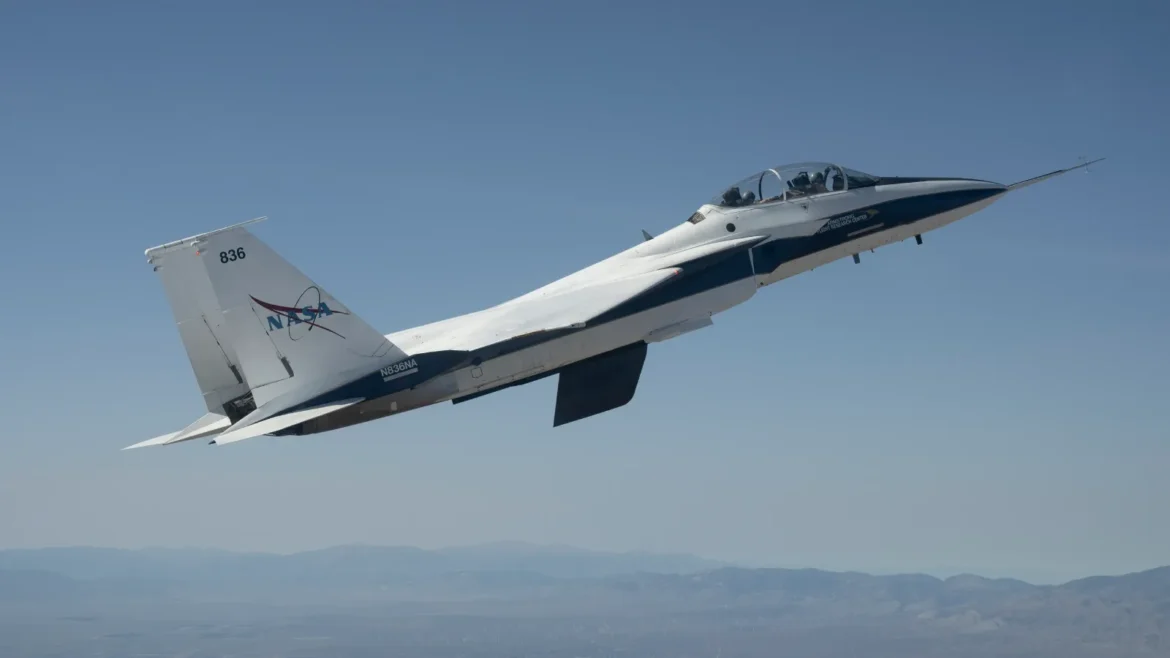
The experiment focused on a Crossflow Attenuated Natural Laminar Flow concept mounted beneath a NASA F‑15 research aircraft. While the test did not involve a full‑size wing on a large transport aircraft, the scaled model’s first flight showed that the CATNLF geometry could be carried in the air and subjected to flight conditions relevant to future designs.
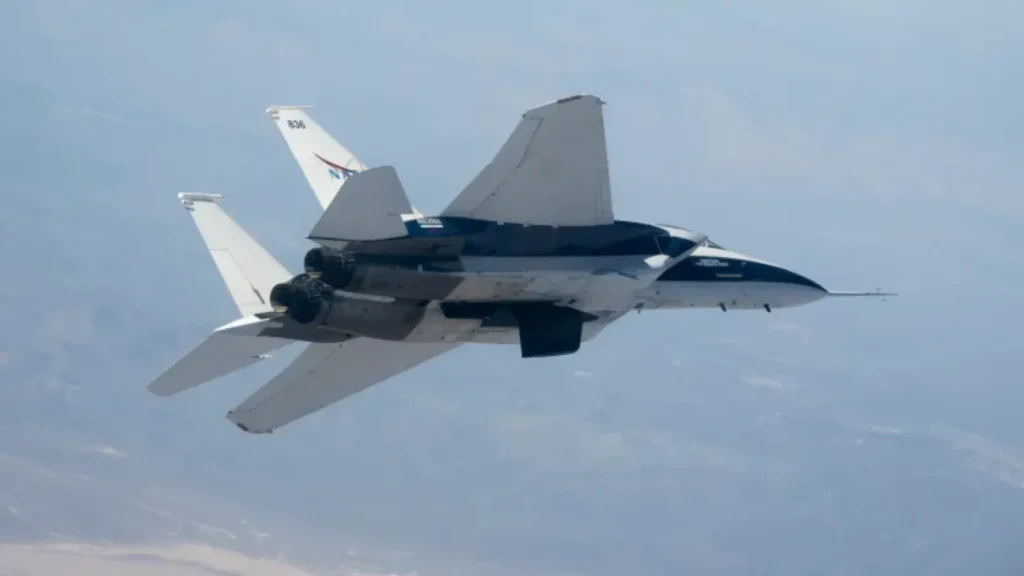
NASA and aerospace researchers have worked on laminar flow technologies for years because the drag created by turbulent flow across a wing surface still accounts for a major share of total aerodynamic resistance. Reducing that drag even a few percent can save millions in fuel for large operators.
Operational Impact
For commercial aviation, laminar flow wings promise tangible fuel efficiency gains. Independent analyses suggest laminar flow treatments on swept wings could reduce drag and fuel burn by about 7 to 10 percent versus conventional wings at cruise. That matters to airlines in a market where fuel remains one of the largest variable costs on long‑haul routes.
From a military perspective, the relevance depends on platform and mission. Transport and tanker aircraft used by the U.S. Air Force could benefit from efficiency gains in range and loiter time. For fighter and bomber fleets, the design challenges are different, but drag reduction still influences range and payload margins. No official U.S. defense program is publicly known to be adopting CATNLF directly, but the broader research can inform aerodynamic refinement in future tactical aircraft.
Strategic Implications
NASA’s aerodynamic research has historically fed into industry and defense innovations. Technologies that enable better fuel efficiency can influence aircraft lifecycle costs, emissions profiles, and logistics planning. In an era of constrained defense and airline budgets, even incremental performance improvements attract attention from program managers.
Comparatively, Airbus and other European aerospace entities have tested laminar flow wings on demonstrator aircraft in the past. Those efforts showed sustainable laminar flow can reduce overall drag, although industrializing such designs remains a challenge given sensitivity to surface imperfections and operational conditions.
Challenges and Next Steps
Laminar flow designs are sensitive to surface contamination, manufacturing tolerances, and environmental effects, such as ice or insect accumulation, which can disrupt the smooth flow and negate benefits. The technologies being tested aim to counter crossflow instabilities that typically force a transition to turbulent air early along the wing.
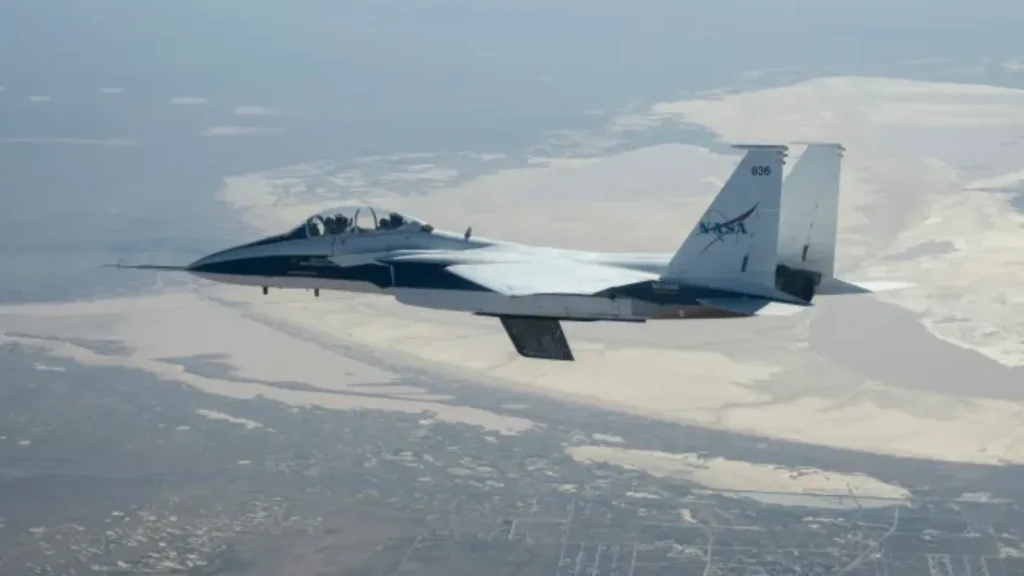
Future tests will need to demonstrate performance under a broader range of speeds and flight conditions. A scaled model test is a necessary early step but is not sufficient by itself to prove readiness for integration into operational aircraft.
Strategic Assessment
Military Balance: The direct effect on the military balance is limited at this stage. This is fundamental aerodynamic research rather than a new weapons system. However, improved efficiency in large military transports and tankers could subtly enhance operational reach and sustainment.
Defense Logistics: Fuel efficiency affects lifeline platforms such as cargo aircraft and air refueling tankers. Innovations in drag reduction may factor into future U.S. Air Force recapitalization choices if they mature into deployable systems.
Industrial Dimension: NASA’s work could inform U.S. aerospace industry competitiveness against European laminar flow programs. Early adoption of such technologies in commercial airframes strengthens the industrial base and provides a technological edge.
Budget Signals: Funding continued aeronautics research suggests ongoing investment in long‑term efficiency goals even as NASA balances other priorities. Results from CATNLF will shape decisions on scaling and potential partnerships with industry.
- ► A Ukrainian drone firm has opened a new manufacturing facility in the United Kingdom.
- ► The site will focus on producing and assembling unmanned aerial systems for UK and allied customers.
- ► The expansion supports diversification of Ukraine’s defense industrial base amid ongoing war.
- ► UK based production strengthens supply chain resilience and access to Western markets.
- ► The move signals deepening UK Ukraine defense cooperation.
Ukrainian Drone Firm Opens British Factory To Expand UK Drone Production
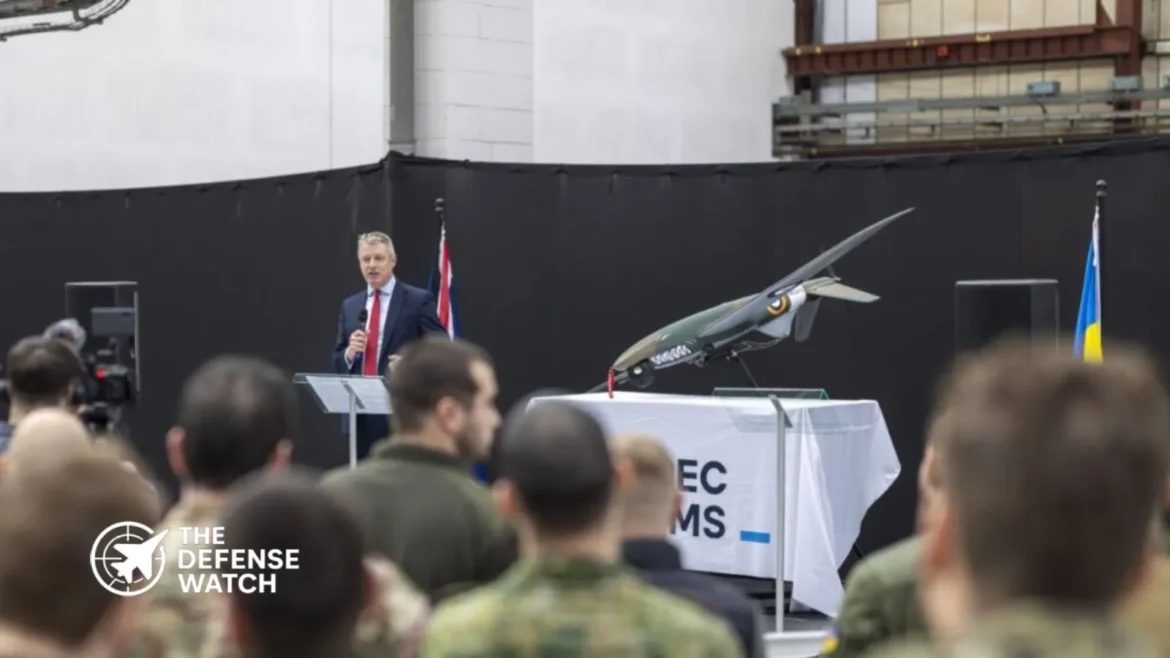
A Ukrainian drone firm has opened a British factory to expand UK based drone production and strengthen long term defense cooperation between Kyiv and London.
(adsbygoogle = window.adsbygoogle || []).push({});The move marks a significant step in relocating and diversifying Ukraine’s fast growing unmanned aerial systems sector amid ongoing conflict with Russia. The new facility will manufacture and assemble drones in the United Kingdom, helping secure supply chains while positioning the company closer to Western customers.
The development reflects a broader shift in Ukraine’s defense industry, which has rapidly scaled domestic drone production since Russia’s full scale invasion in 2022.
Strategic Shift In Ukraine’s Drone Industry
The Ukrainian drone firm British factory opening is more than a simple overseas expansion. It highlights how Ukraine’s defense companies are adapting to wartime pressures while looking ahead to long term export markets.
Since 2022, Ukraine has transformed into one of the most active drone innovation hubs in Europe. Kyiv has prioritized rapid fielding of low cost strike drones, reconnaissance systems, and long range unmanned platforms. These systems have played a central role in targeting logistics hubs, artillery positions, and naval assets.
Opening a British factory allows the company to mitigate risks associated with operating solely inside a conflict zone. Missile strikes on industrial facilities inside Ukraine have periodically disrupted production. Establishing capacity in the UK reduces exposure to such risks and reassures potential customers about continuity of supply.
(adsbygoogle = window.adsbygoogle || []).push({});From an industrial standpoint, UK based production also provides access to skilled aerospace labor, established certification processes, and proximity to NATO procurement networks.
Implications For The UK Defense Sector
The Ukrainian drone firm British factory initiative aligns with the United Kingdom’s broader push to strengthen domestic manufacturing and deepen defense partnerships with Ukraine.
London has been one of Kyiv’s most consistent military backers. The UK has provided training, financial assistance, and weapons ranging from anti tank missiles to advanced air defense systems. Hosting Ukrainian defense manufacturing on British soil adds an industrial dimension to that support.
For the UK, the new factory offers several advantages.
First, it could accelerate the integration of combat proven Ukrainian drone designs into British and allied inventories. Ukrainian companies have accumulated real battlefield data on electronic warfare resilience, rapid modification cycles, and low cost mass production. That experience is highly relevant as Western militaries reassess force structure and drone doctrine.
Second, the facility may contribute to job creation and technology exchange. While specific employment figures have not been publicly detailed, defense manufacturing typically generates supply chain activity across electronics, composites, and software sectors.
(adsbygoogle = window.adsbygoogle || []).push({});Third, the move reinforces the UK’s ambition to remain a central hub for European defense innovation after Brexit.
Battlefield Lessons Driving Production Decisions
The Ukrainian drone firm British factory expansion reflects a broader lesson from the war in Ukraine. Industrial agility matters as much as platform sophistication.
Ukrainian firms have demonstrated an ability to iterate drone designs in weeks rather than years. Adjustments to counter jamming, improve range, or enhance payload capacity are often made rapidly in response to battlefield feedback.
Western defense procurement models have traditionally relied on longer development cycles. The Ukrainian approach, shaped by immediate operational demands, prioritizes speed and cost efficiency.
By establishing a presence in the UK, the company may help bridge those models. British and allied forces can gain direct exposure to systems refined under combat conditions. In turn, Ukrainian firms gain access to Western testing infrastructure and certification frameworks.
This two way exchange strengthens resilience on both sides.
Supply Chain Security And Export Potential
Supply chain security has become a central theme in global defense policy. The war in Ukraine exposed vulnerabilities in everything from microelectronics to propellant production.
A Ukrainian drone firm British factory provides geographic diversification. It reduces dependence on transport routes vulnerable to disruption and eases compliance with export regulations for Western buyers.
(adsbygoogle = window.adsbygoogle || []).push({});The UK’s established export control and compliance systems may also facilitate sales to NATO and partner nations. For a Ukrainian company seeking to scale internationally, that regulatory environment offers predictability.
Over time, the facility could become a platform for joint development projects. That may include co production agreements or technology sharing initiatives tailored to specific allied requirements.
Long Term Outlook
The Ukrainian drone firm British factory launch underscores how Ukraine’s defense sector is shifting from survival mode to structured international expansion.
Even as active fighting continues, Ukrainian companies are planning for post war reconstruction and sustained integration into Western defense markets. Establishing production in the United Kingdom positions the firm to compete beyond immediate wartime demand.
For the UK, the move reinforces its role as a key security partner to Kyiv while strengthening its own industrial base.
The opening of the British factory is a practical step, not a symbolic one. It reflects hard lessons learned on the battlefield and a shared interest in building resilient, scalable drone manufacturing capacity for the future.
- ► U.S. Navy is accelerating development of the F A XX sixth generation fighter under its Next Generation Air Dominance effort.
- ► Program aims to counter China long range anti ship ballistic and cruise missile capabilities targeting carrier strike groups.
- ► F A XX will replace the F A 18E F Super Hornet beginning in the 2030s.
- ► Aircraft expected to integrate advanced stealth, long range sensors, and manned unmanned teaming.
- ► Move reflects growing Pentagon focus on high end conflict in the Indo Pacific.
U.S. Navy Accelerates F A XX Sixth Generation Fighter Program
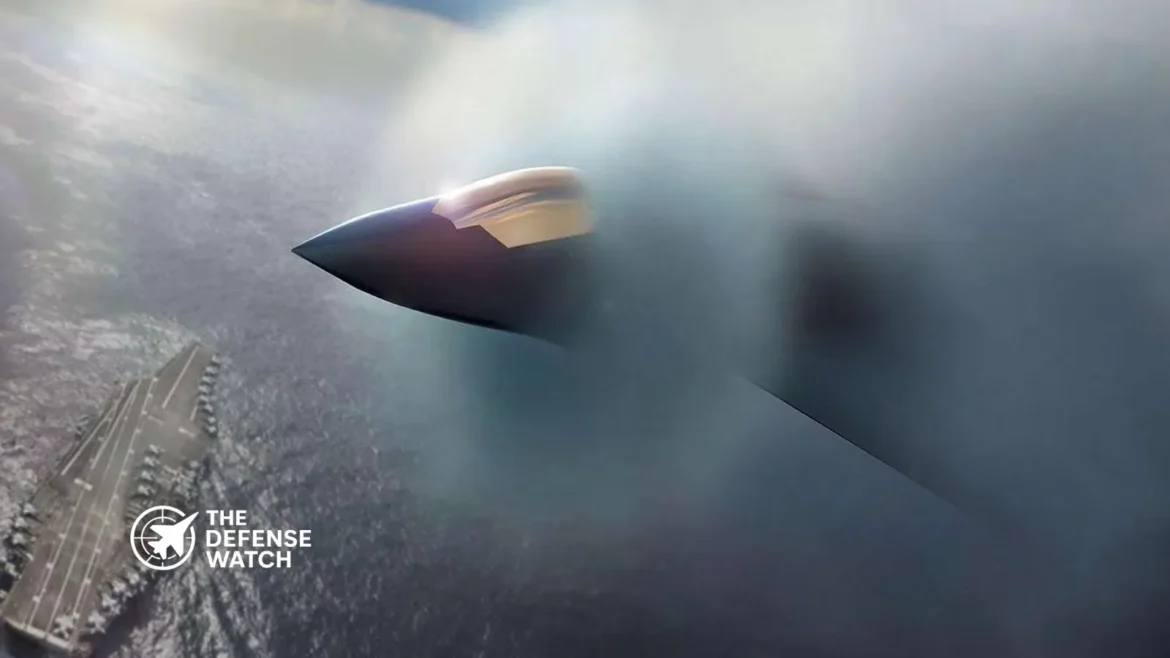
The F A XX sixth generation fighter is moving ahead at a faster pace as the U.S. Navy responds to China long range missile threat against aircraft carriers and forward deployed forces.
(adsbygoogle = window.adsbygoogle || []).push({});According to Bloomberg, the Navy is prioritizing development of its carrier based next generation fighter under the broader Next Generation Air Dominance, or NGAD, initiative. The effort is designed to maintain air superiority in contested environments, particularly in the Indo Pacific.
The F A XX program will eventually replace the aging F A 18E F Super Hornet fleet, which has served as the backbone of carrier air wings for more than two decades.
Responding To China Long Range Missile Threat
The central driver behind the accelerated timeline is China long range missile threat. The People Liberation Army has fielded anti ship ballistic missiles such as the DF 21D and the DF 26, both designed to hold U.S. carrier strike groups at risk at extended ranges.
These systems are part of a broader anti access area denial strategy aimed at limiting U.S. military freedom of movement in the Western Pacific. According to U.S. Department of Defense assessments in its annual China Military Power Report, Beijing continues to expand its missile inventory, sensor networks, and long range targeting capabilities.
This evolving threat environment has forced the Navy to reconsider how close carriers can safely operate to contested coastlines. A longer range, more survivable fighter is seen as essential to restoring operational flexibility.
(adsbygoogle = window.adsbygoogle || []).push({});What F A XX Is Expected To Deliver
While detailed specifications remain classified, Navy officials have outlined several core attributes for the F A XX sixth generation fighter.
First, extended range. Analysts note that range is now as critical as stealth. A carrier air wing must be able to strike from outside the reach of advanced anti ship missiles.
Second, advanced survivability. The aircraft is expected to feature next generation low observable design, electronic warfare capabilities, and improved networking for operations in heavily contested airspace.
Third, integration with unmanned systems. The Navy has signaled that the future carrier air wing will combine manned aircraft with collaborative combat aircraft, or CCA type drones, enabling distributed operations and greater mission endurance.
(adsbygoogle = window.adsbygoogle || []).push({});The F A XX sixth generation fighter is also expected to operate alongside the F 35C Lightning II, which provides fifth generation stealth and sensor fusion today.
Strategic Implications For The Indo Pacific
Accelerating the F A XX program reflects a broader Pentagon shift toward preparing for high intensity conflict with a peer adversary. The Indo Pacific theater presents unique challenges, including vast distances, dense air defenses, and advanced missile systems.
The U.S. Navy remains committed to maintaining credible deterrence in the region. However, China long range missile threat has complicated traditional carrier strike group concepts.
By pushing forward the F A XX sixth generation fighter, the Navy aims to extend the effective reach of carrier based aviation. That could allow U.S. forces to operate from safer standoff distances while still holding targets at risk.
(adsbygoogle = window.adsbygoogle || []).push({});This approach aligns with guidance from the U.S. National Defense Strategy, which emphasizes integrated deterrence and the ability to project power in contested domains.
Budget And Industrial Considerations
The timeline acceleration will depend on sustained funding from Congress. The F A XX effort competes with other major modernization priorities, including the Columbia class ballistic missile submarine and next generation surface combatants.
Industry teams are expected to compete for the program, though the Navy has not publicly detailed its acquisition strategy. The outcome will shape the future of U.S. naval aviation for decades.
From an industrial base perspective, the F A XX sixth generation fighter could anchor advanced aerospace manufacturing and propulsion development well into the 2040s.
Analysis: A Necessary Evolution
The decision to accelerate the F A XX sixth generation fighter is not simply about replacing an aging platform. It reflects a structural change in how the Navy must fight.
(adsbygoogle = window.adsbygoogle || []).push({});Carrier air power once assumed relative freedom of maneuver near hostile shores. That assumption no longer holds against a state actor with precision guided long range missile systems, integrated air defenses, and space based targeting support.
In that context, range becomes protection. Survivability becomes endurance. And networked operations become decisive.
The F A XX sixth generation fighter represents an attempt to adapt carrier aviation to this new reality. Whether it succeeds will depend on technology maturation, stable funding, and realistic testing against high end threat scenarios.
For now, the message from the Pentagon is clear. Maintaining air dominance in the Indo Pacific requires faster modernization, not incremental upgrades.
 ■ KEY FACTS AT A GLANCE
- ► Australia is assessing European weapons integration for the Ghost Bat uncrewed combat aircraft.
- ► The move could expand the RAAF’s missile options beyond traditional U.S. systems.
- ► Ghost Bat is designed to operate alongside crewed fighters as part of Australia’s loyal wingman concept.
- ► European missile integration could strengthen industrial ties and diversify supply chains.
- ► The decision reflects broader Australian efforts to build a flexible, resilient air combat ecosystem.
Australia Explores European Weapons Integration For Ghost Bat
Australia is exploring European weapons integration for Ghost Bat as it refines the future role of its uncrewed loyal wingman aircraft.
The study reflects Canberra’s interest in expanding the combat flexibility of the Royal Australian Air Force, particularly as the Indo Pacific security environment grows more complex.
(adsbygoogle = window.adsbygoogle || []).push({});Ghost Bat, developed by Boeing Defence Australia, is designed to operate alongside crewed fighters such as the Royal Australian Air Force fleet of F-35A Lightning II and F/A-18F Super Hornet aircraft. Its core mission is to extend sensor reach, carry additional weapons, and absorb operational risk in contested airspace.
Expanding Missile Options Beyond Traditional Suppliers
At the center of the review is whether European munitions could be integrated onto Ghost Bat. While Australian combat aircraft traditionally rely heavily on U.S. sourced weapons, diversification has become a growing theme in defense planning.
Potential European systems could include air to air and air to surface missiles developed by firms such as MBDA, though no final selection has been announced.
Integrating European weapons would not be a simple plug and play effort. It would require software, fire control, and certification work to ensure compatibility with Ghost Bat’s open mission systems architecture. Still, the aircraft was designed with modularity in mind, a feature that may ease multi supplier integration.
From a strategic standpoint, diversifying suppliers reduces reliance on a single source and strengthens resilience in a crisis. It also signals Australia’s intent to build broader defense industrial ties with European partners.
Loyal Wingman In A Changing Threat Environment
The Ghost Bat program, formerly known as the Airpower Teaming System, is a flagship example of Australia’s push into advanced autonomous air combat. The platform is intended to operate as a force multiplier for crewed jets, sharing sensor data and executing missions with a high degree of autonomy.
As regional militaries invest in advanced surface to air systems and long range air to air missiles, survivability and flexibility are critical. An uncrewed aircraft that can carry varied munitions, including potentially European weapons, gives planners more operational choice.
(adsbygoogle = window.adsbygoogle || []).push({});This flexibility matters in coalition operations as well. Australia routinely trains and operates with NATO partners and Indo Pacific allies. A broader mix of compatible weapons could simplify joint logistics and expand mission options during combined operations.
Industrial And Strategic Implications
The exploration of European weapons integration for Ghost Bat also has industrial implications. Australia has emphasized sovereign capability and local industry participation in recent defense policy documents.
Working with European missile suppliers could open pathways for co production, technology transfer, or local assembly. That would align with Canberra’s long term objective of strengthening its domestic defense base.
At the same time, interoperability with U.S. systems remains central to Australian strategy. The United States is Australia’s principal security ally, and many of its high end capabilities, including the F 35A, are deeply integrated with American networks and weapons.
Balancing these relationships requires careful technical and diplomatic coordination. Expanding options does not mean replacing existing partnerships, but rather adding depth to them.
What Comes Next For Ghost Bat
Australia has already conducted multiple test flights of Ghost Bat prototypes, advancing the program from concept to operational experimentation. The aircraft’s modular nose section and open architecture were intended to allow rapid reconfiguration for sensors and mission systems.
(adsbygoogle = window.adsbygoogle || []).push({});If European weapons integration proceeds, the next steps would likely include feasibility studies, integration trials, and certification testing under RAAF oversight.
The outcome will shape how Ghost Bat is fielded in the coming decade. Whether equipped primarily with U.S. systems, European munitions, or a mix of both, the platform represents a shift toward distributed, collaborative air combat.
For the Royal Australian Air Force, the goal is clear. Build a flexible, survivable force that can adapt quickly to changing threats. Exploring European weapons integration for Ghost Bat is one more step in that direction.
■ KEY FACTS AT A GLANCE- ► Airbus unveiled two advanced rotorcraft concepts focused on NATO future airpower requirements.
- ► Designs emphasize higher speed, survivability, and modular mission systems for contested environments.
- ► Concepts align with NATO modernization priorities and future vertical lift requirements.
- ► Airbus positions the designs as European options for next generation combat and transport missions.
- ► The announcement comes amid intensifying transatlantic competition in advanced rotorcraft development.
Airbus Dual Rotorcraft Concepts Target NATO Future Airpower Capabilities
Airbus dual rotorcraft concepts are designed to support NATO future airpower capabilities as the alliance prepares for high intensity operations against near peer threats.
(adsbygoogle = window.adsbygoogle || []).push({});The European aerospace firm introduced two next generation rotorcraft studies aimed at expanding speed, survivability, and mission flexibility beyond current helicopter fleets. The concepts are positioned as potential contributors to NATO’s evolving force structure, particularly in the context of rapid reinforcement and distributed operations across Europe.
According to Airbus, The designs reflect Airbus’ intent to align closely with NATO capability planning, including requirements for enhanced mobility, improved protection, and advanced digital integration.
Focus On Speed And Survivability
While detailed specifications remain limited, both rotorcraft concepts emphasize higher cruise speeds than conventional helicopters. This focus mirrors broader Western efforts to overcome one of rotary wing aviation’s longstanding limitations, namely limited dash speed and range compared to fixed wing aircraft.
Higher speed rotorcraft can reduce exposure time in contested airspace, a key consideration as NATO planners account for integrated air defense systems fielded by Russia and other potential adversaries. Recent conflicts in Ukraine have underscored the vulnerability of legacy helicopters operating within range of modern surface to air missiles and loitering munitions.
(adsbygoogle = window.adsbygoogle || []).push({});Airbus appears to be responding to that operational reality. By exploring new aerodynamic configurations and propulsion concepts, the company aims to bridge the gap between traditional helicopters and tiltrotor or compound aircraft designs.
This effort parallels U.S. Army modernization programs such as Future Vertical Lift, though Airbus’ approach is tailored to European and NATO requirements.
Modular Design For Multi Role Operations
Another core element of the Airbus dual rotorcraft concepts is modularity. The aircraft are expected to support a range of missions, including troop transport, special operations insertion, medical evacuation, and potentially armed escort roles.
NATO’s defense planning documents emphasize flexible, interoperable platforms capable of operating across allied forces. A modular rotorcraft architecture would allow rapid reconfiguration based on mission demand, reducing logistics burdens and lifecycle costs.
For European nations balancing rising defense budgets with industrial policy goals, domestically developed platforms also offer strategic advantages. Airbus, headquartered in Europe, positions itself as a key industrial partner capable of sustaining regional supply chains while contributing to alliance level capability targets.
Strategic Context: NATO Modernization Drive
The unveiling of Airbus dual rotorcraft concepts comes amid accelerated defense spending across NATO member states. Since Russia’s full scale invasion of Ukraine in 2022, European governments have committed to increasing readiness and replacing aging equipment.
(adsbygoogle = window.adsbygoogle || []).push({});Helicopter fleets across Europe include platforms such as the NH90 and Tiger, both produced by European consortia that include Airbus. Many of these aircraft entered service in the 2000s and will require upgrades or replacement in the coming decades.
NATO’s 2022 Strategic Concept calls for strengthened deterrence and defense posture along the alliance’s eastern flank. Rapid air mobility, vertical lift, and survivable logistics are central to that objective. In this context, advanced rotorcraft capable of operating in contested environments become more than a procurement issue. They become part of the alliance’s deterrence framework.
Airbus’ announcement signals an effort to shape that discussion early. By presenting conceptual designs now, the company can influence requirement setting and multinational cooperation frameworks.
Industrial Competition And Transatlantic Dynamics
The rotorcraft sector is increasingly competitive. In the United States, Bell and Sikorsky are advancing high speed designs under Army programs. European governments must decide whether to join U.S. initiatives, develop indigenous systems, or pursue hybrid approaches.
Airbus dual rotorcraft concepts therefore carry political weight beyond their technical characteristics. A European led program could reinforce strategic autonomy goals articulated by several EU member states, while still operating within NATO’s integrated command structure.
At the same time, interoperability with U.S. forces remains essential. Any future NATO rotorcraft platform must integrate with alliance communications networks, data links, and logistics systems.
(adsbygoogle = window.adsbygoogle || []).push({});Balancing autonomy with interoperability will shape the future of NATO air mobility planning.
What Comes Next
Airbus has not announced a formal development timeline or launch customer for the concepts. As with many early stage studies, progression to a funded program will depend on national defense budgets and alliance level coordination.
Still, the unveiling of Airbus dual rotorcraft concepts marks a clear signal. Europe’s largest aerospace company intends to compete in the next generation vertical lift space and anchor part of NATO future airpower capabilities within a European industrial framework.
For defense planners, the question is no longer whether rotary wing aviation must evolve. It is how quickly alliance members can translate concept designs into fielded capability in an increasingly contested security environment.
■ KEY FACTS AT A GLANCE- ► HÜRJET test flights will run from February 23, 2026, through March 16, 2026, over Antalya Bay.
- ► Flights will originate from Antalya Air Base Command and extend toward Gazipaşa.
- ► The aircraft may reach supersonic speeds during certain test profiles.
- ► Sonic booms may be heard in coastal areas as a natural result of high speed testing.
- ► Authorities emphasized there is no cause for public concern during the scheduled activities.
HÜRJET Test Flights Over Antalya Bay Enter Supersonic Phase
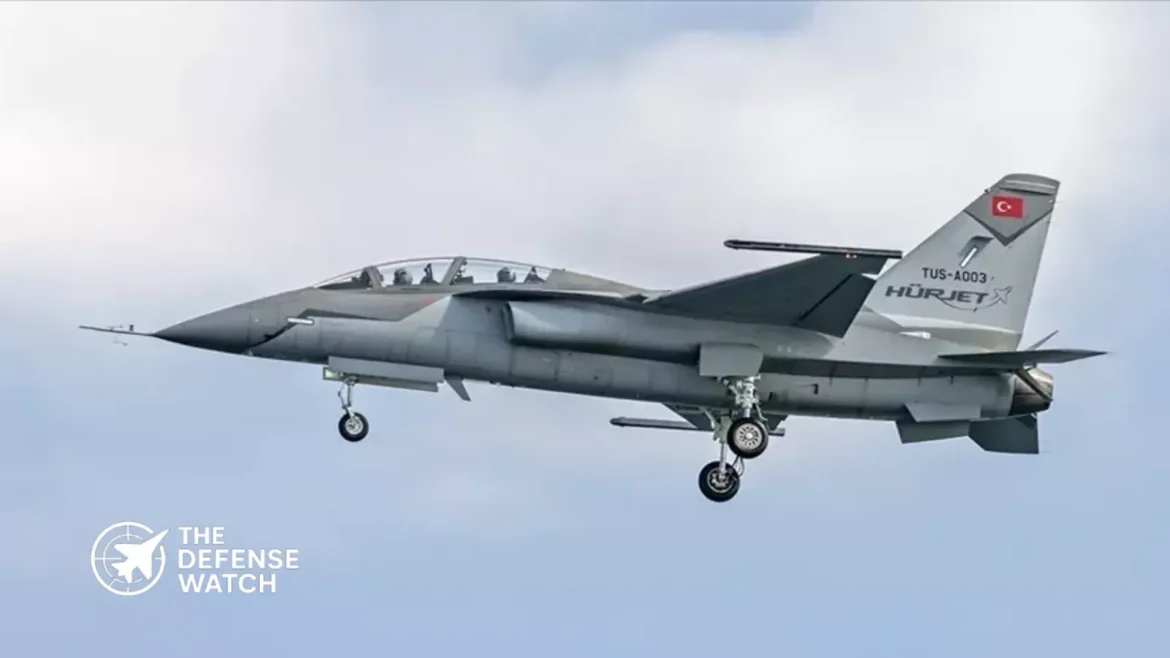
HÜRJET test flights over Antalya Bay are scheduled to continue through March 16, with Turkish authorities confirming that some sorties may include supersonic runs.
(adsbygoogle = window.adsbygoogle || []).push({});In a public notice, the Antalya Governor’s Office stated that flight tests under the HÜRJET Project will take place between February 23, 2026, and March 16, 2026. Operations will be conducted over the maritime area stretching from Antalya Bay to Gazipaşa, with aircraft departing from Antalya Air Base Command.
Officials warned that explosion like high intensity sounds could be heard along parts of the coastline. These sounds would result from the aircraft exceeding the speed of sound during specific test profiles.
Authorities stressed that such noise is a routine outcome of supersonic flight testing and urged residents not to be alarmed.
Advancing The HÜRJET Program
The HÜRJET advanced jet trainer is being developed by Turkish Aerospace Industries as part of Turkey’s broader effort to modernize pilot training and expand domestic aerospace capabilities.
Designed as a supersonic, single engine advanced trainer, HÜRJET is intended to replace aging jet trainers in Turkish service and support the transition of pilots to frontline platforms such as the F-16 Fighting Falcon and Turkey’s next generation combat aircraft programs.
According to Turkish defense officials and company disclosures in prior briefings, HÜRJET is expected to reach speeds above Mach 1, making controlled supersonic testing a key milestone in flight envelope expansion.
The Antalya maritime test zone offers a safer environment for high speed trials, minimizing risks to populated urban areas while allowing engineers to gather critical aerodynamic and structural data.
Why Supersonic Testing Matters
Supersonic trials are not symbolic. They are essential for validating airframe integrity, engine performance, flight control systems, and structural response under high stress conditions.
(adsbygoogle = window.adsbygoogle || []).push({});When an aircraft breaks the sound barrier, it generates a shock wave known as a sonic boom. Over water, these effects are easier to manage from both a safety and public relations standpoint.
For HÜRJET, expanding into supersonic regimes signals that the program is moving beyond basic flight validation toward full performance certification. This phase typically involves:
- Incremental speed increases
- Structural load assessments
- Avionics performance verification
- Stability and control evaluations
Defense aviation programs worldwide follow similar flight test methodologies before operational approval.
Strategic Implications For Turkey’s Aerospace Sector
The continued HÜRJET test flights over Antalya Bay highlight Ankara’s long term push for defense industrial autonomy.
Turkey has invested heavily in indigenous aerospace programs, seeking to reduce reliance on foreign suppliers. The HÜRJET program fits within a broader portfolio that includes unmanned systems, helicopters, and next generation fighter development.
From a policy perspective, a domestically produced supersonic trainer offers several advantages:
- Reduced foreign procurement exposure
- Export potential to allied and partner nations
- Greater control over training doctrine and upgrades
If successfully fielded, HÜRJET could position Turkey among a limited group of nations capable of designing and producing advanced jet trainers domestically.
(adsbygoogle = window.adsbygoogle || []).push({});However, sustained testing is critical. Flight envelope expansion, especially at supersonic speeds, often determines whether a program meets performance targets on schedule.
Public Communication And Transparency
The Antalya Governor’s Office decision to notify residents ahead of the HÜRJET test flights over Antalya Bay reflects standard aviation safety and civil coordination practices.
Sonic booms can cause concern among local communities unfamiliar with supersonic activity. Clear communication helps prevent misinformation and unnecessary alarm.
Similar public advisories are issued in the United States during military supersonic training over designated airspace corridors, particularly in coastal or desert regions.
(adsbygoogle = window.adsbygoogle || []).push({});By identifying the maritime corridor from Antalya Bay to Gazipaşa, authorities delineated a specific operational zone, reinforcing transparency in military flight activity.
What Comes Next
The March 16 end date does not necessarily mark the conclusion of the HÜRJET test campaign. Rather, it likely represents a defined test window for specific performance evaluations.
Future milestones may include:
- Expanded weapons integration trials
- Advanced avionics validation
- Export demonstration campaigns
For now, the focus remains on validating high speed performance and operational reliability.
The coming weeks will provide clearer insight into how rapidly the HÜRJET program progresses through its certification roadmap.
■ KEY FACTS AT A GLANCE- ► The U.S. Air Force and Northrop Grumman signed a deal on February 23, 2026 at the AFA Warfare Symposium to increase B-21 Raider annual production by 25%.
- ► The acceleration is backed by $4.5 billion in reconciliation funding approved by Congress as part of the “One Big Beautiful Bill” signed in 2025.
- ► Northrop Grumman has invested more than $5 billion in digital engineering and manufacturing infrastructure to support faster production cycles.
- ► The first operational B-21 Raider is scheduled to arrive at Ellsworth Air Force Base, South Dakota, in 2027.
- ► At least two B-21 aircraft are currently conducting flight testing at Edwards Air Force Base, California, with performance reported to exceed digital model predictions.
- ► Northrop’s Palmdale facility currently produces an estimated seven to eight aircraft annually; the exact accelerated rate remains classified.
- ► The B-21 program employs more than 8,000 personnel and over 400 suppliers across 40 U.S. states, making it one of the most broadly distributed defense industrial programs in the country.
B-21 Raider Production Acceleration Marks a Strategic Inflection Point for U.S. Airpower
The B-21 Raider production acceleration, formalized at the Air & Space Forces Association Warfare Symposium on February 23, 2026, is not simply a procurement contract milestone. It reflects a deliberate choice by Pentagon leadership to close what it perceives as a widening window of strategic vulnerability — one defined by an aging bomber fleet, accelerating Chinese and Russian air defense modernization, and the operational lessons drawn from 2025’s Operation Midnight Hammer.
(adsbygoogle = window.adsbygoogle || []).push({});The deal pairs $4.5 billion in already-appropriated reconciliation funding with a new production agreement raising Northrop Grumman’s annual B-21 output by 25 percent. The practical result: the Air Force’s nuclear-capable, penetrating long-range strike capacity reaches operational units faster. The strategic result is more complex — and worth examining carefully.
The Industrial Foundation Behind the Deal
Northrop Grumman’s willingness to commit to faster production is not corporate optimism. It rests on a documented infrastructure investment that, by the company’s own accounting, exceeds $5 billion in digital engineering and advanced manufacturing tools at its Plant 42 facility in Palmdale, California.
The company reports that its digital environment supports flight test planning and real-time performance analysis, enabling increased test cadence — with maintainers able to service aircraft for another test flight the following day. That kind of rapid turnaround in testing is significant because it translates directly to what the Air Force can expect from operational sorties. If the combined test force can regenerate a B-21 overnight under test conditions, the operational maintenance model should track closely with that performance baseline.
(adsbygoogle = window.adsbygoogle || []).push({});Northrop has also reduced software certification time by 50 percent, using advanced manufacturing tools including digital and augmented reality technologies to improve efficiency and scale production across facilities nationwide.
This is not small-batch artisan production. The program involves more than 400 suppliers across 40 states, a supply chain architecture deliberately designed to build political durability into the program budget line — and to reduce single-point-of-failure risk in the production base.
Why the Timing Matters
The Pentagon currently fields only 20 Northrop Grumman B-2 Spirit bombers — the Western world’s only low-observable, nuclear-capable heavy bomber — a fleet that played a central role in 2025’s Operation Midnight Hammer, the U.S. operation to destroy Iran’s underground nuclear enrichment sites.
That mission exposed both the B-2’s irreplaceable value and the acute danger of depending on a 20-aircraft fleet for the nation’s most demanding strike missions. The B-2 is aging, difficult to sustain, and expensive to fly. Its stealth coatings require intensive maintenance. Its radar cross-section management systems, while still effective, were designed against threat environments that have since evolved considerably.
(adsbygoogle = window.adsbygoogle || []).push({});The B-21 Raider program was built with those realities in mind. Its design incorporates modernized low-observable materials and manufacturing processes intended to reduce maintenance burden compared to the B-2. The open-systems architecture allows avionics and mission system upgrades without major airframe modifications — a lesson learned the hard way across the B-2’s operational life. The aircraft can carry both conventional and nuclear payloads, and is designed for manned or optionally unmanned operation, providing flexibility that no current U.S. bomber offers.
Air Force Secretary Troy Meink, speaking at the symposium, stated that “the B-21 is foundational to our long-range strike capability and to credible deterrence,” and that accelerating production ensures delivery to combatant commanders faster, strengthening the ability to “outpace, deter, and, if necessary, defeat emerging threats.”
That language is deliberate. Deterrence credibility in the nuclear domain depends not only on capability but on demonstrated capacity — adversaries need to believe the United States can field sufficient penetrating strike assets to hold their highest-value, hardened targets at risk. Twenty B-2s do not provide that assurance at scale. One hundred or more B-21s, delivered on a compressed timeline, begins to rebuild it.
The Financial Architecture of Acceleration
The $4.5 billion reconciliation injection is not discretionary — it was specifically designated by Congress for B-21 production capacity expansion. Northrop CEO Kathy Warden indicated that Northrop plans to invest between $2 to $3 billion over multiple years in facility upgrades to support the acceleration. That private industrial investment, layered on top of the government funding, suggests both parties have committed to a production rate increase that cannot easily be unwound by future budget volatility.
(adsbygoogle = window.adsbygoogle || []).push({});That said, the financial trajectory has not been smooth. As of early 2026, Northrop had absorbed roughly a $2 billion hit trying to accelerate the program and cover material costs — a reminder that fixed-price contracts in development-phase programs carry real risk for the prime contractor. The new deal should provide more favorable terms for the accelerated lots, though the Pentagon has not disclosed pricing details.
The per-unit cost of the B-21 currently sits near $700 million per aircraft at current production rates. Increased volume should drive per-unit costs down through learning-curve economics, though stealth manufacturing is labor-intensive enough that cost reduction will be gradual rather than dramatic.
Comparing the Industrial Baseline to Competitors
It is worth placing this production decision in comparative context. China’s H-20 stealth bomber has been in development for years but has not entered series production or been confirmed as operationally deployed. Russia’s PAK DA program remains mired in development, with no credible timeline for fielding. Neither adversary currently operates a penetrating stealth bomber comparable to the B-2, and neither is likely to field one on a timeline that matches the B-21’s accelerated delivery schedule.
This matters because the accelerated B-21 production is not a symmetric arms race response — it is an effort to lock in an asymmetric advantage before competitors can close the gap. Long-range strike penetration capability is among the hardest military attributes to replicate quickly. The industrial knowledge, materials science, and systems integration experience required cannot be acquired on short notice.
(adsbygoogle = window.adsbygoogle || []).push({});The United Kingdom and Australia, both close intelligence partners operating within AUKUS, have no equivalent penetrating bomber program. The B-21 effectively makes the United States the sole Western power with this capability for at least the next two decades, reinforcing Washington’s role as the alliance’s indispensable long-range strike backstop.
Program of Record and the 100-Aircraft Question
The current B-21 program of record calls for a minimum of 100 aircraft. Some officials have called for expanding the program of record beyond that number, though Air Force Secretary Meink did not address whether the overall buy would change.
The case for expanding the buy is straightforward: with a fleet of 100, accounting for depot maintenance cycles, training aircraft, testing attrition, and forward deployment requirements, actual mission-capable aircraft available at any given time could be well under 70. For a force designed to hold at-risk a large and geographically dispersed set of hardened targets across China or Russia, that may prove insufficient.
(adsbygoogle = window.adsbygoogle || []).push({});Conversely, at $700 million per aircraft and with the Air Force simultaneously funding the B-52J re-engine program, the Sentinel ICBM (itself under significant cost pressure), and LRSO cruise missile development, budget competition is fierce. The reconciliation funding provides short-term relief, but sustained production acceleration beyond 100 aircraft would require additional appropriations that are not yet committed.
■ KEY FACTS AT A GLANCE- ► The U.S. Air Force is advancing the Collaborative Combat Aircraft program through a phased weapons integration strategy.
- ► CCA platforms are designed to operate alongside crewed fighters under the Next Generation Air Dominance framework.
- ► Initial integration focuses on existing U.S. munitions to reduce risk and accelerate operational capability.
- ► The effort supports broader Air Force modernization and distributed combat operations.
- ► Officials emphasize deliberate testing and integration to ensure safety, reliability, and combat effectiveness.
USAF Collaborative Combat Aircraft Program Moves Into Weapons Integration Phase
The Collaborative Combat Aircraft program is progressing through a deliberate weapons integration process as the U.S. Air Force refines how autonomous platforms will operate in future high-end conflicts.
(adsbygoogle = window.adsbygoogle || []).push({});According to the United States Air Force, the effort focuses on carefully integrating proven munitions onto emerging uncrewed aircraft designed to fly alongside crewed fighters. The goal is to reduce technical risk while accelerating operational capability.
The Collaborative Combat Aircraft program forms a central pillar of the Next Generation Air Dominance architecture. Under this concept, autonomous aircraft will support crewed platforms by carrying additional weapons, conducting sensing missions, and extending operational reach.
A Phased and Risk-Managed Approach
Air Force officials describe the weapons integration strategy as deliberate and incremental. Instead of developing entirely new weapons in parallel with new aircraft, the service is prioritizing compatibility with existing, combat-proven munitions already in the inventory.
This approach serves several purposes.
First, it reduces development timelines. Integrating established weapons avoids the long certification cycles associated with new munitions. Second, it supports logistical continuity across the force. Third, it strengthens interoperability within joint and allied operations.
From a force design perspective, the Collaborative Combat Aircraft program is intended to create mass at a lower cost than traditional fighters. By distributing weapons across multiple autonomous platforms, commanders can complicate enemy targeting and increase survivability in contested airspace.
Supporting NGAD and Future Air Dominance
The Collaborative Combat Aircraft program is closely aligned with NGAD objectives. While NGAD centers on a sixth-generation crewed fighter, CCA platforms provide scalable combat power around that core aircraft.
In practical terms, autonomous aircraft could carry additional air-to-air missiles, electronic warfare payloads, or intelligence, surveillance, and reconnaissance systems. This reduces the burden on crewed aircraft and enables greater tactical flexibility.
The Air Force has consistently emphasized that CCAs are not simply drones in the traditional sense. Instead, they are designed as collaborative systems that integrate into a broader combat network. That network includes advanced data links, distributed sensors, and secure communications that allow real-time coordination.
(adsbygoogle = window.adsbygoogle || []).push({});The deliberate weapons integration effort reflects lessons learned from past acquisition programs. Rushing integration can create cascading delays and cost overruns. A phased plan, by contrast, allows the service to validate software, hardware interfaces, and safety protocols step by step.
Operational Implications and Strategic Context
The Collaborative Combat Aircraft program arrives at a time when the United States faces pacing challenges in the Indo-Pacific and other theaters. Potential adversaries continue to expand integrated air defense systems, long-range missiles, and counter-air capabilities.
In that environment, survivability and distributed operations become critical.
Autonomous aircraft operating in coordination with crewed fighters can increase tactical options. They can absorb risk in high-threat areas, extend sensor coverage, and expand weapons capacity without placing additional pilots in harm’s way.
From an operational standpoint, integrating weapons early and methodically ensures these platforms are not limited to sensing roles alone. Arming CCAs provides credible combat utility from the outset.
(adsbygoogle = window.adsbygoogle || []).push({});The Air Force has underscored that testing remains central to the effort. Weapons separation trials, flight envelope validation, and software verification are essential before operational deployment. Safety, reliability, and predictable performance remain non-negotiable requirements.
Industrial and Modernization Impact
The Collaborative Combat Aircraft program also signals a shift in how the Air Force approaches acquisition. Modular architectures and open systems design are intended to allow faster upgrades over time.
By aligning weapons integration with existing inventories, the service reduces supply chain friction and enhances sustainment efficiency. This matters as the Air Force balances modernization priorities across fighters, bombers, tankers, and space-based assets.
As development continues, the deliberate weapons integration strategy positions the Collaborative Combat Aircraft program as a credible component of future U.S. airpower.
(adsbygoogle = window.adsbygoogle || []).push({});Rather than pursuing rapid but risky fielding, the Air Force is prioritizing structured integration, operational validation, and scalable growth. That methodical path may prove decisive as the service works to maintain air superiority in increasingly contested environments.
■ KEY FACTS AT A GLANCE- ► Airbus Defence and Space may close the A400M assembly line in Seville by the end of 2028 without new orders.
- ► A sustainable production rate of eight aircraft per year is required to keep the line open.
- ► Of 178 firm orders to date, 137 aircraft have been delivered, leaving 41 pending.
- ► France reduced its A400M fleet target from 50 to 41 aircraft under its 2024 to 2030 Military Programming Law.
- ► Delivery of seven aircraft for France and Spain has been advanced to June 2025, shifting the production timeline.
A400M Assembly Line Faces 2028 Deadline Without New Orders
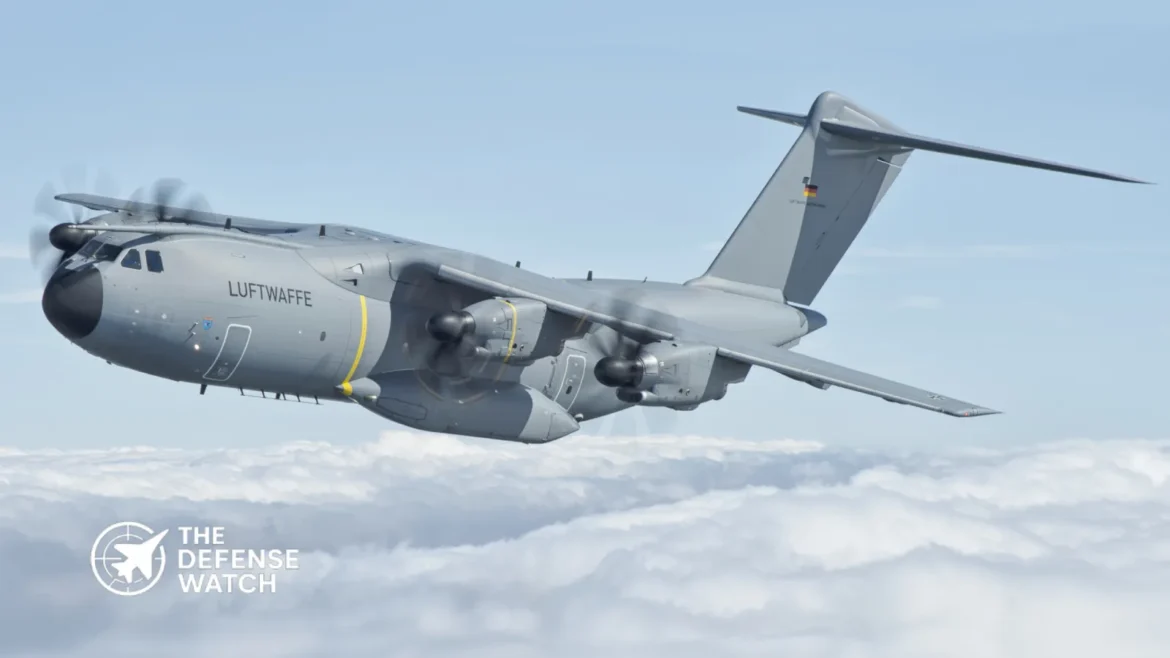
The A400M assembly line could shut down by the end of 2028 if new contracts do not materialize, according to Airbus Defence and Space. The warning centers on sustaining production at eight aircraft per year, a rate the company says is critical to keeping the Seville final assembly line operational.
(adsbygoogle = window.adsbygoogle || []).push({});The A400M program, Europe’s flagship military airlifter developed by Airbus, has struggled in recent years with slowing orders after completing the bulk of deliveries to launch customers.
Production Gap Threatens Program Stability
To date, 178 A400M aircraft have been ordered by partner nations and export customers. Airbus has delivered 137 units, leaving 41 aircraft in the current backlog. Without additional export wins or follow on orders from core European customers, that backlog will not sustain production beyond the end of the decade.
Airbus executives have emphasized that maintaining a steady output of eight aircraft annually is essential. Falling below that level increases unit costs and places pressure on suppliers across Spain, Germany, France, and the United Kingdom.
The Seville facility serves as the final assembly line for the A400M. A shutdown would mark a significant milestone for Europe’s defense industrial base, ending production of one of its most complex military aircraft programs.
France Cuts Fleet Target
Pressure on the A400M assembly line intensified after France reduced its planned fleet from 50 to 41 aircraft under its 2024 to 2030 Military Programming Law. France is one of the program’s largest customers and a core partner nation.
The revised target reflects budget prioritization toward nuclear deterrence modernization, air defense, and next generation combat air capabilities. While Paris remains committed to the A400M fleet already ordered, the reduction signals limited appetite for additional units in the near term.
(adsbygoogle = window.adsbygoogle || []).push({});Spain has also adjusted delivery schedules. Seven aircraft intended for France, four units, and Spain, three units, were advanced to June 2025. While this move accelerates near term deliveries, it effectively compresses the production timeline, bringing the potential 2028 cutoff closer.
Strategic Role Of The A400M
The A400M was designed to bridge the gap between tactical transports like the C 130 and larger strategic airlifters. It can carry heavy armored vehicles, helicopters, and troops over intercontinental distances while operating from shorter or semi prepared runways.
European air forces have used the aircraft for logistics missions, humanitarian response, and support to NATO operations. The platform has also matured technically after earlier development delays and cost overruns.
From an industrial standpoint, the A400M supports thousands of jobs across multiple European states. A closure of the A400M assembly line would have ripple effects across the supplier base and could narrow Europe’s sovereign airlift manufacturing capability.
Export Prospects And Market Reality
Airbus continues to pursue export campaigns in Asia, the Middle East, and Latin America. However, the global airlift market remains limited. Many countries rely on existing fleets or acquire second hand aircraft.
The A400M competes indirectly with platforms such as the C 130J and larger U.S. strategic airlifters. Budget constraints and shifting defense priorities in Europe further complicate new sales prospects.
Absent fresh contracts, Airbus faces a narrowing production window. The 2028 timeline reflects the current backlog profile and the need to provide long term clarity to suppliers and workforce planning.
Industrial And Policy Implications
The potential closure of the A400M assembly line raises broader questions about Europe’s defense industrial strategy. European governments have emphasized strategic autonomy and resilience in defense production. Sustaining complex programs like the A400M aligns with those objectives.
(adsbygoogle = window.adsbygoogle || []).push({});At the same time, governments must balance procurement budgets against evolving threats, including missile defense, unmanned systems, and next generation fighter programs.
For Airbus, maintaining continuity at Seville would preserve industrial skills tied to large military aircraft integration. For partner nations, additional orders would require budget tradeoffs at a time of expanding defense commitments.
The coming two years will be decisive. Without new commitments, the A400M assembly line could reach its planned endpoint in 2028, closing a major chapter in European military aviation.