Boeing CH-47F Chinook Reaches New Automation Milestone
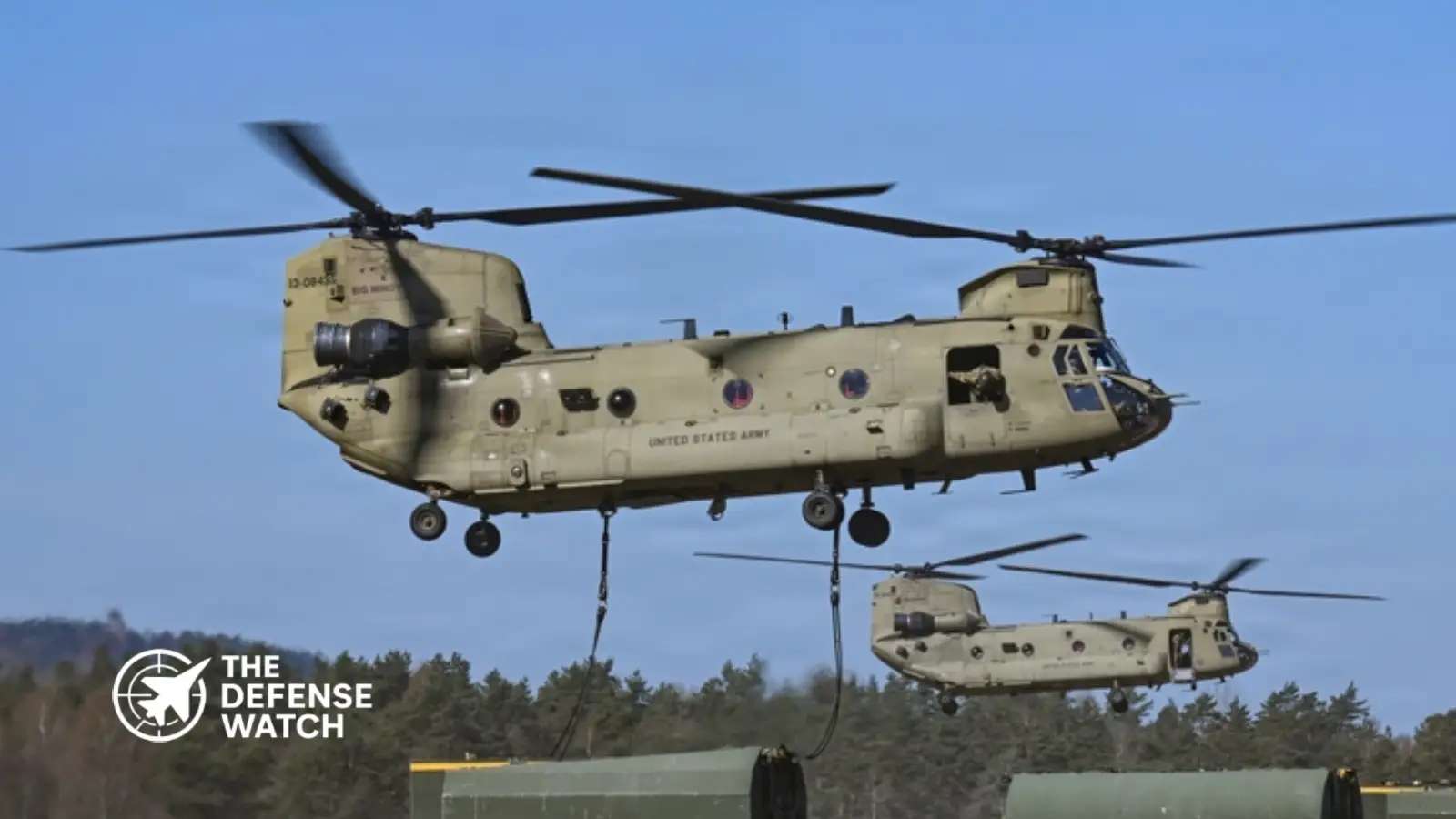
The CH-47F Chinook autonomous landing milestone marks a notable step in U.S. Army aviation modernization. Boeing announced that a U.S. Army CH-47F successfully completed a fully automated approach and landing using the company’s Approach-to-X, or A2X, software during recent testing. The aircraft touched down without pilot interaction during the final phase of flight.
- Boeing confirmed a CH-47F Chinook completed its first fully automated approach and landing during recent flight tests.
- The helicopter landed with all four wheels on the runway without pilot control inputs.
- Boeing used its Approach-to-X (A2X) software integrated with the Digital Automated Flight Control System.
- Since January 2026, the system has completed more than 150 automated approaches.
- The capability is aimed at reducing pilot workload and improving tactical landing precision.
The twin-rotor Chinook remains one of the Army’s most important heavy-lift platforms, used for troop transport, artillery movement, resupply, and disaster response. Adding automation to such a mature platform shows the Pentagon is seeking faster capability gains through software upgrades rather than waiting for entirely new aircraft.
How The System Works
According to Boeing, pilots still set mission parameters such as landing zone, final altitude, approach angle, and entry speed. Once configured, the A2X software manages the flight path and control inputs needed to guide the helicopter to touchdown. Crews can still intervene or adjust course if battlefield conditions change.
That matters because military autonomy is increasingly focused on supervised systems, not pilot replacement. In practical terms, this means reducing crew workload while preserving human judgment.
For transport helicopters operating in dust, low visibility, or contested landing zones, a repeatable automated approach could improve safety and mission timing.
Why It Matters For The U.S. Army
The Army is modernizing the Chinook fleet through the Block II program, which adds greater lift capacity, range, and future growth margin. Combining Block II hardware upgrades with software autonomy could extend Chinook relevance well into coming decades.
This is a cost-effective path. Instead of buying a brand-new heavy-lift fleet, the Army can improve an aircraft already proven in Iraq, Afghanistan, Europe, and humanitarian operations worldwide.
It also aligns with wider Pentagon interest in reduced-crew and optionally crewed aviation systems.
Strategic Analysis
Rivals including China and Russia are investing in electronic warfare, long-range fires, and air defense networks that complicate helicopter operations. Faster, more precise approaches can help aircraft spend less time exposed near landing zones.
Autonomy alone does not solve survivability challenges, but paired with terrain masking, improved sensors, and networked mission planning, it can sharpen battlefield utility.
For Boeing, the successful test also strengthens the long-term case for keeping the Chinook central to U.S. and allied heavy-lift fleets.
What Comes Next
Boeing said additional testing will refine the software before broader fleet integration. If successful, future increments could include degraded-visual-environment landing support, tighter obstacle avoidance, and cooperative operations with uncrewed systems.
The result is clear: the Chinook is not being replaced soon. It is being digitally upgraded.
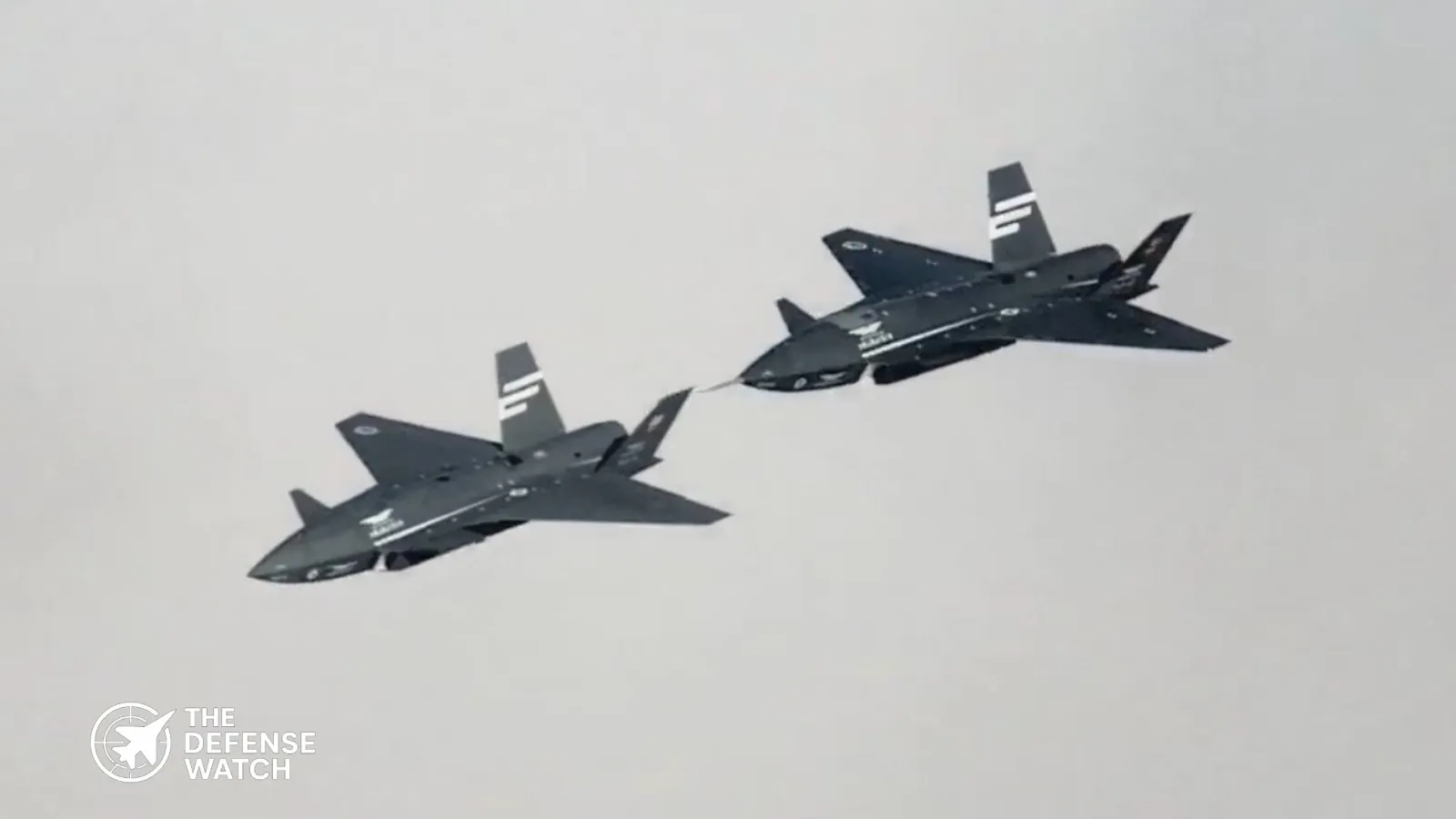
Turkiye’s Bayraktar Kizilelma unmanned fighter jets have completed the world’s first fully autonomous close-formation flight by jet-powered combat aircraft, Baykar announced on December 28, 2025. This milestone underscores a new level of autonomous capability for unmanned combat aircraft and advances Turkeys role in next-generation aerial warfare.
The test was conducted at the Akinci Flight Training and Test Center in Corlu, northwestern Turkiye. Two Kizilelma prototypes, designated PT3 and PT5, took off in sequence and, once airborne, executed synchronized maneuvers while maintaining close formation without any human input. The flight used smart fleet autonomy algorithms developed by Baykar’s engineering team.
According to Baykar, this is the first time unmanned fighter-class aircraft have flown in close formation autonomously, a role that has traditionally required highly trained human pilots and complex coordination.
Autonomous Combat Patrol Tested
In addition to formation flying, the Kizilelma jets carried out a Combat Air Patrol mission along a pre-defined route using fleet autonomy software. This demonstrated the system’s potential for autonomous air defence tasks that are core elements of modern air combat operations.
Baykar executives described the achievement as a world first, noting the development of indigenous autonomy capabilities. The company has previously highlighted export agreements for its unmanned systems, including TB2 and Akinci models.
Strategic and Industry Context
The Kizilelma program represents a shift in unmanned combat aviation. Unlike traditional ISR or light strike drones, Kizilelma is designed for contested airspace roles, including air-to-air engagements and joint operations with manned aircraft.
In a recent related milestone, Kizilelma was reported to have achieved a verified beyond-visual-range air-to-air kill using a domestically developed Gokdogan missile and an Aselsan AESA radar during tests over the Black Sea.
The ability to fly formation autonomously could support future scaling of unmanned fleets in combat roles and reduce reliance on direct human pilot control, aligning with global trends toward autonomous and AI-driven systems in defense aviation.