Germany’s First F-35A Completes Maiden Flight
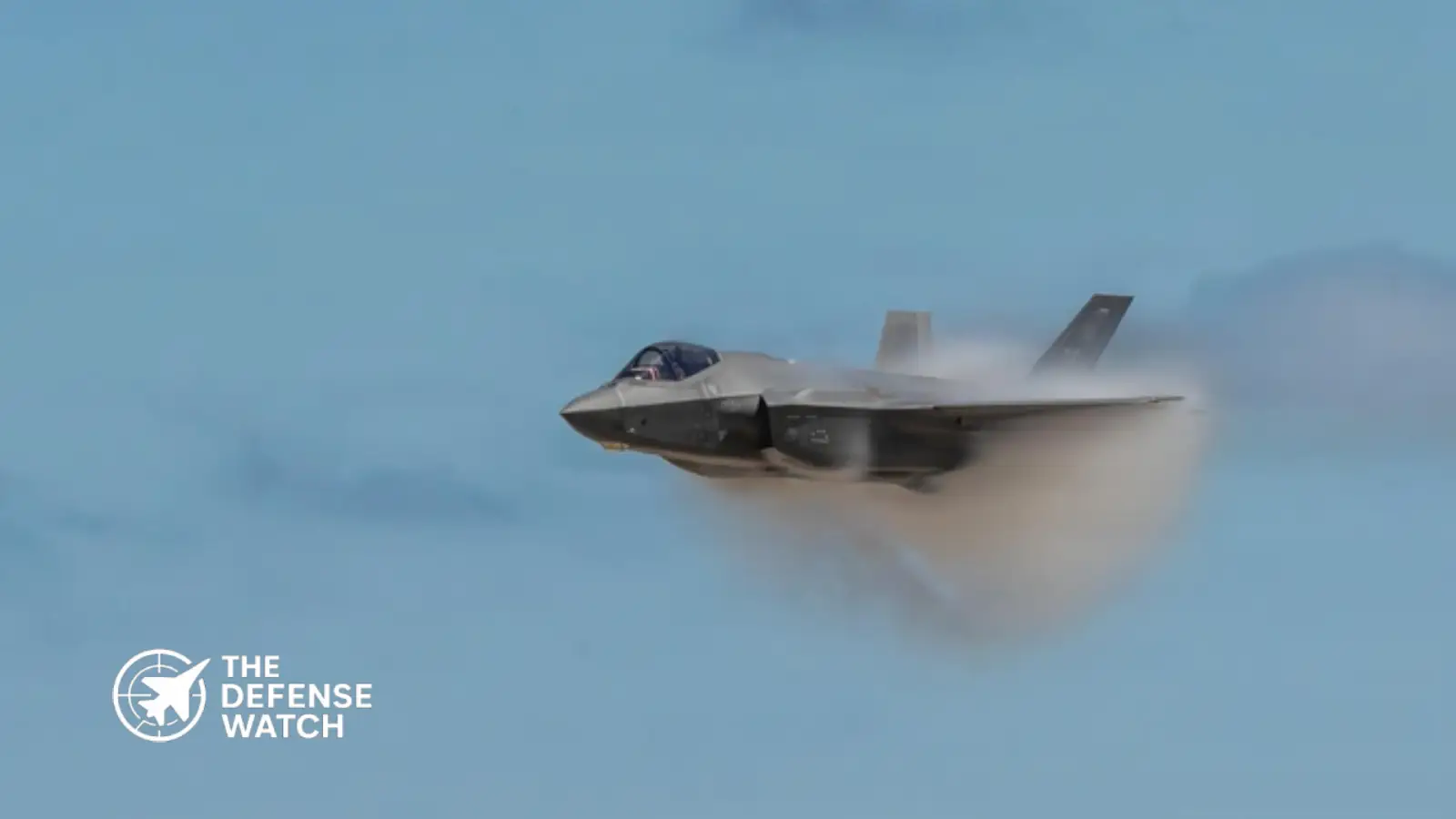
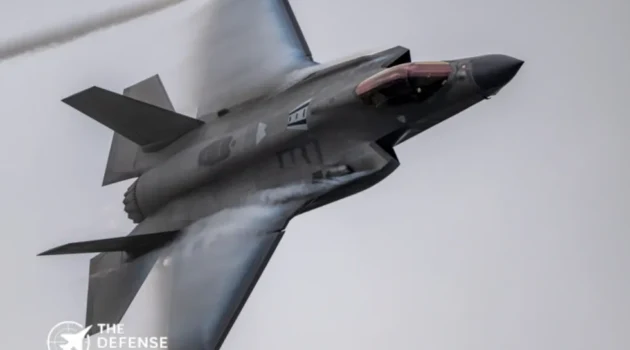
Germany’s first F-35A Lightning II has completed its maiden flight, marking a major milestone in the Luftwaffe’s transition to fifth-generation combat aviation. Lockheed Martin confirmed the flight after the aircraft completed final assembly and finishing work at the company’s Fort Worth, Texas, production facility.
Takeaways
Germany’s first F-35A has completed its maiden flight, marking a major production milestone before the aircraft enters the U.S.-based training phase of the Luftwaffe’s 35-aircraft program.
The aircraft, identified as MG-01, is the first of 35 F-35A fighters Germany is acquiring to replace its aging Panavia Tornado fleet. The German government selected the F-35A in 2022 and signed the procurement agreement in July 2023.
The maiden flight moves the program from production and acceptance activity into a more operationally focused phase. The next major step is delivery for German training in the United States before the aircraft begin arriving at Büchel Air Base in Germany.
A 35-Aircraft Replacement for the Tornado
Germany’s F-35 program is centered on 35 F-35A conventional takeoff and landing aircraft.
Program Element Germany F-35A Aircraft Lockheed Martin F-35A Lightning II Quantity 35 aircraft First German aircraft MG-01 Production site Fort Worth, Texas First flight September 8, 2026 U.S. training location Ebbing Air National Guard Base, Arkansas German operating base Büchel Air Base Tornado replacement Yes Planned German deliveries Beginning in 2027 Planned Tornado retirement 2030 The Bundeswehr says the F-35A acquisition is intended to strengthen Germany’s combat-air capability and improve interoperability with NATO partners. The aircraft will also take over missions currently performed by the Tornado, including Germany’s role in NATO nuclear sharing.
The transition is important because the Tornado fleet is approaching the end of its planned service life. Germany has stated that the remaining Tornado aircraft are expected to be retired by 2030.
Why the Maiden Flight Matters
A first flight does not mean the aircraft is operational with the Luftwaffe. It does, however, confirm that the first German production aircraft has progressed beyond assembly and ground preparation into flight testing.
That distinction matters for a program involving a sophisticated fifth-generation aircraft. Before a new F-35 can enter regular service, the aircraft must complete acceptance activity, support documentation, training arrangements and the broader infrastructure required to operate and maintain the platform.
Lockheed Martin completed final assembly of Germany’s first aircraft in August 2026. The company had previously moved the aircraft into its Aircraft Final Finishes stage, following the integration of its major structural components.
The successful maiden flight therefore represents one step in a much longer introduction process rather than an immediate change in Germany’s operational fighter force.
German F-35 Training Moves Through Arkansas
A key feature of Germany’s F-35 introduction is that the initial training pipeline will be based in the United States.
German pilots and maintenance personnel are expected to train at Ebbing Air National Guard Base in Arkansas. The U.S. Air Force has established Ebbing as a major international F-35 training location under the Foreign Military Sales program.
The training infrastructure became operationally relevant in 2024, when the U.S. Air Force completed new facilities supporting international F-35 pilot training. The 33rd Fighter Wing has also conducted exercises at Ebbing focused on dispersed operations and readiness in contested environments.
Germany is one of the first international customers scheduled to use the Ebbing training system alongside other F-35 operators. This arrangement gives Berlin access to an established U.S. training framework rather than requiring the entire initial training architecture to be built in Germany.
For the United States, the arrangement also reinforces the role of Ebbing as a central hub for training allied F-35 crews and maintainers.
Büchel Infrastructure Is Being Upgraded
While initial training takes place in Arkansas, Germany is preparing its own infrastructure for the F-35.
Büchel Air Base in western Germany is being upgraded through what the Bundeswehr describes as an F-35 campus. The work includes facilities for aircraft maintenance, flight preparation, logistics, operations and security.
The infrastructure requirement is particularly important because the F-35 is not simply a direct replacement for the Tornado in terms of airframe dimensions and performance. Its support system also includes specialized maintenance, information systems, secure communications and facilities designed around the aircraft’s low-observable characteristics.
The Bundeswehr has said the new infrastructure is also intended to meet the cybersecurity requirements associated with the aircraft.
F-35 Adds Fifth-Generation Capabilities
The German F-35A introduces capabilities that were not available to the Luftwaffe through the Tornado fleet.
The aircraft combines low-observable design, advanced sensors, onboard data processing and networked communications. The Bundeswehr specifically identifies sensor fusion, networking and reduced detectability as core characteristics of the F-35.
The operational significance goes beyond the aircraft’s ability to penetrate defended airspace. The F-35 is designed to collect and distribute information across a wider force, allowing it to function as both a strike aircraft and a sensor and communications node.
That characteristic is particularly relevant to NATO operations, where German aircraft may operate alongside F-35s from other European countries and U.S. forces.
Lockheed Martin has said more than 550 F-35 aircraft are expected to operate from more than 10 European countries by the 2030s. The growing European fleet is creating a common fifth-generation aircraft ecosystem across NATO.
NATO Interoperability Is a Central Part of the Program
Germany’s decision to acquire the F-35 also fits into a broader European shift toward common fifth-generation combat-air capabilities.
Denmark, Italy, Norway, the Netherlands and other European NATO members already operate or are introducing F-35 aircraft. The aircraft are increasingly appearing together in multinational exercises and air operations.
During Ramstein Flag 2026, F-35s from Denmark, Italy, Norway and the United States operated across northern Europe, demonstrating the integration of fifth-generation aircraft with allied air forces and supporting systems.
Germany’s entry expands this network. Once the Luftwaffe reaches operational capability, its F-35s will be able to participate in a much broader ecosystem of common training, logistics, tactics and operational data exchange.
For NATO, that commonality can reduce some of the interoperability challenges created by fleets built around different aircraft types and national support structures.
Nuclear Sharing Remains a Major Driver
Germany’s F-35 purchase also has a strategic dimension beyond conventional air combat.
The Bundeswehr explicitly links the acquisition to Germany’s NATO nuclear-sharing role. The F-35A will replace the Tornado in the German nuclear-sharing mission, subject to the applicable NATO and national arrangements.
This makes the F-35 transition particularly important for the Alliance. The aircraft provides Germany with a modern platform capable of operating in environments where survivability, electronic warfare resilience, sensor awareness and secure communications are increasingly important.
The F-35 is therefore not simply another fighter acquisition for Berlin. It is part of the broader effort to maintain Germany’s contribution to NATO airpower while replacing an aircraft design that dates to the Cold War era.
What Happens Next
The maiden flight is followed by a sequence of milestones leading toward German training and eventual deployment.
The first German aircraft are scheduled to remain in the United States for training, with the Bundeswehr previously identifying the initial group as part of the U.S.-based pilot and ground personnel training effort.
Germany is simultaneously completing the infrastructure required at Büchel. The Bundeswehr has stated that the first aircraft are planned to reach the German base from 2027, while the Tornado fleet is scheduled to reach the end of its planned service life in 2030.
This creates a multi-year transition period in which Germany must build experience with the F-35 while maintaining sufficient Tornado capability until the new fleet can assume its assigned missions.
The key challenge is therefore not the maiden flight itself. It is the successful integration of aircraft, pilots, maintainers, infrastructure, weapons, logistics and secure information systems into a functioning German combat-air system.
A Significant Milestone for German Airpower
Germany’s first F-35A maiden flight marks the aircraft’s transition from an industrial production program into the next stage of German military integration.
The 35-aircraft purchase gives the Luftwaffe a fifth-generation fighter built around stealth, sensor fusion and networked operations. It also brings Germany deeper into the growing European F-35 community and strengthens the common aircraft base available to NATO air forces.
The immediate focus now shifts toward acceptance, U.S.-based training and preparations for the aircraft’s eventual arrival at Büchel.
For Germany, the program represents the replacement of a Cold War-era strike and nuclear-sharing aircraft with a modern fifth-generation platform. For NATO, it adds another major European operator to an expanding F-35 network.
Finland Completes First F135 Engine Assembly
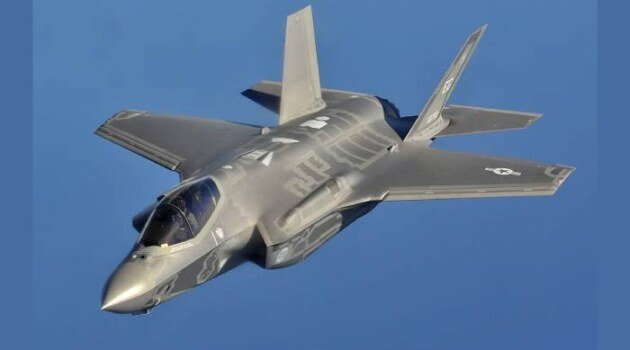
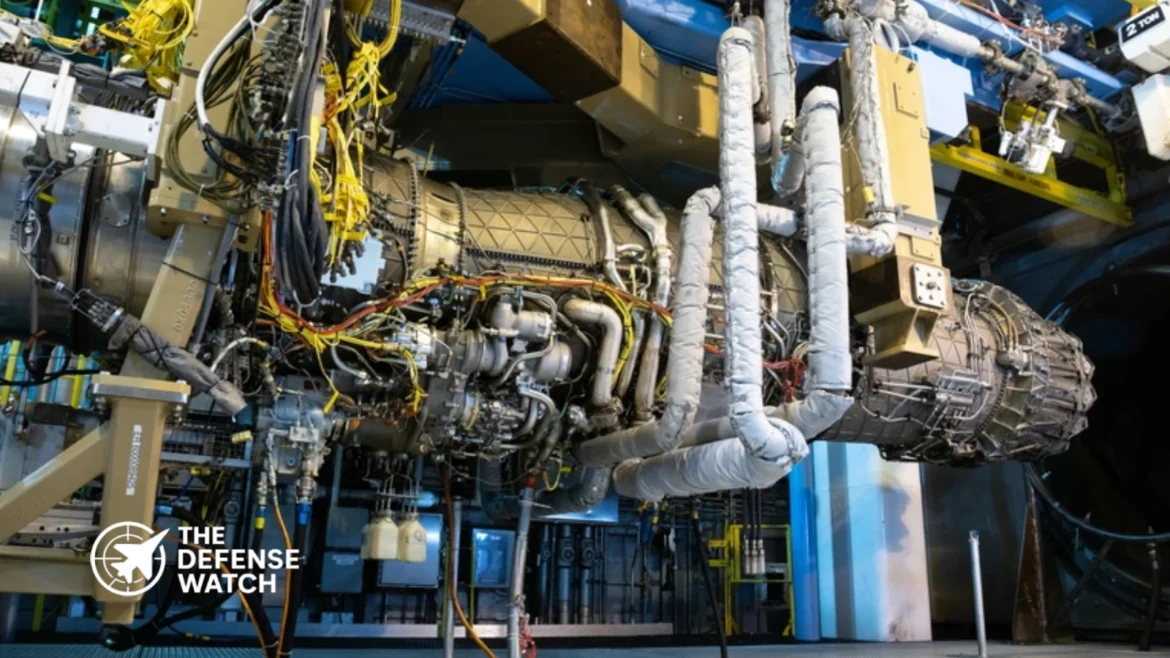
Finland has completed its first locally assembled F135 engine, giving Patria an operational production capability ahead of the arrival of the country’s first F-35A Lightning II fighters. Patria announced September 3 that the engine was completed at its new Linnavuori assembly and maintenance facility in Nokia, Finland.
Takeaways
Finland has completed its first locally assembled F135 engine as Patria establishes the industrial base needed to support the country’s incoming F-35A fleet.
The milestone is significant because the Linnavuori facility is being established not simply as an assembly site, but as part of Finland’s long-term F-35 propulsion support infrastructure. Patria is responsible for initial engine assembly and is expected to take on maintenance, repair, overhaul and upgrade work later in the program.
Production began following a February 2026 agreement between Patria and Pratt & Whitney, an RTX business. The initial assembly phase is scheduled to continue through 2030, after which the facility will transition toward broader F135 sustainment activities.
Linnavuori Establishes a Domestic F135 Sustainment Base
The Finnish approach is closely tied to the country’s emphasis on security of supply.
When Finland selected the F-35A in 2021, its procurement decision placed substantial weight on domestic industrial participation and the ability to maintain critical defense capabilities during exceptional circumstances. The government’s plan calls for critical maintenance capacity to be established within Finland while also connecting the fleet to the wider multinational F-35 support network.
That requirement is particularly important for propulsion.
The F135 is the sole engine used across all three F-35 variants and represents one of the aircraft’s most technically demanding sustainment areas. Pratt & Whitney has described its global F135 support system as a distributed network involving depot facilities, operating bases and other support infrastructure serving F-35 users worldwide.
For Finland, having trained personnel and dedicated infrastructure inside the country provides an additional layer of control over an essential part of fighter readiness.
The capability does not mean Finland will operate independently of the international F-35 sustainment system. Instead, the Linnavuori facility adds Finnish capacity within that wider network, allowing national and multinational support arrangements to work together.
F135 Production Is Timed With the Arrival of Finland’s F-35A Fleet
The timing of the engine milestone is closely aligned with Finland’s aircraft introduction schedule.
Finland ordered 64 F-35A Block 4 fighters to replace its aging F/A-18C/D Hornet fleet. The aircraft are scheduled for delivery between 2026 and 2030, with the first Finnish F-35As arriving at the Lapland Air Wing in Rovaniemi during autumn 2026.
Eight Finnish F-35 aircraft are also part of the U.S.-based training effort, allowing Finnish pilots and maintainers to build experience before the fleet becomes fully established at home. The broader program is therefore progressing on several tracks at once, including aircraft production, personnel training, infrastructure construction and domestic industrial participation.
The engine assembly milestone adds another piece to that transition.
Key Finnish F-35 Program Facts
Area Finland’s Program Aircraft F-35A Lightning II Quantity 64 aircraft Configuration Block 4 Engine Pratt & Whitney F135 Finnish engine facility Patria Linnavuori, Nokia Engine assembly Planned through 2030 Future engine support Maintenance, repair, overhaul and upgrade First aircraft arrival in Finland Autumn 2026 Main operating location Lapland Air Wing, Rovaniemi Finland’s Ministry of Defence says the F-35 procurement also includes training, sustainment solutions, spare parts, maintenance services and related infrastructure. The aircraft are intended to replace the Hornet fleet and provide the Finnish Air Force with a fighter system designed for service into the 2060s.
Why Domestic Engine Capability Matters
The most important aspect of the Patria milestone is not the assembly of a single engine. It is the development of industrial knowledge that can support the propulsion system over decades.
Modern fighter sustainment depends on specialized equipment, certified processes, trained technicians, engineering support and access to replacement components. Establishing these capabilities before a fleet reaches full operational scale gives Finland time to build the workforce and technical processes required for long-term support.
Patria says the F135 program is expected to create approximately 50 direct jobs between 2025 and 2030. The company has also described Linnavuori as a long-term location for F135 maintenance and sustainment activities after the initial production phase.
This creates an industrial capability with value beyond the initial aircraft delivery schedule.
Finland’s F-35 industrial participation also includes production of aircraft structures. Lockheed Martin identifies Patria as a Finnish F-35 partner responsible for front fuselage manufacturing as well as F135 engine assembly and sustainment. The company says the broader F-35 industrial effort involves more than 30 Finnish companies and academic institutions.
The result is a more distributed Finnish industrial base around the aircraft rather than a procurement model focused solely on buying completed fighters.
Integration With the Global F-35 Support Network
Domestic capability is only one part of the F135 sustainment model.
The F-35 program is designed around a multinational industrial and logistics structure. Pratt & Whitney has supplied more than 1,400 production F135 engines, supporting a global F-35 enterprise that includes 20 allied nations, according to company figures released in 2026.
That scale matters because engine maintenance and supply-chain resilience depend on common standards and access to a wider pool of technical expertise.
Finland’s Linnavuori capability therefore adds a national node to a larger system. This approach is consistent with Finland’s NATO membership and its emphasis on maintaining national defense capabilities while participating in collective defense arrangements.
For NATO, the broader value is interoperability. Finland’s F-35 fleet will operate alongside other European F-35 fleets, including those of Norway and Denmark, while benefiting from common aircraft, propulsion and support architecture. Finland’s Ministry of Defence has specifically identified NATO interoperability and participation in the Alliance’s collective defense structure as important elements of its post-accession defense posture.
The F135 Engine Remains Central to F-35 Readiness
The F135 provides propulsion for every F-35A, F-35B and F-35C aircraft. For Finland, which is procuring the conventional takeoff and landing F-35A, the engine is a central component of aircraft availability and operational readiness.
The Finnish F-35A uses the F135-PW-100 configuration. Finnish Ministry of Defence technical data lists a maximum afterburning thrust of approximately 191 kilonewtons for the engine.
Pratt & Whitney is also developing the F135 Engine Core Upgrade, intended to improve the engine’s durability and provide additional thermal and performance capacity for future F-35 capabilities. The company says the upgrade will use the existing F135 sustainment infrastructure and provide a pathway for continued propulsion support as the aircraft evolves.
That makes Finland’s investment in engine expertise relevant beyond the initial production period.
A workforce trained during assembly can provide a foundation for later maintenance and potentially more advanced sustainment activities as the Finnish F-35 fleet matures.
Finland’s F-35 Industrial Strategy Takes Shape
The first Finnish-assembled F135 is therefore best understood as part of a much larger industrial strategy.
Finland’s original F-35 decision included an industrial participation package designed to strengthen domestic production, maintenance and security of supply. The government estimated thousands of direct and indirect person-years of employment from the industrial participation arrangements.
The Linnavuori facility turns one part of that strategy into an operational capability.
With engine assembly now underway, aircraft deliveries approaching and future maintenance planned at the same site, Finland is building the industrial infrastructure required to support its F-35 fleet over a service life expected to extend for decades.
For Finland, the immediate objective is straightforward: ensure that the arrival of the F-35A is matched by the technical infrastructure needed to keep the aircraft available. For the wider F-35 program, the development adds another European location to the aircraft’s growing global propulsion sustainment network.
What Comes Next
The next major milestones will be the arrival of Finland’s first F-35As at Rovaniemi, continued F135 assembly at Linnavuori and the gradual development of the Finnish maintenance workforce.
Patria’s current production phase is scheduled to run through 2030. The company then plans to adapt the facility for F135 maintenance and overhaul activities that will continue throughout the lifecycle of Finland’s F-35 fleet.
The first completed engine is therefore an early indicator that Finland’s F-35 transition is moving beyond aircraft procurement and into the more demanding phase of establishing a sustainable national operating and maintenance system.
For a country preparing to operate advanced fifth-generation fighters in NATO’s northern flank, that support infrastructure will be as important to long-term readiness as the aircraft themselves.
Britain’s F-35A Plan Restores A Direct NATO Nuclear Role
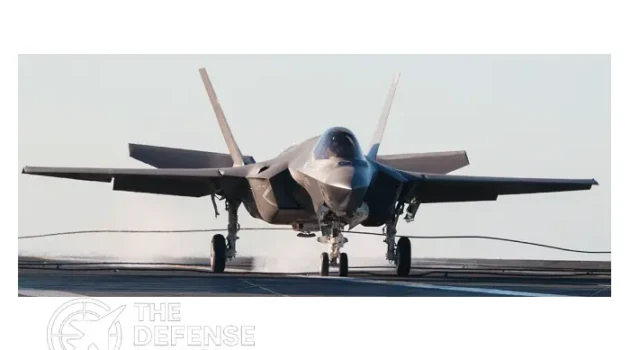
Britain’s F-35A nuclear mission will add a new air component to the UK’s contribution to NATO deterrence, with the government planning to purchase at least 12 F-35A Lightning II fighters for the Alliance’s dual capable aircraft mission. The UK government announced the procurement in June 2025 as part of a broader effort to strengthen its contribution to NATO security.
Takeaways
Britain is restoring a direct RAF contribution to NATO’s nuclear deterrence posture.
1. At Least 12 F-35A Fighters
The UK plans to acquire at least 12 F-35A Lightning II aircraft and assign them to NATO’s dual capable aircraft mission.
2. RAF Returns To Nuclear Air Mission
The procurement will restore a direct nuclear role for the Royal Air Force for the first time since Britain retired its sovereign air-launched nuclear weapons in 1998.
3. U.S. Weapons Remain Under U.S. Control
The British aircraft could carry U.S. nuclear weapons assigned to NATO’s nuclear sharing arrangements, but custody and control of those weapons remain with the United States.
4. Aircraft Will Be Based At RAF Marham
The F-35As will operate from RAF Marham, which already serves as the UK’s main F-35 operating base.
5. Separate From Britain’s Strategic Deterrent
The NATO nuclear mission will complement, rather than replace, Britain’s independent submarine-based Trident deterrent.
The aircraft will be based at RAF Marham and will be capable of performing both conventional and nuclear roles. The British government has described the purchase as a major strengthening of the country’s nuclear posture, while making clear that the new mission will remain separate from the United Kingdom’s sovereign submarine-based nuclear deterrent.
The announcement represents a significant change in RAF force structure. Britain retired its final sovereign air-launched nuclear weapon, the WE177, in 1998. Since then, the country’s independent nuclear deterrent has been based exclusively on submarine-launched Trident missiles.
How The NATO Nuclear Sharing Mission Works
NATO’s nuclear posture combines the strategic forces of the United States, United Kingdom and France with U.S. nuclear weapons forward-deployed in Europe and allied conventional capabilities.
Under NATO nuclear sharing arrangements, participating allies provide dual capable aircraft, trained personnel, infrastructure and supporting capabilities. NATO states that the United States retains absolute control and custody of U.S. nuclear weapons forward-deployed in Europe.
Britain’s planned F-35A force will therefore not create a new independent British air-launched nuclear arsenal. Instead, RAF aircraft and crews will become part of the Alliance’s established nuclear sharing structure.
That distinction is important. The aircraft are British, but any U.S. nuclear weapons assigned to the NATO mission remain under U.S. control.
| Capability | Planned UK Role |
|---|---|
| Aircraft | F-35A Lightning II |
| Planned quantity | At least 12 |
| Main operating base | RAF Marham |
| NATO role | Dual capable aircraft |
| Nuclear weapons | U.S. weapons under U.S. control |
| Conventional role | Yes |
| Independent UK nuclear deterrent | Separate submarine-based Trident force |
| Previous RAF air nuclear role | Ended with WE177 retirement in 1998 |
Why The F-35A Is Suited To The Mission
The selection of the F-35A gives Britain a fifth-generation platform for the nuclear sharing role rather than introducing a separate aircraft fleet.
The F-35A combines low-observable characteristics with modern sensors, data links, electronic warfare capabilities and a weapons system designed for operations in heavily contested airspace. These characteristics are relevant to NATO’s broader requirement for survivable dual capable aircraft.
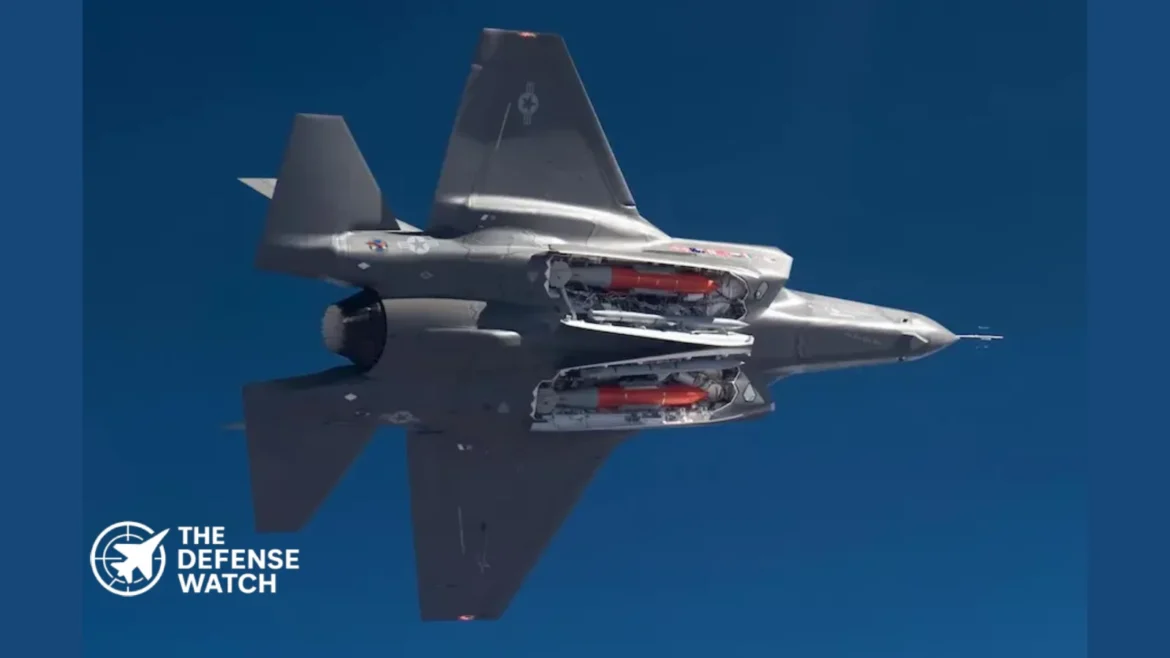
The U.S. Air Force completed a major stage of the F-35A’s nuclear design certification process in 2021 by conducting operationally representative releases of B61-12 Joint Test Assemblies. The testing involved F-35A aircraft from the U.S. Air Force and was part of the certification process for the aircraft and weapon combination.
The significance for Britain is that the F-35A is already integrated into the broader NATO transition toward fifth-generation dual capable aircraft. NATO reported that the F-35A played a prominent role in both conventional and nuclear strike roles during the 2025 Steadfast Noon exercise.
A Shift From F-35B To F-35A
The UK already operates F-35B short takeoff and vertical landing aircraft for carrier and land-based operations. The decision to procure F-35As instead of additional F-35Bs for the next tranche reflects the specific requirements of the NATO nuclear mission.
The British government said in 2025 that selecting 12 F-35As rather than 12 F-35Bs for the next procurement package could provide savings of up to 25 percent per aircraft. The government also said the UK expects to procure 138 F-35 aircraft over the lifetime of the program.
This creates a mixed F-35 fleet with different operational characteristics.
The F-35B supports the Royal Navy’s Queen Elizabeth class aircraft carriers and expeditionary operations. The F-35A, meanwhile, provides the UK with the conventional capabilities of the F-35 family while supporting the NATO dual capable aircraft mission.
What Changes For RAF Operations
The nuclear mission will require more than simply purchasing aircraft.
Dual capable aircraft require specialized training, maintenance arrangements, security procedures, infrastructure and command structures. Personnel must also maintain the readiness necessary to transition between conventional and nuclear mission requirements.
NATO’s nuclear policy states that participating aircraft are available for nuclear roles at varying levels of readiness and that personnel are trained for those missions.
For the RAF, this means the F-35A force at Marham will need to support a specialized mission set alongside its conventional combat responsibilities.
The arrangement also requires close coordination with NATO command structures and U.S. nuclear forces. That integration is a central feature of the Alliance’s nuclear burden-sharing system.
Implications For NATO Deterrence
Britain’s return to the NATO dual capable aircraft mission expands the number of allied forces directly prepared to support the Alliance’s nuclear deterrence posture.
NATO’s 2025 annual report specifically identified the UK’s decision to procure at least 12 F-35 aircraft and rejoin the dual capable aircraft mission as an additional contribution to the Alliance’s nuclear deterrence.
The move also comes as several European NATO members transition from older fourth-generation aircraft to F-35A fleets.
The Netherlands has already moved into the F-35A nuclear role, while Germany and other participating allies are also transitioning toward the aircraft. NATO’s annual nuclear exercise, Steadfast Noon, provides a recurring framework for participating nations to train nuclear-related procedures alongside conventional support aircraft, air refueling platforms, command and control assets and fighter escorts.
For the Alliance, the importance of Britain’s decision therefore extends beyond the number of aircraft. It adds another national force to the infrastructure, training and operational framework supporting NATO nuclear deterrence.
The F-35A Mission Will Complement Trident
Britain’s new nuclear air role should not be confused with the country’s independent nuclear deterrent.
The UK maintains four Vanguard-class ballistic missile submarines equipped with Trident II D5 missiles. The Vanguard fleet is scheduled to be replaced by four Dreadnought-class submarines beginning in the early 2030s.
The government continues to describe the submarine-based system as an independent minimum and credible deterrent. The F-35A force instead represents a contribution to NATO’s collective nuclear posture.
This gives London two distinct nuclear-related roles: an independent strategic deterrent based at sea and a conventional air force contribution to NATO’s nuclear sharing mission.
The separation also preserves the UK’s national decision-making authority over its sovereign nuclear forces. NATO’s nuclear arrangements involving U.S. weapons operate under a different control structure.
Strategic Significance For The United States
For Washington, Britain’s F-35A procurement adds another capable ally to NATO’s nuclear burden-sharing architecture while deepening the integration of U.S. and British air forces.
The F-35 program itself is already a major transatlantic industrial and operational undertaking. The UK government said more than 100 British suppliers contribute to the program and that approximately 15 percent of the global F-35 supply chain is based in Britain.
The nuclear mission therefore builds on an existing U.S.-UK defense relationship rather than creating an entirely new framework.
It also illustrates the broader evolution of NATO’s air forces toward common fifth-generation platforms. As European allies transition from F-16 and other fourth-generation aircraft to F-35As, the Alliance is developing a more standardized fleet for both conventional and specialized missions.
A Larger NATO F-35A Transition
Britain’s planned F-35A procurement is part of a wider European shift toward the aircraft.
NATO has stated that allied nations are continuing to transition to the F-35A as a dual capable aircraft. The Alliance’s nuclear deterrence structure depends not only on the aircraft themselves but also on trained personnel, protected infrastructure, command and control, surveillance, refueling and other conventional capabilities.
The British contribution will therefore be measured not simply by the 12 aircraft announced, but by the readiness and infrastructure eventually built around the mission.
The UK government has already linked the procurement to its wider defense modernization program. In 2026, the government said more than £63 billion would be allocated over four years to strengthen the nuclear deterrent and fund major nuclear programs, including Dreadnought and other nuclear-related work, while also funding the purchase of 12 F-35As.
For NATO, the result is a British air force once again prepared for a nuclear mission, but within a fundamentally different framework from the RAF’s Cold War air-delivered deterrent.
The F-35A force will not replace Britain’s Trident system. Instead, it will give London a renewed role in NATO’s nuclear sharing arrangements and add another fifth-generation aircraft capability to the Alliance’s broader deterrence posture.
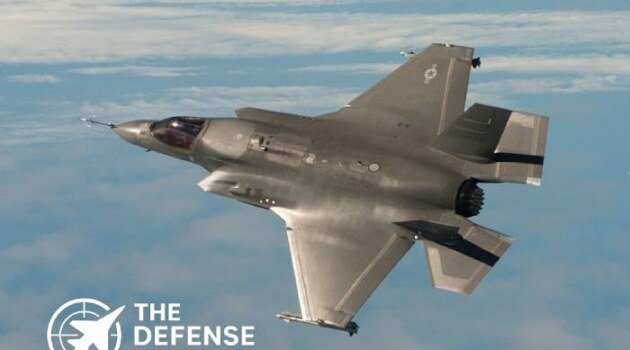
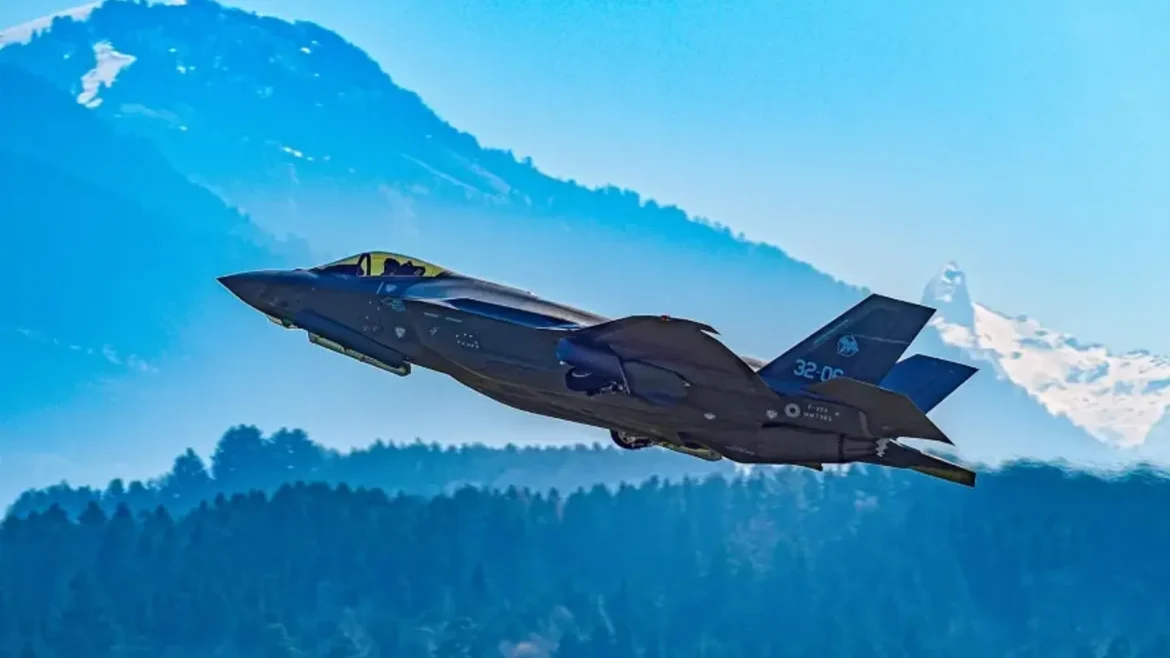
Executive Summary: Switzerland’s F-35A program is moving through production milestones as Leonardo’s Cameri facility in northern Italy prepares to deliver Swiss-configured aircraft beginning in 2028. The first eight Swiss F-35As are being produced in the United States for pilot training, while the remaining aircraft were originally scheduled to come from Cameri, although Switzerland is now reassessing the final fleet size because of higher program costs.
Swiss F-35A Production Moves Into the Next Phase
Swiss F-35A production is advancing as the international F-35 industrial network prepares aircraft for Switzerland, with Leonardo’s Cameri facility serving as the European final assembly location for most of the Swiss fleet.
The Swiss government said in May 2026 that main assembly of the first F-35A destined for Switzerland had begun at Lockheed Martin’s facility in Marietta, Georgia. The milestone follows the production of initial components and puts the first Swiss aircraft deeper into the manufacturing process.
The first eight aircraft are scheduled to be delivered to Ebbing Air National Guard Base in Arkansas from mid-2027. They will initially remain in the United States to support Swiss pilot training before the aircraft are transferred to Switzerland.
Swiss authorities expect the first aircraft to arrive in Switzerland from mid-2028, with subsequent aircraft supplied from Leonardo’s final assembly facility at Cameri.
Cameri Provides Europe’s F-35 Final Assembly Capability
Cameri is a critical part of the F-35 international production network. Leonardo operates the facility in cooperation with Lockheed Martin, producing F-35 aircraft and supporting other activities connected with the program.
The facility manufactures major structural components, including wing assemblies, and performs final assembly and checkout work. Leonardo has also developed Cameri as an important European center for F-35 maintenance, repair, overhaul and upgrade activities.
For Switzerland, the arrangement reduces the need to establish a separate national final assembly line while retaining an industrial connection to the European F-35 production and sustainment network.
Switzerland announced in 2022 that at least 24 of its planned 36 aircraft would be manufactured at Cameri. The original production arrangement allowed up to 28 of the 36 aircraft to be produced in Italy, while the first eight would be manufactured in the United States for training purposes.
Original Swiss F-35A Production Plan
Item Original plan Aircraft selected 36 F-35A Manufacturer Lockheed Martin European final assembly Leonardo Cameri, Italy U.S.-built training aircraft 8 Cameri-built aircraft At least 24, with up to 28 originally planned Initial delivery period 2027 to 2030 First Cameri deliveries 2028 Aircraft planned from Cameri in 2028 8 Aircraft planned from Cameri in 2029 10 Aircraft planned from Cameri in 2030 10 The schedule above reflects Switzerland’s established F-35A delivery plan. However, the final number of aircraft Switzerland will receive is now subject to a major funding decision.
Switzerland Is Reassessing the Size of Its F-35 Fleet
The production milestone comes against a significant change in Switzerland’s procurement position.
In March 2026, the Swiss Federal Council confirmed that it would not seek the additional funding required to acquire all 36 F-35As originally planned. The government said approximately 1.1 billion Swiss francs in additional funding would be required to reach the full fleet because of higher costs linked to inflation, raw materials and other factors.
Instead, Switzerland intends to acquire the maximum number of F-35As possible within the 6 billion Swiss franc funding framework approved by voters.
The government has proposed an additional 394 million Swiss francs to absorb certain cost increases and allow Switzerland to establish the final production quantity with the U.S. government by the second quarter of 2027.
This creates an important distinction for reporting on the program. The original contract covers 36 aircraft, but Switzerland’s current policy is not to provide additional funding to restore the fleet to that original number.
As a result, the number of Swiss F-35As ultimately entering service could be lower than the 36 aircraft initially planned.
Why Cameri Matters to the Swiss Program
The Cameri connection is more significant than simply being an assembly location.
The F-35 program relies on a distributed industrial base involving thousands of suppliers across multiple countries. Switzerland is therefore entering an established multinational manufacturing and sustainment ecosystem rather than creating an independent fighter production capability.
Swiss authorities said the broader F-35 program involves more than 2,100 suppliers worldwide. Switzerland is also pursuing industrial cooperation with domestic companies through offset arrangements involving research, development, production and maintenance activities.
One example is cooperation between Lockheed Martin and Pilatus on a pilot training technology project designed around the requirements of fifth-generation air forces.
For Switzerland, this industrial participation provides a way to connect its aerospace sector with a much larger international defense supply chain while the Swiss Air Force transitions to a new fighter architecture.
F-35A Will Replace Switzerland’s Aging Fighter Fleet
The F-35A was selected by Switzerland in 2021 following an evaluation that compared it with competing aircraft, including the Eurofighter Typhoon, Dassault Rafale and Boeing F/A-18 Super Hornet.
The Swiss government selected 36 F-35As as part of the Air2030 modernization program. The procurement contract was signed in September 2022, with a value of approximately 6.035 billion Swiss francs for the aircraft and associated equipment, weapons, logistics, training and mission systems.
The aircraft are intended to replace Switzerland’s F/A-18 Hornets and F-5 Tigers.
The transition represents a major change in Swiss air-defense architecture. The F-35A combines low-observable design with an integrated sensor and mission system intended to provide pilots with a broader picture of the battlespace.
That capability is particularly relevant to Switzerland because its fighter force has historically been focused heavily on air policing and national airspace protection. The F-35A adds a significantly more networked platform to that mission set.
Production and Delivery Schedule Remains a Key Milestone
The first Swiss F-35A has already entered main assembly in the United States, demonstrating that the procurement is progressing beyond the early component-production stage.
The first eight aircraft have a distinct role in the program. Rather than immediately moving to Switzerland, they are scheduled to operate from Ebbing Air National Guard Base in Arkansas, where Swiss pilots will receive initial training.
The remaining aircraft are tied to the European production system, with Cameri expected to become the principal source of Swiss F-35 deliveries from 2028.
The established schedule calls for eight Cameri-built aircraft in 2028, followed by ten in 2029 and another ten in 2030. That schedule corresponds to the original 36-aircraft requirement and should therefore be treated as the baseline plan rather than a guarantee of the final fleet size after Switzerland’s 2026 funding decision.
Broader European Significance
Switzerland’s F-35 program adds another European operator to a growing network of countries using the same fifth-generation fighter.
The aircraft’s value to European operators extends beyond individual fleet performance. Common platforms can support shared training, logistics, maintenance infrastructure and exchange of operational information.
Switzerland is not a NATO member, but its acquisition of the F-35 places its future air force within a broader European ecosystem centered on the aircraft.
That interoperability factor was explicitly identified by the Swiss government as one of the reasons it considers abandoning the F-35 program unacceptable, despite the financial pressure surrounding the procurement.
For the United States and its European partners, the Swiss purchase therefore has implications beyond the number of aircraft ultimately delivered. It strengthens the geographic reach of the F-35 support network and gives Switzerland access to a common fighter ecosystem already used by numerous European air forces.
What Happens Next
The immediate priority is production of the initial Swiss aircraft and preparation for pilot training in the United States.
The more consequential issue is the final size of the Swiss fleet. The Federal Council plans to use the available funding envelope to acquire as many F-35As as possible and expects to establish the definitive production quantity by 2027.
Cameri will remain central to the program regardless of the final number because the facility is the designated European production point for Swiss aircraft after the initial U.S.-built training batch.
The production activity therefore marks two developments at once: Switzerland is moving toward its first fifth-generation fighter capability, while the country is simultaneously adjusting the scale of that capability to remain within its approved defense spending limits.

Pentagon Moves To Fund 38 F-35A Fighters As Air Force Battles Its Worst Fighter Shortfall In History
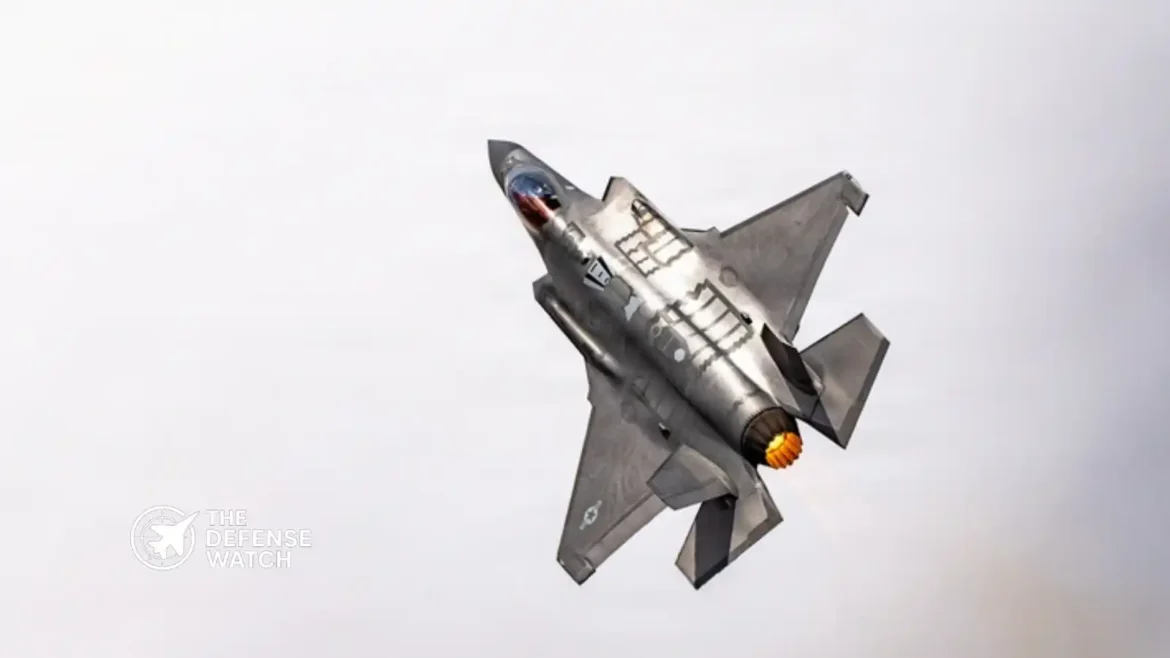
Pentagon Requests 38 F-35A Fighters for U.S. Air Force in FY2027 Defense Budget
The Pentagon’s fiscal year 2027 defense budget request includes funding for 38 F-35A Lightning II fighters for the U.S. Air Force — a figure that senior defense analysts say is insufficient to address the service’s deepening fighter inventory crisis. The allocation is part of a broader request for 85 F-35s across all military branches, embedded within President Donald Trump’s record-breaking $1.5 trillion defense spending proposal unveiled on April 3, 2026.
An Office of Management and Budget official confirmed the Air Force’s allocation directly to Air & Space Forces Magazine. The number represents a modest increase over the previous year but falls well short of what Air Force leadership and independent analysts say is needed for genuine fleet recapitalization.
- The Pentagon’s FY2027 budget requests a total of 85 F-35 Lightning II fighters across all services, with 38 F-35A variants allocated to the U.S. Air Force.
- The request is part of President Trump’s record $1.5 trillion defense budget for fiscal year 2027, which allocates $30.6 billion for Air Force aircraft procurement.
- The Air Force would receive 14 more F-35As than in the previous budget year, but 10 fewer than the service itself requested in 2025.
- This marks the first time in a decade that the Air Force is set to receive less than half of the total F-35s requested by the Pentagon.
- The White House budget fact sheet prioritizes rapid development of the F-47 sixth-generation fighter, while providing limited detail on the B-21 Raider and Collaborative Combat Aircraft programs.
A Budget That Signals Priorities — And Trade-Offs
The White House budget request provides $30.6 billion for Air Force aircraft procurement, a significant increase over prior years, though it does not break down specific funding figures for key aircraft programs.
A White House fact sheet confirms that the budget prioritizes rapid development and production of the F-47 sixth-generation fighter, while making no mention of the unmanned Collaborative Combat Aircraft or the B-21 Raider stealth bomber programs.
That silence, however, does not necessarily indicate diminished investment in those platforms. Retired Lt. Gen. David A. Deptula, dean of the Mitchell Institute for Aerospace Studies and one of the nation’s foremost airpower strategists, urged caution in reading too much into the omissions.
The absence of public F-47 and B-21 details should not be mistaken for lack of priority,” Deptula said. “Aircraft modernization is still buried in broader procurement and development accounts.”
Analysts: 38 Jets Is “Budget Triage,” Not Recapitalization
The core concern among defense experts centers on whether 38 F-35As represents a genuine commitment to rebuilding U.S. airpower or simply a stopgap measure.
Deptula described the Air Force as operating “the oldest and smallest fighter force in its history” and said that 38 aircraft fails to constitute a meaningful rebuild rate for a service at that level of depletion.
In his assessment, the number preserves production line stability at Lockheed Martin’s Fort Worth facility but does nothing to reverse structural shortfalls in tactical aviation capacity.
“It may keep the line warm, but it does not reverse the fighter inventory shortfall,” Deptula said, adding that 38 F-35As “feels more like budget triage than a true recapitalization rate.”
His critique goes deeper than the raw numbers. Deptula argued that the Air Force cannot sustain a strategy of divesting older aircraft in exchange for modernization if that modernization never keeps pace with the divestment — a cycle he characterized as structurally unsustainable given current geopolitical demands.
Historical Context: A Decade-Low Share Of Pentagon’s F-35 Request
The procurement numbers carry significant historical weight. This is the first time in the past decade that the Air Force is set to receive less than half of the total F-35 fighters requested by the Pentagon in a single budget cycle.
If approved by Congress, the Air Force would receive 14 more F-35As than it did under last year’s enacted budget, but the figure also represents 10 fewer aircraft than the service itself requested in fiscal year 2025.
The divergence between what the Air Force asks for and what it ultimately receives reflects ongoing competition for finite dollars within a defense budget that, despite its record topline, must simultaneously fund sixth-generation fighter development, nuclear modernization, munitions replenishment, and a major naval buildup.
Deptula acknowledged these competing demands directly: “This number suggests the Air Force is still being forced to balance near-term procurement against other large bills — F-47 development, B-21, Sentinel, readiness recovery, munitions, and CCA.”
Senior Leaders Have Pushed For More
The debate over F-35 procurement numbers is not new. Last July, a coalition of 16 retired Air Force four-star generals — including six former Chiefs of Staff — formally called on Congress to substantially increase F-35 purchases.
Gen. Philip M. Breedlove, former Supreme Allied Commander Europe, argued at the time that the F-35 must remain a top procurement priority because it is the most capable U.S. fighter currently in production and essential to meeting the Air Force’s “fight tonight” requirement.
Former Chief of Staff Gen. T. Michael Moseley reinforced that argument by pointing to the aircraft’s role in coalition operations. Allied nations have invested heavily in the F-35 specifically to maintain interoperability with U.S. forces — a strategic asset that procurement shortfalls could erode over time.
Why wouldn’t we want to continue to build that airplane in larger numbers?” Moseley said.
Shipbuilding Takes Center Stage
While Air Force advocates push back on the F-35 allocation, the FY2027 budget makes its naval priorities explicit. The White House fact sheet details $65.8 billion for shipbuilding in 2027, covering procurement of 18 battle force ships and 16 non-battle force vessels.
Deptula characterized the prominent role of shipbuilding in the budget’s public messaging as a strategic communications choice rather than evidence of reduced emphasis on airpower modernization. He noted that the budget’s detailed justification materials — still awaited by Congress and independent analysts — will offer a clearer picture of how F-47, B-21, and next-generation airpower investments are structured.
The Broader Strategic Calculus
The FY2027 F-35 request lands at a particularly sensitive moment for U.S. airpower. Active military operations in the Middle East — including Operation Epic Fury against Iran — have placed sustained pressure on Air Force assets, accelerated aircraft attrition, and put a premium on combat-ready fighter capacity. Reports confirm an F-35A assigned to Nellis Air Force Base crashed on March 31, 2026, with the pilot ejecting safely, underscoring the operational tempo the fleet is currently sustaining.
Against that backdrop, the F-35A Lightning II remains the primary fifth-generation tactical platform available to the Air Force in meaningful numbers. With the F-47 years from initial operational capability, the fifth-generation bridge between today’s requirements and tomorrow’s fleet depends heavily on continued F-35 investment.
Whether 38 aircraft in a single fiscal year constitutes a credible commitment to that bridge — or simply manages decline — will likely define the central airpower debate in Congress as FY2027 budget hearings get underway.

US Navy Test Squadron VX-9 Flies USAF F-35A Lightning II
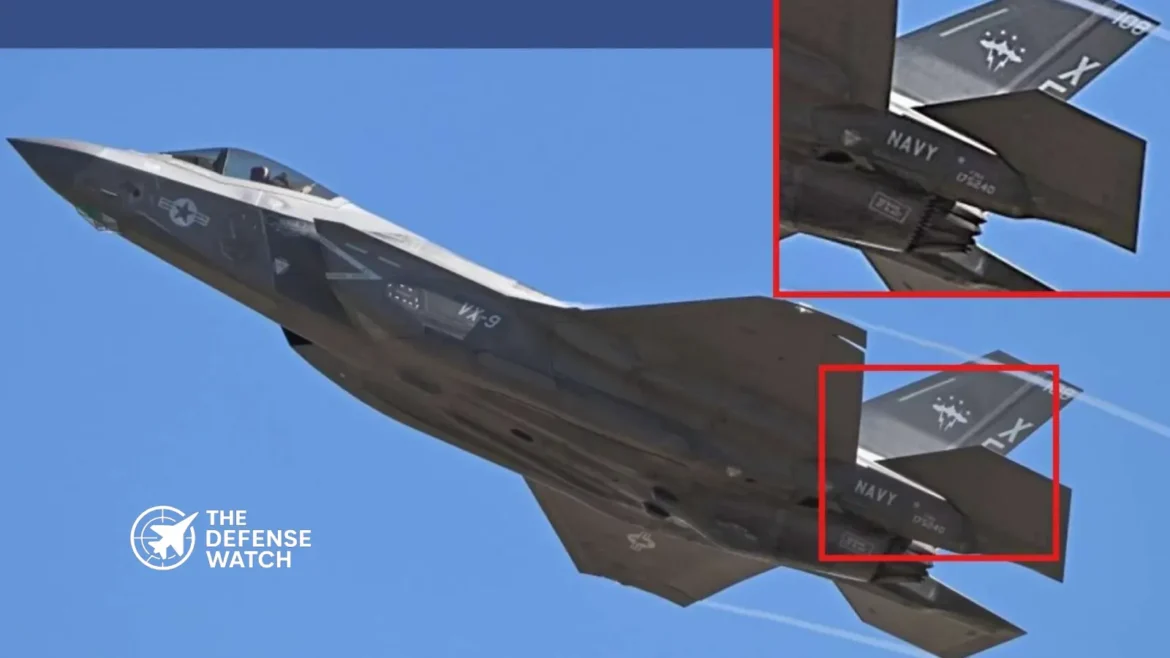
The US Navy’s Air Test and Evaluation Squadron Nine (VX-9) was observed operating a US Air Force F-35A Lightning II in a notable cross-service test flight at a California test facility, marking the first publicly documented instance of such activity.
First Public Cross-Service F-35A Flight by VX-9
Photos published January 23, 2026, show an F-35A, typically operated by the Air Force, in US Navy markings and flying under VX-9, the Navy’s principal operational test and evaluation unit.
The aircraft was previously assigned to the USAF’s 422nd Test and Evaluation Squadron at Nellis Air Force Base, a unit central to developing and validating fighter capabilities. Its transfer under the F-35 Joint Program Office loan mechanism allowed Navy pilots to fly the conventional takeoff and landing variant at Mojave Air and Space Port in California.
Why the F-35A Matters to the Navy
The F-35A is the Air Force’s standard variant of the fifth-generation F-35 Lightning II, designed for conventional runways and cleared for up to 9G maneuvers. Its role contrasts with the Navy’s carrier-capable F-35C, which features larger wings, reinforced landing gear, and a tailhook for carrier operations but is limited to about 7.5G.
Both variants share a common mission system, sensors, and software baseline. That means many test objectives, such as software updates, electronic warfare evaluations, and weapons integration tests, apply across the F-35 family regardless of airframe differences.
Program and Test Implications
Using an Air Force F-35A provides VX-9 with access to a larger pool of aircraft for development work, without drawing heavily on the Navy’s smaller F-35C inventory. F-35C production numbers remain limited, with deliveries extending into the next decade, while the F-35A fleet continues expanding rapidly.
This joint use reflects broader Pentagon priorities prioritizing shared platforms, software-defined capabilities, and interoperability over strict service boundaries.
What VX-9 Does
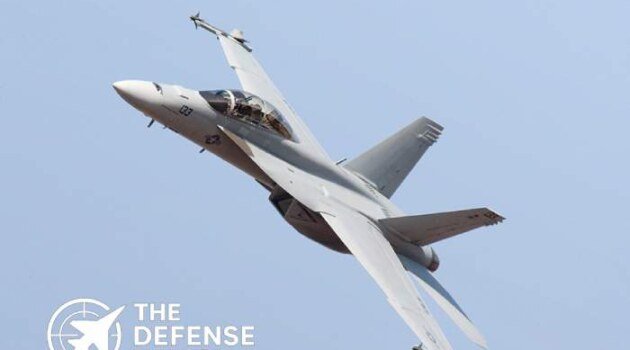
VX-9, known as the “Vampires,” is based at Naval Air Weapons Station China Lake, California. The squadron conducts operational evaluations of fighter and electronic warfare aircraft and weapons systems. Its mix of aircraft typically includes the F/A-18E/F Super Hornet, EA-18G Growler, and the F-35C Lightning II.
Broader F-35 Context
The F-35 program remains central to US military aviation modernization, with variant deployments across the Air Force, Navy, and Marine Corps, each tailored to specific mission needs. Recent developments and broader deployments underscore the platform’s role in joint and allied operations.