

Executive Summary:
France has successfully demonstrated the first operational targeting trial in which the NAMIB unmanned aerial vehicle detected hostile radar emissions and transmitted targeting data to a Rafale F4 fighter conducting a Suppression of Enemy Air Defenses (SEAD) mission. The test marks an important milestone in French efforts to integrate unmanned electronic warfare systems with manned combat aircraft for future high-intensity operations.
French NAMIB Drone Demonstrates New SEAD Capability With Rafale F4
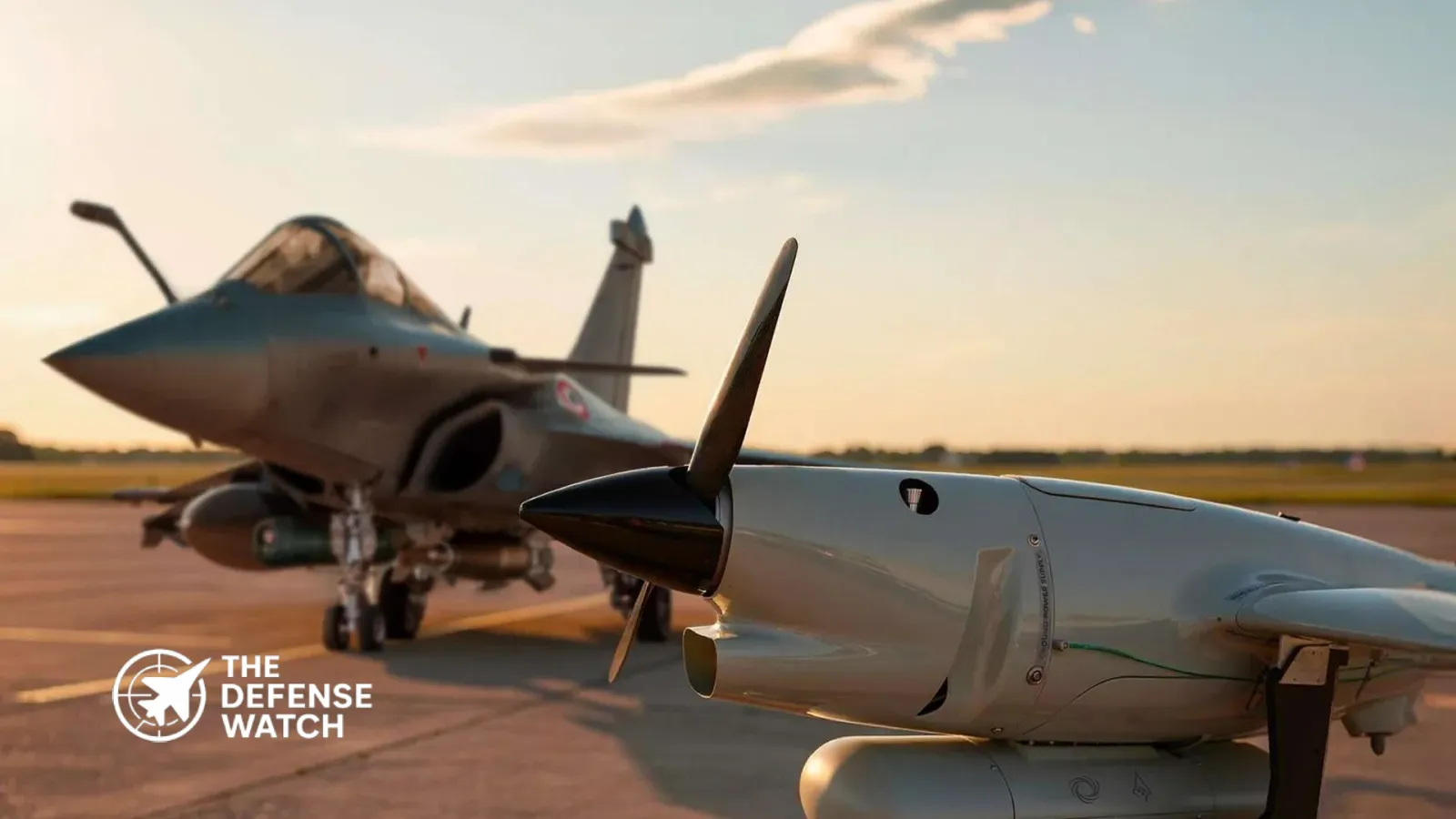
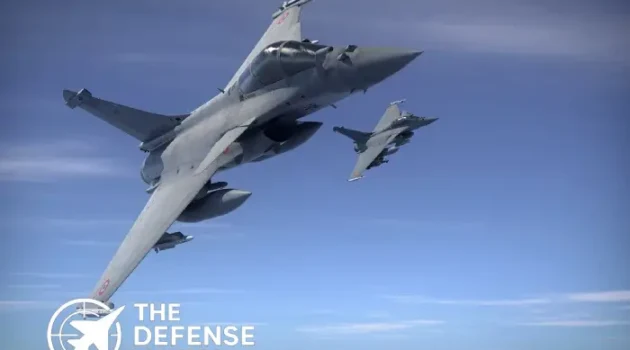
France’s French NAMIB drone has completed its first successful Suppression of Enemy Air Defenses (SEAD) targeting demonstration alongside a Rafale F4 fighter, showcasing a new level of cooperation between unmanned electronic warfare assets and frontline combat aircraft.
The demonstration, announced by French defense industry participants and reported by Army Recognition, showed the NAMIB unmanned system detecting hostile radar emissions, accurately geolocating the source, and transmitting targeting information directly to the Rafale F4. The aircraft then used the data to simulate engagement of the enemy air defense site without exposing the drone or the fighter to unnecessary risk.
The trial forms part of France’s broader modernization effort to improve collaborative combat capabilities for future air operations in heavily defended environments.
Demonstrating Cooperative Electronic Warfare
Modern integrated air defense systems rely heavily on radar networks that can detect, track, and engage aircraft at long ranges. Neutralizing those radars remains one of the first priorities during any air campaign.
Instead of requiring the fighter aircraft to search for hostile emitters independently, the NAMIB drone performed the initial detection task. Operating forward of the manned aircraft, it identified radar emissions, determined their location, and securely relayed the information to the Rafale F4.
This distributed approach allows the fighter to remain farther from the threat while receiving real-time targeting data generated by an unmanned platform.
The demonstration represents an important evolution from traditional reconnaissance missions toward collaborative sensing and targeting.
How The NAMIB System Supports SEAD Missions
SEAD operations are among the most demanding missions conducted by modern air forces. Enemy surface-to-air missile systems frequently employ multiple radar types, mobility, and electronic countermeasures to complicate detection.
According to available information, the NAMIB system is designed to perform passive electronic intelligence functions by monitoring radio frequency emissions without actively transmitting radar signals itself.
Its principal mission includes:
Capability Operational Benefit Passive radar detection Reduces risk of revealing drone position Radar emitter geolocation Identifies precise enemy radar locations Real-time data sharing Provides immediate targeting information Cooperative targeting Supports fighter aircraft engagement decisions Distributed sensing Expands battlefield awareness Because passive sensors do not emit detectable signals, they are generally more difficult for adversaries to locate than active surveillance platforms.
Rafale F4 Gains Greater Networked Combat Capability
The Rafale F4 standard represents France’s latest enhancement of the multirole fighter, emphasizing connectivity, sensor fusion, and collaborative operations.
Unlike earlier fighter concepts that relied primarily on onboard sensors, Rafale F4 is increasingly designed to receive and process information from external platforms including drones, airborne warning aircraft, and other combat assets.
The successful integration with NAMIB highlights several capabilities:
- Improved sensor sharing across multiple platforms
- Faster targeting cycles
- Reduced pilot workload
- Enhanced survivability during operations against advanced air defenses
- Better situational awareness throughout the battlespace
These improvements align with broader trends across NATO air forces toward network-centric operations.
Why Passive Radar Detection Matters
Modern air defense systems are becoming increasingly difficult to defeat.
Advanced systems frequently employ:
- Multiple engagement radars
- Long-range surveillance radars
- Mobile launchers
- Electronic counter-countermeasures
- Networked command-and-control systems
A passive electronic warfare drone can detect these emitters without revealing its own position through active transmissions.
This enables commanders to build an electronic picture of the battlefield before committing expensive fighter aircraft into contested airspace.
The ability to continuously monitor enemy emissions also improves target confirmation and reduces the likelihood of engaging incorrect or decoy targets.
Strategic Importance For French Air Power
The NAMIB demonstration reflects France’s growing emphasis on manned-unmanned teaming, an operational concept becoming central to future air combat.
Rather than replacing fighter aircraft, drones increasingly serve as force multipliers capable of conducting high-risk missions ahead of manned platforms.
For the French Air and Space Force, this approach offers several operational advantages:
- Lower risk to pilots during initial penetration missions
- Expanded reconnaissance coverage
- More efficient allocation of expensive fighter aircraft
- Improved survivability against layered air defenses
- Greater operational flexibility during coalition operations
The demonstration also complements France’s broader investment in next-generation combat aviation technologies while supporting incremental capability improvements before future combat aircraft enter service.
Broader Implications For NATO And Allied Operations
The successful trial mirrors a wider trend among NATO members toward integrating unmanned systems into electronic warfare and strike missions.
Across Europe and the United States, defense programs increasingly focus on collaborative combat aircraft, autonomous sensing platforms, and distributed battlefield networks capable of sharing targeting data in real time.
For coalition operations, systems like NAMIB could contribute to:
- Faster detection of hostile air defense networks
- Shared electronic intelligence among allied forces
- More resilient targeting architectures
- Reduced dependence on single high-value airborne assets
As adversaries continue investing in advanced integrated air defense systems, distributed sensing platforms may become essential components of future suppression campaigns.
Technical Assessment
The demonstration is significant because it validates more than a single drone platform. It demonstrates a complete operational chain involving passive detection, electronic intelligence processing, secure communications, and rapid targeting.
Successfully integrating each stage is technically challenging. Data must be transmitted with minimal latency while maintaining accurate geolocation and protecting communications from jamming or interception.
If matured into operational service, this capability could shorten the sensor-to-shooter timeline during SEAD missions, allowing fighters to engage radar threats more rapidly while remaining outside the most dangerous engagement zones.
The trial also reinforces the growing importance of software-defined architectures and secure tactical networking. As future combat environments become increasingly contested, the effectiveness of military aircraft will depend not only on their onboard sensors but also on how efficiently they exchange information across distributed forces.
Looking Ahead
The first successful cooperation between the NAMIB drone and Rafale F4 represents another step toward integrating unmanned electronic warfare systems into French air operations.
Although additional testing and operational validation are expected before widespread deployment, the demonstration indicates that France is steadily advancing collaborative combat capabilities designed for modern contested environments.
As NATO members continue modernizing their air forces, unmanned sensing platforms capable of supporting SEAD missions are likely to become increasingly important components of future multinational operations.

Executive Summary:
Boeing announced that the U.S. Navy’s first production representative MQ 25A Stingray successfully completed its second developmental flight, marking another step toward carrier based operations. The milestone supports ongoing testing of the Navy’s first operational unmanned aerial refueling aircraft, which is expected to expand the combat reach and endurance of carrier air wings.
MQ 25A Stingray Advances U.S. Navy Carrier Aviation Modernization
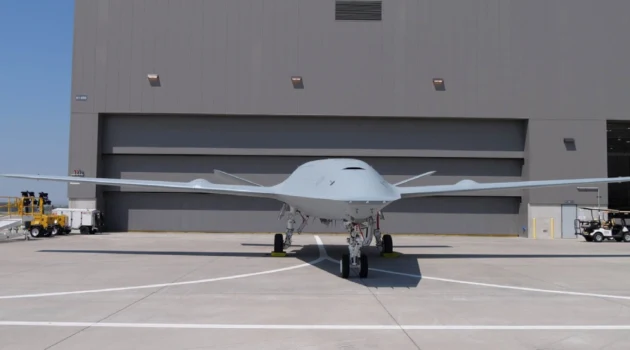
Boeing’s MQ 25A Stingray has completed its second developmental flight, marking continued progress in the U.S. Navy’s effort to introduce its first carrier based unmanned aerial refueling aircraft into operational service. Boeing confirmed the successful test as part of the company’s ongoing flight test campaign supporting the Navy’s future carrier air wing modernization program.
The flight involved the first production representative test aircraft, designated T1, and further validated aircraft performance following its initial flight earlier this year. According to Boeing, engineers collected additional flight data to verify aircraft handling characteristics and onboard system performance before expanding the flight envelope.
The MQ 25A represents one of the Navy’s most significant aviation modernization efforts in decades by introducing an autonomous aircraft specifically designed to conduct aerial refueling missions from aircraft carriers.
Second Flight Expands Developmental Test Campaign
The second flight focused on gathering engineering data needed to certify the aircraft for additional testing phases.
Boeing stated that the aircraft performed as expected throughout the mission while engineers monitored flight controls, propulsion systems, communications, and autonomous flight functions. Data collected during the sortie will support future developmental testing and eventual integration with carrier operations.
The company has been conducting ground evaluations, systems integration, and software validation in parallel with flight testing to reduce technical risks before operational demonstrations begin.
Designed To Extend The Reach Of Carrier Air Wings
Unlike previous unmanned aircraft developed primarily for intelligence or strike missions, the MQ 25A was designed from the outset as an aerial refueling platform.
Its primary mission is to provide fuel to carrier based tactical aircraft, allowing fighters to operate farther from the carrier while reducing the amount of fuel carried during launch.
Key operational objectives include:
Capability Operational Benefit Carrier based aerial refueling Extends combat radius of carrier aircraft Autonomous flight operations Reduces pilot workload and increases mission flexibility Deck compatible design Integrates with existing aircraft carrier operations Networked mission systems Supports future naval aviation networking and mission planning The aircraft is expected to refuel platforms including the F/A 18E/F Super Hornet, EA 18G Growler, and eventually the F-35C Lightning II, allowing those aircraft to dedicate more time to combat missions instead of tanker duties.
Reducing The Fighter Tanking Burden
For years, the U.S. Navy has relied heavily on F/A 18 Super Hornets equipped with external fuel tanks to perform “buddy tanking” missions.
Although effective, this practice consumes valuable flight hours from frontline strike fighters while accelerating wear on expensive combat aircraft.
The MQ 25A is intended to assume much of that refueling workload.
Once operational, Super Hornets can return to their primary strike, air superiority, and fleet defense missions rather than serving as dedicated tankers. This shift is expected to improve aircraft availability across deployed carrier strike groups.
Carrier Integration Remains The Critical Challenge
While flight testing demonstrates continued technical progress, integrating an autonomous aircraft into daily carrier operations remains one of the program’s most demanding phases.
Operating from an aircraft carrier requires precision launch and recovery procedures, coordination with manned aircraft, and reliable autonomous navigation within one of the world’s most complex aviation environments.
Future testing will continue evaluating:
- Catapult launch compatibility
- Arrested carrier landings
- Deck handling procedures
- Autonomous mission management
- Secure communications with carrier battle groups
- Integration with carrier air traffic control systems
Successfully demonstrating these capabilities will be essential before the aircraft enters operational fleet service.
Why The MQ 25A Matters For U.S. Naval Strategy
The MQ 25A is more than a replacement for current aerial refueling practices. It represents a broader transition toward integrating autonomous systems across naval aviation.
As potential adversaries field increasingly capable long range anti access and area denial (A2/AD) systems, U.S. aircraft carriers may need to operate farther from contested coastlines.
That greater operating distance places additional demands on carrier aircraft, particularly fighters conducting long range strike or air defense missions.
An organic carrier based tanker helps address this challenge by extending aircraft range without requiring land based tanker support. This provides carrier strike groups with greater operational independence during high intensity maritime operations.
The aircraft also serves as a technological foundation for future carrier based autonomous systems. Lessons learned from the MQ 25A program are expected to inform future unmanned reconnaissance, electronic warfare, logistics, and potentially combat aircraft designed to operate alongside crewed naval aviation platforms.
Program Continues Toward Fleet Introduction
The second successful flight represents another incremental milestone rather than the program’s final objective.
Boeing and the U.S. Navy will continue developmental testing, systems verification, and carrier integration activities before low rate production aircraft enter operational evaluation.
As testing progresses, the MQ 25A remains central to the Navy’s long term vision of combining crewed and autonomous aircraft within future carrier air wings, improving operational reach while preserving the service life of its frontline fighter fleet.
Although significant testing remains ahead, the latest flight demonstrates steady progress toward delivering a new capability that could reshape how carrier aviation supports sustained operations in contested maritime environments.
atOptions = { ‘key’ : ‘3d48d603f906e3fe9f205be3c4433835’, ‘format’ : ‘iframe’, ‘height’ : 250, ‘width’ : 300, ‘params’ : {} };Executive Summary:
The U.S. Defense Innovation Unit has launched a new effort to develop an affordable successor to the MQ-9A Reaper through its Massed Modular Aircraft program. The initiative reflects growing Pentagon concerns that expensive, high value drones are increasingly vulnerable in contested airspace and must be replaced by systems that can be produced rapidly and in large numbers.
Pentagon Opens Competition For A Low Cost MQ-9A Successor
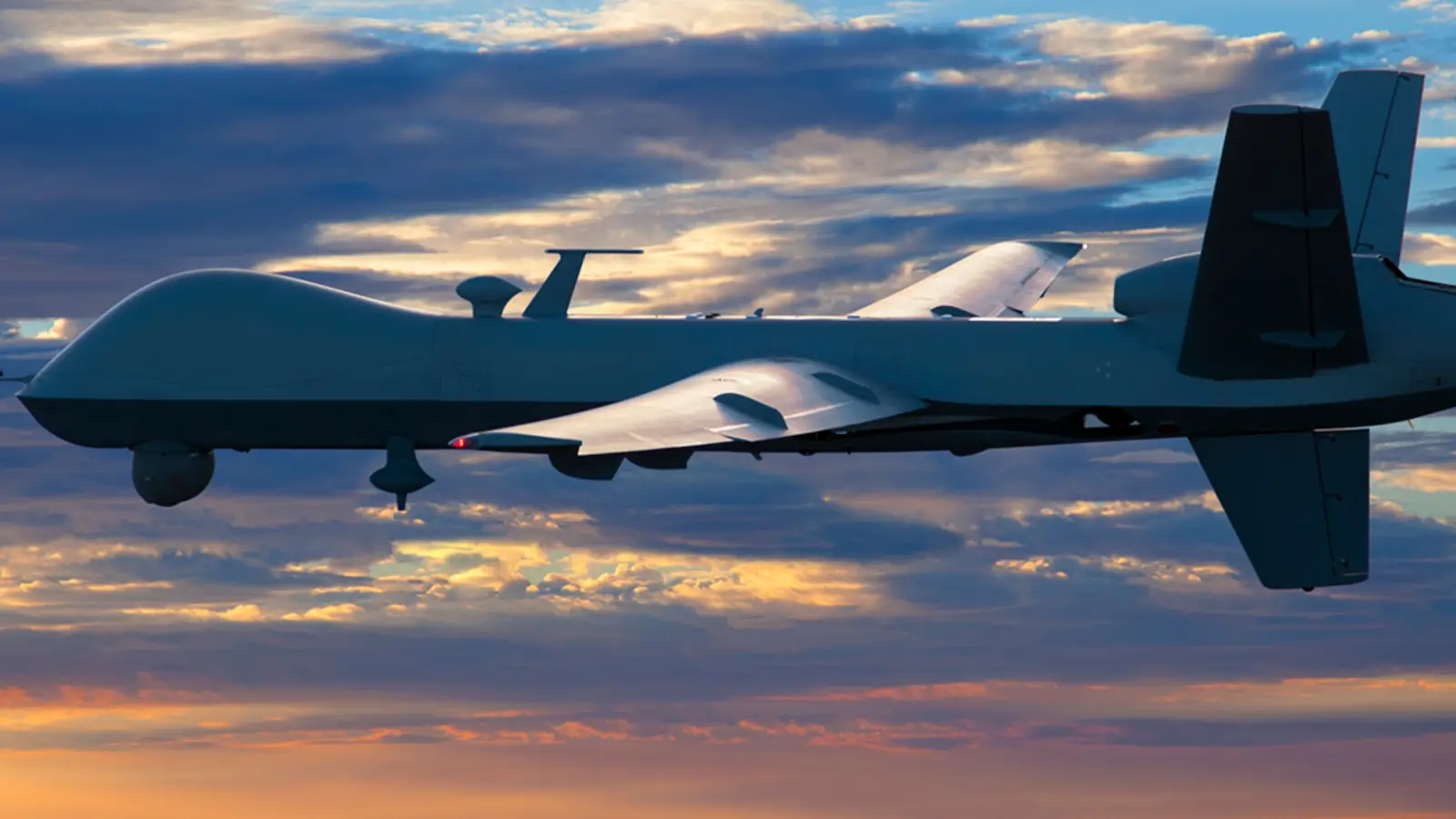
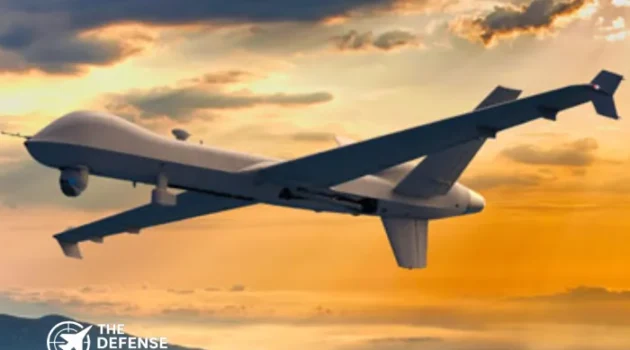
The Pentagon has formally begun searching for a low cost successor to the MQ-9A Reaper, signaling a significant shift in how the U.S. military intends to conduct long range intelligence, surveillance, strike, and electronic warfare missions in future conflicts. The new effort, led by the Defense Innovation Unit (DIU), seeks an aircraft that can perform many of the Reaper’s missions while costing substantially less and being available in far greater numbers.
Rather than pursuing another highly sophisticated, expensive unmanned aircraft, DIU is requesting proposals for what it calls the Massed Modular Aircraft (MMA), a platform specifically designed for affordability, modularity, and rapid production. According to the solicitation, today’s reliance on low density, high value aircraft has become increasingly unsustainable against modern integrated air defense systems.
(adsbygoogle = window.adsbygoogle || []).push({});Why The Pentagon Wants A New Reaper
The MQ-9A Reaper has served as the U.S. military’s premier medium altitude long endurance unmanned aircraft for more than two decades, supporting operations across Afghanistan, Iraq, Syria, Africa, and the Middle East.
However, recent combat experience has reinforced concerns about its survivability in contested environments protected by modern surface to air missiles and electronic warfare systems. Pentagon officials increasingly believe that future conflicts against peer competitors will require large numbers of affordable aircraft rather than a limited fleet of costly platforms.
DIU’s solicitation specifically argues that future unmanned aircraft must be designed with the expectation that some will be lost during combat while remaining inexpensive enough to replace quickly.
Key Requirements For The Massed Modular Aircraft
The solicitation outlines demanding operational requirements despite the emphasis on affordability.
Requirement Target Capability Payload At least 2,800 pounds Combat Radius Minimum 2,300 nautical miles One Way Transfer Range At least 8,000 nautical miles Cruise Speed Over 200 mph Power Available 25 kW Cooling Capacity 5 kW Operations Conventional runways and austere airfields Autonomy One operator controlling multiple aircraft The aircraft must also feature an open, modular architecture capable of rapidly integrating different payloads for intelligence gathering, strike missions, electronic warfare, communications relay, and other evolving mission sets.
Rapid Timeline Targets Operational Capability By 2031
DIU is pursuing an aggressive acquisition schedule.
According to the solicitation, contractors are expected to demonstrate full scale prototype flight testing within 21 months after contract award. The Pentagon is targeting an Initial Operational Capability during Fiscal Year 2031 consisting of approximately 20 mission ready aircraft delivered to an operational unit.
That schedule reflects growing urgency across the Department of Defense to field new autonomous systems before potential future conflicts require significantly greater operational mass.
Strategic Analysis: A Shift From Exquisite Platforms To Combat Mass
The Massed Modular Aircraft initiative represents more than a replacement for the MQ-9A. It illustrates a broader transformation underway across the U.S. military.
(adsbygoogle = window.adsbygoogle || []).push({});For decades, American airpower emphasized technologically superior platforms that delivered exceptional capability but required enormous investment. While these aircraft remain highly effective, they are increasingly challenged by adversaries deploying layered air defenses, inexpensive interceptors, electronic warfare, and large numbers of drones.
The Pentagon is now moving toward a force structure built around combat mass, where affordability becomes a military advantage rather than simply a budget objective.
This philosophy is also visible in other modernization efforts, including the Air Force’s Collaborative Combat Aircraft program, autonomous loyal wingmen, and numerous low cost strike drone initiatives. Together, these programs seek to distribute combat capability across many aircraft instead of concentrating it within a few expensive platforms.
Modularity is another important aspect of the MMA concept. Rather than permanently installing costly sensors and mission equipment, operators could configure aircraft for specific missions, reducing procurement costs while allowing faster technology upgrades as threats evolve.
Operational Implications For Future Warfare
If successfully developed, the Massed Modular Aircraft could reshape how U.S. forces conduct long endurance operations.
Instead of relying on a relatively small fleet of expensive Reapers, commanders could deploy significantly larger numbers of modular aircraft capable of:
- Intelligence, surveillance, and reconnaissance
- Precision strike missions
- Electronic warfare
- Communications relay
- Distributed sensing
- Theater level persistence
Operating larger fleets also complicates enemy targeting decisions. Even if some aircraft are destroyed, remaining platforms could continue executing missions while imposing substantial costs on opposing air defense networks.
The concept reflects lessons emerging from recent conflicts, where relatively inexpensive air defense weapons have increasingly threatened larger, slower unmanned aircraft.
Outlook
The Pentagon’s Massed Modular Aircraft initiative marks one of the clearest indications yet that future U.S. unmanned aviation will prioritize affordability, production scale, and adaptability alongside capability.
Although the MQ-9A Reaper remains an important operational asset, defense planners increasingly view future conflicts as requiring aircraft that can be fielded rapidly, upgraded easily, and replaced without imposing prohibitive costs. If the program remains on schedule, the first operational MMA aircraft could begin entering service early in the next decade, fundamentally changing how the United States approaches long range unmanned operations.
(adsbygoogle = window.adsbygoogle || []).push({});Executive Summary:
Dassault Aviation CEO Éric Trappier stated on July 1, 2026, that the Eurodrone medium-altitude long-endurance (MALE) unmanned aircraft system may prove “a fairly easy target” in future conflicts where air superiority is not assured. The comments, made to the French Senate, come amid ongoing industrial tensions with program leader Airbus and France’s reduced procurement commitments. The remarks underscore broader questions about the program’s alignment with evolving high-intensity warfare requirements.
Eurodrone Program Faces Scrutiny from Key Partner
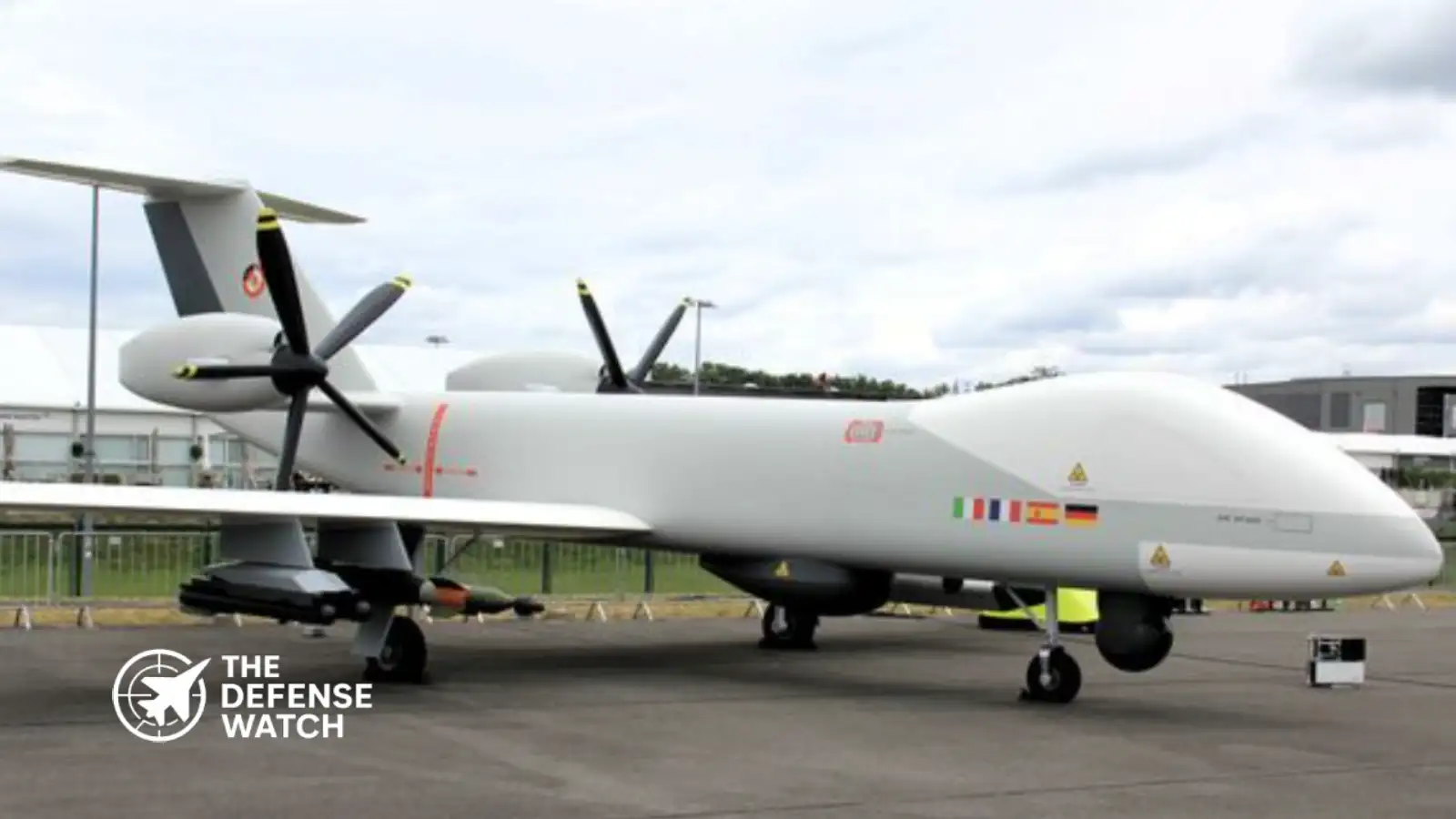
Dassault Aviation CEO Éric Trappier has publicly questioned the continued operational relevance of the Eurodrone, Europe’s flagship multinational MALE UAS program.
Speaking to the French Senate on July 1, 2026, Trappier highlighted the platform’s potential vulnerabilities in contested environments. While acknowledging its value for long-endurance surveillance in permissive areas like the Sahel, he warned that in armed conflicts without guaranteed air superiority, the Eurodrone could face significant threats from ground-based systems.
The Eurodrone, also known as the European MALE RPAS, is being developed by Airbus Defence and Space (lead), Dassault Aviation, and Leonardo to provide France, Germany, Italy, and Spain with a sovereign alternative to systems like the U.S. MQ-9 Reaper. A full-scale mockup was displayed at the ILA Berlin Airshow in June 2026.
Industrial and Procurement Challenges Mount
The Dassault CEO’s comments arrive against a backdrop of strained relations between the industrial partners. Recent reports indicate Airbus sought to remove Dassault from the program following France’s decision to reduce its planned orders, prompting compensation discussions under “juste retour” work-share principles.
France’s updated 2024-2030 Military Programming Law (LPM), released in April 2026, significantly scaled back commitments to the Eurodrone, prioritizing lower-cost, more attritable tactical drones suited to high-intensity operations. While not a formal withdrawal, the move has fueled speculation about France’s long-term participation.
Originally, the program envisioned 20 systems (60 aircraft total), with Germany taking seven, Italy five, and France and Spain four each. First flight is now targeted for mid-2027, with deliveries expected around 2028, following multiple delays.
(adsbygoogle = window.adsbygoogle || []).push({});Analysis:
These developments highlight persistent challenges in European defense collaboration. Differing national priorities—Germany’s emphasis on safe operations over its territory versus France’s focus on expeditionary combat—have shaped design choices, resulting in a heavier, twin-engine platform (approximately 11,000 kg) that critics argue lacks the agility and cost-effectiveness needed for modern peer conflicts.
Shifting Battlefield Realities
The Ukraine conflict and other recent operations have accelerated the proliferation of low-cost attritable drones, loitering munitions, and advanced air defenses. Large, expensive MALE platforms optimized for permissive environments face increased risks from man-portable air-defense systems (MANPADS), electronic warfare, and integrated air defense networks.
Trappier’s remarks align with a broader European reevaluation of uncrewed systems. Nations are increasingly investing in swarming technologies, loyal wingmen, and smaller tactical UAS that offer better survivability through numbers and lower unit costs.
For the Eurodrone specifically, its design emphasizes safe integration into non-segregated airspace and long-endurance ISR (intelligence, surveillance, reconnaissance) capabilities. Proponents argue it retains value for strategic persistence in semi-contested scenarios and coalition operations.
Analysis: From a U.S. perspective, the Eurodrone saga mirrors lessons learned with the MQ-9 Reaper fleet. While highly successful in counterinsurgency, Reapers have required adaptations—and sometimes escorts—in higher-threat environments. Europe’s push for sovereignty is understandable, yet the industrial frictions and capability questions risk delaying delivery of needed capabilities to partner forces. A more modular, incrementally upgradable approach with greater emphasis on electronic warfare resilience and attritable elements could better address these gaps.
atOptions = { ‘key’ : ‘3d48d603f906e3fe9f205be3c4433835’, ‘format’ : ‘iframe’, ‘height’ : 250, ‘width’ : 300, ‘params’ : {} };Program Status and Path Forward
Despite the controversies, Airbus maintains that France remains committed to the program. Development continues, with focus on meeting the requirements of the four partner nations. India and Japan participate as observers, indicating potential for broader export interest if the platform proves viable.
The program represents a significant investment—estimated in the billions of euros—and a test case for European defense industrial cooperation post-FCAS tensions.
Key Specifications (Current Estimates):
- Twin-turboprop MALE UAS
- Designed for non-segregated airspace operations
- Focus on ISR with potential armament options
- Emphasis on European sovereignty and interoperability
Implications for Transatlantic Defense Cooperation
For U.S. observers, the Eurodrone’s trajectory offers insights into allied capability development. While Europe seeks to reduce reliance on American systems, internal coordination hurdles can slow progress and increase costs. Successful resolution of the Dassault-Airbus disputes and adaptation to high-intensity requirements will be critical for the program’s long-term viability.
The outcome could influence future collaborative efforts in uncrewed systems, a domain where rapid technological evolution demands agility from both industry and governments.
Executive Summary:
The United Kingdom is preparing to replace Royal Navy Wildcat helicopters with uncrewed aerial systems as part of its 2026 Defence Investment Plan. The move reflects a wider modernization effort that prioritizes autonomous reconnaissance, artificial intaelligence, and distributed sensor networks while reducing risks to aircrews in increasingly contested environments.
Royal Navy Begins Transition From Wildcat Helicopters To Drones
The Royal Navy Wildcat replacement program is moving from concept toward implementation as the UK government reshapes military aviation under its newly released Defence Investment Plan.
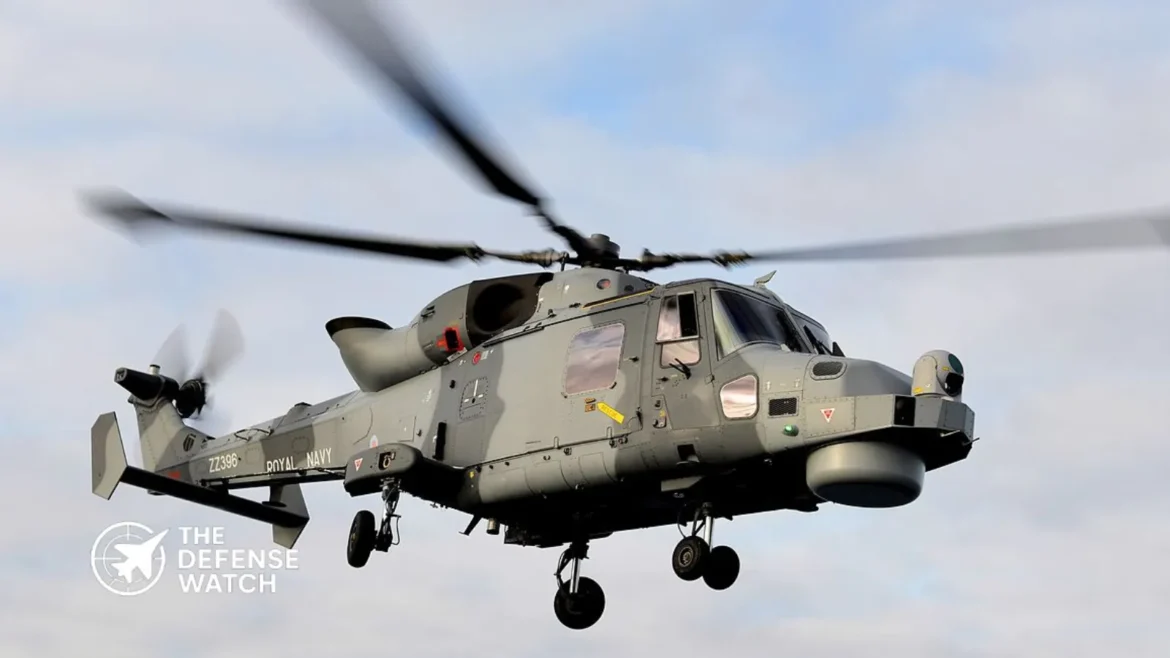
According to the Ministry of Defence, the transition will see Wildcat helicopters gradually replaced in reconnaissance missions by uncrewed aerial systems capable of scouting ahead of friendly forces without exposing aircrews to enemy air defenses.
Officials said the decision reflects operational lessons learned from the war in Ukraine, where inexpensive drones have increasingly displaced traditional reconnaissance aircraft in high-threat environments. Rather than sending crewed helicopters deep into contested airspace, autonomous platforms can provide persistent surveillance at significantly lower cost and risk.
Part Of A Much Broader Defense Modernization Strategy
The retirement of Wildcat reconnaissance helicopters is one element of Britain’s broader shift toward autonomous warfare.
The Defence Investment Plan allocates approximately £5 billion to drones and autonomous systems while expanding investment in artificial intelligence, digital targeting networks, electronic warfare, and long-range precision fires.
The strategy also includes:
| Modernization Area | Planned Capability |
|---|---|
| Autonomous systems | Expanded air, surface, and underwater drones |
| AI integration | Digital targeting web connecting sensors and shooters |
| Electronic warfare | Improved battlefield sensing and resilience |
| Long-range fires | Greater strike capability for land forces |
| Naval operations | Hybrid fleets combining crewed and uncrewed platforms |
Together, these investments represent one of the UK’s largest shifts toward autonomous military capabilities in decades.
Wildcat Has Remained An Important Naval Aircraft
The decision does not diminish the operational value the Wildcat has provided.
The Royal Navy’s AW159 Wildcat HMA2 has served in anti-surface warfare, maritime surveillance, force protection, and counter-drone operations. Earlier this year, Wildcats deployed to Cyprus armed with Martlet missiles to strengthen British air defenses against unmanned aerial threats in the Eastern Mediterranean.
The helicopter has also demonstrated growing integration with autonomous systems.
In January, Royal Navy trials successfully linked Wildcat helicopters with multiple drones through a distributed communications network, allowing helicopter crews to receive live targeting data from uncrewed aircraft beyond visual range. The demonstration provided an early example of the UK’s emerging “hybrid air wing” concept.
Those experiments now appear to have laid the technological groundwork for the broader transition outlined in the Defence Investment Plan.
Why Britain Is Choosing Drones
The operational logic behind the move is increasingly difficult for modern militaries to ignore.
Modern battlefields are saturated with:
- Long-range surface-to-air missiles
- Electronic warfare systems
- Counter-air radars
- One-way attack drones
- Precision-guided artillery
These threats make low-flying reconnaissance helicopters significantly more vulnerable than they were during previous decades.
Uncrewed aircraft offer several advantages:
- Longer endurance over target areas
- Lower procurement and operating costs
- Reduced risk to personnel
- Easier deployment in large numbers
- Faster replacement if lost
Military planners increasingly view drones as expendable sensors rather than high-value aviation assets that require extensive protection.
Strategic Analysis
Britain’s decision represents more than a platform replacement.
It signals an institutional shift away from using helicopters as the primary battlefield reconnaissance asset and toward distributed autonomous sensor networks.
That mirrors trends already visible across NATO. The United States, several European allies, and Indo-Pacific partners are investing heavily in crewed and uncrewed teaming rather than relying solely on traditional aviation platforms.
For the Royal Navy, this evolution also supports the government’s wider concept of a hybrid fleet. The Defence Investment Plan calls for new Common Combat Vessels designed to command air, surface, and underwater drones while integrating autonomous systems across maritime operations.
From a U.S. defense perspective, Britain’s approach closely aligns with ongoing efforts across NATO to create resilient, networked forces capable of operating in highly contested environments where traditional reconnaissance aircraft face increasing survivability challenges.
The transition is unlikely to eliminate crewed helicopters entirely. Wildcats will continue performing missions that require human judgment, weapons employment, and maritime aviation flexibility during the transition period. However, reconnaissance, historically one of the helicopter’s defining missions, is expected to become increasingly autonomous over the coming years.
What Comes Next
The British Army’s Wildcat reconnaissance fleet is scheduled to begin retiring from 2027, with uncrewed systems assuming its scouting role. Although the Ministry of Defence has not yet detailed the specific drone platforms that will replace every Wildcat mission, officials have confirmed that future reconnaissance will rely on networked autonomous systems integrated with AI-enabled targeting and electronic warfare capabilities.
The transition marks one of the clearest examples yet of how lessons from recent conflicts are reshaping Western military doctrine, replacing traditional reconnaissance helicopters with autonomous systems designed for contested battlefields.

Executive Summary:
Dassault Aviation has confirmed a renewed disagreement with Airbus over the multinational Eurodrone program, exposing continuing industrial tensions within one of Europe’s largest collaborative defense projects. The latest dispute comes as European governments continue investing heavily in sovereign defense capabilities and unmanned aircraft intended to reduce dependence on non-European systems.
Dassault Confirms Fresh Eurodrone Rift With Airbus
Dassault Aviation has acknowledged a new disagreement with Airbus over the Eurodrone program, adding another layer of uncertainty to Europe’s flagship Medium Altitude Long Endurance (MALE) unmanned aircraft project.
The confirmation came during remarks by Dassault Chief Executive Eric Trappier, who said longstanding industrial issues remain unresolved despite previous efforts to stabilize cooperation between the program’s principal partners. Reuters first reported the renewed disagreement on July 1, 2026.
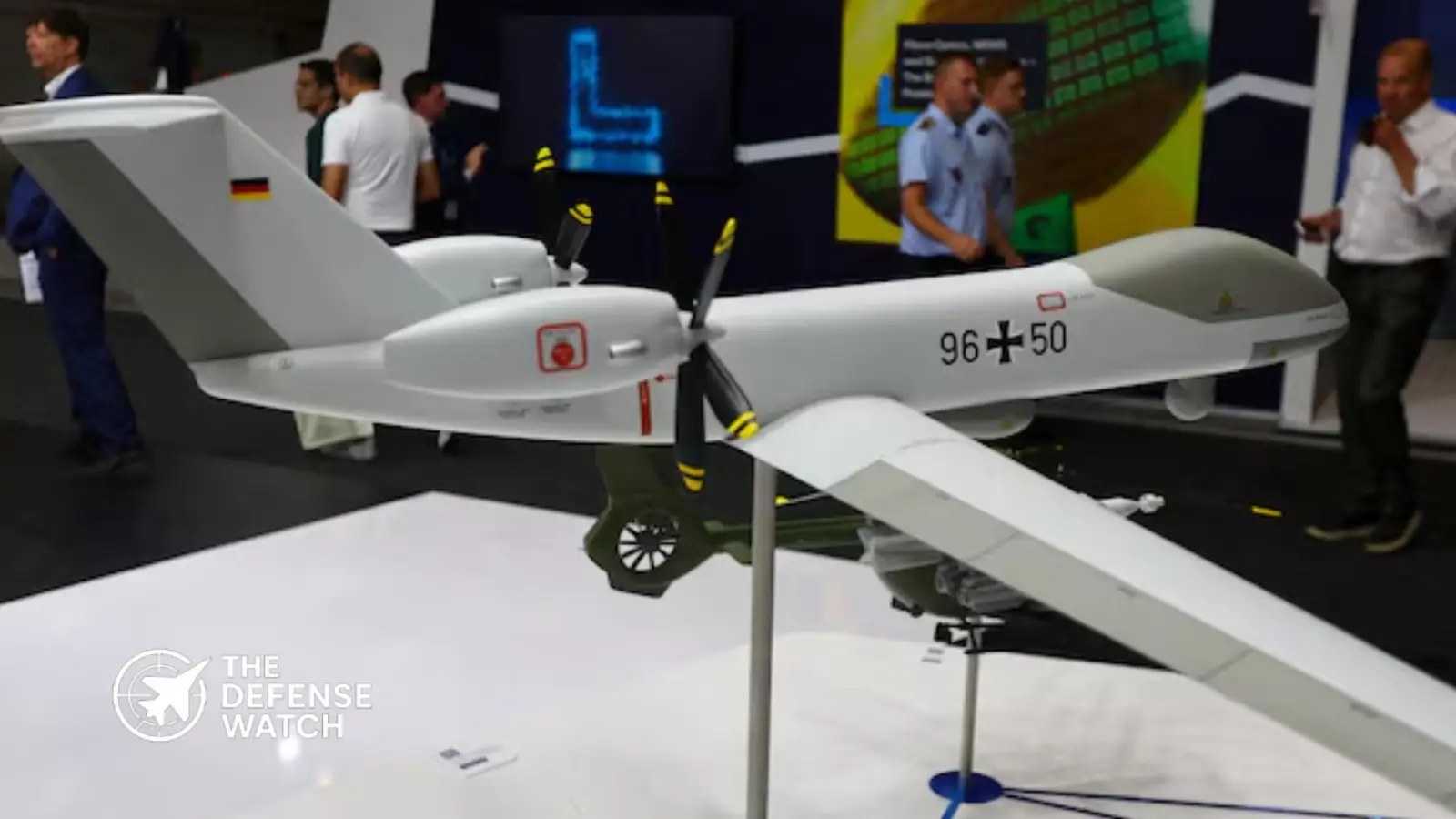
The Eurodrone is being developed under the management of Airbus Defence and Space on behalf of the European procurement agency OCCAR, with major industrial contributions from Dassault Aviation in France and Leonardo in Italy.
While officials have not indicated that the program itself is at immediate risk, the renewed friction underscores the persistent governance challenges facing Europe’s largest multinational defense development efforts.
A Long History Of Industrial Disagreements
The Eurodrone program has experienced several disputes since its inception, many centered on industrial workshare, technical responsibilities, decision-making authority, and program management.
Dassault has previously criticized aspects of the project’s governance, arguing that engineering decisions and leadership responsibilities should better reflect each partner’s expertise.
Eric Trappier indicated that disagreements remain despite years of negotiations, suggesting that underlying structural issues have yet to be fully resolved.
Neither Airbus nor Dassault has announced any immediate changes to the production schedule following the latest comments.
What Is The Eurodrone?
The Eurodrone is Europe’s first jointly developed MALE remotely piloted aircraft system designed to provide intelligence, surveillance, reconnaissance (ISR), target acquisition, and precision strike capabilities.
The aircraft is intended to replace reliance on imported platforms while giving European armed forces greater operational autonomy.
Participating nations include:
| Participating Country | Planned Role |
|---|---|
| Germany | Lead customer |
| France | Operational user |
| Italy | Operational user |
| Spain | Operational user |
The aircraft is managed through OCCAR and developed by Airbus Defence and Space as the prime contractor, with Leonardo and Dassault serving as major industrial partners.
Key Eurodrone Characteristics
Although development continues, publicly released program information identifies several planned capabilities.
| Capability | Details |
|---|---|
| Class | MALE UAV |
| Mission | ISR and precision strike |
| Engines | Twin turboprop |
| Endurance | Approximately 40 hours |
| Operations | All-weather missions |
| Payload | Multi-mission sensor suite with optional weapons integration |
| Customers | Germany, France, Italy, Spain |
The twin-engine configuration distinguishes Eurodrone from several competing MALE UAVs and reflects European certification and safety requirements for operations in civilian-controlled airspace.
Why The Industrial Relationship Matters
Unlike many national procurement programs, Eurodrone relies on multiple governments and several major aerospace companies sharing technical authority.
This collaborative structure distributes costs and preserves national aerospace industries but also makes decision-making significantly more complex.
Differences over engineering leadership, software integration, production responsibilities, or certification can affect development timelines even when governments remain committed to funding the program.
Such challenges are common across multinational European defense initiatives, particularly those involving advanced aerospace technologies.
Strategic Importance For Europe
Eurodrone forms part of Europe’s broader effort to strengthen defense-industrial independence amid heightened security concerns following Russia’s invasion of Ukraine and increasing emphasis on NATO readiness.
For years, European militaries have depended heavily on foreign-built unmanned aircraft, particularly the MQ-9 Reaper supplied by the United States.
Developing a domestically controlled MALE UAV offers several strategic advantages:
- Greater sovereignty over mission software and upgrades.
- Reduced dependence on non-European suppliers.
- Improved protection of sensitive operational data.
- Long-term support for Europe’s aerospace industrial base.
- Common capability across participating European armed forces.
These objectives remain politically important despite periodic industrial disagreements.
Implications Beyond Eurodrone
The renewed dispute may attract particular attention because Airbus and Dassault are also central partners in Europe’s much larger Future Combat Air System (FCAS), alongside Spain.
Although the two programs are managed separately, recurring disagreements between the companies have periodically raised concerns about the effectiveness of Europe’s collaborative defense acquisition model.
Governments supporting FCAS and Eurodrone have consistently emphasized that industrial partners must resolve differences without undermining long-term capability development.
For defense planners, maintaining stable industrial cooperation is increasingly important as Europe accelerates investment in next-generation combat aircraft, autonomous systems, missile defense, and space capabilities.
Analysis: Collaboration Remains Europe’s Greatest Strength And Challenge
The latest disagreement illustrates a recurring dilemma within European defense procurement.
Collaborative programs allow participating nations to spread development costs, retain domestic industrial expertise, and produce capabilities that might otherwise be unaffordable for individual countries. However, they also require competing companies, each backed by national governments, to align commercial interests with collective military objectives.
Eurodrone demonstrates this balancing act. Technically, the aircraft addresses a genuine operational requirement by providing Europe with a sovereign ISR and strike platform. Politically, it represents a commitment to reducing dependence on external suppliers. Industrially, however, success depends as much on effective governance as engineering excellence.
For the United States and NATO allies, the program remains strategically relevant because a successful Eurodrone fleet could strengthen Europe’s contribution to alliance intelligence, surveillance, and reconnaissance missions while easing demand on U.S. unmanned assets during future operations.
The renewed Airbus-Dassault dispute does not necessarily threaten the aircraft’s eventual delivery, but it highlights how industrial coordination remains one of the most significant risks facing large multinational defense programs. Maintaining schedule discipline while balancing national industrial interests will continue to shape the project’s trajectory over the remainder of the decade.
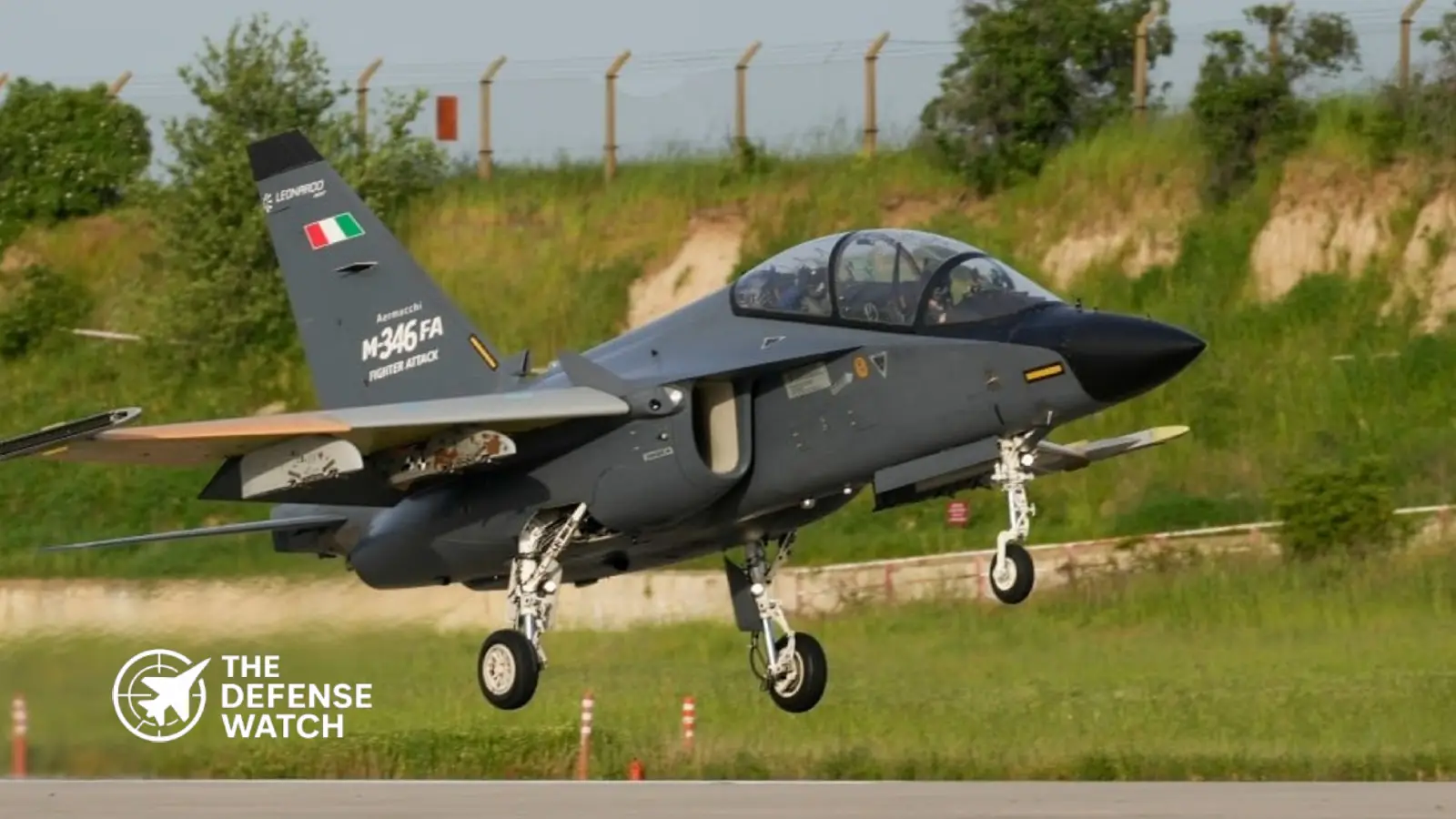
Italian M-346 And Turkish KIZILELMA Team Up In K-SWARM Trial, Expanding Future Air Combat Capability
(adsbygoogle = window.adsbygoogle || []).push({});Executive Summary:
Leonardo and Baykar have completed the first live flight demonstrations of their K-SWARM program, integrating Italy’s M-346 aircraft with Türkiye’s KIZILELMA unmanned combat aircraft. The trials mark a significant step toward future crewed-uncrewed teaming concepts that could expand combat effectiveness while reducing risk to pilots in contested airspace.
Italian M-346 And Turkish KIZILELMA Complete K-SWARM Flight Demonstration
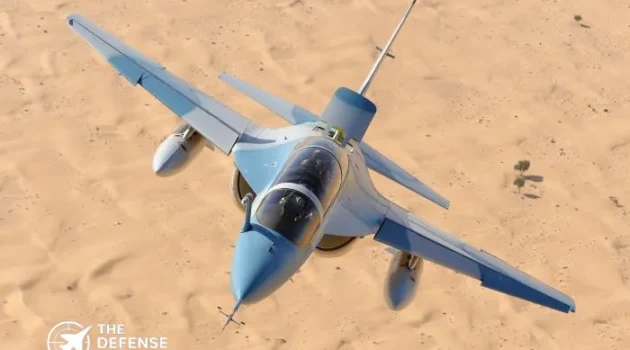
The K-SWARM program reached a major milestone after Italian and Turkish aerospace firms successfully conducted live crewed-uncrewed teaming flights involving the Leonardo M-346 and the Bayraktar KIZILELMA unmanned combat aircraft.
According to Leonardo and Baykar, the flight campaign was conducted in May 2026 at Baykar’s flight test facilities in Çorlu, Türkiye. The demonstrations moved technologies previously validated in simulation environments into real-world flight operations.
The trials involved a Leonardo-owned M-346 Fighter Attack aircraft, an Italian Air Force T-346A used as a chase aircraft, and a KIZILELMA unmanned combat aircraft operating in coordinated flight scenarios.
During the demonstrations, the KIZILELMA performed autonomous taxiing and takeoff before joining the M-346 in formation. The aircraft then executed coordinated missions designed to evaluate advanced software algorithms that enable collaborative operations between crewed and uncrewed platforms.
What The K-SWARM Program Is Designed To Achieve
K-SWARM is intended to develop interoperability between manned and unmanned combat aircraft through advanced autonomy, networking, and mission management technologies.
The program focuses on Crewed-Uncrewed Teaming (CUC-T), a concept increasingly viewed as a foundational element of next-generation air warfare. Under this approach, a pilot in a crewed aircraft can coordinate multiple autonomous aircraft that perform reconnaissance, electronic warfare, strike, or other support missions.
The live trials validated collaborative mission execution through next-generation algorithms designed to coordinate formations and support real-time decision making between aircraft. Leonardo stated that the testing confirmed the transition from digital engineering and simulation environments to operational flight conditions.
Why The Demonstration Matters
The significance of the K-SWARM demonstration extends beyond a single flight test.
Modern air forces face growing pressure from advanced air defense systems, electronic warfare threats, and the increasing use of autonomous systems on the battlefield. As a result, military planners are exploring ways to increase combat mass without proportionally increasing pilot risk or procurement costs.
(adsbygoogle = window.adsbygoogle || []).push({});The M-346 and KIZILELMA demonstration highlights how existing crewed aircraft may evolve into airborne command nodes capable of directing autonomous wingmen during complex missions. Such concepts are increasingly being pursued across NATO and allied nations as future combat air systems move toward distributed operations.
The successful transition from simulation to live testing is particularly important because it validates not only autonomous flight performance but also the communications, software architecture, and command relationships required for operational deployment.
Leonardo-Baykar Partnership Gains Momentum
The K-SWARM milestone comes as cooperation between Leonardo and Baykar continues to expand.
Earlier this month, Italy granted conditional approval for a joint Leonardo-Baykar drone venture intended to strengthen European unmanned aviation capabilities. The partnership seeks to address growing demand for advanced UAV systems across European and NATO-aligned markets.
For Leonardo, the program reinforces its position in future combat air technologies and advanced trainer aircraft development. For Baykar, it demonstrates the increasing maturity of the KIZILELMA platform, which is designed to operate alongside crewed aircraft in high-threat environments.
Broader Implications For Future Air Warfare
The K-SWARM live trials reflect a broader shift occurring across global air forces.
Military aviation is steadily moving toward mixed formations of crewed and autonomous aircraft. Rather than replacing pilots, these concepts are designed to extend the reach, survivability, and effectiveness of manned platforms.
The ability of an M-346 to coordinate with a fighter-class unmanned aircraft such as KIZILELMA demonstrates how future combat formations may operate as integrated networks rather than individual aircraft. This approach could enable air forces to deploy larger numbers of sensors, weapons, and electronic warfare assets while maintaining a smaller human footprint in contested environments.
As air forces prepare for increasingly complex operational environments, successful demonstrations like K-SWARM provide an early glimpse of how future combat air systems may combine human decision-making with autonomous capabilities to generate greater operational flexibility.

Executive Summary:
Australia is acquiring a new counter unmanned aircraft system (C-UAS) sensor capability from a United Kingdom defense company as drone threats continue to evolve across modern battlefields.
The move supports the Australian Defence Force’s broader effort to build a layered counter drone architecture capable of detecting, tracking, identifying, and defeating hostile unmanned aerial systems.
Australia Expands Counter Drone Sensor Capability
Australia’s counter drone system modernization effort has taken another step forward with the planned acquisition of a new C-UAS sensor system from a United Kingdom defense supplier. The procurement reflects growing concern among Western militaries about the rapid proliferation of unmanned aerial vehicles and the increasingly sophisticated tactics employed by state and non-state actors.
The Australian Defence Force (ADF) has made counter drone capabilities a priority as lessons from conflicts in Ukraine, the Middle East, and other operational theaters demonstrate the growing effectiveness of low-cost drones against military forces and critical infrastructure.
According to reporting by Janes, the acquisition will provide Australia with enhanced detection and situational awareness capabilities, strengthening its ability to identify and respond to emerging aerial threats.
Growing Demand For Counter UAS Systems
The global demand for counter unmanned aircraft systems has accelerated as drones become more accessible, affordable, and capable.
Military planners increasingly view drone threats as a challenge that requires a layered response. Detection and tracking sensors are often the first line of defense, providing operators with the information needed to assess threats before deploying electronic warfare systems, kinetic interceptors, or directed-energy weapons.
Australia has already invested in multiple counter drone initiatives in recent years. The Australian Army has tested and acquired various drone detection technologies, including advanced radio-frequency sensing systems capable of identifying and locating hostile UAVs. These efforts form part of a wider national strategy aimed at protecting military bases, deployed forces, and critical infrastructure from airborne threats.
Why The New Sensor System Matters
The significance of the new C-UAS sensor system extends beyond a single procurement.
Modern drone threats are becoming increasingly difficult to detect because many systems are smaller, quieter, and capable of operating autonomously. Traditional air defense networks were primarily designed to track larger aircraft and missiles, creating gaps that small drones can exploit.
Advanced sensor systems help close these gaps by providing:
- Early warning of drone activity
- Improved target identification
- Enhanced tracking accuracy
- Integration with command-and-control networks
- Support for layered air defense operations
These capabilities are particularly important for expeditionary operations where military units may face persistent surveillance or attack from small unmanned aircraft.
Australia Pursues Layered Counter Drone Architecture
The acquisition aligns with Australia’s broader push toward a layered counter drone architecture.
Recent defense programs have emphasized integrating sensors, command-and-control systems, electronic warfare tools, and kinetic effectors into a unified network capable of addressing diverse drone threats. Australia’s LAND 156 program, for example, seeks a scalable counter small-UAS capability that combines multiple sensors and defeat mechanisms into a coherent operational framework.
Defense officials have increasingly highlighted the need for systems that can detect, classify, track, and neutralize drones operating in complex environments.
The addition of a UK-developed sensor system could provide the ADF with greater operational flexibility while also supporting interoperability with allied nations that are pursuing similar counter drone solutions.
Strategic Implications For Australia And Allies
Beyond its technical capabilities, the acquisition reflects broader strategic trends among Western defense partners.
Australia, the United Kingdom, and the United States continue to deepen defense cooperation across multiple domains, including emerging technologies, intelligence sharing, and military modernization programs.
Counter drone technology has become a key area of collaboration because UAV threats affect military operations, homeland security, and critical infrastructure protection alike.
The growing emphasis on sensor networks also highlights an important lesson from recent conflicts: successful counter drone operations depend as much on rapid detection and situational awareness as they do on the systems used to defeat hostile aircraft.
As drone technology continues to evolve, nations that can rapidly identify and track threats will maintain a significant operational advantage.
Outlook
Australia’s decision to acquire a new counter drone sensor capability underscores the increasing importance of C-UAS technologies in contemporary defense planning.
With drone threats expanding in scale, sophistication, and accessibility, investments in advanced sensor systems are likely to remain a central element of Australia’s military modernization strategy.
The latest procurement reinforces Canberra’s commitment to building a resilient, layered defense architecture capable of protecting both deployed forces and critical national assets against emerging aerial threats.
(adsbygoogle = window.adsbygoogle || []).push({});Executive Summary:
The United Kingdom has announced a new military assistance package worth £752 million ($996 million) that will provide Ukraine with 150,000 drones by the end of 2026. The announcement was made during a Ukraine Defense Contact Group meeting in Brussels and reflects the growing importance of unmanned systems in modern warfare.
The package further reinforces Britain’s role as one of Kyiv’s leading defense supporters while highlighting the increasing shift toward drone-centric battlefield operations across Europe.
UK Announces Major Drone Package For Ukraine
The UK drones for Ukraine initiative received a significant boost on June 18, when British Defence Minister Dan Jarvis announced that London will provide 150,000 drones to Ukraine by the end of 2026 as part of a broader £752 million ($996 million) military support package. The announcement was made during a meeting of the Ukraine Defense Contact Group in Brussels.
The new commitment represents one of the largest single drone assistance packages announced by any Western partner since Russia’s full scale invasion of Ukraine began in 2022.
According to Reuters, the funding package is intended to strengthen Ukraine’s ability to sustain surveillance, reconnaissance, targeting, and strike operations across an increasingly technology driven battlefield.
(adsbygoogle = window.adsbygoogle || []).push({});How The New Package Fits Into Britain’s Existing Support
The latest announcement builds upon a series of major British drone commitments made over the past two years.
In June 2025, the UK pledged to supply 100,000 drones by April 2026 under a separate £350 million initiative designed to accelerate Ukrainian access to unmanned systems.
Earlier this year, the UK Ministry of Defence announced its largest drone package to date, committing at least 120,000 drones during 2026, including:
- Long range strike drones
- Intelligence, surveillance, and reconnaissance platforms
- Logistics drones
- Maritime unmanned systems
Deliveries under that program began during the spring of 2026.
The newly announced 150,000 drone package further expands Britain’s role in supplying unmanned capabilities to Ukrainian forces.
(adsbygoogle = window.adsbygoogle || []).push({});Key Figures From The New Assistance Package
| Item | Details |
|---|---|
| Total Package Value | £752 million ($996 million) |
| Drones Included | 150,000 |
| Delivery Timeline | Through end of 2026 |
| Announced By | UK Defence Minister Dan Jarvis |
| Venue | Ukraine Defense Contact Group, Brussels |
| Primary Purpose | Enhance Ukrainian battlefield capabilities |
Source: Reuters, June 18, 2026.
(adsbygoogle = window.adsbygoogle || []).push({});Why Drones Have Become Central To The Ukraine War
The Ukraine conflict has emerged as the most significant real world demonstration of large scale drone warfare in modern military history.
Both Ukrainian and Russian forces now employ unmanned systems across nearly every operational function, including:
- Tactical reconnaissance
- Artillery spotting
- Precision strikes
- Electronic warfare support
- Logistics delivery
- Maritime attacks
- Air defense targeting
British defense officials have repeatedly cited Ukraine’s battlefield experience as evidence that drones are fundamentally changing how wars are fought.
Small first person view (FPV) drones have proven capable of destroying armored vehicles at a fraction of the cost of traditional anti tank weapons, while larger long range systems increasingly conduct deep strike missions against military infrastructure far behind front lines.
(adsbygoogle = window.adsbygoogle || []).push({});Strategic Significance For NATO And Western Defense Planning
The importance of this package extends beyond immediate battlefield support.
For NATO nations, Ukraine has become a large scale laboratory for understanding the future of warfare. Lessons learned from Ukrainian drone operations are influencing procurement decisions, force structure planning, and defense industrial strategies across Europe and North America.
Several trends are particularly notable:
Mass Matters Again
Traditional Western defense planning often emphasized highly sophisticated and expensive platforms.
Ukraine has demonstrated that large quantities of relatively inexpensive drones can generate significant operational effects when deployed at scale.
Industrial Capacity Is Becoming A Strategic Asset
Success in drone warfare increasingly depends on production capacity rather than solely on technological sophistication.
Western governments are therefore investing in domestic drone industries to ensure sustained manufacturing output during prolonged conflicts.
Drone Ecosystems Are Replacing Single Platforms
Modern military effectiveness increasingly depends on networks of reconnaissance drones, strike drones, electronic warfare systems, communications infrastructure, and data processing capabilities operating together.
The UK’s continued investment in Ukrainian drone support reflects recognition of these emerging realities.
(adsbygoogle = window.adsbygoogle || []).push({});Broader International Support For Ukraine’s Drone Capabilities
Britain’s announcement comes amid a wider international effort to strengthen Ukraine’s unmanned warfare capabilities.
On June 17, the Netherlands announced a €500 million ($580 million) package focused on drones and air defense equipment for Ukraine. Half of that funding will be directed toward drone procurement from Dutch defense companies.
The growing emphasis on drone procurement among European allies highlights a broader shift in military assistance priorities. Whereas early aid packages focused heavily on artillery ammunition, armored vehicles, and anti tank weapons, current support increasingly prioritizes unmanned systems, electronic warfare capabilities, and air defense assets.
Operational Challenges Ahead
While the scale of the UK commitment is substantial, successful implementation will depend on several factors.
These include:
- Production capacity across British and allied defense industries
- Supply chain resilience for electronics and components
- Training of Ukrainian operators
- Integration with existing command and control networks
- Counter electronic warfare protections
The rapid evolution of drone warfare means systems delivered today may require continual upgrades to remain effective against increasingly sophisticated jamming and counter drone technologies.
What Comes Next
The latest British commitment underscores the continued centrality of drones in Ukraine’s defense strategy and signals that Western support for unmanned capabilities remains a priority.
As the conflict enters another year, drone production, procurement, and operational innovation are likely to remain key determinants of battlefield effectiveness. The UK’s pledge to deliver 150,000 additional drones reflects both immediate wartime requirements and broader recognition that unmanned systems are becoming a defining feature of future military operations.
Executive Summary:
U.S. drone manufacturer Red Cat Holdings unveiled its new Hellcat small unmanned aircraft system (sUAS) during Eurosatory 2026 in Paris. Built on the company’s Black Widow platform, the aircraft is designed for contested environments, modular mission integration, and future multi domain operations that may include tethered intelligence, surveillance, and reconnaissance (ISR) roles alongside unmanned surface vessels (USVs). The announcement reflects the growing defense industry focus on interoperable and rapidly adaptable autonomous systems.
Red Cat Introduces Hellcat UAV At Eurosatory 2026
The Red Cat Hellcat UAV made its public debut at Eurosatory 2026, one of the world’s largest land and defense technology exhibitions. The system was introduced by Red Cat Holdings as a new dual use small unmanned aircraft system built upon the company’s existing Black Widow architecture.
According to company statements released during the event, Hellcat incorporates operational feedback gathered from real world deployments and lessons learned through Red Cat’s ongoing collaboration with Ukrainian drone operators. The company stated that the platform was designed specifically for rapidly changing operational environments where adaptability and interoperability are increasingly critical.
The unveiling comes as defense ministries across Europe and NATO countries continue expanding investments in small tactical drones following battlefield lessons from Ukraine and other recent conflicts.
Built On The Black Widow Foundation
Rather than developing an entirely new airframe, Red Cat leveraged its proven Black Widow platform as the foundation for Hellcat.
The company said the aircraft follows a Modular Open Systems Architecture (MOSA) approach, allowing operators to configure mission software, command and control systems, payloads, and integration packages according to operational requirements.
Reported Hellcat Specifications
| Capability | Reported Performance |
|---|---|
| Flight endurance | More than 50 minutes |
| Operational range | Up to 6.8 miles (line of sight) |
| Navigation | GPS denied operations |
| Recovery | Return to Home Azimuth without GPS |
| Payload | Ocellus 3CP three camera ISR payload |
| Design | Field repairable, rucksack portable |
Specifications based on company-released information presented during Eurosatory 2026.
The ability to operate in GPS denied environments is increasingly important as military forces prepare for conflicts involving advanced electronic warfare systems capable of disrupting satellite navigation signals.
Tethered ISR Concept Draws Attention
One of the more significant developments surrounding Hellcat at Eurosatory was its apparent role in a broader tethered ISR ecosystem.
Industry discussions and exhibition materials highlighted integration with the ARASTELLE tether system, a plug and play solution designed to transform small drones into persistent ISR platforms or elevated communications relay nodes.
Unlike conventional battery powered drone operations that are constrained by endurance limits, tethered systems can remain airborne for extended periods while providing:
- Persistent surveillance
- Communications relay functions
- Electronic support capabilities
- Elevated sensor coverage
- Battlefield networking support
The concept aligns with growing military interest in low cost aerial mast alternatives that can be rapidly deployed by tactical units without requiring larger manned assets.
Beyond Aircraft: Red Cat’s Multi Domain Vision
Perhaps the most strategically significant aspect of the Hellcat unveiling was how it was presented within Red Cat’s broader “Family of Systems” approach.
Company materials positioned Hellcat alongside several other autonomous platforms, including:
- Black Widow reconnaissance UAV
- FlightWave Edge 130 UAV
- FANG autonomous systems
- Blue Ops Variant 7 unmanned surface vessel
- Integrated command and control technologies
This suggests Red Cat is increasingly pursuing a multi domain autonomous ecosystem rather than operating solely as a drone manufacturer.
Industry observers at Eurosatory also noted displays and discussions linking Hellcat with future maritime applications and unmanned surface vessel concepts. While the company has not publicly detailed specific operational architectures, the combination of airborne ISR assets and autonomous maritime platforms reflects a growing trend across Western defense programs.
Why The Hellcat Matters
The introduction of Hellcat reflects several broader shifts underway across military drone development.
Rapid Battlefield Adaptation
Modern conflicts have demonstrated that drone technology evolves far faster than traditional acquisition cycles. Manufacturers increasingly rely on direct operational feedback from deployed users to accelerate development.
Red Cat explicitly stated that Hellcat incorporates battlefield lessons and operational insights gathered through ongoing Ukrainian partnerships.
Open Architecture Requirements
Defense customers are increasingly demanding systems that can integrate with existing command networks rather than relying on proprietary ecosystems.
By emphasizing MOSA compliance and configurable mission systems, Hellcat appears designed to support coalition operations across multiple countries and military services.
Multi Domain Operations
The future battlefield is expected to feature tighter coordination between air, land, maritime, cyber, and electronic warfare assets.
The inclusion of UAVs, tethered ISR systems, communications relays, and unmanned surface vessels within a common operational framework reflects this broader trend. Such architectures could enable distributed sensing and targeting networks while reducing risk to personnel.
Competitive Position In The Expanding Small UAS Market
The small UAS market has become one of the fastest growing segments of the global defense industry.
Companies are increasingly competing not only on aircraft performance but also on software architecture, electronic warfare resilience, sensor integration, and autonomous teaming capabilities.
Hellcat enters a market where military customers are seeking systems capable of operating in contested electromagnetic environments while remaining affordable and easily replaceable when necessary. Its emphasis on GPS denied operation, modular payloads, and interoperability directly addresses those requirements.
Outlook
Red Cat’s unveiling of Hellcat at Eurosatory 2026 represents more than the introduction of another small reconnaissance drone. The platform highlights the industry’s movement toward adaptable, software defined, and interconnected autonomous systems capable of operating across multiple domains.
Whether integrated into tactical reconnaissance missions, tethered ISR roles, communications relay networks, or future maritime operations, Hellcat appears positioned as a flexible node within a broader autonomous ecosystem rather than a standalone aircraft. As defense organizations continue adapting to lessons from contemporary conflicts, that systems based approach may prove as important as the drone’s individual performance characteristics.