Executive Summary:
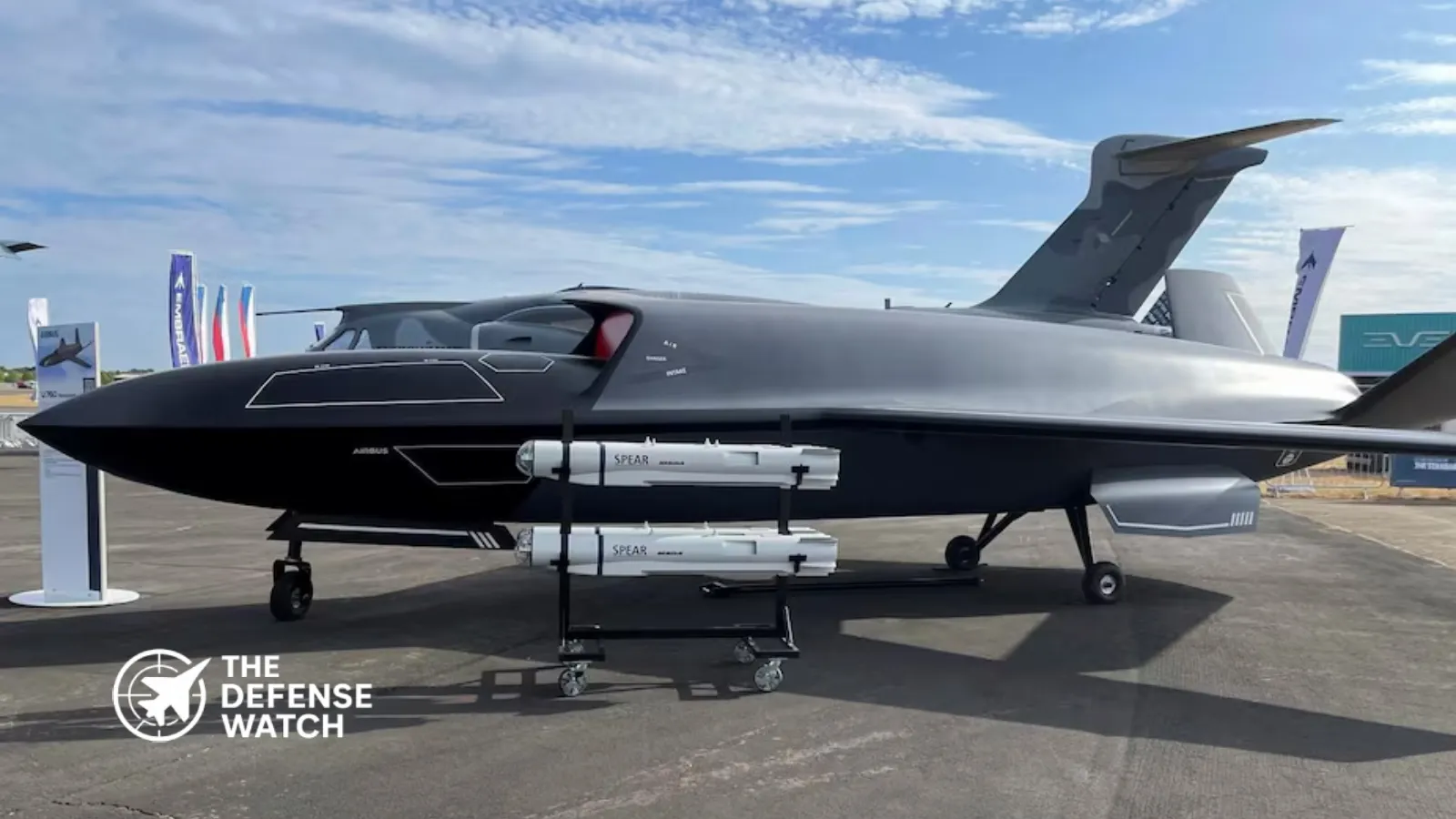
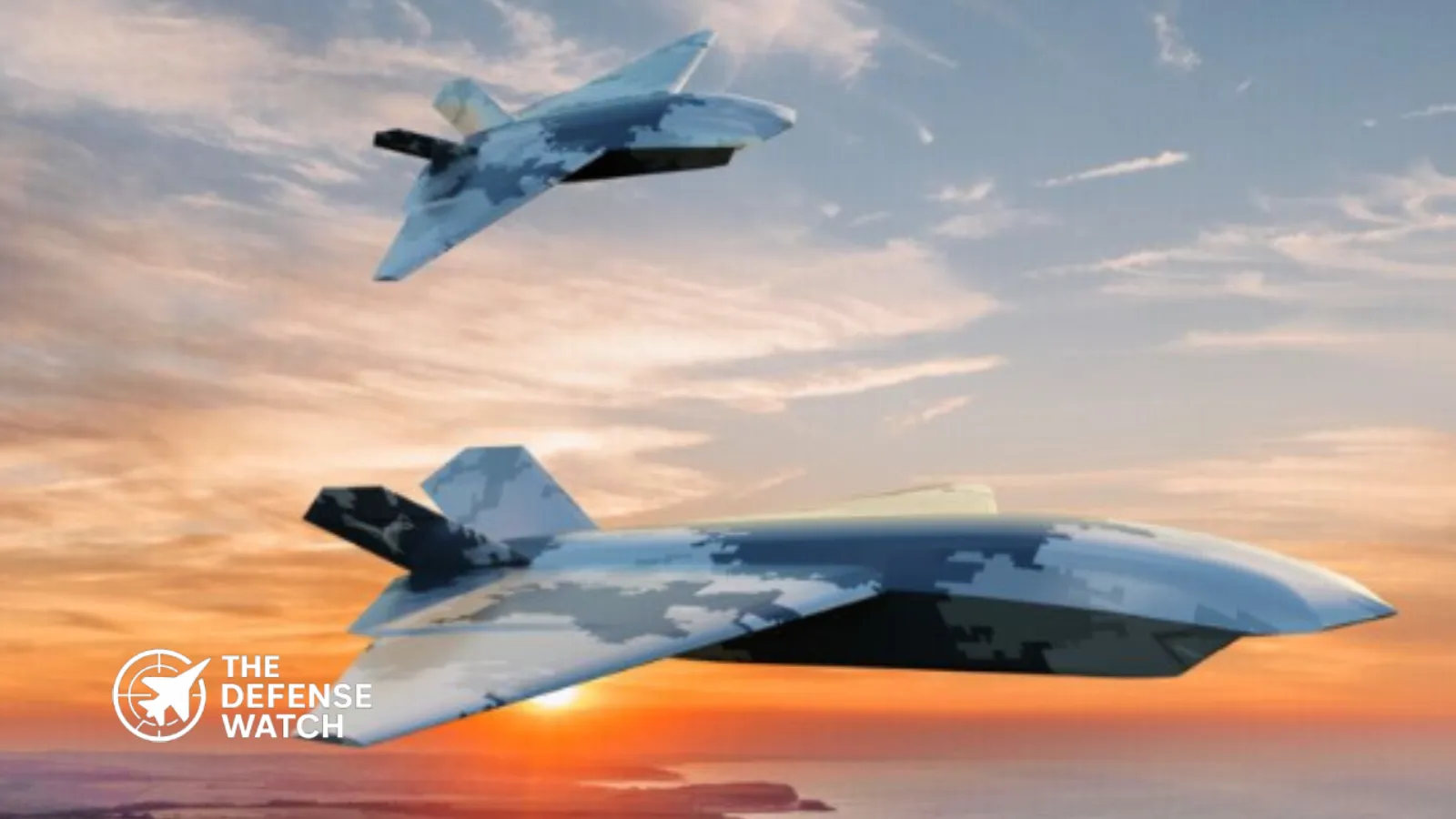
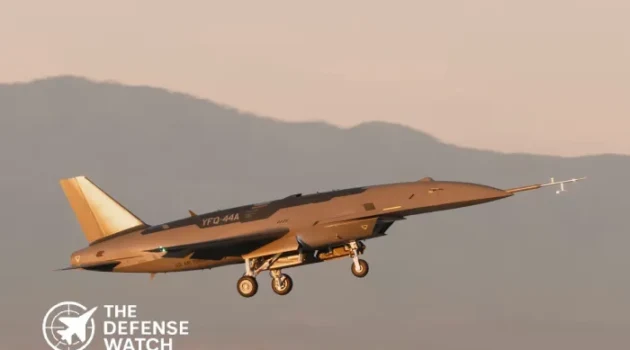
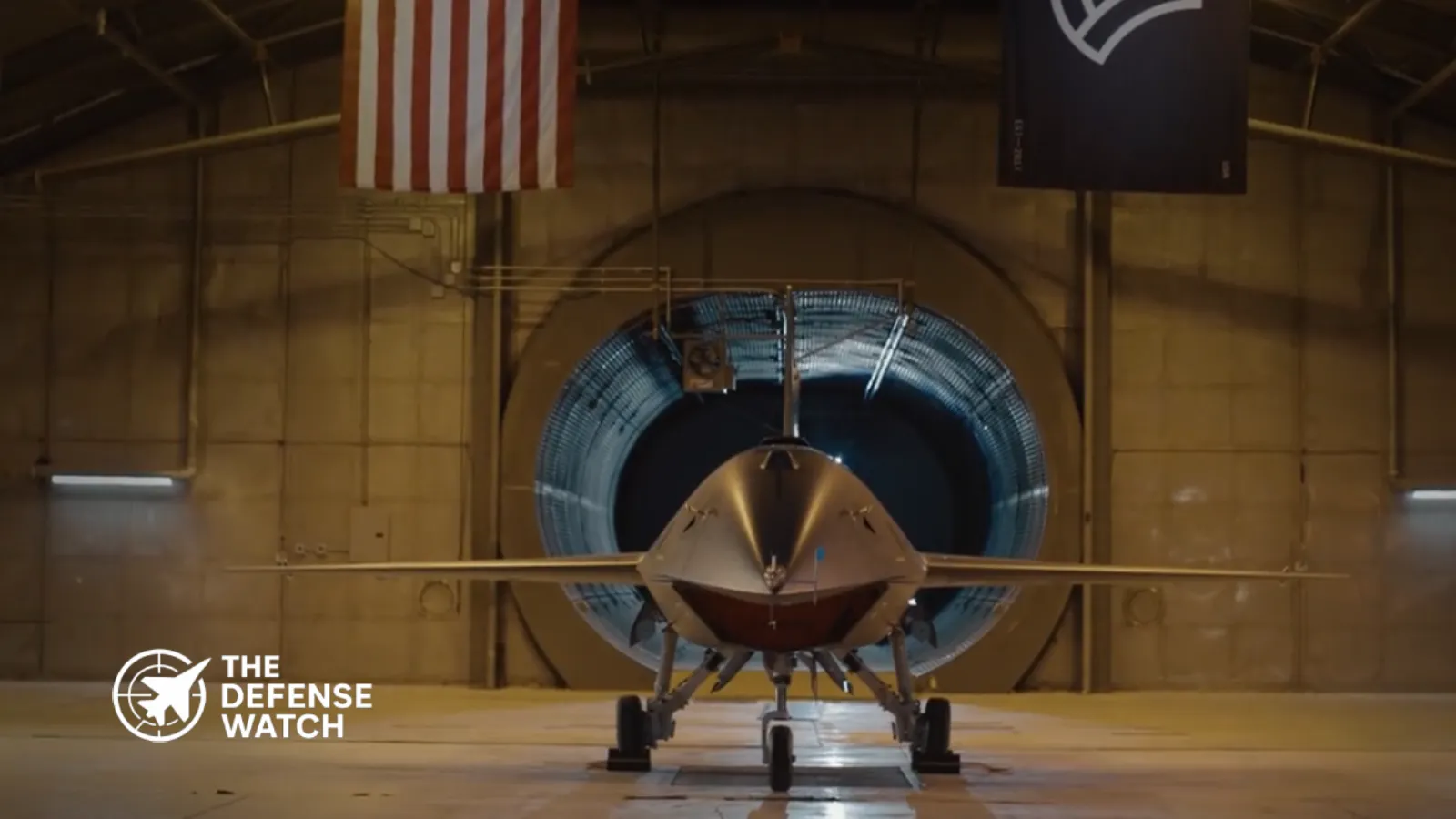
Boeing has unveiled a significantly upgraded MQ-28 Ghost Bat collaborative combat aircraft, adding larger wings, internal weapons stations, and extended operational range.
The enhancements strengthen the platform’s ability to support crewed aircraft, carry additional payloads, and meet growing demand for autonomous combat aircraft among allied air forces.
Boeing MQ-28 Ghost Bat Upgrade Expands Combat Reach
Boeing’s MQ-28 Ghost Bat collaborative combat aircraft has received a major capability upgrade aimed at increasing range, payload capacity, and mission flexibility as global militaries accelerate investment in autonomous air combat systems.
The company unveiled the latest enhancements during the ILA Berlin Air Show 2026, presenting a roadmap that significantly expands the aircraft’s operational capabilities while preserving its role as a force multiplier for crewed fighter aircraft.
Developed in partnership with the Royal Australian Air Force (RAAF), the MQ-28 Ghost Bat is designed to operate alongside manned aircraft, conducting missions that include intelligence gathering, electronic warfare, air combat support, and strike operations.
According to Boeing, the upgraded configuration introduces a wing that is more than 25 percent larger than previous variants, allowing the aircraft to carry an additional 2,000 pounds of fuel, mission payloads, or stores. The increase provides operators greater flexibility to balance endurance and combat loadouts based on mission requirements.
Internal Weapons Bays Add New Combat Capability
One of the most significant additions is the introduction of internal weapons stations.
The upgraded MQ-28 can now be configured to carry up to two AIM-120 AMRAAM air-to-air missiles or four Small Diameter Bombs internally. By carrying weapons inside the airframe rather than on external hardpoints, the aircraft can retain lower observable characteristics while expanding its combat role.
The move reflects a broader trend across next generation unmanned combat aircraft programs, where survivability and weapons integration are becoming increasingly important requirements.
Boeing officials stated that the new capabilities are part of a spiral development approach, enabling future upgrades to be integrated incrementally as operational requirements evolve.
Beyond-Line-of-Sight Operations Expand Mission Flexibility
Another notable enhancement is the addition of beyond-line-of-sight communications capability.
This allows operators to control and coordinate MQ-28 missions over significantly greater distances than earlier configurations, expanding operational flexibility in large theaters such as the Indo-Pacific.
The capability is particularly important for collaborative combat aircraft, which are expected to operate alongside advanced fighters, airborne early warning aircraft, and other networked platforms across dispersed battlespaces.
As air forces increasingly emphasize distributed operations, secure long-range connectivity has become a key requirement for future autonomous systems.
Growing Importance Of Collaborative Combat Aircraft
The latest MQ-28 improvements come as collaborative combat aircraft programs gain momentum across the United States, Australia, Europe, and Asia.
Military planners view autonomous wingmen as a cost-effective way to increase combat mass without procuring large numbers of expensive crewed aircraft. These systems can perform reconnaissance, electronic attack, decoy missions, and strike operations while reducing risk to pilots.
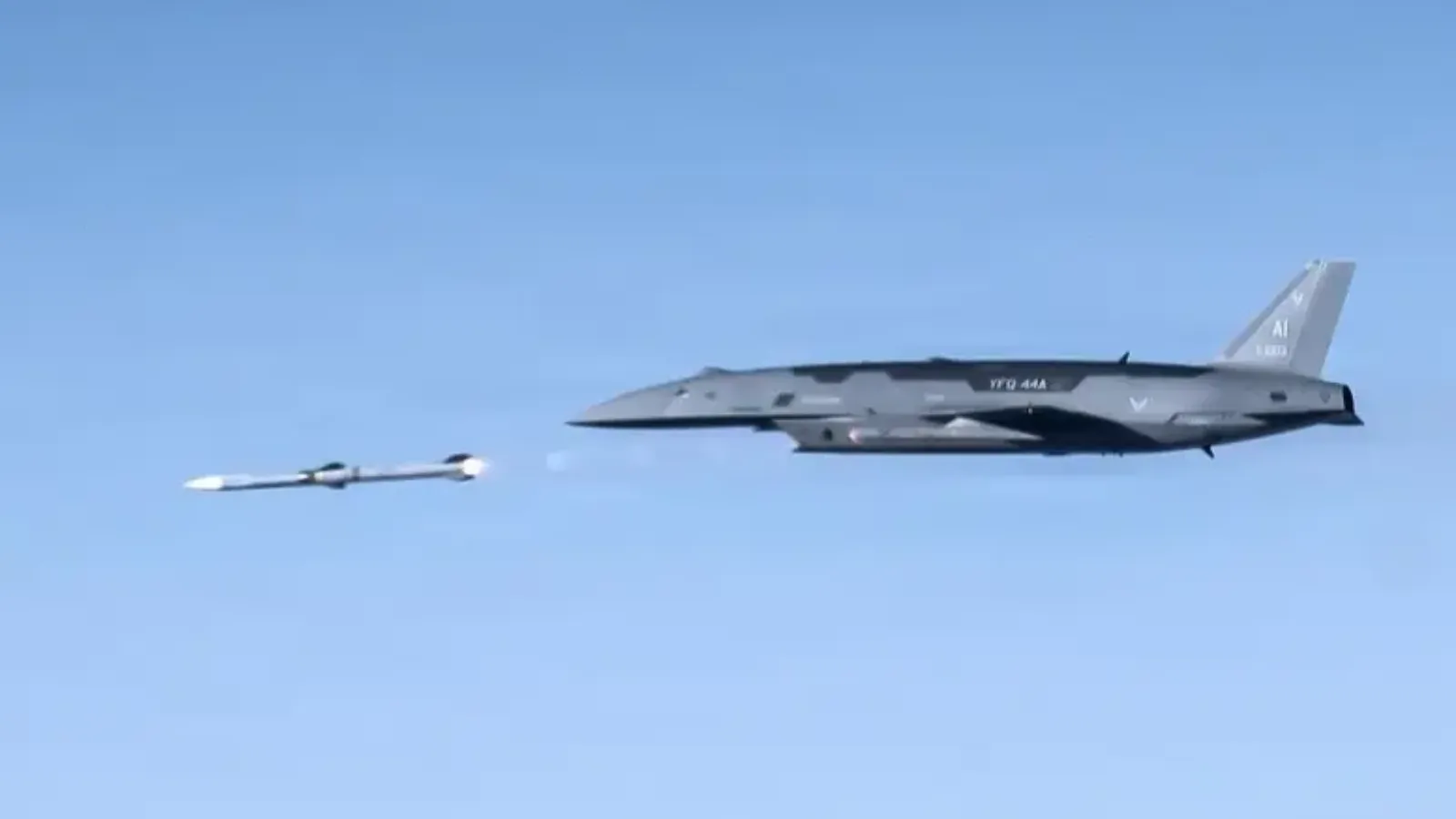
The MQ-28 has emerged as one of the most mature programs in this rapidly evolving sector. Boeing and the RAAF have already completed extensive flight testing, including autonomous teaming demonstrations, operational deployments, and missile firing trials.
The platform has also undergone radar cross-section validation testing to verify its survivability characteristics in contested environments.
From a strategic perspective, the latest upgrades indicate Boeing is positioning the Ghost Bat not only for Australian requirements but also for a growing international market. Germany has shown interest in collaborative combat aircraft concepts, and Boeing recently expanded its industrial partnerships in Europe to support future opportunities.
Why The Upgrade Matters
The significance of the MQ-28 upgrade extends beyond individual performance improvements.
Modern air warfare increasingly depends on a combination of crewed and uncrewed systems operating as an integrated force. Larger payload capacity, longer endurance, internal weapons carriage, and improved connectivity directly enhance the aircraft’s ability to perform that role.
Rather than serving solely as a reconnaissance platform, the upgraded Ghost Bat moves closer to becoming a true combat asset capable of contributing meaningful firepower while supporting manned aircraft in high-threat environments.
As air forces prepare for future conflicts involving advanced air defenses and long-range engagements, collaborative combat aircraft such as the MQ-28 are expected to play an increasingly central role in force structure planning.
Executive Summary:
Airbus has unveiled its most comprehensive military drone portfolio to date at ILA Berlin 2026, led by the new U760 Ravenstorm combat drone and autonomous U145 helicopter.
The announcement highlights Europe’s growing focus on sovereign unmanned systems, collaborative combat aircraft, and AI-enabled defense technologies amid rising security demands.
Airbus Drone Portfolio Takes Center Stage At ILA Berlin 2026
Airbus drone portfolio capabilities were on full display at ILA Berlin 2026 as the European aerospace giant showcased a broad range of unmanned systems designed for surveillance, reconnaissance, intelligence gathering, and future multi-domain operations.
The exhibition comes as European governments continue investing in defense modernization programs following years of increased security concerns across the continent. Airbus positioned its unmanned systems lineup as a key component of Europe’s effort to strengthen technological sovereignty while expanding operational flexibility for military forces.
The company presented platforms covering multiple mission categories, ranging from small tactical drones to long-endurance strategic systems capable of supporting joint military operations.
Broad UAV Portfolio Targets Multiple Mission Sets
At the center of Airbus’ display was the company’s growing family of unmanned aerial systems designed to support land, air, and maritime operations.
The portfolio includes tactical reconnaissance drones, larger intelligence and surveillance platforms, and collaborative systems intended to operate alongside manned aircraft. Airbus emphasized interoperability and mission adaptability, reflecting the evolving requirements of modern armed forces.
Military planners increasingly seek UAVs capable of conducting intelligence, surveillance, target acquisition, reconnaissance, communications relay, and battle damage assessment missions within a single operational framework. Airbus’ presentation highlighted how its systems can contribute to these requirements across varying operational environments.
The company’s unmanned systems strategy aligns with broader NATO and European defense priorities focused on improving situational awareness and accelerating decision-making during military operations.
Eurodrone Remains A Key Strategic Program
A major element of the Airbus drone portfolio is the Eurodrone program, one of Europe’s most significant collaborative defense aviation projects.
Developed jointly by Germany, France, Italy, and Spain, Eurodrone is intended to provide a sovereign medium-altitude, long-endurance (MALE) capability for European armed forces. Airbus serves as the program’s industrial lead alongside major European defense partners.
The aircraft is designed to perform long-duration intelligence, surveillance, reconnaissance, and target acquisition missions while operating in controlled airspace. The program aims to provide European nations with an alternative to reliance on imported strategic UAV systems.
Eurodrone continues to be viewed as a cornerstone of Europe’s future airborne intelligence architecture and remains one of the continent’s most closely watched defense aviation programs.
Growing Demand For Autonomous And Unmanned Systems
The Airbus drone portfolio arrives at a time when military organizations worldwide are accelerating investments in autonomous and remotely operated systems.
Recent conflicts have demonstrated the growing importance of drones across tactical and strategic levels of warfare. UAVs are increasingly used for reconnaissance, electronic warfare support, targeting assistance, and operational intelligence.
European governments have responded by increasing procurement budgets and supporting domestic industrial capabilities. Airbus’ emphasis on a fully European drone ecosystem reflects these trends and addresses concerns about supply chain security, operational independence, and long-term sustainment.
From a strategic perspective, the company’s approach extends beyond individual platforms. Airbus is positioning itself as a provider of integrated unmanned solutions capable of supporting networked military operations and future multi-domain battle management systems.
Analysis: Why The Airbus Drone Portfolio Matters
The significance of Airbus’ showcase extends beyond product marketing.
Europe’s defense sector is entering a period of rapid transformation driven by higher military spending, changing security requirements, and increasing demand for indigenous defense technologies. In this environment, unmanned systems have become a central pillar of modernization efforts.
Airbus’ decision to present its entire UAV ecosystem at ILA Berlin demonstrates how drone technology is moving from a niche capability to a core military requirement.
The company’s strategy also reflects a broader industrial competition underway between European manufacturers and established global drone producers. While many nations continue to procure proven foreign systems, European governments increasingly seek locally developed alternatives that provide greater control over technology, maintenance, and operational data.
Another notable aspect is the emphasis on scalability. Modern militaries require drone fleets spanning multiple operational levels, from small tactical units to strategic intelligence platforms. Airbus appears focused on addressing this full spectrum rather than relying on a single flagship program.
As European defense budgets continue to rise, companies capable of offering integrated and sovereign unmanned solutions may gain a significant advantage in upcoming procurement competitions.
Outlook For European UAV Development
The Airbus drone portfolio showcased at ILA Berlin 2026 highlights the company’s ambition to play a leading role in Europe’s expanding unmanned aviation sector.
With programs such as Eurodrone advancing and demand for military UAVs continuing to grow, Airbus is positioning itself to support future European requirements across surveillance, reconnaissance, intelligence gathering, and multi-domain operations.
The exhibition also reinforces a broader trend within European defense policy: strengthening indigenous industrial capabilities while reducing dependence on external suppliers for critical military technologies.
As governments across Europe continue modernizing their armed forces, unmanned systems are expected to remain a major investment priority, creating opportunities for both established aerospace firms and emerging defense technology providers.
Executive Summary:
The United Kingdom has confirmed that the majority of funding for its largest-ever drone package for Ukraine will be directed to British-based manufacturers, including Tekever, Windracers, and Malloy Aeronautics. The initiative aims to deliver at least 120,000 drones to Ukraine in 2026 while simultaneously strengthening the UK’s domestic defense industrial base and sustaining high-skilled jobs.
UK Ukraine Drone Deal Drives Investment Into Domestic Drone Industry
The UK Ukraine drone deal is set to become one of the most significant defense industrial initiatives undertaken by London since the start of Russia’s full-scale invasion of Ukraine.
According to a statement presented to Parliament by Minister for Defence Readiness and Industry Luke Pollard, the majority of spending associated with the United Kingdom’s largest drone support package for Ukraine will remain within the country, benefiting British manufacturers and expanding domestic production capacity.
The package, first announced during the Ukraine Defence Contact Group meeting in April, will provide at least 120,000 drones to Ukrainian forces during 2026. Deliveries are already underway.
Pollard stated that the government intends to use the initiative not only to support Ukraine’s battlefield requirements but also to strengthen Britain’s long-term defense manufacturing capabilities.
British Firms Selected For Major Drone Production Effort
Three companies were specifically identified as key beneficiaries of the program:
Tekever
Tekever has become one of Europe’s most recognized drone manufacturers following the operational success of its AR3 and AR5 unmanned aerial systems.
The company’s long-endurance reconnaissance drones have been employed extensively by Ukrainian forces for intelligence, surveillance, and maritime monitoring missions. The systems have reportedly supported operations against Russian naval assets in the Black Sea and along key frontline sectors.
Tekever has steadily expanded its manufacturing footprint in the United Kingdom, positioning itself as a major supplier of tactical and operational-level surveillance drones.
Windracers
Windracers, headquartered at Solent Airport in Hampshire, produces the ULTRA autonomous cargo aircraft.
Designed for logistics and resupply missions, the twin-engine aircraft can transport cargo autonomously across challenging environments. Military planners increasingly view autonomous logistics platforms as critical force multipliers capable of reducing risk to personnel while sustaining frontline operations.
The inclusion of Windracers highlights the growing importance of autonomous logistics technologies within modern military operations.
Malloy Aeronautics
Malloy Aeronautics, acquired by BAE Systems in 2024, develops heavy-lift quadcopter systems including the T150 and T400 platforms.
These drones are designed to transport supplies, ammunition, and equipment to forward positions. Ukrainian forces have employed heavy-lift unmanned systems to address logistical challenges created by contested battlefields and persistent artillery threats.
The company’s integration into BAE Systems has also increased its ability to scale production and support larger defense programs.
Why The Deal Matters Beyond Ukraine
While the immediate objective of the Ukraine drone package is to support Kyiv’s military requirements, the program reflects a broader shift in Western defense procurement strategies.
Governments across NATO are increasingly using operational assistance programs to stimulate domestic defense production and secure long-term manufacturing capacity.
The war in Ukraine has demonstrated that modern conflicts can consume drones at unprecedented rates. Both Ukraine and Russia have used thousands of unmanned systems each month for reconnaissance, strike missions, electronic warfare support, and logistics operations.
As a result, industrial scalability has become nearly as important as technological sophistication.
The UK’s approach mirrors similar efforts in the United States and across Europe, where governments are investing heavily in drone production lines, supply chains, and advanced manufacturing facilities.
Growing Demand For Military Drones Across Europe
The UK Ukraine drone deal also reflects the broader transformation of Europe’s defense landscape.
Since 2022, military planners have accelerated procurement of tactical reconnaissance drones, loitering munitions, autonomous logistics platforms, and electronic warfare-enabled unmanned systems.
Lessons learned from Ukraine continue to influence procurement decisions throughout NATO, particularly regarding affordability, rapid production, and operational adaptability.
Unlike traditional defense acquisition programs that often require years of development, drone technologies can be updated and fielded at a much faster pace. This agility has become a key factor in military modernization strategies.
For British industry, the program offers an opportunity to demonstrate production capacity while securing future export opportunities in a rapidly expanding global drone market.
Strengthening The UK’s Defense Industrial Base
The government’s emphasis on domestic suppliers underscores a growing recognition that industrial resilience is a strategic asset.
Pollard told Parliament that directing investment toward UK-based firms would support high-skilled employment while strengthening production capacity across the defense sector.
The strategy seeks to ensure that emergency support for Ukraine generates lasting economic and industrial benefits within the United Kingdom.
As demand for unmanned systems continues to grow globally, British manufacturers positioned within the UK Ukraine drone deal could emerge as important players in future NATO and allied procurement programs.
Strategic Outlook
The delivery of at least 120,000 drones represents one of the largest unmanned system support initiatives announced by any Western nation for Ukraine.
Beyond the immediate military impact, the program highlights how governments are increasingly linking defense assistance, industrial policy, and long-term national security objectives.
For Ukraine, the package provides a substantial influx of unmanned capabilities. For Britain, it serves as an opportunity to strengthen domestic manufacturing capacity and reinforce its position within the rapidly evolving global drone sector.
Executive Summary:
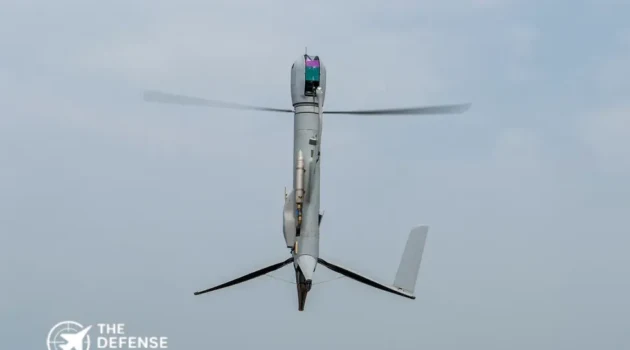
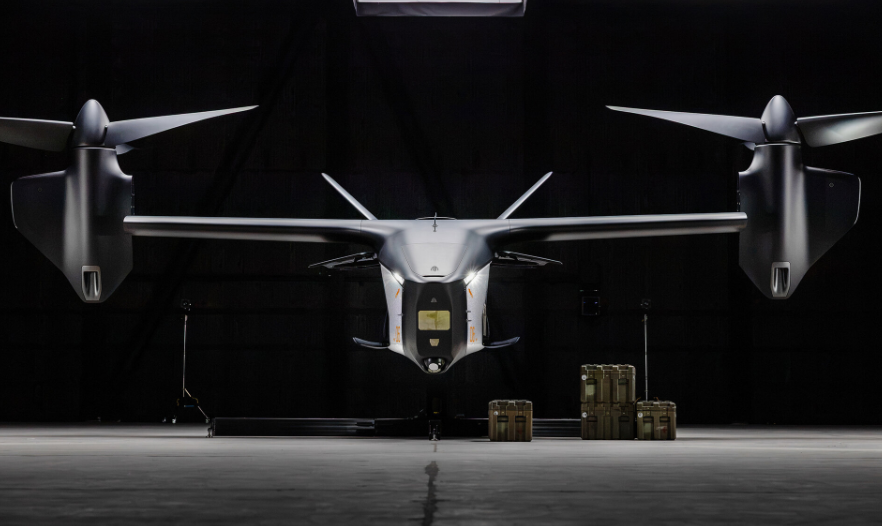
Airbus Helicopters has introduced the U145, an autonomous and uncrewed version of its widely used H145 helicopter. Unveiled at ILA Berlin 2026, the platform is designed to support cargo logistics, surveillance, disaster response, and military operations while advancing Airbus’ broader autonomous aviation strategy.
Airbus Unveils U145 Autonomous Helicopter At ILA Berlin 2026
The Airbus U145 autonomous helicopter marks a significant step in the evolution of rotary-wing unmanned aviation. Revealed by Airbus Helicopters during the ILA Berlin Air Show, the new platform transforms the proven H145 helicopter into an uncrewed aircraft system capable of conducting autonomous missions across military and civilian sectors.
Airbus displayed a full-scale mock-up of the U145 at the event and announced plans for a maiden flight by the end of 2026 with a safety pilot onboard. Entry into operational service is expected in the early 2030s.
According to Airbus Helicopters CEO Matthieu Louvot, the U145 combines the payload capacity, airframe maturity, and operational experience of the H145 with the autonomy capabilities typically associated with advanced unmanned aerial systems.
-
Designed For Autonomous Cargo And Military Missions
Unlike the conventional H145, the U145 removes the physical cockpit entirely and replaces it with a dedicated sensor suite and artificial intelligence-driven autonomy system. Airbus says the aircraft is being optimized primarily for high-volume cargo transportation, particularly in environments where crewed operations may be risky or inefficient.
The aircraft incorporates several structural modifications, including:
- Integrated nose cargo door
- Foldable loading table
- Dedicated cargo floor
- Autonomous navigation and mission management systems
These changes are intended to streamline logistics operations while maximizing payload flexibility.
With a maximum takeoff weight of 3,800 kilograms, the U145 offers significantly greater lift capacity than many conventional unmanned aircraft currently in service.
Expanding Beyond Logistics
Although logistics support is the primary focus, Airbus is positioning the U145 as a modular platform capable of supporting a wide range of future missions.
Potential applications include:
- Military resupply operations
- Armed reconnaissance
- Intelligence, surveillance, and reconnaissance (ISR)
- Disaster response
- Firefighting support
- Drone mothership missions
- Crewed-uncrewed teaming operations
Airbus confirmed it is working with MBDA on concepts involving air-launched effects and drone mothership capabilities, reflecting growing interest among Western militaries in distributed and networked battlefield operations.
Part Of Airbus’ Broader Autonomous Aviation Strategy
The U145 represents Airbus’ second major effort to convert an existing helicopter into an autonomous platform. It follows the VSR700 program, which adapted the Cabri G2 helicopter into an unmanned system.
The announcement also aligns with Airbus’ ongoing investments in crewed-uncrewed teaming technologies. In 2025, the company unveiled HTeaming, a modular system designed to allow helicopter crews to control unmanned aircraft during flight. Together, these initiatives indicate Airbus is building an integrated ecosystem that connects crewed helicopters, autonomous aircraft, and future battlefield networks.
From a defense modernization perspective, the U145 reflects a broader industry trend toward autonomous logistics and operational support platforms. Armed forces increasingly view uncrewed rotorcraft as a way to reduce personnel risk while maintaining supply chains in contested environments.
Implications For Future Military Aviation
The launch of the Airbus U145 autonomous helicopter comes as military organizations across NATO and allied nations accelerate investment in autonomous aviation technologies.
The platform’s reliance on an already established helicopter design could offer several advantages. By leveraging the H145’s extensive operational history, Airbus may reduce technical risk, simplify maintenance planning, and accelerate certification compared with developing a completely new aircraft from scratch. The H145 family currently numbers more than 1,800 aircraft worldwide and has accumulated over 8.5 million flight hours across military, public service, and civilian missions.
As defense planners seek resilient logistics solutions and scalable autonomous capabilities, the U145 could emerge as a notable contender in the growing market for medium-lift uncrewed rotorcraft.
Executive Summary:
Türkiye has officially inducted the Roketsan IHA-230 air-launched supersonic ballistic missile into service, providing its unmanned combat aircraft with a long-range stand-off strike capability. The development marks a significant evolution in Turkish drone warfare, allowing platforms such as the Bayraktar AKINCI to engage high-value targets from beyond 150 kilometers while remaining outside many air defense engagement zones.
Türkiye Fields IHA-230 Missile On Combat Drones
The IHA-230 missile has entered operational service with the Turkish Land Forces, marking a major step in Türkiye’s effort to expand the combat effectiveness of its unmanned aerial systems. The announcement was made during a Turkish Ministry of National Defence briefing on June 4, confirming that inspection and acceptance procedures had been completed and the missile had been formally inducted into service.
Developed by Roketsan, the IHA-230 is an air-launched derivative of the TRG-230 guided missile family. Unlike the small precision-guided munitions commonly carried by drones, the weapon is designed to deliver long-range, high-speed strikes against critical targets from stand-off distances. According to manufacturer and defense reporting, the missile can engage targets at ranges exceeding 150 kilometers, depending on launch altitude and aircraft speed.
The system is primarily associated with the Bayraktar AKINCI unmanned combat aerial vehicle, though Roketsan has also identified compatibility with the AKSUNGUR and future integration potential for the KIZILELMA unmanned combat aircraft.
Expanding The Role Of Combat Drones
The introduction of the IHA-230 missile reflects a broader shift in how militaries are employing unmanned aircraft.
For more than a decade, armed drones have largely focused on intelligence gathering and precision strikes using relatively lightweight munitions. The addition of a supersonic ballistic missile changes that equation by enabling drones to conduct deeper attacks against command centers, air defense systems, infrastructure, and maritime targets without entering heavily defended airspace.
The missile reportedly combines inertial and satellite navigation systems with anti-jamming features and terminal guidance options, allowing precision engagement of fixed targets. Defense reports indicate the weapon can carry different warhead configurations tailored to mission requirements.
From an operational perspective, the concept offers commanders a faster sensor-to-shooter cycle. A drone can identify a target, launch the missile from stand-off range, and remain on station to assess strike results or support follow-on missions. This capability reduces dependence on manned aircraft for certain strike missions and provides greater operational flexibility.
Why The Capability Matters
The significance of the IHA-230 missile extends beyond the weapon itself.
Türkiye has become one of the world’s leading exporters of armed drones, with systems such as the Bayraktar TB2 and AKINCI seeing widespread international adoption. The integration of a long-range supersonic strike weapon demonstrates the continued maturation of the country’s indigenous defense industry and unmanned warfare doctrine.
For NATO, the development introduces an additional precision-strike capability on the alliance’s southeastern flank. Unmanned platforms equipped with stand-off missiles can contribute to suppression of enemy air defenses, strike operations against high-value targets, and maritime security missions while minimizing risk to aircrews.
The capability also aligns with broader military trends emphasizing distributed operations, networked warfare, and the use of unmanned systems to perform missions traditionally assigned to crewed aircraft.
A New Phase In Turkish Unmanned Warfare
The IHA-230 missile represents more than the addition of a new munition to Türkiye’s arsenal. It signals the emergence of a doctrine in which drones function as long-range strike platforms capable of delivering battlefield effects previously associated with fighter aircraft and ground-based missile forces.
As Türkiye continues integrating advanced weapons across platforms such as AKINCI, AKSUNGUR, and KIZILELMA, its unmanned force structure is evolving into a layered strike network that combines persistence, precision, and stand-off reach.
While operational deployment details remain limited, the induction of the IHA-230 missile demonstrates Ankara’s commitment to expanding indigenous strike capabilities and strengthening its position in the rapidly evolving global unmanned warfare landscape.
Executive Summary:
Boeing has successfully validated the radar cross-section performance of its MQ-28 Ghost Bat collaborative combat aircraft through a series of radar signature tests announced on June 1, 2026. The milestone provides objective data on the aircraft’s survivability and detection risk, supporting its role as a stealthy autonomous wingman designed to operate alongside advanced crewed fighters in contested environments.
Boeing MQ-28 Ghost Bat Completes Key Stealth Validation Testing
Boeing’s MQ-28 Ghost Bat collaborative combat aircraft has successfully completed a major radar cross-section (RCS) testing campaign, marking an important milestone in the maturation of one of the most advanced autonomous combat aircraft currently under development.
The company announced that the testing validated the aircraft’s low-observable characteristics and generated objective, repeatable data regarding survivability and radar detection risk. The results represent another step toward operational deployment of the MQ-28 as a collaborative combat aircraft capable of supporting crewed fighters during high-threat missions.
The testing comes as air forces across the United States, Australia, and Europe accelerate efforts to field autonomous aircraft that can operate alongside manned platforms as force multipliers.
Why Radar Cross-Section Testing Matters
Radar cross-section testing is one of the most important assessments performed on a stealth aircraft. It measures how much radar energy is reflected back toward an enemy sensor when the aircraft is illuminated by radar signals.
A lower radar signature generally reduces the distance at which an aircraft can be detected, tracked, and engaged by hostile air defense systems.
According to Boeing, the MQ-28 testing was conducted to provide customers with measurable data on survivability and detection risks rather than relying solely on computer modeling or design predictions.
Key Benefits of Low Radar Signature
Capability Operational Benefit Reduced detection range Increases survivability in contested airspace Lower tracking probability Complicates enemy targeting processes Enhanced penetration capability Supports operations near advanced air defenses Improved force protection Reduces risk to crewed aircraft operating nearby While Boeing has not disclosed specific RCS measurements, the company stated that the testing validated the effectiveness of the aircraft’s design, manufacturing approach, and material selection in reducing radar visibility.
Designed for Fighter Teaming Operations
The MQ-28 Ghost Bat was originally developed by Boeing Defence Australia under the Loyal Wingman program in partnership with the Royal Australian Air Force.
Unlike traditional remotely piloted drones, the aircraft is designed to operate as an autonomous teammate for crewed aircraft.
The platform can perform a range of missions, including:
- Intelligence, surveillance, and reconnaissance (ISR)
- Electronic warfare
- Airborne sensing
- Decoy operations
- Strike support
- Force protection missions
The aircraft’s open-architecture design and modular nose section allow operators to rapidly swap mission payloads depending on operational requirements.
Boeing states that the MQ-28 can fly more than 2,000 nautical miles and is designed to complement both current and future combat aircraft.
Recent Program Momentum Accelerates
The radar validation milestone follows several significant achievements for the Ghost Bat program over the past year.
In December 2025, Boeing and the Royal Australian Air Force successfully conducted an autonomous air-to-air missile engagement involving an MQ-28, an E-7A Wedgetail airborne early warning aircraft, and an F/A-18F Super Hornet. The exercise demonstrated the aircraft’s ability to participate in complex cooperative combat operations.
More recently, the MQ-28 completed its first operational flights outside Australia during testing at Point Mugu, California. The deployment demonstrated the aircraft’s ability to operate from allied bases and validated autonomous mission functions in an international environment.
These achievements indicate that the program is moving beyond basic flight testing and into increasingly operationally relevant demonstrations.
Strategic Significance for Collaborative Combat Aircraft
The successful RCS validation carries implications beyond the MQ-28 program itself.
Collaborative Combat Aircraft (CCA) are expected to become a central component of future air warfare concepts. The U.S. Air Force, Australian Defence Force, and several NATO allies are investing heavily in autonomous wingman programs intended to increase combat mass without proportionally increasing personnel requirements.
For these aircraft to operate effectively in high-threat environments, survivability is essential.
A stealthy collaborative combat aircraft can move closer to enemy defenses, collect intelligence, perform electronic warfare missions, or act as a forward sensor while reducing risks to more expensive crewed platforms.
Why This Matters for Future Air Combat
Several trends are driving demand for stealth-capable autonomous aircraft:
- Expansion of integrated air defense systems
- Growth of long-range surface-to-air missile networks
- Increasing aircraft procurement costs
- Demand for greater combat mass
- Requirements for distributed operations across the Indo-Pacific
The MQ-28 addresses many of these challenges by combining autonomy, modularity, and low-observable design into a platform intended to support fourth, fifth, and future sixth-generation aircraft.
Export Potential Continues to Grow
The timing of the radar validation is also significant as Boeing seeks to position the MQ-28 for broader international adoption.
The aircraft has already attracted attention from allied nations evaluating collaborative combat aircraft solutions. Successful RCS validation provides an important data point for prospective operators assessing survivability requirements.
Combined with recent operational demonstrations in the United States and ongoing integration activities with allied air forces, the milestone strengthens the MQ-28’s standing within the rapidly expanding global market for autonomous combat aircraft.
Looking Ahead
The MQ-28 Ghost Bat program has progressed from an experimental loyal wingman concept into one of the most mature collaborative combat aircraft initiatives currently flying.
The successful radar cross-section testing confirms that the platform’s stealth design performs as intended and provides additional evidence of the aircraft’s readiness for increasingly demanding operational evaluations.
As militaries continue pursuing manned-unmanned teaming concepts, low-observable autonomous aircraft such as the MQ-28 are expected to play an increasingly important role in future air combat operations.
Executive Summary:
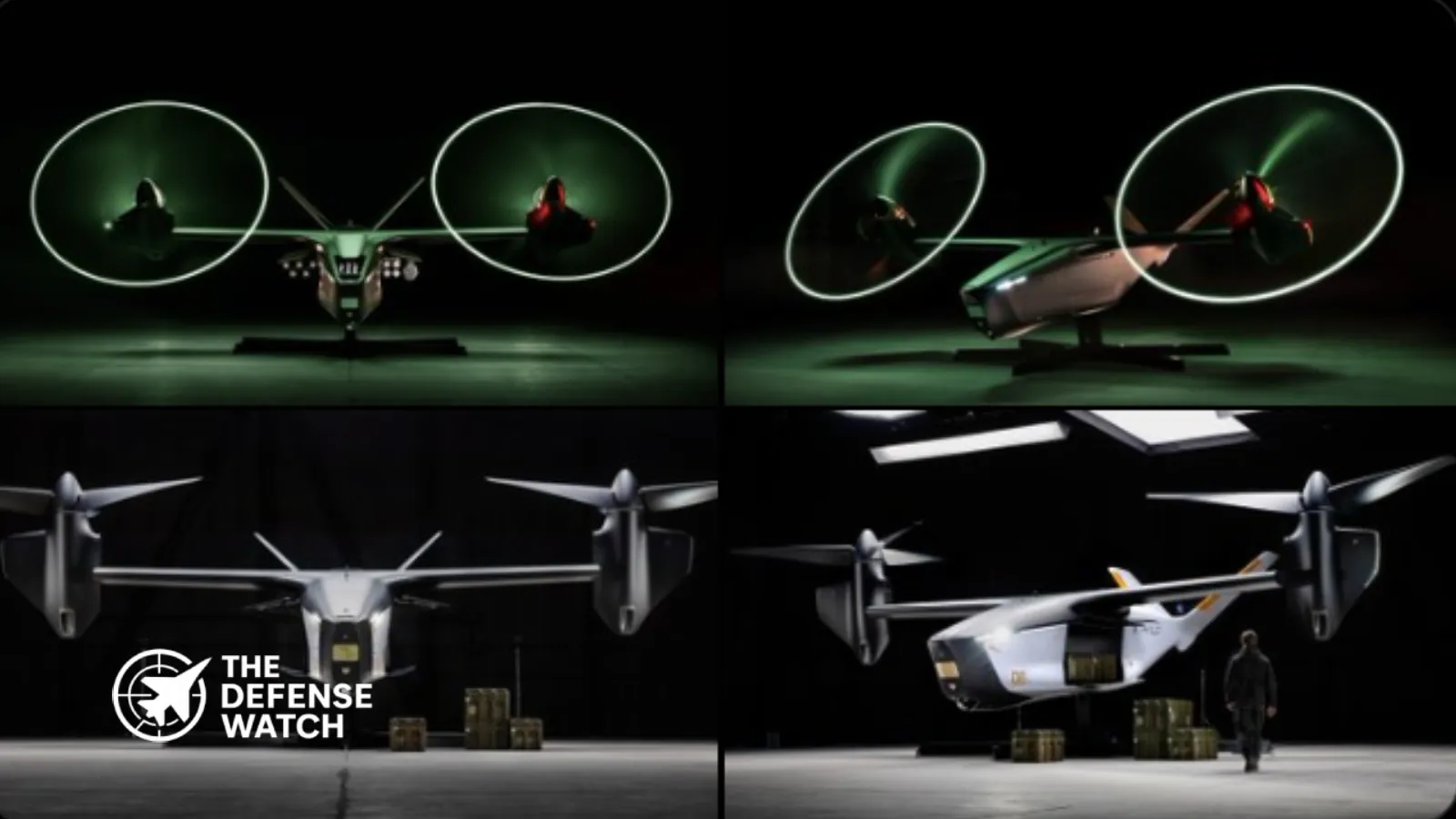
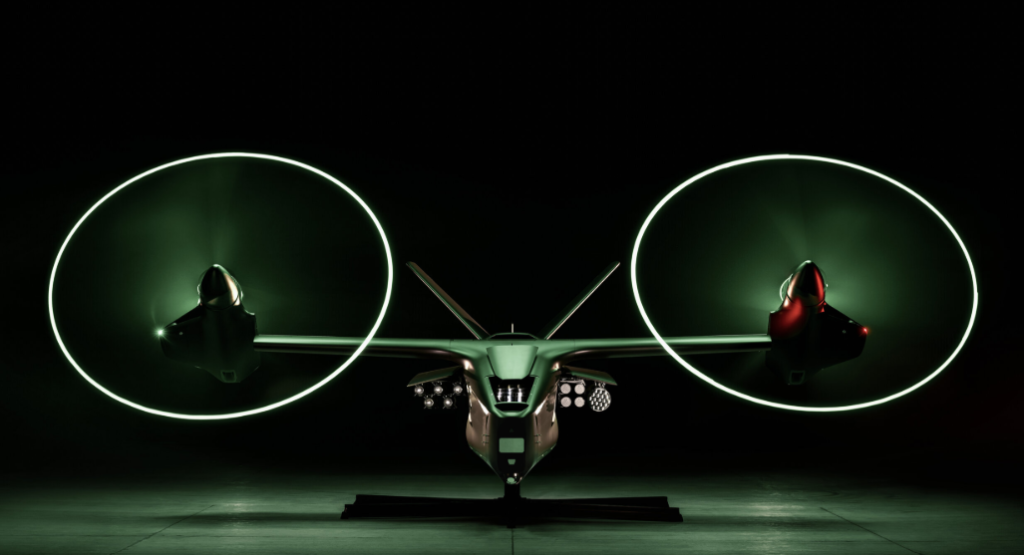
Tycho.AI, an MIT spin-off based in Cambridge, Massachusetts, is pitching the Pentagon on the Halley, a compact tail-sitting VTOL drone interceptor designed to replicate the low-cost, high-effectiveness model of Ukrainian counter-UAS systems. The electrically powered platform reaches speeds of 174 knots and uses AI-enabled Voyager autonomy for GPS-denied operations. This development addresses growing US military demand for economical solutions to counter proliferating one-way attack drones like the Iranian Shahed.
Tycho.AI is positioning its Halley interceptor to bring battle-proven, Ukraine-style drone defense capabilities to the US market. As drone warfare dominates modern conflicts, the startup aims to deliver a more affordable alternative to existing high-cost counter-UAS platforms.
The system targets a key vulnerability exposed in both Ukraine and recent Middle East operations: the unsustainable expense of using advanced missiles against cheap loitering munitions and one-way attack drones.
Ukraine’s Counter-Drone Innovation Drives Global Interest
Ukraine’s four-year conflict with Russia has reshaped air defense priorities. According to the Ukrainian Ministry of Defense, drones account for as many as 80% of military strikes and a similar share of battlefield casualties.
To conserve expensive Western-supplied missiles, Ukrainian forces and industry developed low-cost interceptors such as the Wild Hornets Sting and SkyFall P1-Sun. These systems, often costing under $5,000, achieve speeds in the hundreds of kilometers per hour and effectively engage threats like the Shahed-136/Geran-2, which cost around $35,000.
This approach contrasts sharply with traditional US systems like Raytheon’s Coyote or Anduril’s Roadrunner, which, while effective, carry price tags in the hundreds of thousands of dollars due to larger platforms and more complex propulsion.
Halley: Design and Performance Specifications
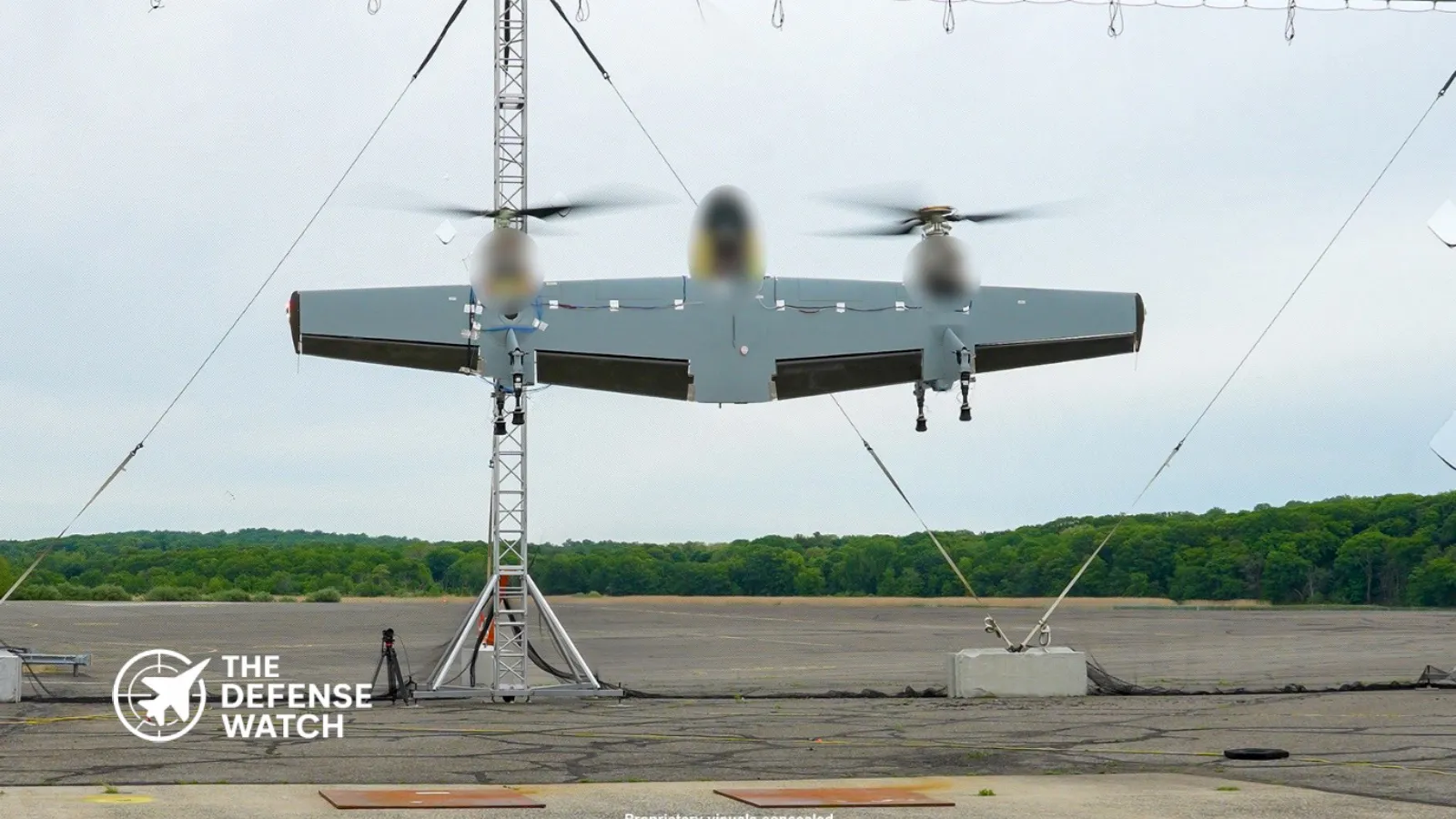
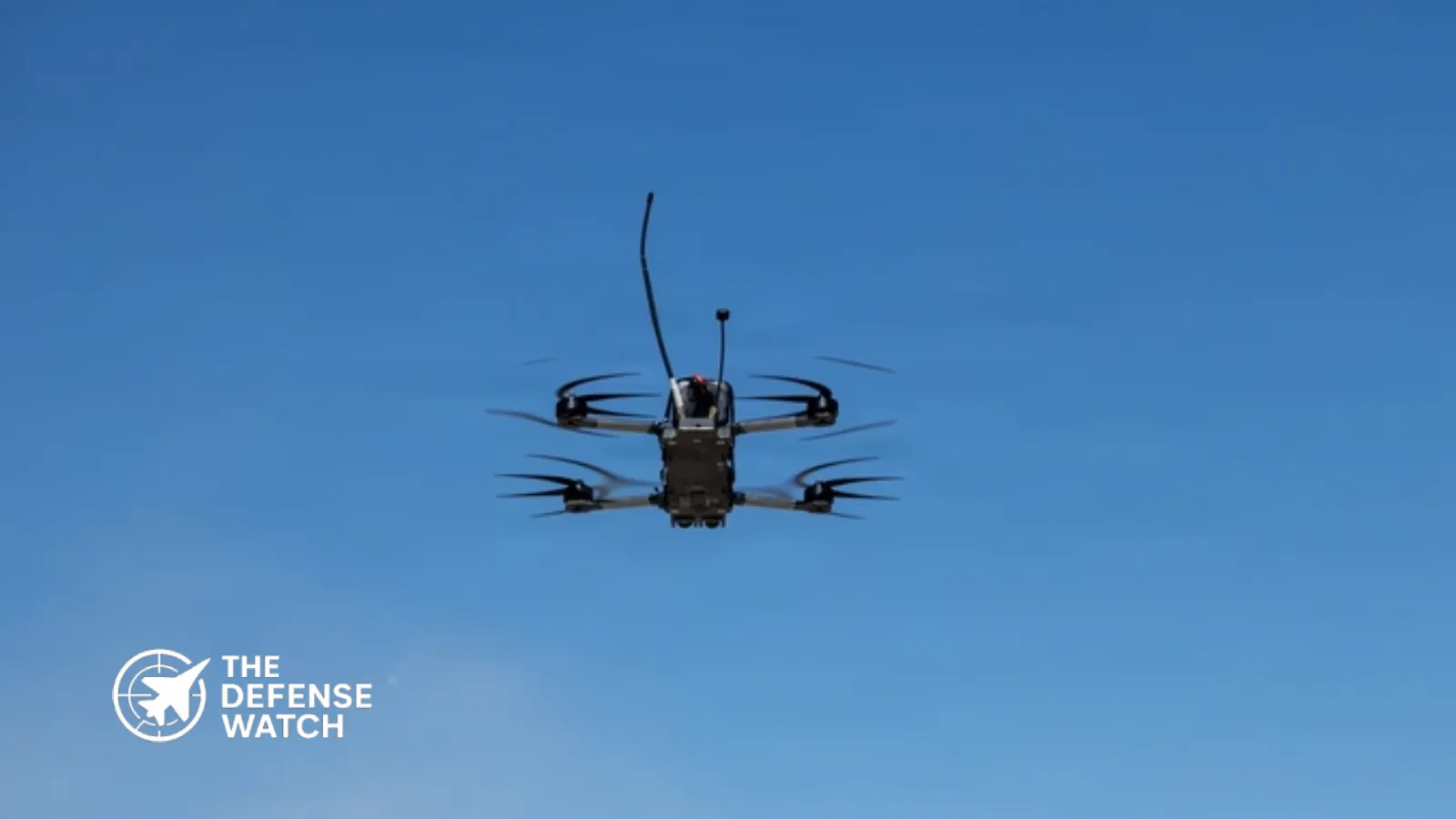
Tycho.AI’s Halley is a tail-sitting, electrically powered VTOL interceptor featuring a fixed-wing delta configuration with two large winglets and four rotors. The design combines vertical takeoff and landing convenience with efficient forward flight.
Key performance parameters include:
- Maximum speed: 174 knots (322 km/h)
- Range: Approximately 50 km (27 nm) in current configuration
- Endurance: 20 minutes on battery, with improvements targeting extended performance
- Service ceiling: 10,000 feet
Phillip Pitsky, senior vice-president of growth at Tycho.AI, described the system as “an FPV drone that can go extremely fast and be extremely agile, but also with a very stable flight system.”
The company is currently in low-rate initial production and accepting orders, with options for customization in cameras, motors, and payloads. Neither the Halley platform nor its Voyager guidance software is export-restricted.
Voyager AI: Enabling Autonomous Operations
Central to Halley’s effectiveness is Tycho.AI’s Voyager system — an AI-enabled visual navigation solution that supports operations without GPS. The tablet-based interface integrates threat data from existing counter-UAS sensors to autonomously guide the interceptor.
Early testing employed remote FPV-style control, but future trials will demonstrate fully autonomous target engagement. Operators will simply designate threats for interception, with Halley handling launch and terminal guidance independently.
This autonomy addresses contested electromagnetic environments where jamming and spoofing degrade traditional navigation.
Strategic Context and Pentagon Demand
US interest in low-cost interceptors has intensified amid threats from Iranian Shahed-style drones targeting bases and assets in the Middle East. High-cost missile engagements against low-value targets strain budgets and inventories, mirroring challenges faced by Ukrainian forces.
Tycho.AI reports the “main demand signal” from the Pentagon centers on ground-launched counter-UAS applications against such threats. Discussions also explore air-launched variants, potentially deployable from aircraft dispensers for forward positioning against incoming drone waves.
US Special Operations Command is anticipated as the launch customer, with Tycho expecting its first full-scale contract award in the coming months.
Analysis: Closing the Cost-Effectiveness Gap
The emergence of platforms like Halley represents a necessary evolution in US counter-UAS strategy. Traditional kinetic interceptors excel in high-end threats but prove economically inefficient against massed, low-cost drone swarms. Ukraine’s experience demonstrates that sustainable defense requires matching the attacker’s production economics.
Tycho.AI’s approach leverages commercial-off-the-shelf elements and academic roots at MIT to accelerate development while maintaining military-grade performance. The fixed-wing VTOL design offers operational flexibility over pure multi-rotor FPV systems, potentially improving range and speed without sacrificing agility.
However, challenges remain. Battery technology limits endurance, though the company is addressing this. Integration with broader US air defense networks, including command-and-control systems, will determine real-world effectiveness. Scalability to high-rate production will be critical if the system is to counter potential peer-level drone campaigns.
Compared to competitors, Halley’s emphasis on affordability and autonomy positions it well for both domestic adoption and allied export markets facing similar asymmetric threats. Success could influence broader DoD procurement toward attritable, mass-producible systems.
This aligns with ongoing US military modernization efforts emphasizing resilience in contested environments and cost-per-kill metrics.
Broader Implications for US Defense Modernization
The Tycho.AI initiative fits into a larger pattern of incorporating lessons from Ukraine into American capabilities. From electronic warfare to attritable munitions, the conflict serves as a real-world laboratory for next-generation systems.
For the US, adopting lower-cost interceptors could preserve high-value missile stocks for strategic threats while providing layered defense options against tactical drone incursions.
Executive Summary: Boeing has received a $21.6 million contract modification from the U.S. Navy to support advanced cybersecurity certification efforts for the MQ-25A Stingray unmanned tanker program. The work focuses on validating secure cross-domain communications and mission management systems that will enable the aircraft to operate within increasingly complex and classified military networks.
The U.S. Naval Air Systems Command (NAVAIR), headquartered in Patuxent River, Maryland, has awarded Boeing a $21.62 million contract modification to support cybersecurity and mission systems certification activities for the MQ-25A Stingray program. According to the Department of Defense announcement, the modification adds engineering work, hardware procurement, and laboratory testing capabilities necessary to validate critical security components of the aircraft’s mission management architecture.
The effort specifically supports certification of the mission management system computer’s Multi-Level Security (MLS) Switch and MLS Guard technologies against standards established by the National Cross Domain Strategy and Management Office (NCDSMO). The testing is intended to support National Security Agency (NSA) assessment requirements under Raise-the-Bar (RTB) Version 5.1 Increment 2 and Increment 3 security standards.
Deep Technical & Strategic Context Analysis
While the MQ-25A is widely recognized as the U.S. Navy’s first carrier-based unmanned aerial refueling aircraft, its strategic significance extends well beyond tanker operations. The platform is expected to become a critical node within future naval battle networks, sharing data between carrier strike groups, airborne assets, intelligence platforms, and command centers operating across multiple classification levels.
The latest contract highlights a growing Pentagon focus on secure cross-domain solutions. In military network architecture, a cross-domain solution allows information to move between networks operating at different security classifications while preventing unauthorized disclosure or compromise. As modern combat increasingly relies on distributed sensors, artificial intelligence, and collaborative targeting networks, the ability to securely transfer information between classified and less-classified environments has become a mission-critical capability.
The Multi-Level Security Switch and Guard being tested under this contract serve as digital gatekeepers within the MQ-25’s mission architecture. These systems inspect, filter, and validate data before it crosses security boundaries. Achieving NSA certification under Raise-the-Bar standards represents one of the most demanding cybersecurity benchmarks within the U.S. national security community.
From a procurement perspective, the modification was added to an existing contract that combines fixed-price-incentive-fee, cost-plus-incentive-fee, and cost-plus-fixed-fee elements. Such hybrid structures are commonly used for advanced defense development efforts where technical risk remains significant. Fixed-price portions encourage cost control, while cost-reimbursable elements provide flexibility for complex engineering tasks where requirements may evolve during testing and certification.
The cybersecurity effort also reflects the Navy’s broader vision for integrating unmanned systems into future carrier air wings. Beyond aerial refueling, MQ-25 technologies are expected to inform future unmanned strike, intelligence, surveillance, reconnaissance, and collaborative combat aircraft concepts operating in contested Indo-Pacific environments.
Contract Breakdown & Details
Contract Value
- Contract Modification: P00091
- Award Value: $21,619,263
- Prime Contractor: Boeing, St. Louis, Missouri
- Original Contract Number: N00019-18-C-1012
- Contract Type: Fixed-price-incentive-fee, cost-plus-incentive-fee, and cost-plus-fixed-fee modification
- Competition Status: Not competed
Scope of Work
The modification funds:
- Non-recurring engineering activities
- Cybersecurity certification support
- Hardware procurement
- Laboratory testing infrastructure
- Mission Management System security validation
- MLS Switch and MLS Guard certification testing
- NSA assessment support for cross-domain solutions
Program Objective
The effort supports:
- MQ-25A Stingray mission systems
- National Cross Domain Strategy and Management Office testing standards
- Raise-the-Bar Version 5.1 Increment 2 requirements
- Raise-the-Bar Version 5.1 Increment 3 requirements
- National Security Agency certification activities
Geographic Distribution of Work
Work will be performed across multiple U.S. defense and technology centers:
Location Share St. Louis, Missouri 53.5% Melbourne, Florida 25.0% El Segundo, California 18.0% Alameda, California 1.5% Pleasanton, California 1.0% Heath, Ohio 1.0% Funding Details
- Funding Source: Fiscal Year 2026 Research, Development, Test & Evaluation (RDT&E), Navy
- Amount Obligated at Award: $15,633,634
- Expiration Status: Funds will not expire at the end of the current fiscal year
Schedule
- Contracting Authority: Naval Air Systems Command (NAVAIR)
- Contract Completion: December 2028
Why This Contract Matters
Although relatively modest in dollar value compared with major aircraft production awards, this modification addresses one of the most challenging aspects of next-generation military aviation: trusted data movement across classified networks. As the Department of Defense accelerates Joint All-Domain Command and Control (JADC2) initiatives and network-centric warfare concepts, cybersecurity certification has become as strategically important as traditional aircraft performance metrics.
For the MQ-25A program, successful completion of these certification efforts will help ensure the aircraft can securely participate in future naval combat networks while supporting the Navy’s long-term transition toward a more connected and increasingly autonomous carrier air wing.
Executive Summary:
The U.S. Army and defense industry partners have successfully tested a TRV-150 logistics drone armed with a three-shot APKWS rocket launcher during live-fire demonstrations at Fort Rucker, Alabama. The effort is designed to move precision-strike capabilities closer to frontline battalion-level units while also supporting future counter-drone and expeditionary warfare missions.
The demonstration reflects a broader Pentagon push to increase the lethality and flexibility of unmanned systems using existing weapons inventories and lower-cost precision engagement options.
U.S. Army Tests Armed TRV-150 Drone With APKWS Precision Rockets
The U.S. Army has conducted a live-fire demonstration of an armed TRV-150 tactical resupply drone equipped with a three-shot Advanced Precision Kill Weapon System (APKWS) launcher, marking a significant step toward expanding precision-strike capabilities at the battalion level.
The May 20 test at Fort Rucker, Alabama, brought together multiple Army aviation and modernization organizations alongside industry partners Survice Engineering and BAE Systems FalconWorks. The demonstration evaluated the performance of the TRV-150 while carrying and firing laser-guided 70 mm rockets from an externally mounted launcher.
According to Army officials, the initiative is intended to provide smaller tactical formations with access to precision-guided fires traditionally delivered by attack helicopters or fixed-wing aircraft.
Logistics Drone Gains Offensive Capability
The TRV-150 was originally developed as a tactical resupply platform for the U.S. Army and U.S. Marine Corps. Designed to transport up to 150 pounds of cargo, the unmanned aircraft has been used to support distributed logistics operations in contested environments.
Survice Engineering integrated the drone with BAE Systems’ APKWS launcher, transforming the aircraft from a logistics asset into a multi-role platform capable of conducting precision engagements against ground and potentially aerial targets.
The APKWS system converts standard Hydra 70 rockets into laser-guided precision munitions through the addition of a guidance kit. The weapon is already operational across several U.S. military platforms, including the AH-64 Apache and various rotary-wing and fixed-wing aircraft.
During testing, engineers evaluated flight stability, launcher integration, software performance, and aircraft response during rocket launches.
Key System Components
Component Description Platform TRV-150 Tactical Resupply Vehicle Manufacturer Survice Engineering Payload Capacity Up to 150 pounds Weapon System APKWS three-shot launcher Rocket Type Laser-guided 70 mm Hydra rockets Test Location Fort Rucker, Alabama Mission Roles Precision strike, logistics, counter-UAS Army Focuses On Battalion-Level Precision Fires
One of the most significant aspects of the demonstration is the Army’s effort to push advanced strike capabilities to lower tactical echelons.
Traditionally, precision-guided rocket attacks require support from attack aviation units, artillery formations, or higher-level command structures. By mounting APKWS rockets on a tactical drone, Army planners are exploring ways to provide battalion commanders with an organic precision-strike capability that can be rapidly deployed without waiting for external support.
Industry officials involved in the program said the project was self-funded beginning in early 2025 rather than developed under a formal government requirement. The goal was to demonstrate a capability that could address emerging battlefield demands before official procurement programs are established.
The Fort Rucker event followed previous APKWS firing tests conducted at Dugway Proving Ground, where the drone reportedly engaged both aerial and ground targets.
Why APKWS Matters In Modern Combat
The growing interest in APKWS reflects a broader shift across Western militaries toward lower-cost precision engagement options.
Unlike larger guided missiles that can cost hundreds of thousands or even millions of dollars per shot, APKWS provides a comparatively affordable precision weapon while maintaining accuracy against a wide range of targets.
The system has increasingly attracted attention for counter-drone operations, where commanders seek ways to defeat low-cost unmanned threats without expending expensive air-defense missiles.
Recent U.S. and allied testing efforts have expanded APKWS employment beyond helicopters. Variants have been demonstrated on MQ-9 Reaper drones, fighter aircraft, and now tactical logistics drones.
This trend reflects lessons learned from conflicts in Ukraine and the Middle East, where large numbers of one-way attack drones and loitering munitions have challenged traditional air-defense architectures.
Technical Challenges Of Armed Tactical Drones
While the concept appears straightforward, integrating guided rockets onto a relatively small unmanned aircraft presents several engineering challenges.
Rocket launches generate sudden impulse forces that can disrupt flight stability, especially on lightweight rotary-wing drones. During the Fort Rucker testing, engineers focused heavily on yaw control, launcher effects, and impulse compensation to ensure the aircraft remained stable after firing.
The TRV-150’s autonomous flight management system played a critical role during testing. The drone uses automated route planning, range calculations, and mission management tools designed to reduce operator workload and simplify deployment in combat environments.
Successfully managing these launch dynamics is essential if armed logistics drones are to become operationally viable.
Operational Implications For Future Battlefields
The demonstration highlights a broader transformation underway across the U.S. military’s unmanned systems strategy.
Rather than fielding drones dedicated solely to logistics, surveillance, or strike missions, military planners increasingly favor modular platforms capable of rapidly changing roles based on operational needs.
The TRV-150 exemplifies that approach. A platform delivering ammunition or medical supplies during one mission could potentially conduct precision strike operations during another simply by changing payload configurations.
Such flexibility could prove valuable in contested environments where traditional aviation assets face elevated risks from enemy air defenses.
The concept also aligns with Pentagon guidance encouraging lethal payload options across unmanned aerial systems portfolios. By leveraging existing Hydra rocket inventories and proven APKWS technology, the Army may be able to field new combat capabilities without waiting for entirely new weapons programs.
Counter-Drone Potential Emerging As Key Mission Area
Beyond ground attack operations, the armed TRV-150 could eventually support counter-unmanned aircraft missions.
Previous testing reportedly included engagements against Group 2 aerial targets, suggesting the platform may have potential as a low-cost interceptor against hostile drones.
This capability is becoming increasingly important as military forces worldwide confront growing threats from mass-produced one-way attack drones. Current air-defense systems often rely on expensive interceptors that create unfavorable cost-exchange ratios.
An autonomous drone carrying multiple APKWS rockets could provide a more affordable engagement option while expanding defensive coverage around forward operating bases and maneuver formations.
Upcoming experimentation at White Sands Missile Range and Eglin Air Force Base is expected to further evaluate these concepts, including base defense and counter-UAS missions.
Strategic Significance
The Fort Rucker demonstration represents more than a simple weapons integration test. It reflects how the Army is adapting to battlefield trends that increasingly favor distributed operations, autonomous systems, and affordable precision effects.
If future testing proves successful, armed logistics drones could help bridge the gap between traditional resupply platforms and dedicated strike aircraft. They could provide commanders with an additional layer of responsive firepower while reducing reliance on scarce aviation assets.
The initiative also illustrates how commercial and defense industry innovation is increasingly driving military experimentation. Rather than waiting for formal acquisition requirements, companies are demonstrating capabilities first and allowing military operators to assess their operational value afterward.
As the Army prepares for future large-scale combat operations, systems like the armed TRV-150 may become part of a broader ecosystem of unmanned platforms delivering logistics, reconnaissance, strike, and counter-drone effects from a single modular architecture.
Executive Summary:
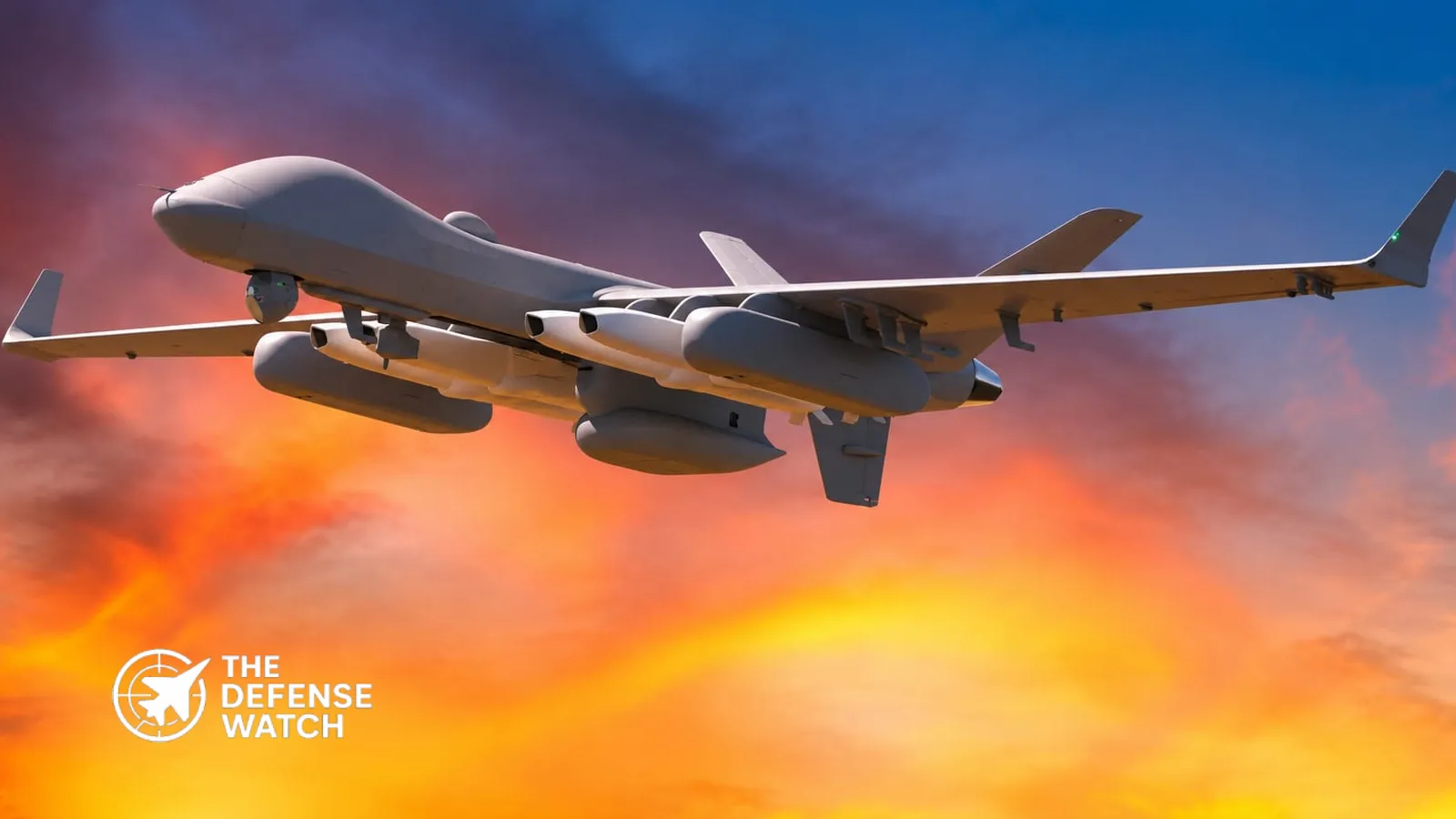
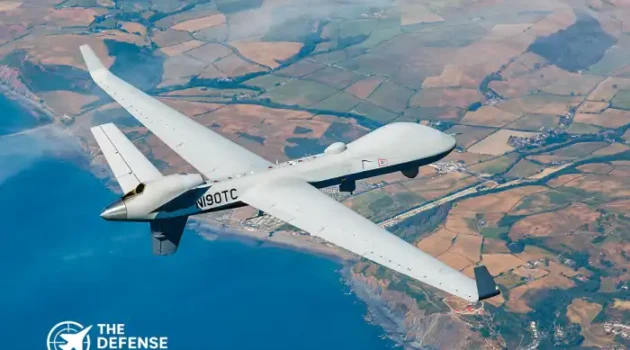
Saab and General Atomics Aeronautical Systems successfully completed the first flight of an unmanned airborne early warning solution using the MQ-9B drone and Saab’s LoyalEye radar. The program aims to deliver long-endurance airborne surveillance capabilities while reducing operational risk to aircrews and expanding persistent ISR coverage.
Saab And GA-ASI Advance MQ-9B Airborne Early Warning Capability
The MQ-9B airborne early warning program reached a major milestone after Saab and General Atomics Aeronautical Systems, Inc. (GA-ASI) completed the first flight of Saab’s LoyalEye radar aboard an unmanned MQ-9B aircraft.
The test flight took place on May 19 at GA-ASI’s Desert Horizon flight operations facility in Southern California. According to both companies, the successful sortie marks the beginning of a multi-month evaluation campaign that will conclude with a full operational capability demonstration later in 2026.
The flight represents what Saab and GA-ASI describe as the world’s first unmanned airborne early warning (AEW) solution. The system combines Saab’s radar surveillance expertise with the MQ-9B’s long-endurance unmanned flight profile.
The development comes as defense planners increasingly seek persistent intelligence, surveillance, and reconnaissance (ISR) capabilities that can remain airborne for extended periods while reducing exposure of manned crews to contested environments.
LoyalEye Radar Expands MQ-9B Mission Set
Saab’s LoyalEye sensor is designed to provide airborne detection and tracking capabilities traditionally associated with larger manned AEW&C aircraft.
The system was integrated onto the MQ-9B platform under a partnership announced in 2025 between Saab and GA-ASI. The companies say the aircraft will support missions including:
- Early warning and threat detection
- Long-range aerial surveillance
- Multi-target tracking
- Beyond-line-of-sight operations
- SATCOM-enabled ISR missions
Carl Johan Bergholm, Head of Saab’s Surveillance business area, said the unmanned configuration is intended to complement existing manned airborne surveillance fleets rather than replace them.
According to Saab, the MQ-9B airborne early warning system could provide extended operational reach and improved flexibility for military commanders operating in large theaters where persistent sensor coverage is essential.
The addition of airborne radar surveillance also significantly expands the MQ-9B’s traditional ISR mission profile. The aircraft family has primarily been associated with reconnaissance and strike operations, but the LoyalEye integration positions the platform for theater-wide air surveillance and command support roles.
Why Unmanned AEW Matters
The unmanned airborne early warning concept reflects broader military trends toward distributed sensing and lower-risk ISR operations.
Traditional AEW&C aircraft such as the Boeing E-3 Sentry or Saab’s GlobalEye provide powerful surveillance capabilities but require large crews and high operational support demands.
By contrast, the MQ-9B airborne early warning system is designed around a medium-altitude, long-endurance unmanned platform capable of remaining airborne far longer than many crewed aircraft.
GA-ASI President David R. Alexander stated that the new system is intended to defend against a range of threats, including guided missiles, drones, tactical air munitions, fighter aircraft, and bomber platforms.
The use of an unmanned aircraft also aligns with evolving operational concepts focused on survivability and distributed operations. In high-threat environments, commanders increasingly favor systems that can continue operating without placing pilots and onboard crews directly at risk.
That operational logic has become particularly important as modern battlefields see expanding use of long-range missiles, electronic warfare systems, and layered air defense networks.
Growing Demand For Persistent ISR And Air Surveillance
The MQ-9B airborne early warning initiative also highlights growing global demand for persistent airborne sensing.
NATO members and Indo-Pacific allies have accelerated investments in ISR and early warning systems following lessons drawn from the war in Ukraine, tensions in the Indo-Pacific, and expanding drone warfare capabilities worldwide.
Persistent radar coverage is increasingly viewed as critical for detecting:
- Low-flying cruise missiles
- Small unmanned aerial systems
- Swarming drone attacks
- Long-range aviation threats
- Maritime air activity
The MQ-9B’s endurance profile may offer advantages in these missions. Unlike traditional AEW aircraft that often require larger support structures and shorter operational rotations, an unmanned system can potentially maintain surveillance coverage for significantly longer durations.
This could prove particularly valuable for maritime security operations, border surveillance, expeditionary deployments, and dispersed force structures.
The development may also strengthen Saab’s position in the airborne surveillance sector beyond its established GlobalEye program. Meanwhile, GA-ASI continues expanding the MQ-9B family into specialized mission roles beyond conventional ISR and strike operations.
Strategic Implications For Future Air Operations
The successful flight test signals a broader shift in how militaries may approach airborne command and surveillance missions over the next decade.
Rather than relying solely on a limited number of high-value manned AEW&C aircraft, future air operations may increasingly use a mix of crewed and uncrewed platforms operating in coordinated networks.
This distributed approach could improve operational resilience while reducing vulnerability to long-range precision strikes targeting critical airborne assets.
The MQ-9B airborne early warning program remains in its testing phase, but the successful first flight demonstrates that unmanned platforms are moving into mission areas once considered exclusive to large crewed aircraft.
If the evaluation program proceeds successfully later this year, the Saab and GA-ASI partnership could establish a new category of operational airborne surveillance capability for allied militaries seeking persistent and lower-risk ISR coverage.