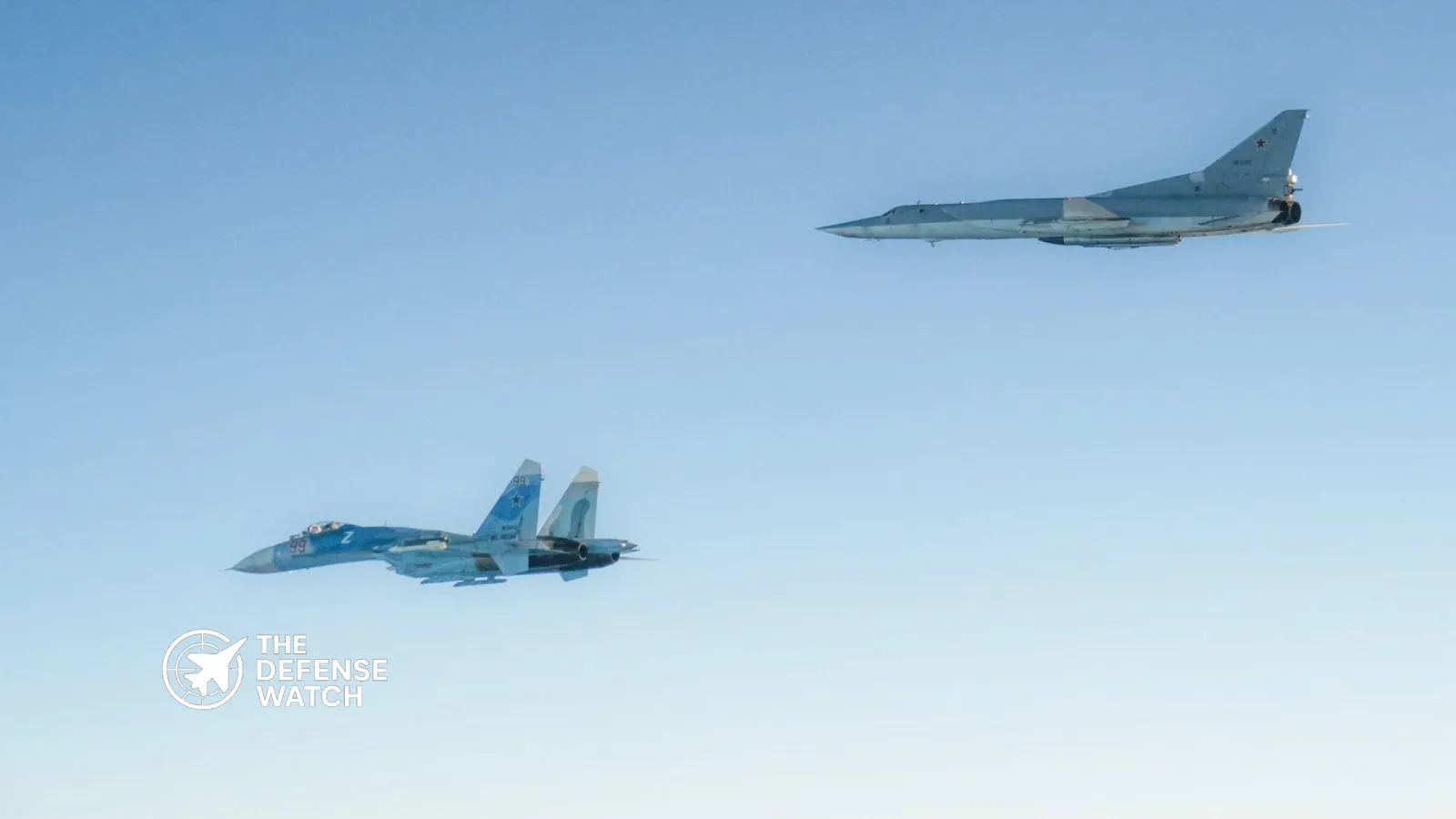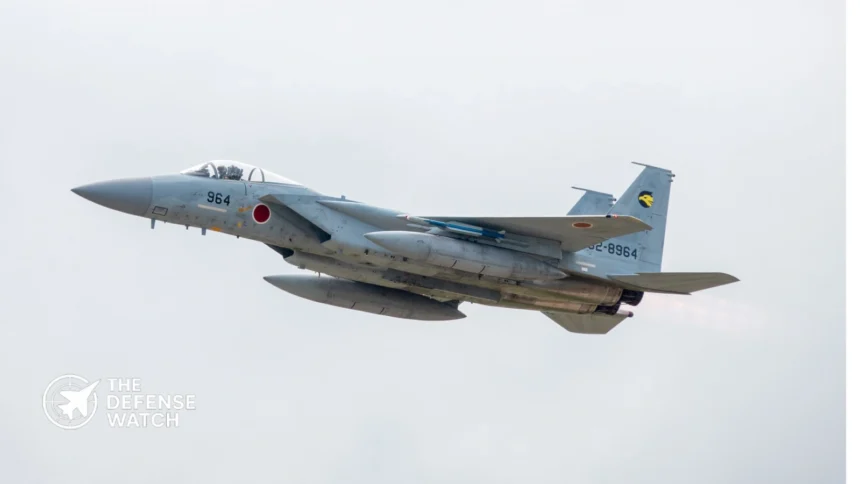
Japan scrambled fighter jets after two suspected Russian military aircraft separately entered its airspace near Okinoshima, off Fukuoka Prefecture, early on November 17, prompting Tokyo to lodge a strong diplomatic protest with Moscow.
The Japan Ministry of Defense confirmed that the aircraft entered Japanese airspace northwest of Okinoshima at approximately 4:07 a.m. and 4:09 a.m. local time. Each aircraft remained inside the country’s airspace for approximately three minutes before continuing south.
Japan Air Self-Defense Force (JASDF) fighters from the Western Air Defense Command were scrambled to respond. The Japanese aircraft issued notifications and warnings to the suspected Russian planes, according to the Defense Ministry.
The incident is significant because it involved an alleged intrusion into sovereign Japanese airspace, rather than simply an unauthorized entry into an air defense identification zone.
Two Separate Airspace Incursions Near Okinoshima
Japan’s Defense Ministry provided a detailed timeline of the incident in an official announcement released on November 17.
According to the ministry, the first suspected Russian aircraft entered Japanese airspace at approximately 4:07 a.m. and exited around 4:10 a.m. A second aircraft entered at approximately 4:09 a.m. and left around 4:12 a.m.
The two incursions therefore overlapped briefly.
The ministry identified the location as northwest of Okinoshima, an island in Fukuoka Prefecture in southwestern Japan.
Japan did not publicly identify the aircraft types, their military units, or their specific mission. The official description remained suspected Russian aircraft, meaning their Russian origin was assessed by Japanese authorities rather than established through a publicly disclosed aircraft identification.
Following the airspace incursions, the JASDF dispatched fighter aircraft to issue warnings and respond to the intrusion.
The suspected Russian aircraft subsequently continued south through the Tsushima Strait, passed between Yonaguni Island and Taiwan, and proceeded toward the Pacific Ocean, according to the Japanese Defense Ministry.
No exchange of fire or physical confrontation was reported.
Tokyo Lodges Diplomatic Protest With Moscow
Japan’s government strongly condemned the incident and demanded that Russia take measures to prevent another airspace violation.
Chief Cabinet Secretary Minoru Kihara described the alleged intrusion as a serious infringement of Japanese sovereignty and a threat to national security.
Tokyo communicated its protest through diplomatic channels and called on Moscow to prevent similar incidents in the future.
Defense Minister Shinjiro Koizumi also described the incident as unacceptable. Japan’s Defense Ministry said the Self-Defense Forces would continue monitoring Russian military movements and maintain appropriate responses to potential airspace violations.
The incident adds another point of friction to Japan-Russia relations, which have remained strained over several issues, including the longstanding territorial dispute involving the southern Kuril Islands, administered by Russia as the Northern Territories by Japan.
The two countries have not signed a formal peace treaty ending the Second World War.
South Korea Also Scrambles Fighters After Russian Aircraft Enter KADIZ
Japan’s response occurred alongside a separate Russian military aviation incident involving South Korea.
Seoul’s Joint Chiefs of Staff said several Russian military aircraft entered the Korea Air Defense Identification Zone (KADIZ) over the East Sea, also known as the Sea of Japan, during the early hours of November 17.
South Korean military authorities detected the aircraft before they entered the identification zone and deployed fighter jets to prepare for potential contingencies.
The Russian aircraft subsequently left the zone without violating South Korean sovereign airspace, according to the Joint Chiefs of Staff.
South Korea did not publicly disclose the number or specific types of Russian aircraft involved.
The distinction between the Japanese and South Korean incidents is important.
An air defense identification zone is an area established outside a country’s sovereign airspace to identify and monitor approaching aircraft. It allows military authorities to track potentially unidentified aircraft before they approach national territory.
An ADIZ is not equivalent to territorial airspace. Its establishment does not give a country sovereignty over the entire area, and the legal requirements governing foreign military aircraft operating within such zones differ from those governing sovereign airspace.
Military aircraft are commonly expected to provide advance notification when entering another country’s ADIZ, although this is not a universal legal requirement.
South Korea explicitly stated that the Russian aircraft did not enter its territorial airspace. Japan, by contrast, reported two separate airspace violations.
Why the Incidents Matter for Regional Air Defense
The simultaneous reports from Japan and South Korea highlight the monitoring requirements facing U.S. allies in Northeast Asia.
Both countries maintain extensive air surveillance networks and rely on fighter aircraft to respond when foreign military aircraft approach or enter designated air defense areas.
For Japan, the JASDF’s air defense mission is particularly important because of the country’s extensive maritime approaches and proximity to Russia, China and North Korea.
The Western Air Defense Command is responsible for protecting Japan’s southwestern approaches. Its fighter units provide an immediate response capability when unidentified or potentially hostile aircraft approach Japanese airspace.
Russian military aviation activity in the region has also involved flights through international airspace near Japan and South Korea. Such operations can require repeated monitoring and fighter deployments even when aircraft remain outside sovereign airspace.
The latest Japanese incident is particularly notable because Tokyo reported an actual territorial airspace intrusion, not merely a flight through an ADIZ.
However, the available information does not establish whether the aircraft deliberately entered Japanese airspace, experienced a navigation error, or were conducting an operation intended to test Japanese air defense responses.
Japan has not released sufficient information to establish the aircraft’s mission or operational purpose.
Previous Russian Airspace Violation
The November 17 incident also recalls a previous Russian aircraft intrusion reported by Japan in September 2024.
At that time, a Russian Il-38 maritime patrol aircraft entered Japanese airspace near Rebun Island, north of Hokkaido, on three occasions.
Japan scrambled fighter aircraft in response and used flares to signal warnings to the Russian aircraft. The incident attracted attention because it marked the first publicly reported use of flares by Japanese fighters during an airspace violation response.
The latest incident near Okinoshima demonstrates that Japan continues to face airspace monitoring challenges across geographically separated parts of its territory.
For now, Tokyo has demanded an explanation and preventive measures from Moscow. Neither the aircraft types nor the circumstances behind the November 17 incursions have been fully established in publicly released information.
Enjoying our coverage?
Make The Defense Watch a preferred source on Google to see more of our geopolitical and defense insights when relevant to you.