Britain’s Royal Air Force (RAF) is reportedly moving aircraft into hangars and hardened shelters overnight as the UK military responds to growing concerns about unmanned aerial threats against military installations.
The reported precautions include plans to install anti-drone netting around aircraft that cannot be moved under cover, particularly those parked near runways or at airbases with limited protected storage capacity.
Sky News and The Times reported the measures on November 25, 2026, although neither publication identified its sources for the information. The Ministry of Defence (MoD) has not publicly confirmed the specific aircraft movements or the reported netting plans.
A ministry spokesperson told Reuters that the UK takes the security of its bases, equipment and personnel seriously and continually adapts to potential threats. The statement did not confirm whether the reported overnight protection measures had been implemented.
The reports come as Britain faces a wider security challenge involving suspicious drone activity, concerns about hostile reconnaissance and warnings about potential sabotage against defense-related organizations.
Drone Threats Put Military Airbases Under Greater Pressure
The concern surrounding RAF aircraft protection reflects a measurable increase in drone-related incidents near British military installations.
According to figures released by the Ministry of Defence on February 2, 2026, there were 266 reported unmanned aerial vehicle incidents near UK defense sites during 2025, compared with 126 in 2024.
That represents more than a doubling in reported incidents within a year.
The figures do not establish that every incident involved hostile activity or an attempted attack. However, they demonstrate the growing security burden created by unauthorized drones operating near sensitive military infrastructure.
The British government has already begun expanding its counter-uncrewed aerial systems capabilities.
In February, the MoD announced that more than £200 million would be allocated to counter-drone technology during the year. It also outlined plans to strengthen the legal authority of defense personnel to deal with drones threatening military installations through the Armed Forces Bill.
The measures include improved surveillance, automated detection systems and additional security arrangements around military facilities.
Why Aircraft Are Being Moved Under Cover
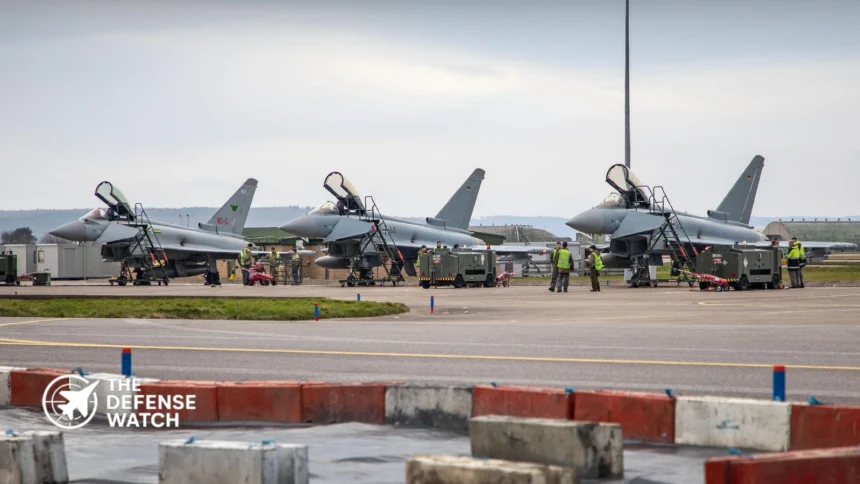
Military aircraft are particularly vulnerable when parked outdoors for extended periods.
Although modern airbases employ perimeter security, surveillance systems and controlled access, aircraft positioned on exposed parking aprons can remain vulnerable to relatively inexpensive unmanned systems.
Small drones do not need to destroy an aircraft to disrupt military operations. They can potentially damage exposed equipment, interfere with flight operations, force temporary airfield closures or create additional security requirements.
A successful attack against an aircraft on the ground could also impose significant maintenance demands and reduce the number of available aircraft for operational duties.
Moving aircraft into hangars and hardened shelters provides an additional physical protection layer.
However, hardened aircraft shelters and conventional hangars serve different purposes. Reinforced shelters are designed to provide greater protection against certain external threats, while ordinary hangars primarily offer environmental protection and controlled maintenance space.
The effectiveness of either option depends on its construction, location and the nature of the threat.
Sky News also reported that the RAF is considering anti-drone netting around aircraft that remain exposed.
Such netting has become familiar in Ukraine, where protective structures are used around military equipment and infrastructure to complicate attacks by incoming drones.
For British airbases, similar measures could provide additional protection for aircraft that cannot be accommodated inside existing facilities.
However, netting is not a complete counter-drone solution. It does not replace detection systems, electronic countermeasures, physical security or active air defense.
RAF Dispersal Strategy Gains Greater Importance
Aircraft protection is only one part of the RAF’s wider effort to maintain combat capability under attack.
A more significant operational challenge is ensuring that an adversary cannot disable a large proportion of the UK’s available airpower through attacks against a small number of airbases.
Concentrating aircraft at a limited number of major installations creates logistical efficiencies during peacetime. However, it can also increase the potential consequences of a successful attack against those facilities.
Dispersal reduces this concentration by allowing aircraft, personnel and support equipment to operate from multiple locations.
RAF Chief of the Air Staff Air Chief Marshal Sir Harv Smyth recently emphasized the importance of preparing for operations in which UK military aircraft may need to move between locations rather than remain concentrated at their normal bases.
Speaking at the Freeman Air and Space Institute, Smyth described the need for the RAF to prepare for a situation in which there is no sanctuary at home.
He also highlighted the experience of relocating aircraft during runway construction at RAF Brize Norton.
According to Sky News, aircraft were dispersed between locations including Prestwick and MOD Boscombe Down while the RAF maintained its air mobility operations.
The experience provided an opportunity to demonstrate that aircraft and associated operations could continue despite the temporary unavailability of a major operating base.
The RAF has also tested dispersed operations through Exercise Agile Owl in October 2026.
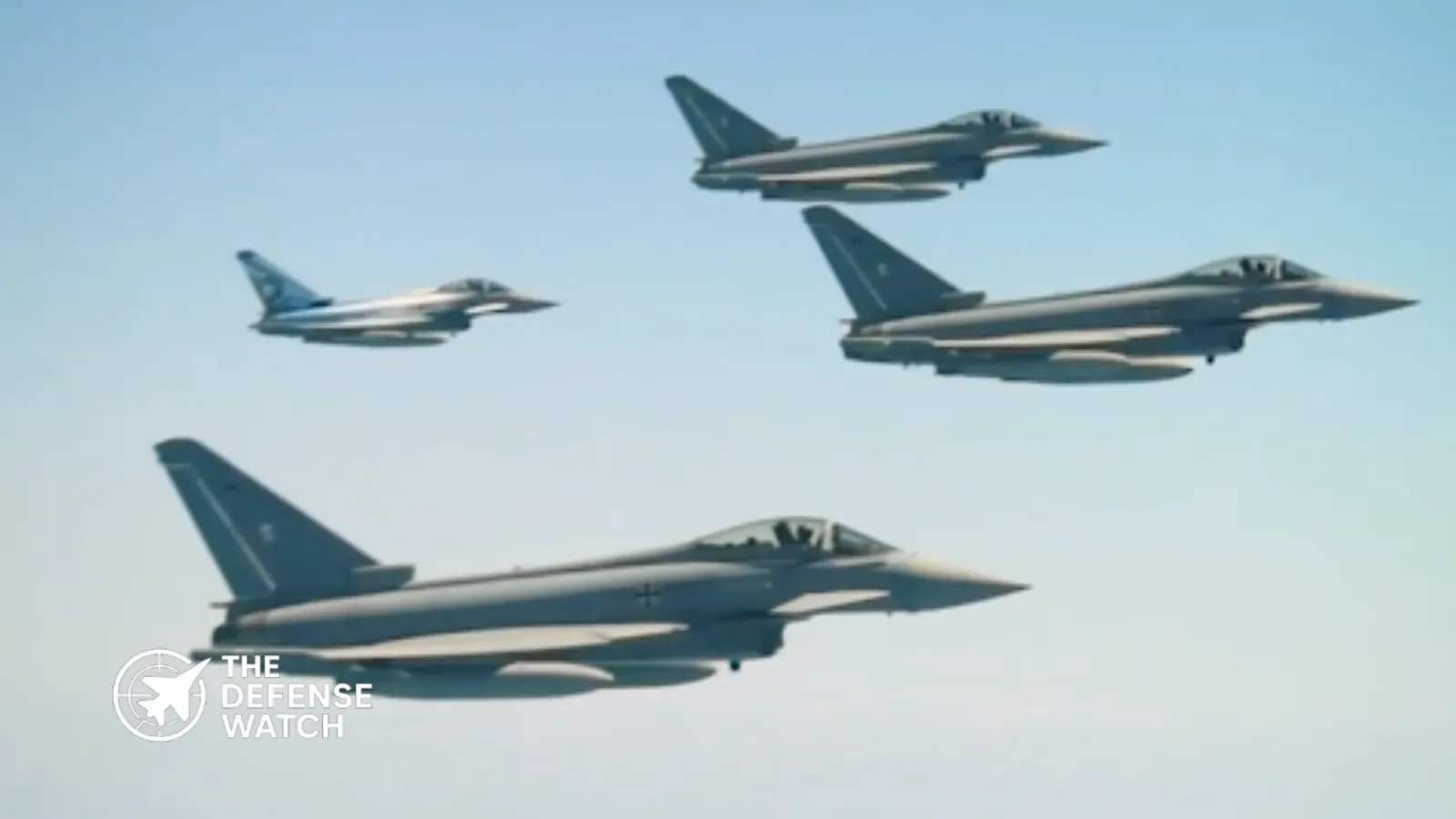
According to the service, the exercise involved RAF Coningsby and RAF Lossiemouth and tested the ability of Typhoon units to deploy aircraft and personnel away from their principal operating locations.
The exercise included operations from Kinloss Barracks, demonstrating the importance of maintaining combat air capabilities across multiple locations.
These activities suggest that the reported overnight aircraft movements fit within a broader approach to airbase resilience, although the RAF has not publicly confirmed that the reported hangar measures form part of a specific operational program.
Recent Security Incidents Increase Concern Around UK Bases
The reports about aircraft protection also come amid several security developments involving British military installations.
Earlier in November, US Air Force personnel responded to suspected unauthorized drone activity at RAF Lakenheath, an important American military installation in eastern England.
The base hosts US Air Force combat aircraft and other military capabilities. The incident added to concerns about the vulnerability of installations supporting allied operations in the United Kingdom.
Separately, RAF Fairford attracted attention following reports of suspicious activity near the Gloucestershire airbase.
US President Donald Trump said an Iran-linked threat had prompted the relocation of American B-1 bombers from the installation. Five men were arrested following reports of suspicious activity around the base, although the precise circumstances and alleged links remained matters for investigation.
Iran has denied involvement in specific attacks against British military installations.
These incidents should not be treated as proof that the reported RAF aircraft movements are connected to a particular state actor. Publicly available information does not establish such a connection.
Another important development occurred on November 24, when MI5’s National Protective Security Authority and the Ministry of Defence issued a joint security alert.
The warning addressed UK organizations providing direct material support to the Ukrainian Armed Forces, including companies involved in the defense supply chain.
The agencies said Russia had increased attempts to conduct sabotage against European defense-related facilities, including activities involving proxy actors and relatively unsophisticated methods such as arson.
The warning reflects a broader concern that military security extends beyond airfields to the companies, infrastructure and personnel supporting defense operations.
Counter-Drone Protection Requires More Than Physical Shelters
Moving aircraft indoors can reduce their exposure, but protecting military aviation infrastructure requires several layers of defense.
The RAF must account for different types of unmanned threats, ranging from commercially available quadcopters to larger systems capable of carrying heavier payloads.
These threats require different detection and response methods.
Radar, electro-optical sensors, radio-frequency monitoring and other surveillance technologies can help identify unauthorized activity around military installations. Electronic warfare systems can provide additional options against certain types of drones, although their effectiveness depends on the aircraft’s communications and navigation architecture.
Physical protection remains important because no detection or electronic countermeasure system can guarantee that every drone will be stopped.
There is also a practical limitation to moving aircraft indoors. Hangar space is finite, and military airbases must accommodate maintenance activities, equipment storage, ground vehicles and operational requirements.
Large aircraft, including transport and aerial refueling platforms, also require substantially more space than fighter aircraft.
Consequently, a combination of protected storage, dispersal, surveillance and active counter-drone capabilities is likely to remain necessary.
Britain’s existing investment in military-site security provides part of this wider framework. The challenge is ensuring that these systems work together while allowing the RAF to maintain its operational readiness.
What Remains Unconfirmed
Despite the reports, several important details remain unavailable.
The Ministry of Defence has not publicly identified:
- The number of RAF aircraft affected by the reported overnight movements.
- Which RAF stations are implementing the measures.
- Whether anti-drone netting has been ordered, tested or deployed.
- Whether the reported precautions are temporary or part of a permanent security policy.
- Whether a specific intelligence assessment prompted the measures.
The distinction matters. Routine aircraft storage, operational dispersal and emergency protection against an identified threat are different activities.
The RAF has already demonstrated its ability to operate aircraft from alternative locations during exercises and infrastructure work. The reported overnight precautions would add another layer to that approach, but their precise scope remains unclear.
For the UK’s air force, the wider issue is maintaining aircraft availability when military installations themselves could become targets. Protecting aircraft on the ground is increasingly important to ensuring that the RAF can continue generating airpower during a prolonged security crisis.
Enjoying our coverage?
Make The Defense Watch a preferred source on Google to see more of our geopolitical and defense insights when relevant to you.