The U.S. Department of War is developing a new military leadership and officer education initiative through partnerships with American universities, seeking to increase the number of graduates prepared to serve as commissioned officers across the Joint Force.
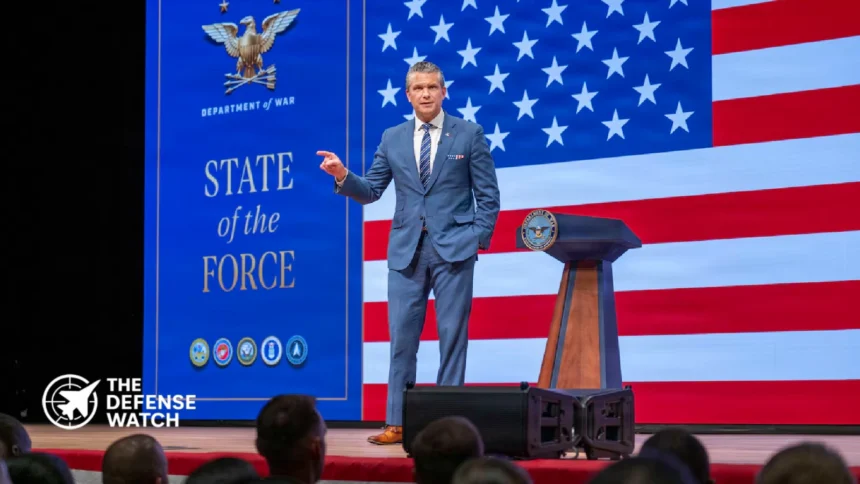
Called America’s Corps of Cadets, the program was announced by Secretary of War Pete Hegseth as part of his broader effort to expand military leadership development beyond the traditional service academy system.
The initial university partners identified by Hegseth are Louisiana State University, Liberty University, Tuskegee University, Mississippi State University and Hillsdale College. The initiative is intended to establish additional university-based Corps of Cadets with support from the Department of War.
The program places military education, discipline and leadership development within civilian higher education institutions. Its longer-term objective is to broaden the pool of potential military officers while reinforcing the professional and ethical standards expected of commissioned leaders.
A New University-Based Route Into Military Service
The five participating institutions are:
- Louisiana State University (LSU): Has an established Corps of Cadets and a long-standing military education tradition.
- Liberty University: Brings an existing university-based military training and leadership environment.
- Tuskegee University: Adds another institution with a historic connection to military service and officer development.
- Mississippi State University: Has an established military education presence through its university programs.
- Hillsdale College: Joins the initiative as one of the initial institutions selected for the new designation.
LSU confirmed on September 30, 2026, that it had been selected as a Distinguished Military College under America’s Corps of Cadets. Its announcement also identified the other four institutions as members of the initial group.
According to LSU, the initiative creates a pathway toward Senior Military College status. The Department of War’s implementation was scheduled to begin within 30 days of the September memorandum.
The designation also includes Honor School status, which the department says provides priority in officer commissioning. However, the available public information does not establish that participation guarantees a commission, a particular military branch assignment or an active-duty position.
That distinction matters. A university-based cadet program can provide military discipline and leadership experience, but commissioning still depends on the applicable military service requirements and selection processes.
How the Initiative Fits Into the Existing Officer Pipeline
America’s Corps of Cadets builds on an established model of combining university education with military leadership training.
The United States already operates several institutions classified as Senior Military Colleges. These include:
- Texas A&M University
- Norwich University
- The Citadel
- Virginia Military Institute
- Virginia Tech
- University of North Georgia
The U.S. Army’s ROTC program describes Senior Military Colleges as institutions offering a four-year degree alongside a full-time Corps of Cadets experience. Students participate in structured military life while pursuing academic qualifications.
Army ROTC remains an important route to commissioning. It combines university education with military instruction, leadership development and training before graduates enter the officer corps
America’s Corps of Cadets seeks to extend aspects of this model to additional universities rather than relying exclusively on the traditional military college structure.
The distinction is important for recruitment. A broader institutional network could give students more opportunities to experience military leadership development while remaining at universities that offer a wider range of academic programs.
Why the Pentagon Wants a Larger Officer Pipeline
The initiative addresses a long-term personnel requirement: developing enough qualified officers to lead an increasingly complex military force.
Modern military operations require officers who can coordinate conventional forces with advanced technologies, including unmanned systems, cyber capabilities, electronic warfare, space-based assets and integrated air and missile defense.
Technical knowledge alone is not sufficient. Officers must also make decisions under pressure, manage personnel, coordinate across military services and maintain discipline in demanding operational environments.
The Department of War’s approach places greater emphasis on developing those leadership qualities during university education.
The Army already uses a similar model through its ROTC network. According to Army Cadet Command, its mission includes recruiting, educating and developing university cadets for commissioning as officers. Its Advanced Camp provides a major leadership assessment and training opportunity before commissioning.
Expanding the number of participating institutions could give the department additional opportunities to identify potential officers earlier in their academic careers.
There are, however, practical considerations. Establishing and maintaining a Corps of Cadets requires instructors, military training resources, administrative support and sufficient student participation. Universities must also balance military requirements with academic programs and their existing campus structures.
The effectiveness of the initiative will therefore depend on implementation, not simply the number of institutions receiving the designation.
What the Program Does Not Yet Establish
Several important details remain unclear from the publicly available announcements.
The Department of War has not provided a comprehensive public breakdown of:
- The number of cadets expected to enroll at each institution.
- The additional funding allocated to participating universities.
- The number of officers the initiative is expected to produce annually.
- The precise commissioning arrangements across the Army, Navy, Air Force, Marine Corps and Space Force.
- The training standards and evaluation requirements that each participating institution must meet.
- A detailed timeline for achieving Senior Military College status.
The distinction between expanding military education and increasing actual officer accessions is particularly important.
A larger Corps of Cadets does not automatically translate into more commissioned officers. Students must satisfy the applicable academic, physical, medical and military requirements, while the services must also have commissioning opportunities available.
The Pentagon will eventually need to demonstrate whether the program increases the number of qualified candidates entering military service or primarily expands existing university-based leadership programs.
A Broader Approach to Military Leadership Development
America’s Corps of Cadets introduces another institutional pathway into the U.S. military officer development system.
Its initial five university partners provide a starting point for expanding structured military education beyond the traditional group of Senior Military Colleges. The initiative also gives the Pentagon an opportunity to evaluate how civilian universities can contribute to military leadership development.
For now, the most important measures will be implementation, cadet participation and the number of graduates who ultimately enter commissioned service.
The program’s success will depend less on its designation than on whether it produces capable officers who meet the operational and professional requirements of the U.S. armed forces.
Enjoying our coverage?
Make The Defense Watch a preferred source on Google to see more of our geopolitical and defense insights when relevant to you.