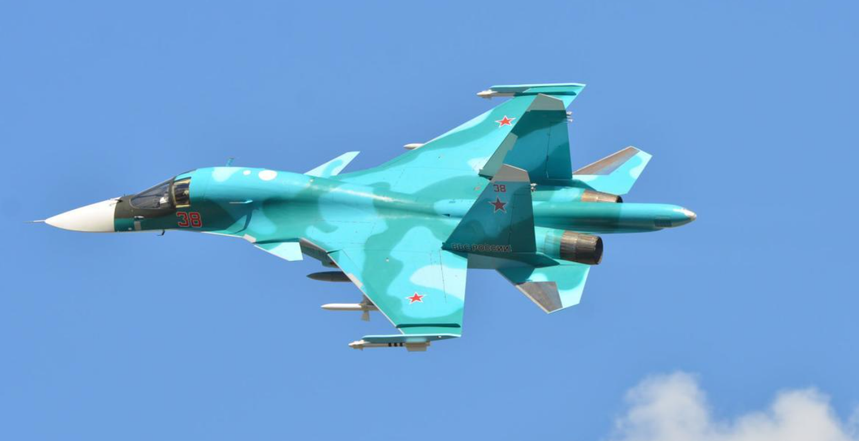
Russia has delivered another batch of Su-34 fighter-bombers to its Ministry of Defense, adding to the Russian Aerospace Forces’ strike aircraft inventory as the war in Ukraine continues to place demands on combat aviation.
The November 17, 2026, handover was announced by United Aircraft Corporation (UAC), part of the state-owned Rostec corporation. The aircraft reportedly completed factory ground and flight testing before being transferred to their operational bases, according to a report by Russia’s TASS news agency citing the manufacturer.
Neither UAC nor Rostec disclosed the number of aircraft delivered, their receiving units, or the precise configuration of the latest batch. Consequently, the announcement confirms another delivery but does not establish how much Russia’s operational Su-34 fleet has grown.
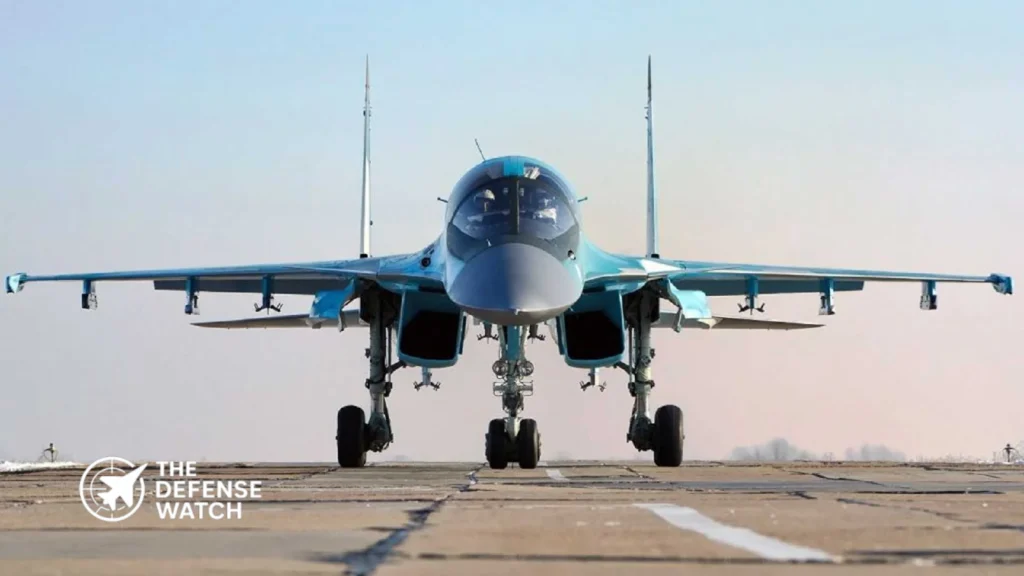
The transfer is the third publicly announced Su-34 delivery in 2026. Earlier handovers were announced on July 9 and October 7, indicating that production and military acceptance have continued despite the pressures of wartime operations and Western sanctions.
Three publicly announced deliveries in 2026
The latest handover follows a pattern of periodic production announcements from Russia’s aviation industry.
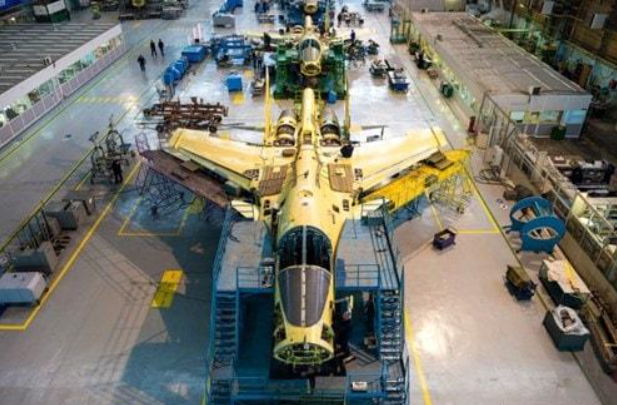
UAC manufactures the Su-34 at the Novosibirsk Aircraft Production Association, also known as NAPO. The facility is the aircraft’s principal serial-production center and operates within Russia’s wider Sukhoi manufacturing structure.
Rostec has repeatedly stated that its aircraft plants are fulfilling state defense procurement requirements and improving manufacturing processes. UAC chief executive Vadim Badekha has also described production as continuing at a high pace.
However, official announcements provide limited information about actual manufacturing output. The number of aircraft in each batch, annual production totals and the delivery schedule remain undisclosed.
This distinction matters when evaluating Russia’s ability to replenish its combat aviation fleet. Three announced deliveries do not necessarily mean three aircraft, nor do they establish that production is keeping pace with combat losses.
Why the Su-34 remains important to Russian strike operations
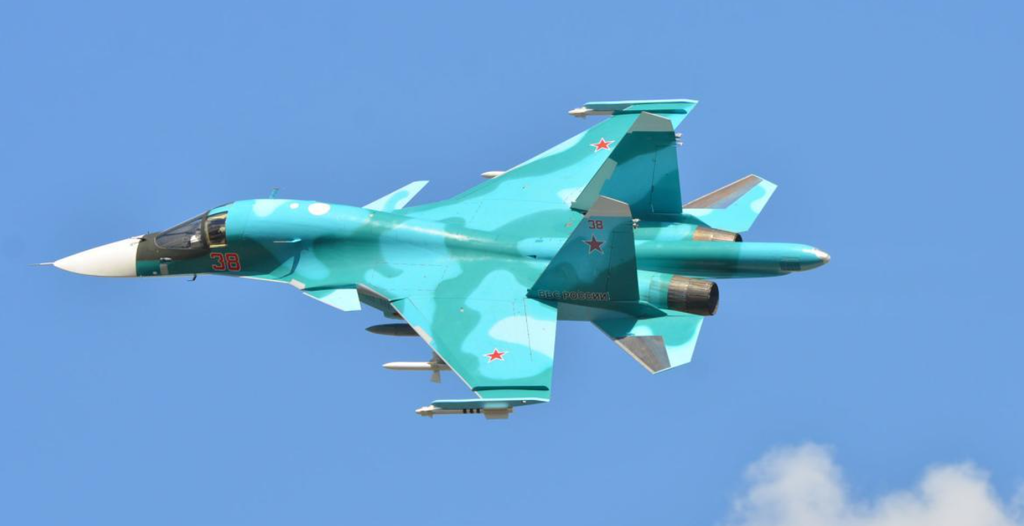
The Su-34 is a twin-engine, two-seat tactical fighter-bomber developed by Sukhoi. Its primary role is attacking ground targets, although Russian officials also describe capabilities against surface and airborne targets.
The aircraft combines a side-by-side cockpit, substantial internal fuel capacity and the ability to carry a range of air-to-surface weapons. It was designed to conduct strike missions at considerable distances from its operating airfield and can also perform reconnaissance tasks.
Its importance to Russia’s campaign in Ukraine is closely connected to the use of guided aerial bombs.
Russian Su-34s have become major carriers of conventional bombs fitted with the Unified Gliding and Correction Module, known by its Russian abbreviation UMPK. These kits add guidance and aerodynamic surfaces to conventional bombs, allowing them to glide toward targets after release.
This gives Russian aircraft an option to attack positions without necessarily flying directly over the target area. However, stand-off employment does not eliminate exposure to Ukrainian air defenses, fighter aircraft or other threats.
The Su-34’s operational value therefore depends not only on the number of aircraft available but also on weapons stocks, targeting information, mission planning and the ability to operate under Ukrainian air-defense pressure.
Combat losses complicate fleet replacement
Russia’s continued production of the Su-34 must be considered alongside losses sustained since the full-scale invasion of Ukraine began in February 2022.
Ukrainian military intelligence and open-source monitoring organizations have reported substantial Su-34 losses. A November 2026 report by Defense Mirror, citing Ukrainian intelligence estimates, stated that Russia had lost 43 aircraft destroyed and another seven damaged.
These figures should be treated as Ukrainian intelligence assessments rather than independently established fleet accounting. Damaged aircraft may also have different recovery and repair outcomes, making it important not to count every damaged aircraft as permanently removed from service.
The replacement challenge is particularly important because the Su-34 is a specialized strike platform rather than a general-purpose aircraft that can be replaced easily by any other fighter.
Russia can use other combat aircraft for some attack missions, but replacing the Su-34’s specific combination of crew arrangement, strike equipment and operational role would require adjustments to mission planning and force employment.
The latest delivery demonstrates that Russia retains the ability to manufacture and transfer additional aircraft. It does not reveal whether the current production rate is sufficient to replace destroyed aircraft, account for damaged airframes and support the demands of continued operations.
Western sanctions and Russia’s aircraft production challenge
The continued delivery of Su-34s also raises questions about the effectiveness of Western restrictions on Russia’s military aerospace supply chain.
A November 2025 research paper by the Royal United Services Institute (RUSI), titled Vulnerabilities in Sukhoi Production: Clipping Russia’s Wings, examined weaknesses in the manufacturing networks supporting Russian combat aircraft.
The study identified several important dependencies:
- Foreign electronic components used in aircraft systems.
- Imported materials and specialized manufacturing equipment.
- Dependence on machine tools and industrial technologies.
- Difficulties retaining experienced aerospace engineers.
These vulnerabilities suggest that maintaining aircraft production is not the same as achieving complete industrial independence.
Russia has adapted its supply chains and continued manufacturing established aircraft designs. Nevertheless, restricted access to certain technologies and components can create longer-term difficulties for modernization, maintenance and production efficiency.
Importantly, RUSI’s findings concern the wider Sukhoi manufacturing ecosystem. They do not establish that the newly delivered Su-34s contain particular foreign components or that their production has been delayed by specific shortages.
The distinction is important when assessing sanctions. Their impact should be measured not simply by whether aircraft continue to leave factories, but also by production costs, component availability, aircraft quality and the industry’s ability to introduce improvements.
What the latest delivery tells us
Russia’s Su-34 program illustrates the difference between sustaining an established aircraft production line and maintaining an effective combat fleet during a prolonged conflict.
The aircraft remains central to Russia’s use of guided aerial bombs against Ukrainian positions. Maintaining its availability therefore has direct operational importance for Russian strike planning.
However, several important questions remain unanswered:
- How many Su-34s were included in the November delivery?
- What is the actual annual production rate at the Novosibirsk facility?
- How many aircraft have been permanently destroyed or withdrawn from service?
- How much of the latest production incorporates improvements based on combat experience?
- Can Russian manufacturers maintain production while addressing restrictions on foreign components and industrial equipment?
Until Russia releases more detailed production and delivery figures, it is difficult to calculate the precise balance between new aircraft entering service and combat losses.
The November handover confirms continued production of one of Russia’s most important strike aircraft. It does not, by itself, demonstrate that the Russian Aerospace Forces are expanding their Su-34 fleet or fully replacing wartime losses.