Romania Brings Forward Delivery of Two Thales Radar Systems for Air Force
Romania is seeking earlier access to two mobile radar systems for its air force after French defense company Thales confirmed that the first deliveries can be brought forward from the original schedule.
Romania’s Ministry of National Defence announced the revised delivery outlook on November 10, 2026, following a meeting between Defence Minister Ștefan-Radu Oprea and Thales representatives.
According to the ministry, the first radar system is expected several weeks earlier than planned, while delivery of the second could be accelerated by several months. The announcement did not provide revised calendar dates.
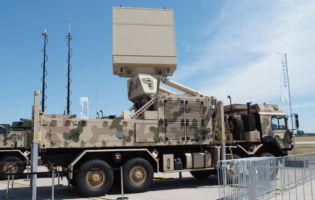
The systems belong to Romania’s mobile approach and landing radar program, known by its Romanian abbreviation RDAAM. The program is intended to improve aircraft identification, tracking and guidance during approach and landing operations.
The announcement is part of a wider Romanian effort to modernize its air surveillance and air traffic management infrastructure.
Four Mobile Radars Under a Romanian-Thales Contract
Romania signed a contract on October 27, 2026, for four mobile precision approach and landing radar systems.
The agreement was awarded to a consortium comprising Thales Romania and Thales LAS France. Its reported value is approximately 326.5 million Romanian lei, excluding VAT.
The Romanian defence ministry originally announced that deliveries would begin in 2028 and take place in phases. The November 10 announcement brings forward the first two deliveries, although the government has not published their revised dates.
According to the ministry, the new equipment will support both military and civilian aircraft operations. Its functions include identifying and tracking aircraft and providing guidance during approach and landing.
The systems are also intended to operate during daytime and nighttime operations, including difficult weather conditions and electromagnetically hostile environments.
Information generated by the radars can be transmitted to Romanian national and NATO air command and control systems.
Why Romania Is Modernizing Its Radar Infrastructure
Modern airspace surveillance requires more than long-range detection radars.
Aircraft approaching an airfield operate under different surveillance and control requirements from aircraft detected during wider-area airspace monitoring. Dedicated approach and landing radar systems help manage aircraft movements during these phases, when accurate tracking and coordination are important.
Mobile radar equipment also gives air forces greater flexibility in positioning their surveillance and air traffic management assets.
For Romania, these capabilities form part of a broader modernization effort involving military airspace management and the protection of national airspace.
The country faces an increasingly demanding regional security environment. Romania shares a border with Ukraine and has reported Russian drone incursions into its airspace since Russia launched its full-scale invasion in February 2022.
Those incidents have increased attention on low-altitude surveillance and the ability of NATO’s eastern members to monitor activity near their borders.
However, the RDAAM systems should not be confused with dedicated long-range air surveillance or counter-drone systems. Their announced role centers on aircraft approach, landing and air traffic management.
A Separate Ground Master 200 Radar Procurement
Romania is also pursuing a separate radar procurement involving Thales’ Ground Master 200 MM/A systems.
According to Reuters, the country has signed a contract covering 12 Ground Master 200 MM/A radars worth approximately €247 million. The acquisition is being funded through the European Union’s Security Action for Europe (SAFE) rearmament initiative.
These systems are associated with the Gap Filler concept, which uses additional radar coverage to address surveillance gaps, including those affecting low-altitude aerial threats.
The distinction between the two programs is important.
The four RDAAM systems are intended to support approach and landing operations, while the 12 Ground Master 200 MM/A systems are part of a wider air surveillance effort.
Romania’s November 10 announcement specifically identifies the accelerated deliveries as relating to the first two RDAAM systems. It does not provide revised delivery dates for the Ground Master 200 procurement.
This distinction also matters when assessing the country’s investment in air defense. Radar surveillance, air traffic management and weapon-based air defense are connected capabilities, but they perform different functions.
The Two Programs Must Be Distinguished
There is an important distinction in the reporting about the accelerated deliveries.
Reuters’ November 10 report discusses the 12 Ground Master 200 MM/A surveillance radars and their role in detecting aerial threats, including drones. However, Romania’s official November 10 announcement identifies the first two systems receiving accelerated deliveries as mobile approach and landing radars.
The Romanian ministry’s October 27 contract announcement independently confirms the four-system RDAAM procurement with Thales Romania and Thales LAS France.
The two programs should therefore be reported separately rather than treating the accelerated RDAAM deliveries as confirmed deliveries of Ground Master 200 radars.
Industrial Cooperation and Romanian Participation
The Romanian government also wants its defense procurement programs to contribute to domestic industrial development.
During the November 10 meeting, Defence Minister Oprea discussed expanding Thales’ activities in Romania, particularly in software development.
He emphasized technology transfer, participation by Romanian companies and employment opportunities for Romanian specialists.
The October contract provides an established industrial framework for this cooperation. Thales Romania and local partners are expected to contribute to system installation, integration and long-term availability.
For Romania, local technical expertise could become an important part of maintaining the equipment throughout its service life, rather than relying exclusively on foreign support.
The accelerated delivery schedule offers an earlier start to the modernization effort, but the ministry has not disclosed the revised delivery dates or provided a detailed deployment schedule.