• Home
  • About
  • Defense Systems
  • Manufacturer
  • Comparisons
  • Compare 
  • Tools
TheDefenseWatch.com
  • Aerospace & Aviation
  • Military & Ordnance
  • Naval & Maritime
  • Cyber & Space Defense
  • Policy & Strategy
  • Global News
  • Tools Library
    • Smart Calculator
    • Drone Flight Time Calculator
    • Drone Range Calculator
    • Counter-Drone Jammer Effective Range Calculator
    • Counter-Battery Radar Detection Calculator
    • Artillery Fire Correction Calculator
    • Thermal Camera Detection Range Calculator
    • Missile Range & Time-of-Flight Calculator
    • Radar Detection Range Calculator
    • FPV Strike Drone Payload vs Range Calculator
    • Loitering Munition Endurance Calculator
    • Sniper Ballistic Drop & Windage Calculator
    • Bullet Drop Calculator
    • U.S. Army Combat Fitness Test (ACFT) Calculator
    • Military Pension Calculator
    • Military Retirement Calculator
    • Military Pension Calculator
    • Large Number Calculator
Font ResizerAa

TheDefenseWatch.com

The Defense Watch | U.S. & Global Defense News, Analysis & Military Updates

Search
  • Home
  • About
  • Defense Systems
  • Manufacturer
  • Comparisons
  • Compare 
  • Tools

Stay Updated

Get the latest update

Subscribe

Explore

  • Drone
  • Fighter Jets & Military Aircraft
  • Hypersonic Weapons
  • Aircraft Carriers
  • Strategic History & Missions
  • Tools Library
Home » U.S. Marines and Japanese Forces Train in Explosive Ordnance Disposal During Keen Sword 2027
Global News

U.S. Marines and Japanese Forces Train in Explosive Ordnance Disposal During Keen Sword 2027

Samuel Drake | Defense Analyst
Last updated: October 28, 2026 11:41 pm
Samuel Drake | Defense Analyst
Share
3 Min Read
Keen Sword 2027 exercise
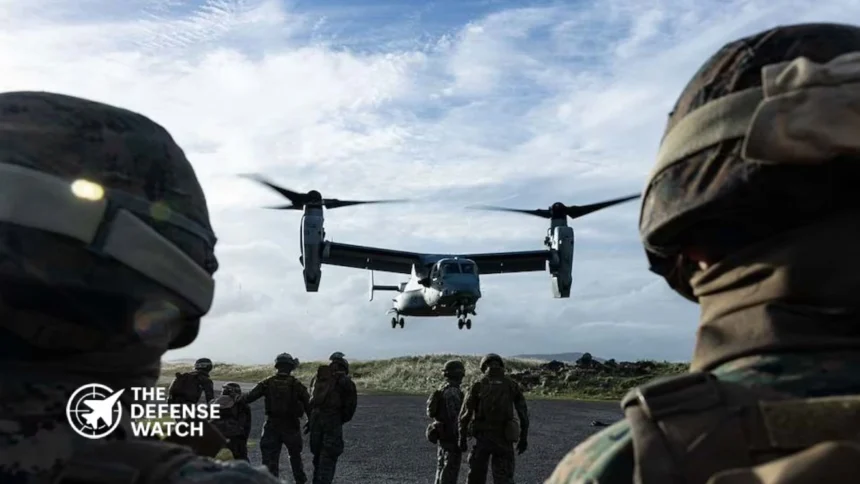
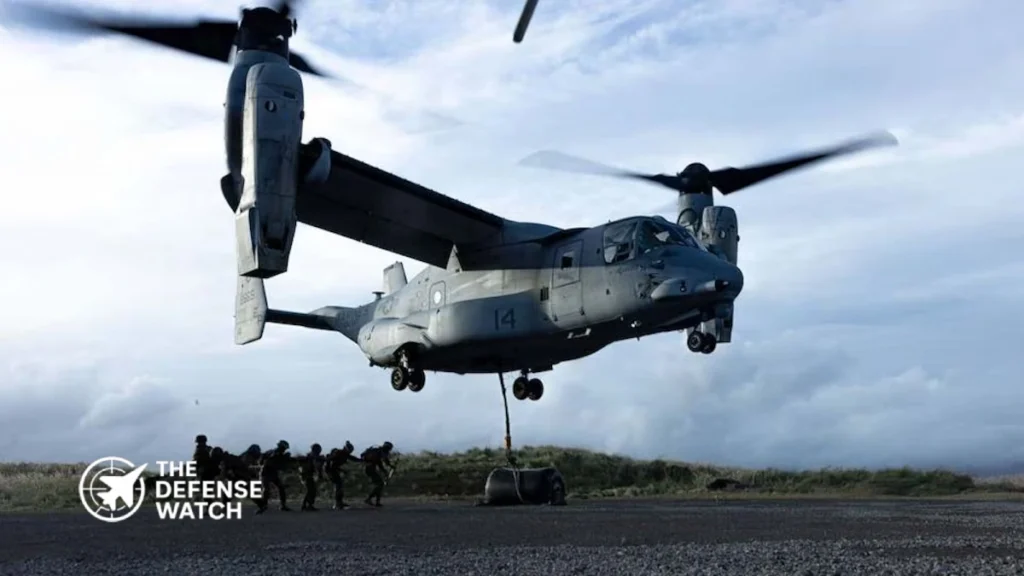
U.S. Marines assigned to the12th Marine Littoral Regiment, 3rd Marine Division, conduct helicopter support team training with an MV-22B Osprey attached to Marine Medium Tiltrotor Squadron 265, 1st Marine Aircraft Wing, during Exercise Keen Sword 27 in Kirishima, Japan, Oct. 24, 2026. (Image : DoW)
SHARE

U.S. Marines and Japanese ground forces have conducted explosive ordnance disposal training in Okinawa as part of Exercise Keen Sword 2027, strengthening their ability to respond to explosive hazards during combined military operations.

Contents
  • Explosive ordnance disposal supports combined operations
  • Keen Sword 2027 expands the scope of alliance training
  • Why the training matters for Japan’s southwestern islands
  • A practical measure of U.S.-Japan readiness

The training involved Marines assigned to the 3rd Explosive Ordnance Disposal Company, 9th Engineer Support Battalion, 3rd Marine Logistics Group, working alongside members of the Japan Ground Self-Defense Force (JGSDF). The activity formed part of the broader U.S.-Japan exercise running from October 19 to 29, 2026.

The U.S. Department of War described the activity as an effort to sharpen the forces’ explosive disposal skills. Although the department’s original article could not be independently retrieved during this research, the unit identification and training context are consistent with available reporting on the exercise.

The training matters because explosive hazards can disrupt military movement, damage infrastructure and threaten personnel during operations in contested environments. Joint procedures help ensure that American and Japanese personnel can coordinate their responses when operating together.

- Advertisement -

Explosive ordnance disposal supports combined operations

Explosive ordnance disposal, commonly abbreviated EOD, involves identifying, assessing and dealing with hazardous munitions and explosive devices. These may include unexploded ammunition, abandoned ordnance and other explosive threats encountered during military operations.
Keen Sword 2027 exercise
A U.S. Marine Corps MV-22B Osprey assigned to Marine Medium Tiltrotor Squadron 265, 1st Marine Aircraft Wing, prepares to lift a collapsible fuel drum during helicopter support team training. Marines assigned to the 12th Marine Littoral Regiment, 3rd Marine Division, trained alongside the Japan Self-Defense Forces during Exercise Keen Sword 27 in Kirishima, Japan, Oct. 24, 2026. Keen Sword is a biennial, bilateral field training exercise designed to increase readiness and interoperability between the U.S. military and the Japan Self-Defense Forces. (Image : DoW)

For forces operating across Japan’s southwestern islands, EOD capability supports activities such as securing landing areas, clearing routes, protecting installations and restoring access to facilities affected by explosive hazards.

The practical challenge extends beyond the technical work of disposing of an explosive device. Personnel from different services and countries must communicate effectively, establish safe working areas, coordinate access and share information without creating additional risks for nearby troops.

Training together allows participating forces to practice those procedures before a real emergency occurs. It also helps identify differences in equipment, terminology and operating methods that could complicate a combined response.

Keen Sword provides a setting for that work alongside broader exercises involving ground, air and maritime forces.

Keen Sword 2027 expands the scope of alliance training

The explosive ordnance disposal activity took place within a larger exercise involving U.S. and Japanese forces across Japan. According to Australia’s Department of Defence, Keen Sword 2027 involved approximately 45,000 Japanese personnel and 11,000 U.S. personnel, alongside around 40 vessels and 260 aircraft. Australia also deployed personnel and military assets, while several other partner countries participated.

The U.S.-Japan exercise is designed to improve interoperability and readiness through realistic training. Its activities cover multiple operational areas, including maritime operations, air and missile defense, logistics, and the movement and reinforcement of forces across Japan’s island chain.
Keen Sword 2027 exercise
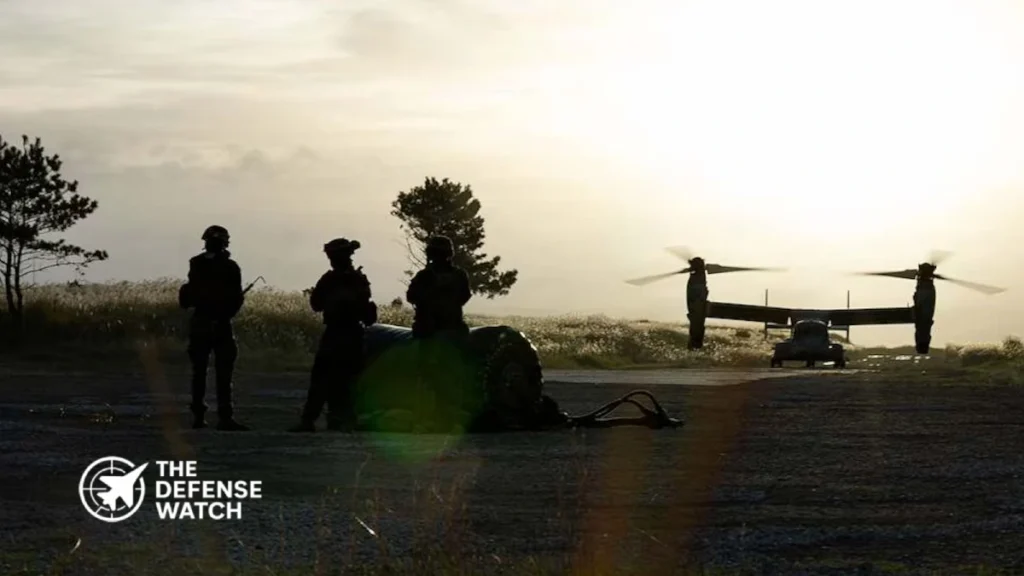
U.S. Marines assigned to the 12th Marine Littoral Regiment, 3rd Marine Division, conduct helicopter support team training with an MV-22B Osprey assigned to Marine Medium Tiltrotor Squadron 265, 1st Marine Aircraft Wing, during Exercise Keen Sword 27 in Kirishima, Japan, Oct. 24, 2026. (Image :DoW)

For explosive ordnance disposal specialists, this wider operational setting is important. Explosive hazards can affect the movement of troops and equipment, restrict access to facilities and complicate efforts to establish safe operating areas. Coordination between EOD teams and other military units is therefore an important part of preparing for combined operations.

- Advertisement -

The exercise also gives the two militaries opportunities to improve their ability to work together under demanding conditions, rather than relying solely on established procedures that might differ between national forces.

Why the training matters for Japan’s southwestern islands

Japan’s southwestern islands occupy a strategically important position between the main Japanese islands and Taiwan. The United States and Japan have increasingly emphasized the ability to move, sustain and coordinate forces across dispersed locations in the region.

Keen Sword 2027 includes activities designed to test that ability. The U.S. Naval Institute’s reporting on the exercise identifies island defense, reinforcement by sea and air, and the deployment of ground-based missile systems among its central training areas.

Explosive ordnance disposal is a supporting capability within this broader framework. If unexploded ammunition or other explosive hazards restrict access to a landing area, road or military installation, specialized personnel may be needed before other forces can operate safely.

Joint training helps establish how those teams communicate with local commanders, coordinate their activities and support other units. However, the available information does not establish that the specific EOD training described by the Department of War involved an operational clearance mission or the removal of actual battlefield ordnance.

The distinction matters. Training can improve familiarity and coordination, but a single exercise does not by itself demonstrate how effectively forces would respond to every type of explosive threat in combat.

A practical measure of U.S.-Japan readiness

The value of this training lies in the operational tasks it supports. Explosive ordnance disposal specialists help reduce risks from hazardous munitions, while cooperation between American and Japanese personnel can make combined responses more organized.

Keen Sword 2027 provides a wider framework for testing the U.S.-Japan alliance across multiple military functions. The EOD activity represents one part of that effort, supporting the personnel and procedures needed to sustain operations when explosive hazards threaten access or movement.

The available reporting does not disclose detailed performance results from the EOD training. Its immediate significance is therefore best understood as readiness preparation, rather than evidence of a newly introduced capability or a measurable change in either military’s operational strength.


TAGGED:Explosive Ordnance DisposalJapan Self-Defense ForcesKeen Sword 2027U.S. Marine Corps
Share This Article
Facebook Copy Link Print
BySamuel Drake | Defense Analyst
Follow:
Samuel Drake is a defense analyst at TheDefenseWatch.com covering naval warfare, military ordnance, maritime technology, fleet modernization, and defense procurement. His reporting focuses on documented capabilities, procurement programs, and military technology.

Latest Defense Systems

  • XQ-67A Drone XQ-67A Drone
  • B-25 Mitchell Bomber B-25 Mitchell Bomber
  • F-100 Super Sabre F-100 Super Sabre
  • North American F-86 Sabre North American F-86 Sabre
  • North American XB-70 Valkyrie North American XB-70 Valkyrie
  • Northrop YF-23 Fighter Northrop YF-23 Fighter
  • P-51 Mustang Fighter Aircraft P-51 Mustang Fighter Aircraft
  • Rafale F5 Fighter Rafale F5 Fighter
  • Tomahawk Block V Missile Tomahawk Block V Missile

Recent Compares

  • J-10C vs JF-17 Thunder: Which Fighter Is More Capable? J-10C vs JF-17 Thunder: Which Fighter Is More Capable? View Comparison →
  • Tejas vs Gripen: Key Differences and Capabilities Tejas vs Gripen: Key Differences and Capabilities View Comparison →
  • Tejas vs MiG-21 Bison: How India Replaced Its Iconic Supersonic Fighter Tejas vs MiG-21 Bison: How India Replaced Its Iconic Supersonic Fighter View Comparison →
  • F-35 vs F-16: Stealth, Sensors and Combat Roles F-35 vs F-16: Stealth, Sensors and Combat Roles View Comparison →
  • Tejas Fighter Jet vs F-16 Fighting Falcon: Capability Compared Tejas Fighter Jet vs F-16 Fighting Falcon: Capability Compared View Comparison →
  • Rafale Fighter Jet vs F-16 Fighting Falcon : Which Fighter Has the Edge? Rafale Fighter Jet vs F-16 Fighting Falcon : Which Fighter Has the Edge? View Comparison →
  • Su-57 Fighter Jet vs J-20 Fighter Jet: Stealth and Air Combat Compared Su-57 Fighter Jet vs J-20 Fighter Jet: Stealth and Air Combat Compared View Comparison →
  • Mirage 2000 vs Tejas Mk1A: Legacy Combat Power vs Indigenous Modernization Mirage 2000 vs Tejas Mk1A: Legacy Combat Power vs Indigenous Modernization View Comparison →
  • Rafale Fighter Jet vs F-22 Raptor: Which Air Dominance Fighter Has the Edge? Rafale Fighter Jet vs F-22 Raptor: Which Air Dominance Fighter Has the Edge? View Comparison →
  • Tejas Fighter Jet vs. Rafale Fighter Jet: India’s Indigenous Fighter Meets France’s Proven Multirole Combat Aircraft Tejas Fighter Jet vs. Rafale Fighter Jet: India’s Indigenous Fighter Meets France’s Proven Multirole Combat Aircraft View Comparison →

Recent Posts

  • Boeing Wins $11.1 Million Contract Modification for Kuwait F/A-18 Training Support
  • U.S. Navy Awards $23.1 Million Contract for Cybersecurity of Shipboard Power Systems
  • Lockheed Martin Wins $43.7 Million F-35 Reprogramming Lab Upgrade Contract
  • USS Colorado Arrives in Australia for AUKUS Submarine Maintenance
  • U.S. Marines and Japanese Forces Train in Explosive Ordnance Disposal During Keen Sword 2027

You Might Also Like

Iranian attack on AWACS aircraft
Global News

Iranian Attack Damages U.S. E-3 Sentry AWACS Aircraft At Prince Sultan Air Base

September 12, 2026
B-21 Raider
Global News

Northrop Grumman Seeks Additional B-21 Contracts as USAF Talks to Speed Production

October 22, 2025
Turkey defense industry 2026
Global News

Turkey’s Defense Industry Enters 2026 With KAAN Flight Tests, Record Exports & Steel Dome Deliveries

September 7, 2026
Ukraine drone attacks
Global News

Ukraine Drone Attacks Target Moscow, Ignite Industrial Fire in Tula Region, Russia Says

December 24, 2025

Logo

Copyright © 2026 TheDefenseWatch.com

Helpful Links

  • Home
  • About Us
  • Privacy Policy
  • Terms of Use / Disclaimer
  • U.S. Privacy Notice – CCPA Compliance

Defense Systems

  • Defense Systems
  • Comparisons 
  • Manufacturer
  • Tactical Calculators

Popuplar

Which 5 Air Forces Possess the Costliest Fighter Jet Fleets in the World
Evolving Strategic Value: Carrier Strike Groups in the Indo-Pacific’s Future Security Architecture
Autonomous Weapon Systems Spark U.S. Ethics Debate Amid Rapid Military AI Integration

We report on developments involving military forces, governments, defense companies, research organizations, and security institutions around the world. 

Welcome Back!

Sign in to your account

Username or Email Address
Password

Lost your password?