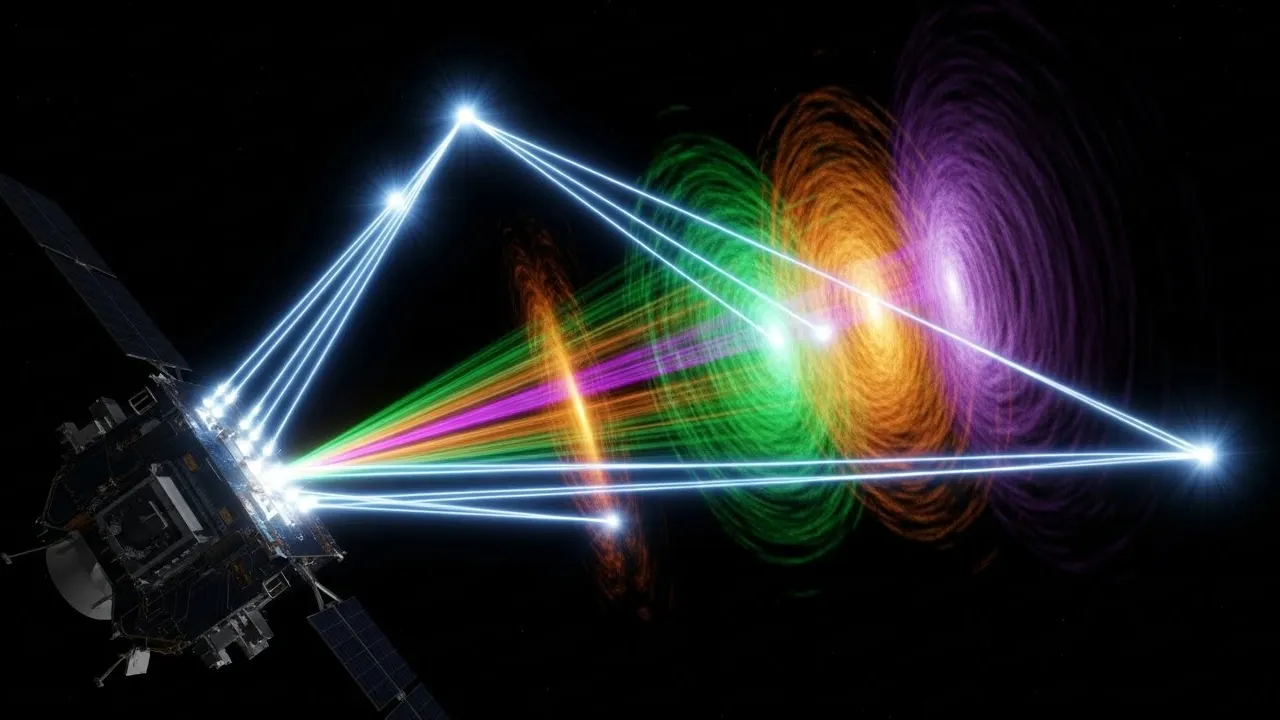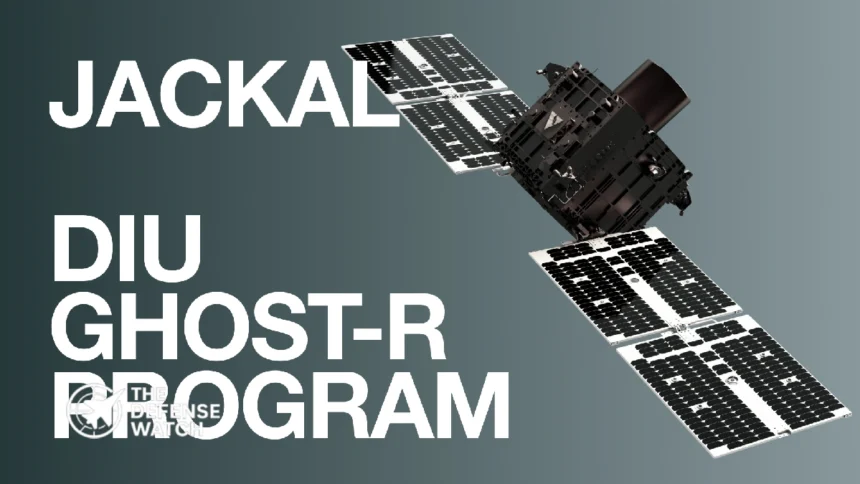
The U.S. Space Force has selected Northrop Grumman and True Anomaly to develop prototype reconnaissance spacecraft designed to inspect satellites and other objects operating in geosynchronous Earth orbit (GEO). The systems are intended to improve the military’s ability to identify and characterize activity around some of its most important space assets, with launches planned by 2028.
Space Systems Command awarded the contracts on Sept. 18, 2026, under the Geosynchronous High-Resolution Optical Space-Based Tactical Reconnaissance program, known as GHOST-R. The work is intended to support the Space Force’s longer-term RG-XX reconnaissance initiative, which aims to establish a more distributed and maneuverable surveillance capability in geosynchronous orbit, according to reporting by Defense News and program-related announcements.
The two contractors will pursue different spacecraft approaches. Northrop Grumman is developing a smaller spacecraft based on its ESPASat-L platform, while True Anomaly will provide its Jackal autonomous orbital vehicle and Mosaic command-and-control software. The contracts are for prototype development, not confirmation that a fully operational reconnaissance constellation is already available.
Why the Space Force needs closer views of satellites
Geosynchronous orbit lies approximately 35,786 kilometers (22,236 miles) above Earth’s equator. Satellites in this orbit complete one revolution in about 24 hours, allowing them to remain approximately fixed over a point on the planet when viewed from the ground.
The orbit supports important military and national security missions, including strategic communications, missile warning and intelligence collection. Its location and the cost of placing spacecraft there make close monitoring of activity around these assets an important concern for the United States.
Traditional space surveillance can establish an object’s orbit and track its movement, but tracking alone does not necessarily reveal the condition, configuration or activity of a satellite. Optical observation from another spacecraft can provide a closer view, helping operators distinguish routine activity from behavior that warrants further investigation.
That distinction matters as more satellites gain the ability to maneuver. An unfamiliar spacecraft approaching a communications or intelligence satellite may require investigation, but its presence alone does not establish hostile intent.
GHOST-R is intended to improve the collection of high-resolution imagery of objects already operating in GEO. Its immediate purpose is reconnaissance and characterization, rather than a publicly announced mission to destroy or disable other spacecraft.
Two contractors, two spacecraft approaches
Northrop Grumman: A compact reconnaissance satellite
Northrop Grumman plans to build its GHOST-R prototype around the ESPASat-L spacecraft platform and use a commercially developed optical sensor. Defense News reported that the prototype would be roughly the size of a small suitcase and follow an accelerated 24-month development timeline.
The approach draws on a smaller spacecraft architecture rather than relying exclusively on large, custom-built national security satellites. Its performance in orbit, including the quality of imagery and the ability to complete the planned mission, will need to be demonstrated through testing.
True Anomaly: Jackal and Mosaic
True Anomaly will supply its Jackal autonomous orbital vehicle alongside Mosaic, its software for mission planning, command and control, and operational coordination. The company’s Sept. 18 announcement describes the effort as an early step toward a more maneuverable reconnaissance architecture in GEO.
The combination brings the spacecraft and its mission software into the same development effort. This is relevant because approaching, observing and tracking another satellite requires more than an optical payload. Operators also need to plan maneuvers, manage sensor observations and interpret the resulting information.
Neither approach should be treated as the established winner. GHOST-R is intended to develop and demonstrate capabilities, and public announcements do not provide a complete, independently verified comparison of the two prototypes’ optical resolution, maneuvering performance, endurance or total lifecycle costs.
The competition gives the Space Force an opportunity to evaluate different commercial spacecraft designs before making decisions about a larger reconnaissance architecture.
How GHOST-R fits into the RG-XX program
GHOST-R is linked to RG-XX, the Space Force’s broader effort to develop a proliferated reconnaissance capability in geosynchronous orbit. A proliferated architecture distributes missions among multiple spacecraft rather than depending on a small number of highly specialized satellites.
Space Systems Command has described RG-XX as an effort to improve affordability, responsiveness and resilience through a wider range of reconnaissance vehicles. Its acquisition approach includes established defense contractors as well as commercial space companies.
This structure could offer several practical advantages:
- More frequent observations: Multiple spacecraft could revisit objects more often than a limited number of platforms, depending on their orbital positions, sensors and available maneuvering fuel.
- Reduced dependence on individual satellites: A wider fleet could reduce the effect of losing or temporarily disabling one spacecraft, although resilience would depend on the number of operational vehicles and their ability to share tasks.
- More flexible procurement: Commercially derived platforms could give the government additional options for development and production, but savings would need to be demonstrated through actual contract and lifecycle costs.
- Better support for space operations: Close-range observations could help military operators assess unusual satellite behavior and make more informed decisions about protecting important assets.
These are potential benefits of the architecture, not demonstrated GHOST-R operational results. The prototype program must establish whether its spacecraft can deliver the required imagery and mission performance under real orbital conditions.
What the 2028 and 2029 milestones mean
The publicly reported schedule separates the planned launch milestone from the expected start of government-operated missions.
Prototype development begins
Space Systems Command selected Northrop Grumman and True Anomaly on Sept. 18 for the GHOST-R effort.
Planned launches
Both prototype spacecraft are expected to launch directly into geosynchronous orbit under the reported schedule.
Government-operated missions
Officials expect the spacecraft to conduct government-owned and government-operated missions by this point.
The milestones were reported by Defense News. They remain planned dates, not evidence that the spacecraft have completed development, passed operational testing or entered service.
The Pentagon has not publicly disclosed the value of the two GHOST-R prototype contracts or identified their funding source. Defense News reported that the funding does not come from the Space Force’s Andromeda contract pool, which has a potential value of up to $6.2 billion for the broader RG-XX effort. That distinction matters because the larger contract ceiling should not be presented as the value of the GHOST-R awards.
The operational challenge extends beyond imaging
Getting a satellite close enough to inspect another spacecraft presents technical and operational challenges. The observing vehicle must navigate safely, maintain suitable viewing geometry, manage its propulsion resources and collect usable imagery while operating in the radiation and thermal environment of GEO.
The resulting data must also reach operators in a form they can use. An image of an unfamiliar satellite may help identify its configuration, but it does not automatically establish the spacecraft’s purpose, intentions or operational status. Analysts may need repeated observations and additional intelligence to draw reliable conclusions.
Mosaic is relevant to this process because True Anomaly describes the software as supporting mission planning and command-and-control activities. Its contribution will need to be assessed alongside the spacecraft’s sensors, autonomy, communications and maneuvering capabilities.
There are also limits to what two prototypes can establish. The program may demonstrate that commercially derived spacecraft can perform useful reconnaissance missions in GEO, but a larger fleet would introduce further requirements for ground operations, communications, data processing, launch capacity, cybersecurity and coordination among multiple vehicles.
Cost will be another important measure. A smaller satellite may reduce some development or manufacturing expenses, but the total cost of a reconnaissance system includes launches, ground infrastructure, software, operations, replenishment and upgrades. The contract values and lifecycle estimates needed for a full cost comparison have not been publicly disclosed.
A step toward more persistent surveillance in geosynchronous orbit
The GHOST-R awards give the Space Force two different spacecraft designs to evaluate as it develops its next-generation orbital reconnaissance capability. The central question is whether these vehicles can deliver useful, timely observations of other satellites at a cost and scale suitable for a larger operational fleet.
The planned 2028 launches and 2029 government-operated missions provide milestones against which progress can be measured. Until those tests take place, the program’s operational performance, affordability and contribution to the wider RG-XX architecture remain to be established.