U.S. Navy Advances E-2D Block II Toward Flight Testing
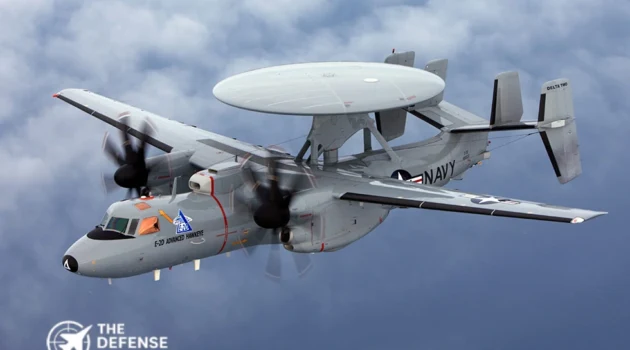
Northrop Grumman and the U.S. Navy have completed the E-2D Block II critical design review, moving the carrier-based airborne command-and-control aircraft into the next stage of modernization ahead of planned flight testing in fiscal 2029. The milestone was completed in May through cooperation between Northrop Grumman and the Navy’s E-2/C-2 Airborne Command & Control Systems Program Office, PMA-231.
Takeaways
The E-2D Block II is moving from design work toward physical aircraft modification and flight testing.
1. Critical Design Review Completed
Northrop Grumman and the U.S. Navy completed the E-2D Block II Critical Design Review in May 2026, establishing the finalized system design baseline.
2. Flight Testing Planned for FY2029
The program is now progressing toward aircraft modification and flight evaluation, with testing planned for fiscal 2029.
3. New Computing and Mission Architecture
Block II will introduce a modernized cockpit, greater computing capacity and an Open Mission Systems approach designed to simplify future technology insertion.
4. Cybersecurity and Software Resilience
The upgrade is intended to improve software resilience and cybersecurity while addressing component obsolescence across the aircraft’s mission systems.
5. Sustains the Navy’s Airborne Command Node
The modernization is intended to keep the E-2D effective as an airborne command-and-control platform supporting carrier strike groups and contested maritime operations.
The review established the finalized system product baseline and clears the program to proceed toward physical aircraft modifications. The Block II effort builds on the E-2D’s Delta System Software Configuration 6, or DSSC-6, and focuses heavily on computing, software architecture, cockpit modernization and cybersecurity.
The development is significant because the E-2D is not simply an airborne surveillance aircraft. The Navy uses the Advanced Hawkeye as an airborne command-and-control node that extends the sensor and decision-making reach of carrier strike groups.
What the E-2D Block II Will Change
Northrop Grumman describes the Block II modernization as an effort to keep the E-2D relevant against evolving threats well into the 2040s and beyond. The company says the upgrade will improve operational availability, software resilience and security, while strengthening interoperability.
The centerpiece is a modernized mission architecture based on an Open Mission Systems approach. Rather than relying as heavily on proprietary hardware and software interfaces, the architecture is intended to make it easier to introduce new technologies as requirements change.
That matters for an aircraft such as the E-2D because its value depends on its ability to collect, process and distribute information across a wider force. The aircraft must remain compatible with changing sensors, communications systems, weapons networks and other command-and-control nodes during a service life that can span decades.
Northrop Grumman says the Block II upgrade will also provide greater computing power and a new software foundation for faster capability insertion.
E-2D Block II Modernization
| Area | Block II objective |
|---|---|
| Mission architecture | Open Mission Systems approach |
| Computing | Increased processing capacity |
| Cockpit | Modernized cockpit architecture |
| Software | Faster capability insertion and improved resilience |
| Cybersecurity | Enhanced security architecture |
| Human factors | Reduced pilot workload |
| Interoperability | Improved integration with wider command-and-control networks |
| Testing | Flight testing planned for fiscal 2029 |
Why Open Architecture Matters
The most important aspect of Block II may be less visible than the aircraft’s radar or rotodome.
The Navy is increasingly treating software and computing architecture as central components of combat power. An aircraft that can receive new applications and processing capabilities without extensive redesign can potentially remain useful longer and reduce the disruption associated with technology refresh cycles.
The E-2D’s Block II architecture is therefore aimed at a recurring problem across modern military aviation: rapid technological change combined with long aircraft lifecycles.
A platform can remain structurally sound while its processors, displays, interfaces and software become obsolete. Open architecture provides a way to separate some future upgrades from the original design assumptions, allowing individual components and applications to evolve more quickly.
Northrop Grumman specifically identifies component obsolescence as one of the issues the Open Mission Systems approach is intended to address.
The E-2D’s Role in Carrier Operations
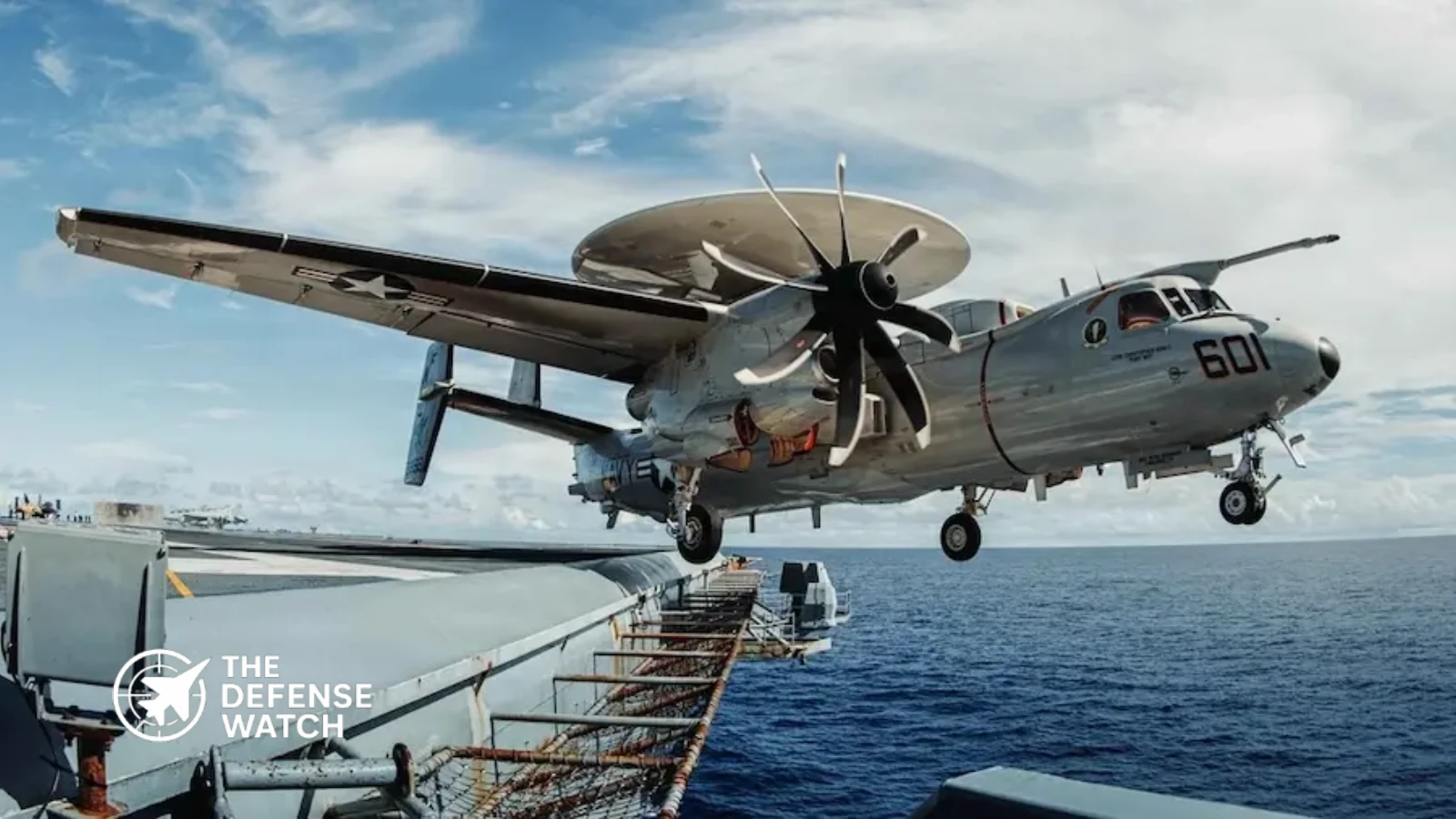
The E-2D Advanced Hawkeye is the U.S. Navy’s carrier-based airborne early warning and command-and-control aircraft. According to the Navy’s FY2026 budget documentation, the platform provides advance warning of approaching aircraft and surface forces, vectors interceptors and strike aircraft, supports area surveillance and communications relay, and contributes to theater air and missile defense operations.
The aircraft’s APY-9 radar is central to that mission. The Navy says the radar provides enhanced detection and tracking capability against advanced aircraft and cruise missile threats in overland, littoral and open-ocean environments.
That combination of sensing and command functions makes the E-2D particularly important to the carrier strike group. The aircraft can operate above and forward of the carrier formation, helping commanders build a wider picture of the battlespace and distribute information to other forces.
The Navy has also continued to expand the E-2D’s operational capabilities. In 2025, U.S. and French forces conducted aerial refueling testing involving French Rafale aircraft, A330 MRTT tankers and A400M aircraft. The testing demonstrated an additional way to extend E-2D endurance and operational reach.
Block II Builds on DSSC-6
The Block II effort is closely associated with the Navy’s DSSC-6 modernization program.
In September 2023, the Navy awarded Northrop Grumman an $845.5 million contract for DSSC-6. NAVAIR described the configuration as the most significant change to the E-2D platform since its introduction and said it would reduce pilot workload, improve situational awareness and add readiness, reliability and cybersecurity improvements.
DSSC-6 replaces existing navigation, controls, displays and tactical mission computing equipment with a modernized cockpit and mission-system architecture. NAVAIR said the architecture was intended to allow rapid integration of new capabilities, including non-proprietary applications from industry partners. Fleet fielding was scheduled to begin in 2028.
The latest design review represents the next step in that modernization path. Instead of remaining primarily a software and architecture development effort, Block II is now moving toward physical modification and eventual flight evaluation.
A Wider Navy Push to Modernize the E-2D
The Block II program is part of a broader effort to keep the E-2D fleet operationally relevant while improving readiness and supportability.
In April 2026, NAVAIR announced a $33 million contract with Northrop Grumman to integrate Precision Approach Landing Capability into the E-2D. The system is intended to improve carrier approaches during adverse weather, low visibility and nighttime operations.
NAVAIR has also been working on additional E-2D software and networking improvements. The PMA-231 program office identifies reduced pilot workload, improved situational awareness, readiness, reliability and cybersecurity as important elements of the broader modernization effort.
The Navy’s FY2026 procurement documentation lists a total E-2D program procurement baseline of 86 aircraft and identifies the Advanced Hawkeye as a key carrier-based airborne command, control and surveillance platform. The FY2026 request included funding for four E-2D aircraft.
What the 2029 Test Schedule Means
The move toward fiscal 2029 flight testing gives the Navy and Northrop Grumman several years to complete aircraft modifications, ground testing, systems integration and verification before the upgraded configuration is evaluated in flight.
That schedule is important because Block II changes more than individual components. It involves the interaction of cockpit systems, mission computing, software, communications, cybersecurity and the wider combat system.
The technical challenge is therefore not simply installing new equipment. Engineers must demonstrate that the upgraded architecture works reliably as an integrated system and that it can support the E-2D’s demanding carrier-based mission.
Flight testing will provide an opportunity to evaluate those changes under operationally relevant conditions and determine whether the upgraded configuration meets its requirements.
Why the Upgrade Matters for the Indo-Pacific
For U.S. naval forces, the timing is particularly relevant to operations in large maritime theaters such as the Indo-Pacific.
The E-2D provides airborne sensing and command-and-control reach beyond the immediate carrier formation. In a distributed maritime operation, that role becomes increasingly important because aircraft, ships, unmanned systems and other forces may need to share information across greater distances.
The Block II architecture is designed to help the aircraft remain adaptable as those networks evolve. The emphasis on open interfaces, computing capacity and cybersecurity reflects a broader shift in U.S. military modernization toward software-defined and networked combat systems.
The Navy’s objective is not to replace the E-2D’s basic role. Instead, the modernization seeks to ensure that the aircraft can continue performing that role as the surrounding force becomes more connected, distributed and technologically complex.
The Strategic Value of Keeping the Hawkeye Adaptable
The E-2D is a mature aircraft program, but its mission continues to evolve.
The Navy’s modernization strategy increasingly treats the aircraft as an airborne information and command node rather than simply a radar platform. That makes the ability to update its software, processors and interfaces a core requirement for long-term relevance.
Block II addresses that requirement through an architecture intended to make future upgrades easier. The approach could also reduce the impact of component obsolescence by making it less necessary to redesign the entire system when individual technologies reach the end of their useful lives.
Northrop Grumman says the modernization is intended to keep the E-2D adaptable into the 2040s and beyond.
The completion of the Critical Design Review is therefore an important program milestone, but it is not the end of development. The next major phase will involve aircraft modification, integration and testing before the Navy can assess the complete Block II configuration in flight.
With flight testing planned for fiscal 2029, the program has moved from defining the future architecture toward demonstrating that architecture on an operational aircraft.