Denmark’s push to reinforce its Arctic and North Atlantic defenses has expanded beyond Greenland. On August 2, 2026, Danish Defense Minister Jeppe Bruus and Faroese Minister of Foreign Affairs and Fisheries Bárður á Steig Nielsen agreed to gradually increase Danish military activity in and around the Faroe Islands starting this year — extending a buildup that began in Greenland into every part of the Kingdom of Denmark’s Arctic and North Atlantic territory.
“We are a large realm, and we have recently increased our military capabilities throughout the Arctic and North Atlantic,” Bruus said, following the agreement. “It is therefore also entirely natural that we increase our presence in the Faroe Islands.”
What the Faroe Islands Expansion Actually Includes
The plan calls for periodic, gradually increasing activity rather than a large permanent base or continuously stationed combat units. Denmark currently maintains a limited footprint on the islands, with a local Joint Arctic Command unit based in Tórshavn and Danish vessels and aircraft operating in the surrounding waters on a periodic basis.
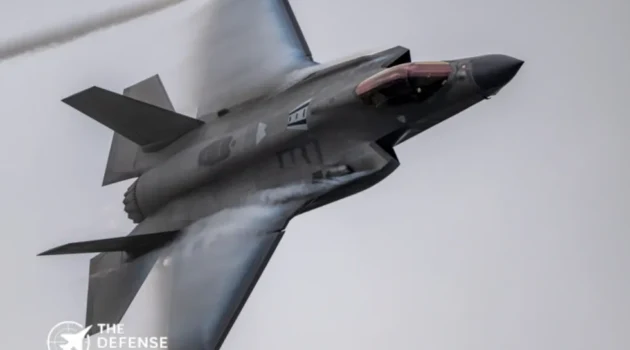
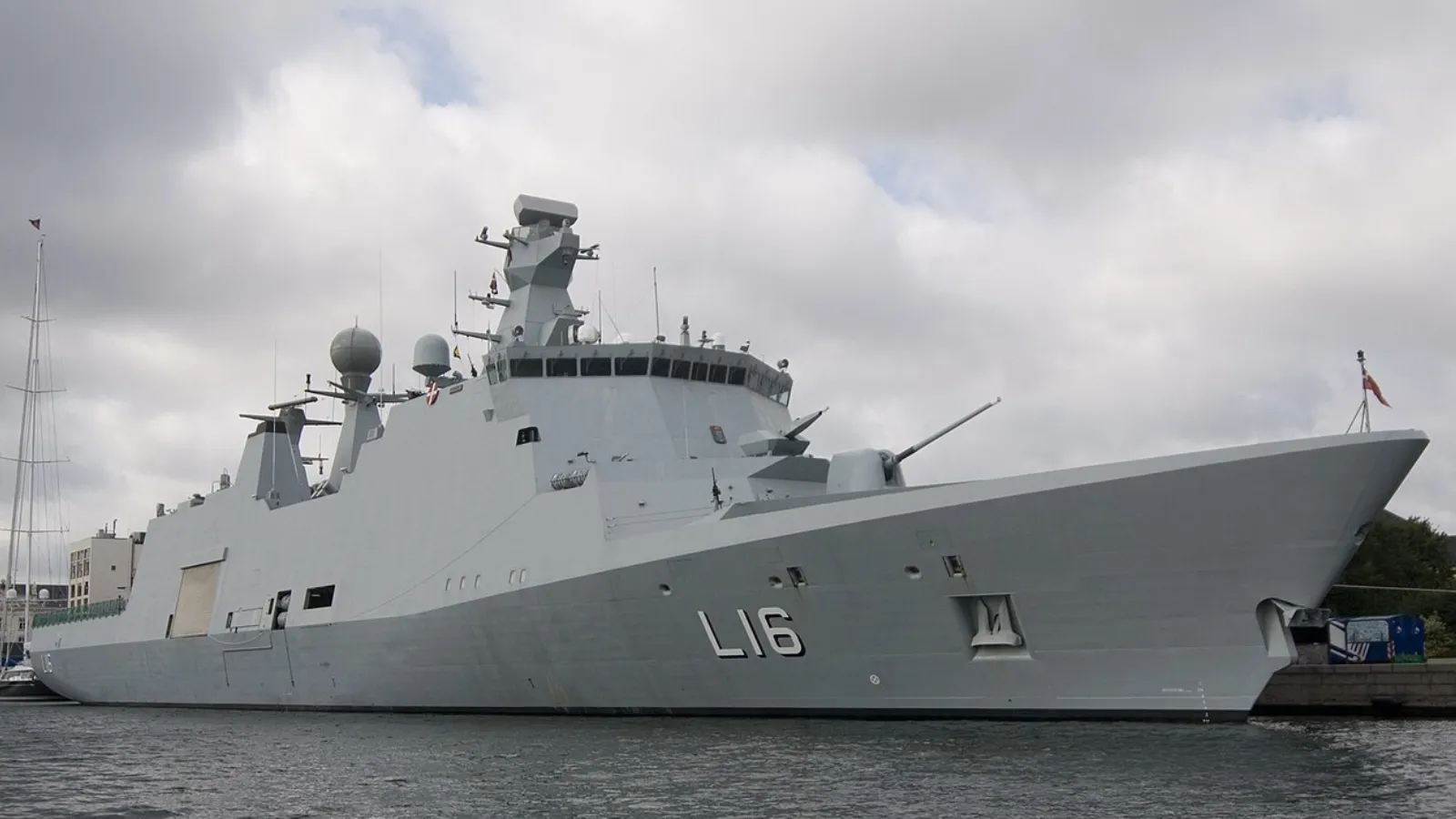
Under the new agreement, that presence is set to grow to include F-35 fighter patrols, Royal Danish Navy frigate deployments, and visits by military transport aircraft — coordinated with Faroese authorities, including the territory’s coast guard, VØRN. Danish Defense Minister Troels Lund Poulsen has also stated that the government intends to demonstrate it can monitor and protect the entire Kingdom of Denmark — comprising Denmark proper, Greenland, and the self-governing Faroe Islands — reflecting a shift toward treating Arctic and North Atlantic security as a single, integrated mission rather than separate regional concerns.
The buildup falls under Denmark’s Arctic Endurance exercise framework, which runs throughout 2026, and is explicitly linked to NATO’s broader Arctic Sentry initiative.
Why the Faroe Islands Matter Strategically
The Faroe Islands sit at a genuinely consequential chokepoint: the Greenland-Iceland-United Kingdom gap, commonly known as the GIUK gap — a maritime corridor that any submarine or surface vessel moving between the Arctic Ocean and the North Atlantic effectively has to pass through or near. Monitoring and controlling that corridor has been a NATO strategic priority since the Cold War, when it served as a primary chokepoint for tracking Soviet submarines attempting to reach the open Atlantic.
That relevance hasn’t diminished — if anything, renewed Russian submarine activity and increased great-power interest in Arctic sea lanes have made the GIUK gap more operationally significant, not less.
Part of a Much Larger Kingdom-Wide Push
The Faroe Islands agreement is the latest step in a buildup that began, and remains centered, in Greenland. Denmark has increased troop deployments, exercises, and equipment in Greenland over the past year, a shift driven in significant part by renewed and repeated statements from U.S. President Donald Trump about acquiring the territory outright.
The numbers behind that broader push are substantial. In January 2025, Denmark announced a $2 billion allocation to boost defense of Greenland, the Arctic Sea, and the North Atlantic, including three new Arctic naval vessels and two long-range drones. That was followed in 2025 by two further agreements on Arctic and North Atlantic defense, worth a combined total exceeding $6.5 billion, reached in cooperation with the Faroese and Greenlandic governments. Capabilities funded under that package include additional Arctic naval vessels to replace aging inspection ships, expanded long-range drone coverage, and broader satellite surveillance intended to close monitoring gaps across a region defined by harsh weather, vast distances, and limited infrastructure.
Denmark has already reinforced its standing North Atlantic naval presence with a frigate and patrol and inspection vessels permanently assigned to the region, and the Danish Armed Forces have conducted a steady cadence of Arctic-focused exercises throughout 2026 — including Dynamic Mercy, a multinational maritime rescue exercise, and Baltic Shield 2026, run jointly with Polish forces around Bornholm and the Baltic Sea.
NATO’s Wider Arctic Framework
Denmark’s national buildup sits inside a larger alliance structure. NATO launched Arctic Sentry, a multi-domain enhanced vigilance activity, on February 13, 2026, coordinating exercises, surveillance, and deterrence activity across the High North. The initiative gained additional coherence after Finland and Sweden’s NATO accession, which means seven of the eight Arctic states are now alliance members — creating substantially more scope for integrated Nordic air and maritime operations than existed even a few years ago.
Comparing Denmark’s Arctic Commitments
Territory Recent Development Key Capabilities Greenland Increased troop deployments, exercises, and equipment through 2025-2026 Arctic naval vessels, long-range drones, expanded satellite coverage Faroe Islands New agreement (Aug 2, 2026) for gradually increasing presence F-35 patrols, frigate deployments, transport aircraft visits North Atlantic (broader) Standing naval reinforcement Permanently assigned frigate, patrol and inspection vessels Alliance-wide NATO Arctic Sentry (launched Feb 2026) Coordinated exercises, surveillance, deterrence across High North FAQ
Why is Denmark increasing its military presence in the Faroe Islands?Denmark and Faroese officials agreed on August 2, 2026, to gradually expand military activity in the islands as part of a Kingdom-wide effort to strengthen Arctic and North Atlantic defense, extending a buildup that began in Greenland.
What military assets will be deployed to the Faroe Islands?The plan includes F-35 fighter jet patrols, Royal Danish Navy frigate deployments, and visits by military transport aircraft, coordinated with Faroese authorities including the coast guard VØRN. It does not currently involve a large permanent base.
Why is the GIUK gap strategically important?The Greenland-Iceland-United Kingdom gap is a key maritime corridor between the Arctic Ocean and the North Atlantic, historically central to NATO’s ability to track submarine and naval movement. The Faroe Islands sit directly within this corridor.
How much has Denmark committed to Arctic defense spending?Denmark allocated $2 billion in January 2025 for Greenland and North Atlantic defense, followed by two further 2025 agreements worth a combined total of more than $6.5 billion, funding new Arctic naval vessels, long-range drones, and expanded satellite surveillance.
What is NATO’s Arctic Sentry initiative?Arctic Sentry is a NATO multi-domain enhanced vigilance activity launched on February 13, 2026, coordinating exercises, surveillance, and deterrence across the High North. Denmark’s national Arctic Endurance exercise framework is directly linked to it.
Is Denmark’s Arctic buildup connected to U.S. interest in Greenland?Yes — reporting has directly linked Denmark’s accelerated Arctic defense posture, including the Greenland buildup that preceded the Faroe Islands expansion, to repeated statements by U.S. President Donald Trump about acquiring Greenland.
Holding the Chokepoint, Strategy-Game Style
If you’ve ever played a grand-strategy title where control of a single narrow strait decides who gets to project power across an entire map, you already understand why the Faroe Islands punch so far above their size and population. The GIUK gap is that chokepoint made real — a stretch of open ocean where a handful of frigates and a rotating F-35 presence can do the work of a much larger force simply because of where they’re positioned. Denmark isn’t trying to build an Arctic superpower’s arsenal; it’s reinforcing the one square on the map that, if left uncovered, would let anyone move freely between two oceans NATO very much wants to keep watched.