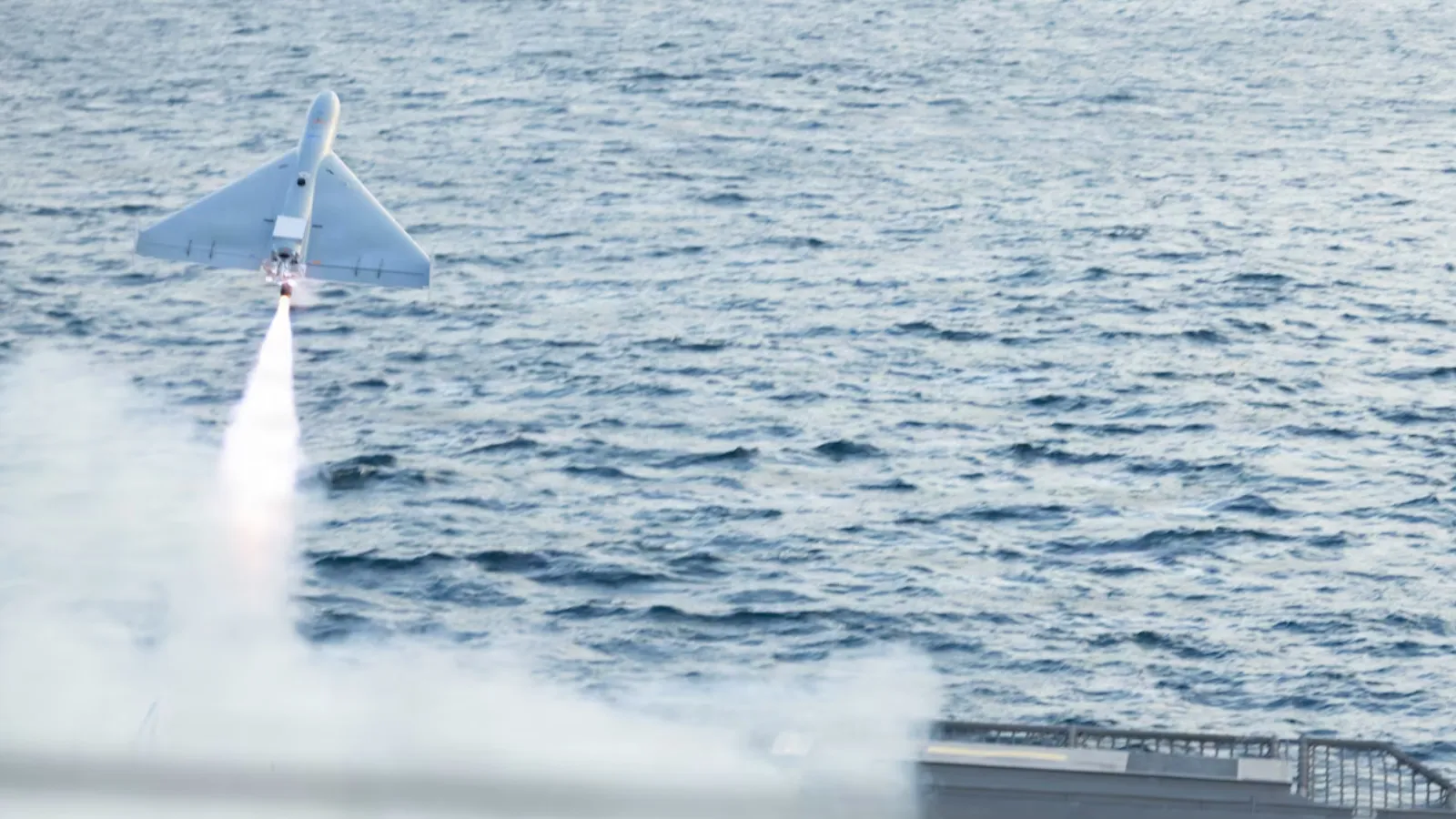
Executive Summary: U.S. Central Command is establishing Task Force Falcon Strike, its first multinational, multidomain task force dedicated to one-way attack drones. The initiative will integrate U.S. personnel and regional partners operating unmanned systems in the air, surface, and subsurface domains, expanding on the combat experience of Task Force Scorpion Strike.
CENTCOM Launches Falcon Strike Attack Drone Task Force
CENTCOM Falcon Strike represents a new step in the U.S. military’s effort to integrate low-cost unmanned strike systems across multiple operating domains in the Middle East. CENTCOM announced Aug. 13 that it had begun consultations and issued invitations to regional partners for the new task force, which will combine U.S. and partner capabilities as participating nations formally join.
The command said Falcon Strike will employ one-way attack drones consisting of unmanned systems operating above, on, and below the sea. Military support personnel from the United States and regional partners will operate the systems as the task force expands.
Navy Adm. Brad Cooper, commander of CENTCOM, said the initiative builds on the experience gained from Task Force Scorpion Strike and is intended to take advantage of innovation occurring among U.S. regional allies and partners.
Falcon Strike Builds On Scorpion Strike
The new task force follows the creation of Task Force Scorpion Strike, CENTCOM’s dedicated one-way attack drone squadron established in late 2025.
Scorpion Strike was formed as part of CENTCOM’s broader effort to accelerate the fielding of affordable unmanned systems. The squadron operates the Low-cost Unmanned Combat Attack System, or LUCAS, a one-way attack unmanned aircraft designed for relatively inexpensive strike missions.
CENTCOM has described Scorpion Strike as an effort to place lower-cost strike capabilities with deployed forces more quickly. The initiative was connected to the command’s Rapid Employment Joint Task Force, which was created to accelerate the transition of emerging technologies into operational use.
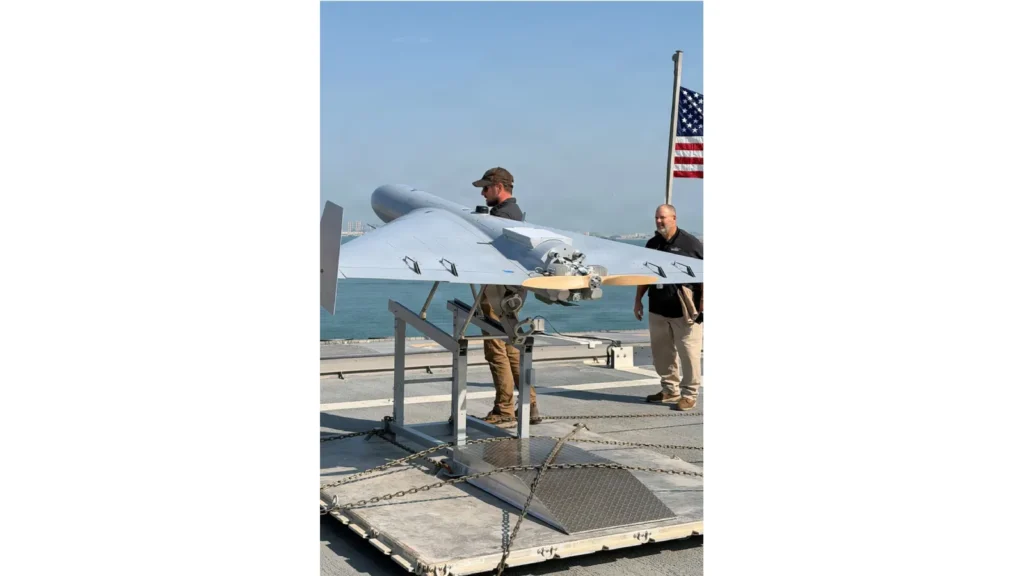
Nick Fancher, a shipboard weapons integration team weapons logistics analyst, and Rob Pavel, a logistician with Naval Air Warfare Center Weapons Division, conduct shipboard weapons integration work on the low-cost unmanned combat attack system aboard the combat ship USS Santa Barbara in the Arabian Gulf, Dec. 6, 2025, as part of Task Force Scorpion Strike operations. U.S. Central Command announced the launch of Task Force Falcon Strike Aug. 13, 2026. The new task force will expand on the success of Task Force Scorpion Strike, the U.S. military’s first dedicated one-way attack drone squadron in the Middle East. (Image: DOW)
The progression from Scorpion Strike to Falcon Strike is significant because the latter is not simply another U.S. drone unit. CENTCOM is seeking to create a framework in which multiple countries can operate and integrate unmanned strike capabilities under a common task force structure.
From Airborne Drones To Maritime Unmanned Systems
Falcon Strike’s most important distinction is its multidomain structure.
| Domain | Planned capability |
|---|---|
| Air | One-way attack unmanned aircraft |
| Surface | Unmanned surface attack systems |
| Subsurface | Unmanned underwater systems |
| Personnel | U.S. and regional partner military support staff |
| Command structure | Staff led by Special Operations Command Central personnel |
CENTCOM has not publicly identified the regional countries invited to join or provided a complete inventory of systems that will eventually form the task force.
That distinction matters. The announcement establishes the organizational framework, but the final scale and composition of Falcon Strike will depend on which regional partners formally participate and what systems they contribute.
Scorpion Strike Demonstrated Maritime Launch Operations
Scorpion Strike has already expanded beyond conventional land-based drone employment.
On Dec. 16, 2025, the Independence-class littoral combat ship USS Santa Barbara launched a LUCAS drone from its flight deck while operating in the Arabian Gulf. CENTCOM identified the event as the first time the U.S. Navy employed an attack drone at sea in the region.
The demonstration provided an operational example of how relatively small unmanned aircraft can be integrated with naval platforms without requiring the infrastructure associated with traditional manned aircraft.
CENTCOM subsequently employed Scorpion Strike during Operation Epic Fury. The command stated that the operation marked the first U.S. combat employment of Group 3 one-way attack drones and highlighted the lower cost per effect compared with more expensive platforms used for comparable missions.
Why Multidomain Integration Matters
The primary operational value of Falcon Strike is not simply the number of drones involved. It is the ability to combine different unmanned systems within a single multinational framework.
Airborne systems can provide reach and access against targets ashore, while surface and subsurface unmanned platforms can extend the same general concept into maritime environments. A common task force structure could allow participating forces to coordinate employment, sustainment, training, and operational support more closely than separate national programs.
For CENTCOM, this approach also addresses a broader challenge in modern warfare: the growing availability of relatively inexpensive unmanned systems that can impose costs on much more expensive military platforms.
Falcon Strike gives the command an organizational mechanism for experimenting with that cost imbalance across several domains rather than treating aerial, surface, and underwater drones as separate technology programs.
Regional Partners Will Be Central To The Initiative
CENTCOM said consultations are underway and that official invitations have been issued to regional partners. The command has not yet announced the final list of participating countries.
That makes partner integration one of the most important next steps for Falcon Strike.
Multinational unmanned operations require more than compatible hardware. Forces must establish procedures for command and control, communications, training, maintenance, logistics, intelligence sharing, targeting authorities, and rules governing the employment of weapons.
The task force will therefore have to reconcile different national systems and operating procedures while maintaining effective U.S. command relationships.
Special Operations Command Central personnel, who were responsible for launching Scorpion Strike, will lead the Falcon Strike staff consisting of U.S. and regional representatives.
A New Model For Low-Cost Strike Operations
Falcon Strike also reflects a wider shift in U.S. military thinking toward affordable unmanned strike capabilities.
CENTCOM’s 2026 posture materials describe the command’s effort to accelerate emerging technologies and field economical unmanned systems. The command has specifically linked this effort to establishing a more favorable cost relationship between U.S. systems and the threats they are intended to defeat.
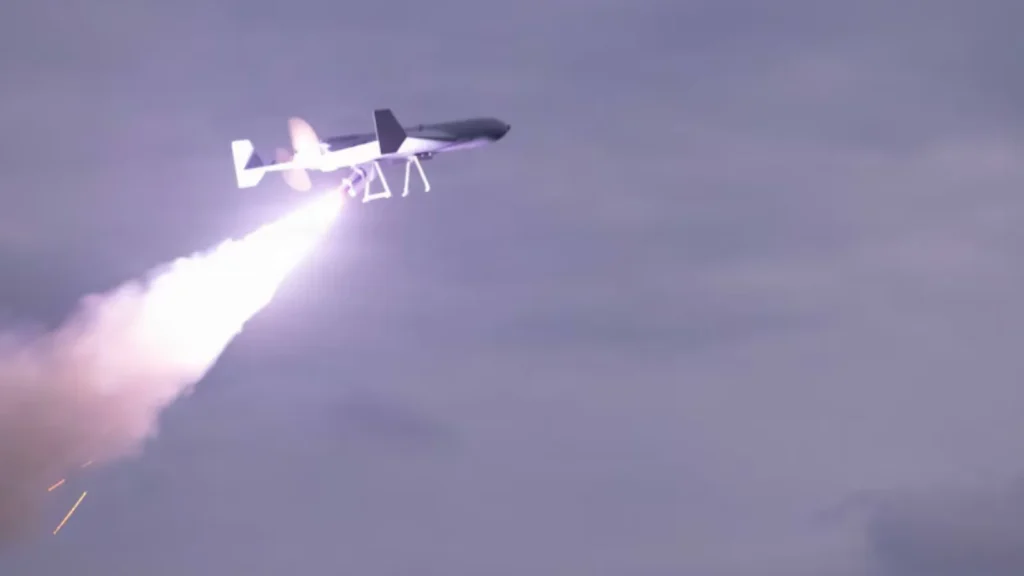
The LUCAS program provides an early example of this approach. CENTCOM says the system can operate autonomously and can be launched through several methods, including catapults, rocket-assisted takeoff systems, and mobile ground or vehicle systems.
Falcon Strike broadens that concept. Instead of relying on a single drone type or a single service, the task force is intended to bring together different unmanned platforms and operators across the maritime and air domains.
What Comes Next
CENTCOM’s announcement does not yet establish the final operational size of Falcon Strike, identify all participating nations, or disclose the specific systems that will be assigned to the task force.
The immediate priority will be partner participation and the creation of a common operating structure. Subsequent developments will likely focus on integrating U.S. and regional unmanned systems, establishing training and support arrangements, and determining how the task force will operate alongside existing CENTCOM formations.
The move nevertheless marks a clear organizational expansion of the U.S. military’s unmanned warfare effort in the Middle East. Scorpion Strike established a dedicated one-way attack drone capability; Falcon Strike is intended to turn that experience into a multinational, multidomain framework.
For CENTCOM, the objective is to make unmanned strike capabilities more widely available across the region while giving U.S. forces and their partners a common structure for operating emerging systems.