Executive Summary: The U.S. Navy’s MQ-25 Stingray carrier-based tanker drone is now projected to reach initial operational capability in 2029, extending the program’s schedule beyond earlier targets. At the same time, the Pentagon estimates acquisition costs at $19.4 billion, while GAO has identified production-before-testing, cybersecurity, cost transparency and manufacturing risks that could affect the program’s remaining schedule.
MQ-25 Stingray Faces Another Schedule Setback
The MQ-25 Stingray delay has placed the U.S. Navy’s first operational carrier-based unmanned aircraft under renewed congressional scrutiny, with the Pentagon now projecting initial operational capability in 2029. A Congressional Research Service assessment updated August 12 highlights concerns over the Navy’s decision to proceed with low-rate initial production while important production-representative testing remains incomplete.
The schedule has shifted significantly since the program began. Earlier Navy planning targeted IOC in 2024, followed by revised targets of 2026 and 2027. Current planning points to February 2029, while flight testing is expected to continue into fiscal 2029.
The delay is important because the MQ-25 is not simply another unmanned aircraft procurement. It is intended to establish the Navy’s first operational carrier-based unmanned aviation capability while changing how carrier air wings conduct aerial refueling.
What The MQ-25 Is Designed To Do
The MQ-25A Stingray is being developed primarily as an unmanned aerial tanker. Its central mission is to refuel carrier-based aircraft, allowing F/A-18E/F Super Hornets that currently perform tanker duties to remain available for combat missions.
The Navy’s stated requirement calls for the aircraft to deliver at least 14,000 pounds of fuel at a distance of 500 nautical miles from the carrier. Earlier Navy documentation has also described an objective of carrying as much as 16,000 pounds of fuel at that distance.
MQ-25 Program Element Current Information Primary mission Carrier-based aerial refueling Secondary mission ISR support Planned fleet 76 aircraft Operational aircraft 67 Test and development aircraft 9 Fuel delivery objective At least 14,000 pounds at 500 nautical miles Initial operational capability 2029, currently projected Engine Rolls-Royce AE 3007N Air vehicle manufacturer Boeing Mission-control software Lockheed Martin-developed systems The aircraft is also intended to support intelligence, surveillance and reconnaissance missions. Its larger significance, however, is its role as a foundation for integrating additional unmanned systems into future carrier air wings.
First Production Aircraft Has Already Flown
The schedule setback comes despite measurable progress.
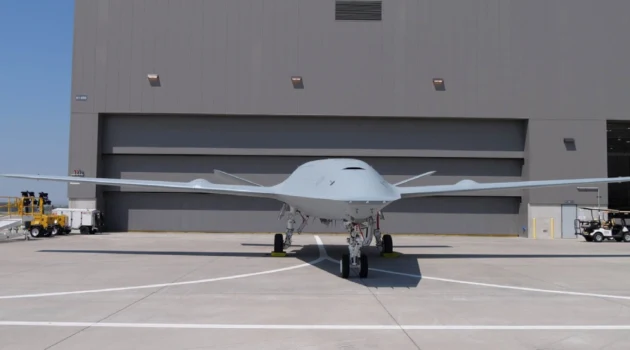
A production-representative MQ-25A completed its first flight on April 25, 2026, from Boeing’s facility at MidAmerica Airport in Mascoutah, Illinois. The aircraft flew for approximately two hours while Navy and Boeing personnel controlled it from the Unmanned Carrier Aviation Mission Control System MD-5 ground control station.
The Navy subsequently approved Milestone C in May 2026, allowing the program to proceed into low-rate initial production.
That creates an important distinction between program progress and operational readiness. The aircraft has reached flight testing and production authorization, but the Navy still has to complete a substantial body of developmental, operational, cybersecurity and carrier-integration testing before the system can become an operational fleet capability.
Why Testing And Production Are Creating Concern
The central acquisition issue is concurrency.
GAO reported that the MQ-25 program is moving forward with low-rate production before all developmental testing is complete. If flight testing identifies design or manufacturing problems, aircraft already being produced may require modifications. That can increase costs and disrupt the production schedule.
The concern was not identified for the first time in 2026. A 2023 Department of Defense inspector general review also warned about the risks of beginning low-rate production before sufficient testing of the production-representative aircraft had been completed. The Navy responded by revising its risk assessment and delaying some program milestones, but ultimately authorized LRIP in May 2026.
GAO’s latest assessment also identified manufacturing difficulties involving wiring, vibration monitoring and parts qualification. Program officials reported intermediate solutions for those issues, but the problems contributed to schedule pressure.
This creates a difficult acquisition balance. Producing aircraft earlier can protect the industrial schedule and accelerate fleet introduction, but producing before testing is mature increases the possibility that production aircraft will have to be modified later.
Cybersecurity Has Become Another Schedule Risk
The MQ-25 is also dependent on a sophisticated control architecture rather than the aircraft alone.
The Unmanned Carrier Aviation Mission Control System, known as MD-5, provides mission planning, flight control and communications functions. The Navy is developing shipboard, shore-based and mobile versions of the system, creating an architecture intended to support the MQ-25 and potentially other unmanned aircraft in future carrier air wings.
GAO found that key cybersecurity testing remains incomplete. The program does not plan to finish certain cybersecurity tests until October 2028, more than two years after the production aircraft’s first flight. GAO warned that completing this work after production begins creates additional risk of cost growth.
For a carrier-based unmanned aircraft, cybersecurity is particularly important because the aircraft depends on digital communications and remote mission control. The system must operate reliably within a complex naval network while maintaining safe control of the aircraft during launch, recovery, refueling and other carrier operations.
MQ-25 Costs Continue To Increase
Cost growth is another issue attracting congressional attention.
The Pentagon’s current acquisition estimate is approximately $19.4 billion, including procurement, development, testing and military construction. The associated acquisition unit cost is approximately $255.8 million per aircraft under the Pentagon’s accounting methodology.
GAO uses a different accounting basis and estimates the program at approximately $16.6 billion, excluding military construction, with an acquisition unit cost of about $218 million. GAO said its unit-cost estimate increased 4% from the previous assessment.
The difference between the two figures does not represent a contradiction. Acquisition programs can produce different unit-cost figures depending on which development, infrastructure and support costs are included.
GAO also found that the Navy was working to obtain better production cost data. The fixed-price nature of the original development contract meant that the program office did not previously have complete visibility into Boeing’s actual aircraft-production costs.
That information becomes increasingly important as the MQ-25 moves from development into production.
Manufacturing Disruptions Added To Schedule Pressure
The program has also faced industrial-base challenges.
GAO reported that MQ-25 construction was affected by a machinists’ strike at Boeing’s St. Louis facility from August through November 2025. The program has also dealt with component qualification and obsolescence issues.
Boeing is building the MQ-25 at its production facility at MidAmerica St. Louis Airport in Mascoutah, Illinois. The company opened the approximately $200 million facility in 2024 as the dedicated production site for the aircraft.
The MQ-25 uses the Rolls-Royce AE 3007N turbofan, produced in Indianapolis, while the aircraft’s refueling system is based on the Cobham Aerial Refueling Store used by tanker-configured F/A-18E/F aircraft.
Why The Delay Matters To Carrier Aviation
The operational effect of the delay extends beyond the MQ-25 program itself.
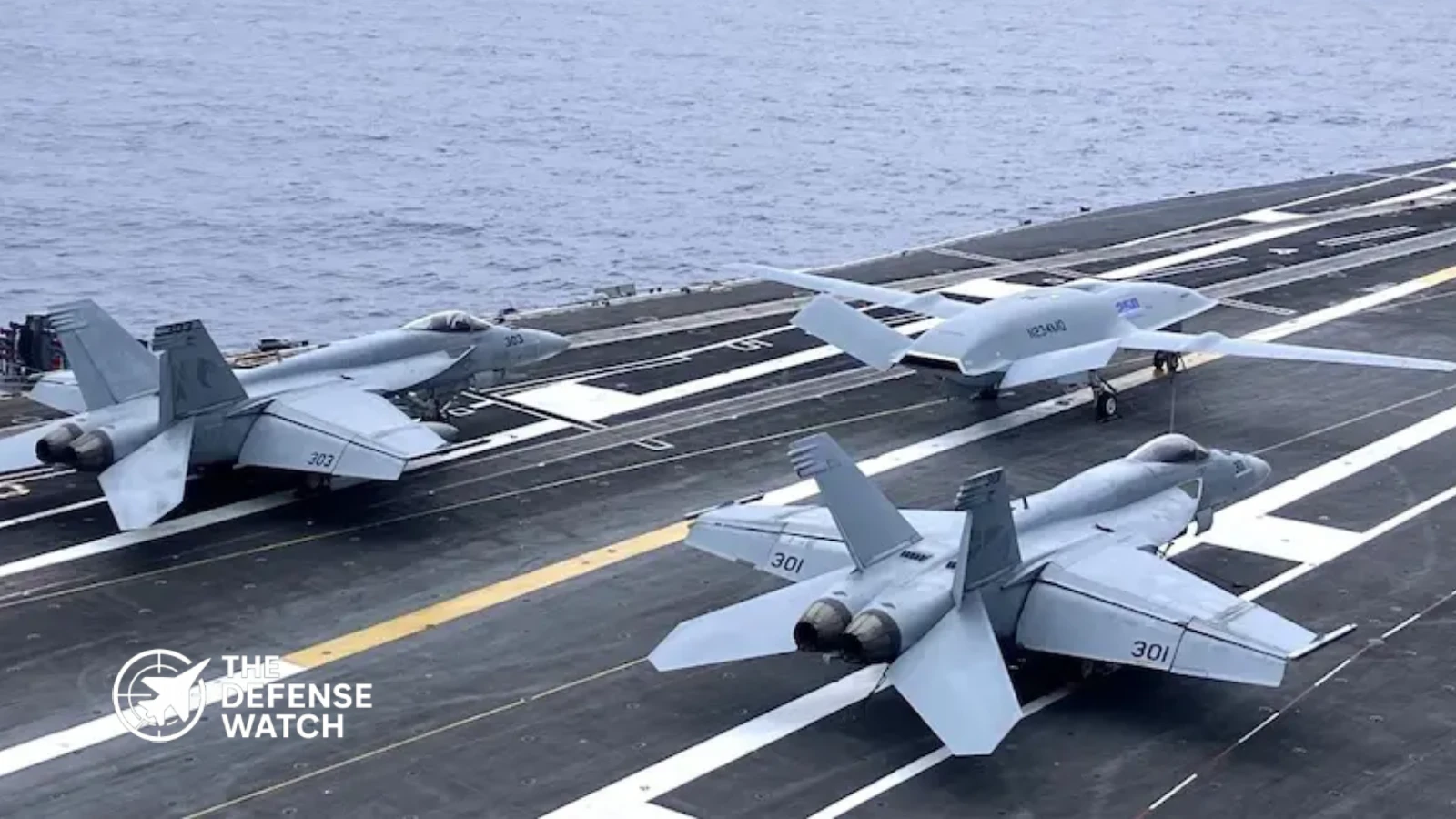
Carrier air wings currently use modified F/A-18E/F Super Hornets for aerial refueling duties. Those aircraft provide valuable tanker capacity, but every fighter assigned to tanker missions is unavailable for other combat tasks.
The MQ-25 is intended to separate those functions. By assigning aerial refueling to an unmanned platform, the Navy can preserve more Super Hornets for strike and fighter missions while extending the reach of other carrier aircraft.
The operational requirement becomes more significant as the Navy plans for carrier operations at greater distances from potential adversaries. A dedicated carrier tanker can help reduce the range penalty imposed on fighters and other aircraft when they must operate farther from the carrier.
The 2029 IOC target therefore represents more than a procurement delay. It postpones the Navy’s ability to fully exploit a key change in carrier air-wing composition.
The MQ-25 Is Also A Test Of Future Unmanned Carrier Operations
The Stingray’s importance goes beyond aerial refueling.
The Navy has described the MQ-25 and its mission-control architecture as a path toward a future carrier air wing containing a larger number of unmanned aircraft. The experience gained in operating an unmanned aircraft from a carrier deck could influence future unmanned ISR, electronic warfare and other carrier-based missions.
That makes the current testing problems strategically relevant.
The Navy must demonstrate not only that the MQ-25 can fly, but that an unmanned aircraft can safely integrate with a carrier’s launch and recovery cycle, deck operations, communications architecture, maintenance system and manned aircraft.
The first production flight in April demonstrated an important milestone, but it did not by itself establish operational readiness. The remaining test program must validate the aircraft and its supporting systems under increasingly representative conditions.
Congress Faces A Key Acquisition Decision
The MQ-25 is now moving through the exact phase in which Congress and acquisition officials must balance schedule, cost and technical maturity.
The Navy requested $1.75 billion for the MQ-25 program in fiscal 2027, including funding for three aircraft and additional research, development, testing and evaluation work. Pending House and Senate defense bills would provide the requested amount, according to the latest reporting.
Congressional oversight is likely to focus on whether the Navy has sufficient visibility into production costs, whether remaining testing can be completed without major redesigns, and whether cybersecurity work is proceeding quickly enough.
The larger question is whether accelerating production now will ultimately shorten the path to operational service or create additional retrofit and testing costs.
For the MQ-25, that distinction matters because the program is intended to become the Navy’s first operational carrier-based unmanned aircraft. Its success or failure will provide the service with practical evidence about how quickly unmanned systems can be integrated into the carrier air wing at scale.
Bottom Line
The MQ-25 Stingray has made important technical progress in 2026, including the first flight of a production-representative aircraft and Milestone C approval for low-rate initial production. However, those milestones have not eliminated the program’s underlying schedule, testing, cybersecurity and cost risks.
With IOC now projected for 2029, the Navy faces several years of additional testing and integration before the MQ-25 can assume its intended operational role. The program’s performance during that period will be closely watched because it will help determine not only when the Navy receives its first unmanned tanker, but also how confidently it can expand unmanned operations across future carrier air wings.