Leonardo DRS Airborne and Intelligence Systems has received a $39.6 million U.S. Navy contract to produce and deliver up to 55 Joint Tactical Terminal Transceiver units for the F/A-18E/F Super Hornet and EA-18G Growler fleets.
Naval Air Systems Command (NAVAIR), Patuxent River, Maryland, awarded the firm-fixed-price, cost-plus-fixed-fee contract, designated N0001926C1012. The work covers production as well as non-recurring engineering, aircraft integration, qualification and production support. Work will be performed in Beavercreek, Ohio, with completion expected in February 2028.
Deep Technical & Strategic Context Analysis
The Joint Tactical Terminal requirement addresses a key element of modern airborne warfare: maintaining access to timely threat and situational-awareness data when conventional communications paths are disrupted, degraded or unavailable. Leonardo DRS describes its Joint Tactical Terminal family as supporting beyond-line-of-sight communications and near-real-time threat, survivor and blue-force tracking information. Its terminals use software-defined architectures and can support multiple waveforms, allowing the hardware to serve as a communications and information interface rather than as a single-purpose radio.
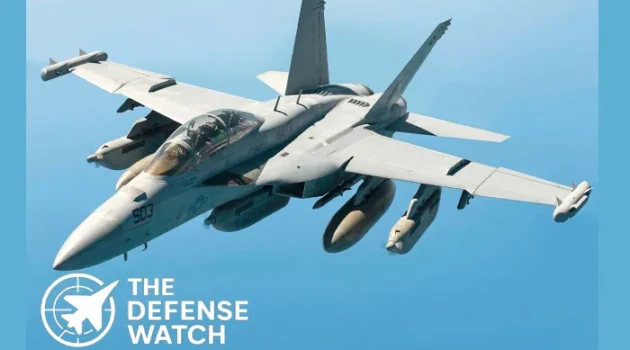
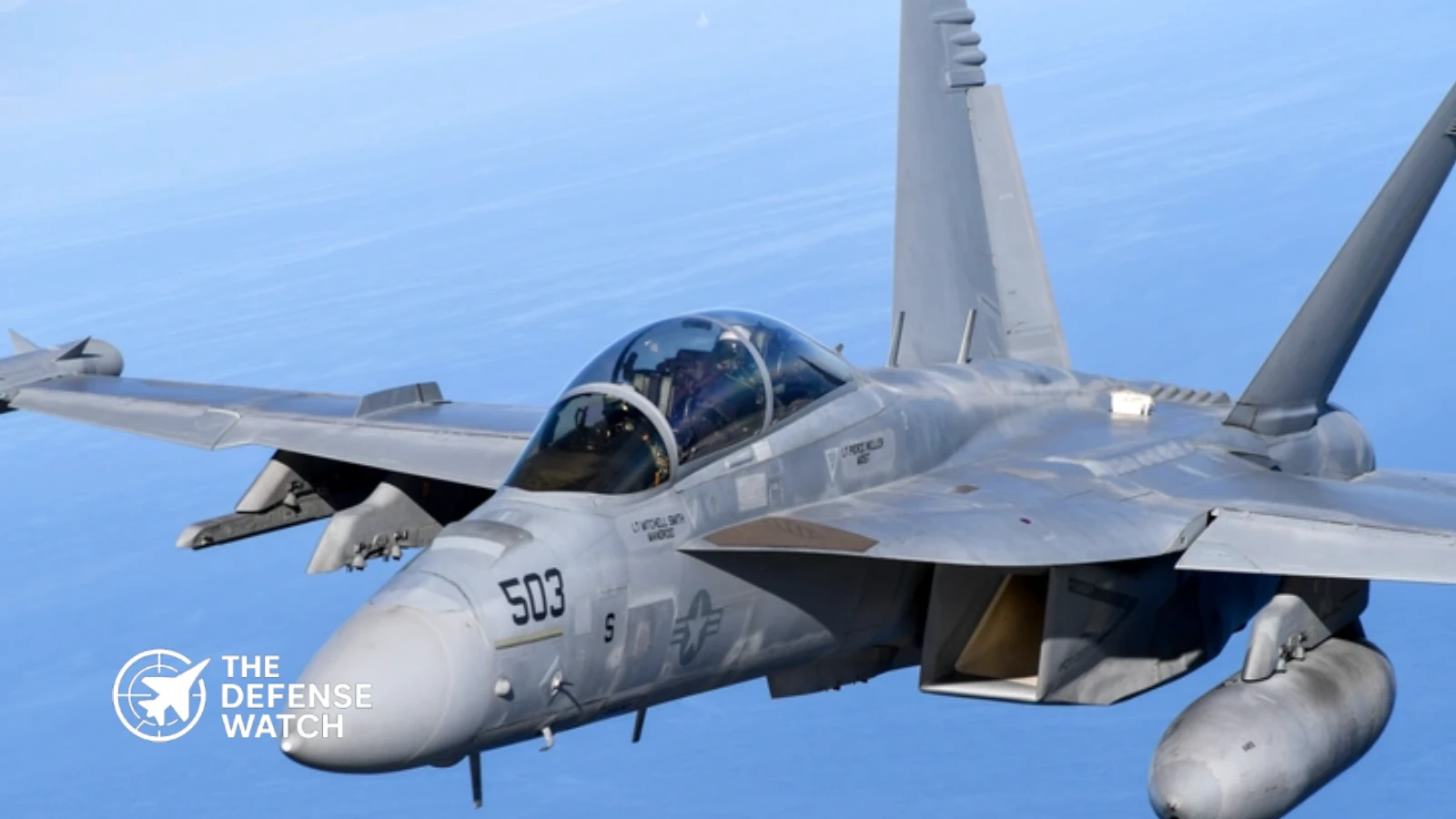
The relevance is particularly strong for the EA-18G Growler. The aircraft combines the F/A-18F Super Hornet airframe with an airborne electronic attack suite that includes the ALQ-218 receiver, communication countermeasures and satellite communications. NAVAIR identifies the Growler as the Navy’s dedicated airborne electronic attack platform, while also noting its continued worldwide operational use and relationship with the Royal Australian Air Force.
The new transceiver configuration is intended to leverage resilient communications through government and commercial non-geostationary orbit satellite networks. Unlike traditional geostationary satellites, which remain positioned over a fixed region of the Earth, non-geostationary constellations use satellites moving relative to the ground. This architecture can provide additional routing and coverage options, potentially giving tactical aircraft greater communications resilience as electromagnetic warfare becomes increasingly important.
For the Super Hornet and Growler, the value is therefore not limited to connectivity. A more resilient tactical communications path can help aircraft receive and exchange information needed to build a common operational picture while operating in contested electromagnetic environments. NAVAIR has also identified network-centric operations, advanced sensor integration and data transfer to command-and-control nodes as important elements of the Growler’s future development.
Contract Breakdown & Details
What The Navy Is Buying
The $39,608,346 award covers several elements:
- Up to 55 Joint Tactical Terminal Transceiver units for Navy aircraft.
- F/A-18E/F Super Hornet integration to support the fighter’s communications and situational-awareness functions.
- EA-18G Growler integration for the Navy’s airborne electronic attack aircraft.
- Non-recurring engineering, meaning engineering work required to develop, adapt or qualify the equipment for the specific aircraft configuration.
- Aircraft integration, covering the hardware, software and interfaces needed to operate the terminal as part of the aircraft mission system.
- Qualification testing to demonstrate that the equipment meets applicable performance and aircraft integration requirements.
- Production support through the manufacturing phase.
The contract value works out to about $720,000 per terminal if the full 55-unit quantity were divided evenly across the entire award. That figure should not be treated as the unit purchase price because the contract also funds engineering, integration, qualification and production support.
Funding And Work Location
- Contract value: $39,608,346
- Procurement type: Firm-fixed-price with cost-plus-fixed-fee elements
- Aircraft: F/A-18E/F Super Hornet and EA-18G Growler
- Maximum terminal quantity: 55
- Work location: Beavercreek, Ohio
- Expected completion: February 2028
- Contracting activity: Naval Air Systems Command, Patuxent River, Maryland
- Contract number: N0001926C1012
- Fiscal year funding: Fiscal 2026 Aircraft Procurement, Navy
- Funds obligated at award: $39,608,346
The announcement identifies one funding source, Fiscal 2026 Aircraft Procurement, Navy funds. It does not identify a separate Army, Air Force, Space Force or other agency funding contribution.
Geographically, the announced contract work is 100 percent attributed to Beavercreek, Ohio based on the location provided in the award notice. The contracting activity is NAVAIR in Maryland, but the announcement does not provide a percentage breakdown of work between Ohio and Maryland.
Understanding The Contract Structure
A firm-fixed-price contract places substantial cost-performance risk on the contractor. The government generally agrees to pay the contracted price for the defined deliverables, while the contractor must manage its costs to meet the contractual requirements.
The cost-plus-fixed-fee component is different. It is generally used when the precise cost of certain work, often engineering or development activity, is difficult to establish in advance. The contractor receives reimbursement for allowable costs plus a predetermined fee.
Using both structures allows the Navy to procure relatively defined production hardware while separately addressing engineering and integration activities that can carry greater technical uncertainty.
Why The Growler Matters
The EA-18G Growler is built around the F/A-18F Super Hornet and was developed to replace the Navy’s EA-6B Prowler. It retains the Super Hornet’s multirole characteristics while adding specialized airborne electronic attack systems. NAVAIR says the aircraft incorporates the ALQ-218 receiver, communication countermeasures and satellite communications, alongside the APG-79 AESA radar.
The platform is also undergoing a broader modernization effort. NAVAIR’s Growler Capability Modification program was established to provide upgrades intended to keep the aircraft relevant into the 2040 timeframe, including modifications supporting the Next Generation Jammer.
That modernization makes the communications terminal award strategically significant. Electronic warfare aircraft depend on the ability to collect, process and distribute information while facing adversaries that can attempt to jam, deceive or disrupt communications. A terminal designed to operate across multiple communications architectures can provide another layer of connectivity between airborne platforms, intelligence sources and command networks.
Leonardo DRS says its Joint Tactical Terminal family has more than 1,200 terminals deployed and supports secure, near-real-time tactical information across air, land and maritime platforms. The company also describes its newer JTT-NG architecture as a software-defined system capable of supporting additional waveforms through future upgrades.
Operational Significance
The Navy’s investment reflects a broader shift in tactical aviation toward distributed sensing and networking.
For the F/A-18E/F, resilient communications can support the exchange of operational information beyond the aircraft’s immediate line of sight. For the EA-18G, the requirement has an additional dimension because the Growler operates in the electromagnetic spectrum as both a collector and an electronic attack platform.
The ability to maintain communications through multiple satellite architectures becomes particularly relevant when aircraft operate at extended ranges from naval forces or when terrestrial communications infrastructure is unavailable. It can also provide additional options for maintaining connectivity as an adversary attempts to interfere with traditional communications links.
The contract therefore represents more than a hardware purchase. It is an aircraft integration effort aimed at strengthening the communications layer supporting two important Navy tactical aviation platforms.
Production Timeline
Leonardo DRS is expected to complete the contracted work by February 2028.
The schedule provides time for engineering, aircraft integration, qualification and production activities before the terminal systems reach their intended operational configurations. Because the award covers both hardware production and integration work, the program’s progress will depend not only on manufacturing output but also on successful qualification aboard the affected aircraft.
For the Navy, the effort fits within the continuing modernization of the Super Hornet and Growler fleets as tactical aviation places greater emphasis on networked operations, electronic warfare and resilient communications.