

Executive Summary:
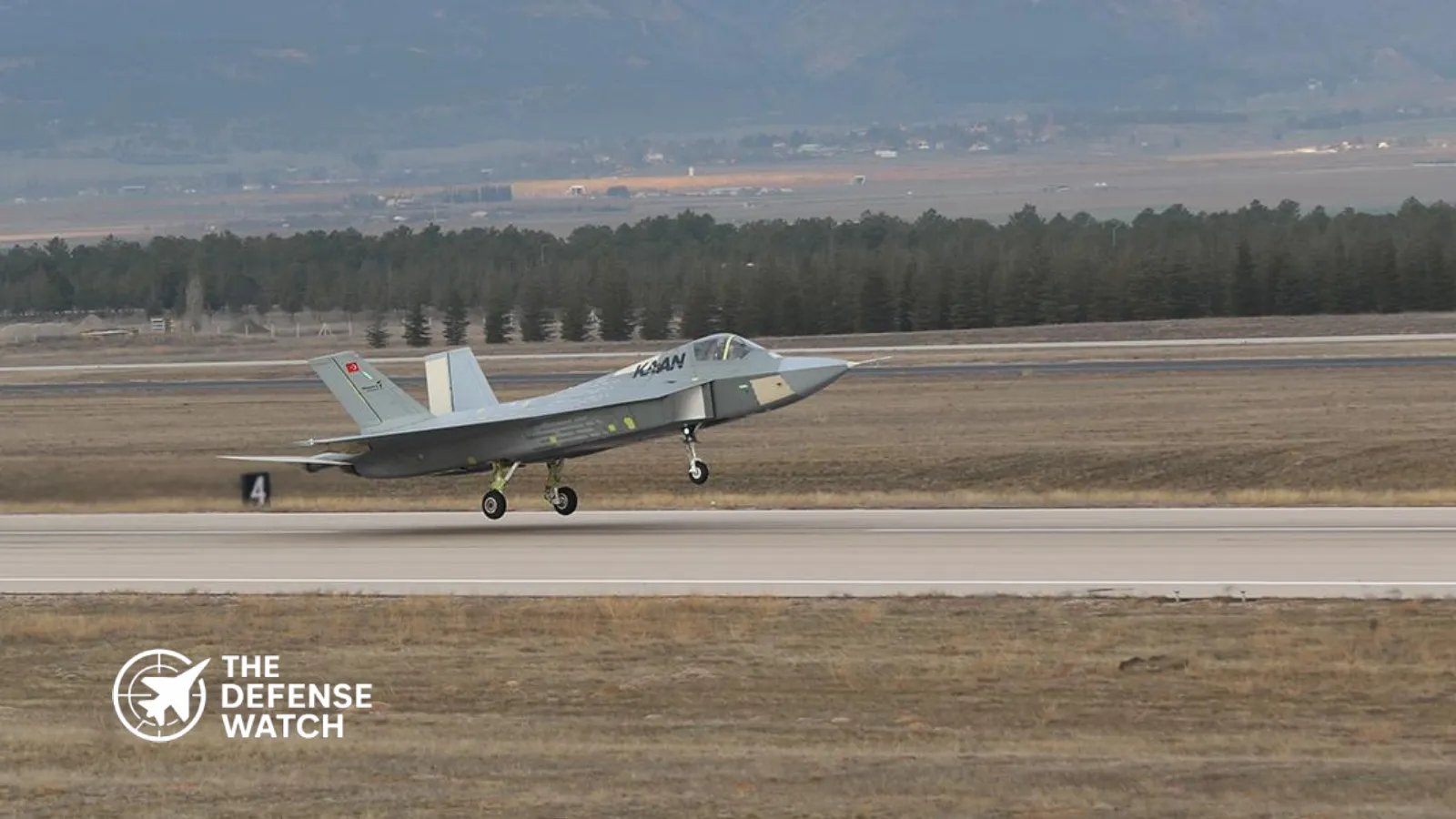
Türkiye’s indigenous KAAN fifth generation fighter has entered another key stage of development after a newly built prototype began taxi testing in late July 2026. The milestone moves the program closer to an expanded flight test campaign that will validate production standard systems and support the Turkish Air Force’s long term modernization plans.
KAAN Prototype Starts Taxi Tests As Flight Test Campaign Expands
Turkish Aerospace has begun taxi testing a new KAAN prototype, marking another significant milestone in Türkiye’s effort to field an indigenous fifth generation fighter aircraft. The company released footage of the prototype conducting low speed runway tests, confirming that the aircraft has entered the final phase of ground evaluations before its planned first flight later this year.
The latest prototype represents a major step beyond the technology demonstrator that first flew in February 2024. Turkish Aerospace has stated that multiple prototypes are being assembled to accelerate testing, collect certification data, and mature the aircraft ahead of operational service.
Why Taxi Tests Matter
Taxi testing is one of the final validation stages before a prototype receives clearance for flight.
During these tests engineers evaluate:
- Steering and braking performance
- Flight control system operation
- Landing gear functionality
- Engine performance across different power settings
- Aircraft stability during ground operations
- Communications and onboard avionics integration
Successful completion reduces technical risk before first flight while allowing engineers to identify integration issues without exposing the aircraft to airborne hazards.
Unlike the original prototype, the newest aircraft incorporates systems intended to be much closer to the production configuration, allowing engineers to collect more representative flight data.
A Larger Flight Test Fleet
Turkish Aerospace plans to significantly expand KAAN’s flight testing over the next several years.
According to company officials, additional prototypes are expected to join the program, enabling simultaneous testing of:
- Flight performance
- Mission systems
- Sensor integration
- Weapons compatibility
- Environmental qualification
- Structural loads
A larger prototype fleet allows multiple test objectives to be pursued in parallel, shortening overall development timelines compared with relying on a single aircraft.
Current Propulsion Strategy
The current KAAN prototypes continue to use two GE Aerospace F110 afterburning turbofan engines.
Turkish Aerospace has confirmed that these engines will power early production aircraft while Türkiye develops the indigenous TF35000 engine intended for later production blocks. Company officials recently disclosed that export approval has enabled procurement of additional F110 engines to sustain prototype and initial production requirements.
The transition to a domestically developed engine remains one of the program’s most technically demanding objectives, since propulsion affects aircraft performance, maintenance, export flexibility, and long term industrial independence.
KAAN Program Snapshot
Specification Details Manufacturer Turkish Aerospace Aircraft Type Twin engine fifth generation multirole fighter First Flight February 2024 Current Milestone New prototype taxi testing Current Engine Two GE Aerospace F110 turbofans Planned Indigenous Engine TEI TF35000 Intended Operator Turkish Air Force Planned Service Entry Later this decade (subject to development progress) Strategic Importance For Türkiye
KAAN is one of Türkiye’s largest aerospace development programs and forms a central element of Ankara’s strategy to expand domestic defense manufacturing.
The aircraft is intended to replace aging F 16 fighters while providing an indigenous platform capable of advanced air superiority and multirole missions. Beyond military capability, the program supports growth across Türkiye’s aerospace supply chain, including avionics, sensors, software, composite manufacturing, and propulsion technologies.
For Turkish industry, developing these technologies domestically also reduces long term dependence on foreign suppliers for future combat aircraft modernization.
What This Means For Global Air Power
The taxi tests themselves do not demonstrate operational capability, but they indicate that the program continues progressing through standard aerospace development milestones.
Globally, only a limited number of countries are pursuing indigenous fifth generation fighter programs. As additional KAAN prototypes enter flight testing, engineers will be able to validate stealth shaping, mission systems, flight control software, and weapons integration under increasingly demanding conditions.
From a broader defense perspective, KAAN reflects a wider trend in which regional powers are investing heavily in sovereign aerospace capabilities rather than relying exclusively on imported combat aircraft. If development remains on schedule, Türkiye will join a small group of nations capable of designing, testing, and producing advanced stealth fighters largely within their domestic industrial base.
For NATO, the program could eventually strengthen alliance industrial capacity while providing an additional source of advanced combat aircraft technology, although operational maturity will depend on years of continued testing, certification, and production.

