• Home
  • About
  • Defense Systems
  • Manufacturer
  • Comparisons
  • Compare 
  • Tools
TheDefenseWatch.com
  • Aerospace & Aviation
  • Military & Ordnance
  • Naval & Maritime
  • Cyber & Space Defense
  • Policy & Strategy
  • Global News
  • Tools Library
    • Smart Calculator
    • Drone Flight Time Calculator
    • Drone Range Calculator
    • Counter-Drone Jammer Effective Range Calculator
    • Counter-Battery Radar Detection Calculator
    • Artillery Fire Correction Calculator
    • Thermal Camera Detection Range Calculator
    • Missile Range & Time-of-Flight Calculator
    • Radar Detection Range Calculator
    • FPV Strike Drone Payload vs Range Calculator
    • Loitering Munition Endurance Calculator
    • Sniper Ballistic Drop & Windage Calculator
    • Bullet Drop Calculator
    • U.S. Army Combat Fitness Test (ACFT) Calculator
    • Military Pension Calculator
    • Military Retirement Calculator
    • Military Pension Calculator
    • Large Number Calculator
Font ResizerAa

TheDefenseWatch.com

The Defense Watch | U.S. & Global Defense News, Analysis & Military Updates

Search
  • Home
  • About
  • Defense Systems
  • Manufacturer
  • Comparisons
  • Compare 
  • Tools

Stay Updated

Get the latest update

Subscribe

Explore

  • Drone
  • Fighter Jets & Military Aircraft
  • Hypersonic Weapons
  • Aircraft Carriers
  • Strategic History & Missions
  • Tools Library
Home » Israel Moves To Exclude Lebanon From Ceasefire As US–Iran Truce Takes Shape
Global News

Israel Moves To Exclude Lebanon From Ceasefire As US–Iran Truce Takes Shape

Kaleem Sheikh | Regional Defense Correspondent
Last updated: April 7, 2026 11:28 pm
Kaleem Sheikh | Regional Defense Correspondent
Share
2 Min Read
Israel ceasefire Lebanon exclusion
SHARE
Follow The Defense Watch on Google:

Israel Ceasefire Lebanon Exclusion Clarified

The Israel ceasefire Lebanon exclusion has emerged as a key point of contention following the announcement of a two-week truce involving the United States and Iran. In its first official response, the office of Benjamin Netanyahu stated clearly that Lebanon is not part of the agreement.

Contents
Israel Ceasefire Lebanon Exclusion ClarifiedConflicting Narratives Around Ceasefire ScopeStrategic Implications For Regional SecurityOperational Context And Military PostureAnalysis: Limited Ceasefire, Broader RisksOutlook

According to the statement, Israel supports the decision by Donald Trump to suspend strikes against Iran for a limited period. However, this pause is conditional. Tehran must reopen strategic maritime routes and halt attacks against the United States, Israel, and regional partners.

¦ KEY FACTS AT A GLANCE
  • Israel confirmed Lebanon is not included in the two-week ceasefire involving the US and Iran.
  • The ceasefire is conditional on Iran reopening key maritime routes and halting attacks.
  • Pakistan’s Prime Minister previously stated Lebanon was part of the agreement.
  • US President Donald Trump did not mention Lebanon in his official statement.
  • The clarification highlights ongoing ambiguity in regional ceasefire terms.

The clarification directly contradicts earlier remarks by Shehbaz Sharif, who had suggested that Lebanon was included in the ceasefire framework. That discrepancy now raises questions about the scope and coordination behind the agreement.

Conflicting Narratives Around Ceasefire Scope

The divergence in statements reflects broader uncertainty surrounding the Israel ceasefire Lebanon exclusion and the structure of the deal itself. While Washington and Tehran appear aligned on a temporary de-escalation, regional actors interpret the terms differently.

- Advertisement -

Notably, President Trump’s public statement announcing the ceasefire made no reference to Lebanon. This omission aligns with Israel’s position but contrasts with Pakistan’s claims of a broader regional arrangement.

From a policy standpoint, this gap highlights the lack of a unified communication channel among stakeholders. In high-risk environments, such inconsistencies can quickly translate into operational confusion, especially in multi-front theaters like the Middle East.

Strategic Implications For Regional Security

The Israel ceasefire Lebanon exclusion carries immediate operational implications. By excluding Lebanon, Israel retains freedom of action against threats emanating from its northern border, particularly those linked to Iran-backed groups.

This suggests that the ceasefire is narrowly tailored to reduce direct US–Iran confrontation rather than address the full spectrum of regional hostilities. In practical terms, it creates a partial pause rather than a comprehensive de-escalation.

Military planners will likely view this as a controlled reset rather than a durable peace measure. The conditional nature of the truce also introduces fragility. Any perceived violation, such as disruptions in maritime traffic or proxy attacks, could quickly collapse the agreement.

Operational Context And Military Posture

Israel’s clarification indicates that its rules of engagement remain unchanged outside the Iran-specific framework. This is critical in understanding the real-world impact of the ceasefire.

For defense analysts, the Israel ceasefire Lebanon exclusion underscores a layered conflict environment. While one axis of confrontation may pause, others remain active. This complicates command decisions, force allocation, and escalation management.

The exclusion of Lebanon also signals that Israel does not consider the current agreement sufficient to address threats from that front. As a result, surveillance, air defense readiness, and strike capabilities in northern sectors are expected to remain elevated.

- Advertisement -

Analysis: Limited Ceasefire, Broader Risks

At least 30 percent of the implications of this development lie in what the ceasefire does not cover. The Israel ceasefire Lebanon exclusion reveals a fragmented approach to conflict management in the region.

Rather than a comprehensive diplomatic breakthrough, the agreement appears to be a tactical pause focused on immediate US–Iran tensions. This leaves multiple flashpoints unresolved.

Such partial arrangements often carry inherent risks. They can reduce pressure in one area while allowing escalation in another. In this case, excluding Lebanon may prevent broader consensus and prolong instability along Israel’s northern frontier.

From a strategic perspective, the situation reflects competing priorities. The United States may seek to avoid direct confrontation with Iran, while Israel maintains a wider threat perception that includes proxy actors.

Outlook

The durability of the ceasefire will depend heavily on compliance with its conditions and clarity in its scope. As it stands, the Israel ceasefire Lebanon exclusion introduces ambiguity that could undermine confidence in the agreement.

Further official statements from Washington and Tehran will be critical in determining whether additional clarifications or expansions of the ceasefire are forthcoming.

For now, the region remains in a state of controlled tension rather than genuine de-escalation.

Enjoying our coverage?

Make The Defense Watch a preferred source on Google to see more of our geopolitical and defense insights when relevant to you.

TAGGED:CeasefireIranIsraelLebanonMiddle East security
Share This Article
Facebook Copy Link Print
ByKaleem Sheikh | Regional Defense Correspondent
Follow:
Kaleem Sheikh is a regional defense correspondent at TheDefenseWatch.com covering defense and security developments across Asia and the Middle East, including military operations, procurement, and regional security issues.
Leave a Comment

Leave a Reply Cancel reply

Your email address will not be published. Required fields are marked *

Search Defense Systems

Latest Defense Systems

  • KN-23 Ballistic Missile KN-23 Ballistic Missile
  • Su-75 Checkmate Fighter Jet Su-75 Checkmate Fighter Jet
  • Ilyushin Il-20 Coot Aircraft Ilyushin Il-20 Coot Aircraft
  • FGM-148 Javelin Anti-Tank Missile FGM-148 Javelin Anti-Tank Missile
  • F-104 Starfighter F-104 Starfighter
  • F-15J Eagle Fighter Jet F-15J Eagle Fighter Jet
  • China’s GJ-21 Stealth Drone China’s GJ-21 Stealth Drone
  • China’s GJ-11 Stealth Drone China’s GJ-11 Stealth Drone
  • F-15EX Eagle Fighter Jet F-15EX Eagle Fighter Jet

Recent Compares

  • J-10C vs JF-17 Thunder: Which Fighter Is More Capable? J-10C vs JF-17 Thunder: Which Fighter Is More Capable? View Comparison →
  • Tejas vs Gripen: Key Differences and Capabilities Tejas vs Gripen: Key Differences and Capabilities View Comparison →
  • Tejas vs MiG-21 Bison: How India Replaced Its Iconic Supersonic Fighter Tejas vs MiG-21 Bison: How India Replaced Its Iconic Supersonic Fighter View Comparison →
  • F-35 vs F-16: Stealth, Sensors and Combat Roles F-35 vs F-16: Stealth, Sensors and Combat Roles View Comparison →
  • Tejas Fighter Jet vs F-16 Fighting Falcon: Capability Compared Tejas Fighter Jet vs F-16 Fighting Falcon: Capability Compared View Comparison →
  • Rafale Fighter Jet vs F-16 Fighting Falcon : Which Fighter Has the Edge? Rafale Fighter Jet vs F-16 Fighting Falcon : Which Fighter Has the Edge? View Comparison →
  • Su-57 Fighter Jet vs J-20 Fighter Jet: Stealth and Air Combat Compared Su-57 Fighter Jet vs J-20 Fighter Jet: Stealth and Air Combat Compared View Comparison →
  • Mirage 2000 vs Tejas Mk1A: Legacy Combat Power vs Indigenous Modernization Mirage 2000 vs Tejas Mk1A: Legacy Combat Power vs Indigenous Modernization View Comparison →
  • Rafale Fighter Jet vs F-22 Raptor: Which Air Dominance Fighter Has the Edge? Rafale Fighter Jet vs F-22 Raptor: Which Air Dominance Fighter Has the Edge? View Comparison →
  • Tejas Fighter Jet vs. Rafale Fighter Jet: India’s Indigenous Fighter Meets France’s Proven Multirole Combat Aircraft Tejas Fighter Jet vs. Rafale Fighter Jet: India’s Indigenous Fighter Meets France’s Proven Multirole Combat Aircraft View Comparison →

Recent Posts

  • Is the US Planning a 7th-Generation Fighter Jet?
  • NATO Jets Scrambled After Drone Breaches Latvian Airspace
  • North Korea Reportedly Suspends Missile and Artillery Deliveries to Russia
  • U.S. Navy Conducts Hovercraft Operations With USS Boxer in Middle East
  • Russia Shows Possible Su-75 Checkmate Prototype Progress at KnAAZ Aircraft Plant

You Might Also Like

Iran ICBM development threat
Global News

Trump Says Iran Is Developing Missiles That Can Reach US, Signals New Security Threat

February 25, 2026
Operation Roar Of The Lion
Global News

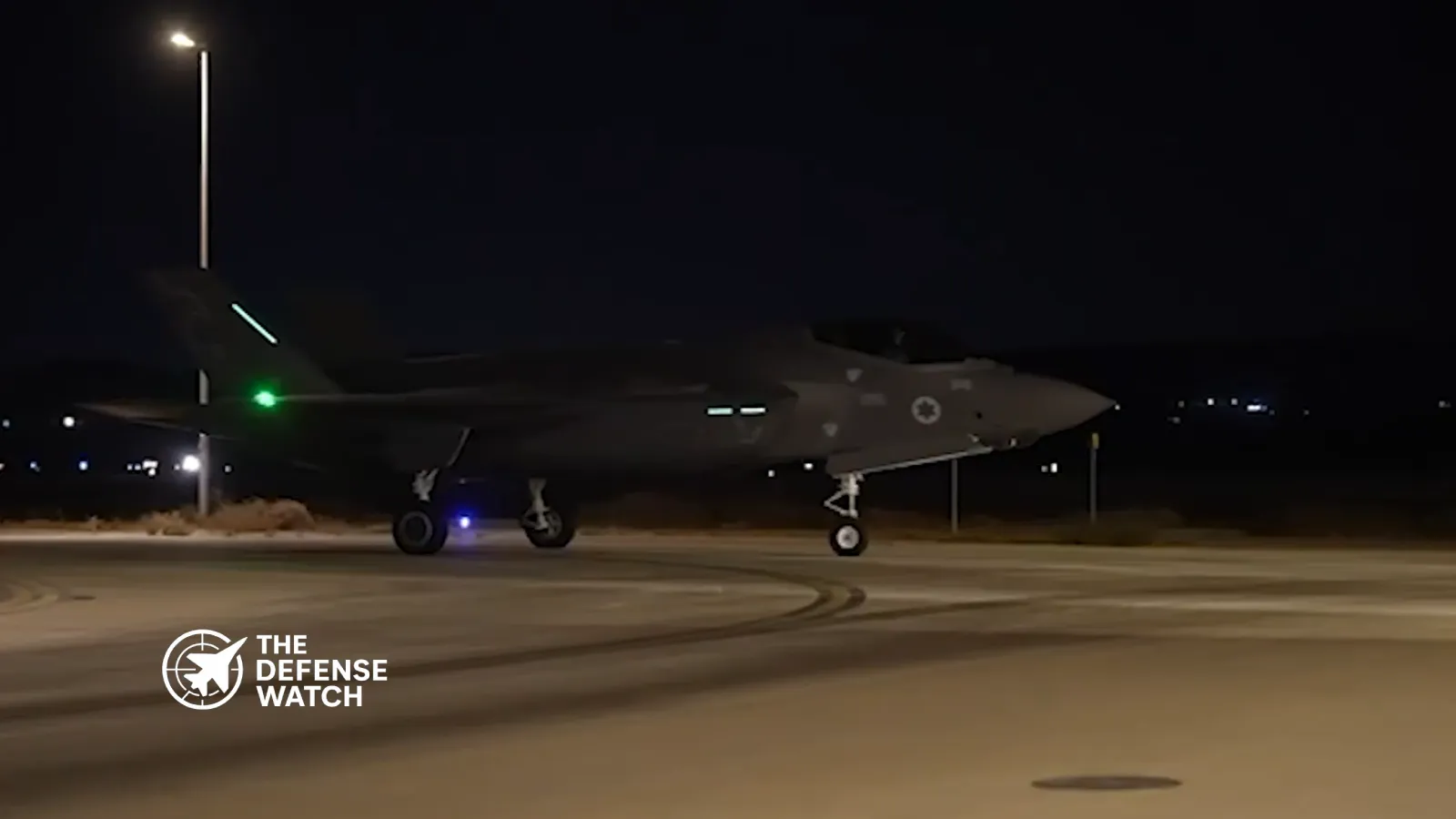
Israel Launches Operation Roar Of The Lion, IDF Strikes Hundreds Of Targets In Western Iran

February 28, 2026
Advanced Akash Weapon System FOPM
Global News

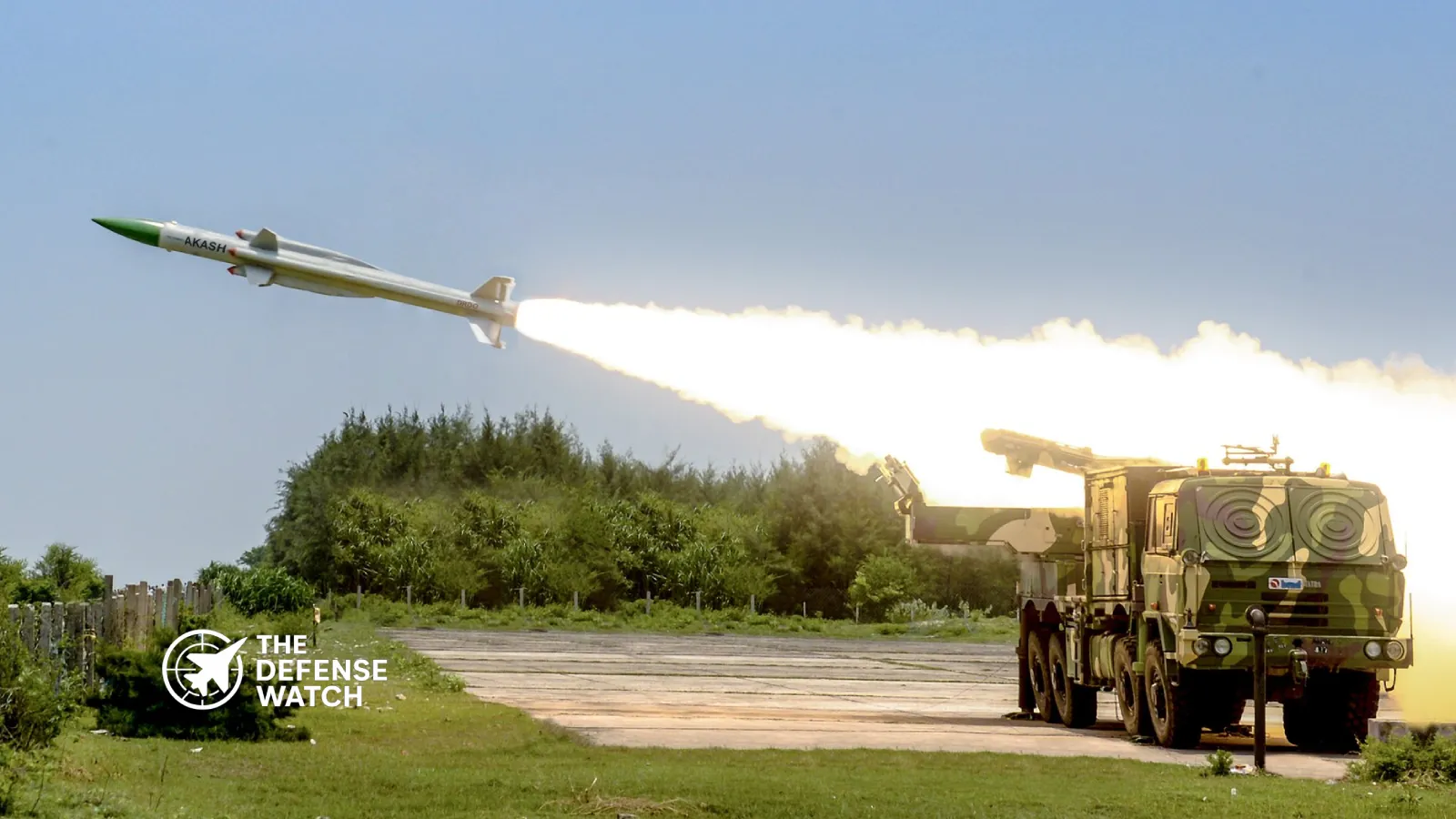
India Completes Advanced Akash Weapon System FOPM, Boosting Air Defense Capability

March 26, 2026
does iran have nuclear weapons
Policy & Strategy

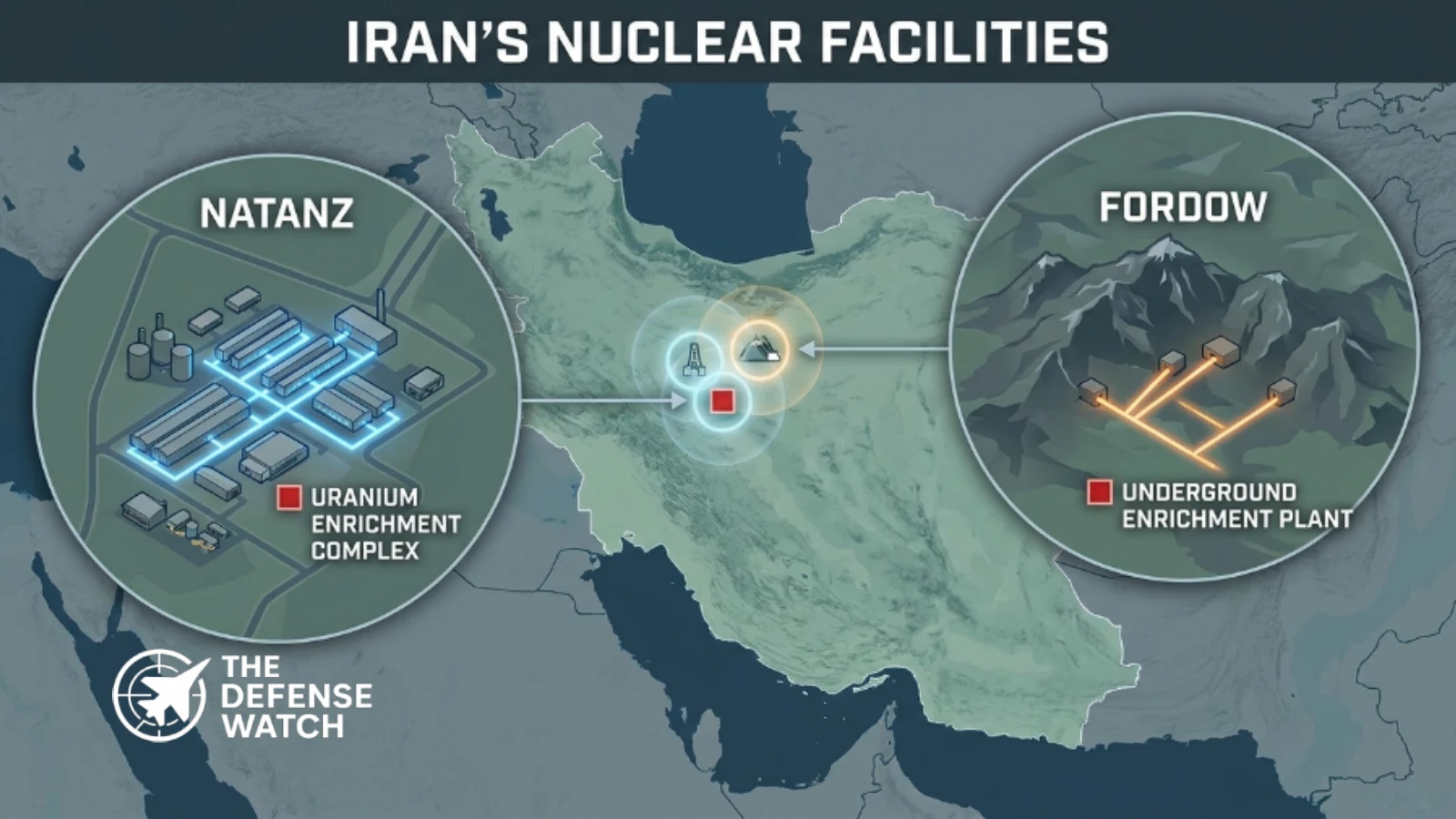
Does Iran Have Nuclear Weapons? The 2026 Threshold Reality Explained

September 8, 2026

Logo

Copyright © 2026 TheDefenseWatch.com

Helpful Links

  • Home
  • About Us
  • Privacy Policy
  • Terms of Use / Disclaimer
  • U.S. Privacy Notice – CCPA Compliance

Defense Systems

  • Defense Systems
  • Comparisons 
  • Manufacturer
  • Tactical Calculators

Popuplar

Which 5 Air Forces Possess the Costliest Fighter Jet Fleets in the World
Evolving Strategic Value: Carrier Strike Groups in the Indo-Pacific’s Future Security Architecture
Autonomous Weapon Systems Spark U.S. Ethics Debate Amid Rapid Military AI Integration

We report on developments involving military forces, governments, defense companies, research organizations, and security institutions around the world. 

Welcome Back!

Sign in to your account

Username or Email Address
Password

Lost your password?

Enjoying our coverage?

Make The Defense Watch a preferred source on Google to see more insights.