• Home
  • About
  • Defense Systems
  • Manufacturer
  • Comparisons
  • Compare 
  • Tools
TheDefenseWatch.com
  • Aerospace & Aviation
  • Military & Ordnance
  • Naval & Maritime
  • Cyber & Space Defense
  • Policy & Strategy
  • Global News
  • Tools Library
    • Smart Calculator
    • Drone Flight Time Calculator
    • Drone Range Calculator
    • Counter-Drone Jammer Effective Range Calculator
    • Counter-Battery Radar Detection Calculator
    • Artillery Fire Correction Calculator
    • Thermal Camera Detection Range Calculator
    • Missile Range & Time-of-Flight Calculator
    • Radar Detection Range Calculator
    • FPV Strike Drone Payload vs Range Calculator
    • Loitering Munition Endurance Calculator
    • Sniper Ballistic Drop & Windage Calculator
    • Bullet Drop Calculator
    • U.S. Army Combat Fitness Test (ACFT) Calculator
    • Military Pension Calculator
    • Military Retirement Calculator
    • Military Pension Calculator
    • Large Number Calculator
Font ResizerAa

TheDefenseWatch.com

The Defense Watch | U.S. & Global Defense News, Analysis & Military Updates

Search
  • Home
  • About
  • Defense Systems
  • Manufacturer
  • Comparisons
  • Compare 
  • Tools

Stay Updated

Get the latest update

Subscribe

Explore

  • Drone
  • Fighter Jets & Military Aircraft
  • Hypersonic Weapons
  • Aircraft Carriers
  • Strategic History & Missions
  • Tools Library
Home » Trump Briefed On U.S. Military Options In Iran As Largest Middle East Force Since 2003 Deploys
Geopolitical & Strategic DoctrinesPolicy & Strategy

Trump Briefed On U.S. Military Options In Iran As Largest Middle East Force Since 2003 Deploys

Daniel Mercer / Defense & Aerospace Analyst
Last updated: February 19, 2026 4:22 am
Daniel Mercer / Defense & Aerospace Analyst
Share
2 Min Read
U.S. military options in Iran
Image : creative commons
SHARE
Follow The Defense Watch on Google:
■ KEY FACTS AT A GLANCE
  • ► Trump was briefed on multiple U.S. military options in Iran, according to The Wall Street Journal.
  • ► One option reportedly targets senior political and military leaders in an effort to destabilize the regime.
  • ► A limited strike alternative focuses on Iran’s nuclear and ballistic missile programs.
  • ► The U.S. is assembling its largest regional force posture since the 2003 Iraq invasion.
  • ► The buildup signals heightened deterrence and contingency planning across the Middle East.

Trump Briefed On U.S. Military Options In Iran, WSJ Reports

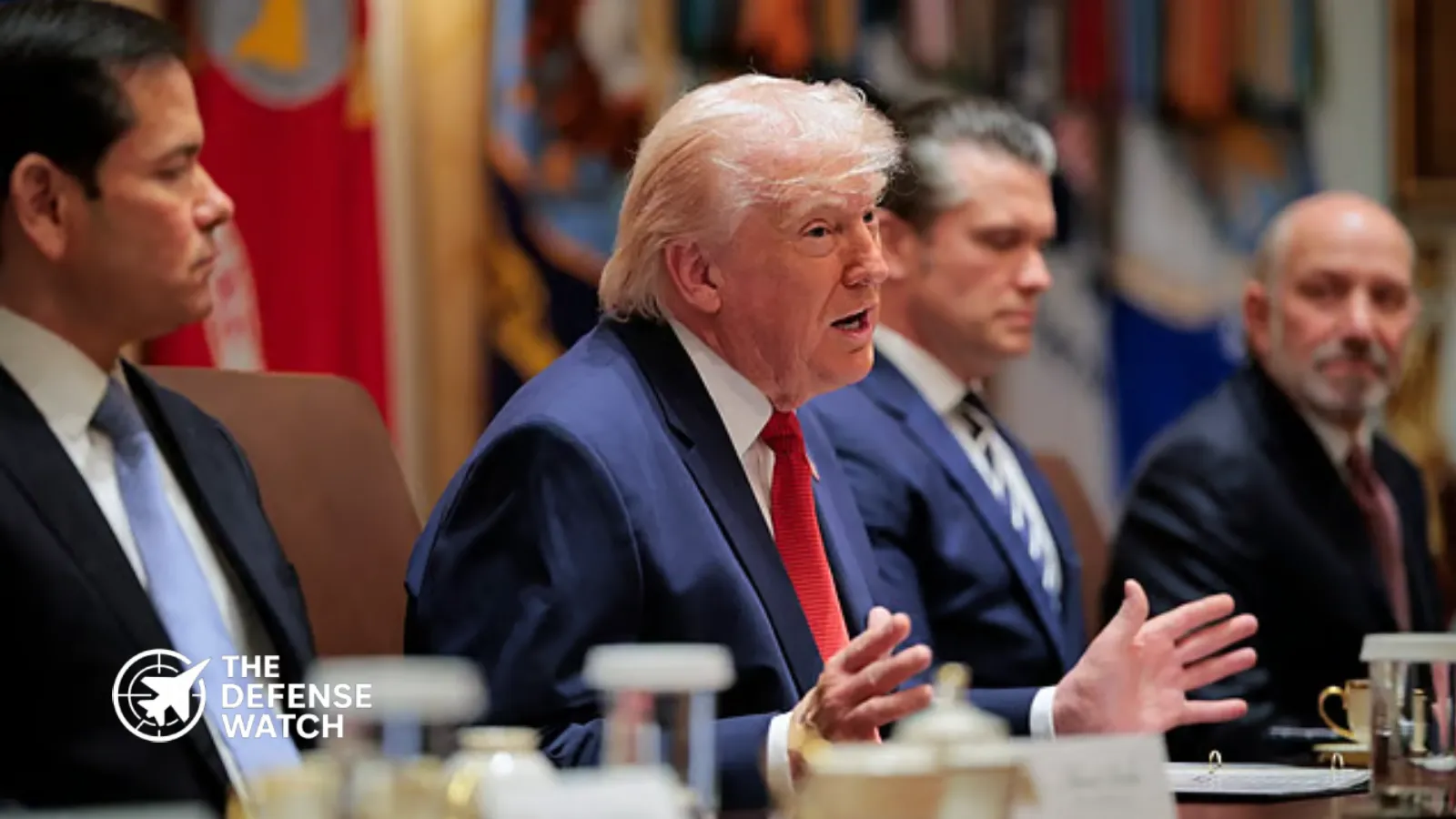
U.S. military options in Iran were presented to former President Donald Trump in a detailed briefing outlining potential operations designed to inflict maximum damage on Tehran’s leadership and regional network, according to a report by The Wall Street Journal.

Contents
Trump Briefed On U.S. Military Options In Iran, WSJ ReportsA Spectrum Of Strike OptionsLargest U.S. Force Concentration Since 2003Strategic And Regional ImplicationsMilitary Planning Versus Political Decision

The report states that the proposed courses of action range from a broad campaign aimed at eliminating key political and military leaders to a more limited strike package focused on Iran’s nuclear and ballistic missile infrastructure.

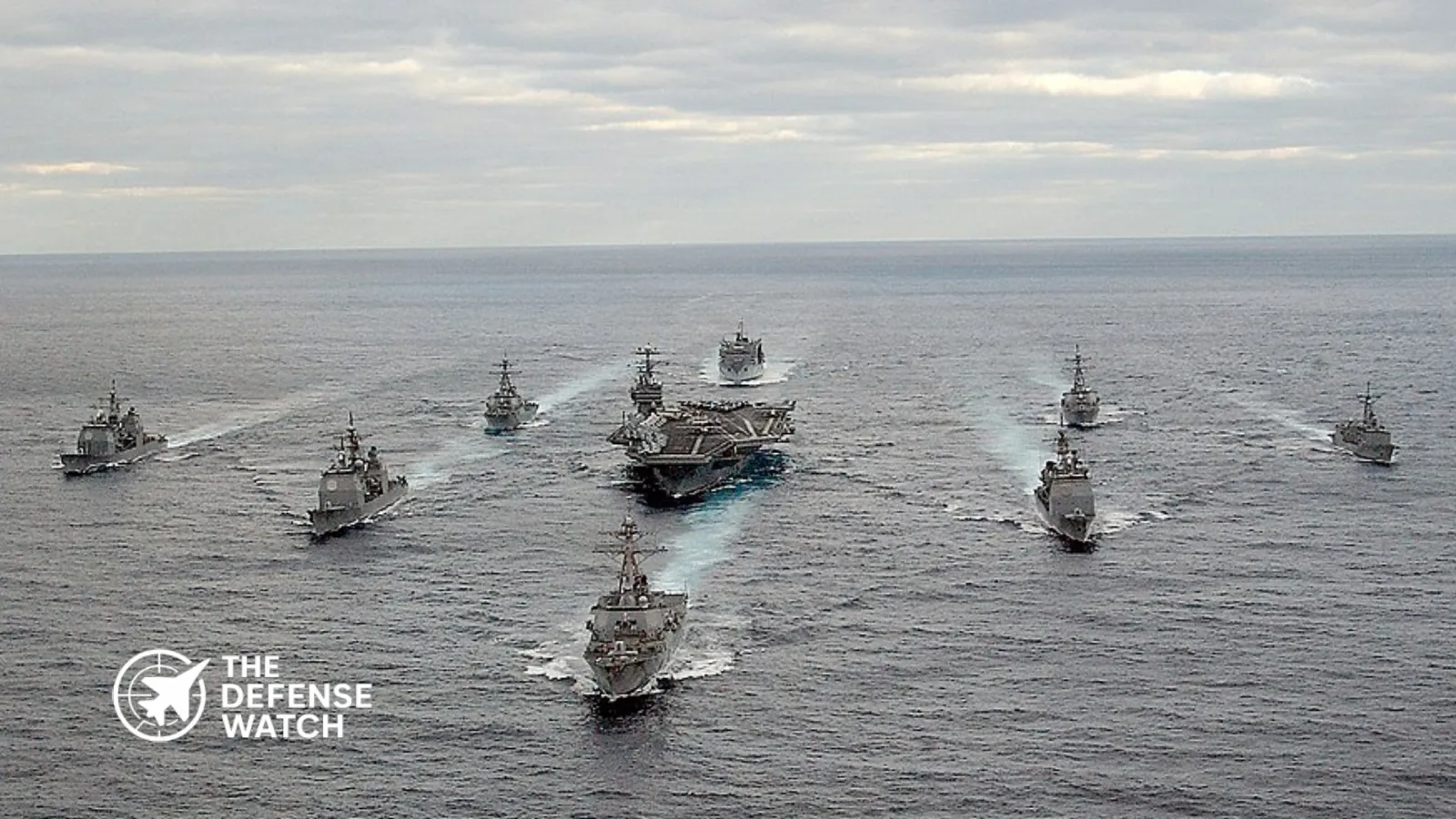
At the same time, the United States is concentrating what the Journal describes as its largest military force in the Middle East since the 2003 invasion of Iraq, signaling a significant shift in regional posture.

A Spectrum Of Strike Options

According to the Journal, the most expansive proposal involves a coordinated campaign to eliminate numerous Iranian political and military leaders. Such a course of action would likely resemble a decapitation strategy designed to disrupt command and control structures.

- Advertisement -

Historically, similar approaches have been used in counterterrorism campaigns against non state actors. Applying that model to a sovereign state such as Iran would represent a far more complex and escalatory step.

A more limited option focuses on infrastructure linked to Iran’s nuclear enrichment and ballistic missile programs. That could include strikes on hardened facilities, missile production sites, and command nodes tied to the Islamic Revolutionary Guard Corps.

The distinction between the two paths is significant. One is regime focused. The other is capability focused. Each carries different operational demands and escalation risks.

Largest U.S. Force Concentration Since 2003

The reported buildup marks the largest U.S. military concentration in the Middle East since the Iraq invasion in 2003, a campaign launched under President George W. Bush.

While specific force elements were not detailed in the report, such deployments typically involve carrier strike groups, long range bomber task forces, air defense assets, and additional ground based support units.

In recent years, U.S. Central Command has maintained a rotational presence across Gulf states, along with air and naval patrols intended to deter Iranian activity. Expanding that posture to 2003 levels suggests a contingency planning environment rather than routine deterrence.

From a strategic standpoint, force concentration serves two purposes. It enhances operational readiness. It also sends a political signal to both adversaries and regional partners.

Strategic And Regional Implications

Any execution of the outlined U.S. military options in Iran would have immediate regional consequences.

- Advertisement -

Iran maintains a network of allied groups and proxy forces across Iraq, Syria, Lebanon, and Yemen. A broad strike campaign could trigger retaliatory actions against U.S. forces or partner nations.

A limited strike on nuclear and missile facilities might aim to constrain escalation. However, even a targeted operation could prompt asymmetric responses, including cyber operations or missile launches.

For Gulf allies, the expanded U.S. presence may provide reassurance. At the same time, regional capitals are likely assessing the risk of becoming staging grounds or potential targets.

Energy markets would also be sensitive to any disruption in the Strait of Hormuz, a critical maritime chokepoint for global oil shipments.

Military Planning Versus Political Decision

It is important to distinguish between military planning and policy execution.

The Pentagon routinely develops a range of contingency options for potential crises. Briefing national leadership on those options does not equate to a decision to act.

The Journal report indicates that the courses of action are designed to maximize pressure on the Iranian regime. Whether such plans move beyond the planning stage depends on political direction, alliance coordination, and evolving regional dynamics.

In the current environment, the scale of U.S. deployments suggests that deterrence and preparedness are central objectives. Still, the presence of detailed strike options underscores how rapidly tensions could escalate if diplomatic channels fail.

Enjoying our coverage?

Make The Defense Watch a preferred source on Google to see more of our geopolitical and defense insights when relevant to you.


TAGGED:Iran crisisMiddle East securityregional force postureTrump administrationU.S. Military Strategy
Share This Article
Facebook Copy Link Print
ByDaniel Mercer / Defense & Aerospace Analyst
Follow:
Daniel Mercer is a defense and aerospace analyst at TheDefenseWatch.com covering military aviation, aerospace technology, unmanned systems, air warfare, and defense procurement. His reporting uses official documents, government and military statements, company announcements, and other public sources.

Search Defense Systems

Latest Defense Systems

  • F-15J Eagle Fighter Jet F-15J Eagle Fighter Jet
  • China’s GJ-21 Stealth Drone China’s GJ-21 Stealth Drone
  • China’s GJ-11 Stealth Drone China’s GJ-11 Stealth Drone
  • F-15EX Eagle Fighter Jet F-15EX Eagle Fighter Jet
  • TRML-4D Radar TRML-4D Radar
  • F-47A Fighter Jet F-47A Fighter Jet
  • China DF-61 Missile China DF-61 Missile
  • B61 Nuclear Bomb B61 Nuclear Bomb
  • Japan E-767 Airborne Japan E-767 Airborne

Recent Compares

  • J-10C vs JF-17 Thunder: Which Fighter Is More Capable? J-10C vs JF-17 Thunder: Which Fighter Is More Capable? View Comparison →
  • Tejas vs Gripen: Key Differences and Capabilities Tejas vs Gripen: Key Differences and Capabilities View Comparison →
  • Tejas vs MiG-21 Bison: How India Replaced Its Iconic Supersonic Fighter Tejas vs MiG-21 Bison: How India Replaced Its Iconic Supersonic Fighter View Comparison →
  • F-35 vs F-16: Stealth, Sensors and Combat Roles F-35 vs F-16: Stealth, Sensors and Combat Roles View Comparison →
  • Tejas Fighter Jet vs F-16 Fighting Falcon: Capability Compared Tejas Fighter Jet vs F-16 Fighting Falcon: Capability Compared View Comparison →
  • Rafale Fighter Jet vs F-16 Fighting Falcon : Which Fighter Has the Edge? Rafale Fighter Jet vs F-16 Fighting Falcon : Which Fighter Has the Edge? View Comparison →
  • Su-57 Fighter Jet vs J-20 Fighter Jet: Stealth and Air Combat Compared Su-57 Fighter Jet vs J-20 Fighter Jet: Stealth and Air Combat Compared View Comparison →
  • Mirage 2000 vs Tejas Mk1A: Legacy Combat Power vs Indigenous Modernization Mirage 2000 vs Tejas Mk1A: Legacy Combat Power vs Indigenous Modernization View Comparison →
  • Rafale Fighter Jet vs F-22 Raptor: Which Air Dominance Fighter Has the Edge? Rafale Fighter Jet vs F-22 Raptor: Which Air Dominance Fighter Has the Edge? View Comparison →
  • Tejas Fighter Jet vs. Rafale Fighter Jet: India’s Indigenous Fighter Meets France’s Proven Multirole Combat Aircraft Tejas Fighter Jet vs. Rafale Fighter Jet: India’s Indigenous Fighter Meets France’s Proven Multirole Combat Aircraft View Comparison →

Recent Posts

  • Pentagon Reports Audit Progress as 2028 Clean Financial Audit Deadline Approaches
  • 1th Airborne Division Tests 3,000-Mile Pacific Deployment From Alaska to Hawaii
  • Australia Receives New MH-60R Seahawk Helicopters as Naval Fleet Modernization Continues
  • Italy Plans More Than €6 Billion for Hybrid Threat Defense
  • Boeing B-1B LAM Pylon Clears Design Review, Advancing Hypersonic Weapons Integration

You Might Also Like

Saudi Arabia Turkey Pakistan meeting with Iran
Policy & Strategy

Saudi, Turkish and Pakistani Officials to Meet Iran in Tehran

October 25, 2026
Iran US ceasefire negotiations 2026
Geopolitical & Strategic DoctrinesPolicy & Strategy

Iran-US Ceasefire Negotiations Stall as Strait of Hormuz Standoff Deepens

September 8, 2026
Russia struggling to supply Crimea
Geopolitical & Strategic DoctrinesPolicy & Strategy

NATO Says Russia Struggling To Supply Crimea As Ukrainian Strikes Disrupt Key Logistics Routes

June 22, 2026
U.S. tungsten supply
Policy & Strategy

Department Of War Commits $450 Million To Strengthen U.S. Tungsten Supply

September 22, 2026

Logo

Copyright © 2026 TheDefenseWatch.com

Helpful Links

  • Home
  • About Us
  • Privacy Policy
  • Terms of Use / Disclaimer
  • U.S. Privacy Notice – CCPA Compliance

Defense Systems

  • Defense Systems
  • Comparisons 
  • Manufacturer
  • Tactical Calculators

Popuplar

Which 5 Air Forces Possess the Costliest Fighter Jet Fleets in the World
Evolving Strategic Value: Carrier Strike Groups in the Indo-Pacific’s Future Security Architecture
Autonomous Weapon Systems Spark U.S. Ethics Debate Amid Rapid Military AI Integration

We report on developments involving military forces, governments, defense companies, research organizations, and security institutions around the world. 

Welcome Back!

Sign in to your account

Username or Email Address
Password

Lost your password?

Enjoying our coverage?

Make The Defense Watch a preferred source on Google to see more insights.