• Home
  • About
  • Defense Systems
  • Manufacturer
  • Comparisons
  • Compare 
  • Tools
TheDefenseWatch.com
  • Aerospace & Aviation
  • Military & Ordnance
  • Naval & Maritime
  • Cyber & Space Defense
  • Policy & Strategy
  • Global News
  • Tools Library
    • Smart Calculator
    • Drone Flight Time Calculator
    • Drone Range Calculator
    • Counter-Drone Jammer Effective Range Calculator
    • Counter-Battery Radar Detection Calculator
    • Artillery Fire Correction Calculator
    • Thermal Camera Detection Range Calculator
    • Missile Range & Time-of-Flight Calculator
    • Radar Detection Range Calculator
    • FPV Strike Drone Payload vs Range Calculator
    • Loitering Munition Endurance Calculator
    • Sniper Ballistic Drop & Windage Calculator
    • Bullet Drop Calculator
    • U.S. Army Combat Fitness Test (ACFT) Calculator
    • Military Pension Calculator
    • Military Retirement Calculator
    • Military Pension Calculator
    • Large Number Calculator
Font ResizerAa

TheDefenseWatch.com

The Defense Watch | U.S. & Global Defense News, Analysis & Military Updates

Search
  • Home
  • About
  • Defense Systems
  • Manufacturer
  • Comparisons
  • Compare 
  • Tools

Stay Updated

Get the latest update

Subscribe

Explore

  • Drone
  • Fighter Jets & Military Aircraft
  • Hypersonic Weapons
  • Aircraft Carriers
  • Strategic History & Missions
  • Tools Library
Home » Pakistan Confirms Shahpar III MALE Combat Drone First Flight By End Of 2026
Aerospace & AviationDrones & UAVs

Pakistan Confirms Shahpar III MALE Combat Drone First Flight By End Of 2026

Daniel Mercer / Defense & Aerospace Analyst
Last updated: February 11, 2026 4:17 am
Daniel Mercer / Defense & Aerospace Analyst
Share
2 Min Read
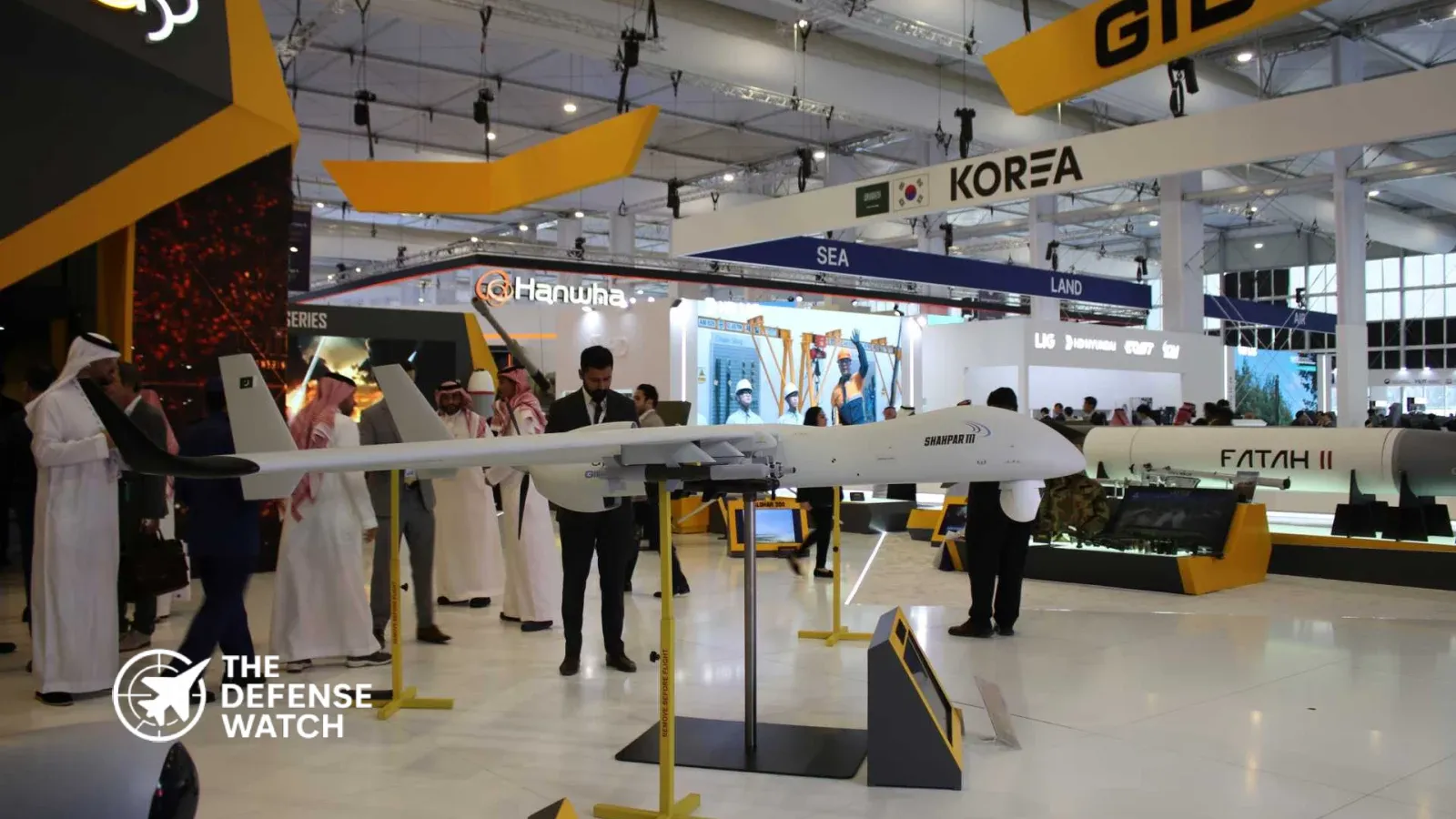
Shahpar III MALE drone
SHARE

Pakistan Confirms Shahpar III MALE Combat Drone Program

Pakistan has confirmed that the Shahpar III MALE combat drone is scheduled to conduct its first flight test by the end of 2026, marking a key milestone in the country’s ongoing unmanned aerial vehicle modernization efforts. The announcement underscores Islamabad’s focus on expanding indigenous intelligence, surveillance, reconnaissance, and strike capabilities using domestically developed platforms.

Contents
Pakistan Confirms Shahpar III MALE Combat Drone ProgramShahpar III Program BackgroundDesign And Capability OverviewStrategic Importance For PakistanPosition Within Pakistan’s UAV PortfolioTimeline And Next StepsRegional And Global Context

The confirmation was reported during World Defense Show 2026 and later detailed by Army Recognition, citing official Pakistani sources involved in the program. The Shahpar III is being positioned as the next evolution of Pakistan’s locally developed unmanned systems, following earlier Shahpar variants already in service.

Shahpar III Program Background

The Shahpar III is a medium altitude long endurance unmanned combat aerial vehicle designed to meet Pakistan’s growing operational requirements across surveillance, reconnaissance, and precision strike missions. It builds on experience gained from the Shahpar II, which has been operated by the Pakistan Armed Forces for intelligence and battlefield monitoring roles.

According to information released at World Defense Show 2026, Shahpar III is intended to offer extended endurance, higher payload capacity, and improved mission flexibility compared to its predecessors. Pakistani officials described the platform as a domestically developed system tailored for regional operational environments and multi mission use.

- Advertisement -

The program reflects Pakistan’s broader defense policy emphasis on indigenous development to reduce reliance on foreign suppliers and mitigate export restrictions that often affect advanced UAV acquisitions.

Design And Capability Overview

While detailed performance specifications remain limited, officials have indicated that Shahpar III falls within the MALE category, aligning it with systems such as the Turkish Bayraktar TB2 and Chinese Wing Loong series in terms of mission profile.

The drone is expected to support a mix of electro optical and infrared sensors, synthetic aperture radar options, and secure data link systems for beyond line of sight operations. Its design is reportedly optimized for long endurance patrols, border surveillance, and precision engagement tasks when fitted with compatible munitions.

Pakistani defense sources have emphasized that Shahpar III is being designed with modular payload integration in mind, allowing the platform to adapt to evolving operational requirements without extensive airframe changes.

Strategic Importance For Pakistan

The Shahpar III program carries strategic significance for Pakistan’s defense posture, particularly in the context of regional security dynamics in South Asia. MALE class drones provide persistent surveillance and strike options at lower cost and risk compared to manned aircraft, a factor increasingly valued by modern militaries.

By advancing an indigenous MALE combat drone, Pakistan aims to strengthen its autonomous ISR capabilities while enhancing deterrence through precision strike options. The program also supports the development of domestic aerospace engineering expertise and supply chains, which Pakistani officials have described as a long term national priority.

The planned first flight by the end of 2026 suggests that the program has moved beyond conceptual and early design phases into advanced development and integration.

Position Within Pakistan’s UAV Portfolio

Shahpar III is expected to complement, rather than replace, existing UAV assets operated by Pakistan. The country currently fields a mix of indigenous and imported unmanned systems for surveillance and tactical missions.

- Advertisement -

Defense analysts note that Shahpar III’s MALE classification places it in a higher capability tier than many tactical drones, potentially enabling longer range operations and greater persistence over areas of interest. This aligns with Pakistan’s stated goal of maintaining situational awareness across its borders and key maritime approaches.

The program also reflects lessons learned from global conflicts, where MALE drones have demonstrated operational value in intelligence gathering and precision engagement roles.

Timeline And Next Steps

Pakistani officials have stated that the first flight test is targeted for completion by the end of 2026. Following initial flight trials, the program is expected to move into a phased testing and evaluation process, including sensor integration, endurance validation, and mission system trials.

No official timeline has been released regarding operational induction, export prospects, or serial production. Authorities have stressed that development milestones will be driven by testing outcomes and operational requirements rather than fixed calendar targets.

Regional And Global Context

The Shahpar III announcement comes amid a broader expansion of UAV programs across Asia and the Middle East, where MALE platforms are increasingly seen as essential components of modern airpower. Countries are investing heavily in indigenous drone development to address sovereignty concerns and ensure long term operational availability.

Pakistan’s confirmation of the Shahpar III first flight timeline places it among a growing group of nations pursuing self sufficient unmanned combat capabilities tailored to national defense needs.


TAGGED:Asian securityCombat DronesIndigenous military systemsMALE UAVPakistan defense
Share This Article
Facebook Copy Link Print
ByDaniel Mercer / Defense & Aerospace Analyst
Follow:
Daniel Mercer is a defense and aerospace analyst at TheDefenseWatch.com covering military aviation, aerospace technology, unmanned systems, air warfare, and defense procurement. His reporting uses official documents, government and military statements, company announcements, and other public sources.
Leave a Comment

Leave a Reply Cancel reply

Your email address will not be published. Required fields are marked *

Search Defense Systems

Latest Defense Systems

  • TRML-4D Radar TRML-4D Radar
  • F-47A Fighter Jet F-47A Fighter Jet
  • China DF-61 Missile China DF-61 Missile
  • B61 Nuclear Bomb B61 Nuclear Bomb
  • Japan E-767 Airborne Japan E-767 Airborne
  • Remington 870 Shotgun Remington 870 Shotgun
  • RUTA B1 Cruise Missile RUTA B1 Cruise Missile
  • XQ-67A Drone XQ-67A Drone
  • B-25 Mitchell Bomber B-25 Mitchell Bomber

Recent Compares

  • J-10C vs JF-17 Thunder: Which Fighter Is More Capable? J-10C vs JF-17 Thunder: Which Fighter Is More Capable? View Comparison →
  • Tejas vs Gripen: Key Differences and Capabilities Tejas vs Gripen: Key Differences and Capabilities View Comparison →
  • Tejas vs MiG-21 Bison: How India Replaced Its Iconic Supersonic Fighter Tejas vs MiG-21 Bison: How India Replaced Its Iconic Supersonic Fighter View Comparison →
  • F-35 vs F-16: Stealth, Sensors and Combat Roles F-35 vs F-16: Stealth, Sensors and Combat Roles View Comparison →
  • Tejas Fighter Jet vs F-16 Fighting Falcon: Capability Compared Tejas Fighter Jet vs F-16 Fighting Falcon: Capability Compared View Comparison →
  • Rafale Fighter Jet vs F-16 Fighting Falcon : Which Fighter Has the Edge? Rafale Fighter Jet vs F-16 Fighting Falcon : Which Fighter Has the Edge? View Comparison →
  • Su-57 Fighter Jet vs J-20 Fighter Jet: Stealth and Air Combat Compared Su-57 Fighter Jet vs J-20 Fighter Jet: Stealth and Air Combat Compared View Comparison →
  • Mirage 2000 vs Tejas Mk1A: Legacy Combat Power vs Indigenous Modernization Mirage 2000 vs Tejas Mk1A: Legacy Combat Power vs Indigenous Modernization View Comparison →
  • Rafale Fighter Jet vs F-22 Raptor: Which Air Dominance Fighter Has the Edge? Rafale Fighter Jet vs F-22 Raptor: Which Air Dominance Fighter Has the Edge? View Comparison →
  • Tejas Fighter Jet vs. Rafale Fighter Jet: India’s Indigenous Fighter Meets France’s Proven Multirole Combat Aircraft Tejas Fighter Jet vs. Rafale Fighter Jet: India’s Indigenous Fighter Meets France’s Proven Multirole Combat Aircraft View Comparison →

Recent Posts

  • Hensoldt Targets €10 Billion in Annual Revenue by 2035, Doubles TRML-4D Radar Capacity
  • Somalia’s Reported JF-17 Deal Raises Questions Over Airpower and Regional Security
  • Navy Awards General Dynamics Subsidiary $20 Million Undersea Warfare Research Contract
  • U.S. Air Force Awards $26 Million Contract for Flyways AI Air Operations Software
  • Hegseth Orders Major Overhaul of U.S. Military Education System

You Might Also Like

Embraer KC-390 Millennium Arctic operations
Aerospace & AviationFighter Jets & Military Aircraft

Embraer KC-390 Millennium Expands Arctic Airlift Capability In Sweden Exercise

September 13, 2026
Saab counter drone system
AI & Electronic WarfareDrones & UAVs

Sweden Races To Deploy Saab Counter Drone System Amid Rising UAV Threats

September 7, 2026
AMCA fighter engine
Aerospace & AviationFighter Jets & Military Aircraft

Reliance, Rolls-Royce Move To Develop Indigenous Engine For India AMCA

August 17, 2026
Brazil Gripen E fighters
Aerospace & AviationFighter Jets & Military Aircraft

Gripen E Expands Brazilian Air Force Multinational Combat Capability During SALITRE 2026 Exercise In Chile

September 12, 2026

Logo

Copyright © 2026 TheDefenseWatch.com

Helpful Links

  • Home
  • About Us
  • Privacy Policy
  • Terms of Use / Disclaimer
  • U.S. Privacy Notice – CCPA Compliance

Defense Systems

  • Defense Systems
  • Comparisons 
  • Manufacturer
  • Tactical Calculators

Popuplar

Which 5 Air Forces Possess the Costliest Fighter Jet Fleets in the World
Evolving Strategic Value: Carrier Strike Groups in the Indo-Pacific’s Future Security Architecture
Autonomous Weapon Systems Spark U.S. Ethics Debate Amid Rapid Military AI Integration

We report on developments involving military forces, governments, defense companies, research organizations, and security institutions around the world. 

Welcome Back!

Sign in to your account

Username or Email Address
Password

Lost your password?